>a legacy

>Yesterday I watched Nashville (1975) and then followed it up with A Prairie Home Companion (2006). This is a review of neither, rather just a small reflection. In short, watching these films got me thinking about mortality.

I chose Nashville because it is a film I have always wanted to see and it is on my “must see” list (my own film challenge). I chose A Prairie Home Companion because I figured I should see Altman’s last film, and it was just sitting there on the shelf at the library looking right at me. And then it occurred to me that this might make a great double feature. But alas, it is not a great double feature. Nashville is undeniably a masterwork, A Prairie Home Companion is much less. I suppose, at a deeper level, it might be an interesting comparison for someone else to do. I’m sure someone already has.

[Nashville = quintessential Altman, a paragon of his oeuvre. A Prairie Home Companion = less like an Altman film and more like a muddled Alan Rudolph film.]

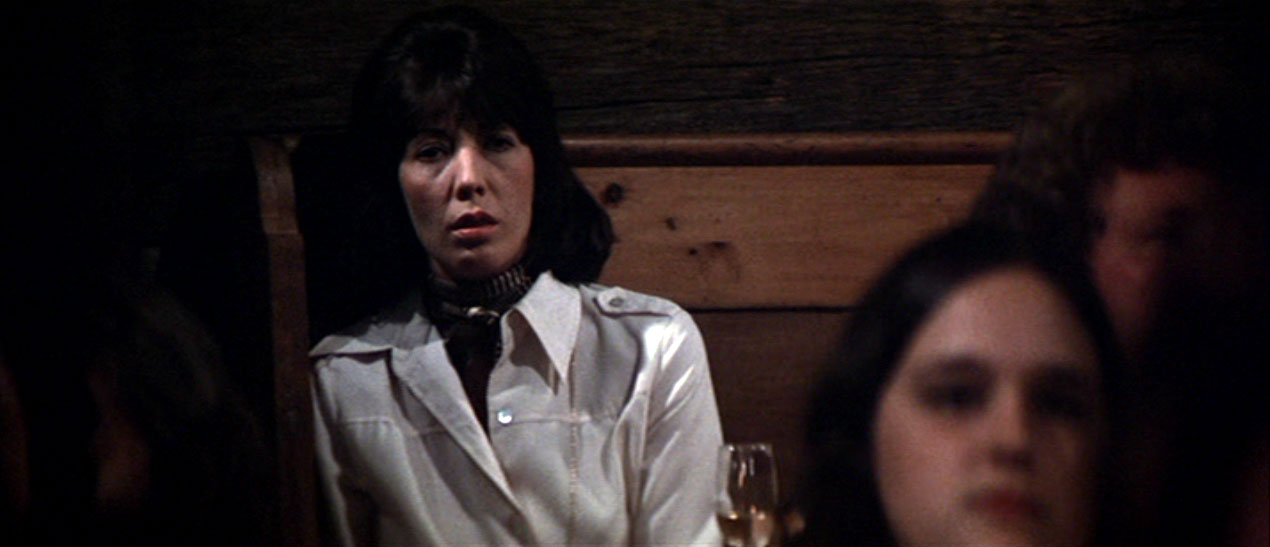
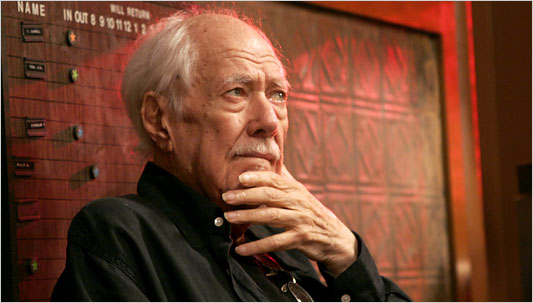
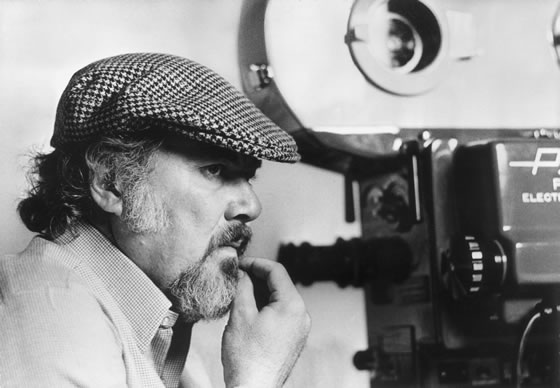
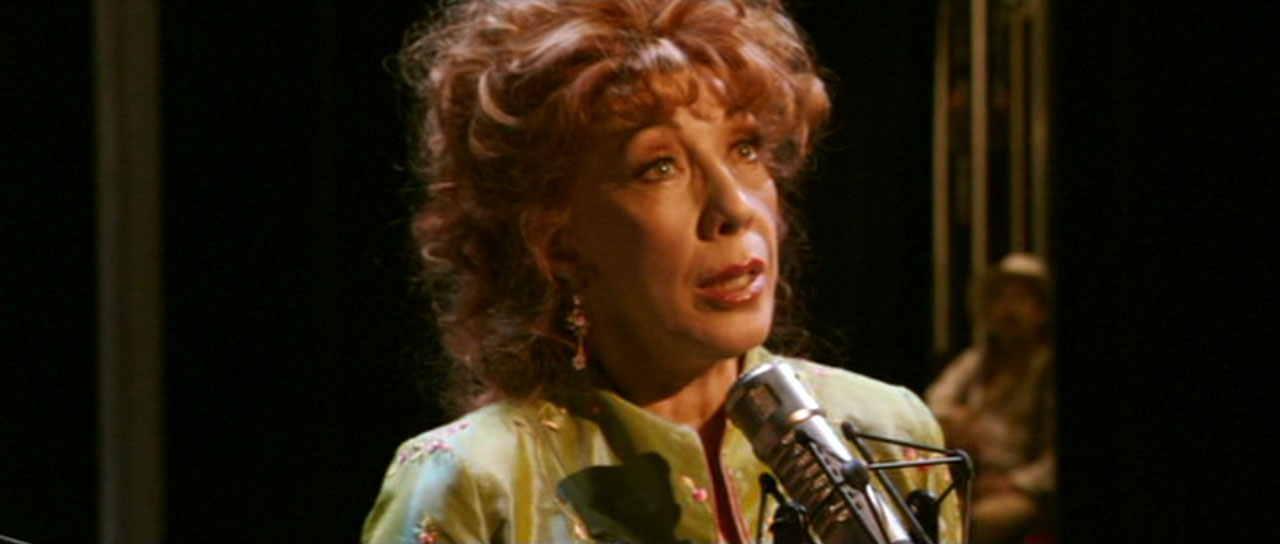
What I did think about is the idea of a career-arc, and how quickly time flies, and how the span of time can disappear when you have two DVDs in your hand that represent work done 30 years apart. Consider these two parings of images:

Tomlin in A Prairie Home Companion


Tomlin in Nashville


Altman on the set for A Prairie Home Companion


Altman in 1974 (on the set for Nashville?)

Both of these individuals are (Tomlin) or were (Altman) gifted artists. But like me, they are mortal. I am reminded of that quote attributed to Woody Allen: “I don’t want to achieve immortality through my work. I want to achieve it through not dying.” I found watching these two films back to back to be a somewhat sobering experience (and therefore a good experience). I found myself wondering what it is that I will leave behind when I’m gone. What will be my legacy?

>being content (more or less)

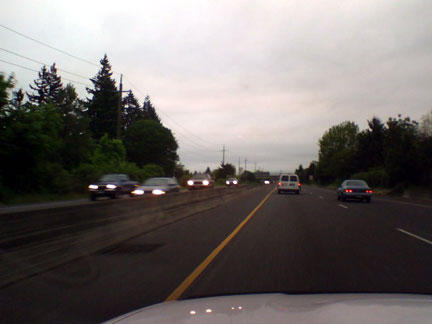
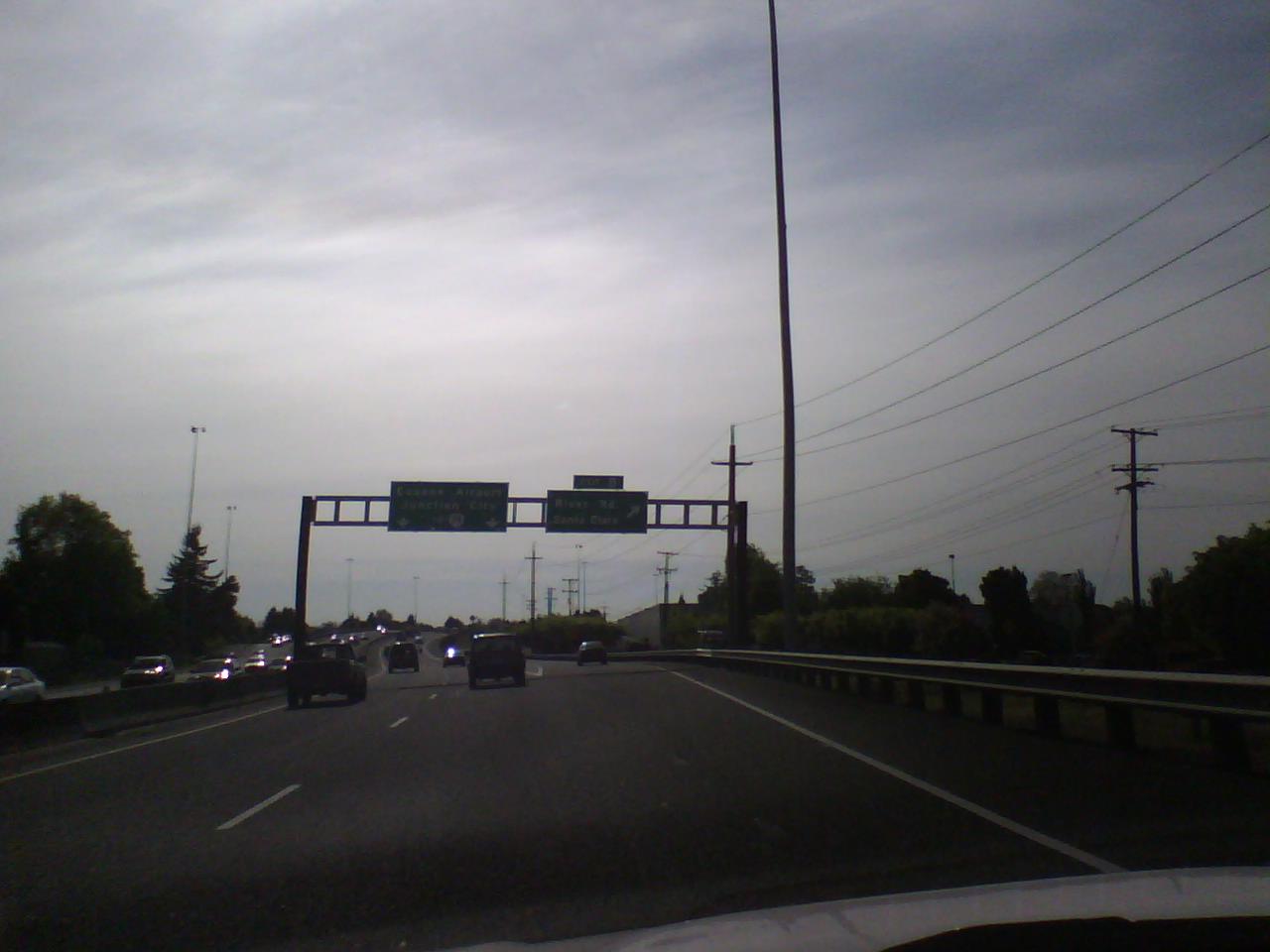
>my drive to work (6:15 AM)

my arrival at work

my desk at work

I became convinced years ago that the purpose of life is not to find ultimate fulfillment in one’s job. I believe this to be true even for those who have found the “ideal” job. Regardless, I do have a job (thank God) which takes up a great deal of my time. I am also in school, going after a Masters degree, and I have a family (thank God even more), all of which are “full time” in one way or another. But I am a lover of art as well, not least of which includes cinema. Like many others in similar situations, I ask myself where can art fit into my life so that I get what I need without placing a burden on my relationships, or jeopardizing the rest of my life, or feeling guilty that I am catering to frivolous things.

I don’t have a clear answer and I don’t know if there is one. But I think I can boil it down to some essentials:

  • Art is inherently good (self-justifying) and deserves a place in one’s life.
  • Life is not about work, but it is also not about art.
  • Life is about loving others and seeking wisdom. How that plays out in one’s life is unique to each person.
  • Time management is not a bad thing.
  • Being content (“sophrosune”) is a good thing to strive after.
  • There are too many films to watch and too many books to read in one’s lifetime, and there are more arriving every day. So pace yourself, set appropriate expectations, and take a deep breath.
  • People are more important than works of art.
  • It’s really a question of life, so you have to figure it out for yourself.

And at the end of my work day, I go home (or to school and then home) and reconnect with my family. Then I try to get things done that need to be done, and I look over at that stack of movies and hope I might fit them in to my life. Invariably I return some films without watching them, only to check them out again (I get most of them from the library) and once again try to fit them in.

So, I make my way through each day, each week, each year, seeking a fuller life. I try to be smarter, wiser, more loving, and more reliable. And, of course, I try to get more art into my life. In short, I am like anyone else, muddling through in my own selfish way trying to be less selfish. I wish you all better success than I.

my drive home (4:00 PM)

>inside Outer Space

>There is no doubt that Peter Tscherkassky’s Outer Space (1999) is a nearly maniacal and transformative assault on the viewer. One cannot finish the film (only 10 minutes in length) without experiencing a deeply visceral response. This is not a review per se, but an exploration of the film’s meaning, and a call for other perspectives.

The narrative, or what there is of a narrative, is apparently rather straightforward: A woman (played by Barbara Hershey – though it is found footage from Sidney J. Furie’s 1981 film The Entity) enters a house and seems to be “attacked” by mysterious forces, which may be the film itself (explanation later), and then she seems to disappear/fade into blackness. Consequently, one could classify this film within the common “woman as victim” horror genre, but I think that may limit our understanding.

Regarding the physical film itself being one of the forces, or maybe the only force, attacking the woman has been wonderfully discussed at Senses of Cinema by Rhys Graham in Outer Space: The Manufactured Film of Peter Tscherkassky. Graham places Tscherkassky’s work in a theoretical context by stating:

. . . Tscherkassky is playfully exploding the notion of “film as a mirror” articulated by Christian Metz which was, in turn, stated in opposition to Bazin’s narrative concerned statement that film is a window to the world. As he fragments Metz, who before him fragmented Bazin, we know that Tscherkassky is searching for something more.

This fragmenting is central to Outer Space and to Tscherkassky’s oeuvre in general (so I understand, Outer Space is the only film of his I’ve yet to see). Graham goes on to say:

This is not simply an act of subversion, but something like the fractured cut and paste ethics of avant-garde composers; a mode of using the violent rhythms of delay, rupture, fragmentation, looping and degraded image and sound.

The question I have is whether or not the violent fragmentation of Outer Space is, in fact, an act of violence upon the woman in the film (as part of the narrative), or is it to be understood as a kind of commentary alongside the narrative, a meta-narrative of sorts. Or better yet, a doppelganger at a visually psychic level. In other words, might it be that what the viewer witnesses is the tormented struggle of a multiple personality disorder visually represented in such a way as to convey both the struggle and the terror of that struggle, and in such a way as to elicit within the viewer feelings of almost macabre panic. And all this regardless of whether Tscherkassky had Bazin or Metz in mind at all.

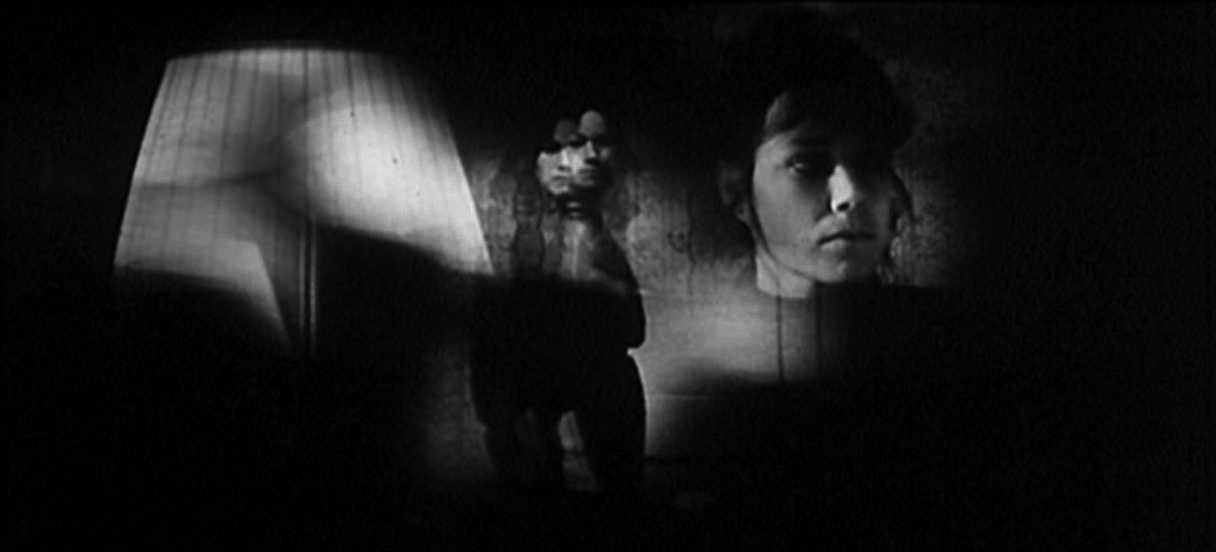
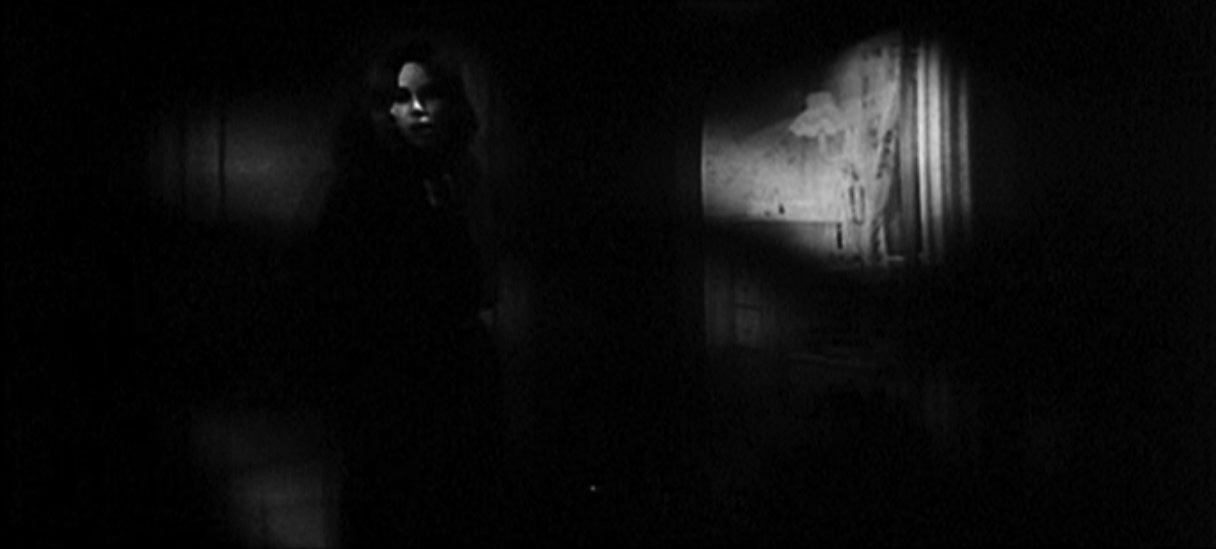
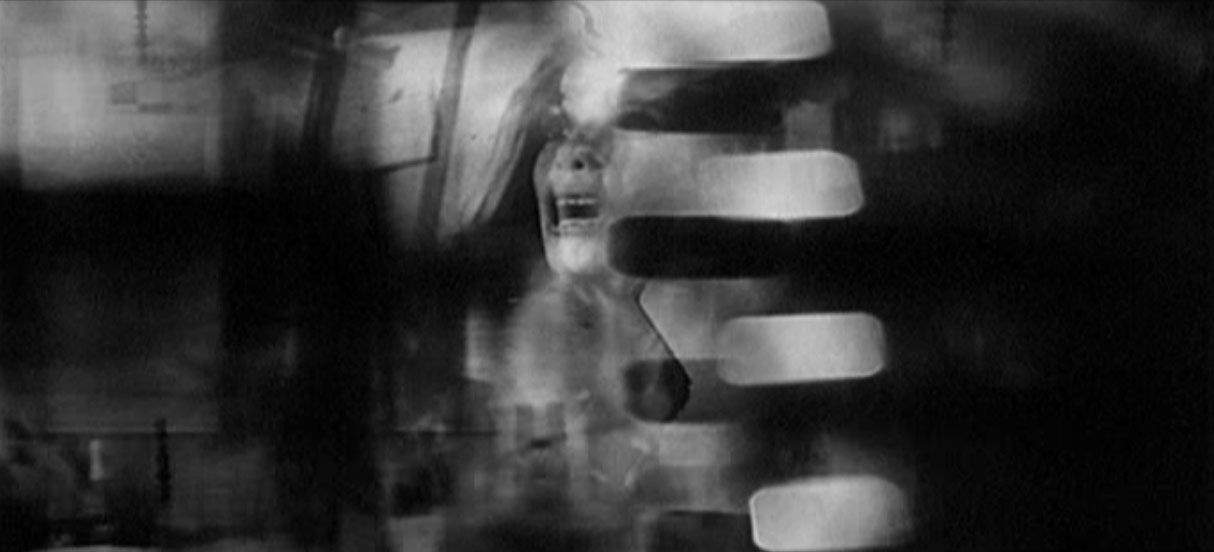
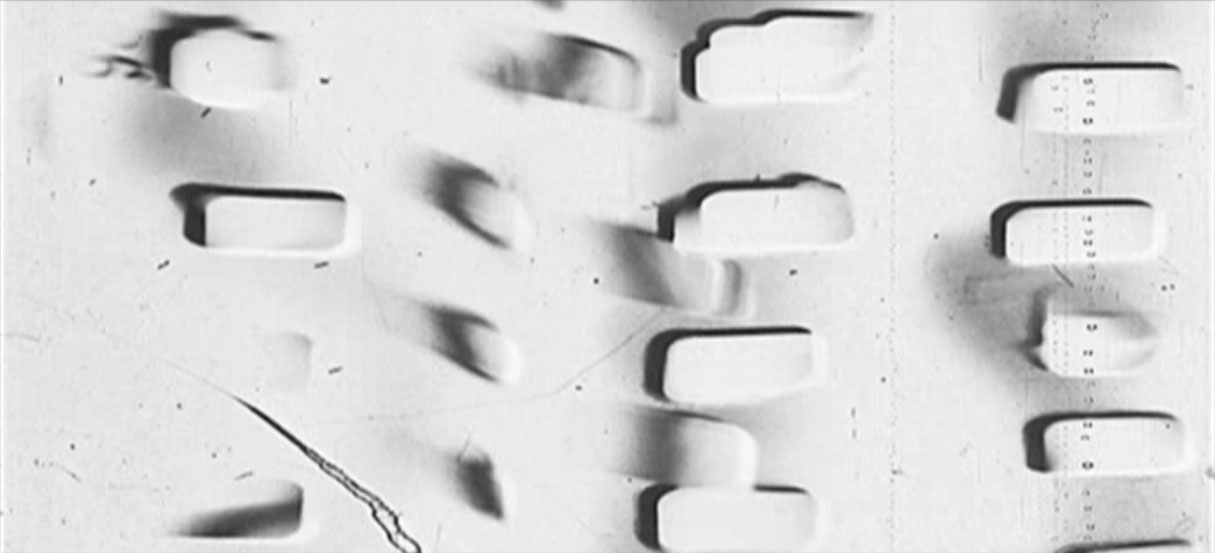
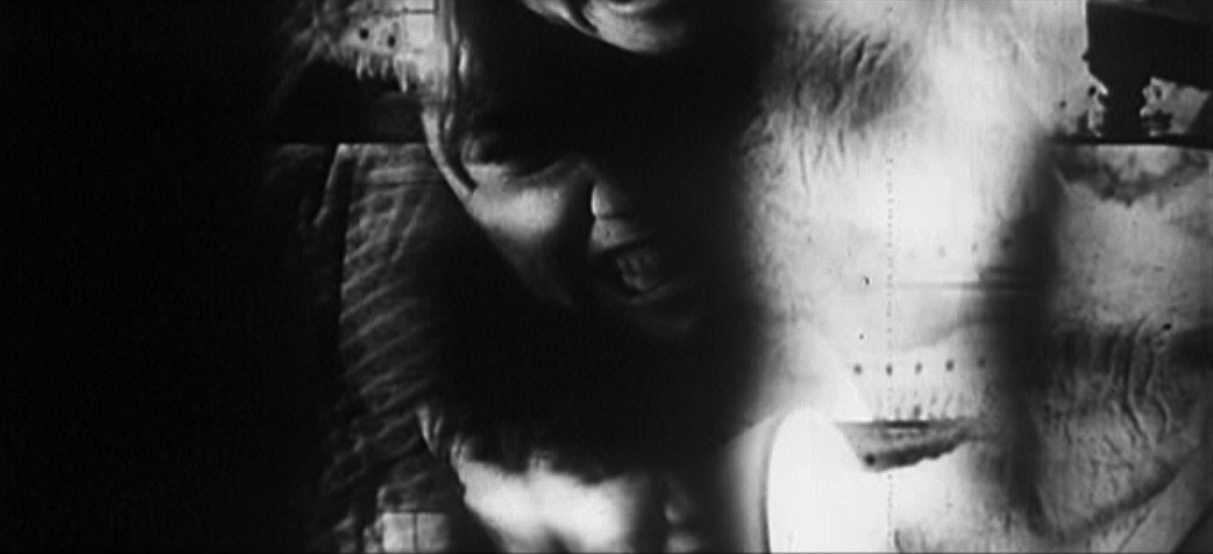
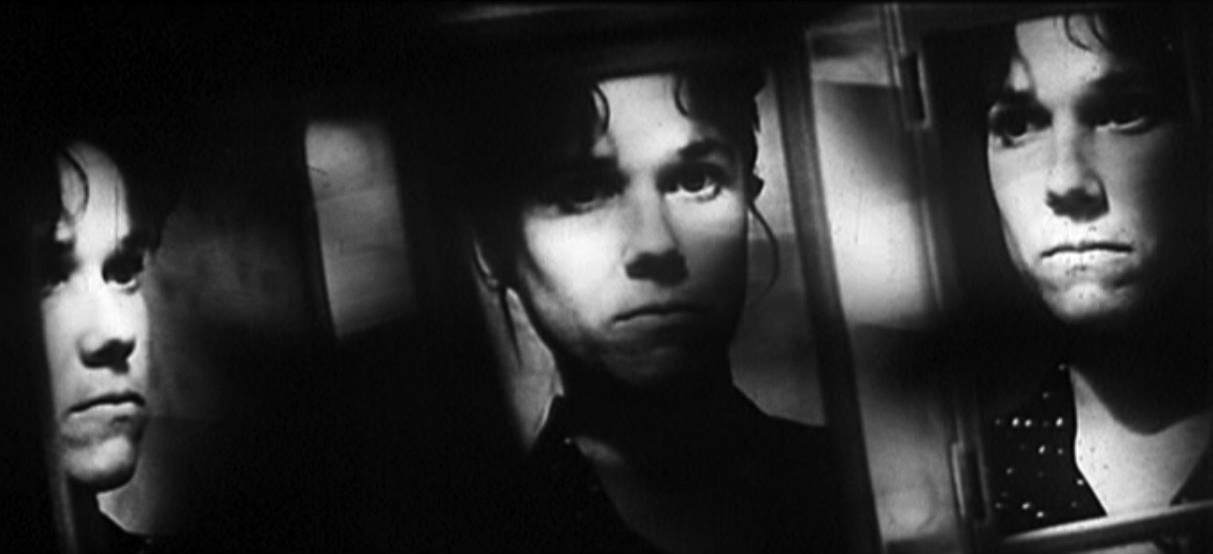
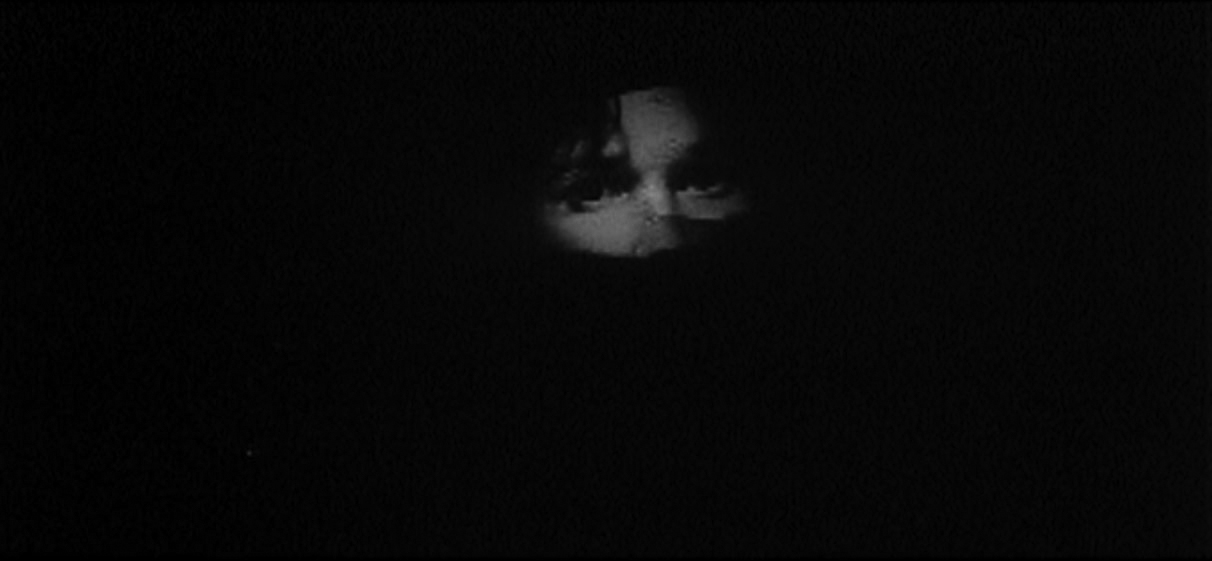
Note: Screen grabs from Outer Space are nearly impossible to obtain with any accuracy because no amount of screen grabs can convey anywhere near the true essence of the film or the viewing experience, especially the hyper-frenetic visuals, not to mention the unusual audio track. But here are several images that highlight some moments in the narrative.

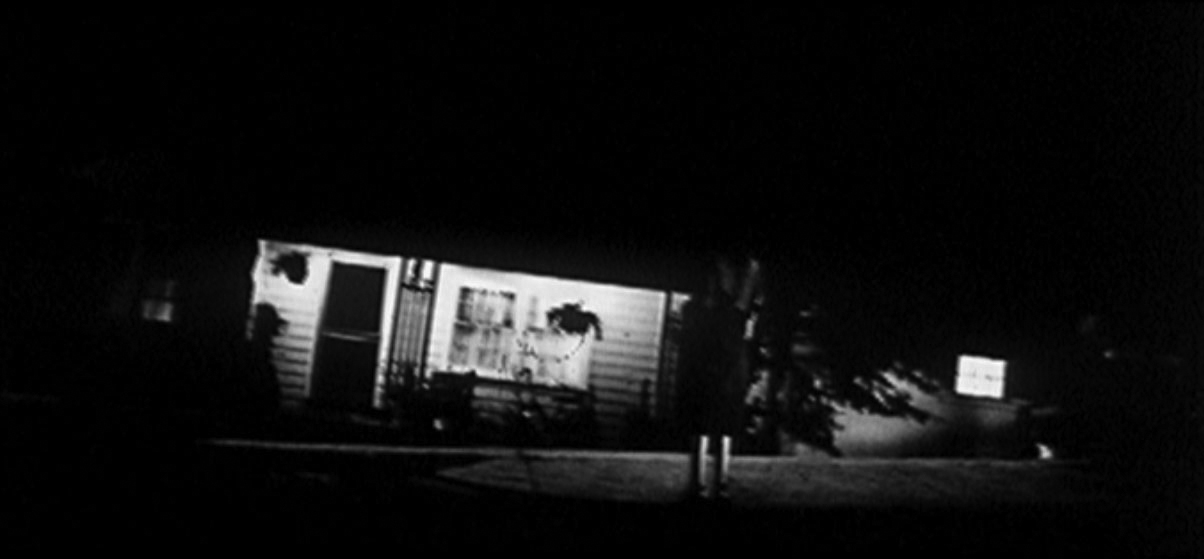
There is a house at night. At first it is just a house, then we see a woman standing outside the house. The house is tilted to the right. Note: at this point the film’s visuals already appear highly unstable often with mere flashes and hints of both the subject and the physical image in a frenetic and almost random manner. This carefully crafted accentuating of the film’s physicality offers reminiscences of scratchy and poorly threaded 16mm educational films shown in school classrooms of days gone by. It should be noted as well that Outer Space is a film that lives in darkness, revealing itself only in bits and pieces, and moves back and forth between the denotative and the connotative without concern for the viewer’s capability for discernment. (Like I said, screen grabs just don’t do it justice.)

The woman begins walking towards the house.

The soundtrack pops and crackles. There is a hint of eerie music, made even more effective by being pushed to the background. There is also no context for the house. The setting seems to be nighttime, but one could also posit that the house might just a well be floating in nothingness – almost like the empty space between time periods in Time Bandits (1981). Now that’s a reference you didn’t expect!

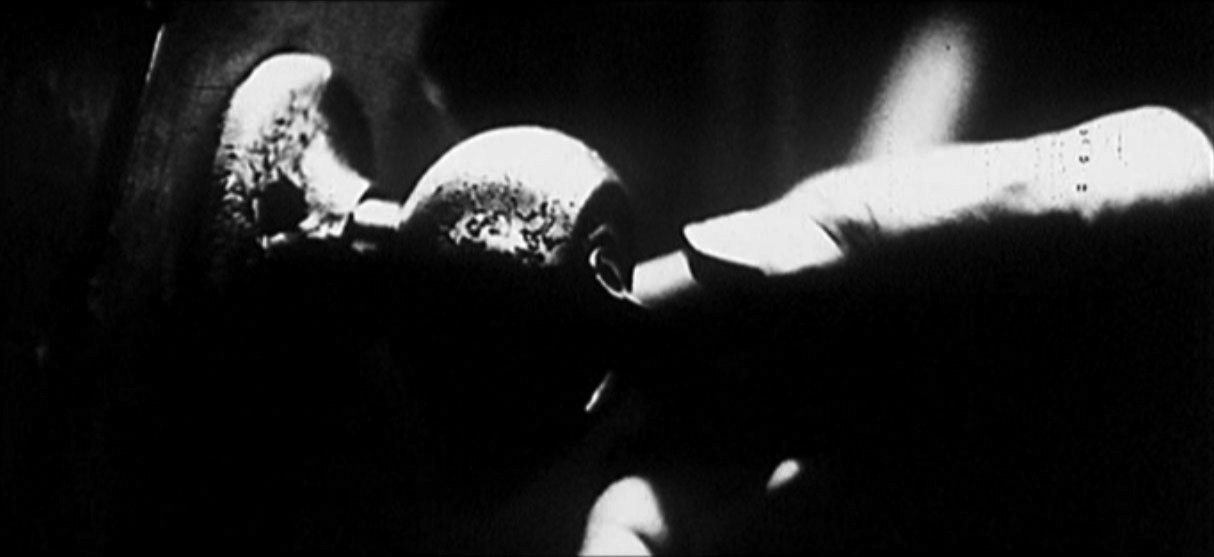
Then a hand reaches for a door knob…

…grabs the knob…

…and turns it.

I highlight this apparently simple action because of its psychic symbolism. I was reminded of Maya Deren’s Meshes in the Afternoon (1943) and its use of psychological symbolism, not least of which include the key, the house with its rooms and staircase, and the going through doors. The narrative in Meshes is not about the world “out there” but the world deep inside one’s subconsciousness (or someone’s subconsciousness). I argue that Outer Space functions in much the same way. The house is not a house, but a psychic space. Turning the door knob is the act of opening up that space.

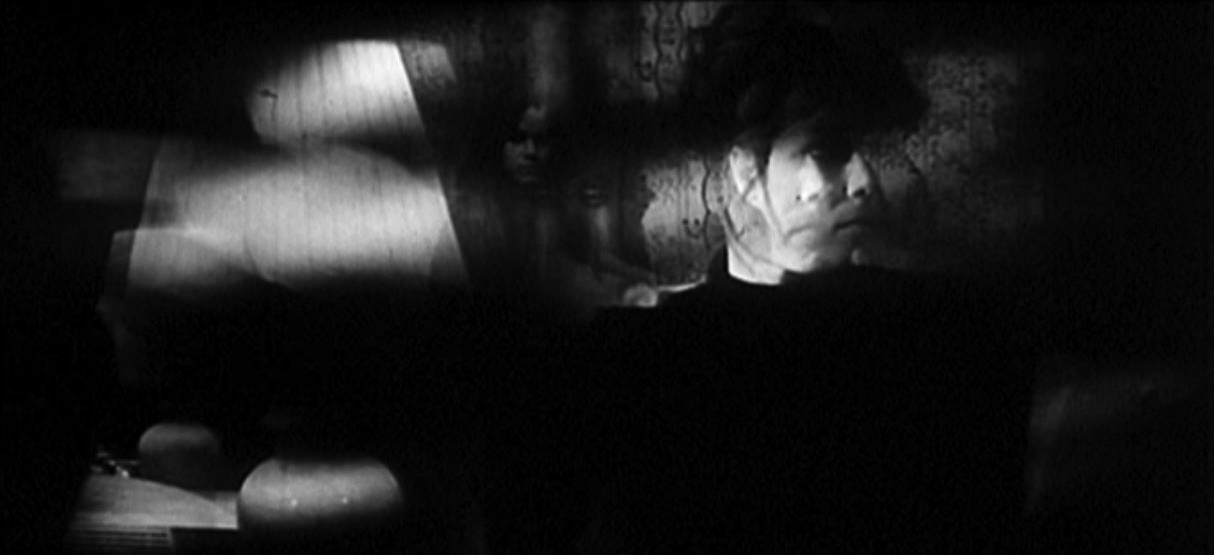
The woman enters the house. Almost immediately there is the possibility of more than one instance of her. In other words, another, second woman appears that is also the first woman, but with her hair down rather than up – the same yet different.

The second woman appears at first faintly in the background…

…then more prominently…

…then the first woman disappears (fades) as the second woman remains. At this point multiple images of the woman come and go, as though competing for a place in the psychic space.

Eventually there are three women seen in the film, all the same woman, yet all slightly different. The film’s frenetic qualities increase and the women seem to compete for dominance, both with each other and with the film.

And then, in this already disquiet film, the film seems to jump its sprockets and come free. Notice the sprocket holes through the middle of the image (below).

The woman becomes fearful as the physical film begins to take over the narrative space.

Eventually the physical aspects of the film (sprocket holes, frames, etc. – along with a soundtrack hard to describe) completely take over.

At this point the viewer is now being assaulted by the film via an intense stroboscopic effect. And eventually the physical film begins to subside and the house once again asserts itself.

We come closer to the house, look into its windows and see the woman again. The film seems to assert itself again over the woman. But the woman (is it the first woman?) directly fights, almost as though attacking the viewer or camera. She attacks and attacks…

…but as she does so, she also begins to fragment…

…and eventually she must come to a point of apparent resignation.

And then she slowly disappears into the darkness.

What we are left, at the end of the film is once again where we began, in blackness. The woman has faded into a non-contextual blackness, into nothingness.

The physicality of the film as a narrative element raises the question of the “film as mirror” and thus film as theory of film. But is this really what this film is concerned with? Is this truly a story of a woman and a film fighting each other? Or might we see the tremendous noise (visually and audibly) created by the film as a kind of metonymic foray into the disturbing psychological depths of a person fighting at their inner core – whether it be a spiritual fight or a psychological one? In this sense, the film is not about a woman fighting against a/the/all film, but a woman struggling with deep forces within her. Tscherkassky has had to grapple with the key issue that every artist must grapple, that is how best to convey one’s ideas or instincts with the materials at hand. In Outer Space he succeeds brilliantly – and leave us a kind of post-modern talisman with evocative muscle.

Outer Space is available on DVD from Other Cinema as part of the collection Experiments in Terror.

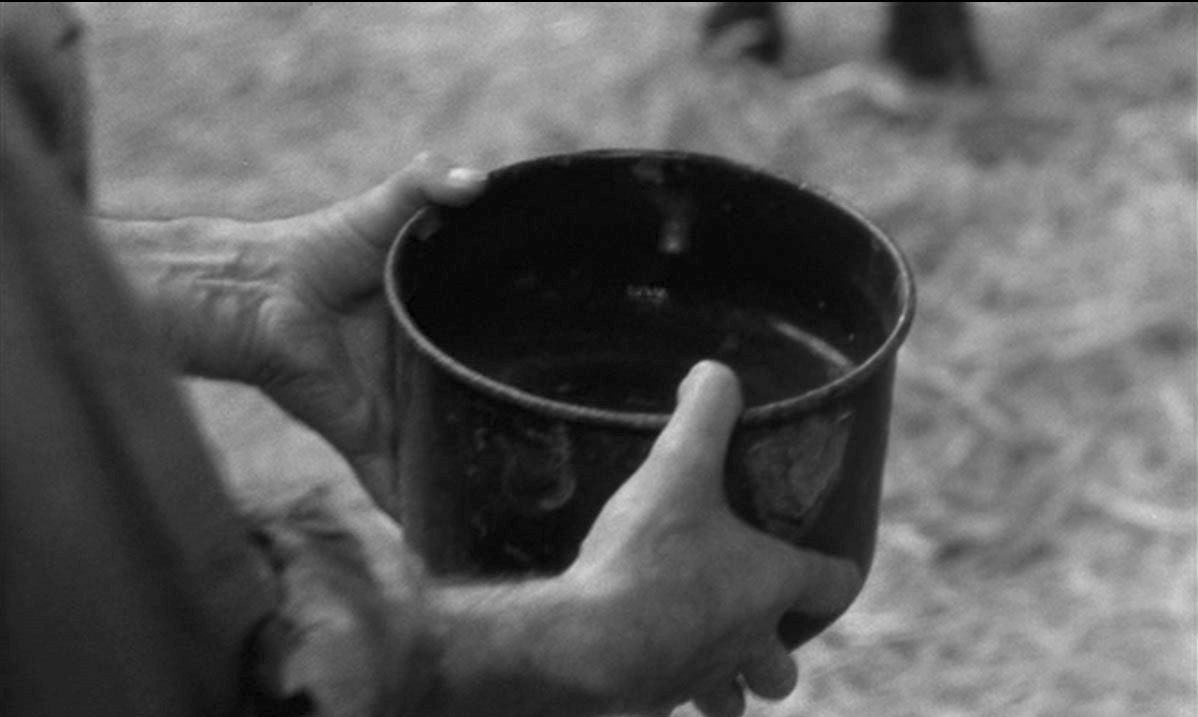
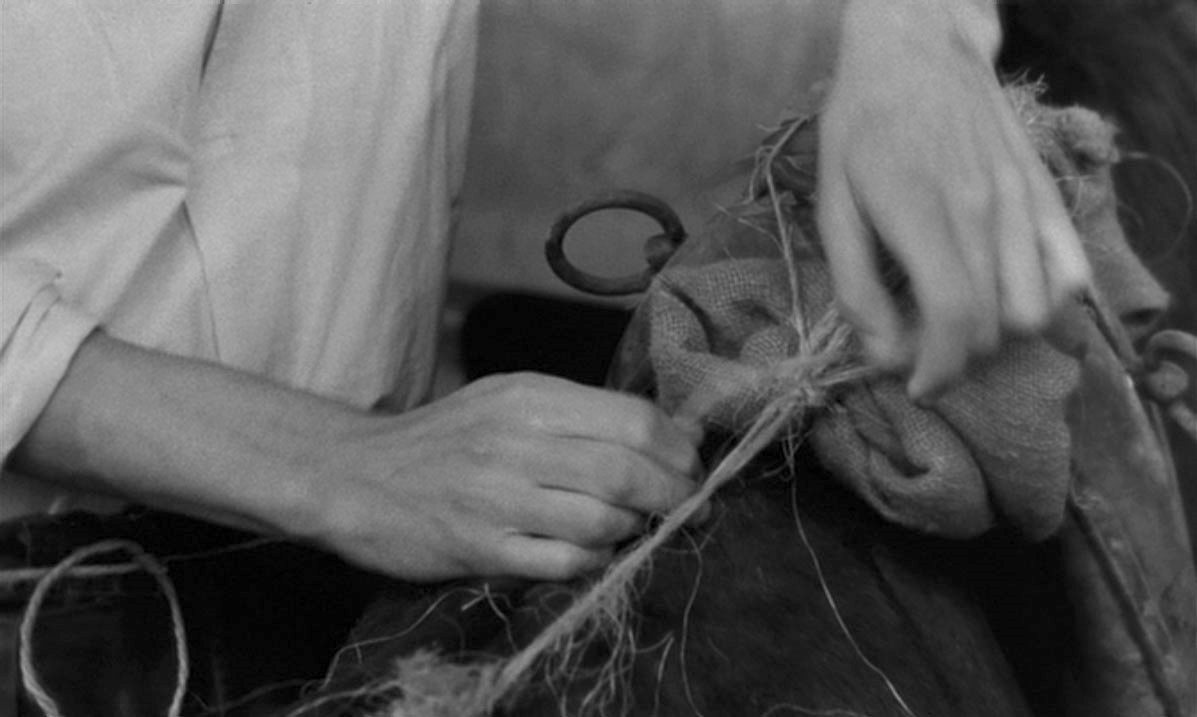
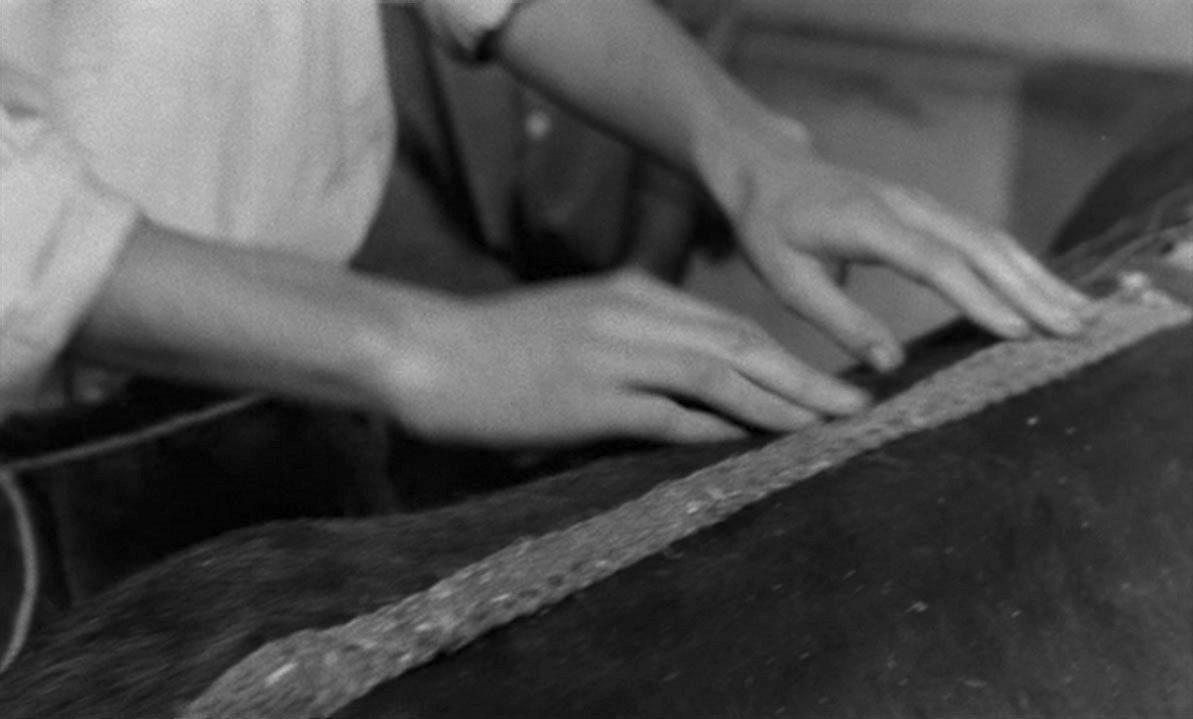
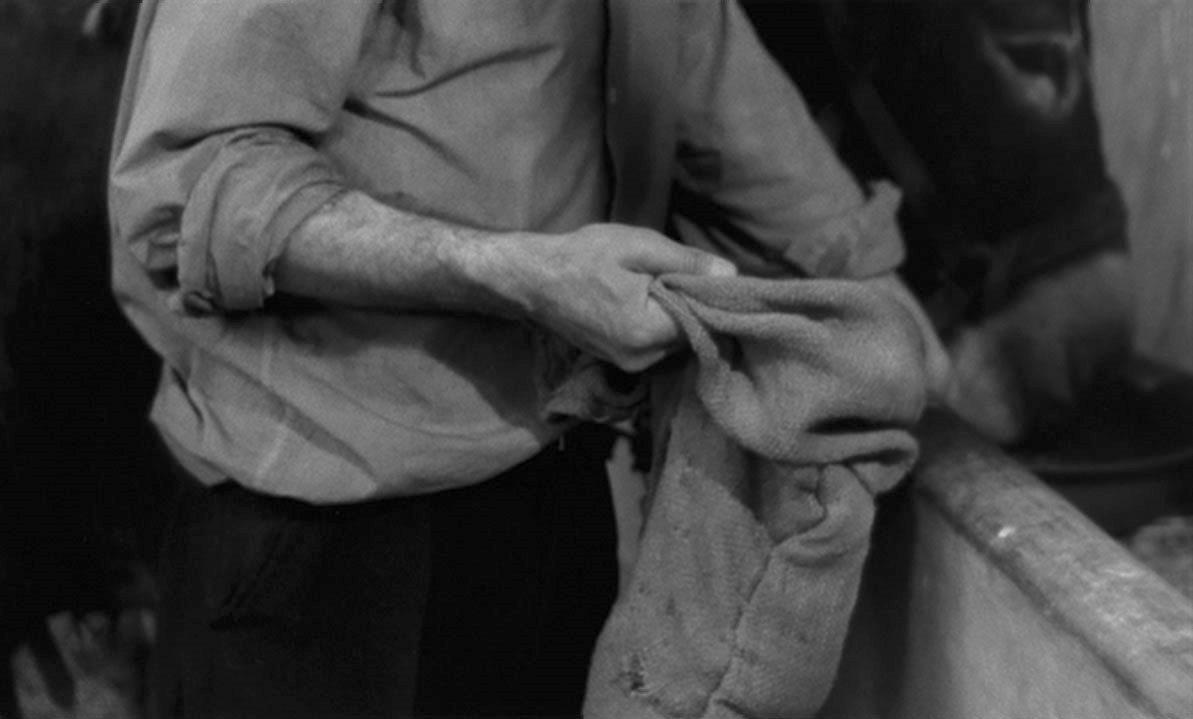
the agents of fate

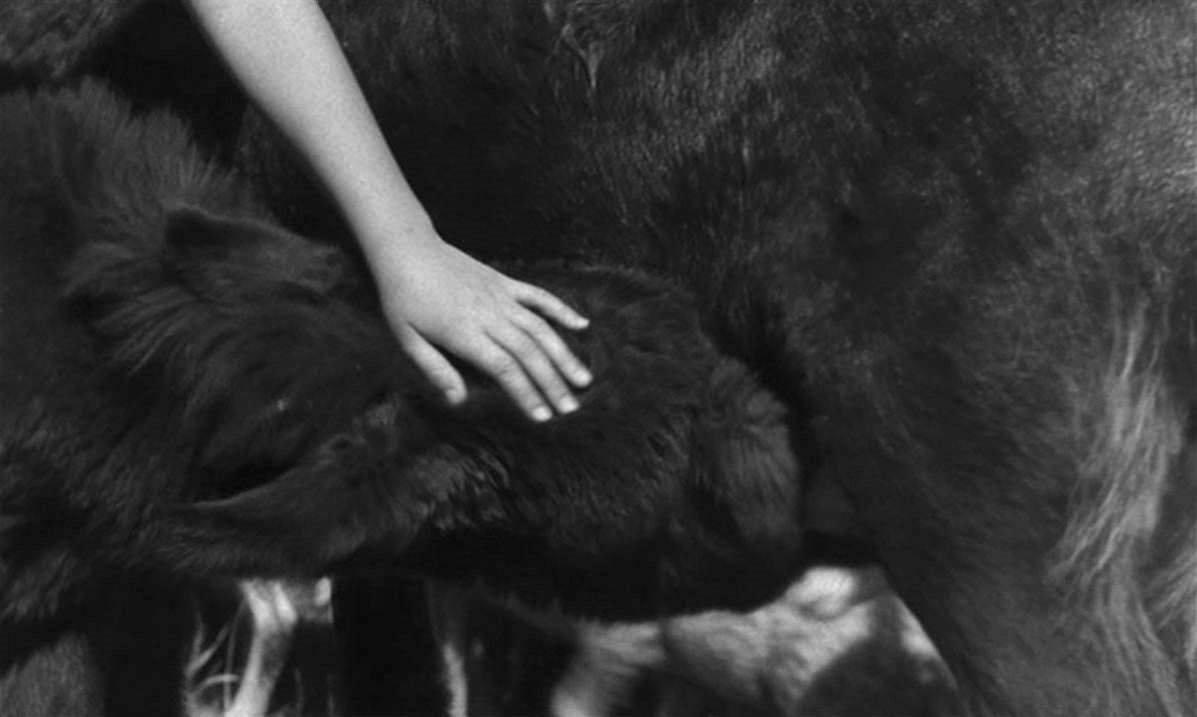
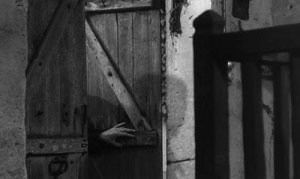
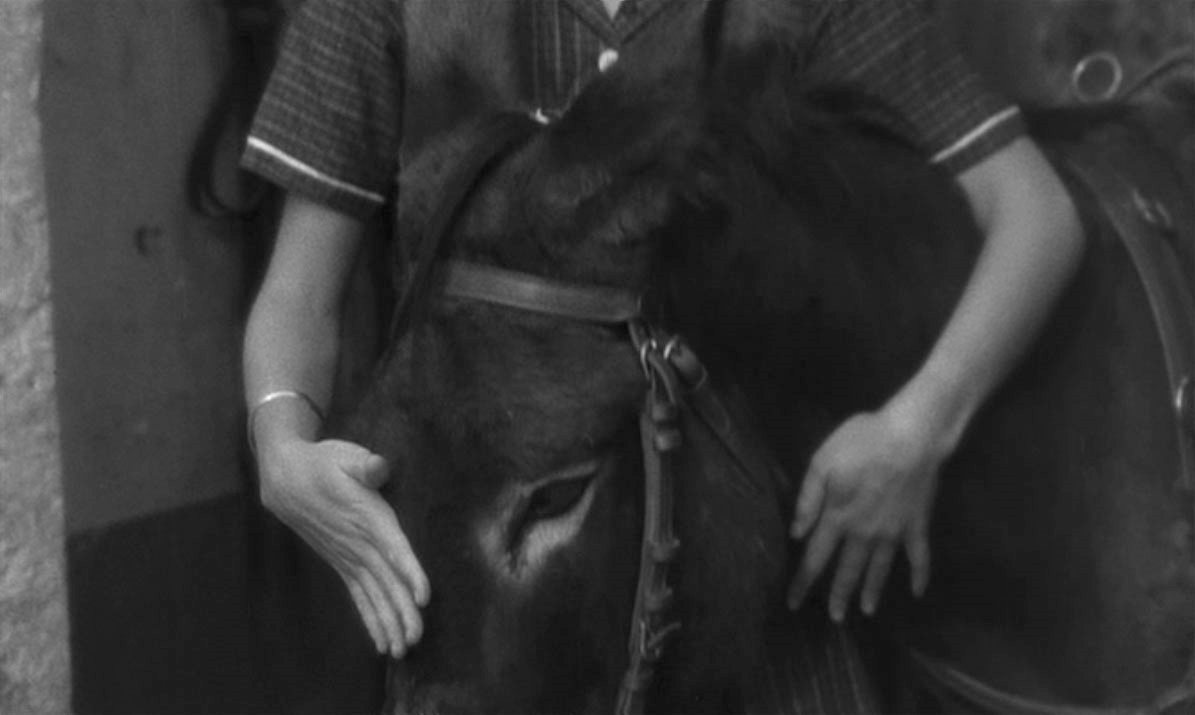
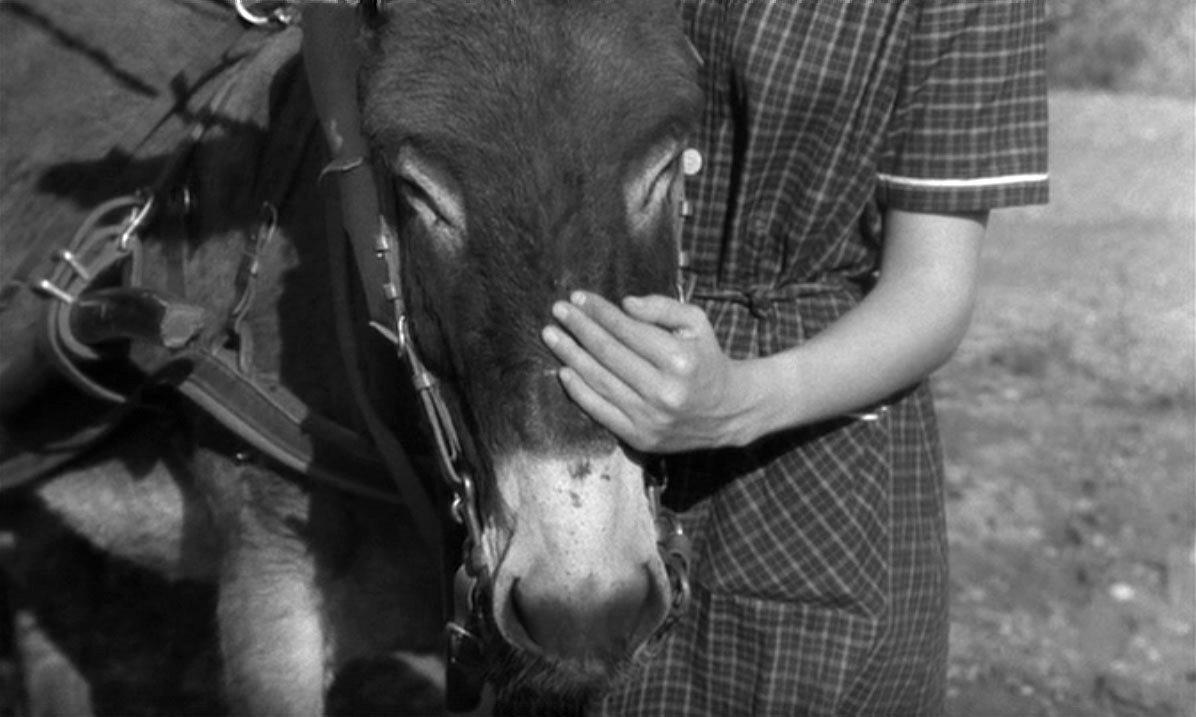
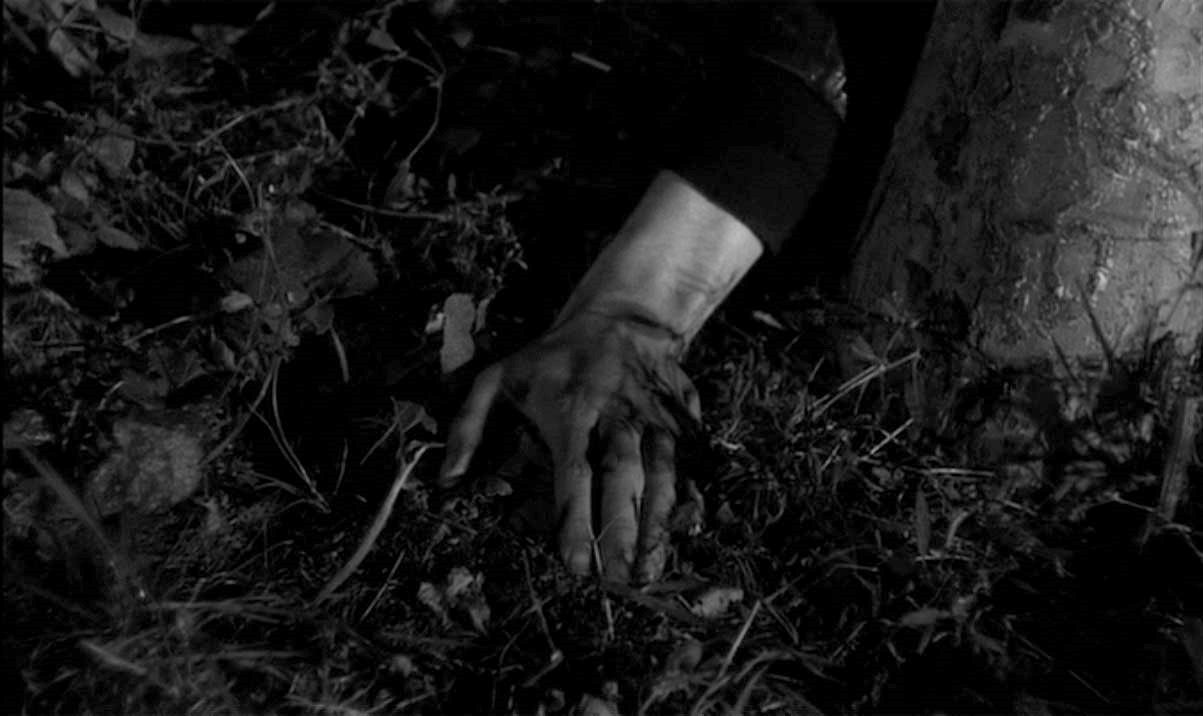
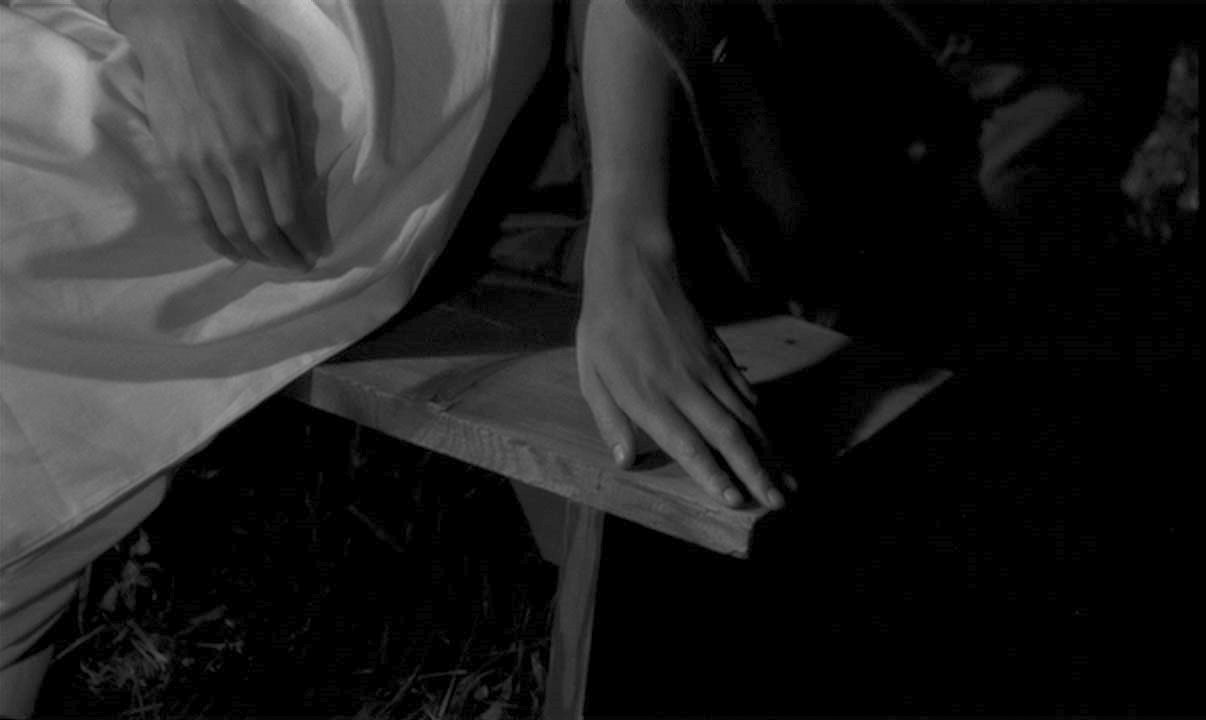
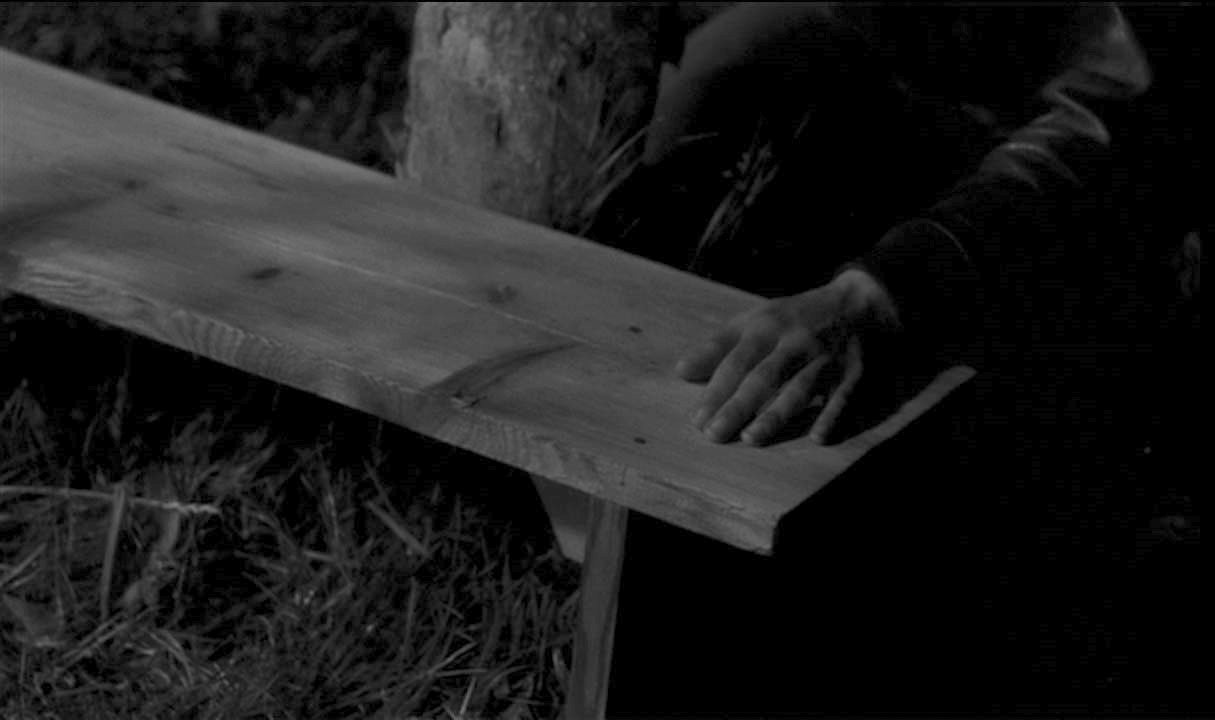
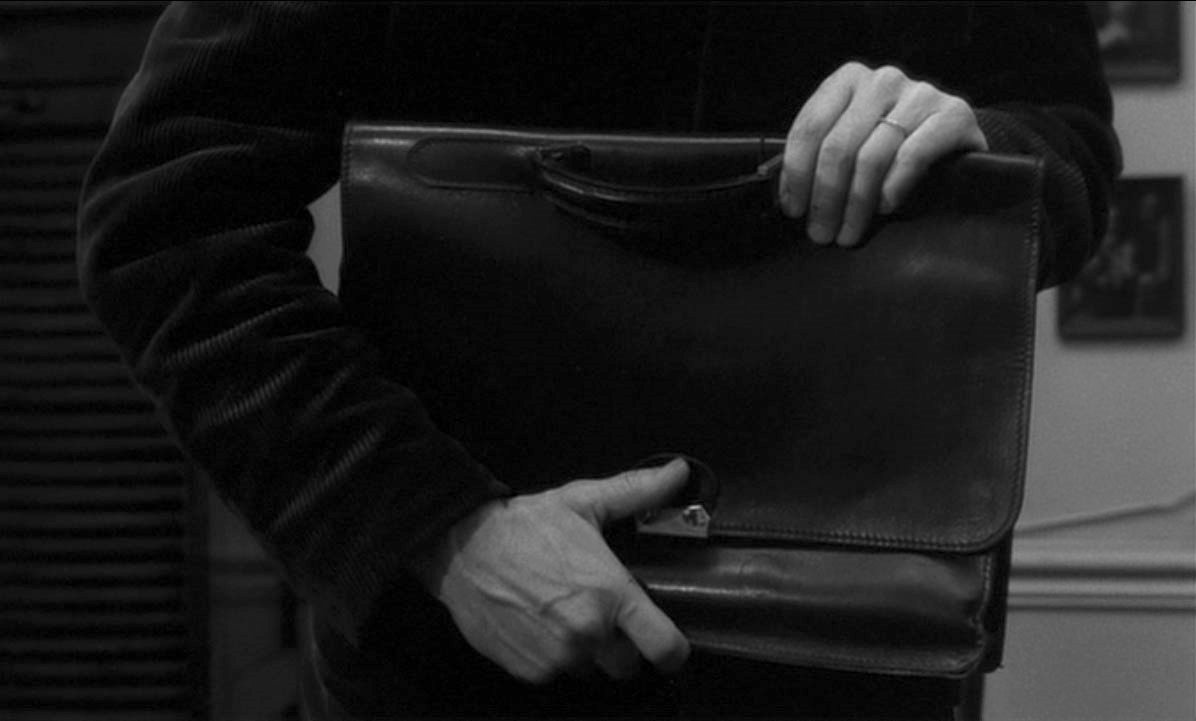
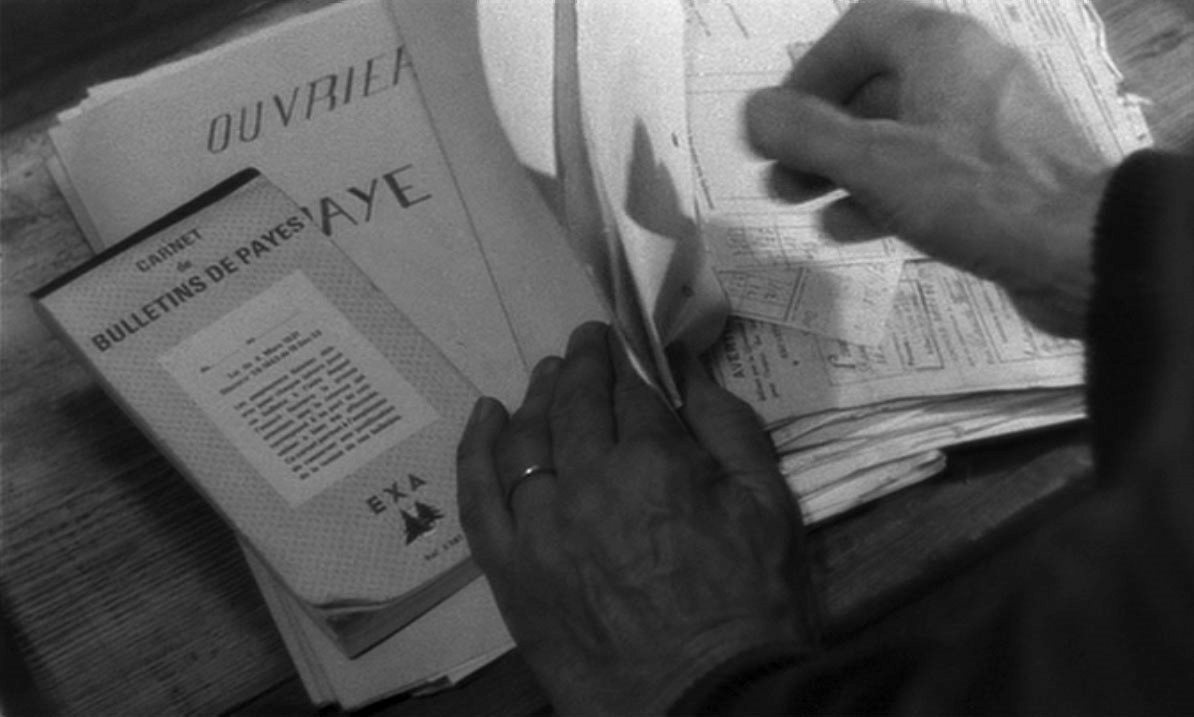
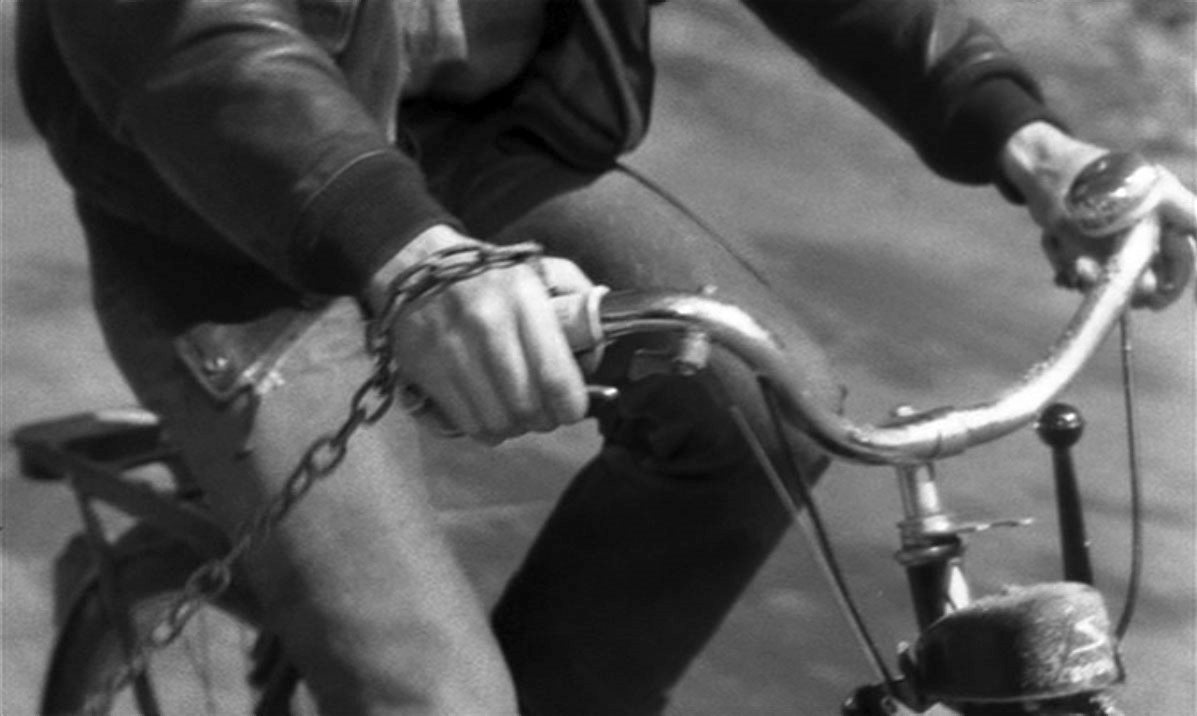
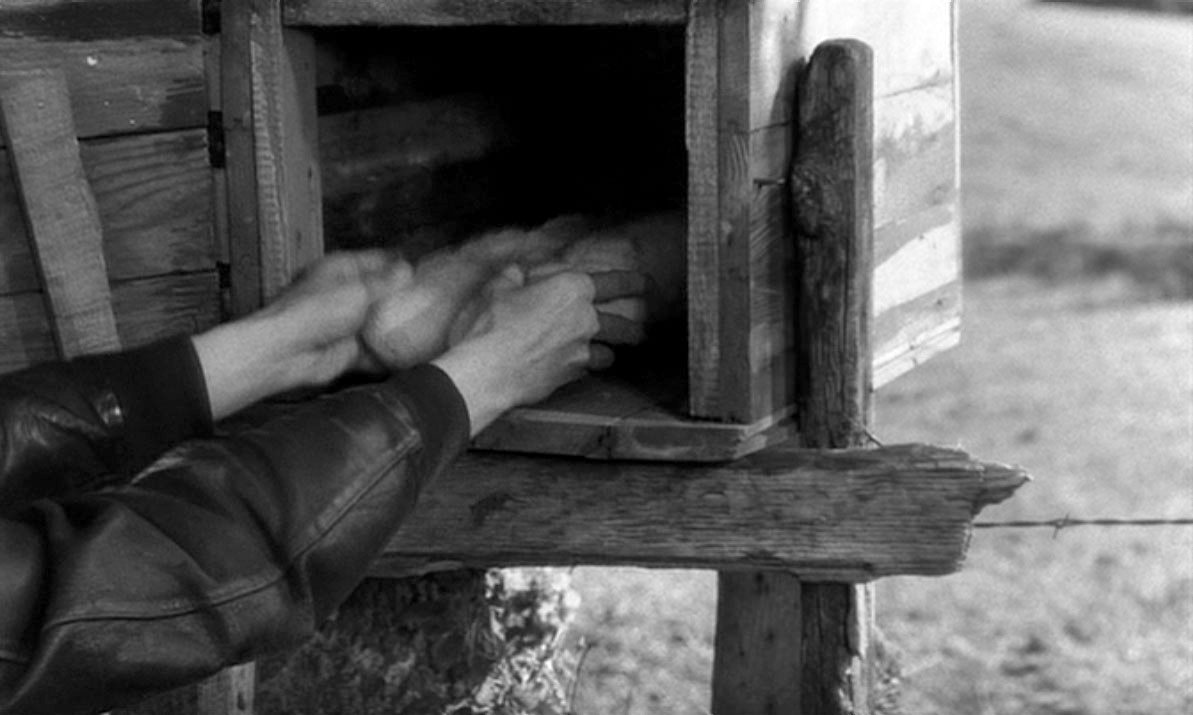
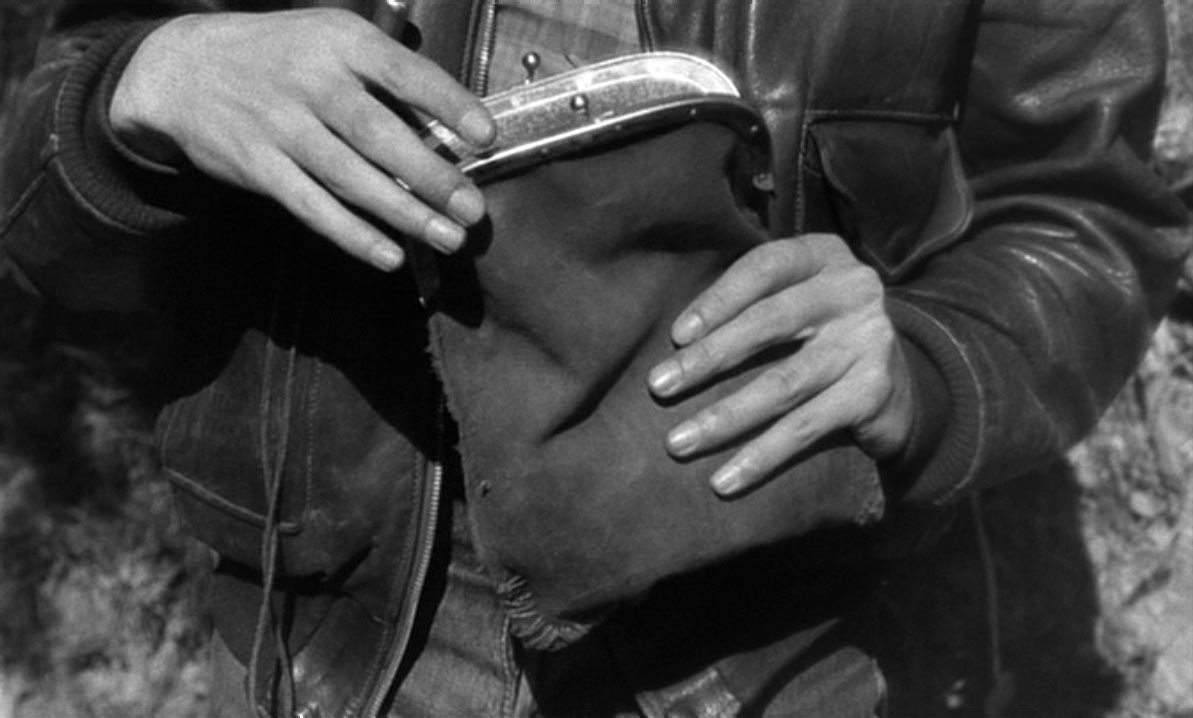
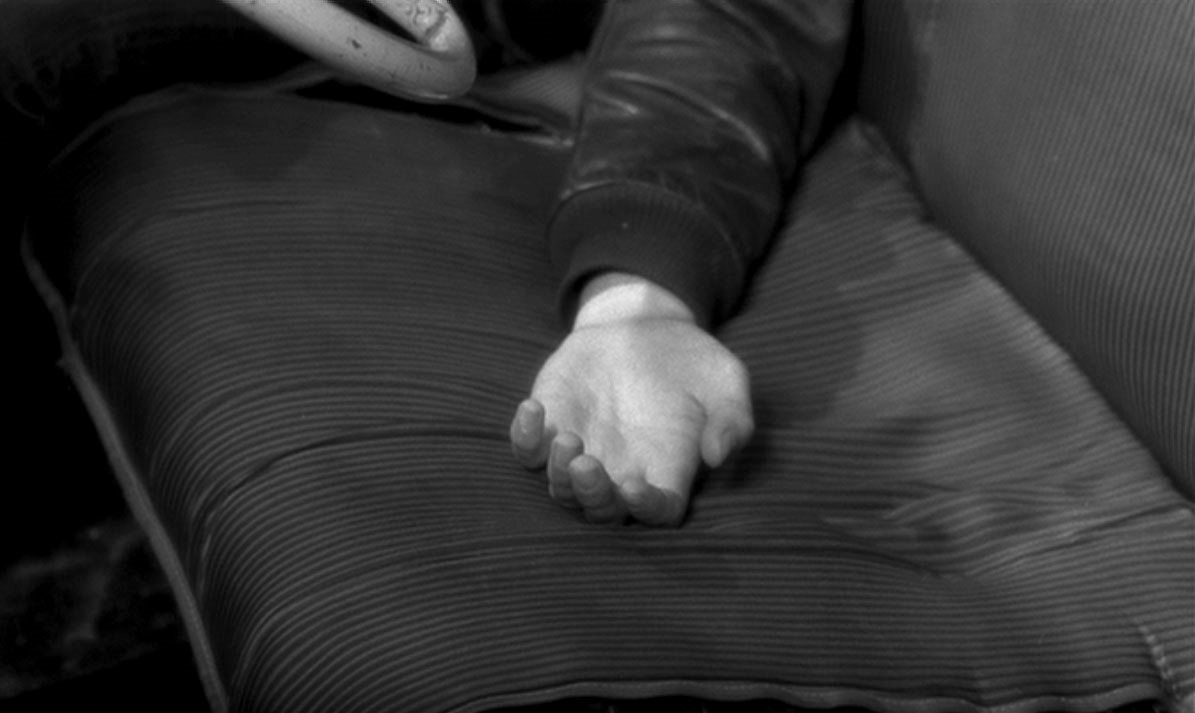
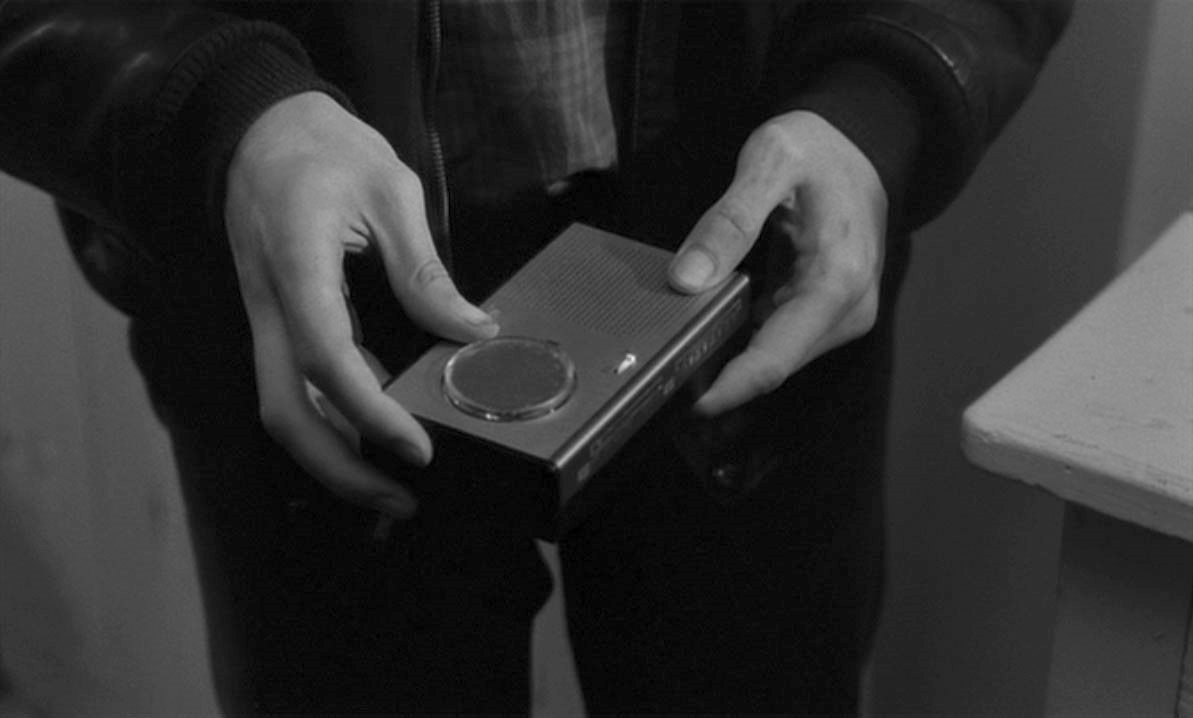
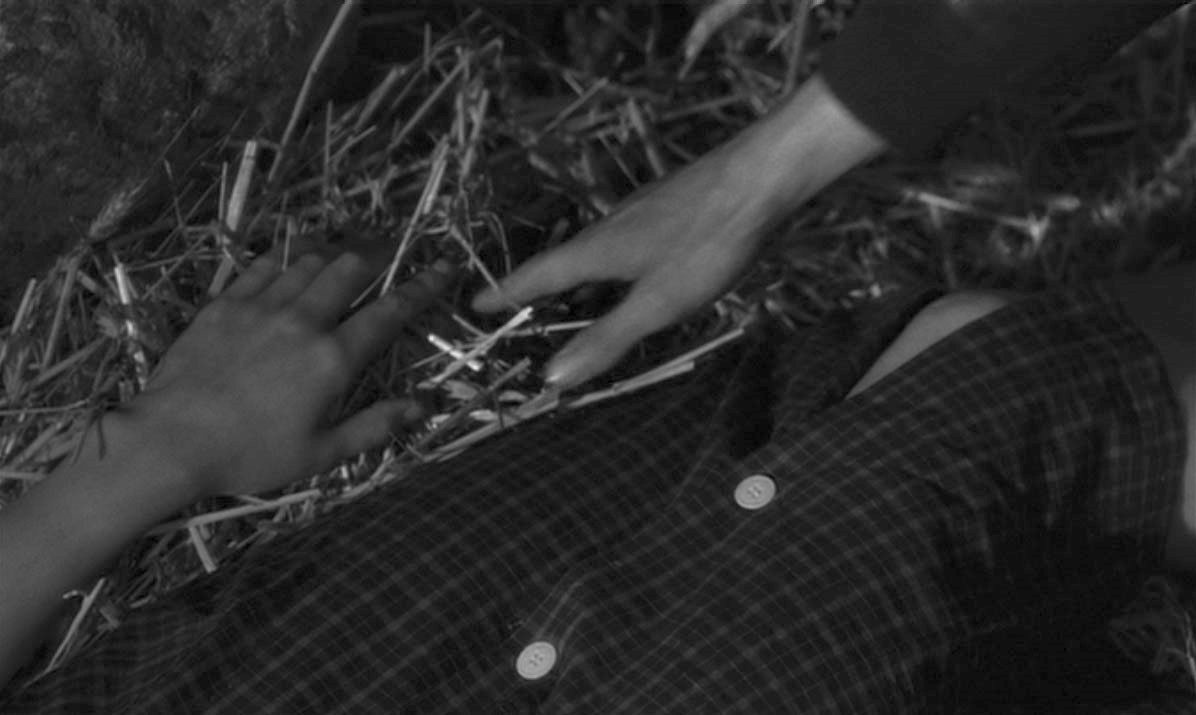
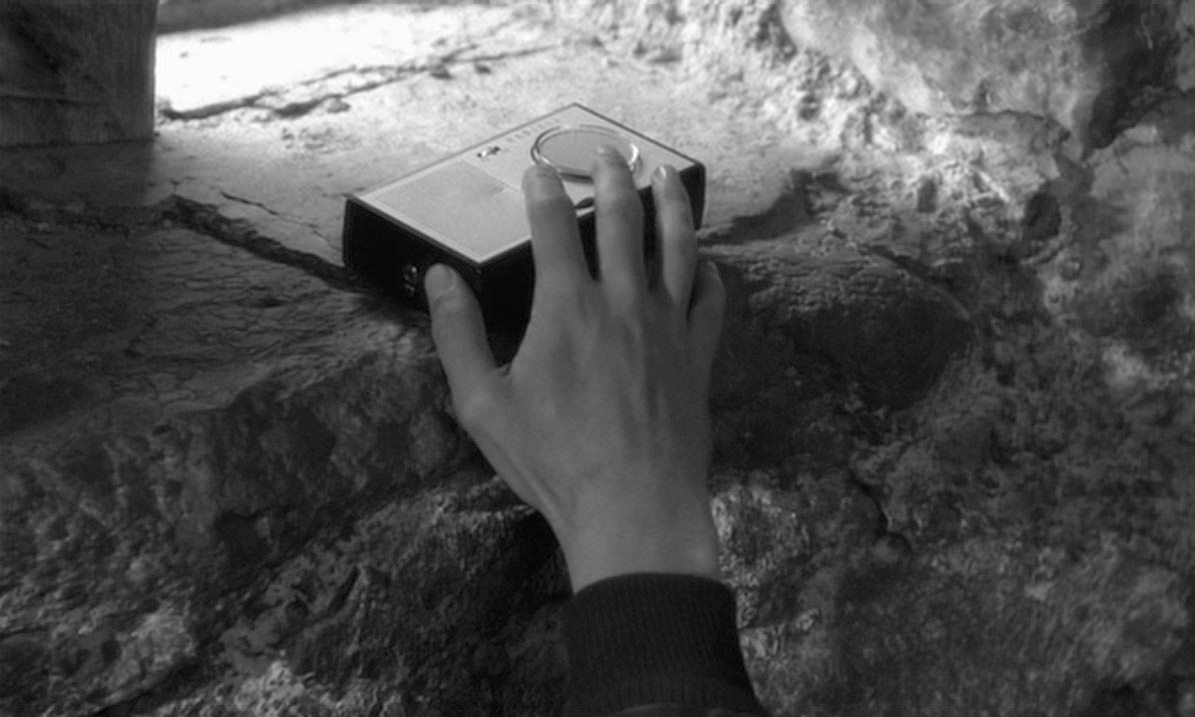
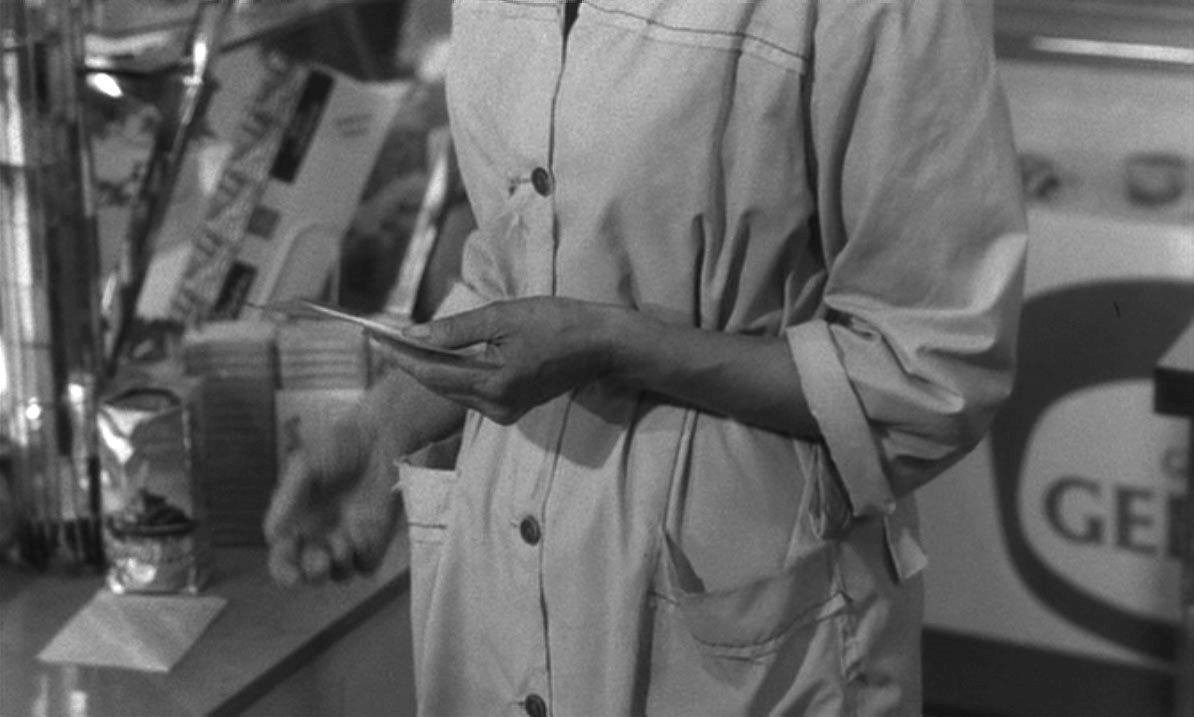
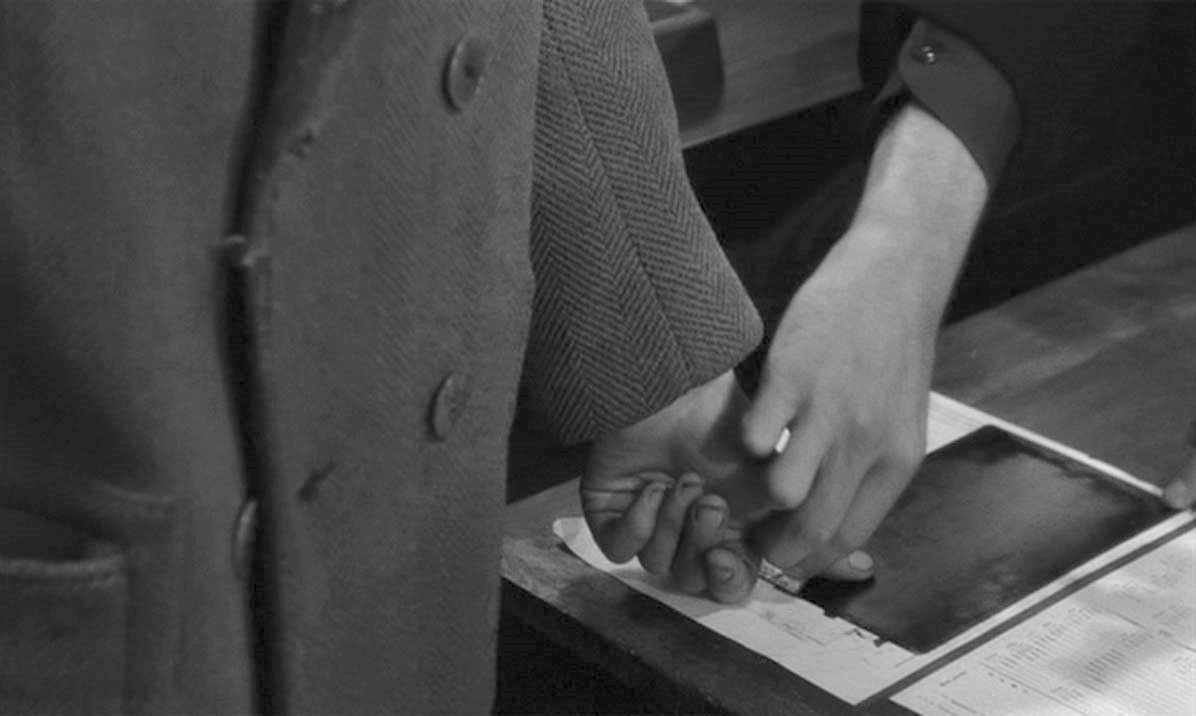
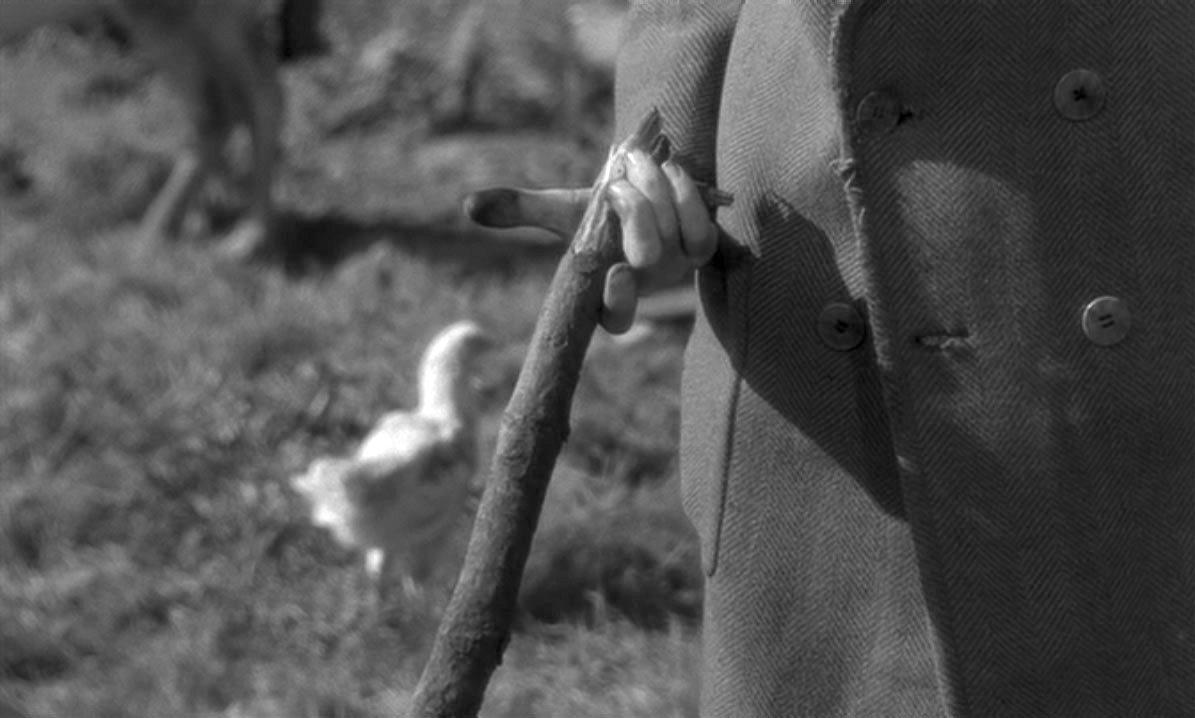
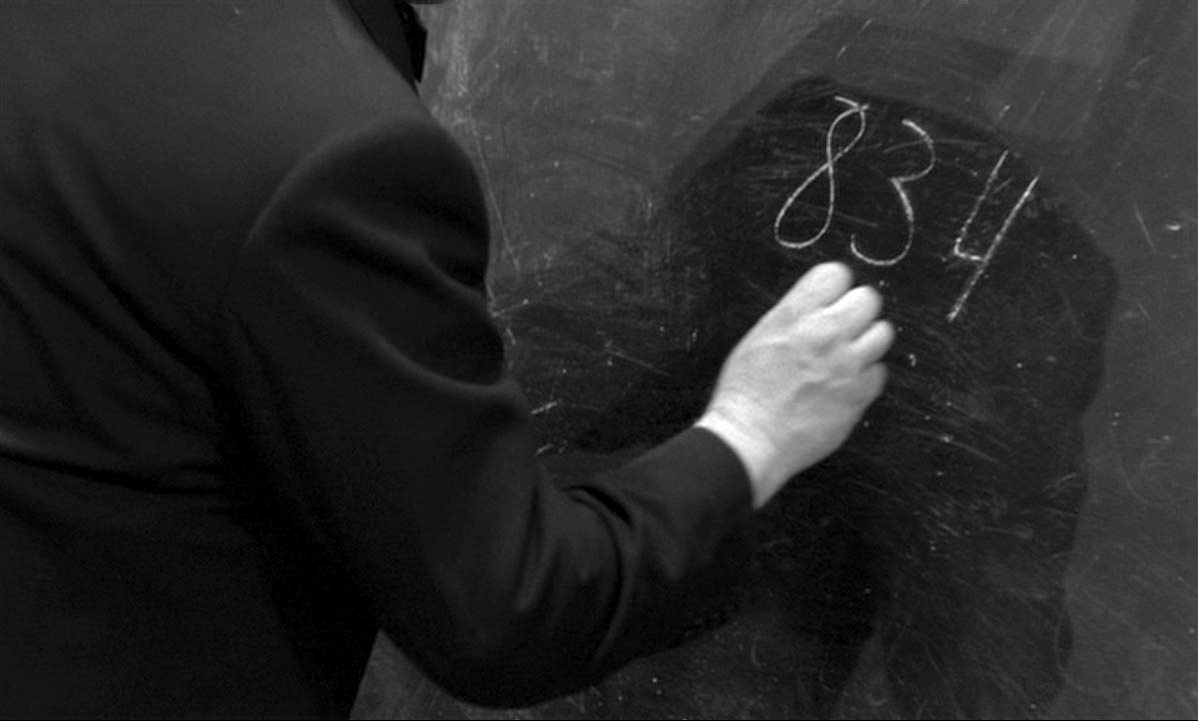
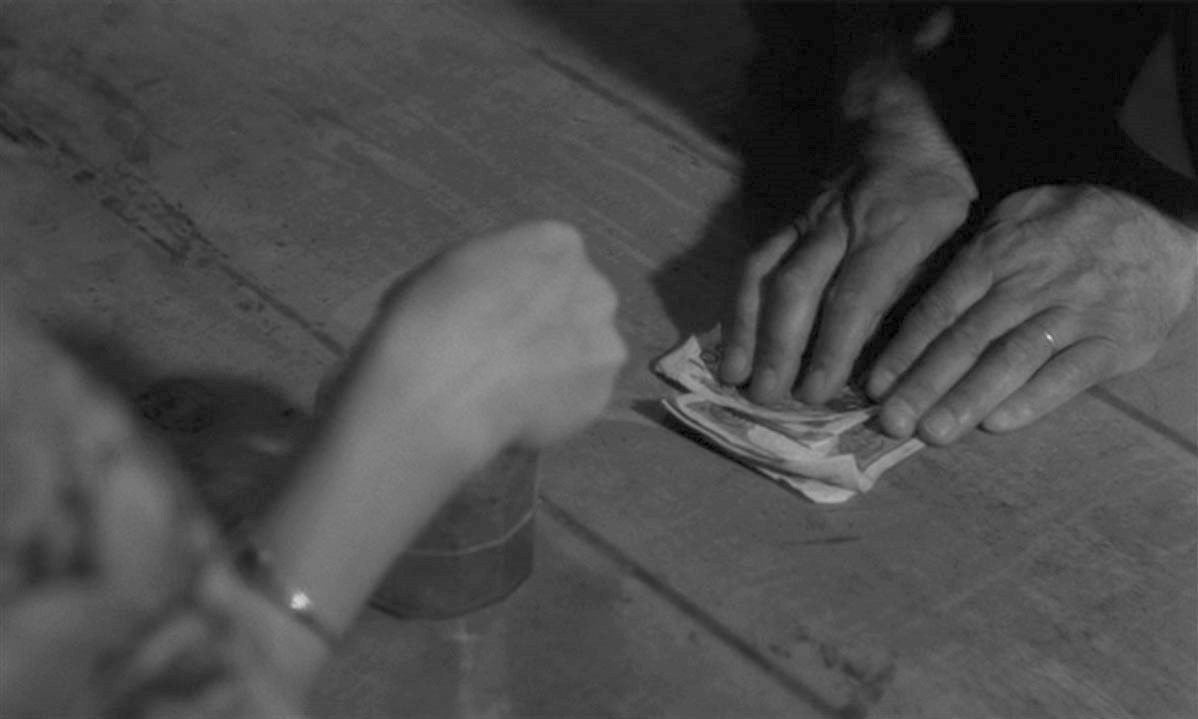
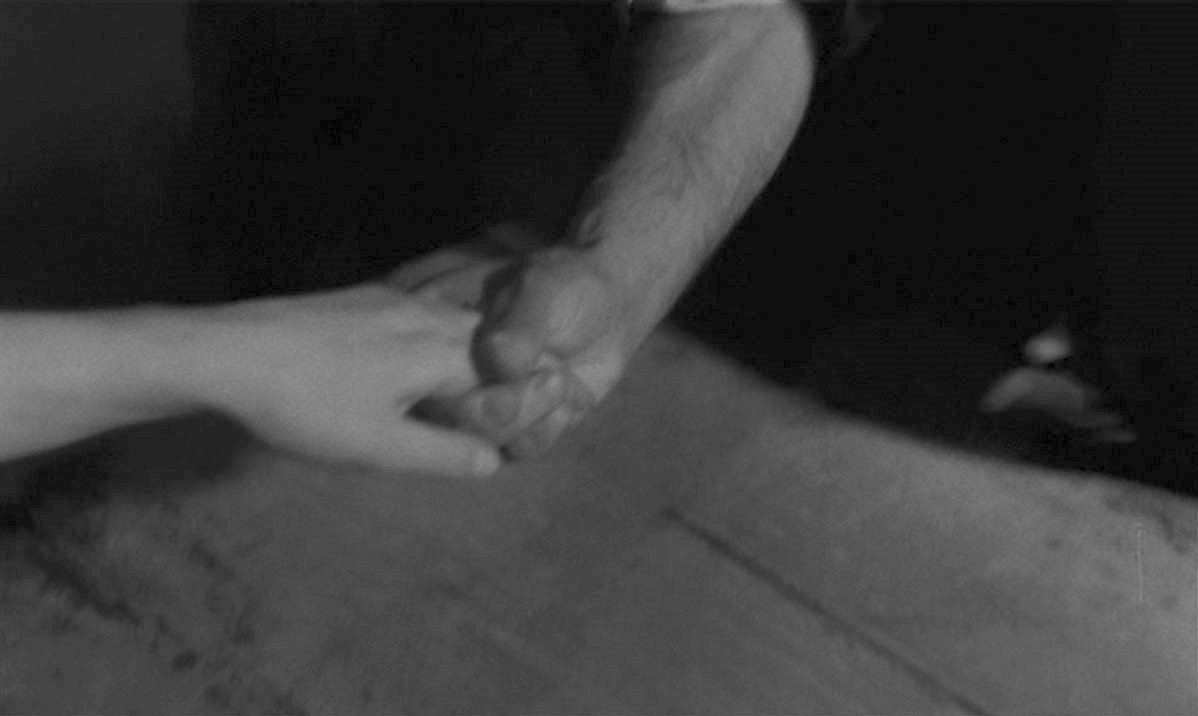
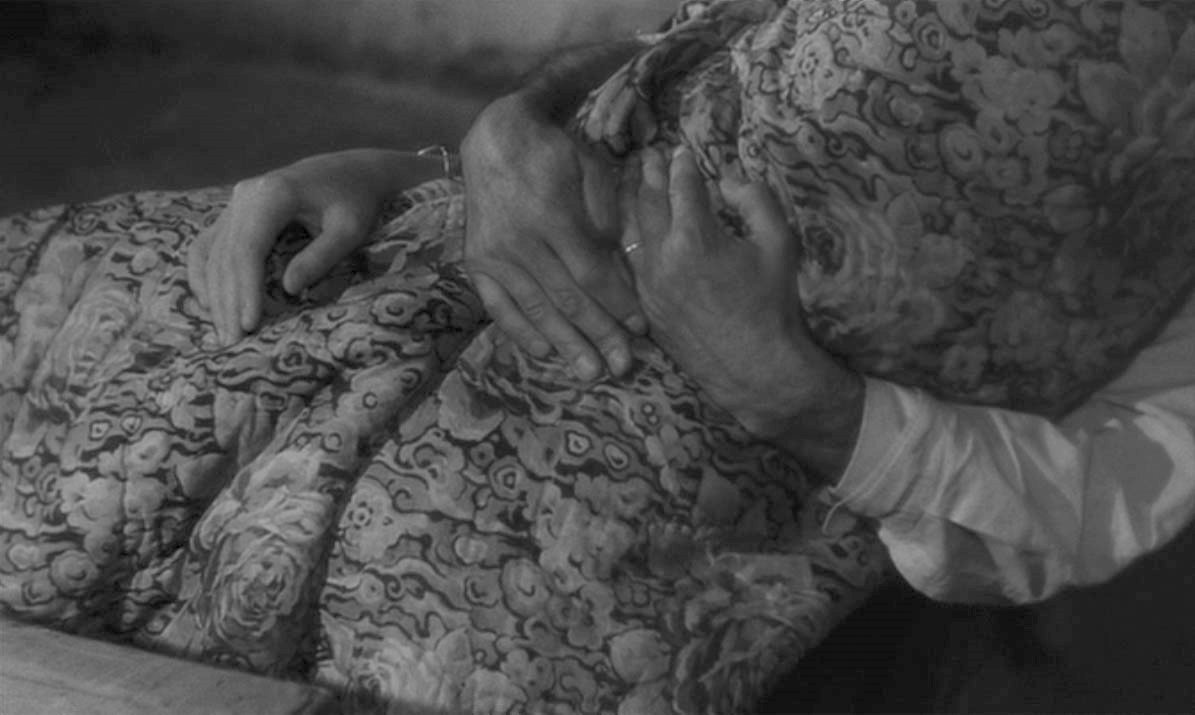
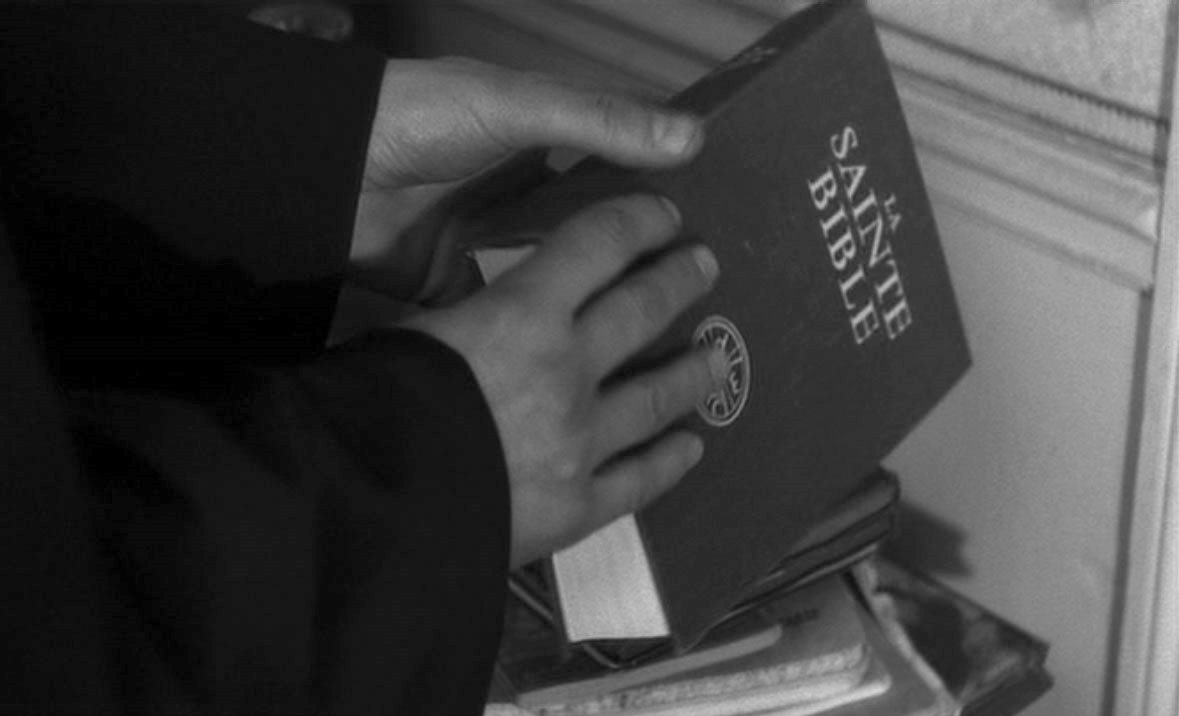
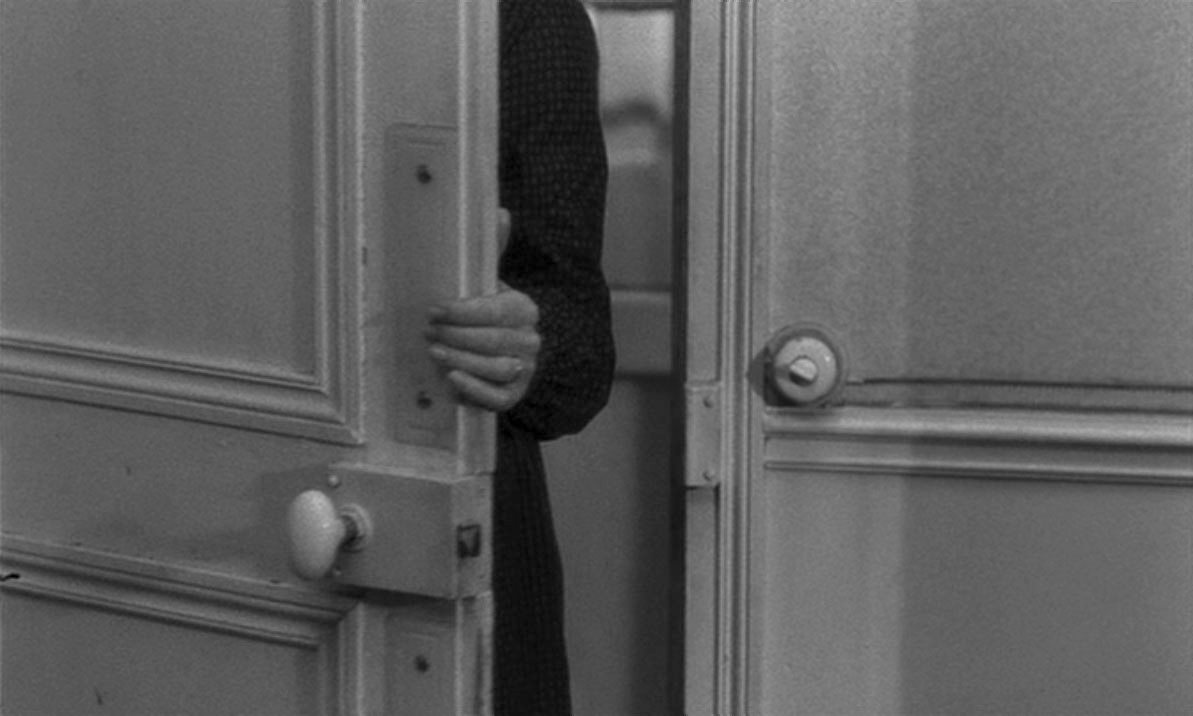
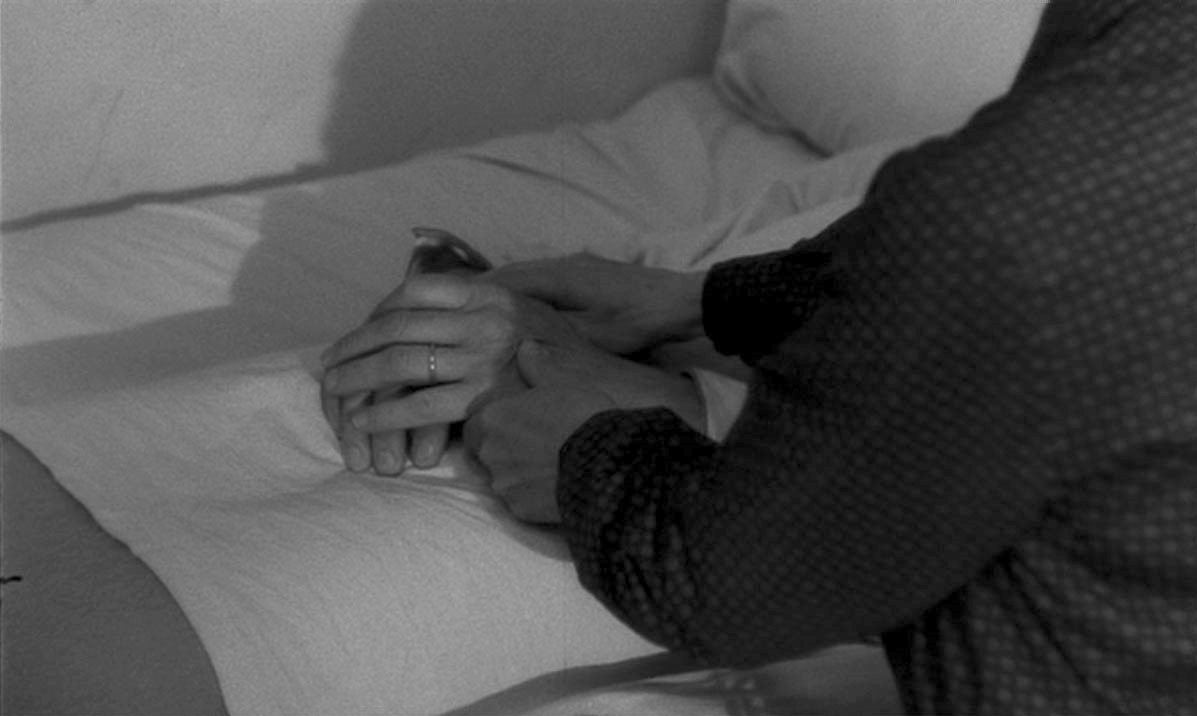
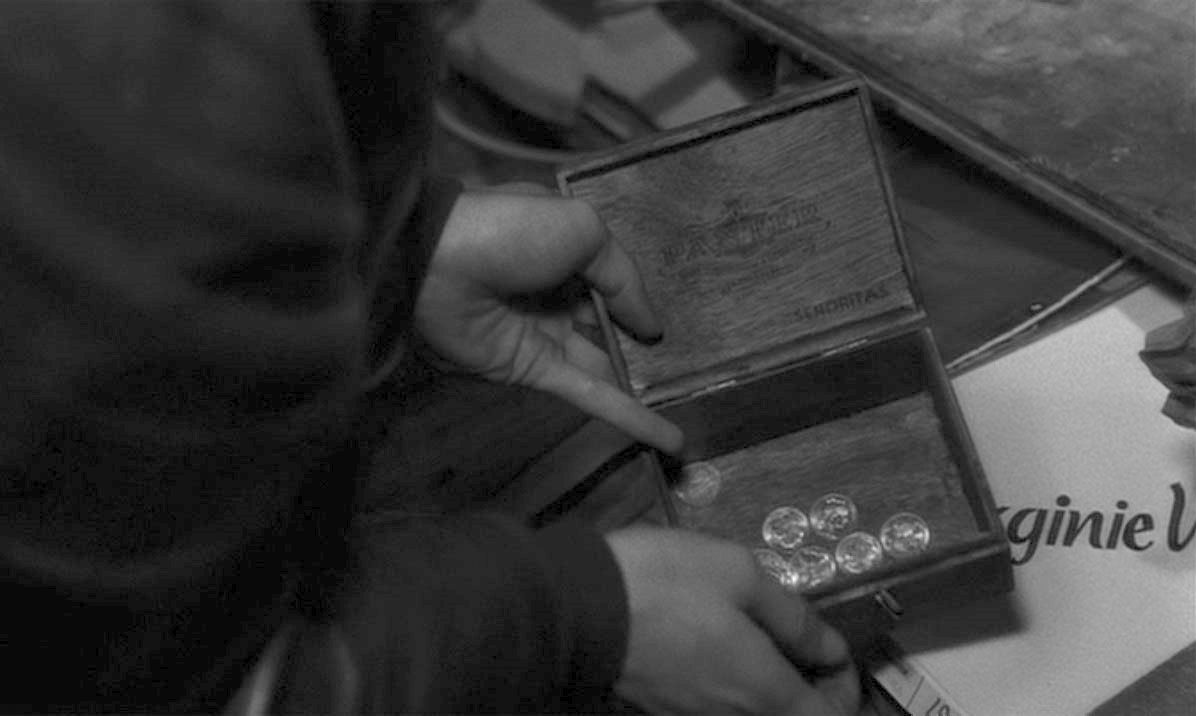
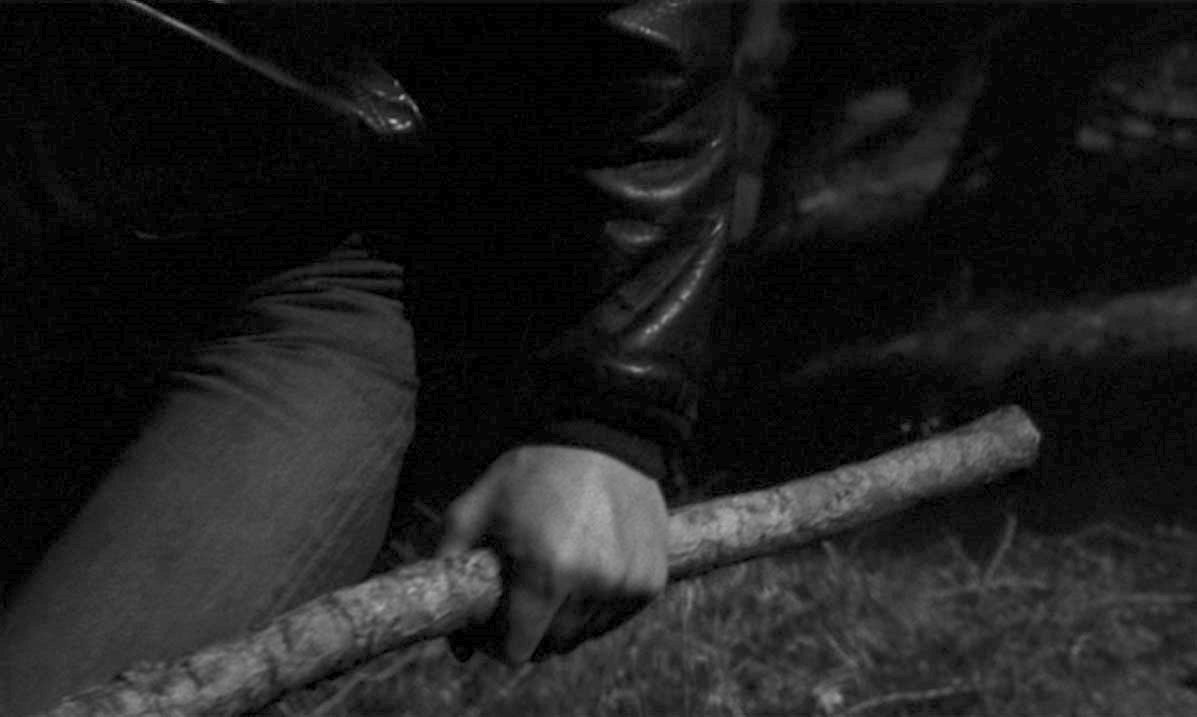
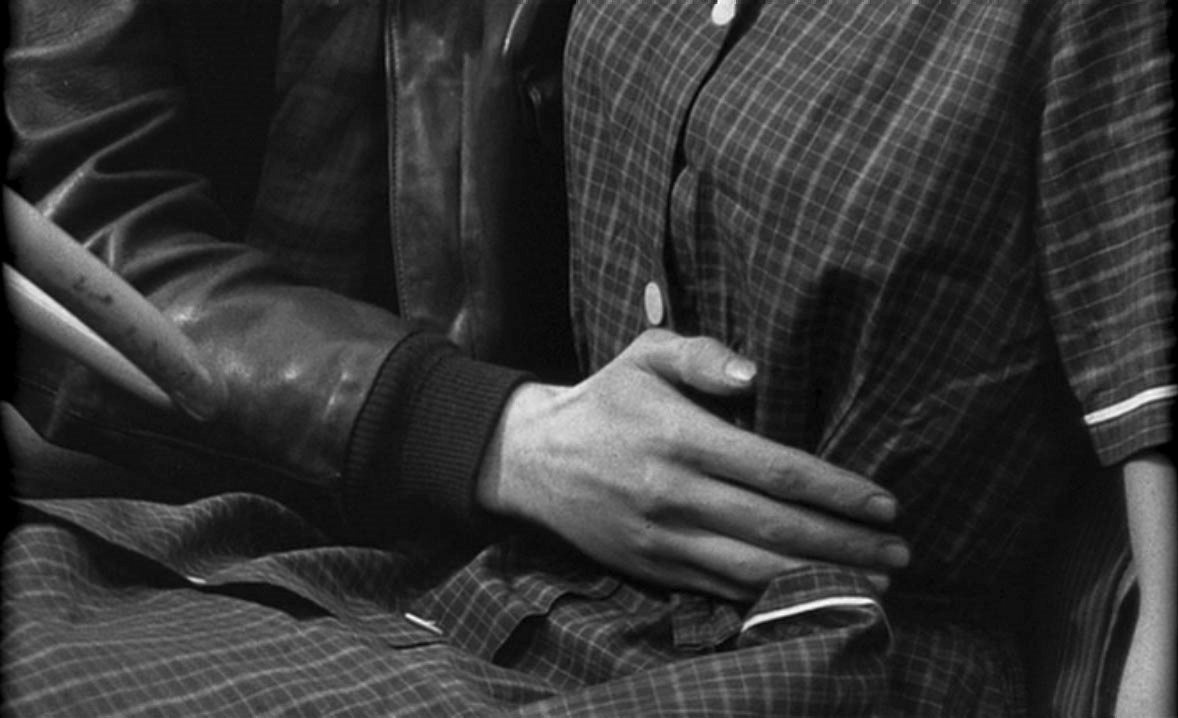
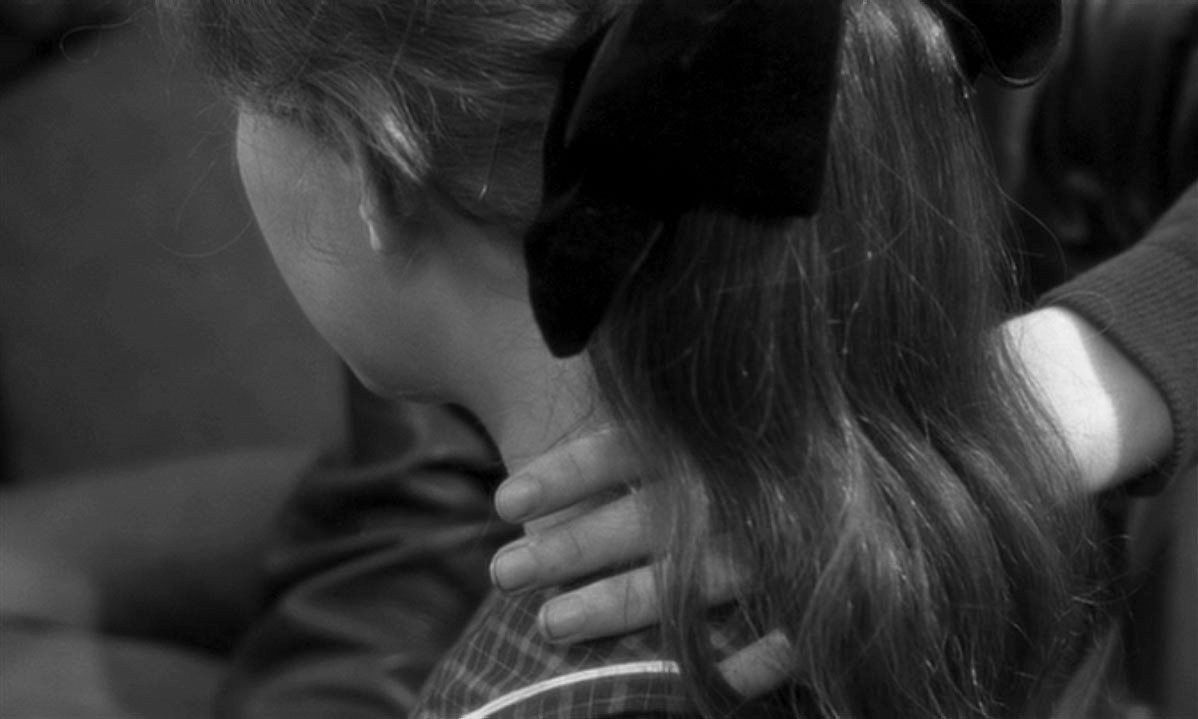
42 images of hands from au hasard Balthazar (1966):


I was so profoundly moved by this film that I didn’t feel I could do any justice with a review. Instead all I could think of was to grab some images and post them above. I found myself over and over being drawn into the narrative through the images of hands. So Bressonian, so fateful.

>memories of my development (ye maties!)

>For whatever reason I am selfishly prone to consider my past and reflect on events, people, and things – like films – that have been a part of creating this person I call me. And I realize that lately, maybe from the beginning, my blogging tends towards the personal. So feel free, because you are, to take your precious time elsewhere. Anyway . . .

I suppose I could have titled this post “I want a sailboat real bad.”

Rather consistently and with great joy I spent a portion of my childhood entranced on Sunday evenings by Mutual of Omaha’s Wild Kingdom and then Walt Disney’s long-running television program. Some you you may be old enough to remember the following television schedules on NBC:

September 24, 1961 – September 7, 1969: Sunday, 7:30 p.m. – 8:30 p.m.

September 14, 1969 – August 31, 1975: Sunday, 7:30 p.m. – 8:30 p.m.
September 7, 1975 – September 11, 1977: Sunday, 7:00 p.m. – 8:00 p.m.
September 18, 1977 – October 23, 1977: Sunday, 7:00 p.m. – 9:00 p.m.
October 30, 1977 – September 2, 1979: Sunday, 7:00 p.m. – 8:00 p.m.

So where am I going with this, you ask?
At some point during those years I saw Disney’s Treasure Island (1950). Recently I watched it again with my daughter. Although the film is dated and rather straightforward, it brought back memories and reminded me of some images that must have seared themselves into my brain. Treasure Island is a classic story for all ages, but for young boys especially (at least for me) it is a sort of touchstone.

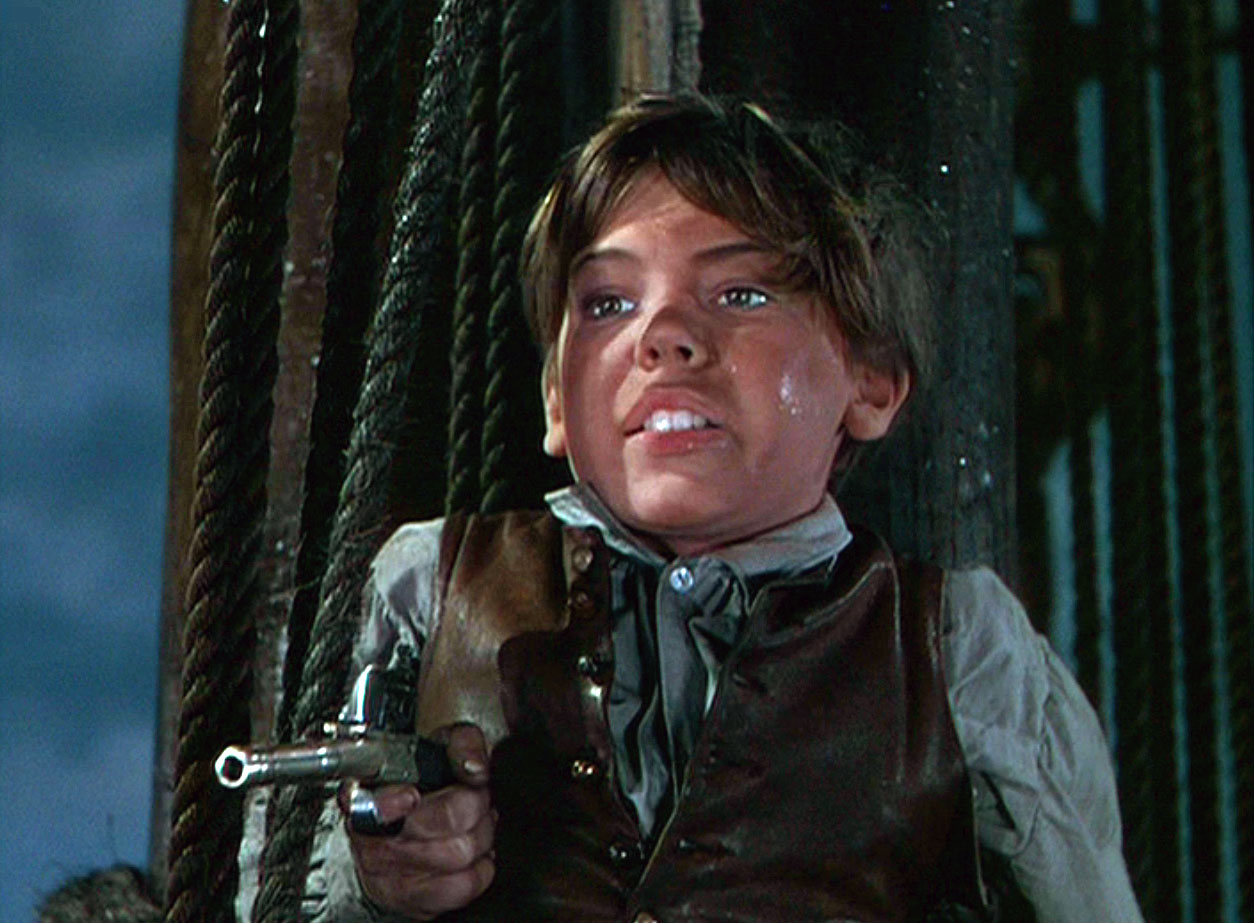
In particular I remember such scenes as the one where young Jim Hawkins (Bobby Driscoll) sneaks back aboard the ship, which the pirates have captured, and reclaims it for the good guys. In that scene Jim has to fight a drunk pirate, Israel Hands (Geoffrey Keen), who is slowly chasing Jim around the ship. Jim climbs the rigging, followed by the Hands. Soon Hands has Jim cornered. Jim pulls out his little pistol . . .

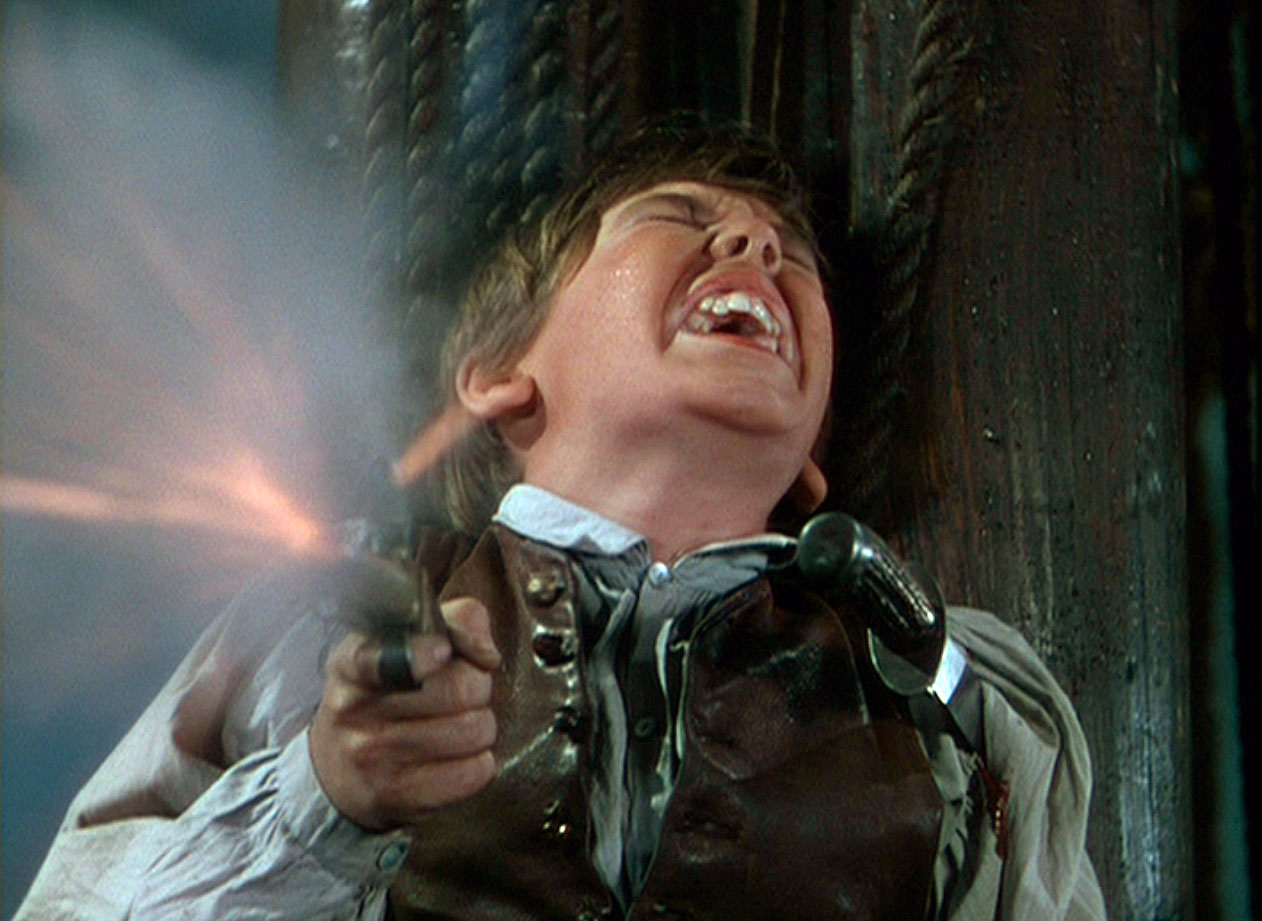
Hands throws his knife at Jim and pegs him in the arm. Jim reacts by shooting Hands who then falls to his death.

As a young boy I often had fantasies about being in dire straits and having to take serious actions in order to survive, even using a gun (sometimes wishing it involved a gun!). I think this is a typical boy’s fantasy (but I’m not offering any excuses). And to be stabbed in the arm by a thrown knife, now that’s really cool. especially if that knife goes through your arm and sticks into a ship’s mast. How much more adventurous and dangerous can you get and still live to tell the tale! If only I had had that kind of life; I know then I wouldn’t be working in a cube farm at some software company, that’s for sure. Avast!

Sadly, Bobby Driscoll’s life did not end well. From IMDB:

Charming as a child actor, he made his mark in films like Song of the South (1946) and Treasure Island (1950). Unfortunately, as he got older and acting offers became fewer, he got involved with hard drugs, which ultimately ruined his health and reduced him to poverty. Years of drug abuse severely weakened his heart, and he died of a heart attack alone in a vacant building in New York. Driscoll’s body was discovered in an abandoned Greenwich Village tenement by two children playing there on March 30, 1968. When found dead, his identity was unknown and he was buried as a “John Doe” in pauper’s grave. A year later, fingerprints finally revealed his identity.

I find that very tragic. I wish someone had come along side him and helped him. But, then again, maybe someone did. Drug addiction is a beast.

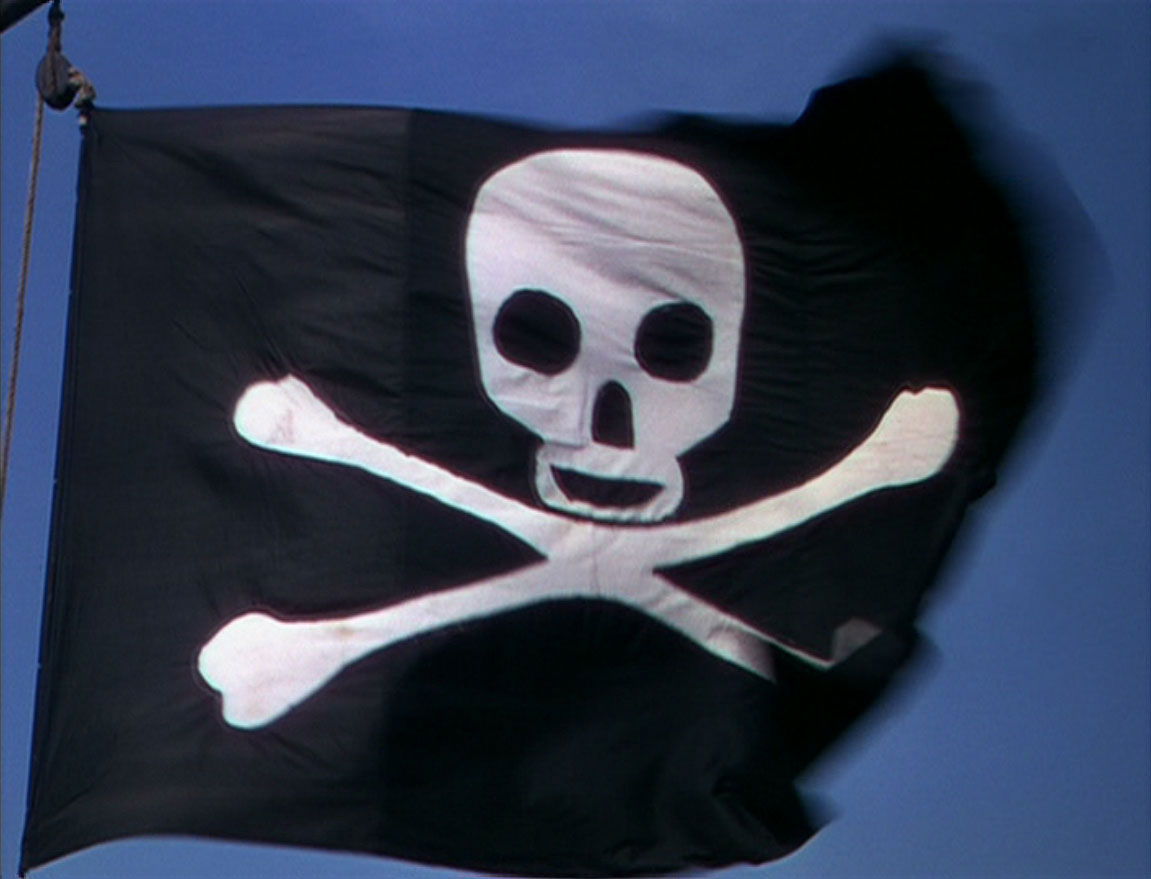
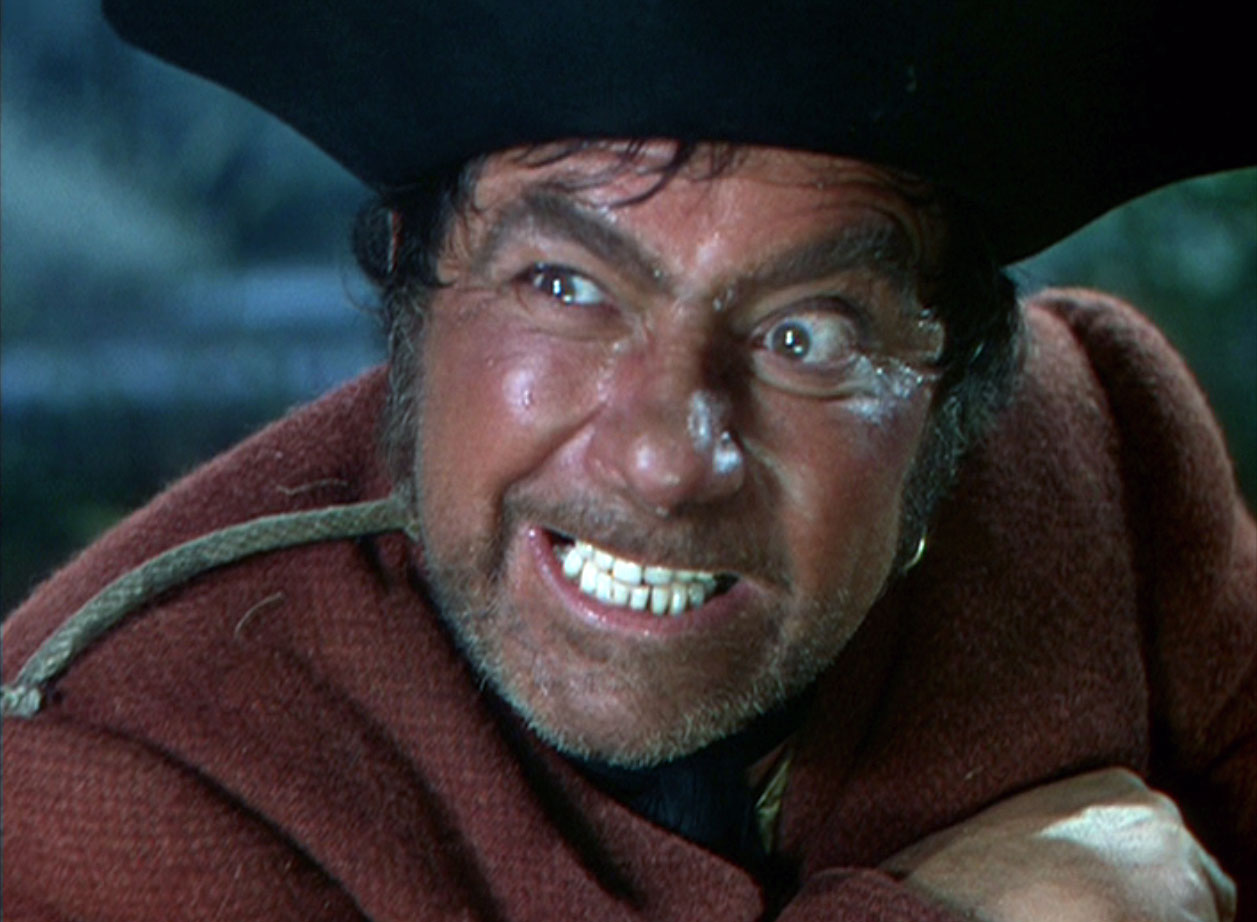
As a boy I could certainly identify with Jim Hawkins in many ways. And I certainly envied him going on his great adventure to find pirate gold. But the real impression the film made on me, and on most I’m sure, was in the character of Long John Silver played brilliantly by Robert Newton. When one thinks of how a pirate should talk (aaarrrggghh!) one is thinking, in fact, of Robert Newton’s John Silver. He created the modern concept what we would call the “classic pirate” archetype. He is the reason behind the reasons why we have Talk Like a Pirate Day and videos that teach us to talk like a pirate.

And who could ever forget that face!

But L.J. Silver was more than that for me. As a boy I new he was a bad guy. But I also knew that he liked Jim as though Jim was the son Silver never had. That was confusing for me. Here was a bad guy that I could legitimately like, not because evil is fascinating, but because he was both bad and good. The idea of moral ambiguity was planted in my soul by Robert Louis Stevenson by way of Robert Newton.

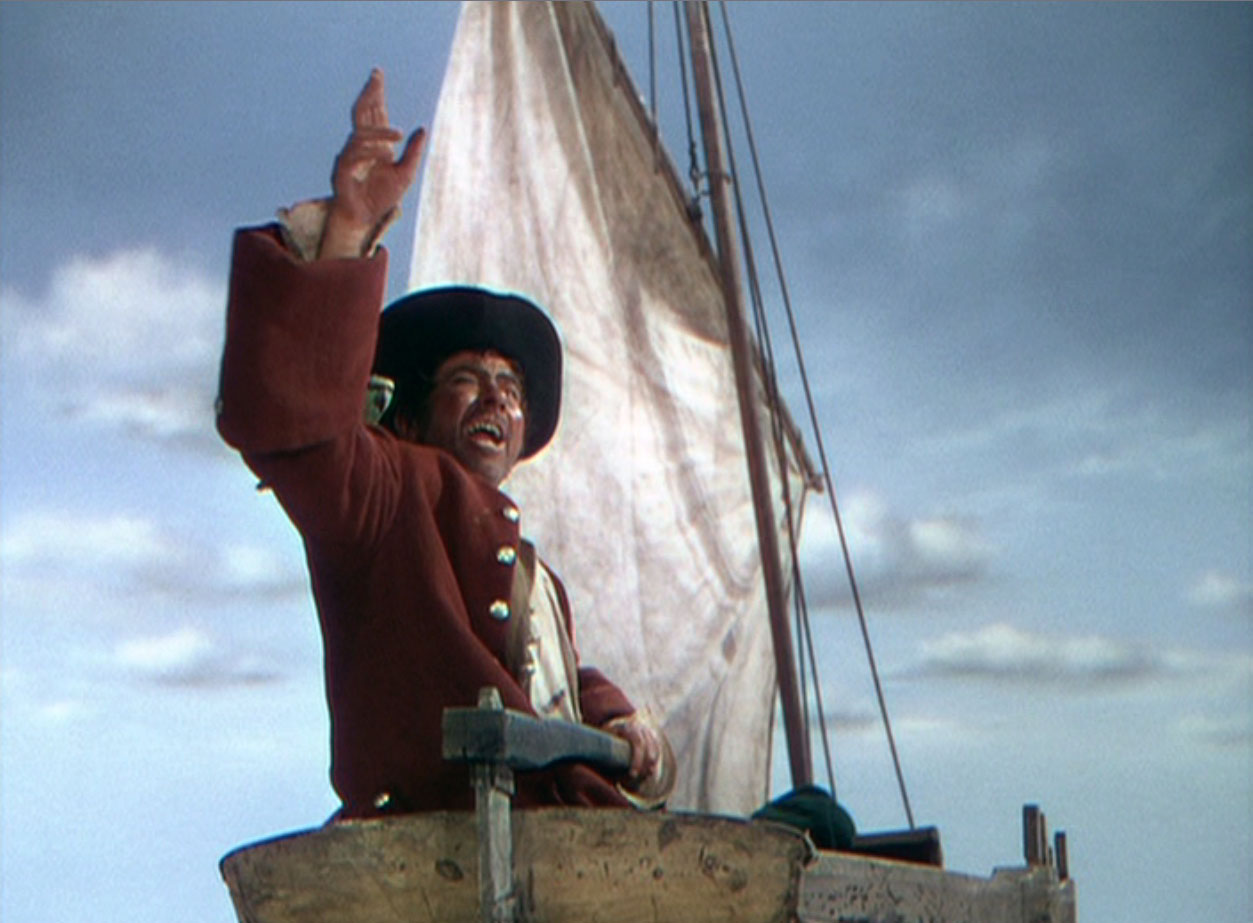
The concept that one could hope for the best for one’s enemies also played itself out in the film. When Silver is trying to escape at the end of the film, Jim helps him. And then Jim and Dr. Livesey (Denis O’Dea) watch as Silver sails away. Dr. Livesey says he almost hopes Silver “makes it.” Silver even waves back – no hard feelings for him either.

And there he is, L.J. Silver sailing away, saving himself from the arm of the law, and here am I wishing he gets away. As a young boy what was I to think? I can tell you it got my head to thinking and wondering, and wishing I could be both good Jim Hawkins and a pirate of the seven seas.


switching gears slightly . . .

BETTER DROWNED THAN DUFFERS IF NOT DUFFERS WONT DROWN

So, the other night I finished reading to my daughter a wonderful book called Swallows and Amazons. Lily loved it, but I have to say I became not a little obsessed with the book. I couldn’t wait to read her the next chapter each night. I would find myself thinking about the book during the day. In short the story is about some kids who, while on Summer vacation near a lake, sail a little sailboat, Swallow, to a little island and camp there for a few days. They meet a couple of other kids who have a boat called Amazon. The kids then have some great adventures and forge life-long friendships. It’s a book I recommend for adults as much for kids.

Apparently there was a film version in 1974, but it sounds like it wasn’t too good.

Anyway, like I said at the beginning, I suppose I could have titled this post “I want a sailboat real bad.”

what is stranger than fiction?


The Father [mellifluously]
Oh sir, you know well that life is full of infinite absurdities,
which, strangely enough, do not even need to appear plausible,
since they are true.
The Manager
What the devil is he talking about?

from: Six Characters in Search of an Author
by Luigi Pirandello (1921)

Harold Crick
This may sound like gibberish to you, but I think I’m in a tragedy.

from: Stranger Than Fiction (2006)

With apologies to those who get tired reading overly long posts, let’s get a little bit theological for a moment. I know I don’t have to ask you if you have ever considered what you would do if you were God (creator god, god of the universe, etc.). I’m sure you have at some point in your life. You have probably thought you would change the world, make it free of war and suffering, take away every tear and heal every wounded heart (I’m giving you/me the benefit of the doubt). And you would be doing good. Maybe, however, you have also considered what you would do if you were truly and completely a creature, that is, one who has a creator, a real being of some sort, not time+matter+chance. As a creature you would be contingent, that is, you would exist only because another being exists. You would breathe because another being gives you breath. You would awake each day because your creator gave you another day. And even your thoughts would be given to you by this creator or yours. Your creator would necessarily reside at a higher order of existence than you. In Medieval terminology, your creator would be more real than you. Compared to all of creation the creator God would be the most real being.

Heady stuff, but those are the kinds of ideas underlying the film Stranger Than Fiction (I am assuming you’ve seen the film), a film that explores the relationship between character and author. This is not a review of the film, but an exploration into its major theme.

When an author writes a novel, that author creates a world, a fictional world, but a world nonetheless. The characters in the novel are not real compared to you and me, but they are real compared to each other. They exist on a different, less real plane of existence than we do, but they are real (I realize this takes some mental gymnastics, but it makes sense, no really). If an author has a character killed in her novel she is not sent to jail, for that character is not real in comparison to us, but if that character has been murdered we readers want justice to be meted out within the context of the story. The author, also, is not beholden to the character. That character cannot legitimately hold the author accountable for anything.

But what if you were that character, and you had the knowledge of being that character, and therefore knew of your creator in some way? Maybe even got to meet your author? How would you feel then?

For centuries now there has been a passage (one of many, in fact) in the Christian New Testament scriptures that has driven Christians crazy. So much so that many (maybe most) Christians probably avoid it altogether. It goes like this:


But who are you, o man, to answer back to God? Will what is molded say to its molder, “Why have you made me thus?” Has the potter no right over the clay, to make out of the same lump one vessel for beauty and another for menial use?

The idea here is that a creator (here it is God, creator of everything) has complete decision-making control over the thing created, without impunity. Out of the same lump of clay a potter can make a beautiful vase for the mantle or a chamber pot for functional use. I do not know if there is a similar concept in other religions or worldviews. I grew up in a Christian tradition, so that’s what I know. Help me out if you know of any others. One thing I do believe is that we all (at least at times) tend to look at God, even if we don’t believe in a god, and deny God’s rule over us – certainly any kind of absolute rule. We sometimes also hold God (even if we don’t believe in a god) accountable for the state of the world, and may find ourselves saying that if we were God we would do things differently.

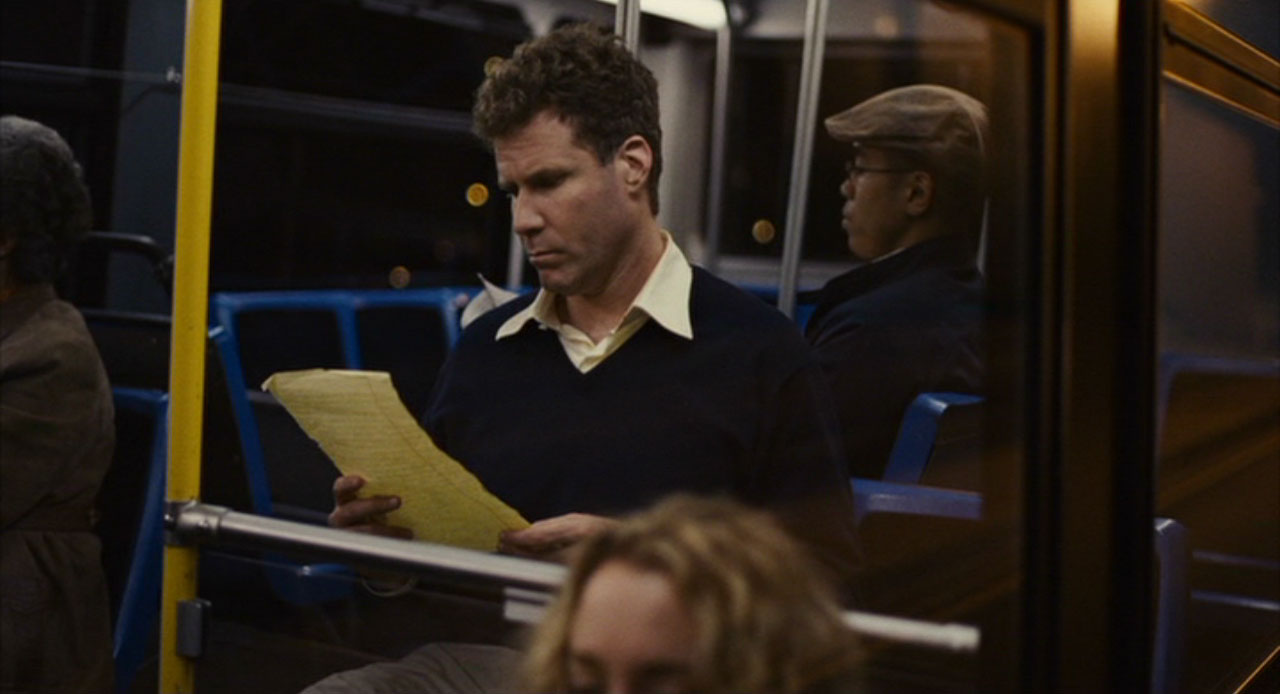
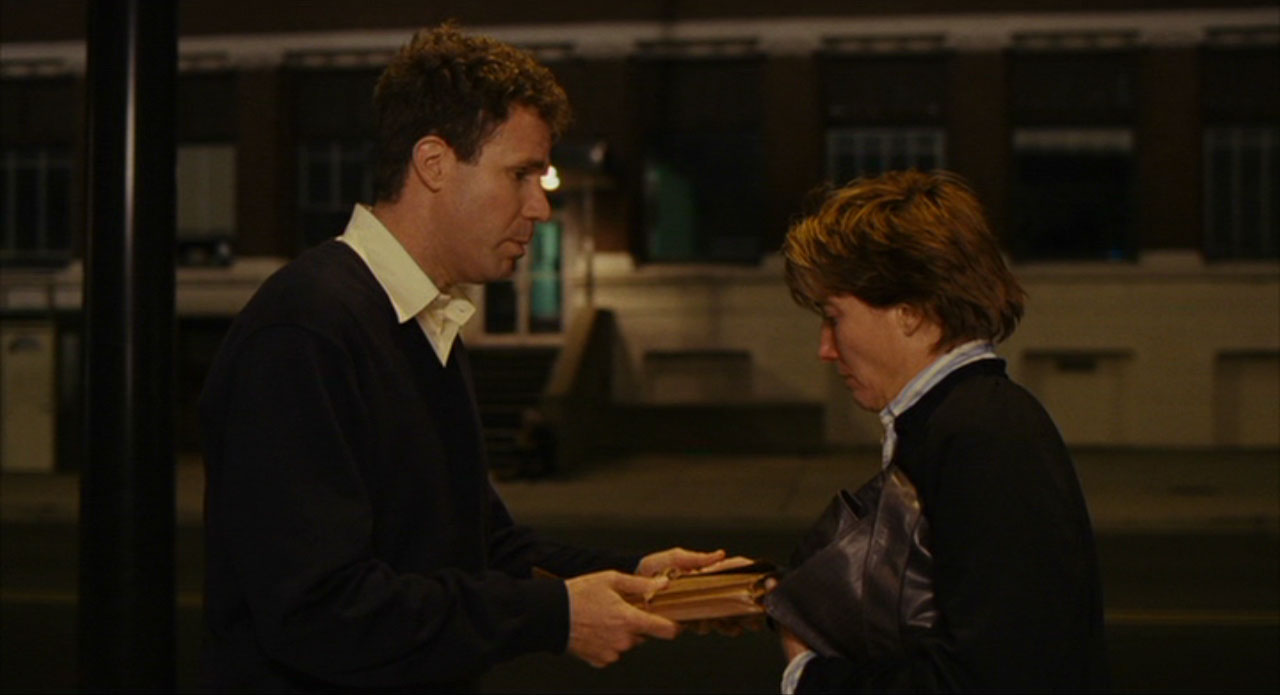
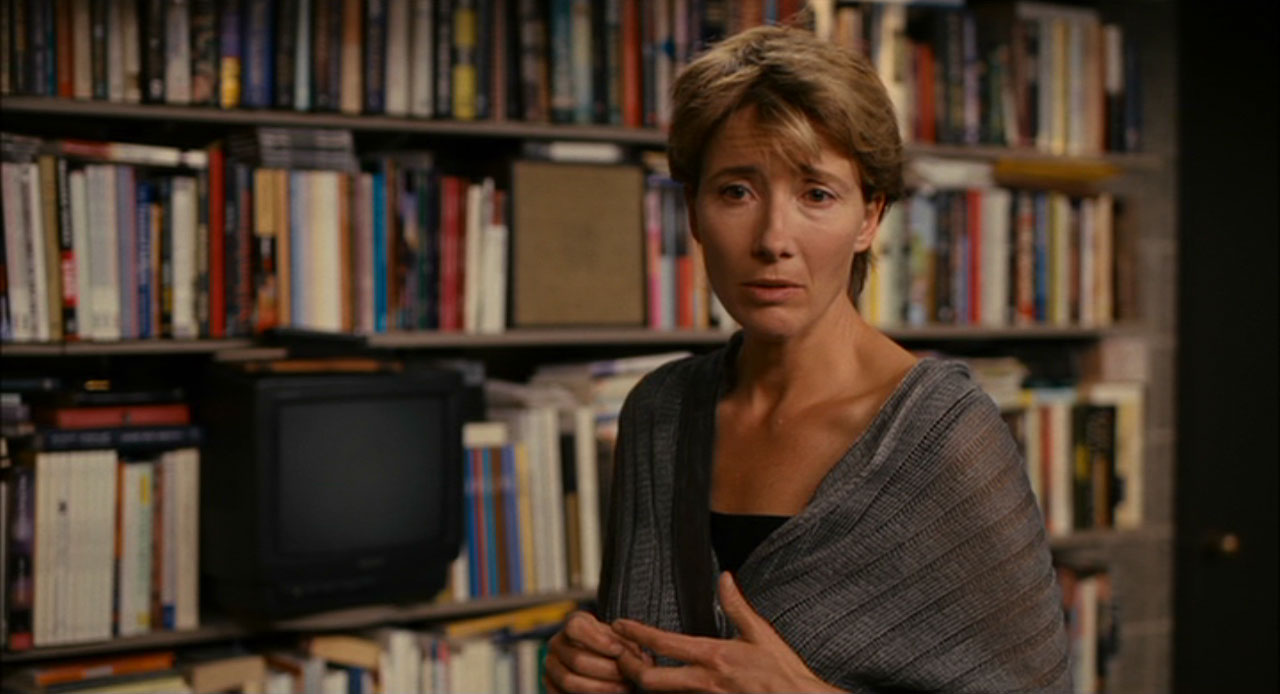
The issue, of course, is sovereignty. Who has ultimate control over your life? You, God, fate, nothing? In Stranger Than Fiction, Harold Crick (Will Ferrell) must come to terms with the fact that he is the literary creation of an author, that his existence is contingent upon the artistic desires of his author, Karen Eiffel (Emma Thompson). Now there are a host of unexplained issues, like how can Crick be a fictitious character interacting with the same world as his creator who should be on a different level of existence, etc., but the film doesn’t care to explain them. (I figure it’s like trying to figure out the implication of time travel in The Terminator films – at a certain point you just let it go.) For the most part, however, the film is not concerned with technicalities, but with the nature of contingency and authorship. The crux of the film comes when Crick finally reads the (his) story which has not yet been finished – the last few pages still handwritten, not yet typed, which would make them final and seal his fate. These last few pages are critical for Crick because they tell of his death. Crick has known he is going to die for part of the film already, and has been trying to avoid that, but now he reads what his author has planned for him and discovers his end.
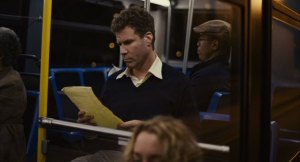

Discovering the end of the story.

These are internal and sobering moments for Crick. By discovering the end of his story he has a context for his existence, he sees his purpose, his reason for being. Fortunately for him he reads of a noble end – dying saving the life of someone else. (What the film doesn’t explore is the possibility of him dying for not so noble reasons.) He is now no longer in the position of needing to know why he is here and where he is going. In this sense the film is fundamentally existential. The question of his existence is solved for him.

Now he gives the story back to his author, and surprisingly, he says that she should not change anything. In other words, it is the right thing for the story to end the way she has envisioned it, for him to die. She tries to protest, but he insists, and then walks away.
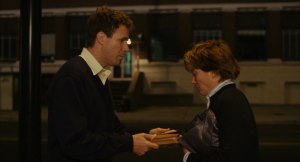

Thy will be done.

I cannot help but think of the moment, on the night before Jesus of Nazareth was killed by the Romans, when Jesus prays in the garden and confronts God the Father in his prayer. Now it would be wrong to make too much of the parallels, but in the story we find Jesus saying to God that he would prefer to not have to die, to not go through with it, but he then says whatever Gods wishes he himself also wishes. He says “Thy will be done.” For Crick, he has come to the conclusion that the story of his life, even if it entails him dying long “before his time” is okay with him. His words to his creator might just have well been, “Thy will be done.”
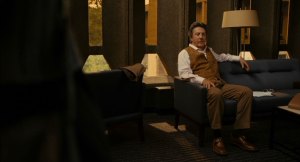

The intellectual doesn’t like it.

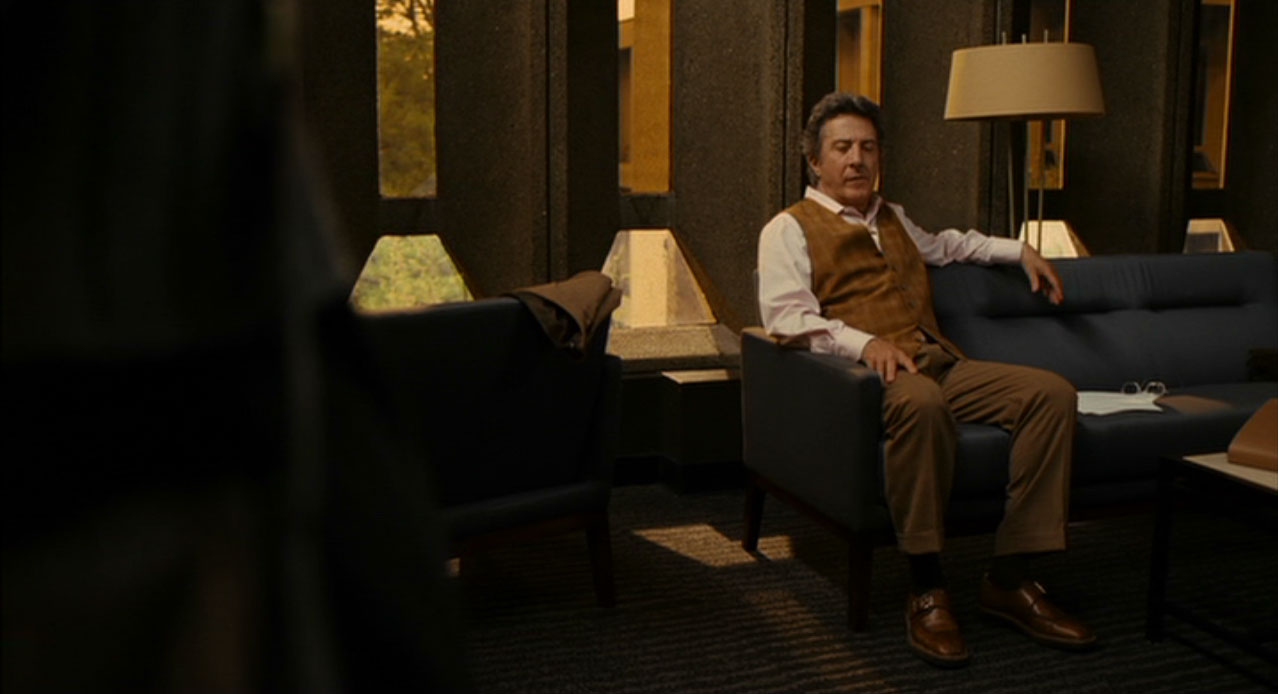
Interestingly, when the book is finished, and we follow Crick through what would have been the last moments of his life, we discover that his author has spared his life. Sure, Crick does save the boy from being hit by the bus, and Crick is then hit by the bus himself, but Crick lives. Badly banged up for sure, but alive nonetheless. Professor Jules Hilbert (Dustin Hoffman) does not like the new ending. He believes Crick’s death would make the book one of the best he has ever read, but now it’s just “okay.” Clearly, Hilbert is in a position to question the artistic choices of Eiffel, for he is an expert, a professor of literature. In some ways Hilbert stands for the tendency in all of us to look at the world and question the creator’s decisions.
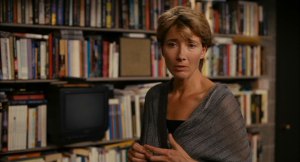

“I mean, isn’t that the type of man you want to keep alive?”

When Hilbert asked why Eiffel changed the ending and kept Crick alive, she responds:

“Because it’s a book about a man who doesn’t know he’s about to die. And then dies. But if a man does know he’s about to die and dies anyway. Dies- dies willingly, knowing that he could stop it, then- I mean, isn’t that the type of man who you want to keep alive?”

Here we have the key line of the film. Crick’s destiny is changed because of a truly selfless act. He willingly laid down his life because he saw the true good of doing so. He sacrificed himself for the salvation of someone else, and because he knew that was what it was all about, that that was the telos of his life, he decided to choose what was good, not what was merely convenient for him. And then, because he was willing to be such a person his creator spares his life.

Harold Crick was a man in search of his author. Finding his author gave him the opportunity to know a little more about what his life was all about, He then had to choose whether to accept or reject his fate, to trust or reject his creator. Regardless, his fate was inevitably in the hands of his creator. He chose to accept it, not out of resignation, but out of the realization that his death was a good thing, really that his life had a purpose, was existentially valuable. He had a profound change of heart. And then he discovered that by accepting his fate he saved his life after all.

There are many accounts of human beings pleading with God. One such event was when God came to Moses and said he was so angry at the Israelites for turning their backs on him that he was going to destroy them all and start all over with Moses. Moses pleads with God to spare the Israelites and God does. But we also have the story above of Jesus pleading with God for another way and God does not spare him. It’s not about finding the right formula to effectively twist God’s arm to get what one wants. It’s about a true change of heart, a deep fundamental change at the core of one’s being, and then taking whatever comes. One may not be “happy” with what comes, but one might, just might find some level of contentment, as does Harold Crick.

What the film implies, but does not make explicit, is that for all his anxiety, Harold Crick is blessed. For most people the hardships and struggles of life come without explanation. We experience tragedy, or see others do so, without knowing what it is all about or if there is any purpose behind it. Crick gets to see his purpose. And when he does it makes sense to him, maybe not complete sense, but his life is not meaningless absurdity. This does not mean he is happy about it, but sometimes just knowing what it’s all about is all one needs. In fact, that might be what everyone desires after all – just to know what it’s all about.

I suppose that at some point all of us are faced with believing or not believing in a god. I grew up in a Christian tradition and have always believed in God. My theology has changed over the years (I’ll spare you the details), but I have always believed there is a purpose underlying my existence (and everyone else’s). This belief, though, has not made life easier for me. On the contrary, it has often made life harder, but better as well.
>why I write this blog (in part)

>


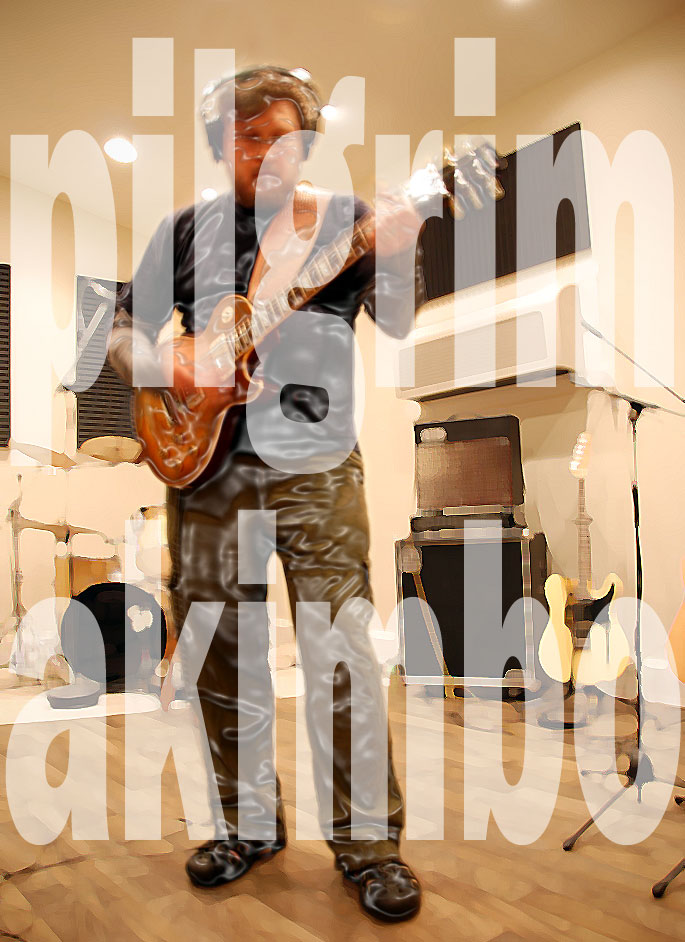
If PilgrimAkimbo was a band it would not be a blog.

I cannot say exactly why I write this blog, and when someone tells me, in an off-hand manner, why they write their blog I don’t entirely believe them. Not because they’re wrong, but because personal, non-corporate, non-fake blogs exist for deep and complex reasons, and reasons are always being born and always expiring. But still, I feel I must, for deep and complex reasons, sort out my thoughts about PilgrimAkimbo, at least just this once.

There is a little man inside my gut that jabs a stick at my heart every once in a while, reminding me that I need to grow up and be a kid again. There are many pressures placed on adults, good pressures like being faithful to your relationships, paying your bills and, if you have them, raising kids with love and mercy. But along the path from the city of destruction to the celestial city (if you get my drift) one is easily convinced to give up on those things one loved as a child – to put away childish things and grow up.

What are these “childish” things? In particular I am referring to those unique personal aspects of one’s subjective nature that make up who one is, that come so freely when one is a child, and that often get pushed aside by outside pressures as one matures. Maturity is a good thing, but maturity is a tricky slope. I have been too quick to measure my maturity by common cultural standards and thus have often gravitated towards a false maturity, one that is more about conforming and putting on airs than it is about true maturity. And thus I have trapped myself – not a trap I cannot get out of – but a trap nonetheless.

What is this trap I am suggesting? The trap is believing that a childhood passion for something (be it cinema or baseball, poetry or wanderlust) must be suspect merely because it is a childhood passion. Take, for example, a passion for artmaking. Many children have this passion, for some it is only temporary, but many, I suspect, have this passion as a inherent and indelible characteristic of their soul. However, as they get older they will inevitably hear that artmaking is a nice hobby, but certainly not something to be taken too seriously, especially if one wants to grow up and get on with life – you know, get a real job, support a family, do something important, be like everyone else. Those pressures to set aside artmaking may come from parents, teachers, the youth-group leader at church, friends, anywhere.
Now, I do believe it is important to grow up, but I think we have these deep passions because that is who we are. What were your passions as a child? Do you still follow them? If you do, that’s great. For me, my love of film and filmmaking got set aside, in part for good reasons, in part for other reasons. This blog is an attempt to re-engage with those passions. But why now?

That I can only partly answer. Suffice it to say that my love of cinema has re-welled up within me at a time when I have also been reconsidering my life. A little over a year ago my wife, my eldest daughter, and myself were reeling from the death of our second daughter, Coco Madalena. That “event” and subsequent sorting out gave me new eyes on the world. Not angry eyes, but a realigned perspective. I began to see the value once again in being true to oneself, to not get hung up on little things, to seek honesty and love rather than surface level respectability and corporate success, to love what you have, and to find value in being who you are, to trust in my creator. Since that time we have been blessed with another, beautiful, amazing little girl, Wilder Rose. And her existence in my life has only fueled my passion for the wonder of being human.
That is why I am reaffirming my love, my childhood love, for cinema and why I write this blog – in part of course, for there are really many reasons.

So why the pic at the top? A friend of mine has a passion for making music to which he is staying true. That’s me with his guitar, in his studio, pretending to know what I am doing. So, if PilgrimAkimbo was a band… Ah, now that’s another dream.

>a couple thoughts on poetry & cinema

>I have a fondness for poetry. I used to read it a great deal, even reading collections of poems much like I read novels, beginning at the front of the book and plowing through to the last page, although my version of plowing is rather slow going most of the time. A couple of my favorite collections are Selected Poems 1966-1987 by Seamus Heaney and The Collected Poems by Czeslaw Milosz. Maybe what draws me most to a given poem is much the same thing that draws me to a great film or photograph.

Cinema can have a poetic quality, tapping into a part of one’s brain and calling forth certain emotions or ideas that don’t typically emerge in the normal course of the day. Some filmmakers naturally get tagged with the “poetic” label, for example Tarkovsky. But I would contend that we find elements of the poetic in cinema in many films, even if only for a few moments here and there.

I like to think of poetry as being the art of the unsayable (among other things). In other words, whatever it is about poetry, it taps into and expresses something that cannot be expressed directly, or denotated with words, but can only be hinted at, suggested, or connotated. In the same way cinema has the ability to connote, to suggest, to hint at. I am drawn to that quality of cinema, to those moments within films that, while transitioning us from one plot point to the next, take the time to elicit from within us something unsayable but real.

I have to say that this post came about by my re-reading an old poem of mine that someone once told me has certain “cinematic qualities” – whatever that means.

independence day

a simple breeze brings
the scent of summer fields
below a starless sky.
along the country highway
the night is cooling comfortably.
I walk in the dry grass
toward the lights.

I move quietly through the crowd;
weird, immobile, sentinel,
like reeds in a frozen lake
gathered in subjective silence.

I can feel myself
beginning to move in slow-motion,
almost floating, almost absent;
my body and mind slowly separating
like the tide receding from the shore.

what remains of the two cars
is a sculpture of brutality;
a performance piece of abject fury
staged without intention or wit,
a muricated death posing for no one,
visceral and empty.

I can see myself observing the accident
as though I’m hovering overhead.
my mind remains transfixed,
like the raised hand of the hypnotized.
there is the bloody head,
the motionless body.
(I am taking notes)
there is the twisted coffin
the thumping of a compressor,
an infant crying.

my body keeps moving around the vehicles;
spotlights casting ghostly silhouettes,
paramedics waiting for the
mangled door to be pried away,
and vapor floating skyward
like spirits escaping.

there are more people now
and Maricel has found me.
we see the crooked form
loaded on the gurney,
crippled legs illuminated
in a multicolored glow,
accompanied by the wails
of distant sirens,
and police radios,
and diesel fumes.

there is little we can say.
it is getting late
so we take another road home.
in bed I cannot sleep,
my mind is elsewhere.

the morning paper will say,
‘youths fall asleep at wheel
just miles from home.’
others will say ‘tragic,’
and still others will ask,
‘how can this happen?’
and I? sinner among sinners,
I am thinking of poetry.

– July, 1998

>for me, more like ocean’s three

>

I have been out of pocket this week at my employer’s annual Americas (N. & S.) sales conference, so blogging has had to take a back seat. Even so I do have a couple (or so) of film-related moments.

This year we are where we were last year, at The Venetian, in Las Vegas. The other night a few of us walked down the strip to the The Bellagio for some steak at Prime Steakhouse. I could see the famous fountains outside the window, but did not get outside to see them up close. That’s my first film reference for this post – of course to Ocean’s Eleven. Unfortunately, even though I bought a new phone that has a camera built into it, I forgot to take any pictures of the fountains, hence the web-grab image above. (btw, the rare fillet mingon with a bearnaise sauce was exquisite! Much better even than the excellent steak frites I had the day before at Bouchon – which has become one of my fave eateries.)

Also, Chris Gardner spoke to our sales team (about 2,000+ headcount), which was kinda cool. Just in case you didn’t make the connection, he wrote the book that became the film The Pursuit of Happyness. Now I have to say that his story is remarkable and inspiring, and his message is a good one. But I also have to say that I found him rather full of himself and in need of making sure we knew about his successes (like just how many copies his book sold, etc.). I would rather have had Will Smith as our guest speaker, but I did enjoy Chris Gardner. Again, I forgot to get any pics. Anyway, that’s my other film reference for this post.


Also, we have had the comedian Jake Johannsen as comedy relief during the general sessions at the conference. He is rather funny guy – been on Letterman a few times. And don’t forget, he played a drug dealer in Loaded Weapon 1 (1993). So that’s another lesser movie reference. Again, no pictures. I really haven’t figured out the fact that I’m carrying around a camera with me.

Finally, I have to say that I am not impressed with Las Vegas. This is my second time here and I find the place fake, dirty, and very boring. Maybe it’s a fine setting for a film or a music video. But, then again, probably most people who truly love Vegas would not find watching a film by Angelopoulos or Buñuel to be anything other than boring. I guess there’s something for everyone in this world. I am also surprised by how many young couples with little kids and babies are here, even in smoke filled rooms with their kids. And, just in case you needed to know, I’m a very efficient loser at the slots. Bye now.

>Happy Easter!

>


Okay, Easter Parade (1948) is a corny reference point, but this is a film(ish) blog mostly, so I figured…

Anyway, I hope you all have a great day, and if your celebrating, a wonderful Easter!