Stuntman Mike Must Be Made To Repent (or a facsimile thereof)

If you have not seen the film Death Proof and if you don’t like to know the end of a film before you see it, then stop right here.

I want to write about a deeply, viscerally satisfying cinematic moment I recently enjoyed. I admit up front that the sniveling, vengeful, and immature creature within my soul is the one giving voice to my pleasure. But wha, wha, wha, I liked it! …the end of Death Proof, that is. (it’s all SPOILERS from here on out, baby!)

Really, I liked the whole film, but the end, where Stuntman Mike gets what’s coming was wonderful. Now I know that vengeance is God’s and that violence is not a solution, etc., etc. But, being a human and all that, and being someone who grew up in the West – though not so wild anymore – where vigilante justice once had its place, I just couldn’t help myself. My soul resonated with the film’s conclusion.

So I want to lay it all out with a few screengrabs.

Stuntman Mike is not a good person. Here he is, full of mystery and machinamal stalking, watching his future victims like a jungle cat who drives an old stuntcar.
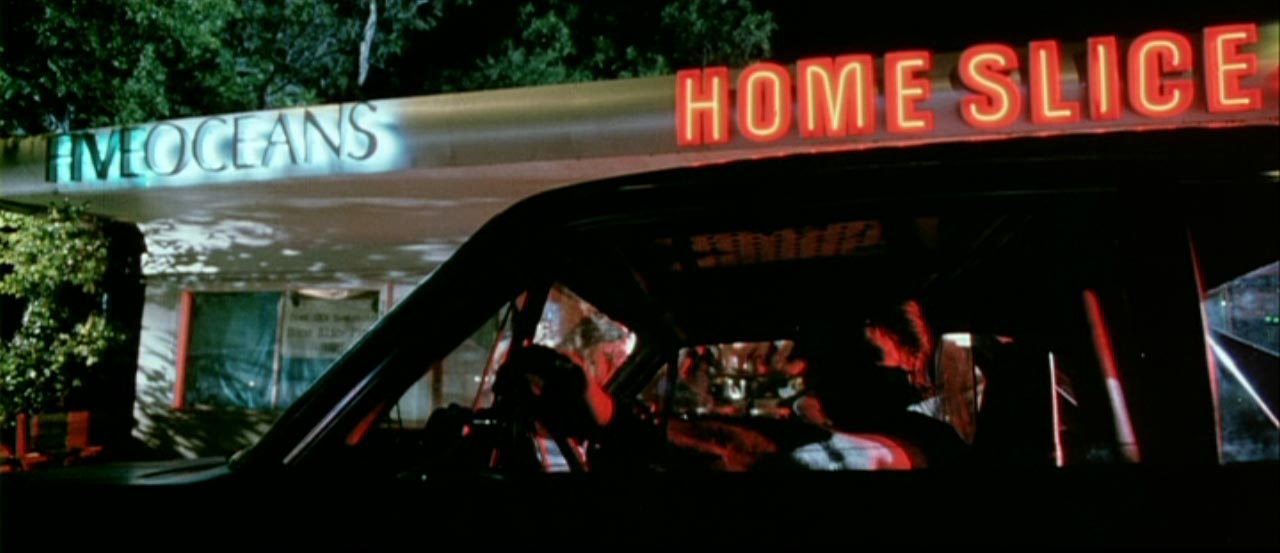
He preys on women. He stalks them and then kills them. He does this to success in the fist half of Death Proof.

He is also from yesteryear. In the antiqued first half of Death Proof he wins. The time is the present, but the world is the past – and that is his world.

But, in the second half of Death Proof Stuntman Mike is out of his element, but he doesn’t know it until it’s too late.

He chases a new foursome of beautiful and free-spirited women, who, when attacked by Mike, turn on him with great vengeance and aplomb. At one point he tries to tell them that it’s all just fun. They shoot him. He drives away, his arm bleeding, and his soul shaken to its core. So shaken, in fact, that Stuntman Mike loses it. He cries, he blubbers, he is full of fear and weakness.

He pulls over and pours whiskey on his wound. He screams in pain. This is truly a great moment in the film – to see the villain reduced to a crybaby. And this is where Kurt Russell’s performance goes from very good to magnificent.
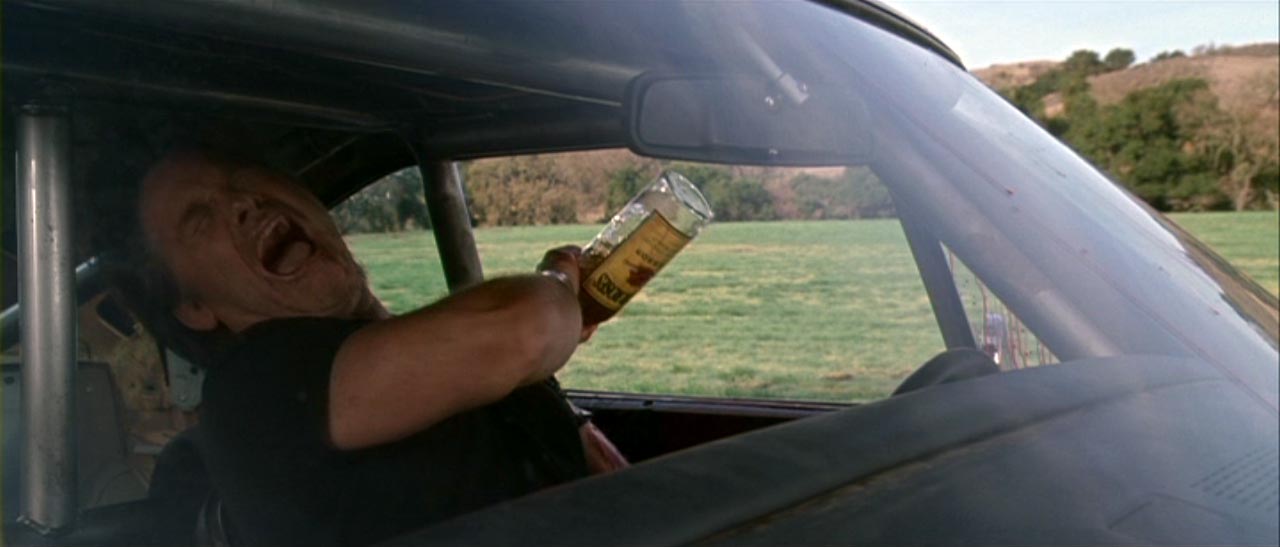
But it’s not over. Stuntman Mike does not know the women have decided to give chase and are now closing in on him.

They crash into him and he takes off in a panic stricken blur of tears and sweat. And they follow – a full speed, classic, old-style car chase.
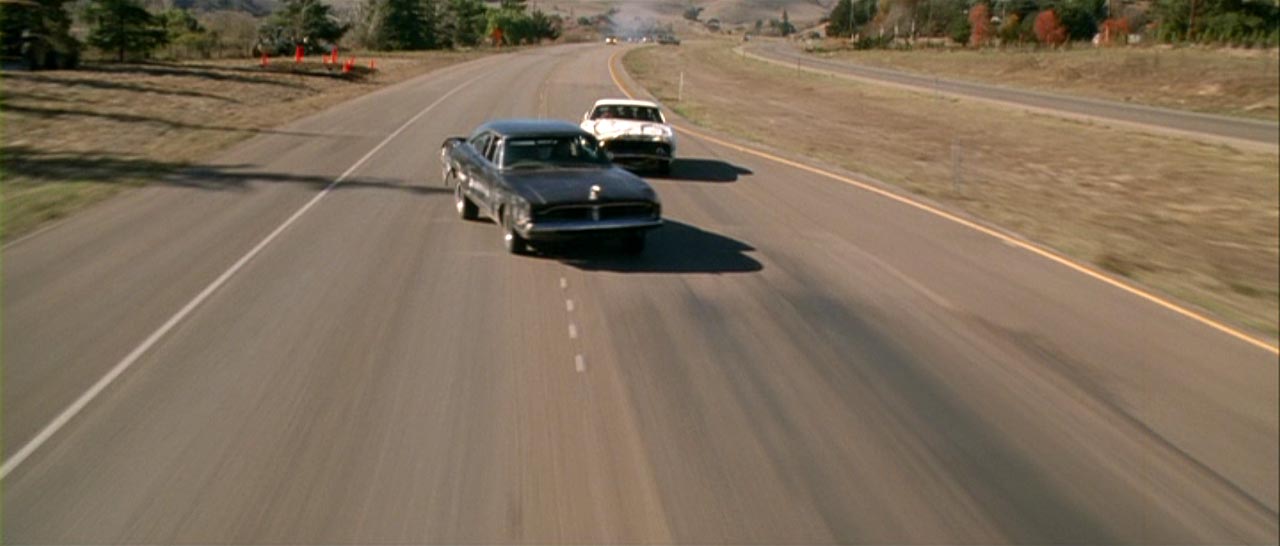
He watches them in his rearview mirror. He is an animal cornered. His only thought is how to live.
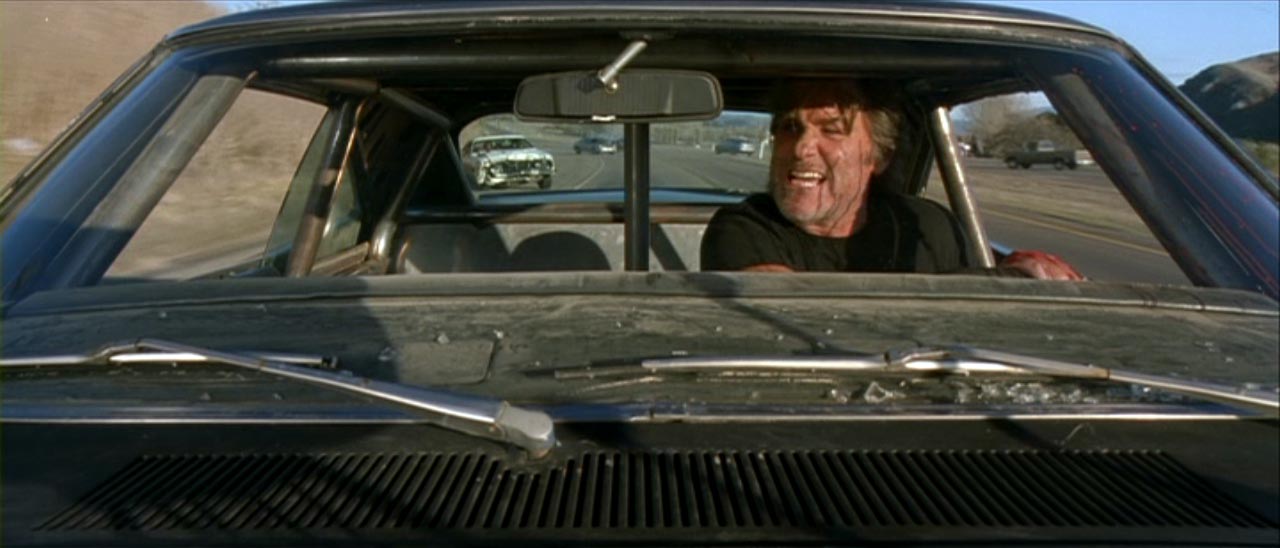
The women pull beside him and taunt him. He tries to say he is sorry, that he didn’t mean any harm – geeze, maybe he just didn’t realize that terrorizing and killing people for fun is wrong. Where are his parents?!
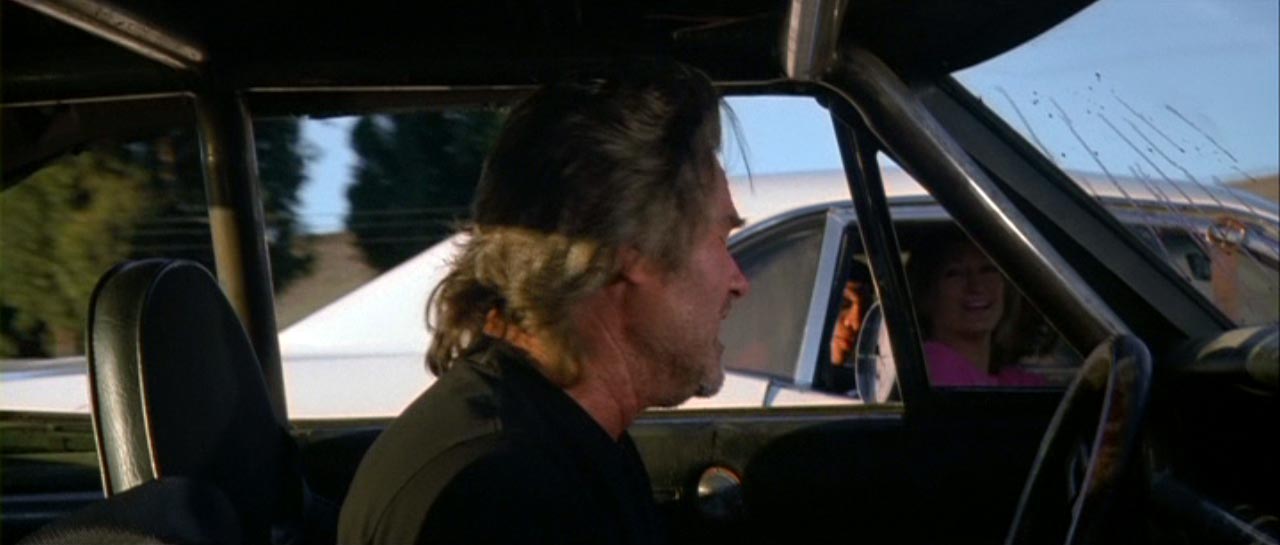
At one point the women fall behind and then disappear. Where did they go? All that Mike knows is that they are gone and he is finally free. He starts to laugh the way someone laughs after a near death experience – that nervous, uncontrollable release of pleasure mixed with relief and gravity. But this is not a moment of reflection or repentance for Mike. He is not that kind of psychopath. This is a moment when the cornered animal thinks it has a way out, to get on with its life as before.
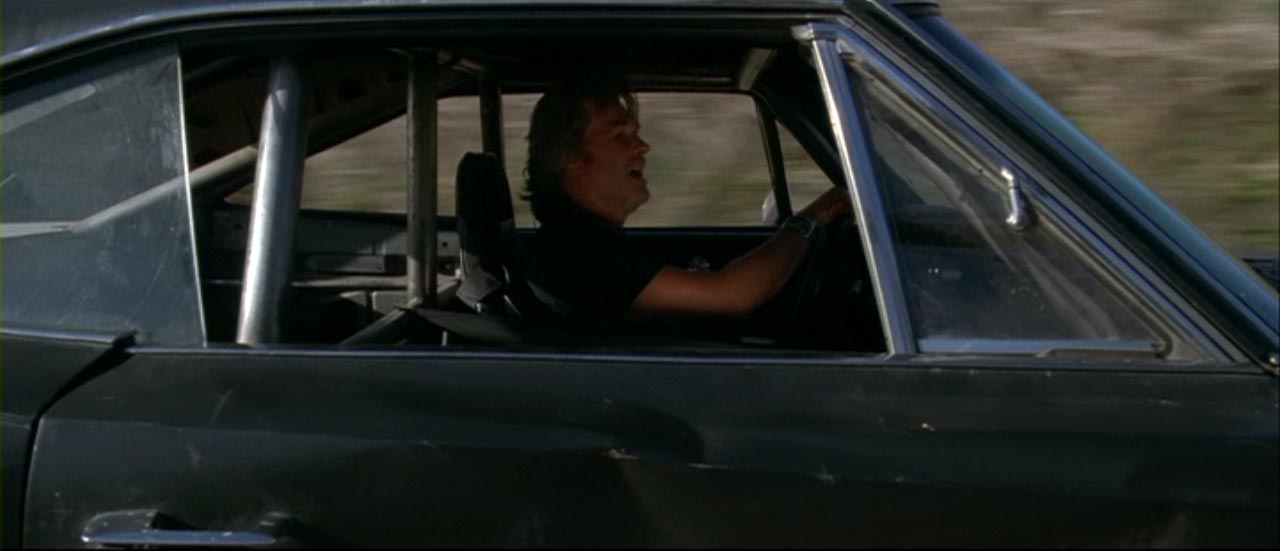
Ah, but what do we have here? Is that a white Dodge Challenger I see?
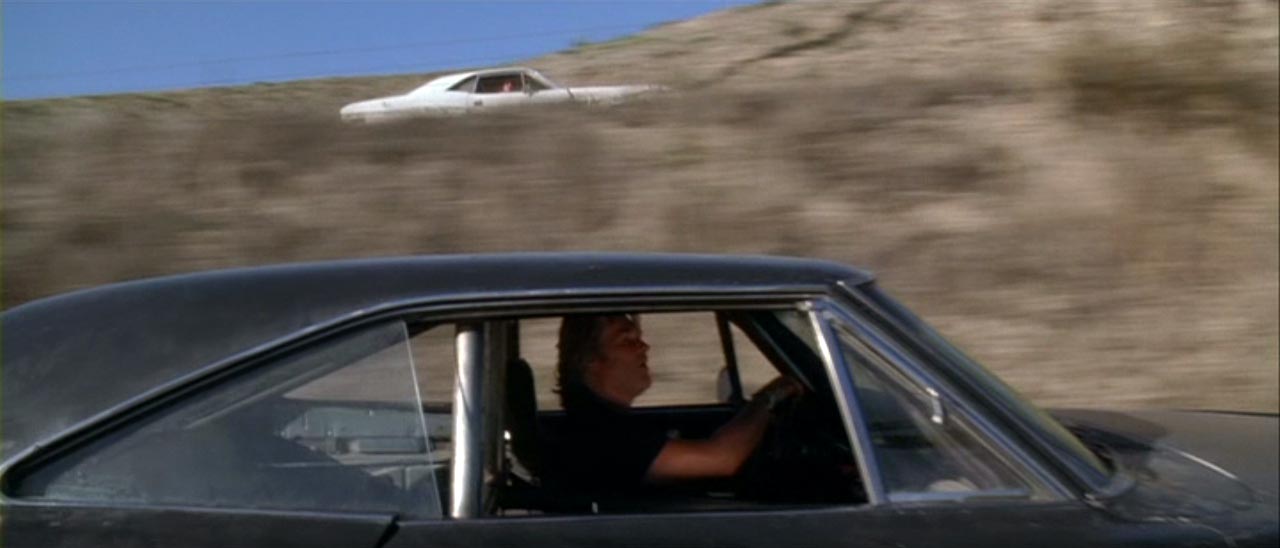
Aha, it is! And poor little Mike does not see it.
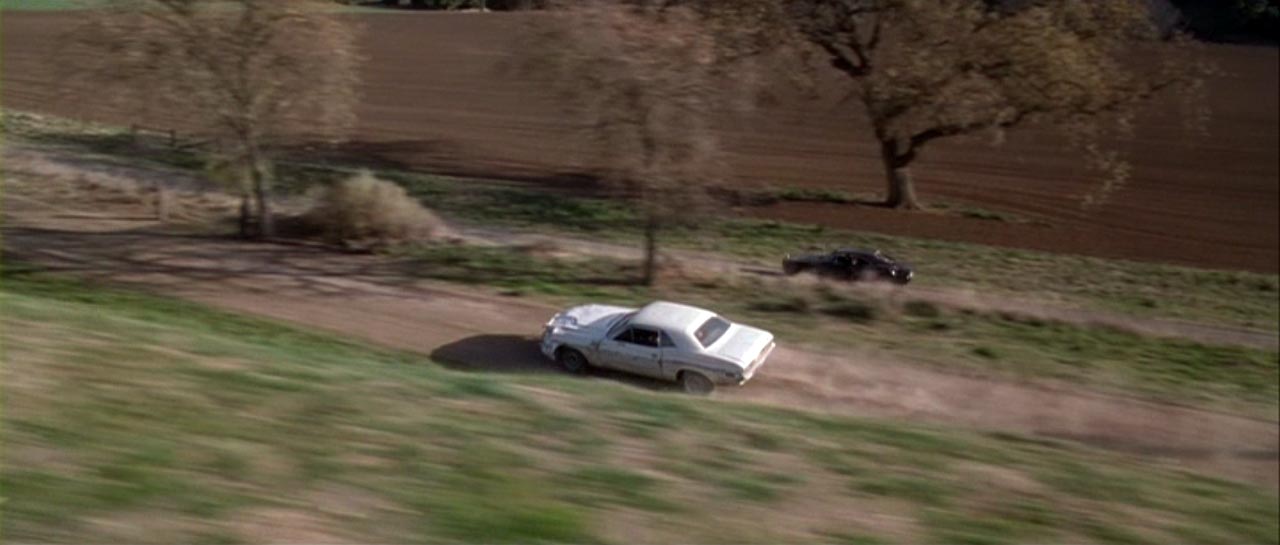
We are all like Stuntman Mike sometimes – blind to the dangers lurking around us (lurking, in this case, at 80 miles an hour). Hopefully that is the only similarity. He laughs with glee. He is free and he feels it.
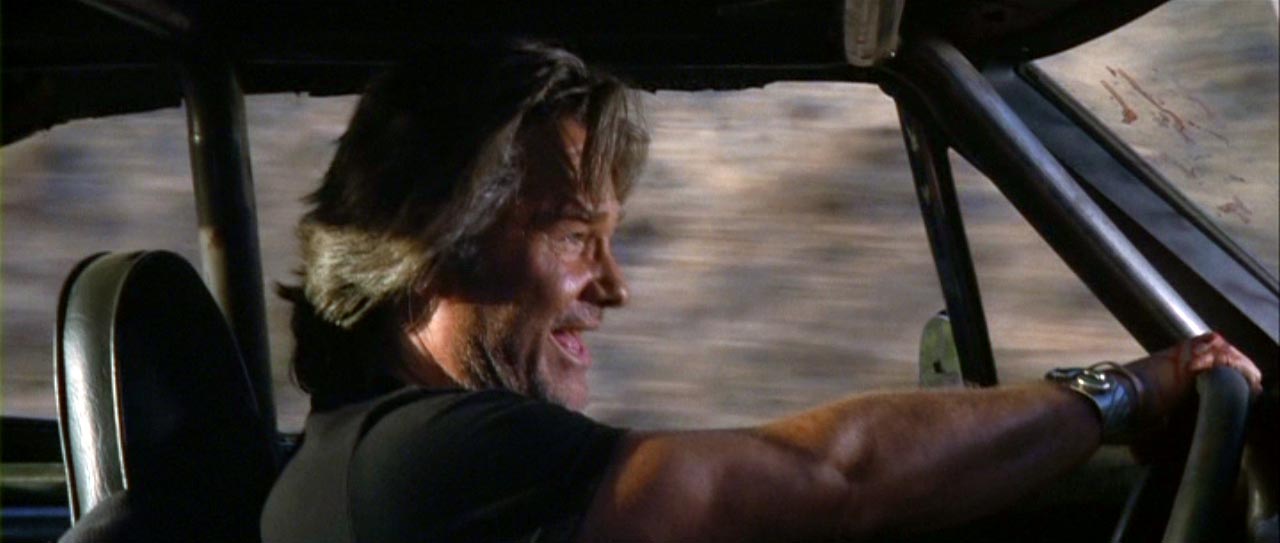
His head tilts back in the deep release of joy. And then there is a flash of white.
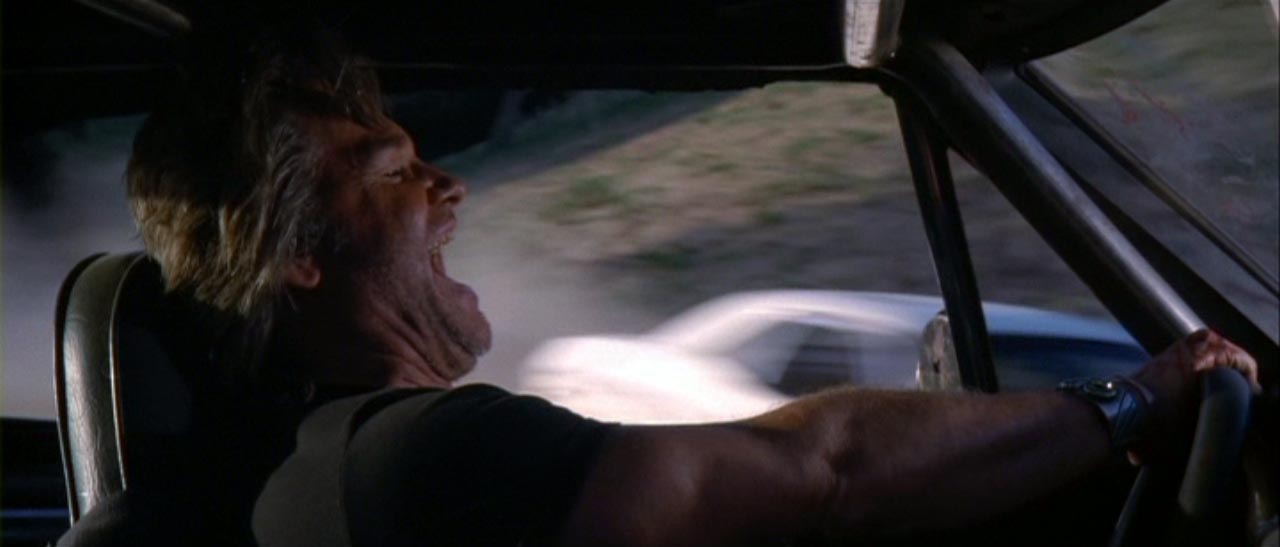
And there goes Mike.
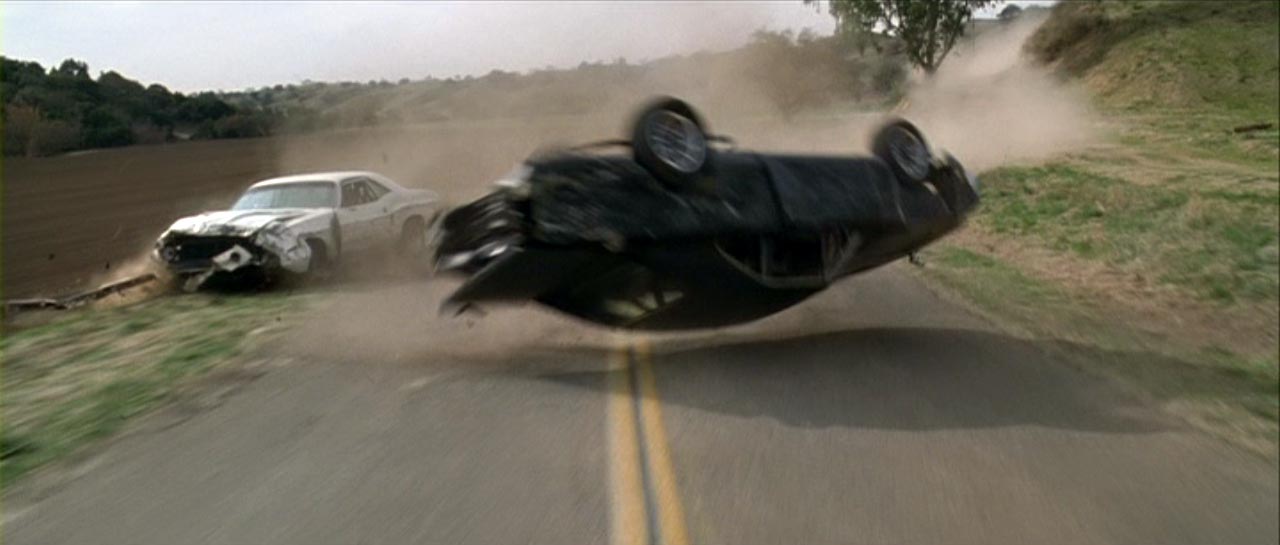
This is the moment of which I speak. That flash of white, that POW of the Challenger slamming into the back of the Charger, and the Charger flipping wildly into the air, that is the moment of satisfaction my heart enjoyed.

Sure, I know I shouldn’t enjoy it. I should long for Stuntman Mike’s rehabilitation. I should understand that he is the product of his upbringing, his society, his biology. I should know that his heart is shackled by the chains of sin. I should forgive. And I do forgive – his soul that is (may God have mercy) – all the while I enjoy the justice. And though my head bows in shame, sinner that I am, me head also bows as I look for the remote so I can see that scene again!

Finally the women drag him from his car and beat the crap out of him. The end.
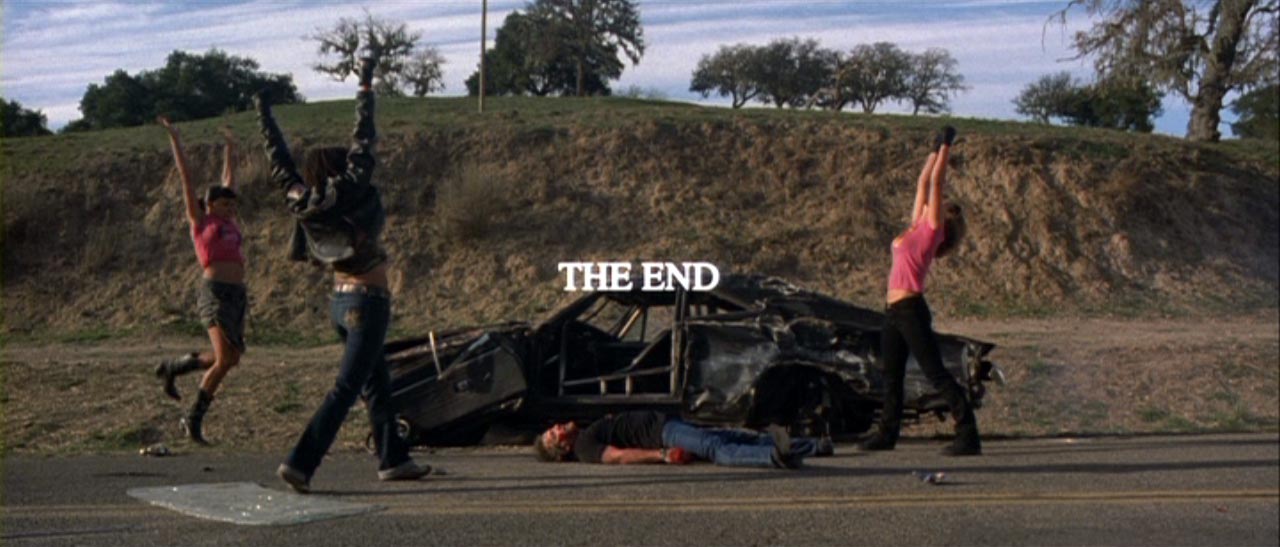
Satisfaction. Amen.
postmodern notebook

We have learned to trust the photographic image. Can we trust the electronic image? With painting everything was simple. The original was the original, and each copy was a copy – a forgery. With photography and then film that began to get complicated. The original was a negative. Without a print, it did not exist. Just the opposite, each copy was the original. But now with the electronic, and soon the digital, there is no more negative and no more positive. The very notion of the original is obsolete. Everything is a copy. All distinctions have become arbitrary. No wonder the idea of identity finds itself in such a feeble state. Identity is out of fashion.
~Wim Wenders, 1989

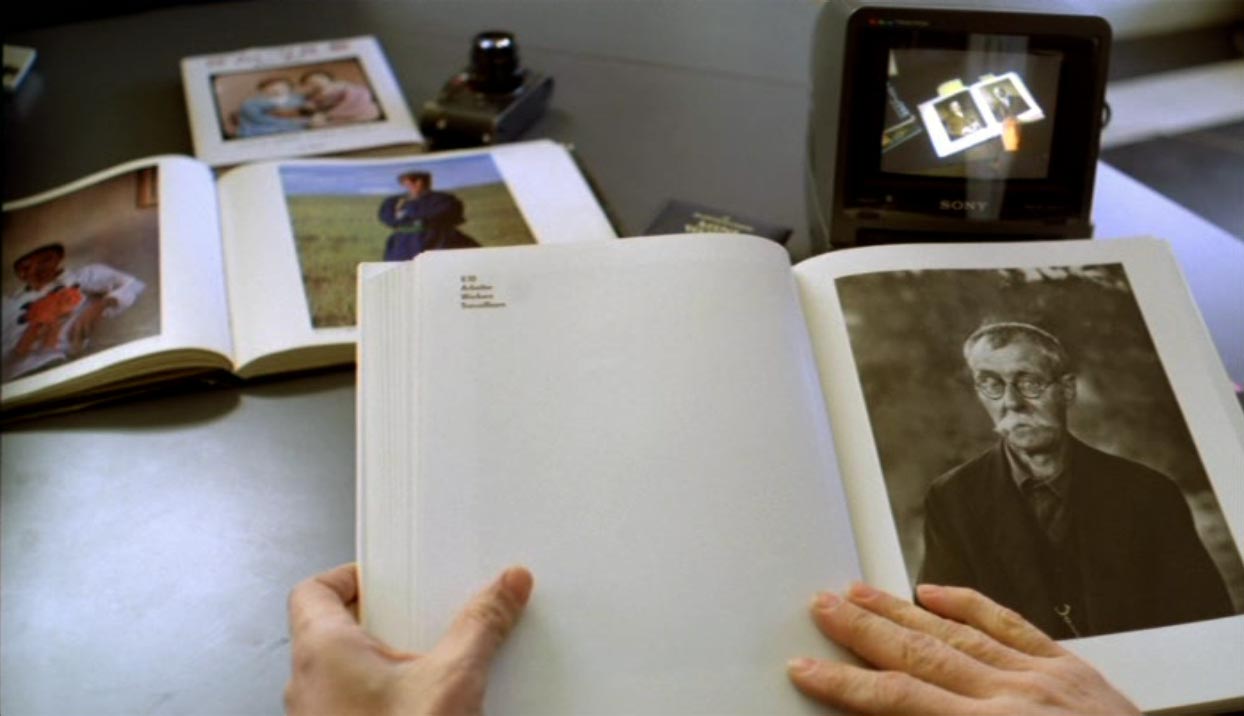
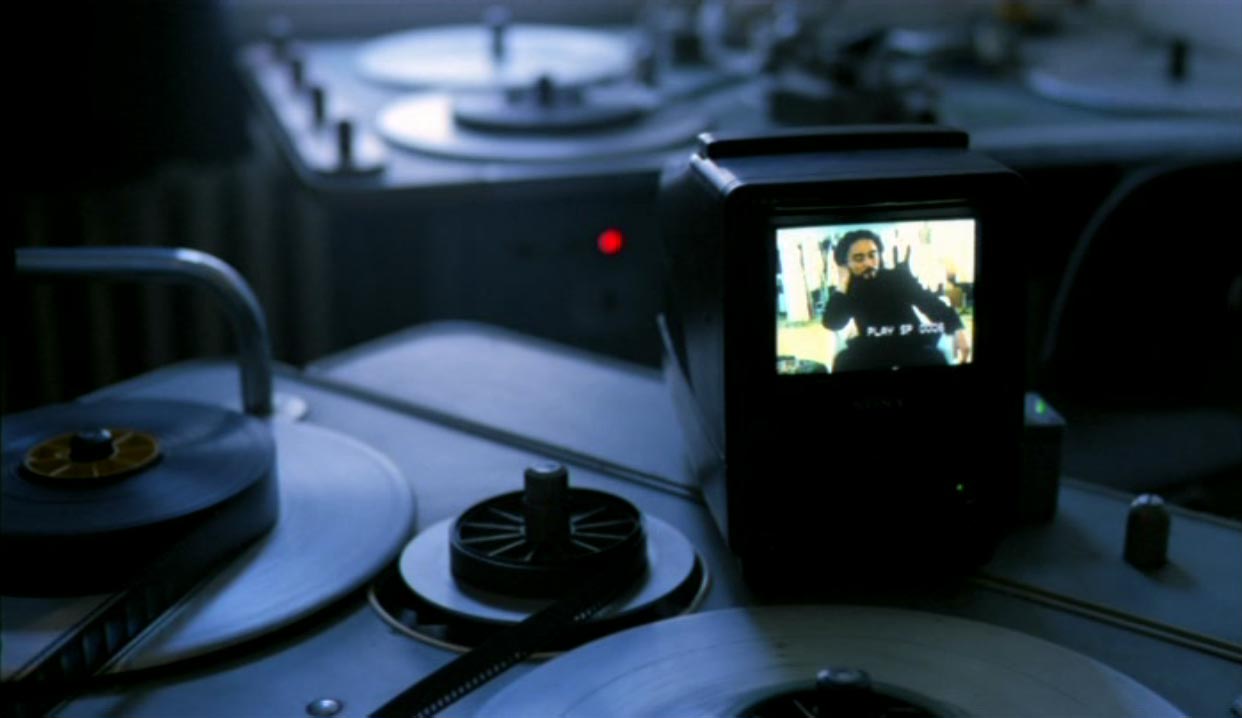
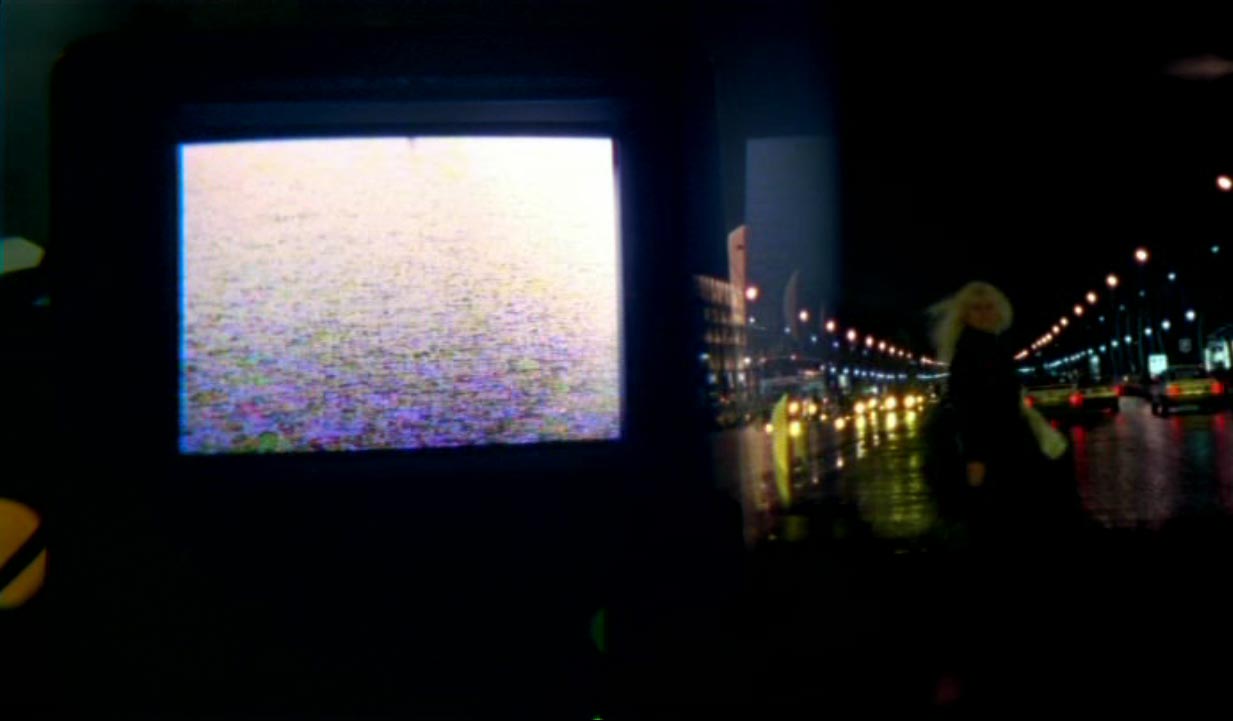
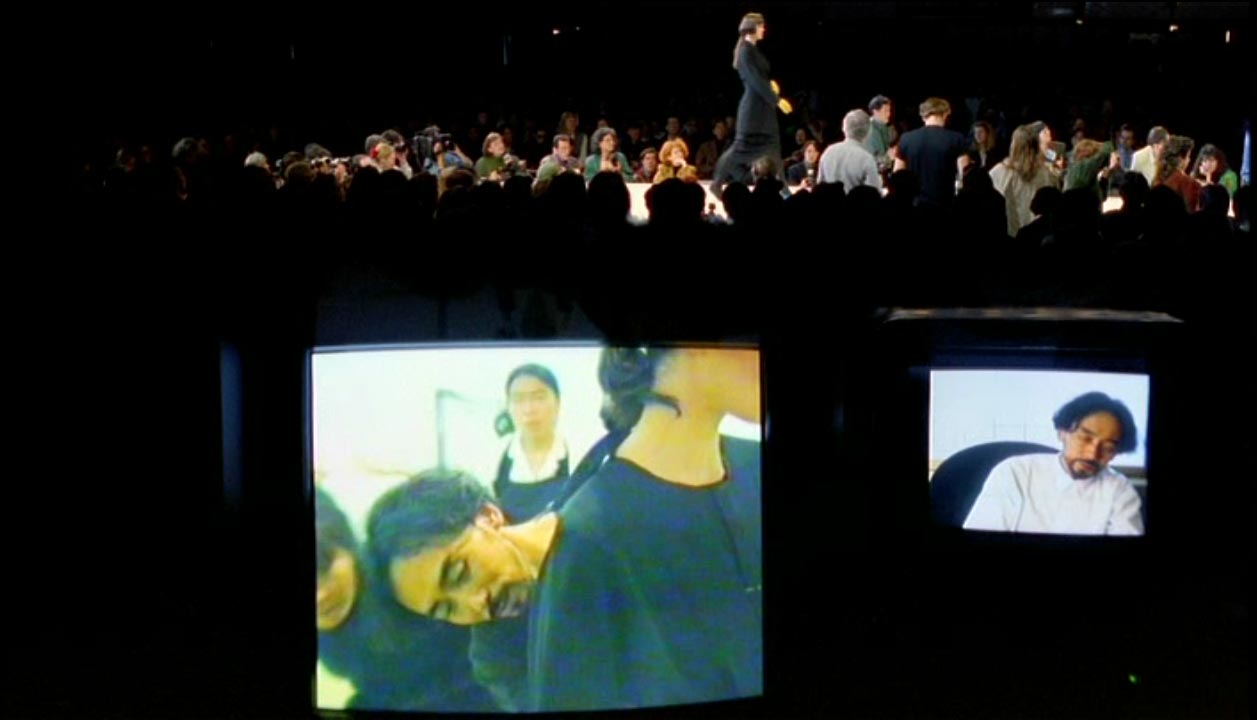
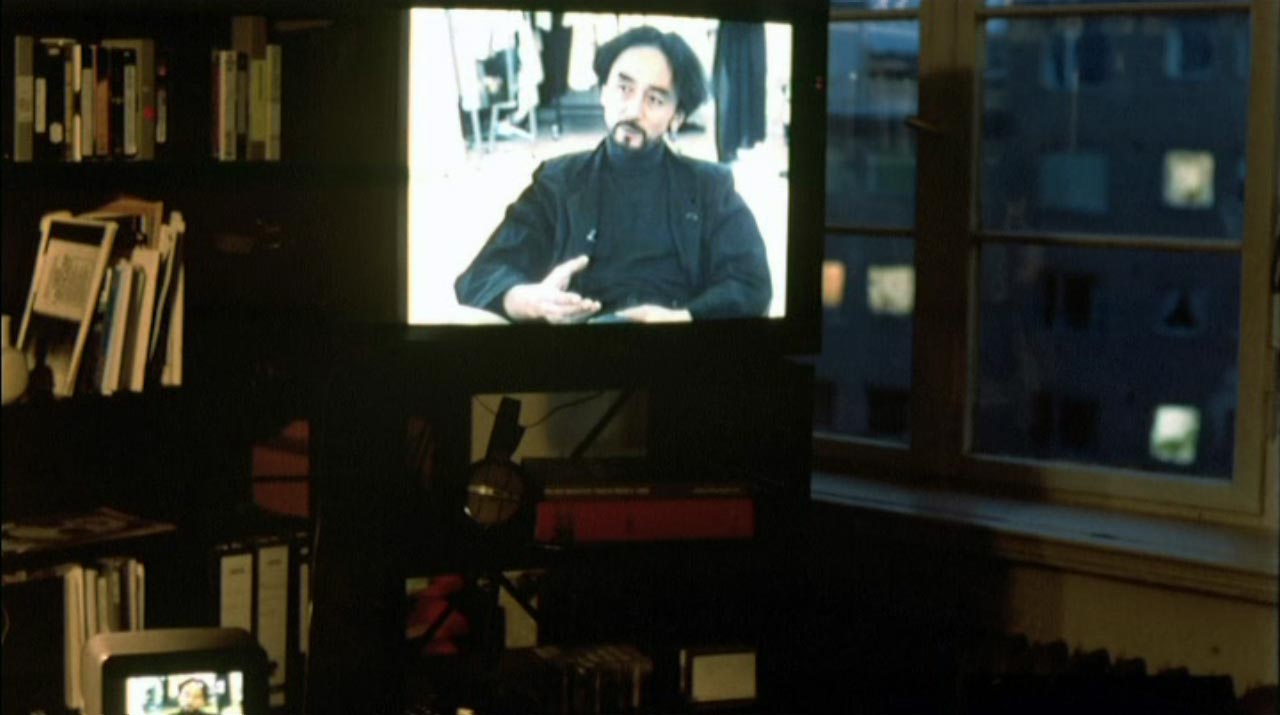
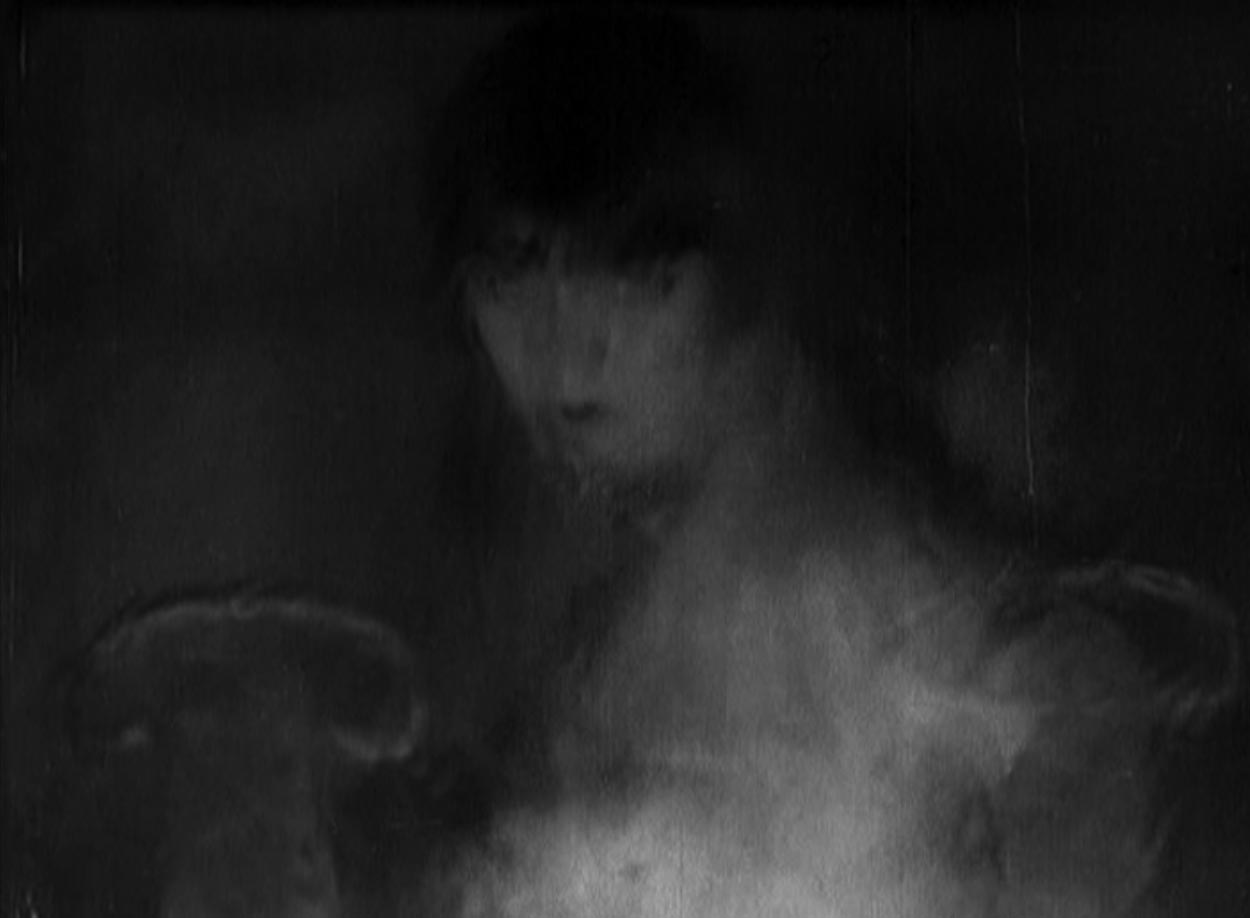
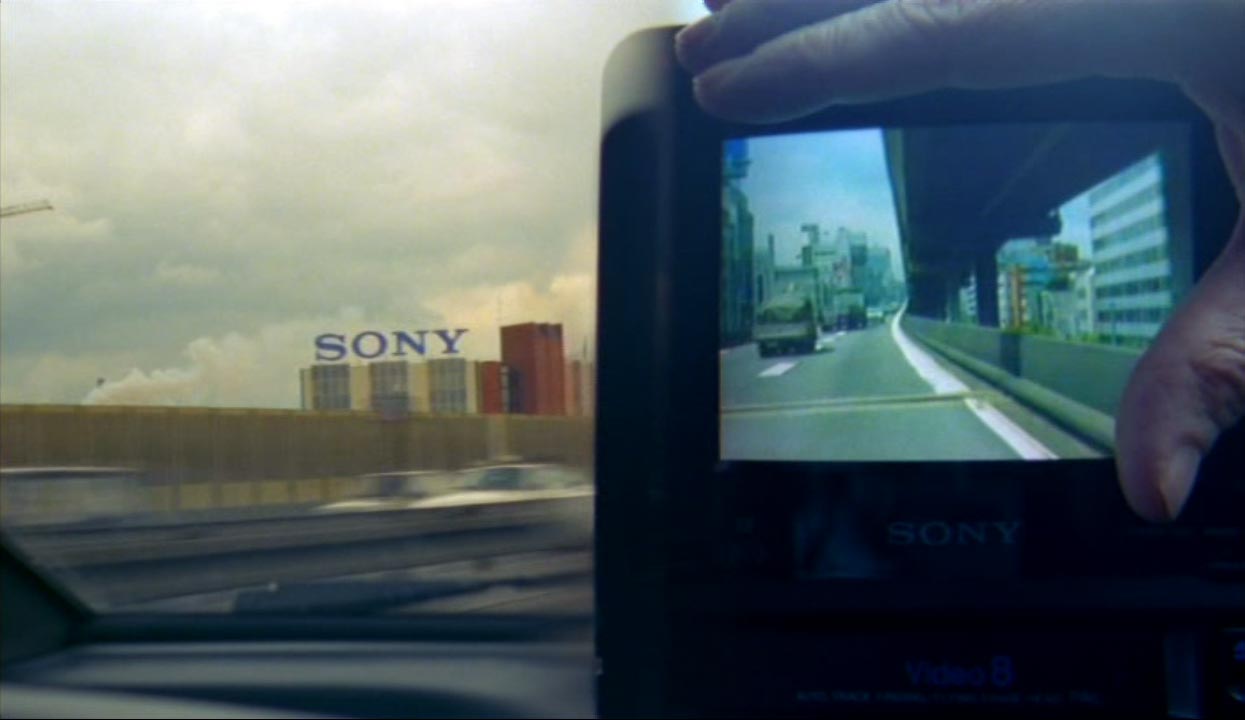
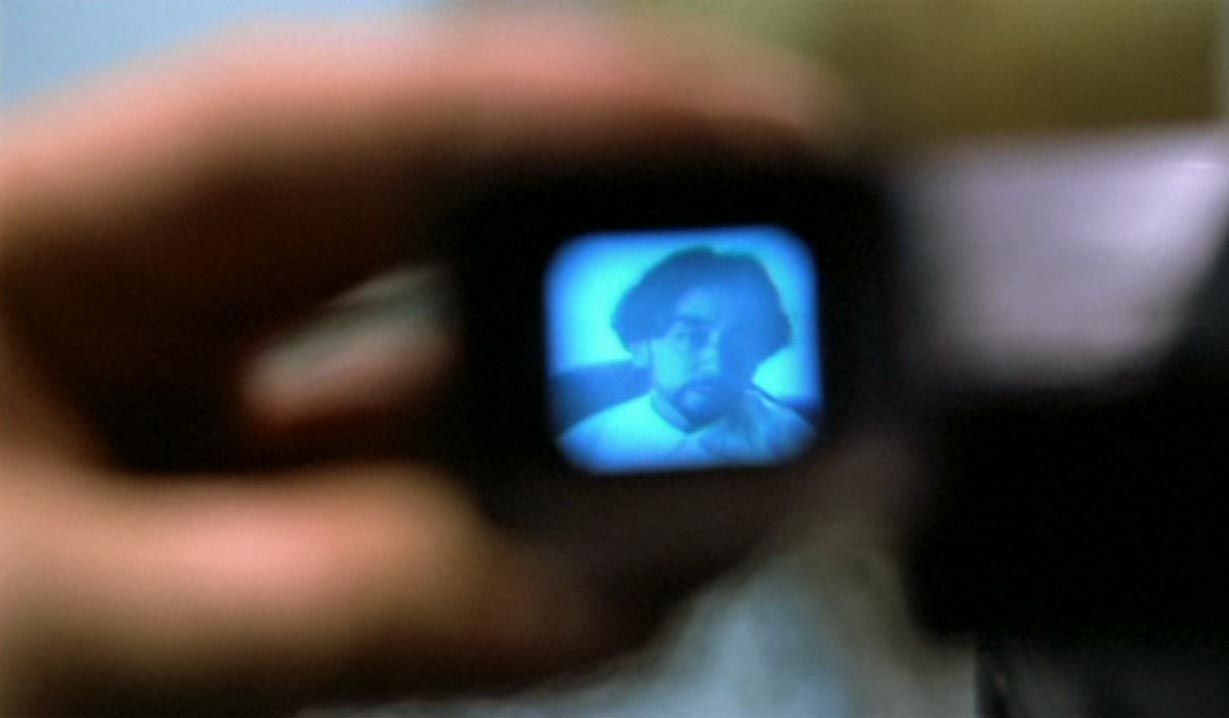
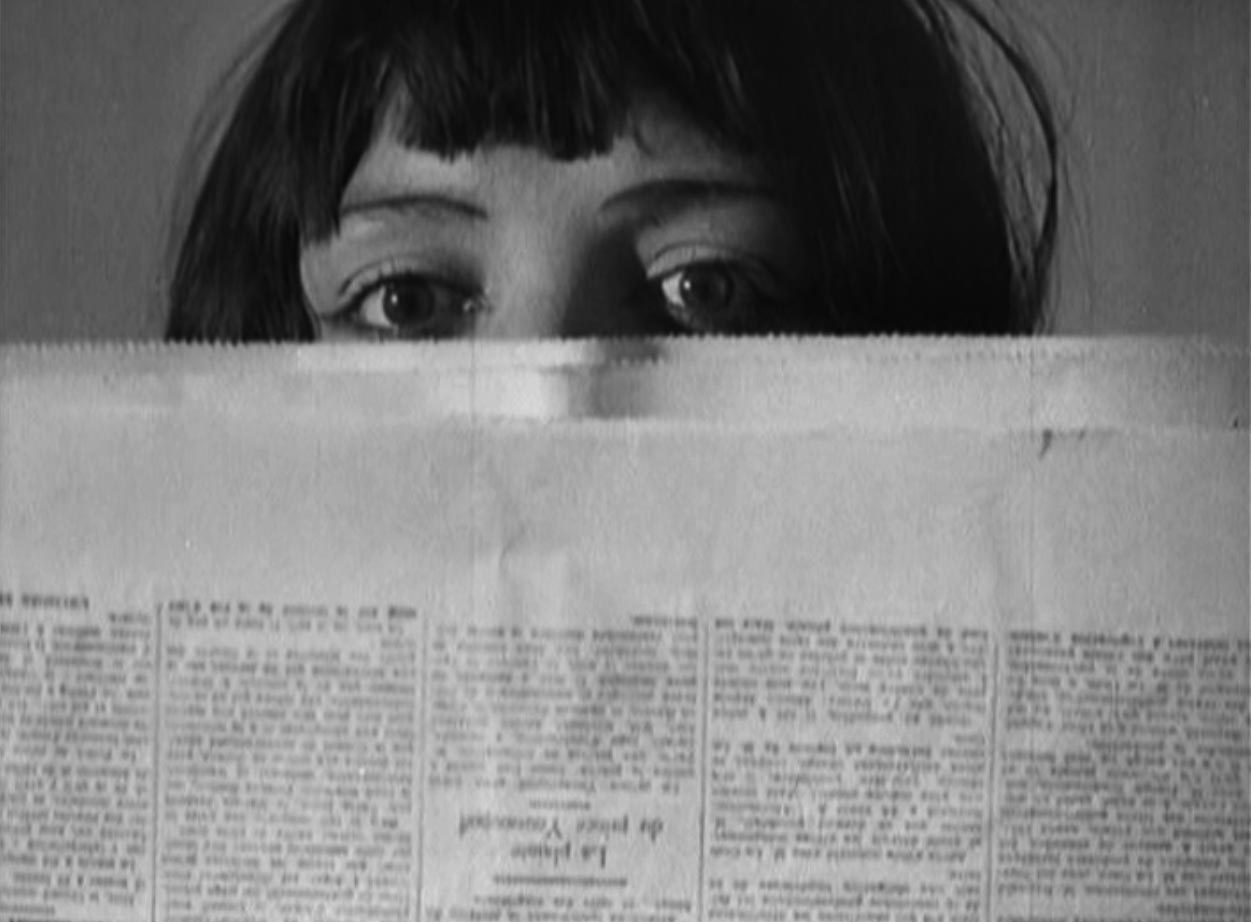
The following screengrabs are from Wenders’ film Notebook on Cities and Clothes (1989). They are all of images within images, and represent/re-present places within places and ideas within ideas.

My mind wanders over these images and then wanders beyond them, both outside their frames and to my own presuppositions and fetishes, and I think of Baudrillard’s quote:

It is perhaps not a surprise that photography developed as a technological medium in the industrial age, when reality started to disappear. It is even perhaps the disappearance of reality that triggered this technical form. Reality found a way to mutate into an image.

-from Photography, or the Writing of Light (2000)

Of course Baudrillard is wrong if we take him literally. Reality has not disappeared. But Baudrillard is right, as all postmodernists are, that the way we understand reality is heavily mediated for us (and by us) to the effect that reality, or “reality”, would seem to be an image created for us, is an image presented to us, is an image we carry with us, is an image we remember, and is an image we create. And, as an image is worth a thousand words, or a million, and therefore images are stories, fragmented or otherwise, connected and intersecting with other stories, stories referencing other stories, images referencing other images, we can apparently say all is reference. With Wenders we have the added question of the ever changing and never original (or always original) electronic image coupled with the question of what is fashion.

I suppose this blog plays a part in how I mediate the world for myself. I write for an audience, largely imaginary, but I also write for myself. Subconsciously, and maybe sometimes consciously, I write so that I can understand the world and my place in it. In this sense I can say that I have my take on reality. But the question is, are all distinctions truly arbitrary? And can this notion apply beyond the world of images to the rest of life?

So some degree Wender’s position hearkens back to his explorations in such films as Paris Texas and Wings of Desire. In those films we see characters struggling to communicate across great barriers (physical, psychological, spiritual) with those whom they love, or believe they love. In Wings of Desire the barrier is the difference between the world of human beings and the world of angels. The film’s story revolves around the idea that to become fully human one has to give up being merely an observer and enter in, that is, to immerse oneself in the tangible messy world we humans call reality. To cross that chasm is to take a leap of faith.

But is faith a leap? In the so-called Western/Christian tradition the word faith has a lot of gravity. Faith is one of those words, like love and happiness, whose meaning we all know and yet can never seem to finally pin down. For many the word has precisely to do with some kind of existential or spiritual leap. And for some that leap is a leap into the unknown or the unsure, or even the absurd. Interestingly, when we read the word faith used by the early Christian writers, such as the Apostles Paul or Peter or John, it is, in fact, the ordinary Greek word for belief. It does not appear that the Apostle’s intentions were to convey any idea of a leap of faith, or of faith being a kind of spiritual ecstasy. For what I can tell they were merely telling others to continue to believe what they have heard about Jesus because it is true, and that they can know it is true because the Apostles were eye witnesses.

Which brings us back to Notebook on Cities and Clothes and the idea of mediation and its relationship to truth. The fact is we are immersed in a world of images, and we seem to understand our world more and more in terms of those images rather than words, and those images are increasingly potentially untrustworthy. We are also in a world in which, while many of the barriers between people and cultures still remain, we are intersecting more and more with an increasingly broader scope of people(s) and a multiplicity of voices. Which means that we live in a world of references, that is, a world in which everything begins to reference something else and is built upon other references.

Maybe no other living filmmaker has more fun with playing with references than Quentin Tarantino. Part one of Death Proof immerses the viewer in a 1970s pastiche, full of faux antiquing of the film, samples from 1970s films, and stylistic choices right out of now classic B-movie road and slasher films. The film is designed to draw attention to itself. Tarantino winks at the audience and the audience winks back, along with the occasional high-five and an “oh yeah!” If a drinking game were devised for Death Proof, where viewers had to down a shot for every meant-to-be-obvious filmic reference, players would die of alcohol poisoning after ten minutes.

Examples include this appropriated “restricted” card from the early days of the MPAA rating system:

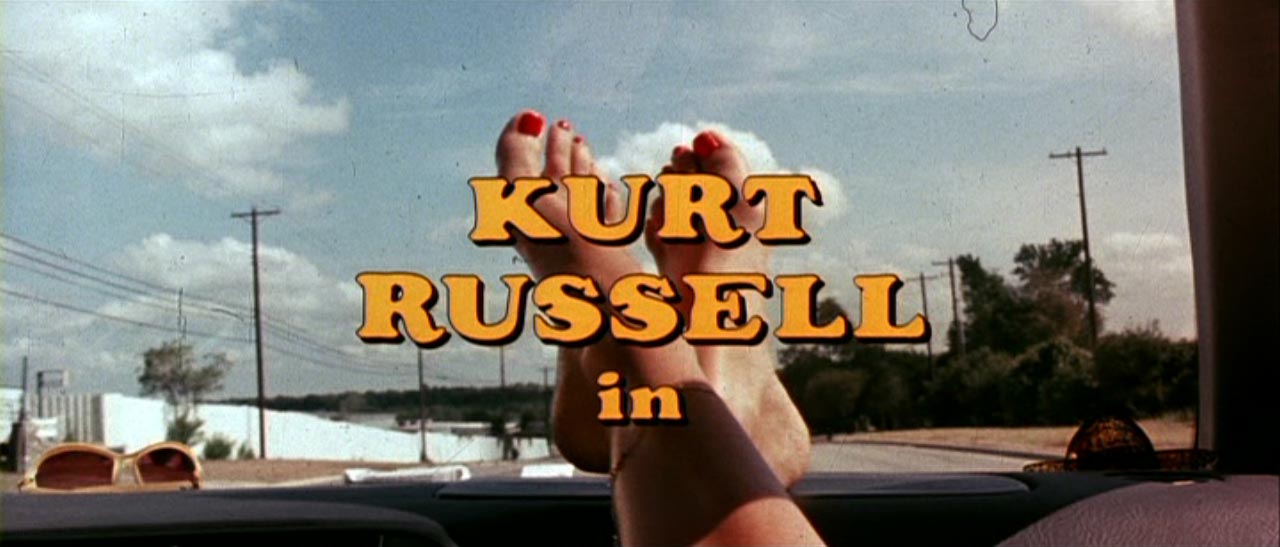
And this created title that looks like it came directly out of an early 1970s Disney film starring you know who:

Other examples include faux scratches and dust on the film and numerous jump-cuts that simulate a worn out film jumping in the projector gate because of splices and damaged sprocket holes.

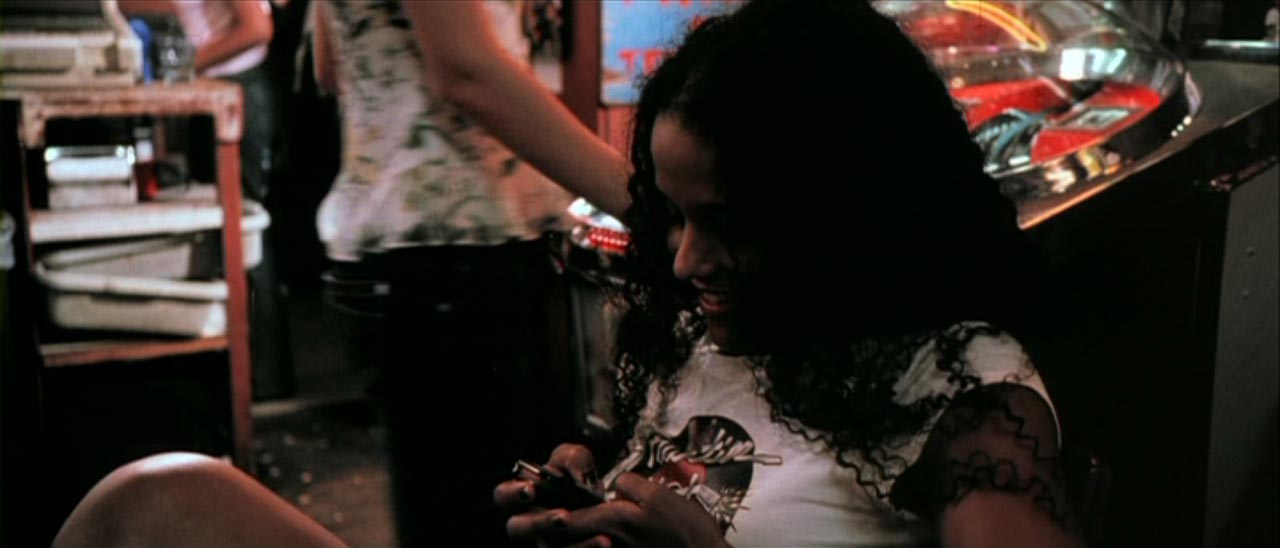
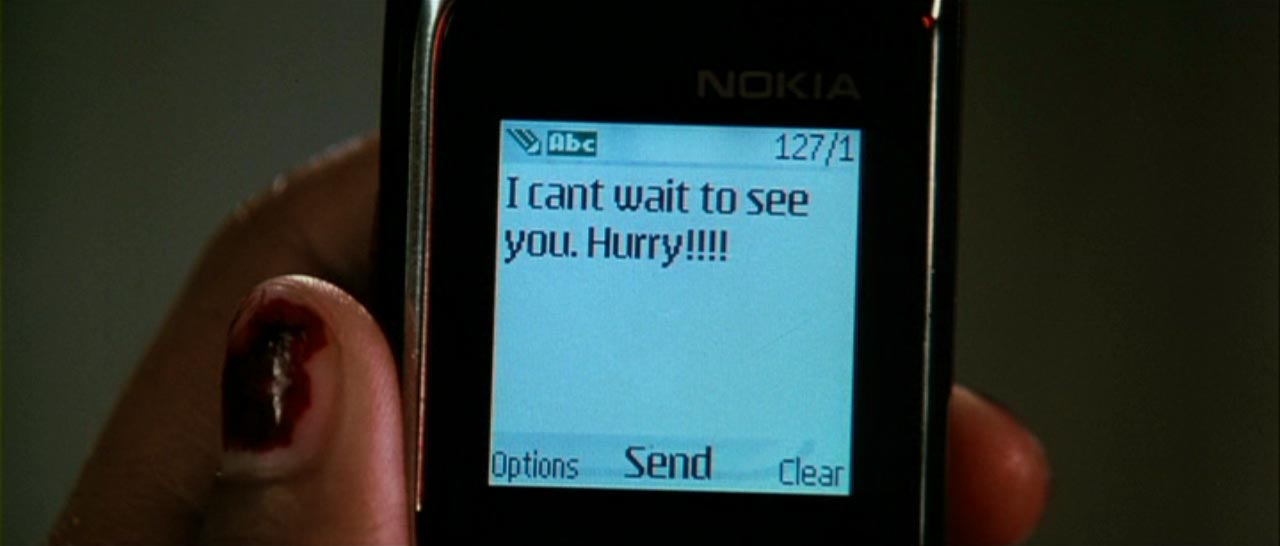
But what is so fascinating is that Tarantino is not making a 70s film. He is making modern film. Consider that while the characters seem to live and play in a archetypal film of a previous era, and while the film makes a point of looking aged and worn out, characters still drive modern cars and use cell phones – like Jungle Julia below.

And yet, I doubt many viewers found this disconcerting, or even noticed, because there are no longer any meaningful distinctions (apparently). For a director like Tarantino there are no boundaries between films or genres or eras, there is only the magnificent cloth of cinema where every film participates in the weave, connecting and intersecting in the psychic playground cinephilia. For Tarantino, I would argue, faith is not a belief in what is true, but in what is cool and can be appropriated. And cool is another word for fashion.

In such a world where does one find one’s identity? Might one say that we are all only references built up from other references? That is the postmodern perspective, and it is the current version of “God is dead.” But is it true? I would say no. Ultimately there is no such world of only references, and we do not live our lives as though such a world were true. Wisdom would say one should always recognize the potential fallibility of our sacred ideas, but we are all creatures of faith, and faith knows there is a final reality that, at least, haunts us. Maybe, as we are immersed more and more in images, so increases the haunting.

>do not turn away

>Do not turn away
Even though you have the chance
Do not take your leave
For there is really nothing to take
Only to lose or to gain

Do not break in two
Or fall apart or become as stone
Or let the fire destroy
Or let the fire go out

Do not go quietly
But you can go humbly
And know that humility
Is an ache deeper than the ocean
And a challenge like the challenge to love

Do not forget why you are here
Or where you are going
Especially where you are going
For that is the voice that calls to you
And shapes you
And makes you

And do not call out
Unless you want what you ask for
But do not keep quiet
Because even a shrug
Can speak of infinity

And never forget your first love
Or your heart’s desire
Or your deepest lament
Or your darkest night
Or the promise you were given
Of the life you were wanting
Because you had eyes to see
And you still do

>runners take your mark…

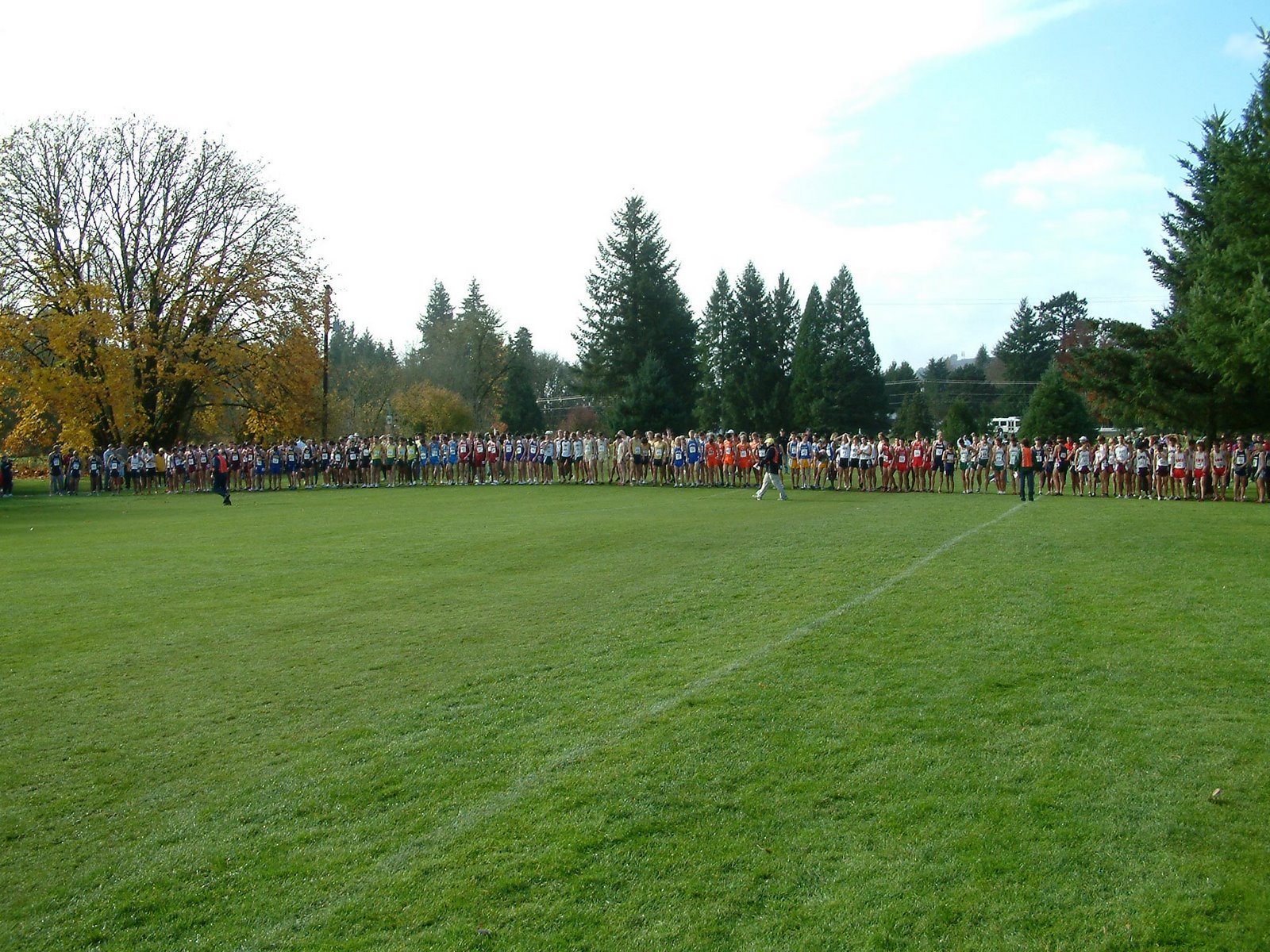
>So what would you do on a rainy, cold, November Saturday? Maybe stay inside and watch a movie of two, maybe stay inside and watch some football? Me, I had to bundle up my family and drag them out to the NCAA Western Regional Championships, one of the college crosscountry races leading to the NCAA Championships next week.

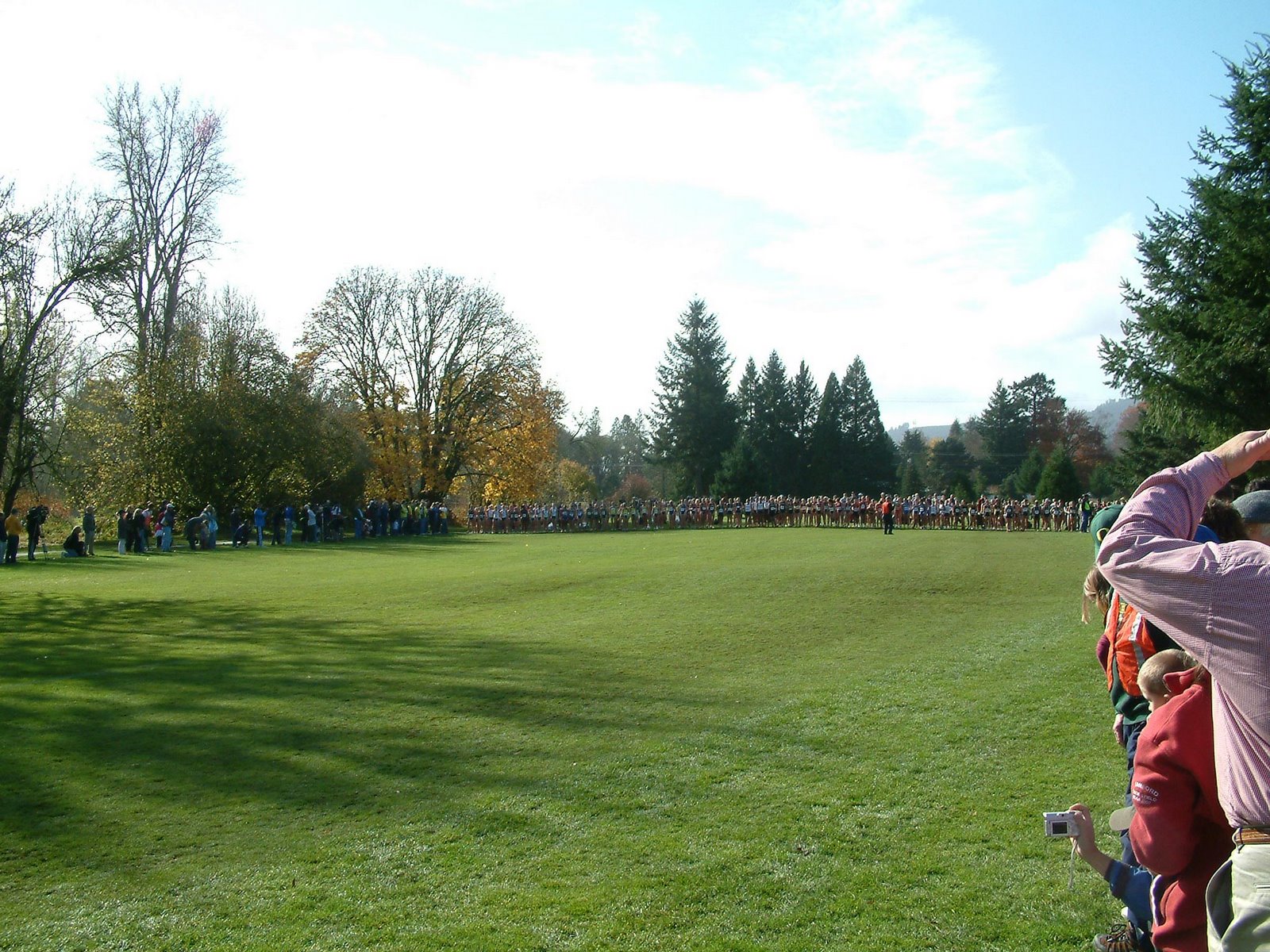
Here is the men’s starting line about one minute before the gun.


That image gives me goose bumps. I have always been a fan of running and track & field. I grew up in Eugene, OR, sometimes known as Track City U.S.A., and home of Hayward Field, the track & field home for the UofO Ducks, and site of the upcoming 2008 U.S. Olympic Trials. I remember watching Steve Prefontaine run. I remember the 1970s running craze. I sat in the stands for three U.S Track & Field Olympic Trials (1972, 1976, and 1980).

I spent many hours at Hayward over the years watching great athletic performances and competed in some while on my high school track & field team (shot put, discuss, javelin, hammer). Needless to say, I am a fan. But I had never attended a crosscountry meet. So this was new to me. It was every bit as exciting as a top flight track & field competition.

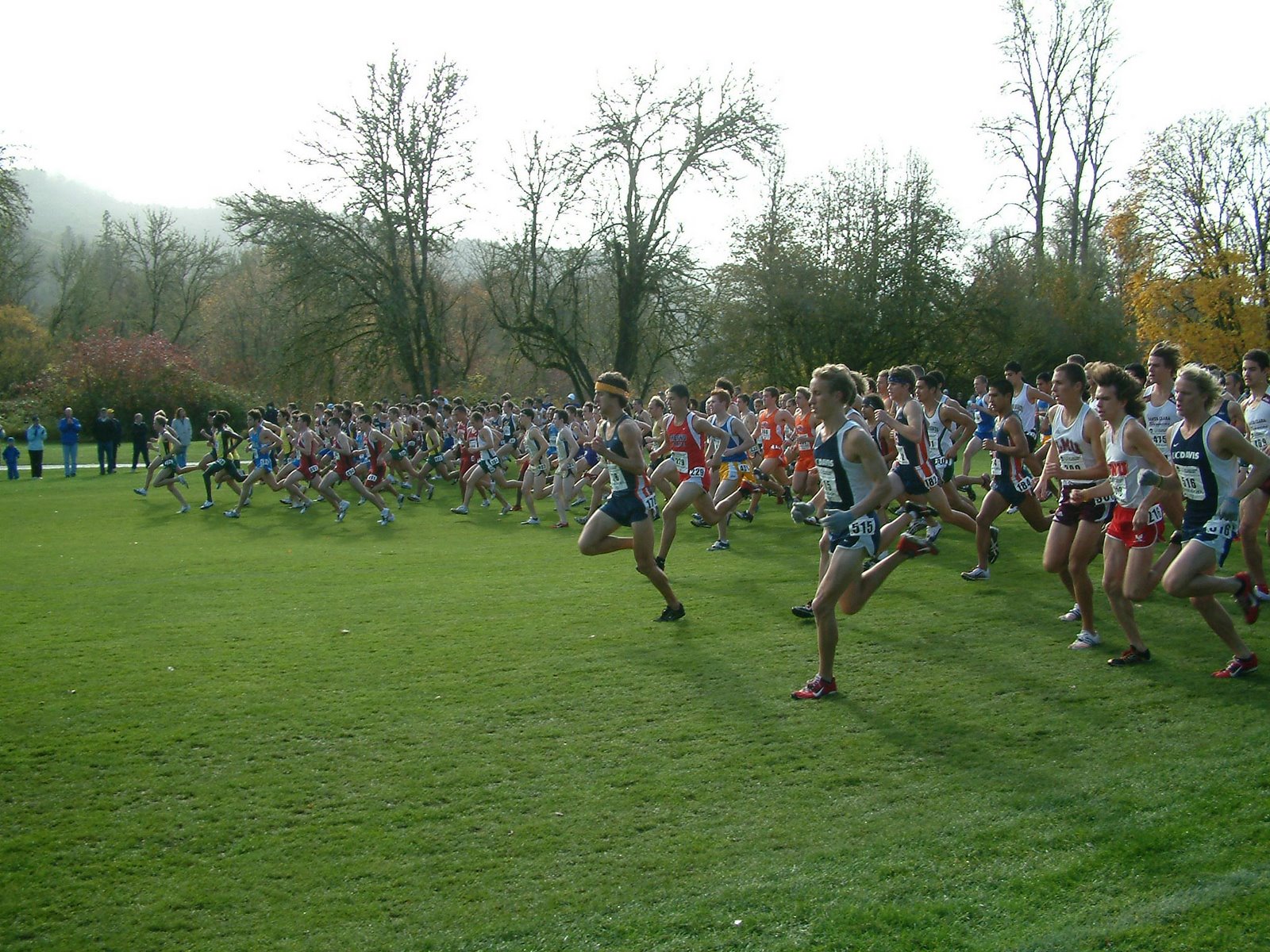
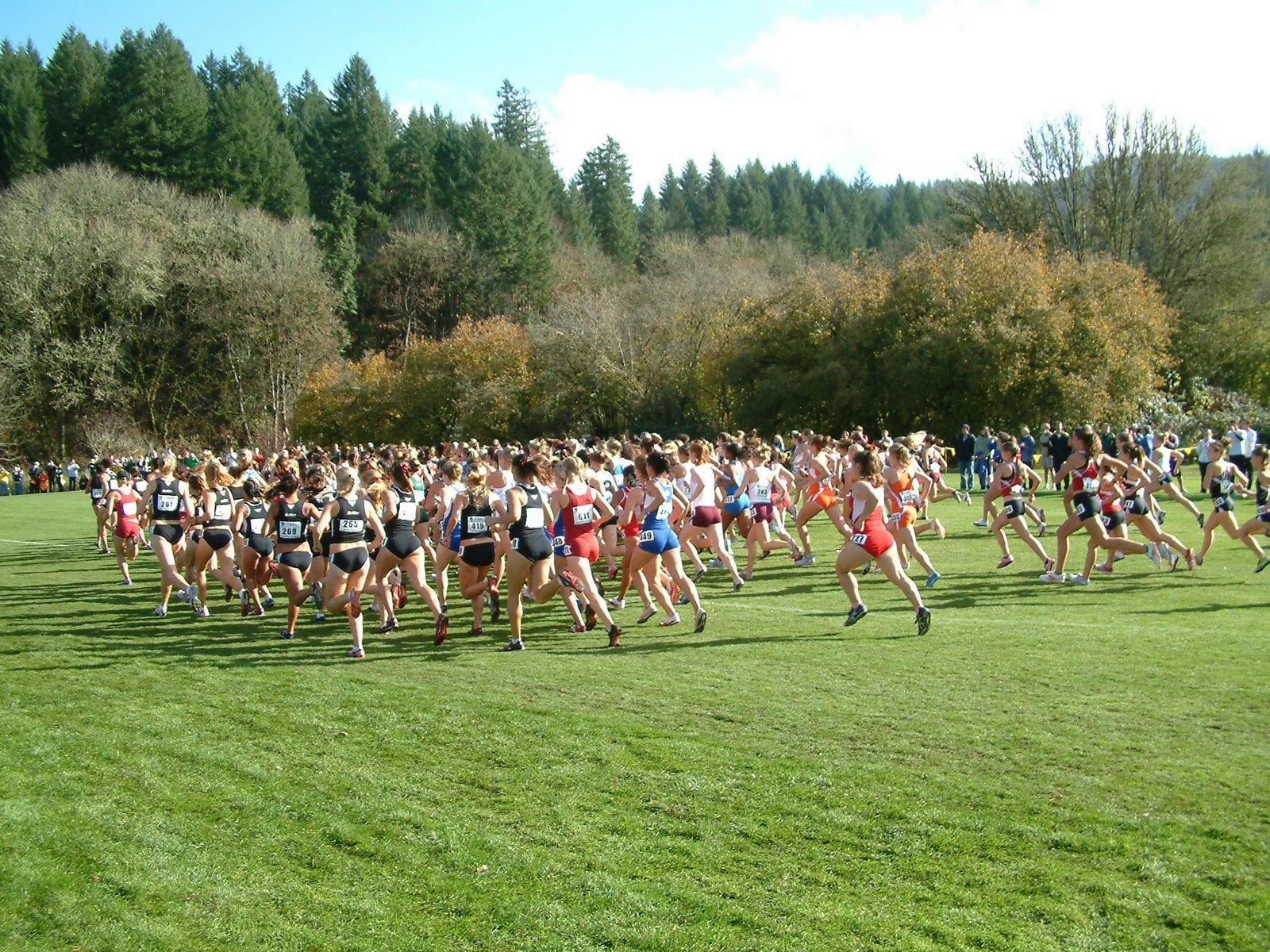
Here are the men at about 8 seconds into the 10K (6.2 mile) race.


The rush of runners going by was exhilarating. One reason I wanted to go was to take my daughter Lily. I wanted her to get up close to the competition and witness the effort firsthand. I don’t think she was all that interested until this moment when it dawned on her that this was exciting stuff indeed. From that point on she was into it.

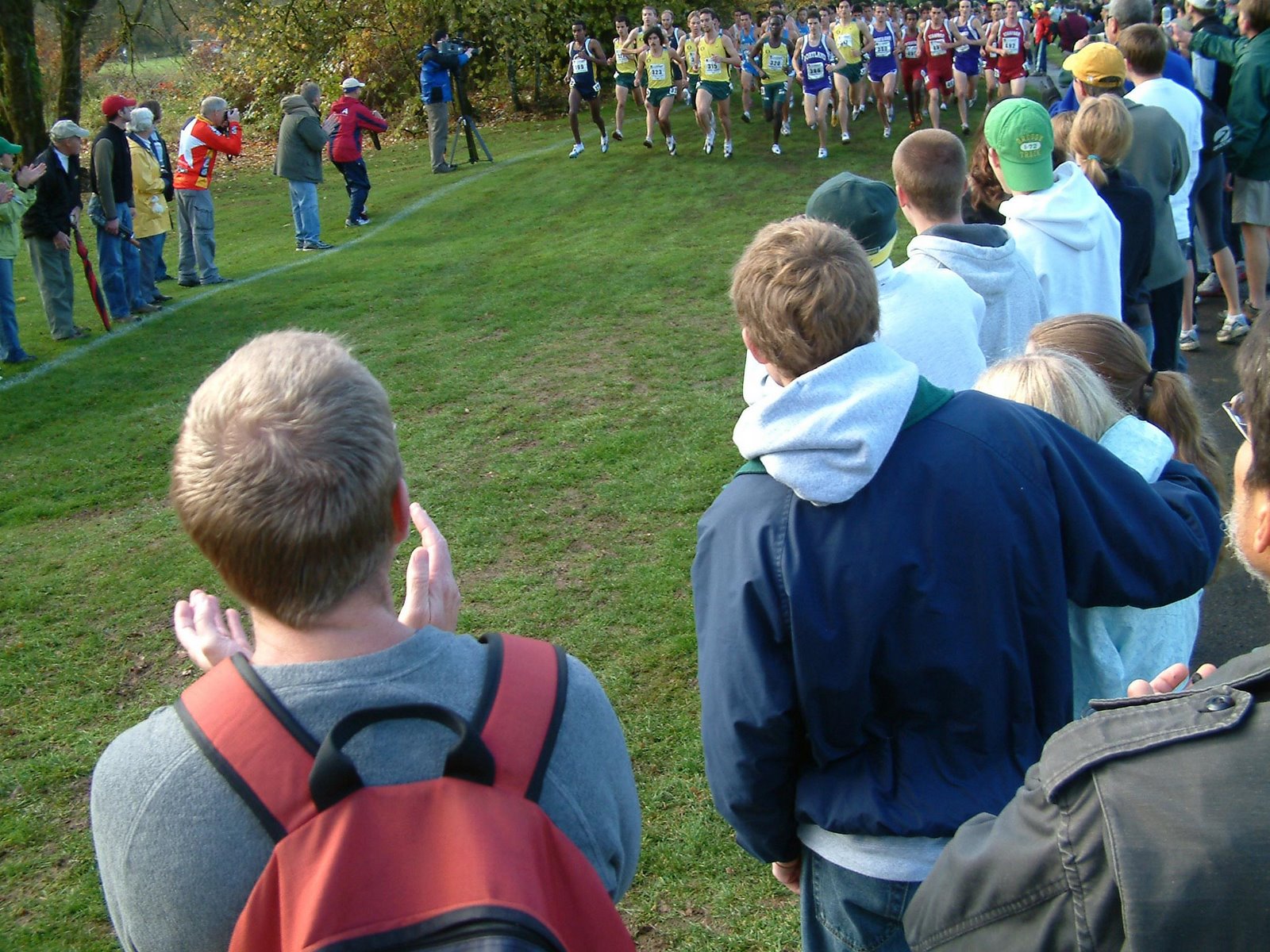
The fans lined the course and made lots of noise as the runners passed.


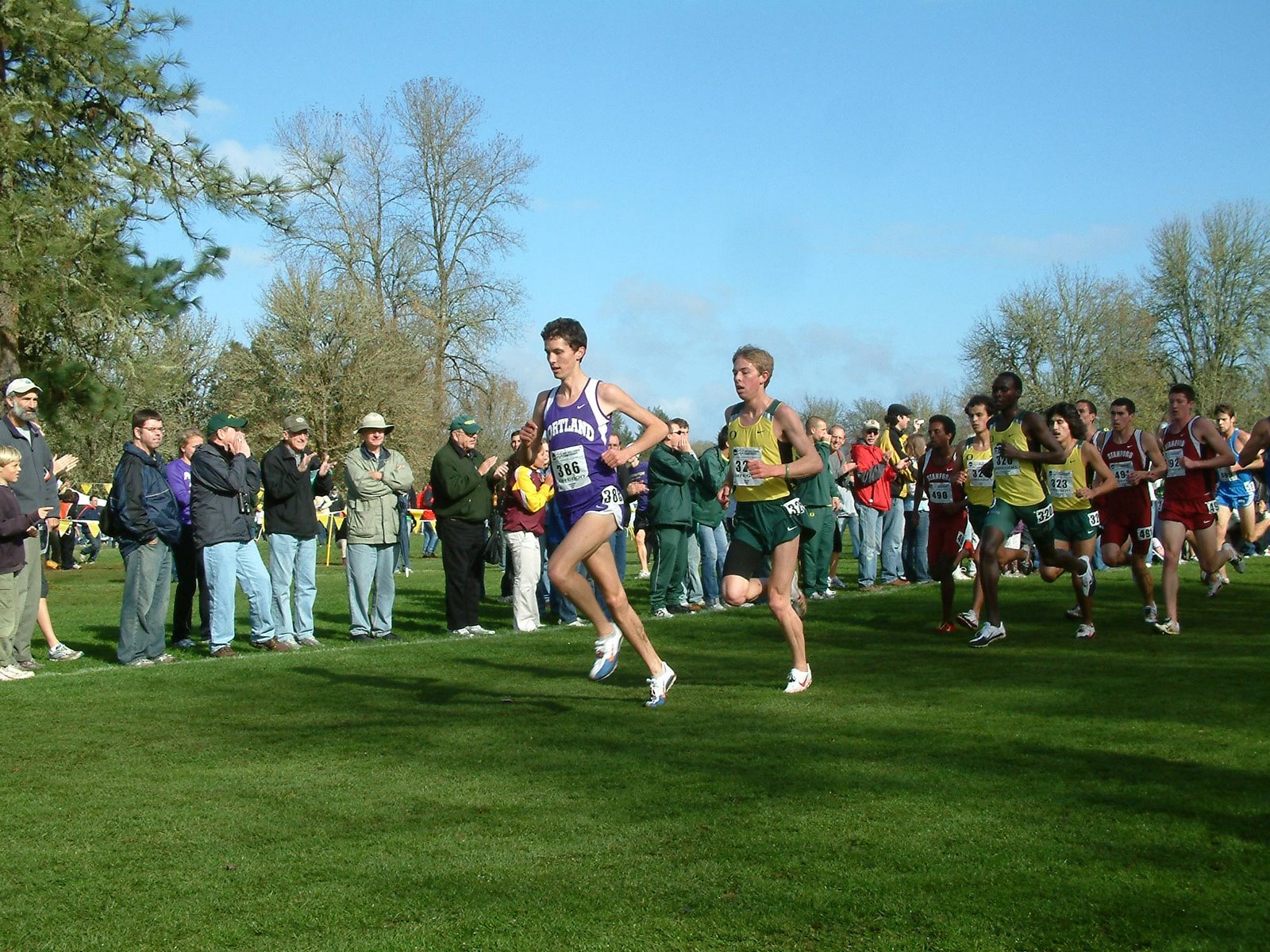
The course was a circuitous loop around the Springfield Country Club golf course. As the race wore on the runners began to string out.


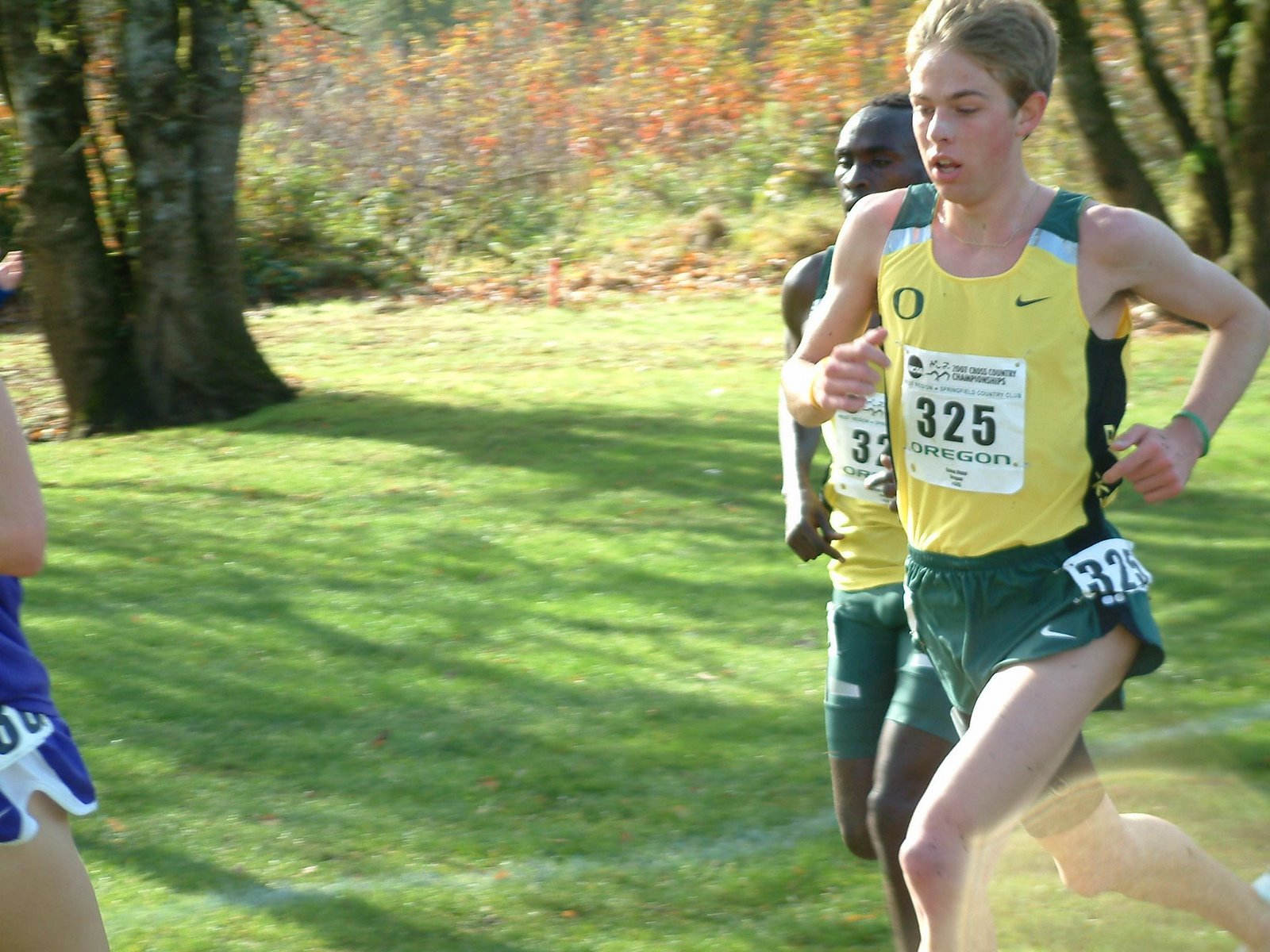
Here is Galen Rupp, top UofO distance runner.


Galen eventually won the race in a time of 29:35.45, that’s an average of 04:45.73 per mile! Galen has been a bright star in the world of college distance running for several years. I’m curious where he will end up.

Here is the starting line for the women’s race.


And there they go.


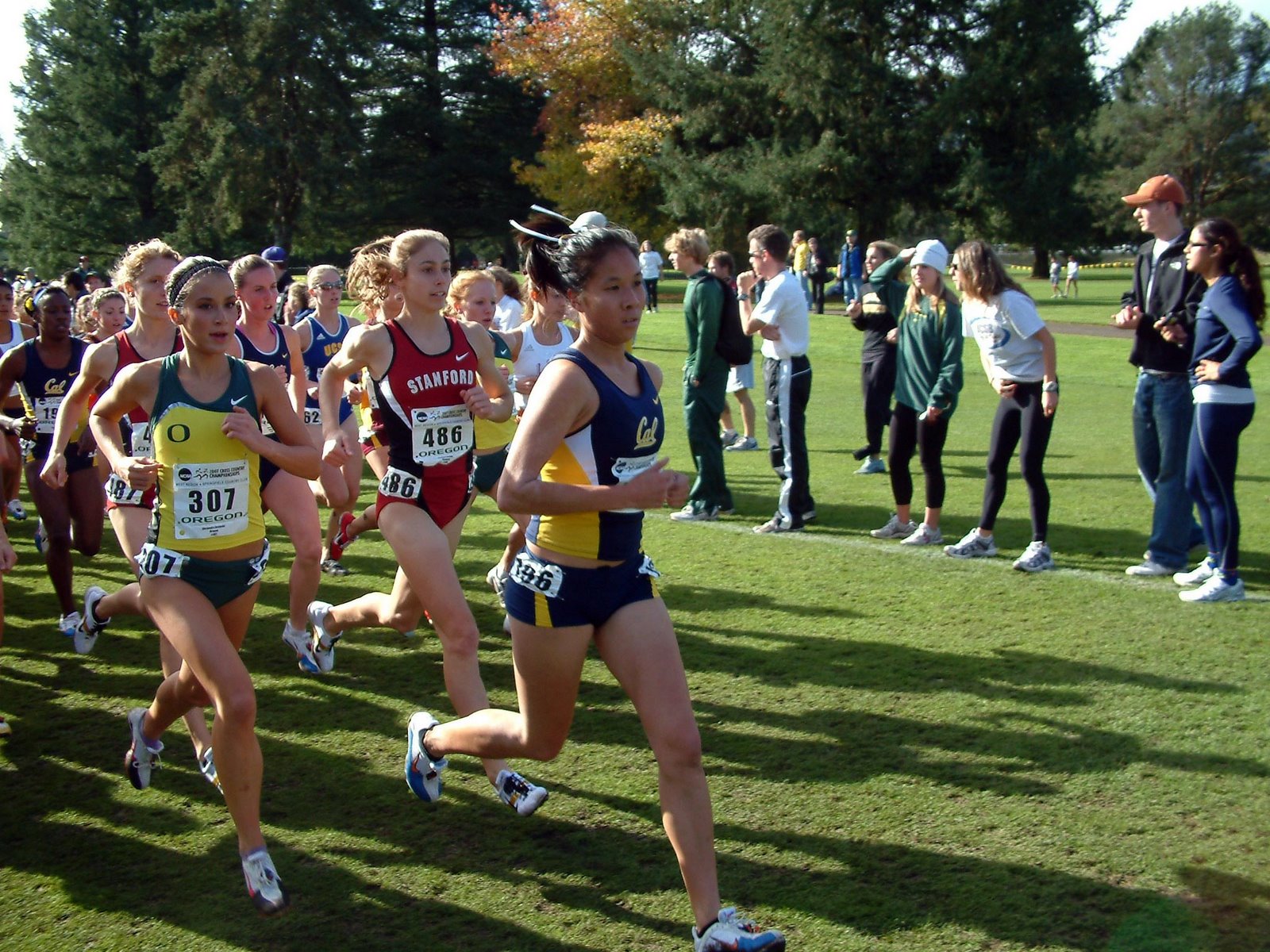
As the race wore on the runner’s began to string out and the race favorites grouped at the front.


There is a natural beauty in excellent athletic ability. These runners, men and women, have such physical grace that one cannot help but be amazed when they go by. It is like hearing a gifted singer sing.

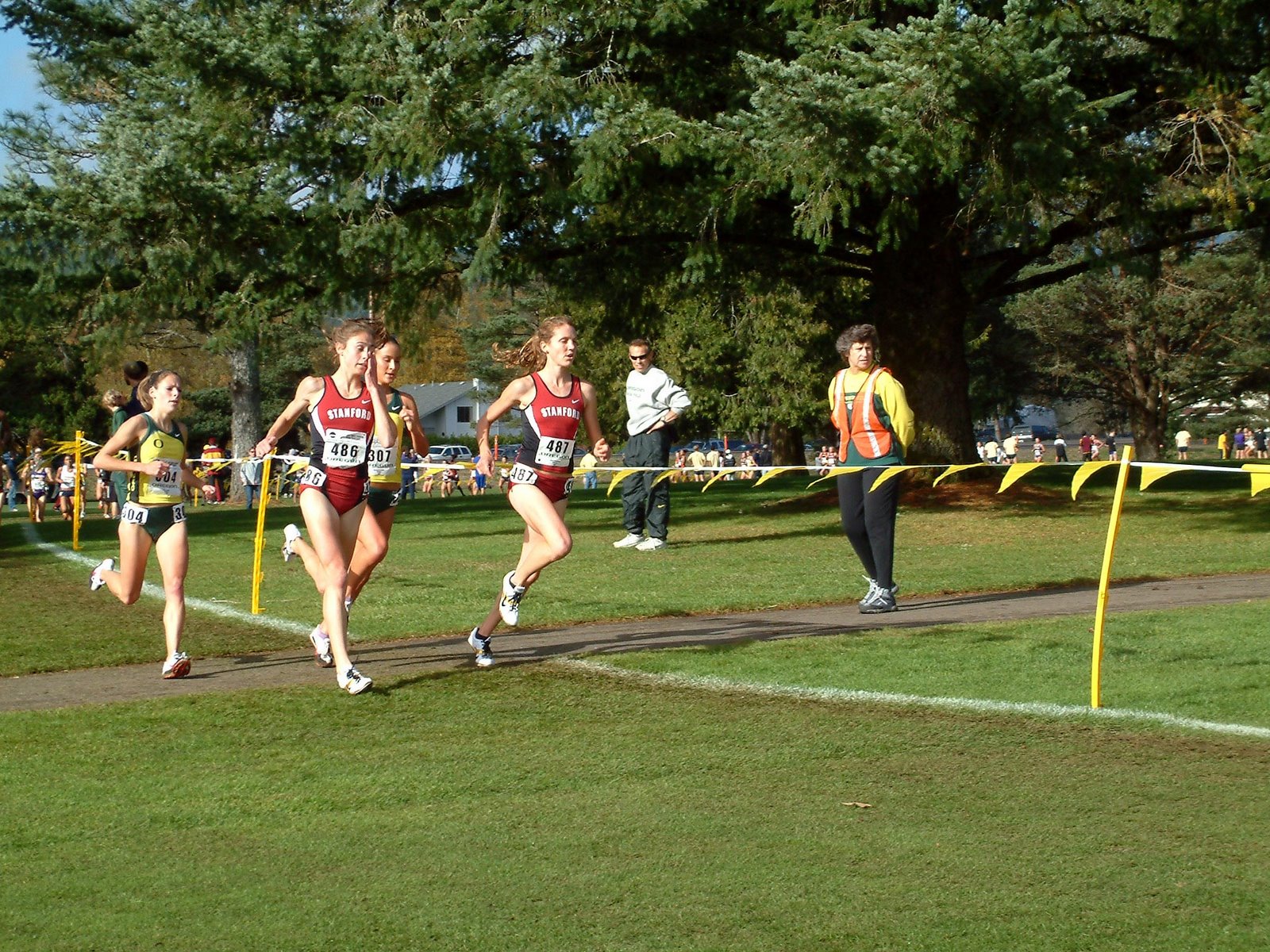
On the second to last lap only four runners remained at the front, two from Standford (one of the great crosscountry powerhouses) and two from Oregon (another great running powerhouse).


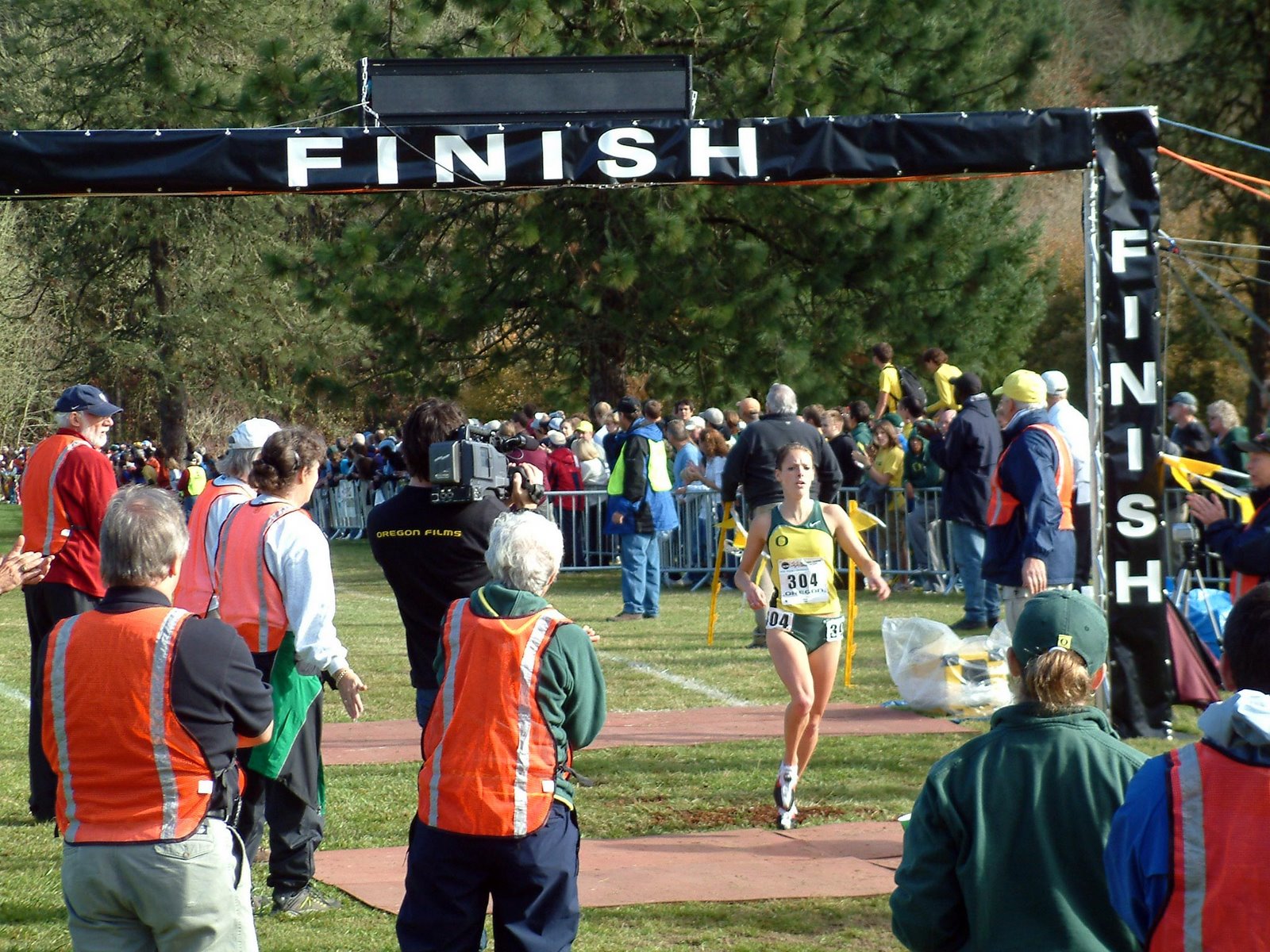
Here is Teresa McWalters of Stanford crossing the finish line in first place with a time for 6K (3.7 miles) of 19:57.30, or an average of 05:21.14 per mile.


And in second place is Nicole Blood of the UofO.


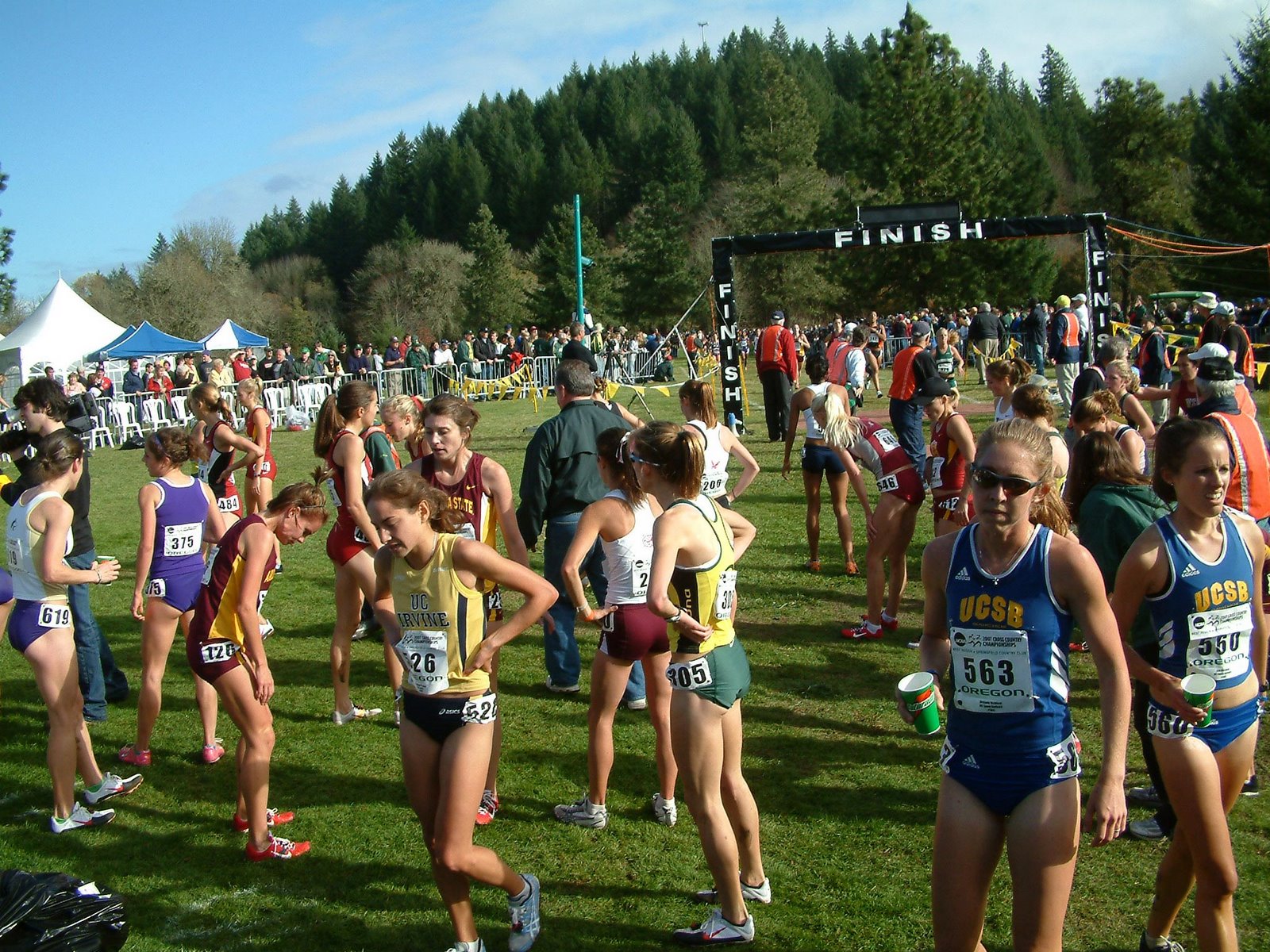
Lily and I stood where the runners gathered after they crossed the finish line. It seemed to me that Lily was almost overwhelmed and in awe of all these runners coming across the finish and showing their utter exhaustion from having given their all. She also saw the camaraderie as runners hugged each other and helped those too tired to stand. She kept saying “good job” to the runners that came near her.


At one point a runner came over to the fence Lily was hanging on and put her head down, resting from the extreme effort.


I saw Lily watching this runner (I think it was Breanne Strenkows of UCSB, 53rd place) and I could tell that it was a powerful moment for Lily. This was what I hoped Lily’s experience would be; to be this close to the fullness of athletic endeavour and maybe, even just a little, to be inspired. And me? I had a great time and left full of inspiration too, and grateful for my family’s indulgences.

>a particularly important day in my life

>On this day…

Events:

Births:

Deaths:


The lists above (blatantly copied from the November 10th page on Wikepedia) are just a few of the events and names that caught my eye.

Why, you ask, do I care so much about November 10th? Aha! I say. Happy Birthday to Me!

Watching What’s Up Doc?, remembering my youth

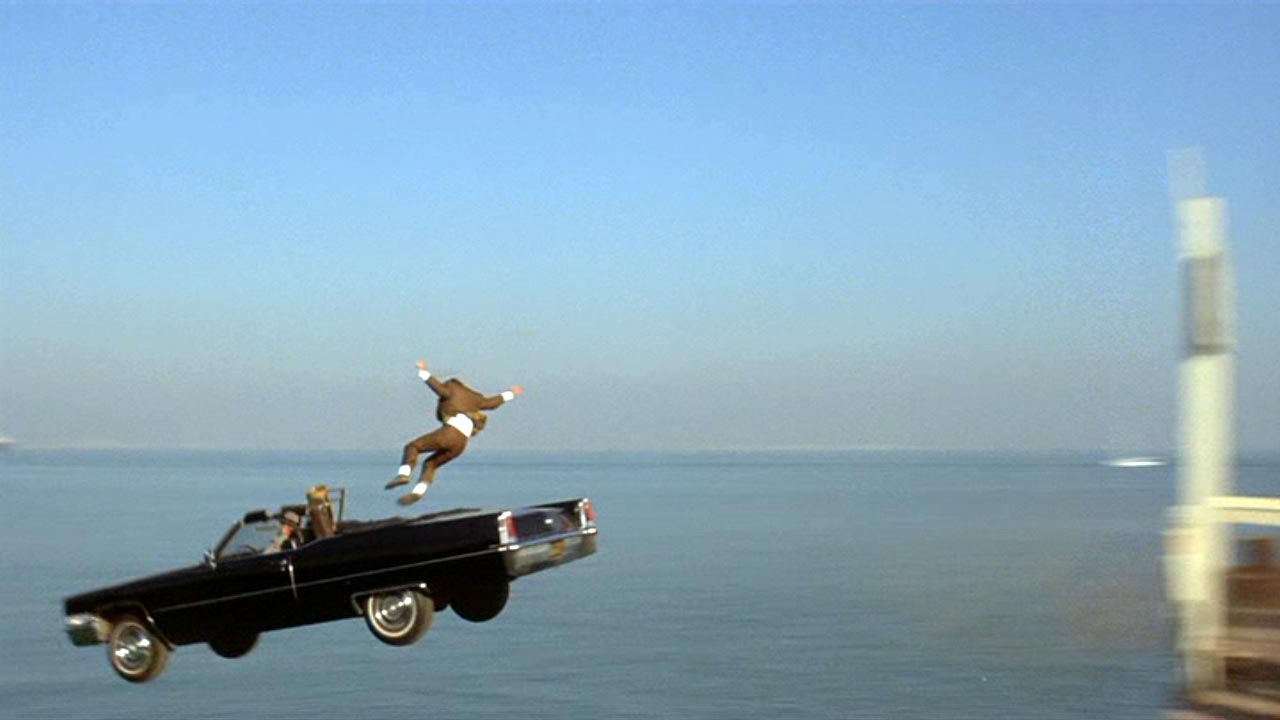
When I was just a lad I romanticized my future as is the want of youth. One of those inner visions that fueled my imagination was the mythical life of the stuntman. Yes I wanted to be a stuntman. There are certain moments in cinema that have stuck with me from that time in my life, not least of which is the grand finale to the outrageous car chase sequence in What’s Up Doc? (1972).

Consider this moment:

I wanted to be the guy who is jumping out of the back seat. To me that looked like such a thrill, and it still does. And it’s funny, which is what I like about the stunts in What’s Up Doc? They’re great stunts and they’re funny.

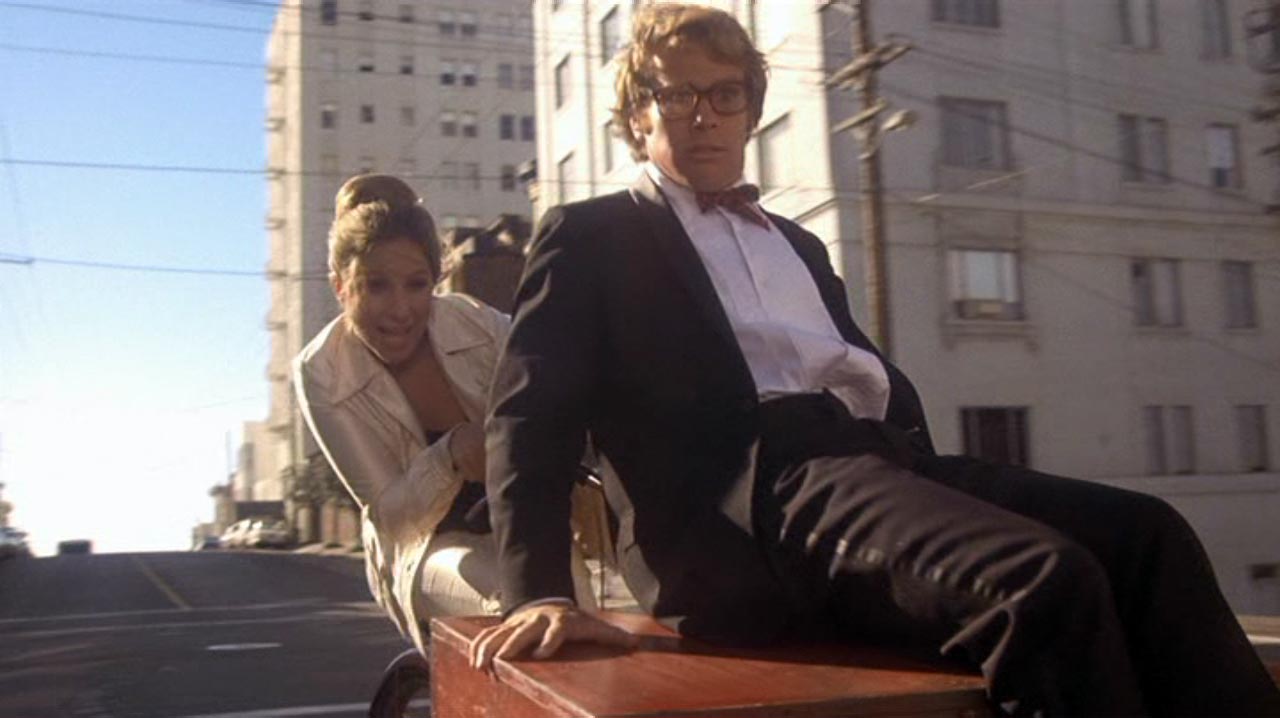
The car chase really got going when our heroes stole a delivery bicycle/tricycle thing and tried to get away with the four identical bags (no time to explain here). We knew that these two were in trouble in the blink of a single edit.

Here we see them round a corner and watch their expressions.

Then we cut to their point of view.

This might be considered the visual equivalent of a humorous expletive. At this point they are committed. And so are we, because now we know we’re in for a great ride. When it comes to car chases, thank you San Francisco!

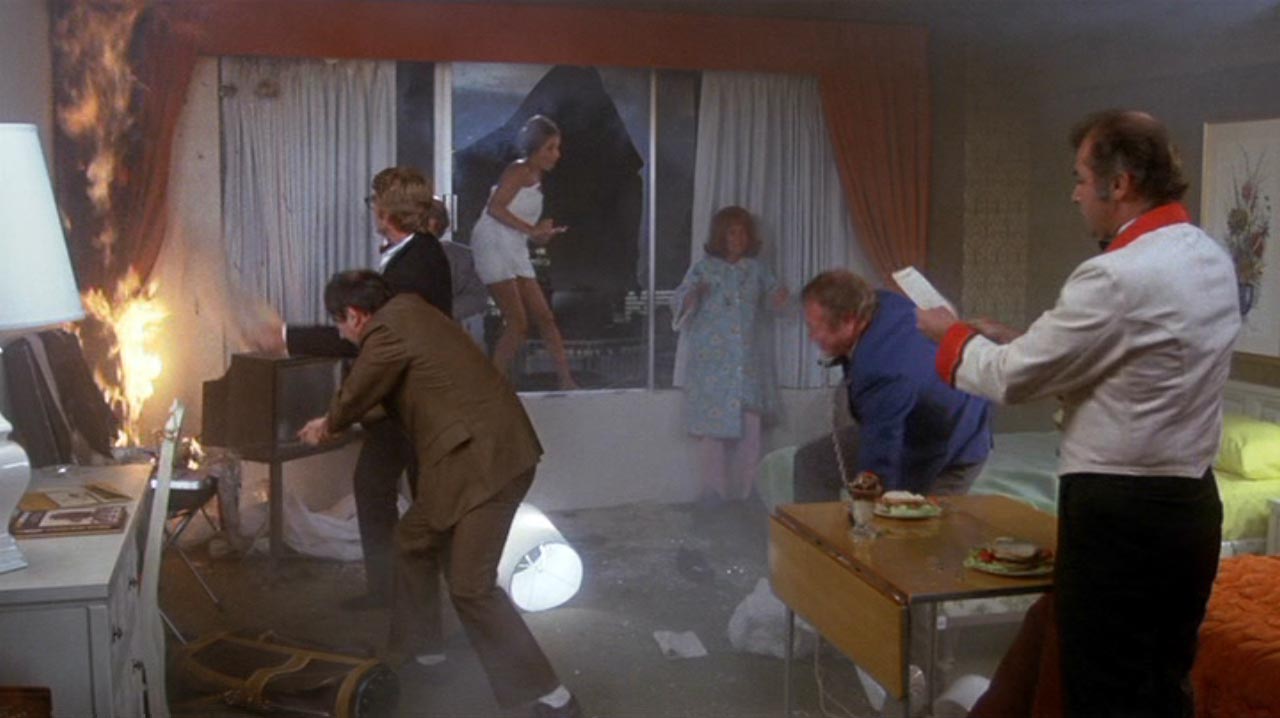
But then again, we could have guessed that the chase would be totally wacky and finish in the bay. Just prior to the chase was the fiasco in the hotel room. Needless to say this image speaks volumes:

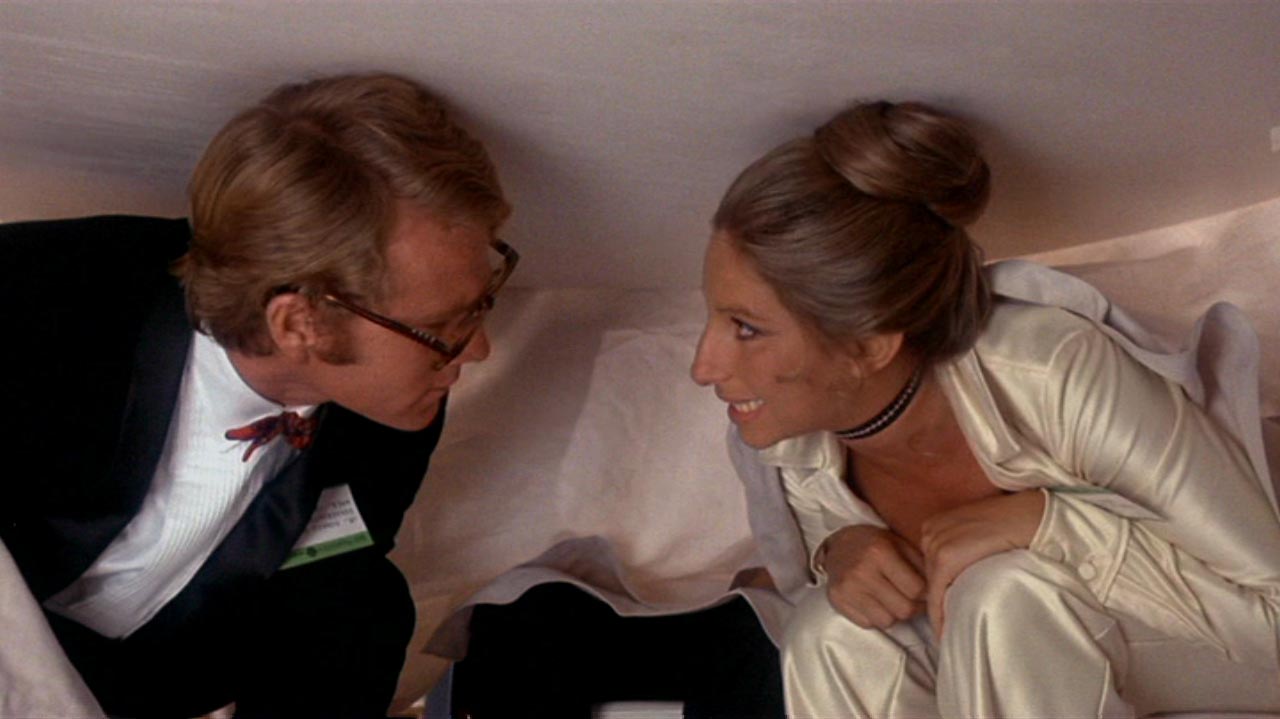
You might have also guessed, and correctly I might add, that What’s Up Doc? has now become a part of Lily’s ongoing cinematic education. We watched it this past weekend, along with The Adventures of Robin Hood (1938). I foisted it on her and, I am glad to report, she loved it.

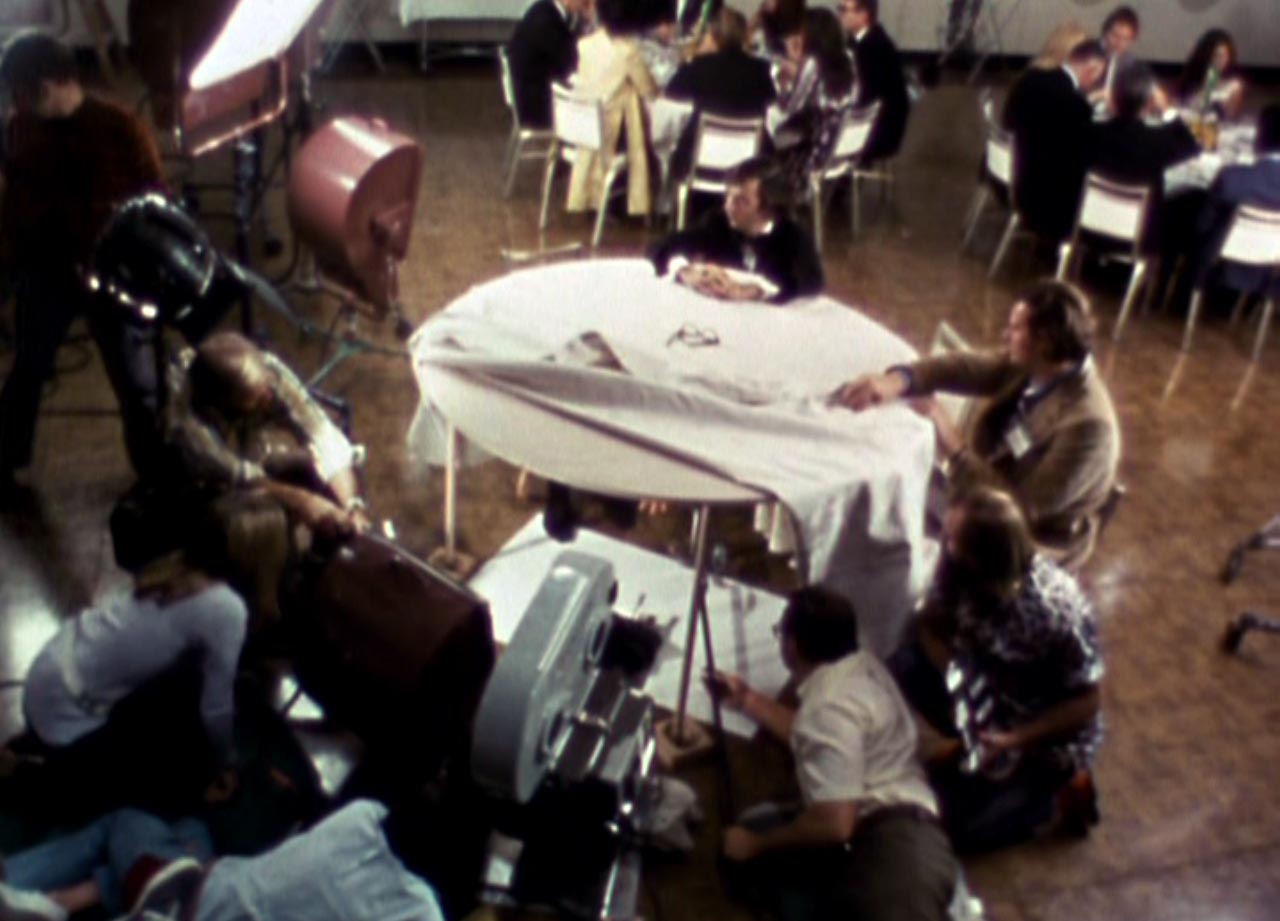
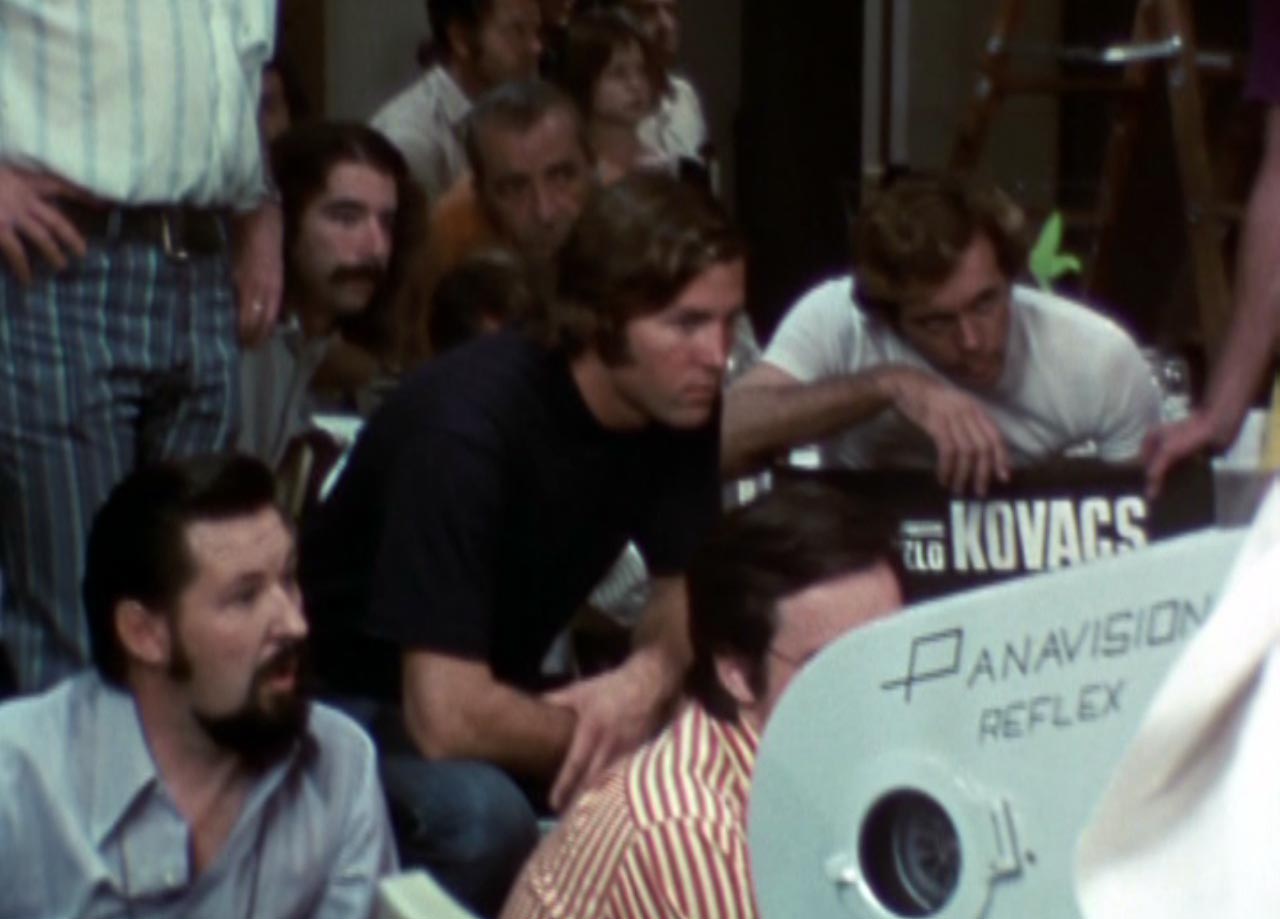
What is sometimes great about the DVD extras is the behind the scenes moments when we get to see the filmmakers applying craft. The What’s Up Doc? DVD has a little documentary called Screwball Comedies… Remember Them? which, though not particularly well made, offers some nice glimpses behind the scenes.

Here is a shot from the feature:

And here are a couple of shots the documentary of the same scene:

And then I started thinking about László Kovács. Kovács lensed What’s Up Doc? We see him above sitting at the lower left. Peter Bogdanovich is next to him in the striped shirt with his face hidden by the camera.

Kovács, who passed away this past July, came to the West from Hungary in 1957 as a political refugee. He brought a great work ethic to his craft and became one of the most significant cinematographers of the “new generation” of filmmakers in the 1960s and 1970s.

I didn’t know it at the time, but László Kovács was playing a role in my formation as a cinephile and, because films have been so significant in my life, as a person. While watching What’s Up Doc? again and remembering how much I have loved this film over the years, and now, again, realizing how well photographed it is, I just have to say thank you Mr. Kovács. Rest in peace.

>elements and links

>I have been hunting through some old film theory books I have sitting on my shelves. One topic that always fascinates me is the question of what makes a film a film? Related is what makes a film cinematic? Other questions arise: What are the fundamental elements of cinema? or, What are those salient characteristics that make a film distinct from a non-film? I’ve dealt with some of these questions in my post on Jeff Wall. And somewhat less in my post on Cindy Sherman. Both of which deal with non-cinema art that has (debatedly so) cinematic qualities. Some other interesting comments and debate related to the topic are at Girish’s blog on the work of Michael Snow. In this spirit, and tangentially related, here is an interesting quote from one of those old film theory books:

But a problem surfaces at once regarding film. What are the elements? Most film aestheticians seem to think they have to start by identifying unique elements of film, thus defining cinematic specificity in terms of attributes and capacities of the medium or of what is urged as the viewer’s properly cinematic experience. Thus we have Rudolf Arnheim’s “distortions” or “restrictions” “of the images we receive of the physical world,” which properly exploit the “peculiar possibilities of cinematographic technique”; Eisenstein’s “shot and montage, [which] are the basic elements of cinema”; F. E. Sparshott’s “technologically determined” “alienated vision” of dreamlike film space and time; Bazin’s “filtered” imprintings, which are “fragments of imaged reality”; V. F. Perkin’s “opportunities of the medium,” which amount to the discipline implied by cinema’s recording/realistic and creating/illusionistic aspects in narrative mainstream films; Siegfied Kracauer’s “basic” and “technical” properties of the medium; and such precise specification of the cinematic elements as Christian Metz’s “audio-visual, moving, multiple, mechanical, iconic images.”

We agree on the importance of all of these aspects of film. Analyzing them, we can say much about what makes films filmic. But it seems to us that they are not minimal, but emerge from elements. What elements? Areas for the visual aspects of film design, sounds for the auditory, words for the verbal. We don’t think we need define special elements of film, though it is quite natural to use terms like those above in a very different context from determination of the elements of film. To use them is to discuss film history, to consider and report on what has been, is, or could be most characteristic of films. The terms are for what Christian Metz calls the “language” that has developed from film’s “fine stories,” a language of connotations deposited with the knowledgeable film viewer like Bazin’s “fine carpet of silt and gold dust,” as a set of special expectations of film experience.

-from Film Criticism: A Counter Theory, by William Cadbury & Leland Poague, (1982), p. 5

______________________________________

Some links for the curious:

Spark – according to the site: Spark is your guide to the Next Big Thing. On-air and online, join Nora Young for a surprising and irreverent look at tech, trends, and fresh ideas.

Photography of the Unexpected and Neglected Architecture – a fascinating photographic collection of old and abandoned buildings and structures. Each one could be the location for a film, or scene within a film.

Mars Hill Audio bonus interviews – great, thought provoking discussions on just about anything to do with the arts, culture, society, and faith.

Some stunning film miniatures by artist Sheri Wills.

An interesting tidbit on the scale & potential of solar power.

Some uplifting news from Reuters. It’s nice to know that someone is covering the important stuff in the midst of all the fluff.

I hope the food is as good as the view, or as valuable as one’s life.


Some of the blogs I’m reading:

The Amateur Gourmet is a witty, insightful, and refreshingly fun food blog. You will find restaurant reviews, recipes, personal anecdotes, and lots of observations on the world of food.

I just discovered Thompson on Hollywood. Anne Thompson is deputy editor at Variety. This is her personal blog where she can let loose a bit from all that professional industry insider writing she’s does at her day job.

Another great food blog, The Girl Who Ate Everything is full of excellent photos and fun stories.

>When this body has run its course

>When this body has run its course
and mortal life takes it final bow
and the futile strivings against the ever flowing tide
recede into nothing,
what blessings can be said to remain?

Under the sky I find the prison door open
for the vagabond’s travels
but I have these flowers,
and this scrap of sunlight in the dust,
and in the frequent dark
I find embraces to remind my heart
to carry on; for with this imperfect love
I still know the infinite
distilled in time,
translated in sin,
held in hope,
and promising blessings.

And it is there and there and
there, in the terror and the joy,
that I hear the voice.
Fear not.

-October 2007

starfish

When I was an undergrad studying film history and production I took a class in which the students made several “personal” films (we were using video equipment). One of the film projects required each of us to randomly pick a haiku poem out of a hat and then use that poem as the basis for our film. I can’t say my film turned out well, though it had its moments, but I have to say I loved the project and its process.

Around that same time a couple of my friends and I made a video that was as loosely based on a poem as it was whimsical. It became known in local circles as the infamous garage sale video and, as you can guess, we had a lot of fun making it. For the most part it was a vehicle to explore the idea of how a garage sale might have some thematic relationship to mankind’s place in the universe. Heady stuff, I know. But we kept it rather comical. I edited it at the local community television studio, which I was managing at the time.

These two episodes come to mind because I recently watched some avant-garde films from yesteryear and I couldn’t help making the connection between those films and the avant-garde or experimental filmmaking impulse in me. I am a fan of most all cinema, but I have a special place in my heart for films having a greater kinship with the kinds of art one finds in galleries and museums than with traditional narrative cinema. This is not to say that I don’t also swoon over great narrative films. But, whereas many might shrug there shoulders or even complain at a film by Brackhage (et alia), I get a kick out it it.

The avant garde films I was watching came from Kino Video’s Experimental Cinema of the 1920s and ’30s. I believe it is a good thing to review avant-garde films from the 1920s and 1930s, or thereabouts, to see what those artists where up to and how they were approaching their culture and that new medium called cinema.

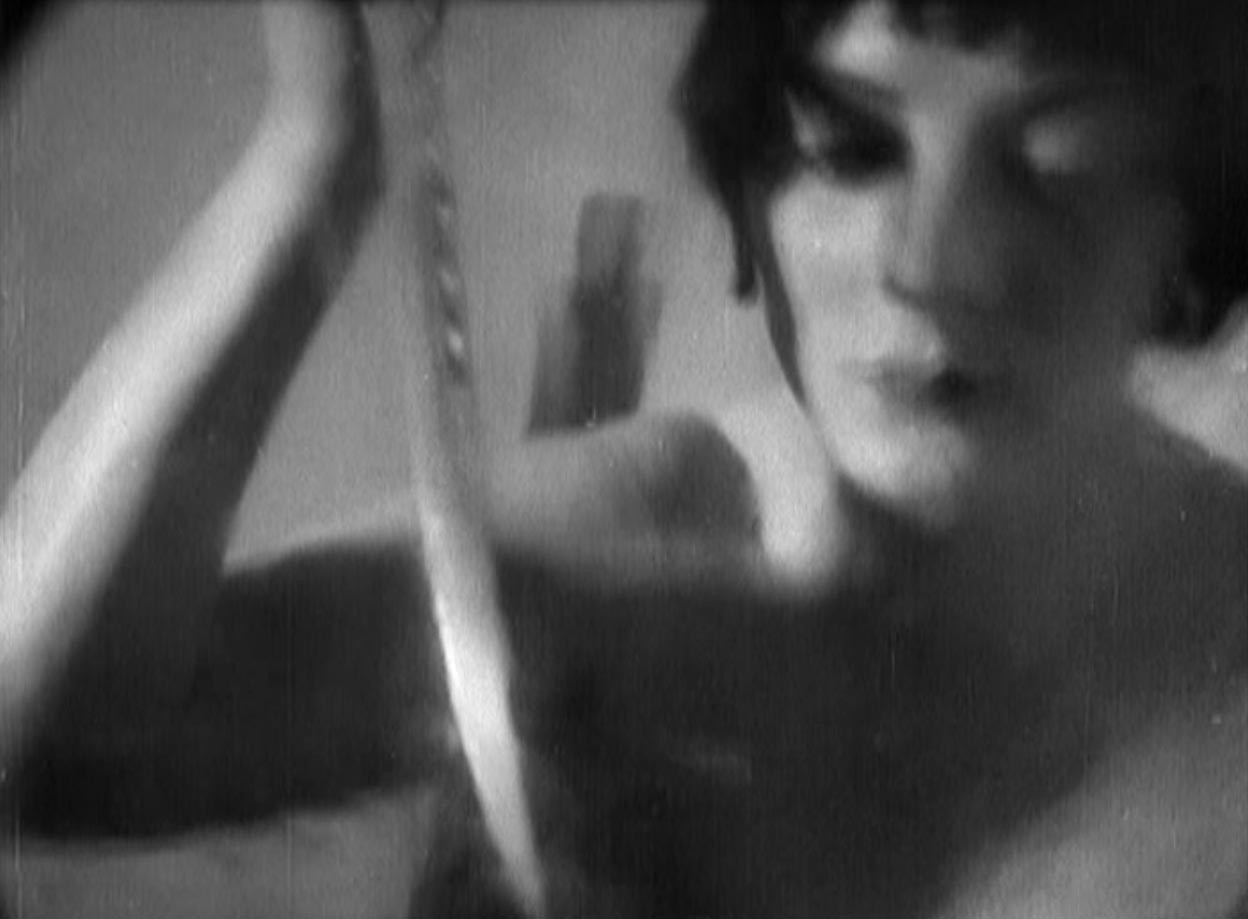
In particular I was taken by Man Ray’s film Starfish (l’Etoile de Mer). Made in 1928, Starfish is a great example of both the Surrealist impulse and Man Ray’s exploration of the “montage of attractions.” It was also based on a poem by Robert Desnos. You can find an online version of it at ubuweb, as well as other Ray films. Here a few screengrabs of some of my favorite images from the film:

One thought that goes through my head when I watch this short film is how much it is like experimental student films I saw years ago, only generally much better. His ideas are more sophisticated than most student films – his Freudian imagery is almost a precursor to Deren’s Jungian imagery from her Meshes in the Afternoon (1943). Some of his images are stunning. But there are also moments that seem a little random and disjointed, as though they were included merely because filming something that moves was interesting enough. Although I like to trust that Ray included each shot for a reason.

With Starfish one gets the impression that using a movie camera in 1928 was still a novel and exciting thing to do, which it was. Think of the excitement brought about by the invention of the portable/affordable video camera of recent decades, or of YouTube, or desktop publishing, or of portable/affordable music studio equipment. All these inventions sparked bursts of creativity in new directions as well as lasting changes to our creative horizons. So was film in the silent era, then again in the 1960’s, then again in the late 1980s, then again with hi-def video.

In 1928 Ray was still a young turk (though he was 38 years old) running with the Dada/Surrealist crowd. He was making a living as a fashion photographer, but one can tell that his passions were for the arts (non-commercial arts) and he lived shoulder to shoulder with many of the great artists of the period. He was a painter and a photographer first, with cinema tagging along a little later.

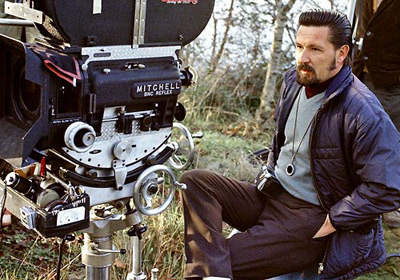
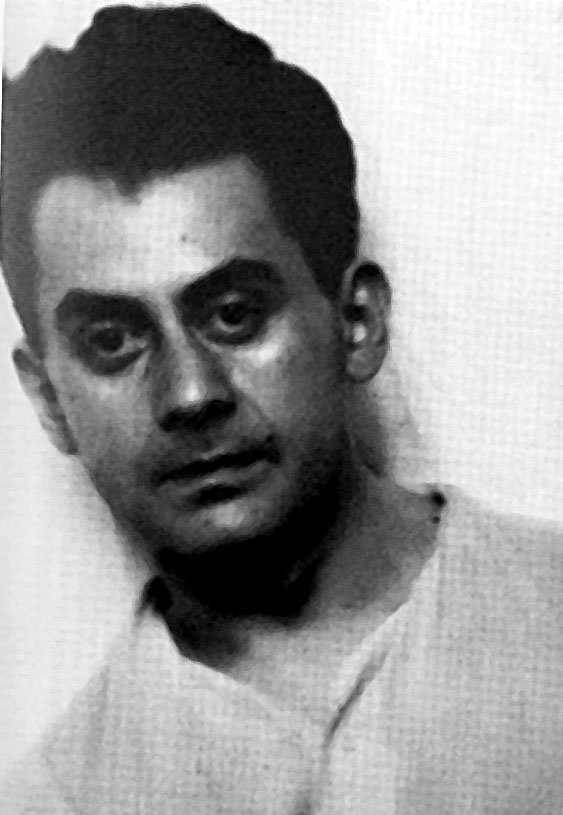
When I think of Many Ray I think of a towering artist with an impressive pedigree – someone very distant from me. But I know that I am made of the same stuff as he. When I look at this photo of Man Ray…

…I see a man who was very much like me: flesh and blood, curious, thinking, desiring, working, creating, longing.