Stuntman Mike Must Be Made To Repent (or a facsimile thereof)

If you have not seen the film Death Proof and if you don’t like to know the end of a film before you see it, then stop right here.

I want to write about a deeply, viscerally satisfying cinematic moment I recently enjoyed. I admit up front that the sniveling, vengeful, and immature creature within my soul is the one giving voice to my pleasure. But wha, wha, wha, I liked it! …the end of Death Proof, that is. (it’s all SPOILERS from here on out, baby!)

Really, I liked the whole film, but the end, where Stuntman Mike gets what’s coming was wonderful. Now I know that vengeance is God’s and that violence is not a solution, etc., etc. But, being a human and all that, and being someone who grew up in the West – though not so wild anymore – where vigilante justice once had its place, I just couldn’t help myself. My soul resonated with the film’s conclusion.

So I want to lay it all out with a few screengrabs.

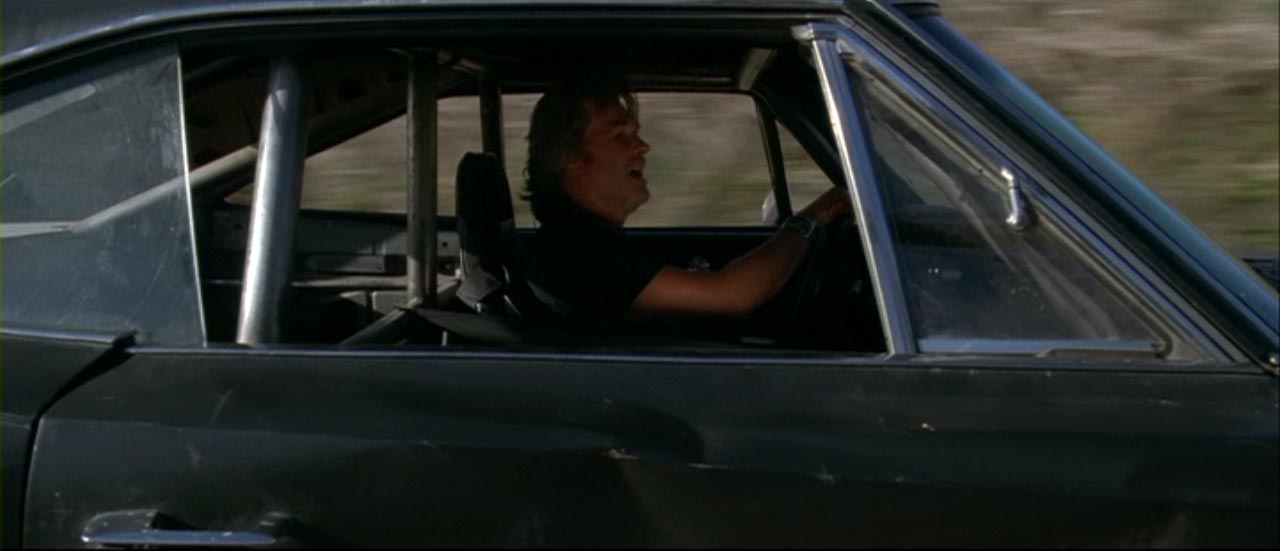
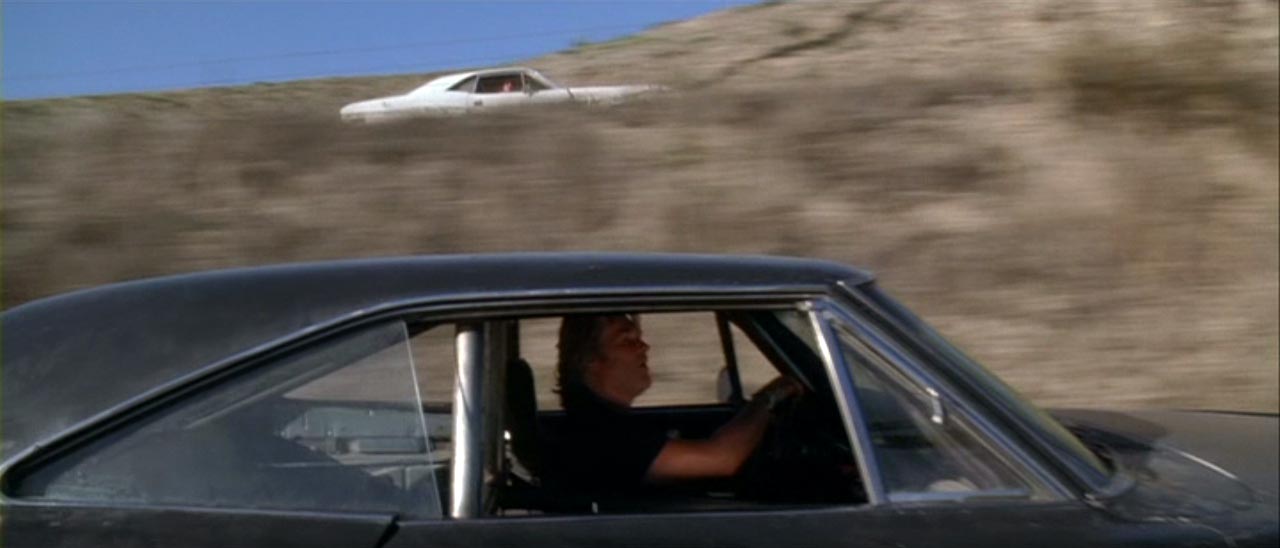
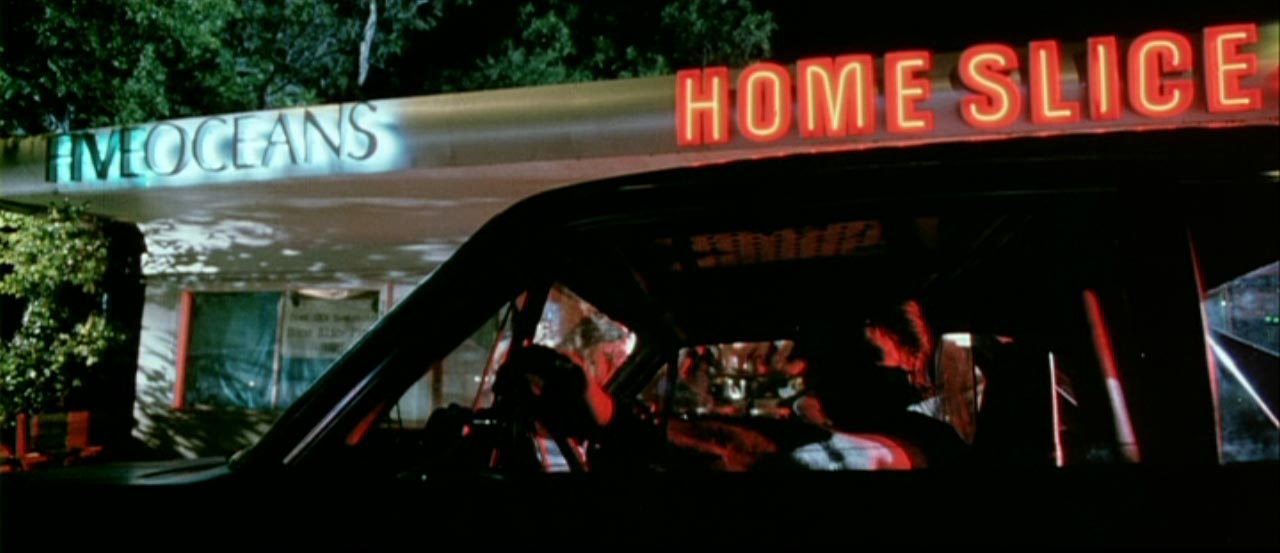
Stuntman Mike is not a good person. Here he is, full of mystery and machinamal stalking, watching his future victims like a jungle cat who drives an old stuntcar.

He preys on women. He stalks them and then kills them. He does this to success in the fist half of Death Proof.

He is also from yesteryear. In the antiqued first half of Death Proof he wins. The time is the present, but the world is the past – and that is his world.

But, in the second half of Death Proof Stuntman Mike is out of his element, but he doesn’t know it until it’s too late.

He chases a new foursome of beautiful and free-spirited women, who, when attacked by Mike, turn on him with great vengeance and aplomb. At one point he tries to tell them that it’s all just fun. They shoot him. He drives away, his arm bleeding, and his soul shaken to its core. So shaken, in fact, that Stuntman Mike loses it. He cries, he blubbers, he is full of fear and weakness.

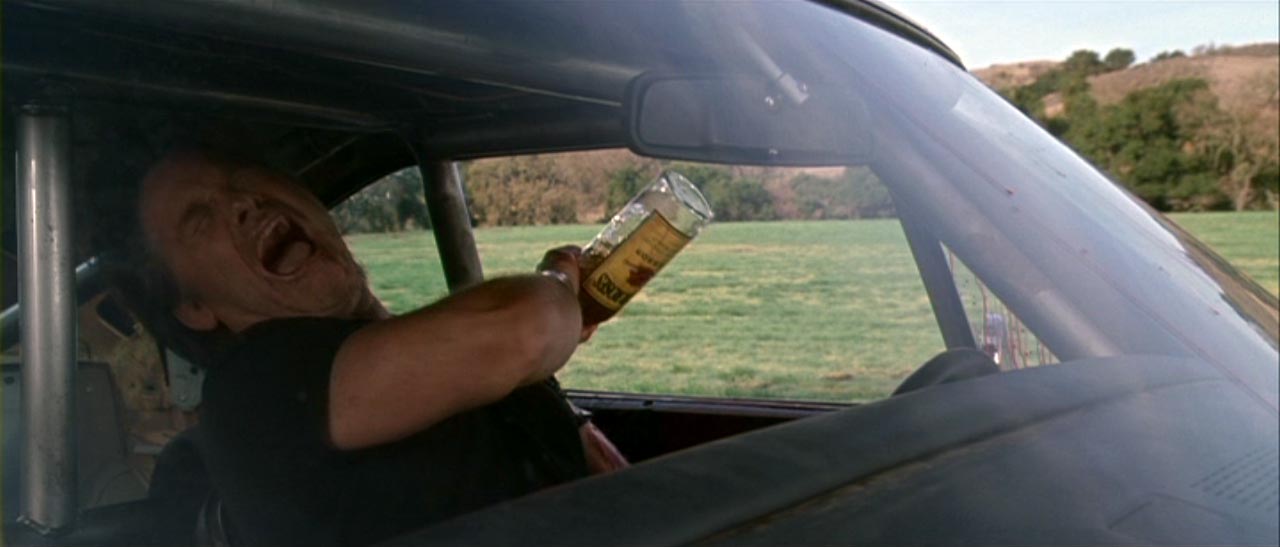
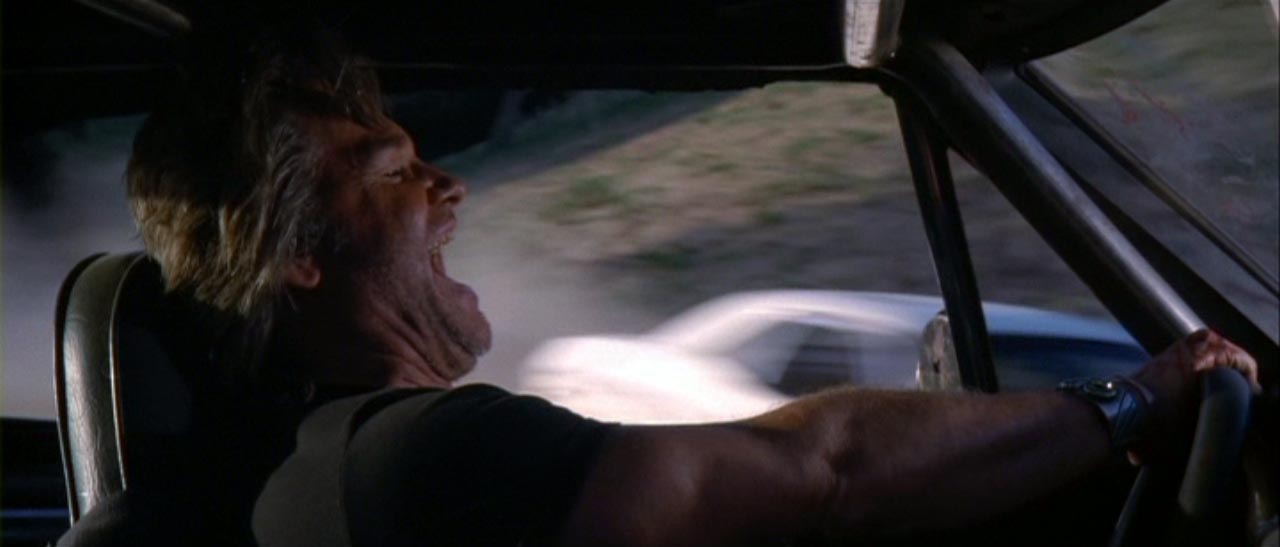
He pulls over and pours whiskey on his wound. He screams in pain. This is truly a great moment in the film – to see the villain reduced to a crybaby. And this is where Kurt Russell’s performance goes from very good to magnificent.

But it’s not over. Stuntman Mike does not know the women have decided to give chase and are now closing in on him.

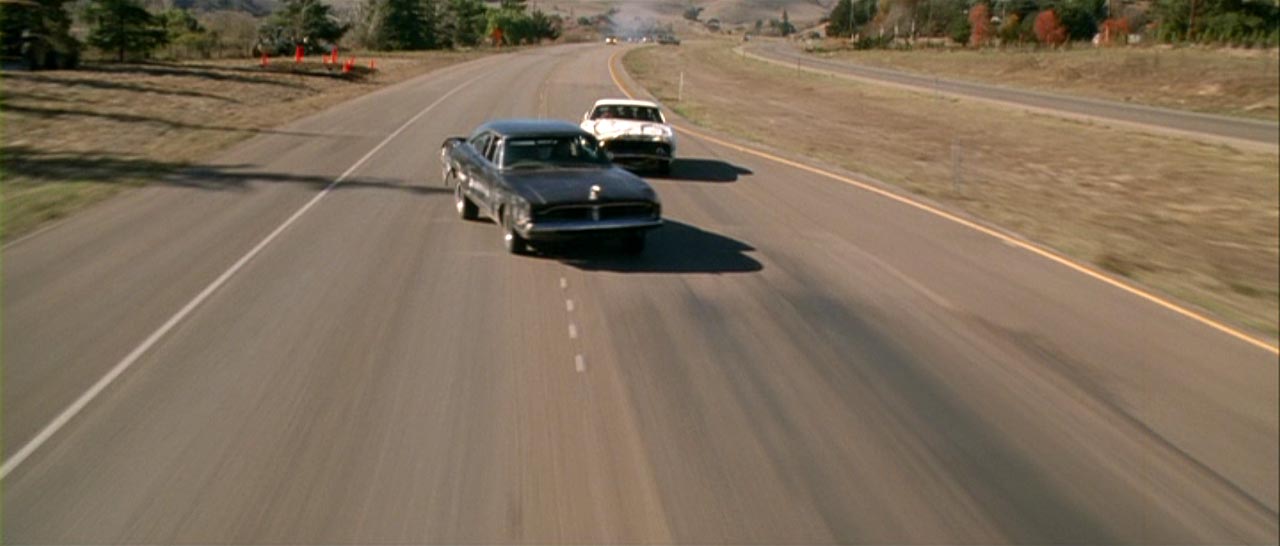
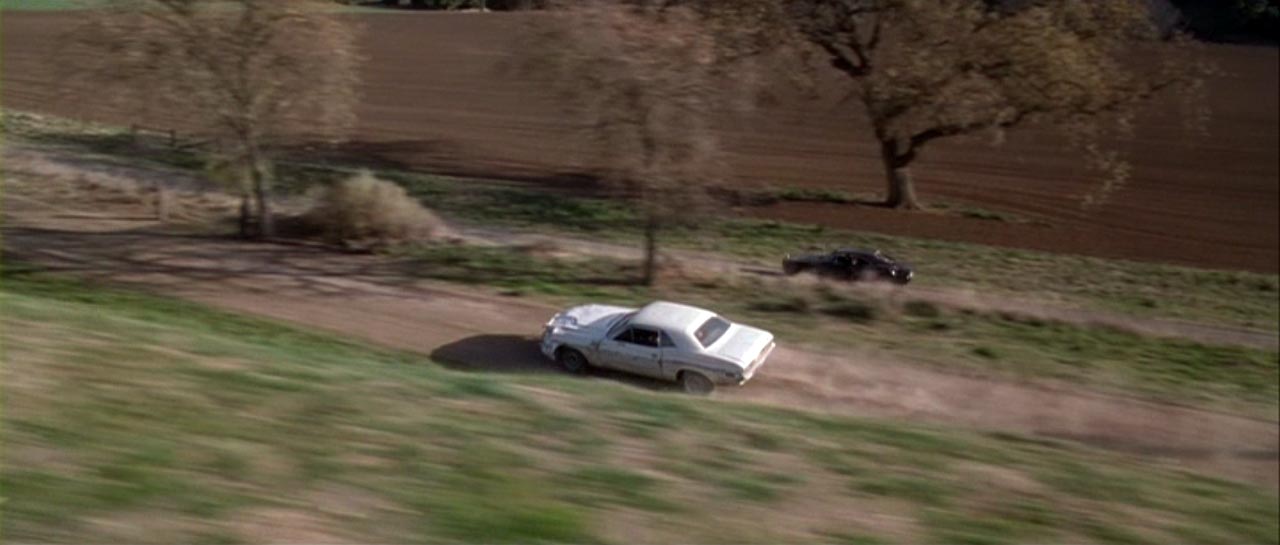
They crash into him and he takes off in a panic stricken blur of tears and sweat. And they follow – a full speed, classic, old-style car chase.

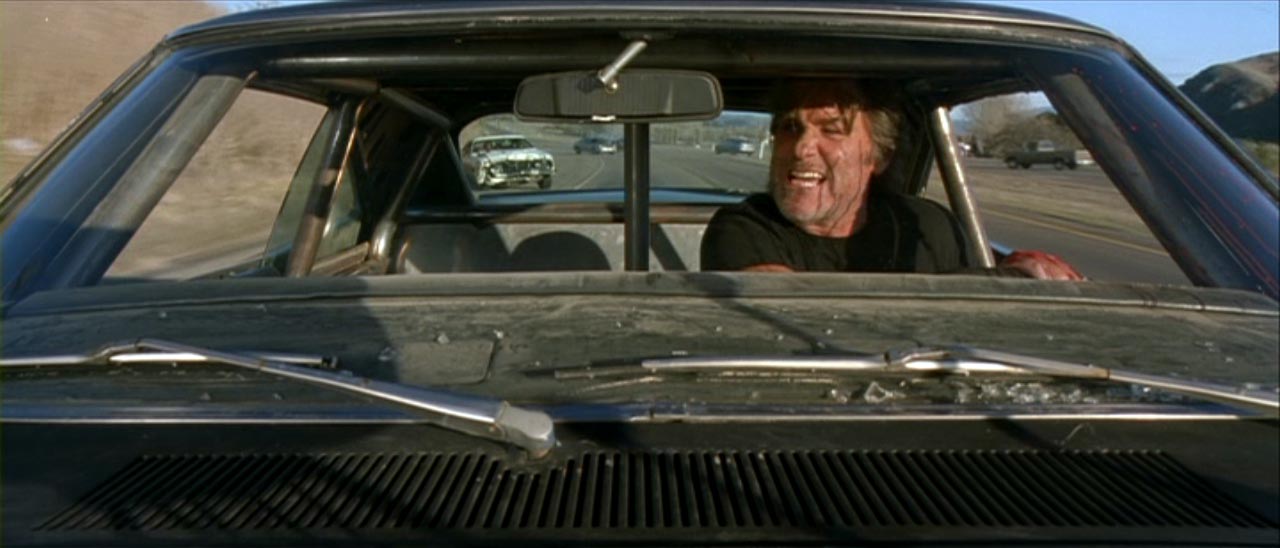
He watches them in his rearview mirror. He is an animal cornered. His only thought is how to live.

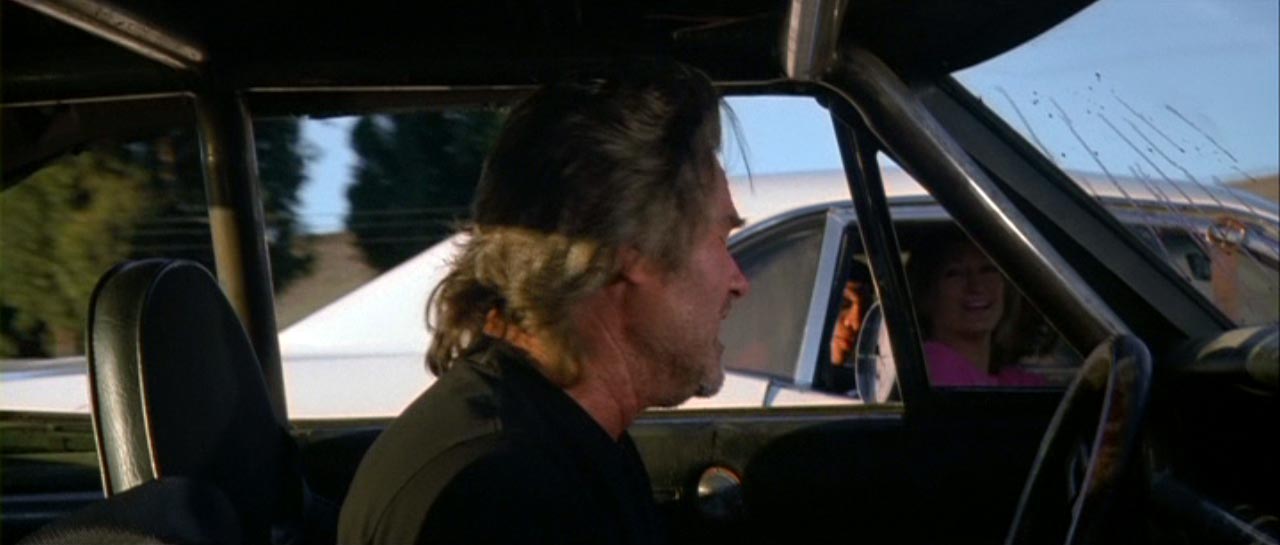
The women pull beside him and taunt him. He tries to say he is sorry, that he didn’t mean any harm – geeze, maybe he just didn’t realize that terrorizing and killing people for fun is wrong. Where are his parents?!

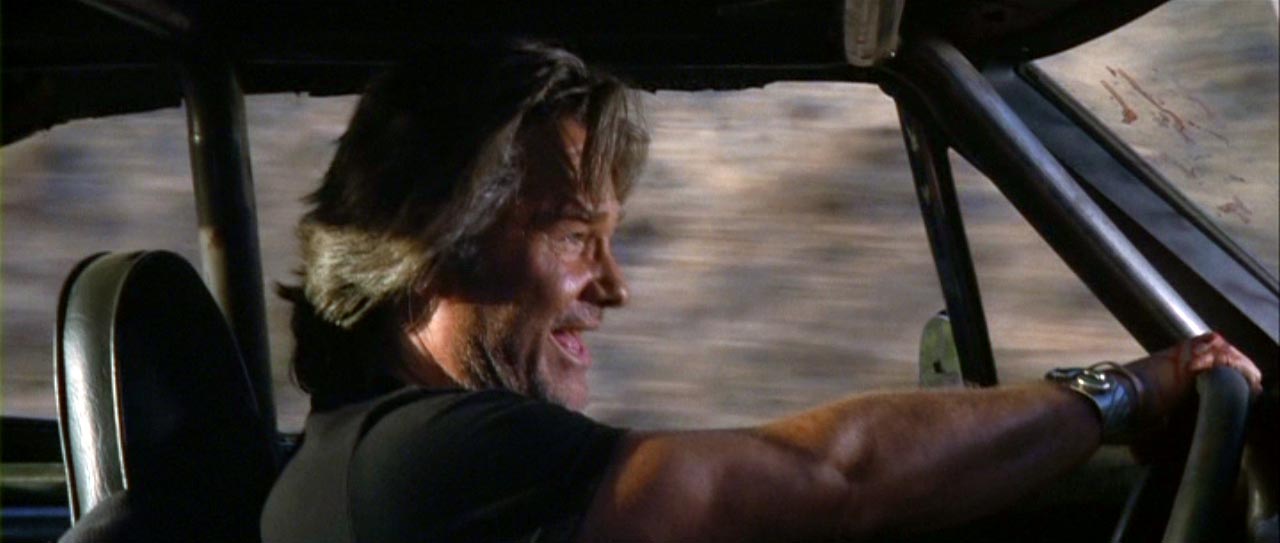
At one point the women fall behind and then disappear. Where did they go? All that Mike knows is that they are gone and he is finally free. He starts to laugh the way someone laughs after a near death experience – that nervous, uncontrollable release of pleasure mixed with relief and gravity. But this is not a moment of reflection or repentance for Mike. He is not that kind of psychopath. This is a moment when the cornered animal thinks it has a way out, to get on with its life as before.

Ah, but what do we have here? Is that a white Dodge Challenger I see?

Aha, it is! And poor little Mike does not see it.

We are all like Stuntman Mike sometimes – blind to the dangers lurking around us (lurking, in this case, at 80 miles an hour). Hopefully that is the only similarity. He laughs with glee. He is free and he feels it.

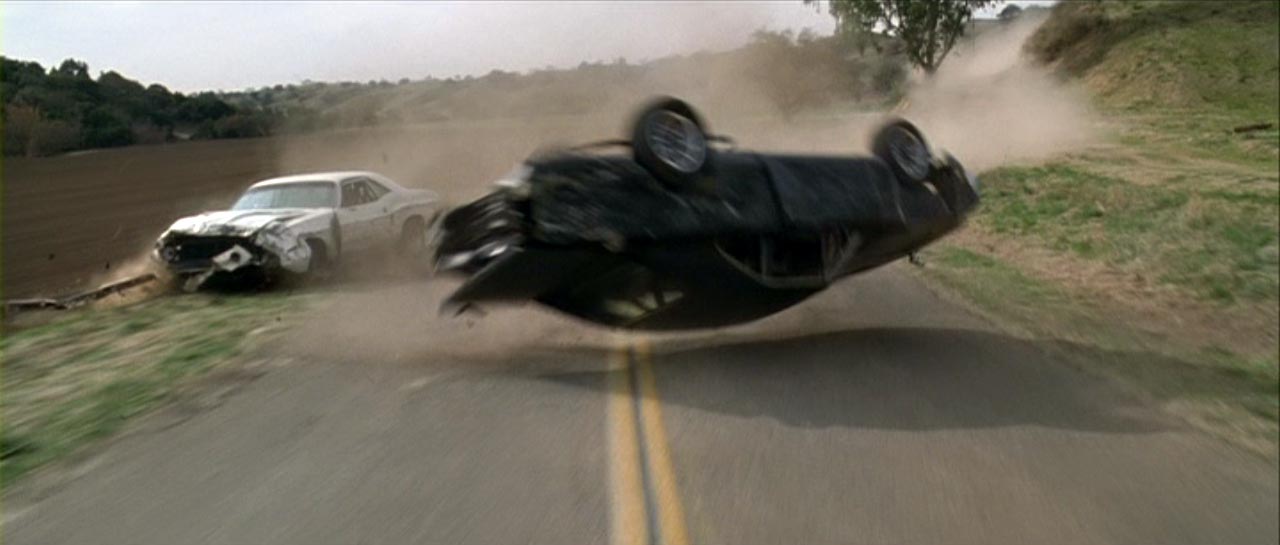
His head tilts back in the deep release of joy. And then there is a flash of white.

And there goes Mike.

This is the moment of which I speak. That flash of white, that POW of the Challenger slamming into the back of the Charger, and the Charger flipping wildly into the air, that is the moment of satisfaction my heart enjoyed.

Sure, I know I shouldn’t enjoy it. I should long for Stuntman Mike’s rehabilitation. I should understand that he is the product of his upbringing, his society, his biology. I should know that his heart is shackled by the chains of sin. I should forgive. And I do forgive – his soul that is (may God have mercy) – all the while I enjoy the justice. And though my head bows in shame, sinner that I am, me head also bows as I look for the remote so I can see that scene again!

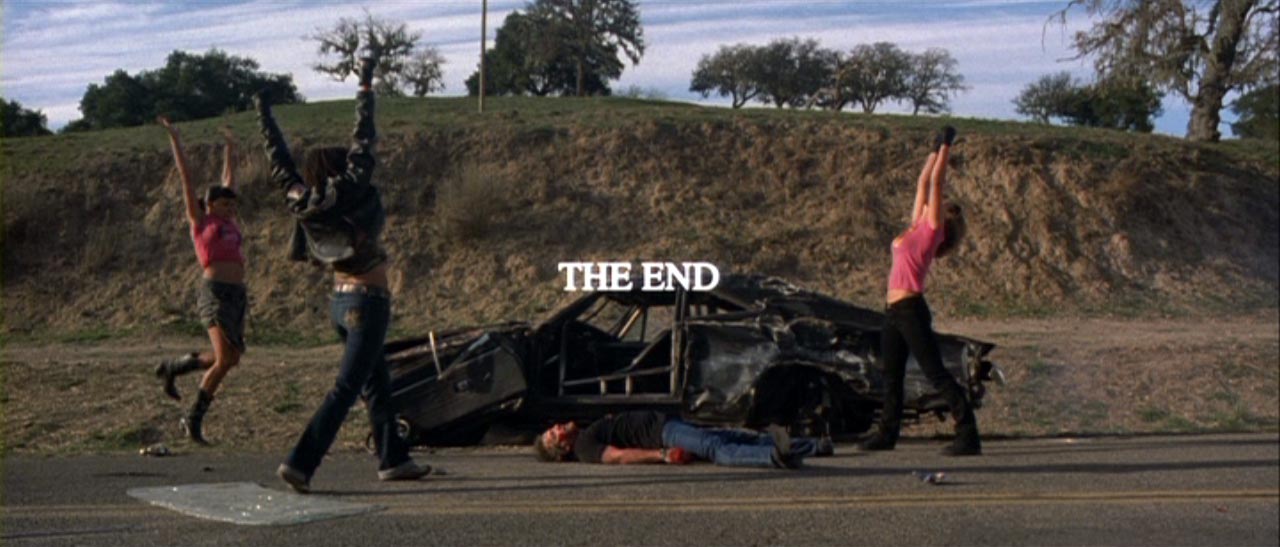
Finally the women drag him from his car and beat the crap out of him. The end.

Satisfaction. Amen.

postmodern notebook

We have learned to trust the photographic image. Can we trust the electronic image? With painting everything was simple. The original was the original, and each copy was a copy – a forgery. With photography and then film that began to get complicated. The original was a negative. Without a print, it did not exist. Just the opposite, each copy was the original. But now with the electronic, and soon the digital, there is no more negative and no more positive. The very notion of the original is obsolete. Everything is a copy. All distinctions have become arbitrary. No wonder the idea of identity finds itself in such a feeble state. Identity is out of fashion.

~Wim Wenders, 1989

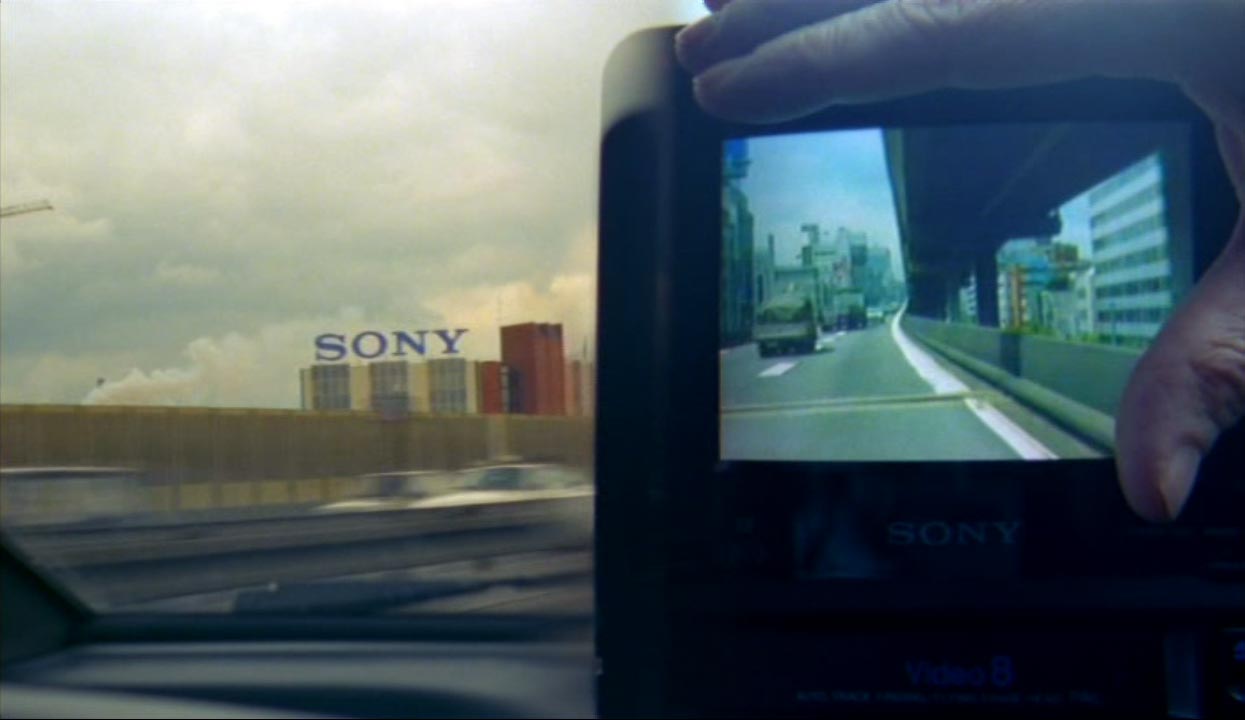
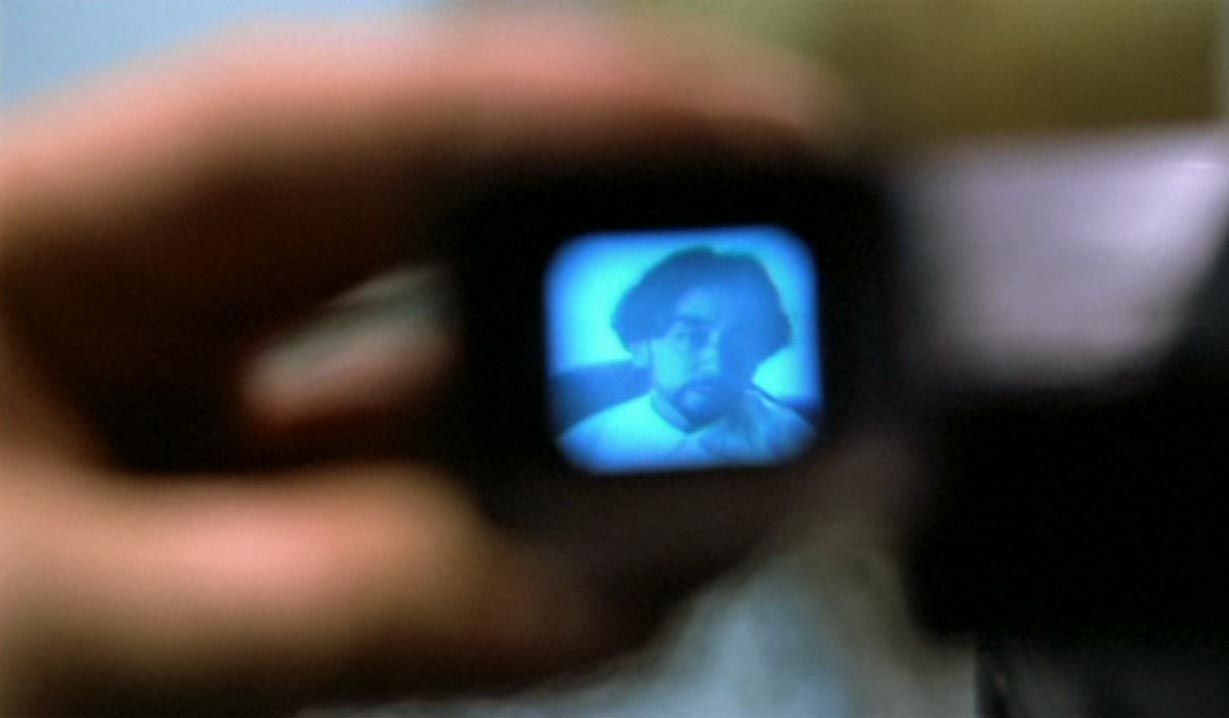
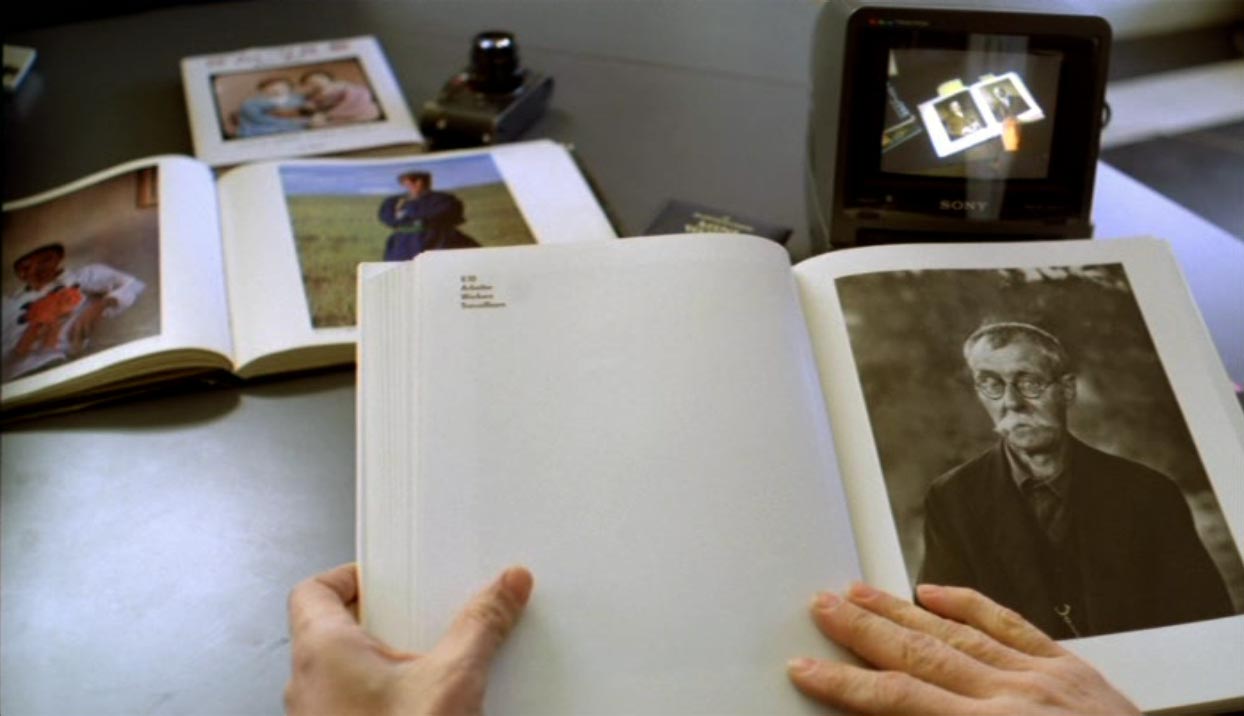
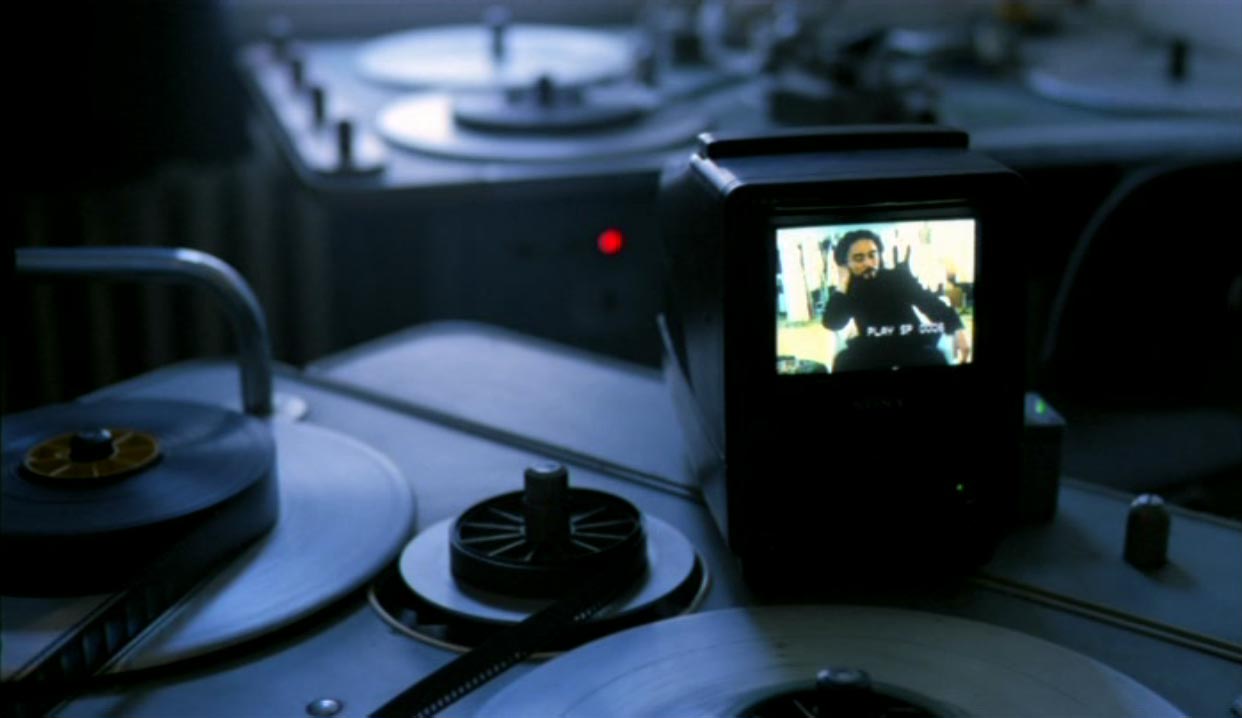
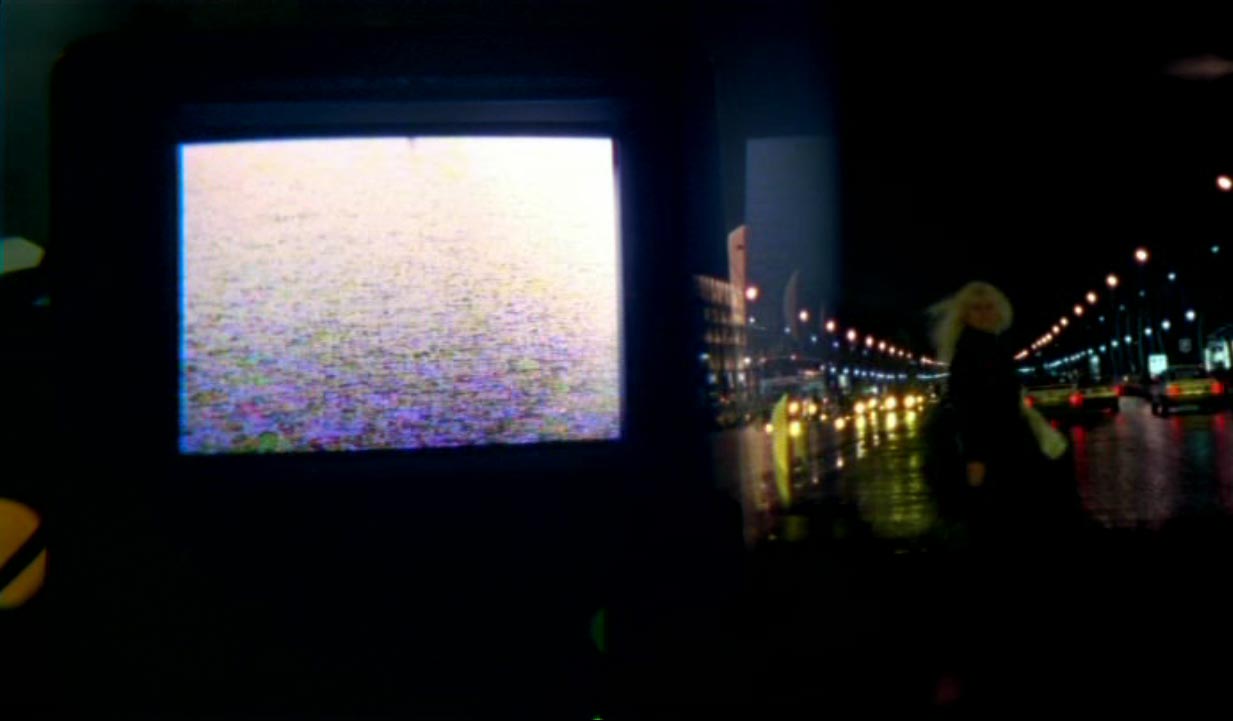
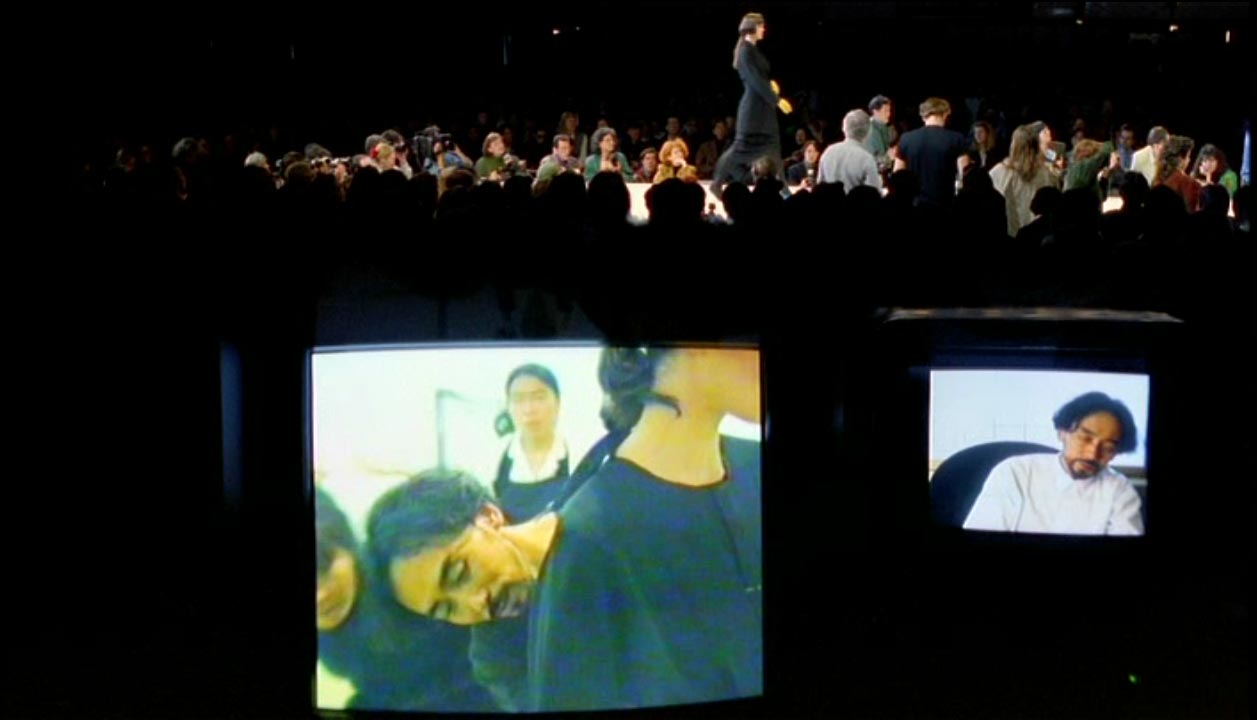
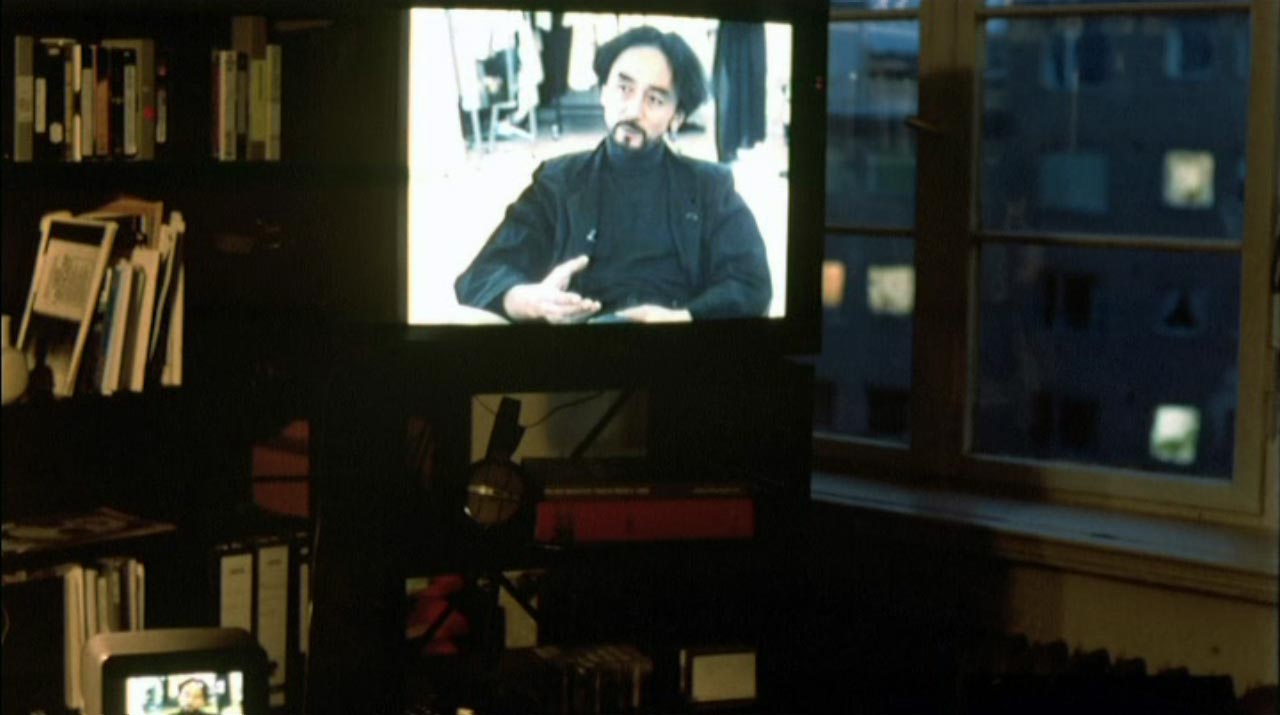
The following screengrabs are from Wenders’ film Notebook on Cities and Clothes (1989). They are all of images within images, and represent/re-present places within places and ideas within ideas.

My mind wanders over these images and then wanders beyond them, both outside their frames and to my own presuppositions and fetishes, and I think of Baudrillard’s quote:

It is perhaps not a surprise that photography developed as a technological medium in the industrial age, when reality started to disappear. It is even perhaps the disappearance of reality that triggered this technical form. Reality found a way to mutate into an image.

-from Photography, or the Writing of Light (2000)

Of course Baudrillard is wrong if we take him literally. Reality has not disappeared. But Baudrillard is right, as all postmodernists are, that the way we understand reality is heavily mediated for us (and by us) to the effect that reality, or “reality”, would seem to be an image created for us, is an image presented to us, is an image we carry with us, is an image we remember, and is an image we create. And, as an image is worth a thousand words, or a million, and therefore images are stories, fragmented or otherwise, connected and intersecting with other stories, stories referencing other stories, images referencing other images, we can apparently say all is reference. With Wenders we have the added question of the ever changing and never original (or always original) electronic image coupled with the question of what is fashion.

I suppose this blog plays a part in how I mediate the world for myself. I write for an audience, largely imaginary, but I also write for myself. Subconsciously, and maybe sometimes consciously, I write so that I can understand the world and my place in it. In this sense I can say that I have my take on reality. But the question is, are all distinctions truly arbitrary? And can this notion apply beyond the world of images to the rest of life?

So some degree Wender’s position hearkens back to his explorations in such films as Paris Texas and Wings of Desire. In those films we see characters struggling to communicate across great barriers (physical, psychological, spiritual) with those whom they love, or believe they love. In Wings of Desire the barrier is the difference between the world of human beings and the world of angels. The film’s story revolves around the idea that to become fully human one has to give up being merely an observer and enter in, that is, to immerse oneself in the tangible messy world we humans call reality. To cross that chasm is to take a leap of faith.

But is faith a leap? In the so-called Western/Christian tradition the word faith has a lot of gravity. Faith is one of those words, like love and happiness, whose meaning we all know and yet can never seem to finally pin down. For many the word has precisely to do with some kind of existential or spiritual leap. And for some that leap is a leap into the unknown or the unsure, or even the absurd. Interestingly, when we read the word faith used by the early Christian writers, such as the Apostles Paul or Peter or John, it is, in fact, the ordinary Greek word for belief. It does not appear that the Apostle’s intentions were to convey any idea of a leap of faith, or of faith being a kind of spiritual ecstasy. For what I can tell they were merely telling others to continue to believe what they have heard about Jesus because it is true, and that they can know it is true because the Apostles were eye witnesses.

Which brings us back to Notebook on Cities and Clothes and the idea of mediation and its relationship to truth. The fact is we are immersed in a world of images, and we seem to understand our world more and more in terms of those images rather than words, and those images are increasingly potentially untrustworthy. We are also in a world in which, while many of the barriers between people and cultures still remain, we are intersecting more and more with an increasingly broader scope of people(s) and a multiplicity of voices. Which means that we live in a world of references, that is, a world in which everything begins to reference something else and is built upon other references.

Maybe no other living filmmaker has more fun with playing with references than Quentin Tarantino. Part one of Death Proof immerses the viewer in a 1970s pastiche, full of faux antiquing of the film, samples from 1970s films, and stylistic choices right out of now classic B-movie road and slasher films. The film is designed to draw attention to itself. Tarantino winks at the audience and the audience winks back, along with the occasional high-five and an “oh yeah!” If a drinking game were devised for Death Proof, where viewers had to down a shot for every meant-to-be-obvious filmic reference, players would die of alcohol poisoning after ten minutes.

Examples include this appropriated “restricted” card from the early days of the MPAA rating system:

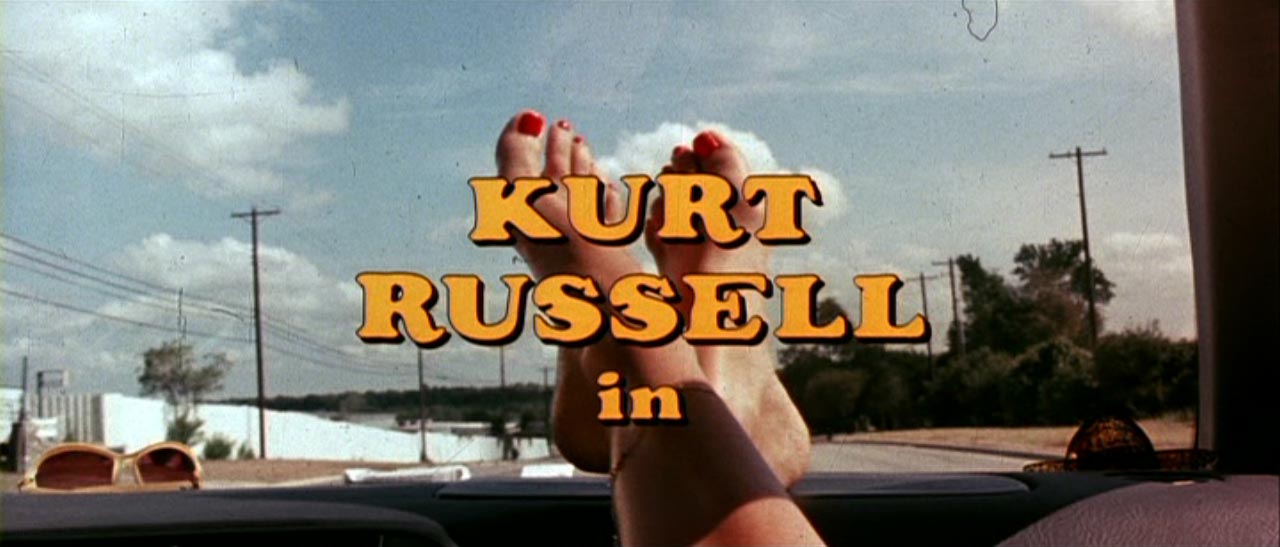
And this created title that looks like it came directly out of an early 1970s Disney film starring you know who:

Other examples include faux scratches and dust on the film and numerous jump-cuts that simulate a worn out film jumping in the projector gate because of splices and damaged sprocket holes.

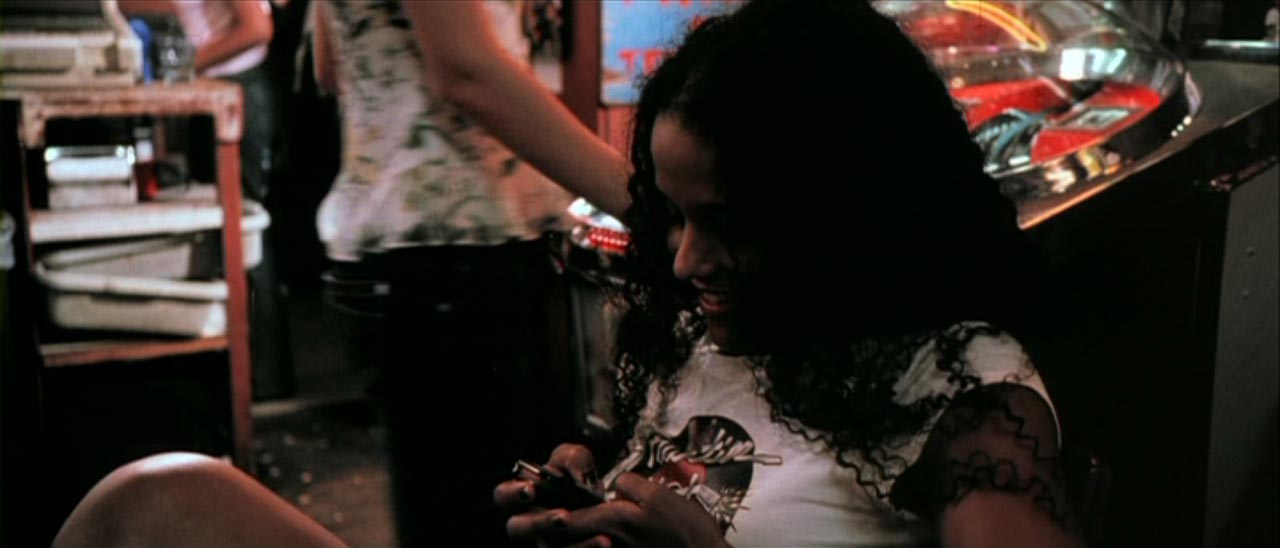
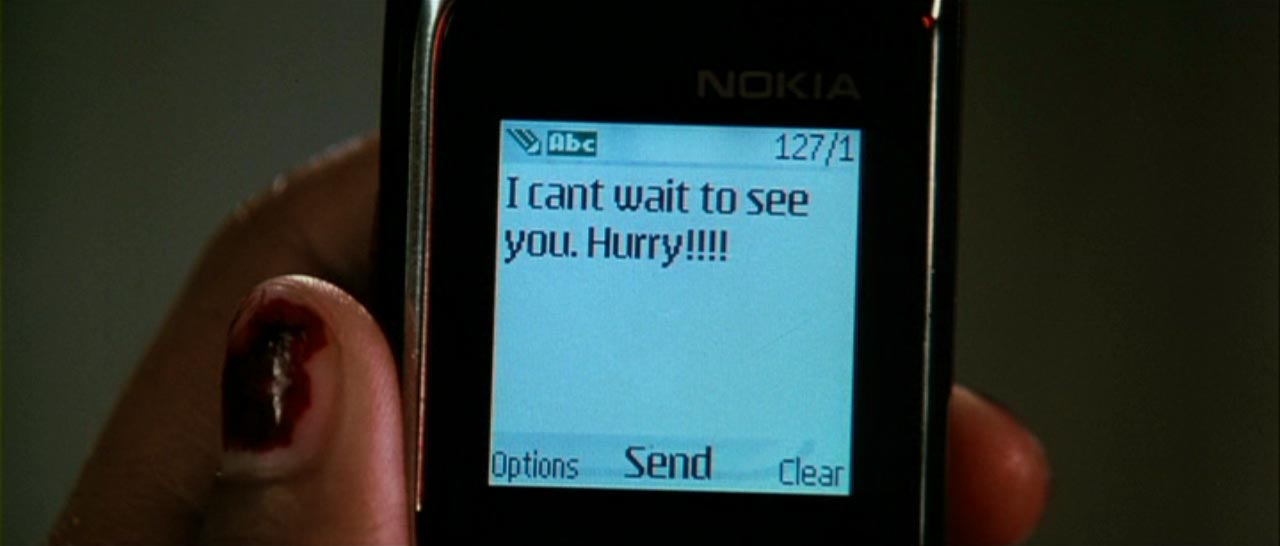
But what is so fascinating is that Tarantino is not making a 70s film. He is making modern film. Consider that while the characters seem to live and play in a archetypal film of a previous era, and while the film makes a point of looking aged and worn out, characters still drive modern cars and use cell phones – like Jungle Julia below.

And yet, I doubt many viewers found this disconcerting, or even noticed, because there are no longer any meaningful distinctions (apparently). For a director like Tarantino there are no boundaries between films or genres or eras, there is only the magnificent cloth of cinema where every film participates in the weave, connecting and intersecting in the psychic playground cinephilia. For Tarantino, I would argue, faith is not a belief in what is true, but in what is cool and can be appropriated. And cool is another word for fashion.

In such a world where does one find one’s identity? Might one say that we are all only references built up from other references? That is the postmodern perspective, and it is the current version of “God is dead.” But is it true? I would say no. Ultimately there is no such world of only references, and we do not live our lives as though such a world were true. Wisdom would say one should always recognize the potential fallibility of our sacred ideas, but we are all creatures of faith, and faith knows there is a final reality that, at least, haunts us. Maybe, as we are immersed more and more in images, so increases the haunting.

Watching What’s Up Doc?, remembering my youth

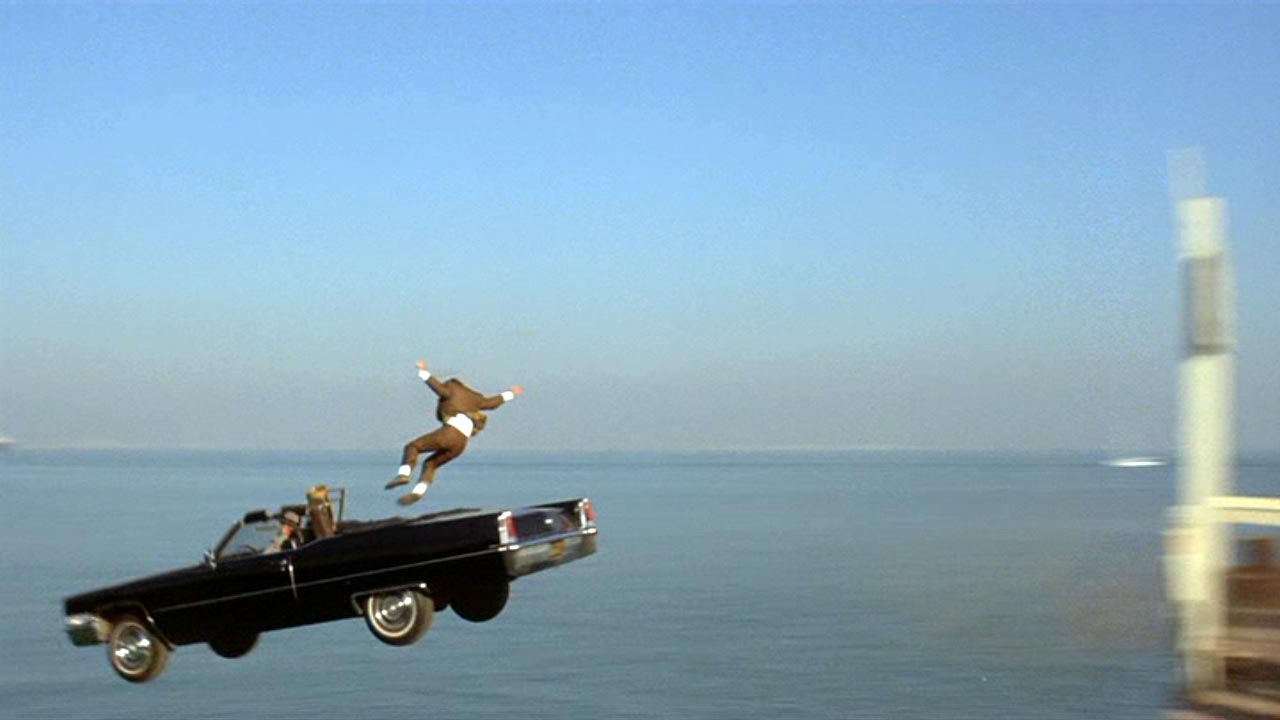
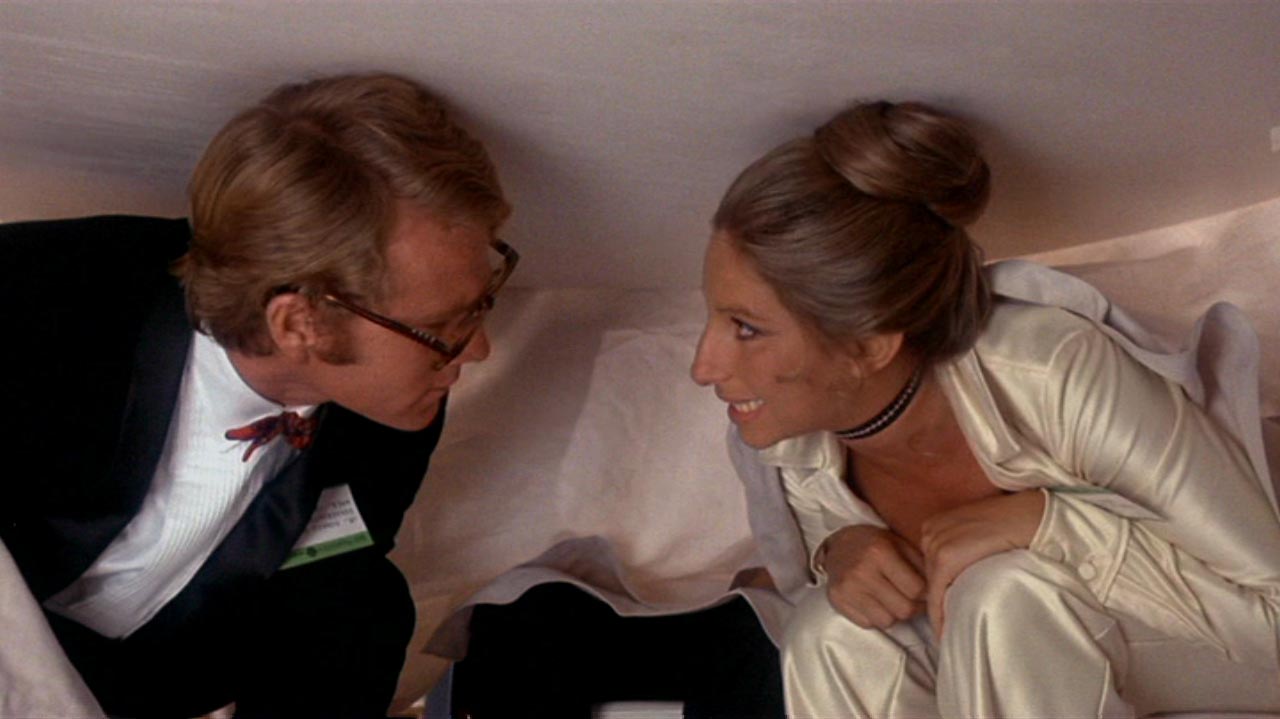
When I was just a lad I romanticized my future as is the want of youth. One of those inner visions that fueled my imagination was the mythical life of the stuntman. Yes I wanted to be a stuntman. There are certain moments in cinema that have stuck with me from that time in my life, not least of which is the grand finale to the outrageous car chase sequence in What’s Up Doc? (1972).

Consider this moment:

I wanted to be the guy who is jumping out of the back seat. To me that looked like such a thrill, and it still does. And it’s funny, which is what I like about the stunts in What’s Up Doc? They’re great stunts and they’re funny.

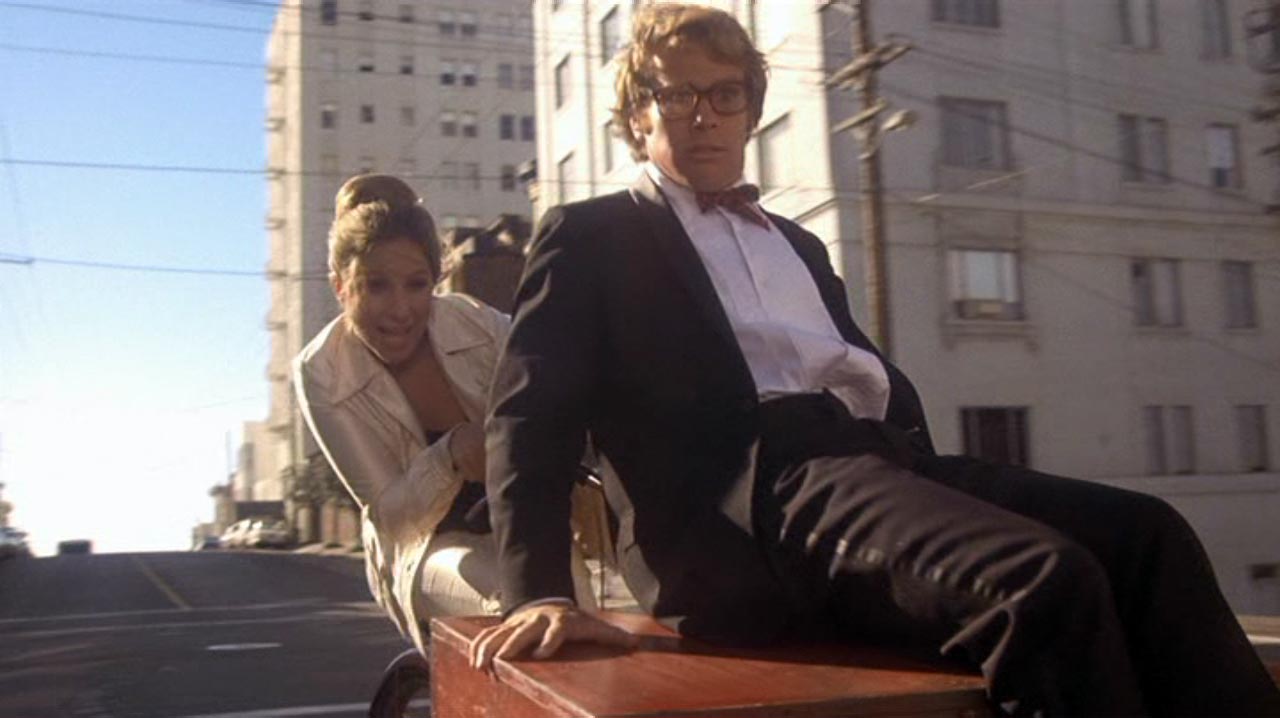
The car chase really got going when our heroes stole a delivery bicycle/tricycle thing and tried to get away with the four identical bags (no time to explain here). We knew that these two were in trouble in the blink of a single edit.

Here we see them round a corner and watch their expressions.

Then we cut to their point of view.

This might be considered the visual equivalent of a humorous expletive. At this point they are committed. And so are we, because now we know we’re in for a great ride. When it comes to car chases, thank you San Francisco!

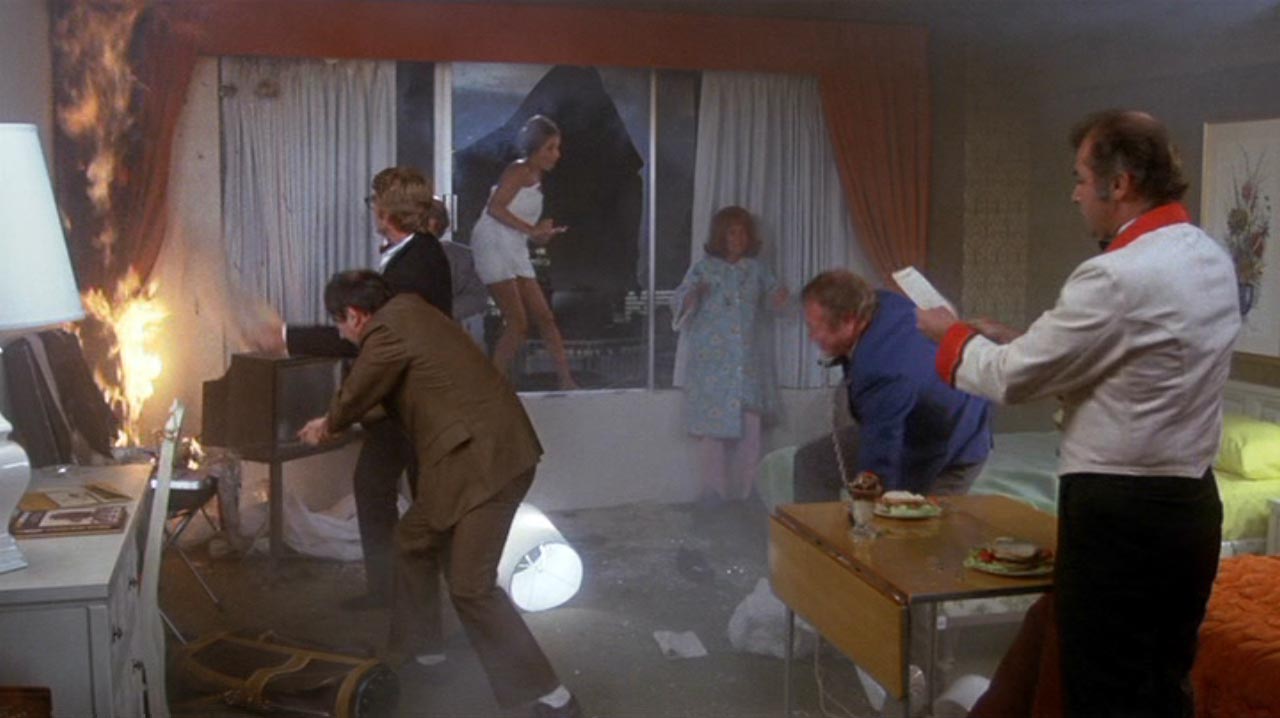
But then again, we could have guessed that the chase would be totally wacky and finish in the bay. Just prior to the chase was the fiasco in the hotel room. Needless to say this image speaks volumes:

You might have also guessed, and correctly I might add, that What’s Up Doc? has now become a part of Lily’s ongoing cinematic education. We watched it this past weekend, along with The Adventures of Robin Hood (1938). I foisted it on her and, I am glad to report, she loved it.

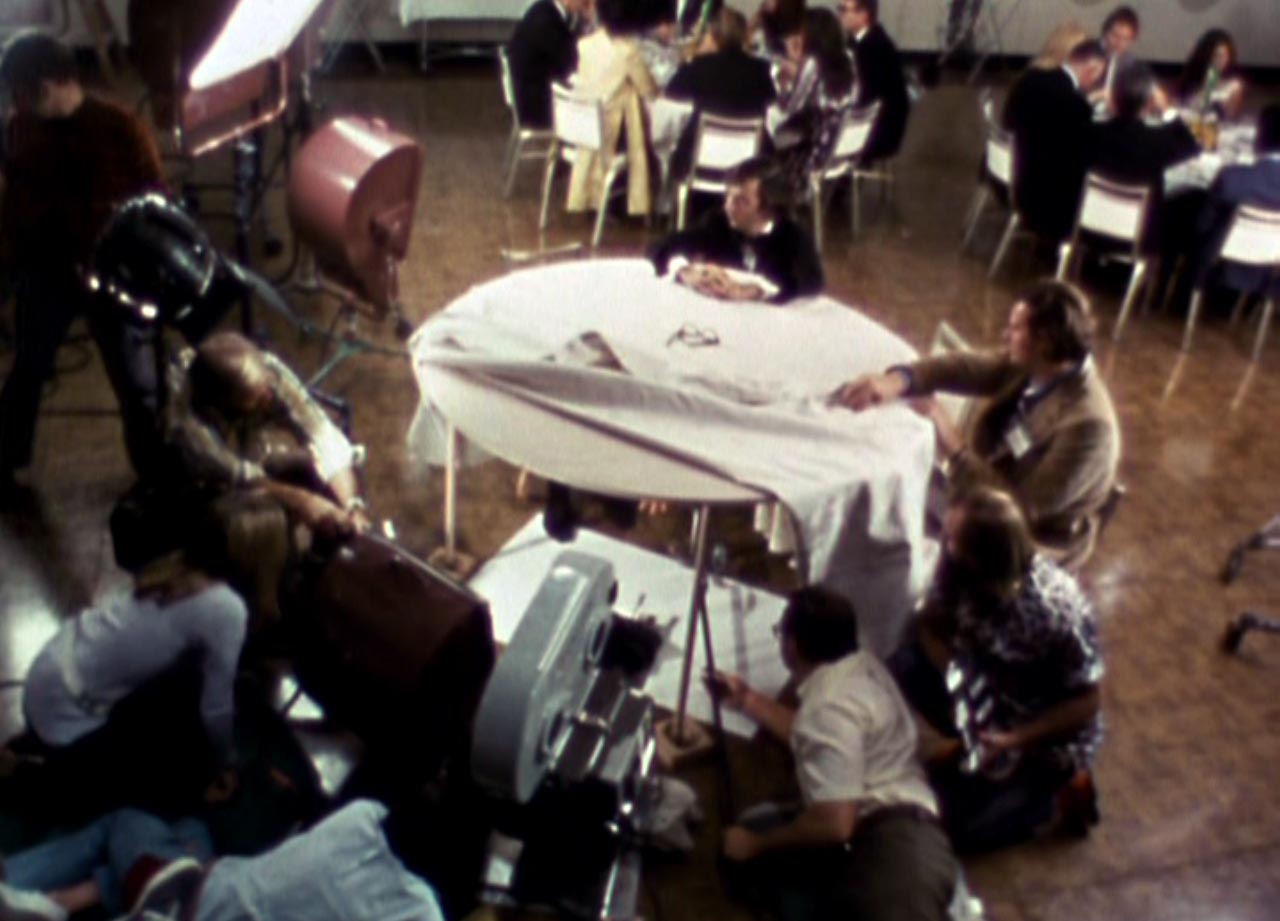
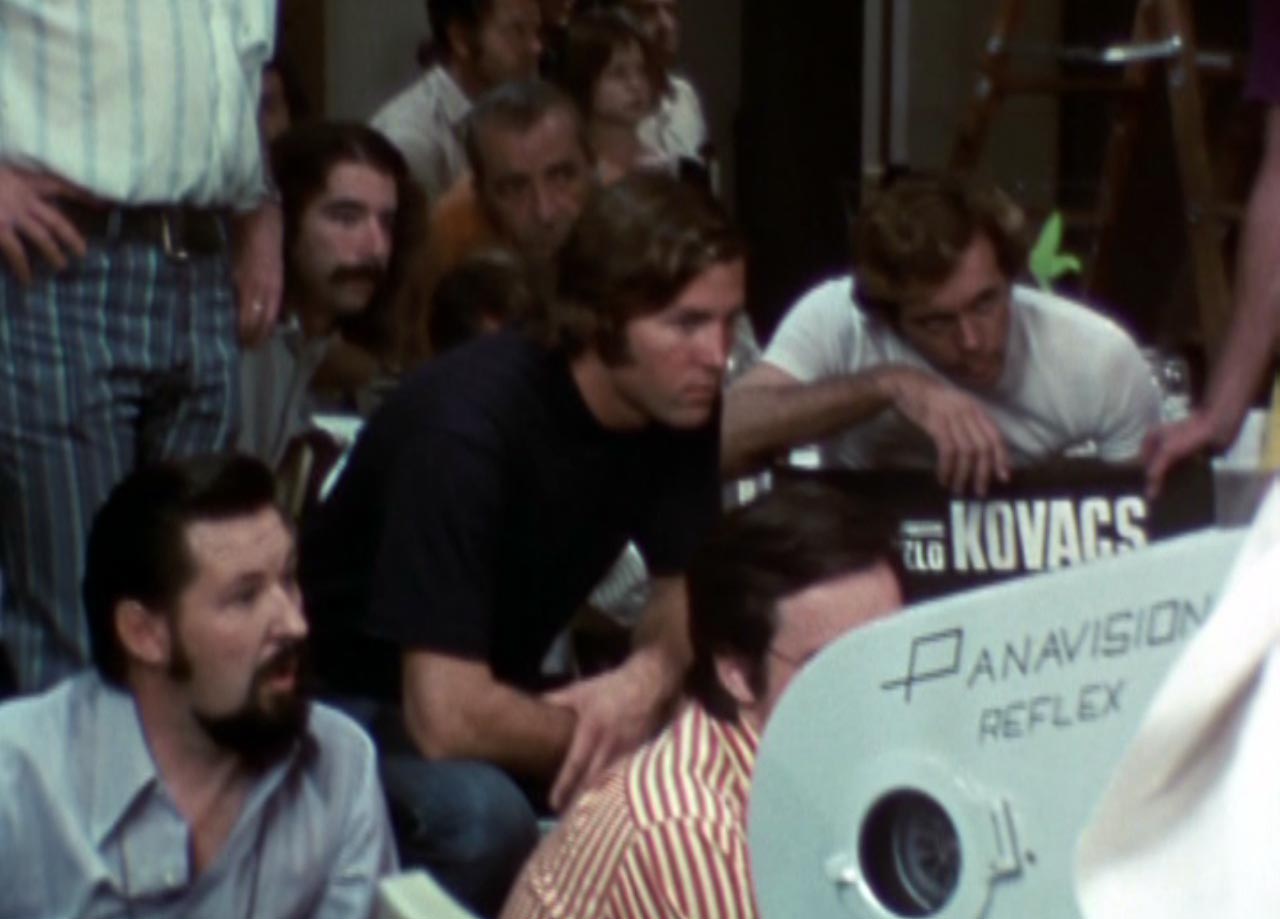
What is sometimes great about the DVD extras is the behind the scenes moments when we get to see the filmmakers applying craft. The What’s Up Doc? DVD has a little documentary called Screwball Comedies… Remember Them? which, though not particularly well made, offers some nice glimpses behind the scenes.

Here is a shot from the feature:

And here are a couple of shots the documentary of the same scene:

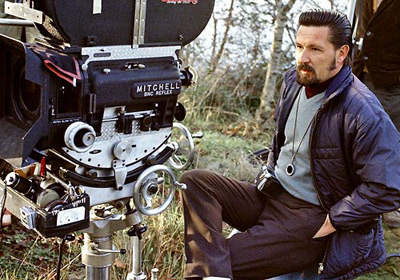
And then I started thinking about László Kovács. Kovács lensed What’s Up Doc? We see him above sitting at the lower left. Peter Bogdanovich is next to him in the striped shirt with his face hidden by the camera.

Kovács, who passed away this past July, came to the West from Hungary in 1957 as a political refugee. He brought a great work ethic to his craft and became one of the most significant cinematographers of the “new generation” of filmmakers in the 1960s and 1970s.

I didn’t know it at the time, but László Kovács was playing a role in my formation as a cinephile and, because films have been so significant in my life, as a person. While watching What’s Up Doc? again and remembering how much I have loved this film over the years, and now, again, realizing how well photographed it is, I just have to say thank you Mr. Kovács. Rest in peace.

starfish

When I was an undergrad studying film history and production I took a class in which the students made several “personal” films (we were using video equipment). One of the film projects required each of us to randomly pick a haiku poem out of a hat and then use that poem as the basis for our film. I can’t say my film turned out well, though it had its moments, but I have to say I loved the project and its process.

Around that same time a couple of my friends and I made a video that was as loosely based on a poem as it was whimsical. It became known in local circles as the infamous garage sale video and, as you can guess, we had a lot of fun making it. For the most part it was a vehicle to explore the idea of how a garage sale might have some thematic relationship to mankind’s place in the universe. Heady stuff, I know. But we kept it rather comical. I edited it at the local community television studio, which I was managing at the time.

These two episodes come to mind because I recently watched some avant-garde films from yesteryear and I couldn’t help making the connection between those films and the avant-garde or experimental filmmaking impulse in me. I am a fan of most all cinema, but I have a special place in my heart for films having a greater kinship with the kinds of art one finds in galleries and museums than with traditional narrative cinema. This is not to say that I don’t also swoon over great narrative films. But, whereas many might shrug there shoulders or even complain at a film by Brackhage (et alia), I get a kick out it it.

The avant garde films I was watching came from Kino Video’s Experimental Cinema of the 1920s and ’30s. I believe it is a good thing to review avant-garde films from the 1920s and 1930s, or thereabouts, to see what those artists where up to and how they were approaching their culture and that new medium called cinema.

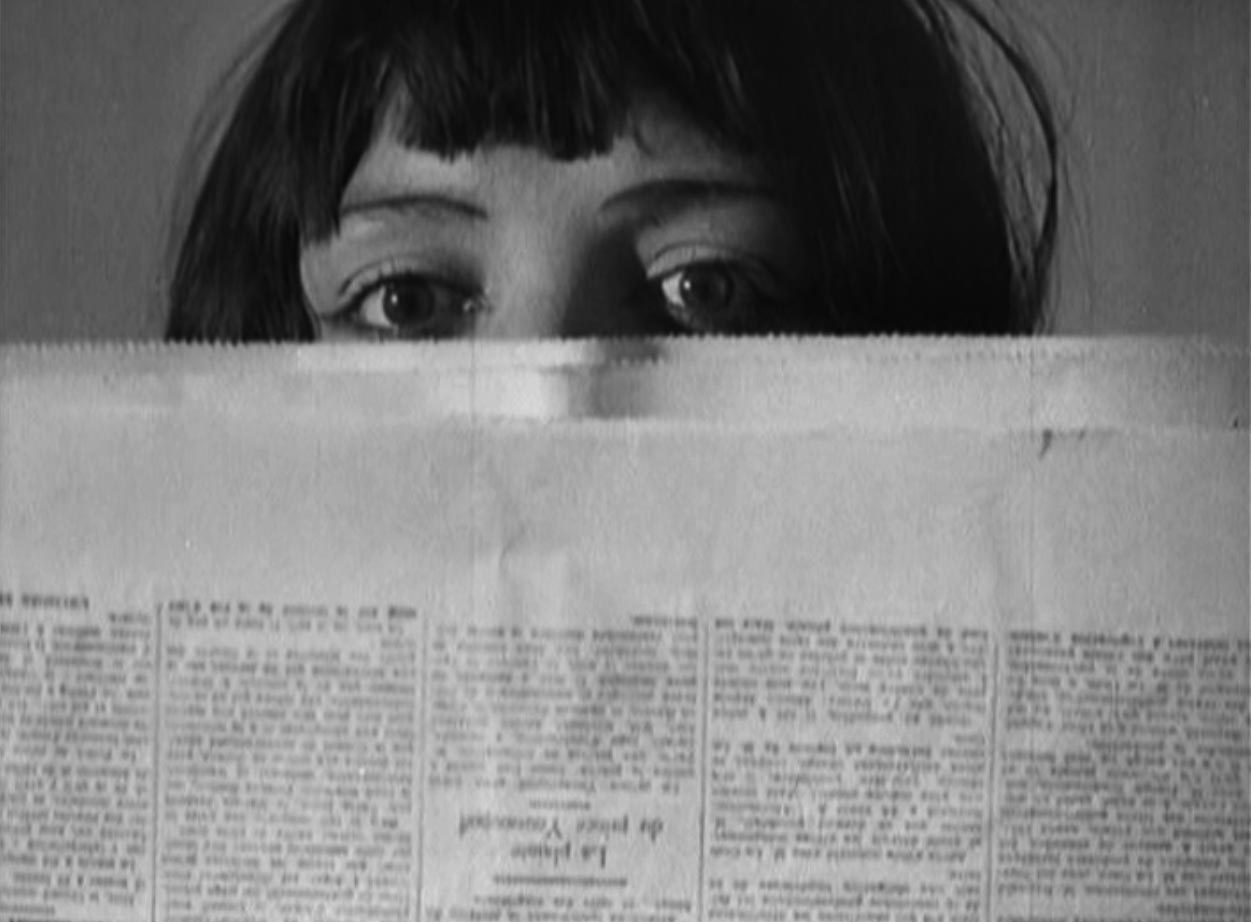
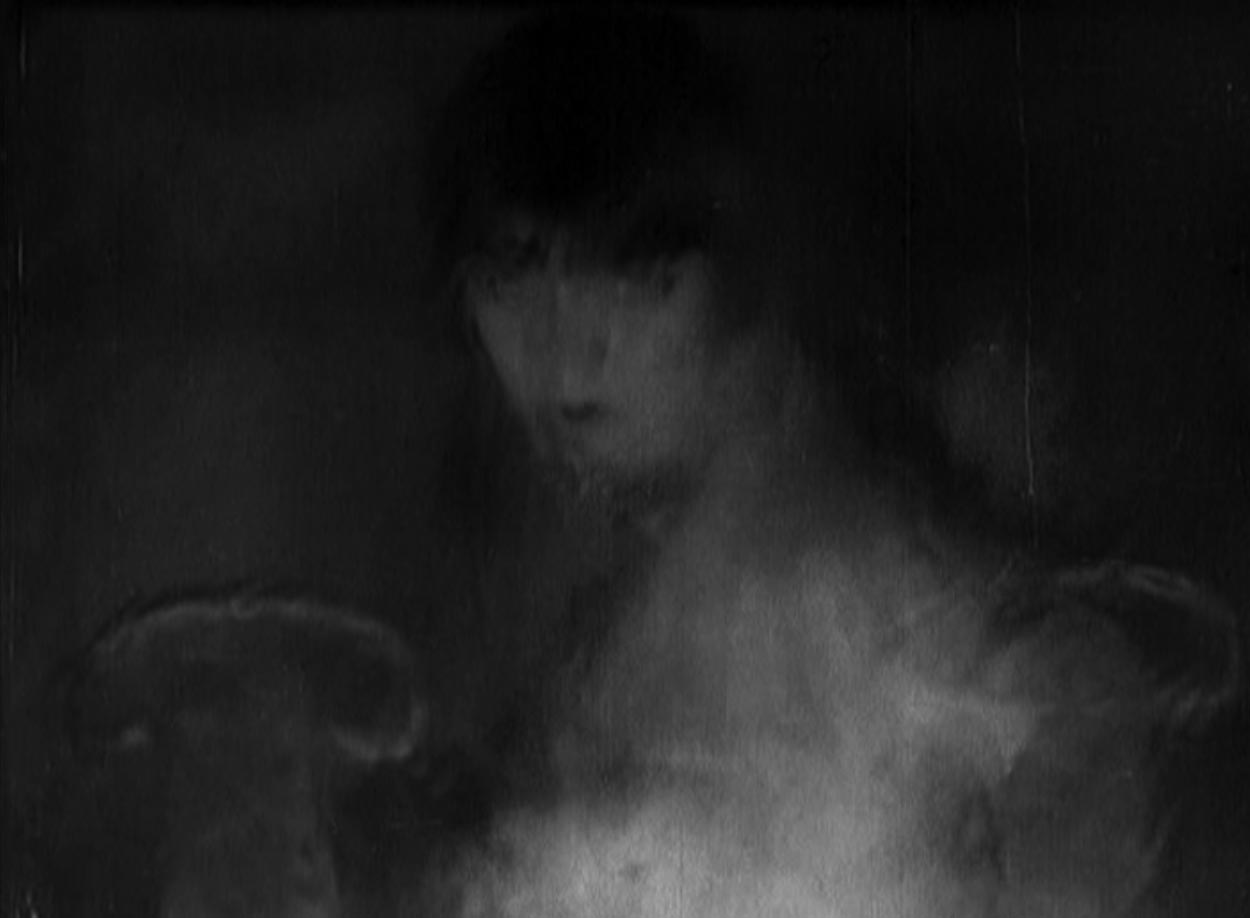
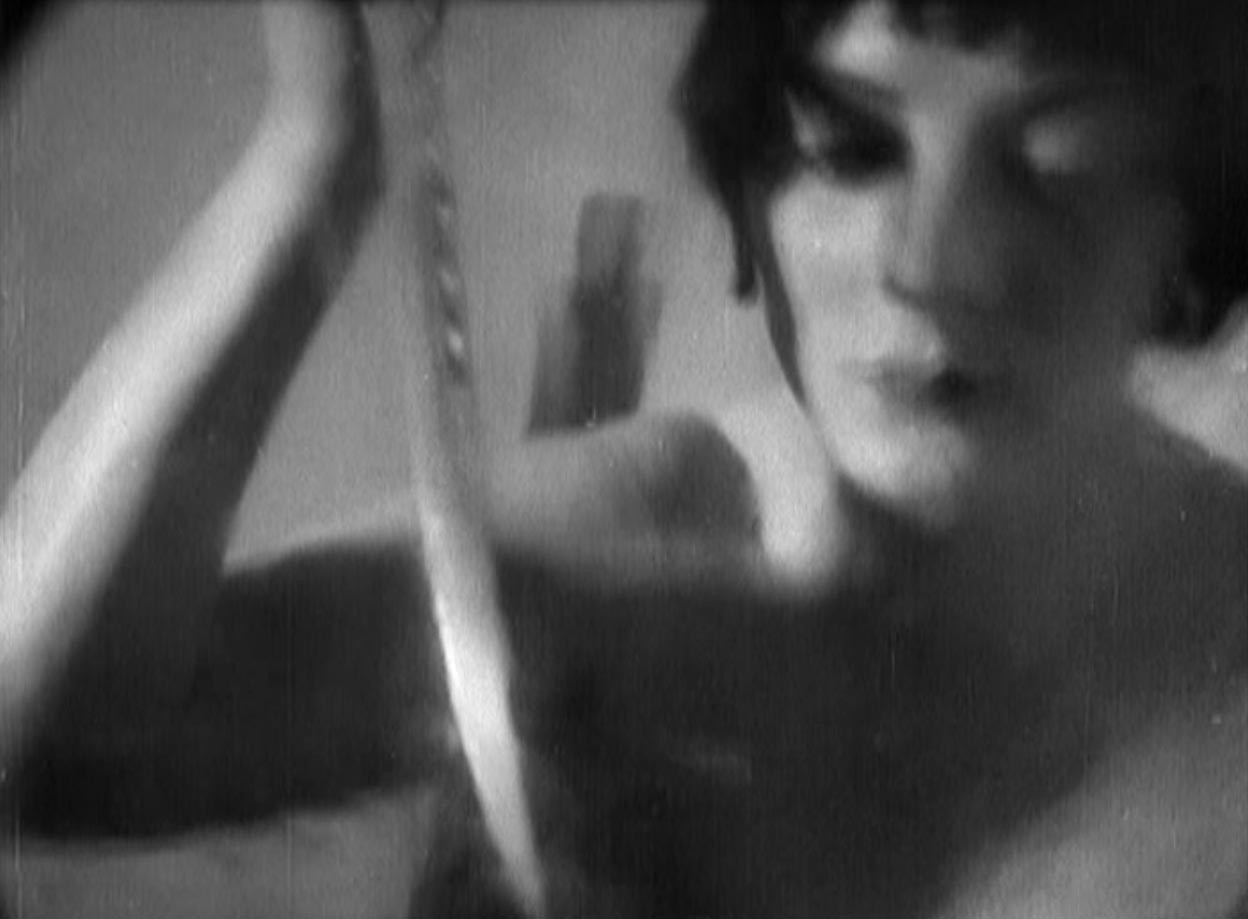
In particular I was taken by Man Ray’s film Starfish (l’Etoile de Mer). Made in 1928, Starfish is a great example of both the Surrealist impulse and Man Ray’s exploration of the “montage of attractions.” It was also based on a poem by Robert Desnos. You can find an online version of it at ubuweb, as well as other Ray films. Here a few screengrabs of some of my favorite images from the film:

One thought that goes through my head when I watch this short film is how much it is like experimental student films I saw years ago, only generally much better. His ideas are more sophisticated than most student films – his Freudian imagery is almost a precursor to Deren’s Jungian imagery from her Meshes in the Afternoon (1943). Some of his images are stunning. But there are also moments that seem a little random and disjointed, as though they were included merely because filming something that moves was interesting enough. Although I like to trust that Ray included each shot for a reason.

With Starfish one gets the impression that using a movie camera in 1928 was still a novel and exciting thing to do, which it was. Think of the excitement brought about by the invention of the portable/affordable video camera of recent decades, or of YouTube, or desktop publishing, or of portable/affordable music studio equipment. All these inventions sparked bursts of creativity in new directions as well as lasting changes to our creative horizons. So was film in the silent era, then again in the 1960’s, then again in the late 1980s, then again with hi-def video.

In 1928 Ray was still a young turk (though he was 38 years old) running with the Dada/Surrealist crowd. He was making a living as a fashion photographer, but one can tell that his passions were for the arts (non-commercial arts) and he lived shoulder to shoulder with many of the great artists of the period. He was a painter and a photographer first, with cinema tagging along a little later.

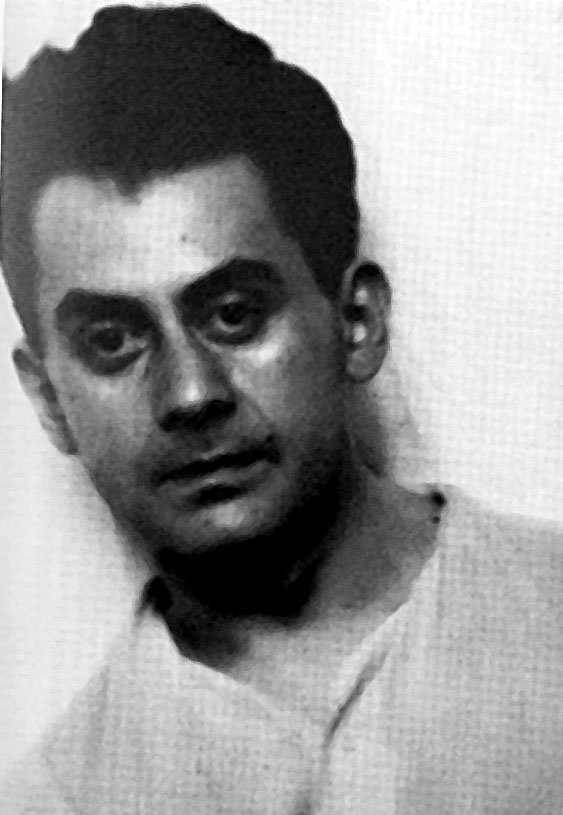
When I think of Many Ray I think of a towering artist with an impressive pedigree – someone very distant from me. But I know that I am made of the same stuff as he. When I look at this photo of Man Ray…

…I see a man who was very much like me: flesh and blood, curious, thinking, desiring, working, creating, longing.

Captain Blood My Hero

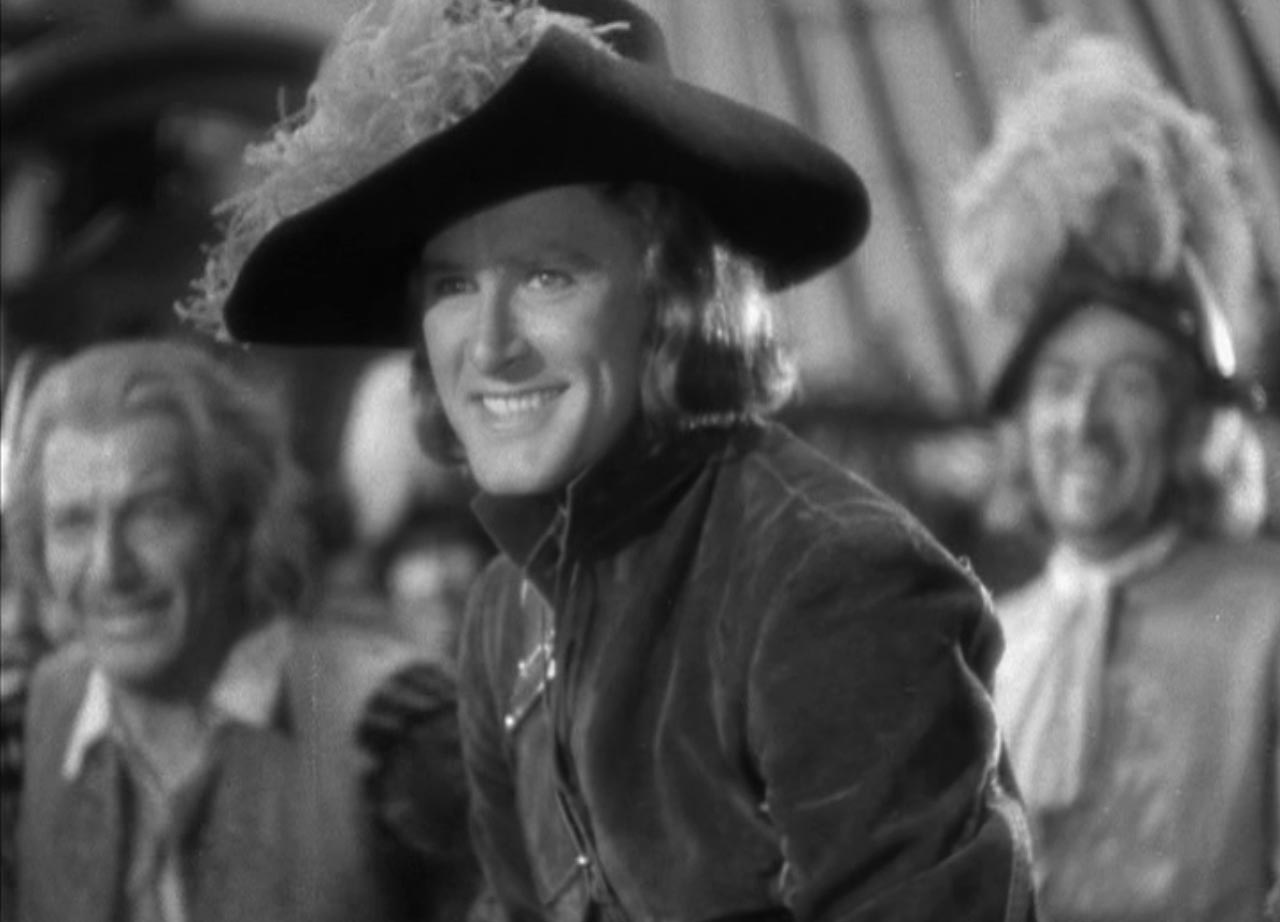
The other night Lily and I watched Captain Blood (1935) and we LOVED it. What a great film. Honestly, I can’t remember if I have ever seen an Errol Flynn movie before (shock & disbelief), and if I have it must have been when I was a kid. Flynn is wonderful. Not only does Flynn live up to his swashbuckling reputation, and not only is he as handsome as any leading man has ever been, he’s quite a good actor. In all Captain Blood was somewhat of a revelation for me.

What impressed me the most, however, was the overall craft that went into the creation of the film. Michael Curtiz directed the film, which was also a surprise for me (this shows just how out of touch I am to certain aspects of film history), and I was struck again by what a master he was. Sure, Captain Blood can be considered just another big costume drama with model boats from an era with lots of such films, but, for what it is, it is still a stunner. Here are just a few observations and some favorite images of mine.

The film opens with action, as any good pirate movie should – aaarrggh. The first shot has Blood’s friend Jeremy Pitt (Ross Alexander)* riding his horse at full-speed.

Now this shot was obviously filmed in the studio, which makes it even more remarkable considering the horse has to be running on a horse-sized treadmill. But the dynamic nature of the shot with its combination of rear screen projection and foreground objects flying by, with lighting flashing, and the horse racing, is just a wonderful moment and a great way to set the tone for the story.

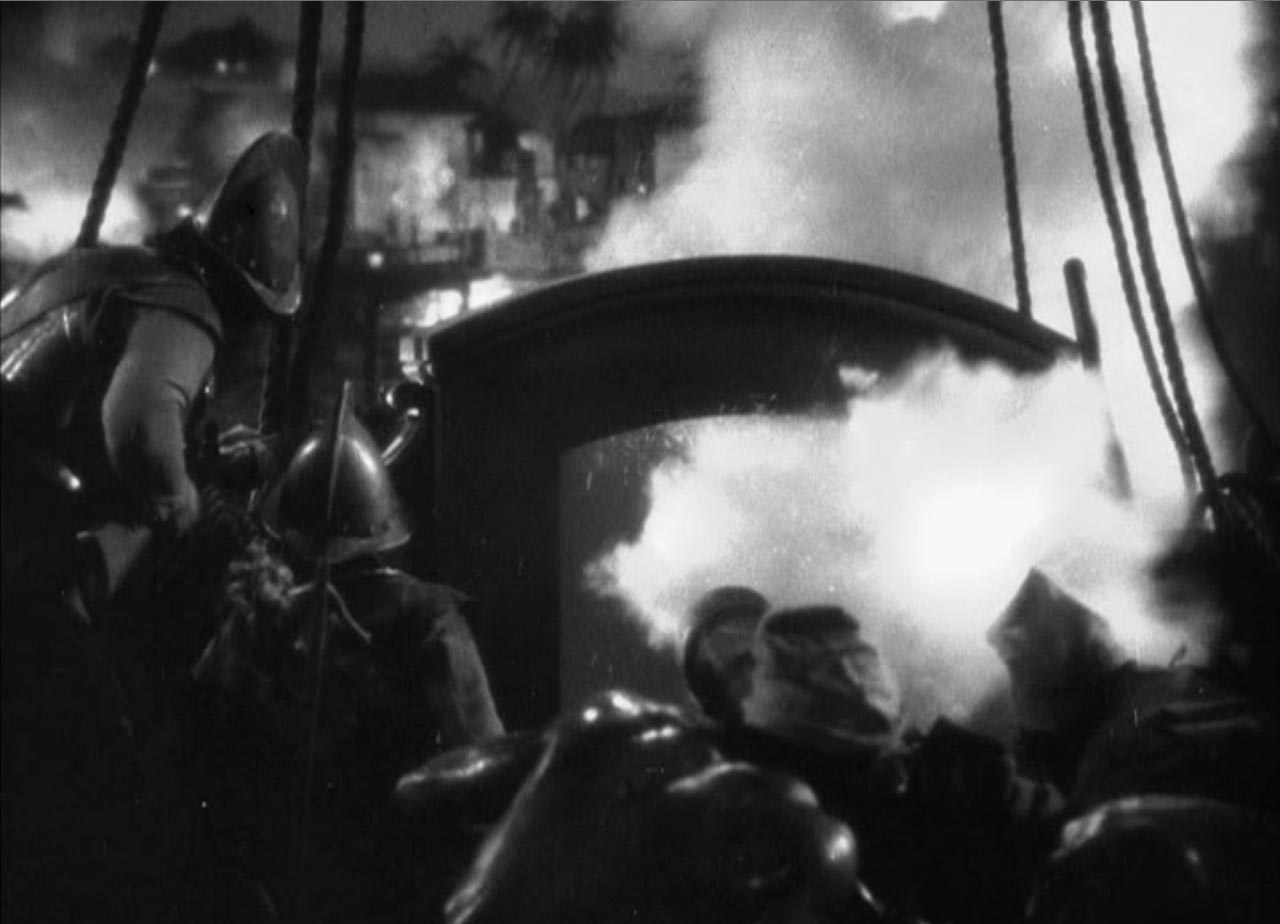
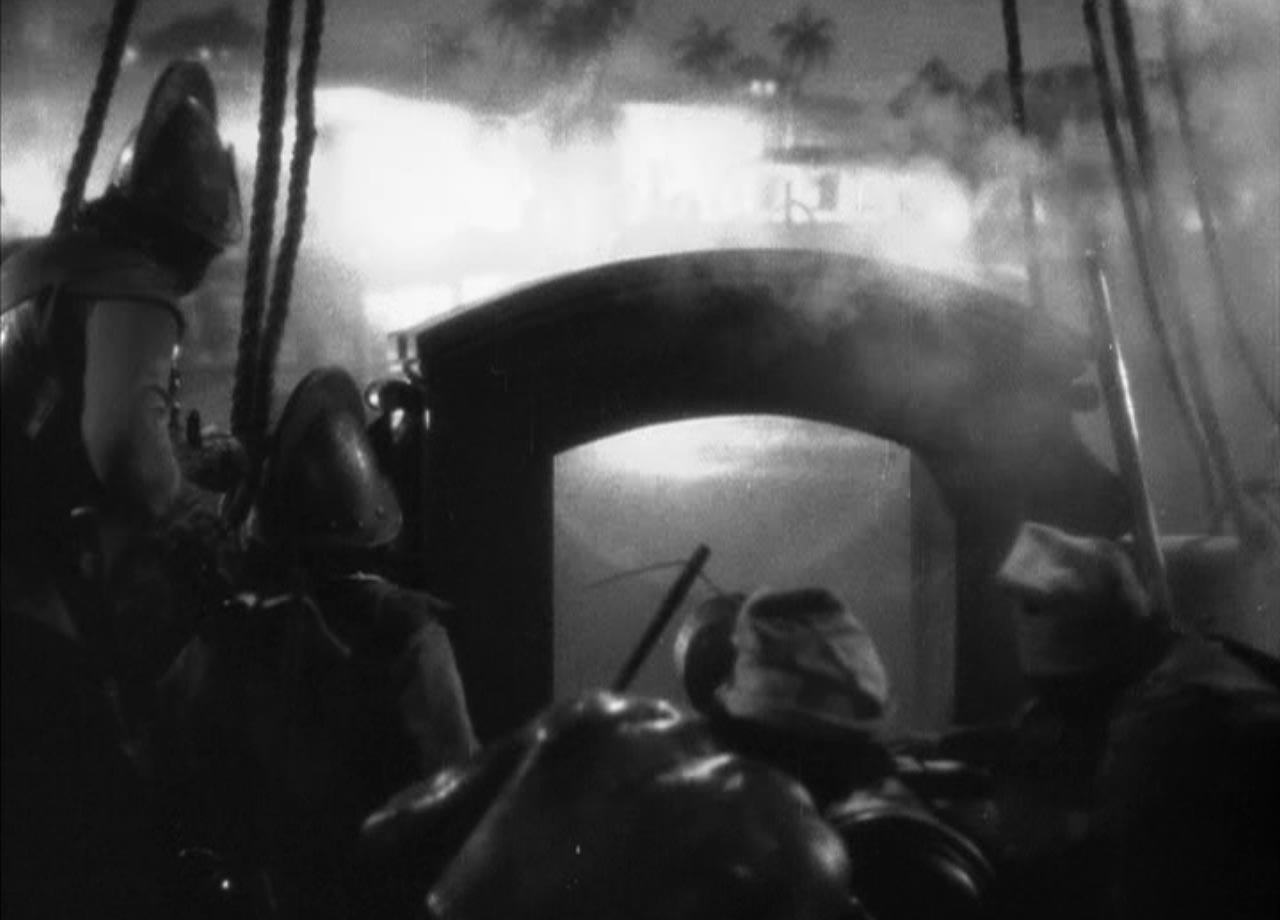
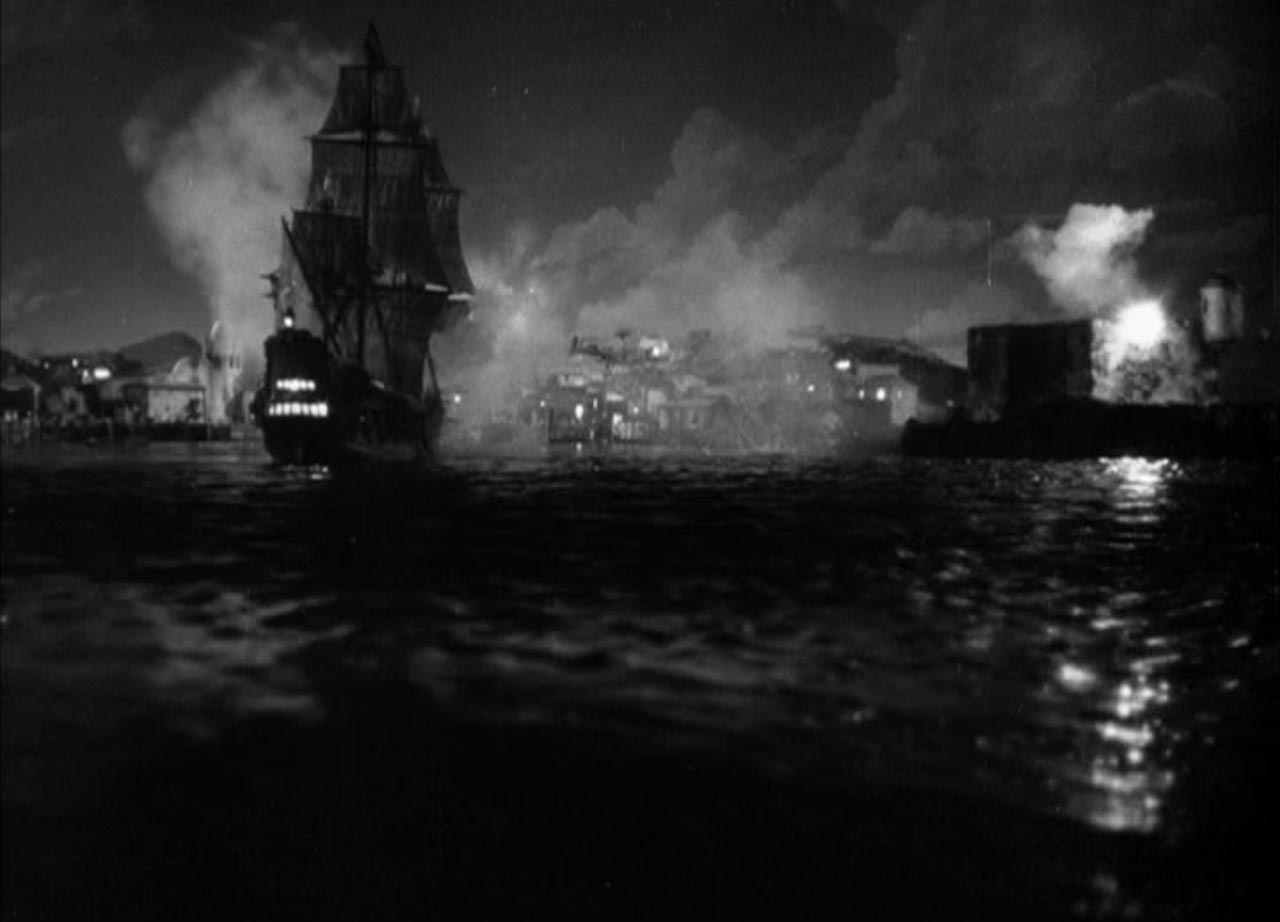
Then the battle scenes are wonderful. Here is a small example of the level of craft in the film. First is a shot from one of the Spanish ships firing on the town of Port Royale. We the have the canon fire with its flash and smoke.

Then, a full second later, we see the flash of an explosion in the distant town.

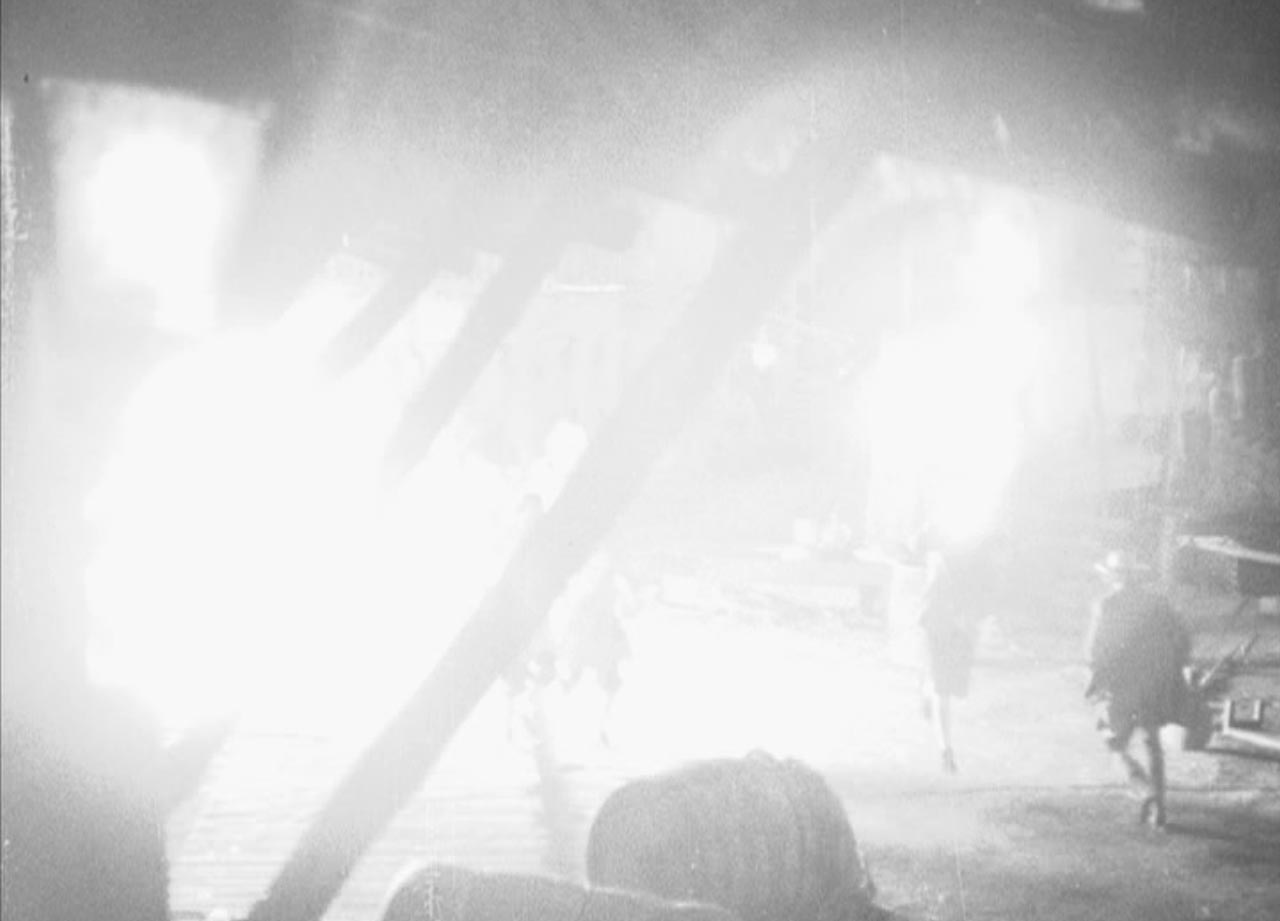
Then we have a match on action (or match on explosion) when we cut in mid flash to the site of the explosion.

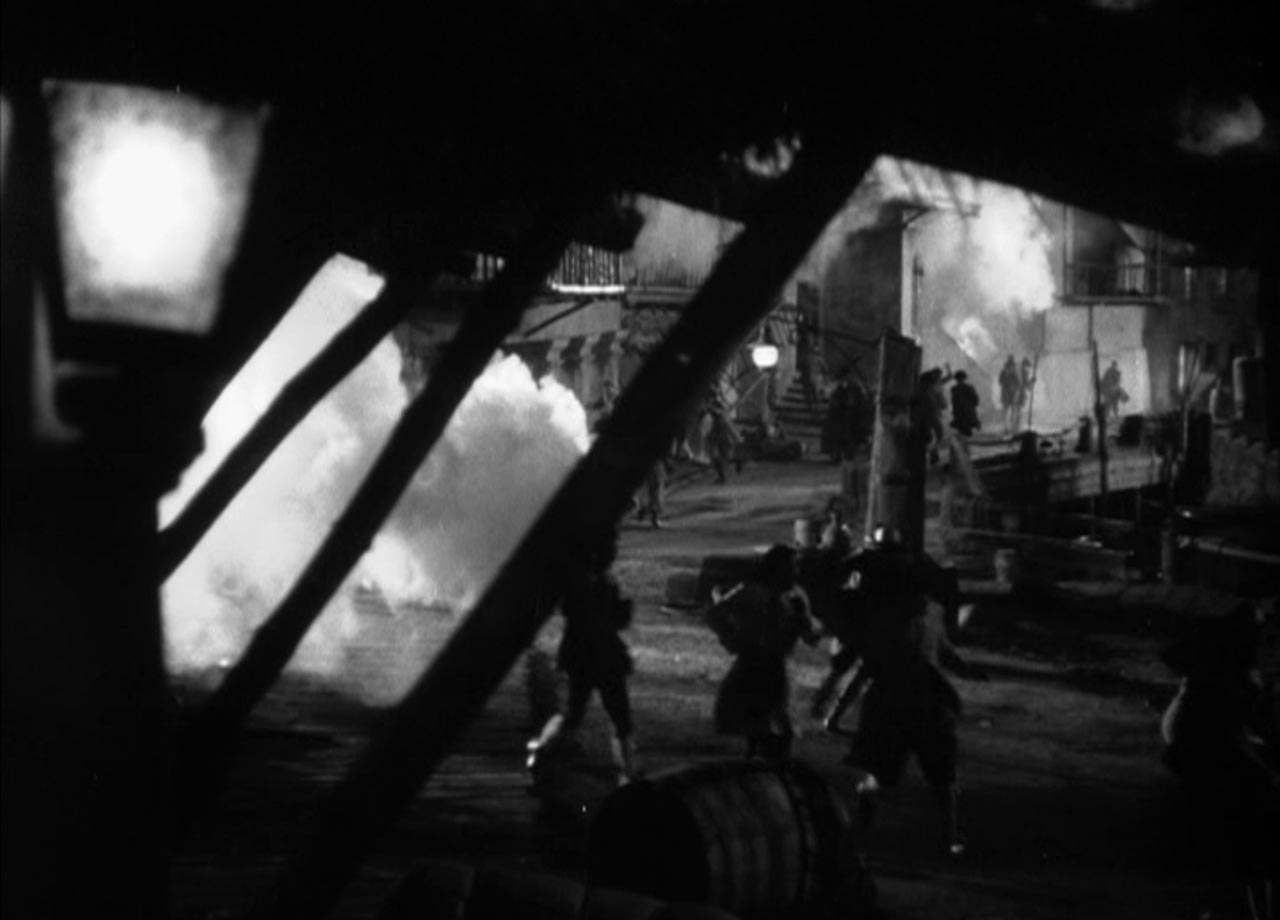
And then we see people running from the blast.

It all happens so fast that one might not notice how well put together these kinds of little moments are throughout the film. It certainly would have been much easier to just show the canon fire then cut to an explosion. But here we have a sense of depth and a holistic world, a world that is made up of real things and flesh and blood, not merely the fabrication of montage. In the age of “montage or bust” Curtiz places his edits within a world of three dimensions.

Then we have the model boats. To our eye, and maybe to those of 1935 as well, these shots are clearly made of models and miniature sets. But what a great job. The shots are more than just to create the sense of the battle, they are also works of art. Look at how beautiful they are:

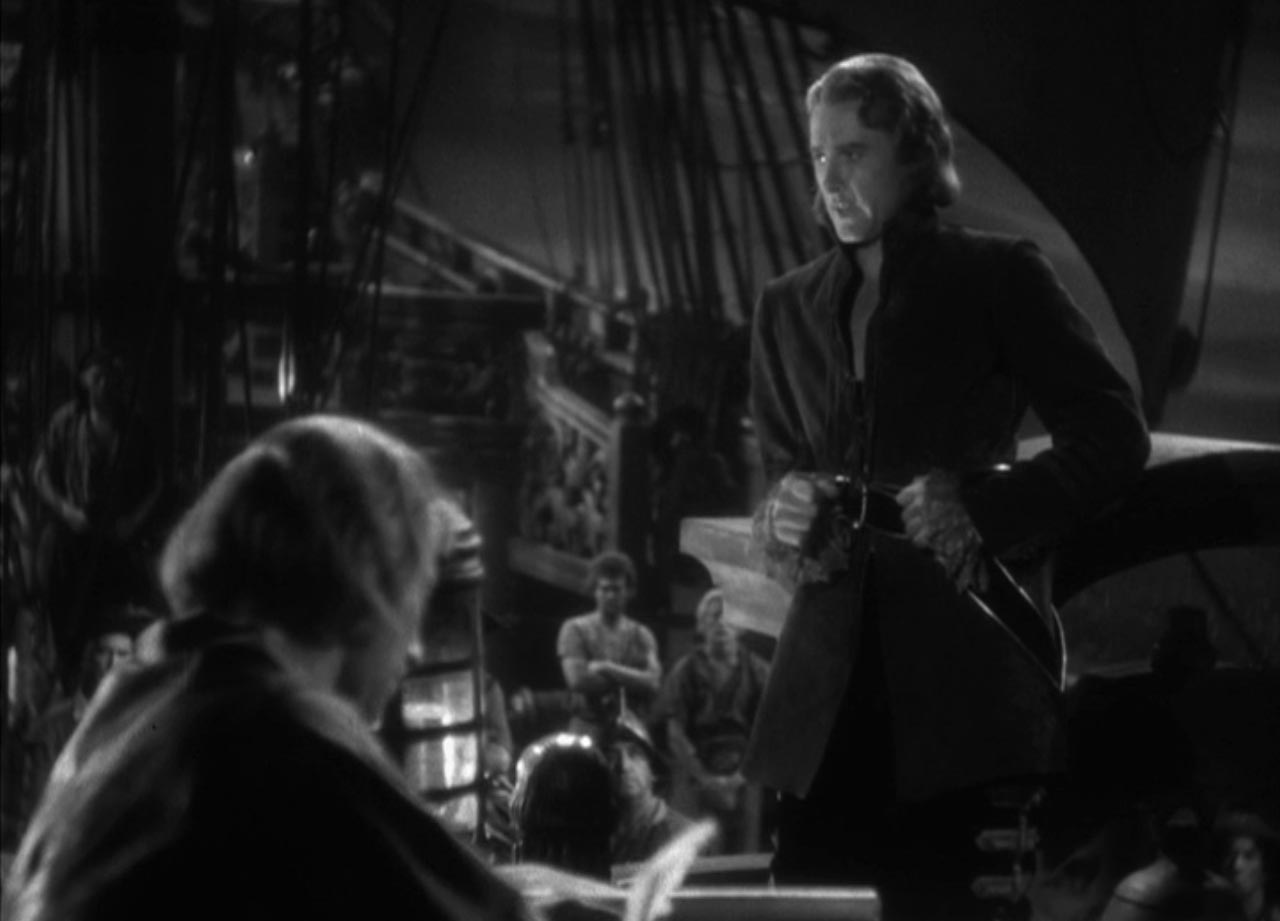
When it comes to filming on the boat with actors, we all know that many of the boat sequences in Jaws (1975) were filmed with a hand-held camera so that the rocking motion of the boat wouldn’t be too much and make the audience sea sick. Well, Captain Blood had the opposite problem. It was filmed without real ships, so how were they going to make the ships have that feeling of actually being on the water? I only noticed the secret when I was fast forwarding through he film with scenes such as this, where Captain Blood dictates the articles of piracy for his crew…

…and it takes place on the studio-bound ship and the action is slow. What Curtiz had his cameras doing was very slowly, almost imperceptibly, dollying back and forth to and from his subjects. It gives the feeling that one is standing there on the ship and subtly adjusting one’s balance as the boat rocks.

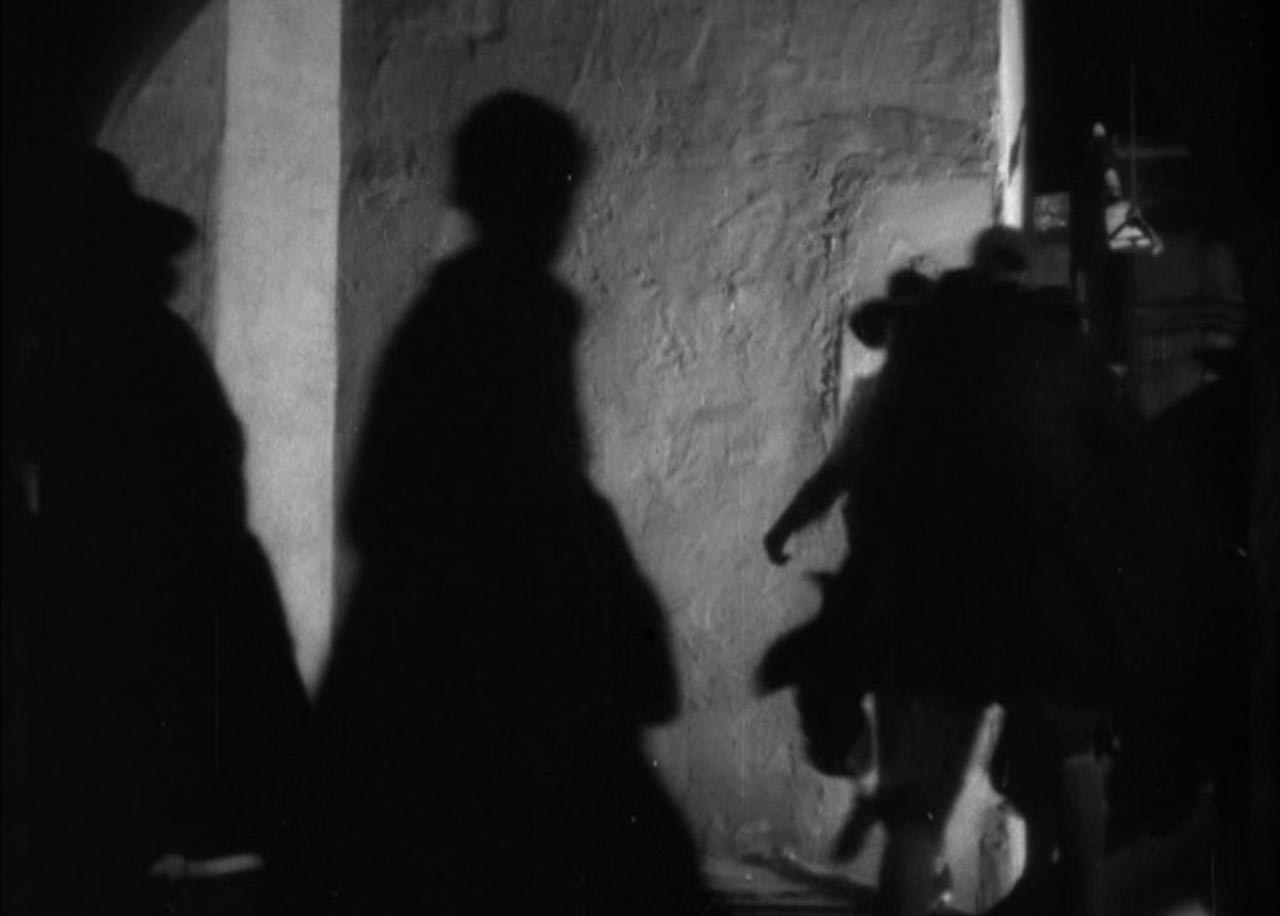
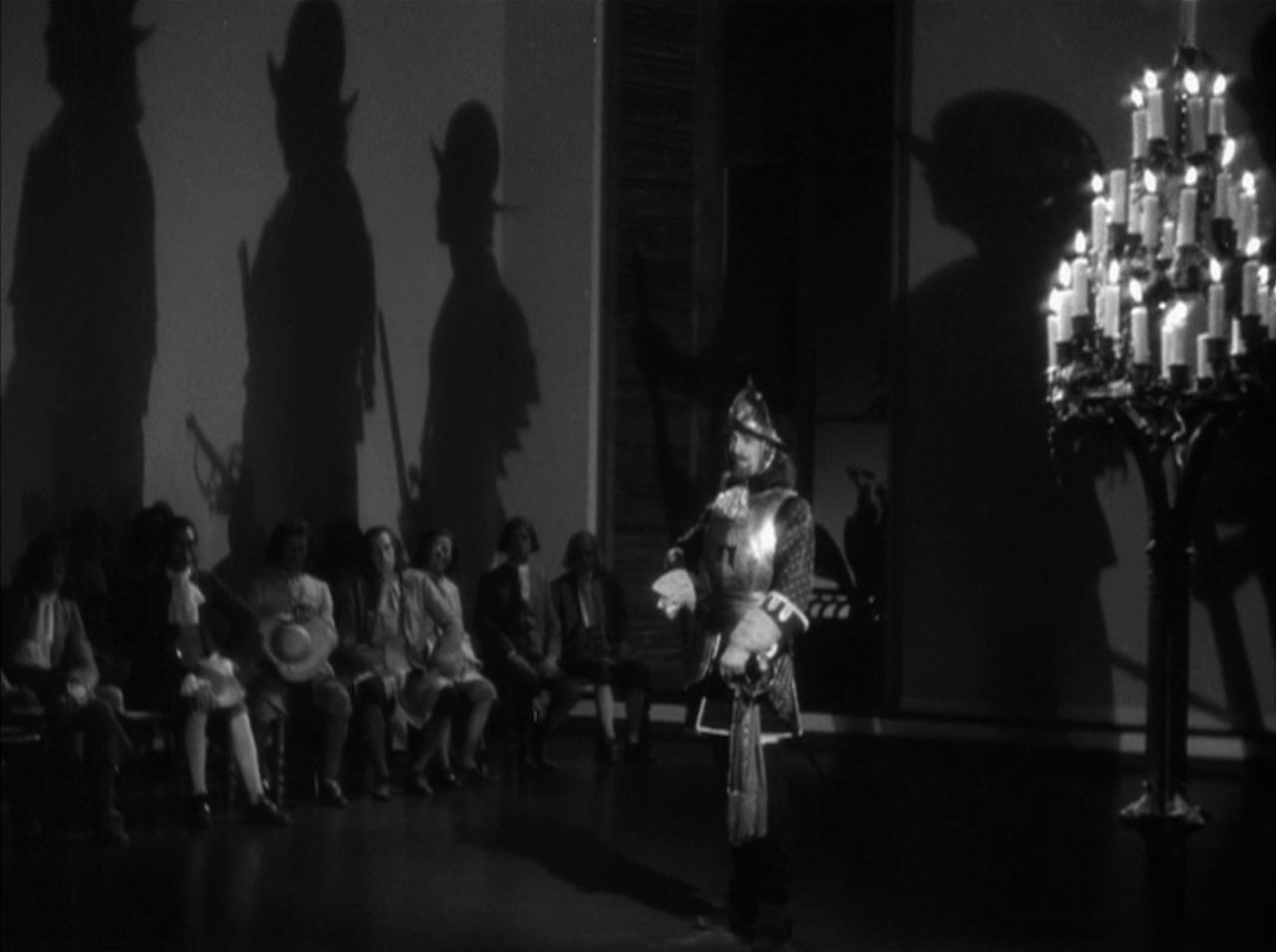
And then there is the use of shadows. German expressionism was still a powerful influence in 1935, and what better scenario to use it than a swashbuckling pirate story? Here a just three such examples:

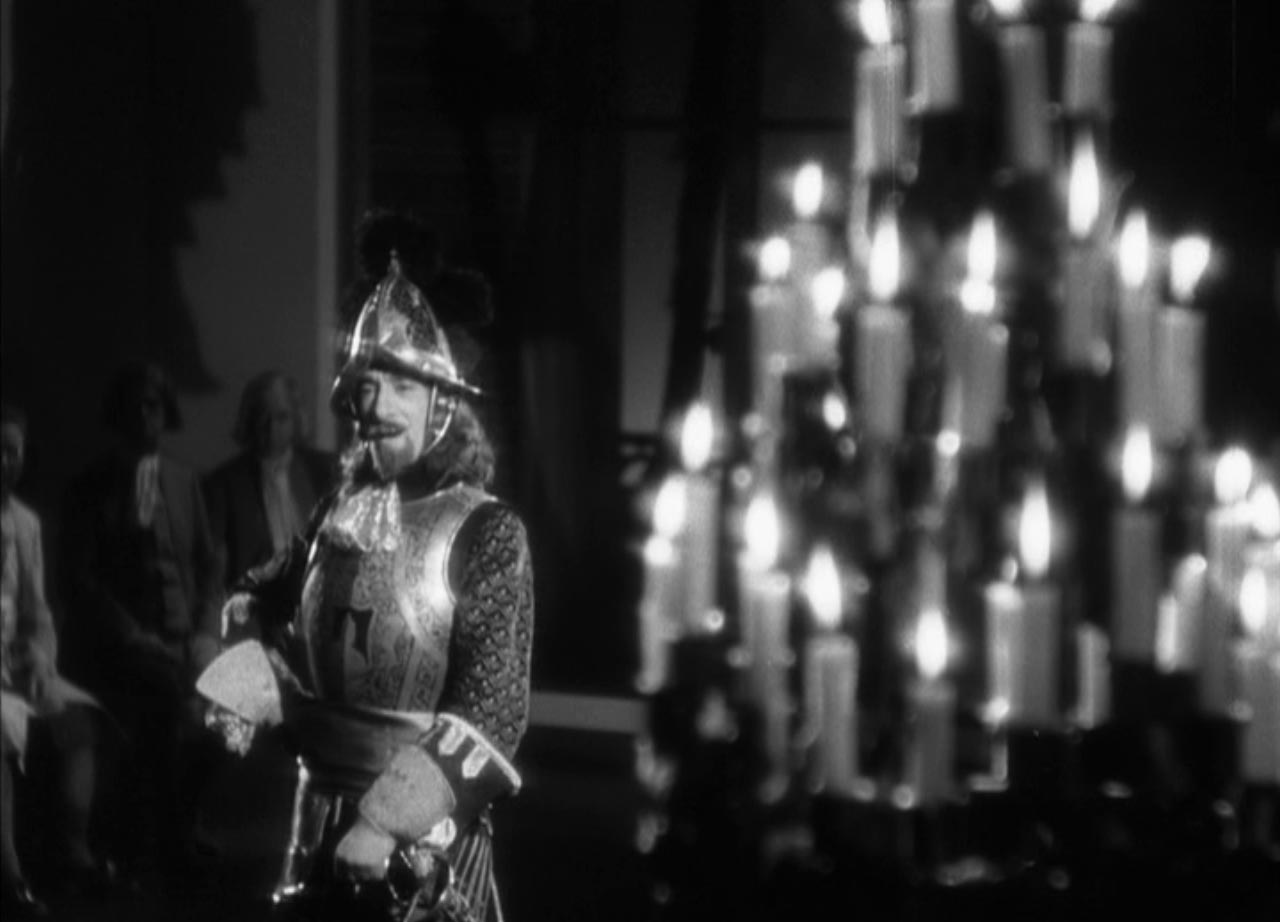
I love this shot too, with the candles placed in the foreground:

Makes me think of Ophüls or von Sternberg.

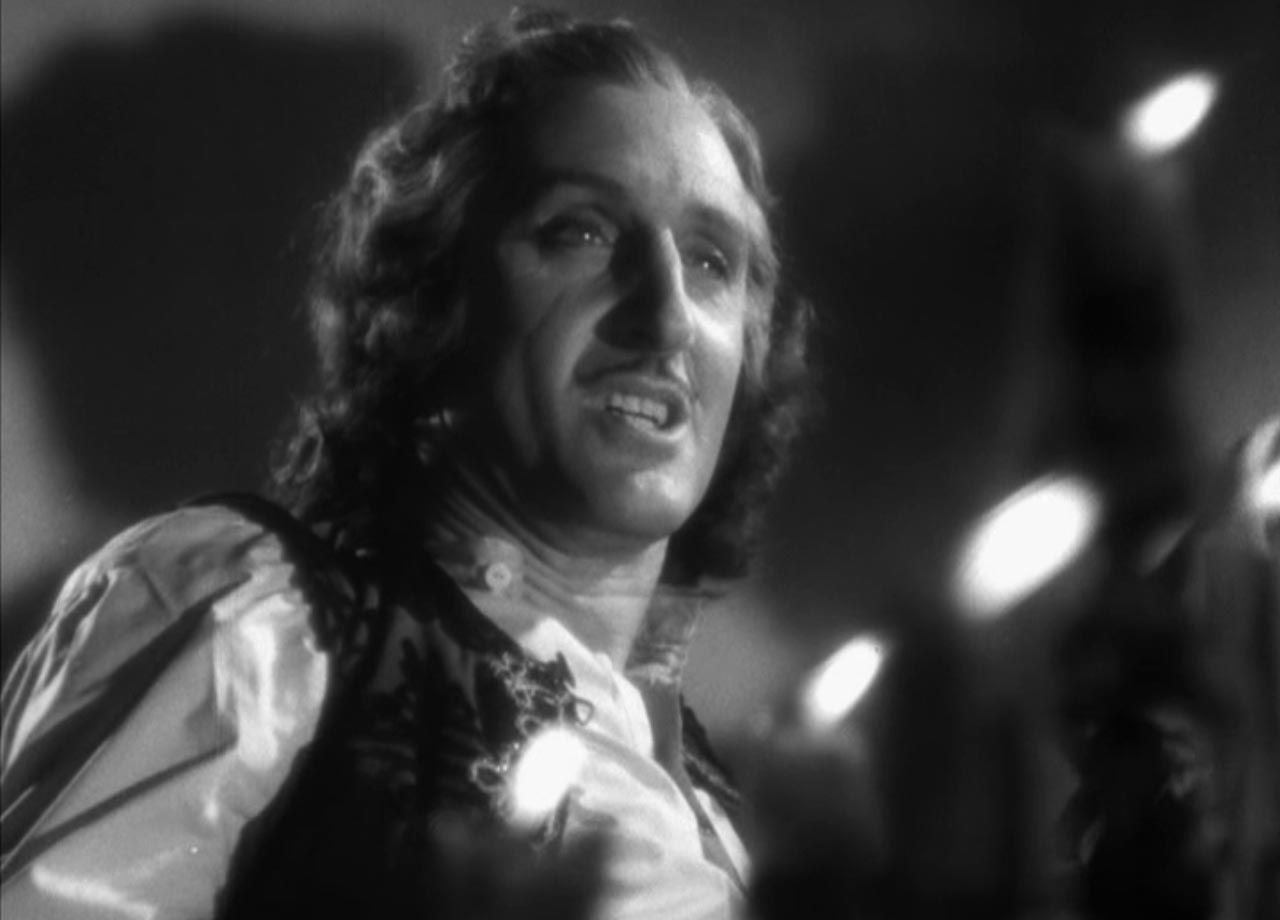
And finally there is the wonderful Basil Rathbone as the dashing pirate Levasseur. Doesn’t he look great in this shot (also with candles in the foreground)? N’est pas?

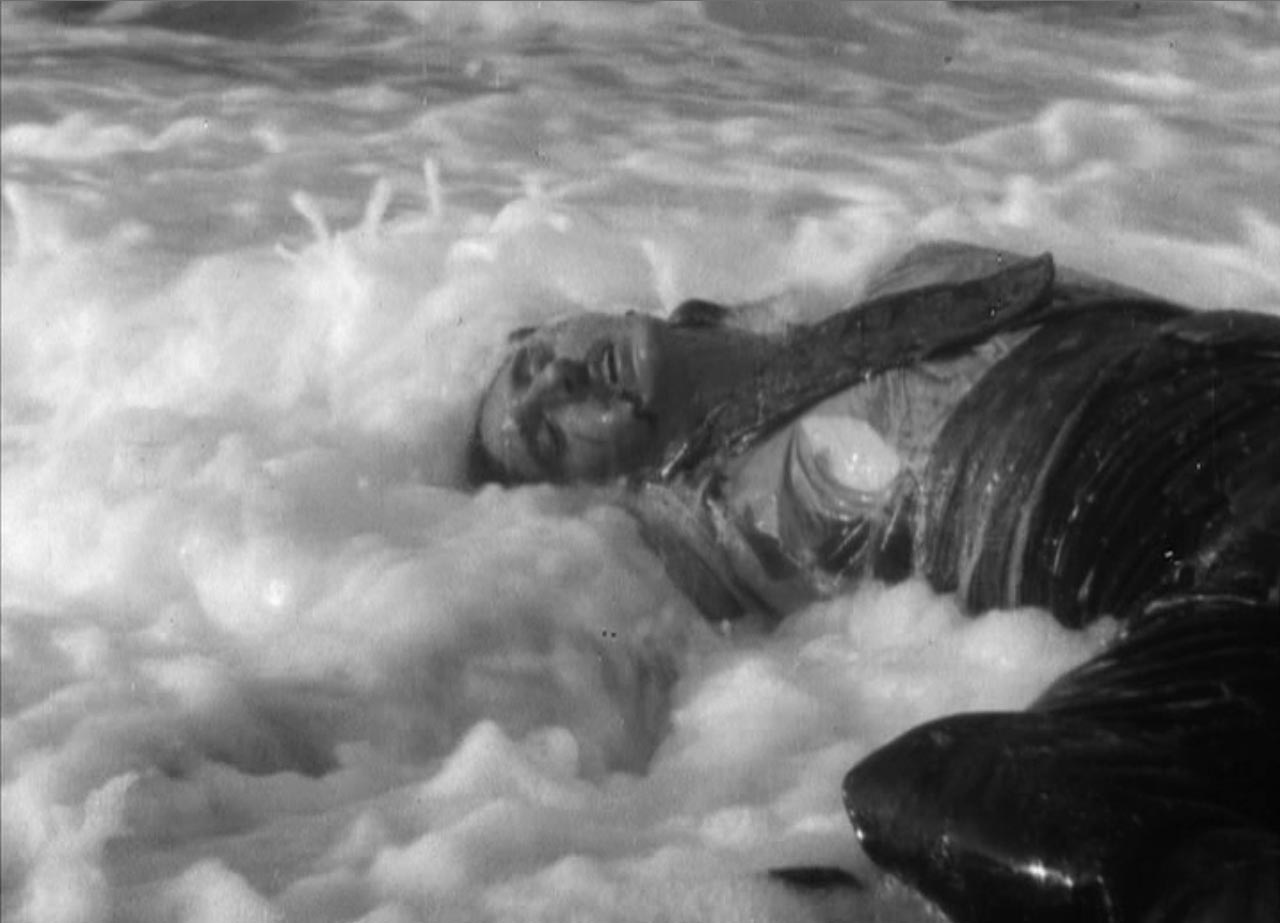
Here is Levasseur dying in the surf, what another beautiful shot.

There are so many more great images and moments in this film. Captain Blood is more than just a pirate film, it is an example that a finely crafted film, with depth and richness, could get made during the studio system by a director under contract – as so many were.

Of course I am always a little worried showing such old films to Lily. Maybe she will be bored. Maybe the films will be too dated to be appreciated. But, not only did she show great interest in the story and even cringe during some scenes, especially the branding of the slaves scenes, but when it was all over she turned to me and said “that was a good movie!” Good job Captain Blood.
_______________________________
*I have linked to Ross Alexander’s story on IMDB because it is fascinating and very tragic. I found his performance compelling in the film and Lily even remembered his character’s name the next day and had to remind me of it.

musings on Jeff Wall and the "cinematic" label

I am always a little curious about non-cinema art that gets labeled “cinematic.” A while ago I posted some thoughts on Cindy Sherman’s Untitled Film Still series. Lately I have been thinking about the staged photographs of Jeff Wall. And I have to say my thoughts are all a’flux.

If you are unfamiliar with Jeff Wall, one of the best overviews of Wall’s work is in this article.

Wall is one of the looming names in contemporary art, and like many artistic luminaries, one either likes his work or doesn’t. I happen to like his work quite a lot, but more from an intellectual curiosity and from being impressed with his virtuosity rather than from emotional engagement. In many ways his photographs seem to be either exercises in meticulous stagecraft or in meticulous banality. One label that has been tossed at Wall’s work is “cinematic” or “movie like.”

One article says the qualities of Wall’s photographs are such “…that the pictures glow like a movie screen.” The article goes on to say that Wall’s images are deeply indebted to cinema, which IS true, especially given that Wall wanted to be a filmmaker at one time. But is his work cinematic? [Other articles that mention the cinematic quality of Wall’s work: here, here, here, here, and here.]

I am inclined to think the label is being misused, but not intentionally so.

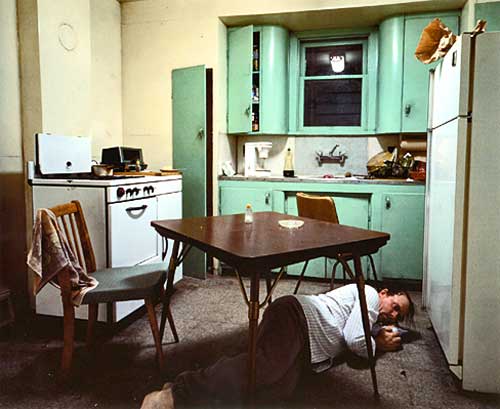
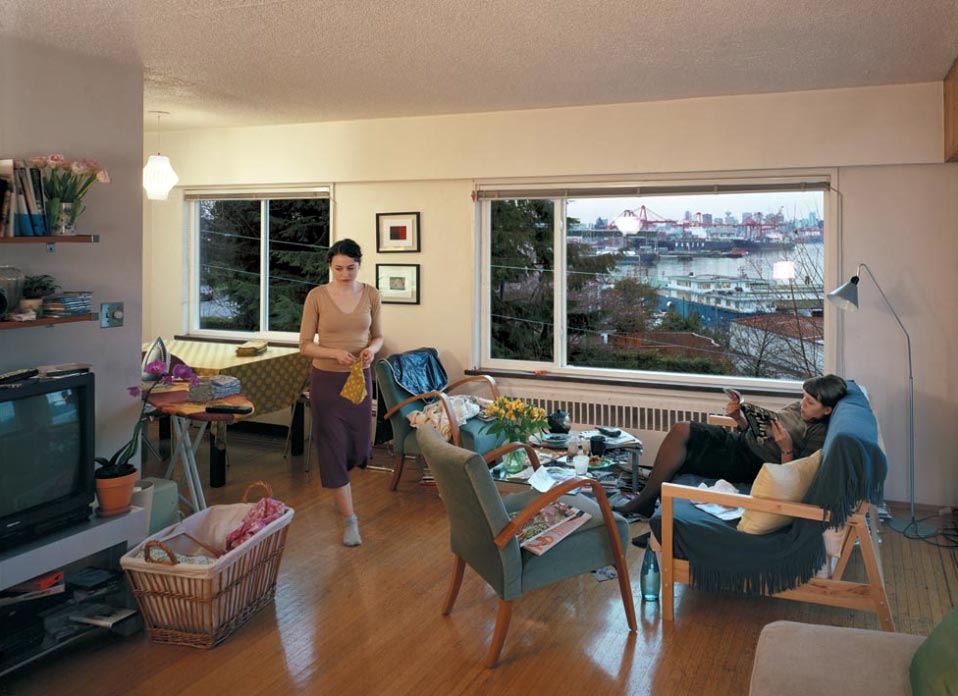
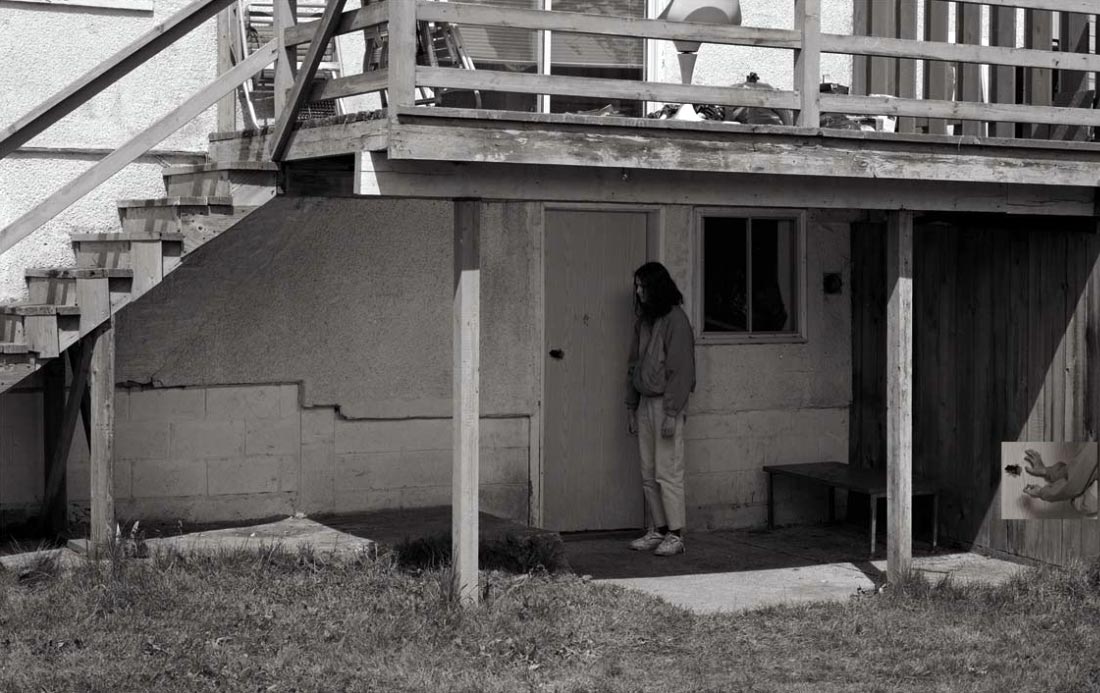
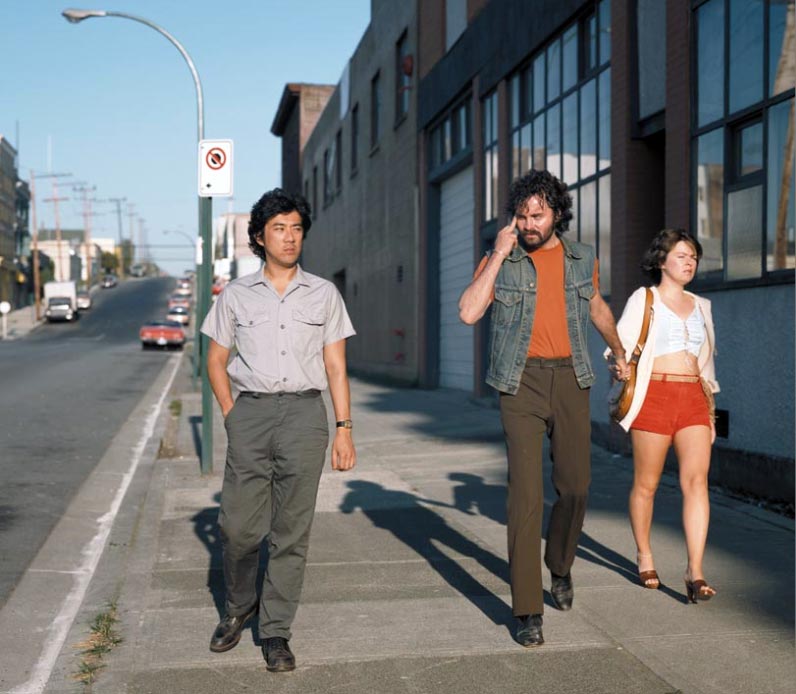
Consider the following four Jeff Wall images*:


Insomnia, (date ?)
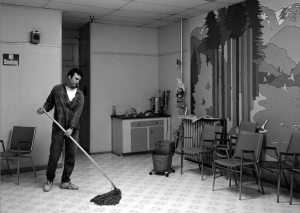

Volunteer, (1996)


A View From An Apartment, (2004-2005)


Rear, 304 E. 20th Ave., May, (1997)

Each of these pictures are obviously staged and photographed with a great deal of control and specificity applied by the artist. And like any photograph with human beings in the frame, there is some sense of narrative. But can we call them cinematic? Is that fair? Is it because the pictures are of people in some kind of “life world” context? That is, do the images seem as though there is some preceding event(s) to the frozen moment, and that that frozen moment will be followed by another?

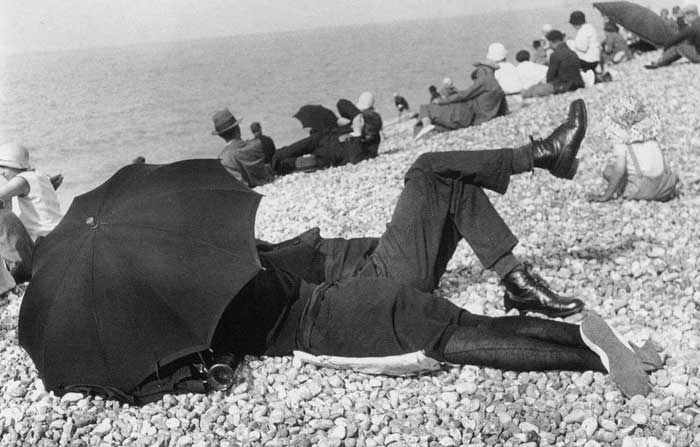
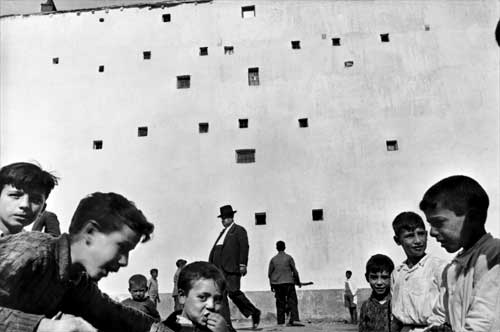
I do not think this is a strong enough argument for the cinematic label. But even if it is, aren’t there many more photographic examples that have richer narrative possibilities? Such as these two, apparently unstaged, photographs from Cartier-Bresson (I don’t have the titles or dates, unfortunately):
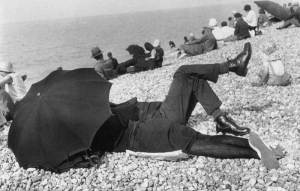
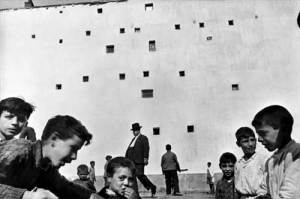

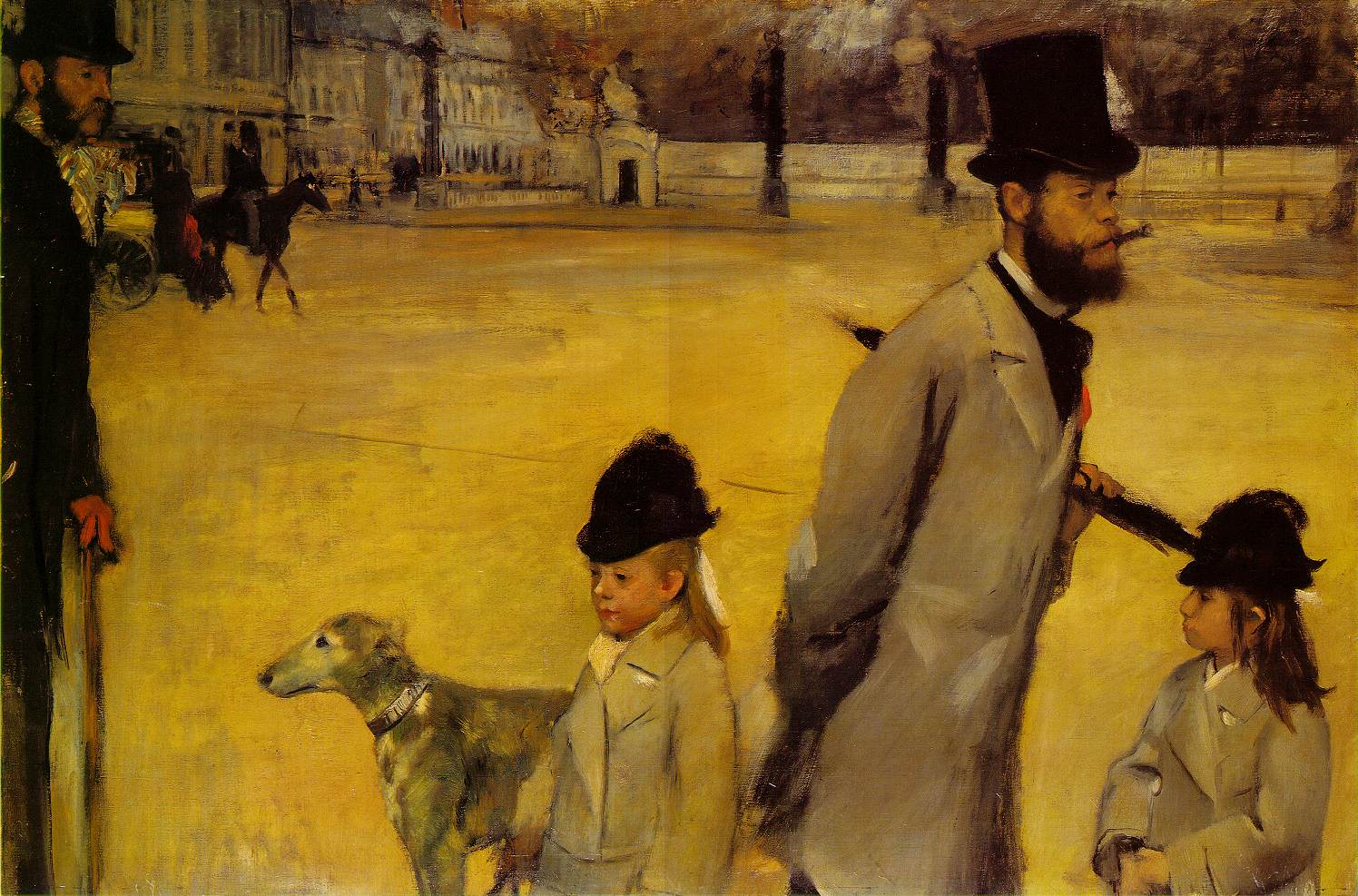
We could say much the same thing about a lot of painting. Consider this paining by Edgar Degas, which has a kind of in media res quality, as well as a sense of the banal.
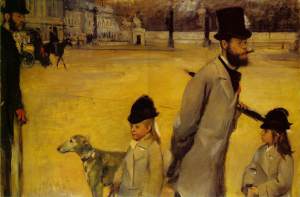

Place de la Concorde, (1875), oil on canvas

Should we consider this Degas to be somewhat cinematic too? If so, then I find Degas to be at least as cinematic as Wall, and maybe more so, which is ironic given that the photographic apparatus is closer to that of cinema.

Maybe, instead, we should consider the typical way Wall’s images are presented to the viewer. Wall’s images are oversized (comparatively) cibachrome enlargements that are placed in lightboxes mounted on the wall. Thus, when one sees a Jeff Wall image in its native setting, one sees a very large photograph that is lit from behind, and therefore glows like a television screen, or, more appropriately, an advertisement light box. In this way Wall’s images have the immensity of a medium-large painting, but with the technical aura and aesthetic more closely aligned with mechanical presentation, i.e. television and cinema. Does that still qualify his work as cinematic? When one sees a lightbox advertisement at a bus stop or a store window does one think “cinematic?” Somehow I doubt it.

This video (below) of the Jeff Wall retrospective at MoMA will give some idea of how the images are presented.

http://www.youtube.com/get_player

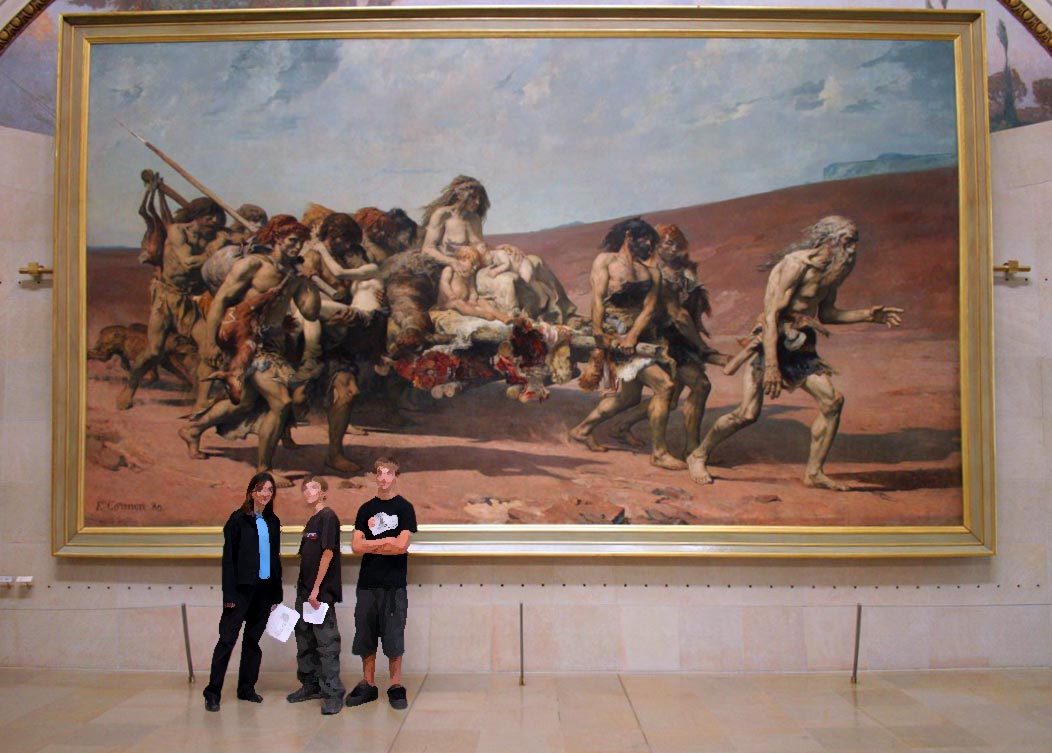
Maybe it’s just the size of Wall’s work. Of course, great big narrative paintings have been around for a long time too. Maybe this painting at the Louvre is somewhat cinematic.
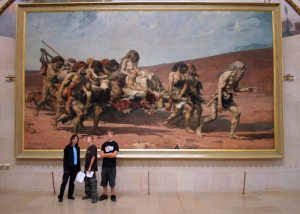

Note: I grabbed this image off the Internets. I don’t know the title or artist of the painting, and I don’t know who took the photo, but I’m sure it’s from someone’s vacation.

It certainly is huge and, although I don’t know its date, it must pre-date the invention of cinema. Does that mean it anticipates the coming of cinema in some way? Maybe, but not likely. Just because a work of art is big and appears to have a story embedded in it doesn’t automatically make it cinematic, seems to me. And, of course, the painting does not glow with its own light source. And yet, maybe it is cinema that is more like oversized genre paintings of the past and not the other way around. Should we label all instances of cinema as cinematic?(!).

Maybe what is most fascinating about Jeff Wall’s work on an immediate level at least, is just how stagey they are. In the history of photography the staged photo has held a lesser place, reserved primarily for advertising, because staging an image apparently undercuts the great achievement of photography: capturing life in a moment, as it is (or was) with no barrier except for the lens and the technical processes. Wall, on the other hand, hires actors, carefully plans and sets up his shots, and probably takes numerous tries to get it just right. Then, of course, he digitally alters them as needed to get what he envisions.

Consider this image:
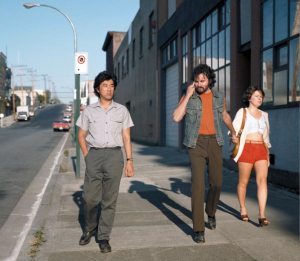

Mimic, (1982)

Here Wall has staged his re-imagined version of a real event which he saw. What hits the viewer, along with the obvious content of the subject, is the fact that this apparent “snapshot” could only exist if it was staged. It’s perfection, its clarity (only achieved with a not-very-portable large format camera sitting on a trip), its careful composition all point to a set-up rather than a lucky shot.

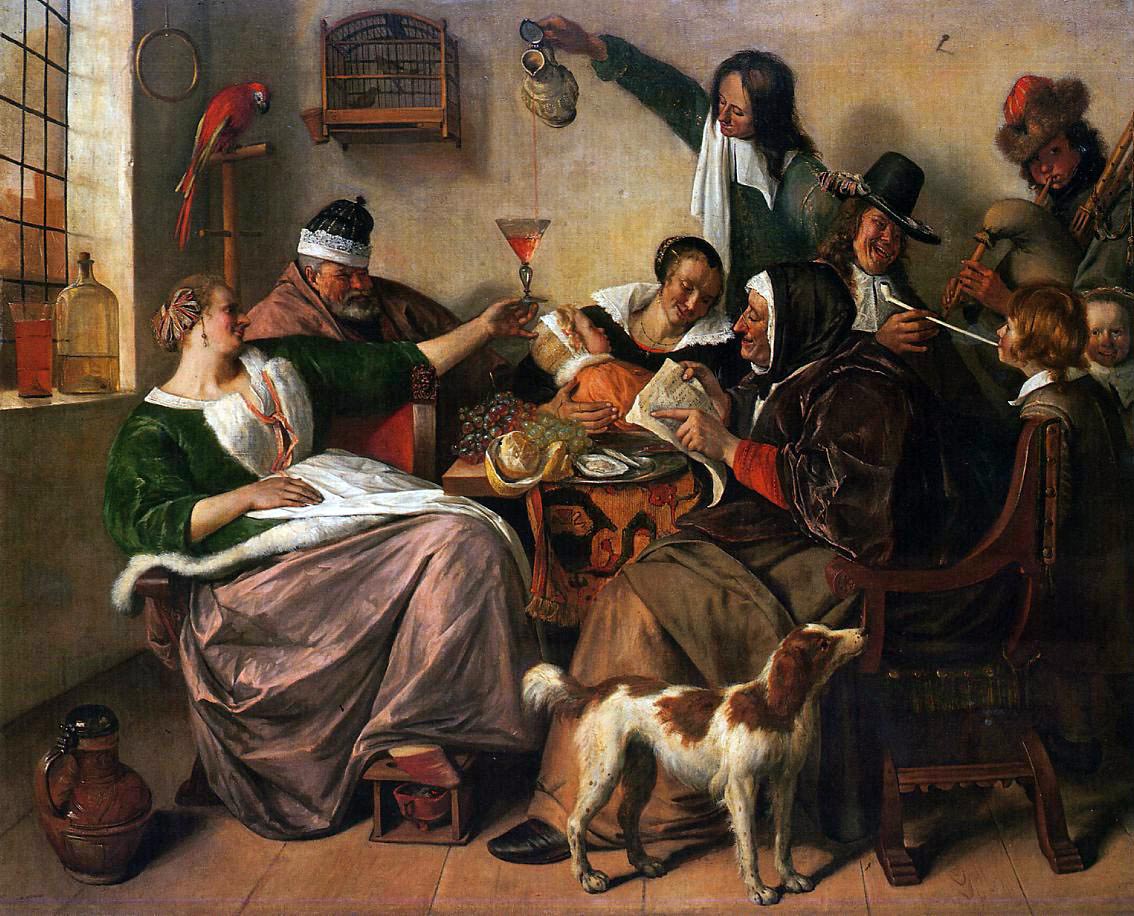
Maybe that staginess is what encourages the cinematic label. But that level of craft and arrangement is not unique to cinema. In most other arts the carefully arranged composition is standard fare. Just consider the genre paintings of Jan Steen:


The Artist’s Family, (c. 1663) Oil on canvas, Mauritshuis, The Hague

In this sense Wall’s work is something more akin to the history of art in general than to photography. The camera is his tool but he is not beholden to the “moment.”

Of course the staging of actors before the lens so that the camera can capture a scene, as it were, is nothing new. Although such staging has played a lesser role in the history of photography, as far as what is considered art is concerned, is has always been present, and maybe more prevalent in the past.

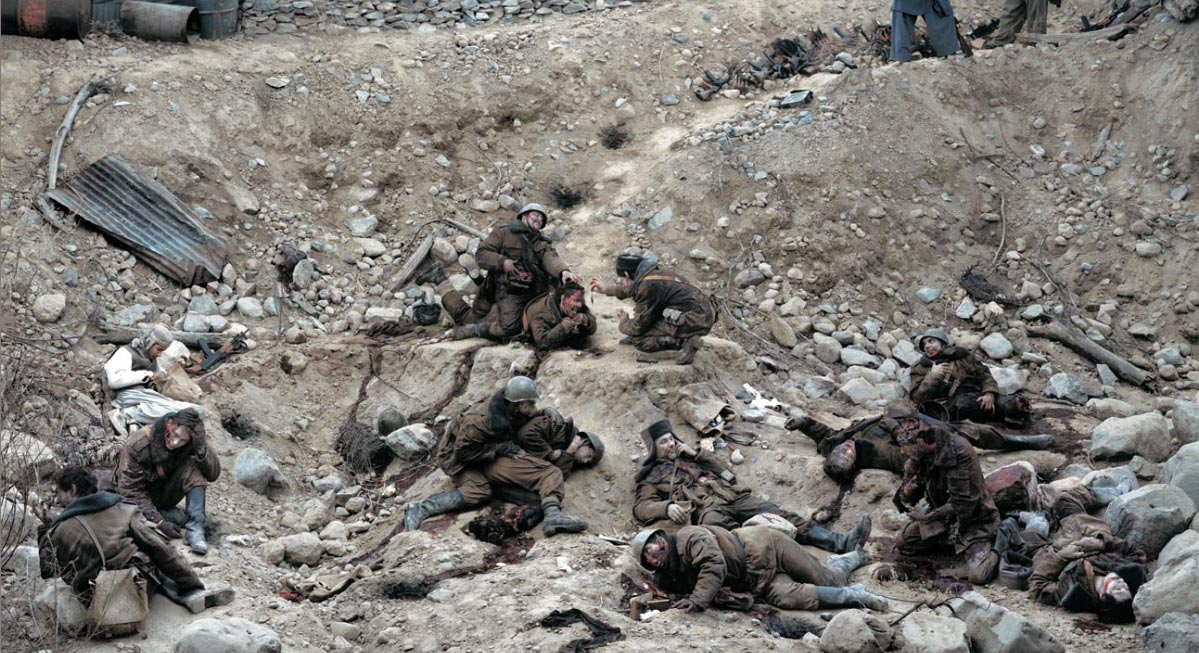
One connection with staging is the idea of the tableau vivant or living picture. Here we have the tableau vivant of Wall’s Dead Troops Talk:
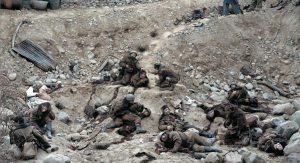

Dead Troops Talk, (1992)

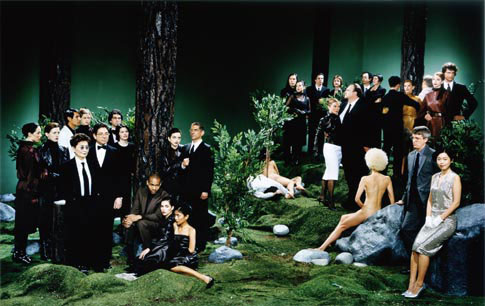
One of the comic ironies of this image is that we have those who are dead animating a tableau vivant. Now here we have an advertisement which appeared in the September 2000 issue of Harper’s Bazaar:
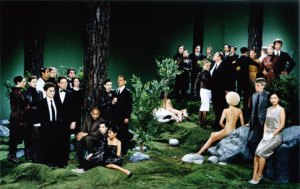


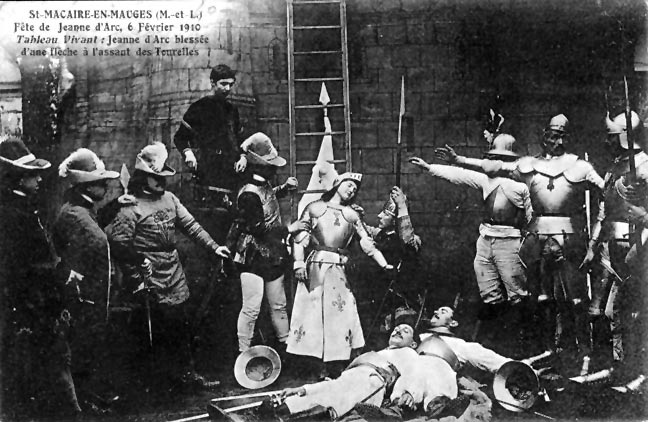
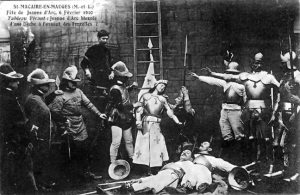
Here we have a tableau vivant from 1910 with actors portraying a scene from the story of Joan of Arc:


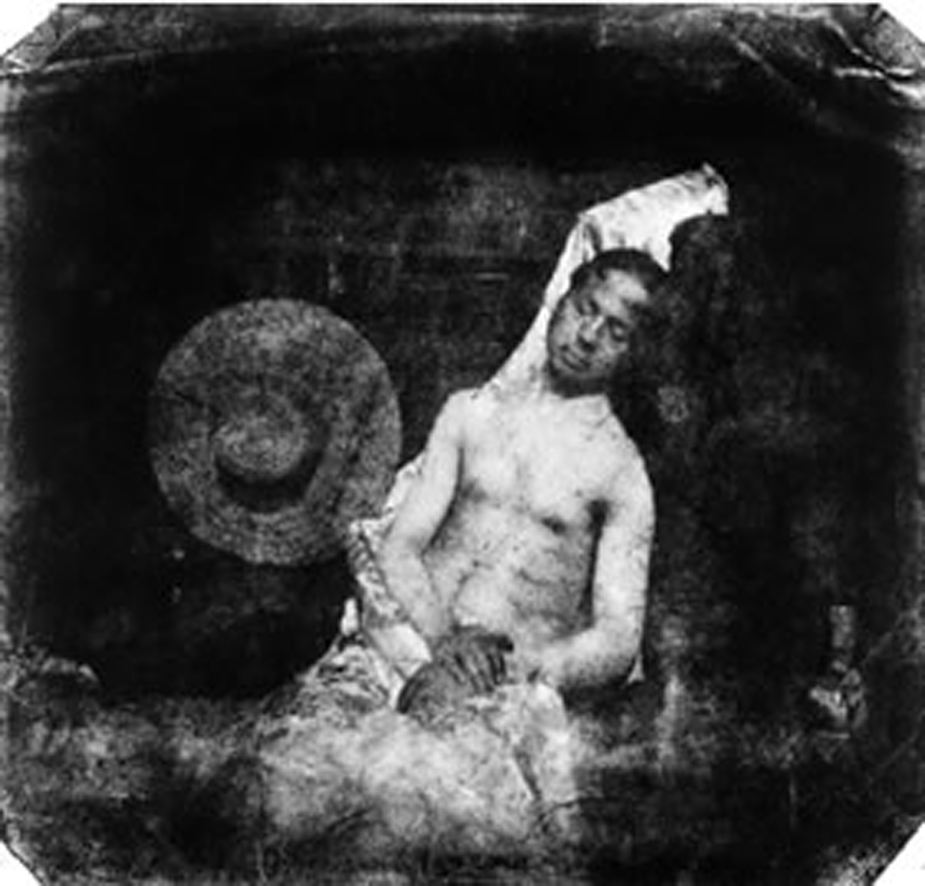
And here we have the photographer Hippolyte Bayard circa 1840 playing himself as a drowned man in a very early tableau vivant of sorts:
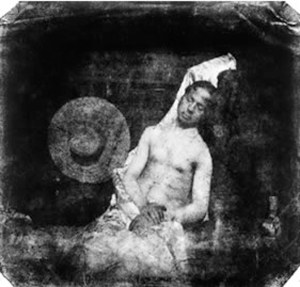


I find these kinds of connections fascinating, but nothing here suggests that Wall’s work is cinematic. In fact, the tableau vivant is more of a theater convention than that of cinema. Certainly Wall’s images have ties to photography, painting and theater that are at least as strong, and probably more so, than to cinema.

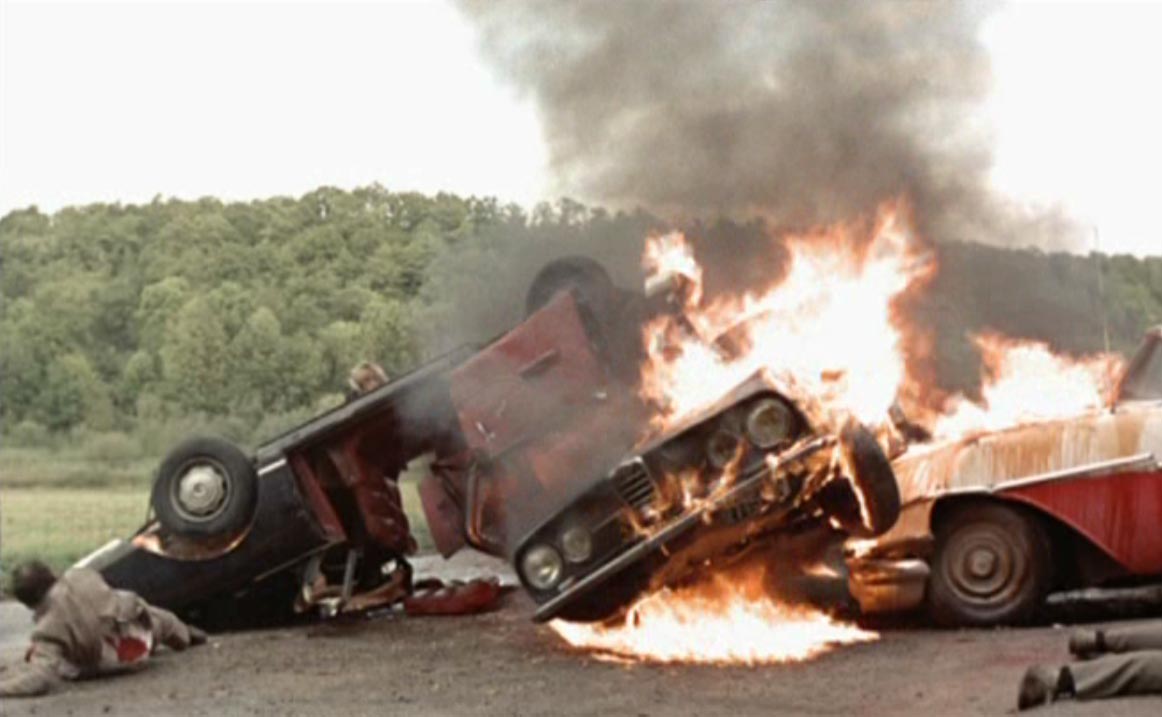
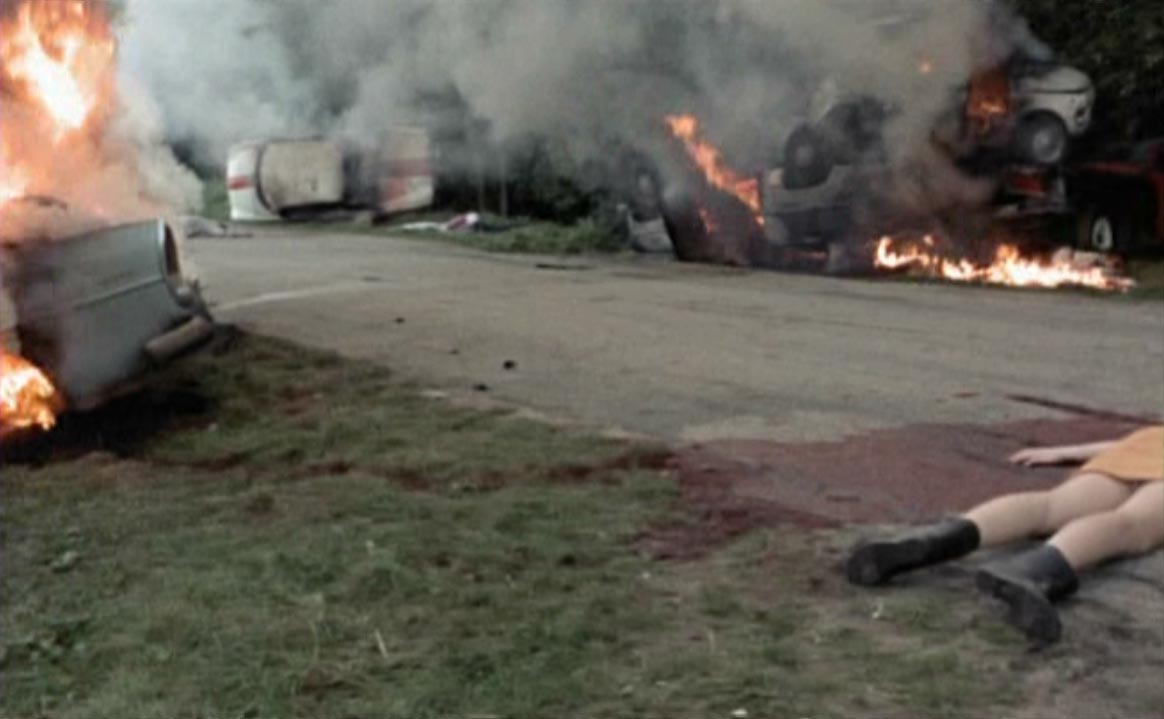
One thing to ponder is that some films do use tableaus to create their meanings. In other words, it is not uncommon for filmmakers to stage relatively static mise en scène for effect, rather than exploit the more cinematic capabilities of the technology. For example, consider these two images from Godard’s Weekend (1967):
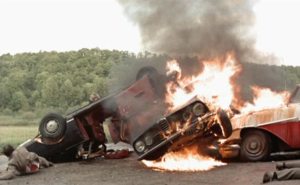


Although the burning wrecks are dramatic, and the flames do move, the scenes are obviously carefully constructed piles of autos set aflame and presented to the viewer as a kind of emotional tableau on modernism – even humorous if one can see Godard winking.

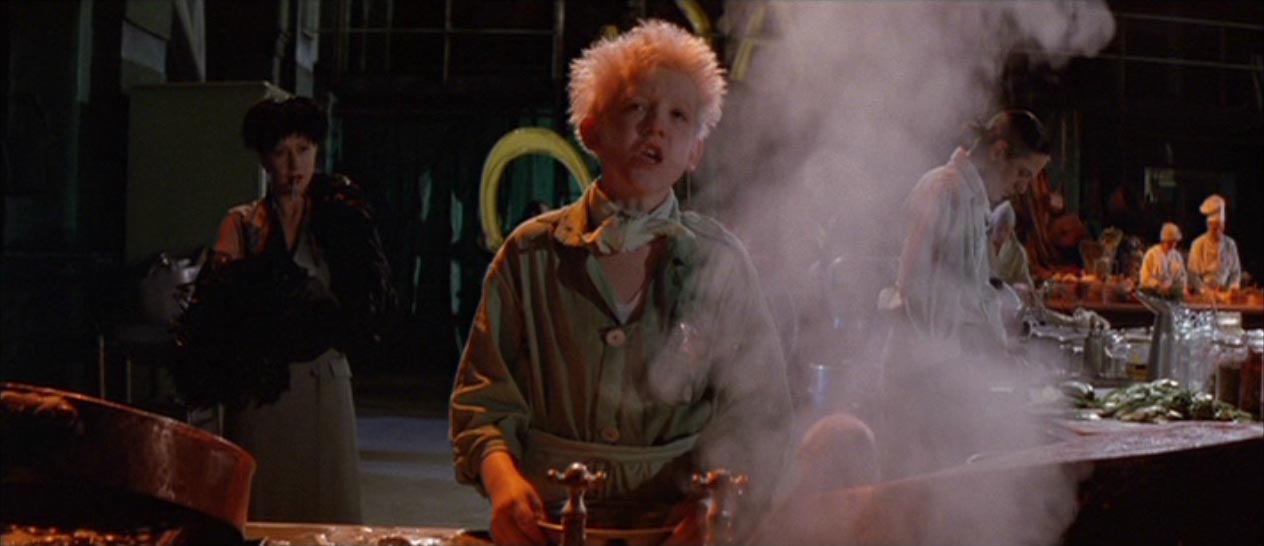
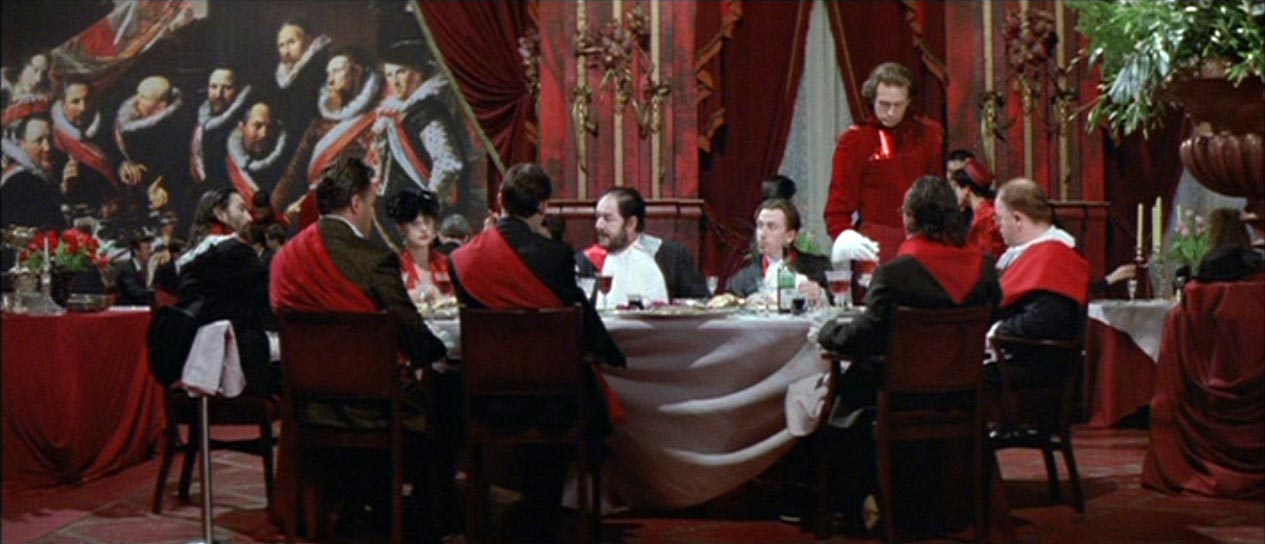
Or consider these two images from Greenaway’s The Cook, The Thief, The Wife, and Her Lover (1989):
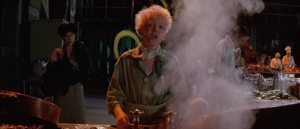
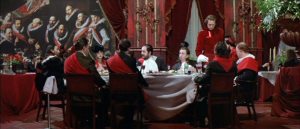
What makes tableau’s work in a cinema context is the fact that they are not cinematic in their qualities. There is something particularly “wrong” with them in the context that then draws our attention to their existence and therefore to our viewing.

And yet, though maybe not examples of the “cinematic,” what makes these images from Weekend and The Cook (et al) cinema is that, regardless of their tableau qualities, they exist in time and they have motion, and they are part of wholes that exist in time and have motion. Unlike the Jeff Wall images, these screengrabs are false images in a way, for the originals (and original intentions) are not of static moments, rather they move: the flames ascend, the steam rises, the camera pans and trucks.

And movement is the one thing photography lacks. But photography can suggest movement by capturing a thing in motion and presenting it as such. For example, this image:
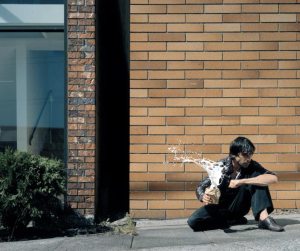

Milk, (1984)

Here Wall has created a particularly enigmatic image of a man crouching on a sidewalk or path with milk shooting out of the bottle for some mysterious reason. At least one thing that makes this image interesting is the fact that the milk is in an impossible position. Liquid does not hang suspended in the air like that. Photography provides a unique ability to capture such images

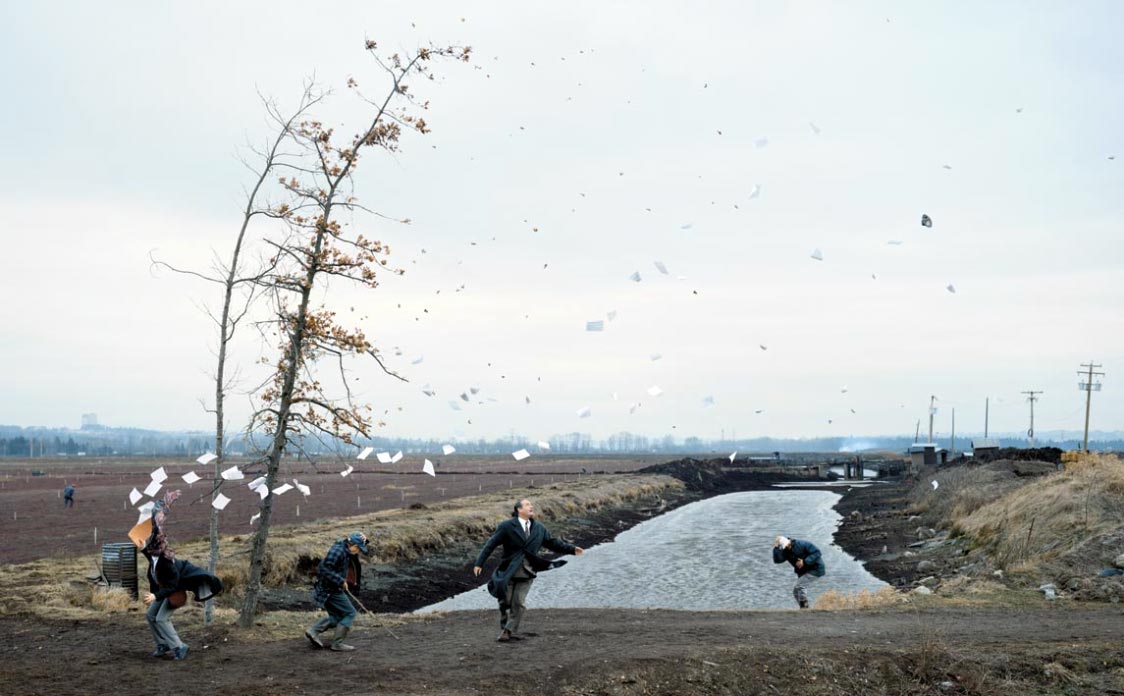
But Wall also works on a grander scale with imaging movement. Consider this image:
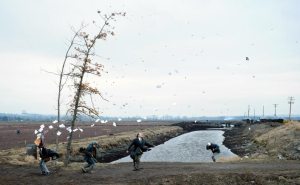

A Sudden Gust of Wind, (1993)

I would consider A Sudden Gust of Wind to look the most like a still from some film, maybe an Eastern European film. But of course this image is not the progeny of cinema. It is a re-imaging of a famous Japanese print:


This print is from Hokusai’s 36 Views of Mount Fuji. Hokusai lived from 1760 to 1849, before the invention of cinema.

So even when we get close to something that might be cinematic there are specific non-cinema connection that pull us back. What then is cinematic? What are its qualities?

I am going to say that cinematic is a feeling more than a set of specific characteristics. The reason being that cinema has so many characteristics that a mere listing, and then tagging, would be an almost endless task. But feelings come from somewhere, are grounded in something, and I believe to feel that a work of non-cinema is cinematic must be based in some sense of what makes a movie a movie and not something else.

Cinema’s greatest strength lies with its unique abilities to manipulate the image in time and space. But it is important to realize that there are so many connections with other arts and with the varieties of human expertise that strict demarcations are impossible. Regardless, the cinematic image is an image that moves and that exists in time. One could add montage to the list, but one can find montage in all the arts – even Eisenstein argued for that. There is great power in the combination of film images, but “[t]he dominant, all-powerful factor of the film image is rhythm, expressing the course of time within the frame.” – Tarkovsky, Sculpting in Time, p. 113.

But it is important to make a distinction. The time within the image is not the same as the time of the viewer even if they both tic off the same number of seconds. An artist creates a world and presents it to the viewer or reader. To receive the work is to enter into that world. With cinema one enters the image, as it were, and into the time of the story – into the world of the work. Cinema, unlike photography, can carry one along inside the image, inside the created world. The static photographic image, regardless of its qualities, can only go so far in this regard.

All arts create their worlds. What makes cinema cinematic is the ability to do so with greater power than other visual artforms, and in particular photography. Which brings us back to Jeff Wall.

There are aspects of Wall’s photographs that have kinship to cinema. But there is also a pushing back. The careful and obvious staginess, the frozen moment, the artificiality at times seem to undercut the cinematic label, even deny it. One may chaff at the mystery and long for more of a story, but Wall’s images, in that sense, are dead ends. Very quickly one realizes there really isn’t a story in the images because they are purely fabricated moments. They are not part of a rhythm. And thus, I see Wall’s works to be humorous in this regard: They draw one into an expectation of the cinematic but deliver something else. That something else is a mystery of Jeff Wall’s.
_____________________________________
*I have “screen grabbed” Jeff Wall’s images, except one, from the
Jeff Wall Online Exhibition at the MoMA web site. Needless to say, the images here are not quite as good as they are on the MoMA site, and nothing compared to the real thing.
>another little video

>

Several weeks ago I posted about an experience my family had with a video production crew entering our house to shoot part of their video there. Well my wife was in the video, I was taking care of the baby, so I gave my seven year old daughter Lily our family video camera and said “go make a movie.” So Lily started shooting, using up all the rest of our available video tape, and basically enjoying herself. She is now obsessed with making movies.

So… I started going through what she had shot. Needless to say I will work with her on how to shoot for editing, amongst other things. But I still couldn’t help myself and I had to edit her shots together.

http://www.youtube.com/get_player

Like previous editing attempts on this computer, I’m using the free Windows Movie Maker program, stringing the shots together, and adding music*. I need to get us a better editing program as well as some better audio gear so we can get usable audio. I am also a little surprised at how much the quality of the video degrades during the uploading process, not that I’m starting with much quality in the first place. Maybe my file was too big and Blogger reduced the amount of information in order to take up less space on their servers. Of course, we’re just amateurs.

_________________________
*With some trepidation I am using a song from the Silversun Pickups. Trepidation not because of content, but because of copyright. I personally don’t have a big issue with grabbing some music from my iTunes collection and using it for a personal family video, but some might.

>just another sunday (not)

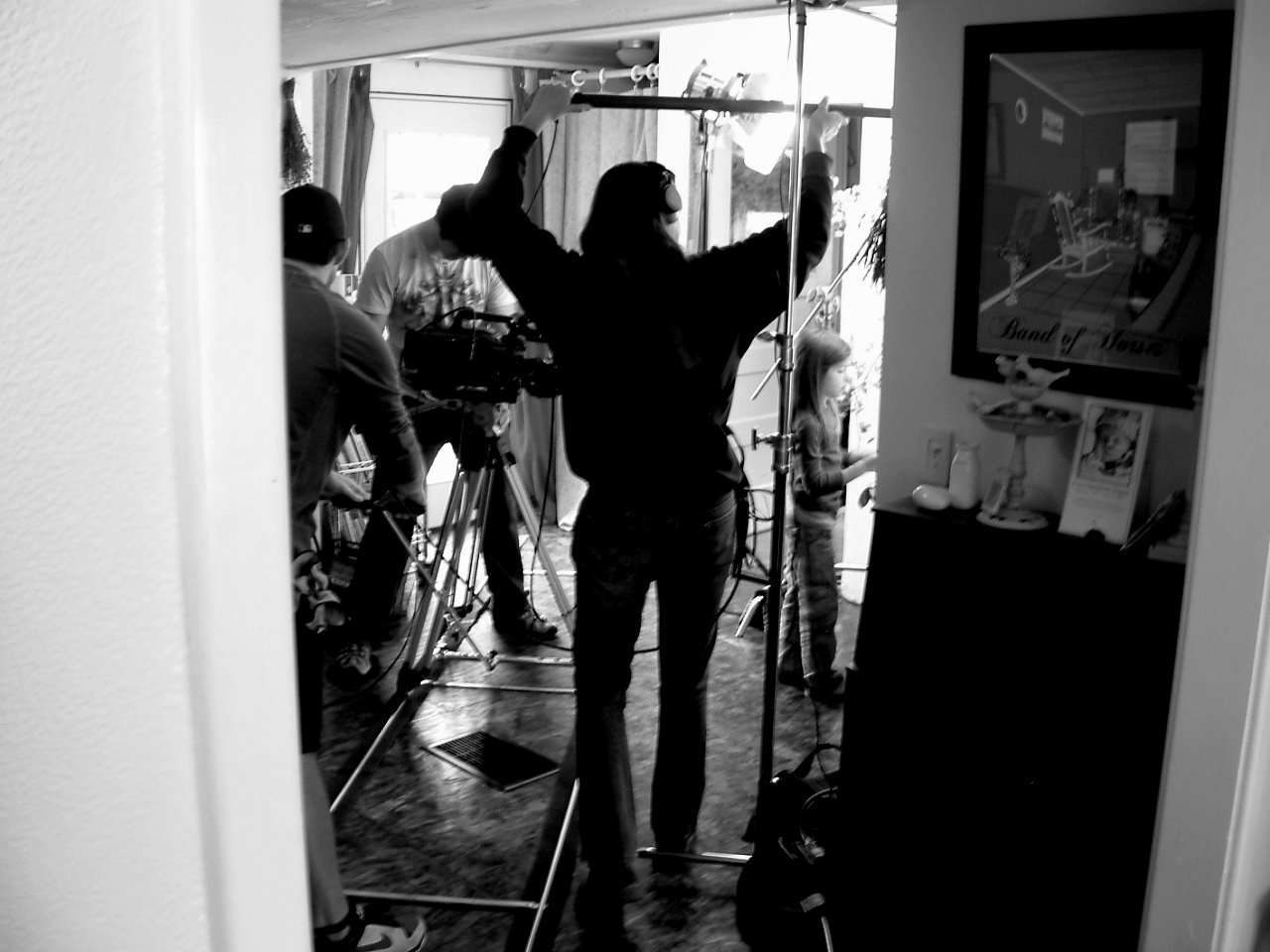
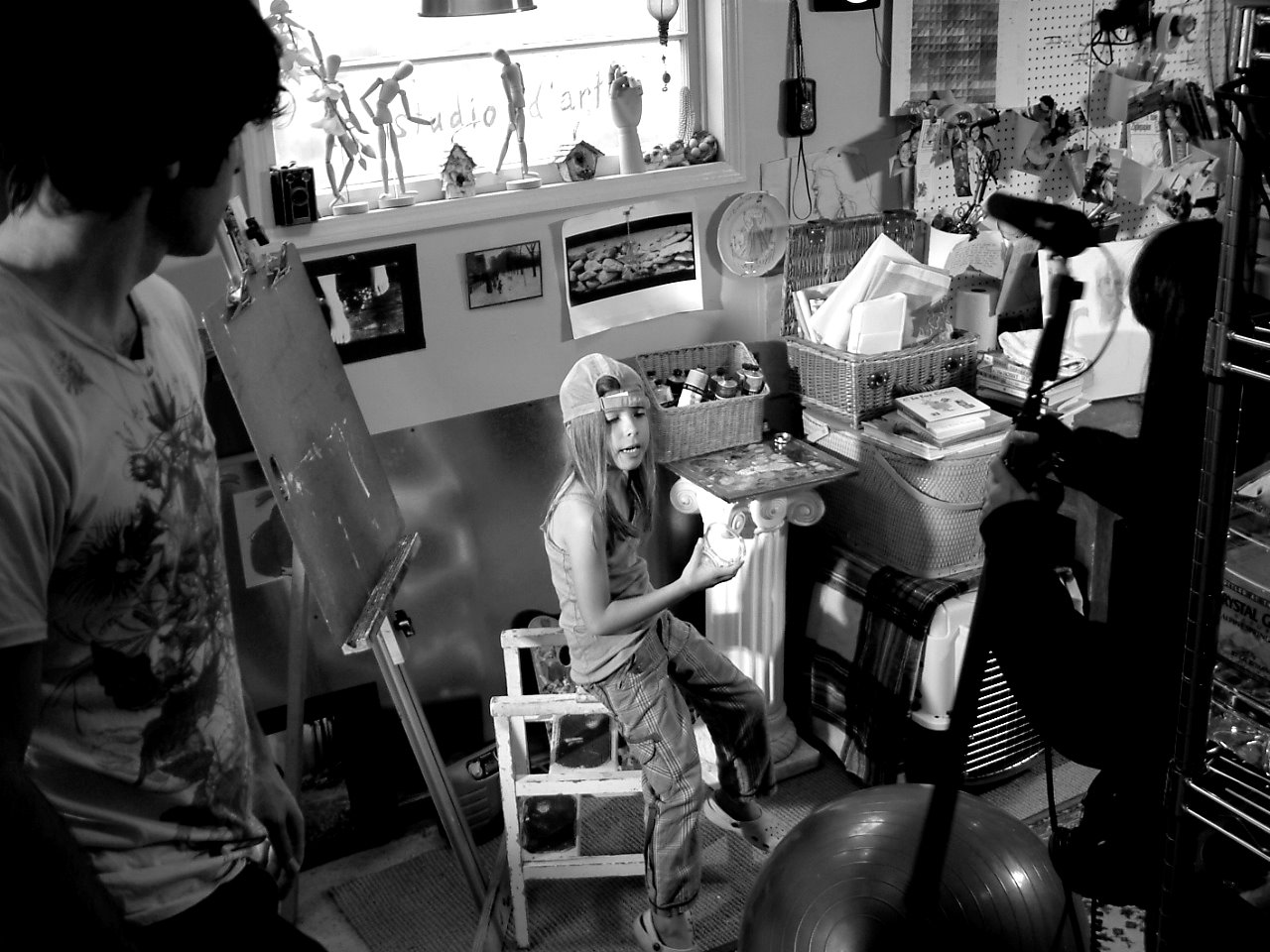
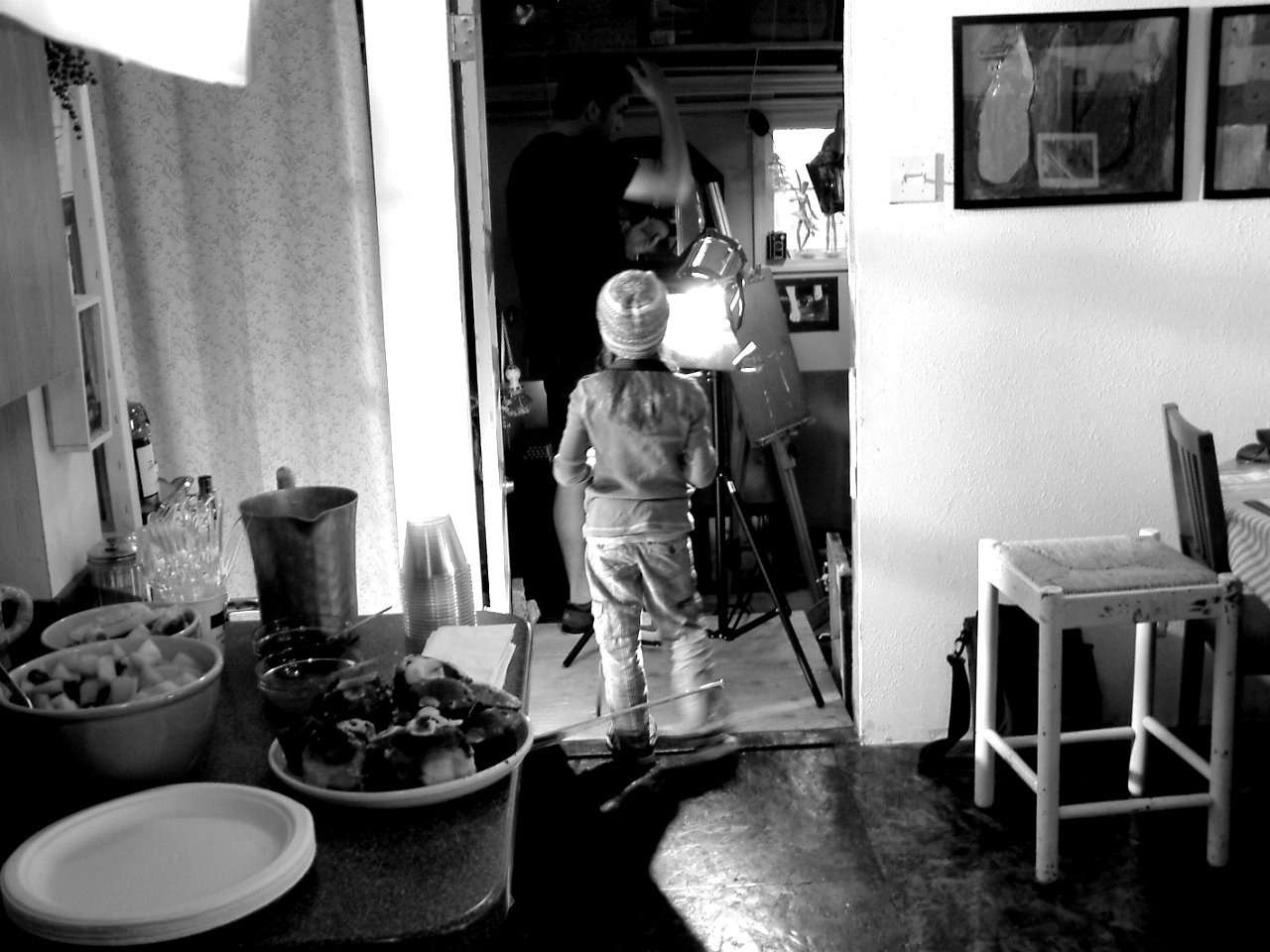
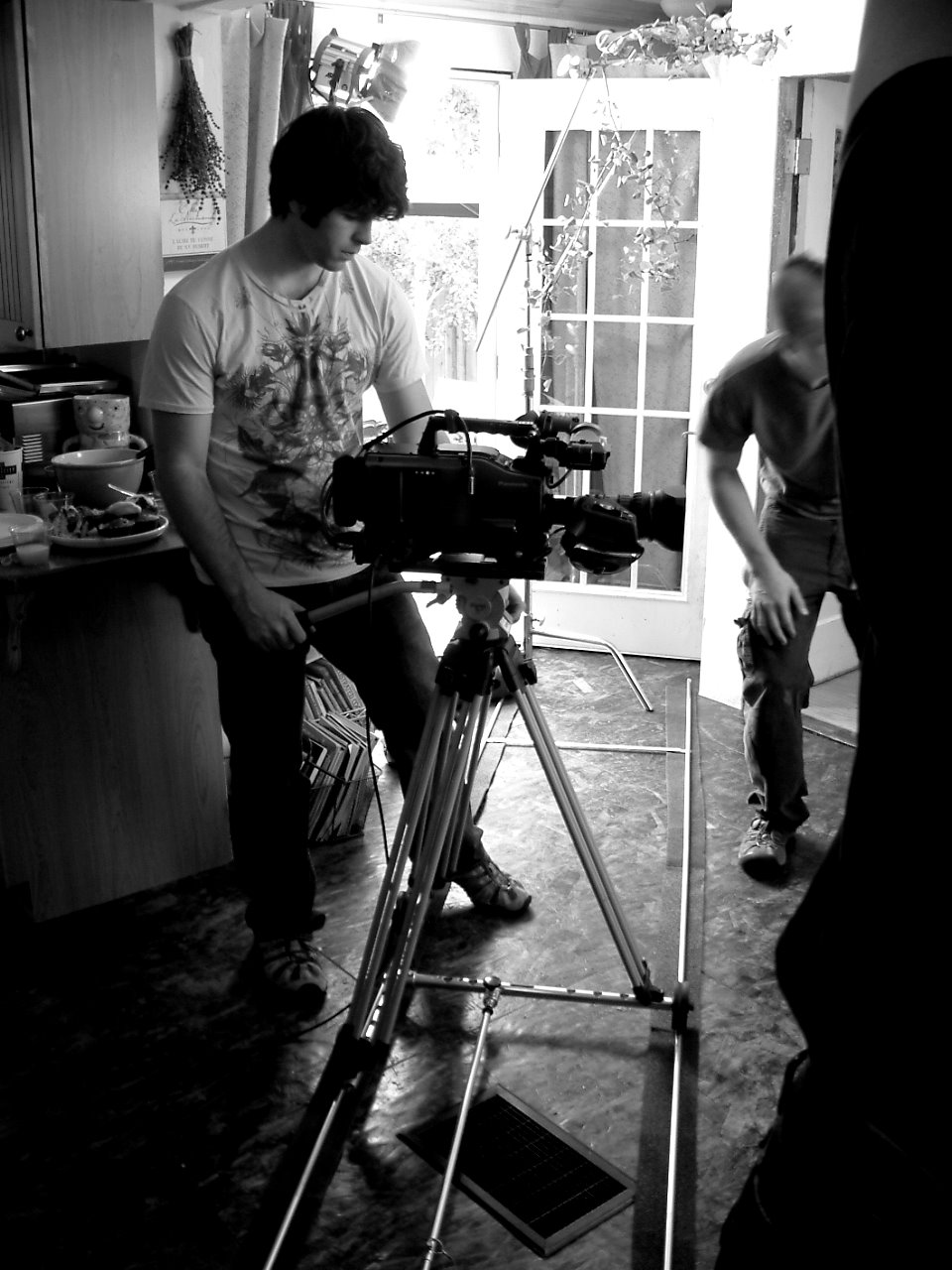
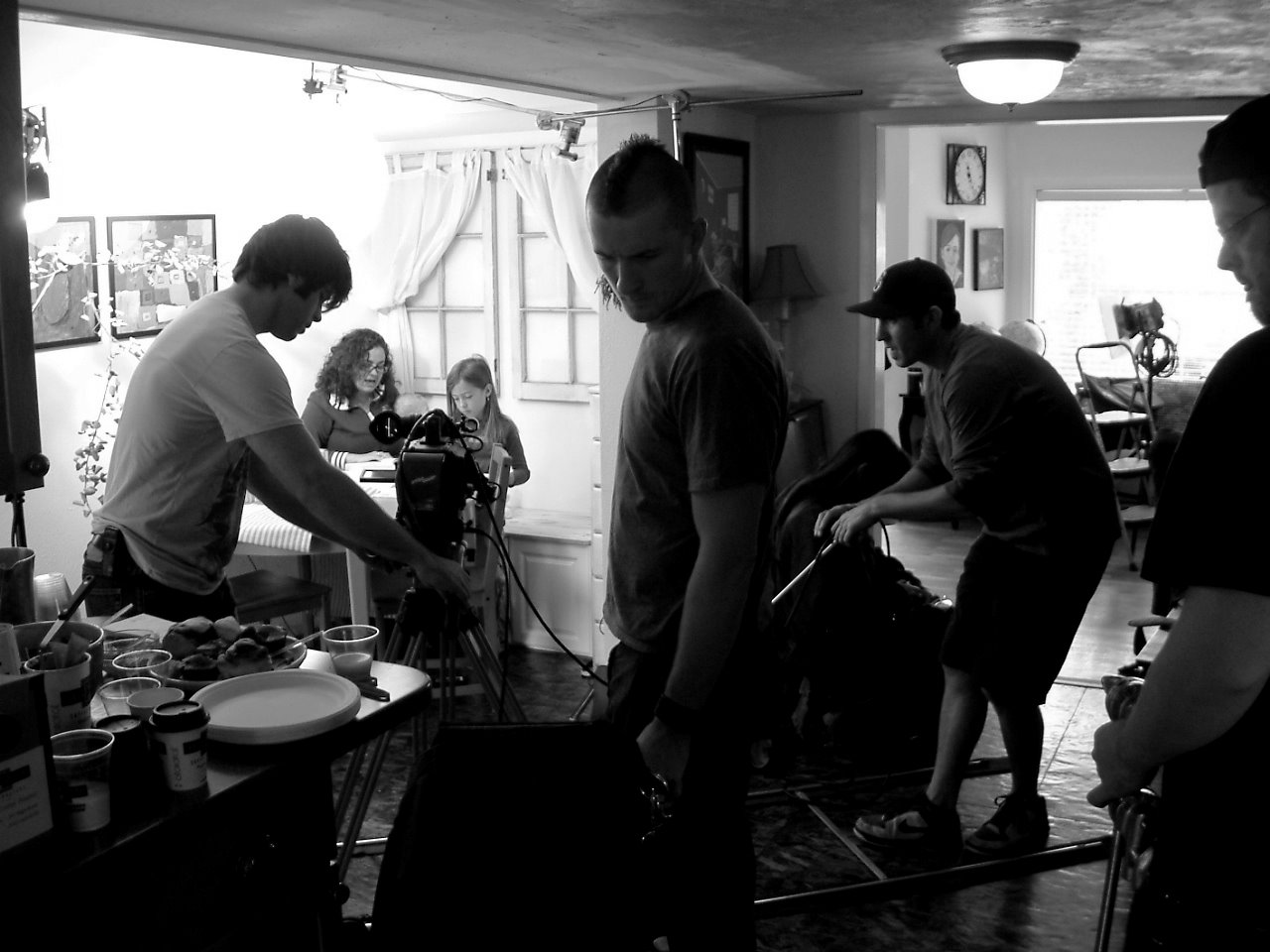
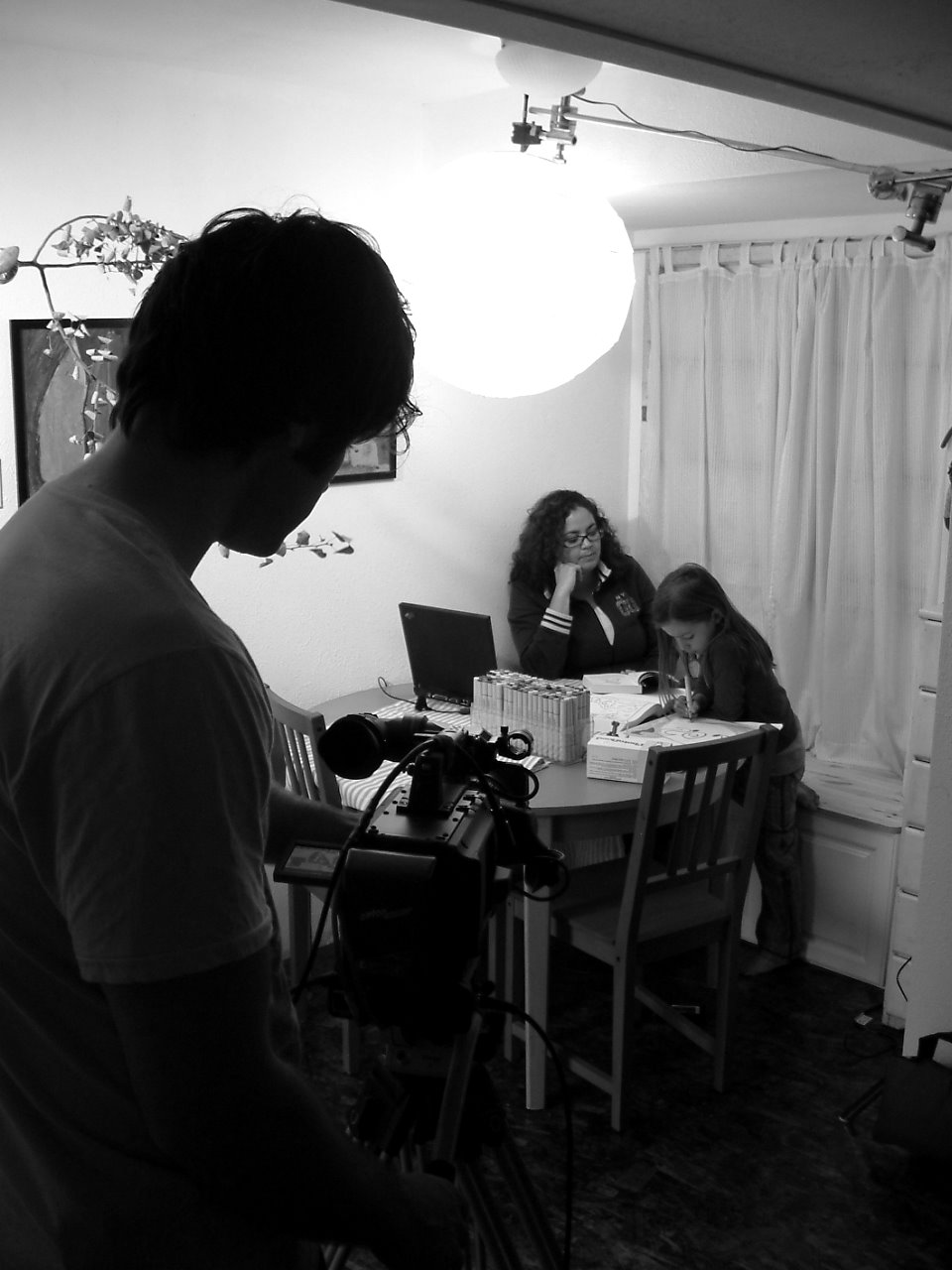
>This morning we participated in a video project for a friend’s video production company. The crew came into our house at around 7:30 AM and left at around Noon. The product will be a training video for a marketing company. My wife was the main participant from our end. I watched the baby, and then had a small role. My daughter Lily was in some of it as well and video taped a bunch with our camera. She and I will edit her video in the near future. The crew then went on to a couple of other locations and will be in post-production the rest of the week.

Below are a few stills I took (baby in left hand, camera in right) during the shoot.


Although such activities lend a certain amount of craziness to our lives, it was also fun, a good excuse to clean the house, and a learning experience for all of us – especially for Lily. I also found it interesting to watch the crew do their work since I used to do video/film production years ago. Not much has changed except for some of the technology. I found myself longing to do production once again, particularly directing. Hmmm… now that’s a nice idea.

convictions and confessions

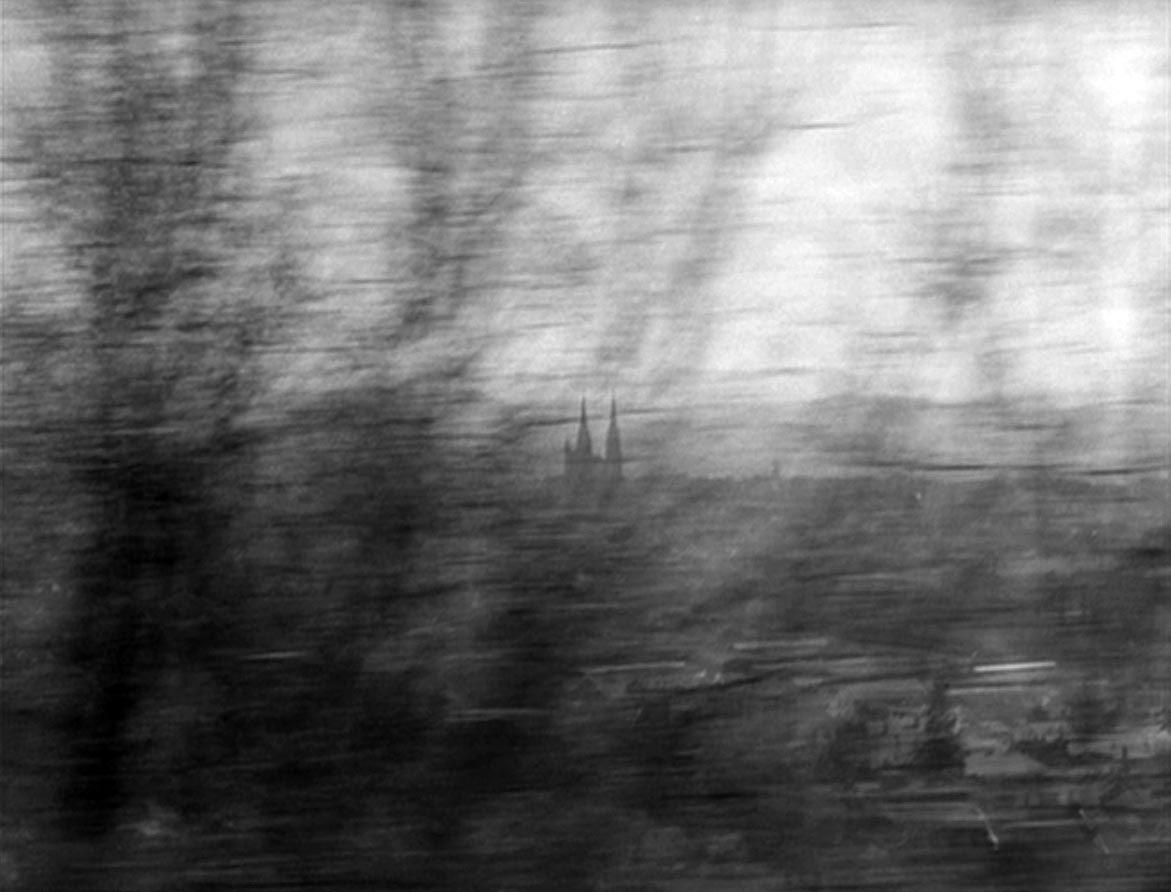
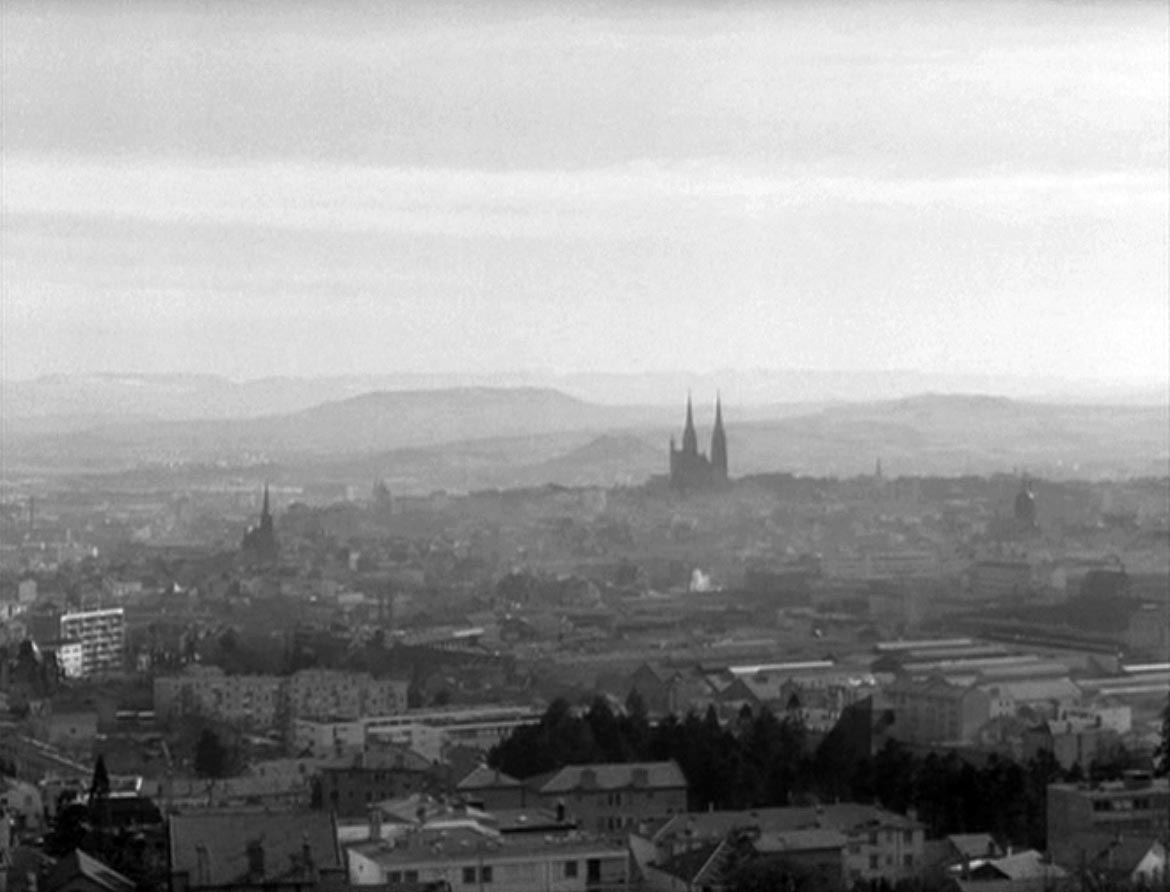
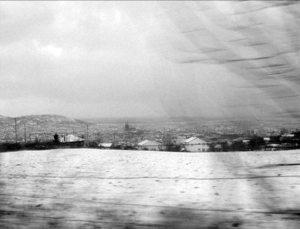
Near the beginning of Ma nuit chez Maud (1969, dir. Eric Rohmer) our hero Jean-Louis (Jean-Louis Trintignant) drives into the city of Clermont. On the way we are shown images out the car window. At one point we see the spires of the church, known as the Cathédrale Notre-Dame-de-l’Assomption de Clermont-Ferrand, a.k.a. Clermont-Ferrand Cathedral, a.k.a. the black cathedral because it is made of black volcanic stone.

At first we see the cathedral spires (96.2 meters tall) partially hidden behind the trees which line the road into the city.
Then suddenly we see the church revealed in the winter sunlight, standing powerfully above the city. We now also see the spire of Notre-Dame du Port, the other famous church in Clermont.
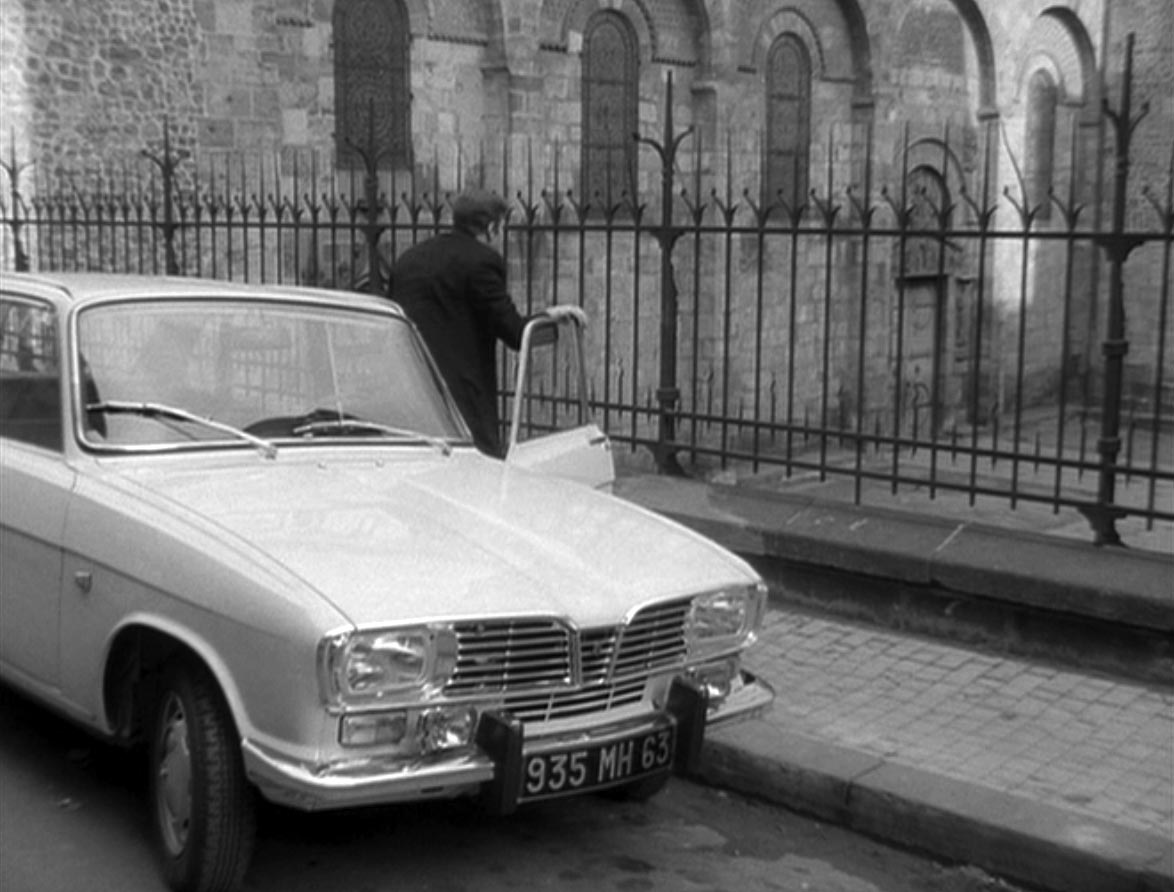
From this image we cut to Jean-Louis getting out of his car. The sound of church bells pealing occur with the edit, almost as though the edit is signaled by the sound of the bells, further drawing a connection between the previous image of the church and Jean-Louis.
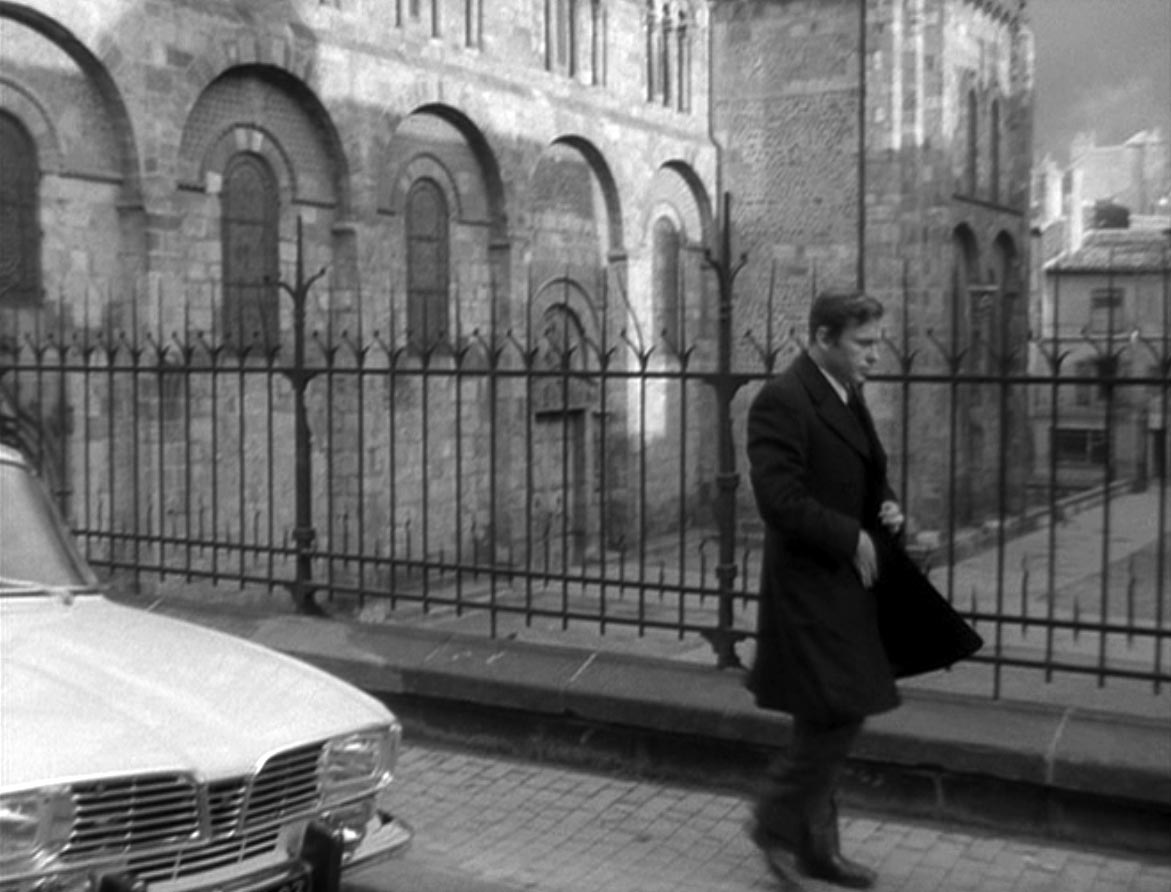
Jean-Louis walks away from the car. The camera pans to follow him.
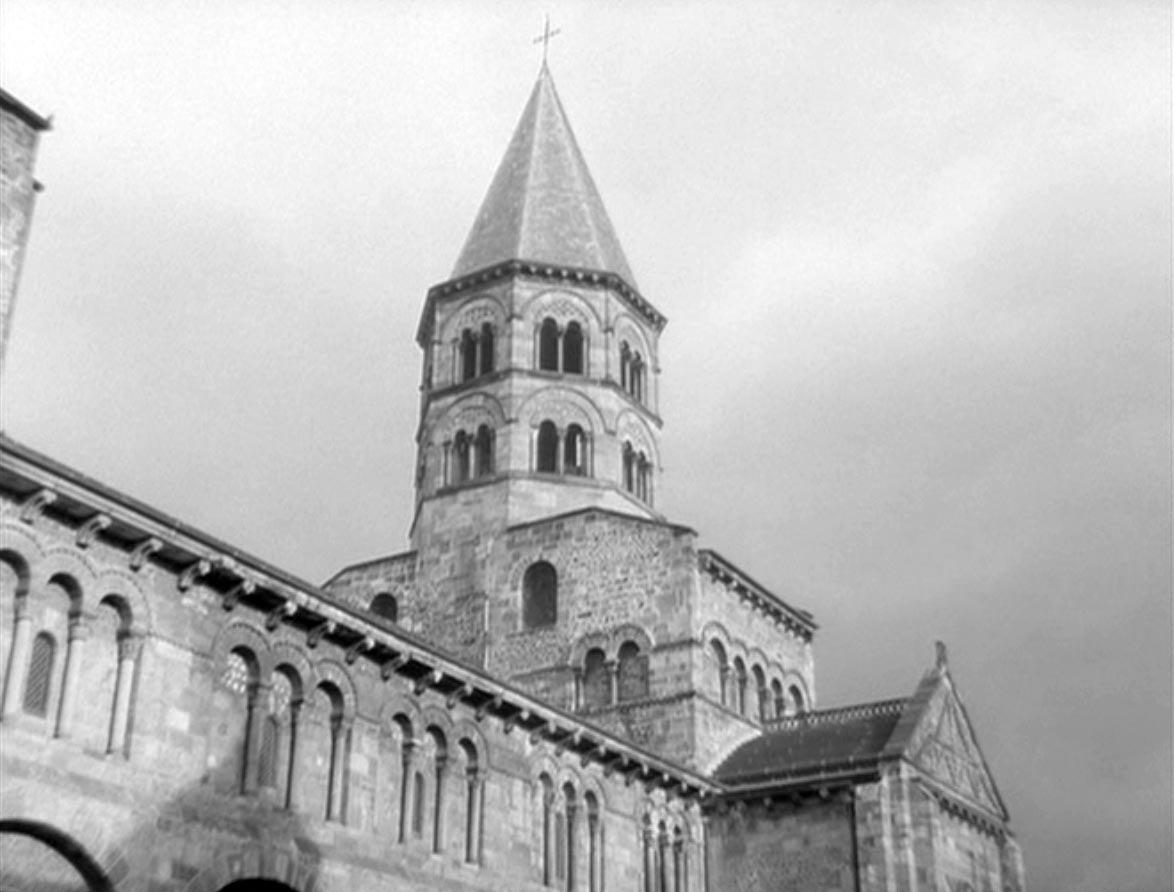
Jean-Louis walks out of the frame and the camera tilts up to reveal a portion of the Notre-Dame du Port roof line.
The connection is clear from a narrative point of view. The church, and more specifically, The Catholic Church (of course post Vatican II, but also in terms of its philosophical heritage), will dominate this story in some significant way. The next scene has our hero attending mass, drawing us even further into a religious context.
As I watched this opening I was reminded of one of my favorite opening paragraphs in a novel:
The Brangwens had lived for generations on the Marsh Farm, in the meadows where the Erewash twisted sluggishly through alder trees, separating Derbyshire from Nottinghamshire. Two miles away, a church-tower stood on a hill, the houses of the little country town climbing assiduously up to it. Whenever one of the Brangwens in the fields lifted his head from his work, he saw the church-tower at Ilkeston in the empty sky. So that as he turned again to the horizontal land, he was aware of something standing above him and beyond him in the distance.
D.H. Lawrence, The Rainbow, 1915
This idea of a distant and looming “something” over one’s life is a powerful concept. It may be true that each of us has something bigger than ourselves looming over us with which we judge ourselves and judge others. If it is not the church, or our families, or our culture, then it is probably the weight of our own existence. There really is no escape. Where is it that we get our convictions? That is a far more complicated question than it might appear. For Jean-Louis the answer includes his Catholicism.
Rohmer placed his story’s time and place at Christmas in Clermont. Christmas raises the issue of Christianity quite large, and it gives Jean-Louis an excuse to go to mass, which is important to the story. We don’t know how regularly he goes to mass, but he does at least on Christmas eve. Clermont is also the birthplace of Blaise Pascal, the Christian philosopher who looms so large (like a cathedral spire) in the story. Pascal’s wager is a critical theme in the film.
I also find it interesting that Clermont was the city profiled by Ophüls in Le Chagrin et la pitié (1969). WWII was not all that distant from 1969 France. Huge moral questions of complicity with the Nazi’s during those horrendous times still plagued many individuals in France even 25 years later. What one does with one’s moral past is an interesting dilemma.
Later in the film Jean-Louis drives again into town and we see the cathedral spires in the distance. This moment comes after he has spent the night at Maud’s.
It is almost as if the spires were calling to Jean-Louis to stay true to his convictions. Or, maybe they are gently taunting his frailty. In either case, they stand above him and beyond him in the distance. There is something interesting in the contrast between the immobility of the church, and all that it represents, and the mobility of our hero driving his car. Maybe that is one of the reasons he finds some solace in being a devout (relatively so) Catholic; when all is in flux, one seeks a handle to grasp. Ideally, that handle is not false.
One of cinema’s greatest strengths, maybe its greatest, is its ability to move. Naturally, car chases, space ships, and explosions often get top billing. But one of cinema’s greatest, often unheralded capabilities, is its ability to dig into the human soul and explore the recesses of the heart. It accomplishes this because cinema can not only move, but consequently it unfolds in time. In this sense cinema is much like literature. But unlike literature, cinema reveals its narrative secrets immediately in a kind of focused reality. A camera pointed long enough at its subject will eventually reveal something true about that subject. Or, one could say, the subject will reveal itself because it cannot help but do so. Cinema also has the ability, in time, to display the rhythm of human nature, especially as individual shots slowly divulge their secrets.

That is why Rohmer’s films can be so transfixing even though so little appears to be happening. Rohmer is a lover of people. Human nature, and especially the human heart, is Rohmer’s subject, and he find his subject infinitely fascinating. And isn’t it?! Some films claim a level of excitement for all their action, clear goals, and simplistic characters defeating their enemies. But there is no subject as fascinating as the human being.

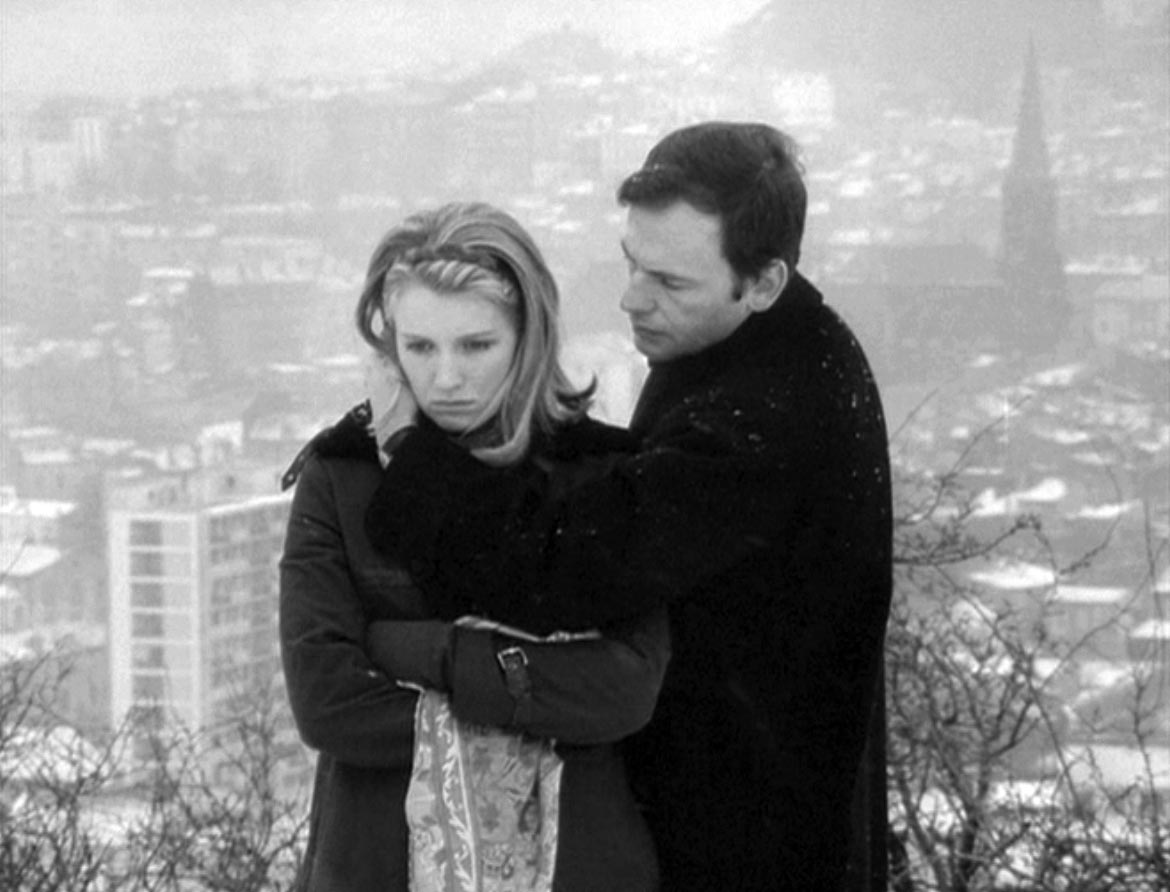
Finally, Jean-Louis, and the woman of his desire, Françoise (Marie-Christine Barrault), salvage their tenuous relationship in full view of the church spire by confessing their sins to each other.

Because they take the plunge, as it where, and tell each other of their past infidelities, they are able to move forward, marry and start a family.
I do not know if Rohmer is a Roman Catholic, but I do see him exploring rather deep issues of confession and reconciliation. To take a position towards the church that leaves questions open for the audience and does not denigrate received tradition, moral or otherwise, demonstrates Rohmer’s sophistication as a filmmaker.
 
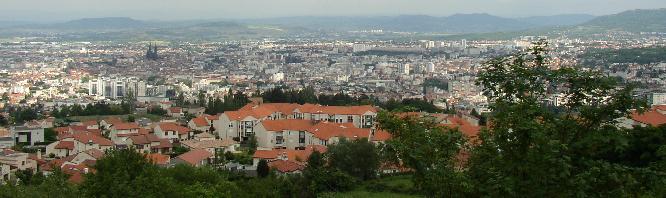
Today the black cathedral still towers over the residents of Clermont, alternately challenging and inspiring.
 

the art of a "limited means" life

We live is an age of great abundance for many. And yet, so many struggle for basic things, like shelter. Many of us, though not particularly wealthy by Western/Northern standards (I live in the U.S.), still live like kings compared to much of the rest of the world. And yet, sometimes we still know (I still know), at times, the struggle just to get by, especially those of us who have tried to support a family on a meager paycheck.
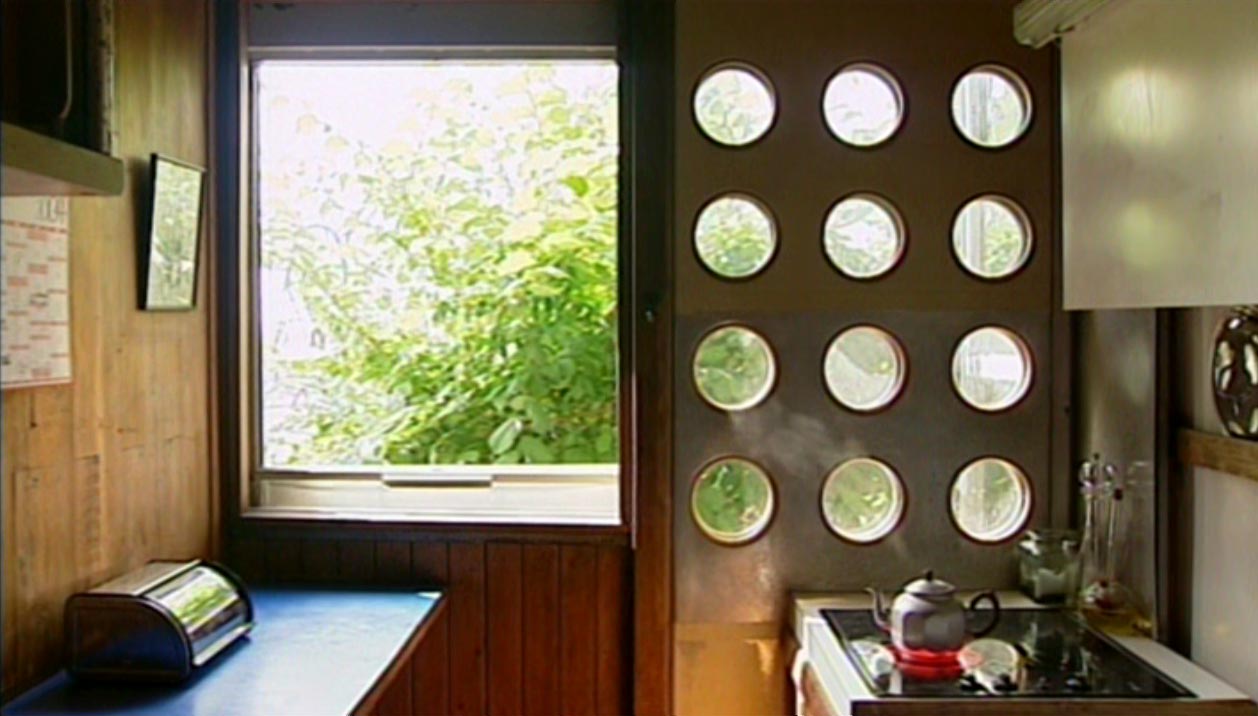
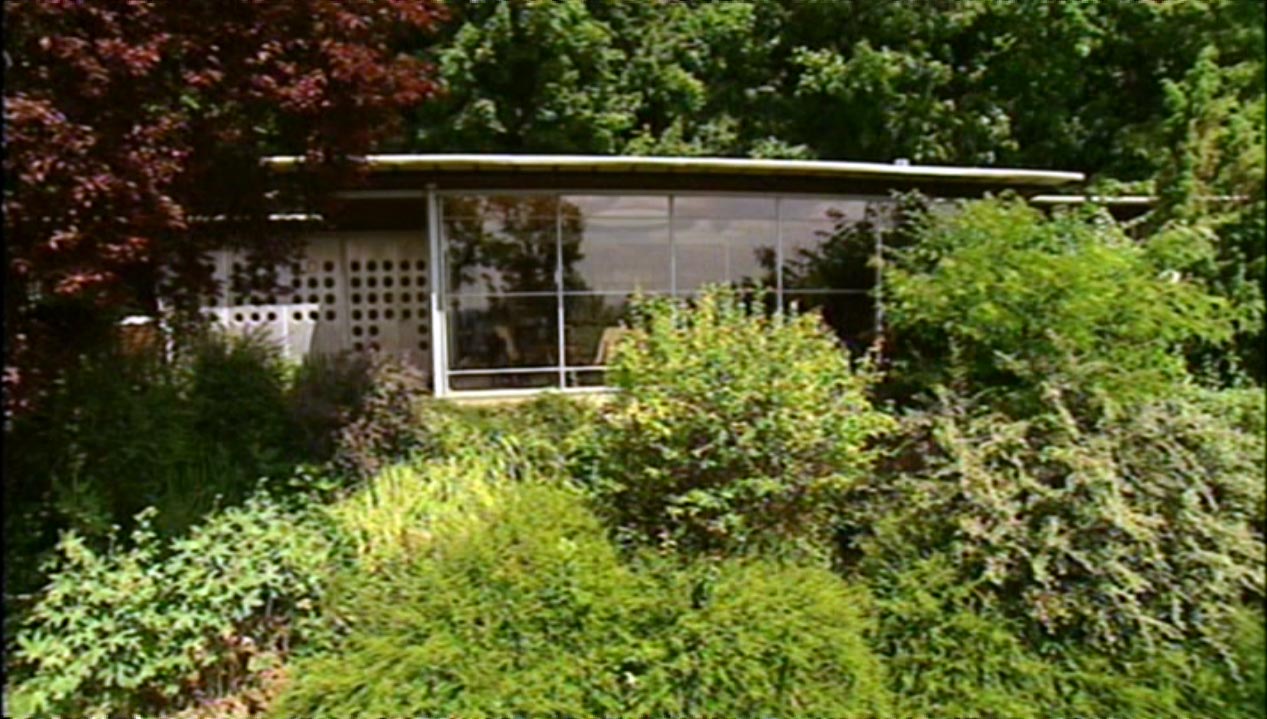
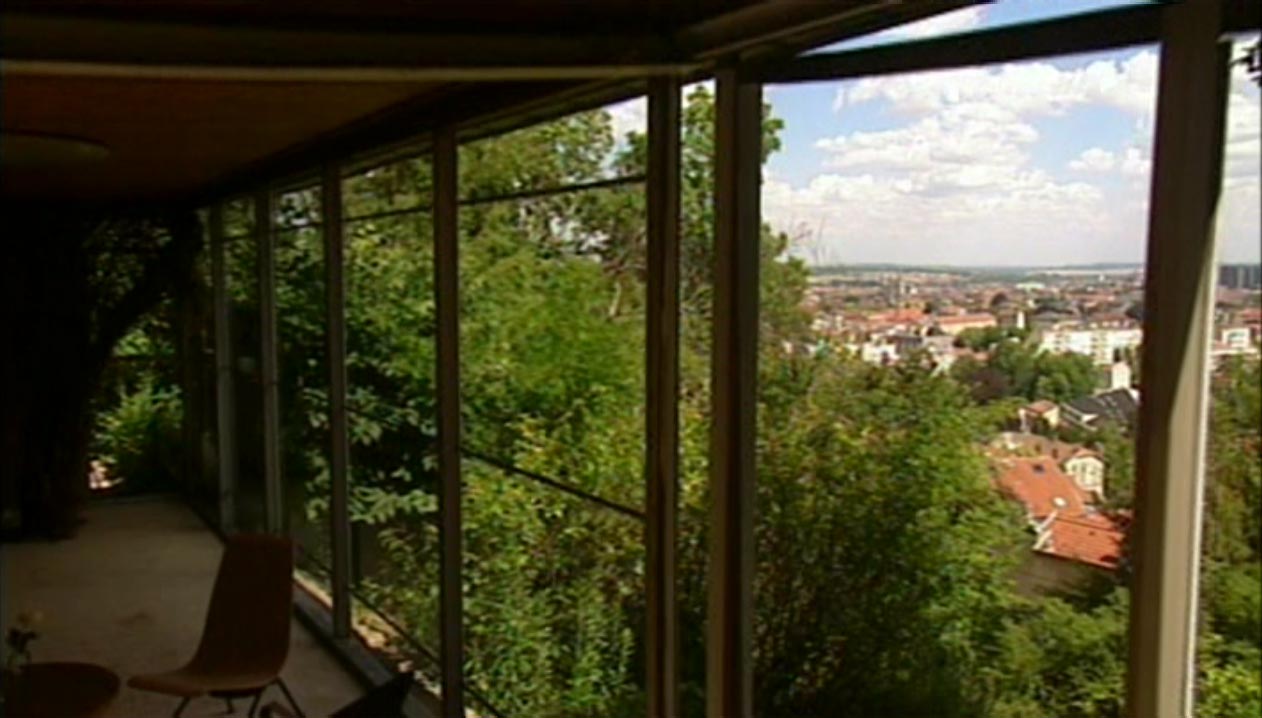
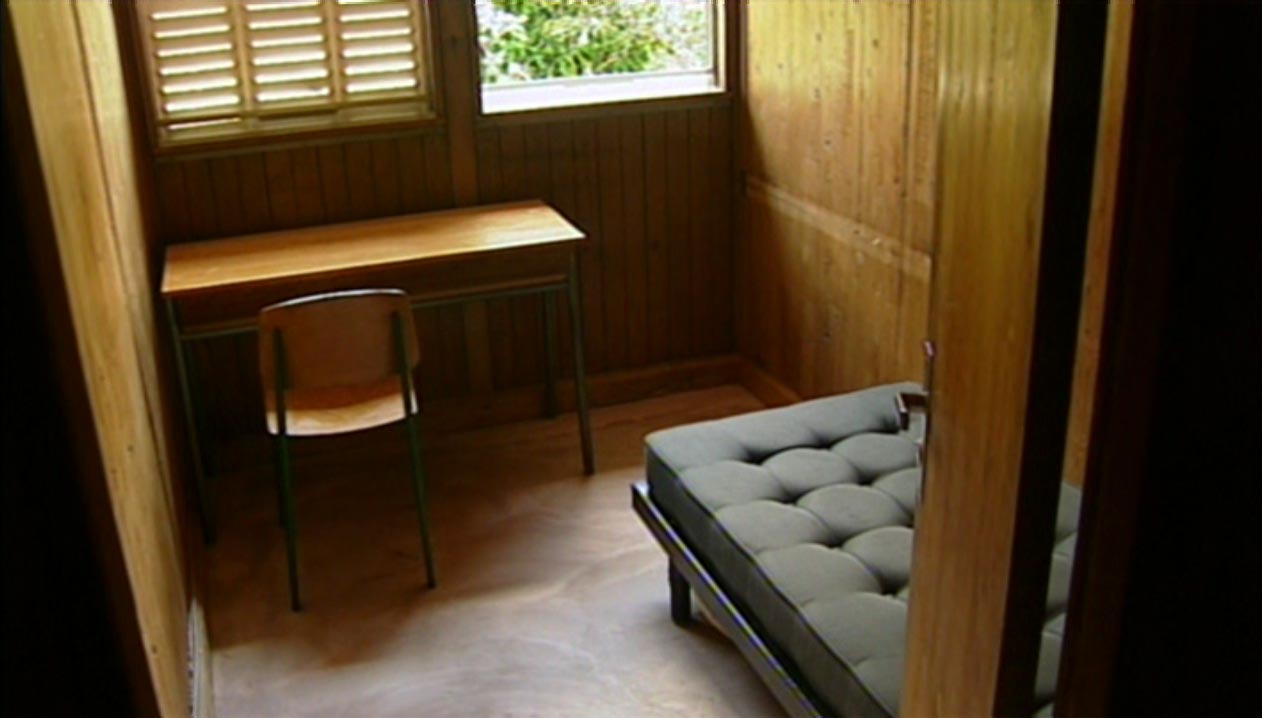
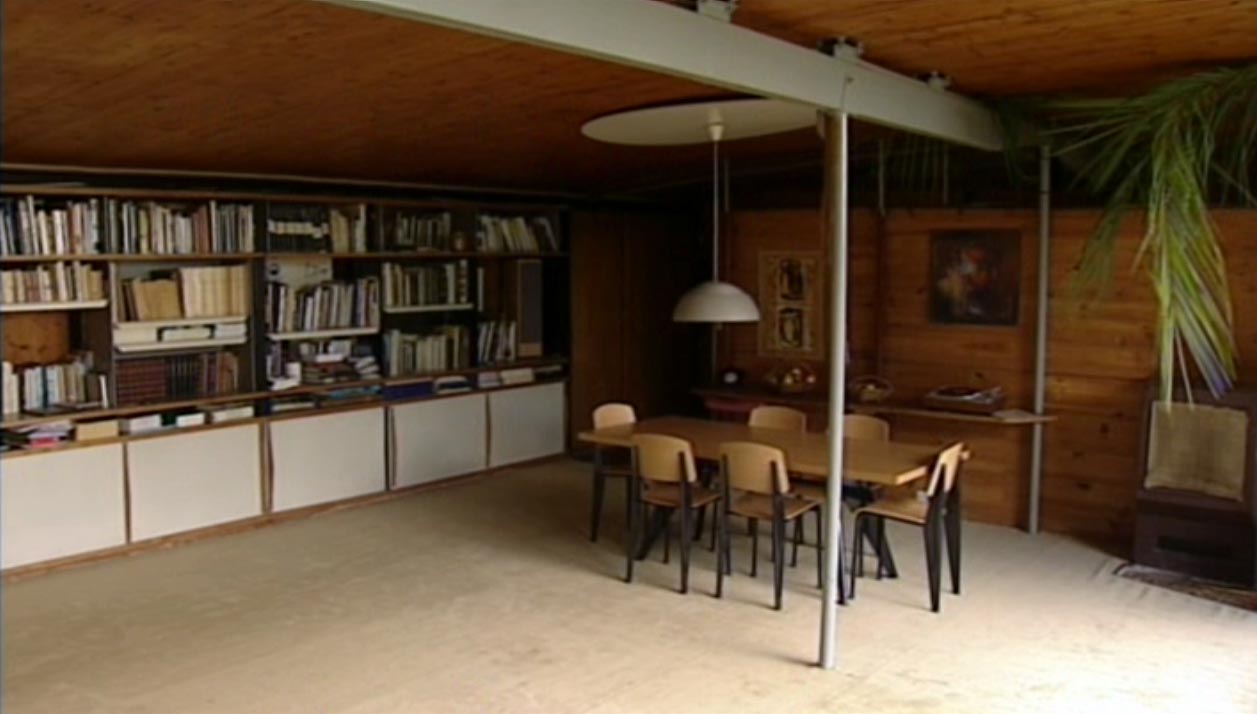
With those thoughts/experiences in mind (sometimes buried, sometimes glaring) I watched a fascinating documentary on La maison de Jean Prouvé (part of a great 4 DVD series called Architectures by ARTE France, distributed in the U.S. by Facets Video). I was struck by the simple story of a man who lost his business, faced into a difficult financial crisis, and had to then find appropriate shelter for his large family. His solution was to build on land others said could not be built on, use prefabricated pieces, ask his friends for help, and do it quick and cheep. What Prouvé created became one of the most famous, yet modest dwellings of the 20th century. The house is also both a challenge and an inspiration to me and my aspirations for someday designing my own house. But it is more than merely a question of design.

A few pictures will give some idea of the concept by way of the reality.

Front exterior
Looking out the front windows
One of the kid's rooms
The bathroom
The living room
The kitchen

As one can tell, the house is simple, though not exactly austere; the design is modern, though far from being overrun with ideology; and the space is very economical, giving what needs to be given without giving too much. It is truly an economy of means.

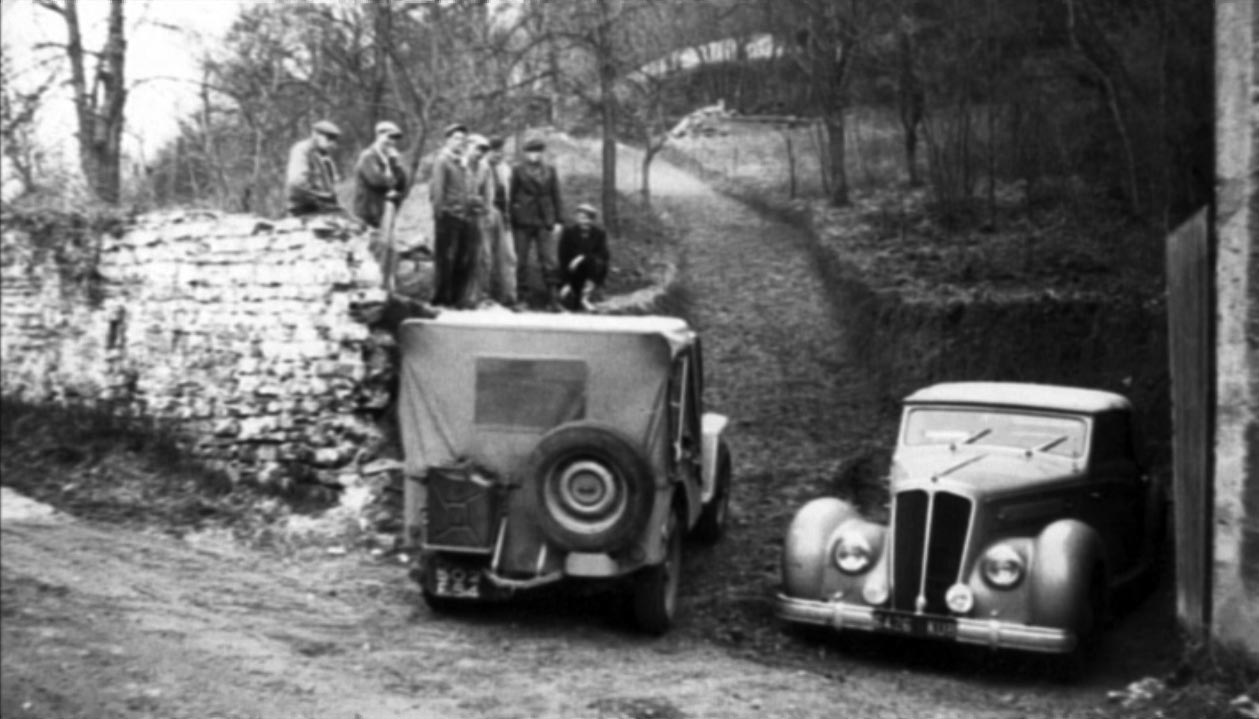
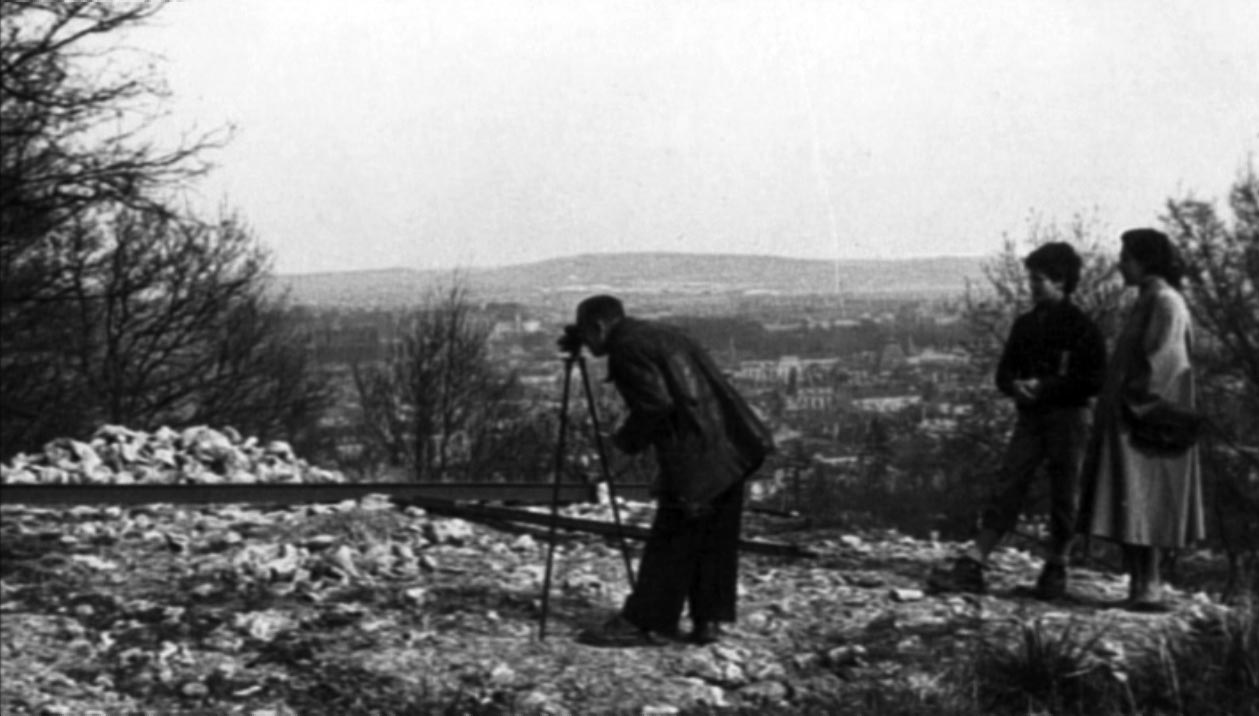
What I also like was how communal and personal the building became, and how it became that way out of necessity. Photos show the Prouvés and their friends hauling materials up the steep hills, laying foundations, putting up walls, and helping the Prouvés reach their goals.


My own philosophy, though still rather unformed, ranges toward the modern and the simple. I love quality and innovation. I also love the challenge, but so too do I love the finished product that can then be enjoyed. Although there are many aspects of Prouvé’s house I would do different, I often think about how much I have and want in contrast to what I actually need.

I believe design and art are central to the human spirit. I am only willing to give up beauty when it is absolutely necessary, and only for temporary periods, for beauty is like air. Some will not find Prouvé’s house to be a work of beauty. To each her/his own. For my part I find tremendous beauty in the simplicity and design of this house, but I also see an acceptance of one’s place in the world. Prouvé was able to achieve both. Live within your means, that is a kind of beauty too.

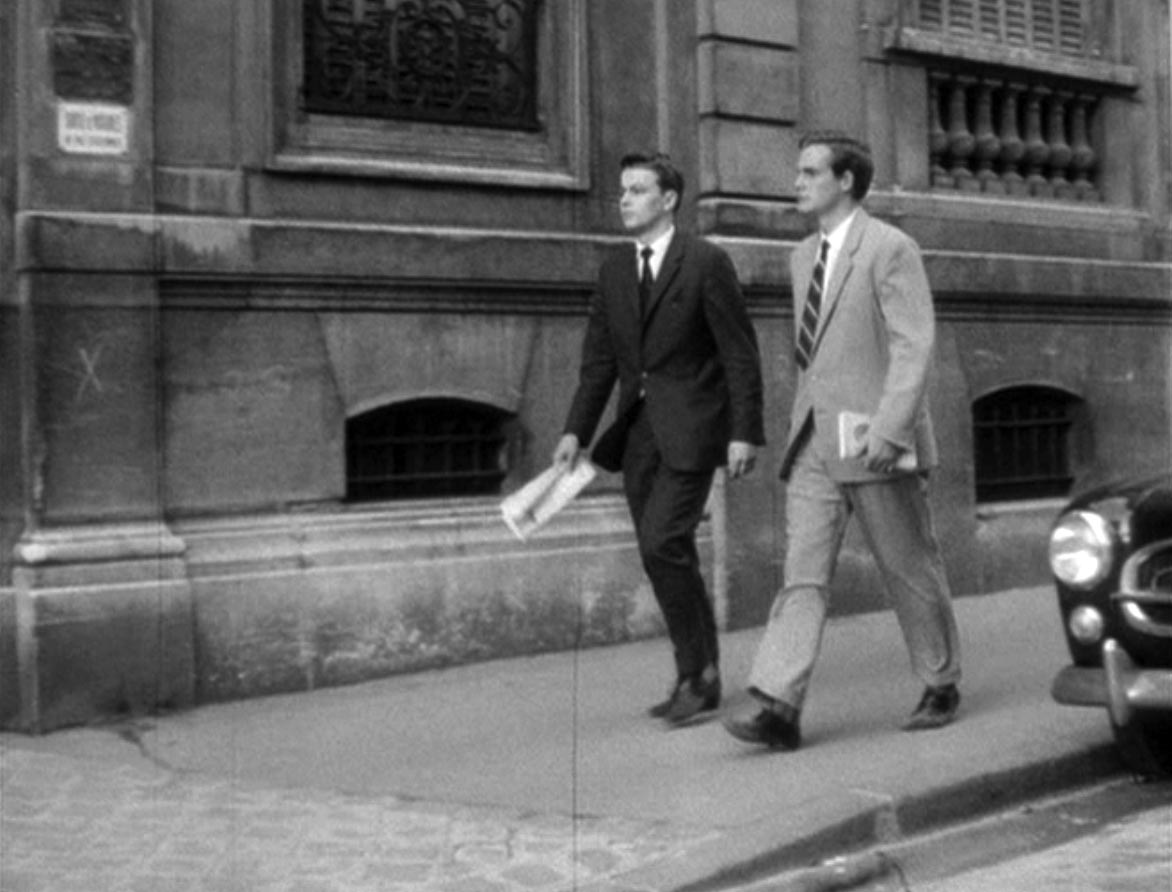
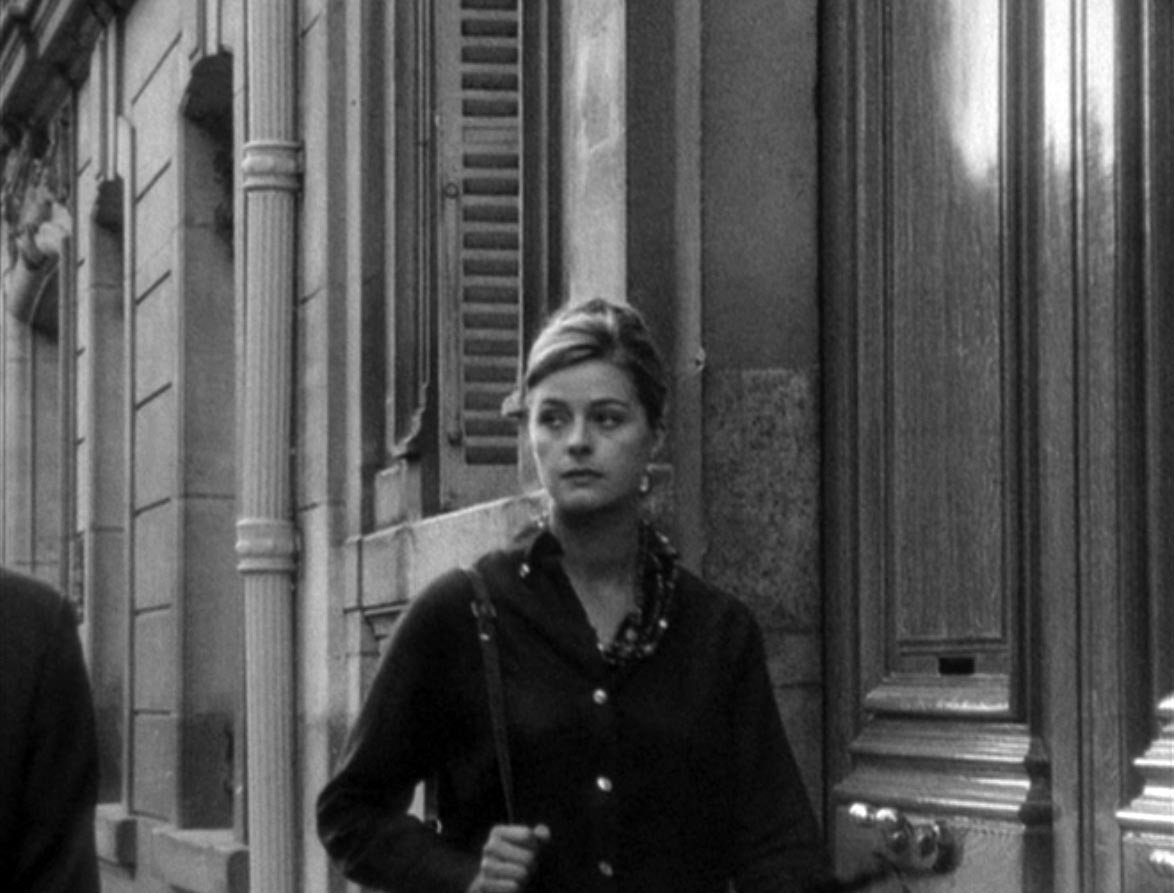
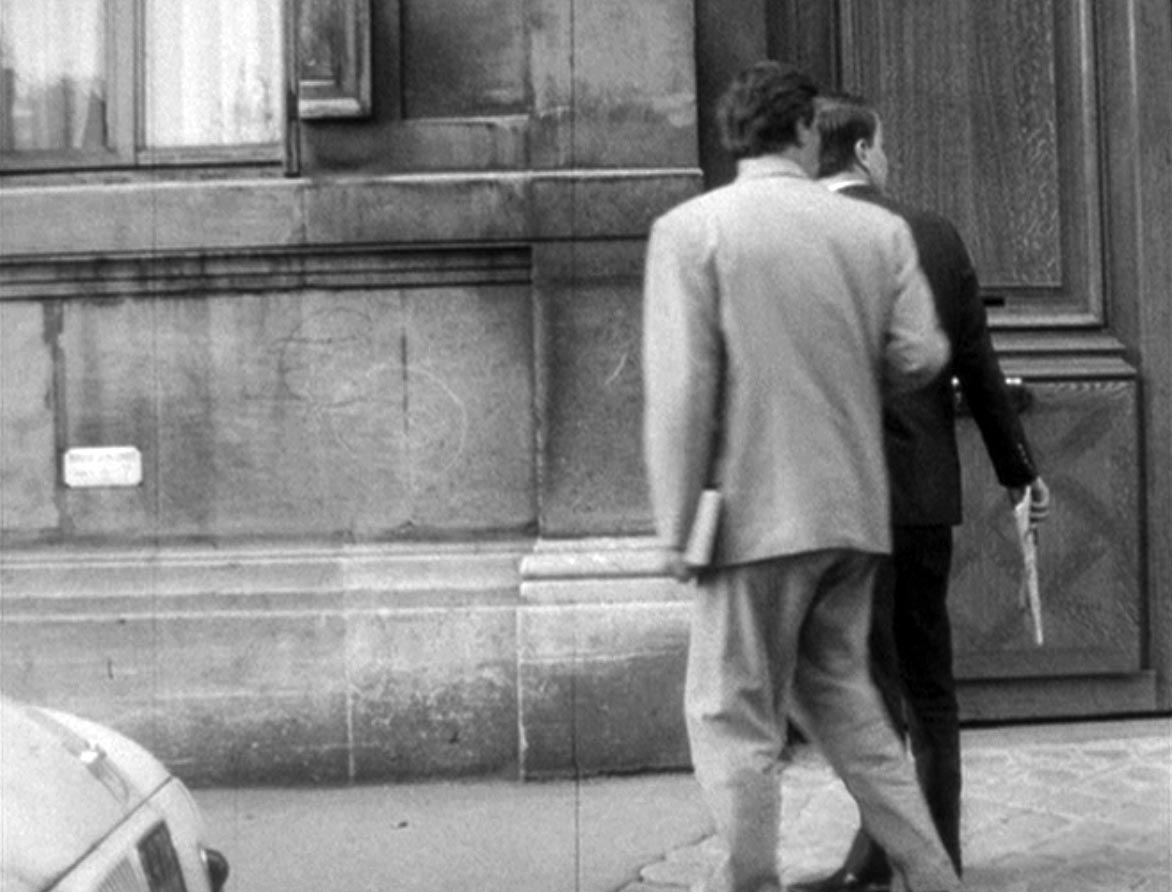
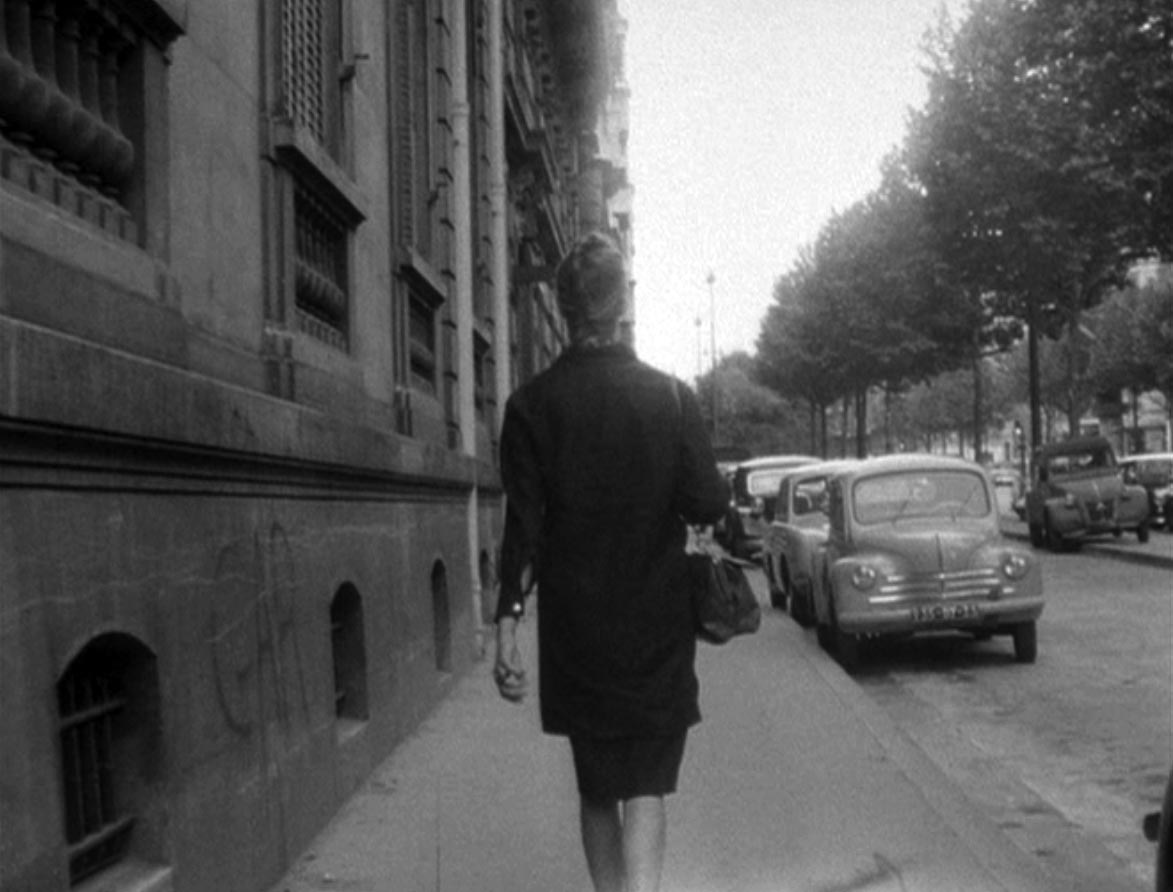
Jean Prouvé built his house in 1953. I find it an interesting coincidence that I began recently watching Eric Rohmer’s Six Moral Tales. Rohmer began directing the loosely connect series in 1962. I won’t attempt an overview of Rohmer’s life or a critique of his films, but I will say that I find his circumstances of production to be equally as fascinating at those of Jean Prouvé.

In the beginning Rohmer had no money to make films. He had written one novel and then some stories. He was unhappy with how the stories turned out and he felt he needed to make them into films to adequately get across his ideas. Eventually he got what he needed, but only just. His films, especially the early ones, are excellent examples of an economy of means. He shot on a shoestring budget, often using small crews and working with friends. He also tended to shoot in limited takes and tended to prefer first takes. He rehearsed his actors relentlessly and then tried to not let them ask for more takes. Sometimes he used improvisation during rehearsals, but rarely in production. His first feature-length film, La Collectionneus (1967), was shot at less than a 2:1 ratio, which means that most of the takes were at most done twice, and many only once.

Rohmer’s first of his moral tales, La Boulangère de Monceau (1963), was shot MOS (silent), dubbing the audio in later and relying mostly on voice-over, on 16mm format, using found locations. Never released in theaters, this 20 minutes film was almost more of an experiment in style and production, but it clear set the tone for the later films.

Here is a brief look at the filming/story telling style of Rhomer. While we hear a voice-over we watch a simple moment based mostly on looks and glances that are fuller of meaning than the rather unemotional surface gloss might suggest.

When I compare Rohmer and Prouvé I see two driven men, singular in their ideas and ideals, producing great artifacts within strenuous limitations. I also see a mode of production, whether by choice or by acceptance, that is truly independent from larger financial/corporate interests. No one is completely independent, but smaller scales of production, working with friends and colleagues, forced to stay focused on the end goal, and beholden more to one’s own vision than to those of others, makes Rohmer’s moral tales and Prouvé’s family dwelling about as independent as one could hope for.

Some might say that Prouvé’s home is too simple and lacks too much. Some might say that watching Rohmer’s films is like watching paint dry. I know it is a matter of taste, but sometimes I would like to believe that not all taste is equal. Certainly, I find the final products of these two men more satisfying than so much else in this world. And that is what I look for in my own “limited means” life.