>some summits (and nearly so)

>

Doubly happy, however, is the man to whom lofty mountain-tops are within reach.

~ John Muir

In this post I reminisce.

When I was much younger I got the idea in my head that I would climb a mountain. The idea was planted by my reading the book Everest Diary based on the personal diary of Luther “Lute” Jerstad, one of the first Americans to climb Mount Everest. I loved the book, still do. I quickly became an armchair mountaineer, which I still am. I read many climbing books, especially ones about climbing Everest (a.k.a Chomolungma). In college, however, I decided to embrace my dreaming and actually climb a mountain.

Given that I am a “book person” I learned how to climb mountains first by reading books on the topic. I learned how to use crampons and an ice ax. I learned to use a rope and belay another climber. But no amount of book reading compares with putting on your boots and trying to scale a mountain. So eventually I had to do it. I have to say, though, that I am not mountaineer, just an enthusiast, and mostly still from the armchair.

The following are the mountains I have summited, or nearly summited. All are in Oregon except Longs Peak, which is in Colorado. All these were climbed by me more than 15 years ago.

North Sister (10,085 feet, 3074 meters)
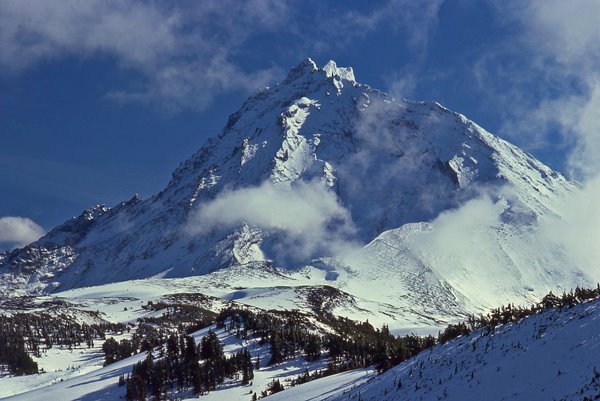
The North Sister is a beautiful peak and one of a group of three dormant volcanoes called The Three Sisters. Of the three it is the most rugged, the oldest, and the most difficult to climb. I have summited it twice. The first time I climbed with a friend – both of us were essentially novices and we traversed an exposed slope near the top without a rope. I vowed never to do that again. The next time I climbed with the local Mountain Rescue team – plenty of ropes this time! I held my own, but was in so much pain getting back to the car that I vowed never to climb another mountain unless I was in sufficient physical shape.

Middle Sister (10,047 feet, 3062 meters)

I climbed the Middle Sister with my dad. I felt strong and the weather was beautiful. For my dad it was his first mountain climb. The Middle Sister is not a technical climb from the North, which is the way we went. The North East face, however, is a good training ground for steep snow climbing.

South Sister (10,358 feet, 3157 meters)
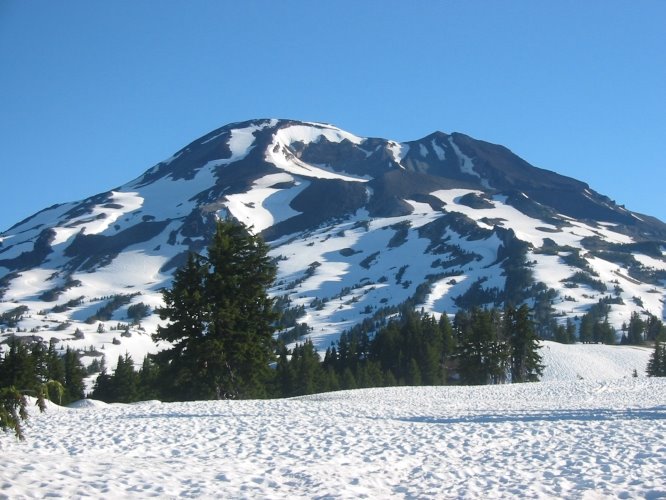
The South Sister is the third highest peak in Oregon. I have summited the South Sister twice and it was my first mountain summit. The climb is essentially non-technical climb. It is therefore is a popular climb for many first-time climbers. It is one of the most climbed mountains in Oregon. Mostly it is just a long 5.5 mile hike uphill from the trailhead (or an 11 mile round trip from the car with a mountain in the middle). On any weekend in August one might find 10 to 50 people on the summit. On its summit is a small lake (when not frozen over) called teardrop pool. It is the highest lake in Oregon.

Mount Thielsen (9,182 feet2,799 meters)
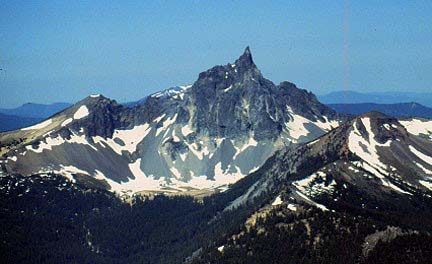
Mt. Thielsen is called the lighting rod of the Cascades because of its spire-like summit. This is an old volcano. Most of the mountain has fallen away and what remains is the inner plug. Most of the climb is easy, but the last 50 feet is a rocky scramble to a small pinnacle that can hold about three people. Many climbers rope up at that point, but I didn’t, and didn’t feel the need to.

Mount McLaughlin (9495 feet, 2894 meters)
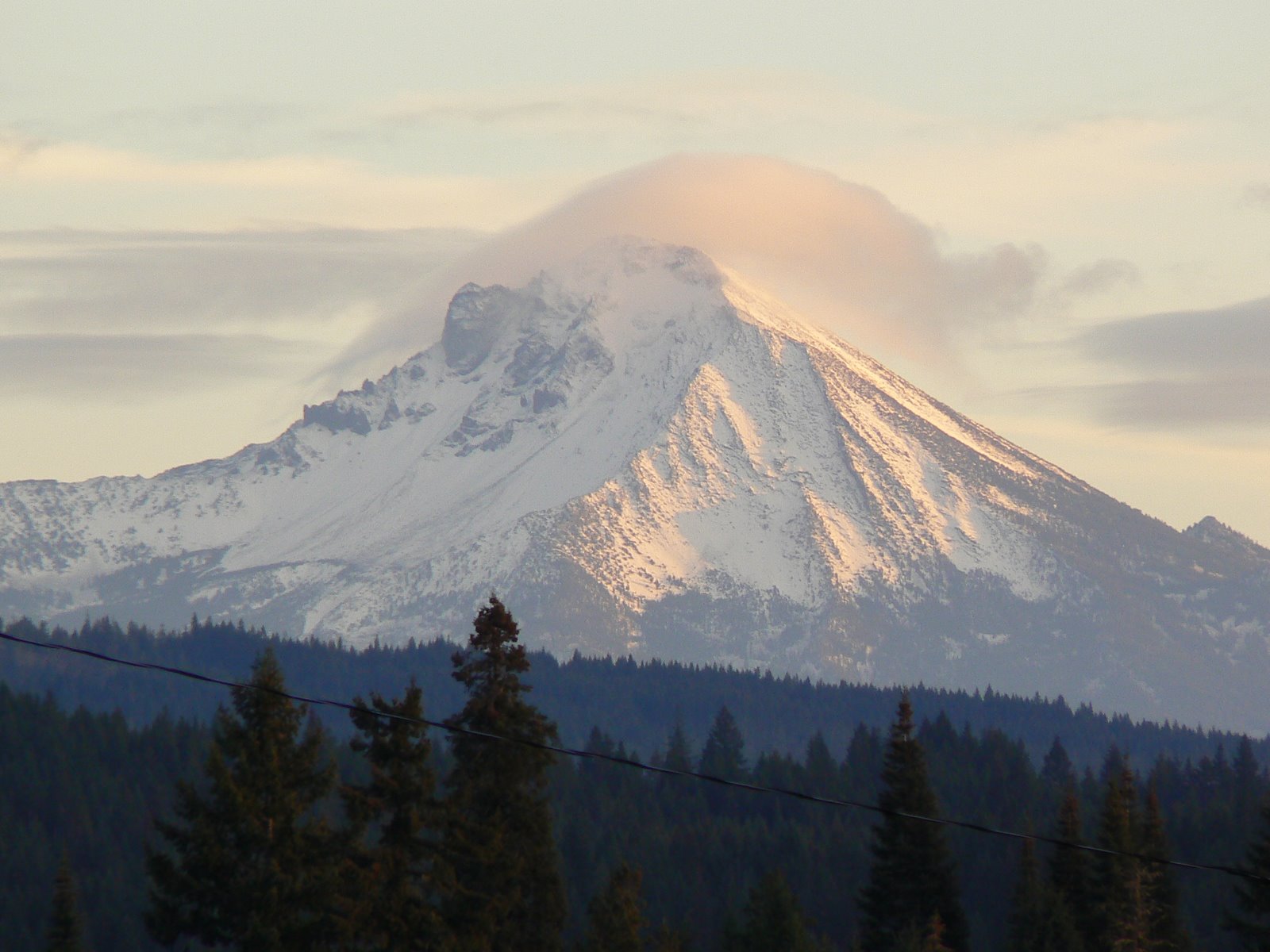
The day before climbing Mt. Thielsen I climbed Mt. McLaughlin. The trip went something like this: Saturday drive five hours to Mt. McLaughlin, climb it, then drive to Mt. Thielsen trailhead, sleep on the ground under the stars, Sunday morning climb Thielsen, then drive three hours home, sleep in comfy bed for ten hours. It was a long weekend, but was also a lot of fun. Climbing Mt. McLaughlin is as technically easy as the South Sister, but not as long.

Longs Peak (14,259 feet, 4,346 meters)
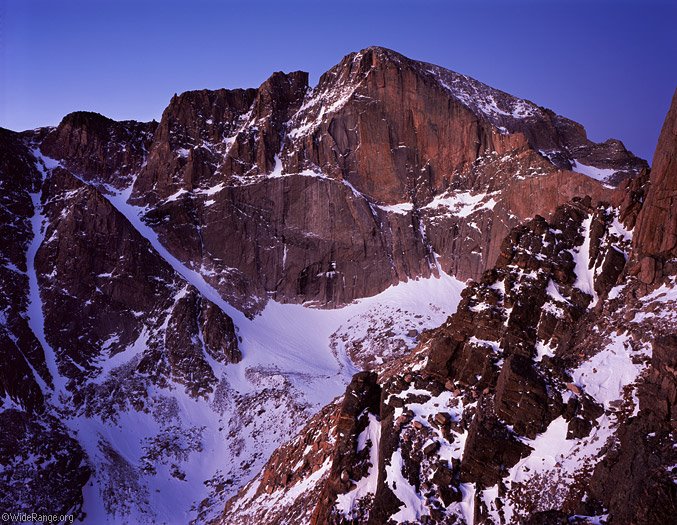
In the Spring of 1984 I and a group of fellow students tried to climb Longs Peak. We got up to 13,200 feet elevation, about 1000 feet below the summit at a place know as the keyhole. We had to turn back because of a storm that had blown in. Climbers were coming off the top and telling us that it was getting dangerous above. The wind where we were was very strong coming through the keyhole. There is a stone climbers hut near the keyhole where we met a bunch other folks. The heavy wooden door to the hut had been blown off its hinges and was no longer to be seen. To make up for the disappointment of not summiting several of us decided to race each other back to the cars. We ran in heavy hiking boots and carrying daypacks about 6 or 7 miles downhill. Needless to say I wish I could do that today, but my knees won’t let me and my lungs thank my knees.

Mount Hood (11,249 feet, 3,429 meters)
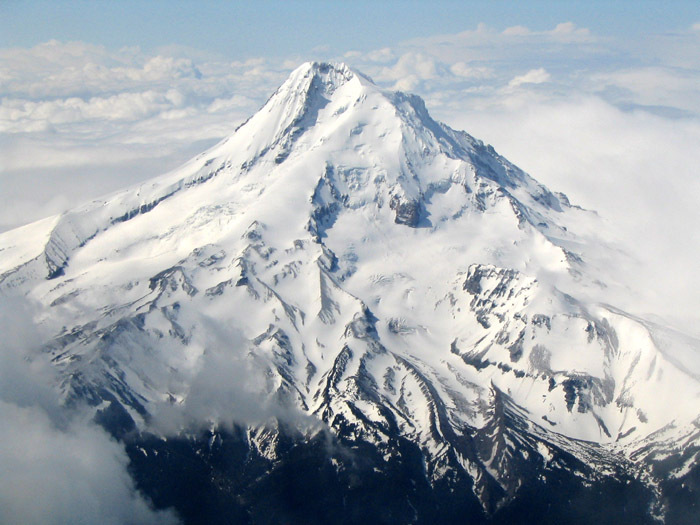
Mount Hood is the tallest mountain in Oregon and one of the most climbed mountains in the world. I and two friends attempted to climb it in the early 1990s. We started from Timberline Lodge at around 1:00 AM. The day was stunningly beautiful. We could see all the way South to Mount Shasta in California! We got very near the summit, but then one of my friends got sick and couldn’t go any further. We decided to head down, ascribing to the philosophy that we would be back soon enough. I have not been back. But I still plan on climbing it someday.

Many people believe that climbing mountains is something they could never do. Climbing mountains is very near lunacy they assume. Why would anyone want to do such a thing, they ask. Maybe they are right, but I have to say that there is nothing quite like the experience. Many peaks are technically easy to climb, most are just an uphill trail to the top. Standing on top of a mountain is glorious. The exercise is tremendous. I say pick one and go! Of course, do your homework and be prepared.
Go West Trapper Nelson

Good weather is here at last and I have hiking/camping/climbing on the brain.

When I was a youth I started hiking and camping with my parents in Oregon. Usually we hiked to our camp sites, sometimes we rode horses. Once in a while we did car camping. Some of the best times I remember were sleeping under the stars in the high Cascades, then waking in the middle of the night and staring in awe at a sky of stars like one never sees in the city.

Oregon is a beautiful state and this time every year I start dreaming of getting immersed in the outdoors. Now that I have kids I want to get them outdoors too.

I reminisce…
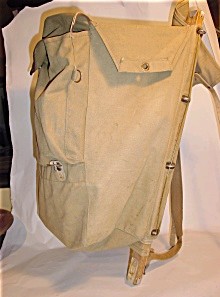
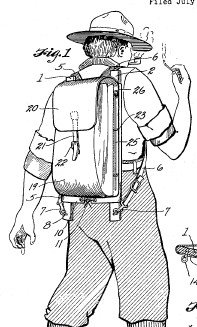
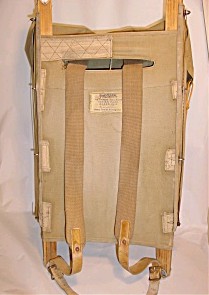
As a young camper I often had hand-me-downs. My first pack was one my dad used when he was a boy scout. The pack was known as a Trapper Nelson. By today’s standards a Trapper Nelson pack is a kind of torture device. However, when it was invented 80 years ago it was better than anything else on the market. By the time I began carrying one the design was very outmoded, but the pack was free.

The Trapper Nelson pack consisted of two wooden planks with canvas stretched between them, thin canvas shoulder straps, and a canvas bag on the back. The color was classic drab. Fortunately, kids tend to be resilient. I survived and had many happy camping trips.

Why is it that we like to go camping? Often I struggle to get motivated and out the door to commune with nature. But once I am outside I love it. Each time I have gone camping (except for once or twice) I think to myself I should do this more often. There is something about getting away from the city, from civilization, and into the wilderness that feeds a deep part of the soul. It’s almost as though we are made to be close to nature, and that the walls with which we surround ourselves offer false comfort and place a damper on something that could be thriving. This week I started riding my bike to work. It’s not easy to ride in the cold morning so early, but I love it. The simple act of feeling the air on my face is enough to remind me of how good it is to be outside and alive.

* * * * * * * *
Related…
My wife and I have decided we will try to climb a mountain later this summer. We have picked the South Sister in the Cascade Range. I have climbed it twice, but that was more than twenty years ago. It’s not a technical climb, but it does take a lot of stamina. We’ll see how it goes. At least it’s motivating me to get in better shape.


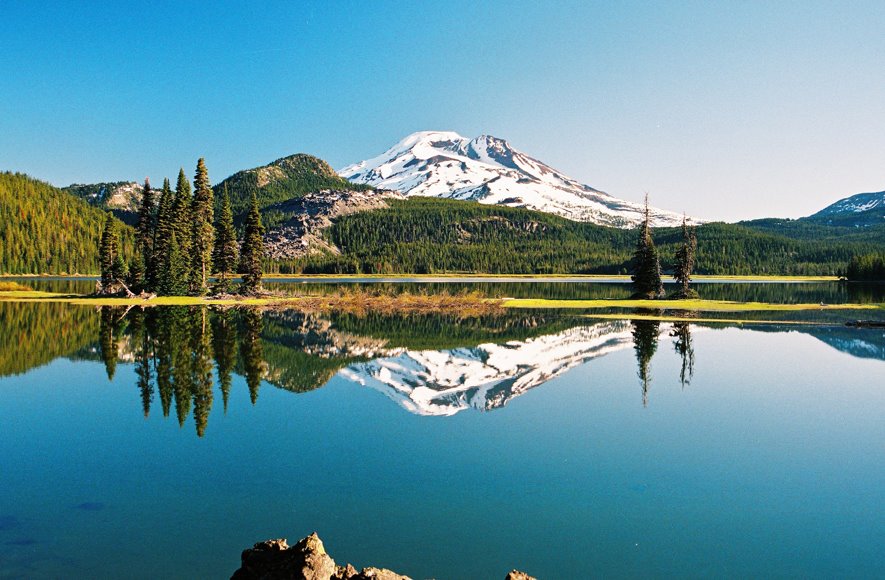
The South Sister’s snow capped peak looms majestically
over the Oregon countryside.

In Memoriam

War is a nasty business. This Memorial Day gives us a chance to remember those U.S. soldiers who have died fighting in wars. This is important. The sacrifice of a life for any cause is a substantial tear in the fabric of creation. Death affects many, and not only those who die. Death affects families, friends, co-workers, and communities. Death affects us all. Death is ugly, horrible, detestable. Let us then commemorate the sacrifice innumerable soldiers have made over the years.

Let us also remember that the reasons soldiers go to war and are willing to lay down their lives are often very different reasons than of those who send them to war. This is not to say every soldier has pure and righteous motives, but the glory of the soldier often hides the duplicitous and dubious goals of the political and economic motivations that seem to underlie every war. Let us not forget the difference.

And then we have the great burden on all of humanity that are wars. That soldiers die is terrible, but non-soldiers die too, and in often far greater numbers. These other members of humanity include children and other innocents. Let us remember them too.

And let us remember that wars are no grounds upon which to build mythologies.

My desire is to know truth, to understand the consequences, and to act in whatever way I can in light of that truth. My hope is that this Memorial Day is more than just remembering, rather I hope we honor the dead by creating a world in which the soldier is a thing of the past.

Death of even one affects us all.

No man is an island, entire of itself; every man is a piece of the continent, a part of the main. If a clod be washed away by the sea, Europe is the less, as well as if a promontory were, as well as if a manor of thy friend’s or of thine own were: any man’s death diminishes me, because I am involved in mankind, and therefore never send to know for whom the bell tolls; it tolls for thee.

~John Donne, from Meditation XVII
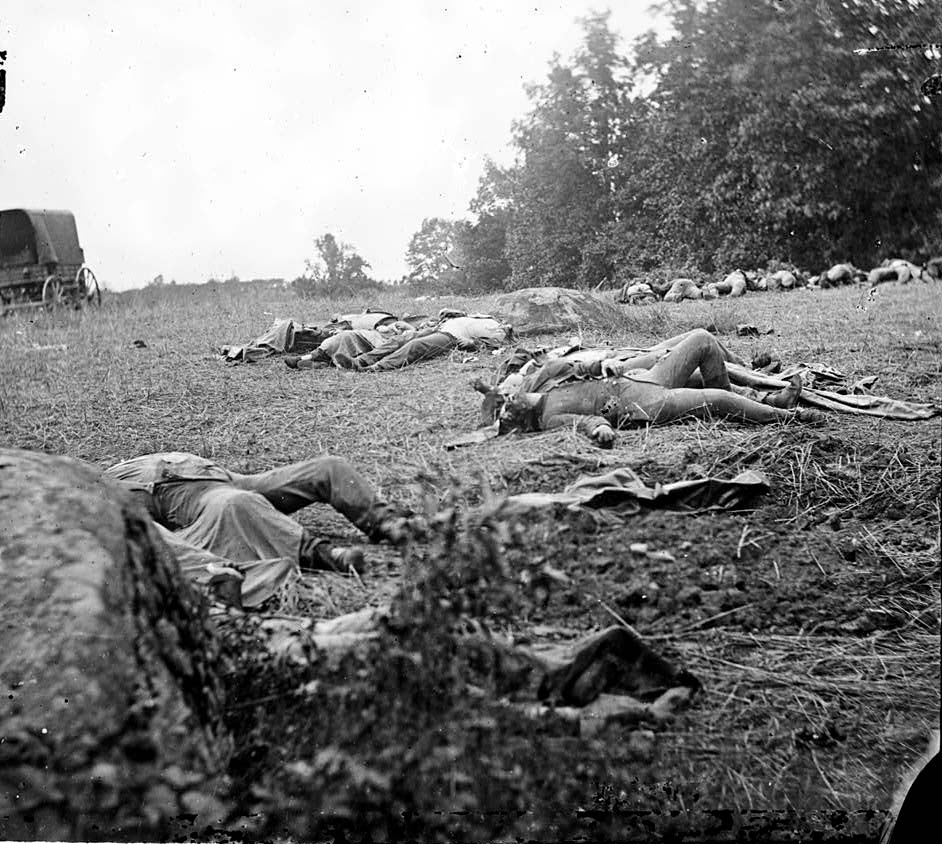
Memorial day was first enacted to commemorate Union soldiers who had died in the bloody American Civil War.

Battle of Gettysburg aftermath. Dead soldiers in the
wheatfield near the Emmittsburg road; 1863 July.
Photograph by Alexander Gardner.

As I get older I have a harder time seeing war as an adventure to be enveloped with brass bands and waving flags, and my simplistic reverence for war heroes is being replaced by a deeper sense of the tragedy of war and the stunning sacrifices made by those who have fought and are currently in war zones.

>Rauschenberg dies, his art lives

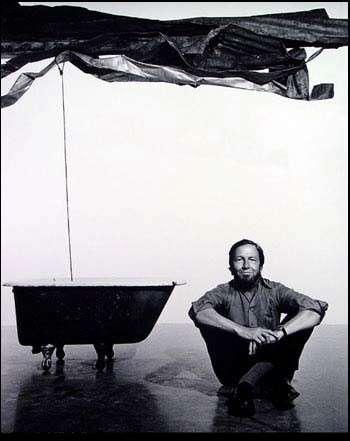
>I just saw that Robert Rauschenberg died on May 12th. He was one of the giants of 20th Century American art. He was also one of my “art” heroes.

Rauschenberg reminisces about his seminal “combine” artwork Monogram (1955):

Rauschenberg discusses his famous artwork, Erased de Kooning Drawing (1953), that consisted of erasing an artwork of another famous artist:

Excerpt from Rauschenberg’s 1967 film Linoleum:

Rest in peace.

A different high school musical: Bugsy Malone

We own both High School Musical (2006) and High School Musical 2 (2007). I have to say that I like both of them quiet a lot, because they’re so perfectly goofy and I like to see that musicals just might make a comeback. And they tend to get played over and over again in our house. This is, of course, because my eldest daughter loves the films.

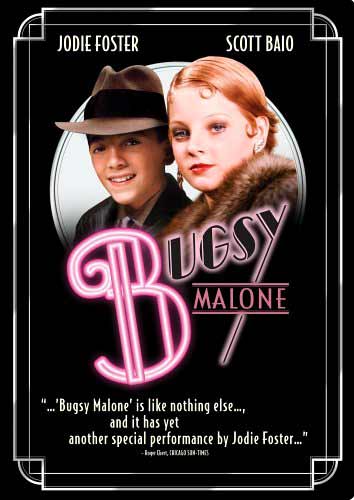
I remember (or rather I reminisce) many years ago I was similarly taken with another musical featuring high school aged kids rather than adults. In this case, though, the kids played dress up, apparently raiding the old clothes trunk in their grandparent’s attic. I am referring to the musical Bugsy Malone (1976).

Bugsy Malone was directed by Alan Parker. Interestingly, his next film was Midnight Express (1978). I can’t think to two more diametrical opposed films. The story of Bugsy Malone takes place during prohibition. There are gangsters and gals, rich and poor, big song numbers, lots of dancing, and a pie fight. It’s just good fun, thought it may be a bit dated by now.

The songs were written by Paul Williams. I think it represents some of his best work. Here is the final big number:

One aspect of Bugsy Malone that I alway appreciated was it’s look at all strata of society – or at least a picture of our greater society presented as its simplified “world.” In many ways this is a very mature film, especially given that it’s a musical performed by kids. Here is one of my favorite numbers:

And, in case you didn’t know, Bugsy Malone featured a great performance by a young Jodie Foster:

I don’t have any idea what the future of the musical will be, but I have to say I don’t think it is a dead genre. And I don’t think musicals have to be only animated features. The two High School Musical films show that good songs, good performances, good choreography, and shiny happy people can still make for a fun time.

Finally, if you’ve got nothing better to do at work, here’s the complete Bugsy Malone (complete with Swedish? or Norwegian? subtitles too).

http://video.google.com/googleplayer.swf?docId=-2544817728959240414&hl=en

>vintage Glass Harp

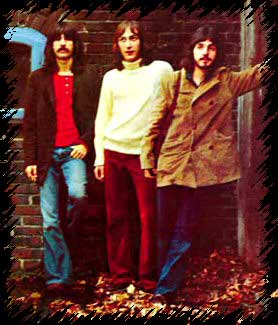
>My last post was about the passing of musician Larry Norman. That post got me thinking about my interest in Christian music back in the 1970s. Back then the pickings were rather slim. But there were a few individuals and bands that stood out. One of those individuals was guitarist Phil Keaggy

There is a story (myth?) about Phil Keaggy that goes something like this: Jimmy Hendrix was asked once how it felt to be the world’s greatest guitar player. Hendrix is reported to have replied, “I don’t know, why don’t you go ask Phil Keaggy?” If that is true (it’s probably urban legend) it would have occurred when Keaggy played for the band Glass Harp. Regardless, Keaggy has had a long reputation as one of the best, if not as well known, guitarists in the world.

Glass Harp was not a “Christian” band (whatever that is), and eventually Keaggy left the band to pursue music in the, then new, contemporary Christian music scene. Remarkably, here is a rare clip of Glass Harp (from a once lost 1972 PBS broadcast?) with Keaggy on lead guitar:

One reason I post this is that in the late 1970s and early 1980s my friends and I used to talk about Glass Harp as though it was some golden chalice. We had never heard Glass Harp and we could not get hold of any ablums. We only had stories and rumors. Glass Harp was this great mystery we imagined. Now, to my surprise and pleasure, I find Glass harp on YouTube!

Phil Keaggy is still jamming. And now, again, is Glass Harp with Keaggy.

>Larry Norman: Rest In Peace

>Larry Norman has died.

Maybe you don’t know who he was. Sometimes called the father (and later grandfather) of Christian rock music, and inducted into the Gospel Hall of Fame in 2001, Larry Norman was a seminal figure in many people’s lives for nearly 4-plus decades. You can read about him on Wikipedia and elsewhere. For me, his passing draws me back to my childhood when I was looking for artistic expressions of the ideas and passions within me.

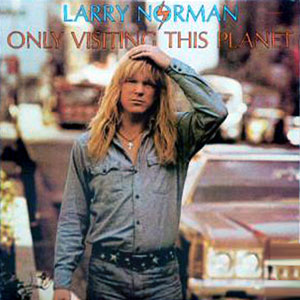
The first “rock” album I ever bought was Only Visiting This Planet, released in 1972.

I’m guessing I got it in 1975 or 1976. When I first put it on I was a little concerned. The first song, Why Don’t You Look Into Jesus, shocked me. Here are the opening lyrics:

Sippin’ whiskey from a paper cup.
You drown your sorrows till you can’t stand up.
Take a look at what you’ve done to yourself.
Why don’t you put the bottle back on the shelf.
Yellow fingered from your cigarettes.
Your hands are shakin’ while your body sweats.

CHORUS:
Why don’t you look into Jesus,
He’s got the answer.

As a kid I didn’t quite know what to do with this album. Funny, but I was worried my parents would hear it and make me turn it off because of the “offensive” lyrics. But I kept listening, and soon it took hold of me. Because of that album, with its Christian lyrics that didn’t fit into the Christian sub-culture I grew up in, and with its sometimes driving, sometimes beautiful melodies, my perspectives on what it meant to be human and to engage with the world developed and matured.

Here is Norman performing Why Don’t You Look Into Jesus. The clip begins with some early/mid-seventies studio version and then cuts to a live performance, probably from the eighties:

One of the best songs from that album is The Great American Novel. There was nothing typically “Christian” about this song, and yet I can help but think this is one of the truest Christian songs I ever heard. Here are the lyrics:

i was born and raised an orphan
in a land that once was free
in a land that poured its love out on the moon
and i grew up in the shadows
of your silos filled with grain
but you never helped to fill my empty spoon

and when i was ten you murdered law
with courtroom politics
and you learned to make a lie sound just like truth
but i know you better now
and i don’t fall for all your tricks
and you’ve lost the one advantage of my youth

you kill a black man at midnight
just for talking to your daughter
then you make his wife your mistress
and you leave her without water
and the sheet you wear upon your face
is the sheet your children sleep on
at every meal you say a prayer
you don’t believe but still you keep on

and your money says in God we trust
but it’s against the law to pray in school
you say we beat the russians to the moon
and i say you starved your children to do it

you are far across the ocean
but the war is not your own
and while you’re winning theirs
you’re gonna lose the one at home
do you really think the only way
to bring about the peace
is to sacrifice your children
and kill all your enemies

the politicians all make speeches
while the news men all take note
and they exagerate the issues
as they shove them down our throats
is it really up to them
whether this country sinks or floats
well i wonder who would lead us
if none of us would vote

well my phone is tapped and my lips are chapped
from whispering through the fence
you know every move i make
or is that just coincidence
well you try to make my way of life
a little less like jail
if i promise to make tapes and slides
and send them through the mail

and your money says in God we trust
but it’s against the law to pray in school
you say we beat the russians to the moon
and i say you starved your children to do it
you say all men are equal all men are brothers
then why are the rich more equal than others
don’t ask me for the answer i’ve only got one
that a man leaves his darkness when he follows the Son

It is likely that I can trace my own cultural and political leanings, not to mention spiritual understanding, in part to this song, which I listened to, and pondered over, as a child. Needless to say, songs like this put Norman outside the conventional Christian culture. It is amazing how applicable this song still is today.

This clip of Let That Tape Keep Rolling shows how Norman could really rock back in the day:

Finally, I have to say that Larry Norman was not a perfect man. He had his troubles and failings like all of us. So often we look to religious figures (artists, preachers, gurus) to somehow be exemplary in their behavior. We want to believe it is possible for a human to achieve true holiness or moral perfection, but this never really happens this side of eternity. Norman was exemplary, though, as an honest musician who held on to his faith in the midst of this often messy and ugly thing we call life. And in that one can find encouragement and hope.

Rest in peace.

>Hooper

>In 1978 I was one of those stinky young Junior High boys with bad hair and ratty shoes who dreamed of being in the movies. In fact, I really wanted to be a stunt man because stunt men are cool and can claim bragging rights for doing cool things like crashing cars and falling off buildings.

In 1978 the movie Hooper was released. Hooper is about stunt men.

A friend of mine and I decided to see Hooper because it looked cool. I mentioned my viewing experience in this post. I must say that for better or for worse Hooper is seared into my consciousness and is a part of who I am today.

The film’s climax

Hooper is a Burt Reynolds film and Hooper is Burt. And Burt is a MAN. I am glad (maybe) I did not become a stunt man, but Hooper taught me how to be a certain kind of man. And I’ve been trying to put that behind me ever since.

This post fulfills my non-obligation to contribute to the Burt Reynold-A-Thon.

>Triumph & Tragedy: Bobby Fischer (1943-2008)

>You have heard by now that former World Chess Champion Bobby Fischer has died. There probably has never been a chess player to generate as much discussion and opinion as Fischer. He was the most controversial of the great chess players, and his life was a case study of genius meets paranoia.

When I was a boy I had a copy of Bobby Fischer Teaches Chess.

This book became a favorite of mine, and Fischer loomed large in my psyche as both a chess player (and all that implies) and as an enigma. I was not a particularly good chess player, but I thought the game was interesting (still do), and I found the end-game puzzles in Fischer’s book very fun.

Fischer’s story is a tragic one in my opinion.


Fischer still remains the youngest ever U.S. Open Champion

The details of Fischer’s life have been well documented. His brilliance in chess is undisputed. But his personal life, especially in the decades since he won the world championship in 1972, spiraled downhill into self-absorbed, narcissistic, anti-semitic, paranoia. He was the kind of person who couldn’t make the distinction between minor and major offenses, every offense to himself was major, and he perceived offenses everywhere. He was a person who never forgot a wrong and saw himself in the victim role often. And he rarely seemed to understand the value of others.

And yet, those who knew him said he was honest and straightforward. Chess players still marvel at his abilities on the chess board. Boris Spassky, whom Fischer beat to win the world championship, remained his friend until the end.

I sometimes wonder if Fischer would have become a more gracious and savvy person if he had finished high school and gone to college. There is something about the process of going to, and finishing, school that stretches and, for lack of a better word, “socializes” a person. I would hazard a guess that the percentage of individuals prone to conspiracy theories and martyr-complexes drops among the more educated. I must admit I say this as someone who has spent a lot of time in college, so I have some personal investment in the matter. I also cannot guarantee that I’m not paranoid.


Fischer discusses chess and life

Without a doubt, in life and in death Fischer’s ghost will continue to loom large in the world of chess. His games will continue to be studied, his life will continue to be debated, and chess will never be the same.


The scraggly Fischer in later years: Never afraid to speak his mind.

History turned on game three of the 1972 World Championship. Fischer lost game one, didn’t show for game two, and many thought he was through. He played brilliantly in game three for his first ever win against Spassky. If he hadn’t won that game history, and Fischer himself, might have turned out differently.

Game three analyzed by kingscrusher at ChessWorld.

No matter how great one is at doing something – chess, sports, the arts, politics, etc. – what matters most is one’s character. Bobby Fischer was great at playing chess. He was lousy at life. More importantly, he harbored a lot of resentment and fear in his heart. I don’t know the reasons why, we all have complicated stories to tell, but I pray for his soul because he was, first and foremost, just a man full of weaknesses like me.

>sisters, anniversaries, sadness, and joy

>

Today is the birthday of our second daughter, Coco. She was a glorious and beautiful person, and I believe she still is. There is not a day that passes in which I do not think of her. Being present at the moment of her birth and then of her death indelibly seared my heart. Words do not speak adequately of her life, however short, nor do they reveal her soul. But I think that is true for all of us. We can only convey approximations. We have to live if we want the real thing. Her life was the real thing, and I held her in my arms seconds after she entered the world. I was holding her in my arms when she left us. I cannot be the same ever again.

But who I want to write about today is Coco’s big sister, Lily. It may seem strange to be thinking so much about one child on the birthday of another, but Lily was there through all of this. She was there, and in her kid way she helped our little family get through it all. She thinks about her sister all the time. When she draws family pictures she always includes Coco. And her heart was broken terribly when Coco died. She is a remarkable person, so thoughtful, so beautiful, so tender.

I remember the moment Lily first saw her little sister. Her entire body reacted with utter joy. She is a lover. She is a sister through and through. And how glad she was to have a sister of her own, and to finally be a sister herself. Just yesterday Lily asked her mother to sit with her on the couch, but she kept a space between them. She said Coco was sitting there.

Lily is a beautiful girl. She is smart and she is tender. She is one of the most creative people I know. I am glad we did not keep her from experiencing the story of her little sister, however painful and brief. Lily still talks about having had the chance to hold Coco. And that means everything to me.

Now we have our hands full with another little one. Wilder looks a lot like Coco in some ways. In no way is she a replacement for Coco, but Wilder is also a wonderful and beautiful girl that helps us get through days like this one. I thank God for the girls we have. They are great gifts, all three.