>we homeschool

>We homeschool our kids. I have not written much about it here, but it is a big deal to us and part of the very fabric of our family. It is not easy. It takes a lot of work, most of which falls on my wife’s shoulders. I have been realizing more and more that I need to sort through my thoughts on homeschooling, why we made the choice, and what it means to us.

There may be as many different reasons to homeschool as there are families who homeschool. But I would hazard a guess that most families who homeschool do so for many of the same reasons. They want their kids to be better educated, better socialized, safer, more well-rounded, and closer to the family. There has been a deeply rooted idea is Western culture, from Plato to Rousseau to Marx and onwards, that the best way to educate children is to get the parents out of the picture as soon (and as much) as possible. This idea is rooted in the other idea that the individual is primarily beholden to the state, especially within ideologies where the state is elevated as the primary social group. Homeschoolers tend to take exception to both of these ideas and go in a different direction. And yet, probably most homeschoolers do not choose to homeschool because they take exception to such ideologies, rather they homeschool because they see their local public education, and much private education, to be less than what they want for their children. This is not to say public or private education is always wrong – I am a product of both – but that public and private education is often a lesser education rife with conflicting issues, stultifying bureaucratic “requirements”, unnecessary compromises, and various dangers on many levels. We know that children are natural learners. That a student becomes educated within traditionally and culturally accepted environments (public and most private schools) is often in spite of those environments as much or more than because of them. That was very much true for me and, in fact, I had a lot of catching up to do. Only because I am a little obsessed with constant learning in my own life have I managed to become an educated adult and make up for much of my elementary and secondary education. But I am still behind where I should be.

And yet homeschooling is not all about academics. There is probably no more important element of becoming an educated person as that of one’s character. In public schools one learns basic character traits as standing in line without pushing, or not hitting other students, or not stealing, or how to stay awake in class, or how to take standardized tests. Of course, mostly one learns that to behave well is all about “getting along.” The goal is to follow the rules and to avoid anarchy. This is driven, in large part, by the needs of the teachers who must maintain order in classrooms with too many children. Cooperation, as we are told from Sesame Street and reinforced in public school, is the highest good. Goodness, as an end in itself, is not the focus of public school character development. Nor is much directed character development possible at all. In our local school district the ratio of students to teachers is 20+ to 1. There is no way that a teacher, no matter how “qualified” can truly develop and nurture the individual characters of 20+ students. In fact they can barely teach them. Certainly they cannot uniquely customize their instruction to the unique needs of each individual child. But that is exactly what homeschooling does do. Our kids get teachers who truly know them, who love them, will even lay down their lives for them. There are many excellent teachers in public and private schools (and know that I am a supporter of public education both in principle and with my tax dollars), but none know or love my children the way I do.

In short, we believe that we can give our kids a better education because we can customize the education for each child uniquely, tailoring our teaching to their learning styles and capabilities. We can give our kids a better education because we can better focus on their individual characters and help them grow into the kind of people they were made to be. And we can better educate our children because we are deeply committed to them for who they are – we love them like none other can.

I will write more here on why we homeschool and what it means to us in the future, but I am still sorting out my thoughts. I also realize there are many stereotypes about homeschooling and the strange people who make such choices. I will address some of that too. And I want to examine the idea of being “qualified” to teach and why we think we are qualified. But know this, homeschooling is no formula for success. We take each year, even each day to some degree, as an experiment. It is working so far, but who knows what the future will bring.
>Reading Marx’s Capital with David Harvey

>For forty years David Harvey has been teaching Karl Marx’s Das Capital. Recently his 13 part (two hours each) lecture series has been made available through iTunes. [Go to iTunes/iTunes Store and search for either “Reading Marx’s Capital” or “David Harvey.” You can choose either the video version or the audio only version.]

Harvey’s goal is to truly understand what Marx was saying rather than preach some standard line about Marx. He is a fan of Marx and so one could label him a Marxist, but his studies often end up undercutting the popular myths about Marx. As one would expect, that undercutting is one of the benefits of a close reading.

The first 5 or 6 of the lectures are also available on Google video. Here’s #1:

http://video.google.com/googleplayer.swf?docid=-5820769496384969148&hl=en&fs=true

>opera, more opera, and choices worth making

>

If you are like me then your knowledge of opera is largely limited to a few Looney Tunes cartoons (Long-Haired Hare & Rabbit of Seville). I think that’s a bad thing, though I love those cartoons. Recently we got a CD of songs from various operas, sung in English, and geared towards kids – though adults will enjoy them as well. We have been listening to these songs in the car and the girls love them. Our two year old shouts out after each song, “again!”

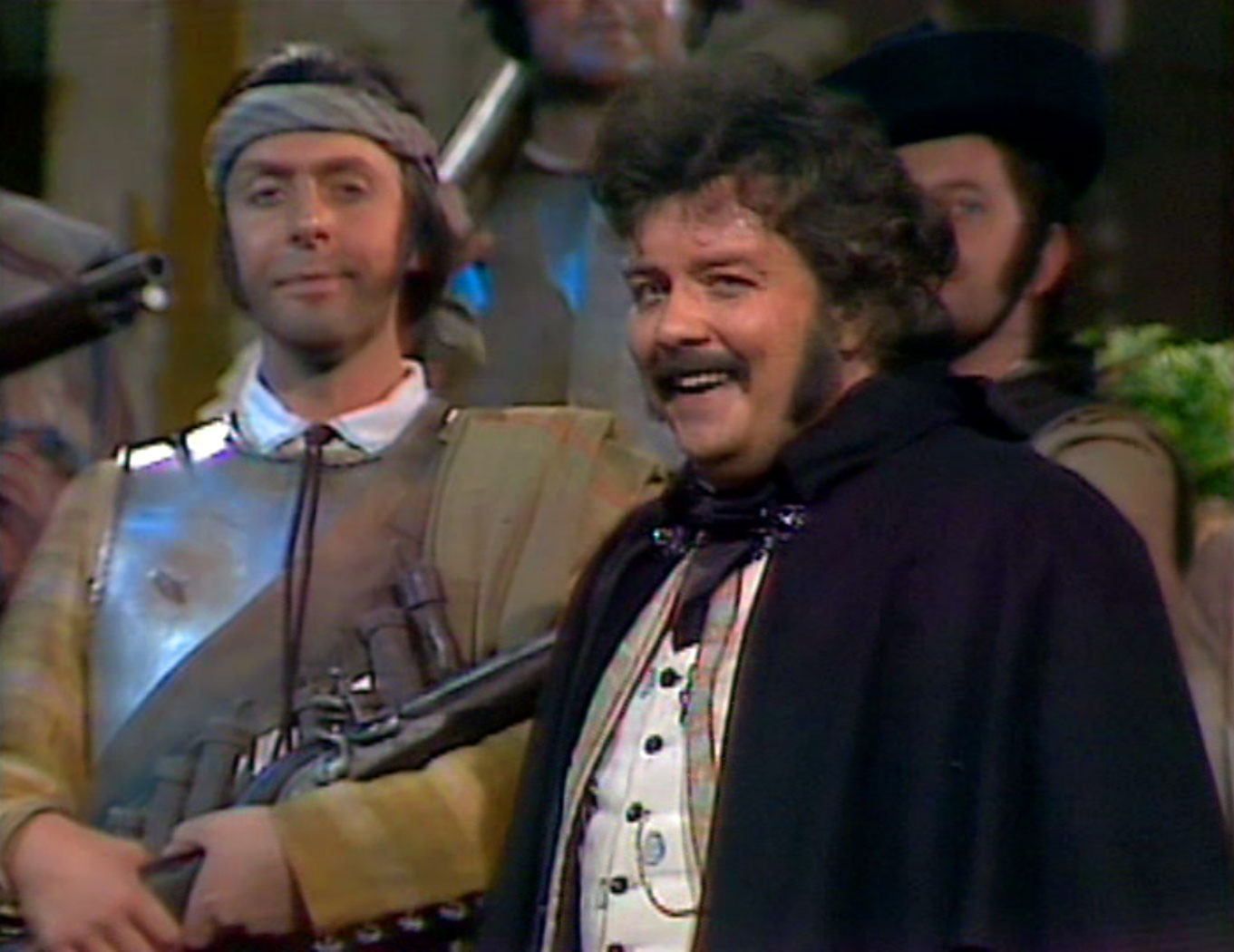
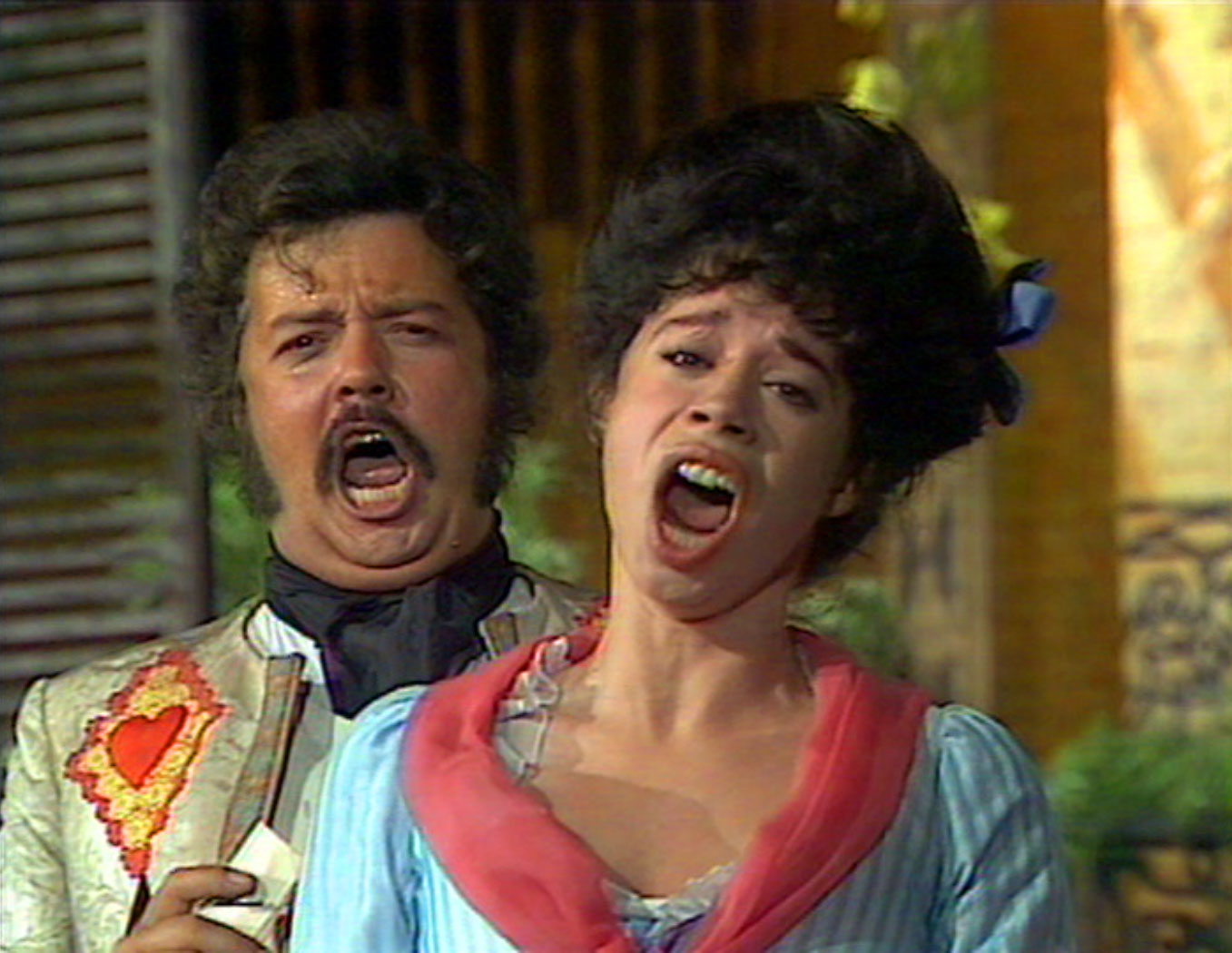
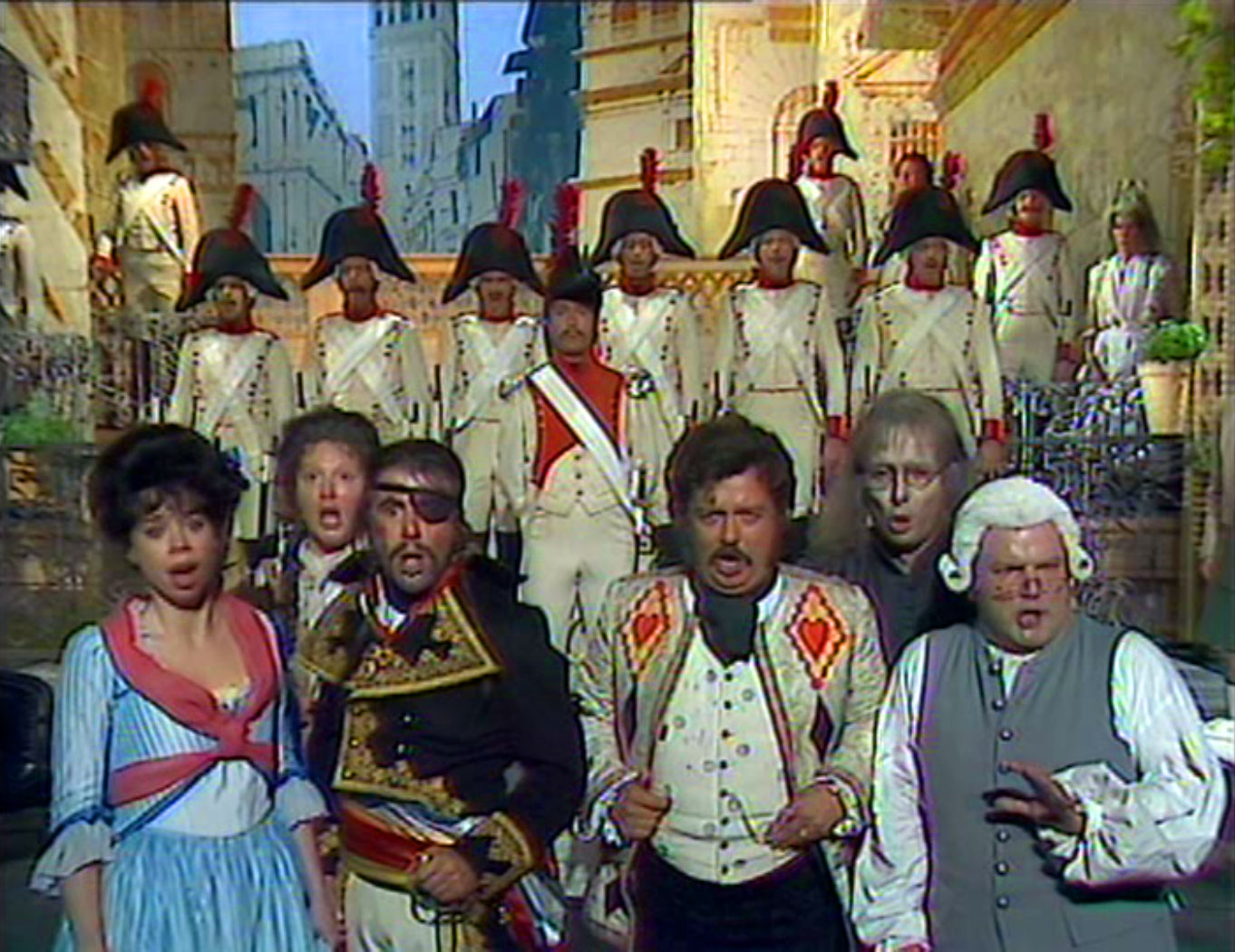
With this in mind I have checked out some operas on DVD from the library and we just finished The Barber of Seville. We loved it. This is the 1982 version made for television and starring John Rawnsley as Figaro and Maria Ewing as Rosina.


Figaro will help Rosina

I was not sure how the kids would take to watching an Italian opera, first performed almost two hundred years ago, now made for 1982 television, with English subtitles, and more than 2.5 hours long. To my surprise and joy they were enraptured. Even our two year old would sit and watch it (sometimes transfixed), then clap at the end of each song. My eight year old watched intently and did not want to spread the viewing over three nights – which we did due to bedtimes.

What a great show. There is no need for me to go into the plot, or say how good the music is, or describe the performances. All that is well known and I am not yet knowledgeable enough to say much, except to say I think it is all really, really good. I can also say that I loved it and so did my family.


Everybody sings: Mi par d’esser con la testa
in un’orrida fucina
“My head seems to be
in a fiery smithy”

I can’t think of anything like opera. I am beginning to see why some people become smitten with opera. I think I could go down that path as well. But it was not always the case. Like most Americans I grew up absorbing our typical dislike of opera. It’s not that we Americans hate opera, though some do. It’s more that we (I mean most Americans of course) think it is funny and corny, something to make fun of and lambaste. It’s good for cartoons and occasionally setting the mood in a film, but not for putting on the car stereo or playing on the radio by the pool, or taking the time to go and see a performance. But for me that is changing.


Figaro has triumphed

The triumph of Figaro is my triumph too. By the end of The Barber of Seville I was thinking that more opera is in my future – and my kid’s future.

Years ago I saw a stage production of Bizet’s Carmen, which I loved. I don’t know why or how I got to the the theater. I only remember the music and the sets, which were wonderful. I had the same experience with Puccini’s La bohème. Why I did not see more opera’s I do not know. More recently I posted briefly on watching Das Rheingold on DVD. We still haven’t made it through that one. I realize now I need to see more opera’s more often.

Finally a note on parenting and some choices worth making. My desire is that my kids grow up loving good art, whatever the form or genre. I hope they love opera. At least they will have had some introduction to it. But whether they love opera or not is not really my concern. I am often taken aback by how many parents limit their kids knowledge and appreciation of art merely because those parents have limited themselves. Parents should continue to expand their own horizons, even get out of their comfort zone, not merely for their own pleasure and personal growth, but also because it will expand their children’s horizons as well. Kids are very attuned to what their parents are doing. So often when we don’t choose the choice is made for us. There are plenty of mediocre cultural products lying around for easy consumption. If we don’t make good choices about the art in our lives then our culture will supply us with mediocrity. That is, unfortunately, the default setting. As a parent I want my kids to know that there are great choices out there and that those choices are worth making – whether it’s about opera or anything else.

>kids outdoors

>I am blessed with two beautiful daughters. They both love the outdoors. I find myself increasingly interested in understanding the relationship between kids and nature, that is, how nature plays a role in how kids grow and develop.

Recently I took my eldest daughter on a backpacking trip. Although the “work” of hiking and carrying a pack was not something she loved doing, I did see her come alive at every moment she was able to play and explore. This makes sense to me, and it makes sense when I look at my own life. I am reading a book called Last Child in the Woods: Saving Our Children from Nature-Deficit Disorder by Richard Louv.

The basic premise of the book is that in our present age children are not getting into direct contact with nature the way children have for all of history up till now. Nature has been pushed aside because of distractions like video games and computers, by time pressures, and by fear. This lack of nature in kids lives is having a profoundly negative impact on children and our society.

Below are a couple of videos that look at this topic.

When I look at my own life I know that I also suffer from nature deficit disorder. I spend too much time at the computer, on-line, in a cubicle, in front of the television, etc. It’s not just kids that are suffering, it’s all of us who live too much indoors and on-line.

>MBA update

>

This evening I defended my thesis. For the most part it was a formality. I think I knew I had it in the bag, so to speak, but I still found myself nervous all day. It went well, and other than needing to make a few minor corrections to my thesis and getting copies at Kinkos and turning them in, I am finally finished with my Master of Business Administration. Yeah!

>a milestone

>

Today I have reached a milestone of sorts. I turned in my final rough draft of my thesis.

God be praised!

This thing has been a weight on my back for over a year. It has interfered with much of my life. But it is also a good thing which I chose to do. Alas. I know I will get feedback and will then have to make some changes, but I think it’s not too bad, even passable depending on how gracious my thesis committee is willing to be. Of course, helping me improve it is also gracious, as well as their job. And I still have to defend the thing, but, honestly, that’s the easy part.

But the draft is done.

As a kind of footnote: I typed the thing using the Open Office word processor called “Writer.” And I used an old laptop running a version of linux known as Ubuntu. Neither were without their quirks, but I like open source, so whatever.

Now, a beer.

>the long axis & the interpretive camera

>Alexander Mackendrick was a noted filmmaker and an influential teacher. Below are a couple of clips that focus on his teaching and some of his ideas.

“If a film works it is never simply because it followed the rules. If it fails, however, it is almost certainly that the breaking of one or more rules is the root cause.”

~Alexander Mackendrick

I am only now learning about Mackendrick. These clips, however, remind me so much of my days at university. I love this stuff.

>training the brain | teaching the heart

>We homeschool our kids. This is not an easy task. It takes a lot of work and a lot of patience, and most of the burden falls on my wife’s shoulders. As much as I can I try to do my part. One thing I’ve started doing is teaching my seven year old how to play chess. I am not a gifted, or even a good, chess player. And I can’t say I’m that good of a teacher. But I know how the pieces move and I love playing the game. So far my daughter seems to like chess as well.

Chess is one of those interesting mental games that is both fun and educational. Just like playing sports is a more enjoyable way to get exercise than going to the gym, so playing chess is a more enjoyable way to exercise the brain than some other kinds of mind-training.

But all this chess playing has got me thinking: What is the relative value of educating a child from the perspective of well-roundedness versus specification? In other words, is it better to “create” a well-rounded person, or a person with great abilities in a specific area, such as chess or ballet? Why am I asking this question? In part because of my own personal discovery of László Polgár and his daughters Zsuzsa (Susan), Zsófia (Sofia), and Judit, and their incredible abilties at the chess board.

In reseatching this topic I came across this fascinating film clip, which focuses on Susan Polgar. The film provides some insight to the idea of specializing a child’s education and how it affects the brain:

http://video.google.com/googleplayer.swf?docId=-6378985927858479238&hl=en

In general I have always been a fan of the liberal education, and have sought that for myself. But, strangely, I have always been extremely fascinated with the so-called genius. I am amazed by the abilities of the great athlete, the great musician, the great mathematician, the great architect, etc, etc. And very often the genius is not the product of a liberal education, rather a specialized education. Most individuals who achieve some level of greatness in one thing do so by an intense single-mindedness applied over a lengthy period of time in such a way that the rest of us rarely experience. This seems to be true of just about any area of achievement.

Recently I have some across this “magic” number of 10,000. That number refers the amount of hours of practice the typical expert has to do to become an expert. In an article on the Polgar sisters the author cites some important research on the topic of “creating” a genius by Anders Ericsson:

[…]Ericsson is only vaguely familiar with the Polgars, but he has spent over 20 years building evidence in support of Laszlo’s theory of genius. Ericsson, a professor of psychology at Florida State University, argues that “extended deliberate practice” is the true, if banal, key to success. “Nothing shows that innate factors are a necessary prerequisite for expert-level mastery in most fields,” he says. (The only exception he’s found is the correlation between height and athletic achievement in sports, most clearly for basketball and volleyball.) His interviews with 78 German pianists and violinists revealed that by age 20, the best had spent an estimated 10,000 hours practicing, on average 5,000 hours more than a less accomplished group. Unless you’re dealing with a cosmic anomaly like Mozart, he argues, an enormous amount of hard work is what makes a prodigy’s performance look so effortless.

This makes sense to me. When I was an undergrad I knew a young woman who, as a first year student, qualified to be the second chair violinist in the university’s orchestra. She was an amazingly talented violinist. She was also someone with limited social skills, though she was a nice person. I once asked her to tell me what she did for practicing. She said she would go out to an empty room in the back of the building she was living in as a student, set up her music stand, a chair, and a timer. She would stand and practice for exactly 55 minutes, then sit down and rest for 5 minutes, then stand and practice another 55 minutes, etc. This would go on for anywhere between 3 to 6 hours at a time depending on her other schoolwork. She also said that ever since she was a young girl she had always practiced for hours at a time and often her parents would have to curtail how many hours in a day she could practice. In some ways she was socially and interpersonally naive, she also did not convey a sense of much knowledge outside of music, but she was brilliant at violin. After two years at the state university she received a full-ride scholarship to Juilliard.

The simple fact is there are no natural prodigies. All are created through hard work. One hopes that as a child takes on the hard task of practicing something that the child also truly loves the subject at hand and enjoys seeing the results of hard work. But, as I hear the girl in the following video speak I can’t tell if she is happy or not, and I am a little concerned about her social and intellectual life beyond music:

At the same time I know that in many societies parents emphasize their desire for their children to succeed, and in the U.S. parents emphasize their children’s happiness. One is a focus on doing and the other is a focus on being. I don’t know which is better. I do know that I want my children to grow up and be good, that is, of good character rather than merely good at doing something, or even just good mannered. Overarching the question of liberal versus specialization is the fundamental goal that education is primarily about character development rather than knowledge or action.

Another factor is the strangeness of even thinking about raising and training our children to be truly great at one thing. Neither my wife or I grew up in families that had that kind of focus. Sure, there was pressure to do well in school, but neither of us were driven to excel at any one thing the way we witness a few others excelling at what they do. We watch the Olympics, or listen to a concert, or hear about the next youngest chess champion, and we are amazed at the stunning accomplishments of those involved. And then we turn away, possibly assuming that that level of accomplishment is not for us or our kids. I don’t think turning away is necessarily a bad thing, but I wonder if we turn away too easily. I don’t have an answer.

So now we are trying to create the best, well-rounded, liberal education for our children while wondering about the values of specialization. I am going to continue to teach my kids chess, and they will continue to take ballet and swimming, learn math and science, reading and writing, art and history, piano and soccer, and hopefully they will also grow to be good people. My hope is that we will know when we should push and when we should step back. Most importantly, we must keep in perspective the very relative benefits of being great at any one thing. Even the genius has achieved very little if she has a heart of stone.

>teaching my daughter chess (and learning from Karpov)

>I am teaching my daughter how to play chess. She is seven and seems to love the game so far, but I can’t claim to be a good teacher. Chess is a great learning tool on many levels, including for me learning how to teach.

As I study the game I am learning about the great players (but not yet understanding their games in detail). One of those great players is former world champion Anatoly Karpov.

Here Karpov plays against a young chess player and, because Karpov is a good natured person, he gives her some chess tips along the way.

For some reason I love this little home video showing the kindness of the grand master. It reminds me to be kind in my teaching of my daughter. I also wish my daughter could be so lucky to play such a notable player as Karpov. Maybe someday.

>more than just doors

>Sunday, Labor Day weekend, was beautiful. The family went out for breakfast to one of our favorite haunts, and then we decided to take a walk around the University of Oregon campus which was next door. I had not been on campus for years.

I graduated from the place in 1989 with bachelors degrees in film studies (the old Telecommunication and Film dept.) and in art history, then again in 1993 with an M.A. in film studies (emphasis on independent film aesthetics). I also used to take portrait photos there when I was a professional photographer. I have to say the campus was perfect for strolling and just enjoying the surroundings on this quiet weekend.

But I also became a little contemplative. As we passed by so many of the buildings in which I spent so much time many years ago I couldn’t help but think about how important some doors can be in one’s life. These are some of those doors for me.

Lawrence Hall

Many times did I walk through this entrance to the Art and Architecture building. Most of my art history bachelors degree came in one year as I crammed five courses a quarter of memorizing slides, dates, painters, architects, styles, and historical periods. I loved it. I have always loved art, but studying art history opened my eyes to how magnificent the breadth and depth of art has been.

150 Columbia

150 Columbia is a large lecture hall. Although I had some science courses there, this is also where many of the films shown by the student forum (or was it student union?) were exhibited. This is also were visiting filmmakers might show their wares. For example, I saw a two-night presentation of Stan Brakhage’s films with Brakhage introducing each film and talking about his life as a filmmaker.

Villard Hall

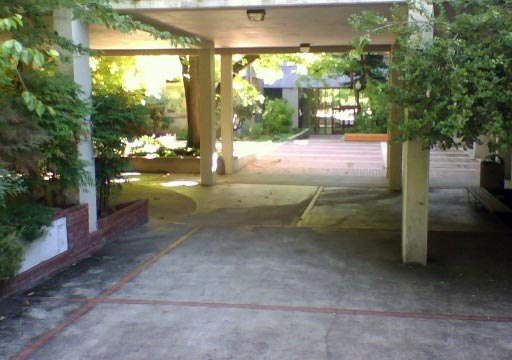
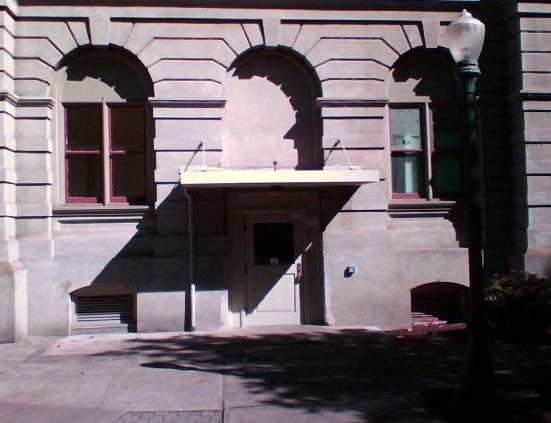
Villard Hall was where the old Telecommunication and Film department (now defunct) resided. I spent many hundreds of hours in this old building, and hundreds upon hundreds of times going through this side door. This is where I studied film history and aesthetics, created videos, and taught film courses as a GTF. I figured out how to “sneak” through this usually locked door late at night and on the weekends so I could spend extra hours editing my projects.

180 Prince Lucien Campbell

Every Tuesday and Thursday evenings I spent a couple hours or so in this large lecture hall watching films for my film history courses. This is where I was introduced to the cinematic “cannon.” Here I saw Griffith, Renoir, Godard, Sembene, and so much more for the first time. Here is where my world opened up and I became a person of the world, with my mind expanded and heart grown bigger. Words cannot really describe how big of an impact this door has had on my life.

So that was part of my Labor Day weekend. I’m sure in your life you have had, or still have, doors that are more than just doors.