My Darling Clementine: John Ford telling stories

Can a work of art tell us something about the character of the artist?

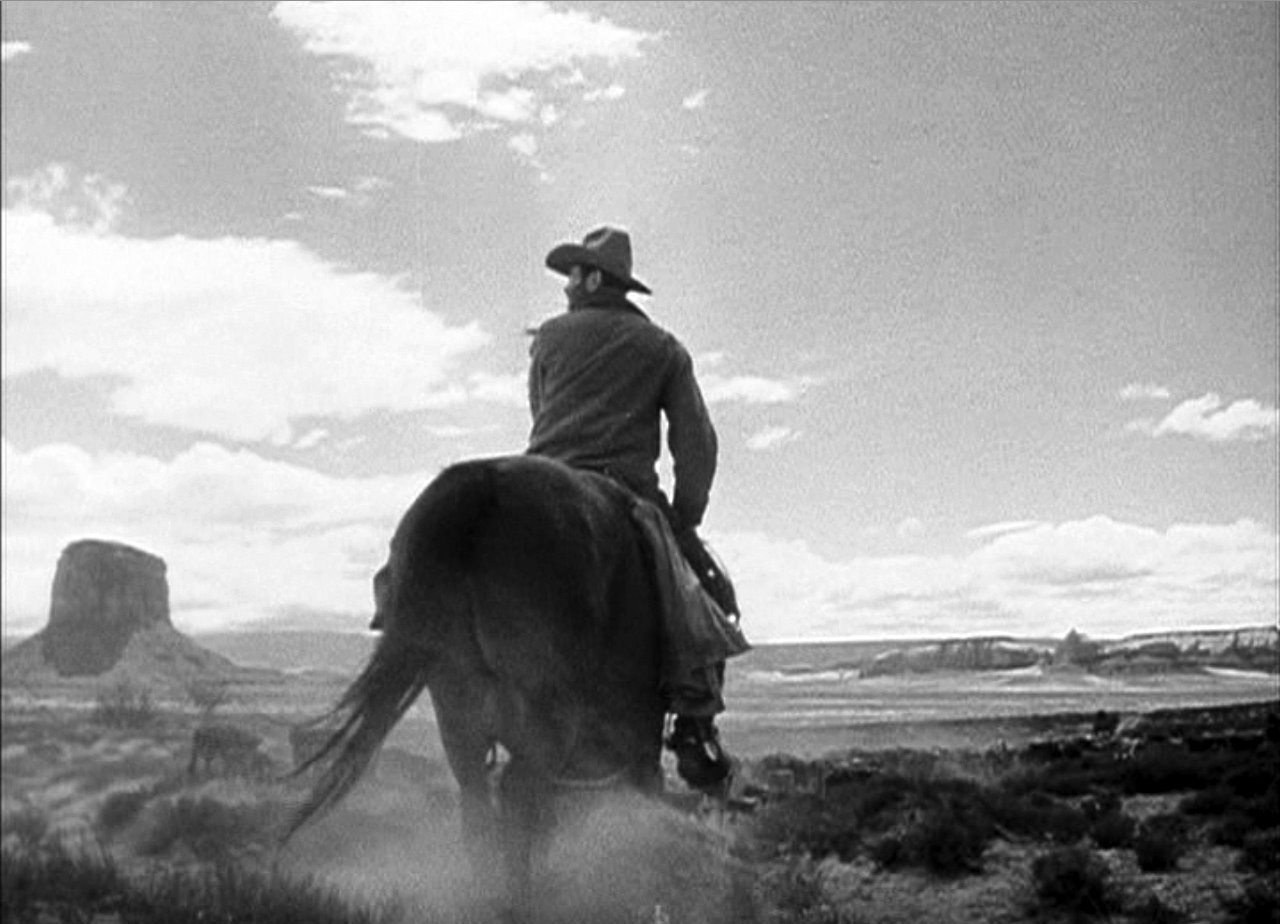
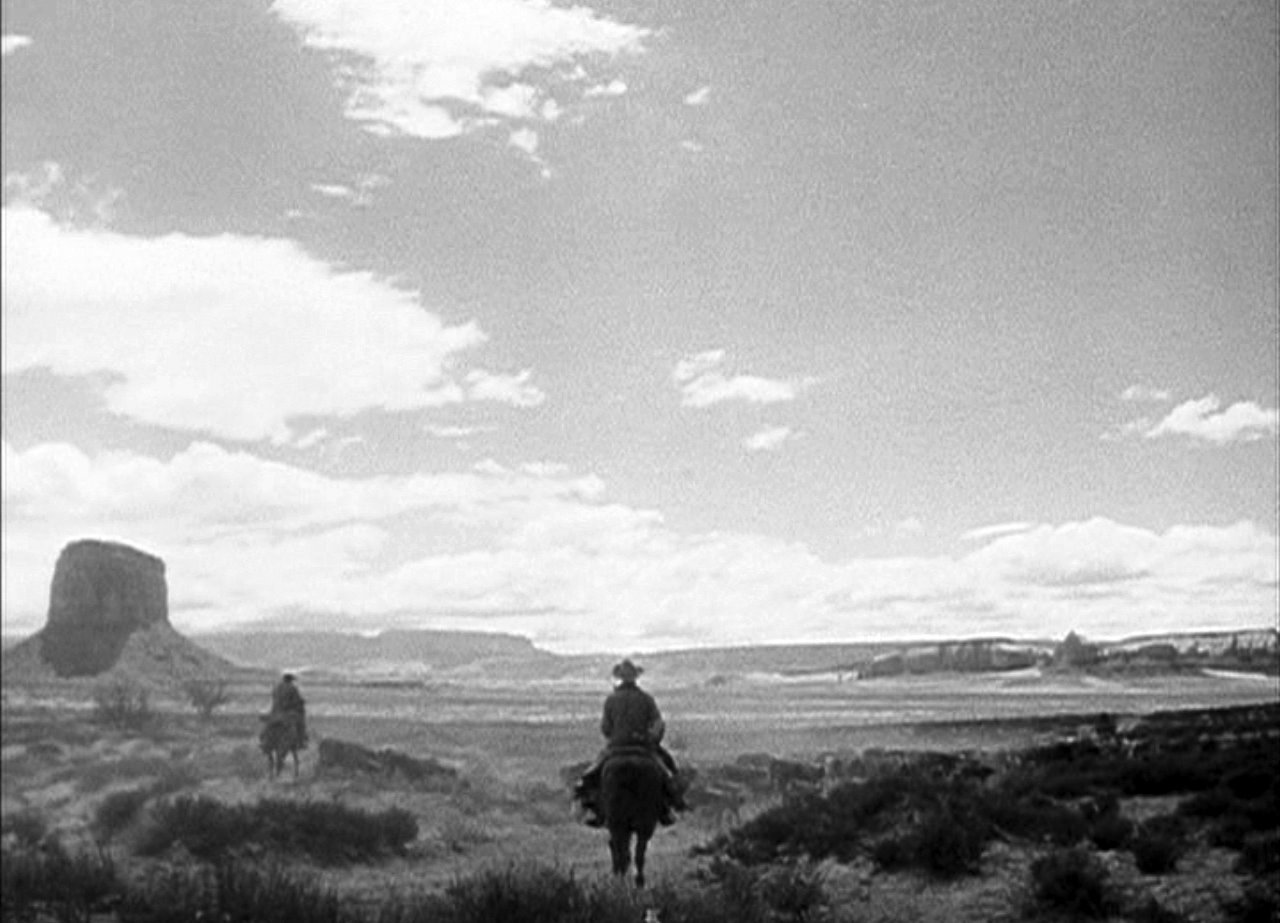
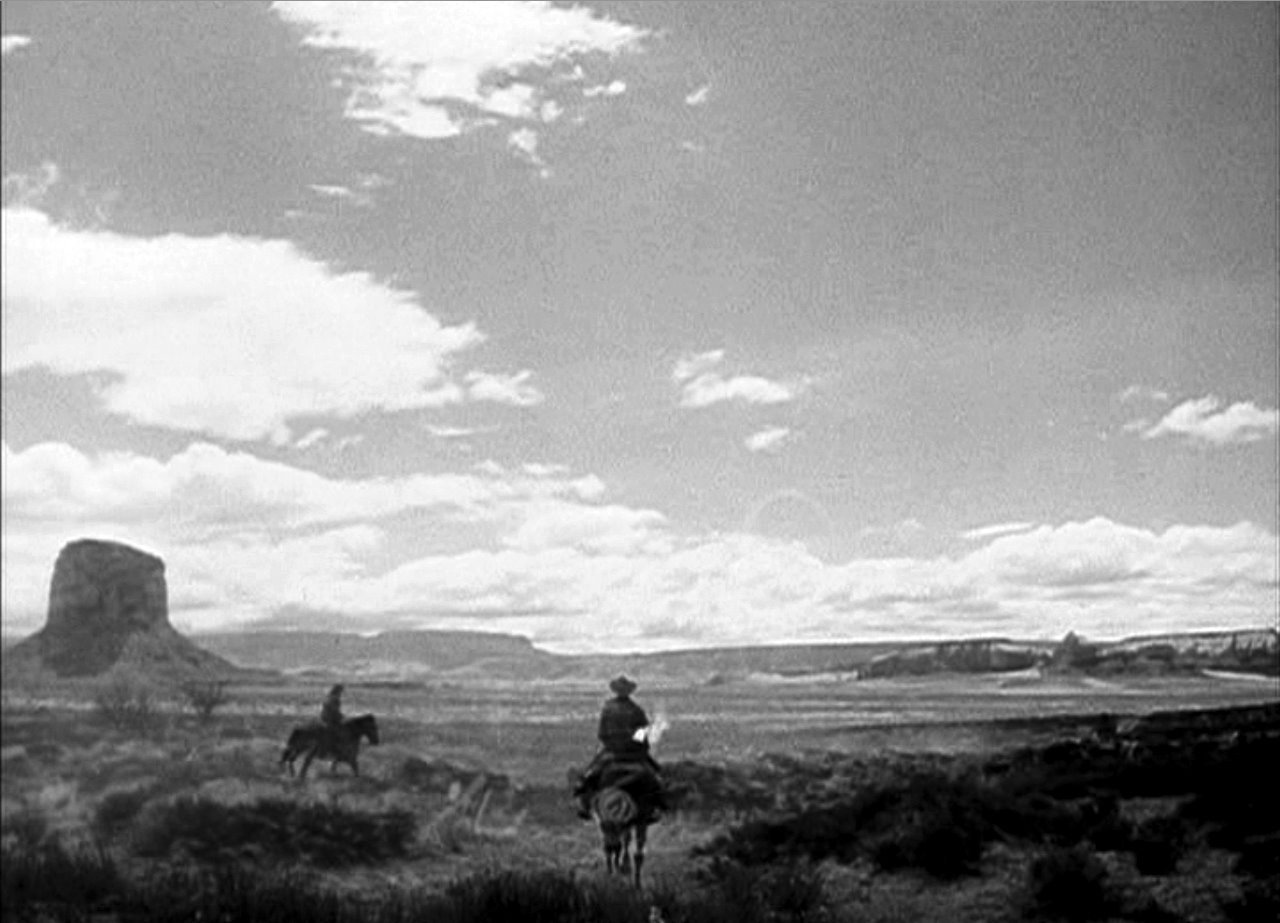
At the beginning of John Ford’s My darling Clementine (1946) there is an interaction between Wyatt Earp (Henry Fonda) and Old Man Clanton (Walter Brennan) that portends things to come. At the end of that conversation Earp rides his horse away and Clanton presumably drives his wagon away. Ford adds a wonderful little sequence of images and sounds at this point that, in effect, sums up the entire film. It goes like this:

Clanton uses his whip to get his horses going. We see the motion of his arm and the curling of the whip in the air.

We then hear the loud, sharp crack of the whip as we cut to Earp riding away.

Earp continues to ride quietly away.

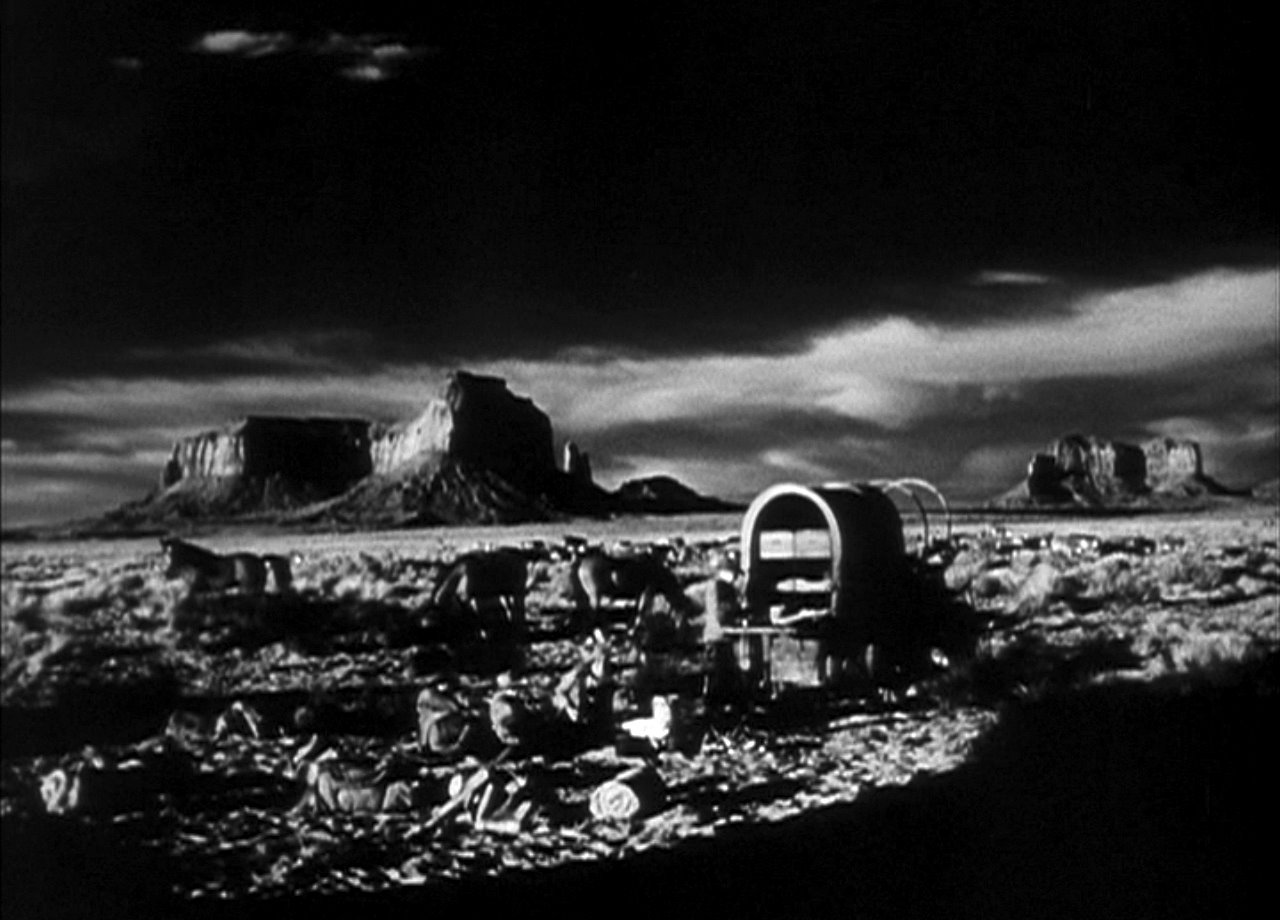
Then, as the shot is beginning to dissolve to the next, we see a fire burning as though it is Earp on fire.

Once the dissolve is complete we discover the fire is the campfire of the Earp’s camp.

The story has Clanton and his sons stealing the Earp brothers’ cattle and killing the youngest brother. This action brings Wyatt Earp out of retirement. In order to mete out justice and get revenge, Earp takes over the recently vacated marshal job for Tombstone.

What I love about this little cinematic moment is the way Ford subtly used the language of cinema to tell a story within the story. The juxtaposition of the whip crack with the image of Earp, and then the fire growing within Earp, tells us what the story arc will be. What I also love is how Ford, in my opinion, frequently demonstrated, with moments like this, that he was every bit the filmmaker of Welles, but that he didn’t care for so much bravado as we find in Kane. He was servant, as it were, to the art & craft of cinema rather than to his ego. He was a master storyteller more about the story than the teller.

Both Welles and Ford needed and respected their audiences, for sure, but Ford’s respect was more self-effacing, more about others than about himself. At least that is what I take from their works of art. Am I right? You tell me.

theology and the narrative arts

[In this post I ruminate on the relationship of art to our belief, or absence of belief, in God, god, or gods. As is typical for me, my train of thought is more lurching than steady, and my end goal is more personal than pedagogical.]

Our lenses
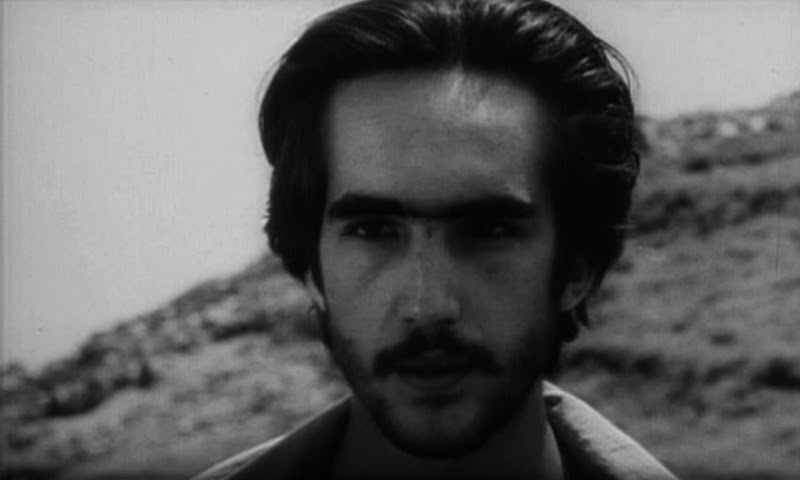
I love Pasolini’s seminal filmIl Vangelo secondo Matteo (1964). It is a work of great and simple beauty. It is also a powerful film that flies in the face of the overly sentimentalized and often lifeless versions of Jesus’ life that came before. And yet, Pasolini, though he seems to be taking the story directly from the words on the page (the Gospel of St. Matthew), understands Christ through his own political and personal commitments. In other words, Pasolini, the devout Marxist, unabashed homosexual, and hater of the Catholic Church, saw a Christ that was thoroughly materialist (philosophically) and politically radical (of the socialist ilk).


An earthy, socialist Christ
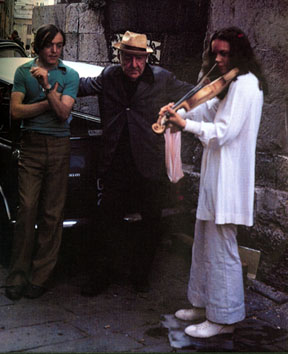
Enrique Irazoqui as Jesus
from
Il Vangelo secondo Matteo (1964)

As I understand it, for Pasolini, Jesus was a kind of pre-incarnate Karl Marx (rather than the incarnate God) who challenged the status quo of his day, and died as the earliest socialist martyr. Pasolini’s belief in the non-existence of God played a big part in how he saw Jesus and why he made the film. In a sense one could say Il Vangelo secondo Matteo is a kind of materialist corrective to the church’s position.

As I said, I love Pasolini’s film, but he got it wrong. I say this because of my own beliefs about God and about Jesus which, though personal on the one hand, I believe are also objectively true. My understanding of God is integral to the set of the “lenses” through which I look at the world. In other words, the difference between me and Pasolini is not really about any of his films, rather our differences go back to our presuppositions about God, truth, and the goals of human existence – even if we may agree on many things, and no doubt I am generally in awe of him as an artist.

Certainly great works of art are not, in our experience, predicated on any particular belief about God.

The God Who Is There
I have been thinking lately (and off and on for a long time) of the role that theology plays, or does not play, in how one approaches watching a film, looking at a painting, listening to a piece of music, or reading a book. So much of what we get out of a work of art comes from what we are able to bring to it, especially what it is we want from that particular work of art, and of art in general. What we want, I believe, is deeply affected by, and even grows out of, whether or not we are convinced of the existence of God, or god, or many gods, or none at all. So much depends on whether we are convinced of some ultimate meaning in the Universe, or whether we believe there is no ultimate meaning. And so much depends on how honest, even ruthlessly honest, we are with ourselves about these issues and their implications.

I use the word theology specifically. The term “theology” is a compound of two Greek words, θεος (theos: god) and λογος (logos: rational utterance). What I am interested in is a reasoned and rational examination of God, not merely of some vague spirituality (but that’s another presupposition isn’t it). What I find critical is the blunt question: Do you (do I) believe in God? How one answers that question has profound implications.

But the question is already on the table. We have inherited it. We can’t get away from it, just as we can’t get away from a myriad of other questions. And how we live our lives, including the art we make, is directly related to our answer. Art is a part of how we live our lives and, in many ways, emerges from the very heart of the matter. This is as true for Pasolini as it is for Spielberg as it is for Tarantino.

Often a work of art has, embedded within it, the answer to the question. Sometimes that answer is obvious. More often the answer is like backstory, a kind of presupposition that sits in the background and informs the art out front, as it were.

Moral Objects
A work of art is, in some ways, a mysterious thing. Like love, we know what art is, but we can’t always nail it down and give it a clear definition and well defined boundaries. Art emerges from deep within our humanness. Every culture and society has organically produced art, that is, art which emerges naturally from withing that culture or society. When I was an art history major many years ago I was introduced to many ancient works of art, via slides of course, like this exciting number:


Seated female, Halaf; 7th–6th millennium B.C., Mesopotamia or Syria
Ceramic, paint; H. 5.1 cm, W. 4.5 c
m
Metropolitan Museum of Art

This little statuette dates from nearly nine thousand years ago. Most likely it is a symbol of fertility. And most likely it was part of the symbolic rites and proto-religious system of that time. Many thousands of figures like this one have been unearthed. This little object speaks volumes about what was important to that ancient culture, like the importance of fertility to agrarian societies, and the importance of sexuality, and the very human need to supplicate before a god for one’s well-being. It also speaks of the human tendency to create symbols and to understand the world in terms of abstractions.

What I find interesting is how ancient and deeply ingrained is the human need to grasp at metaphysical solutions to the everyday muck of life problems, fears, and desires. I also find it fascinating that humans have to make physical objects that express the metaphysical, the ontological, the teleological, etc.

Even the Israelites, who had seen the ten plagues on Egypt, who had witnessed the parting of the Red Sea, who had the pillar of fire and the pillar of smoke in the wilderness, who had seen the walls of Jericho miraculously fall, and who had seen many other wonders of Yahweh, still created the golden calf, and still kept idols of other gods in their houses, and still built or maintained the high places (religious sites on hilltops to worship gods other than Yahweh). Today we have our idols and gods too – witness the way we worship our sports teams, or entertainers, our possessions, ourselves, for example.

Moral Stories
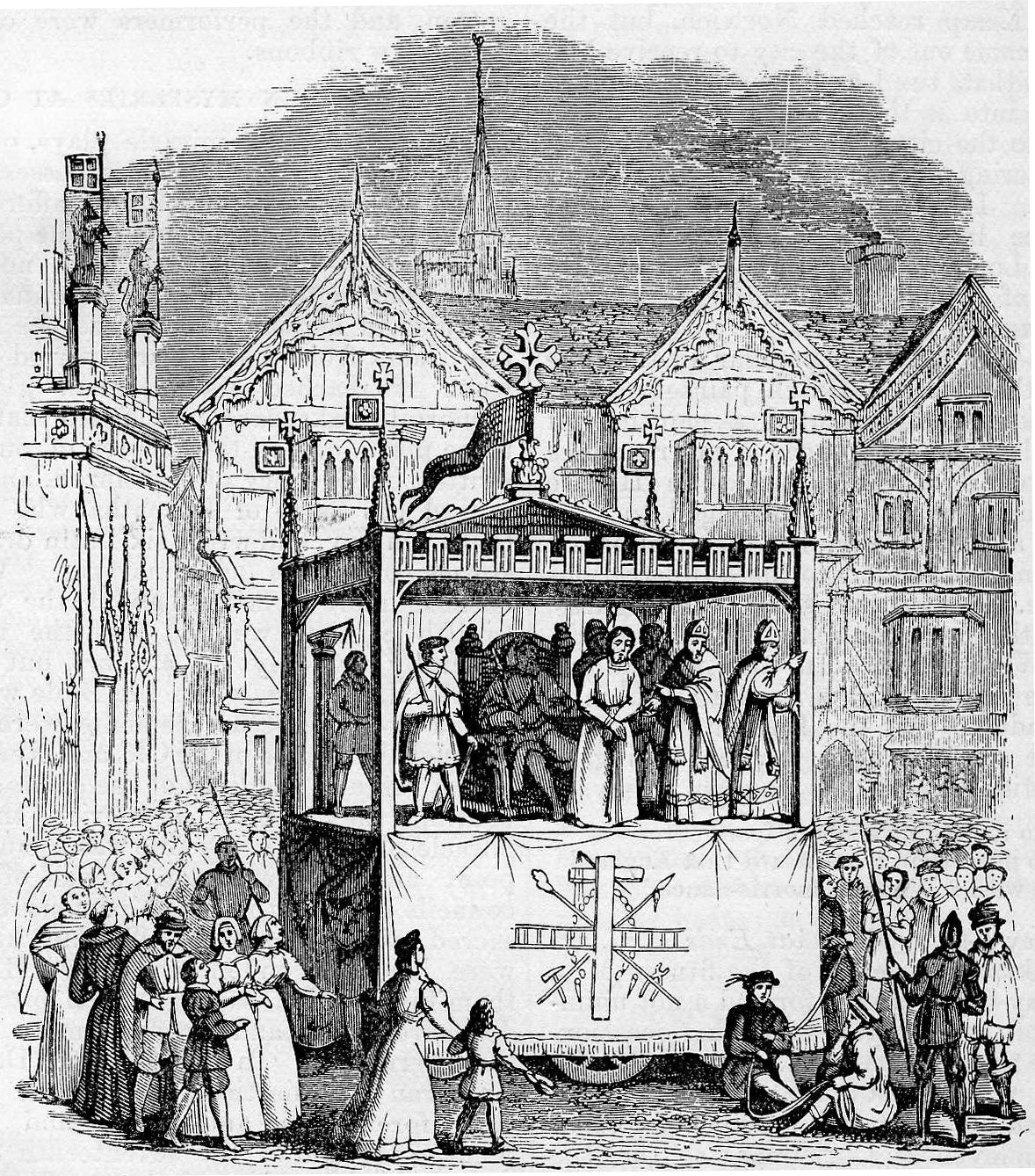
What humans have always seemed to enjoy are stories of moral dilemmas played out in both mundane and fantastical ways. Consider the medieval mystery plays. These were more than merely pedagogical in nature, they were social events that brought people together and incorporated some audience participation, including talking back to the characters during the performance, etc.

I hear that in some movie theaters in other countries (I write from the U.S.) audiences are very vocal and even talk to the screen, as it were, and critique out loud the actions of the characters while the film is playing. Regardless, quiet or vocal, we all seem to gravitate toward the moral. We like passing judgment, we like justice, and, interestingly, we like wickedness too. However, without some kind of absolute from which morality emanates, having a moral opinion is, in final terms, as much comic as it is tragic.
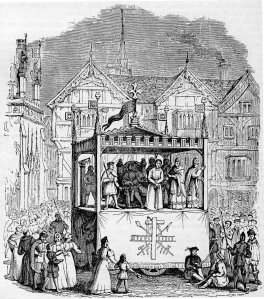

Medieval Mystery Play

So why do we continue to hold moral positions in a morally relativistic and credulistic world? If I had a clear answer I could probably chair some philosophy or psychology department somewhere. My guess, though, is that we will invent an absolute if we can’t find one. In other words, if one doesn’t believe in moral absolutes, or in something big enough (God for example), then one will invent a substitute absolute, for example: an economic or political system, or a biological and physical set of laws, or maybe an absolute that claims there are no absolutes. Regardless, the moral story still digs deep into our souls.

Even the most mundane and vapid kinds of films have some moral content which can be understood within a larger framework of meaning. Consider this audio review of the recent film Tranformers by a pastor at Mars Hill Church in Seattle. (The review is at the end of that post.)

Only Physical, or Metaphysical?
As I take a look at the popular art of today, that is, television shows (i.e. CSI, Survivor, et al) and film (i.e. Michael Clayton, Enchanted, et al), I see worlds presented that do not include God, or any so-called traditional god, that is, a creator deity with whom our destiny lies. These are materialistic worlds, worlds in which stuff is the ultimate reality, no final truth, and no source of meaning. Interestingly, the goals of the characters are all about meaning, and soul searching, and truth.

The characters or contestants are driven forward by things or ideas that they deem important. This is basic story telling. This is fundamental script writing. But it doesn’t make sense if there is no final meaning in the universe, otherwise it’s just a cruel game. Why should we care that someone is searching for something that doesn’t exist? Or even if, for some untenable reason, we do care, why should they search? Consider this quote regarding the modern predicament:

The quality of modern life seemed ever equivocal. Spectacular empowerment was countered by a widespread sense of anxious helplessness. Profound moral and aesthetic sensitivity confronted horrific cruelty and waste. The price of technology’s accelerating advance grew ever higher. And in the background of every pleasure and every achievement loomed humanity’s unprecedented vulnerability. Under the West’s direction and impetus, modern man had burst forward and outward, with tremendous centrifugal force, complexity, variety, and speed. And yet it appeared he had driven himself into a terrestrial nightmare and a spiritual wasteland, a fierce constriction, a seemingly irresolvable predicament.

~Richard Tarnas, The Passion of the Western Mind
What does one do with this? How does one come to terms with a spiritual wasteland, or an irresolvable predicament? Is it so that rational human beings must suffer the conflict of a great desire for meaning in a world that has no ultimate meaning? Is religion an answer or a placebo? No matter what we do we do not get away from these questions. How we solve them, or come to terms with them, is a big deal (or maybe it is also meaningless). My contention is that there is a God, that that God is there, and that that God is knowable. But am I deluded? I don’t think so. And the person who thinks I am deluded believes from a place of conviction as well. I find this more than fascinating.

Michael Clayton

What most recently sparked my thinking about all this God and art stuff was a recent viewing of Michael Clayton. The story in this film plays itself out in a Western (geographically & conceptually), materialistic world where there is no transcendent god. It is a thoroughly modern view of human existence. There are no moral absolutes. And yet, Clayton is a man in search of himself. He is in desperate need of a positive existential moment. He needs to make a self-defining, self-actualizing choice so that he can move beyond his cliff-edge existence and become who he should be. He needs to make the right choice even if it is difficult and painful, even if it means giving up who he has been. There is nothing narratively original in this aspect of the story. It is as timeless as a Greek tragedy.

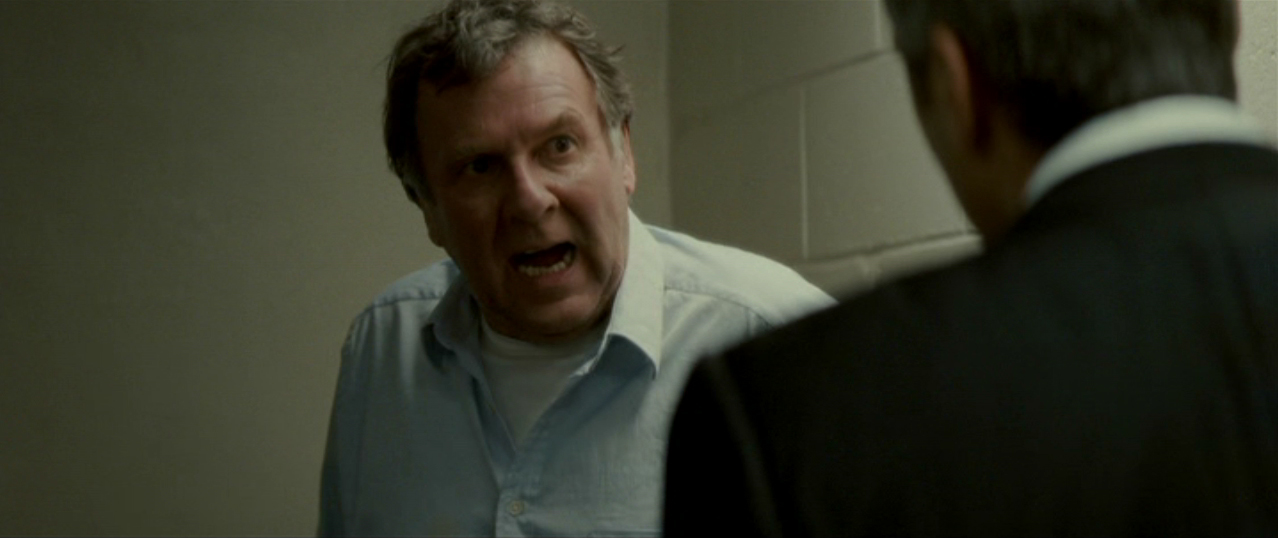
The story revolves around a legal battle in which a company is being sued for its harmful actions. Arthur Edens (Tom Wilkinson) is the attorney working the case. Unfortunately for his law firm and for his client he is deeply troubled by the case. He feels he is defending murder, in a sense. The firm sends Michael Clayton (George Clooney) to talk with Edens. Part of that conversation goes like this:

Michael Clayton: You are the senior litigating partner of one of the largest, most respected law firms in the world. You are a legend.
Arthur Edens: I’m an accomplice!
Michael Clayton: You’re a manic-depressive!
Arthur Edens: I am Shiva, the god of death
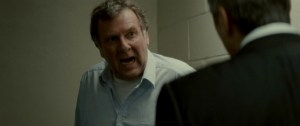

“I am Shiva, the god of death.”

Wow. Where did that come from? Shiva, the god of death? It certainly grabs one’s attention, and it sounds rather cool, but why, in this film, out of nowhere make a reference to one of the principal deities of Hinduism? I say “nowhere” because there is no indication throughout the film that any of the characters believe in any kind of god or religion. In fact, it could be argued that the problem facing all the characters is that, because there is no god, no ultimate reality to which they are finally accountable, they are lost in a sea of moral floundering. Morality becomes personal preference, personal conviction, and power.

Making a reference to Shiva, the destroyer and transformer Hindu god, makes some sense then. First, Edens feels like a destroyer, or at least one who defends the destroyer. He has personal convictions of wrongdoing and it is eating away his soul. Second, in a world personal morality one can choose, as one needs or sees fit, any god that works for the moment, so why not Shiva? Shiva becomes Eden’s god of choice because the concept of Shiva explains his convictions somehow. Shiva is his self-image for the moment. Tomorrow it might be a different god. Maybe Vishnu or Brahma. Or maybe a Sumerian god.

Interestingly the reference to Shiva comes up again. Once Clayton confronts Karen Crowder (Tilda Swinton) with the fact that he has carried out Eden’s plan to expose the company, we get this bit of dialog:

Karen Crowder: You don’t want the money?
Michael Clayton: Keep the money. You’ll need it.
Don Jefferies: Is this fellow bothering you?
Michael Clayton: Am I bothering you?
Don Jefferies: Karen, I’ve got a board waiting in there. What the hell’s going on? Who are you?
Michael Clayton: I’m Shiva, the God of death.
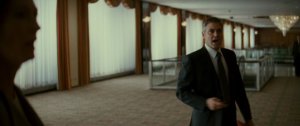

“I am Shiva, the god of death.”

Again it’s Shiva, the god of death, and this time the line is used as a final punctuation to the film’s climax. However, unlike Eden, Clayton uses the line more for its effect on Crowder and Jefferies than from a sense of personal identification. What might that effect be? Within the context of the film, and within the context of a largely non-Hindu society, this line comes as a kind of shock, a non-sequitur of sorts, that specifically draws attention to itself. I imagine the filmmakers intend the line to read something like “I am the fictional, mythological god Shiva (in a metaphorical sense of course) who is bringing about a kind of death to you, a death that you are powerless to avoid.” In other words, we are not to assume that the filmmakers or the characters actually believe in the existence of Shiva, rather the idea of Shiva is appropriated in order to convey something meaningful.

To the person who does not believe in Shiva, such a line might merely have a kind of cool factor. To a devout Hindu this line might be somewhat disconcerting – I don’t know because I am not a Hindu. What is interesting is that none of the characters have made a conversion to any religion, or even gone through any particularly religious experience. Edens has had mental breakdown because of deep moral tensions. Clayton has crossed over into a personally powerful existential decision. But neither have obviously embraced Hinduism. (If I missed something, let me know.)

Interestingly, the narrative arc of Michael Clayton follows a traditional Western style morality tale. And yet, one could say the characters, who do not overtly believe in any god, still wrestle with issues that derive their moral content from a Judeo-Christian heritage, and then, ironically, symbolically claim a Hindu god as justification for their actions. I find this both puzzling and not surprising. It is exemplary of the pluralistic/post-modern society that I live in.

In the film’s final shot we see Clayton riding alone in the back of a taxi. It is a meditative shot. He does not look happy or fulfilled. Maybe he is, but his countenance is rather sullen. Has he saved himself by his actions? Has he found redemption for who he was? How can he be sure he has actually changed as a person? None of these questions are answered. One could say that finally he made the right decision after a life of bad ones, and that is good. But one could say that he still has not solved the deeper question of his existence.

The radical truth is that in a world without a God that stands as an ultimate source of meaning then any decision made by Clayton does not really have any meaning. His final decision, though it may resonate powerfully within us the viewers, doesn’t really matter, no matter how personally, existentially transforming it may be for him. At best one can say he made his decision, so what. Any decision would have had the same value. But, of course, we know deep down that can’t be true. We live knowing there is right and wrong, and what we believe we believe to be true.

Crimes and Misdemeanors
Consider the film Crimes and Misdemeanors, Woody Allen’s brilliant 1989 film about morality, choice, and justice. In this film Allen explores how morality flows from where one begins, that is, from the set of presuppositions one claims about God, the universe, our existence, meaning, etc. He also seriously toys with our expectations (our need) for justice to win out.

The film is also very much about the existence, or non-existence, of God, and what that means. I love this quote from Judah Rosenthal:

I remember my father telling me, “The eyes of God are on us always.” The eyes of God. What a phrase to a young boy. What were God’s eyes like? Unimaginably penetrating, intense eyes, I assumed. And I wonder if it was just a coincidence I made my specialty ophthalmology.

There is something both sinister and humorous about it. It also represents our modern tendency to analyze ourselves and mistrust our motives.

But there is so much more to consider in this quote and in this film. The following two part video analysis is an excellent overview of the film’s themes:

When I first saw Crimes and Misdemeanors I was both stunned and thrilled. At the end I thought “perfect”, that’s how it should end, with him getting away with murder, not because I wanted him to, but because I so expected him to get caught and I liked the irony. Allen turns everything on it head and gets us to think. Thinking is a good thing, especially about truth and morality.

Our view of God has a great deal to do with how we understand and appreciate Crimes and Misdemeanors. If there is no God are the characters and their actions meaningless? Is our desire for justice merely a temporary chemical reaction to a situation that emerged from the chance combination of sub-atomic particles? Or do we live as though our desire comes from someplace more profound?

[Side note: In Star Wars, when the Death Star blows up the planet Alderaan, do we merely observe the rearranging of material particles (something of ultimate inconsequence), or do we assume that blowing up a planet and its inhabitants is an act of evil? Get over it old man Kenobi, you moralist! That was no tremor in the force. Probably just gas.]

Finally

I am inclined to think there is no such thing as a narrative without some moral content.
Either a series of events are purely a-moral, an arbitrary grouping of cause and effect acts without meaning, or they are, in some way, the result of decisions. If decisions are involved then those actions have meaning and therefore have a moral dimension. I see narrative as being fundamentally the result of decisionsand therefore fundamentally moral.

But as soon as well make a moral claim we assume an absolute. We might say our claim is purely cultural or situational or merely a personal decision, but we don’t really live that way. When we say war is wrong, or rape is wrong, or Nazi death camps are wrong, we assume a universal. And if we claim universals then what is our foundation? This is the very point at which our belief or non-belief in God, god, or gods, has the most gravity.

Woody Allen leaves the question open in Crimes and Misdemeanors, but he is relying on the fact that we cannot. He creates in us a tension, and something to talk about. Michael Clayton leaves us somewhat satisfied, yet under its surface there is no final meaning, its only opinion. What is great about both of these films is how they tap into the very human predicament of having to sort out the deep questions of how we are to live our lives and upon what are we going to base our choices.

I can be in awe of an artist even though our beliefs about God may differ. What we have is a common humanity, which is a truly profound connection. Even so, it is worth calling out our differences as well, not for the sake of creating divisions, but of understanding each other and seeking the truth. For we are, by nature, truth seekers. But then that’s another universal I am claiming.
The Chess Player Stripped Bare: Marcel Duchamp (Even)

Chess players are madmen of a certain quality, the way the artist is supposed to be, and isn’t, in general.

~ Marcel Duchamp

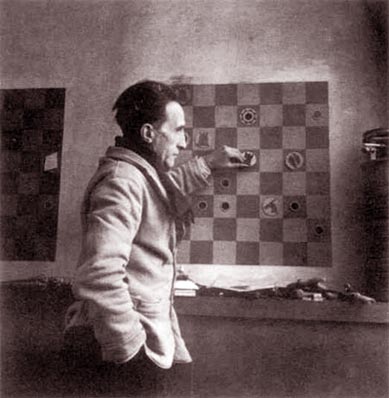
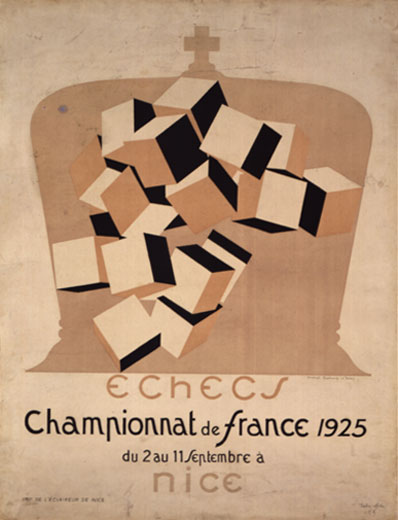
The artist Marcel Duchamp was virtually unmatched in his role in changing the course of art history in the 20th Century. I’m inclined to believe he was even more important, in the long run, than Picasso. Duchamp was brilliant, innovative, avant-garde, challenging, and extremely witty. And yet, at the peak of his art career he decided to walk away from the life of the artist and dedicate his life to playing chess. He was on the French team for the chess Olympiads of 1928-1933. He designed the poster for the French Chess Championship of 1925 (below). He was gaga over chess.

I find it no wonder that Duchamp’s art had such an analytical and intellectual bent. Much of the art that preceded him, like the Fauves and Blaue Rider group, or the French post-impressionists, or even, to some degree, the Futurists, relied on a more visceral and emotional response. Duchamp’s work was emotional, certainly, but he also was a challenger to received ideas, including the very idea of Art itself. He expected the viewer to use her brain as well as her heart as she engaged with the work. Those who took up the challenge were never quiet the same. I find it no wonder that his art was such because I now know of his passion for chess, a game that obviously places demands on the brain, and yet is also an art. Art is an idea, and chess is an art.

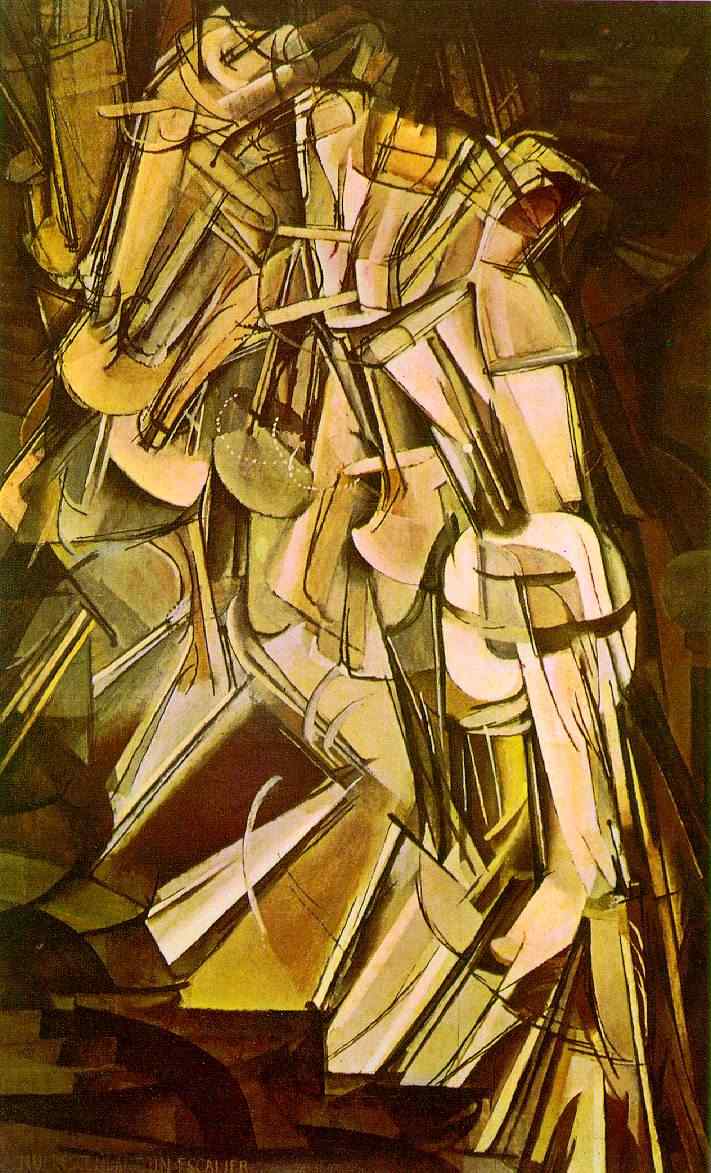
The earliest of Duchamp’s famous works, Nude Descending a Staircase, one sees the intellectual tendency in full. In the same vein as the cubists, Nude Descending calls on the viewer immediately to analysis, and not just of the work as a work, but to what it is doing in the larger context of art.

Later Duchamp to this thrust further with his readymades. With his readymades Duchamp moved art into the almost entirely conceptual. He was moving away from the visual, or “retinal” kind of art, to the mental. “…it was always the idea that came first, not the visual example”, he said, “…a form of denying the possibility of defining art.” (from Wikipedia)

I would argue that Duchamp’s love of chess fueled his interest in the mental aspect of art for two reasons. One: Chess is very much a challenge of the brain, and yet chess has a broad cultural and historical pedigree, like art. Two: I see Duchamp looking at the art world, at the machinations of style and theory and money and self-satisfaction, and he saw all the pieces interlocking like a chess board. I imagine he was looking for that move that puts his opponent back on his heels through cleverness and surprise. Art, even it all its seriousness, is a game. We are still living in the aftermath of how Duchamp envisioned and played that game.


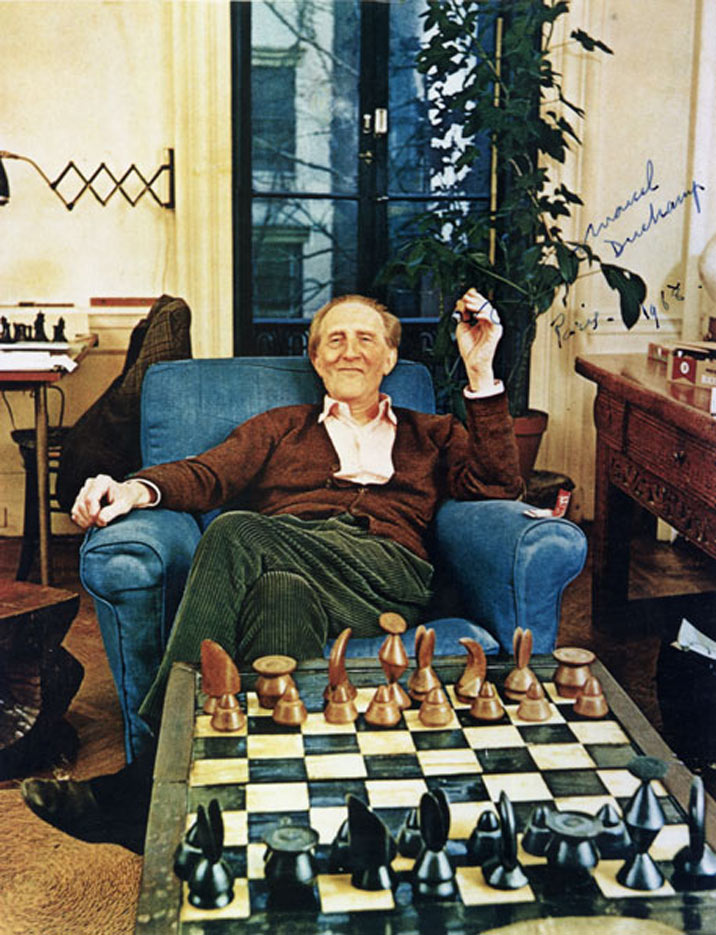
Duchamp, in his later years, smug and happy with his chess set.

>dreaming

>. . . some simple juxtapositions:

Sight grows dim, my strength
is two occult, adamantine darts
Hearing weavers for my father’s house
breathes distant thunder
The tissues of hard muscles weaken
like hoary oxen at the plough
and no longer when night falls
do two wings gleam behind me

During the party, like a candle I wasted away
Gather up at dawn my melted wax
and read in it whom to mourn, what to be proud of
How, by donating the last portion of joy
to die lightly
and in the shelter of a makeshift roof
to light up posthumously, like a word

~ from Nostalgia (a poem by Arseniy Tarkovsky; Andrey’s father)

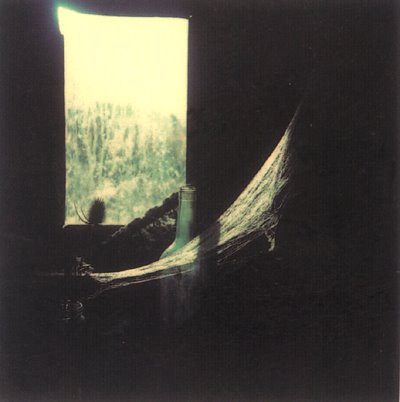
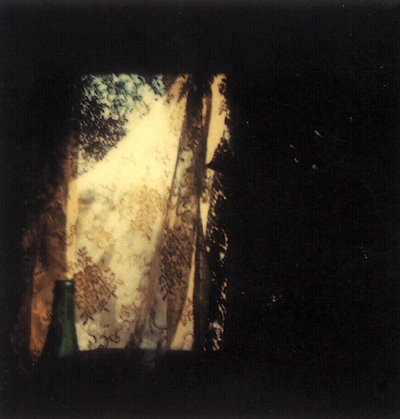
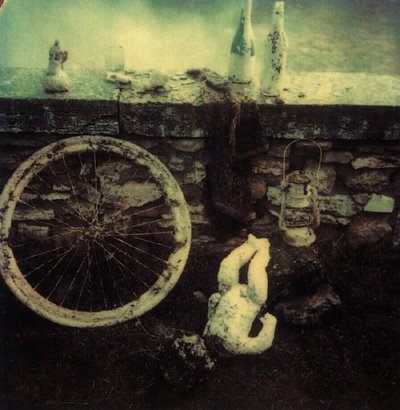
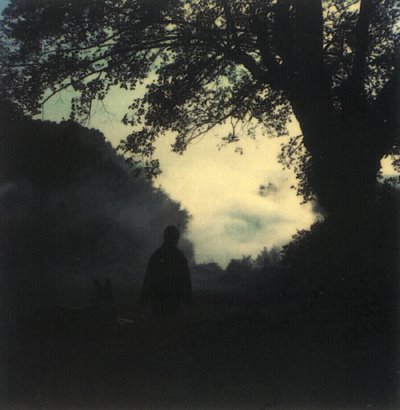
Polaroid images by Andrey Tarkovsky:

Voice over from Tarkovsky’s The Mirror:

I keep having the same dream. It seems to be forcing me to return to the bittersweet site of my grandfather’s house, where I was born on the table forty years ago. Something always prevents me from entering. I keep having this dream. When I dream of the log walls and dark pantry, I sense that it’s only a dream. Then my joy is clouded for I know I’ll wake up. Sometimes something happens, and I stop dreaming of the house and the pines by the house of my childhood. Then I grieve and wait for the dream that will make me a child again, and I’ll be happy again, knowing that all still lies ahead, and nothing is impossible.

>more snow

>

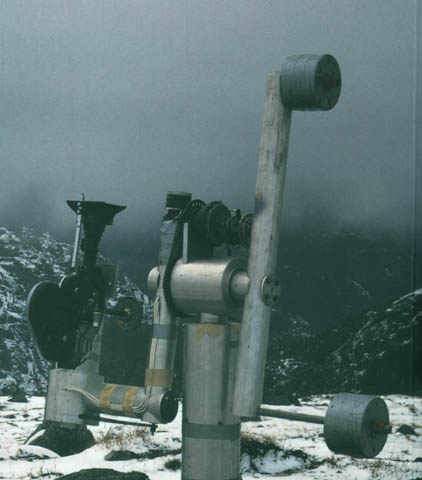
3 videos from Michael Snow . . .

Four and a half minutes of Back and Forth (1969):

Almost ten minutes from La Région Centrale (1971):

The entire Wavelength (1967):http://video.google.com/googleplayer.swf?docId=-3009876496807585942&hl=en

With Wavelength one of the starting ideas was to be able to see a zoom, to experience a zoom from a kind of analytical “inside a zoom” position, and it seemed to me that could not be fast. I thought it would be interesting to have it big enough so that it is monumental, that is weight in a way, and so it ended up being 45 minutes, but it could have been 15 minutes.


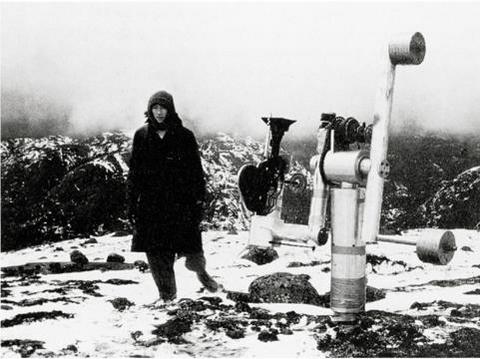
Snow on location for La Région Centrale

P.S. We are back to 36 degrees and rain. Snow is disappearing.

>Time, Memory, Mystery, Narrative

>

Stavrogin
…in the Apocalypse the angel swears that there’ll be no more time.

Kirillov
I know. It’s quite true, it’s said very clearly and exactly. When the whole of man has achieved happiness, there won’t be any time, because it won’t be needed. It’s perfectly true.

Stavrogin
Where will they put it then?

Kirillov
They won’t put it anywhere. Time isn’t a thing, it’s an idea. It’ll die out in the mind.

-F. Dostoievsky, The Possessed

There are few filmmakers, if any, who have philosophized as deeply about the nature of time as Andrey Tarkovsky. Time, as a philosophical concept, has been examined in depth by many, but rarely do filmmakers seem to step, philosophically or artistically, beyond commonly accepted film school concepts of time. In other words, for most filmmakers time is a concrete conceptual medium which one manipulates with accepted narrative forms according to common schemata in order to tell a clearly defined and easily understood cause and effect story. But that is not really time itself.

from Stalker (1979)

What do we talk about when we talk about time? For the most part we talk of time’s effects, of managing time, of the past or the future, of what could have happened or what did, of how one thing led to another. But time is none of these things in itself. Time is a mystery, and we relate to time in ways far more complex than the march of cause and effect. When we bring in the relationship of memory to time, and we dig into the nature of reality and its relationship to truth, we begin to exponentially expand the concept of time. Because memory is related to morality, time can also be understood as a spiritual concept.

from Mirror (1975)

In his book Sculpting in Time (pp. 57-8), Tarkovsky says this about time:

Time is necessary to man, so that, made flesh, he may be able to realize himself as a personality. But I am not thinking of linear time, meaning the possibility of getting something done, performing some action. The action is a result, and what I am considering is the cause which makes man incarnate in a moral sense.

History is still not Time; nor is it evolution. They are both consequences. Time is a state: the flame in which there lives the salamander of the human soul.

Time and memory merge into each other; they are like the two side of a medal. It is obvious enough that without Time, memory cannot exist either. But memory is something so complex that no list of all its attributes could define the totality of the impressions through which it affects us. Memory is a spiritual concept! For instance, if somebody tells us of this impressions of childhood, we can say with certainty that we shall have enough material in our hands to form a complete picture of that person. Bereft of memory, a person becomes the prisoner of an illusory existence; falling out of time he is unable to seize his own link with the outside world–in other words he is doomed to madness.

As a moral being, man is endowed with memory which sows in him a sense of dissatisfaction. It makes us vulnerable, subject to pain.

Cinema has a unique relationship with time. Of all the art forms only film can capture time, as it were, and preserve it. Tarkovsky says this as critical. Here he talks of this unique aspect of cinema around the time of filming The Sacrifice (1986):


His speech begins at 5:37 into the piece.

To think of time as a state, as that flame in the soul, and of action as merely a result of time, and to think of cinema as a medium that preserves time, provides the foundation upon which a different kind of film can be constructed. Different, not in the sense of odd or misshapen, but different from the conventions and expectations of what we have typically received. The history of cinema is replete with action driven plots, with stories that emerge from a fascination with time’s results, the effects of time. When the underlying state of time is manifest, if at all, it is too often the representation of shrunken persons and truncated souls.


from Nostalgia (1983)

What then is the role, even responsibility of cinema? Or of the filmmaker? The role of cinema has necessarily changed over the years. In years past the mere existence of a short film brought about wonderment, and sometimes caused viewers to run for the exits. But cinema has changed, and so have we. Tarkovsky writes:

Cinema is therefore evolving, its form becoming more complex, its arguments deeper; it is exploring questions which bring together widely divergent people with different histories, contrasting characters and dissimilar temperaments. One can no longer imagine a unanimous reaction to even the least controversial artistic work, however profound, vivid or talented. The collective consciousness propagated by the new socialist ideology has been forced by the pressures of real life to give way to personal self-awareness. The opportunity is now there for filmmaker and audience to engage in constructive and purposeful dialogue of the kind that both sides desire and need. The two are united by common interests and inclinations, closeness of attitude, even kinship. Without these things even the most interesting individuals are in danger of boring each other, of arousing antipathy or mutual irritation. That is normal; it is obvious that even the classics do not occupy an identical place in each person’s subjective experience.

Sculpting in Time (pp. 84-85)

Tarkovsky goes on to say about the filmmaker’s responsibility:

Directing in the cinema is literally being able to ‘separate light from darkness and dry land from the waters’. The director’s power is such that it can create the illusion for him of being a kind of demiurge; hence the grave temptations of his profession, which can lead him very far in the wrong direction. Here we are face with the question of the tremendous responsibility, peculiar to cinema, and almost ‘capital’ in its implications, which the director has to bear. His experience is conveyed to the audience graphically and immediately, with photographic precision, so that the audience’s emotions become akin to those of a witness, if not actually of an author.

Sculpting in Time (p. 177)

from The Sacrifice (1986)

In a sense the filmmaker is the creator of time. The audience enters into the world of the film, the mental/emotional space circumscribed by the filmmaker, and lives, as it were, in that space for at least the duration of screen time, if not on some level for ever after. Clearly this has implications for issues of responsibility, both for filmmaker and audience. But this kind of thinking opens up possibilities for ‘approach’ as well. In other words, to think of time as “the cause which makes man incarnate in a moral sense” is to confront something living rather than a mere object of manipulation. This approach is what turns Tarkovsky’s film into what they are: films that contemplate the deeper truths of the soul and call us to do the same. This approach is also the antidote to the ‘boring art film’ in that it does not allow for the mere application of style for artistic effect. And it can, at times, be as a kind of lens that helps reveal the more profound aspects of one’s soul.

*All quotes come from Sculpting in Time by Andrey Tarkovsky, trans. Kitty Hunter-Blair, University of Texas Press, 1986.

>Wrong Move & our institution of high art

>This post can be considered a contribution to the contemplative cinema blogathon over at Unspoken Cinema.

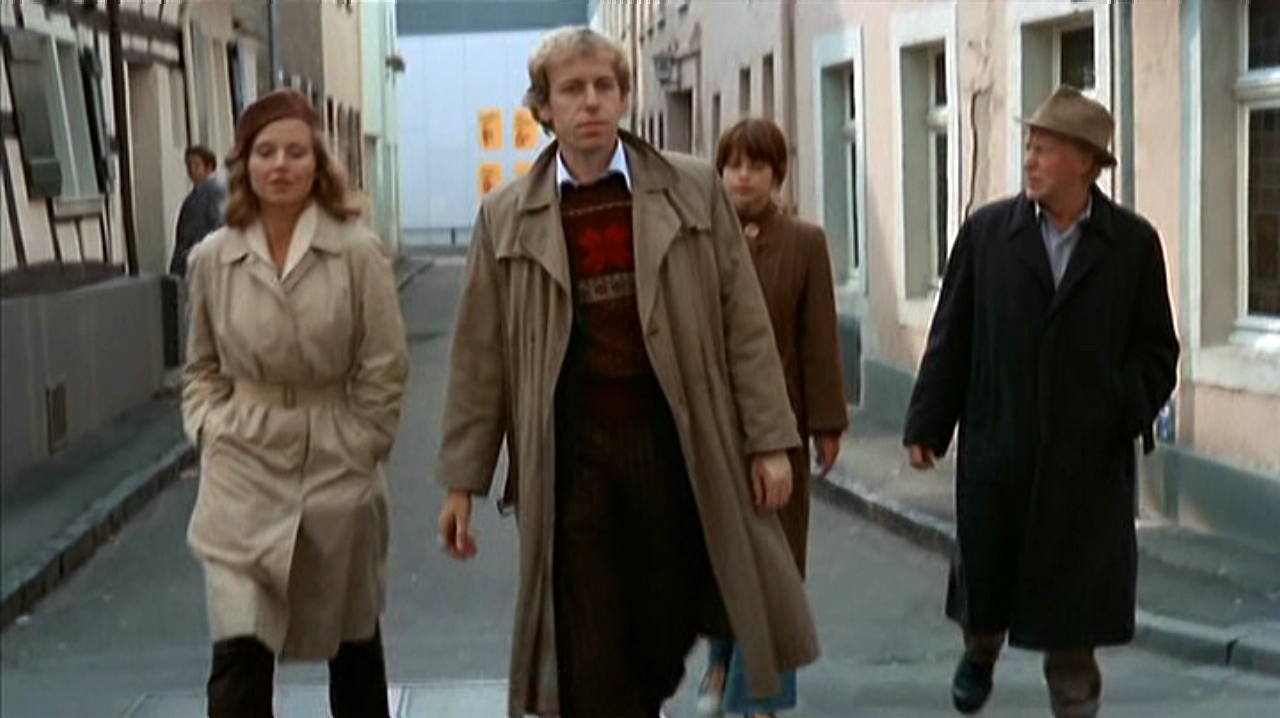
I am convinced that the existence of the contemplative in cinema gains or loses its power from the historical and cultural contexts in which it plays. In other words, one person’s contemplative moment is another person’s boring-art-film moment is another person’s slice of reality. And that those cinematic moments shift over time, for example traveling from a formerly populist cultural object used for “mere” entertainment to an archaeological/social artifact used for contemplation by a cultural elite. Take for example the two scenes in Wim Wenders’ Wrong Move (1975) in which the five central characters proceed on extended walks while talking, observing, and not talking.

Wrong Move is not a contemplative film the way a Tarkovsky or Tarr film might be, but it uses some contemplative devices. The plot is apparently thin, the motivations of characters are somewhat obscure, and the focus is on the character’s trying to solve the question of their existence and understand themselves. I do not imagine Wrong Move was a particularly popular film in its day. I know that no one would bother watching it today except for those who have an interest in such films. Regardless, it is a very good film.

In many films walking, like car chases, is a time filler. A director can lengthen or shorten such scenes to fit the desired length for the film. Ellipses exist, in part, to do away with obvious time-wasters as extended walking scenes. That is why we see a character leave an apartment and then see her driving her car; we just assume the action between leaving and driving took place and we do not care to see it anyway.

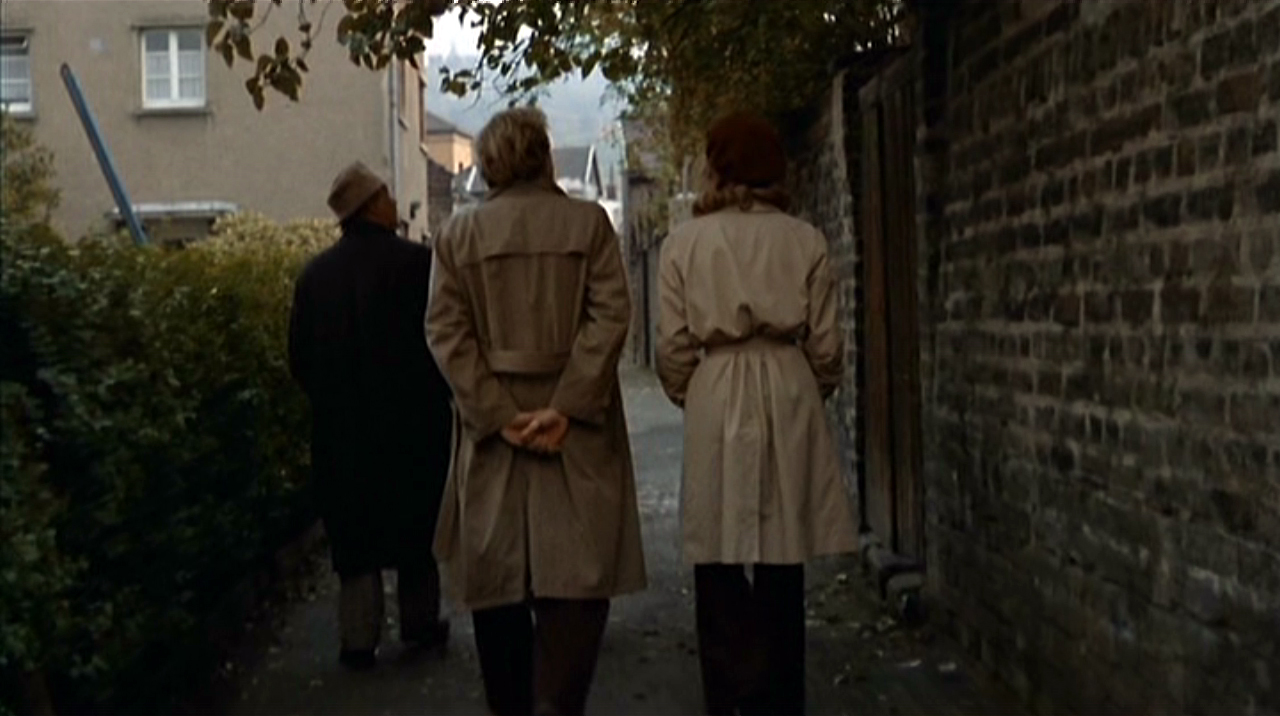
In Wrong Move Wenders uses ellipses when it is appropriate to telling the story. But then, twice, he creates scenes in which characters just walk, amble really, through a city first, and then through the countryside. In both cases the walking takes up minutes of screen time. And in both cases there are significant pauses in the conversations, which, other than the walking, is also the only “action” going on.

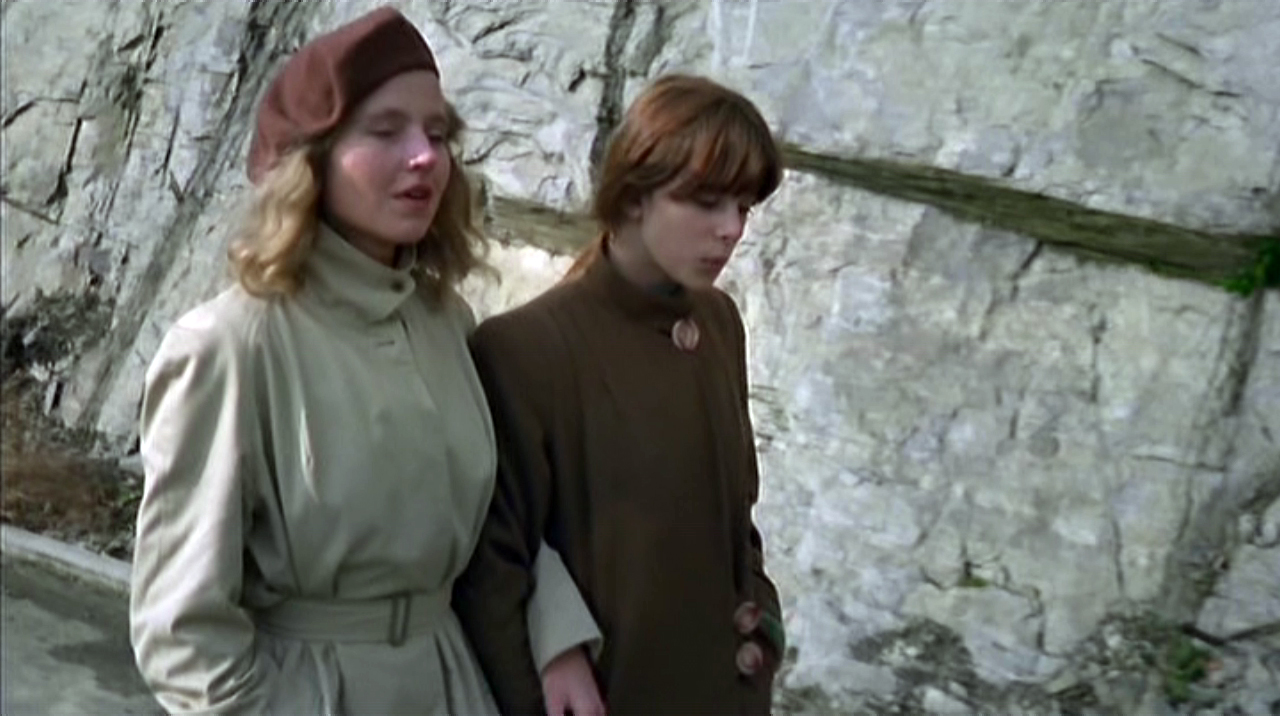
In the first walking scene the characters walk along side streets and back alleys, mostly in silence, observing the world around them.

Several times they stop and observer and listen to the sights and sounds of the city and its inhabitants. In one instance a man and woman are fighting and the man begins beating the woman. The walkers turn and keep walking. Another time a man yells out of his upstairs window about his extreme suffering. They stop, listen, and keep walking.

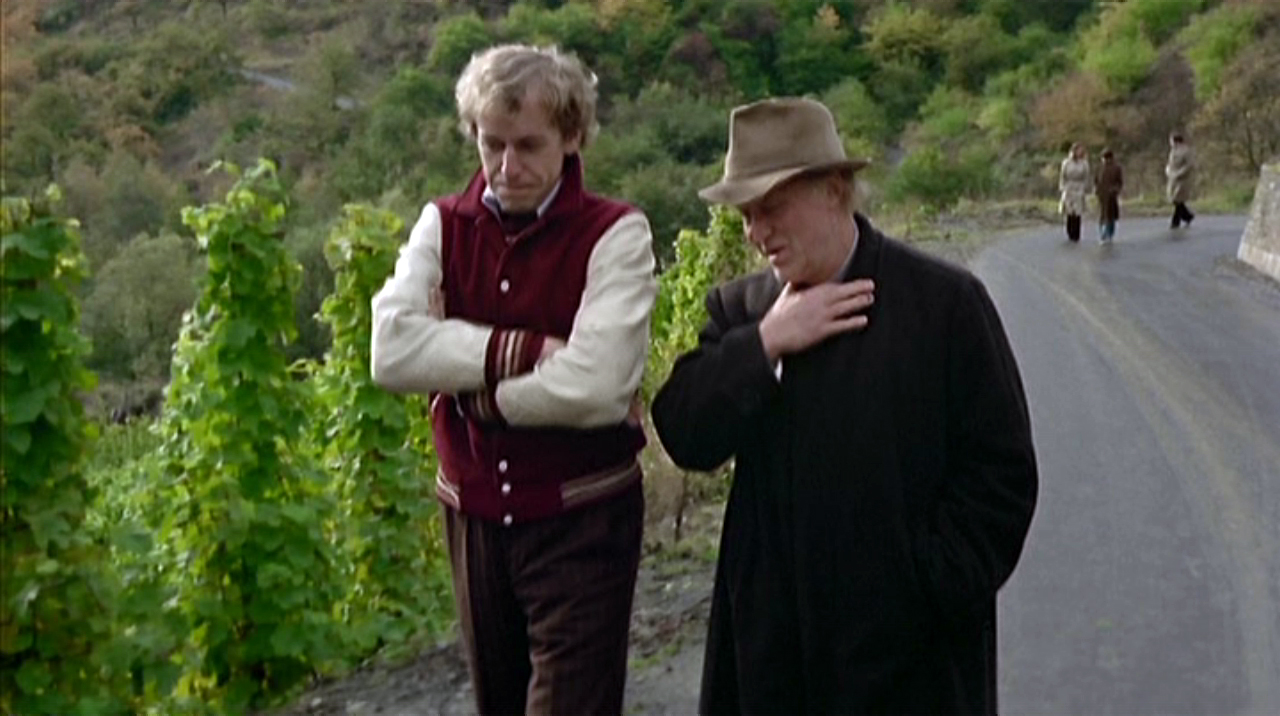
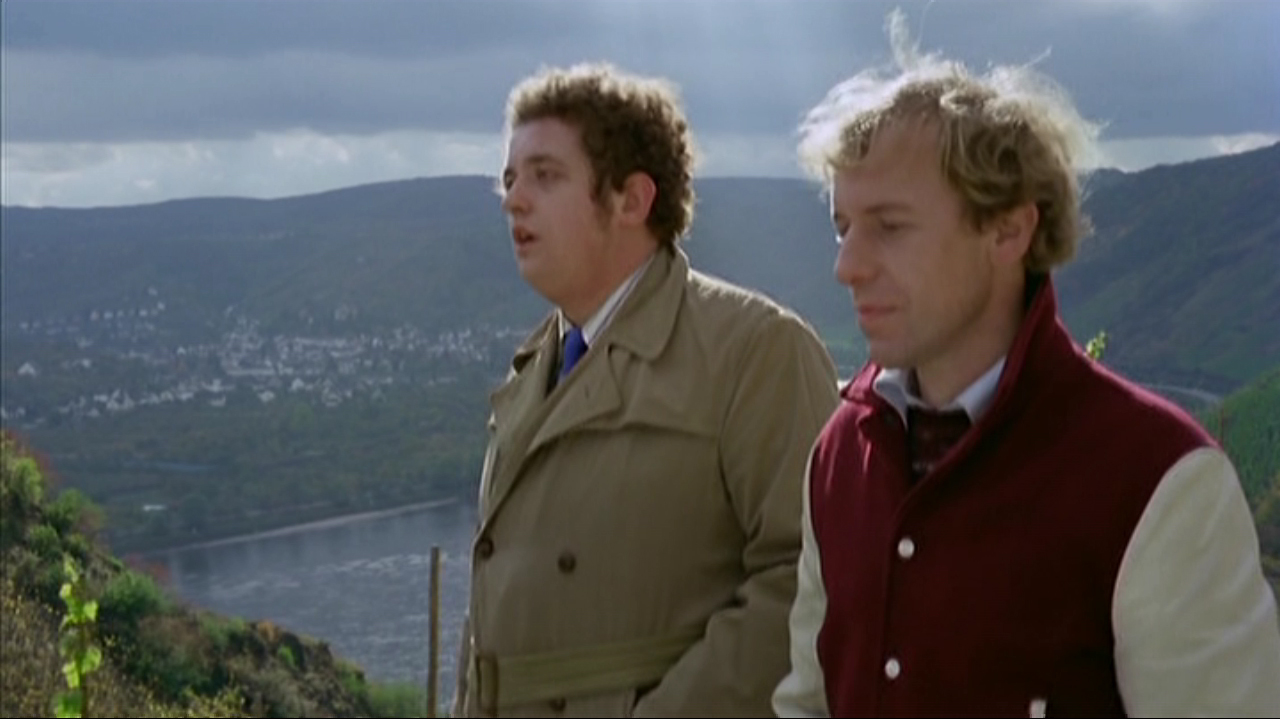
In the second sequence the characters walk up a long road in the country until they are high above the valley and the river below.

At moments they pair up and then switch pairings in a natural way that amblers do.

Along the way they talk of various things such as art and politics and history.

Overall, neither of these walks advances the plot with any kind of action. These walks are almost like detours from the story. That’s one way of looking at them. Another way of looking at them is that these walks are central to the story and that the plot revolves, in a sense, around these moments. In fact, these walking scenes are key contemplative moments that both draw us into the characters as human beings who think, rather than merely act, and foreground the film as a film, thus substantiating our own ambling.

By having the characters walk for such extended screen time one is faced with non-normative cinematic conventions. By having the characters talk one is drawn into their thinking. In both instances one is faced with either turning away or contemplating the film and one’s own thoughts. The fact that a film would ask the viewer to participate in contemplation places that film outside the assumptions underlying more popular films. Wrong Move, though it is built with a populist technology, nonetheless resides outside populist conventions, even if its themes are universal.

This “foregrounding” is a common contemplative process. By deviating from classical cinematic narrative norms, in this case by just having the characters walk for minutes of screen time, the viewer is made more aware of being a viewer, and of the film being a film. In this sense the contemplative aspects include not only what is happening on the screen, but the act of viewing, including one’s relationship to the film as film.

A note on contemplative cinema: We live at a time in which the discussion of art often assumes one underlying purpose of art, that is, art is for perceptual contemplation, and more specifically, for aesthetic contemplation. But art is also for many things, not least of which includes religious rites, or telling stories, or public ceremonies. We can also assume that art can roughly be categorized as works of high art, works of popular art, and works of the tribe. In all these distinction there is great cross-over and cross-pollinating, so much so that clear divisions are often impossible to maintain.

I want to point this out because when we talk of contemplative cinema we are typically referring to basic assumptions of our institution of high art. First, to borrow from Nicholas Wolterstorff, a society’s institution of art can be summed as

[T]he characteristic arrangements and patterns of action whereby works of art are produced in that society, whereby they are made available for the use of members of that society, and whereby members of that society are enabled to make use of them.

Art in Action, 1980

Thus, the institution of high art consists of those patterns and arrangements that create, support, and suite the needs and desires of those who would “use” works of high art. That art is for aesthetic contemplation is probably the single most assumed characteristic of this institution.

I recognize the term “high art” can be somewhat pejorative, but I do not intend it so, for it is not necessarily a question of valuation. But it might be a question of social class – an unwelcome and unrecognized term in the U.S.

One can observe that in our society there is a cultural elite: a group that is both open (anyone can join) and is closely tied to our intellectual elite (which also anyone can join). Lest we chafe at such notions, we should keep in mind that a very small percentage of people in our society will ever step into an art gallery or concert hall, and very few people will ever watch a Tarkovsky or Tarr film, or a Wenders film from the 1970s, or even a great Hollywood studio era film outside a handful of titles. And certainly even fewer individuals will read works of film theory or film history, or bother to write down their own thoughts on the subject.

We should also believe, however, that this cultural elite consists of individuals fundamentally no different than anyone else. The term is largely a technical one. I like to think that our cultural elite behaves as it does for much the same reasons, as described by Pauline Kael, that educated audiences see “art” films:

I would like to suggest that the educated audience often uses “art” films in much the same self-indulgent way as the mass audience uses the Hollywood “product,” finding wish fulfillment in the form of cheap and easy congratulation on their sensitivities and their liberalism.

from Fantasies of the Art-House Audience, in I Lost It at the Movies (1965)

Contemplative cinema is more than a category of cinematic effects or a collection of stylistic characteristics. It is also a social term, and maybe even a political term. To speak of contemplative cinema is to draw connections with our institution of high art with all of its assumptions, expectations, and motivations.

>A through K links

>A.
Screening the Past’s
Field survey: the poll results
This has got to be one of the most interesting lists I’ve come across in a long time. It is an informal survey of key film-related writings and cinematic events over the past ten years or so as highlighted by film scholars. There is a lot here to chew on. Thanks Girish for posting this at Dr. Mabuse’s Kaleido-Scope.

B.
stunning photographs by Chris Jordan

Cell phones #2, Atlanta 2005 44 x 90″

C.
Fascinating photo collages of typologies of everyday life by Mark Luthringer.

D.
The opening shot from The Enigma of Kaspar Hauser (1974), a.k.a. Every Man for Himself and God Against All:

This is one of my favorite opening shots. From the first time I saw it on video, somewhere in the mid 1980s, it has haunted me.

E.
Art assignments for ordinary people. Yes, you too can get involved!

F.
Photography by Michael Stipe (yes, that Stipe)

G.
Delicate Situations

H.
Extremely independent radio online: SomaFM

I.
The Immigrant (1917)
http://video.google.com/googleplayer.swf?docId=-6961048885792851539&hl=en
Over at their blog Kristin Thompson and David Bordwell wish classical cinema a happy birthday. They pick 1917 as the key year. They list Chaplin’s The Immigrant as one of the important films of that year.

J.
My next important project: How to Brew

K.
My favorite segment from the 1987 ensenmble film Aria:
http://video.google.com/googleplayer.swf?docId=-6601322802908624594&hl=en
Directed by Charles Sturridge. The music is from G. Verid’s La forza del destino.

>Glory to God in the highest

>Four paintings by Giotto, from his fresco cycle in the Scrovegni Chapel:


The Birth of Christ
Now the birth of Jesus Christ was as follows: when His mother Mary had been betrothed to Joseph, before they came together she was found to be with child by the Holy Spirit. And Joseph her husband, being a righteous man and not wanting to disgrace her, planned to send her away secretly. But when he had considered this, behold, an angel of the Lord appeared to him in a dream, saying, “Joseph, son of David, do not be afraid to take Mary as your wife; for the Child who has been conceived in her is of the Holy Spirit. “She will bear a Son; and you shall call His name Jesus, for He will save His people from their sins.” Now all this took place to fulfill what was spoken by the Lord through the prophet: “BEHOLD, THE VIRGIN SHALL BE WITH CHILD AND SHALL BEAR A SON, AND THEY SHALL CALL HIS NAME IMMANUEL,” which translated means, “GOD WITH US.” And Joseph awoke from his sleep and did as the angel of the Lord commanded him, and took Mary as his wife, but kept her a virgin until she gave birth to a Son; and he called His name Jesus. (Matthew 1:18-25)


The Adoration of the Magi
Now after Jesus was born in Bethlehem of Judea in the days of Herod the king, magi from the east arrived in Jerusalem, saying, “Where is He who has been born King of the Jews? For we saw His star in the east and have come to worship Him.” When Herod the king heard this, he was troubled, and all Jerusalem with him. Gathering together all the chief priests and scribes of the people, he inquired of them where the Messiah was to be born. They said to him, “In Bethlehem of Judea; for this is what has been written by the prophet: ‘AND YOU, BETHLEHEM, LAND OF JUDAH, ARE BY NO MEANS LEAST AMONG THE LEADERS OF JUDAH; FOR OUT OF YOU SHALL COME FORTH A RULER WHO WILL SHEPHERD MY PEOPLE ISRAEL.’” Then Herod secretly called the magi and determined from them the exact time the star appeared. And he sent them to Bethlehem and said, “Go and search carefully for the Child; and when you have found Him, report to me, so that I too may come and worship Him.” After hearing the king, they went their way; and the star, which they had seen in the east, went on before them until it came and stood over the place where the Child was. When they saw the star, they rejoiced exceedingly with great joy. After coming into the house they saw the Child with Mary His mother; and they fell to the ground and worshiped Him. Then, opening their treasures, they presented to Him gifts of gold, frankincense, and myrrh. And having been warned by God in a dream not to return to Herod, the magi left for their own country by another way. (Matthew 2:1-12)


The Presentation in the Temple
And when eight days had passed, before His circumcision, His name was then called Jesus, the name given by the angel before He was conceived in the womb. And when the days for their purification according to the law of Moses were completed, they brought Him up to Jerusalem to present Him to the Lord (as it is written in the Law of the Lord, “EVERY firstborn MALE THAT OPENS THE WOMB SHALL BE CALLED HOLY TO THE LORD”), and to offer a sacrifice according to what was said in the Law of the Lord, “A PAIR OF TURTLEDOVES OR TWO YOUNG PIGEONS.” And there was a man in Jerusalem whose name was Simeon; and this man was righteous and devout, looking for the consolation of Israel; and the Holy Spirit was upon him. And it had been revealed to him by the Holy Spirit that he would not see death before he had seen the Lord’s Christ. And he came in the Spirit into the temple; and when the parents brought in the child Jesus, to carry out for Him the custom of the Law, then he took Him into his arms, and blessed God, and said, “Now Lord, You are releasing Your bond-servant to depart in peace, According to Your word; For my eyes have seen Your salvation, Which You have prepared in the presence of all peoples, A LIGHT OF REVELATION TO THE GENTILES, And the glory of Your people Israel.” And His father and mother were amazed at the things which were being said about Him. And Simeon blessed them and said to Mary His mother, “Behold, this Child is appointed for the fall and rise of many in Israel, and for a sign to be opposed— and a sword will pierce even your own soul—to the end that thoughts from many hearts may be revealed.” And there was a prophetess, Anna the daughter of Phanuel, of the tribe of Asher. She was advanced in years and had lived with her husband seven years after her marriage, and then as a widow to the age of eighty-four. She never left the temple, serving night and day with fastings and prayers. At that very moment she came up and began giving thanks to God, and continued to speak of Him to all those who were looking for the redemption of Jerusalem. (Luke 2:21-38)


The Flight to Egypt
Now when they had gone, behold, an angel of the Lord appeared to Joseph in a dream and said, “Get up! Take the Child and His mother and flee to Egypt, and remain there until I tell you; for Herod is going to search for the Child to destroy Him.” So Joseph got up and took the Child and His mother while it was still night, and left for Egypt. He remained there until the death of Herod. This was to fulfill what had been spoken by the Lord through the prophet: “OUT OF EGYPT I CALLED MY SON.” (Matthew 2:13-15)

Merry Christmas!

>language is a virus

>Remember the concert film Home of the Brave (1986) by musician/composer/poet/artist Laurie Anderson? For some reason (maybe because of Girish’s post on ’80s pop music) I was recently thinking about this film and remembering how much I liked it way back when. Here are a couple of clips from the film:

Language is a Virus (from Outer Space)

Smoke Rings

If you are unfamiliar with this Laurie Anderson, check out this and this.


Way back when… Laurie Anderson performing her seminal 1970s performance piece Duets on Ice “which she conducted in New York and other cities around the world, [which] involved her playing violin along with a recording while wearing ice skates with the blades frozen into a block of ice; the performance ended only when the ice had melted away.” (from Wikipedia)


In some ways I think Anderson went a little too pop over the years at times, but I have always liked her sense of humor and wordplay. She is one of those few artists who can cross over to mainstream while never abandoning her roots in the “high art” tradition.