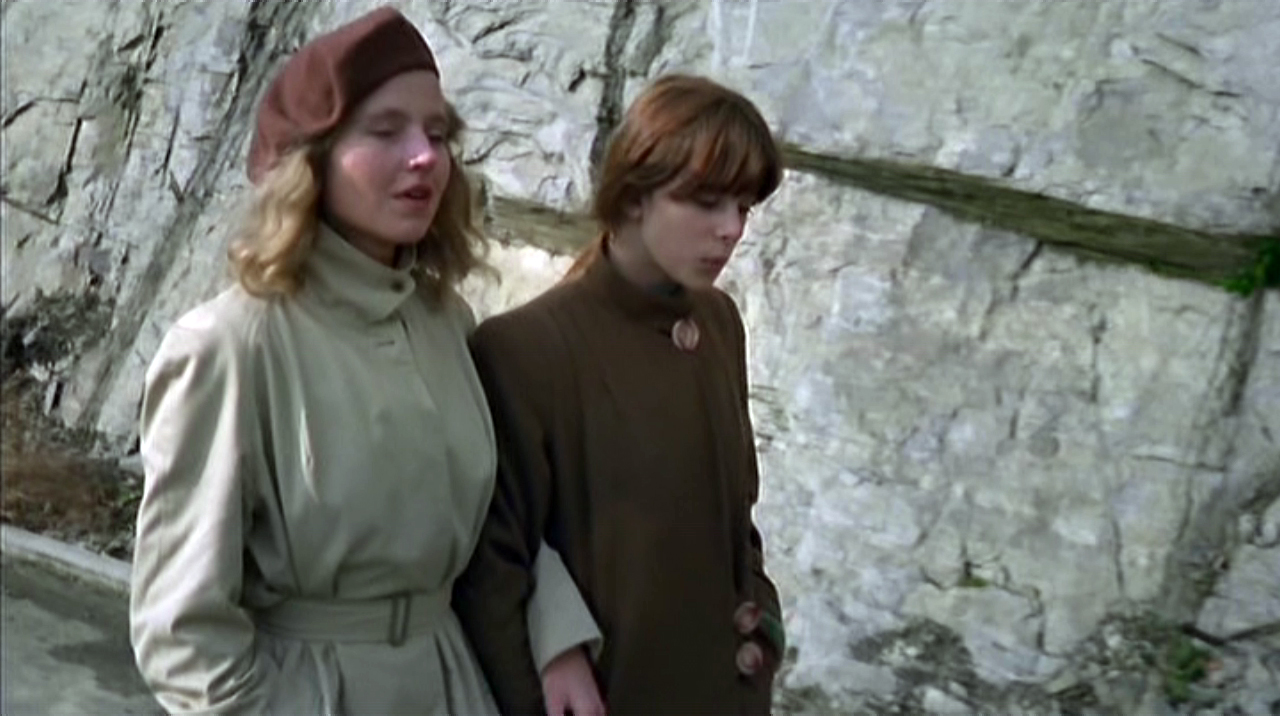
>when the young flee to a happy place

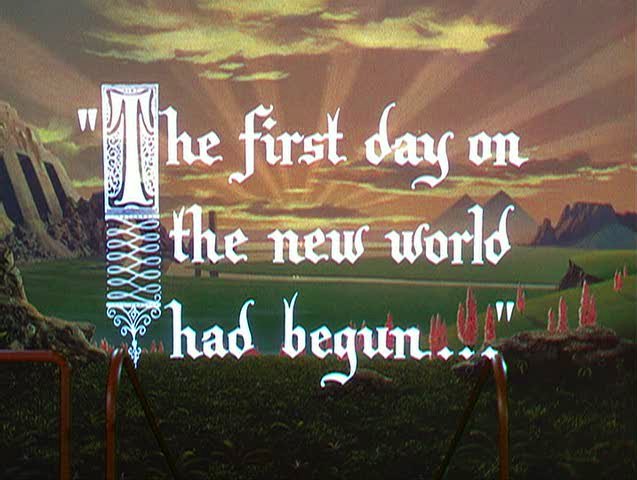
>Lily and I just watched the 1951 film When Worlds Collide. I had never seen the film before and I have to say it’s quite unintentionally funny from our vantage point today.


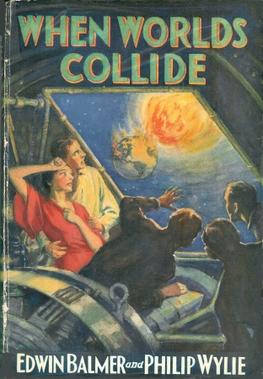
Cover art from the 1933 novel

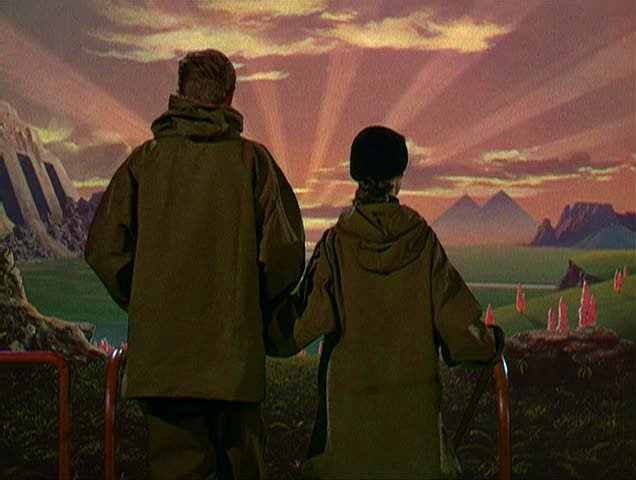
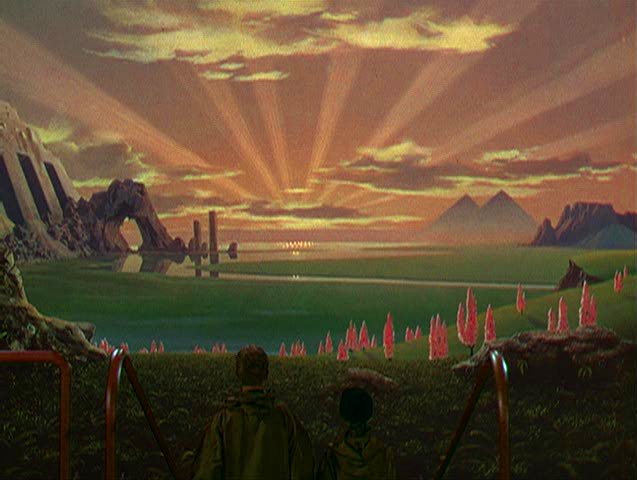
I liked how the planet Zyra, to which the forty humans have fled for their survival, looks more like a Walt Disney planet than someplace interesting. I was a little disappointed when no bunnies and other woodland creatures were to be seen.

Finally, I couldn’t help but remember a poem from my youth:

The Land of Happy

Have you been to the land of happy,
Where everyone’s happy all day,
Where they joke and they sing
Of the happiest things,
And everything’s jolly and gay?
There’s no one unhappy in Happy
There’s laughter and smiles galore.
I have been to The Land of Happy-
What a bore

~Shel Silverstein, from Where the Sidewalk Ends

P.S. I do have to say, however, that deep down I really love this kind of classic science fiction. There is something passionate and hopeful in it. And When Worlds Collide is, in many ways, a great example of its time and genre.

>teaching my daughter chess (and learning from Karpov)

>I am teaching my daughter how to play chess. She is seven and seems to love the game so far, but I can’t claim to be a good teacher. Chess is a great learning tool on many levels, including for me learning how to teach.

As I study the game I am learning about the great players (but not yet understanding their games in detail). One of those great players is former world champion Anatoly Karpov.

Here Karpov plays against a young chess player and, because Karpov is a good natured person, he gives her some chess tips along the way.

For some reason I love this little home video showing the kindness of the grand master. It reminds me to be kind in my teaching of my daughter. I also wish my daughter could be so lucky to play such a notable player as Karpov. Maybe someday.

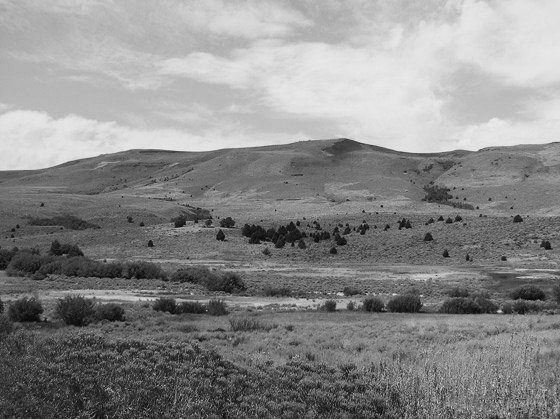
>Hart Mountain

>

I hold the leg back
while my father
makes the first incision.

It is here,
September desert mountain,
dry creek bed,
cervidae refuge,
where woods thicken
humid and dark,
where sons father dreams,
birds dash from tree to tree
like anxious spirits
in silhouette.

It is here,
oblivious to
the swarming flies,
knees locked in silence,
I watch the knife blade
deftly moving in bloody hands;
entrails glistening,
antlers digging earth,
eyes once bewildered
now like glass.

It is here,
down this lethal ravine,
shimmering blood on leaves,
broken branch of frantic motion,
cloven prints in soft soil,
and shouts from the ridge above,
I lunged headlong
with rifle ready
tired limbs forgotten,
following instinct and fear.

It is here,
guts now spilling
green-yellow stench
from belly wound,
where I last heard
the painful breathing,
and motioning,
directed the final blow.

~1998

War and Peace

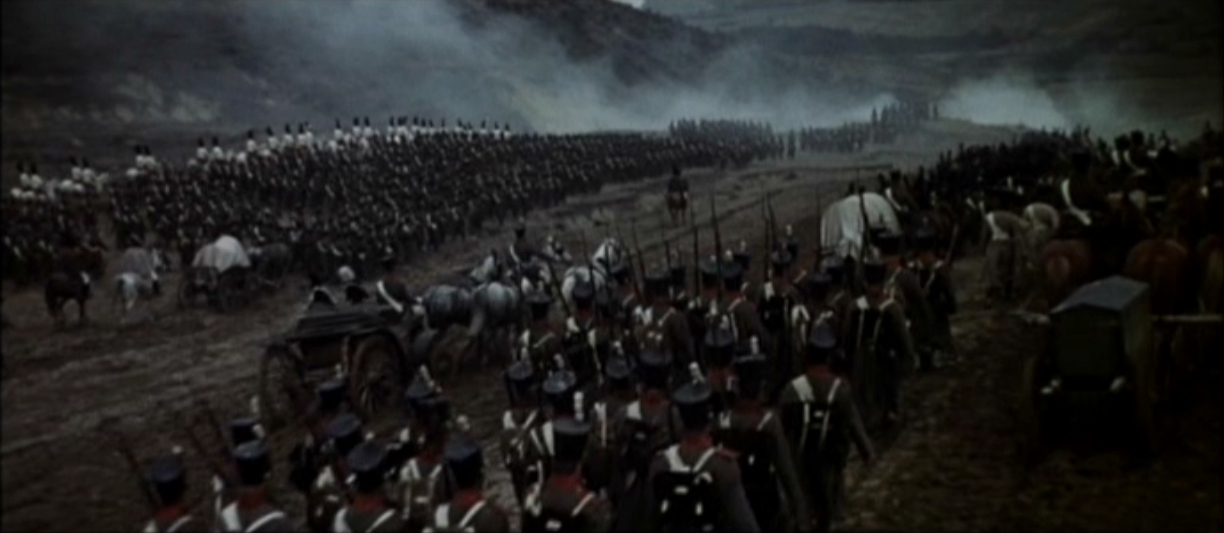
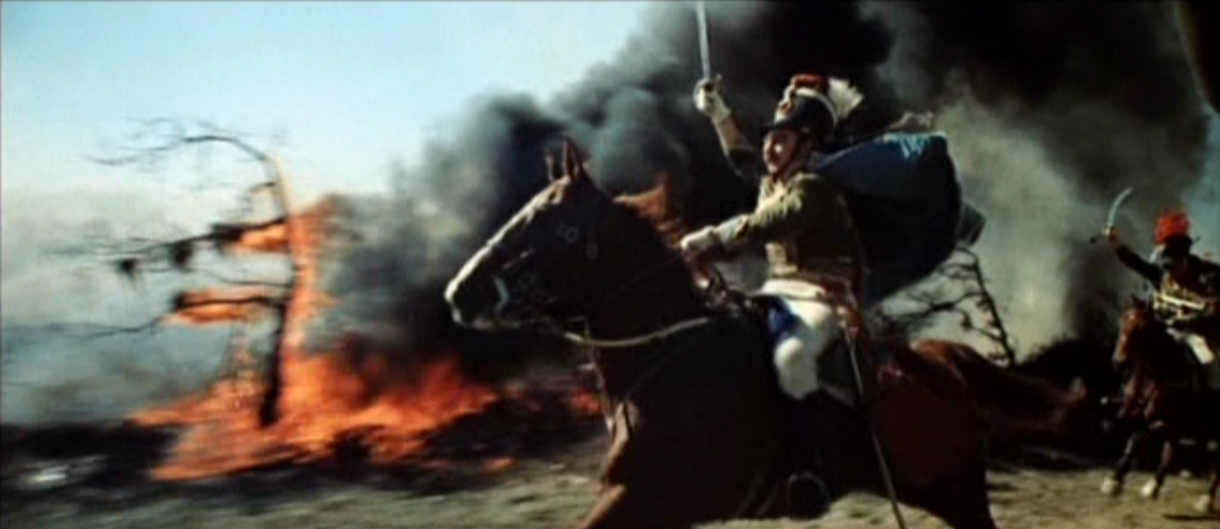
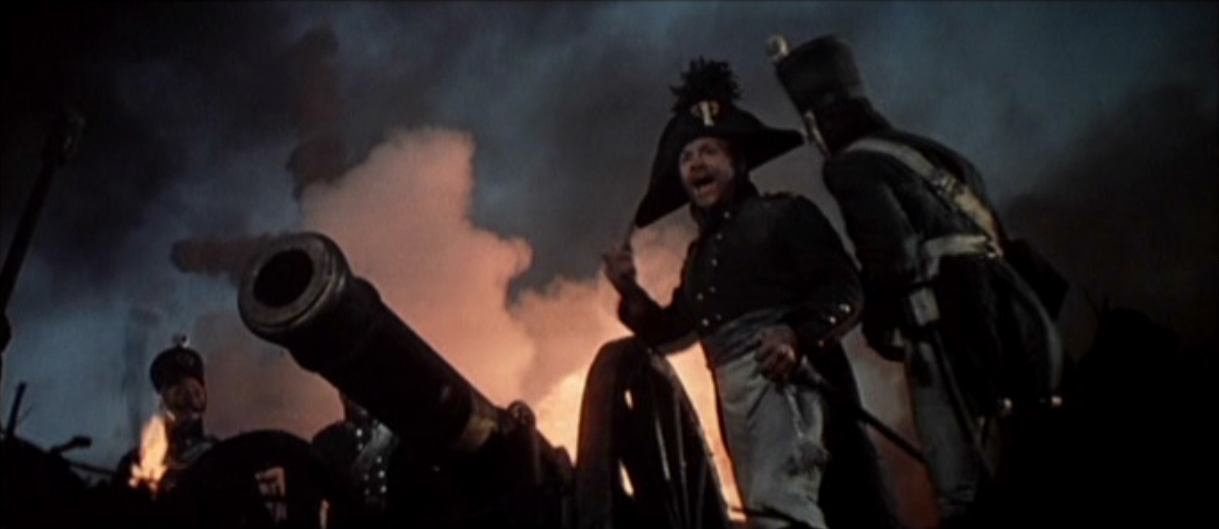
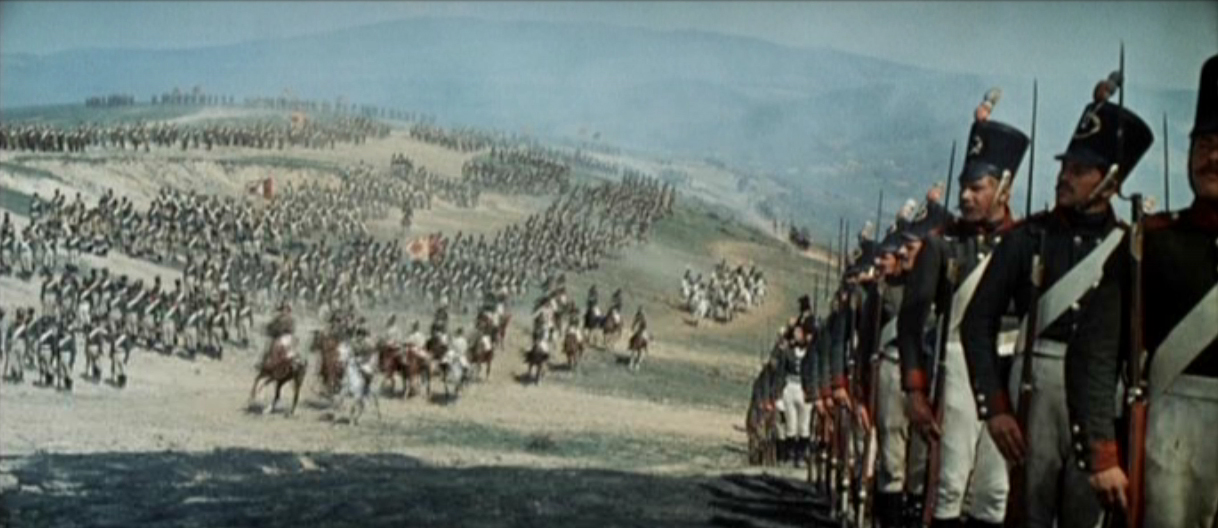
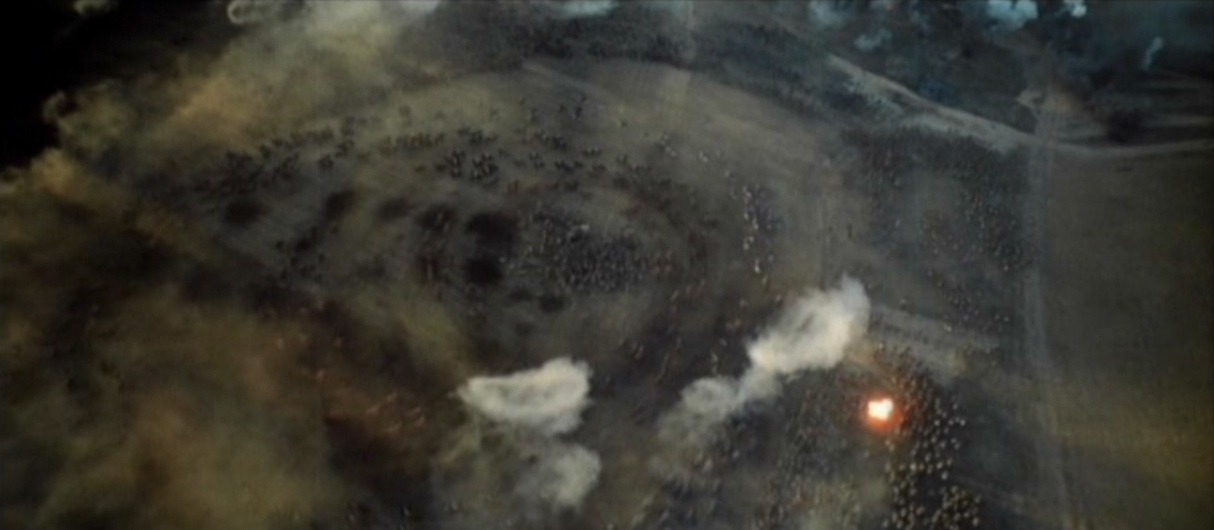
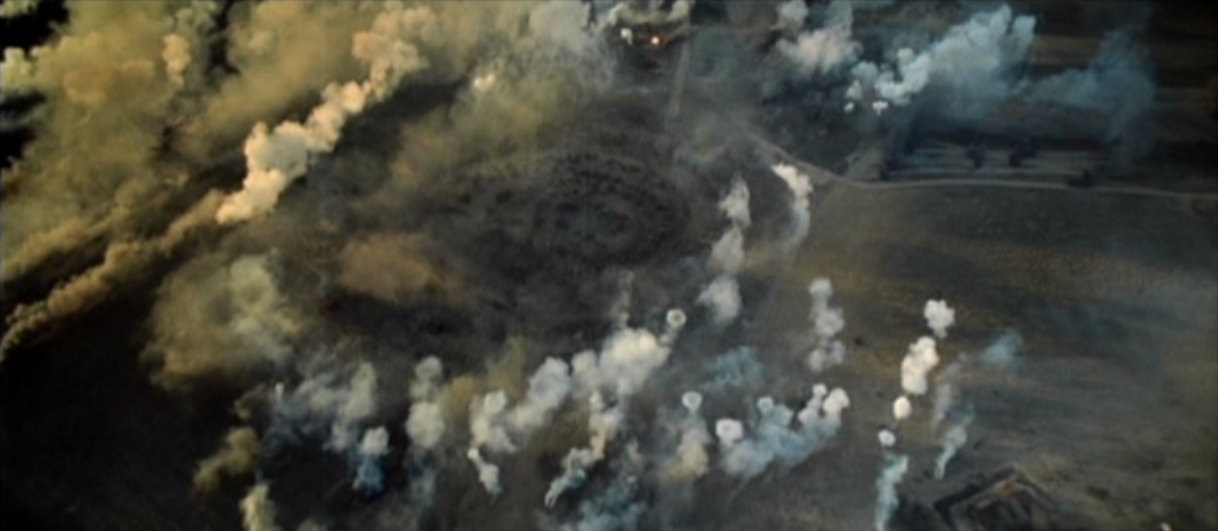
I am making my way through one of the most amazing films I have ever seen: Sergei Bondarchuk’s 1965-1968 Soviet era epic War and Peace (Voyna i mir).Amongst the many stunning aspects of the film, the battle sequences must be some of the best ever put on film. Here are a few screengrabs from the battle in part one:

The night sequence of the battery firing its canons, and then its retreat, visually rivals, and often exceeds, night sequences of other films:

Bondarchuk even takes the time to show the smoke and ash flying up from a campfire as seen from a wounded soldier’s perspective:

No CGI in 1965:

Many of the tracking shots remind me of John Ford’s films:

This last shot staggers the imagination. The troops swirl in a visual maelstrom as the camera pulls slowly back, turning the battle into a kind of dream or nightmare:

I found myself again and again comparing the battle sequences to those of Apocalypse Now (1979), at least for their shear scale and frightening beauty. I do not know if Coppola saw War and Peace before making his film, but I would not be surprised if he had.

The version I have access to is 403 minutes long, and my copy was due back to the library. So I will have to return and watch the rest later. So far the film has been both and joy and a kind of cinematic archaeological find. Great art can transcend both time and place, and good stories hold up forever.

>Triumph & Tragedy: Bobby Fischer (1943-2008)

>You have heard by now that former World Chess Champion Bobby Fischer has died. There probably has never been a chess player to generate as much discussion and opinion as Fischer. He was the most controversial of the great chess players, and his life was a case study of genius meets paranoia.

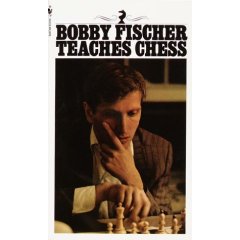
When I was a boy I had a copy of Bobby Fischer Teaches Chess.

This book became a favorite of mine, and Fischer loomed large in my psyche as both a chess player (and all that implies) and as an enigma. I was not a particularly good chess player, but I thought the game was interesting (still do), and I found the end-game puzzles in Fischer’s book very fun.

Fischer’s story is a tragic one in my opinion.


Fischer still remains the youngest ever U.S. Open Champion

The details of Fischer’s life have been well documented. His brilliance in chess is undisputed. But his personal life, especially in the decades since he won the world championship in 1972, spiraled downhill into self-absorbed, narcissistic, anti-semitic, paranoia. He was the kind of person who couldn’t make the distinction between minor and major offenses, every offense to himself was major, and he perceived offenses everywhere. He was a person who never forgot a wrong and saw himself in the victim role often. And he rarely seemed to understand the value of others.

And yet, those who knew him said he was honest and straightforward. Chess players still marvel at his abilities on the chess board. Boris Spassky, whom Fischer beat to win the world championship, remained his friend until the end.

I sometimes wonder if Fischer would have become a more gracious and savvy person if he had finished high school and gone to college. There is something about the process of going to, and finishing, school that stretches and, for lack of a better word, “socializes” a person. I would hazard a guess that the percentage of individuals prone to conspiracy theories and martyr-complexes drops among the more educated. I must admit I say this as someone who has spent a lot of time in college, so I have some personal investment in the matter. I also cannot guarantee that I’m not paranoid.


Fischer discusses chess and life

Without a doubt, in life and in death Fischer’s ghost will continue to loom large in the world of chess. His games will continue to be studied, his life will continue to be debated, and chess will never be the same.


The scraggly Fischer in later years: Never afraid to speak his mind.

History turned on game three of the 1972 World Championship. Fischer lost game one, didn’t show for game two, and many thought he was through. He played brilliantly in game three for his first ever win against Spassky. If he hadn’t won that game history, and Fischer himself, might have turned out differently.

Game three analyzed by kingscrusher at ChessWorld.

No matter how great one is at doing something – chess, sports, the arts, politics, etc. – what matters most is one’s character. Bobby Fischer was great at playing chess. He was lousy at life. More importantly, he harbored a lot of resentment and fear in his heart. I don’t know the reasons why, we all have complicated stories to tell, but I pray for his soul because he was, first and foremost, just a man full of weaknesses like me.

>a beatlely evening

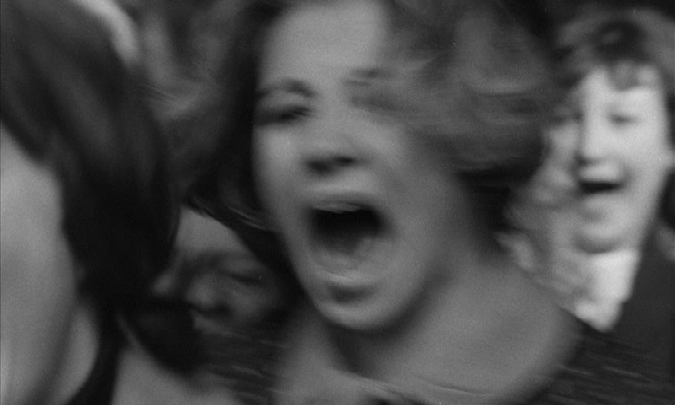
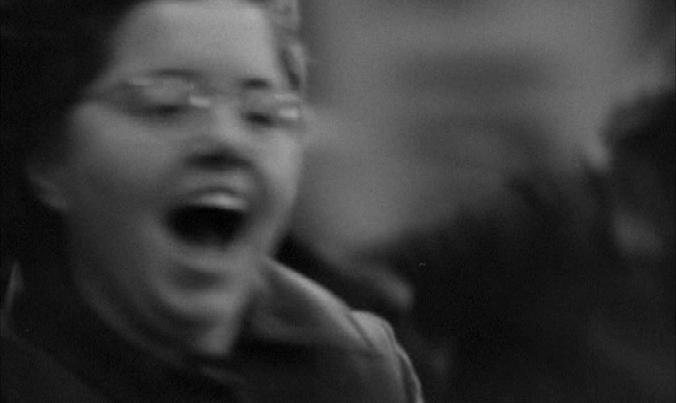
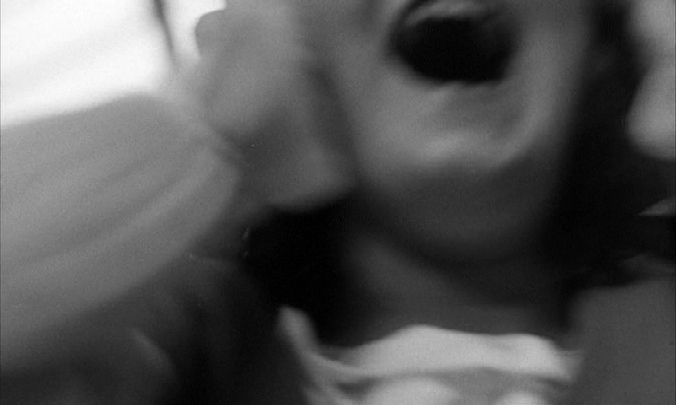
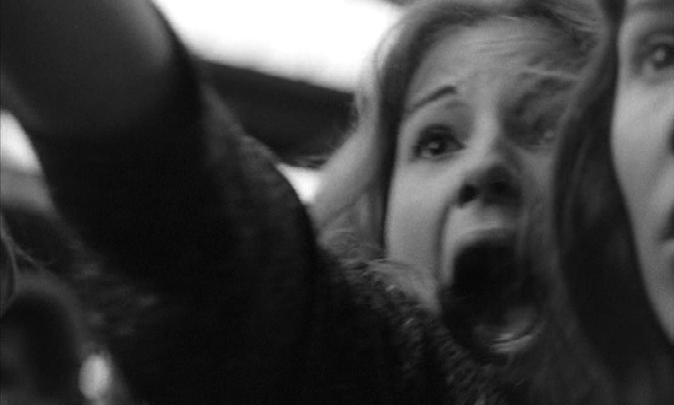
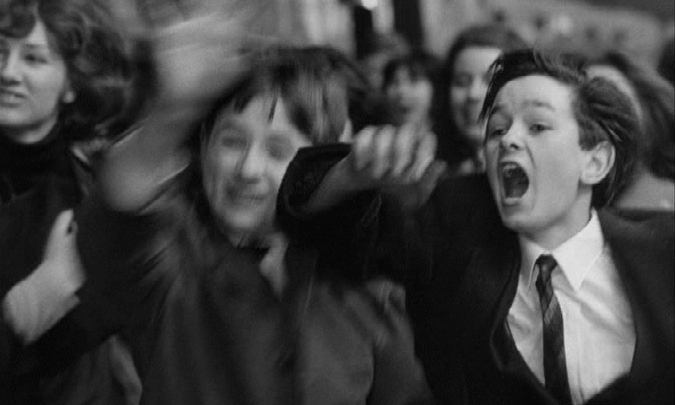
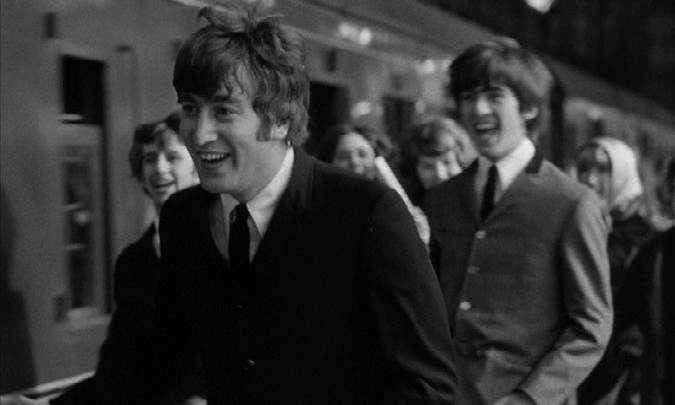
>Last night Lily and I watched A Hard Day’s Night (1964). It was a first for both of us. Here are some images from the opening sequence:


Even now, 44 years later, the film still is fun to watch and one can get a glimpse of why the Beatles were so popular, and still are. Lily asked me why everyone was chasing them and screaming so much. When the end credits showed up she exclaimed “it’s over?!” as though she could have watched at least another hour or so.

>gone skiing

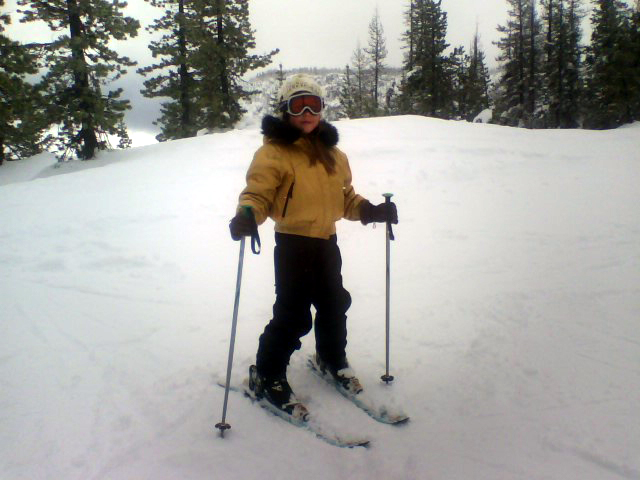
>On Tuesday I took my daughter downhill skiing for her first time. I grew up skiing and spent many years as an avid skier. But I have not been for years and my daughter had never been, so I figured it was about time to go.

She did great! If we can afford it I see her doing a lot of skiing in the future


Lily the skier

The skiing was excellent. It snowed the night before, stayed cold during the day, and we had some sun at times. Plus, Tuesdays are great days to go because prices are cheaper and there are no lift lines.

I think it has been around 20 years since I skied last. I was surprised by how I was able to pick it back up without any problems. But, boy am I out of shape! My legs were burning when tried to ski some of the harder runs.

As we left the ski area we had a beautiful view of this Cascade peak glowing in the sunset.


Three Fingered Jack, late afternoon

>what me gambit?

>
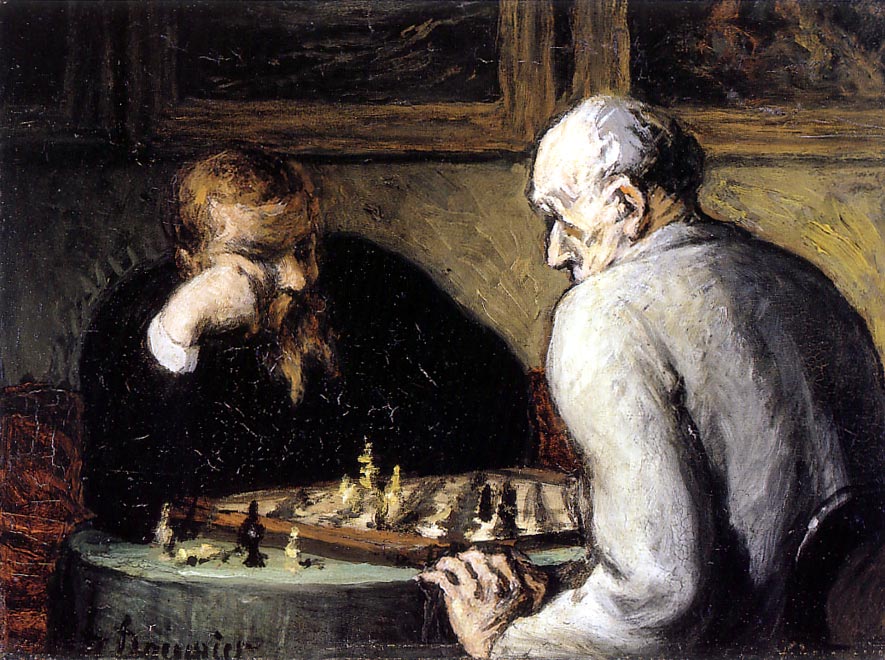
Honoré Daumier, The Chess Players, 1863

“A Chess game is divided into three stages: the first, when you hope you have the advantage, the second when you believe you have an advantage, and the third… when you know you’re going to lose!”

I must admit my new obsession, playing chess on ChessWorld.

I am not a very good chess player. At best I can say I am solidly mediocre with a flair for the banal. However, there is no game like chess. And I figure playing chess is at least as good as sudoku (probably much better) for improving my brain power, or at least slow my brain’s noticeable deterioration and general flaccidity. And it is much more fun.

This is not an advertisement for ChessWorld, but so far I have found this site to be a great way to play friendly games at a leisurely pace on-line. It is easy to find opponents and play when one wants to. Plus a guest membership is free.


John Singer Sargent, The Chess Game, c.1907

“You may learn much more from a game you lose than from a game you win. You will have to lose hundreds of games before becoming a good player”

In keeping with the overall cinema theme of PilgrimAkimbo, here is a little comedy from silent era Soviet Union:

http://video.google.com/googleplayer.swf?docId=3727820471573567512&hl=en
Chess Fever (1925)

My goal, of course, is to keep this new obsession in check.

>Time, Memory, Mystery, Narrative

>

Stavrogin
…in the Apocalypse the angel swears that there’ll be no more time.

Kirillov
I know. It’s quite true, it’s said very clearly and exactly. When the whole of man has achieved happiness, there won’t be any time, because it won’t be needed. It’s perfectly true.

Stavrogin
Where will they put it then?

Kirillov
They won’t put it anywhere. Time isn’t a thing, it’s an idea. It’ll die out in the mind.

-F. Dostoievsky, The Possessed

There are few filmmakers, if any, who have philosophized as deeply about the nature of time as Andrey Tarkovsky. Time, as a philosophical concept, has been examined in depth by many, but rarely do filmmakers seem to step, philosophically or artistically, beyond commonly accepted film school concepts of time. In other words, for most filmmakers time is a concrete conceptual medium which one manipulates with accepted narrative forms according to common schemata in order to tell a clearly defined and easily understood cause and effect story. But that is not really time itself.

from Stalker (1979)

What do we talk about when we talk about time? For the most part we talk of time’s effects, of managing time, of the past or the future, of what could have happened or what did, of how one thing led to another. But time is none of these things in itself. Time is a mystery, and we relate to time in ways far more complex than the march of cause and effect. When we bring in the relationship of memory to time, and we dig into the nature of reality and its relationship to truth, we begin to exponentially expand the concept of time. Because memory is related to morality, time can also be understood as a spiritual concept.

from Mirror (1975)

In his book Sculpting in Time (pp. 57-8), Tarkovsky says this about time:

Time is necessary to man, so that, made flesh, he may be able to realize himself as a personality. But I am not thinking of linear time, meaning the possibility of getting something done, performing some action. The action is a result, and what I am considering is the cause which makes man incarnate in a moral sense.

History is still not Time; nor is it evolution. They are both consequences. Time is a state: the flame in which there lives the salamander of the human soul.

Time and memory merge into each other; they are like the two side of a medal. It is obvious enough that without Time, memory cannot exist either. But memory is something so complex that no list of all its attributes could define the totality of the impressions through which it affects us. Memory is a spiritual concept! For instance, if somebody tells us of this impressions of childhood, we can say with certainty that we shall have enough material in our hands to form a complete picture of that person. Bereft of memory, a person becomes the prisoner of an illusory existence; falling out of time he is unable to seize his own link with the outside world–in other words he is doomed to madness.

As a moral being, man is endowed with memory which sows in him a sense of dissatisfaction. It makes us vulnerable, subject to pain.

Cinema has a unique relationship with time. Of all the art forms only film can capture time, as it were, and preserve it. Tarkovsky says this as critical. Here he talks of this unique aspect of cinema around the time of filming The Sacrifice (1986):


His speech begins at 5:37 into the piece.

To think of time as a state, as that flame in the soul, and of action as merely a result of time, and to think of cinema as a medium that preserves time, provides the foundation upon which a different kind of film can be constructed. Different, not in the sense of odd or misshapen, but different from the conventions and expectations of what we have typically received. The history of cinema is replete with action driven plots, with stories that emerge from a fascination with time’s results, the effects of time. When the underlying state of time is manifest, if at all, it is too often the representation of shrunken persons and truncated souls.


from Nostalgia (1983)

What then is the role, even responsibility of cinema? Or of the filmmaker? The role of cinema has necessarily changed over the years. In years past the mere existence of a short film brought about wonderment, and sometimes caused viewers to run for the exits. But cinema has changed, and so have we. Tarkovsky writes:

Cinema is therefore evolving, its form becoming more complex, its arguments deeper; it is exploring questions which bring together widely divergent people with different histories, contrasting characters and dissimilar temperaments. One can no longer imagine a unanimous reaction to even the least controversial artistic work, however profound, vivid or talented. The collective consciousness propagated by the new socialist ideology has been forced by the pressures of real life to give way to personal self-awareness. The opportunity is now there for filmmaker and audience to engage in constructive and purposeful dialogue of the kind that both sides desire and need. The two are united by common interests and inclinations, closeness of attitude, even kinship. Without these things even the most interesting individuals are in danger of boring each other, of arousing antipathy or mutual irritation. That is normal; it is obvious that even the classics do not occupy an identical place in each person’s subjective experience.

Sculpting in Time (pp. 84-85)

Tarkovsky goes on to say about the filmmaker’s responsibility:

Directing in the cinema is literally being able to ‘separate light from darkness and dry land from the waters’. The director’s power is such that it can create the illusion for him of being a kind of demiurge; hence the grave temptations of his profession, which can lead him very far in the wrong direction. Here we are face with the question of the tremendous responsibility, peculiar to cinema, and almost ‘capital’ in its implications, which the director has to bear. His experience is conveyed to the audience graphically and immediately, with photographic precision, so that the audience’s emotions become akin to those of a witness, if not actually of an author.

Sculpting in Time (p. 177)

from The Sacrifice (1986)

In a sense the filmmaker is the creator of time. The audience enters into the world of the film, the mental/emotional space circumscribed by the filmmaker, and lives, as it were, in that space for at least the duration of screen time, if not on some level for ever after. Clearly this has implications for issues of responsibility, both for filmmaker and audience. But this kind of thinking opens up possibilities for ‘approach’ as well. In other words, to think of time as “the cause which makes man incarnate in a moral sense” is to confront something living rather than a mere object of manipulation. This approach is what turns Tarkovsky’s film into what they are: films that contemplate the deeper truths of the soul and call us to do the same. This approach is also the antidote to the ‘boring art film’ in that it does not allow for the mere application of style for artistic effect. And it can, at times, be as a kind of lens that helps reveal the more profound aspects of one’s soul.

*All quotes come from Sculpting in Time by Andrey Tarkovsky, trans. Kitty Hunter-Blair, University of Texas Press, 1986.

>Wrong Move & our institution of high art

>This post can be considered a contribution to the contemplative cinema blogathon over at Unspoken Cinema.

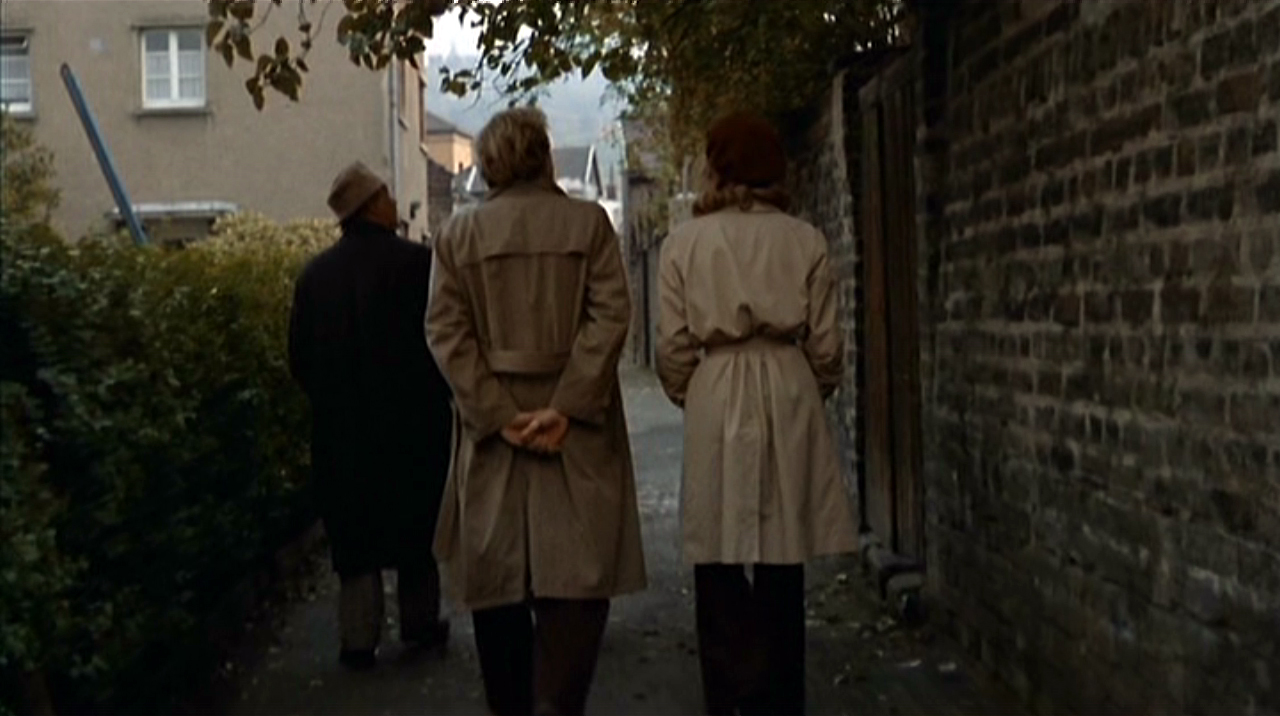
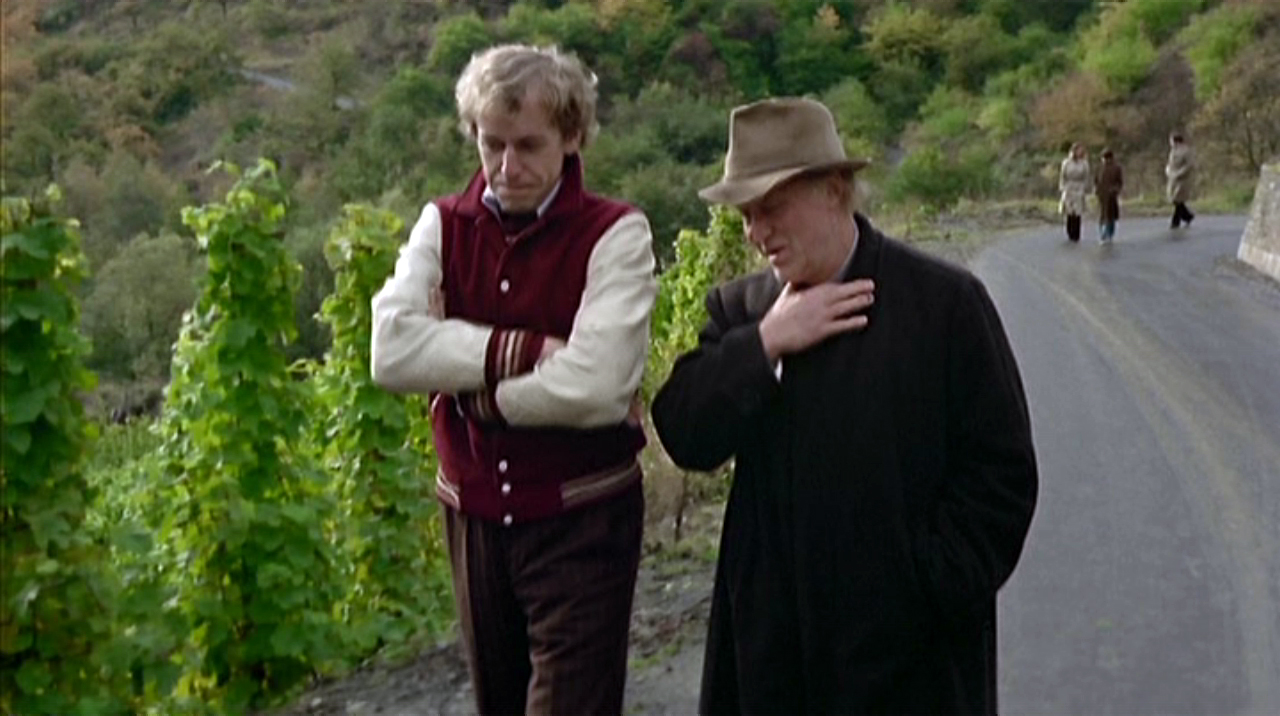
I am convinced that the existence of the contemplative in cinema gains or loses its power from the historical and cultural contexts in which it plays. In other words, one person’s contemplative moment is another person’s boring-art-film moment is another person’s slice of reality. And that those cinematic moments shift over time, for example traveling from a formerly populist cultural object used for “mere” entertainment to an archaeological/social artifact used for contemplation by a cultural elite. Take for example the two scenes in Wim Wenders’ Wrong Move (1975) in which the five central characters proceed on extended walks while talking, observing, and not talking.

Wrong Move is not a contemplative film the way a Tarkovsky or Tarr film might be, but it uses some contemplative devices. The plot is apparently thin, the motivations of characters are somewhat obscure, and the focus is on the character’s trying to solve the question of their existence and understand themselves. I do not imagine Wrong Move was a particularly popular film in its day. I know that no one would bother watching it today except for those who have an interest in such films. Regardless, it is a very good film.

In many films walking, like car chases, is a time filler. A director can lengthen or shorten such scenes to fit the desired length for the film. Ellipses exist, in part, to do away with obvious time-wasters as extended walking scenes. That is why we see a character leave an apartment and then see her driving her car; we just assume the action between leaving and driving took place and we do not care to see it anyway.

In Wrong Move Wenders uses ellipses when it is appropriate to telling the story. But then, twice, he creates scenes in which characters just walk, amble really, through a city first, and then through the countryside. In both cases the walking takes up minutes of screen time. And in both cases there are significant pauses in the conversations, which, other than the walking, is also the only “action” going on.

In the first walking scene the characters walk along side streets and back alleys, mostly in silence, observing the world around them.
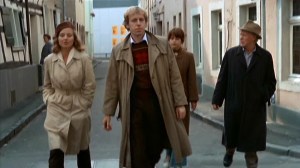
Several times they stop and observer and listen to the sights and sounds of the city and its inhabitants. In one instance a man and woman are fighting and the man begins beating the woman. The walkers turn and keep walking. Another time a man yells out of his upstairs window about his extreme suffering. They stop, listen, and keep walking.
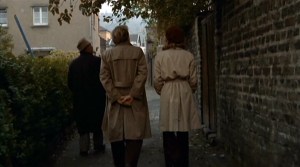
In the second sequence the characters walk up a long road in the country until they are high above the valley and the river below.
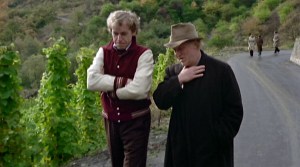
At moments they pair up and then switch pairings in a natural way that amblers do.
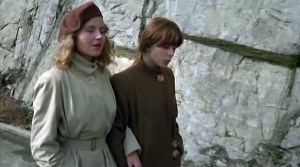
Along the way they talk of various things such as art and politics and history.
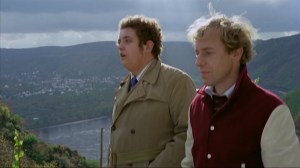
Overall, neither of these walks advances the plot with any kind of action. These walks are almost like detours from the story. That’s one way of looking at them. Another way of looking at them is that these walks are central to the story and that the plot revolves, in a sense, around these moments. In fact, these walking scenes are key contemplative moments that both draw us into the characters as human beings who think, rather than merely act, and foreground the film as a film, thus substantiating our own ambling.

By having the characters walk for such extended screen time one is faced with non-normative cinematic conventions. By having the characters talk one is drawn into their thinking. In both instances one is faced with either turning away or contemplating the film and one’s own thoughts. The fact that a film would ask the viewer to participate in contemplation places that film outside the assumptions underlying more popular films. Wrong Move, though it is built with a populist technology, nonetheless resides outside populist conventions, even if its themes are universal.
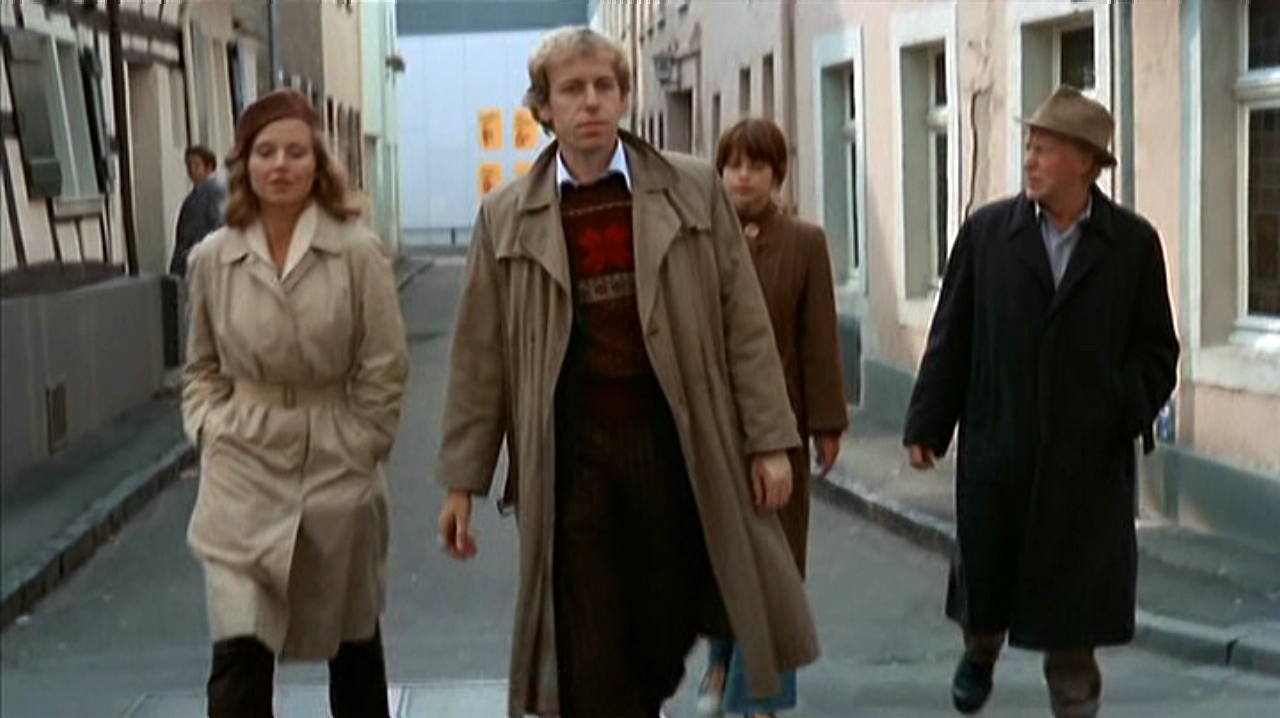
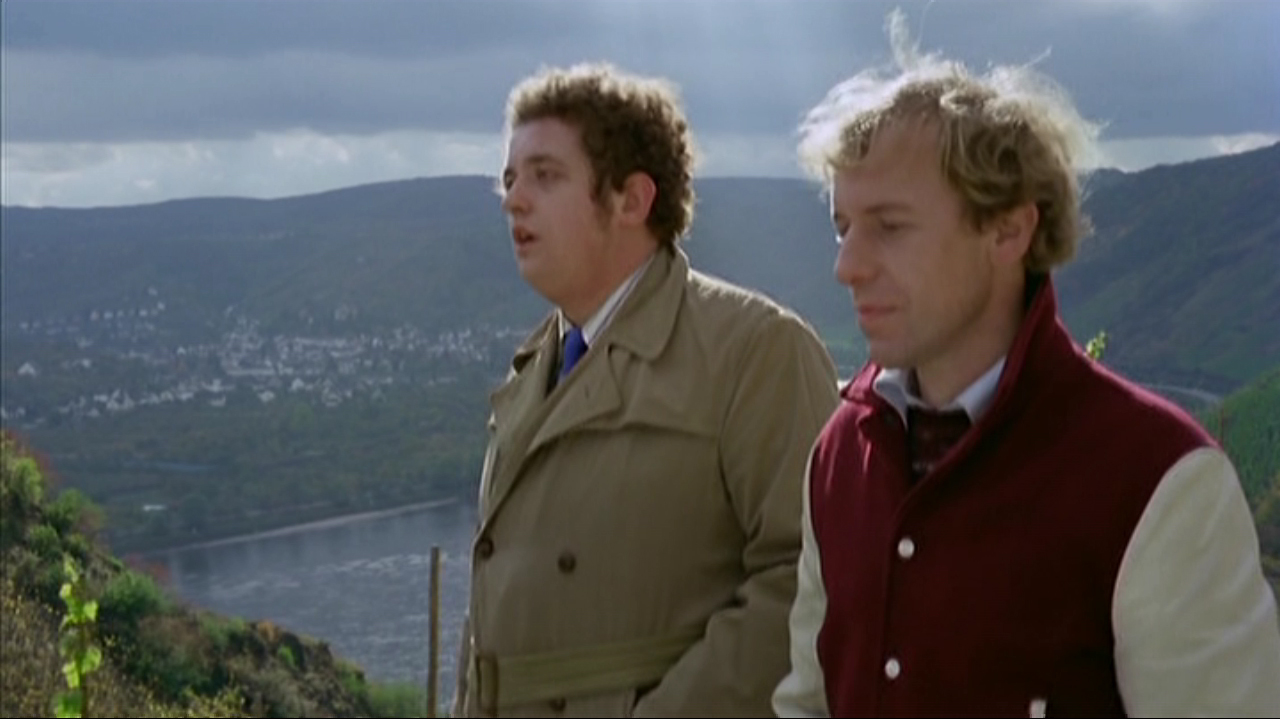
This “foregrounding” is a common contemplative process. By deviating from classical cinematic narrative norms, in this case by just having the characters walk for minutes of screen time, the viewer is made more aware of being a viewer, and of the film being a film. In this sense the contemplative aspects include not only what is happening on the screen, but the act of viewing, including one’s relationship to the film as film.

A note on contemplative cinema: We live at a time in which the discussion of art often assumes one underlying purpose of art, that is, art is for perceptual contemplation, and more specifically, for aesthetic contemplation. But art is also for many things, not least of which includes religious rites, or telling stories, or public ceremonies. We can also assume that art can roughly be categorized as works of high art, works of popular art, and works of the tribe. In all these distinction there is great cross-over and cross-pollinating, so much so that clear divisions are often impossible to maintain.

I want to point this out because when we talk of contemplative cinema we are typically referring to basic assumptions of our institution of high art. First, to borrow from Nicholas Wolterstorff, a society’s institution of art can be summed as

[T]he characteristic arrangements and patterns of action whereby works of art are produced in that society, whereby they are made available for the use of members of that society, and whereby members of that society are enabled to make use of them.

Art in Action, 1980

Thus, the institution of high art consists of those patterns and arrangements that create, support, and suite the needs and desires of those who would “use” works of high art. That art is for aesthetic contemplation is probably the single most assumed characteristic of this institution.

I recognize the term “high art” can be somewhat pejorative, but I do not intend it so, for it is not necessarily a question of valuation. But it might be a question of social class – an unwelcome and unrecognized term in the U.S.

One can observe that in our society there is a cultural elite: a group that is both open (anyone can join) and is closely tied to our intellectual elite (which also anyone can join). Lest we chafe at such notions, we should keep in mind that a very small percentage of people in our society will ever step into an art gallery or concert hall, and very few people will ever watch a Tarkovsky or Tarr film, or a Wenders film from the 1970s, or even a great Hollywood studio era film outside a handful of titles. And certainly even fewer individuals will read works of film theory or film history, or bother to write down their own thoughts on the subject.

We should also believe, however, that this cultural elite consists of individuals fundamentally no different than anyone else. The term is largely a technical one. I like to think that our cultural elite behaves as it does for much the same reasons, as described by Pauline Kael, that educated audiences see “art” films:

I would like to suggest that the educated audience often uses “art” films in much the same self-indulgent way as the mass audience uses the Hollywood “product,” finding wish fulfillment in the form of cheap and easy congratulation on their sensitivities and their liberalism.

from Fantasies of the Art-House Audience, in I Lost It at the Movies (1965)

Contemplative cinema is more than a category of cinematic effects or a collection of stylistic characteristics. It is also a social term, and maybe even a political term. To speak of contemplative cinema is to draw connections with our institution of high art with all of its assumptions, expectations, and motivations.