Recently I’ve been introducing Lily to the films of Howard Hawks, which is also an excuse (not that I needed one) to watch some of my favorite films. So far we’ve seen Bringing Up Baby (1938) – which I mentioned in my previous post – His Girl Friday (1940), and last night, Only Angels Have Wings (1939).
Only Angels Have Wings was my introduction to Howard Hawks as a director and, as such, it holds a sentimental place in my cinephilia. I probably saw some of his other films earlier in my life, but in the grand cinema survey course I took in college this film was the Hawks film we saw. And that’s when I really began to learn about Hawks. At that time I was blown away by the film. I don’t know if I was just in the right mood then, even so I still love the film today.
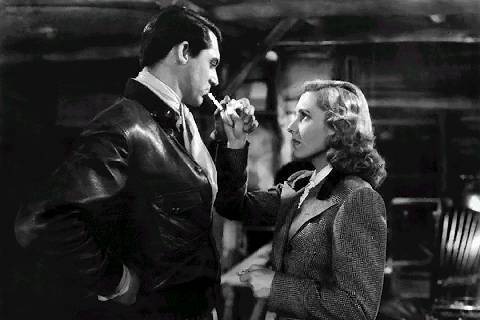
I have been trying to find a DVD version of the film, but haven’t. I did find, to my delight, that TCM was showing it and it was listed in the Comcast on-demand free movies. So, voila!
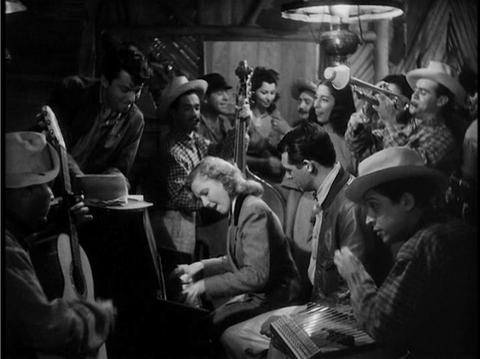
For me the critical scene is when, after a pilot has died upon crash landing his plane, some of the men divide up his few things – trinkets really: his wallet, some coins, maybe a ring. In effect that scene boils down the value of a person’s life to a few insignificant things. For Hawks life was like a pick-up song among strangers in the midst of a crazy world. One can choose to live a life of courage or of safety. In the end it’s not what one left behind so much as how one is remembered, and even that is mostly vapor because behind it all is an unknowable absurdity.
This is in stark contrast to the films of John Ford.
Ford saw great value in the traditions of society: weddings, burials, a man taking his hat off when going indoors, etc., and these things symbolize the significance of human beings, their actions, and the society they create. Hawks, or at least his characters, valued courage, but did not overly emphasize the inherent worth of a human being. Ford was more the romantic, Hawks more the existentialist. (Note: I write this off the cuff without having examined these two director side by side for 20 years, so I am happy to be corrected.)
Of course, I love the films of both directors. They both speak to the human situation, but from different angles.
And speaking of John Ford, soon on the docket for Lily and I are Stagecoach (1939) and Young Mr. Lincoln (1939). Wasn’t 1939 just an amazing year for cinema?!






 pilgrimakimbo