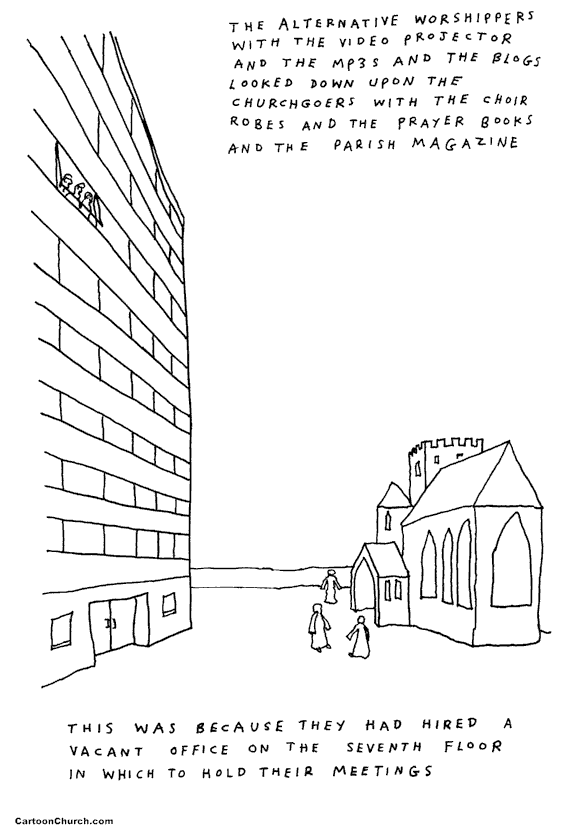
>against emerging/emergent: voices of concern and opposition

>

Sometimes I feel like I am late to the party.

And sometimes I discover that I am not late, in fact I’m very early, I just didn’t realize it was going to be a party. So has it been with me and emerging Christianity.

As I continue to dive deeper into what the emerging/emergent church is all about I am finding that there are a lot of voices opposed to much or all of the whole shebang. This is old news. These voices have been around for a long time, even decades before the term “emerging” was applied to Christianity. YouTube is full of them. Some rant, some blather, some are articulate, and some of these voices come from individuals I respect. I must consider those voices I respect. These voices include R. C. Sproul and Ravi Zacharias – who represent for me a kid of “old guard” of apologists – and Mark Driscoll, who represents a younger generation of reformed preachers. All of these men I have heard and/or read their teaching and greatly appreciate what they do and their contributions to the Church and the furtherance of the Gospel.

But I am not entirely convinced by these guys. I am interested in your thoughts as well.

Here are a couple of clips about the emerging/emergent movement from those concerned voices. This first clip is of Mark Driscoll explaining how he understands this thing called emerging/emergent, and what he sees as deeply troubling problems:

http://www.dailymotion.com/swf/k5uCtJSQH2XqQ3vUVQ

Driscoll was part of the emerging/emergent conversation a decade ago, but he split away largely over doctrinal differences. I am not entirely in his camp. I love that he is a champion for truth, but some of his doctrinal positions are ones that I have wrestled with for more than 20 years and my beliefs have subtly changed over the years and are still in flux. I do know, however, that Driscoll does his homework and is worth listening to.

This second clip is of a conversation with R. C. Sproul, Ravi Zacharias, plus Vance Havner and Al Mohle (both of whom I have not heard before):

These guys are heavy hitters in the world of Christian apologetics and evangelism. I appreciate their perspectives on the topic at hand. I have some of the same concerns as they do, but I am also concerned they may be confusing their entrenchment in reformed theology and a modernist Christianity with defending the truth of the Bible. I don’t say this lightly. Such entrenchment is one of my personal concerns and something I have been working through for a long time – and I’m still in process.

Side note: I cannot help but see four old guys in suits and ties. There is nothing wrong with that of course, but it doesn’t help quell my thoughts that these guys are from a different generation, a different era, and a different world. None of that means they don’t know what is true, but I have concerns that the Christianity they preach is a mix of Truth and the culture in which their understanding was formed.

As I said, I feel the need to take all these guys seriously and consider what they say. The fact is, I already have been taking these topics seriously for a quite a while. I am someone who became a Christian at an early age and then within several years became intellectually interested in theology, history, philosophy, the pursuit of Truth, the nature of ministry and evangelism, and in what it means to work out one’s salvation with fear and trembling. I would pinpoint my first rumblings of emerging to circa 1986. soon after I joined a community that has many “emerging” characteristics – though we’ve never used that term.

I know the guys in the clips above do their homework for sure, they love God, and they pursue Truth, but I am not convinced they have Truth cornered. One of my biggest concerns with what these guys are saying is the way they brush off postmodernism as merely another form of liberalism and truth evasion. I have begun to dive into postmodernism again, after having done so years ago in grad school. This time I am finding much more. Postmodernism, we know, is not a school of thought, rather it is a recognition that we are in an age that is beyond modernism, which opens up lots of possibilities and re-evaluations of much of what has been considered the sacred cows of Christianity (I love that expression – I just made it up).

What I am trying to do is actually look to the sources – the Bible first of course, and then some of the writers who either claim or are tagged with being emerging/emergent or postmodern. My desire in the midst of this process is a combination of open-mindedness and discernment.

Books I’m reading related to the topic:

When Jesus Became God: The Struggle to Define Christianity during the Last Days of Rome, by Richard E. Rubenstein

Who’s Afraid of Postmodernism: taking Derrida, Lyotard, and Foucault to Church, by James K. A. Smith

What Would Jesus Deconstruct: The Good News of Postmodernism for the Church, by John D. Caputo

They Like Jesus But Not The Church: Insights from Emerging Generations, by Dan Kimball

Listening to the Beliefs of Emerging Churches: Five Perspectives, ed. Robert Webber

Jesus for President: Politics for Ordinary Radicals, by Shane Claiborne & Chris Haw
>Christ for President (so say the troubadours)

>
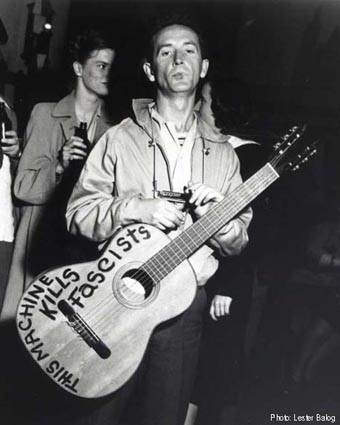
Woody Guthrie being himself

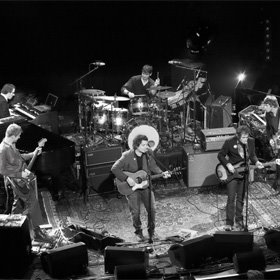
Now that we’ve barely survived two major party national conventions, heard more than enough speeches to gag, soaked up heaps of blather, waded through veritable swamps of pontification, are reeling from more Wall Street and White House crap, and are wondering who really has got the answers and/or the wherewithal to affect change, I seem to remember a song with lyrics by Woody Guthrie and music/performance by Wilco.


Let’s have Christ our President
Let us have him for our king
Cast your vote for the Carpenter
That they call the Nazarene

The only way
We could ever beat
These crooked politician men

Is to cast the moneychangers
Out of the temple
Put the Carpenter in

Oh it’s Jesus Christ our President
God above our king
With a job and pension for young and old
We will make hallelujah ring

Every year we waste enough
To feed the ones who starve
We build our civilization up
And we shoot it down with wars

But with the Carpenter
On the seat
Way up in the capitol town

The USA
Be on the way
Prosperity bound


Wilco somewhere

A different time, a different era, but all the same.

Henry V


Good king Henry V sporting a
popular haircut of the day.

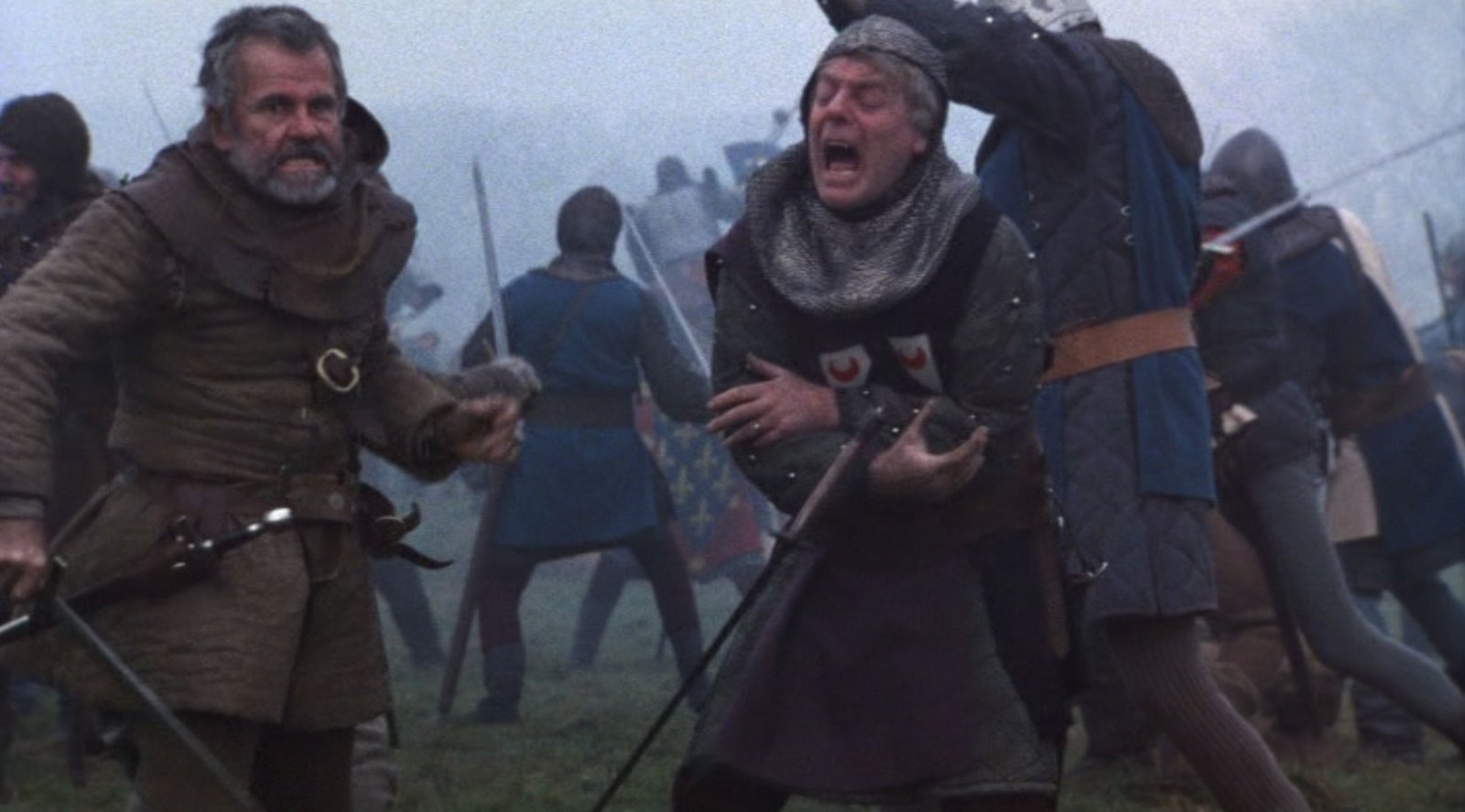
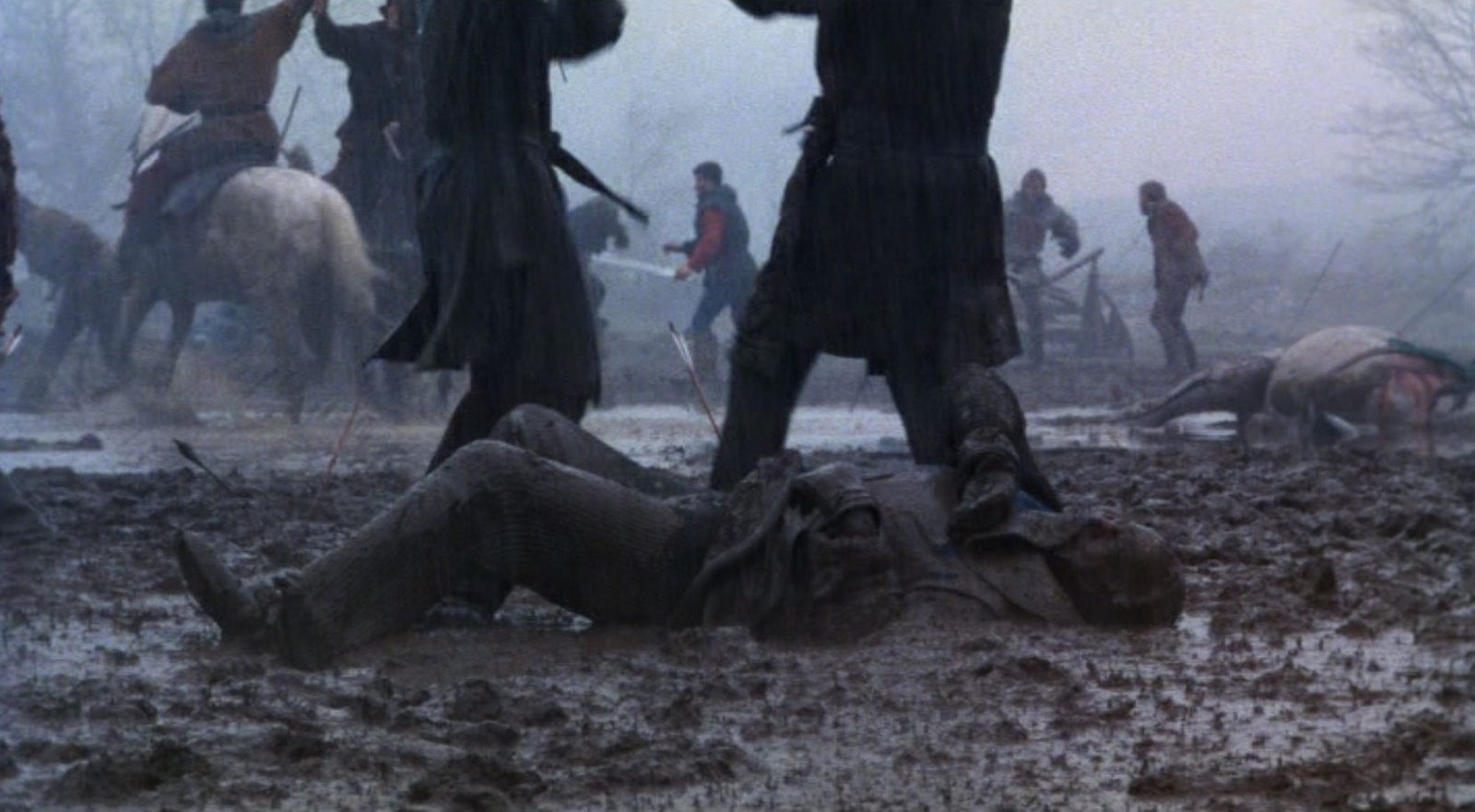
I haven’t been blogging as much about movies lately, and that’s for a number of reasons, mostly because it’s been Summer and we’ve been outside more than in, and also because I’ve been picking up books more than films. Now the leaves are beginning to turn and we are watching a few more films. Recently Lily and I watched Kenneth Branagh’s brilliant Henry V (1989). This was not Lily’s first Shakespeare, but it’s one of her first, and maybe her first not directed for kids. A few times we paused and I explained what was going on, or who was who, but for the most the part the film is easy to follow. More than this, it is a powerful play with great scenes, and great dialogue and speeches. But what struck me the most this time was how it portrayed war.

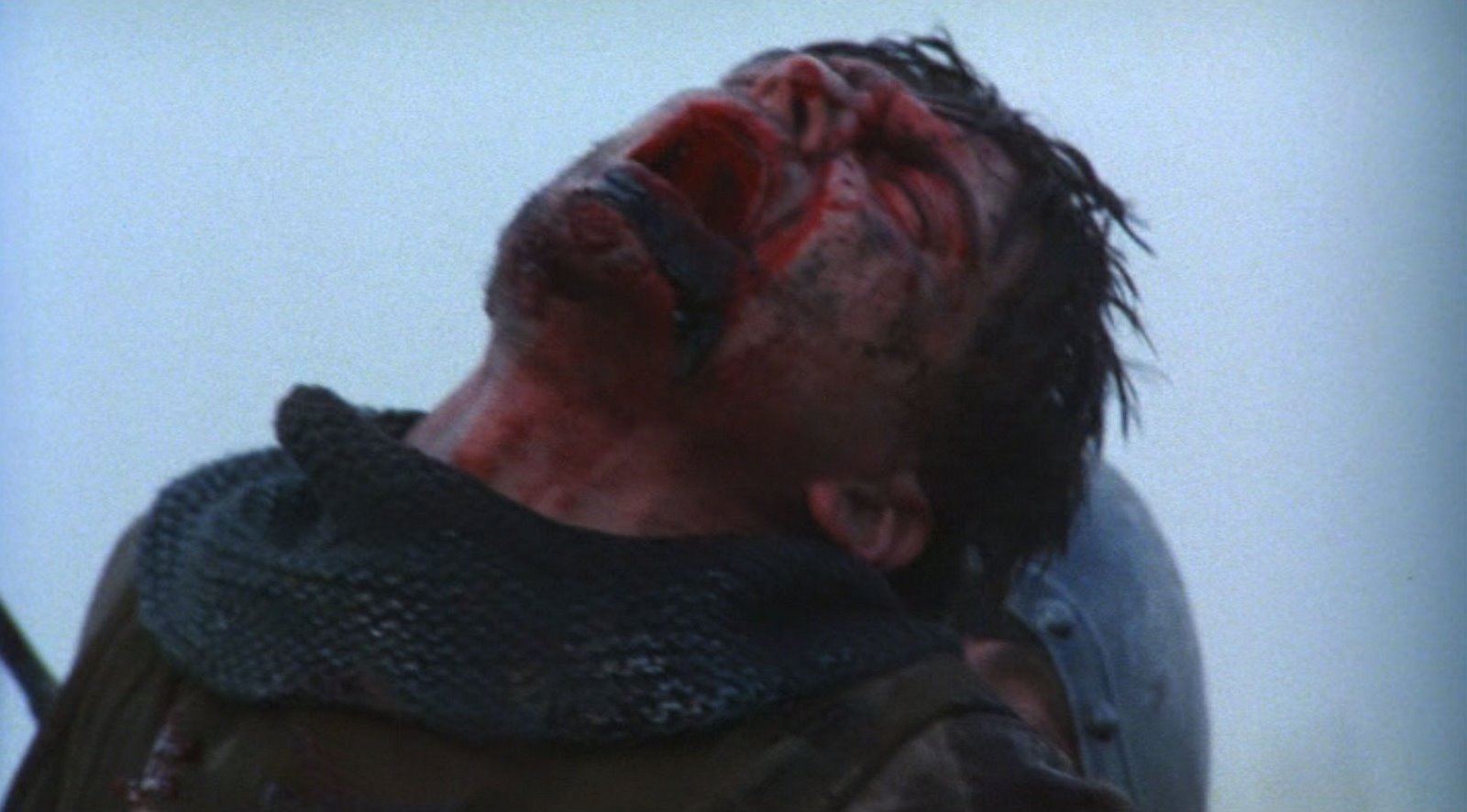
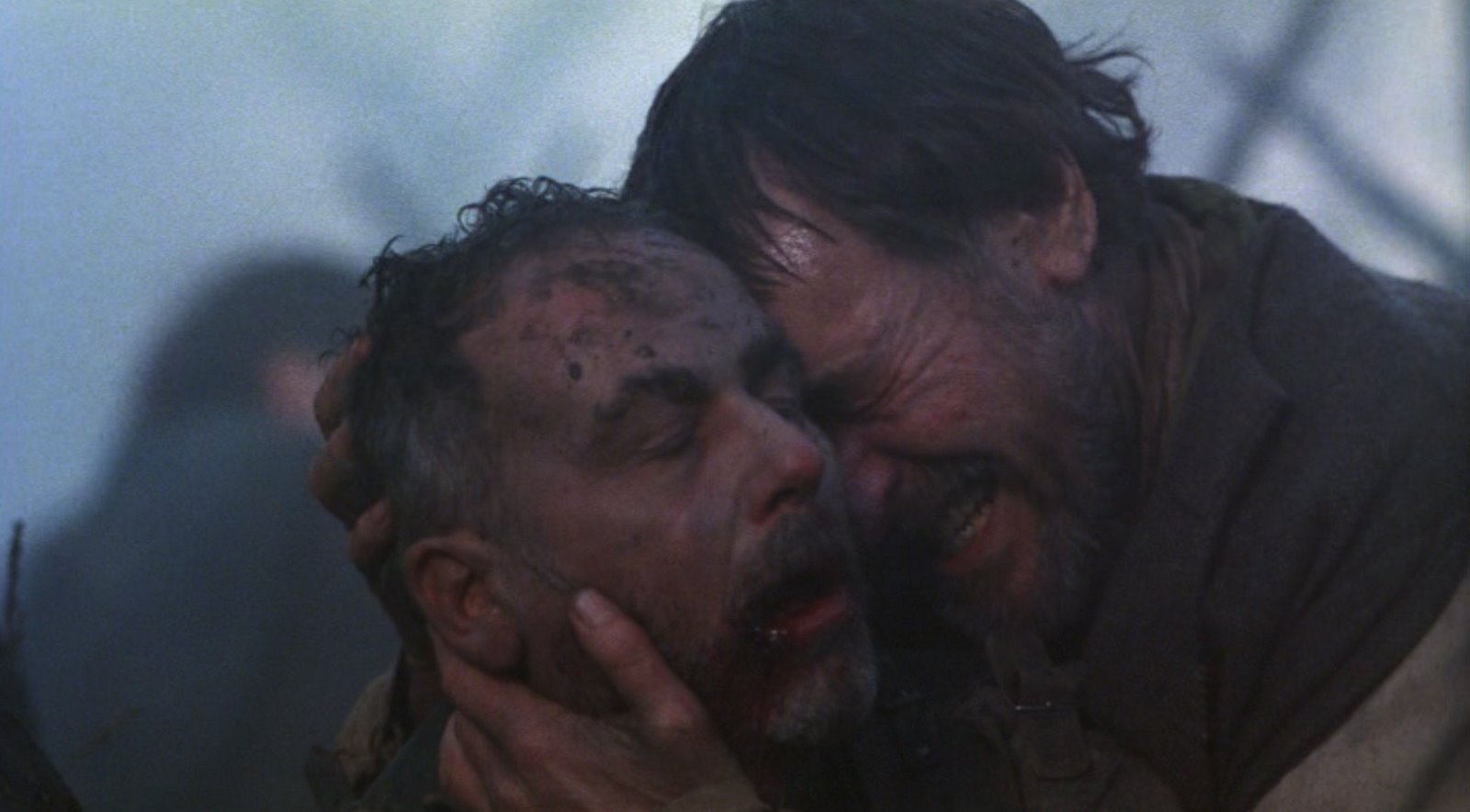
War is terrible. The great battle in Henry V comes right after one of the English language’s greatest rallying speeches – the St. Crispin’s Day speech. From the speech we get the title for Band of Brothers. In that speech young king Henry rallies his troops with promises of glory and honor, of future stories and brotherhood. That speech spins a aura of wonder and excitement around the coming battle. But then we get into the battle and it is awful. I am thankful Branagh took that opportunity to de-glorify war somewhat.

I was a little concerned showing Lily this film because of both the war images and the difficulty of the language, but I’m glad I did. We talked about the gruesomeness of the fighting and what that means. She and I have also talked numerous times about how films are made and that movie blood is really red paint, etc., so she gets it, but still images do move the soul.

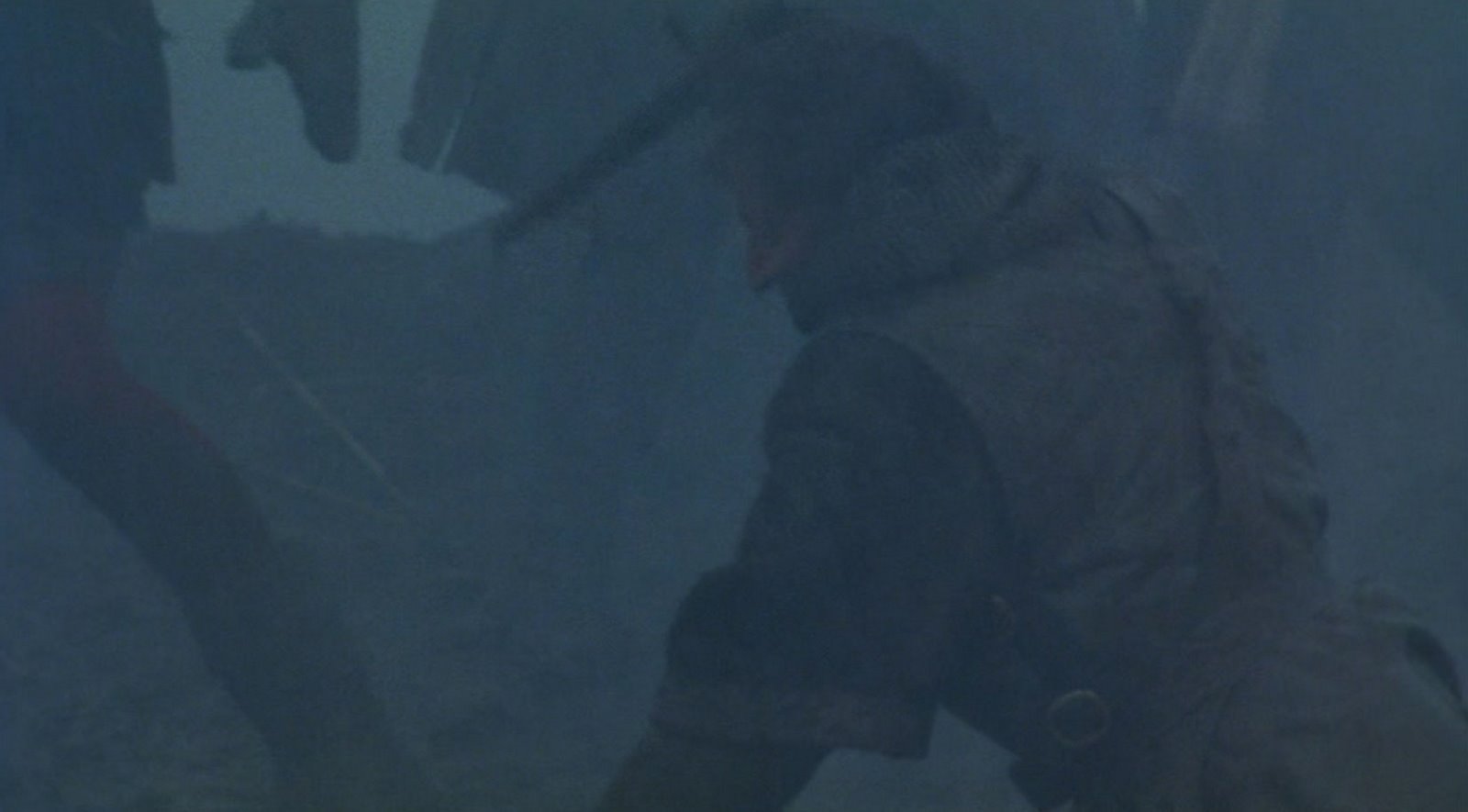
Here are just a few of the many images of the horror, sadness, ugliness, and suffering of war from Henry V:

Of course the English win that war and they do go on to bask in a kind of earthly glory. Such are the lives of victors. But I hope I never forget the great gulf there is between speeches made about war and war itself – even if the speeches be written by the Bard himself and the battles won. I always want to remember that political speeches about the sacrifices made by soldiers and their families are easy to give.

>It’s time for some ancient Robyn Hitchcock

>The video quality may suffer, the music shineth like no other.

Amen

>emerging church: call it what you will

>I mentioned in an earlier post that I’m looking into the phenomena of the emerging church, and its related emergent aspects. Recently, however, there is a slight trending away from those terms. Dan Kimball at Vintage Faith writes about his recent thoughts on how the terms have changed over the years and what that means for him. He cites three other articles/blog posts that also deal with the continued relevance of “emerging/emergent.”

Of course, the realities that underly these terms are still there, though they have been changing, and will continue to do so. Maybe “emerging” and “emergent” will wane in their cultural currency, but we are still living in a post-modern (and possibly post-Christendom) world in which the need to re-examine what it means to be a Christian is critically relevant. One thing to consider, as well, is the relative newness of those terms to much of Christianity. That alone will keep the terms alive for a while, even if their progenitors have moved elsewhere.

As for me, my study has just begun. In fact, I feel like I am doing a lot of catching up. On the other hand, it occurred to me the other day that I began my own “emerging” process back around 1986 when I began to have serious issues with my church’s philosophy of ministry and approach to both culture and theology/doctrine. And really my searching began back in the 1970s as I read authors like C. S. Lewis and Francis Schaeffer in my adolescent grasping for something more than what I was getting at church. A lot of water has gone under the bridge (a story I might relate here sometime), and I’m still sorting it out.

Books I am reading related to the topic:
A New Kind of Christian, by Brian McLaren
The Future of Religion, by Richard Rorty & Gianni Vattimo, ed. Santiago Zabala

Books I’m glancing at:
Spiritual Direction, by Henri Nouwen
Dialogue with Nietzsche, by Gianni Vattimo
Basic Writings, by Martin Heidegger

And I have on order a few more books. I welcome any suggestions.

>emerge oh church, emerge

>I am beginning a study of something called the “emergent church.” I grew up in a Christian tradition and, in some ways, I still claim that pedigree. This emergent thing, however, is something different than what I’m used to. It’s not exactly new, but it’s newish. It also has various aspects, some of which look very appealing to me, and others look potentially troubling. I am hoping to sort it out for myself. I may post some of my thoughts and conclusions here at PilgrimAkimbo from time to time.

Here are a couple of videos that try to get at what underlies the emergent church.

http://video.google.com/googleplayer.swf?docid=-8802026530343805467&hl=en&fs=true

What do you think? I am interested in hearing your thoughts, especially if you participate in an emergent church.

>just another week in pepper spray history

>I’m getting a kick out of watching the “other” news of the RNC, that is, the protests outside the convention that are not really being covered much by the mainstream news. But first, here’s a recruitment video made by the RNC Welcoming Committee (an anarchist/anti-authoritarian organizing body) prior to the convention:

http://video.google.com/googleplayer.swf?docid=1982101605603600567&hl=en&fs=true

I love it. Fun, goofy, and it indicates a major aspect of the protests, that is, they’re thrilling to do. In other words, being a protester, though driven by apparently deeper meanings, is also something people do because it’s an exciting form of entertainment – like playing sports, but more important. I have to say that after watching the following videos I would much rather be with the protesters than inside the convention, though I am not so anarchist in my philosophy, or so anti-authoritarian in my reactions – though I am a little of both.

This video also highlights the reality that contemporary political/social movements are leveraging new media forms with aplomb. Modern protests are far more organized and prepared than they used to be, but so is the response.

[Side Note: So far eight members of the RNC Welcoming Committee have been arrested and charged as terrorists. Plus the I-Witness Video Collective has been evicted from their offices after police raided their building on what look to be trumped up charges. That group was responsible for videotaping much of the 2004 RNC protests and those videos led to most of the cases against the arrested protesters to be dropped. Apparently case after case the videos showed the police officers had lied. That may be why the police don’t want cameras taping them this time around.]

Now that it’s been a couple of days since the initial protests outside the RNC a number of videos have been appearing online. The first three below are video/photo collages that offer some overview of what is going on. There is some overlapping content between the three videos. At a minimum these collages offer some interesting psychological and sociological data to consider.

Finally, here is one of the most interesting, entertaining, and low quality (read verité) videos from the protests. I love the personal commentary.

Of course, one has to ask if any of these protests, violent or peaceful, have any objective value beyond the personal sense of making a statement. It is important to make statements, to carry signs and rant, to march and, hopefully, get on the news, but what is actually accomplished? The RNC continued on as though no one is protesting, as though the protests are so insignificant and inconsequential as to not even warrant a sideways glance. I also believe some of the same protests were deserved at the DNC, but I don’t remember if there were any.

I am reminded of two quotes by Mahatma Gandhi:

“It is better to be violent, if there is violence in our hearts, than to put on the cloak of nonviolence to cover impotence.”

“Victory attained by violence is tantamount to a defeat, for it is momentary.”

These quotes underline the balancing acts in both effective protesting and in cracking down on protesters. Both sides have to live with the consequences of their actions, and ask the question “what really was accomplished.” I cannot help but think the actions and the style of the police will only lay the foundation for more of the same, and then bigger and more substantial protests. In the end the police, and those who back them, will likely lose the battle. In the mean time I fear many citizens will be hurt.

>Democracy at a Crossroads: Structures of Power Outside the RNC

>We know this country has become polarized on multiple levels. We know that a thriving democracy is a struggle. But we also know that there is a difference between the messiness of democratic action and the actions of heavy handed social control. Sometimes (usually) messiness is better, though it is unpredictable.

With this in mind I have been curious about the two big political party conventions and the manner in which those with the guns and body armor are going to support democracy. The Democratic National Convention seemed to go off without a hitch. They even opened up a giant stadium to let in everyone they could. The Republican National Convention (RNC) is another story. So far there have been numerous riots, police violence, and arrests.

Question: Should police use force against peaceful political protesters? I can understand trying to stop violent protesters from hurting others or damaging property – though property is not so nearly as sacred as human life or well being. Although I am against violence I am not against being rowdy and noisy for important social and political concerns. Consider this video* of police attacking apparently peaceful protesters at the RNC:

What you see in this clip are people walking along a street. What you also see and hear are heavily armored police officers shooting some of the walkers with rubber bullets, which is even more aggressive than hitting someone with a baton in my opinion. The police also use tear gas to split up the crowd. I cannot tell exactly what is was these particular walkers were doing that was so bad, but I doubt rubber bullets and tear gas was necessary… unless the goal is to make sure, with complete certainty, that the hierarchies of power remain intact and understood.

Or consider this video clip that hearkens back to those flower-power protest images from the 1960s:

http://www.indybay.org/js/flowplayer/FlowPlayer.swf?config=%7BvideoFile%3A%27http%3A%2F%2Fwww%2Eindybay%2Eorg%2Fuploads%2F2008%2F09%2F01%2Fpepper%2Empg%5Fpreview%5F%2Eflv%27%2CsplashImageFile%3A%27http%3A%2F%2Fwww%2Eindybay%2Eorg%2Fim%2Fplay%2Dbutton%2D328x240%2Ejpg%27%2Cloop%3Afalse%2CautoPlay%3Afalse%2CautoBuffering%3Afalse%2CbufferLength%3A5%2CinitialScale%3A%27fit%27%2CbaseURL%3A%27http%3A%2F%2Fwww%2Eindybay%2Eorg%2Fjs%2Fflowplayer%27%2Cembedded%3Atrue%7D

I cannot say the woman in the green tank-top is acting in the most wise manner (at least for her own safety), but take a moment to compare the dress and collective action of the two different kinds of people in this video. One group seems rather loosely organized at best, wearing ordinary street clothes, and looking much like you and your friends. The other group is clad head-to-toe in black armor (rainbow plaid armor is not nearly as menacing), is fully organized into a phalanx, and is looking like extras from a Robocop movie. Honestly, I bet they love putting on that stuff.

Democracy is messy. Protest are necessary. Violence should be avoided. And people should be able to march up and down the streets without fear of tear gas, rubber bullets, or menacing storm troopers inciting violence. (I say inciting because their very presence, demeanor, and visual appearance is designed to be threatening.) I cannot help but think of some police officer yelling “This is no time for democracy, this the the Republican National Convention!” Or, the police thinking these protesters are stupid idiots for showing up with flowers to a tear gas fight.

But other interesting things have been happening related to the RNC. These include the raiding of homes of “suspected” protesters, such as in this video:

In light of that video remember these important words:

The right of the people to be secure in their persons, houses, papers, and effects, against unreasonable searches and seizures, shall not be violated, and no Warrants shall issue, but upon probable cause, supported by Oath or affirmation, and particularly describing the place to be searched, and the persons or things to be seized. (Amendment 4 to the U.S. Constitution)

Has line been crossed here? I can’t say for sure, but seems likely. I doubt there was probable cause.

And there was the raiding of homes of “suspected” journalists (who WERE journalists), such as in this video:

In light of this raid consider these important words:

Congress shall make no law respecting an establishment of religion, or prohibiting the free exercise thereof; or abridging the freedom of speech, or of the press; or the right of the people peaceably to assemble, and to petition the Government for a redress of grievances. (Amendment 1 of the U.S. Constitution)

Has line been crossed here? Looks probable.

Police also confiscated citizen journalists’ cameras and computers, as described in this video:

What is going on here? What is the answer to the question: Why are these police actions necessary? What is being protected? What is gained?

Not necessarily more important than the above situations and police actions, but certainly very critical when it comes to the importance and necessity of a free press in a democracy, here is a clip of the intrepid Amy Goodman of Democracy Now being arrested for investigating the brutal arrest of her producers Sharif Abdel Kouddous and Nicole Salazar:

And here is the video taken by Nicole Salazar as she was beaten and thrown to the ground by police even though she was telling them she was Press and was clearly wearing her Press card around her neck.

One can only conclude one of three things: 1) The safety of the police and of others was so grave that the police had no other choice but to treat her that way, 2) the police became so angry that their emotions made them act irrationally, or 3) there is a planned and concerted effort to intimidate and control any media that does not conform to the predictable and safe (to the established hierarchy of power) norms as exhibited by the major networks. The first choice is, at best, a stretch, and mostly likely ludicrous. The second choice is probably partly true, but too many law enforcement individuals were involved for it to merely be runaway emotions. The third is the most likely scenario, and is born of fear. And fear is one of the greatest threats to democracy.

A whole lot of questions are raised by these video clips, and there are many more videos of the same. I would argue that we are witnessing a time in which a sector of the population is living in fear that their world will not last, and that sector are those currently in positions of power. This may or may not be true. I also believe, however, that this is really nothing new. We have seen this many times before in this country in many different forms. In fact, that is part and parcel of the story of humankind.

Keep this in mind, if a free press is critical for a thriving democracy then it will, by definition and implication, be a threat to someone. If a democracy is threatening to those who need predictable power to get and keep what they want, then, logically a free press is a threat to those people. What do we have if we don’t have a free press? Do we have a democracy?

* Several of the video clips above were produced by The Uptake.

>In Defense of Food: Michael Pollan in response to The Omnivore’s Dilemma

>I have been posting a lot of videos lately, and here is another. Michael Pollan wrote on of the most important books in recent publishing history, The Omnivore’s Dilemma. That book raised so many questions and concerns about the food we eat that many felt they could not eat anything without facing some kind of moral, ethical, or health dilemma. In that light, and to counter fears created by his book, Pollan wrote another book called In Defense of Food. He spoke on that book at Google and, I have to say, this less-than-an-hour talk could change your life. I have not read his new book, but I do know The Omnivore’s Dilemma (which I am currently reading) is amazing.

>Profile: Noam Chomsky

>I have mentioned Noam Chomsky before on this site. Here’s a profile of the man:

http://video.google.com/googleplayer.swf?docid=676452061991429040&hl=en&fs=true

There is no need to say that Chomsky is a controversial figure in the world of ideas. One thing for sure, his ongoing critique of power is as relevant today as it was when he began; all the more so this heightened political season. I want change, and will vote for change in one way or another, but I am also interested in knowing exactly what it is I will be voting for: What kind of power, who will have it, how will it be used, and to what ends? These are questions I think about all the time.