I want to live in a union of love with God

Alleluia! The Spirit of the Lord has filled the whole world.
Come, let us adore him, alleluia.

Apologetics played a big part in my conversion but they always left me wanting. In the end I wanted not an argument or a logical proof of the Church’s validity and authenticity, rather I wanted to become a different person. I wanted deification, theosis, divinization. I do find this concept within Catholicism but it is from the Eastern Orthodox and Byzantine Catholicism that one find deification emphasized. In short, I want nothing else than to experience God, to be united with God.

I’ve been reading The Mountain of Silence: A Search for Orthodox Spirituality by Kyriacos C. Markides. In it I find this wonderful exchange:

“So, when during the liturgy we recite the prayer “I believe in one God…,” Father Maximos went on after I shifted to second gear, “we try in reality to move from an intellectual faith in God to the actual vision of God. Faith become Love itself. The Creed actually mean ‘I live in a union of love with God.’ This is the path of the saints. Only then can we say that we are true Christians. This is the kind of Faith that the saints possess as direct experience. Consequently they are unafraid of death, of war, of illness, or anything else of this world. They are beyond all worldly ambition, of money, fame, power, safety, and the like. Such person transcend the idea of God and enter into the experience of God.”

“But how many people can really know God that way?” I complained.

“Well, as long as we do not know God experientially then we should at least realize that we are simply ideological believers,” Father Maximos relied dryly. “The ideal and ultimate form of true faith means having direct experience of God as a living reality.”

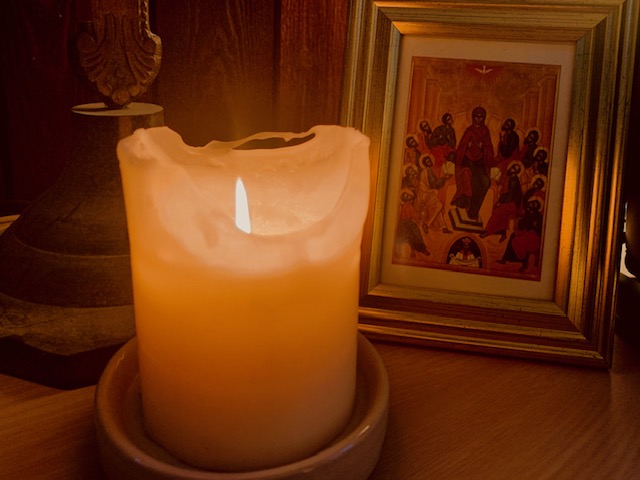
This morning I recited the Creed with a group of local believers as we celebrated Pentecost Sunday and I thought about those Christians two thousand years ago experiencing God come upon them and transform them. The world has not ever been the same since.

[Pentecost Sunday]

Biblical references for the unique role and responsibility the Apostle Peter

I first published this post in 2012, just one year before I officially converted to the Catholic Church. My journey up to that point had included a possible conversion to Eastern Orthodoxy but I first had to sort out my thinking on the Pope. This post was a piece of that process.
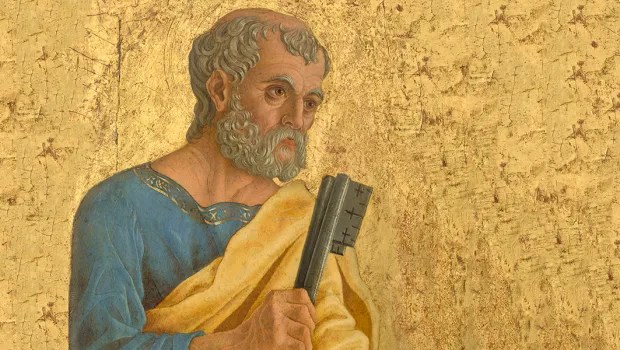
The Apostle Peter is a fascinating man in the New Testament. In the Protestant world it is common for pastors to say they love Peter because he was such a  goof-up. Peter gives us all kinds of hope that any of us can be saved. But anyone who has grown up in, or spent a lot of time in, the Protestant world and worldview knows it is Paul who is Apostle number one. There are at least two good reasons for this. One is that Paul wrote those books of the Bible that are most central for Protestants: Romans, Galatians, 1 Corinthians, etc. Second is that Protestants are wary of Peter because Catholics say the true Church founded by Christ was founded upon Peter (the rock) as the first of the apostles, as the first “pope”. Get too close to Peter and one might be tempted to think Catholics are on to something.

But Peter is a big deal. To my count Peter is mentioned in the New Testament something like 155 times, whereas the rest of the apostles combined are only mentioned around 130 times. Of course mere numbers don’t necessarily add up to importance. It’s how Peter is mentioned, what he does, what he says, what others say about him, and especially what Christ says to Peter that show Peter is the central Apostle, the key figure of the New Testament Church. As we look at the Biblical references to Peter the picture begins to fill out.

An aside: I have heard many Protestant teachings on the famous Matthew 16:18 passage where Jesus says “upon this rock I will build My church.” That passage in isolation can be taken any number of ways. But after looking at a more complete picture of Peter as the New Testament writers saw him, I must say the Roman Catholic understanding of Peter as the Rock upon which Christ will build His Church makes the most sense. In fact, even without this particular passage, the other passages below add up to the same idea. Rather than seeing the Catholic position as some kind of crazy overlay to this passage, it now seems clear to me that it is the Protestants who must come up with a better argument. So far I have not heard anything better. Of course, this makes me, an old Protestant, very curious.

Below are the New Testament references I was able to find regarding Peter. I have tried to group them a bit, and added a few of my thoughts. I have not ranked them in any particular order. I’m sure I’ve made some mistakes. All quotations are from the New American Standard Bible.

Peter listed/mentioned first with the apostles

Peter being mentioned or listed first among the apostles:

Matt. 10:2  Now the names of the twelve apostles are these: The first, Simon, who is called Peter, and Andrew his brother; and James the son of Zebedee, and John his brother;
Mark 1:36  Simon and his companions searched for Him;
Mark 3:16  And He appointed the twelve: Simon (to whom He gave the name Peter),
Luke 6:14-16  Simon, whom He also named Peter, and Andrew his brother; and James and John; and Philip and Bartholomew;  and Matthew and Thomas; James the son of Alphaeus, and Simon who was called the Zealot; Judas the son of James, and Judas Iscariot, who became a traitor.
Acts 2:37  Now when they heard this, they were pierced to the heart, and said to Peter and the rest of the apostles, “Brethren, what shall we do?”
Acts 5:29  But Peter and the apostles answered, “ We must obey God rather than men.

Peter is first when entering upper room after our Lord’s ascension:

Acts 1:13  When they had entered the city, they went up to the upper room where they were staying; that is, Peter and John and James and Andrew, Philip and Thomas, Bartholomew and Matthew, James the son of Alphaeus, and Simon the Zealot, and Judas the son of James.

Peter leads the fishing and his net does not break. According to Catholics, the boat (the “barque of Peter”) is seen as a metaphor for the Church:

John 21:2-3  Simon Peter, and Thomas called Didymus, and Nathanael of Cana in Galilee, and the sons of Zebedee, and two others of His disciples were together. Simon Peter said to them, “I am going fishing.” They said to him, “We will also come with you.” They went out and got into the boat; and that night they caught nothing.
John 21:11  Simon Peter went up and drew the net to land, full of large fish, a hundred and fifty-three; and although there were so many, the net was not torn.

Though Peter and John are both very important figures in the early church, Peter is always mentioned before John:

Luke 8:51  When He came to the house, He did not allow anyone to enter with Him, except Peter and John and James, and the girl’s father and mother.
Luke 9:28  Some eight days after these sayings, He took along Peter and John and James, and went up on the mountain to pray.
Luke 22:8  And Jesus sent Peter and John, saying, “Go and prepare the Passover for us, so that we may eat it.”
Acts 1:13  When they had entered the city, they went up to the upper room where they were staying; that is, Peter and John and James and Andrew, Philip and Thomas, Bartholomew and Matthew, James the son of Alphaeus, and Simon the Zealot, and Judas the son of James.
Acts 3:1-4  Now Peter and John were going up to the temple at the ninth hour, the hour of prayer. And a man who had been lame from his mother’s womb was being carried along, whom they used to set down every day at the gate of the temple which is called Beautiful, in order to beg alms of those who were entering the temple. When he saw Peter and John about to go into the temple, he began asking to receive alms. But Peter, along with John, fixed his gaze on him and said, “Look at us!”
Acts 3:3  When he saw Peter and John about to go into the temple, he began asking to receive alms.
Acts 3:11  While he was clinging to Peter and John, all the people ran together to them at the so-called portico of Solomon, full of amazement.
Acts 4:13  Now as they observed the confidence of Peter and John and understood that they were uneducated and untrained men, they were amazed, and began to recognize them as having been with Jesus.
Acts 4:19  But Peter and John answered and said to them, “ Whether it is right in the sight of God to give heed to you rather than to God, you be the judge;
Acts 8:14  Now when the apostles in Jerusalem heard that Samaria had received the word of God, they sent them Peter and John,

Peter is mentioned first as going to mountain of transfiguration. He is also the only disciple to speak at the transfiguration:

Luke 9:28  Some eight days after these sayings, He took along Peter and John and James, and went up on the mountain to pray.
Luke 9:33  And as these were leaving Him, Peter said to Jesus, “ Master, it is good for us to be here; let us make three tabernacles: one for You, and one for Moses, and one for Elijah”— not realizing what he was saying.

Peter is the first of the apostles to confess the divinity of Christ:

Matt. 16:16  Simon Peter answered, “You are the Christ, the Son of the living God.”
Mark 8:29  And He continued by questioning them, “But who do you say that I am?” Peter answered and said to Him, “You are the Christ.”
John 6:69  We have believed and have come to know that You are the Holy One of God.”

Peter ranked(?) higher than John

John arrived at the tomb first but stopped and waited for Peter. Peter then arrived and entered the tomb first:

Luke 24:12  But Peter got up and ran to the tomb; stooping and looking in, he saw the linen wrappings only; and he went away to his home, marveling at what had happened.
John 20:4-6  The two were running together; and the other disciple ran ahead faster than Peter and came to the tomb first; and stooping and looking in, he saw the linen wrappings lying there; but he did not go in. And so Simon Peter also came, following him, and entered the tomb; and he saw the linen wrappings lying there,

It is Peter that is named as the eye witness even though both Peter and John had seen the risen Jesus the previous hour:

Luke 24:34  saying, “ The Lord has really risen and has appeared to Simon.”

Peter seen as the Leader of the Apostles

In the garden of Gethsemane, Jesus asks Peter, and no one else, why he was asleep. It would seem Peter is held accountable, on behalf of the apostles, for their actions:

Mark 14:37  And He came and found them sleeping, and said to Peter, “Simon, are you asleep? Could you not keep watch for one hour?

Peter is designated (called out) by an angel as unique among the apostles:

Mark 16:7  But go, tell His disciples and Peter, ‘ He is going ahead of you to Galilee; there you will see Him, just as He told you.’”

Peter receiving Special Instruction and Revelation

Peter alone is told he has received special, divine revelation from God the Father:

Matt. 16:17  And Jesus said to him, “Blessed are you, Simon Barjona, because flesh and blood did not reveal this to you, but My Father who is in heaven.

Jesus instructs the disciples by specifically instructing Peter to let down their nets for a catch. Peter specifically is told he will be a “fisher of men”:

Luke 5:4,10  When He had finished speaking, He said to Simon, “Put out into the deep water and let down your nets for a catch… and so also were James and John, sons of Zebedee, who were partners with Simon. And Jesus said to Simon, “ Do not fear, from now on you will be catching men.”

Peter speaking/Asking on Behalf of the Disciples

Peter asks Jesus about the rule of forgiveness. Peter frequently takes a leadership role among the apostles in seeking understanding of Jesus’ teachings:

Matt. 18:21  Then Peter came and said to Him, “Lord, how often shall my brother sin against me and I forgive him? Up to seven times?”

Peter speaks on behalf of the apostles by telling Jesus that they have left everything to follow Him:

Matt. 19:27  Then Peter said to Him, “Behold, we have left everything and followed You; what then will there be for us?”

Peter speaks for the disciples on their following Jesus:

Mark 10:28  Peter began to say to Him, “Behold, we have left everything and followed You.”

Peter speaks for the disciples about their witnessing Jesus’ curse on the fig tree:

Mark 11:21  Being reminded, Peter said to Him, “ Rabbi, look, the fig tree which You cursed has withered.”

Peter functions as the spokesman or representative (or vicar, to use popular a Catholic term) for Jesus:

Matt. 17:24-25  When they came to Capernaum, those who collected the two-drachma tax came to Peter and said, “Does your teacher not pay the two-drachma tax?” He *said, “Yes.” And when he came into the house, Jesus spoke to him first, saying, “What do you think, Simon? From whom do the kings of the earth collect customs or poll-tax, from their sons or from strangers?”

When Jesus asked who touched His garment, it is Peter who answers:

Luke 8:45  And Jesus said, “Who is the one who touched Me?” And while they were all denying it, Peter said, “Master, the people are crowding and pressing in on You.”

It is Peter who seeks clarification of a parable on behalf on the disciples:

Luke 12:41  Peter said, “Lord, are You addressing this parable to us, or to everyone else as well?”

After many of the disciples leave Jesus, it is Peter who speaks on behalf of the remaining disciples and confesses their belief in Christ after the Eucharistic discourse:

John 6:68 Simon Peter answered Him, “Lord, to whom shall we go? You have words of eternal life.

Peter as Christ’s Representative on Earth

Protestants debate this, but it would seems that Jesus builds the Church primarily (only?) on Peter, the rock:

Matt. 16:18  I also say to you that you are Peter, and upon this rock I will build My church; and the gates of Hades will not overpower it.

Only Peter receives the keys of the kingdom of heaven:

Matt. 16:19  I will give you the keys of the kingdom of heaven; and whatever you bind on earth shall have been bound in heaven, and whatever you loose on earth shall have been loosed in heaven.”

Peter, by paying the tax for both Jesus and himself, is acting Christ’s “representative” on earth:

Matt. 17:26-27  When Peter said, “From strangers,” Jesus said to him, “Then the sons are exempt. However, so that we do not offend them, go to the sea and throw in a hook, and take the first fish that comes up; and when you open its mouth, you will find a shekel. Take that and give it to them for you and Me.”

Peter given charge/care of the other disciples

Jesus prays specifically for Peter, that his faith may not fail, and charges him to strengthen the rest of the apostles:

Luke 22:31-32  “Simon, Simon, behold, Satan has demanded permission to sift you like wheat; but I have prayed for you, that your faith may not fail; and you, when once you have turned again, strengthen your brothers.”

In front of the apostles, Jesus asks Peter if he loves Jesus “more than these,” which likely refers to the other apostles. Peter has a special role regarding the apostles:

John 21:15  So when they had finished breakfast, Jesus said to Simon Peter, “Simon, son of John, do you love Me more than these?” He said to Him, “Yes, Lord; You know that I love You.” He said to him, “Tend My lambs.”

Jesus charges Peter to “feed my lambs,” “tend my sheep,” “feed my sheep.” Sheep appears to mean all people (or all believers), including the apostles:

John 21:15-17  So when they had finished breakfast, Jesus said to Simon Peter, “Simon, son of John, do you love Me more than these?” He *said to Him, “Yes, Lord; You know that I love You.” He said to him, “Tend My lambs.” He said to him again a second time, “Simon, son of John, do you love Me?” He said to Him, “Yes, Lord; You know that I love You.” He said to him, “ Shepherd My sheep.” He said to him the third time, “Simon, son of John, do you love Me?” Peter was grieved because He said to him the third time, “Do you love Me?” And he said to Him, “Lord, You know all things; You know that I love You.” Jesus said to him, “ Tend My sheep.


Peter Leading the Early Church

Peter initiates the selection of a successor to Judas immediately after Jesus ascended into heaven. Note: This passage also supports (or establishes) the concept of apostolic succession:

Acts 1:15  At this time Peter stood up in the midst of the brethren (a gathering of about one hundred and twenty persons was there together), and said,

Peter is the first apostle to preach the Gospel:

Acts 2:14  But Peter, taking his stand with the eleven, raised his voice and declared to them: “Men of Judea and all you who live in Jerusalem, let this be known to you and give heed to my words.

Peter is the first to preach on repentance and baptism in the name of Jesus Christ:

Acts 2:38  Peter said to them, “ Repent, and each of you be baptized in the name of Jesus Christ for the forgiveness of your sins; and you will receive the gift of the Holy Spirit.

Peter performs the first healing miracle of the apostles:

Acts 3:6-7  But Peter said, “I do not possess silver and gold, but what I do have I give to you: In the name of Jesus Christ the Nazarene—walk!” And seizing him by the right hand, he raised him up; and immediately his feet and his ankles were strengthened.

Peter is the first to teach that there is no salvation other than through Christ:

Acts 3:12-26  But when Peter saw this, he replied to the people, “Men of Israel, why are you amazed at this, or why do you gaze at us, as if by our own power or piety we had made him walk? The God of Abraham, Isaac and Jacob, the God of our fathers, has glorified His servant Jesus, the one whom you delivered and disowned in the presence of Pilate, when he had decided to release Him. But you disowned the Holy and Righteous One and asked for a murderer to be granted to you, but put to death the Prince of life, the one whom God raised from the dead, a fact to which we are witnesses. And on the basis of faith in His name, it is the name of Jesus which has strengthened this man whom you see and know; and the faith which comes through Him has given him this perfect health in the presence of you all. And now, brethren, I know that you acted in ignorance, just as your rulers did also. But the things which God announced beforehand by the mouth of all the prophets, that His Christ would suffer, He has thus fulfilled. Therefore repent and return, so that your sins may be wiped away, in order that times of refreshing may come from the presence of the Lord; and that He may send Jesus, the Christ appointed for you, whom heaven must receive until the period of restoration of all things about which God spoke by the mouth of His holy prophets from ancient time. Moses said, ‘ The Lord God will raise up for you a prophet like me from your brethren; to Him you shall give heed to everything He says to you. And it will be that every soul that does not heed that prophet shall be utterly destroyed from among the people.’ And likewise, all the prophets who have spoken, from Samuel and his successors onward, also announced these days. It is you who are the sons of the prophets and of the covenant which God made with your fathers, saying to Abraham, ‘ And in your seed all the families of the earth shall be blessed.’ For you first, God raised up His Servant and sent Him to bless you by turning every one of you from your wicked ways.”

Acts 4:8-12  Then Peter, filled with the Holy Spirit, said to them, “Rulers and elders of the people, if we are on trial today for a benefit done to a sick man, as to how this man has been made well, let it be known to all of you and to all the people of Israel, that by the name of Jesus Christ the Nazarene, whom you crucified, whom God raised from the dead—by this name this man stands here before you in good health. He is the stone which was rejected by you, the builders, but which became the chief corner stone. And there is salvation in no one else; for there is no other name under heaven that has been given among men by which we must be saved.”

Peter resolves the first doctrinal issue on circumcision at the Church’s first council at Jerusalem, and no one questions him. After Peter the Papa spoke, all were kept silent:

Acts 15:7-12  After there had been much debate, Peter stood up and said to them, “Brethren, you know that in the early days God made a choice among you, that by my mouth the Gentiles would hear the word of the gospel and believe. And God, who knows the heart, testified to them giving them the Holy Spirit, just as He also did to us; and He made no distinction between us and them, cleansing their hearts by faith. Now therefore why do you put God to the test by placing upon the neck of the disciples a yoke which neither our fathers nor we have been able to bear? But we believe that we are saved through the grace of the Lord Jesus, in the same way as they also are.” All the people kept silent, and they were listening to Barnabas and Paul as they were relating what signs and wonders God had done through them among the Gentiles.

Only after Peter finishes speaking do Paul and Barnabas speak in support of Peter’s definitive teaching:

Acts 15:12  All the people kept silent, and they were listening to Barnabas and Paul as they were relating what signs and wonders God had done through them among the Gentiles.

The church prayed for Peter while he was in prison:

Acts 12:5  So Peter was kept in the prison, but prayer for him was being made fervently by the church to God.

Peter acts as the chief elder (or bishop?) by exhorting all the other elders of the Church:

1 Peter 5:1  Therefore, I exhort the elders among you, as your fellow elder and witness of the sufferings of Christ, and a partaker also of the glory that is to be revealed,

Peter brings the Gospel to the Gentiles

Peter is first Apostle to teach that salvation is for all, both Jews and Gentiles:

Acts 10:34-48 Opening his mouth, Peter said: “I most certainly understand now that God is not one to show partiality, but in every nation the man who fears Him and does what is right is welcome to Him. The word which He sent to the sons of Israel, preaching peace through Jesus Christ (He is Lord of all)— you yourselves know the thing which took place throughout all Judea, starting from Galilee, after the baptism which John proclaimed. You know of Jesus of Nazareth, how God anointed Him with the Holy Spirit and with power, and how He went about doing good and healing all who were oppressed by the devil, for God was with Him. We are witnesses of all the things He did both in the land of the Jews and in Jerusalem. They also put Him to death by hanging Him on a cross. God raised Him up on the third day and granted that He become visible, not to all the people, but to witnesses who were chosen beforehand by God, that is, to us who ate and drank with Him after He arose from the dead. And He ordered us to preach to the people, and solemnly to testify that this is the One who has been appointed by God as Judge of the living and the dead. Of Him all the prophets bear witness that through His name everyone who believes in Him receives forgiveness of sins.” While Peter was still speaking these words, the Holy Spirit fell upon all those who were listening to the message. All the circumcised believers who came with Peter were amazed, because the gift of the Holy Spirit had been poured out on the Gentiles also. For they were hearing them speaking with tongues and exalting God. Then Peter answered, “ Surely no one can refuse the water for these to be baptized who have received the Holy Spirit just as we did, can he?” And he ordered them to be baptized in the name of Jesus Christ. Then they asked him to stay on for a few days.

Acts 11:1-18  Now the apostles and the brethren who were throughout Judea heard that the Gentiles also had received the word of God. And when Peter came up to Jerusalem, those who were circumcised took issue with him, saying, “ You went to uncircumcised men and ate with them.” But Peter began speaking and proceeded to explain to them in orderly sequence, saying, “ I was in the city of Joppa praying; and in a trance I saw a vision, an object coming down like a great sheet lowered by four corners from the sky; and it came right down to me, and when I had fixed my gaze on it and was observing it I saw the four-footed animals of the earth and the wild beasts and the crawling creatures and the birds of the air. I also heard a voice saying to me, ‘Get up, Peter; kill and eat.’ But I said, ‘By no means, Lord, for nothing unholy or unclean has ever entered my mouth.’ But a voice from heaven answered a second time, ‘ What God has cleansed, no longer consider unholy.’ This happened three times, and everything was drawn back up into the sky. And behold, at that moment three men appeared at the house in which we were staying, having been sent to me from Caesarea. The Spirit told me to go with them [m] without misgivings. These six brethren also went with me and we entered the man’s house. And he reported to us how he had seen the angel standing in his house, and saying, ‘Send to Joppa and have Simon, who is also called Peter, brought here; and he will speak words to you by which you will be saved, you and all your household.’ And as I began to speak, the Holy Spirit fell upon them just as He did upon us at the beginning. And I remembered the word of the Lord, how He used to say, ‘ John baptized with water, but you will be baptized with the Holy Spirit.’ Therefore if God gave to them the same gift as He gave to us also after believing in the Lord Jesus Christ, who was I that I could stand in God’s way?” When they heard this, they quieted down and glorified God, saying, “Well then, God has granted to the Gentiles also the repentance that leads to life.”

Peter binds and looses

Peter exercises his binding authority by declaring the first anathema of Ananias and Sapphira (which is ratified by God):

Acts 5:3  But Peter said, “Ananias, why has Satan filled your heart to lie to the Holy Spirit and to keep back some of the price of the land?

Peter again exercises his binding and loosing authority by casting judgment on Simon’s quest for gaining authority through the laying on of hands:

Acts 8:20-23  But Peter said to him, “May your silver perish with you, because you thought you could obtain the gift of God with money! You have no part or portion in this matter, for your heart is not right before God. Therefore repent of this wickedness of yours, and pray the Lord that, if possible, the intention of your heart may be forgiven you. For I see that you are in the gall of bitterness and in the bondage of iniquity.”

Peter heals others

Peter’s own shadow has healing power:

Acts 5:15  to such an extent that they even carried the sick out into the streets and laid them on cots and pallets, so that when Peter came by at least his shadow might fall on any one of them.

Peter is mentioned first among the apostles and works the healing of Aeneas:

Acts 9:32-34  Now as Peter was traveling through all those regions, he came down also to the saints who lived at Lydda. There he found a man named Aeneas, who had been bedridden eight years, for he was paralyzed. Peter said to him, “Aeneas, Jesus Christ heals you; get up and make your bed.” Immediately he got up.

Peter is mentioned first among the apostles and raises Tabitha from the dead:

Acts 9:38-40  Since Lydda was near Joppa, the disciples, having heard that Peter was there, sent two men to him, imploring him, “Do not delay in coming to us.” So Peter arose and went with them. When he arrived, they brought him into the upper room; and all the widows stood beside him, weeping and showing all the tunics and garments that Dorcas used to make while she was with them. But Peter sent them all out and knelt down and prayed, and turning to the body, he said, “ Tabitha, arise.” And she opened her eyes, and when she saw Peter, she sat up.

Angels are active in Peter’s life and ministry

Cornelius is told by an angel to call upon Peter. Peter was granted this divine vision:

Acts 10:5  Now dispatch some men to Joppa and send for a man named Simon, who is also called Peter;

Peter is freed from jail by an angel. He is the first Apostle to receive direct divine intervention:

Acts 12:6-11  On the very night when Herod was about to bring him forward, Peter was sleeping between two soldiers, bound with two chains, and guards in front of the door were watching over the prison. And behold, an angel of the Lord suddenly appeared and a light shone in the cell; and he struck Peter’s side and woke him up, saying, “Get up quickly.” And his chains fell off his hands. And the angel said to him, “Gird yourself and put on your sandals.” And he did so. And he said to him, “Wrap your cloak around you and follow me.” And he went out and continued to follow, and he did not know that what was being done by the angel was real, but thought he was seeing a vision. When they had passed the first and second guard, they came to the iron gate that leads into the city, which opened for them by itself; and they went out and went along one street, and immediately the angel departed from him. When Peter came to himself, he said, “Now I know for sure that the Lord has sent forth His angel and rescued me from the hand of Herod and from all that the Jewish people were expecting.”

Other Apostles Testify to Peter’s Teaching and Leadership

James speaks to acknowledge Peter’s definitive teaching. “Simeon” is a reference to Peter:

Acts 15:13-14  After they had stopped speaking, James answered, saying, “Brethren, listen to me. Simeon has related how God first concerned Himself about taking from among the Gentiles a people for His name.

Paul says he doesn’t want to build on “another man’s foundation” which may refer to Peter and the church Peter may have built in Rome:

Rom. 15:20  And thus I aspired to preach the gospel, not where Christ was already named, so that I would not build on another man’s foundation;

Paul distinguishes Peter from the rest of the apostles and brethren:

1 Cor. 9:5  Do we not have a right to take along a believing wife, even as the rest of the apostles and the brothers of the Lord and Cephas?

Paul distinguishes Jesus’ post-resurrection appearances to Peter from those of the other apostles:

1 Cor. 15:4-8  and that He was buried, and that He was raised on the third day according to the Scriptures, and that He appeared to Cephas, then to the twelve. After that He appeared to more than five hundred brethren at one time, most of whom remain until now, but some have fallen asleep; then He appeared to James, then to all the apostles; and last of all, as to one untimely born, He appeared to me also.

Paul spends fifteen days with Peter privately before beginning his ministry. This comes even after Christ’s revelation to Paul. Paul needed Peter’s acceptance and blessing:

Gal. 1:18  Then three years later I went up to Jerusalem to become acquainted with Cephas, and stayed with him fifteen days.

Interesting

Peter is the only man to walk on water other than Christ:

Matt. 14:28-29  Peter said to Him, “Lord, if it is You, command me to come to You on the water.” And He said, “Come!” And Peter got out of the boat, and walked on the water and came toward Jesus.

Jesus teaches from Peter’s boat. The boat may be a metaphor for the Church, the so-called “barque of Peter”:

Luke 5:3  And He got into one of the boats, which was Simon’s, and asked him to put out a little way from the land. And He sat down and began teaching the people from the boat.

Peter speaks out to the Lord in front of the apostles concerning the washing of feet:

John 13:6-9  So He came to Simon Peter. He said to Him, “Lord, do You wash my feet?” Jesus answered and said to him, “What I do you do not realize now, but you will understand hereafter.” Peter said to Him, “Never shall You wash my feet!” Jesus answered him, “ If I do not wash you, you have no part with Me.” Simon Peter *said to Him, “Lord, then wash not only my feet, but also my hands and my head.”

Only Peter got out of the boat and ran to the shore to meet Jesus:

John 21:7  Therefore that disciple whom Jesus loved said to Peter, “It is the Lord.” So when Simon Peter heard that it was the Lord, he put his outer garment on (for he was stripped for work), and threw himself into the sea.

Jesus predicts Peter’s death:

John 13:36  Simon Peter said to Him, “Lord, where are You going?” Jesus answered, “ Where I go, you cannot follow Me now; but you will follow later.”
John 21:18  Truly, truly, I say to you, when you were younger, you used to gird yourself and walk wherever you wished; but when you grow old, you will stretch out your hands and someone else will gird you, and bring you where you do not wish to go.”

Peter is mentioned first in conferring the sacrament of confirmation:

Acts 8:14  Now when the apostles in Jerusalem heard that Samaria had received the word of God, they sent them Peter and John,

Peter was most likely in Rome. “Babylon” was often used as a code word for Rome:

1 Peter 5:13  She who is in Babylon, chosen together with you, sends you greetings, and so does my son, Mark.

Peter writes about Jesus’ prediction of Peter’s death:

2 Peter 1:14  knowing that the laying aside of my earthly dwelling is imminent, as also our Lord Jesus Christ has made clear to me.

Peter makes a judgement of Paul’s letters:

2 Peter 3:16  as also in all his letters, speaking in them of these things, in which are some things hard to understand, which the untaught and unstable distort, as they do also the rest of the Scriptures, to their own destruction.

Peter was the first among the Apostles, perhaps struggled with that position at times, but proved to be the servant of all:

Matt. 23:11  But the greatest among you shall be your servant.
Mark 9:35  Sitting down, He called the twelve and *said to them, “ If anyone wants to be first, he shall be last of all and servant of all.”
Mark 10:44  and whoever wishes to be first among you shall be slave of all.
Ascending to God

Awake, O north wind,
and come, O south wind!
Blow upon my garden,
let its fragrance be wafted abroad.
Let my beloved come to his garden,
and eat its choicest fruits.

(Song of Solomon 4:16)

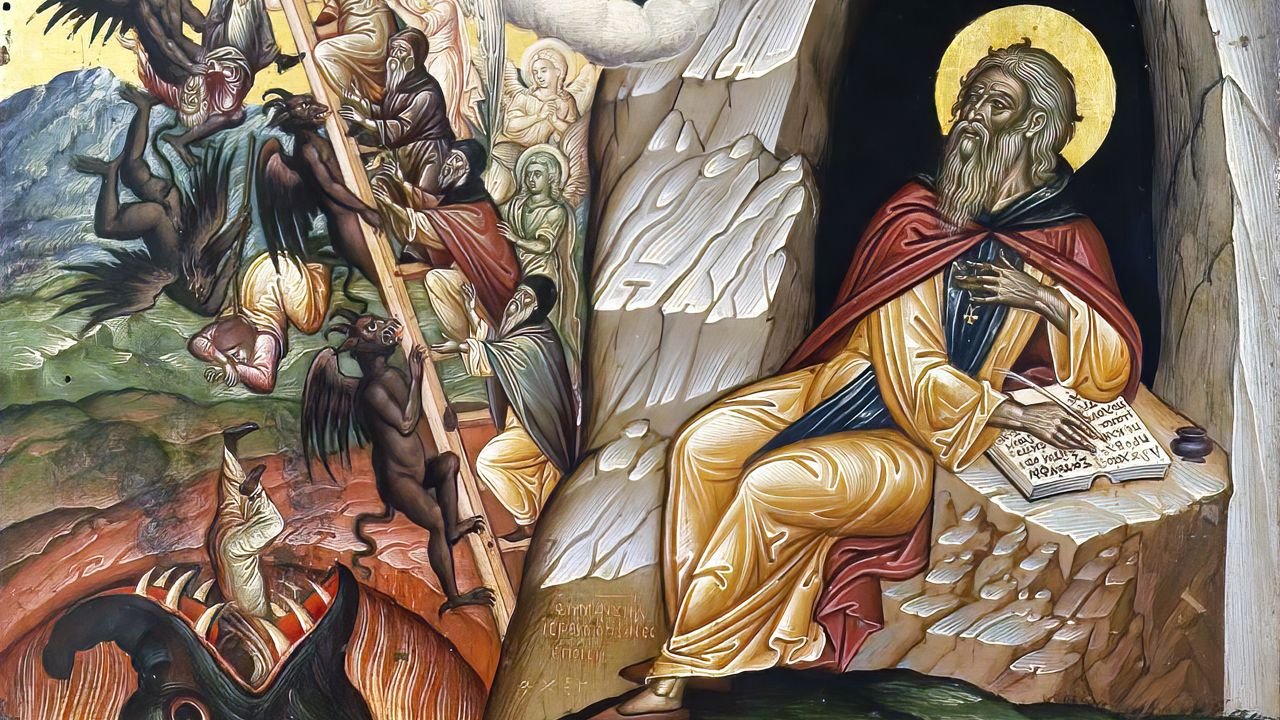
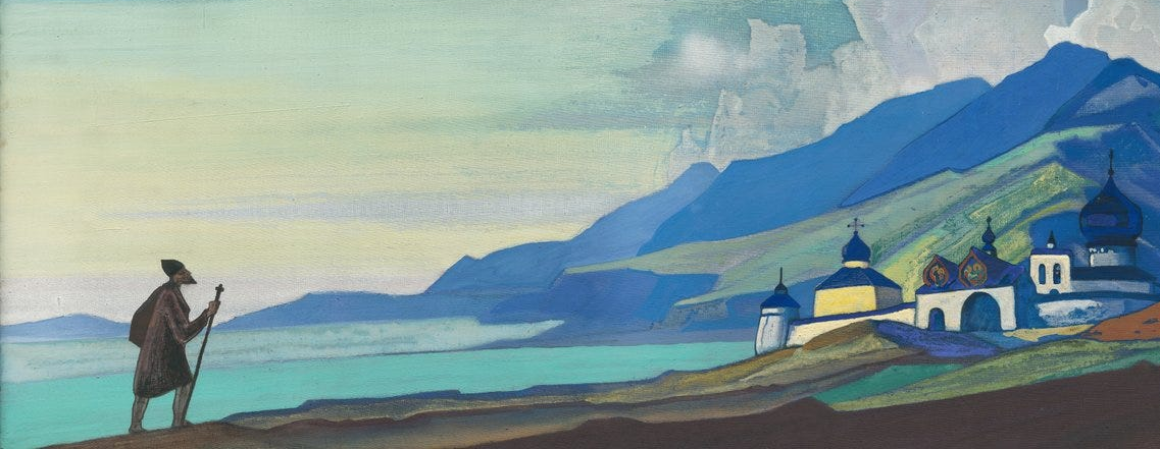
My fellow pilgrims may God bless you. I’ve begun reading The Ladder of Divine Ascent by Saint John of the Ladder (a.k.a. St. John Climacus). I cannot say that I am prepared to read such a work. I long for the holiness of the saints but I am so caught up in the things of this world. Nonetheless, I am encouraged reading the words of St. John of the Ladder.

Of course, he is writing primarily for monks and not for those of us with wives and children and jobs. But he did not forget us:

“Some people living carelessly in the world have asked me ‘We have wives and are beset with social cares, and how can we lead the solitary life?’ “I replied to them, ‘Do all the good you can. Do not speak evil of anyone. Do not steal from anyone. Do not lie to anyone. Do not be arrogant towards anyone. Do not hate anyone. Do not be absent from the divine services. Be compassionate to the needy. Do not offend anyone. Do not wreck another man’s domestic happiness and be content with what your own wives can give you. If you behave in this way, you will not be far from the Kingdom of Heaven.”

Simple enough, right? The closer I examine myself the more clear it is to me that I have a long way to go. All to easily I can speak evil of another, lie and be arrogant, hate and lack compassion, etc. I have also been “absent from divine services” far too often. Perhaps it is simple but it is not easy. In fact, it’s impossible without the mercies and grace of God. I have no reason to boast except in the Lord (1 Corinthians 1:31).

With the help of Christ, the Holy Spirit and intercessory prayer, perhaps I will climb that ladder of divine ascent. “If you behave in this way, you will not be far from the Kingdom of Heaven.” But for now, my feet are on the ground of this world and I am even challenged by the first rung of the ladder.

Blessed be the God and Father of our Lord Jesus Christ,
the Father of mercies and the God of all consolation
[.]
(2 Corinthians 1:3)

May God bless you.

[Seventh Sunday of Easter, Solemnity of the Ascension of the Lord]

Of Dead Popes, Faith and Reengaging

I don’t know where to begin, so I’ll start here…

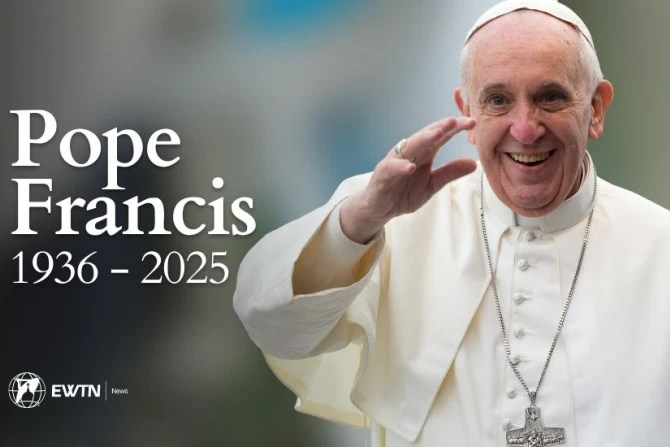
On the morning after Easter Sunday 2025 Pope Francis died.

I entered the Catholic Church in 2013, the same year Jorge Mario Bergoglio was elected pope. He took the name Francis. Later that year I also took that name when I became Catholic. My journey to that moment began, one could say, with the death of another pope, John Paul II.

I grew up Baptist and anti-Catholic. I never knew any Catholics, never even set foot inside a Catholic church, but when JPII died in 2005 I found myself watching on television the throngs of mourners outside St. Peter’s and I was deeply moved. In fact, I was strangely transfixed. Then I found myself closely following the conclave that elected Pope Benedict XVI. I knew it was more than curiosity but no way in hell would I have believed if someone told me that a journey had begun and I would someday be Catholic.

But I did become Catholic and I am glad I did. And yet, we all go through dry spells and recently I’ve been far from the Church. I never gave up claiming my faith but I also took a big step backwards and began exploring other areas of faith, other religions, and even some esoterica. I won’t go into all the reasons why but in short I was pulling back from having fallen into a kind of ultra-conservative traditionalist Catholic swamp (it’s a long story). I needed to clear my head and realign my heart. Then Covid hit and it became easy to pull back and not go back.

But now I’m thinking about a dead pope and I feel drawn to the faith that drew me before and still holds me even if I didn’t know what I wanted. Then there was another conclave and I couldn’t stop following the coverage. And now I’m going back to Mass. And I’m praying the Rosary again. And I like the new pope, Leo XIV. What a great name! I’m very curious about him.

But my faith isn’t about popes. It’s about Christ. And I’m dong a lot of thinking and discerning these days. Perhaps even this old blog of mine will be resurrected.

Reading Science Fiction (and finishing the books)

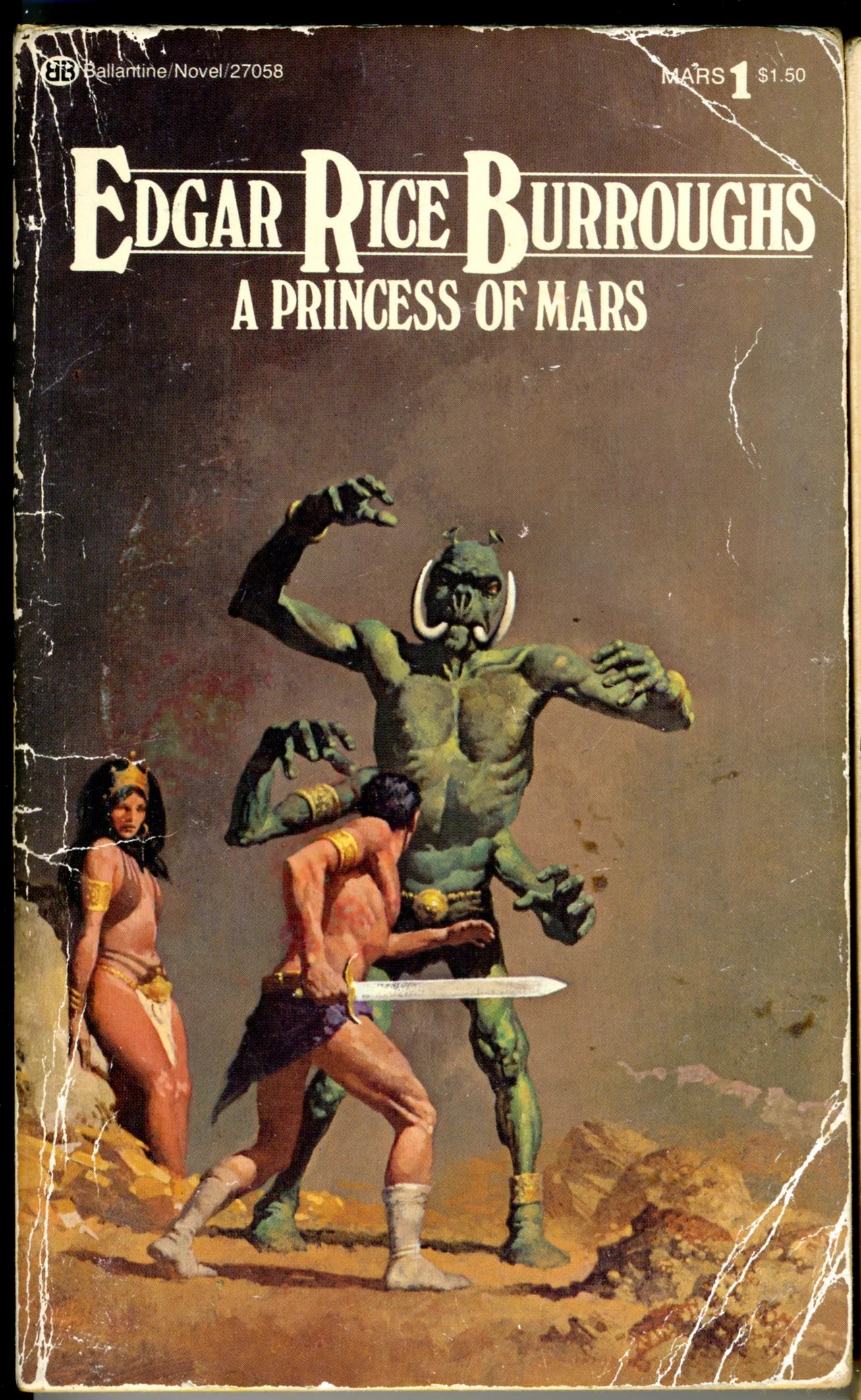
Cover art by Dean Ellis

I’m diving into Science Fiction. And I’m loving it.

When I was a kid I liked sci-fi literature quite a lot. I didn’t read a ton of science fiction books, perhaps because I’m a slow reader and I also liked to read other kinds of books. But I remember reading Ray Bradbury’s short stories and loving them. I also had an original hardbound copy of Burroughs At the Earth’s Core, which I absolutely loved and eventually lost. I also read and loved Burroughs’ Tarzan and several of his John Carter of Mars series. I also loved sci-fi films and television (STAR WARS IV was life changing for me as an eleven year old). And I vaguely remember reading Herbert’s Dune and Asimov’s Foundation (remembering almost nothing btw) in college and loving those too. But time went by and my sensibilities began feel the weight of needing to read the classics of Western Civ. I can’t say how many times I started The Brothers Karamazov but it’s the same number as the number of time I didn’t finish it.

It’s been a long time since have read cover-to-cover a work of fiction let alone science fiction. Long gone have been the days when I let my imagination run over the covers of classic sci-fi books purchased at the supermarket or the used book store. These covers activated my young imagination and probably libido.

Cover art by Gino D’Achille

For nearly three decades now most of my reading has been non-fiction. I’ve really struggled to read fiction. But recently I decided two things: 1) I’m going to read fiction in the morning rather than when I get into bed and fall asleep five minutes later, and 2) I’m going to read science fiction rather than from the “western canon” of so-called great literature. Why science fiction specifically I can’t say, but it seems like the right choice. Maybe I’m more willing to give into my inner nerd and admit I love a lot of what sci-fi has to offer my imagination.

For as long as I can remember I’ve religiously spent between one and two hours every morning reading. I’m a man of routine. My coffee and my books and a quiet house before everyone wakes up are sacred to me. But I’ve lived for so long believing I should be reading “serious” stuff and not frivolous trivialities. Oh well, that’s changed.

“The Three-Body Problem” cover art by Stephan Martiniere

In a sense I feel like I’m trying to catching up. I’m looking at Hugo and Nebula awards lists, recommendations from others, and my own knowledge of sci-fi (and some guilt about books I should have read by now). My list of must-reads is growing, and it’s kinda exciting.

I just finished N.K. Jemisin’s The Fifth Season (decent read, more fantasy than sci-fi), Liu Cixin’s The Three-Body Problem (kinda amazing, need to read the next two), and H.G. Wells The War of the Worlds (so wonderfully victorian in tone and style). I’m also re-reading Asimov’s Foundation (book one and loving it), pecking away at Bradbury’s Fahrenheit 451 (classic and interesting) and Orwell’s Nineteen Eighty-Four (a much better read than I expected, but I shouldn’t be surprised). I’ve also got a ton of books ready and waiting to be read next (I’m getting a lot of recommendations from online reviewers and “top” lists). I welcome any suggestions too.

In short, I’m loving reading these books. Switching to reading fiction in the morning is fun and I’m actually getting through these books. This surprises me – I can actually finish a book!

“Leviathan Wakes” cover art by Daniel Dociu

Finally, I have to say I love the cover art of quite a lot of sci-fi books. There must be something about the genre that inspires artists more than most other genres, for the art is often staggeringly good.

Wondering about that fellow Fidel in the mountains on the way to Gethsemani

When the ancient Russian plane landed at the Havana airport, it was raining. And I remembered one other time that I had been in this airport (an unforgettable day for me, and the happiest day of my life). It was raining that day, too, and getting late, and I had seen Havana from the air surrounded by a halo of opalescent mist, as if wrapped in a great sadness. Some Yankees, sunburned and smiling, got on the plane loaded with Bacardi rum, and I felt that they were coming from a depressing world. Airline attendants carried their bottles to the landing stairs. It was Batista’s Cuba. A cousin of mine who had been in Cuba had told me shortly before that a young man was fighting in the mountains and that his name was Fidel Castro. I was stopping off in Havana on a flight from Managua, Nicaragua, to Miami, but I was going to Miami only to enter the Trappist Monastery of Gethsemani. This flight I later described as “a true flight to Heaven rather than a routine Pan American flight.” It was a flight to freedom. (And I remember that from the air I had seen far-off mountains and I had wondered where that fellow Fidel Castro might be fighting.)

From the book In Cuba by Ernesto Cardenal, 1974
Fidel Castro (left) converses with Ernesto “Che” Guevara, in the woods of the Sierra Maestra, Cuba, on Oct. 8, 1957. Files/AFP/Getty Images (Source)

I’ve been reading Latin American non-fiction lately. Mostly it’s been centered around Liberation Theology and the history of European and U.S. exploitation of the Americas. I have been surprised and fascinated by how often I read praise for Fidel Castro and Che Guevara from Christians. As you would correctly guess these are not U.S. Christians who have been rigorously propagandized against Fidel and Che. Rather, these are Christians who are far less bourgeois in their faith (most are peasants and working class) and arguably closer to the original Christians in spirit and experience. This can make one wonder. Do we U.S. Christians know the gospel? I continue to think this is a significant area of struggle for us.

The quote at the top is from the opening paragraph to the book In Cuba by Ernesto Cardenal and based on his diary from a stay in that country in the early 1970’s. The book is fascinating and gives a substantially different picture of life in Cuba and of Fidel than was generally been presented to the U.S. public. Cardenal does not pull any punches either. He both praises and criticizes. And he describes in detail life in revolutionary Cuba. In that sense I feel like it’s a rather fair assessment, albeit from a Left-leaning, Liberation Theological, Latin American, Catholic priest.

But I still find myself a bit caught off guard to read of Christians (who seem like genuine followers of Christ) expressing fascination for, and even praising, the Cuban revolution and its leaders, and often doing so in ways that draw connections between that revolution and the gospel of Christ. It doesn’t take long, if one has any empathy for their experience, to see the U.S. (and its self-proclaimed Christian nation status) as being something more like the Antichrist when it comes to Latin America. This has been especially true reading The Gospel in Solentiname, also by Ernesto Cardenal. It not only makes one think, it is also challenging to me as I try to follow Christ authentically and without unconscious ideological presuppositions.

A Young Marx in Paris, French Communist Christians, and Thoughts from a Nicaraguan Poet

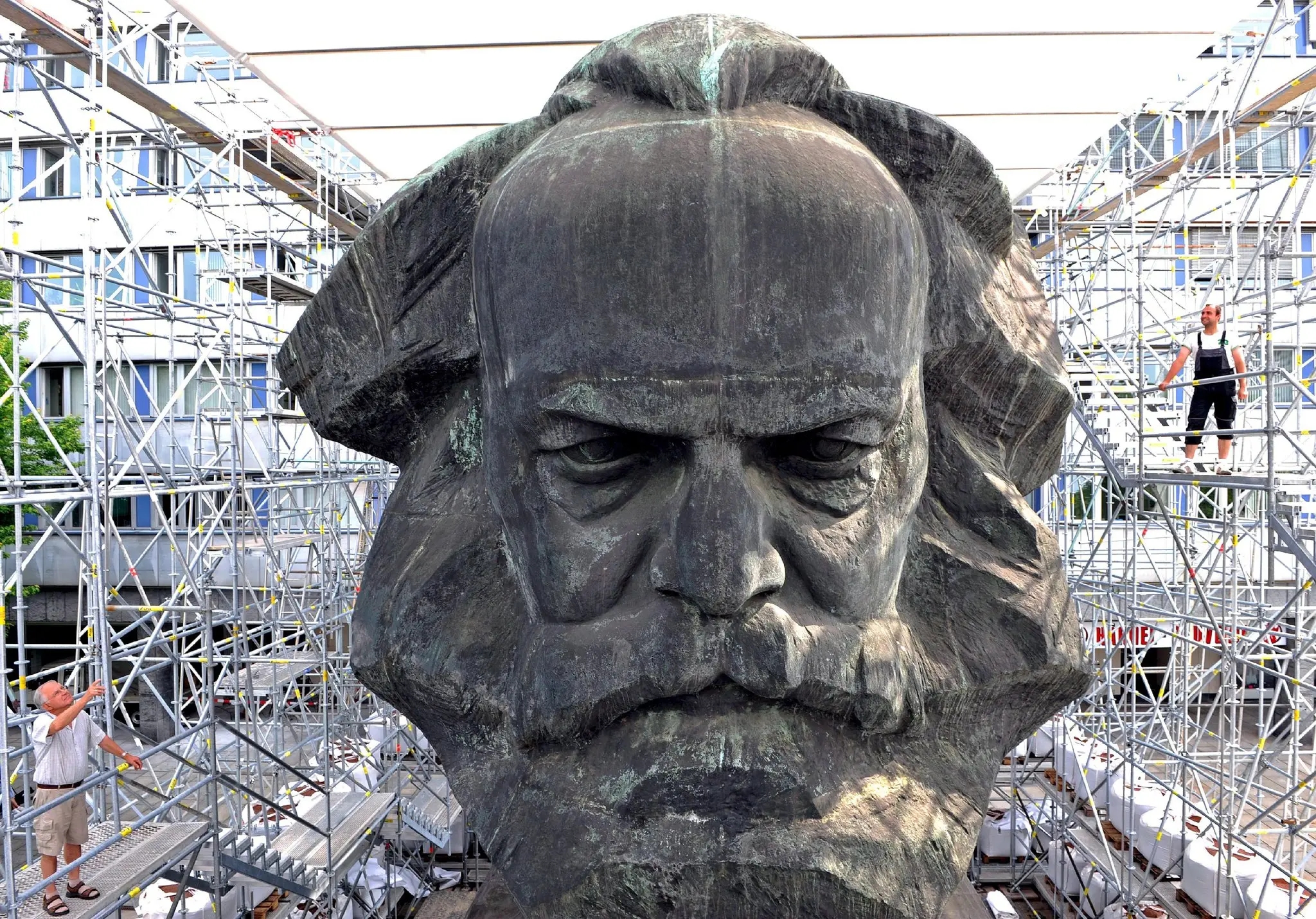
38 Rue Vaneau, Paris – Where Karl Marx lived between 1843 and 1845

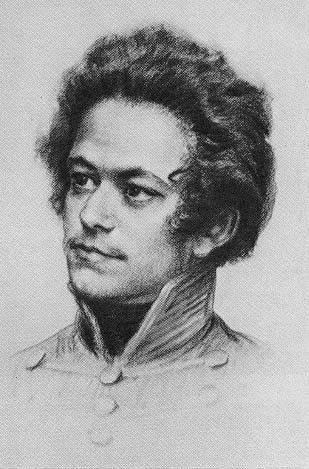
In 1843, at the age of 25, Karl Marx arrived in Paris and tried to start a political journal. At this early point in his life he was forging a career as an editor and was not yet much of a communist, at least not yet the universal symbol of communism he would become. He was still exploring and formulating his ideas, reading a tremendous number of economic texts, and getting to know Friedrich Engels. He was also trying to find writers for the journal he and a collaborator were trying to start. Being a radical German in France, this was not always easy…

Language problems were not the only issue, since they had the help of Moses Hess, who spoke better French from a previous stay in Paris, as a translator. There were also political and intellectual differences that made cooperation difficult. Most of the French socialists the German editors met rejected political action as a means to bring about their new society, counting instead on the voluntary formation of communes, without the need for subversive activities or revolutionary struggles. These socialists also understood their social and economic plans in religious terms: communism was the authentic realization of the ideals of Christianity [emphasis added]. The radical, atheist German intellectuals, subversives in trouble with the Prussian authorities, were not at all congenial to these French socialists.1

I find this observation about the French socialists fascinating. First, it highlights that socialist and communist thinking was already in the air and had been in the air for a while. Marx of course did not invent communism, he embraced it. (Again and again whenever communism comes up it is assumed this means “Marx.” But there are other options, other histories, and multiple “communisms.”) Second, it is a good reminder of the fact that communism and Christianity have been understood by some as not only compatible with each other, but tightly bound for a long time—perhaps inevitably so.

A man walks by a small shrine with a picture of Jesus Christ next to a local office of the Italian Communist party Rifondazione Comunista in Venice, Italy. | Domenico Stinellis / AP (source)

The idea that Communism is the embodiment, in some way, of the Gospel is a more commonly held belief than most from the U.S. might realize or even be capable of comprehending. As I have been studying Liberation Theology, and going down various related paths, I keep coming across this idea. It seems throughout much of the world the idea that communism and Christianity are or could be compatible is not a surprising position to hold. We can see it with the French socialists above, and I have come across it reading about Italy and Germany and, of course, we find it in Latin America. For example, this nugget from The Gospel in Solentiname, when Coronel (José Coronel Urtecho) turned to Ernesto Cardenal during a discussion on the Gospels and said:

“With regard to Christianity and communism, some thoughts on the subject occurred to me recently and I intended to tell them to you, and I’ll tell them now to the whole community. Here they are: communism cannot absorb Christianity without ceasing to be completely communist and changing into Christianity, whereas Christianity can absorb communism (Marxism–Leninism) and continue to be Christianity and even be more Christian. To put it another way, the communist cannot become a convert to Christianity without ceasing to be exclusively communist and becoming a Christian, whereas the Christian can become a communist (Marxist–Leninist) and be even more of a Christian.”2

I am fascinated by this idea. The concern, as always, is that “importing” something other than Christianity into Christianity will eventually and inevitably skew Christianity. But if, as the French socialists in the mid-nineteenth century thought, that “communism was the authentic realization of the ideals of Christianity,” then communism isn’t an import into Christianity but resides already within it, perhaps waiting to be accepted and embraced. Huge if true, as the kids say.

Nicaraguan poet, translator, essayist, critic, narrator, playwright, diplomat and historian, José Coronel Urtecho (image source)

I expect my dear reader to balk at the possible insertion of ideology into Christianity. I too do not want to warp or water down the faith with ideology. But, while trying to avoid “whataboutism,” I can’t help but highlight the fact that bourgeois and imperialist ideologies (and earlier feudal ideologies) have been so deeply inserted into Christianity for so many centuries such that most Christians call those ideologies the faith itself. In the U.S., “Americanism” reigns supreme as the Christian worldview. The fact that there are some ideologies that are considered totally off limits, such as communism, and others that are considered nearly sanctified, such as capitalism and nationalism, might have more to do with factors of cultural hegemony than faith. In other words, if one has to have the right kind of Christianity to get to heaven then probably most Americans aren’t getting there. Perhaps “unlearning” needs to be at the top of the U.S. Church’s agenda. In short, only by the grace of God… etc.

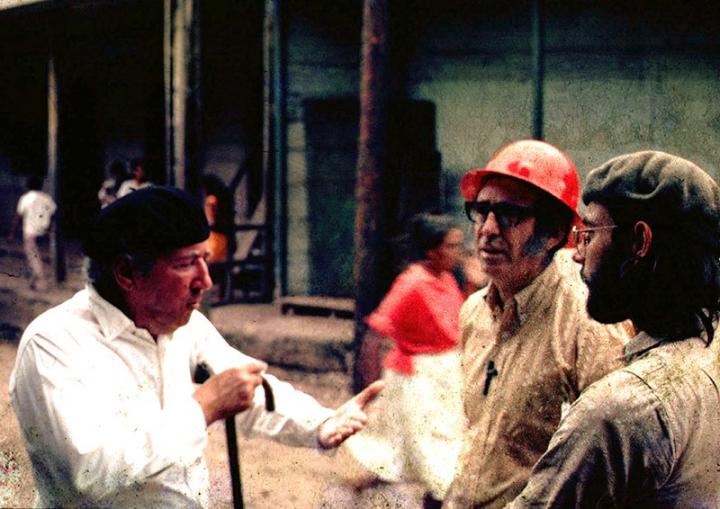
José Coronel Urtecho (left) with Fr. Fernando Cardenal (in hard hat) and young seminarian, Toño Cardenal.3 (source)

So, let’s assume the Christianity handed to us is not as pure as our preachers want us to believe. In fact, let’s assume a great deal of what most of us have been taught from our parents and the pulpit is a false gospel designed to obfuscate the true Gospel for the purposes of promoting and protecting other agendas. (I believe this is at least likely, given human nature, but the evidence seems overwhelming.) Regardless, if we take ideology to be a system of ideas and ideals, such that they form the basis of economic or political theory and policy, then we can’t help but bring ideology into Christianity. We don’t have a choice. The peril of insisting we will not bring ideology into the interpreting and the living of our faith is that we will bring ideology into our faith whether or not we are aware of it. The question is not one of ideology yes or no, for it is always yes, but of which ideology best helps us to extend the Gospel into personal, public, social, and political praxis. I have not settled the issue for myself about communism, and I certainly believe the Lenin/Stalin/Mao forms of communism profoundly misguided and prone to all kinds of evil, but I find the assumptions of those French socialists and the ideas of Coronel from Nicaragua at the very least intriguing.


1Jonathan Sperber, Karl Marx: A Nineteenth-Century Life (New York, New York: Liveright Publishing Corporation, 2014), 118.

2Ernesto Cardenal, The Gospel in Solentiname, trans. Donald D. Walsh (Maryknoll, NY: Orbis Books, 2010), 232-233.

3A word about Toño Cardenal (aka Comandante Jesus Rojas): “Born in Nicaragua to a prominent family, Cardenal was one of the ten children of Julio Cardenal and Indiana Caldera. His father’s cousins included Ernesto Cardenal and his brother Fernando, both priests who adhered to liberation theology. Cardenal decided to pursue a career in the Jesuit seminary. After being sent to El Salvador as a priest, Cardenal was profoundly impacted by the anti-Jesuit violence he witnessed perpetrated by the Salvadoran government. Due to these events, he went underground as a rebel leader of the FMLN movement, in which he led the FPL (Fuerzas Populares de Liberación) for several years. He was a major proponent of the peace talks with the government in the early 1990s, and worked towards a negotiated peace for both sides. On April 11, 1991, Cardenal was assassinated by a group of Army troops attempting to sabotage the peace process. However, the FMLN leadership decided to proceed with the talks at the expense of one of their commanders.” (From Wikipedia) Also, his aunt, Violeta Chamorro, was the president of Nicaragua from 1990 to 1997.

ennui the door

This post was first published August 6th, 2007, shortly after two of the greatest filmmakers who every lived died on the same day. In many ways the sentiments of hopelessness are just as much with us now, haunting our world, as then. I feel this post still resonates. Therefore, I am republishing it again.

If I should cast off this tattered coat,
And go free into the mighty sky;
If I should find nothing there
But a vast blue,
Echoless, ignorant—
What then?

– Stephen Crane

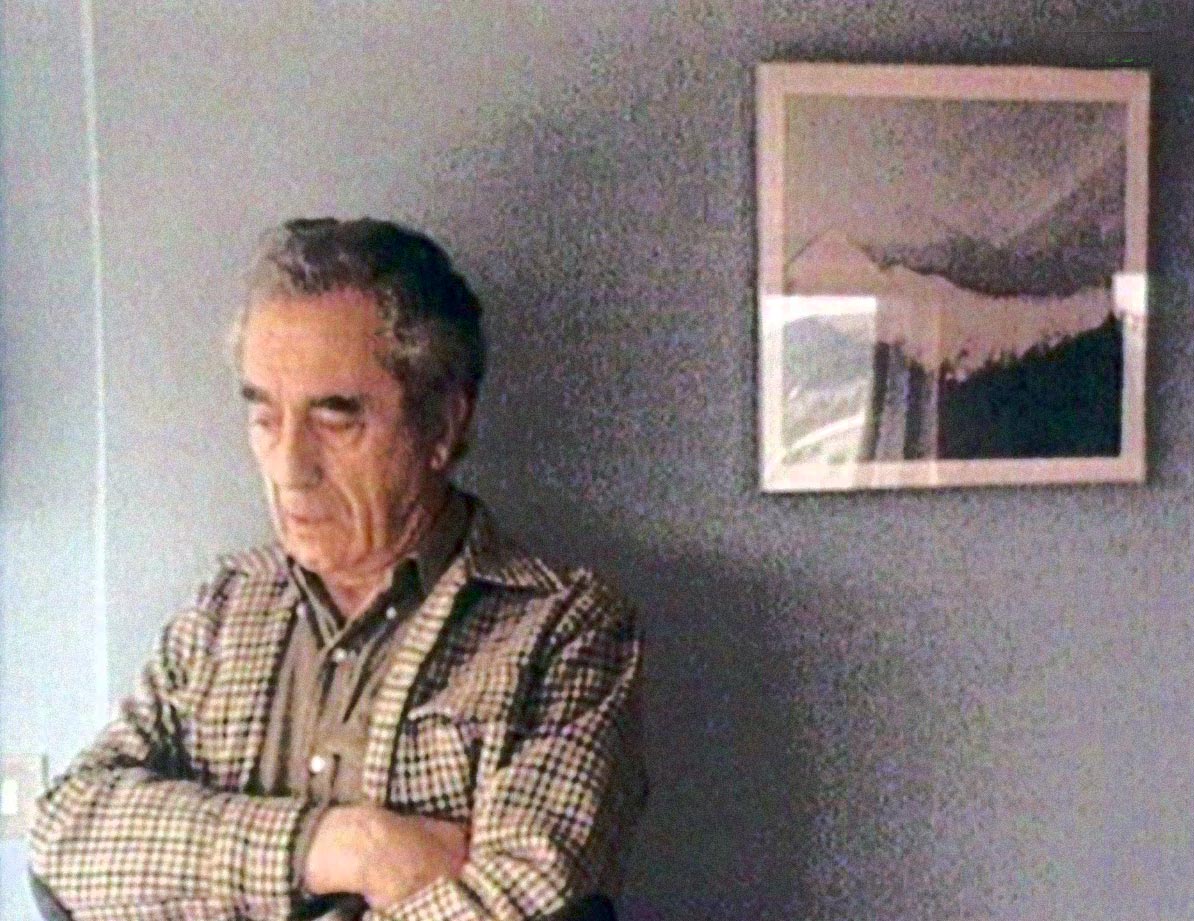
The recent deaths of Michelangelo Antonioni and Ingmar Bergman, on the same day no less, highlighted two realizations for me: 1) I am, in many ways, a “high modernist” in my aesthetic tastes and passions, and 2) the prevalent and particular questioning of the concepts of truth and hope found in high modernism seems to have disappeared as a noble pursuit. In other words, I long for the days (which were before my time) when artists and filmmakers saw the modern, industrialized, nuclear world as harsh and bleak, but believed that art could truly change that world for the better – even if only by asking the tough questions. (Of course we all imagine the past as we wish.) Today, artmaking is too often viewed cynically, that is, there is no point in tackling the grander themes, rather art is merely about what is only personal and private, and therefore essentially non-transferable, and therefore merely kitsch. That filmmaking can no longer change the world seems to be the prevailing perspective.

There was a kind of hopelessness in both Bergman and Antonioni, but there was also a sense that at least art and human creativity meant something, and therefore it was worth giving it a try anyway. It was also true that each of them, in their own ways, saw that the big questions of life – is there a god? what does it mean to be human? is there a viable salvation for humankind? etc. – were worth asking and pondering and turning inside out. I believe those are still live questions. I am inclined to think, however, that for the most part, filmmakers (except maybe some at the fringes) today do not see those questions as worth being asked.

Consider Antonioni.

Maybe no other filmmaker captured the alienation of humanity in (and to) the modern world as well as Antonioni. He cut to the heart of the difficulty of people loving each other, and finding authentic love, within the world that humanity had created for itself. According to Stephen Holden:

He was a visionary whose portrayal of the failure of Eros in a hypereroticized climate addressed the modern world and its discontents in a new, intensely poetic cinematic language. Here was depicted for the first time on screen a world in which attention deficit disorder, and the uneasy sense of impermanence that goes with it, were already epidemic.

This condition has not left us. In many ways we are still profoundly alienated from this world and from each other. The alienation may even be greater now than when Antonioni first portrayed it on screen. And although he did not give us an outright solution, the response should not be to throw up one’s hands, exclaim life is just absurd and devoid of answers, and then fall into hedonism, consumerism, narcissism, or suburban apathy.
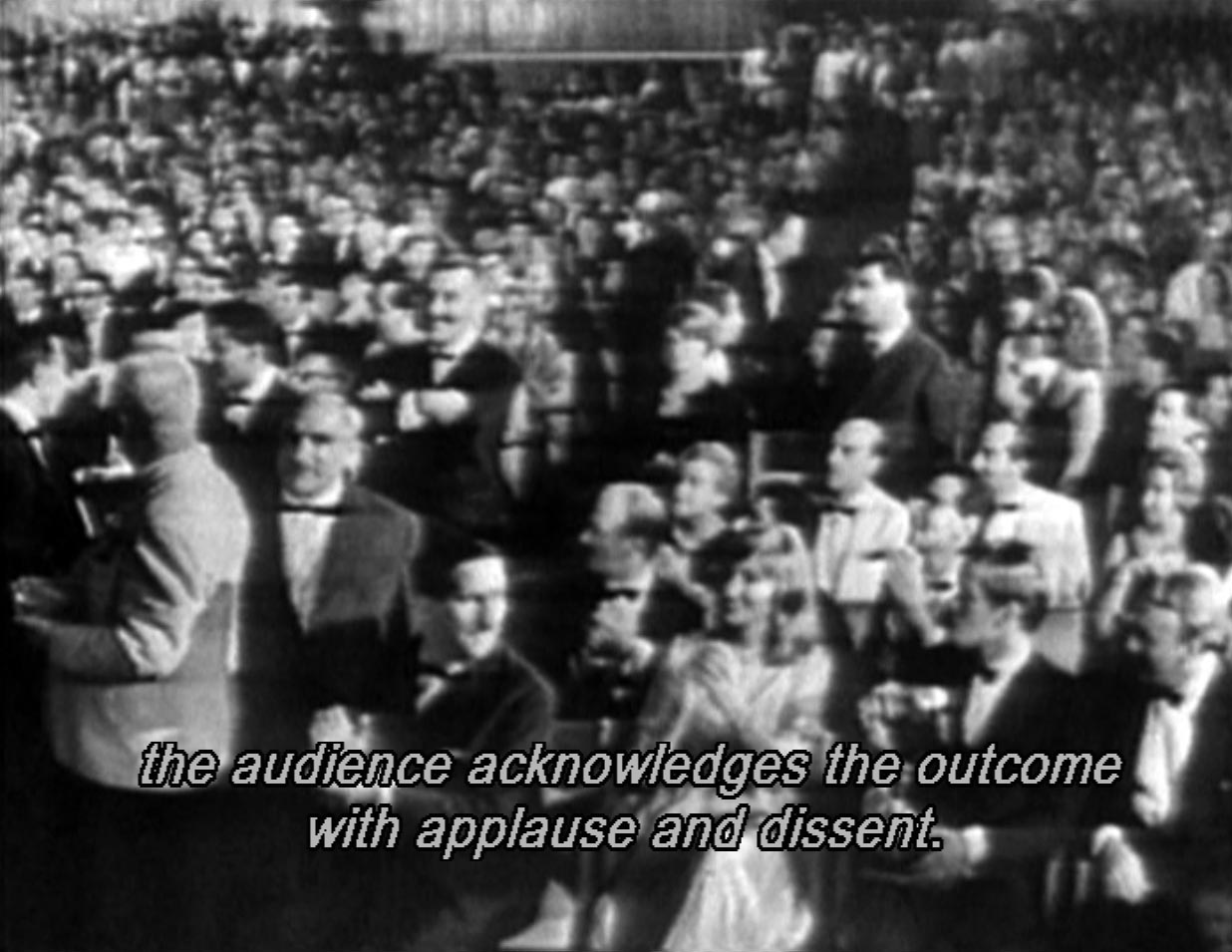
When Anotnioni won the Golden Lion award at the 1964 Venice Film Festival for The Red Desert (1964), the crowd had mixed feelings.

 
What is great about such contrasting responses is that it signals that people cared about the outcome, that what Antonioni was creating had meaning, that he was saying things that required a response – love them or hate them. Four years earlier he was also booed at Cannes for L’Avventura. But that was then.
 
Rosenbaum, in his piece on L’eclisse for the Criterion Collection release of that film, states:
 

This was a time when intellectual activity about the zeitgeist could be debated, if not always welcomed, with Godard and Antonioni the two most commanding figureheads. L’eclisse (1962) appeared the year after Chronicle of a Summer, Last Year in Marienbad, and Paris Belongs to Us, the same year as The Exterminating Angel and Vivre sa vie, and the year before Contempt and Muriel—a period, in short, when large statements and narrative innovations often came together.

That is my understanding (of course not my experience) of the late Fifties and Sixties. The zeitgeist was critical. Mankind was in a giant philosophical flux, and big issues, existential issues were on the table and debated. Film was seen as important, and film departments were started at universities and colleges. Film festivals were important for political reasons and not merely for the glam. Bergman and Antonioni, among many others, were hotly debated, loved and despised, revered and condemned. And then it seemed like none of that really mattered so much. The mid-1970s arrived and the pursuit of these higher goals began to wane. The great leaders had been shot, Vietnam had “ended”, the counterculture became more and more of a drug culture, humans had already walked on the moon and that wasn’t so exciting anymore, the Beatles broke up, Nixon brought even more shame to government, and a self-absorbed “me” generation began to create a new zeitgeist of cynical pleasure. People didn’t go to the theater to find god anymore, they went to the theater to find a thrill. They didn’t go seeking truth, they went seeking a shark, or a spaceship, or the next escape from reality. I know I did.
 
I, of course, am over-simplifying and romanticizing a bit. People have always sought the thrill and the escape. Truth has always been debated. And some films still stir the soul-searching imagination and foster debate. Plus the 1970s were also an age that started many great things: personal computers, the environmental movement, the slow-food movement, to name just a few. But we are living in an age where the struggle after god and truth are essentially passé. The assumption is that there is no Truth (with a capital “T”), there are no true ethics, there is no God, there are only situations and opinions, and so, for the most part, nobody really cares anymore. The death of Bergman and Antonioni remind us of of a time when cinema was a medium for these pursuits to play themselves out, and people went to the theater to see them played out, and later, over coffee and cigarettes, or walking across campus after the student union showing of a Godard, or later still in bed with one’s lover, debated the meaning of those films and of ourselves.
 
No need to despair, though. The big questions of our existence are still with us, and if we are brave enough we can still talk about them. And film is still of of the great mediums with which to explore who we are.

As for Antonioni, much has been said by those more intelligent than I about his genius. But what is important to separate is the ennui of his characters and his own personal hope – I say this only from watching his films, not studying the man himself.
 
In fact, I think it is important to consider that Anotnioni was no true pessimist. He saw people as being trapped in the world that they have created. But he does not say there is nothing they can do, or that there is no other world. Consider this little scene from L’eclisse:
 
Vittoria (Monica Vitti) has left her lover. The relationship has been empty and she feels the ennui of living in the modern age. Although her feelings may not be entirely clear to herself. She walks back to her apartment.
 
 
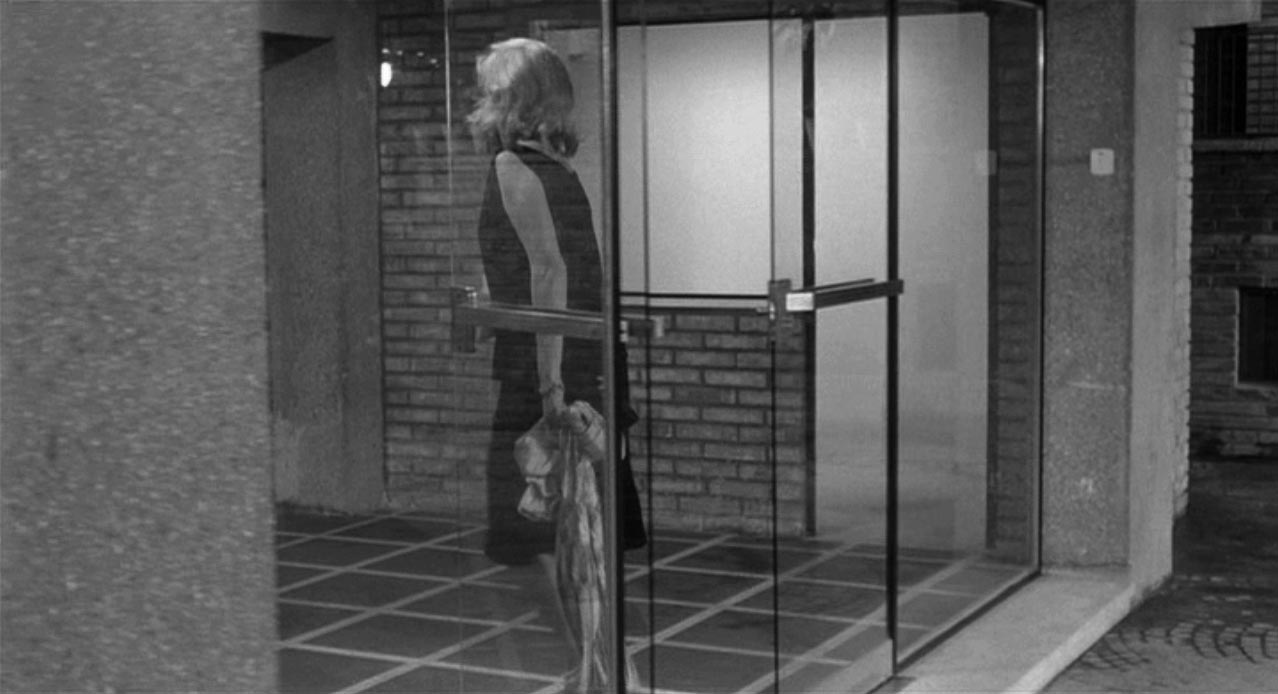
Here she watches her ex-lover walk away as she stands at the entrance of her apartment building. She is visually framed by elements of that building which seems to dominate the scene. There is a kind of hopeless emptiness in her eyes and posture. She does not yet know that it was not that she was trapped in an empty relationship from which she is now free, rather she is still trapped in herself in the modern world. Antonioni uses modern architecture to symbolize the prison of modern society.
 
Then Vittoria goes through the glass doors. The camera tracks left to follow her movements.
 
 
In the foreground the corner pillar of the building comes into the frame.
 
Vittoria walks through the foyer as the camera continues to track left. But then the camera stops so that we see only a sliver of the stairwell.
 
 
Vittoria walks up the stairwell and disappears around the corner.
 
 
It is as though she has been swallowed by the building.
 
Then we see her at her apartment door. Again she is visually framed by the building’s architecture.
 
 
As she enters her apartment the camera is placed outside her windows in such a way as to emphasize that she is inside the building. And again, the architecture dominates, framing her “within” its space.
 
 
It should be noted as well that her apartment is chic and modern. She is a beautiful, rich woman living in a beautiful, richly furnished apartment which surrounds her with the bounty of wealth. She has it good, one could say.
 
She then walks through her apartment and goes to the window. Outside the wind is blowing the trees.
 
 
The only thing we hear is the wind in the trees. Here we have the modern world set against the timeless natural world. One world is visceral the other is sterile. One world is dead the other is alive.

The final shot of this sequence is critical, and one of the most important shots of the film. Antonioni is setting up a contrast, one that Vittoria sees but does not see. The truth is she is not lost, she is choosing her life.
 
Every pessimist is an optimist, and so was Anotnioni. When Vittoria looks out that window at the trees, she is trapped by her own choosing, but she can still choose. The walls of her chic apartment are a barrier to the life beyond those walls, but the apartment has a door. The question is whether she has the eyes to see that she has a choice.
 
And what is truly important anyway is that we can see, and we can choose. Ennui is a challenge to us, but it is also a door through which we discover ourselves and to understand that we must choose. Antonioni helps us see, and his films are but one doorway to that choice.

The Revolution of the Vernacular: When the Catholic Mass Became an Instrument of Liberation Theology

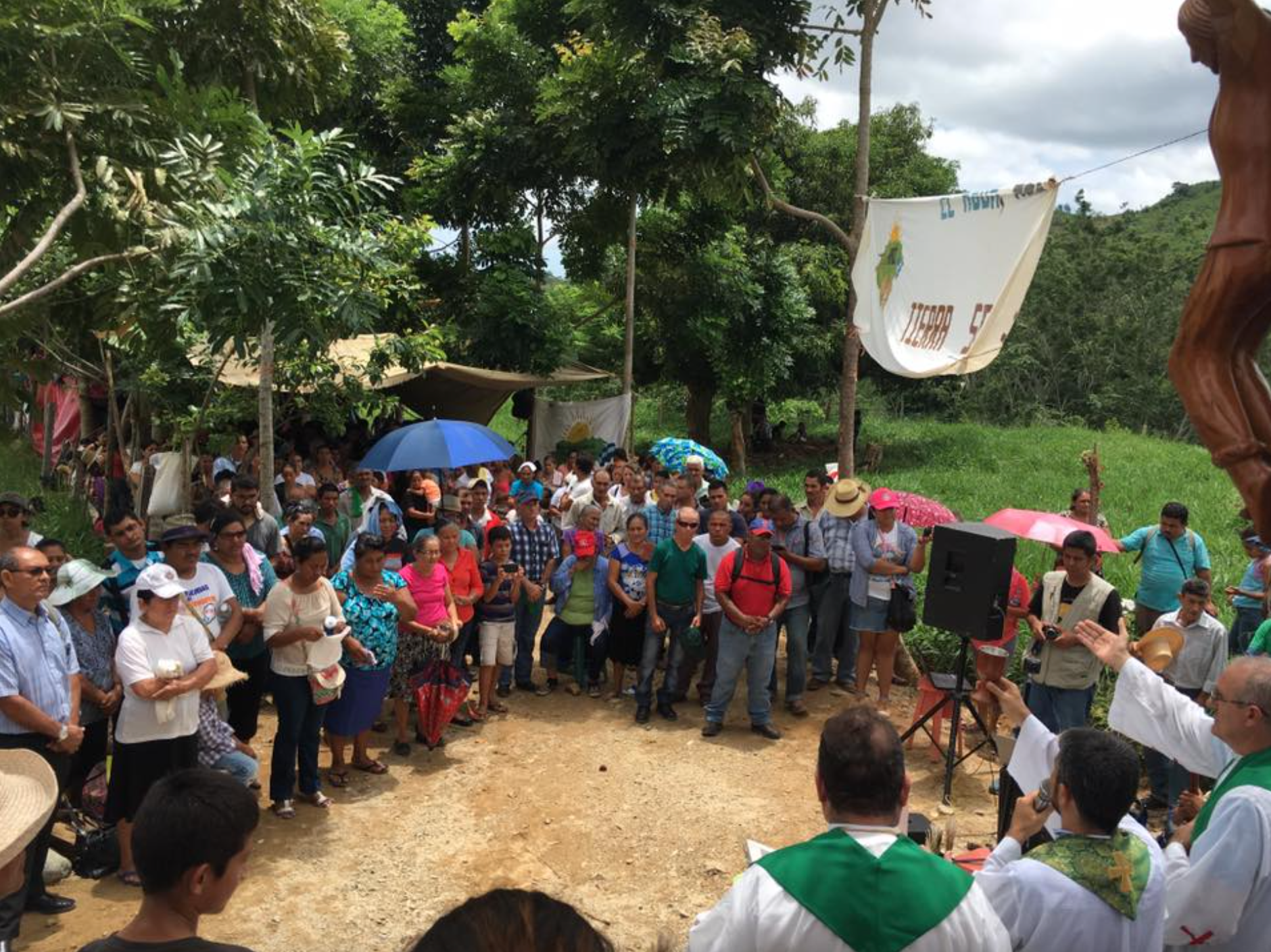
Priests celebrate Mass for protesters in the middle of a rural street in Honduras in 2017 in an effort to block the passage of equipment for a construction project that would be harmful to the environment. (source)

Latin is a beautiful and ancient language. Many consider it a sacred language as it is one of the three languages used for the inscription Pilate had affixed to the Cross declaring Jesus king of the Jews (the other two being Hebrew and Greek). Latin was also the language used for centuries for the Roman Rite Mass. Of course, few people, including Catholics, know Latin well (even the U.S. bishops who participated in Vatican II famously struggled with the Latin documents). 1969 was perhaps the most pivotal year for many decades for the Church, for the Mass was changed and the vernacular, which was now allowed, soon became the dominant language, in some cases entirely replacing Latin. The flood gates were opened for the vernacular.

For many Catholics around the world, this was the first time they had heard the Mass in their own tongue. Think about that—the first time hearing the prayers, the chants, the creed, and especially the readings in one’s own language. Not only does that mean they could understand what they were hearing, they now could, in a sense, own it. There was no longer a distance, a gulf between the laity and the Mass.The Mass became their own, not a foreign thing.

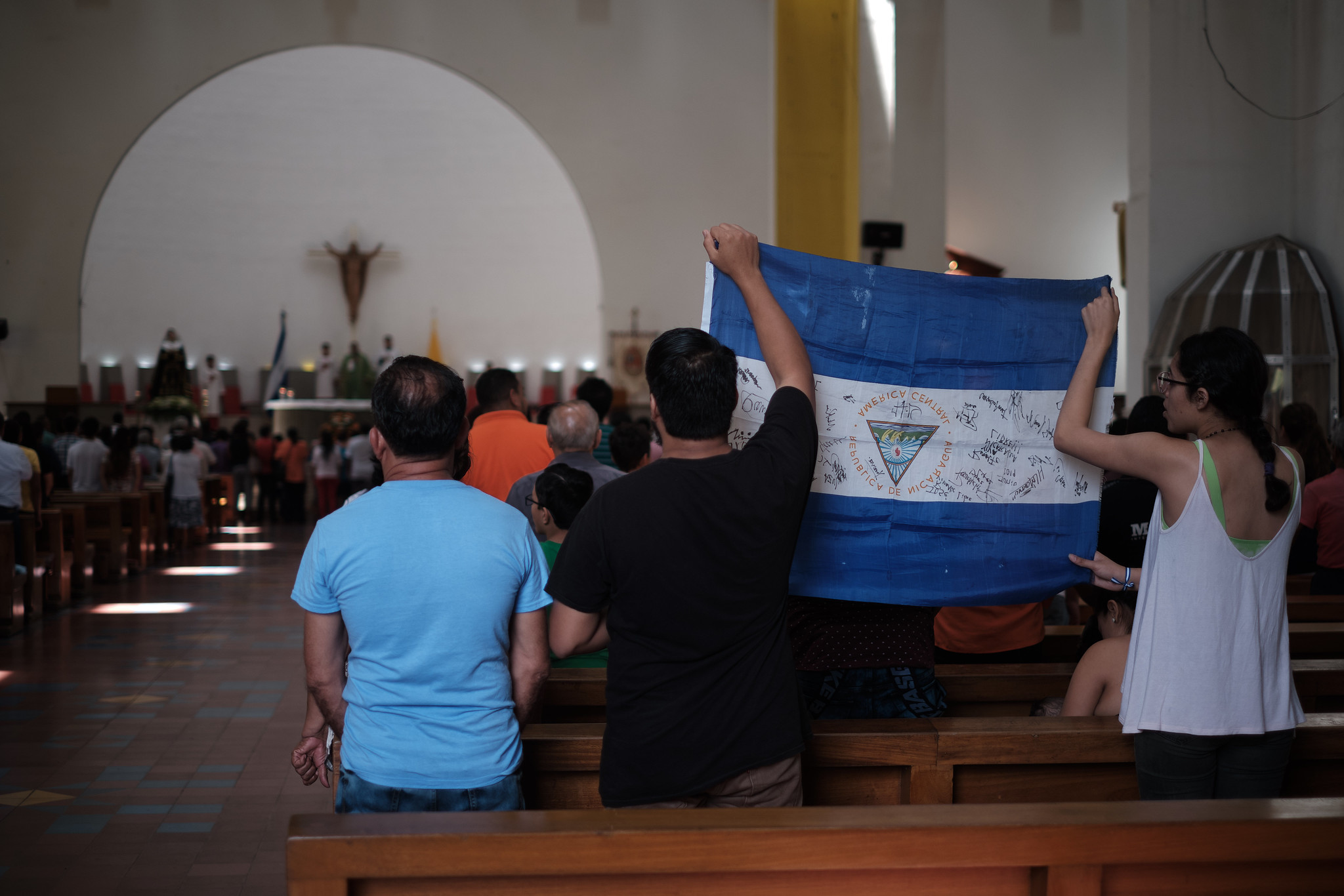
Citizens raising the Nicaraguan flag upside down as a way to protest at the Managua cathedral. Photo: Carlos Herrera (source)

There has been a consistent lament about the loss of Latin from some corners of the Church since 1969 but, for the most part, use of the vernacular was fully embraced and celebrated by most Catholics and remains their preference. This is true for both laity and priesthood. The distance shrinking between the two was a welcome change. Something surprising also happened. When Catholics began hearing the Gospels read in their own language—and remember many around the world cannot read or don’t have the means to afford a Bible, thus the Mass is where they heard the Gospels—they heard the radical nature, the explosive content of Holy Scripture no longer hidden behind a veil. They could also begin to judge the homilies as they compared the preaching to the words of the Gospels, and in some cases they began to see a disparity between the two. For some, that disparity shone a light on the dichotomy between rich and poor, oppressor and oppressed, and between the earthly kingdom and the Kingdom of God.

Roman Catholic pilgrims travel in a boat as they accompany the statue of Our Lady of Conception during an annual river procession and pilgrimage along the Caraparu River in Santa Izabel do Para, in the Amazon jungle December 8, 2012. The statue is transported by boat along this small Amazon tributary to a small chapel in the village of Cacoal, where a mass is held. Picture taken December 8, 2012. REUTERS/Paulo Santos (source)

We have all heard of people who once denigrated Christianity only to later change their views because they read the Bible for themselves rather than receiving it through the filter of organized religion. Consider this passage from The Gospel in Solentiname in which some poor folks (campesinos), who have been reading and discussing the Gospels, point out a fascinating fact:

[Ernesto Cardenal] said: “I’ve just had a visit from a young fellow from the north, from Estelí, from a poor town. He is a campesino like yourselves, and he was saying that there, to get together for their Masses first they have to ask permission from the police, and the police captain said that those gatherings were dangerous. The captain is right, for they gather to talk about the Gospels.” […]

TOÑO: “That didn’t use to happen here because the Masses were in Latin. The priest read these things but he read them in Latin, and he didn’t explain them to the people. So the Gospels didn’t bother the rich or the military.”1

Now that the Mass was celebrated in the vernacular the reality of the Gospel frightened the earthly rulers and the rich who oppressed the poor. All saw the possibility of revolution. Some were afraid and others found joy.

Christ made it clear that one of the fundamental enemies of the Gospel are the rich. The Church has spent nearly two thousand years trying to downplay and obfuscate that clear truth. But there’s only so much evasion one can get away with once the Gospels are read or heard as they are. Fortunately, there have been many in the Church who didn’t play along with the dominant ideologies. Some became well known—Saint Francis comes to mind, and so does Óscar Romero—but most are not, such as the many priests, religious, and even more laity killed in Latin America at the hands of US-backed governments because they defended the suffering poor against the oppressive rich. All were marked by a direct confrontation with the Gospel.

Vatican II and the Mass of Pope Saint Paul VI which flowed from the council took the bold step to get the Gospels more directly into the hands of the faithful.

In Latin America the vernacular Mass began to appear even earlier than 1969, such as the Misa típica panameña de San Miguelito (Panamanian Folk Mass of San Miguelito, 1966).2 Of course, when we refer to the Mass we refer not merely to the readings, homilies, and spoken prayers but also to the chants, songs, and creeds. Spanish language Masses began to be written and even recorded and spread via LPs. For example, the Misa Campesina Nicaragüense (“Nicaraguan Peasants’ Mass”) with words and music by Carlos Mejía Godoy, and incorporating liberation theology and Nicaraguan folk music. It was inspired by the faith community in Solentiname and was first celebrated in 1975. Here is the entrance hymn from the Misa Campesina Nicaragüense:

Notice the addition of liberation-themed images in the video above. The use of the vernacular encouraged the development of folk Masses and thus reached the hearts of the people more readily—those people included priests as well. The writing and recording of these Masses, in forms that could be easily sung by the faithful, and with the fundamental Gospel theme of liberation, contributed to the spread of liberation as a social and political force in Latin America and, not only that, linked that liberation to the saving work of Christ and the faithful life Christians are called to live. Liberation, as a political force, was seen as a call to the faithful, thus countering the over-spiritualization of the faith, of interpretations of Scripture, and even of worship itself.

Bernard Gordillo writes of the power of the new Mass settings in Latin America and how they helped change the culture and enriched the faith [emphasis added]:

The Catholic Church underwent profound renewal during the 1960s. The bishops of the Second Vatican Council elected to engage the modern world in response to its social and political challenges. Catholics saw the church acknowledge them and adapt to their realities. The once steadfast celebration of the liturgy, a bedrock of sacred rituals, now addressed local or regional identity. Latin and plainsong gave way to vernacular languages, musics, and performance practices. Taking inspiration from this wave of change, Catholic musicians, writers, and artists created diverse musical settings and textual translations of the liturgy, in addition to innovative visual art. These developments took on particular resonances in Latin America, where the bishops of CELAM sought to confront systemic poverty and injustice by affirming the experience of the poor, as well as the social and political processes that would give rise to a theology of liberation. Singing was an abiding collective expression wherever concientización took place, not as a secondary feature, but as part and parcel of a ritual whole, forming a circular relationship between concientización, prayer, and song. This uniquely Latin American postconciliar ritual (concientización-prayer- song) was the fundamental building block of the liberation method for the Familia de Dios movement. The vernacular masses that emerged from San Miguelito, San Pablo Apóstol, and Solentiname musically embodied the community in reflection of its collective identity. They accompanied the transition of liberation practices from internal community building to outward social and political engagement, as enacted by postconciliar priests, religious, and lay people. If the origins of liberation theology lie in the experiences and critical awakening of the poor, they also lie in their expressions— spoken and sung. The Familia de Dios masses were thus musical emblems of this process within their respective popular church communities. They were liberation masses that sang of faith, hope, and struggle in a post conciliar world.3

Consider, that after centuries of Christendom and the Church, in collusion with governments and ruling powers, seeking worldly power, after centuries of the Church protecting itself from the challenges and judgements of the Gospel and the often frightening workings of the Holy Spirit, a council, a new Mass, and a group of Latin American bishops took the risk and sought to allow worship that might address local and regional identity, getting the Gospel into the vernacular, and promoting the radical message of liberation. No wonder Liberation Theology took root in Latin America.

The Gospel is like a hidden treasure because nobody used to understand it, right? They used to read it to us in Latin, and they preached on it in a way that wasn’t even close to the true Gospel. And now we’re discovering it, as you might say: we’re finding a treasure.4


1Ernesto Cardenal, The Gospel in Solentiname, trans. Donald D. Walsh (Maryknoll, NY: Orbis Books, 2010), 122-123.

2Note: I have no personal history or real connection with Latin American histories or cultures. I am merely at the beginning of my own journey of discovery arising from my interest in Liberation Theology. My own background includes being a descendent of mixed European origins and having benefited from an American society whose economic opportunities, of which I have enjoyed somewhat, are connected to the plundering of Latin America.

3Bernard J. Gordillo, “Vatican II, Liberation Theology, and Vernacular Masses for the Family of God in Central America,” EliScholar, 2021, https://elischolar.library.yale.edu/yjmr/vol7/iss1/3/, 81.

4Ernesto Cardenal, The Gospel in Solentiname, trans. Donald D. Walsh (Maryknoll, NY: Orbis Books, 2010), 237.

Marx | Church | Opium | Suspicion

Marx, along with Freud and Nietzsche, is regarded by Paul Ricoeur as one of the great masters of “suspicion.” But somehow Marx does not seem to have ever entertained the suspicion that ideology could have warped the thinking of the theologians and the interpreters of Scripture so that they ended up unwittingly interpreting it in a sense that served the interests of the ruling classes. Marx does not seem to have shown any interest in trying to find out whether distortion had crept into the Christian message and whether a new interpretation favoring the class struggle of the proletariat might be possible or even necessary.1

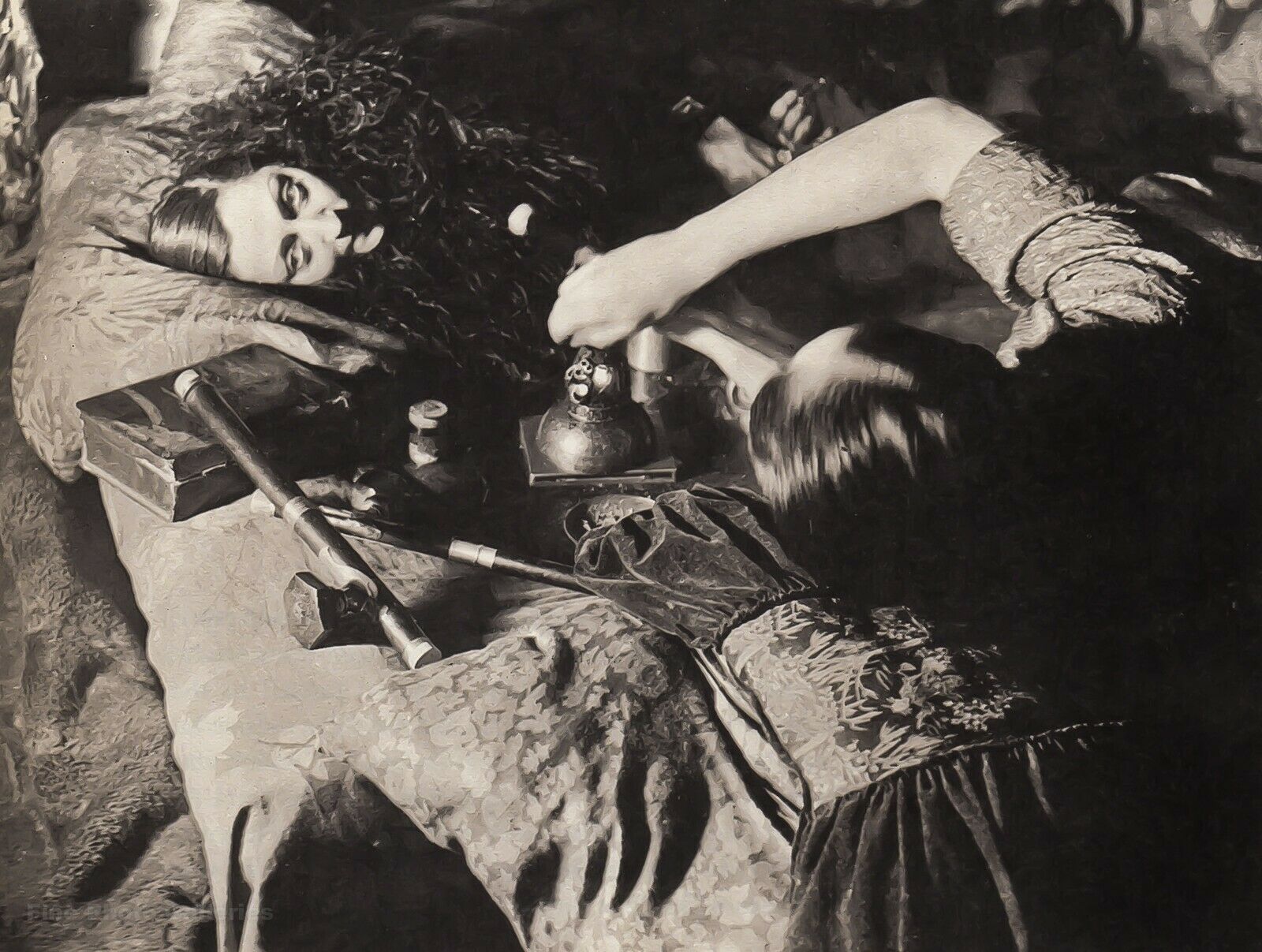
Opium den 1931 Paris, photographer: Brassai

I don’t know Marx as well as I should but I believe Fr. Segundo gives a fair assessment of Marx in the quote above. But I also want to be careful not to dismiss Marx because of his lack of suspicion regarding religion. I believe Marx had logical reasons, born from his life experiences, to not bother himself with digging deeper and developing a suspicious position in the manner we mean here.

In 1844, when he was only 26, Karl Marx took up the criticism of politics in a commentary of Hegel’s chief political treatise. In that document, Marx famously referred to religion as the opium of the people. A thousand times we’ve heard that phrase quoted. As expected, it set off a lot of Christians who ever since have claimed Marx’s ideas are incompatible with Christianity, thinking Marx is saying religion is merely a drug and if Christians will only pull themselves away from their stupor they might finally see reality. Other Christians felt Marx was showing his lack of knowledge about the social aspects of faith and if he were only willing to see then he would embrace the Christian gospel.

Let’s take a look at that phrase in context:

Religious suffering is at the same time an expression of real suffering and a protest against real suffering. Religion is the sigh of the oppressed creature, the sentiment of a heartless world, and the soul of soulless conditions. It is the opium of the people.

The abolition of religion as the illusory happiness of men, is a demand for their real happiness. The call to abandon their illusions about their condition is a call to abandon a condition which requires illusions. The criticism of religion is, therefore, the embryonic criticism of this vale of tears of which religion is the halo.2

By putting that phrase back into its immediate context we can see Marx’s understanding of religion is more nuanced than is often presented. Religion, rather being a mere drug of escape, becomes are kind necessary salve for real wounds, though not necessarily a solution to the cause of those wounds. Many Christians might disagree with Marx on this point, but it is an understandable conclusion for many who have had an experience of religion as a cultural force, which is most. As Michael Löwy says:

An attentive reading of the Marxian paragraph where this phrase appears reveals that it is more qualified and less one-sided than is usually believed. Although he is obviously critical of religion, Marx takes into account the dual character of the phenomenon[.]3

We can also see that Marx saw religion as symptomatic, that is, arising out of suffering. The implication is that if suffering were totally eliminated then religion would be no longer needed.

The more I ponder these words the more I think Marx was on to something. First, religion is an opiate much of the time for many people, and I’m sure it made sense to Marx from the evidence around him. This seems undeniable. And the opiate nature of religion has been used by both oppressors and oppressed to manage, justify, excuse, and accept the structures of power. Many Christians push back because they don’t want to see this is true of themselves, but many more find a kind of escapist solace in forms of Christian worship that divert their eyes and minds from suffering and the material causes of suffering.

Second, it’s true that religion is a kind of sigh of the oppressed. “By the waters of Babylon, there we sat down and wept, when we remembered Zion.” We look to God for salvation; we seek healing and liberation. Christians are told God hears our cries. Many of our prayers are pleas to God for help. This sigh is built into our liturgies.

Third, when suffering is no more so also religion will no longer be needed. Christians believe that when Christ returns and there is a new Heaven and a new Earth and sin and all its effects will be vanquished. We will be in full communion with God, fully divinized, and thus will no longer need religion as a means of perfection.

On the surface, Segundos’s assessment of Marx appears to make sense. Calling religion the opium of the people has the hallmarks of a quick dismissal, a rhetorical flourish and a wave of the hand at the local pub. However, given Marx’s theories of alienation and fetish, and given his formation under the philosophical force of Hegel and the Young Hegelians, it makes sense to consider his idea of religion being an opiate (he wasn’t the first to say this either) as a deep and rather insightful, though perhaps overly terse, critique of the society in which he lived.

Religion was not a merely personal, and certainly not a private, affair in 19th century Europe. Religion was overtly interwoven into the fabric of society. Marx’s father was a Jew who converted to Protestantism in order to have a chance at forging a career and supporting his family, a common choice for many German Jews at that time. Thus religion was a visible controlling tool used to create boundaries of social, political, and economic inclusion and exclusion and thus enforce a kind of caste system. Along with the “Jewish question” and the exclusion of Jews who remained faithful Jews, Catholics and Protestants warred against each other, not merely because of the Reformation but because of the Napoleonic wars which pitted the Catholic French against the Protestant Germans (and others). Many Germans were Catholic and this created tension for them in a post-Napoleon Germany. This created the world into which Marx was born.

A young Karl source

And consider this bit about his high school education in Trier

His classmates were divided into two groups, largely by religion. Most of the Catholics were from modest backgrounds, typically intending to go on to the Tier Theological Seminary and become priests. By contrast, the seven Protestants [of a total of only 32] in the class were from families of government officials, professionals, or army officers: they were heading for the university to study law, medicine, or public administration. Forty years laters, Marx would remember the Catholic pupils in his class as a bunch of “peasant dolts,” probably reflecting the opinion their Protestant classmates from more affluent and better-educated families had of them.4

Arguably, Marx must have felt he understood religion enough to take it for how it presented itself. That he did not approach religion with an attitude of suspicion is a significant gap in his thinking, certainly, but not illogical.

More importantly is the prevalent lack of suspicion by the Church of its own history and received interpretations. When suspicion is thoughtfully and seriously elevated, such as with Liberation Theology, many Catholics see it as a threat. It is sad but predictable that many Catholics, especially those in the so-called developed nations or in positions of social power, cannot fathom the idea that distortion may have crept into the Christian message and purveyed via seminaries, homilies, and formation. But the world, and the Gospel itself, is in need of interpretations that favor liberation, focus on material conditions, recognize class differences and the struggle of the proletariate, the poor, and the oppressed. In fact, they (especially the Church hierarchy) have too often actively supported the suppression of such ideas. (This has been well documented so I won’t go into it here.) Thus religion does, in fact, become the opiate of the people and the Church pushers.

We might fault Marx for his lack of suspicion when considering religion, but arguably the more significant fault lies at the feet of the Church. But so does the solution.

Final “devil’s advocate” note: One could also argue that the Church today is overly plagued with a sense of suspicion, and that suspicion has led to a dismantling (at least a persistent challenging) of given doctrine, dogmas, and nearly anything that could be called tradition. In short, the so-called “spirit of Vatican II” is, in fact, the spirit of the age and that spirit would love to see the Church become the ultimate global NGO and the pope finally and in fact become the Antichrist.


1Juan Luis Segundo, Liberation of Theology (Eugene, Or.: Wipf And Stock Pub, 2002), 17.

2Karl Marx and Friedrich Engels, The Marx-Engels-Reader, ed. Robert C. Tucker (New York, New York: Norton, 1972), 12.

3Michael Löwy, The War of Gods: Religion and Politics in Latin America (London: Verso, 1996), 4.

4Jonathan Sperber, Karl Marx: A Nineteenth-Century Life (New York, New York: Liveright Publishing Corporation, 2014), 26-27.