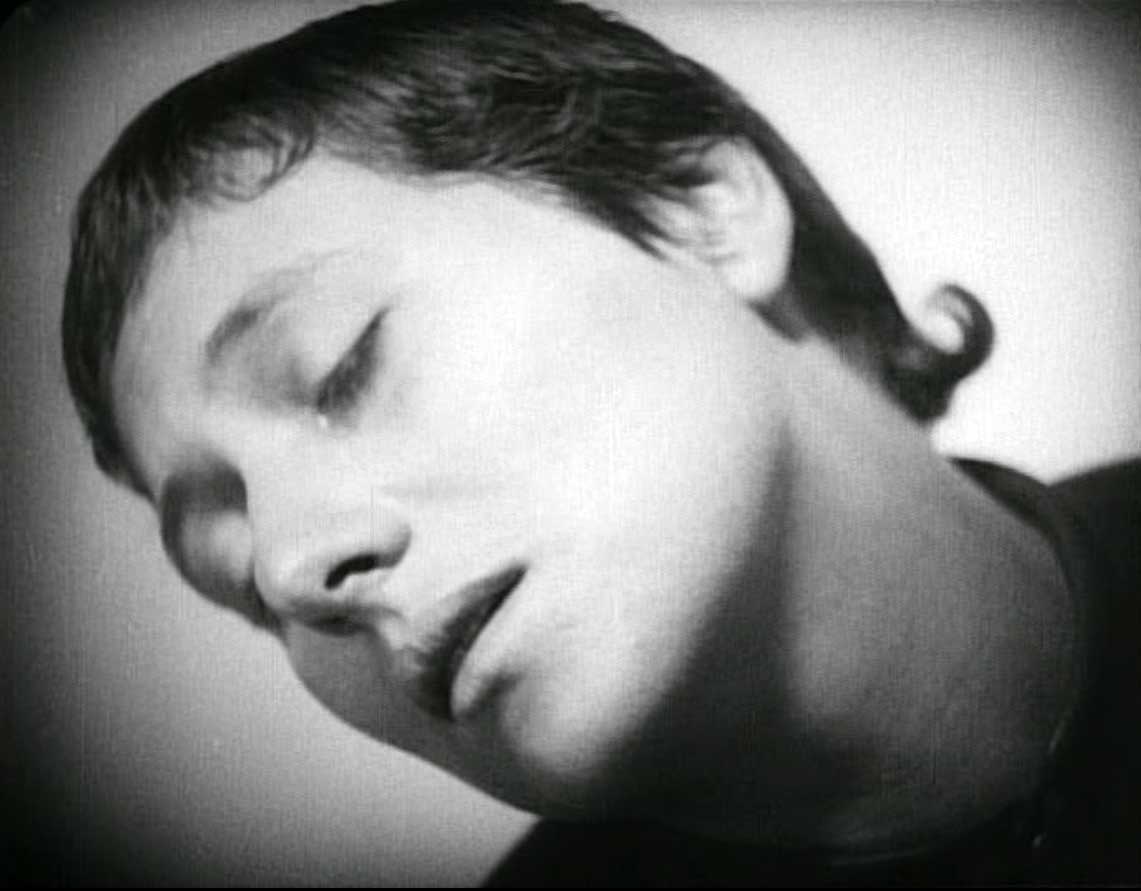
>Carl Theodor Dreyer: They Caught the Ferry, 1948

>I recently posted on Carl Th. Dreyer’s The Passion of Joan of Arc (1928), which left me stunned and profoundly moved like I have not been from a film in quite a while. Dreyer, however, had a spotty career and did not make many feature films. Most of his films where not popular either, though his reputation as a great filmmaker remained intact. He was the classic struggling genius. To supplement his income he occasionally made short films for hire. Below is a short that still shows his innovative eye and, maybe his tendency to push the limits of sound judgement in order to produce the necessary sense of realism.

The film is They Caught the Ferry (De nåede færgen, 11 min, 1948). The film was a work of propaganda to encourage drivers to not speed; there were no speed limits in Denmark in 1948. The question is whether the couple in the film will catch the ferry in this life, or the one that crosses over to the next.

In the documentary Carl Th. Dreyer: My Metier (1995), we hear from Jørgen Roos, the cinematographer on the film, about the story of its making, including his near death when they ran the motorcycle into a tree. Not once did they falsely speed up the action via film speed. All the action was filmed at full speed.

I believe that if I was a young man watching this film in the theaters back in 1948 I would have thought that riding a motorcycle that fast looked exciting. I would probably have wanted to go out and get myself a motorcycle right away. I doubt this film helped to reduce traffic accidents, though it is interesting to see what Dreyer did for hire. This copy has the characters speaking Danish, the subtitles in English, and voice over in Russian.

>art show

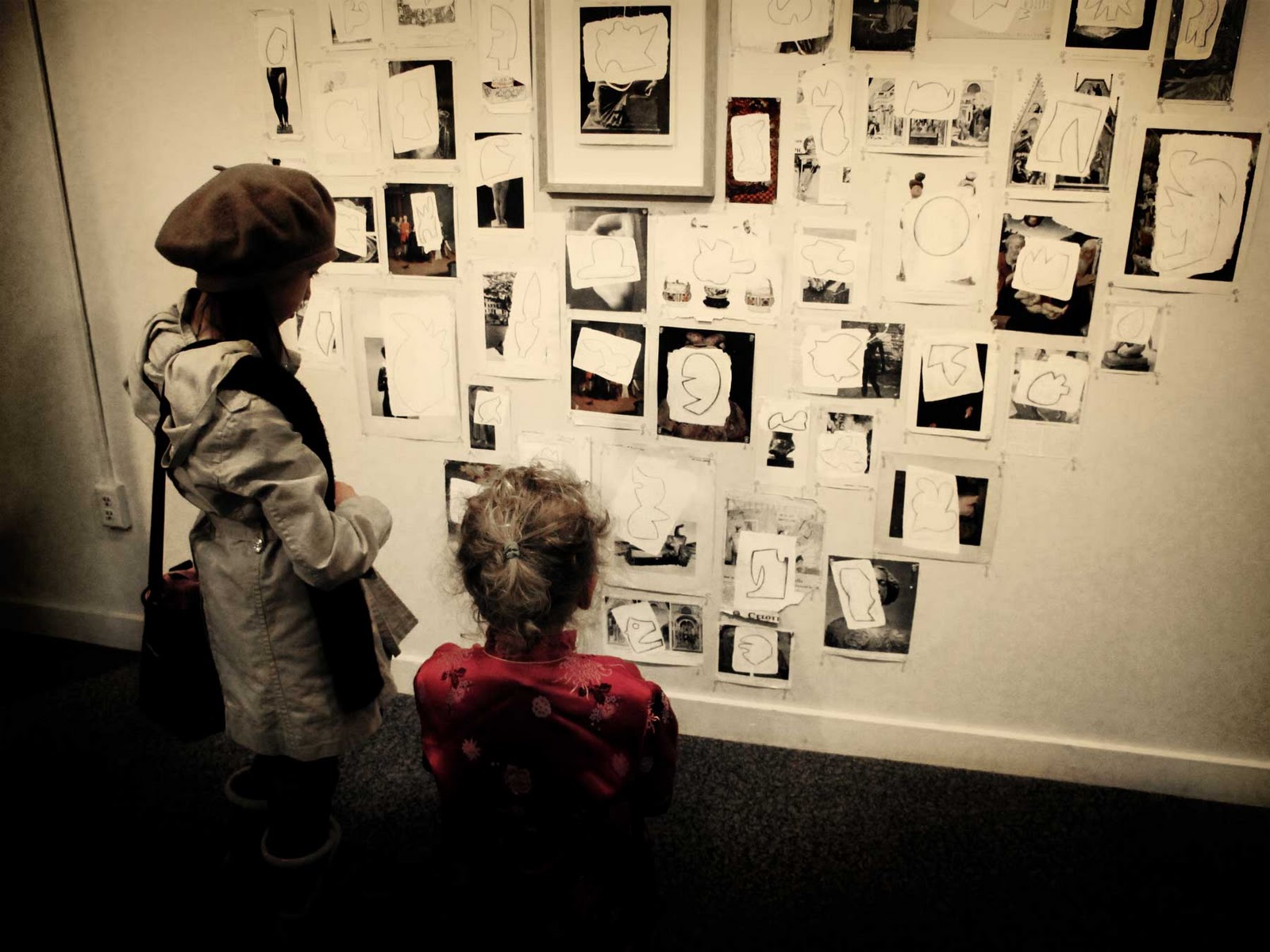
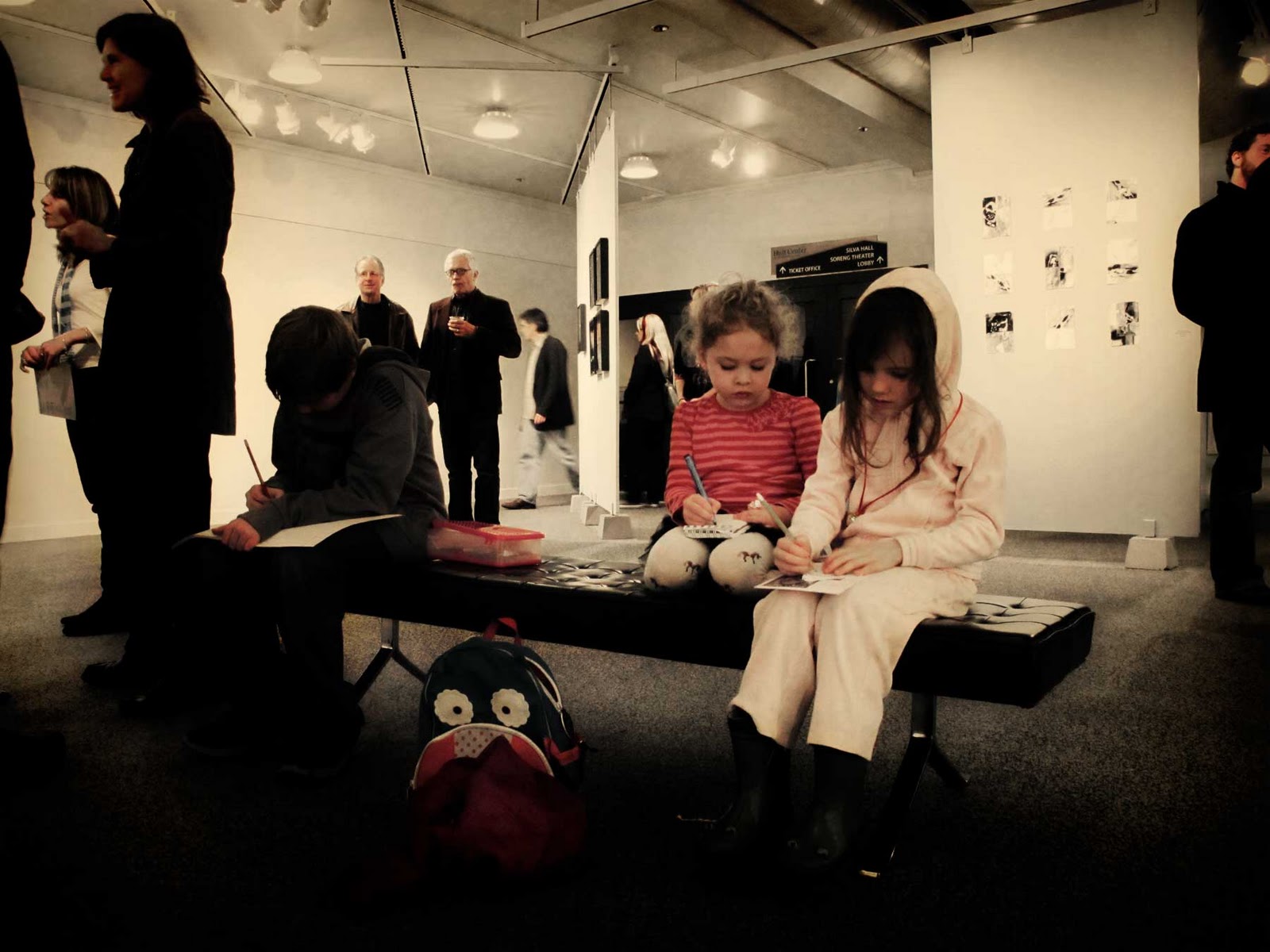
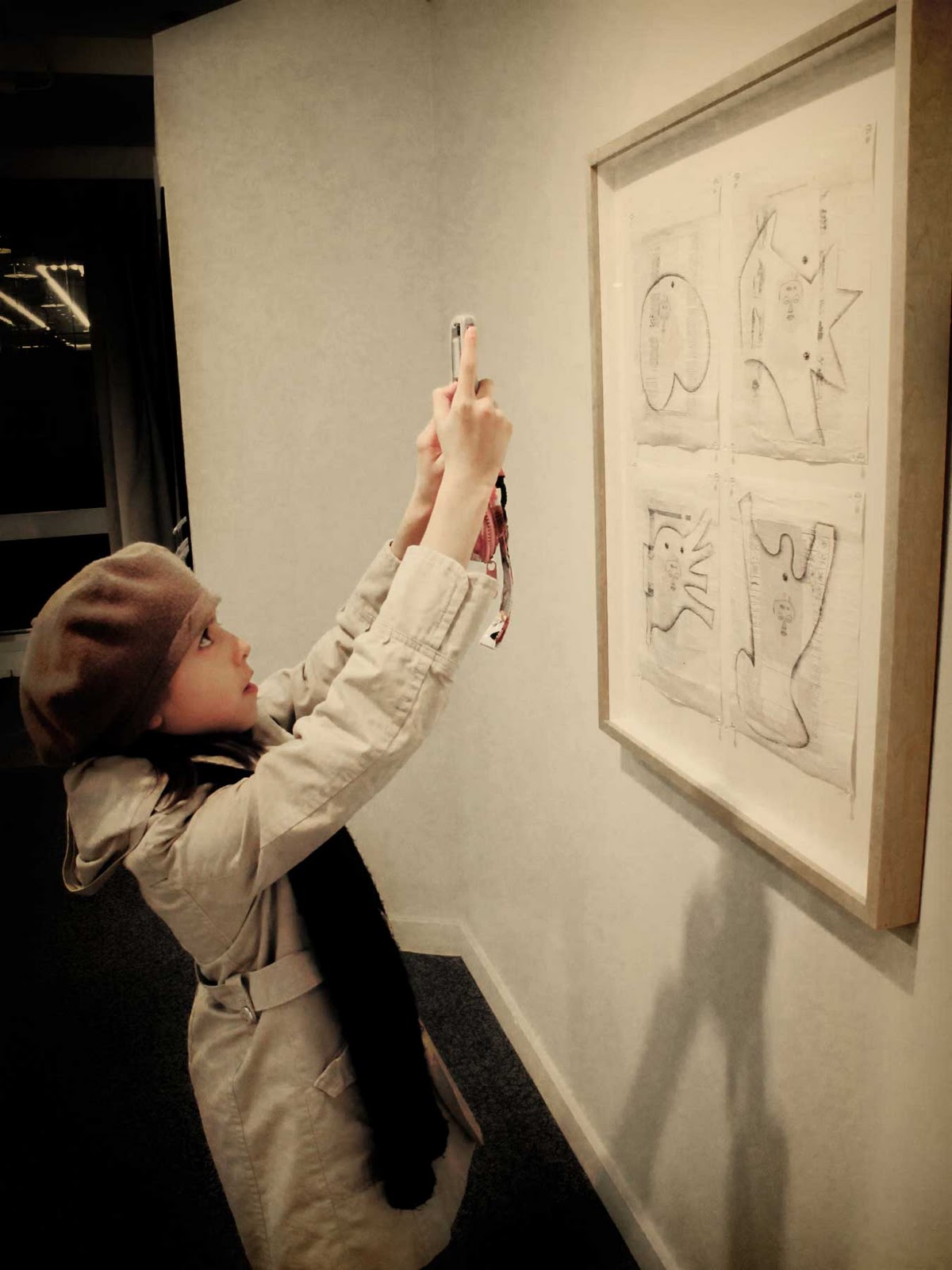
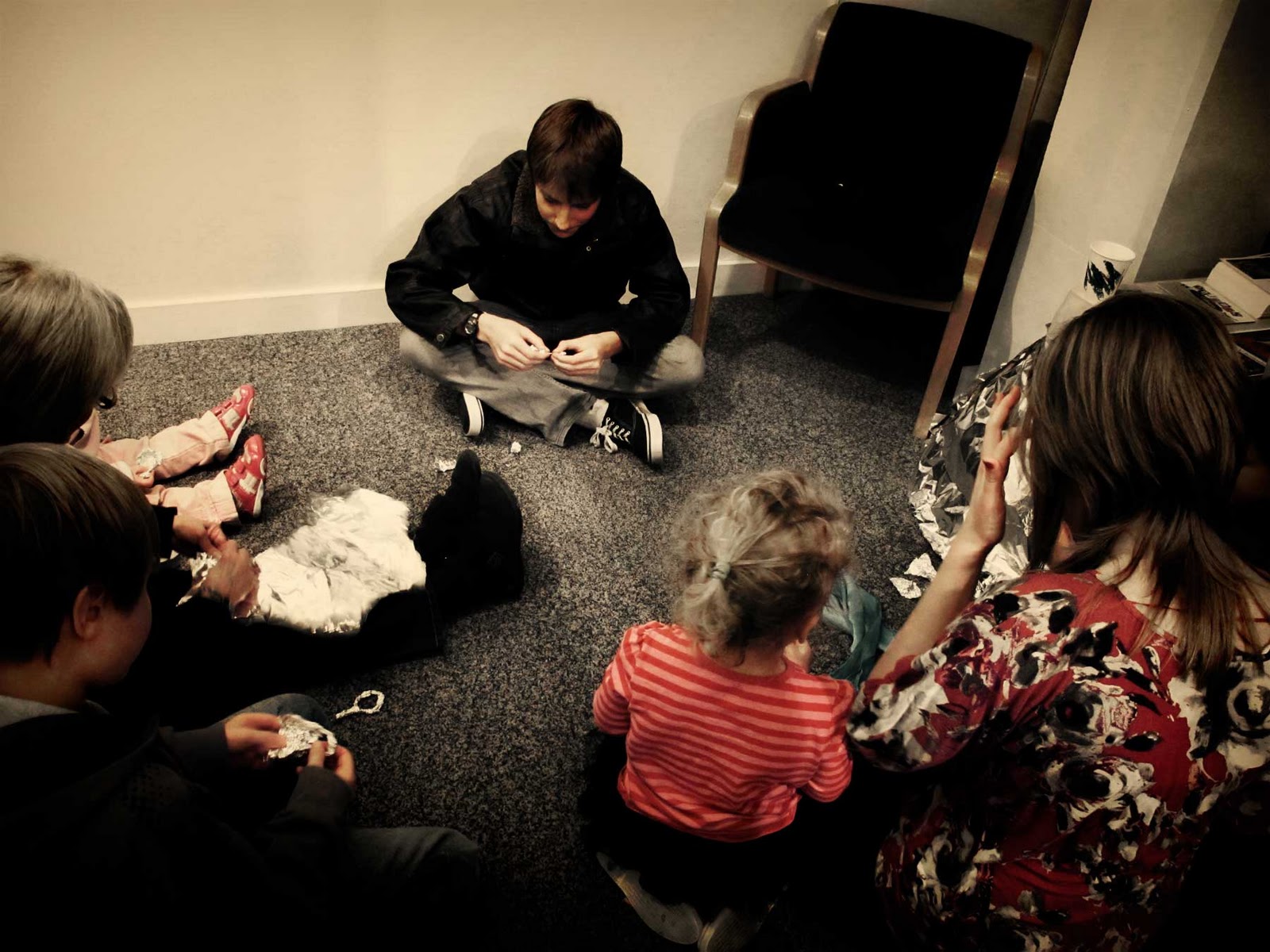
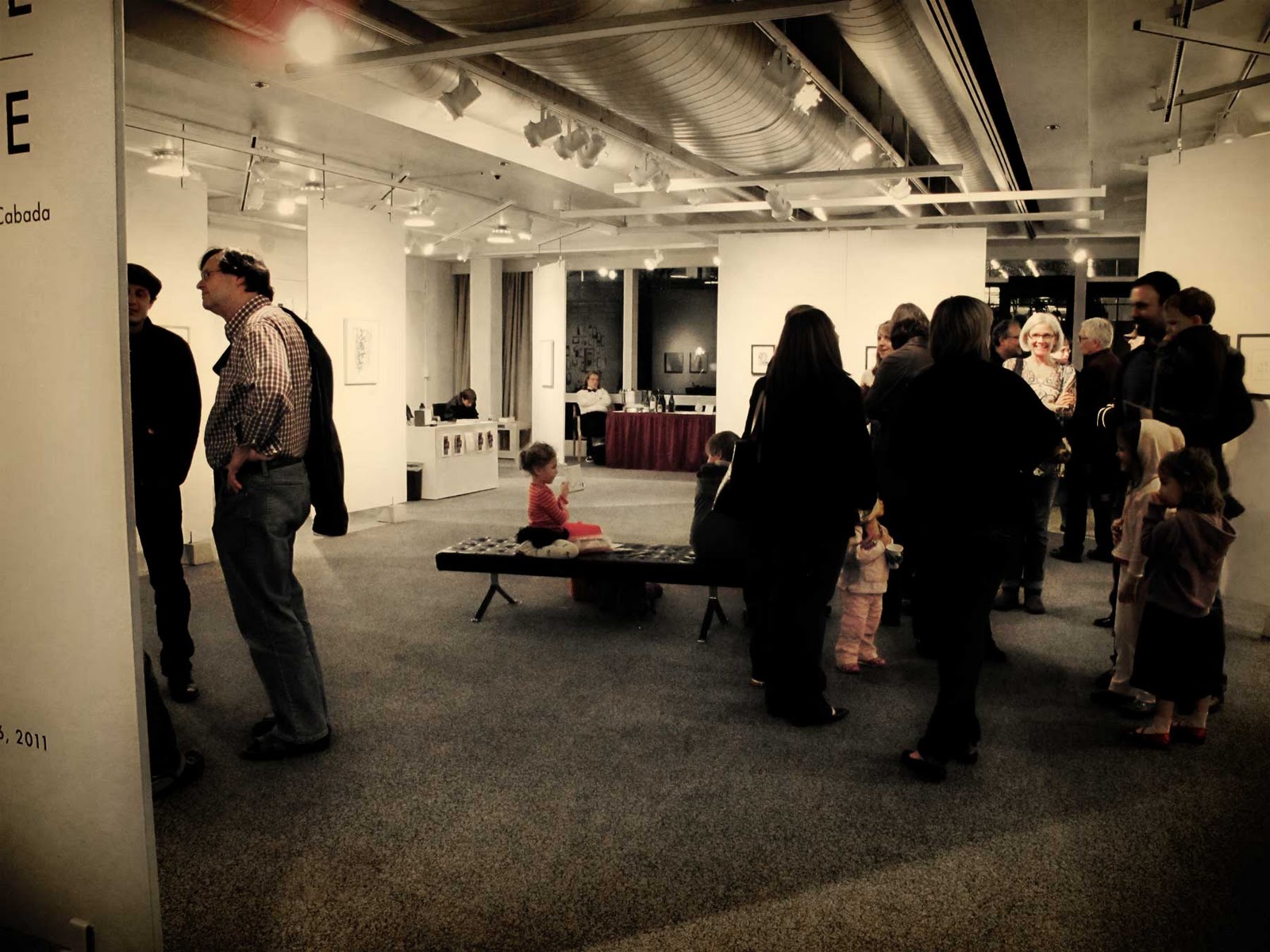
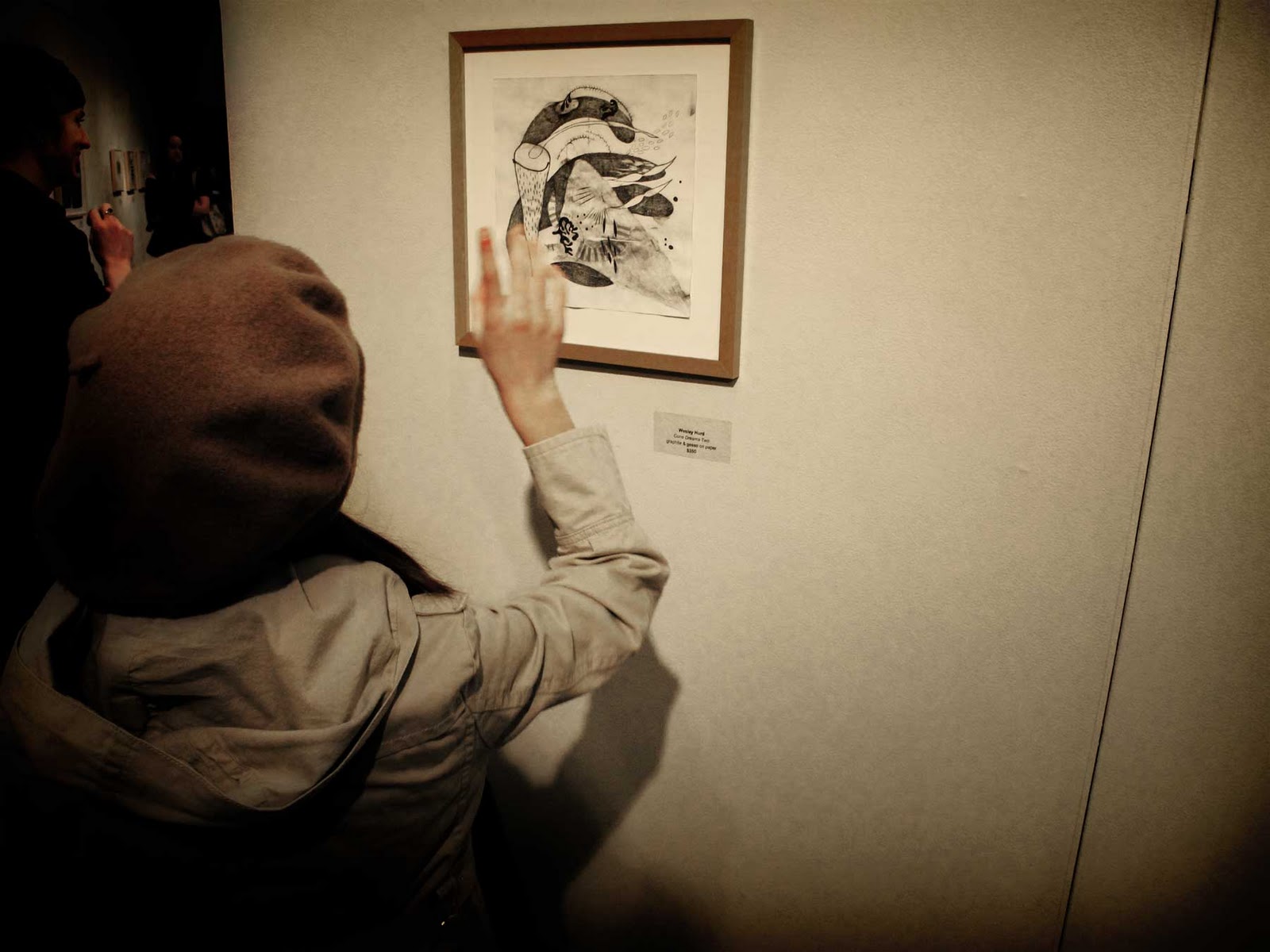
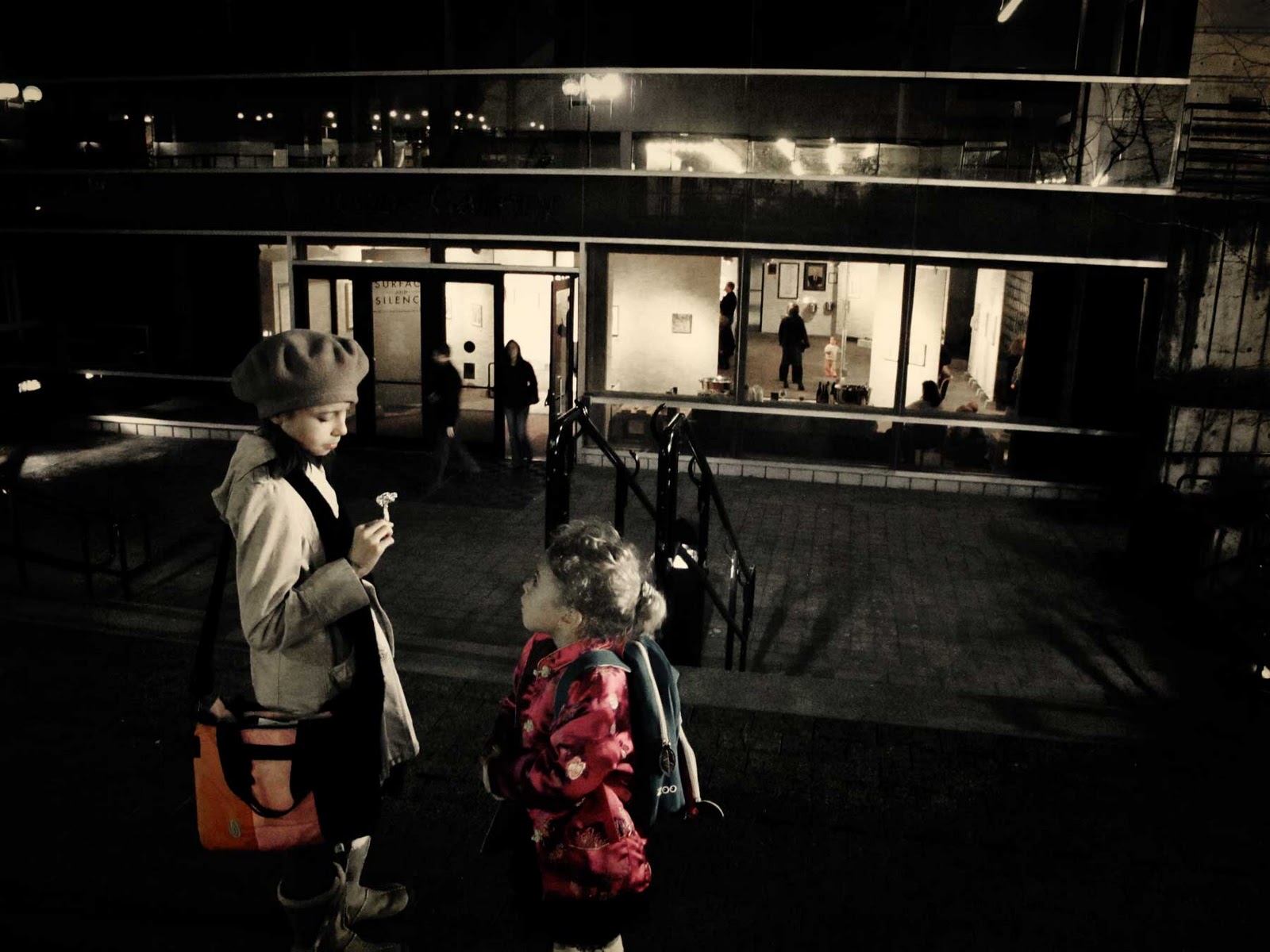
>Last night I took my girls to an art gallery opening for our friend Wes Hurd and his long time friend and fellow artist Rafael Perea de la Cabada. The show is called “Surface and Silence.” Here are a few pictures from our visit:

R. Bresson interrogation

This interview with Robert Bresson is both fascinating and disconcerting. It it set up (mise-en-scène) and conducted more like an interrogation than an interview. I love to hear Bresson talk about his work. I am also annoyed by some of the questions, or at least the way they are delivered. I feel as though I want to jump in as a friend and say to Bresson, “Come, forget about them. Let’s go get a drink.”

I imagine the producers of this show thought it would be more interesting if they umped on the “Pickpocket” theme and did the interview as though Bresson was being questioned by the police. What we get, though, is a couple of nobodies (let me know if you know otherwise) coldly demanding answers from a kind and thoughtful Bresson. I like the answers given by Bresson, but he could have been asked better questions.

>Robert Bresson: Four Nights of a Dreamer

>The video below is Four Nights of a Dreamer (1971) by Robert Bresson. It has never been released on DVD or VHS. This is a beautiful, simple film. It is based on Dostoevsky’s short story, White Nights. Bresson’s previous film was Mouchette (1967). He was seventy years old when he made this film, which I find interesting, given the story is, in part, about young love and is told so tenderly.

http://video.google.com/googleplayer.swf?docid=2079591657829882950&hl=en&fs=true

I love the moment when, while at the movie premiere, the daughter leans over to her mother and says, “We have fallen into a trap.” I am not yet sure if this film is as strong as Bresson’s best works, I tend to think no, but it might be, and I did find it compelling. There are stylistic moments that feel very much like Pickpocket (1959), but in many ways this film reminds me of Eric Rohmer’s work.

Why there is still a Bresson film unreleased on DVD leaves me non-plussed. I have notified the authorities.

Ploughed and harrowed: Watching films as a preparation for death.

I have been examining my inclinations lately regarding the kind of cinema I am drawn too. The fact that I do that, and say that I do that, marks me as a questionable character. Nonetheless, I am one of those types who cannot stop noticing my own thoughts, wonder about their provenance, and question their meaning. Naturally, if that is the right word, I prefer films that work along similar lines as my mind. In other words, I prefer films that give my mind time to think and reflect as I watch. I like slow films that carefully, and with nuance, build image upon image, and rely on subtleties and levels of meaning. I find action films the most boring of all films. This is strange because cinema is the art of movement. It is also strange because I love some action films quite a lot (e.g. Die Hard, 1988).

Though I came to film as did many of my generation, through Disney and television, through comedy and western, I took an educational turn down the path of art history, of philosophy, of the humanities, and so went the course of my mind. In college I was introduced to foreign films and they became a kind of revelation for me. I discovered I was sensitive to film as an artform as much as a way to tell stories and entertain. Sometimes viewing films became difficult for me as each scene, each pan of the camera, each edit evoked a multitude of thoughts. I would be simultaneously transfixed and distracted by a film. I would frequently not finish films, then, when I did, I would sometimes be overcome for days. Needless to say, this kind of film viewing is not typical, though I know it is not uncommon either. I will admit that it may be a kind of limitation, but it is who I am. It is also personally annoying at times. I find that I seek that “overcoming” kind of experience, even to have my life changed forever, and yet I fear it too. One does not wish the existential crisis to come, but one cherishes those that have come. One does not want one’s mind to be taken over, as it were, but one needs to be shaken. So I struggle between the desire to be profoundly redone by a work of art and the desire to remain safely as I am.

I have wondered why I seek out art for this purpose. I know art can be a distraction or a light pleasure. But I have often disdained art used for those purposes, though I know this attitude is incorrect, for art can function in many ways and for many purposes. Recently I realized how I have though about art; I cannot say it better than Russian filmmaker Andrei Tarkovsky:

The allotted function of art is not, as is often assumed, to put across ideas, to propagate thoughts, to serve as an example. The aim of art is to prepare a person for death, to plough and harrow his soul, rendering it capable of turning to good. (Sculpting in Time, p. 43)

To prepare a person for death, that is what I have sought; to be prepared for death. I am not morbid in this sentiment. I do not seek death. But I have been on a mission of sorts since my youth to seek the final implications of belief. I long for films (and any art) to take me there, or push me there. A film does not need to be heavy handed, nor does it need to be dark. It can be full of light and life, but it does, at least, need to reach into one’s soul, as it were, and open it up to a kind of receptivity. I long for that harrowing and rendering. that is why, in the face of so many competent and popular films, my reactions are so often a shrug of the shoulders.

It is not that I cannot be amused, but I cannot help but think that amusement means “without the muses.” To be amused to to stop thinking, to be diverted from the the realities and implications of existence. Life, as we know it in this whirling electronic age, has become a world of diversions. We all need diversions at times, but diversions are not only not hard to come by, they are thrust upon us with such repetition and force that it takes an active and committed individual to ward them off. I believe such a commitment comes from the orientation of one’s soul toward (or away from) the infinite—to borrow a word from Kierkegaard. To turn away from diversions into a powerful work of art, and then to let that work of art do its function, and to be receptive to that function, is a kind of antidote (though not a complete cure) to a life of amusements. It is not the only way, but it is one way.

There is, however, a caveat somewhere in all this. That is, one must be able to trust the artist, the filmmaker, if one is to be thus undone. I cannot, I should not, allow any artist to plough and harrow my soul unless I know that artist’s character. This may require one to push back against that first viewing, that sacred viewing that no one wants disturbed, and to take a cautious approach. This is why the choice to view one film over another, or to take a chance on a film, ought to be based first on who is the filmmaker and not the actor. It is the filmmaker who is accountable. It is the filmmaker who must be trusted. I like a great many films for various reasons, but this need to trust the filmmaker brings me back time and again to the likes of Bresson, Dreyer, Rohmer, Tarkovsky, and Renoir, and why I appreciate, but with caution, the likes of Bergman, Allen, Antonioni, and Tarr. I’m sure anyone reading this can come up with their own list of filmmakers.

Does anyone else think this way?
>A conversation with Fritz Lang

>William Friedkin interviewed Fritz Lang in 1975 (according to the closing credits of the video below*). Lang died in 1976. This is a wide ranging, reminiscing kind of interview. Lang was an interesting guy. Sometimes I think the last person one should talk to regarding works of art is the artist; as Lang himself says in the end of the interview a film should speak for itself. On the other hand, as I encounter works of art that I love I can’t help but wonder at who the artist is or was, not merely as an artist, but as a person. I am interested in the artist’s character. I believe character is far more important than any specific ways of thinking artistically, though I also believe they are linked. I am curious what this interview says/shows of Lang’s character. Do we think about character all that much these days?

The opening titles misspell Friedkin’s name, but oh well.

* Maybe the interview was in 1974, like the Vimeo title says. “VOSTFR” stands for “Version Originale – Sous-Titre Français,” which is French for “Original Version – French Sub Titles.”

Sunday ride to Hayward Field and Delta Ponds

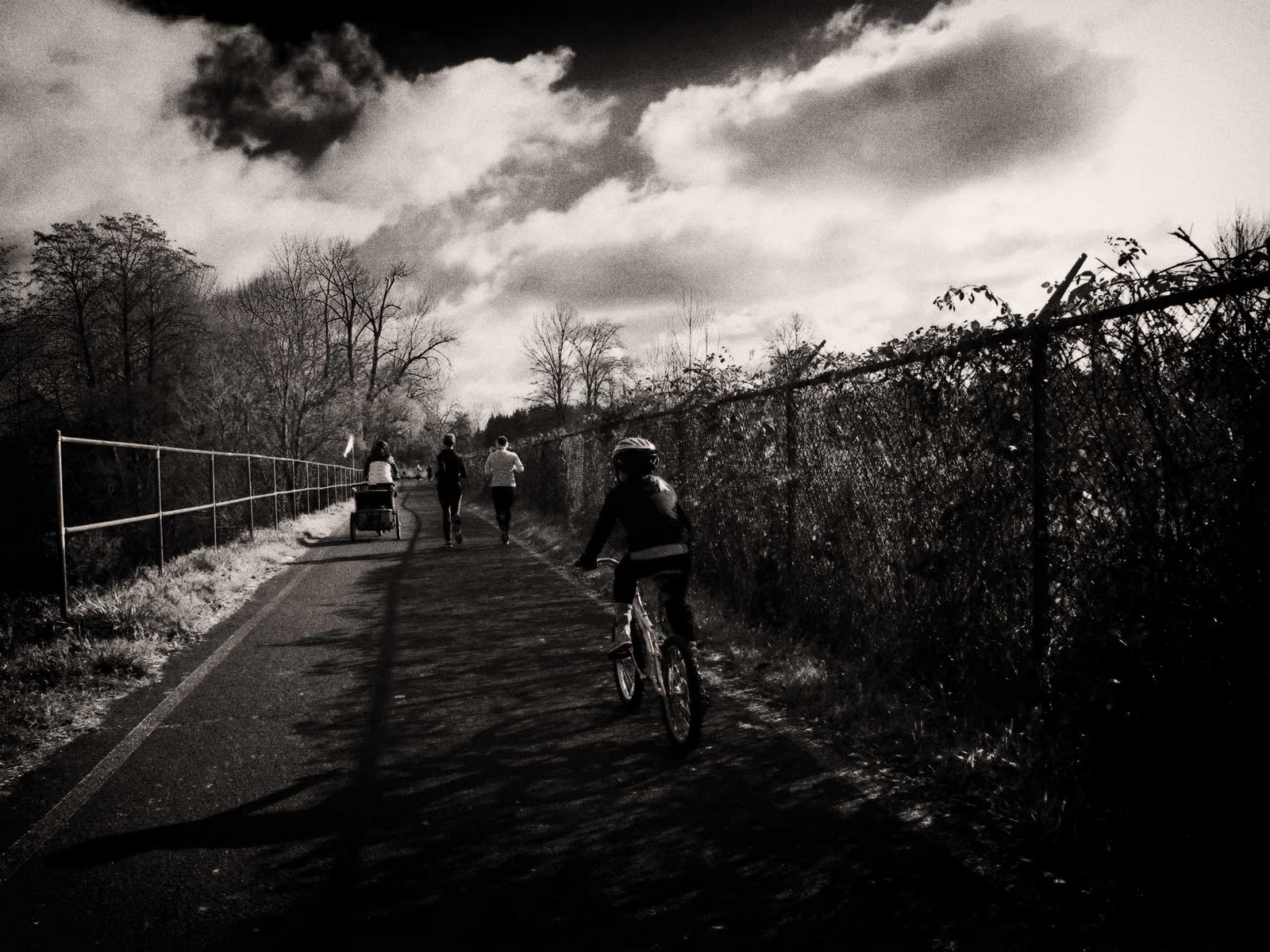
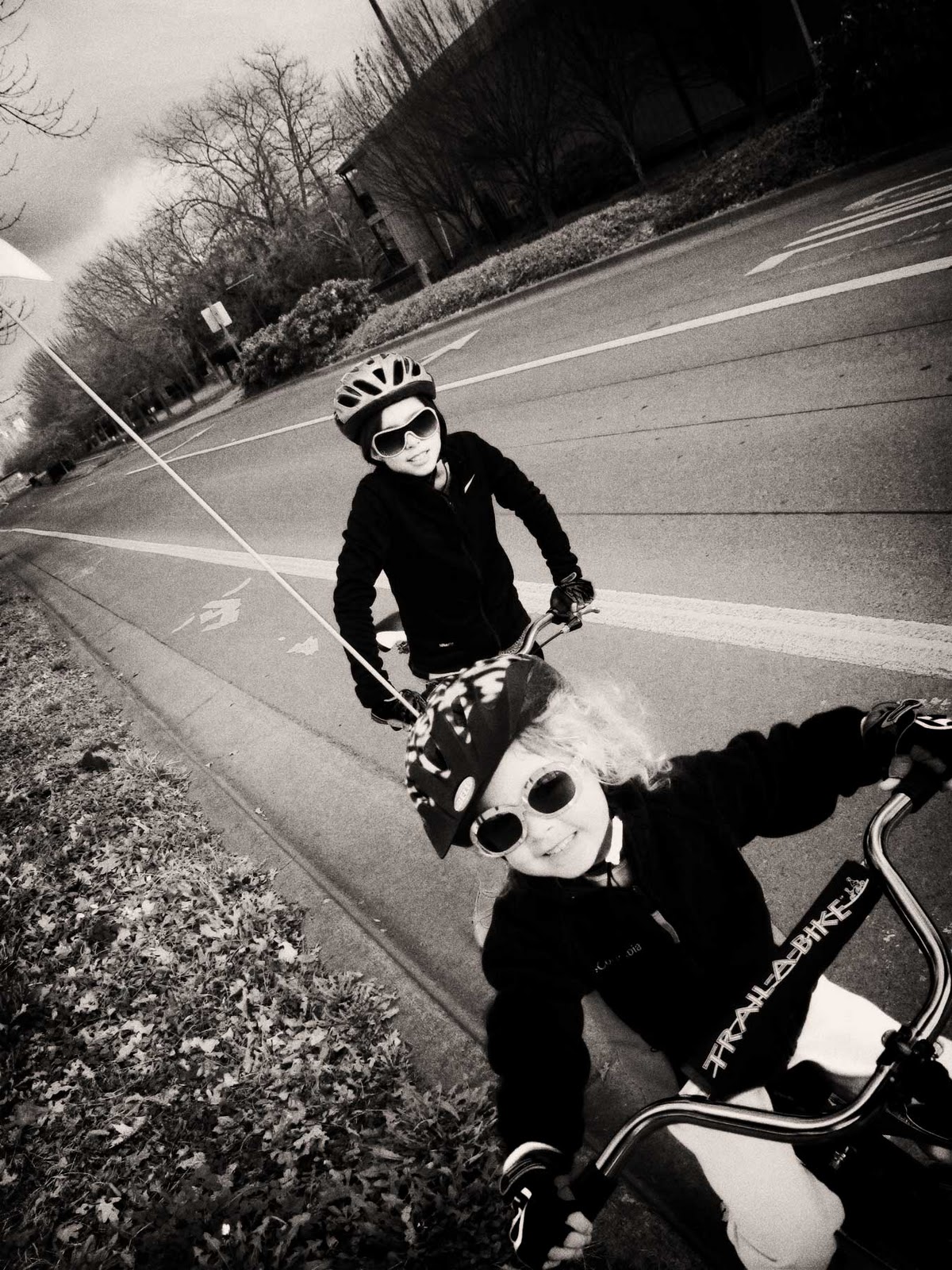
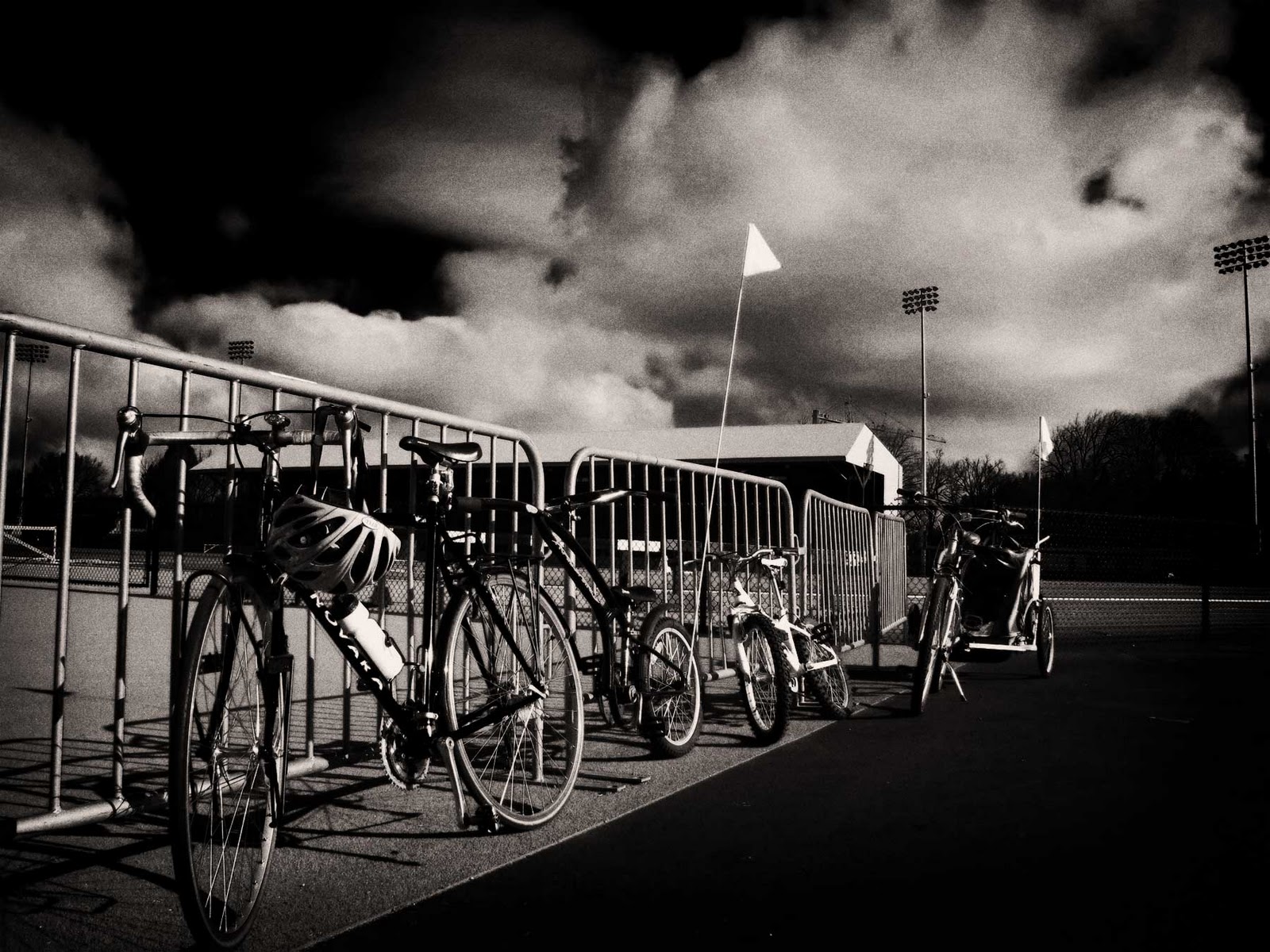
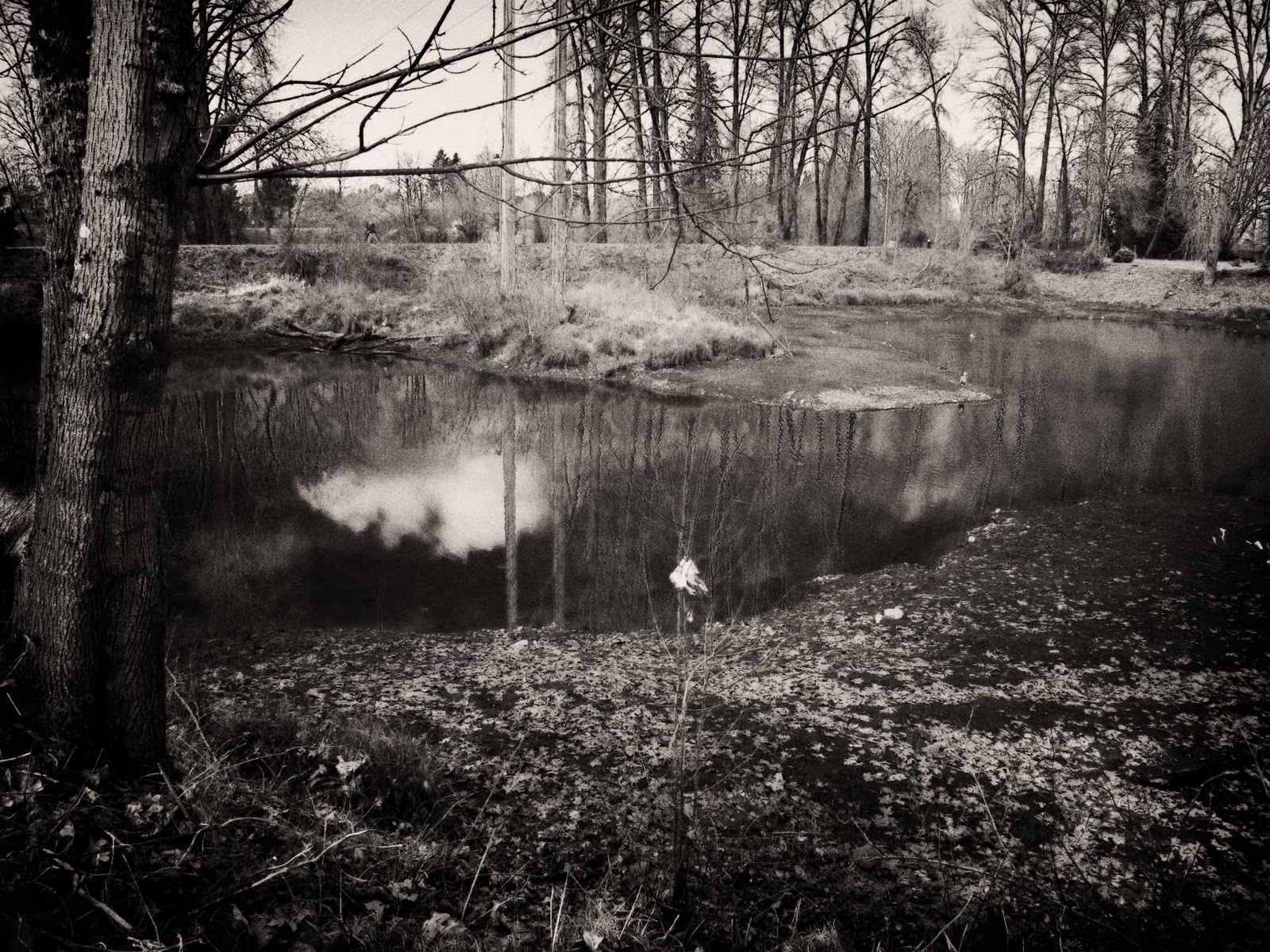
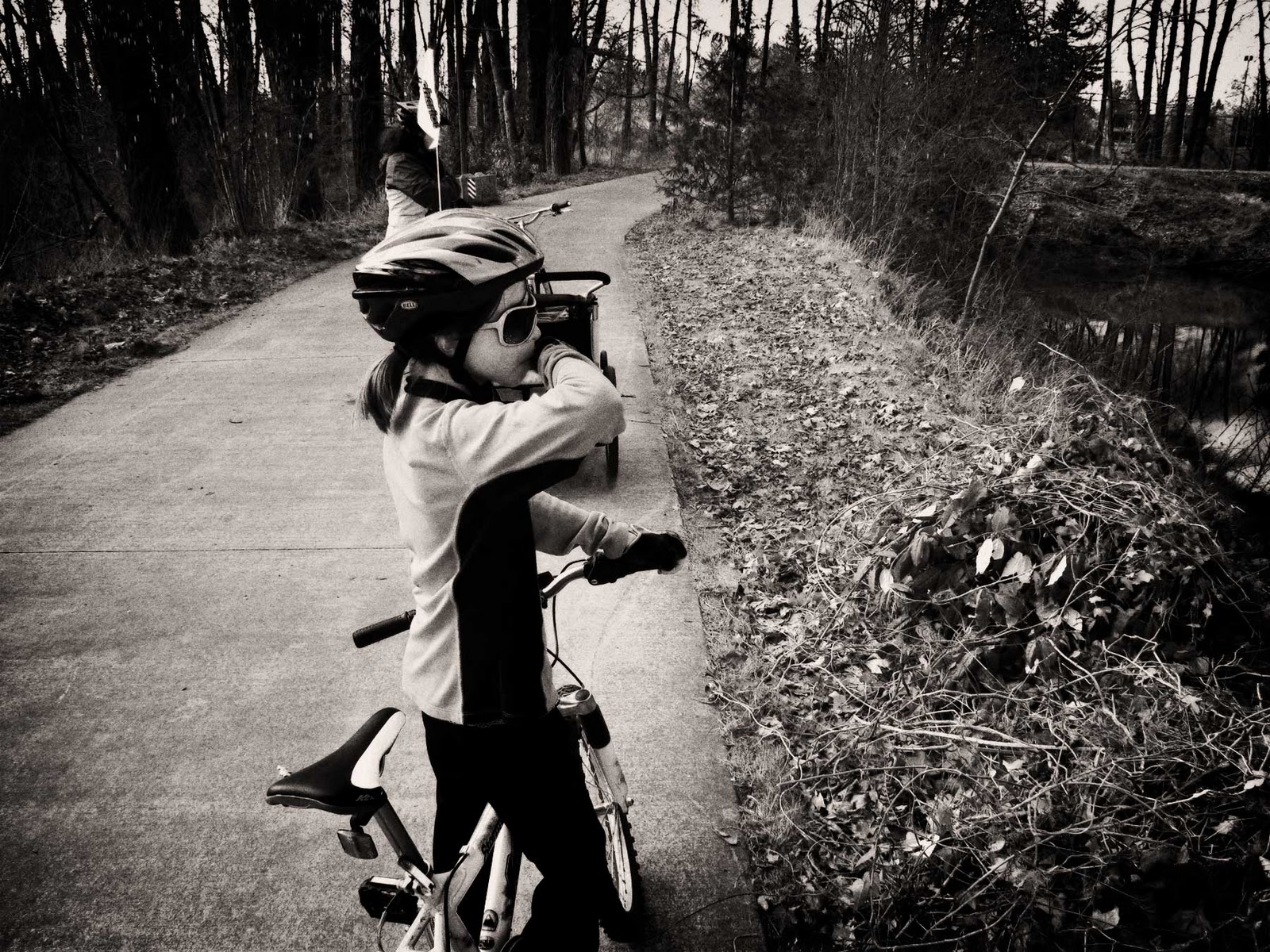
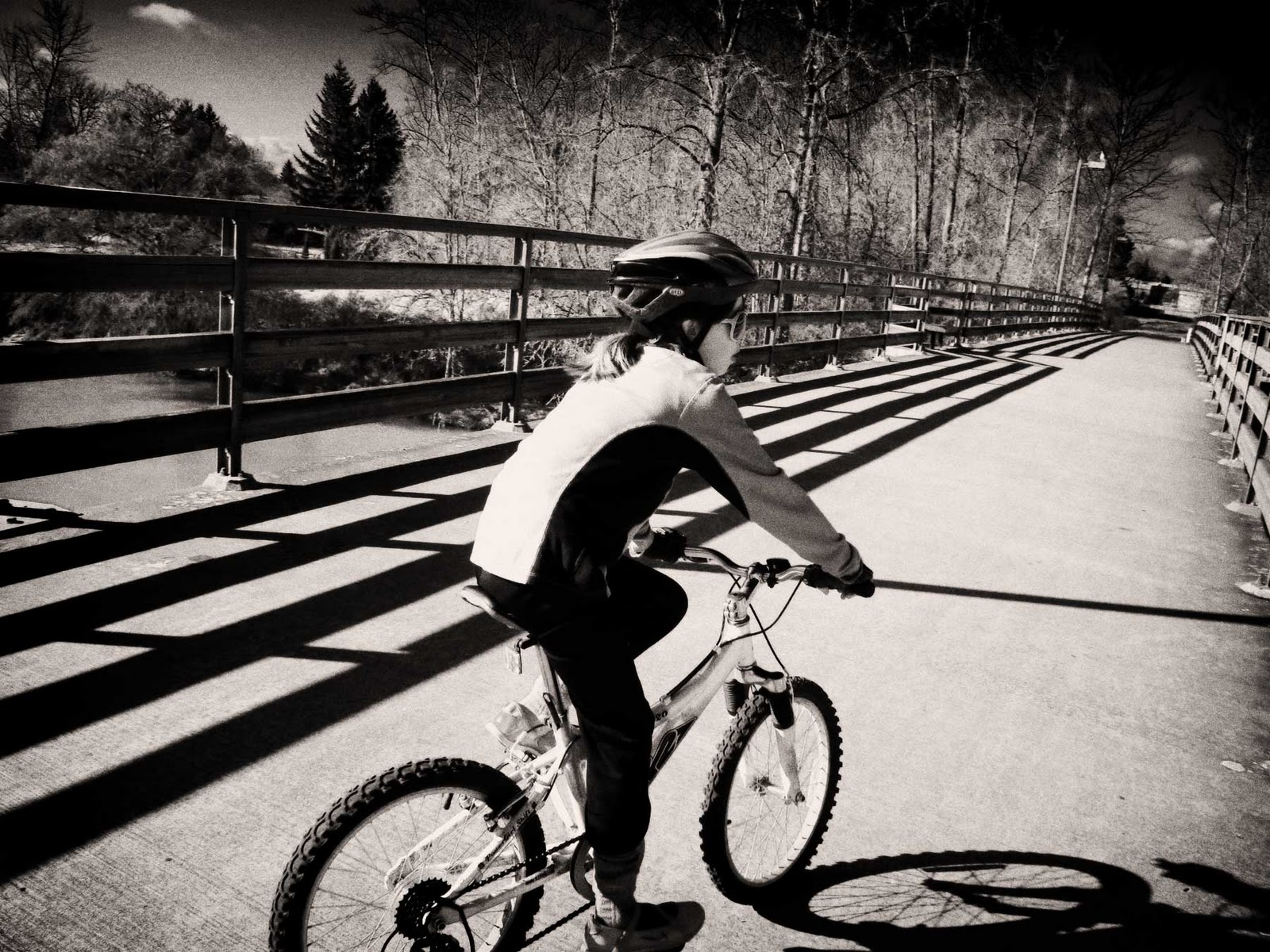
Today the weather cooperated and we mounted the bicycles and rode over to Historic Hayward Field. Once there we did some stair climbing. On the way home we took the longer route and saw lots of wildlife. This was also Wilder’s first time on the tag-along. A great family ride.

Wilder looks cool on the tag-along.
Beautiful skies of sun and clouds. Riding the west bank trail.
Waiting for the light. Wilder and Lily having a good time.
Our bike train parked at Hayward Field.
Ah, nature. The Delta Ponds.
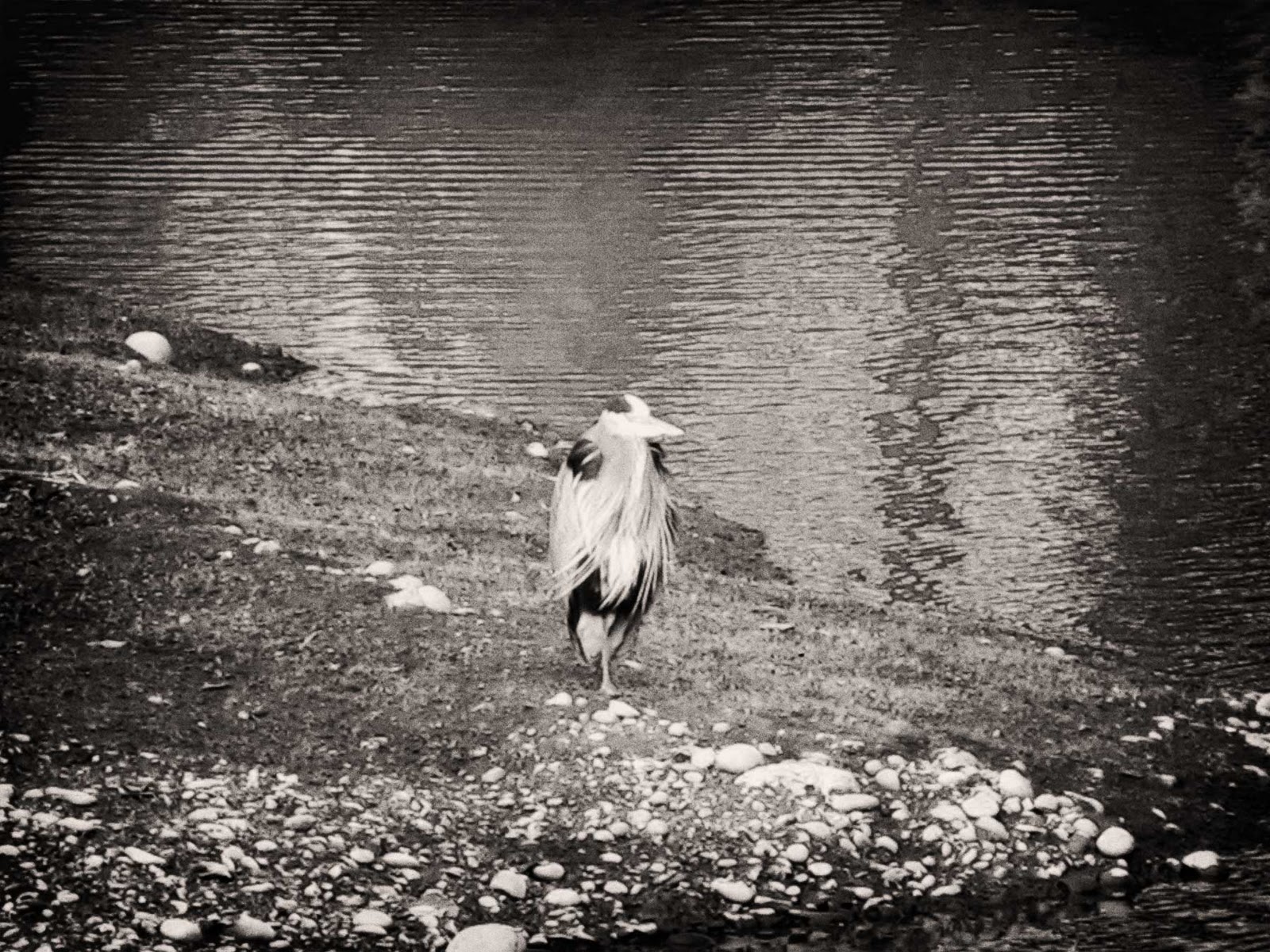
A Great Blue Heron rules the pond.
Stopping to watch the heron.
Across the Owosso bridge, heading towards home.

TRON: The Future is Then, or the continuing legacy of the appropriated Action Office

In the summer of 1982 I was living in a small log cabin along the banks of the Kenai River, a few miles upriver from Soldatna, AK. I was working in fish canneries and my father was trying to start a new business. My father was also a pilot and we would often fly across the inlet from Soldatna to Anchorage on the weekends to eat fast food and catch a movie. One of those weekends we saw TRON.

I loved TRON. I thought it a somewhat strange, but fascinating film. The early CGI graphics were very cool. But much of the underlying content of computers and computing was foreign to me. I had used computers a little (Commodore Pet computers in 9th grade for some BASIC programming which I didn’t really understand). I knew nothing of the Silicon Valley and its burgeoning culture. I knew nothing of RAM, or CPUs, or IBM. And don’t forget, the first Macintosh computer did not arrive until 1984, the very mediocre Windows OS 2.0 arrived in 1987, and the Internet did not go “public” until the 1990s, and wasn’t commonplace until 1996 (commonplace being a relative term).


To my surprise I began working at a software company in 2000. That was the first time I got a job with an international corporation and worked in an environment that made the comic strip Dilbert seem more like a documentary than fictional comedy. I did customer service, tech support, and sales. I am still with the company and currently work on backend data issues. Recently I saw TRON again and was intrigued with its visual depiction of a work environment in a large computer company in the early eighties.


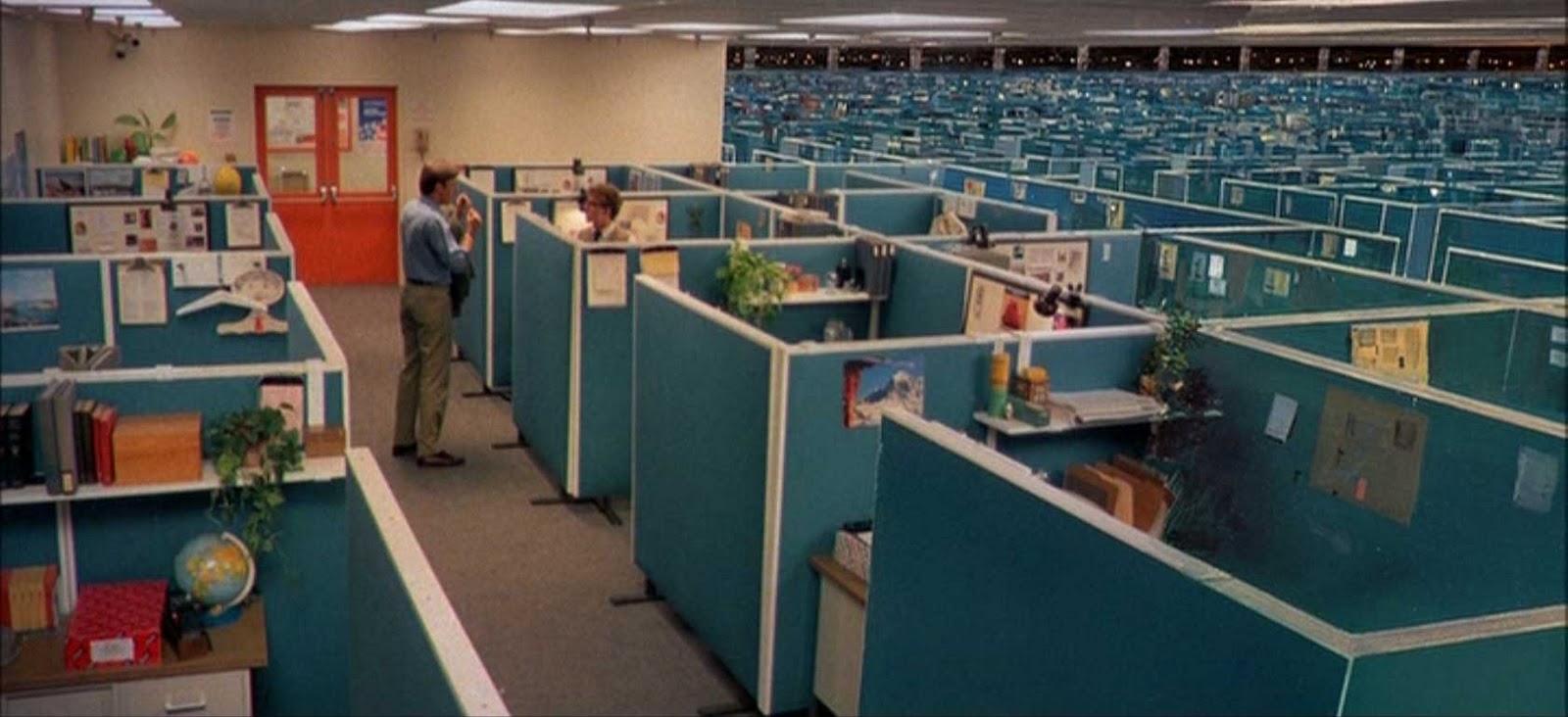
TRON is famous for its highly imaginative vision of the virtual world inside computers. The idea seems to contrast with the reality of the homogenized office world seen in this image:

I worked in such an environment, just different color cube walls

The sea of cubicles, likely enhanced by some fancy matte painting, speaks volumes about modern corporate life. Even in the modern world of computer programming it comes down to controlling costs and harnessing the labor of others. These cubicles represent a darker turn from the original concept of the Action Office. The idea of the Action Office is to create an environment where creative people can interact with each other more freely. What we ended up with was the cubicle. Today it is much the same. However, there is a trend to do away with the cubicle and just give workers a place to set their laptops; no walls, no personal space, just completely open. Not surprisingly it is called the Open Office concept.

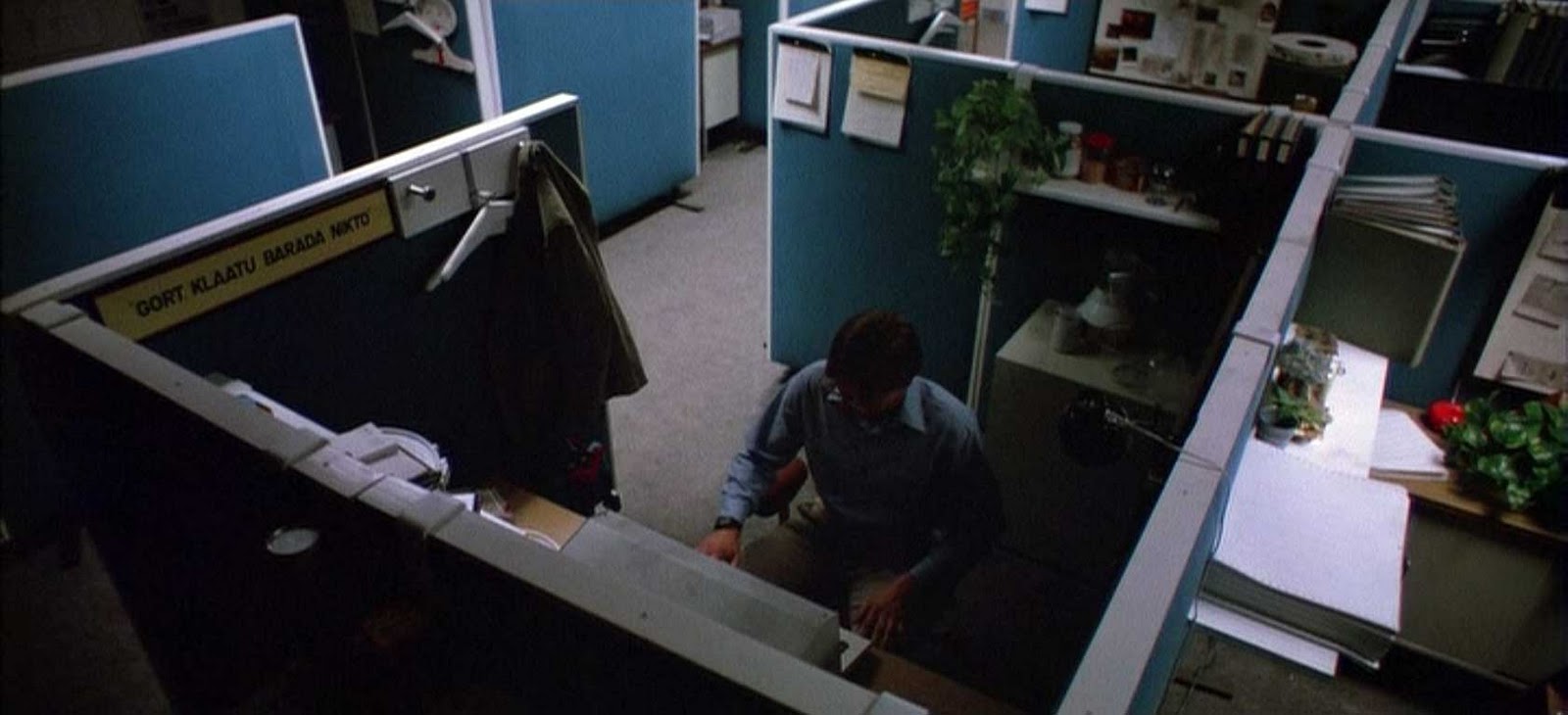
One other thing caught my eye. In the cube in the image below we see the sign on the left that says, “GORT, KLAATU BARADA NIKTO.”

A “personalized” cube

Some things never change. You will find similar signs where I work today. What I have noticed, though, is that the blue hue of the cubes (many cubes then were also orange, green, etc.) have given way to taupe and beige and gray in order to create a more pleasant atmosphere. What is also interesting is how fashions have come full circle. In the nineties the style was baggy shorts, flip flops, and other goofy attire. Now the trend is back toward business casual.

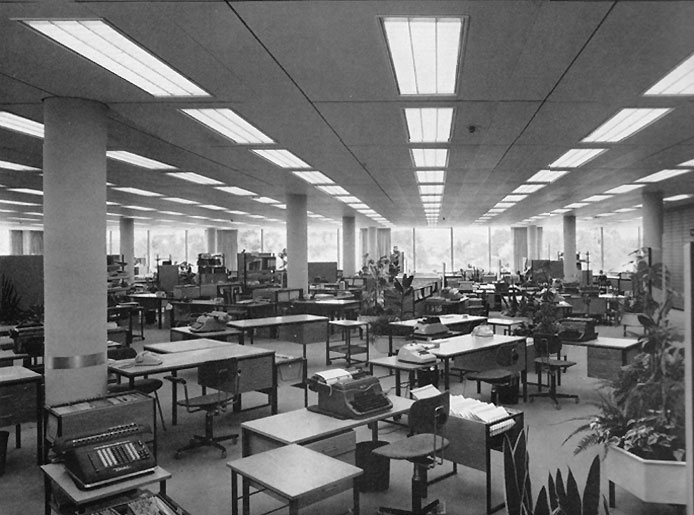
Back to office design. In the 1950s Quickborner, a German design group, tried to improve the typical large office space with something they called Bürolandschaft, or “office landscape”.

office “landscape”

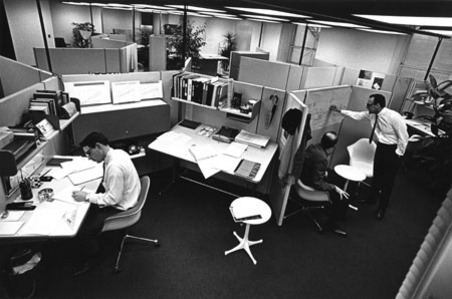
Then in the 1960’s the American design company, Herman Miller, invented the Action Office concept and furniture. This concept was to get away from the Open Office concept on the one hand, and the individual closed-off office on the other. The goal was to create an environment that was more private that a completely open design, but was also more human and flexible to the needs of workers.

Action Office by Herman Miller, 1960s

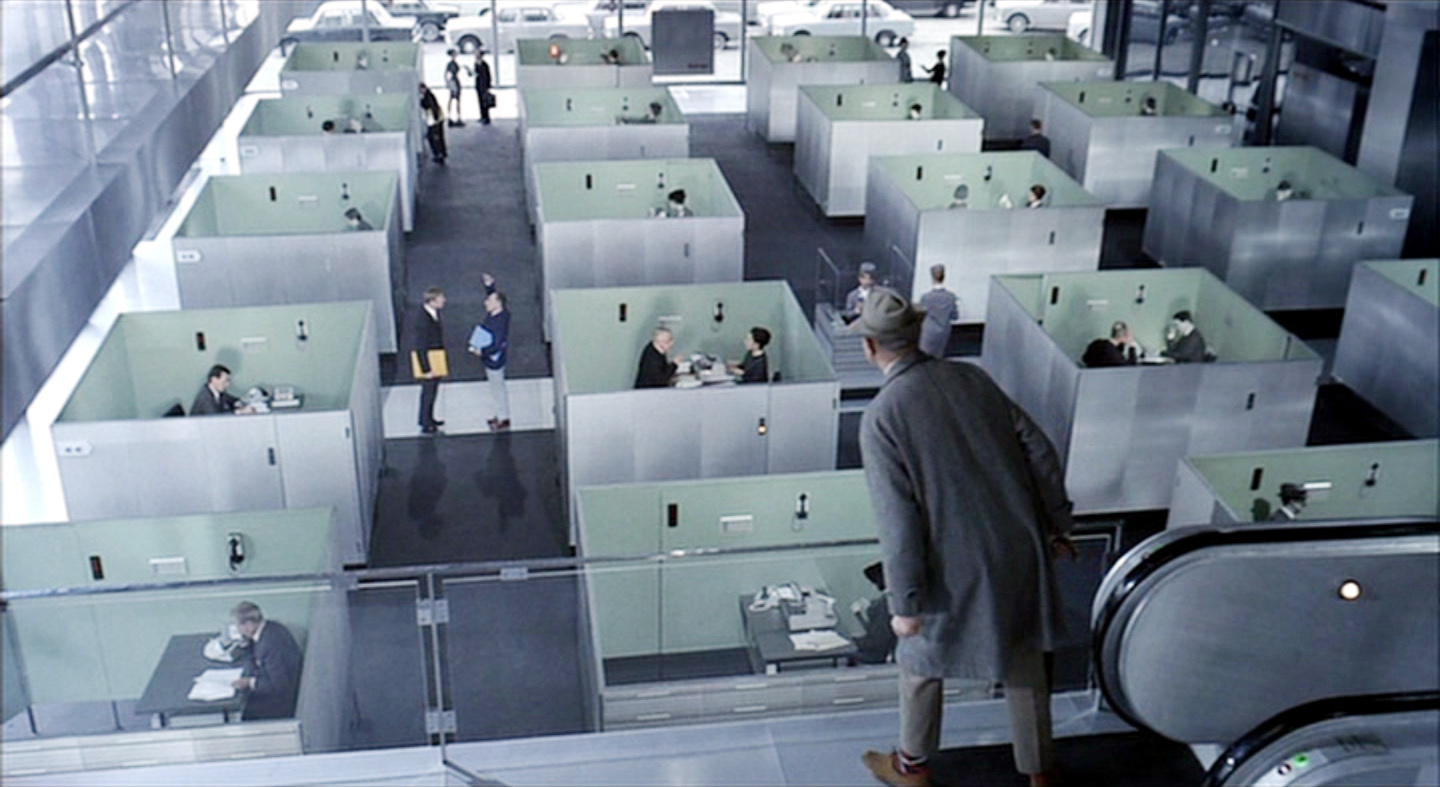
Companies, however, began to cherry-pick the various components of the Action Office suite (from Herman Miller and other purveyors) based on the desires of the finance office and share holders. We ended up with large cube farms that were more like something from a science fiction film about a dystopian future. Of course, it did not take long for the idea to be parodied.

Still from Playtime (1967) by Jacques Tati

The theatrical release of TRON lies about halfway between the advent of the modern office and our present day. So much has changed—the Internet, mobile phones, iTunes, more than one economic recession—and yet so much remains the same. The fundamental concepts of so much business, its methods, its modus operandi, and its questionable ethics, are all still with us, and so is the cube.

>are we there yet?

>

PilgrimAkimbo has been unfocused for quite some time, nearly as unfocused as it author. When I started this blog in late 2006 I meant to focus my writing on cinema, along with some forays into other arts. Very quickly my focus expanded, but for the most part I blogged a lot about film. Then I got tired of that. Cinema is only one of many interests that grab my attention. I also have a family with young and very young kids. I can’t seem to get myself out to the theaters anymore (it’s actually been a long time). Many of the films I want to see my kids can’t yet see, so that makes it hard to see much at home other than family-friendly movies (many of which I do like). And then I fall asleep anyway reading to my kids when I put them to bed. Plus, years have passed since I relied on film references to define my life. I have become less and less interested in following trends or keeping up on the latest films. Bla, bla bla. So that’s that.

Well, it’s been a long time since I focused on writing anything about cinema, film, movies, or whatnot. But now I plan on changing that somewhat. However, the last thing I want to be is another one of those bloggers who announce their intentions on their blog and then take no further action toward those ends. So I am not announcing that I will now refocus PilgrimAkimbo and make it a film blog again. But maybe, just maybe, you will find me writing my thoughts on cinema and art here more often once more.

So that’s that. Any questions? Don’t forget your reading for next week.

Seven images of Joan

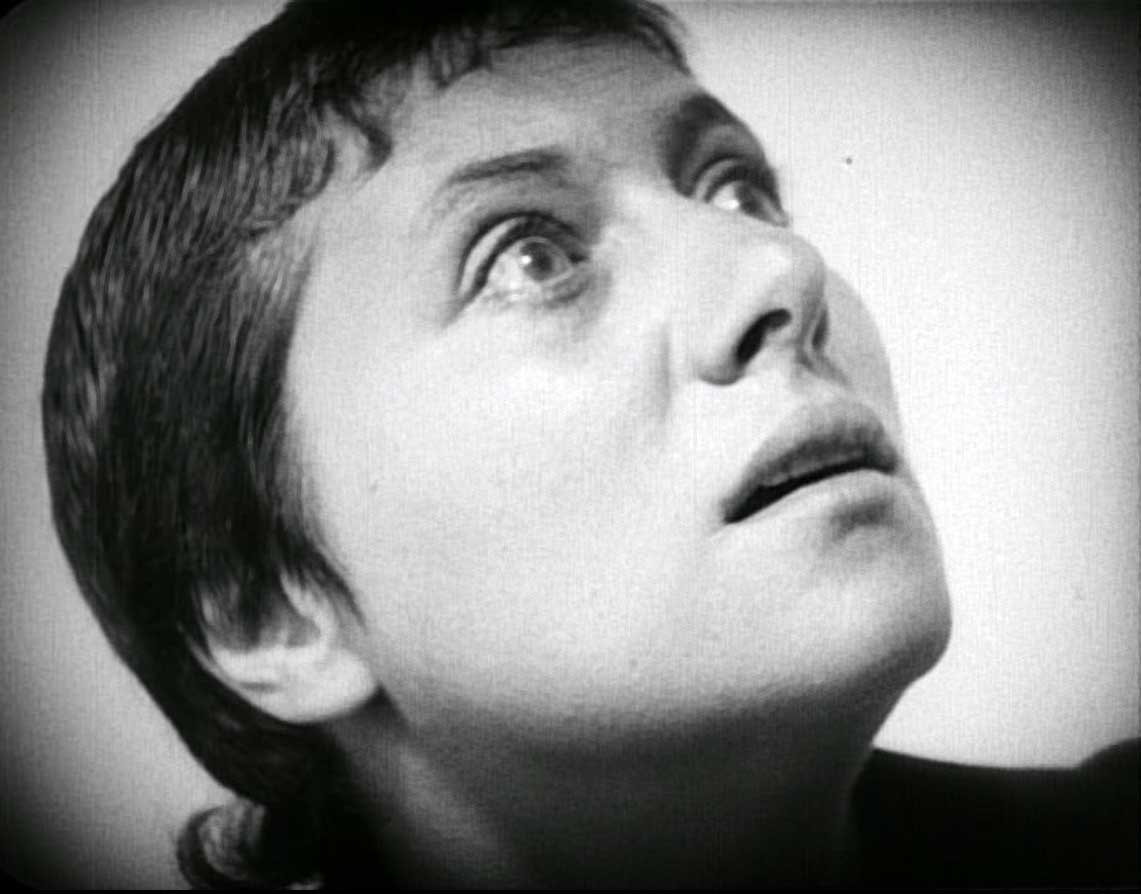
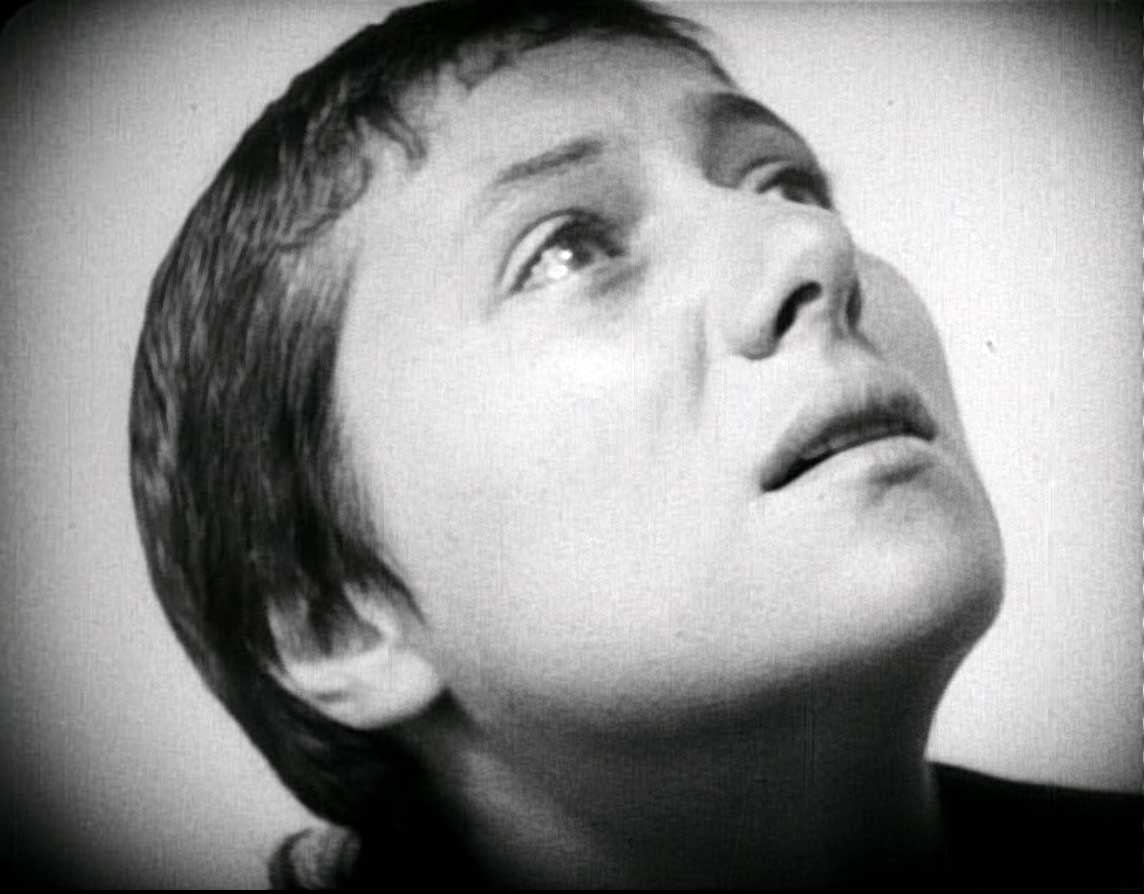
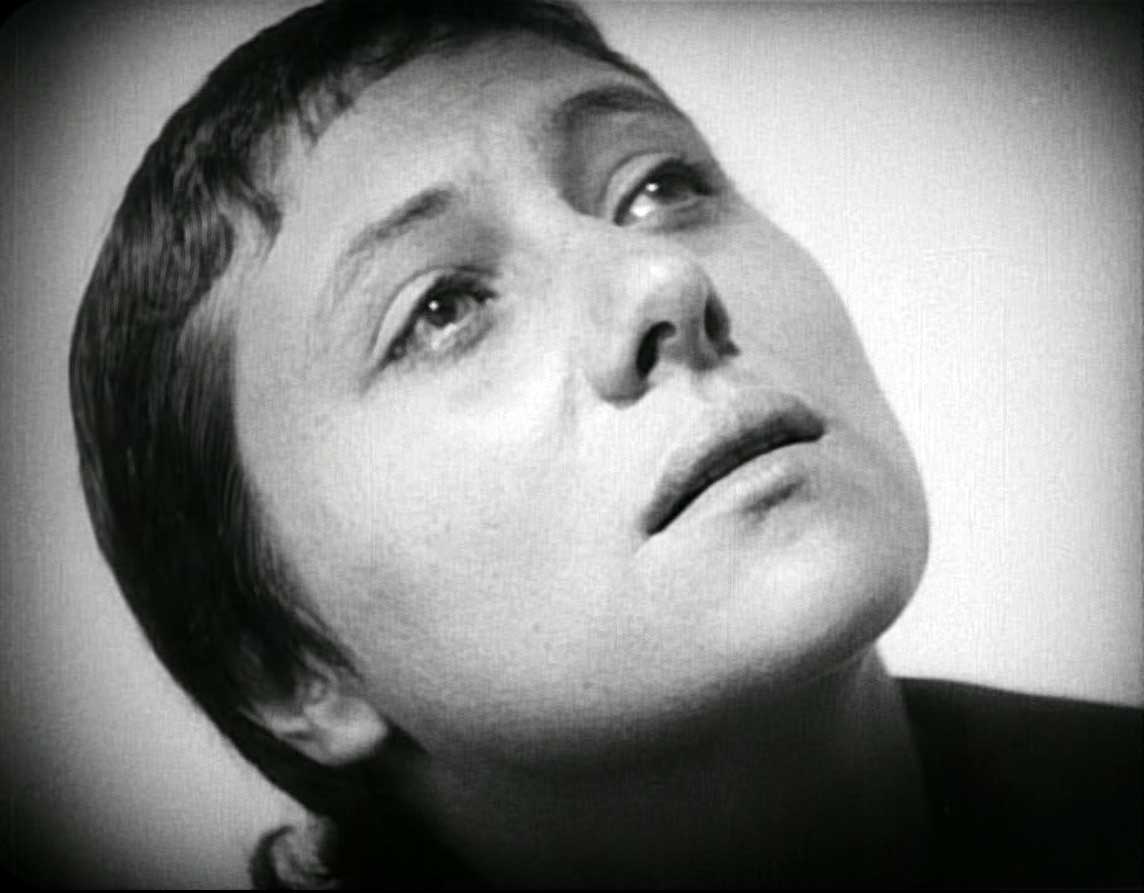
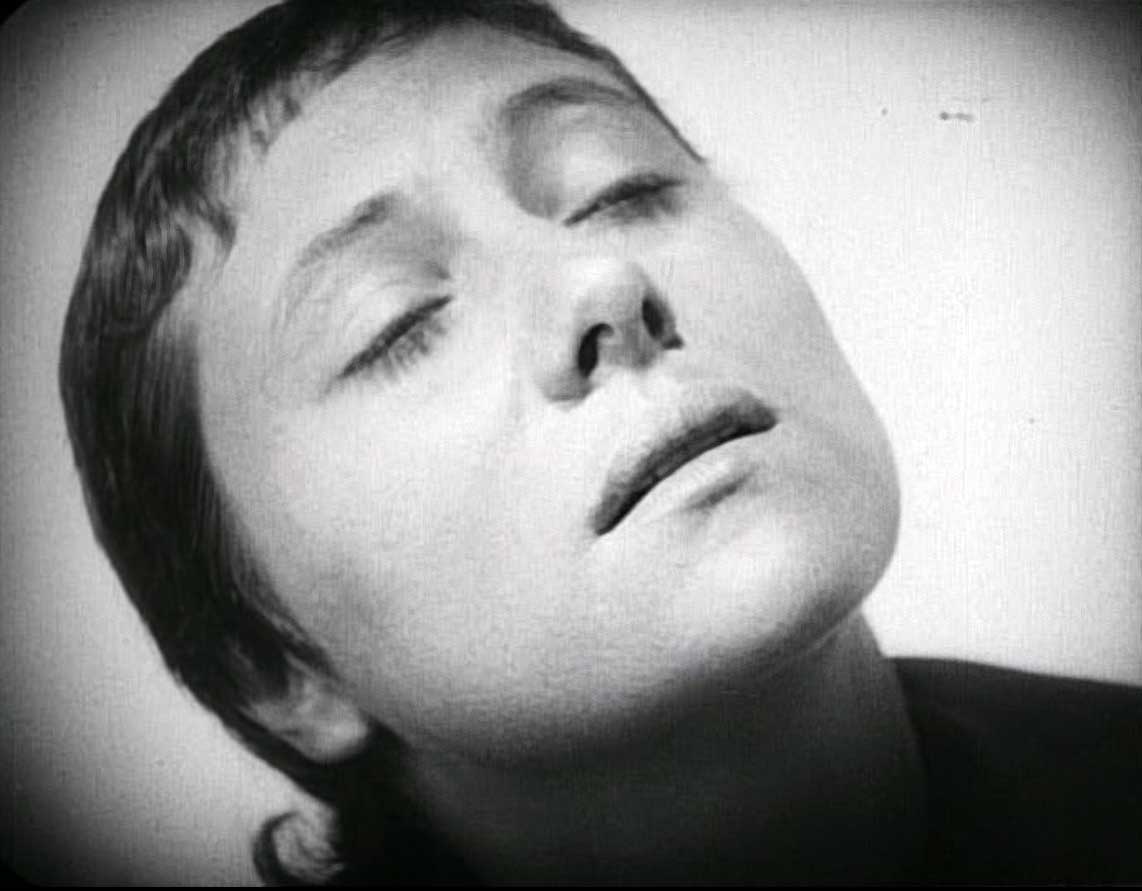
The following seven frames are from Dreyer’s La Passion de Jeanne d’Arc (1928). They occur just after Joan has been told that she will not be allowed to attend mass.

There are so many memorable moments in this incredible film that it is hard to pick out any one, but this brief moment caught me emotionally. It seems to exemplify the role that religion so often plays in claiming rights it can only pretend to own.