Grieving the Loss of the Spirit of Vatican II (or not)

In 2020 I posted this essay on another blog but I think it is still relevant and a very live issue today. I repost it here with a number of changes.
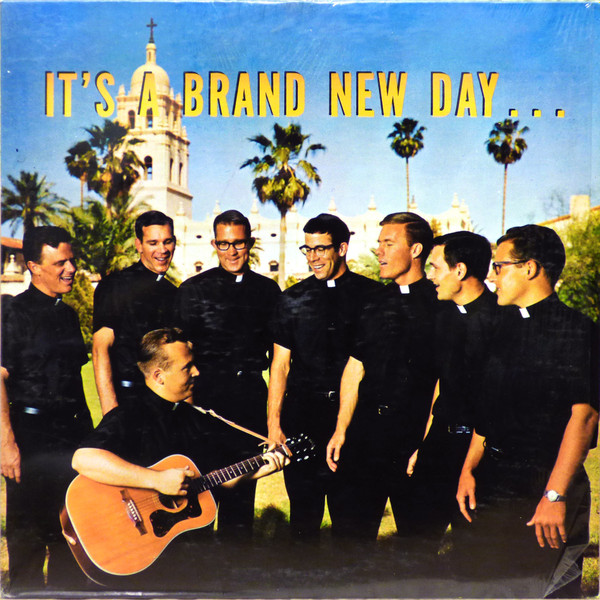
Not long ago I had the opportunity to read an email that had been sent by a parishioner to his priest and also to members of that parish’s pastoral council, of which I was a member. I’ve removed the parishioner’s name, the name of the priest, and the name of the parish for reasons of confidentiality. I believe there is something important in this letter and I feel the need to pass it on. In particular, I believe the sentiments expressed are common to many Catholics, and not merely older Catholics, the so called “boomer” Catholics, who lived through and promoted the changes after Vatican II. Here is the letter:

Dear Fr. [REDACTED],

I have made the decision to leave [REDACTED] Parish. Please accept my resignation from the Pastoral Council, the Lectors, and Sunday Hospitality. Additionally, please stop my Sunday envelopes.

I am sixty-six years old. I was an altar boy during the sixties. I remember the pre-Vatican2 church. It has been over fifty years that the institutional Church , as we know it, has functioned in the light of the Second Vatican Council. Yet, since coming to [REDACTED] and belonging to [REDACTED], I am slowly watching the institutional Church in our Parish retreating backward as demonstrated in the frequent Latin Masses, the men’s Schola, the effort to re-locate the tabernacle back to the center of the sanctuary (at an exorbitant cost, I might add), and … now you speak of reinstalling the communion rail. I don’t see myself participating in any of it. I happen to appreciate the Church for what it is. I considered doing research to dissuade you from the path you are on but then I realized the voices you are listening to are louder than mine. In my opinion what you are doing is not in the spirit of Vatican 2 and that grieves me.

Thank you for the rich homilies; they offer the Parish more that you may think.

Respectfully,
[REDACTED]

Before I comment I should say that the church did eventually move the old and beautiful marble altar and tabernacle, which had been moved out of the sanctuary in the early 1970s, back to the center of the sanctuary for a very reasonable cost and, by the way, at the request of the bishop. (But what is cost when compared to reverence for our Lord? We could ask the woman with the alabaster box.) Altar rails, which had been removed in the early 1970s, were also eventually reinstalled. The men’s Schola ceased during Covid and has not restarted. Regardless, it was a wonderful opportunity for men of the church to gather, fellowship, and sing old hymns and chant at the 7:30 AM Sunday Mass. (Why this is an issue I don’t know, except that they did sing old songs and prayers.) I know I was deeply blessed to be in the Schola. And there was never “frequent Latin Masses” at this parish. At most there was, perhaps, a couple of Novus Ordo masses done in Latin, and never on Sunday mornings, and never an actual TLM.

There are many Catholics, especially those older Catholics who lived through the changes of the post-Vatican II era, and who are still active Catholics (of course, a staggering number left the Church since the council), who look back fondly on that era and still believe to this day that those radical changes were the best thing to ever happen to the Church. As they see it, the spirit of Vatican II is wonderful, and they love that the barriers came down, the stuffy altar was replaced by the communion table, the priest finally turned to face the people who could now see what he was doing, and they even love its music, fondly humming its (objectively) poor and insufferable tunes. Many of these Catholics are looked down on and summarily dismissed as “boomers” (a term used pejoratively) by so many today including members of the so-called traditionalist movement. And many traditionalists are waiting for that generation to die off so the Church can finally return to its roots and become more traditional again. Personally, I don’t like this attitude. I think many older parishioners, like this man above, probably sharply feel that dismissive sentiment aimed squarely at them and that their voices are ignored.

The documentary “Rebel Hearts,” directed by Pedro Kos, tells the story of the Sisters of the Immaculate Heart of Mary, an order that thrived in the nineteen-sixties.It is a fascinating documentary and provides great insight to the Spirit of Vatican II in action. Source: https://www.newyorker.com/news/daily-comment/is-the-vatican-finally-ready-to-get-serious-about-women-in-the-church

I believe this parishioner’s frank frustration, blunt verbiage, and his sudden resignation is exactly the kind of reaction that many Novus Ordo but tradition-leaning priests fear. There are very few parishes in the world today that are not fundamentally “spirit of Vatican II churches,” that is, they have been built on the modernist traditions of the past 50 years (and arguably the past 200 years). It is what they know, it is their life as it were. This means that any priest who discovers the rich traditions of the Church and comes to see the need to reintroduce those traditions into their parish, and then tries to bring changes to his parish in light of those traditions, is likely to have at least some, and perhaps many, parishioners reacting as our letter-writer did. Or perhaps the frustrated parishioners don’t leave the parish; perhaps they even don’t let the priest know how they feel. They may instead just work to undermine his efforts in any number of ways and eventually get him ousted. I imagine this letter cut to the heart of the priest and was grieved over. I do not know the outcome of what happened next. I hope reconciliation can happen. I doubt it will. But I do appreciate letter-writer’s forthrightness.

I believe the Traditional Latin Mass is fundamentally and in nearly every way far superior than the Novus Ordo. I am even inclined to believe the Church has substantially and spiritually suffered because of the Novus Ordo. However, I am not a RadTrad as some traditionalists call themselves positively and others call them pejoratively. In fact, I go to both the TLM and the Novus Ordo for various reasons (mostly availability) and I have been blessed by both. [Note: lately I’ve been attending a Byzantine Catholic church and loving the Divine Liturgy, which is even older than the TLM.]

I have never been someone who loves tradition either merely for aesthetic or nostalgic reasons. I’m not into tradition in the way some men love 1957 Chevys or others collect vintage radios. I came to a love for tradition because my life’s journey took me, as a parent, through the world of Christian classical homeschooling, which begins with the nature of man and his purpose in relation to God. I began to critique my presuppositions in light of my experience of living in a post-modern world, growing up Baptist/evangelical, and being curious about history, philosophy, and the arts. Within the Protestant milieu I experienced an anemic stance towards holiness, a total absence of the concept of theosis, personally fashioned images of Jesus, and a profoundly false anthropology. I experienced worship redefined as pop-music and sentimentalism rather than sacrifice. Of course, I didn’t know that at the time. Then I came into the Church (God be praised!) and I saw this same spirit of the modern Protestant and American culture substantially infused (though often as a poor imitation) syncretically throughout the local parishes I visited. The leaven of the modernist world had worked its way into so much of the Church. (Forgive me if I come across as though I view myself as an expert in these matters. I am not.)

I also noticed both a mix of blindness to the syncretism and a thorough love of it. Parishioners were not chafing under the weight of modernism corrupting the Church, they were loving it. Or, at least, that’s how it looked to me. And remember, people can believe and be committed to any number of half-truths, lies, and crazy ideas and still be the most wonderful people in the world.
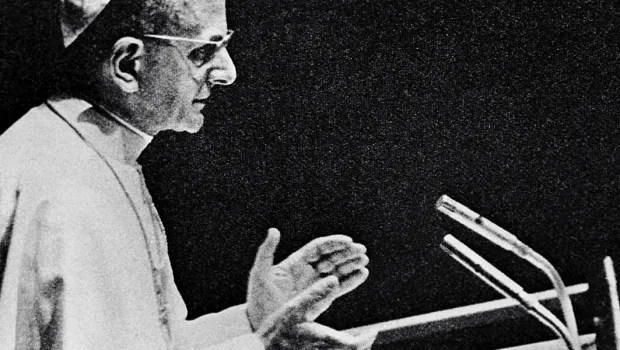
Pope Paul VI: “We would say that, through some mysterious crack—no, it’s not mysterious; through some crack, the smoke of Satan has entered the Church of God.”

I felt like the bank teller who has learned to identify counterfeit bills by first becoming highly familiar with the real thing, but in this case I knew the counterfeit all too well and was only coming to learn of the real thing. I was just so happy to be in the true Church that I let a lot slide for a while— and I still do, and I’m still happy. I love being Catholic, not merely for the joy I find, but because Catholicism is true. Also, I am no expert. And who am I anyway? And yet, I feel that God has given me the eyes I have, formed on the journey I’ve traveled, to see some things that others might not; perhaps especially so-called cradle Catholics. I believe that the long tradition of the Church, especially that old “stuffy” Latin Mass, lived out in love and relying on the Holy Spirit, is an antidote needed for the world today — not just the for the Church, but for the world.

Thus I am bothered by the letter above. I see it run through with problems, false assumptions, ignorance, and immaturity. I want to be dismissive.

And yet, and yet…

Two things: First we must look for the silver linings. In many ways the Church needed to be challenged. Before the Spirit of Vatican II there was the Spirit of the Counter Reformation. This spirit built a powerful, almost fortress-like Church. But, I believe, it was becoming hollow within. Bishops were used to being unchallenged and, it seems to me, too often didn’t distinguish between the core faith that could not be changed and cultural norms that could. Many men became priests and young women nuns for cultural reasons. Prayers were recited because that’s what had always been done. When I hear about bishops sometimes ruling over over nuns in harsh and tone-deaf ways and then those nuns pushing back I tend to side with the nuns. I believe the Church needed to be shook up. The question is how far does one go with that shaking?

Second, I (and we) must have compassion for those who love the Novus Ordo and its music and its culture. For that’s what it is, a culture and it has shaped them. Culture arises from cultus. How we worship, including the nuts and bolts of our liturgies, form us. Lex orandi, lex credendi. Even what direction the priest faces during the Liturgy works within us at such a deep level and in such a precognitive way that the simple fact of orientation teaches us about God and man, saying one thing or another thing. How we receive the Blessed Sacrament, whether on the tongue or in the hand, whether standing or kneeling, teaches (instilling within us) us at a deeply subconscious level knowledge (true or false) of Christ and our relationship to Him, saying one thing and not another thing. At the end of Mass, when we are told to go out into the world, we take with us that cultus which has formed deep within us, formed even minutes before, and so deeply that much of it is subconscious and intuitive and works on our minds to such a degree that what seems right to us seems so as though from the foundations of the earth. But this is not the same thing as being right, for we can be formed by a bad cultus just as easily as a good cultus. And even the best Catholic cultus has to contend with the world’s cultus, which smothers us nearly every minute.

The power of formation is not primarily at the conscious level. Much like the bank teller intuitively knowing a good bill from a false one, the well formed Catholic recognizes truth and error, depth and shallowness, beauty and mediocrity, faith and sentimentality, in an almost precognitive manner. (Oh that we were all that well formed!) Overwhelming evidence declares that Catholics can be poorly formed. Our sensibilities can lead us to wrong understandings, poor interpretations, and misguided evaluations. And our conclusions will feel absolutely right. We almost can’t help it; no one knowingly believes falsehoods, we can only believe what we believe is true. Therefore, we must have compassion and empathy for others. We must seek humility. Our true battle is not over liturgy, or tradition, or theology. Our true battle is against Satan and his devils, against the forces of sin within us, and against the temptations of the world. We are in a profound spiritual, physical, and metaphysical battle for our faith, the Church, and our souls. That battle, of course, plays out much of the time within the physical realm, including the realm of liturgy, culture, and even politics, but we must seek to have eyes that see and ears that hear, we must seek soft hearts and and sensitive souls, so that we may know where the real battle lies, otherwise we will miss it — perhaps even joining an enemy who tricks and beguiles us.

Lord Jesus Christ, Son of God, have mercy on me a sinner.

If you watch documentaries about the 1960s, such as Ken Burns film The Vietnam War, especially the parts that focus on the homefront in the US, or the PBS documentary Woodstock: Three Days that Defined a Generation, you can’t help but feel for the youth caught up in the spirit(s) of the age. There was little chance of any young Catholic at that time, living in the midst of that culture, who would not have also interpreted the post-Vatican II changes, especially those done under the spirit of Vatican II mantra, as utterly comprehensible and necessary. Many of these young Catholics supported refocusing the Church towards the burning issues of the day and, more importantly, defining the approach to those issues in the same terms used by the campus radicals, the feminists, the neo-socialists, and especially those of the anti-war and civil rights movements.

Consider this truly amazing time-capsule below from 1968. This NBC documentary shows us the world in which our letter writer above was formed and of which he clearly is still fond, much like an old man remembering the glory days of his youth. Keep in mind that the Novus Ordo was not promulgated until 1969, so this is even before the new Mass radically changed the Church.

This video feels like a crash in slow motion. I am aghast at the naivete and delirious utopianism expressed, and yet… I too would have likely joined in with enthusiasm if I had been a young adult Catholic at that time. But this is where we need to understand clearly that what is often called the “spirit of Vatican II” was really just the spirit of the age. What was new and “alive” then seems dated and, at best, quaint today. But let’s not be too sentimental, it was also a tragedy in the making.

The goal wasn’t just a matter of getting rid of what was old. Underneath it was the belief that what we call traditional Catholicism was being fundamentally incompatible with the modern age and, thus, being a barrier to spiritual growth, a meaningful relationship with Christ, evangelization, and even authentic Catholicism (nevermind the saints, great and small, who knew nothing else but traditional Catholicism because it was just Catholicism). Traditional priestly garb and religious habits began to look more and more like anachronistic costumes, almost laughable; Latin like a language mummified. The key word in the documentary is “relevant.” The Church must become relevant. The disease of relevancy infected the Protestant world too, something I experienced growing up.

As a side note: Look up each priest and bishop interviewed in the documentary above and see how many were eventually laicized and got married in less than ten years of this film.

With time, statistics, and much wide-eyed hand wringing we have come to see that the radical experiments of the 1960s and 1970s largely failed and a great deal has been lost, not least are increasingly diminishing numbers of faithful Catholics in the pews and vocations to the priesthood and religious life. But also so much depth and richness has been lost. It was, it would appear, the Church declaring that the Real Presence was dogma but not really true, and that faith was merely a matter of personal preference after all. Our priests, by no longer having the Traditional Latin Mass available to them, perhaps have suffered the most for they are no longer being fed daily on the more nourishing food of tradition (such as the profoundly rich prayers of the Extraordinary Form) but rather “eating” a less spiritually enriching fair that is bound to leave one at the very least rather anemic. And if one has never eaten from the sumptuous feast’s table one will neither know the riches available or the true depth of satiation.

The Novus Ordo is a living culture and it produces sons and daughters of itself. It is an engine of formation. I believe that many priests have gone into the priesthood thinking and hoping that within the Novus Ordo culture they will become the kind of men that only a TLM culture can produce. (I experienced something similar coming into the Church as a convert.) Many, many things went terribly amiss during the frantic hubbub of the radical sixties. Much good has been destroyed. In one generation enough destruction and spiritual darkness was unleashed that it may take five generations to recover. The “good” bishops and popes have been trying to fix it ever since — tinkering here, adjusting there, moving slowly out of caution? concerns? fear? Of course, I don’t have the answer, and who am I anyway?

The “boomers” and the rest of the Novus Ordo crowd (I also frequently attend the Novus Ordo and just missed being called a boomer by only one year, and not all boomers are pro-Novus Ordo culture) are not the enemy. Even if you are a staunch traditionalist you ought to see them as our brothers and sisters in Christ. One might choose to “fight” for the great traditions of the Church, especially the Traditional Latin Mass, to return in a big way, but one must not fall into a hardened “us and them” mentality. And you ought to love them. They have been taught and formed by the Church and their culture, just as we all have. Their formation, good or bad, falls largely upon the shoulders of those bishops who had that responsibility and who eagerly welcomed the spirit of the age into the Church and often veered wildly beyond the councils documents.

Our job is to love God and each other. We are to seek unity in love, with humility, and with total faith in God — which means we need patience and know that it is God who fights our battles. But the older crowd are not the only ones who love the Novus Ordo more than the TLM. Even many younger folks do so as well, for reasons I can’t quite fathom. People love things for different reasons. And they don’t love other things for different reasons; sometimes merely out of ignorance, sometimes because of their formation, and sometimes for good reasons. But this is a larger topic.

I feel for the man who wrote the letter above. I believe he wrote honestly from his heart. I believe his grievances came from real grieving. I also wonder, without wanting to psychoanalyze him, if his grieving doesn’t come from having had a kind of “mountain top” experience in his youth (think of those in the 1968 documentary above), being caught up in the spirit of the age and feeling like he had truly received a “new Pentecost,” which has stayed with him and sustained him for many years, and now he feels it’s being taken away. I’m sure he’s not alone.

But I don’t feel too sorry for the guy. His letter is also an expression of ignorance, selfishness and shows lack of empathy for those suffering under the revolution he so loves. That parish he left was very accommodating and, it turns out, he wasn’t. His letter was heartfelt and honest but it is also an expression of myopic self-centeredness. I hope* he found a parish with the felt banners and Marty Haugen hymns he’s used to, and with the tabernacle hidden somewhere to the side so as not to conflict with the worship. I’m sure he did, there’s still a lot of them around.

*Not really.
Becoming Divine

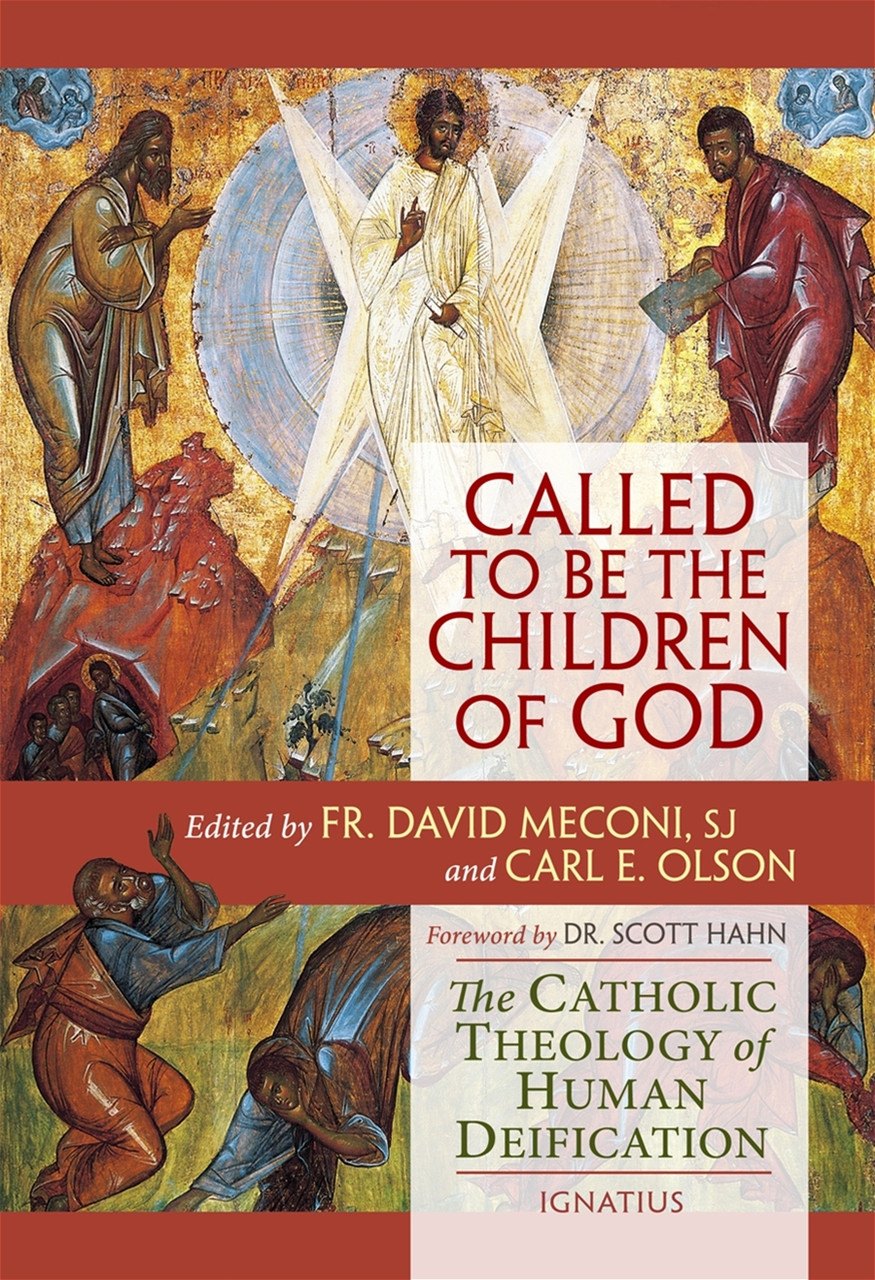
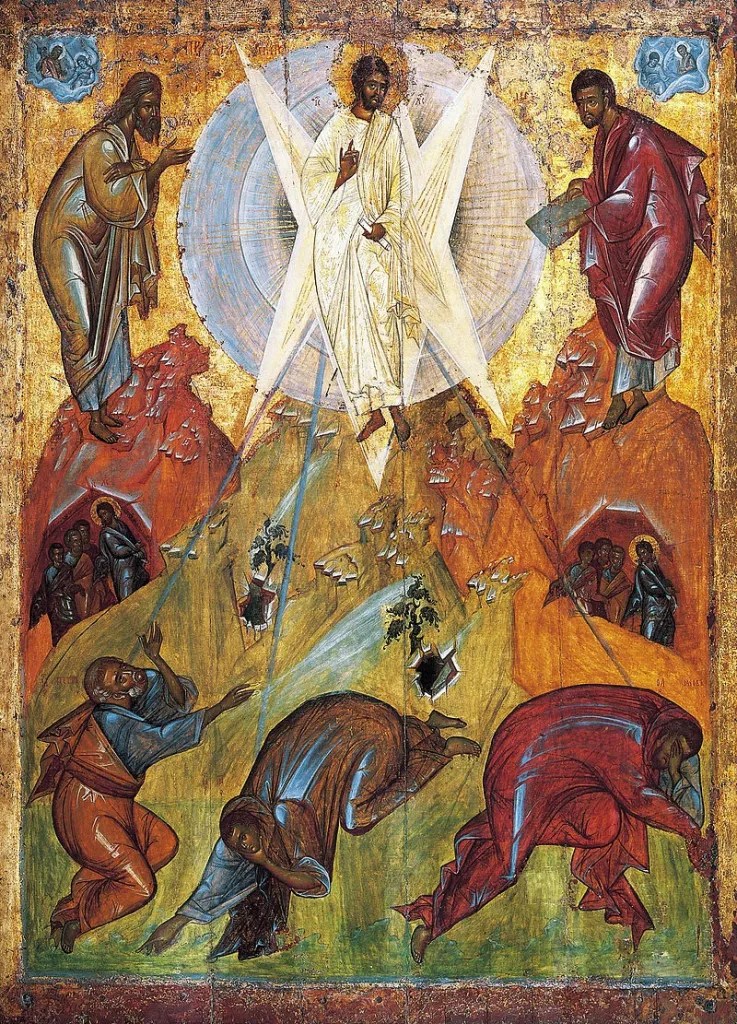
The icon of the Transfiguration by Theophan the Cretan depicts the event where Jesus Christ is transformed, revealing his divine glory to his disciples, Peter, James, and John, on Mount Tabor. Theophan the Cretan, also known as Theophanes the Greek, was a renowned iconographer of the late 14th and early 15th centuries. His Transfiguration icon is known for its use of color, particularly warm earth tones and gold, to unify the heavenly and earthly realms depicted in the scene.

May grace and peace be multiplied to you in the knowledge of God and of Jesus our Lord. His divine power has granted to us all things that pertain to life and godliness, through the knowledge of him who called us to his own glory and excellence, by which he has granted to us his precious and very great promises, that through these you may escape from the corruption that is in the world because of passion, and become partakers of the divine nature. (2 Peter 1:2–4)

Many times I read over these words from Saint Peter but I never paused to contemplate the phrase “become partakers of the divine nature.” The very idea of becoming partakers of the divine nature, though boldly stated here, was never a topic of preaching or teaching in my Protestant upbringing. And later, when I first heard the words of Saint Athanasius below, I was shocked.

“God became man so that man might become god” (St. Athanasius, On the Incarnation 54:3)

These words have rung like a bell down through the history of the apostolic Church(es) ever since they were penned in the 4th century. Alas, they have also been forgotten by many who call themselves Christian and some have even felt themselves scandalized by those words. I know the Protestant world from which I came would have rejected such ideas. And yet…

Be imitators of me, as I am of Christ. (1 Corinthians 11:1)

Are we not to be imitators of Christ? Yes! Is He not the Son of God? Of course! But these words roll off our tongues too easily. Have we not become complacent, given over to excuses? I have.

If imitation of Christ is about checking the boxes of moral perfection it’s easy to back away a bit. No one can reasonably expect me to actually check all those boxes. Right? But if imitation is to become divine… that sounds very interesting.

“You, therefore, must be perfect, as your heavenly Father is perfect.” (Matthew 5:48)

But what is this perfection? I was always taught being a good Christian is to seek moral perfection. And that is true but that is only part of the picture. When something is perfect it is, in the ancient and Biblical sense, to be brought to its proper end, to be finished, completed, lacking in nothing. For humans it means to be what a human is meant to be, that is, fully human as God intends. This is the telos of salvation. To seek it is to seek God, to desire to be like God, to be the Image of God finally and fully realized. So yes, it does mean moral perfection because it means total perfection, to be as God is, perfect.

This is theosis. This is what being a disciple of Christ is all about. This is the pearl of great price.

I’m not writing this to say anything new or profound, rather I want to point to a book and two videos that have helped me to understand that the burning in my soul is my desire for theosis.

The book is: Called to Be the Children of God: The Catholic Theology of Human Deification Edited by a friend of mine, this book looks at the concept of theosis/deification/divinization from the Old Testament down through the centuries, much of it as understood within the Catholic Church. It’s an excellent overview with countless quotes from the Bible and Church history. For a Christian not familiar with the concept of theosis (so easy to be ignorant these days) this book might blow their mind.

The videos, which are from the Eastern Orthodox viewpoint and are also excellent, are here:

Blessings to you.

[Third Sunday After Pentecost, Feast of Saints Peter and Paul, Apostles]

I want to live in a union of love with God

Alleluia! The Spirit of the Lord has filled the whole world.
Come, let us adore him, alleluia.

Apologetics played a big part in my conversion but they always left me wanting. In the end I wanted not an argument or a logical proof of the Church’s validity and authenticity, rather I wanted to become a different person. I wanted deification, theosis, divinization. I do find this concept within Catholicism but it is from the Eastern Orthodox and Byzantine Catholicism that one find deification emphasized. In short, I want nothing else than to experience God, to be united with God.

I’ve been reading The Mountain of Silence: A Search for Orthodox Spirituality by Kyriacos C. Markides. In it I find this wonderful exchange:

“So, when during the liturgy we recite the prayer “I believe in one God…,” Father Maximos went on after I shifted to second gear, “we try in reality to move from an intellectual faith in God to the actual vision of God. Faith become Love itself. The Creed actually mean ‘I live in a union of love with God.’ This is the path of the saints. Only then can we say that we are true Christians. This is the kind of Faith that the saints possess as direct experience. Consequently they are unafraid of death, of war, of illness, or anything else of this world. They are beyond all worldly ambition, of money, fame, power, safety, and the like. Such person transcend the idea of God and enter into the experience of God.”

“But how many people can really know God that way?” I complained.

“Well, as long as we do not know God experientially then we should at least realize that we are simply ideological believers,” Father Maximos relied dryly. “The ideal and ultimate form of true faith means having direct experience of God as a living reality.”

This morning I recited the Creed with a group of local believers as we celebrated Pentecost Sunday and I thought about those Christians two thousand years ago experiencing God come upon them and transform them. The world has not ever been the same since.

[Pentecost Sunday]

Biblical references for the unique role and responsibility the Apostle Peter

I first published this post in 2012, just one year before I officially converted to the Catholic Church. My journey up to that point had included a possible conversion to Eastern Orthodoxy but I first had to sort out my thinking on the Pope. This post was a piece of that process.

The Apostle Peter is a fascinating man in the New Testament. In the Protestant world it is common for pastors to say they love Peter because he was such a  goof-up. Peter gives us all kinds of hope that any of us can be saved. But anyone who has grown up in, or spent a lot of time in, the Protestant world and worldview knows it is Paul who is Apostle number one. There are at least two good reasons for this. One is that Paul wrote those books of the Bible that are most central for Protestants: Romans, Galatians, 1 Corinthians, etc. Second is that Protestants are wary of Peter because Catholics say the true Church founded by Christ was founded upon Peter (the rock) as the first of the apostles, as the first “pope”. Get too close to Peter and one might be tempted to think Catholics are on to something.

But Peter is a big deal. To my count Peter is mentioned in the New Testament something like 155 times, whereas the rest of the apostles combined are only mentioned around 130 times. Of course mere numbers don’t necessarily add up to importance. It’s how Peter is mentioned, what he does, what he says, what others say about him, and especially what Christ says to Peter that show Peter is the central Apostle, the key figure of the New Testament Church. As we look at the Biblical references to Peter the picture begins to fill out.

An aside: I have heard many Protestant teachings on the famous Matthew 16:18 passage where Jesus says “upon this rock I will build My church.” That passage in isolation can be taken any number of ways. But after looking at a more complete picture of Peter as the New Testament writers saw him, I must say the Roman Catholic understanding of Peter as the Rock upon which Christ will build His Church makes the most sense. In fact, even without this particular passage, the other passages below add up to the same idea. Rather than seeing the Catholic position as some kind of crazy overlay to this passage, it now seems clear to me that it is the Protestants who must come up with a better argument. So far I have not heard anything better. Of course, this makes me, an old Protestant, very curious.

Below are the New Testament references I was able to find regarding Peter. I have tried to group them a bit, and added a few of my thoughts. I have not ranked them in any particular order. I’m sure I’ve made some mistakes. All quotations are from the New American Standard Bible.

Peter listed/mentioned first with the apostles

Peter being mentioned or listed first among the apostles:

Matt. 10:2  Now the names of the twelve apostles are these: The first, Simon, who is called Peter, and Andrew his brother; and James the son of Zebedee, and John his brother;
Mark 1:36  Simon and his companions searched for Him;
Mark 3:16  And He appointed the twelve: Simon (to whom He gave the name Peter),
Luke 6:14-16  Simon, whom He also named Peter, and Andrew his brother; and James and John; and Philip and Bartholomew;  and Matthew and Thomas; James the son of Alphaeus, and Simon who was called the Zealot; Judas the son of James, and Judas Iscariot, who became a traitor.
Acts 2:37  Now when they heard this, they were pierced to the heart, and said to Peter and the rest of the apostles, “Brethren, what shall we do?”
Acts 5:29  But Peter and the apostles answered, “ We must obey God rather than men.

Peter is first when entering upper room after our Lord’s ascension:

Acts 1:13  When they had entered the city, they went up to the upper room where they were staying; that is, Peter and John and James and Andrew, Philip and Thomas, Bartholomew and Matthew, James the son of Alphaeus, and Simon the Zealot, and Judas the son of James.

Peter leads the fishing and his net does not break. According to Catholics, the boat (the “barque of Peter”) is seen as a metaphor for the Church:

John 21:2-3  Simon Peter, and Thomas called Didymus, and Nathanael of Cana in Galilee, and the sons of Zebedee, and two others of His disciples were together. Simon Peter said to them, “I am going fishing.” They said to him, “We will also come with you.” They went out and got into the boat; and that night they caught nothing.
John 21:11  Simon Peter went up and drew the net to land, full of large fish, a hundred and fifty-three; and although there were so many, the net was not torn.

Though Peter and John are both very important figures in the early church, Peter is always mentioned before John:

Luke 8:51  When He came to the house, He did not allow anyone to enter with Him, except Peter and John and James, and the girl’s father and mother.
Luke 9:28  Some eight days after these sayings, He took along Peter and John and James, and went up on the mountain to pray.
Luke 22:8  And Jesus sent Peter and John, saying, “Go and prepare the Passover for us, so that we may eat it.”
Acts 1:13  When they had entered the city, they went up to the upper room where they were staying; that is, Peter and John and James and Andrew, Philip and Thomas, Bartholomew and Matthew, James the son of Alphaeus, and Simon the Zealot, and Judas the son of James.
Acts 3:1-4  Now Peter and John were going up to the temple at the ninth hour, the hour of prayer. And a man who had been lame from his mother’s womb was being carried along, whom they used to set down every day at the gate of the temple which is called Beautiful, in order to beg alms of those who were entering the temple. When he saw Peter and John about to go into the temple, he began asking to receive alms. But Peter, along with John, fixed his gaze on him and said, “Look at us!”
Acts 3:3  When he saw Peter and John about to go into the temple, he began asking to receive alms.
Acts 3:11  While he was clinging to Peter and John, all the people ran together to them at the so-called portico of Solomon, full of amazement.
Acts 4:13  Now as they observed the confidence of Peter and John and understood that they were uneducated and untrained men, they were amazed, and began to recognize them as having been with Jesus.
Acts 4:19  But Peter and John answered and said to them, “ Whether it is right in the sight of God to give heed to you rather than to God, you be the judge;
Acts 8:14  Now when the apostles in Jerusalem heard that Samaria had received the word of God, they sent them Peter and John,

Peter is mentioned first as going to mountain of transfiguration. He is also the only disciple to speak at the transfiguration:

Luke 9:28  Some eight days after these sayings, He took along Peter and John and James, and went up on the mountain to pray.
Luke 9:33  And as these were leaving Him, Peter said to Jesus, “ Master, it is good for us to be here; let us make three tabernacles: one for You, and one for Moses, and one for Elijah”— not realizing what he was saying.

Peter is the first of the apostles to confess the divinity of Christ:

Matt. 16:16  Simon Peter answered, “You are the Christ, the Son of the living God.”
Mark 8:29  And He continued by questioning them, “But who do you say that I am?” Peter answered and said to Him, “You are the Christ.”
John 6:69  We have believed and have come to know that You are the Holy One of God.”

Peter ranked(?) higher than John

John arrived at the tomb first but stopped and waited for Peter. Peter then arrived and entered the tomb first:

Luke 24:12  But Peter got up and ran to the tomb; stooping and looking in, he saw the linen wrappings only; and he went away to his home, marveling at what had happened.
John 20:4-6  The two were running together; and the other disciple ran ahead faster than Peter and came to the tomb first; and stooping and looking in, he saw the linen wrappings lying there; but he did not go in. And so Simon Peter also came, following him, and entered the tomb; and he saw the linen wrappings lying there,

It is Peter that is named as the eye witness even though both Peter and John had seen the risen Jesus the previous hour:

Luke 24:34  saying, “ The Lord has really risen and has appeared to Simon.”

Peter seen as the Leader of the Apostles

In the garden of Gethsemane, Jesus asks Peter, and no one else, why he was asleep. It would seem Peter is held accountable, on behalf of the apostles, for their actions:

Mark 14:37  And He came and found them sleeping, and said to Peter, “Simon, are you asleep? Could you not keep watch for one hour?

Peter is designated (called out) by an angel as unique among the apostles:

Mark 16:7  But go, tell His disciples and Peter, ‘ He is going ahead of you to Galilee; there you will see Him, just as He told you.’”

Peter receiving Special Instruction and Revelation

Peter alone is told he has received special, divine revelation from God the Father:

Matt. 16:17  And Jesus said to him, “Blessed are you, Simon Barjona, because flesh and blood did not reveal this to you, but My Father who is in heaven.

Jesus instructs the disciples by specifically instructing Peter to let down their nets for a catch. Peter specifically is told he will be a “fisher of men”:

Luke 5:4,10  When He had finished speaking, He said to Simon, “Put out into the deep water and let down your nets for a catch… and so also were James and John, sons of Zebedee, who were partners with Simon. And Jesus said to Simon, “ Do not fear, from now on you will be catching men.”

Peter speaking/Asking on Behalf of the Disciples

Peter asks Jesus about the rule of forgiveness. Peter frequently takes a leadership role among the apostles in seeking understanding of Jesus’ teachings:

Matt. 18:21  Then Peter came and said to Him, “Lord, how often shall my brother sin against me and I forgive him? Up to seven times?”

Peter speaks on behalf of the apostles by telling Jesus that they have left everything to follow Him:

Matt. 19:27  Then Peter said to Him, “Behold, we have left everything and followed You; what then will there be for us?”

Peter speaks for the disciples on their following Jesus:

Mark 10:28  Peter began to say to Him, “Behold, we have left everything and followed You.”

Peter speaks for the disciples about their witnessing Jesus’ curse on the fig tree:

Mark 11:21  Being reminded, Peter said to Him, “ Rabbi, look, the fig tree which You cursed has withered.”

Peter functions as the spokesman or representative (or vicar, to use popular a Catholic term) for Jesus:

Matt. 17:24-25  When they came to Capernaum, those who collected the two-drachma tax came to Peter and said, “Does your teacher not pay the two-drachma tax?” He *said, “Yes.” And when he came into the house, Jesus spoke to him first, saying, “What do you think, Simon? From whom do the kings of the earth collect customs or poll-tax, from their sons or from strangers?”

When Jesus asked who touched His garment, it is Peter who answers:

Luke 8:45  And Jesus said, “Who is the one who touched Me?” And while they were all denying it, Peter said, “Master, the people are crowding and pressing in on You.”

It is Peter who seeks clarification of a parable on behalf on the disciples:

Luke 12:41  Peter said, “Lord, are You addressing this parable to us, or to everyone else as well?”

After many of the disciples leave Jesus, it is Peter who speaks on behalf of the remaining disciples and confesses their belief in Christ after the Eucharistic discourse:

John 6:68 Simon Peter answered Him, “Lord, to whom shall we go? You have words of eternal life.

Peter as Christ’s Representative on Earth

Protestants debate this, but it would seems that Jesus builds the Church primarily (only?) on Peter, the rock:

Matt. 16:18  I also say to you that you are Peter, and upon this rock I will build My church; and the gates of Hades will not overpower it.

Only Peter receives the keys of the kingdom of heaven:

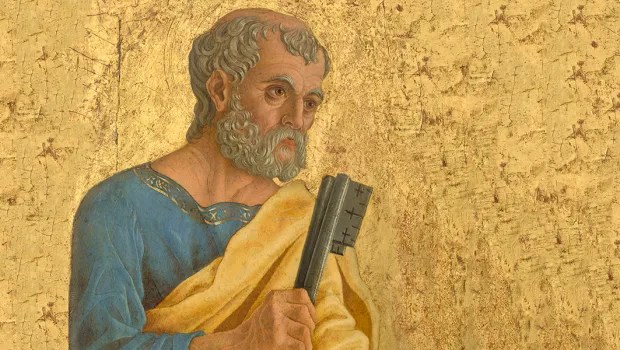
Matt. 16:19  I will give you the keys of the kingdom of heaven; and whatever you bind on earth shall have been bound in heaven, and whatever you loose on earth shall have been loosed in heaven.”

Peter, by paying the tax for both Jesus and himself, is acting Christ’s “representative” on earth:

Matt. 17:26-27  When Peter said, “From strangers,” Jesus said to him, “Then the sons are exempt. However, so that we do not offend them, go to the sea and throw in a hook, and take the first fish that comes up; and when you open its mouth, you will find a shekel. Take that and give it to them for you and Me.”

Peter given charge/care of the other disciples

Jesus prays specifically for Peter, that his faith may not fail, and charges him to strengthen the rest of the apostles:

Luke 22:31-32  “Simon, Simon, behold, Satan has demanded permission to sift you like wheat; but I have prayed for you, that your faith may not fail; and you, when once you have turned again, strengthen your brothers.”

In front of the apostles, Jesus asks Peter if he loves Jesus “more than these,” which likely refers to the other apostles. Peter has a special role regarding the apostles:

John 21:15  So when they had finished breakfast, Jesus said to Simon Peter, “Simon, son of John, do you love Me more than these?” He said to Him, “Yes, Lord; You know that I love You.” He said to him, “Tend My lambs.”

Jesus charges Peter to “feed my lambs,” “tend my sheep,” “feed my sheep.” Sheep appears to mean all people (or all believers), including the apostles:

John 21:15-17  So when they had finished breakfast, Jesus said to Simon Peter, “Simon, son of John, do you love Me more than these?” He *said to Him, “Yes, Lord; You know that I love You.” He said to him, “Tend My lambs.” He said to him again a second time, “Simon, son of John, do you love Me?” He said to Him, “Yes, Lord; You know that I love You.” He said to him, “ Shepherd My sheep.” He said to him the third time, “Simon, son of John, do you love Me?” Peter was grieved because He said to him the third time, “Do you love Me?” And he said to Him, “Lord, You know all things; You know that I love You.” Jesus said to him, “ Tend My sheep.


Peter Leading the Early Church

Peter initiates the selection of a successor to Judas immediately after Jesus ascended into heaven. Note: This passage also supports (or establishes) the concept of apostolic succession:

Acts 1:15  At this time Peter stood up in the midst of the brethren (a gathering of about one hundred and twenty persons was there together), and said,

Peter is the first apostle to preach the Gospel:

Acts 2:14  But Peter, taking his stand with the eleven, raised his voice and declared to them: “Men of Judea and all you who live in Jerusalem, let this be known to you and give heed to my words.

Peter is the first to preach on repentance and baptism in the name of Jesus Christ:

Acts 2:38  Peter said to them, “ Repent, and each of you be baptized in the name of Jesus Christ for the forgiveness of your sins; and you will receive the gift of the Holy Spirit.

Peter performs the first healing miracle of the apostles:

Acts 3:6-7  But Peter said, “I do not possess silver and gold, but what I do have I give to you: In the name of Jesus Christ the Nazarene—walk!” And seizing him by the right hand, he raised him up; and immediately his feet and his ankles were strengthened.

Peter is the first to teach that there is no salvation other than through Christ:

Acts 3:12-26  But when Peter saw this, he replied to the people, “Men of Israel, why are you amazed at this, or why do you gaze at us, as if by our own power or piety we had made him walk? The God of Abraham, Isaac and Jacob, the God of our fathers, has glorified His servant Jesus, the one whom you delivered and disowned in the presence of Pilate, when he had decided to release Him. But you disowned the Holy and Righteous One and asked for a murderer to be granted to you, but put to death the Prince of life, the one whom God raised from the dead, a fact to which we are witnesses. And on the basis of faith in His name, it is the name of Jesus which has strengthened this man whom you see and know; and the faith which comes through Him has given him this perfect health in the presence of you all. And now, brethren, I know that you acted in ignorance, just as your rulers did also. But the things which God announced beforehand by the mouth of all the prophets, that His Christ would suffer, He has thus fulfilled. Therefore repent and return, so that your sins may be wiped away, in order that times of refreshing may come from the presence of the Lord; and that He may send Jesus, the Christ appointed for you, whom heaven must receive until the period of restoration of all things about which God spoke by the mouth of His holy prophets from ancient time. Moses said, ‘ The Lord God will raise up for you a prophet like me from your brethren; to Him you shall give heed to everything He says to you. And it will be that every soul that does not heed that prophet shall be utterly destroyed from among the people.’ And likewise, all the prophets who have spoken, from Samuel and his successors onward, also announced these days. It is you who are the sons of the prophets and of the covenant which God made with your fathers, saying to Abraham, ‘ And in your seed all the families of the earth shall be blessed.’ For you first, God raised up His Servant and sent Him to bless you by turning every one of you from your wicked ways.”

Acts 4:8-12  Then Peter, filled with the Holy Spirit, said to them, “Rulers and elders of the people, if we are on trial today for a benefit done to a sick man, as to how this man has been made well, let it be known to all of you and to all the people of Israel, that by the name of Jesus Christ the Nazarene, whom you crucified, whom God raised from the dead—by this name this man stands here before you in good health. He is the stone which was rejected by you, the builders, but which became the chief corner stone. And there is salvation in no one else; for there is no other name under heaven that has been given among men by which we must be saved.”

Peter resolves the first doctrinal issue on circumcision at the Church’s first council at Jerusalem, and no one questions him. After Peter the Papa spoke, all were kept silent:

Acts 15:7-12  After there had been much debate, Peter stood up and said to them, “Brethren, you know that in the early days God made a choice among you, that by my mouth the Gentiles would hear the word of the gospel and believe. And God, who knows the heart, testified to them giving them the Holy Spirit, just as He also did to us; and He made no distinction between us and them, cleansing their hearts by faith. Now therefore why do you put God to the test by placing upon the neck of the disciples a yoke which neither our fathers nor we have been able to bear? But we believe that we are saved through the grace of the Lord Jesus, in the same way as they also are.” All the people kept silent, and they were listening to Barnabas and Paul as they were relating what signs and wonders God had done through them among the Gentiles.

Only after Peter finishes speaking do Paul and Barnabas speak in support of Peter’s definitive teaching:

Acts 15:12  All the people kept silent, and they were listening to Barnabas and Paul as they were relating what signs and wonders God had done through them among the Gentiles.

The church prayed for Peter while he was in prison:

Acts 12:5  So Peter was kept in the prison, but prayer for him was being made fervently by the church to God.

Peter acts as the chief elder (or bishop?) by exhorting all the other elders of the Church:

1 Peter 5:1  Therefore, I exhort the elders among you, as your fellow elder and witness of the sufferings of Christ, and a partaker also of the glory that is to be revealed,

Peter brings the Gospel to the Gentiles

Peter is first Apostle to teach that salvation is for all, both Jews and Gentiles:

Acts 10:34-48 Opening his mouth, Peter said: “I most certainly understand now that God is not one to show partiality, but in every nation the man who fears Him and does what is right is welcome to Him. The word which He sent to the sons of Israel, preaching peace through Jesus Christ (He is Lord of all)— you yourselves know the thing which took place throughout all Judea, starting from Galilee, after the baptism which John proclaimed. You know of Jesus of Nazareth, how God anointed Him with the Holy Spirit and with power, and how He went about doing good and healing all who were oppressed by the devil, for God was with Him. We are witnesses of all the things He did both in the land of the Jews and in Jerusalem. They also put Him to death by hanging Him on a cross. God raised Him up on the third day and granted that He become visible, not to all the people, but to witnesses who were chosen beforehand by God, that is, to us who ate and drank with Him after He arose from the dead. And He ordered us to preach to the people, and solemnly to testify that this is the One who has been appointed by God as Judge of the living and the dead. Of Him all the prophets bear witness that through His name everyone who believes in Him receives forgiveness of sins.” While Peter was still speaking these words, the Holy Spirit fell upon all those who were listening to the message. All the circumcised believers who came with Peter were amazed, because the gift of the Holy Spirit had been poured out on the Gentiles also. For they were hearing them speaking with tongues and exalting God. Then Peter answered, “ Surely no one can refuse the water for these to be baptized who have received the Holy Spirit just as we did, can he?” And he ordered them to be baptized in the name of Jesus Christ. Then they asked him to stay on for a few days.

Acts 11:1-18  Now the apostles and the brethren who were throughout Judea heard that the Gentiles also had received the word of God. And when Peter came up to Jerusalem, those who were circumcised took issue with him, saying, “ You went to uncircumcised men and ate with them.” But Peter began speaking and proceeded to explain to them in orderly sequence, saying, “ I was in the city of Joppa praying; and in a trance I saw a vision, an object coming down like a great sheet lowered by four corners from the sky; and it came right down to me, and when I had fixed my gaze on it and was observing it I saw the four-footed animals of the earth and the wild beasts and the crawling creatures and the birds of the air. I also heard a voice saying to me, ‘Get up, Peter; kill and eat.’ But I said, ‘By no means, Lord, for nothing unholy or unclean has ever entered my mouth.’ But a voice from heaven answered a second time, ‘ What God has cleansed, no longer consider unholy.’ This happened three times, and everything was drawn back up into the sky. And behold, at that moment three men appeared at the house in which we were staying, having been sent to me from Caesarea. The Spirit told me to go with them [m] without misgivings. These six brethren also went with me and we entered the man’s house. And he reported to us how he had seen the angel standing in his house, and saying, ‘Send to Joppa and have Simon, who is also called Peter, brought here; and he will speak words to you by which you will be saved, you and all your household.’ And as I began to speak, the Holy Spirit fell upon them just as He did upon us at the beginning. And I remembered the word of the Lord, how He used to say, ‘ John baptized with water, but you will be baptized with the Holy Spirit.’ Therefore if God gave to them the same gift as He gave to us also after believing in the Lord Jesus Christ, who was I that I could stand in God’s way?” When they heard this, they quieted down and glorified God, saying, “Well then, God has granted to the Gentiles also the repentance that leads to life.”

Peter binds and looses

Peter exercises his binding authority by declaring the first anathema of Ananias and Sapphira (which is ratified by God):

Acts 5:3  But Peter said, “Ananias, why has Satan filled your heart to lie to the Holy Spirit and to keep back some of the price of the land?

Peter again exercises his binding and loosing authority by casting judgment on Simon’s quest for gaining authority through the laying on of hands:

Acts 8:20-23  But Peter said to him, “May your silver perish with you, because you thought you could obtain the gift of God with money! You have no part or portion in this matter, for your heart is not right before God. Therefore repent of this wickedness of yours, and pray the Lord that, if possible, the intention of your heart may be forgiven you. For I see that you are in the gall of bitterness and in the bondage of iniquity.”

Peter heals others

Peter’s own shadow has healing power:

Acts 5:15  to such an extent that they even carried the sick out into the streets and laid them on cots and pallets, so that when Peter came by at least his shadow might fall on any one of them.

Peter is mentioned first among the apostles and works the healing of Aeneas:

Acts 9:32-34  Now as Peter was traveling through all those regions, he came down also to the saints who lived at Lydda. There he found a man named Aeneas, who had been bedridden eight years, for he was paralyzed. Peter said to him, “Aeneas, Jesus Christ heals you; get up and make your bed.” Immediately he got up.

Peter is mentioned first among the apostles and raises Tabitha from the dead:

Acts 9:38-40  Since Lydda was near Joppa, the disciples, having heard that Peter was there, sent two men to him, imploring him, “Do not delay in coming to us.” So Peter arose and went with them. When he arrived, they brought him into the upper room; and all the widows stood beside him, weeping and showing all the tunics and garments that Dorcas used to make while she was with them. But Peter sent them all out and knelt down and prayed, and turning to the body, he said, “ Tabitha, arise.” And she opened her eyes, and when she saw Peter, she sat up.

Angels are active in Peter’s life and ministry

Cornelius is told by an angel to call upon Peter. Peter was granted this divine vision:

Acts 10:5  Now dispatch some men to Joppa and send for a man named Simon, who is also called Peter;

Peter is freed from jail by an angel. He is the first Apostle to receive direct divine intervention:

Acts 12:6-11  On the very night when Herod was about to bring him forward, Peter was sleeping between two soldiers, bound with two chains, and guards in front of the door were watching over the prison. And behold, an angel of the Lord suddenly appeared and a light shone in the cell; and he struck Peter’s side and woke him up, saying, “Get up quickly.” And his chains fell off his hands. And the angel said to him, “Gird yourself and put on your sandals.” And he did so. And he said to him, “Wrap your cloak around you and follow me.” And he went out and continued to follow, and he did not know that what was being done by the angel was real, but thought he was seeing a vision. When they had passed the first and second guard, they came to the iron gate that leads into the city, which opened for them by itself; and they went out and went along one street, and immediately the angel departed from him. When Peter came to himself, he said, “Now I know for sure that the Lord has sent forth His angel and rescued me from the hand of Herod and from all that the Jewish people were expecting.”

Other Apostles Testify to Peter’s Teaching and Leadership

James speaks to acknowledge Peter’s definitive teaching. “Simeon” is a reference to Peter:

Acts 15:13-14  After they had stopped speaking, James answered, saying, “Brethren, listen to me. Simeon has related how God first concerned Himself about taking from among the Gentiles a people for His name.

Paul says he doesn’t want to build on “another man’s foundation” which may refer to Peter and the church Peter may have built in Rome:

Rom. 15:20  And thus I aspired to preach the gospel, not where Christ was already named, so that I would not build on another man’s foundation;

Paul distinguishes Peter from the rest of the apostles and brethren:

1 Cor. 9:5  Do we not have a right to take along a believing wife, even as the rest of the apostles and the brothers of the Lord and Cephas?

Paul distinguishes Jesus’ post-resurrection appearances to Peter from those of the other apostles:

1 Cor. 15:4-8  and that He was buried, and that He was raised on the third day according to the Scriptures, and that He appeared to Cephas, then to the twelve. After that He appeared to more than five hundred brethren at one time, most of whom remain until now, but some have fallen asleep; then He appeared to James, then to all the apostles; and last of all, as to one untimely born, He appeared to me also.

Paul spends fifteen days with Peter privately before beginning his ministry. This comes even after Christ’s revelation to Paul. Paul needed Peter’s acceptance and blessing:

Gal. 1:18  Then three years later I went up to Jerusalem to become acquainted with Cephas, and stayed with him fifteen days.

Interesting

Peter is the only man to walk on water other than Christ:

Matt. 14:28-29  Peter said to Him, “Lord, if it is You, command me to come to You on the water.” And He said, “Come!” And Peter got out of the boat, and walked on the water and came toward Jesus.

Jesus teaches from Peter’s boat. The boat may be a metaphor for the Church, the so-called “barque of Peter”:

Luke 5:3  And He got into one of the boats, which was Simon’s, and asked him to put out a little way from the land. And He sat down and began teaching the people from the boat.

Peter speaks out to the Lord in front of the apostles concerning the washing of feet:

John 13:6-9  So He came to Simon Peter. He said to Him, “Lord, do You wash my feet?” Jesus answered and said to him, “What I do you do not realize now, but you will understand hereafter.” Peter said to Him, “Never shall You wash my feet!” Jesus answered him, “ If I do not wash you, you have no part with Me.” Simon Peter *said to Him, “Lord, then wash not only my feet, but also my hands and my head.”

Only Peter got out of the boat and ran to the shore to meet Jesus:

John 21:7  Therefore that disciple whom Jesus loved said to Peter, “It is the Lord.” So when Simon Peter heard that it was the Lord, he put his outer garment on (for he was stripped for work), and threw himself into the sea.

Jesus predicts Peter’s death:

John 13:36  Simon Peter said to Him, “Lord, where are You going?” Jesus answered, “ Where I go, you cannot follow Me now; but you will follow later.”
John 21:18  Truly, truly, I say to you, when you were younger, you used to gird yourself and walk wherever you wished; but when you grow old, you will stretch out your hands and someone else will gird you, and bring you where you do not wish to go.”

Peter is mentioned first in conferring the sacrament of confirmation:

Acts 8:14  Now when the apostles in Jerusalem heard that Samaria had received the word of God, they sent them Peter and John,

Peter was most likely in Rome. “Babylon” was often used as a code word for Rome:

1 Peter 5:13  She who is in Babylon, chosen together with you, sends you greetings, and so does my son, Mark.

Peter writes about Jesus’ prediction of Peter’s death:

2 Peter 1:14  knowing that the laying aside of my earthly dwelling is imminent, as also our Lord Jesus Christ has made clear to me.

Peter makes a judgement of Paul’s letters:

2 Peter 3:16  as also in all his letters, speaking in them of these things, in which are some things hard to understand, which the untaught and unstable distort, as they do also the rest of the Scriptures, to their own destruction.

Peter was the first among the Apostles, perhaps struggled with that position at times, but proved to be the servant of all:

Matt. 23:11  But the greatest among you shall be your servant.
Mark 9:35  Sitting down, He called the twelve and *said to them, “ If anyone wants to be first, he shall be last of all and servant of all.”
Mark 10:44  and whoever wishes to be first among you shall be slave of all.

The Revolution of the Vernacular: When the Catholic Mass Became an Instrument of Liberation Theology

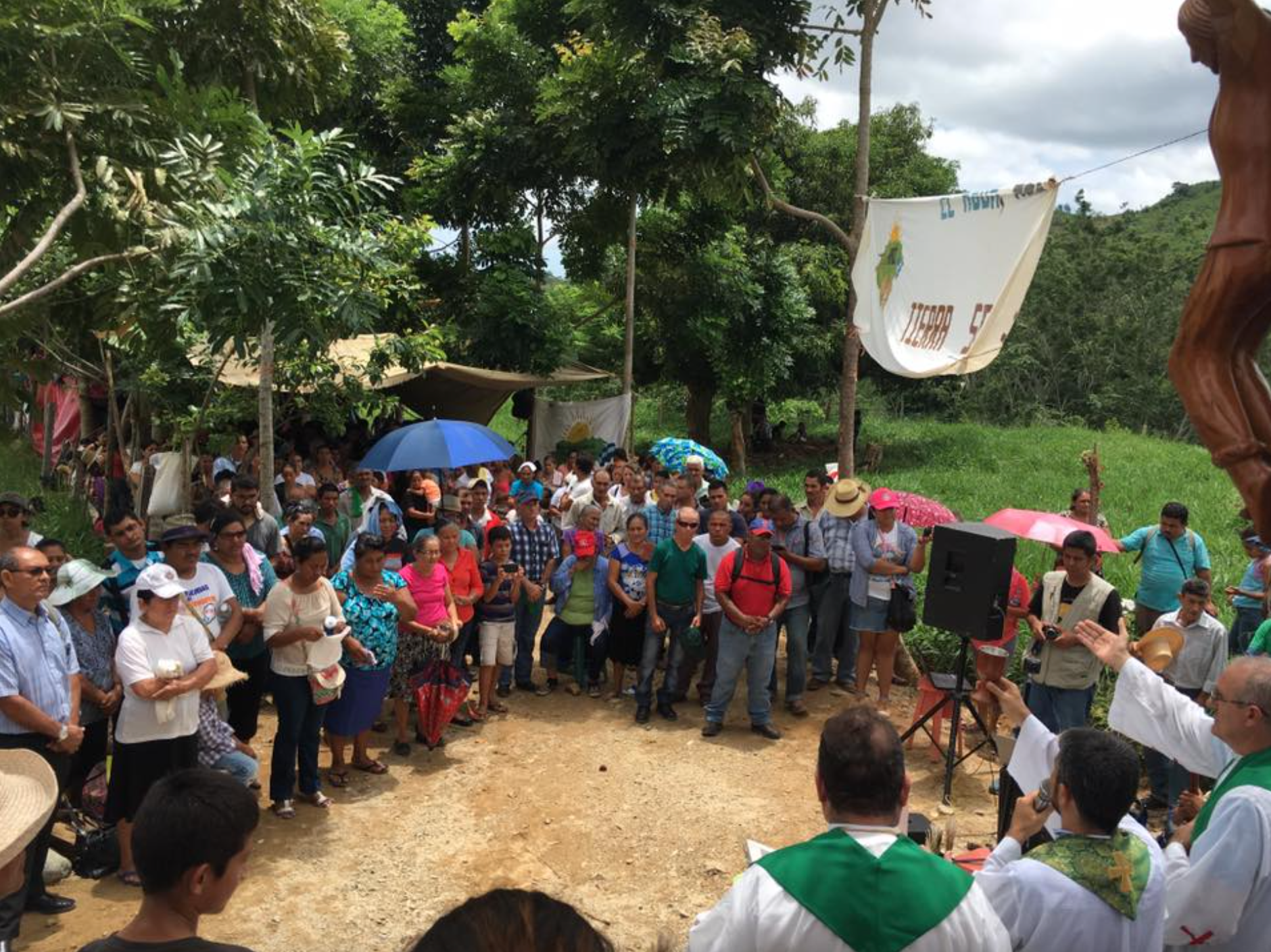
Priests celebrate Mass for protesters in the middle of a rural street in Honduras in 2017 in an effort to block the passage of equipment for a construction project that would be harmful to the environment. (source)

Latin is a beautiful and ancient language. Many consider it a sacred language as it is one of the three languages used for the inscription Pilate had affixed to the Cross declaring Jesus king of the Jews (the other two being Hebrew and Greek). Latin was also the language used for centuries for the Roman Rite Mass. Of course, few people, including Catholics, know Latin well (even the U.S. bishops who participated in Vatican II famously struggled with the Latin documents). 1969 was perhaps the most pivotal year for many decades for the Church, for the Mass was changed and the vernacular, which was now allowed, soon became the dominant language, in some cases entirely replacing Latin. The flood gates were opened for the vernacular.

For many Catholics around the world, this was the first time they had heard the Mass in their own tongue. Think about that—the first time hearing the prayers, the chants, the creed, and especially the readings in one’s own language. Not only does that mean they could understand what they were hearing, they now could, in a sense, own it. There was no longer a distance, a gulf between the laity and the Mass.The Mass became their own, not a foreign thing.

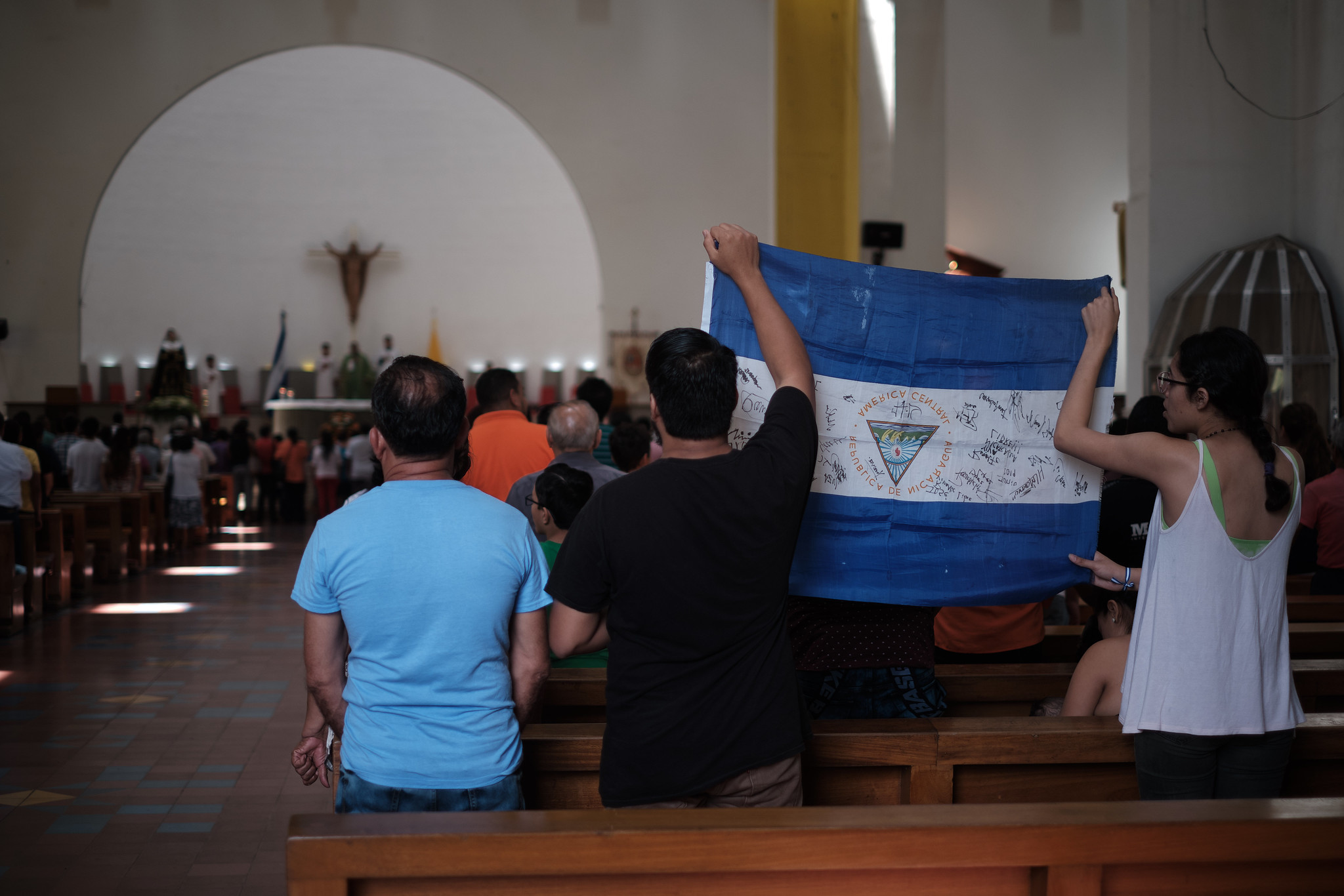
Citizens raising the Nicaraguan flag upside down as a way to protest at the Managua cathedral. Photo: Carlos Herrera (source)

There has been a consistent lament about the loss of Latin from some corners of the Church since 1969 but, for the most part, use of the vernacular was fully embraced and celebrated by most Catholics and remains their preference. This is true for both laity and priesthood. The distance shrinking between the two was a welcome change. Something surprising also happened. When Catholics began hearing the Gospels read in their own language—and remember many around the world cannot read or don’t have the means to afford a Bible, thus the Mass is where they heard the Gospels—they heard the radical nature, the explosive content of Holy Scripture no longer hidden behind a veil. They could also begin to judge the homilies as they compared the preaching to the words of the Gospels, and in some cases they began to see a disparity between the two. For some, that disparity shone a light on the dichotomy between rich and poor, oppressor and oppressed, and between the earthly kingdom and the Kingdom of God.

Roman Catholic pilgrims travel in a boat as they accompany the statue of Our Lady of Conception during an annual river procession and pilgrimage along the Caraparu River in Santa Izabel do Para, in the Amazon jungle December 8, 2012. The statue is transported by boat along this small Amazon tributary to a small chapel in the village of Cacoal, where a mass is held. Picture taken December 8, 2012. REUTERS/Paulo Santos (source)

We have all heard of people who once denigrated Christianity only to later change their views because they read the Bible for themselves rather than receiving it through the filter of organized religion. Consider this passage from The Gospel in Solentiname in which some poor folks (campesinos), who have been reading and discussing the Gospels, point out a fascinating fact:

[Ernesto Cardenal] said: “I’ve just had a visit from a young fellow from the north, from Estelí, from a poor town. He is a campesino like yourselves, and he was saying that there, to get together for their Masses first they have to ask permission from the police, and the police captain said that those gatherings were dangerous. The captain is right, for they gather to talk about the Gospels.” […]

TOÑO: “That didn’t use to happen here because the Masses were in Latin. The priest read these things but he read them in Latin, and he didn’t explain them to the people. So the Gospels didn’t bother the rich or the military.”1

Now that the Mass was celebrated in the vernacular the reality of the Gospel frightened the earthly rulers and the rich who oppressed the poor. All saw the possibility of revolution. Some were afraid and others found joy.

Christ made it clear that one of the fundamental enemies of the Gospel are the rich. The Church has spent nearly two thousand years trying to downplay and obfuscate that clear truth. But there’s only so much evasion one can get away with once the Gospels are read or heard as they are. Fortunately, there have been many in the Church who didn’t play along with the dominant ideologies. Some became well known—Saint Francis comes to mind, and so does Óscar Romero—but most are not, such as the many priests, religious, and even more laity killed in Latin America at the hands of US-backed governments because they defended the suffering poor against the oppressive rich. All were marked by a direct confrontation with the Gospel.

Vatican II and the Mass of Pope Saint Paul VI which flowed from the council took the bold step to get the Gospels more directly into the hands of the faithful.

In Latin America the vernacular Mass began to appear even earlier than 1969, such as the Misa típica panameña de San Miguelito (Panamanian Folk Mass of San Miguelito, 1966).2 Of course, when we refer to the Mass we refer not merely to the readings, homilies, and spoken prayers but also to the chants, songs, and creeds. Spanish language Masses began to be written and even recorded and spread via LPs. For example, the Misa Campesina Nicaragüense (“Nicaraguan Peasants’ Mass”) with words and music by Carlos Mejía Godoy, and incorporating liberation theology and Nicaraguan folk music. It was inspired by the faith community in Solentiname and was first celebrated in 1975. Here is the entrance hymn from the Misa Campesina Nicaragüense:

Notice the addition of liberation-themed images in the video above. The use of the vernacular encouraged the development of folk Masses and thus reached the hearts of the people more readily—those people included priests as well. The writing and recording of these Masses, in forms that could be easily sung by the faithful, and with the fundamental Gospel theme of liberation, contributed to the spread of liberation as a social and political force in Latin America and, not only that, linked that liberation to the saving work of Christ and the faithful life Christians are called to live. Liberation, as a political force, was seen as a call to the faithful, thus countering the over-spiritualization of the faith, of interpretations of Scripture, and even of worship itself.

Bernard Gordillo writes of the power of the new Mass settings in Latin America and how they helped change the culture and enriched the faith [emphasis added]:

The Catholic Church underwent profound renewal during the 1960s. The bishops of the Second Vatican Council elected to engage the modern world in response to its social and political challenges. Catholics saw the church acknowledge them and adapt to their realities. The once steadfast celebration of the liturgy, a bedrock of sacred rituals, now addressed local or regional identity. Latin and plainsong gave way to vernacular languages, musics, and performance practices. Taking inspiration from this wave of change, Catholic musicians, writers, and artists created diverse musical settings and textual translations of the liturgy, in addition to innovative visual art. These developments took on particular resonances in Latin America, where the bishops of CELAM sought to confront systemic poverty and injustice by affirming the experience of the poor, as well as the social and political processes that would give rise to a theology of liberation. Singing was an abiding collective expression wherever concientización took place, not as a secondary feature, but as part and parcel of a ritual whole, forming a circular relationship between concientización, prayer, and song. This uniquely Latin American postconciliar ritual (concientización-prayer- song) was the fundamental building block of the liberation method for the Familia de Dios movement. The vernacular masses that emerged from San Miguelito, San Pablo Apóstol, and Solentiname musically embodied the community in reflection of its collective identity. They accompanied the transition of liberation practices from internal community building to outward social and political engagement, as enacted by postconciliar priests, religious, and lay people. If the origins of liberation theology lie in the experiences and critical awakening of the poor, they also lie in their expressions— spoken and sung. The Familia de Dios masses were thus musical emblems of this process within their respective popular church communities. They were liberation masses that sang of faith, hope, and struggle in a post conciliar world.3

Consider, that after centuries of Christendom and the Church, in collusion with governments and ruling powers, seeking worldly power, after centuries of the Church protecting itself from the challenges and judgements of the Gospel and the often frightening workings of the Holy Spirit, a council, a new Mass, and a group of Latin American bishops took the risk and sought to allow worship that might address local and regional identity, getting the Gospel into the vernacular, and promoting the radical message of liberation. No wonder Liberation Theology took root in Latin America.

The Gospel is like a hidden treasure because nobody used to understand it, right? They used to read it to us in Latin, and they preached on it in a way that wasn’t even close to the true Gospel. And now we’re discovering it, as you might say: we’re finding a treasure.4


1Ernesto Cardenal, The Gospel in Solentiname, trans. Donald D. Walsh (Maryknoll, NY: Orbis Books, 2010), 122-123.

2Note: I have no personal history or real connection with Latin American histories or cultures. I am merely at the beginning of my own journey of discovery arising from my interest in Liberation Theology. My own background includes being a descendent of mixed European origins and having benefited from an American society whose economic opportunities, of which I have enjoyed somewhat, are connected to the plundering of Latin America.

3Bernard J. Gordillo, “Vatican II, Liberation Theology, and Vernacular Masses for the Family of God in Central America,” EliScholar, 2021, https://elischolar.library.yale.edu/yjmr/vol7/iss1/3/, 81.

4Ernesto Cardenal, The Gospel in Solentiname, trans. Donald D. Walsh (Maryknoll, NY: Orbis Books, 2010), 237.

Leaning Left Towards Christ

I asked what they thought Herod would have said if he had known that a woman of the people had sung that God had pulled down the mighty and raised up the humble, filled the hungry with good things and left the rich with nothing.

NATALIA laughed and said: “He’d say she was crazy.”

ROSITA: “That she was a communist.”

LAUREANO: “The point isn’t that they would just say the Virgin was a communist. She was a communist.”

“And what would they say in Nicaragua if they heard what we’re saying here in Solentiname?”

Several voices: “That we’re communists.” *

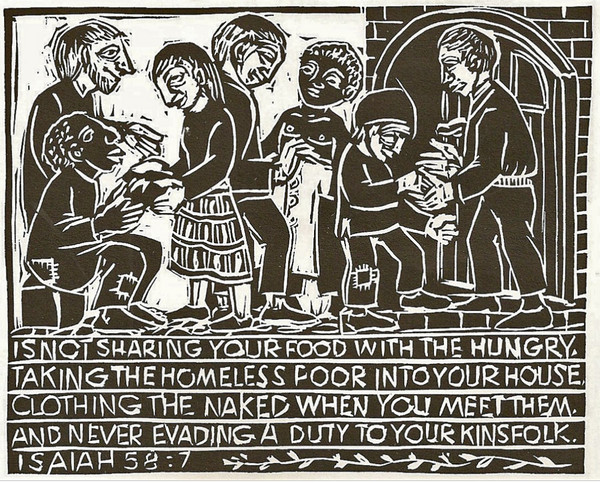
Isaiah 58:7, Woodblock print by Helen Siegl (1924-2009)

Maybe you or someone you know has followed a path analogous to mine.

On January 16, 1991—a Wednesday, if I remember—I walked across the university campus to my cinema discussion group. I was a graduate student pursuing my first Masters degree. When I arrived the classroom was nearly empty and dim. A boombox sat on a table airing an NPR radio newscast. The bombing campaign had just begun for what was officially called Operation Desert Storm and which would eventually be called the First Gulf War. Put simply, my class was spontaneously cancelled because war had started. The few students that showed up milled around gloomily and then left one by one. It was the first time in my life I could recall war having a direct impact on me, and the first time I experienced people emotionally distraught from such an event.

The actual impact to me was objectively almost nothing—class was cancelled—but I was quietly shocked and didn’t know what to do with my feelings. My feelings, however, were not about the war itself but about not feeling what the others were feeling. The other students were upset and I couldn’t understand why. I knew something was wrong with me, and I knew this because I claimed to follow Christ. Should not I too be weeping?

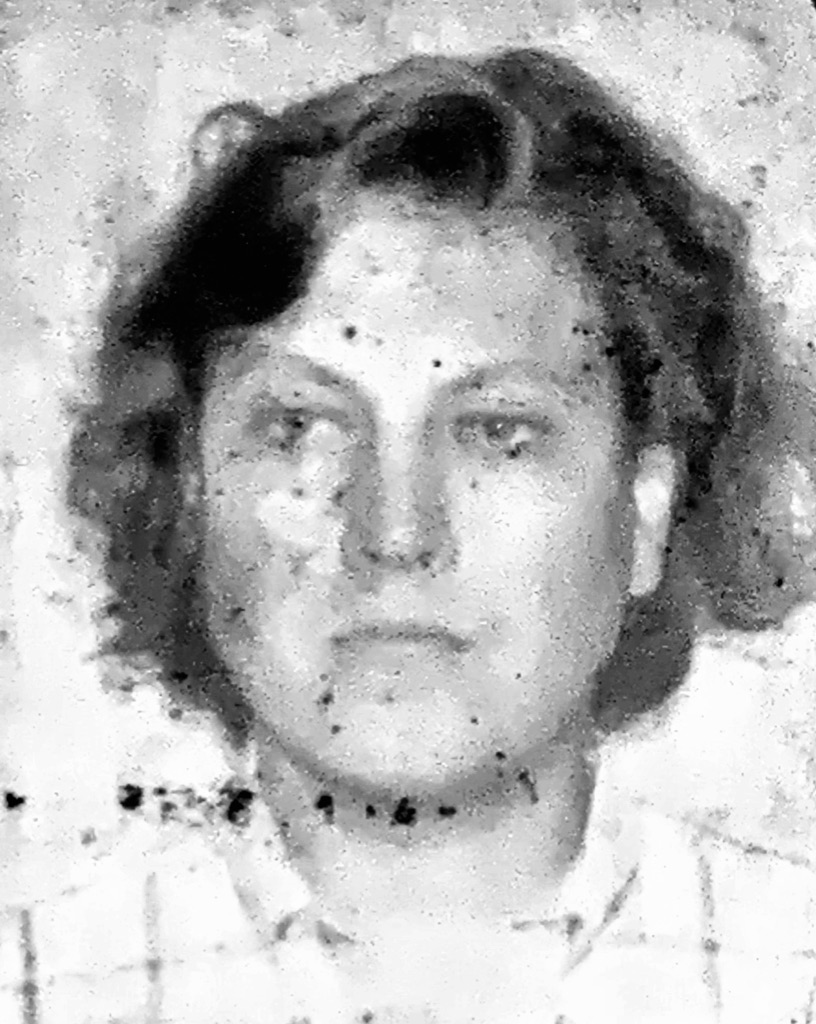
My student card photo, circa 1990

I realized I knew almost nothing about politics, or contemporary world events or having (let alone airing) opinions about any of that. I knew nothing about how my thinking about being an American was largely formed by others intent on shaping the world according to their image. My family never talked about politics. In fact, I can’t remember ever having a truly serious conversation about anything like this with my family. We just didn’t go there. I had a feeling I was somehow very late to the discussion and everyone else seemed to know something I didn’t. I wasn’t prepared to learn much from this event but that feeling stuck with me. I also wondered why no one in my Christian social group had a similarly distraught reaction to the war as did my classmates. All the Christians I knew either were excited about the war or didn’t care. I wondered if something was deeply wrong with the Christianity I inhabited. And then I forgot about it.

I forgot about it but I can trace the beginning of my slow conscientization, coming to realize I had uncritically and happily accepted the dominant paradigm of the ruling class.

Ironically, in grad school (and even as an undergraduate) I was being introduced to Feminism and Critical Theory, to Structuralism, Post-Structuralism, Semiotics, and Deconstructionism, as well as to various Marxist concepts of power structures and superstructures, and of the manipulation of media by the ruling class. I read the Frankfurt School authors, also Jakobson, Gramsci, Parenti, Chomsky, Foucault, Derrida, Barthes, Ecco, Berger, and others. And I loved it. I still do, reading them from time to time. In a sense my head and my heart, both formed by my love for Christ and the Scriptures, were becoming informed by (pulled towards) a Marxist/Leftist/Socialist way of thinking, but I didn’t really grasp that was happening at the time. I didn’t even pick up on that fact that most of those authors were either Marxists or were writing in response to Marxism. I can just kick myself now for wasting that opportunity.

I was also a “good Christian boy” raised as a Baptist who voted Republican because that’s what my parents and all their Christian friends did. I was fundamentally clueless about politics or the “big picture.” Rather, I was enjoying being in the weeds of film and art theory, not realizing many of its political orientations. My focus was aesthetics not politics. Real world implications did tug at me but subconsciously knew (trained to “know”) the radicality of Leftist thinking and I retreated. I had been formed to believe there could never be any sympathies between the Christianity I knew (presented in culturally, nationally, and ethnically circumscribed forms as timeless and natural Truth) and Socialism (always presented as gravely evil and stupid).

Much of my formation came in the form of everyday conversations and actions from those in my social group. One’s beliefs are often carried along by the pervasive but subtle subtexts of conversations, social groups, unspoken presuppositions, and cultural aesthetics. I was careful not to take a misstep. Belonging and being accepted is a powerful drug.

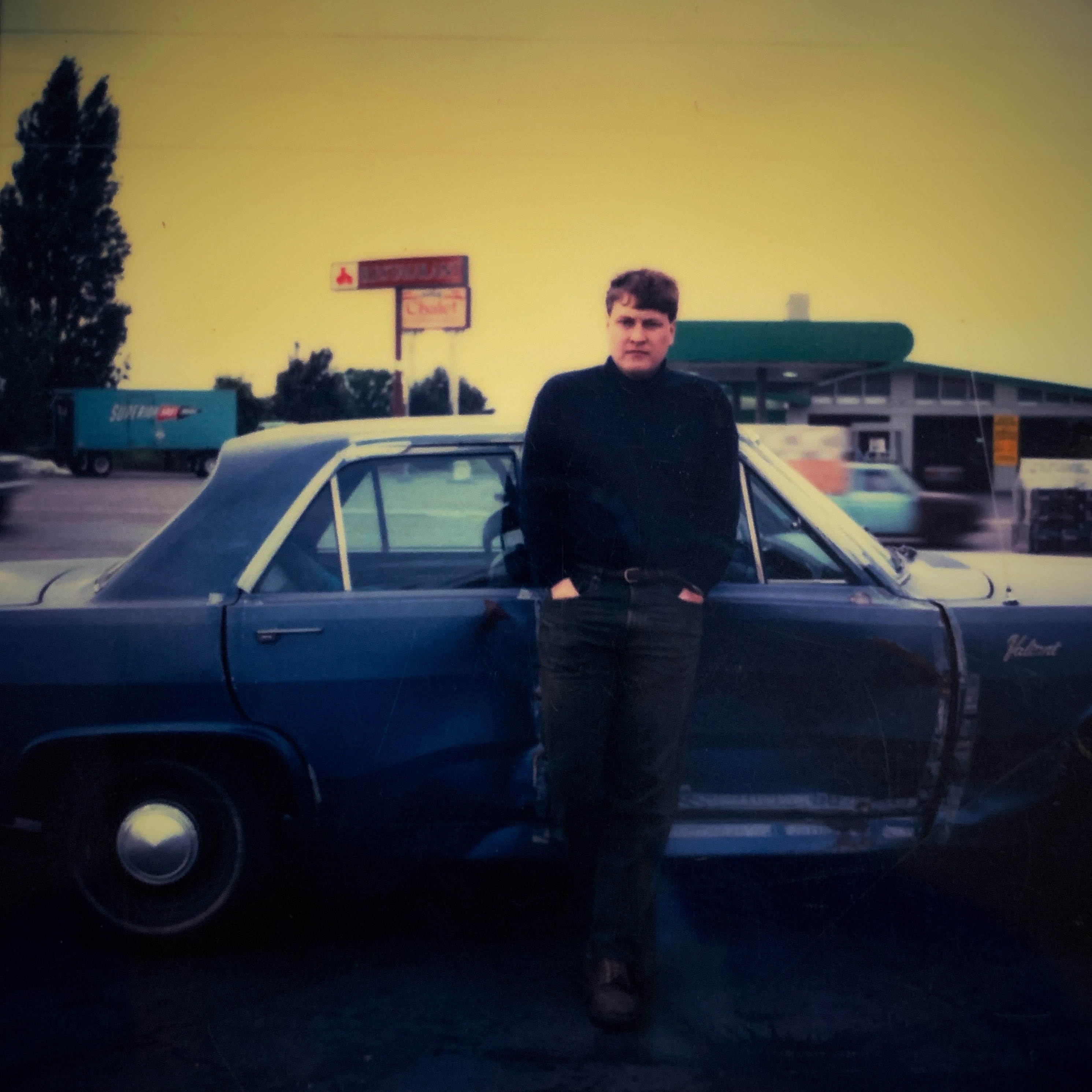
Me in 1992, Portland, OR, on the way to see filmmaker Jon Jost at the NW Film Center where he showed a film and lectured. The car is a late 60s Ford Valiant with the passenger doors crushed in. We called it the batmobile. I was writing my MA thesis on Jost and independent filmmaking.

A decade or so later I followed the Iraq War (the Second Gulf War) with far more curiosity. My initial interests in both the first and second gulf wars arose from a fascination with how powerful the United States military is and how was the rest of the world going to acquiesce. Military might in action is powerful stuff—shock and awe. It was exciting and excellently choreographed theater viewed from my television and computer screens. But soon my personal views began to change. The more I learned the more I became deeply skeptical of the narrative. I could no longer accept U.S. politics. I did not trust or respect our leaders who were clearly lying, even the “good ones.” I searched out alternative news sources, different perspectives, and a few voices I had listened to before. I learned of various anti-war positions and Leftist critiques, and I discovered for myself an entire area of Christianity I didn’t know existed. In short, I learned about anti-war and pacifist Christianity and Liberation Theology. I learned about American Christians who sharply criticized the pro-war, flag waving, God bless America version of Christianity. And it all rang true for me. It took a while, though. This is the short version, the reality was a complex, back-and-forth process. A lot of people have taken this journey I’ve learned.

I left the Republican Party. I came to believe I could no longer continue as a member of that party and be a faithful follower of Jesus Christ. But I could not see how I could be a member of the Democratic Party. So I became an Independent. I wanted no requirements placed upon me to acquiesce to any party platform. This seemed like the right choice both in terms of my faith and for my own intellectual integrity. I still hold these views today (though at times I toy with the idea of joining an alternative party).

Eventually, and through a lot of twists and turns, I became a Catholic, in part, because the Catholic Church is a “big tent.” One finds a multitude of perspectives and proclivities in the Church. I wanted to be where I could continue to explore my ideas and thoughts on politics, economics, sociology, and more. I was attracted to Catholic Social Teaching, to people like Dorothy Day, and to papal encyclicals criticizing capitalism all within the boundaries of an orthodoxy going back to apostles. I also love how truly global the Catholic Church is compared to the myopic, self-absorbed, geographically limited, socially stunted, and often nationalistically American cul-de-sac Christianity within which I was struggling. I also wanted a Church that would allow me to explore Socialism, or any other politics, from within a Christian framework, encouraging me in my freedom to do so, but also providing some guardrails and cautions along the way.

I suppose this post is one where I get myself in trouble (with myself mostly) for finally admitting something I’ve wanted to admit for twenty-plus years in one way or another.

I am still figuring things out for myself, still on this journey. But when I look at the social and economic options available in the world, when I look at the example of the early Church, when I take seriously the commandments of Christ, what I find is that Liberation Theology strikes me as the most Gospel-oriented, most Christ-centered socially, most humanitarian economic and political position to take. And with Liberation Theology one gets a rich interaction with Marxist ideas and Socialist praxis, both of which are merely subservient tools of the ultimate Truth of Christ who is the standard. If we insist on using the very limited terms of Right and Left, then I would say the Gospel of Christ, arising from and rooted in the very person of Christ Himself and in the ultimate goal of divinization, leans politically, economically, and socially more Left than Right, more to the future than the past, more to love of neighbor than protection of the self. **

Fiddler on the roof? Living in the PNW, singing ♫ If I was a rich man…♫

Responding to real-world situations of colonialism, capitalism, authoritarian violence, exploitation, and foreign influence in Latin America, Liberation Theology sought to address these evils from a truly Catholic perspective, rooted deeply in Christ, rooted deeply in Scripture, rooted deeply in Vatican II, ever seeking the examples of those who have struggled before, and helped by cautiously leveraging the tools of Marxist critique and communist praxis. [Queue the bourgeois American eye roll.] Ironically, by focusing on the unique historical situation of Latin America, Liberation Theology addresses the universal situation of humanity—bondage and suffering across the globe because of sin, the poor besieged by the rich, labor unfairly exploited by capital, lack of democracy, propaganda promoting ideologies of oppression, social and legal systems in place to ensure the poor and weak are perennially oppressed and their own human flourishing suppressed, and finally, Christian/Catholic pastors turning their backs to the poor and preaching in support of the ruling class and a bourgeois church.

Beginning with Christ, Liberation Theology seeks to fashion a Gospel response to the evils of the world, and it did so, in part, by finding truth in the fundamental insights of scientific Marxism (not unlike Thomas Aquinas finding truth in Aristotle). But the Church hierarchy has, since Constantine, sided with the ruling class and with capital, thus the work of Liberation Theology tends to fall on the shoulders of a few theologians, priests, and ordinary Catholic laity willing to take the risk and put in the labor out of love and necessity. Carrying the gospel and Catholic social teaching to their proper and logic ends, Liberation Theologians found connections with the goals of many Leftists. Consequently, and employing various tactics, the Church denounced Liberation Theology. But I find Liberation Theology both true and refreshing. I am convinced by its understanding of the gospel, and I am moved deeply by the martyrdom of many faithful Catholics, including laity, bishops, priests, and nuns, at the hands of evil men merely because they stood for the poor against the rich as Christ commands us. I am disgusted by the efforts of Catholic prelates to squash Liberation Theology, denouncing saints such as Oscar Romero (but now they can’t because he’s finally and properly declared a saint) and supporting evil structures of power. The church is peopled with many who hate Christ in the name of Christendom and national politics; this even includes bishops. Sadly, much of this vilification is as much about race as it is about class.

So here I am, a devout Christian, a white middle-aged American working class man with inherited bourgeois values, a husband and father, a happy convert to the Catholic Church, leaning fairly hard to the Left and thinking maybe I should lean harder, and finally realizing that much of Christendom probably was and still is largely a human construct designed to “protect” the Church and the ruling classes from the convicting nature of the Gospel, from the internal revolutions of the Holy Spirit, and from the burdensome cries of the poor. Will I be marching in the streets waving a red flag? Will I be joining DSA, wearing a Karl Marx t-shirt, calling my friends comrades? Not likely, but I do want to be more sensitive to the liberating and this-world message of the Gospel. I want to be a follower of Christ.

A crazy journey I guess. I hope yours is going well. God be with you.


* Quoted from The Gospel in Solentiname by Ernesto Cardenal from the chapter on the Magnificat. This book is a collection of discussions of Gospel passages that happened in the artist/peasant community on the big island of Solentiname in Nicaragua between 1976 and 1982.
Cardenal, Ernesto. Gospel in Solentiname. REV One-Vol ed., ORBIS, 2010.

** I hope the reader understands that Right and Left in the US does not map to Republican and Democrat. Rather, Democrat and Republican are center-Right and further Right. The Democrats are arguably the primary nemesis of the Left.

Catholic Cultus / Catholic Culture: Thoughts on Building a Catholic Church

I think it is fair to say that I read my way into traditional orthodox Catholicism but then, to my surprise and chagrin, I ended up somewhat disappointed in modernist Catholicism. How can this be you ask? I am a convert to the Catholic Church. I came from a very non-Catholic “version” of Christianity (anti-Catholic really), and I felt nervous going to Mass on my own (and I knew no Catholics at all to hold my hand and guide me). So I didn’t go the Mass. Rather, over a period of several years I read my way closer and closer to entering the Church. I read books, blogs, and articles. I also listened to podcasts and interviews. Again and again the theological answers given to my questions made sense. I also heard many attractive things about the Church.

procession
Tradition is not a fad (source)

I heard of the magnificent history or the Church, and of the glories of Catholic art and architecture. I knew something about that already because I had been an art history major in college, and in those courses I studied some of the great paintings and cathedrals of Europe. I heard of the glories of Catholic music. I heard of the Church’s amazing intellectual history. I read more amazing histories of the Church, its battles, its saints, its universities and how it created what we today call science and modern medicine, and I was amazed at all that it has done in the world.

I also studied its theology, comparing it to the Protestant theology in which I was raised. I grew to love the doctrine of the Real Presence. I learned about the sacraments, the role of priests, the value of Tradition, and more. Again and again I was overwhelmed at the riches that had been kept from me by my ignorant Protestant culture, and at just how ignorant I myself had been. I came to see the Catholic Church had better answers to my questions, and a better grasp of Scripture. I also came to see that the Catholic view of man corresponded to both scripture and my experience than what had previously been articulated to me. I began to shift towards a sacramental view of reality. I began to long deeply for the Eucharist. A song was singing to my soul, calling me to the Church. I knew the Church was the home I longed for.

tourisme_mont_saint_michel_aeroport_dinard_2
Mont Saint Michel. We still look at this with awe. And rightly so.

In my mind had growing visions of cathedrals and richly decorated churches. In my mind I heard chant and I smelled incense. I saw old manuscripts and ornate vestments. I sensed history, depth, and a profound connectedness to a cloud of witnesses. This was not a longing for merely a different style or for some medieval live action role playing experience. I longed for an antidote to the ravages of modernity and the false, modernist view of man. And the Church seemed to offer just that. Noted apologists for the Church would tell me to look at the riches of the Church, and I did.

high altar
Why can’t all churches have this kind of beauty? This is, I believe, a legitimate question and deserves a reasonable, thoughtful, and theologically sound answer.

But I also heard stories of clown Masses, and terrible music, including playing bongos in Church. I heard about the indifference and even anger of some Catholics towards their rich heritage. I heard about the focus of the new Mass being on the priest rather than on Christ. I did not really know what “new Mass” meant, but I thought it couldn’t possibly be so bad. I read that some Catholics didn’t like to hold hands during the Our Father, or didn’t like to receive the Eucharist in their hands while standing, or even refused to sing some of hymns because those hymns were terrible musically and, gasp, theologically bankrupt or even heretical. How could this be I thought? I didn’t know a thing.

All of this I heard about and I knew nothing of the debates about Vatican II. I knew nothing of the traditionalists and the radtrads. I knew nothing of Marian apparitions and her prophecies. I just didn’t know much at all. I really had just fallen off the turnip truck in front of the Catholic Church and thought this is the place.

Blessed-Virgin-Mary-at-St.-Margaret-Mary-Catholic-Church-Wichita-Kansas
Kitsch in Wichita (source)

Then I started going to Mass. And there, at my first Mass, was literally a bongo player amongst the guitarists and bassist. And everyone held hands during the Our Father. Parishioners walked all the way across the nave to hug people during the Peace of Christ (sometimes it seemed this was the moment that brought them to Mass). And the music was terrible, terrible, terrible. And the neighborhood Novus Ordo church building was anything but beautiful and glorious. Everything was so ho-hum, so bourgeois and American, so suburban, so blah. And I knew it wasn’t just a question of money. Like when we see a person who decides to buy ugly clothing for the same price as beautiful clothing because they have bad taste, what I saw seemed a reflection of something wrong at the heart of the Church and culture.

And then I looked around some more. I came to realize that all those Catholic glories of art, architecture, music, and all that culture building of Christendom, and all the influence in the sciences and education, were essentially historical realities of past ages and no longer contemporary activities of the Church. The Church had become a poor shadow of its past.

And yet I still loved it. Once I came into the Church I fell even more in love with Catholicism. I love the Eucharist. I love the Real Presence. Sunday Mass is the highlight of my week. But it was still hard. Hard for me and hard to drag my family along to the sappy Mass in the ugly church with of lousy music. I sometimes felt embarrassed and self-conscious about having them with me and knowing I had been promoting the Catholic Church for several years and now abject mediocrity is what they were getting. (Eventually they all entered the Church as well, thanks be to God.)

So I fell back on two things. First, I still got the Eucharist. That, I have to say, has been my sustenance. Second, I thought a lot about a recommendation from J. R. R. Tolkien. I took solace in the reality that most of us live humdrum lives anyway, that Mass is about Christ and the Eucharist, that we shouldn’t get caught up too much in seeking some kind of perfectly celebrated Mass with dynamic homilies and gorgeous music, and that I just needed to do my best to trust in the Church. We also began attending a more conservative Catholic parish (with more traditionally minded priests) that, while still Novus Ordo, nonetheless sought greater reverence in worship — and has a much more traditionally beautiful building, one that is inescapably a church.

IMG_0606

I have also met a number of Catholics who have had similar experiences as I have, and are now working towards changing the Church by incrementally steering it back to the traditions of centuries past. This encourages me.

But, the truth remains: Modern (modernist) Catholic culture is radically devoid of almost all of its great riches and depth that, perhaps, were taken for granted in those past centuries. What greatness is still there is like a dwindling bank account of an inheritance assumed to be inexhaustible. But this modernist church’s art, its modernist church buildings, its modernist worship, even its prayers, are poor copies, and at times outright repudiations, of past riches. Modernist Catholicism does not create a true Catholic culture. In fact, it tends to create a somewhat bland culture that does not propagate itself very well. It is only by reaching into the past and bringing forward those riches that we have any at all with us today. This is why, I believe, Traditional Latin Mass parishes (SSPX, FSSP, especially those with no Novus Ordo option available) tend to create richer, more integrated and more complete local social cultures than the modern Novus Ordo parishes. Or so I’ve heard, I have yet to witness that first hand. But I wrote something about it here, based on what I saw in the video of a Traditional Latin Mass in Paris. And I’ve heard others say it is true. This is what I hope. Show me that I am wrong.

When I say integrated and complete I mean more than social programs and a “happening” Sunday evening “youth” Mass. I mean an alternative way of life that sees the family as the domestic church and the fundamental unit of society, the parish as an actual community made of and for believers, the Mass as the central activity of that community, and an unabashedly Catholic aesthetic permeating every aspect of the parishioners’ lives that is born out of a shared way of worshiping rooted in deeply orthodox Catholicism expressed in timeless praxis. I also mean a recognition that Catholicism and the world are inherently incompatible, and thus the culture of the parish must act in light of that truth, forming good Catholics, supporting the struggle of parishioners to be in the world but not of it, and creating meaningful alternatives to the allures and seductions of the secular society that pervades nearly every aspect of our lives.

But all too often we instead get namby pamby bishops talking psychobabble, “listening” rather than preaching the Truth with which they have been entrusted, swooning over an emotions-based modernist faith and the possibilities of a youth-led Church, and making the social-crisis-du-jour their primary concern. Far too often the hierarchy seems to live in a self-congratulatory bubble while showing almost no regard, let alone recognition, of the profound destruction the Church has experienced in the past 50 years.

awful vestments
Aesthetically nauseating vestments for the 2018 World Meeting of Families. If you want bishops to look like the silly gumdrops so many have chosen to be, have them wear these.

Perhaps I’m dreaming. But here’s a basic fact: Adults who come into the Church, whether from Protestantism or something else, are often looking for a way of living that is distinctly (historically, traditionally) Catholic, and instead they all too often find something rather thin and bland; aesthetically more like a half-hearted 1970’s experiment to which the person in charge hasn’t had the courage (or balls) to say “times up;” and which is often more an expression of a culturally bourgeoise Americanism (or western Europeanism) than authentic Catholicism. And what’s perhaps most disheartening is that so many Catholics don’t see this. But I think more are beginning to. I hope so. I pray every day we all see it more clearly.

Descent_of_the_Modernists,_E._J._Pace,_Christian_Cartoons,_1922
You’ve seen this image before. It seems so simple and obvious, but is it really? Modernism is more than a logical set of steps, it is now our culture, and culture is more powerful and slippery than we think. Modernism is the leaven of our age, and our Church.

The simple truth is we are going to have to create the culture we want, by God’s grace. It is going to take effort, and some hard choices, and tenacity. It’s going to be a battle just like it was for the early Church. We are going to have to root out modernist ideas and presuppositions. This will be harder than we think. In many way modernism is essentially invisible to us. And if we want a Catholic culture with depth and longevity and substance beyond our own whims, we are going to have to get at it with a vengeance. But also with joy. We must always keep before us that one does not start building a culture by trying to build a culture. Rather, we begin with what (or who) we love, and with how we worship. Culture is the product of cultus, and cultus is not merely a Sunday thing, not merely a TLM thing, although that’s huge for many reasons. It’s a totality that encompasses our whole life in one way or another. Let us then turn our hearts and minds towards God and worship Him as we ought. Let us pray in the manner of the historical and orthodox Church. Let’s live as Catholics are called to live.

So, let’s get to work. Consider this, and this, and this, and this, and this, and this, and this. And remember, the Traditional Latin Mass is not great so much because it is traditional, but because it is timeless. Maybe we should call it the Timeless Latin Mass. Also, I hear often of bishops not supporting the TLM, and even trying to shut it down in many parishes. But many bishops are vain and may succumb to increasing pressure if enough Catholics make enough noise. In my parish some parishioners organized a 40-hour adoration event and got good support in our community and from our priests. We also have a great bishop who gets it. There are many things to do other than strictly the TLM. Bit by bit, inch by inch we can take back the precious ground that had been tilled and planted in centuries past.

Of course it is God who creates the culture ultimately. We just do the best be can in fear and trembling, and He does the real work. We, the Church, are His handiwork, and He honors those who honor Him.

Saint Francis, pray for us that we might rebuild the Church.

Saint Francis
Saint Francis of Assisi by Frank Cadogan Cowper (1877-1958)

The way of Nature, the way of Grace

Grace is a gift from God. And so is Nature.

TOL 0

TOL 1

TOL 2

TOL 3

At the beginning of Terrence Malick’s masterpiece, THE TREE OF LIFE, we hear Mrs. Obrien’s voice speaking these words:

The nuns taught us there are two ways through life … the way of Nature… and the way of Grace. You have to choose which one you’ll follow. Grace doesn’t try to please itself. Accepts being slighted, forgotten, disliked. Accepts insults and injuries. Nature only wants to please itself. Get others to please it too. Likes to lord it over them. To have its own way. It finds reasons to be unhappy… when all the world is shining around it… when love is smiling through all things. They taught us that no one who loves the way of grace… ever comes to a bad end. I will be true to you. Whatever comes.

These words come over images of a young girl (images above), the young Mrs. Obrien, as she interacts with Nature, and also with her father. We don’t really see her face much, we don’t see her father except for his hand and shoulder. Instead we see the world as the girl sees it, big, wonderful, full of life – and she is safe in the arms of her father.

Naturally these words set up a kind of interpretive lens through which we might analyse the film. As we follow the story we can’t help but think in terms of nature and grace. In these words we find a perspective of life held on to by Mrs. Obrien, a perspective that she learned as a child, taught to her by nuns presumably at a parochial school. Perhaps Malick is hinting at the kind of spiritual education common to Catholic schools seventy five plus years ago, and maybe he is commenting on that teaching. What is interesting, however, is how the film seemingly undercuts this philosophy. Although one is tempted to say Mrs. Obrien (in her softness and beauty) is grace and Mr. Obrien (in his hardness and anger) is nature, it is amazing how much nature permeates the film in the most loving and awesome ways. Even the film’s title, The Tree of Life, speaks of nature in connection with life. We might be tempted to see grace as the way to life, and yet we are continually being drawn back to images of nature, and in particular the tree the boys climb in the film, and by which the vision of their mother dancing in the air appears.

An interesting question is who is the protagonist in this film. Most are likely to see Jack as the protagonist. But is he? Might not Mrs. Obrien be the protagonist. If the film is a meditation on the book of Job (it opens with the book’s most famous verse), then we see both Jack’s and his mothers struggles in that light. When a boy dies in the story, a young Jack asks of God, “Where were You? You let a boy die. You let anything happen. Why should I be good when You aren’t?” This is a big moment, and a huge question for Jack. But similarly, after Jack’s brother R.L. dies (which we do not see, but only hear that he died at age 19), Mrs. Obrien cries out to God, “Lord, Why? Where were you? Did you know what happened? Do you care?” It is arguable that Mrs. Obrien’s struggle and final acceptance is the greater arc. If so, then it is possible that the film is about her coming to terms with the ideas taught to her when she was a kid, held dear for many years, and only later in life revealed to her (perhaps because of her willingness to see) as being false, or at least not entirely true.

Though my inclinations are that Jack is protagonist #1, it could be argued that the story, with all it sweeping and ephemeral qualities, is entirely in Jack’s head, being essentially his memory. If that’s the case, then it could be argued that Mrs. Obrien is the protagonist in the story going on in Jack’s head, or perhaps a co-protagonist.

Other interesting questions include which son is Mrs. Obrien giving to God at the end of the film? We assume it must be R.L., but could it be Jack? And who are the women with her at the end? We might think they are angels, but the one on the right is the girl Mrs. Obrien we saw at the film’s beginning. Might she represent the previous and less mature understanding of nature and grace? She is, after all, representing a more innocent time before adulthood, child rearing, marriage struggles, and the death of a child. And is the other woman an angel, or might she be the personification of grace itself?

TOL 4

I am inclined to think the trouble many people have with watching Terrence Malick’s films, especially the later ones, is that we are a culture that no longer reads poetry. Reading poetry alters the mind to think in different ways. Poetry is the highest form of writing, and thus taps into parts of us that other writing does not, or not as well. Secondly, we do not read the classics enough, especially theology. A good dose of St. Augustine wouldn’t be bad. I’ll leave it at that.

Finally, an interesting connection is that Mrs. Obrien’s verbiage is very similar to that of Chapter 91 of The Imitation of Christ by Thomas à Kempis, quoted here in it entirety:

On the Contrary Workings of Nature and Grace (found here)

My son, carefully observe the impulses of nature and grace, for these are opposed one to another, and work in so subtle a manner that even a spiritual, holy and enlightened man can hardly distinguish them. All men do in fact desire what is good, and in what they say and do pretend to some kind of goodness, so that many are deceived by their appearance of virtue.

Nature is crafty, and seduces many, snaring and deceiving them, and always works for her own ends. But Grace moves in simplicity, avoiding every appearance of evil. She makes no attempt to deceive, and does all things purely for love of God, in whom she rests as her final goal.

Nature is unwilling to be mortified, checked or overcome, obedient or willingly subject. Grace mortifies herself, resists sensuality, submits to control, seeks to be overcome. She does not aim at enjoying her own liberty, but loves to be under discipline ; and does not wish to lord it over anyone. Rather does she desire to live, abide and exist always under God’s rule, and for His sake she is ever ready to submit it to all men.(I Pt.2:13)

Nature works for her own interest, and estimates what profit she may derive from others. Grace does not consider what may be useful or convenient to herself, but only what may be to the good of many.(I Cor.10:33) Nature is eager to receive honour and reward : Grace faithfully ascribes all honour and glory to God .(Ps 26:2:96:7) Nature fears shame and contempt: Grace is glad to suffer reproach for the Name of Jesus.(Act 5:41) Nature loves ease and rest for the body ; Grace cannot be idle, but welcomes work cheerfully.

Nature loves to enjoy rare and beautiful things, and hates the cheap and clumsy. Grace takes pleasure in simple and humble things, neither despising the rough, nor refusing to wear the old and ragged. Nature pays regard to temporal affairs, takes pleasure in this world’s wealth, grieves at any loss, and is angered by a slighting remark. But Grace pays attention to things eternal, and is not attached to the temporal. The loss of goods fails to move her, or hard words to anger her, for she lays up her treasure and joy in Heaven where none of it can be lost(Matt.6:20)

Nature is greedy, and grasps more readily than she gives, loving to retain things for her personal use. But Grace is kind and generous, shuns private interest, is contented with little, and esteems it more blest to give than to receive.(Acts 20:35) Nature inclines a man towards creatures – to the body, tovanities, to restlessness. But Grace draws a man towards God and virtue. Renouncing creatures, she flees the world, loathes the lusts of the flesh, limits her wanderings, and shuns public appearances. Nature is eager to enjoy any outward comfort that will gratify the senses. Grace seeks comfort in God alone, and delights in the Sovereign Good above all visible things.

Nature does everything for her own gain and interest; she does nothing without fee, hoping either to obtain some equal or greater return for her services, or else praise and favour. But Grace seeks no worldly return, and asks for no reward, but God alone. She desires no more of the necessaries of life than will serve her to obtain the things of eternity.

Nature takes pleasure in a host of friends and relations; she boasts of noble rank and high birth; makes herself agreeable to the powerful, flatters the rich, and acclaims those who are like herself. But Grace loves even her enemies,(Matt.5:44; Luke 6:27) takes no pride in the number of her friends, and thinks little of high birth unless it be allied to the greater virtue. She favours the poor rather than the rich, and has more in common with the honourable than with the powerful. She takes pleasure in an honest man, not in a deceiver ; she constantly encourages good men to labour earnestly for the better gifts, (I.Cor.12:31) and by means of these virtues to become like the Son of God.

Nature is quick to complain of want and hardship ; but Grace bears poverty with courage. Nature, struggling and striving on her own behalf, turns everything to her own interest: but Grace refers all things to God, from whom they come. She attributes no good to herself; she is not arrogant and presumptuous. She does not argue and exalt her own opinions before others, but submits all her powers of mind and perception to the eternal wisdom and judgement of God. Nature is curious to know secrets and to hear news; she loves to be seen in public, and to enjoy sensations. She desires recognition, and to do such things as win praise and admiration. But Grace does not care for news or novelties, because all these things spring from the age-old corruption of man, for there is nothing new or lasting in this world.

Grace therefore teaches us how the senses are to be disciplined and vain complacency avoided ; how anything likely to excite praise and admiration should be humbly concealed ; and how in all things and in all knowledge some useful fruit should be sought, together with the praise and honour of God. She wants no praise for herself or her doings, but desires that God may be blessed in His gifts, who out of pure love bestows all things.

Grace is a supernatural light, and the especial gift of God,( Eph. 2:8) the seal of His chosen and the pledge of salvation,(Eph.1:14) which raises man from earthly things to love the heavenly, and from worldly makes him spiritual. The more, therefore, that Nature is controlled and overcome, the richer is the grace bestowed, while man is daily renewed by fresh visitations after the likeness of God .(Col. 3:10)

An Explanation of the Real Presence of Christ in the Eucharist in 11 minutes

The following is a great explanation on the Real Presence of Christ in the Eucharist by Fr. Robert Barron:

Fr. Barron refers to the favorite scriptural passage that Catholics (and anyone who believes in the Real Presence) use to argue for the Real Presence in the Eucharist—The Gospel of St. John, chapter 6, verses 22 through 70 (NKJV):

On the following day, when the people who were standing on the other side of the sea saw that there was no other boat there, except that one which His disciples had entered, and that Jesus had not entered the boat with His disciples, but His disciples had gone away alone—however, other boats came from Tiberias, near the place where they ate bread after the Lord had given thanks—when the people therefore saw that Jesus was not there, nor His disciples, they also got into boats and came to Capernaum, seeking Jesus. And when they found Him on the other side of the sea, they said to Him, “Rabbi, when did You come here?”

Jesus answered them and said, “Most assuredly, I say to you, you seek Me, not because you saw the signs, but because you ate of the loaves and were filled. Do not labor for the food which perishes, but for the food which endures to everlasting life, which the Son of Man will give you, because God the Father has set His seal on Him.”

Then they said to Him, “What shall we do, that we may work the works of God?”

Jesus answered and said to them, “This is the work of God, that you believe in Him whom He sent.”

Therefore they said to Him, “What sign will You perform then, that we may see it and believe You? What work will You do? Our fathers ate the manna in the desert; as it is written, ‘He gave them bread from heaven to eat.’”

Then Jesus said to them, “Most assuredly, I say to you, Moses did not give you the bread from heaven, but My Father gives you the true bread from heaven. For the bread of God is He who comes down from heaven and gives life to the world.”

Then they said to Him, “Lord, give us this bread always.”

And Jesus said to them, “I am the bread of life. He who comes to Me shall never hunger, and he who believes in Me shall never thirst. But I said to you that you have seen Me and yet do not believe. All that the Father gives Me will come to Me, and the one who comes to Me I will by no means cast out. For I have come down from heaven, not to do My own will, but the will of Him who sent Me. This is the will of the Father who sent Me, that of all He has given Me I should lose nothing, but should raise it up at the last day. And this is the will of Him who sent Me, that everyone who sees the Son and believes in Him may have everlasting life; and I will raise him up at the last day.”

The Jews then complained about Him, because He said, “I am the bread which came down from heaven.” And they said, “Is not this Jesus, the son of Joseph, whose father and mother we know? How is it then that He says, ‘I have come down from heaven’?”

Jesus therefore answered and said to them, “Do not murmur among yourselves. No one can come to Me unless the Father who sent Me draws him; and I will raise him up at the last day. It is written in the prophets, ‘And they shall all be taught by God.’ Therefore everyone who has heard and learned from the Father comes to Me. Not that anyone has seen the Father, except He who is from God; He has seen the Father. Most assuredly, I say to you, he who believes in Me has everlasting life. I am the bread of life. Your fathers ate the manna in the wilderness, and are dead. This is the bread which comes down from heaven, that one may eat of it and not die. I am the living bread which came down from heaven. If anyone eats of this bread, he will live forever; and the bread that I shall give is My flesh, which I shall give for the life of the world.”

The Jews therefore quarreled among themselves, saying, “How can this Man give us His flesh to eat?”

Then Jesus said to them, “Most assuredly, I say to you, unless you eat the flesh of the Son of Man and drink His blood, you have no life in you. Whoever eats My flesh and drinks My blood has eternal life, and I will raise him up at the last day. For My flesh is food indeed, and My blood is drink indeed. He who eats My flesh and drinks My blood abides in Me, and I in him. As the living Father sent Me, and I live because of the Father, so he who feeds on Me will live because of Me. This is the bread which came down from heaven—not as your fathers ate the manna, and are dead. He who eats this bread will live forever.”

These things He said in the synagogue as He taught in Capernaum.

Therefore many of His disciples, when they heard this, said, “This is a hard saying; who can understand it?”

When Jesus knew in Himself that His disciples complained about this, He said to them, “Does this offend you? What then if you should see the Son of Man ascend where He was before? It is the Spirit who gives life; the flesh profits nothing. The words that I speak to you are spirit, and they are life. But there are some of you who do not believe.” For Jesus knew from the beginning who they were who did not believe, and who would betray Him. And He said, “Therefore I have said to you that no one can come to Me unless it has been granted to him by My Father.”

From that time many of His disciples went back and walked with Him no more. Then Jesus said to the twelve, “Do you also want to go away?”

But Simon Peter answered Him, “Lord, to whom shall we go? You have the words of eternal life. Also we have come to believe and know that You are the Christ, the Son of the living God.”

Jesus answered them, “Did I not choose you, the twelve, and one of you is a devil?” He spoke of Judas Iscariot, the son of Simon, for it was he who would betray Him, being one of the twelve.

Who inherits the earth?


Protesters outside the G20 in Pittsburgh
demanding fundamental change.

Consider these quotes:

“The great and chief end…of men’s uniting into commonwealths and putting themselves under government, is the preservation of their property.”

~ John Locke, 1689

“But as the necessity of civil government gradually grows up with the acquisition of valuable property, so the principal causes which naturally introduce subordination gradually grow up with the growth of that valuable property.”

~ Adam Smith, 1776

“Till there be property there can be no government, the very end of which is to secure wealth, and to defend the rich from the poor.”

~ Adam Smith, 1776


Pittsburgh police, defending the rich
from the poor at the G20.

If you didn’t know who wrote these words you might think they were from the pen of Karl Marx. Interesting. More substantive than economic systems and their ideologies (and their debates) is the concentration of power and its supporting hegemonies. In other words its all about who inherits the earth and how they keep it. Little do they know…

“Blessed are the gentle, for they shall inherit the earth. ”

~ Jesus, c. 30

The gentle, or meek, have a different relationship to property and wealth than those who climb over others to make the world their own. It is not that they do not want the world, it is that they recognize having the world for their own is not worth being the kind of person who has no interest in loving others as their primary motivation. To love the world is to give up loving people. It is not a good trade – no matter how free the market. Gaining the world is not worth a lousy character, and no amount of economic ideology can convince otherwise.


Mr. Obama hamming at the G20.

Questions of character are always personal, but what about our institutions of power? We live in a world that places a kind of sacred halo around the idea of private property. We know that the Declaration of Independence almost contained the phrase “life, liberty and the protection of property.” I don’t want anyone to take my home away from me, but I have to think that the ownership of property and all its attendant rights (real or perceived) only gets understood as sacred in a world that has turned its back on truth. The irony is not merely that to gain the whole world is to lose one’s soul, but also to gain one’s soul is to gain the world.

There is that old adage that all governments lie. It is just as true that governments, first and foremost, exist to protect the haves and the things they own. Only secondarily, and usually through great struggle, are benefits secured for the have-nots.

I stand, in spirit, with the protesters who call for change and accountability from our governments and the captains of industry. I stand against the obvious seeking of power and influence for selfish ends. I stand against clearcutting forests and mountain top removal mining, and against the pollution of our air and water, and against insurance companies managing our healthcare, and subsidies to weapons manufacturers and to farmers of vast genetically modified monocultures. And I stand against the use of violence to solve problems, such as the wars in Iraq and Afghanistan. (The list can go on and on.) On the other hand, I cannot demand that those in power give up the world, as it were, so that I might have it instead. Though my power and influence is small, I am not morally superior than they. Rather, they must give up the world because it does not belong to them.