>the call of the marathon

>Why do people run marathons? I don’t know.
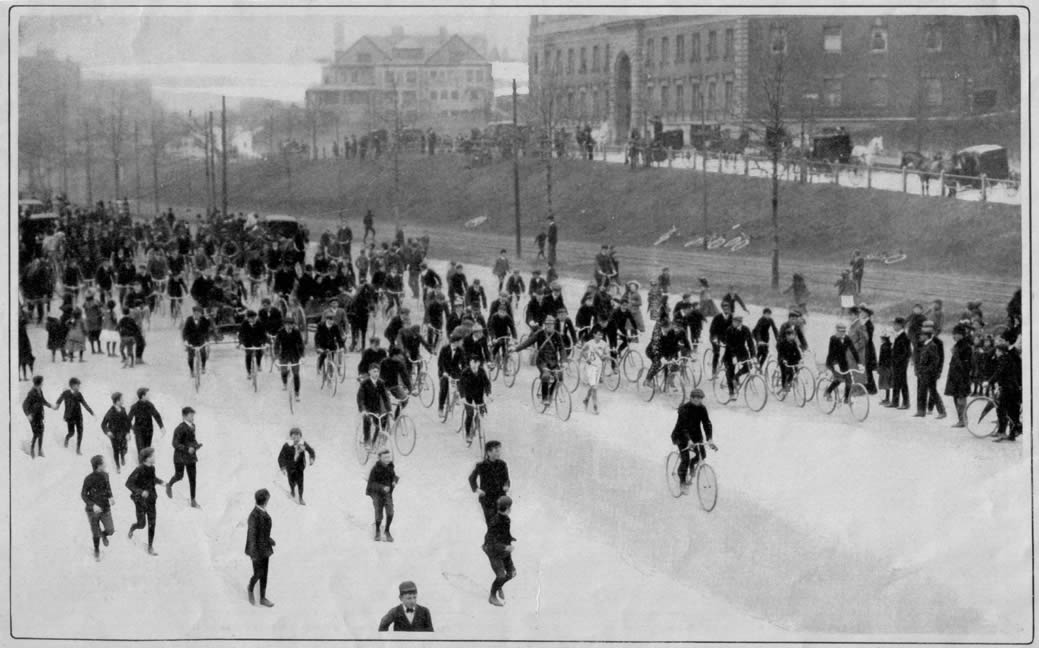

Fans surround race leader in 1904 Boston Marathon.

I’ve been thinking about running a marathon some day. I’m a long way from being ready or able to do so (a very long way), but it is a kind of dream of mine. I may never run one, we’ll see. But I’ve also been thinking about the early marathons, that is, those around 100ish years ago. When we think of running a marathon as a formal organized race, that idea has only been around about 120 years even though the inspiration goes back to ancient Greece. In the early days the typical distance was around 25 miles. The thing that has got me thinking is the fact that at a certain point marathons were something new – a novelty in fact. I am reminded of when triathlons were the new thing, especially the Ironman*, which seemed impossible in length yet many people got excited to try it – whether they were ready or not – even though it was like staring into the unknown.
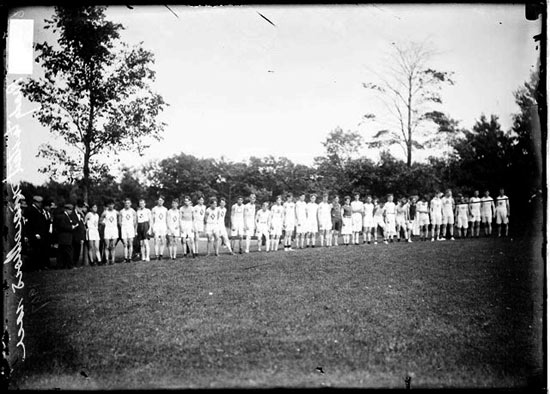

Runners line up before the 1907 Illinois Athletic Club Marathon.

Why do people get excited to run a marathon? I want to run one and even I can’t answer that except in vague terms of personal challenge. But I also have the advantage of knowing that many thousands of marathons have been run by millions of people. Still, for me, the idea of running a marathon is like staring into the unknown with a mixture of fascination, desire, fear, and wonder.

A hundred years ago marathons were still somewhat unknown. People did not know much about training for them or the physiology of endurance sports. The clothing they wore, especially the shoes, was not suited to running in the the way we expect today. And, I would assume, that the races themselves were not as well managed or supported as they are today. But still runners (only men for years) lined up at starting lines with high hopes and anticipation.
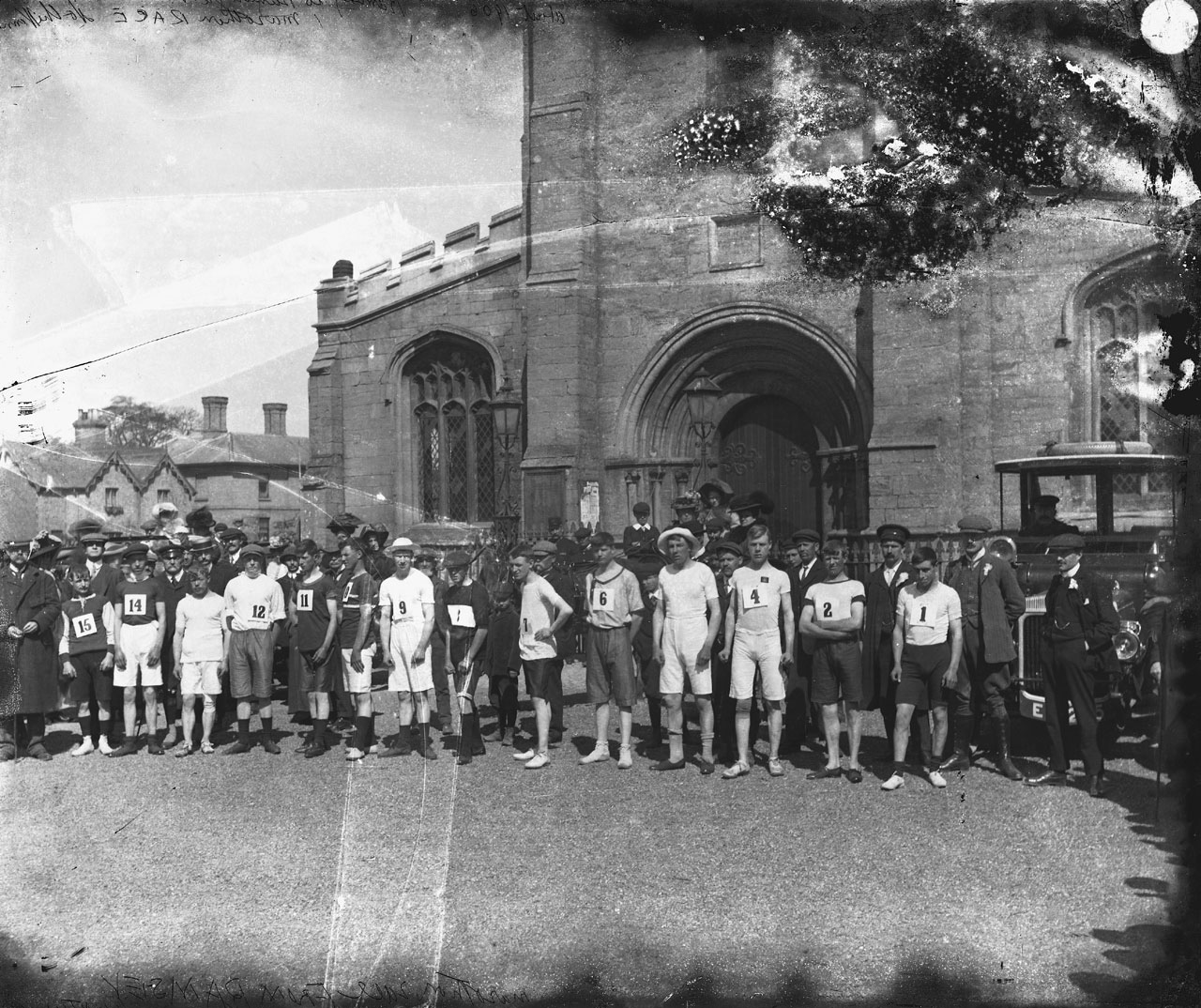

Runners line up before the 1909 Ramsey to Huntingdon marathon.

What I find curious is the ways people think about marathons. For many it is a kind of ultimate personal challenge that calls to them. To others they roll their eyes and say they can’t imagine why anyone would even try. I’m closer to the first group, though I have never run a marathon, and looking at me one might think I never will. For many the distance (26.2 miles today) is an kind of impossible distance. Yet I recently posted about a 135 mile ultramarathon race through Death Valley in the middle of July every year – and people show up, run it, and finish. So what is it that attracts people to do seemly crazy endurance events and enjoy them?

Those early marathoners were staring into the unknown to some degree. Running 25+ miles was thought to bring one closer to death, a test of one’s willingness to push oneself to the limit. Today we know more, and it’s amazing how many “non-runners” aim for completing one. Yet, even with the huge numbers of people running marathons, and the increase in marathon choices, it is still a mystery why many of us find ourselves desiring to join the fray – even if in the most humble way.

* First run in Hawaii in 1978, the Ironman Triathlon consists of swimming 2.4 miles in the ocean, followed by biking 112 miles, and then running a marathon, raced in that order and without a break.
>Badwater (yikes! cool!)

>I have always had a fascination with endurance sports – from the sidelines that is. One of the gnarliest is the Badwater Ultramarathon. The race consists of running 135 miles through Death Valley in the middle of July – which means this year’s race just finished a few days ago. This year’s men’s winner did it in 22:51:29. The women’s winner came in at 26:51:33. But of course, anyone who finishes is a winner in this kind of race. Heck, even just giving it a serious go counts as a win in my book.

Here is the post-race interview with the women’s winner:

I wish I looked that good after running three miles.

Here is a look at the race:

Notice how they all start with lots of enthusiasm and then some start looking a bit ragged. I doubt I would ever be able to run even half that distance, even with years of training, but I wish I could.

>be cool ride your bike

>
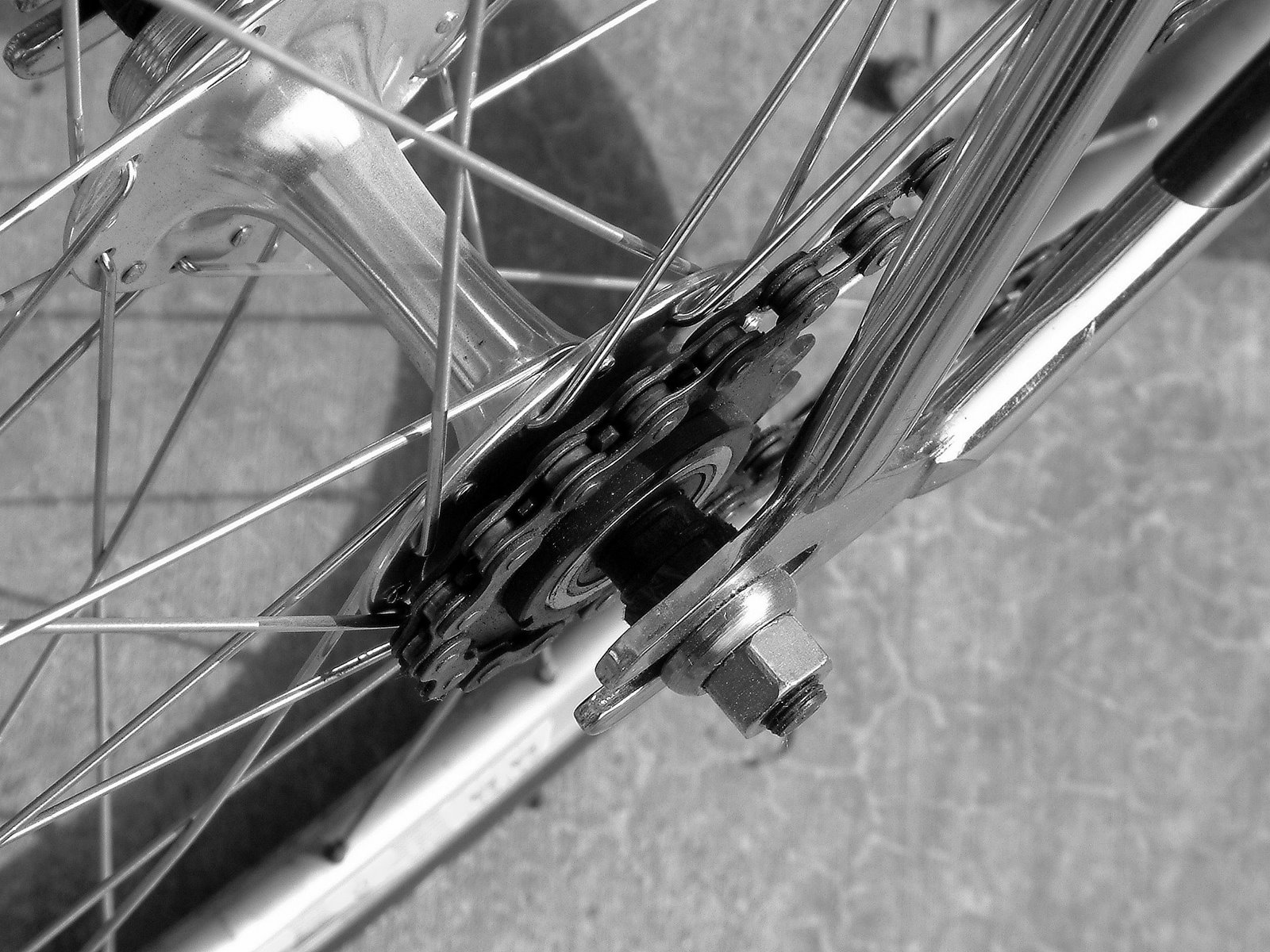
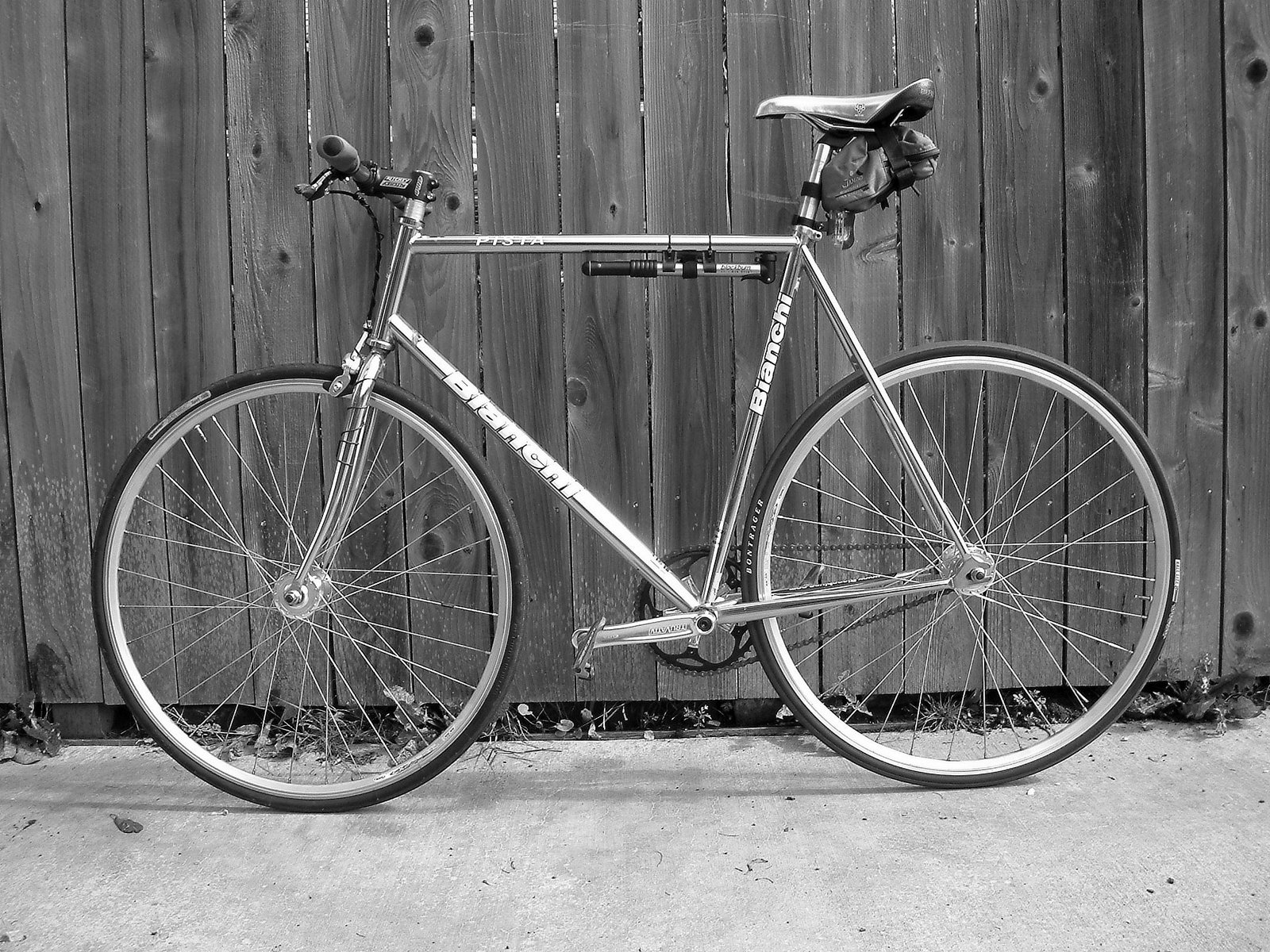
My ride.

I am working on being cool. I have started riding my bike to work again. I do it for several reasons:

  1. I save money on gas, plus my car desperately needs some repairs and I don’t want to spend any money on it right now. Yes, I’m cheap.
  2. Cross training – I have started running and I want to include some additional ‘training’ that is low impact. No, I’m not a professional athlete.
  3. There is nothing quite like bike riding – I know God is good because he gave us bicycles, as well as beer, cheese, mountains, the ocean, and a lot of other things, but you can’t ride a cheese to work – generally.
  4. Biking is better for the world than driving cars. My goal is to become an almost total biking person and cut car use to as much of a minimum as possible. I don’t have really strong emotions about this, but I’ve heard it’s what cool people are doing these days.

It takes me about 30 minutes to get to work, and that means 30 minutes to get home as well. So that’s an hour of cardio each day along with whatever additional workout I do. Currently I have two rideable bikes to choose from. One is an older but totally rad full-suspension mountain bike that needs a lot of TLC. It is rather worn out and could use an overhaul, which I don’t want to pay for. (Remember I’m cheap.) The other bike is a fixed gear track bike that I modified with straight bars and a front brake (track bikes come with no brakes). The fixed gear also gives me a better workout for two reasons:

  1. It cannot coast. In other words, a fixed gear bike is just that, the gearing is fixed, so if the bike moves forward the pedals go round. There is no break in the action unless I come to a complete stop. This “feature” makes riding the bike somewhat tricky, but one gets used to it.
  2. There is only one gear. This means that much of the time the gear is not exactly the right gear for the situation. It’s either too high for going up hills or to low for going down, and the rest of the time it’s just a little off. So one has to work harder because one cannot shift to a more comfortable gear.

I prefer the fixed gear over the mountain bike because it gives me a better workout, is faster, and is simpler (no shifting). Plus, a fixed gear is cooler – and, as you know, I’m all about being cool.


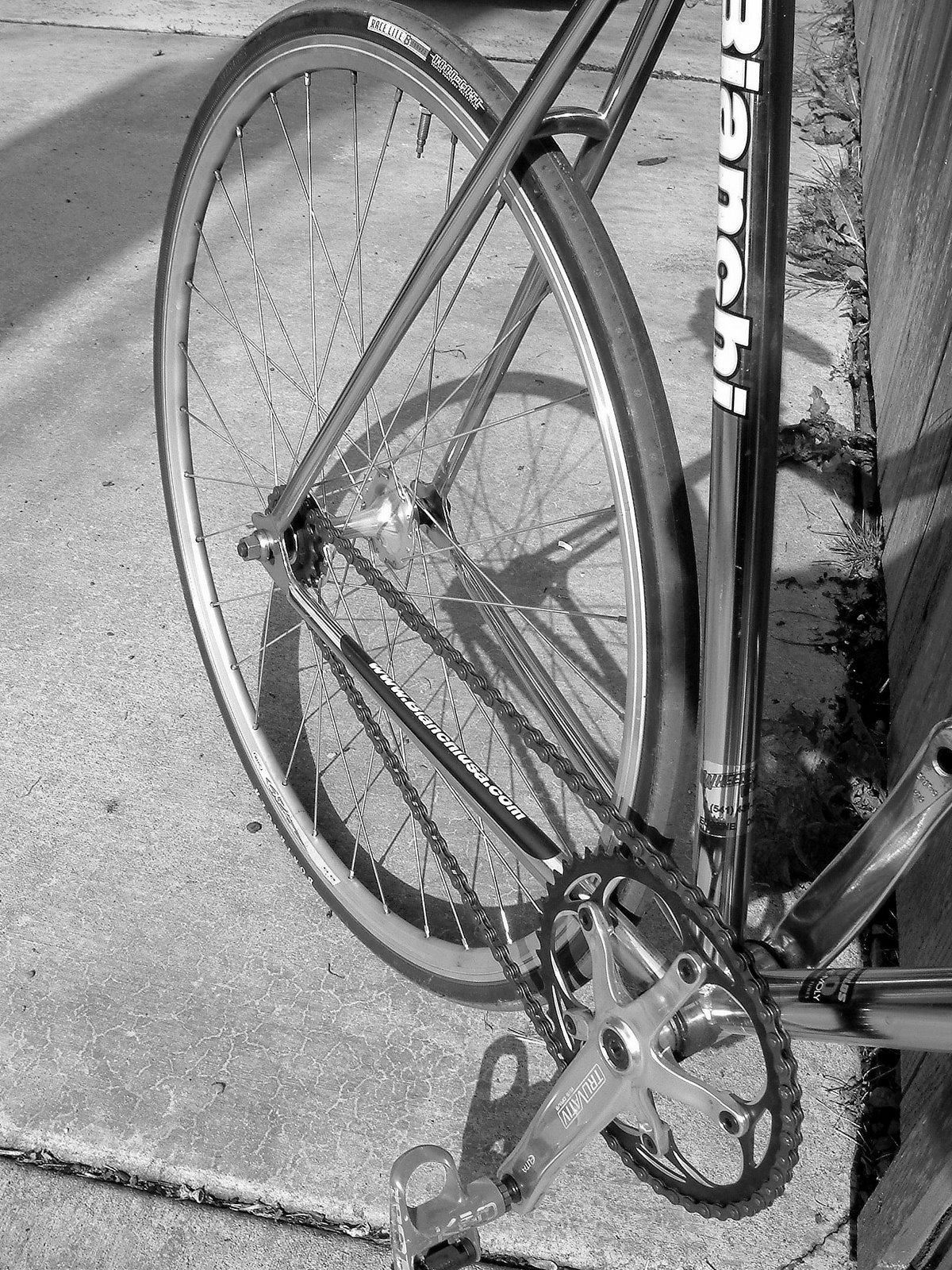
The drive train. As simple as it gets.


One sprocket in the back. No coasting.

But… there are cars and the people who “drive” them that I still have to deal with. The other day a woman (probably hasn’t ridden a bike since she was a little girl) in her white Lexus SUV (probably never actually been on a dirt road) was waiting to pull out into traffic. She was on her cell phone. She looked right at me and still pulled out. I had to hit my brakes to avoid hitting her. No wonder they say talking on a cell phone while driving is equivalent to being over the legal alcohol limit. But I also think she, like so many people who never ride bikes, have no idea how fast a bike goes, or truly how dangerous it is for a cyclist to tangle with a car. I also think many drivers don’t view (or at least act as though they don’t view) cyclists as legitimate users of the road. Once, years ago, I was pushed off a road into a ditch by a fifth wheel trailer when the truck driver decided to pull far to the right in order to make a sharp left hand turn. I have to say it was surprising to feel the side of the trailer bump up against my left shoulder and just push me off the road. The driver had seen me because he had just passed me. I think everyone should be required to ride a bike for severals days through their city before they are given their driver’s license.

Although I will probably never participate in a naked bike ride, I totally sympathize with the message. I will not yet give up my car. But I want to ride more, drive less, and encourage other to do the same. As you know, it’s cooler to ride a bike – even when you’re not naked. Be cool.

This guy is super cool:

I wish I could be that cool.

>le Tour de France, Drugs, and Lance Armstrong

>

“At breakfast. UCI antidoping inspectors just walked in. Blood control for Levi, klodi, alberto, and myself. This is a good thing..”

~ Tweet from Lance Armstrong (on 7/10) before the first
major mountain stage of the 2009 Tour de France


Image by Max Whittake/Reuters

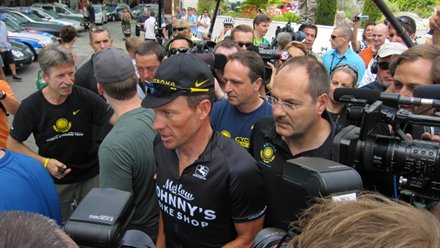
I am a fan of pro cycling and especially the Tour de France. I’ve been a TDF fan since around 1984 when Greg LeMond came in third overall. Whenever I talk to others about the tour they always bring up doping. The most common kind of comment is something like “all those guys dope, everyone knows that.” If you know the history of the Tour de France, and endurance sports in general, then you know that statement has a lot of truth. (See the List of doping cases in cycling.) And yet, where are we today? Do all the cyclists dope like we tend to think? When others say they all dope, or more specifically, “You know Lance dopes, How else could he have won some many tours,” I am inclined to say show me the proof.

Testing for doping in cycling has been around for fifty years. The process, though never perfect, has been put to the test many times and is constantly being improved. A lot of pressure is on the testers because they may disqualify a wildly popular cyclist. The penalties for testing positive are rather stiff, including lifetime bans from the sport. And it may be possible for cyclists to get around some testing. But not likely, at least when it comes to truly performance enhancing drugs in quantities that actually improve one’s performance. In other words, if a cyclist has been repeatedly tested and has passed those tests (and these tests are random, sometimes in the middle of the night, and if you’re not there when the testers show up they count it the same as testing positive) then it is very unlikely that cyclist is doping.


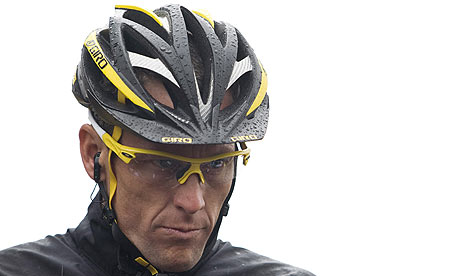
Image from here

Lance has been tested nearly 40 times so far this year alone. For whatever reason he tends to get singled out a bit more than other cyclists. Many of the tests were blood tests too. He has passed every test this year, and every test so far in his career. Is this absolute proof of innocence? Of course not. But the question I have is what special information does the average person have that the World Anti Doping Agency (WADA), the Union Cycliste Internationale (UCI), and other respected sports agencies that govern drug testing don’t have? Testing for doping in many sports is a very recent thing – think of major league baseball. In cycling its been around for decades and has continually become stricter and more severe. Just to help quell some of the accusations, Lance Armstrong has even begun posting the official results of his drug tests on his Livestrong web site. At some point one has to say he isn’t doping.


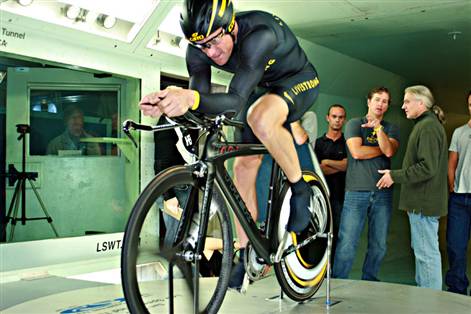
Image by Frank Jansen, the Netherlands

I must say I have no interest in defending Armstrong. He can do that himself. Someday he may fail a drug test, or his past tests, which are saved, may be retested and drugs found. But I doubt it. And cycling is not all about Armstrong. There are several riders in this year’s tour I would love to see win the thing. But I have to say I’m going to let the antidoping control take care of the doping issue and I will just love the tour as I do every year – and as I’ve done so many times before, I will be rooting for Armstrong.

Finally, it would be remarkable for Armstrong to win an 8th Tour de France. But the truth is, it is remarkable for anyone to win such an event. I have ridden a couple centuries (100 miles in one day) in my life and they were difficult. To race that distance, and sometimes much further, sometimes over the steepest of mountain passes, and to do so for 21 days in a row is a staggering athletic achievement. No wonder there is a temptation to dope. Hats off to riders who don’t dope and cooperate with the antidoping testers. It’s good for the sport.


Image from Livestrong web site.

“Knock knock. Another antidoping control. Seems excessive but I’m not complaining. This is a good thing. I like good things times 40.”

~ Tweet from Lance Armstrong (on 7/11) before the second
major mountain stage of the 2009 Tour de France

Cycling Fans

I am a fan of the Tour de France. We all know that “fans” stands for fanatics, and cycling fans are that. I have been hitting key web sites each day, listening to live audio feeds, and tracking my favorite riders. I wish I could be standing along the routes cheering on the riders and taking in the unique atmosphere of the tour. There is no sporting event quite like a big tour.

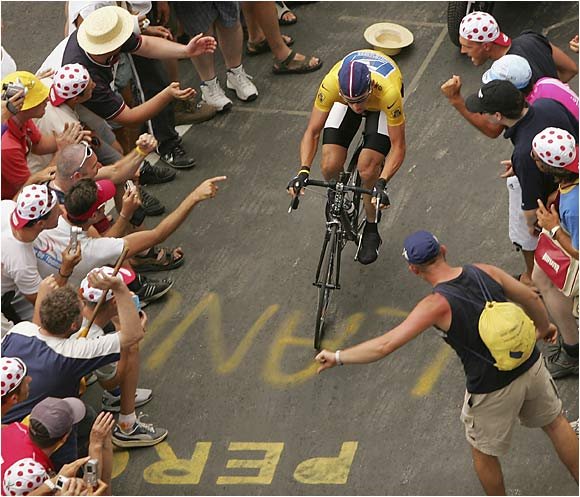
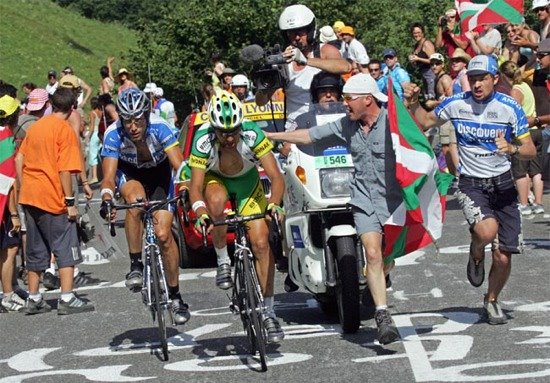
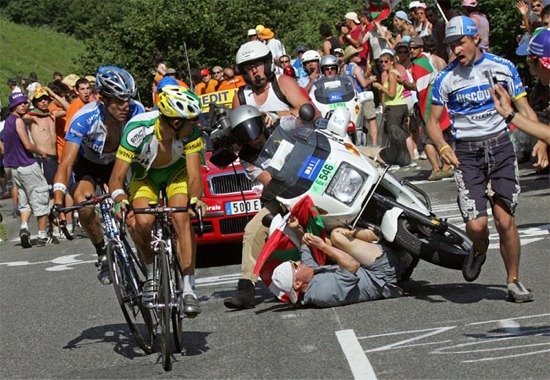
There are also few, if any, sporting events at this level of competition that allow for fans to get so close to the athletes. Fans typically line the routes, often standing only inches away from the riders. Some even pat their favorite riders on the back as the riders struggle up the steep climbs. If a rider falls fans will sometimes rush out to help them right their bike and even give them a push to get moving again. There have even been numerous occurrences in the Tour de France over the years where an over eager fan interfered (usually inadvertently) with one or more riders. One year Lance Armstrong hit the road when his handlebars got caught in a fan’s bag strap that was too far out in the route. Naturally this only made Armstrong angry and he went on to win that stage.

The tour is also one of the few sporting events where fans will also openly mock the athletes. With all the doping controversy in pro cycling, this has become a way to remain fans of the sport while venting a little.

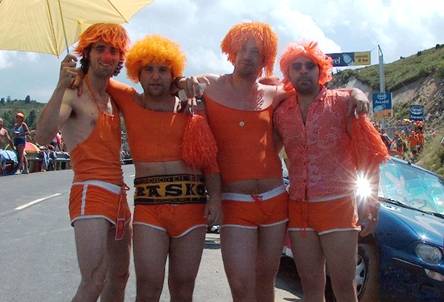
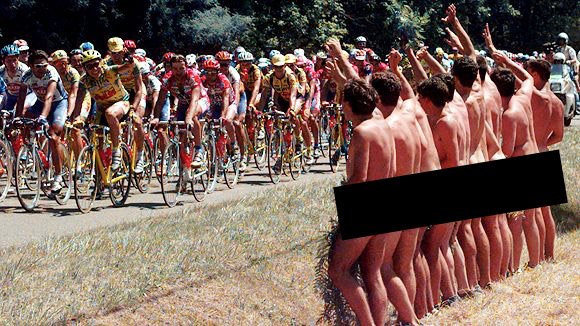
Cycling fans are a peculiar breed. Many ride there bikes up the steep climbs to in order to find the ideal location from which to cheer, as well as experience the same route as the racers. Many will camp out over night in order to see the peloton pass for a brief moment. And many will run along side the riders as they pass, sometimes wearing costumes and waving flags. The tour is also one of the only professional sporting events that does not sell tickets to fans. Pick a place along the route, set up your lawn chairs, grab your flags, put out your table of food, and socialize. I have to say that I like any sport where the fans drink great wine and eat brie while basking in the sun. Forget the lousy bag of chips and cheap beer I say.

I must admit that I “know” these things from the vantage point of someone a long ways away from the tour who merely finds the whole thing fascinating.

Here is a cross section of cycling fans at previous tours doing their thing:

Several times in my life I have stood on the side of the road for local bike races in and around my home town. I have not worn costumes or funny hats or waved flags or painted my face (or belly) or stood naked in a line. But I did cheer loudly and had a great time. A dream of mine is to get to the Tour de France someday and cheer on the big boys.

Finally, here’s a couple of images of a fan who will not forget that day:

There is something poetic in that.

>truckin’ – like the doodah man

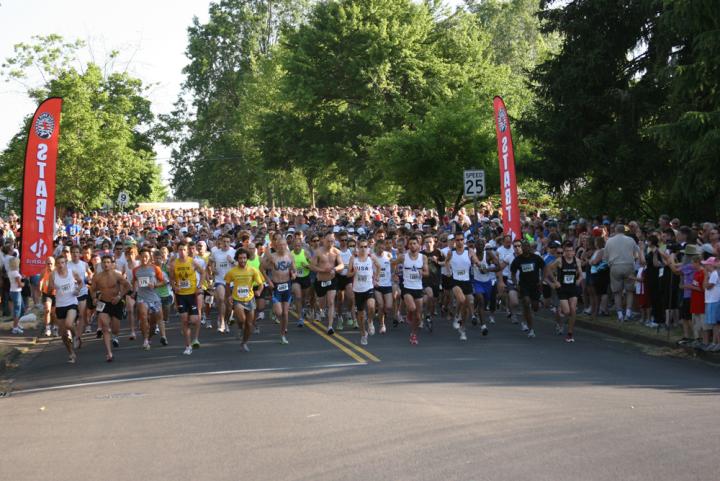
>Today was a milestone for me. After witnessing the famed Butte to Butte 10k road race many times since the mid-1970s, usually cheering on friends, I finally ran the thing. My time was slow, the heat was more than I liked, my gate was more of a pained shuffle than a run, but I made it without walking or stopping.


The start of the race. I was nowhere near
these guys, just in case you were wondering.

The Butte to Butte has become a 4th of July staple in these parts with about 5,000+ runners and walkers. It starts somewhat near the base of one butte at the south end of town and finishes at the base of another butte at the north end of the downtown area. The beginning heads up a steep hill that can just about kill you if you don’t pace yourself, then the next mile is a gradual downhill that helps you catch your breath. The final four miles are on the flats through town.

My wife walked the 4.5 mile Mayor’s Walk with our two girls and the stroller. This was a big deal for her. Less than a year ago she was in a terrible accident that broke her pelvis/sacrum. She used to run 10ks and half-marathons. Now she is in pain all the time and walking 4.5 miles was quite painful for her, but it was also a kind of triumph. I am very proud of her.

I have not been training with my iPod, but last night I put together a playlist. The song I liked the most was Truckin’ by the Grateful Dead – for some reason it just had the right beat and spirit. The song that got me over the finish line? Die, All Right! by The Hives of course.

>cycling season

>We are in the midst of cycling season. Several big races have already occurred, including the Giro d”Italia. On July 4th begins Le Tour de France. So let’s remember the great cyclists.

Here are three videos on Eddy Merckx – the greatest of them all.

Merckx breaking the hour record in
Mexico City, 1972

Merckx in training, and a look at
his personal life.

Merckx cries at doping
allegations, 1969.

Merckx was such a phenomenal cyclist that he is in his own category altogether. Lance, for all his Tour wins pales in comparison to Merckx.

>An inspiration: Jeannie Longo at 50

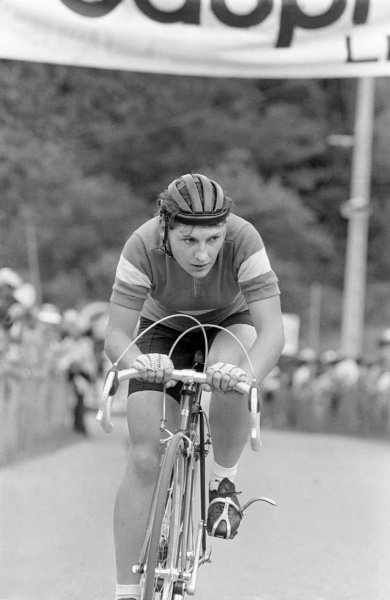
>In 1979 began one of the most remarkable sports careers of all time. That is the year Jeannie Longo established herself as a cyclist to be reckoned with by winning the French road race Championship. She was 21 years old.

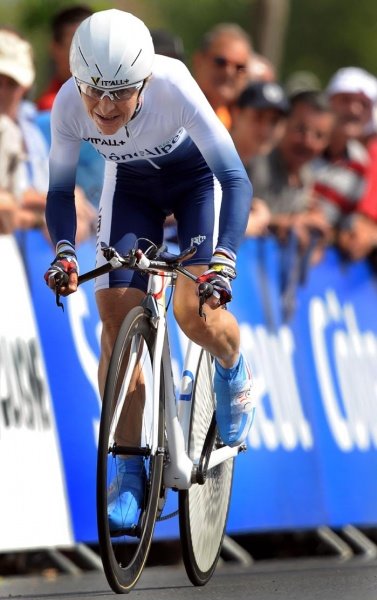
Yesterday she won the French national time trial for the eighth time. She is now 50 years old.


Longo in 2009, winning the
French national time trial
.

Longo’s cycling career is stunning, not merely for her staggering number of wins and top finishes (see below), but also for her tireless longevity. She also has a B.S. in mathematics, an MBA, and a PhD in sports management.


Longo in 1980 winning the French
Road Race Championship
.

According to her Wikipedia entry, Longo competes both in road and track bicycle racing events, and is an Olympic gold-medalist and twelve-time world champion. Her impressive palmarès include:

  • Olympic Games road race: Gold Medal/Champion (1996); Silver Medal (1992)
  • Olympic Games time trial: Silver Medal (1996); Bronze Medal (2000)
  • 5x UCI Road Race World Championship: Gold Medal/Champion (1985, 1986, 1987, 1989, 1995)
  • 4x UCI Time Trial World Championship: Gold Medal/Champion (1995, 1996, 1997, 2001)
  • 4x UCI Track World Championship: Points Race: Gold Medal/Champion (1989); 3 km Pursuit: Gold Medal/Champion (1986, 1988, 1989); Silver Medal (1984, 1985, 1987); Bronze Medal (1981, 1982, 1983)
  • UCI Mountain Bike Championship: Silver Medal (1993)
  • 15x French Road Race Champion: 1979 to 1989, 1992, 1995, 2006, 2008
  • 8x French Time Trial Champion: 1995, 1999, 2001, 2002, 2003, 2006, 2008, 2009
  • 3x Tour Cycliste Feminin / Grande Boucle: 1987, 1988, 1989
  • 2x Women’s Challenge: 1991, 1999
  • Set Hour Record (45.094 km/h) in 2000 in Mexico City (14 years after setting the best hour performance record)

Only the great Eddy Merckx comes to mind as having an equally impressive career, but he finished competing when he was 33 years old.

>How fast can a bicycle go?

>I remember when John Howard broke the land speed record for a bicycle in 1985. I thought that was the coolest thing ever at the time. He did it by having a modified car tow him up to a minimum speed so his high gearing could begin to work and having the car block the wind for him while he pedaled in the still air just behind the car. He reached an amazing 152.2 MPH. That record was broken later by another cyclist using the same basic technique.

But what if no fossil fuels were present? What if one had to start from zero without being pulled up to a ‘starting speed,’ and then continue pushing through the wind yourself? That is the real test for bicycle and human powered vehicle speed records.

82.3 MPH on a bicycle:

Trying to break the record:

I have to say I would LOVE to ride in one of these bikes. Years ago I once rode a recumbent. It was a lot of fun, but a little strange too. Nowadays I see lots of recumbents and human powered vehicles. But it would be so cool to pedal a streamliner bicycle, even if there’s not much practical application beyond mere speed.

>family rock climbing

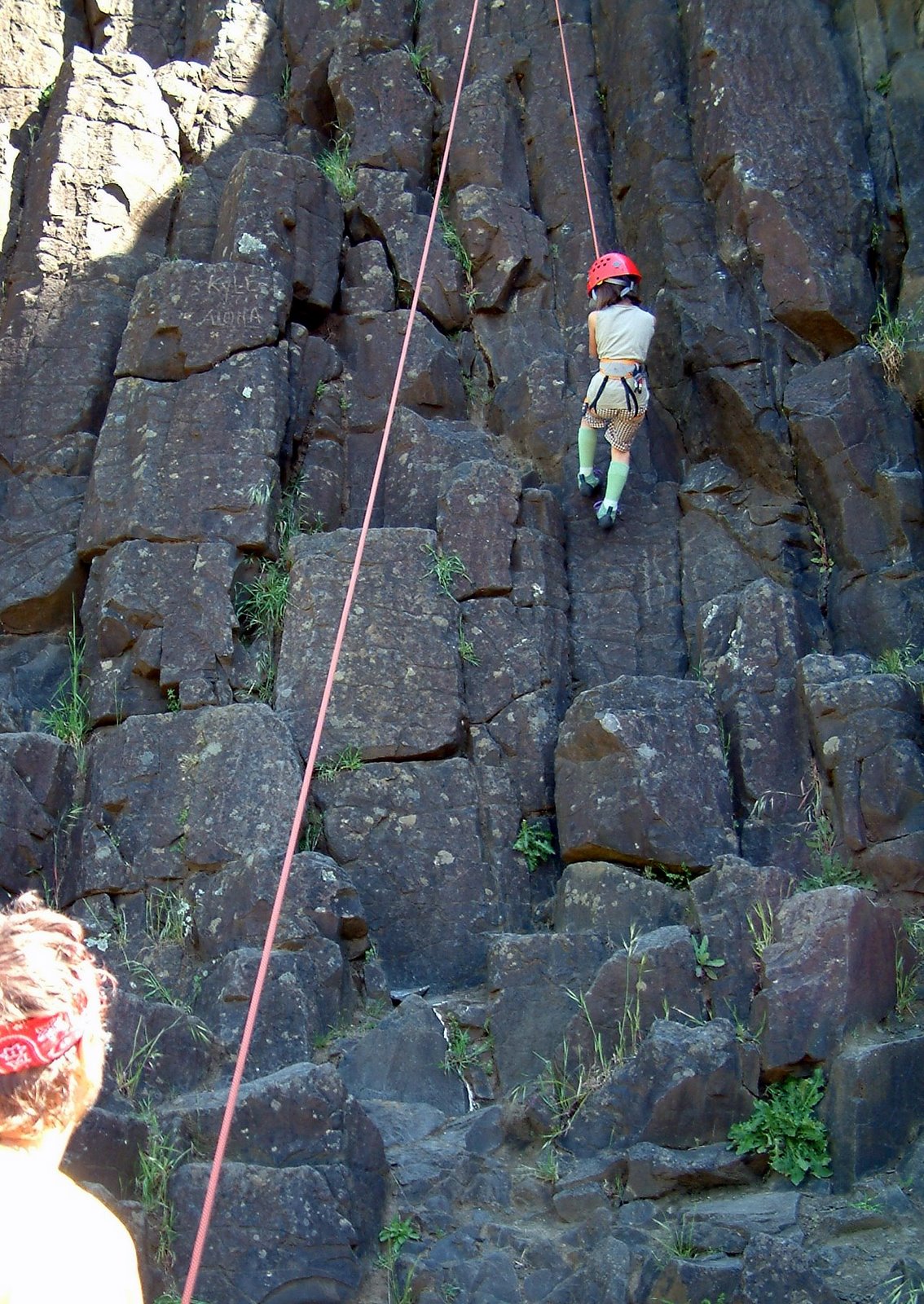
>On Saturday I took my daughter rock climbing at the local rock columns. These columns have been a kind of mecca of sorts, located somewhat near the downtown of our city. Four blocks away is a good rock gym with artificial holds, but there is nothing like real rock. My daughter made it about two thirds of the way to the top and then had to fight against fear to get back down.

Today we went again and this time she made it to the top! The fear was still there, but she did really well and eventually overcame her fear. I think she will become a good rock climber. She started climbing a couple of years ago, first at the rock gym and then once at the columns last year.


Practicing trusting the rope.


Made it to the top!

I am so proud of her.