>Peter Rollins is one of the most interesting leaders in Christianity today. But his Christianity is not the typical Sunday School version I was taught (which is a good thing). At times he can be exasperating, at other times brilliant, and he’s always provoking. Trained as a philosopher, at every turn he seems to turn Christianity on its head. Of course, discussing religion and faith with Rollins would be better over a few pints than on the set of a rather staid religious interview show as is here, but this is still good (and the questions are great too).
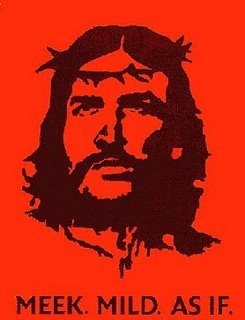
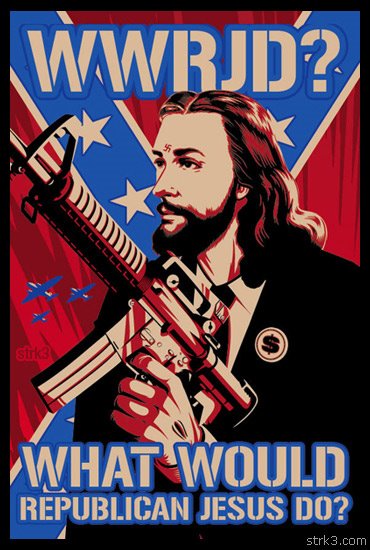
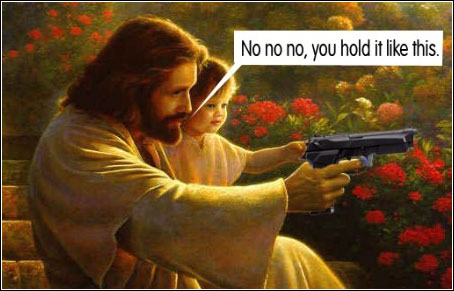
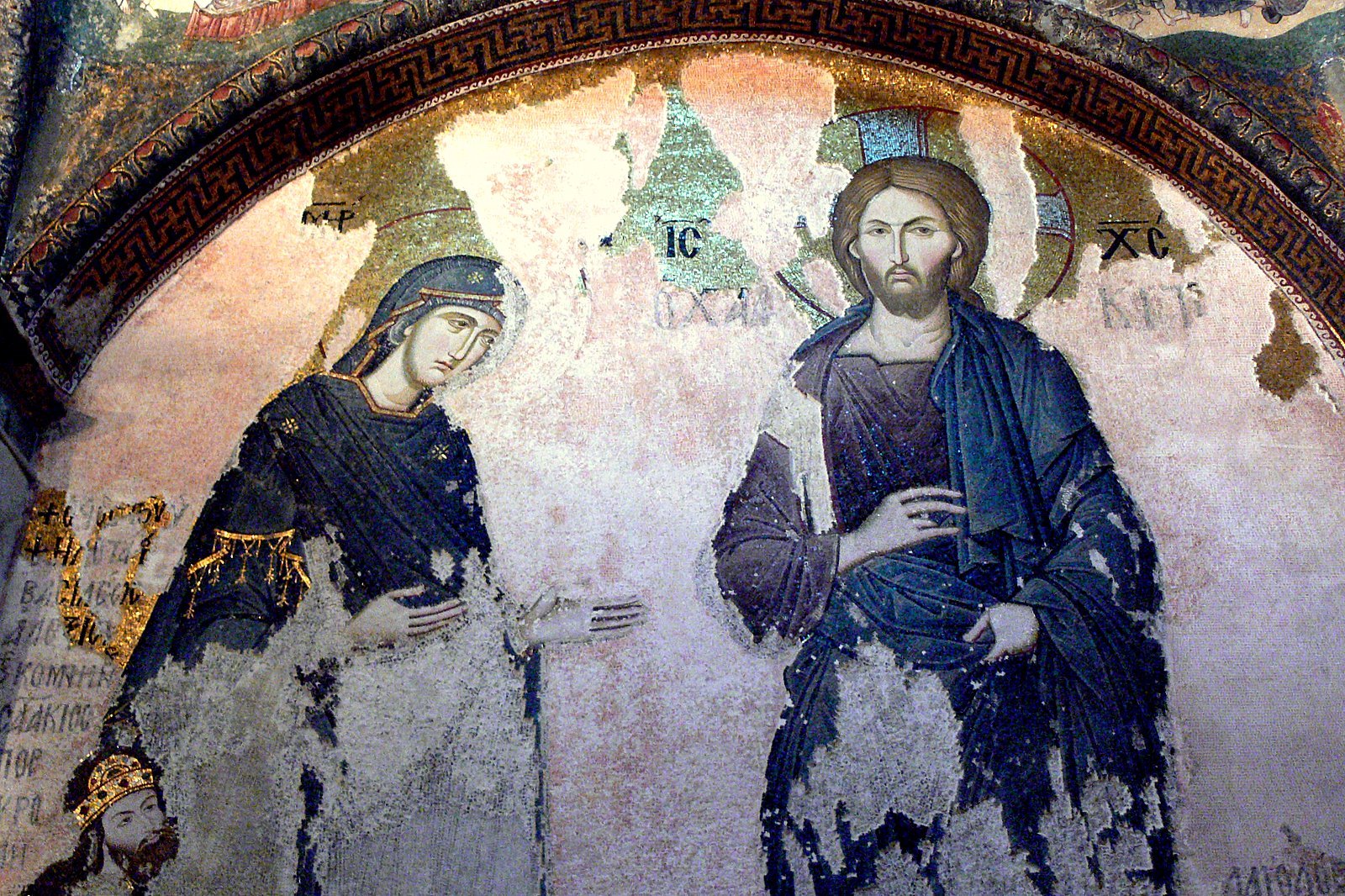
If you search for images of Jesus on the Internet you will find an unending supply of everything from the serious to the comic, pious to the sacrilegious, realistic to the saccharine. Jesus has always been an appropriated figure by different Christian groups, but now it seems everyone appropriates Jesus for any reason, group, or perspective. Or, to put it another way, Jesus is increasingly seen as a non-religious figure who can be anything you want him to be. I think this can be seen as both a bad thing and a good thing.
Bad because Jesus was and is who he was and is. Any other perspective or viewpoint is not true. That would hold true for our perspective of anyone. But it’s good because so many traditional images of Jesus are just as wrong headed as the many non-traditional. It is a good thing to have our assumptions challenged, and to be reminded that we may not know as much as we think we do. If we don’t take Jesus seriously then, I suppose, anything goes. But if we do take him seriously then it makes sense to find out who he really was – and is. I would expect non-Christians to have fairly limited knowledge of Jesus but, ironically, many Christians do as well.
I saw a lot of politicized images of Jesus. One of the biggest debates going on today (consciously and unconsciously) is whether Jesus was a political figure with a political agenda and whether that political agenda was conservative or liberal. I am inclined to think Jesus was more of a political figure than I have been taught, and I am inclined to see the more liberal side of his politics. However, I think his politics were far more radical than either left or right.
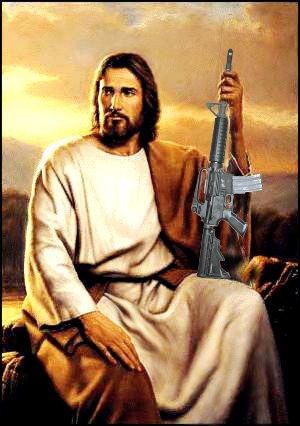
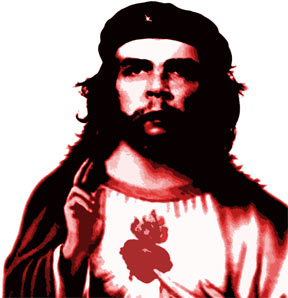
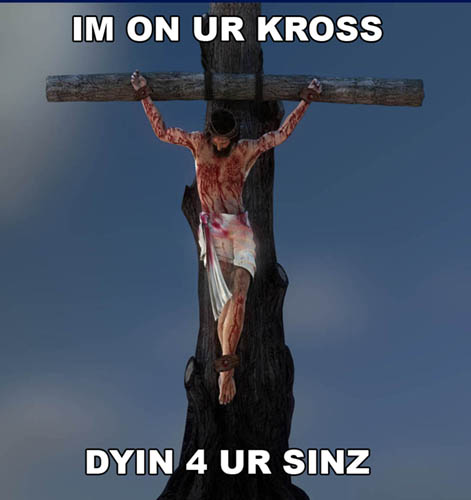
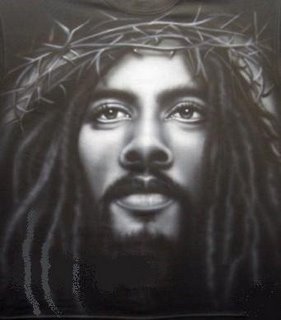
As for those images, here are some of the least offensive, but still non-reverent, images I found in just a few minutes:
The not-meek, not-mild Jesus. Sure he’ll die for your sins, but he’s still as tough as a Chevy truck.
No comment needed – except – reminds me of the ‘who would Jesus bomb’ slogan.
The kind, teaching non-non-violent Jesus.
The Jesus for whom there will be no cross, I suppose. Lookout Romans, it’s smackdown time.
The radical leftist Jesus.“After fasting for forty days, Jesus put on his beret and returned to the collective.”
The twitter gospel Jesus. But why does “sins” have to be spelled with a “z”? It’s not any shorter or easier to type on your blackberry.
The Rastafarian Jesus (I suppose).Is he actually looking at anything?
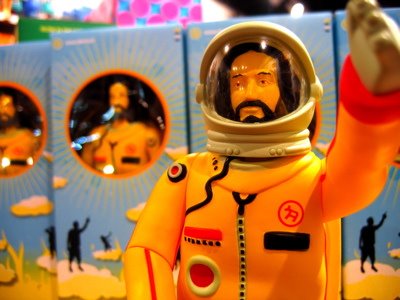
The astronaut Jesus. He’s in orbit and he’s coming back!
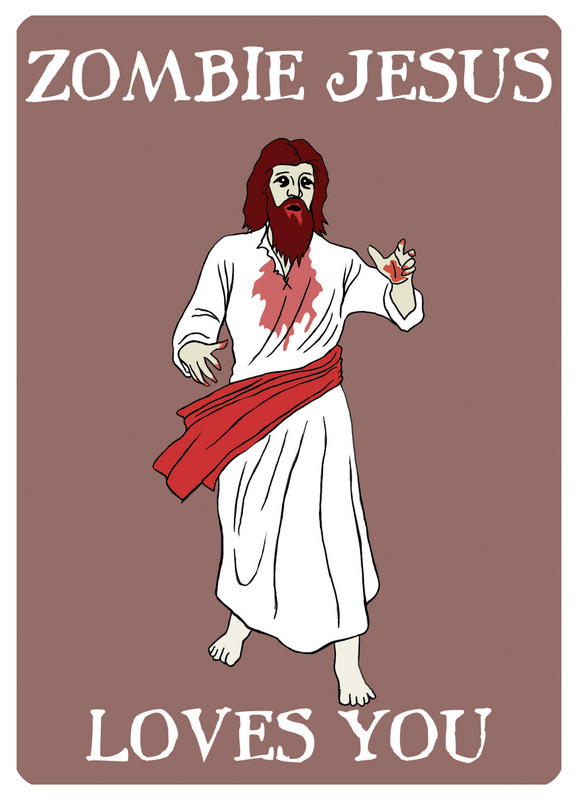
And ironically, maybe the most scriptural of all, the un-dead Jesus. He lives!
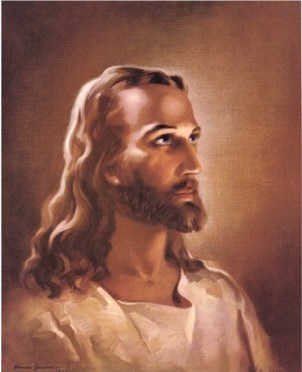
Now I recognize how goofy these images of Jesus are, but so are classic Victorian ones like this:
And yet, we have this one in our house and I like it. Hmm.
>I have been reading Stanley Hauerwas’ book The Peaceable Kingdom: A Primer in Christian Ethics and I love it. I must say that this book, along with some others, are encouraging my views to change (views that were trained into me by the chistianity in which I grew up) regarding politics, faith, and action. In other words, I am slowly shedding my Baptist/Evangelical acceptance (dare I say love) of “righteous violence” and “just war” for a more pacifist perspective.
Because I know little of Hauerwas I went looking for him on the Interwebs. I came across this lecture of Hauerwas speaking on Dietrich Bonhoeffer’s perspective on truth. It is excellent.
When it comes the plight of the Palestinians I don’t trust what I hear coming from either the Israeli government or the U.S. government – and not merely because governments lie. And, of course, I certainly do not support the actions of any group that uses terror against civilians to push forward their political goals. So, that means I don’t support Hamas. But it also means that I don’t support the Israeli government in its present form very much. But it is hard for me to have an opinion, being so far away geographically, socially, and informationally.
If you are like me then you probably don’t know a lot about the Israeli occupation of the West Bank and the roots of the recent Israeli invasion of Gaza.
If I have learned anything about what is going on over in Gaza and the West Bank, as well as the rest of the Middle East, it is that I am quite ignorant of the facts. I am not willing anymore to parrot the typical American refrain that “those people have been fighting forever and they will always fight.” (I have become increasing wary of the term “those people” however it’s used.) If they have always been fighting then it follows they were fighting during the time of Christ, and if that is true then the admonition to love one’s neighbor as oneself, or the story of the good Samaritan, or the conversation Jesus had with the woman at the well are meaningless if there is no hope for peace.
The two videos below take a look at life under occupation from a particular and personal perspective. These videos were made before the recent invasion of Gaza and the war against the Palestinian people. Although the audio is sometimes rough this is the kind of news/reporting/insight that the rest of the world needs even if only as a kind of starting point to begin discussing the issues rather than falling into the typical stereotypes and worn out stigmatizations. It is particularly important for American Christians to view, for they are some of the most ideologically driven and yet least informed people when it comes to Israel. http://vimeo.com/moogaloop.swf?clip_id=2726126&server=vimeo.com&show_title=1&show_byline=1&show_portrait=0&color=00ADEF&fullscreen=1 http://vimeo.com/moogaloop.swf?clip_id=2864803&server=vimeo.com&show_title=1&show_byline=1&show_portrait=0&color=ff9933&fullscreen=1
There is mention of the organization Breaking the Silence. Their web site is here.
When we had better cable TV I used to love watching those Biblical histories, those “other” gospels stories, and the various histories of Christianity shows on the History & Discovery channels. A frequent guest interviewee on almost all these programs is John Dominic Crossan, one of the founders of The Jesus Seminar, and an interesting cat. I don’t know much about The Jesus Seminar, and I have nothing new to say about it, but the more I look at it the more fascinated I become. However, the more I look at it the more I also think it represents an entirely wrong way of reading the Bible, or really any work of literature, fiction or non-fiction. This is not to dispute the level of intense scholarship that some of its members achieve, nor the brilliance of individuals such as Crossan. Nor do I wish to dismiss the fundamental questions that it tries to answer.
John Dominic Crossan
One thing I find interesting and troubling is that the members of the Jesus Seminar vote on the authenticity of various saying and passages from the Bible. Voting isn’t a bad thing, and it can be a very good way of seeing which way the wind is blowing, as it were. But voting is neither proof nor argument, and thus it can muddy waters already in need of clarity. Voting is also a good way to have one’s say while hiding within a group. Of course Crossan does not hide his thoughts. And to that point I have to say that upon hearing Crossan talk about Jesus I don’t think he fully gets him. Crossan likes to point out that Jesus came to show us a different way to peace, the way of non-violence. Certainly Jesus taught non-violence, but that was a secondary purpose. He was an example for certain, but he was first a priest, and a sacrifice, and an advocate, and a king. He fulfilled a functional role in the story of this world, a role all about our relationship to God first, and then our relationship to each other.
I am not a defender of traditional orthodoxy per se. This is not say that I don’t believe in truth or in the veracity of the Bible, but I do know that there are a lot of “untouchable” doctrines that should be re-examined, even if only to more fully establish their validity. Christianity is a history of doctrines, among other things, and history has a way of entrenching ideas such that they have the appearance of immovability. There is a tendency among all of us to see what we want to see, which includes what we expect to see. With that in mind I welcome challenges to orthodoxy as catalysts toward truth. But it seems to me that voting on the authenticity of Bible passages is a sure way to see what one wants to see and expects to see. It’s a good way to see what it is a group of people generally want to believe. It is not necessarily the truth, or any closer to the truth. And it is not an argument for the truth.
Here are some examples of how the votes have played out regarding some of the most famous sayings of Jesus:
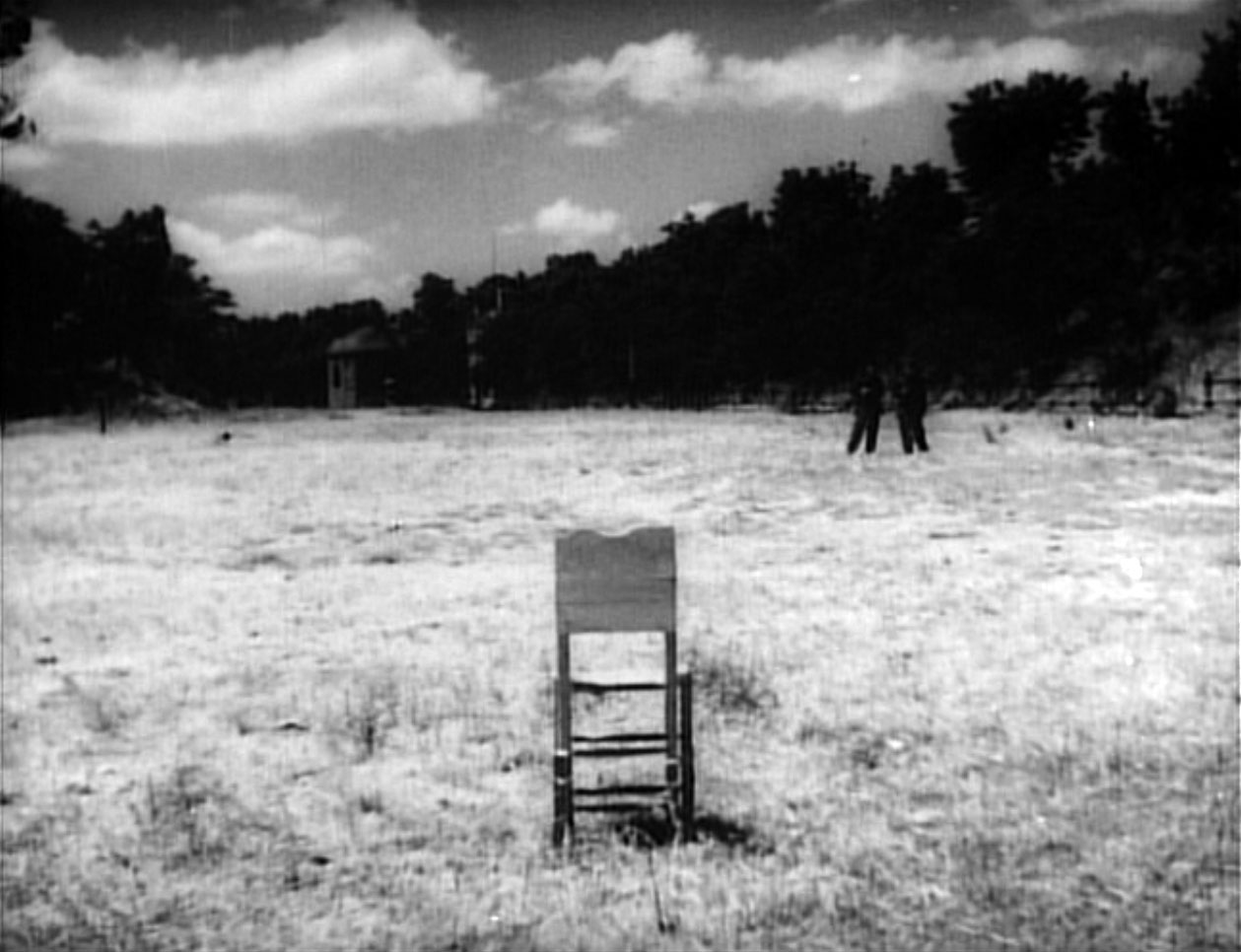
This is one of the most haunting images I can think of in cinema.
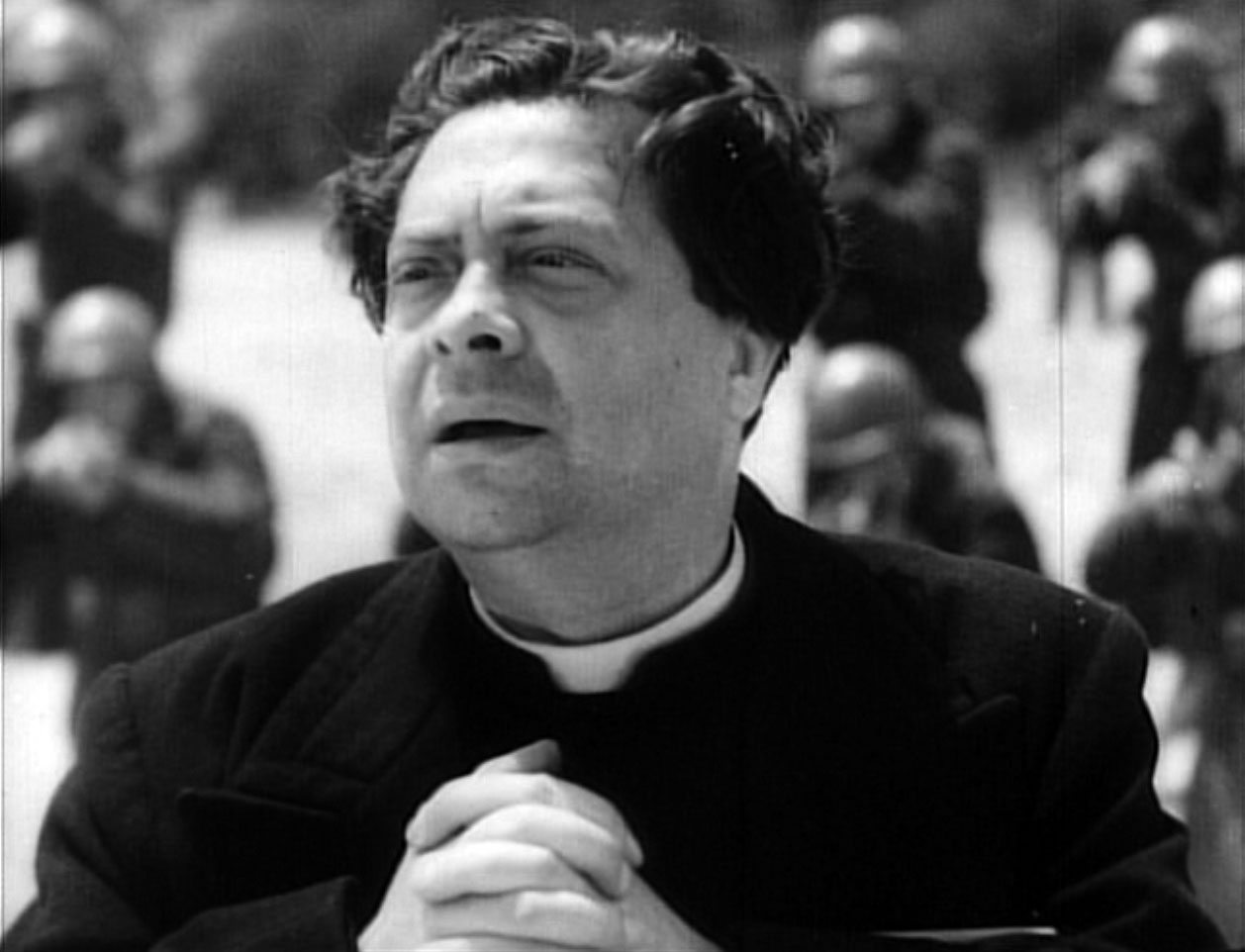
It is a simple image, not particularly artistic or striking. It is just a chair in a field on a bright sunny day, but it is loaded with meaning. This image comes toward the end of Roma, città aperta (1945). The chair is the place of execution of for Don Pietro Pellegrini (Aldo Fabrizi), a collaborator in the resistance against the fascists.
I find that great films often draw me in because of their heroes. Though I care about good cinematography and editing, or creative soundtracks and screenplays, what sticks with me longest are the heroes. And let’s not forget, superheroes are not heroes. Ordinary people who do what is right in the midst of extraordinary circumstances are heroes.* Don Pietro is a hero in this sense. A priest and a schoolteacher, he also knows that doing what is right trumps mere survival. He says, just prior to his execution, that it’s easy to die well, but living well is the real challenge. He is a man who lived well and the forces of darkness killed him for it.
I am not saying anything new here. If you’ve seen Roma, città aperta then you know I have not discovered anything new in the film. But I am struck by two things: 1) the film foregrounds the socialist/communist struggle against the fascists, and yet it is a priest of the most traditional of traditional Christian traditions who is the hero, and 2) it seems we don’t see these kinds of heroes in film as much anymore. What makes both of these points linger is the deep sense of humanity into which Rossellini taps.
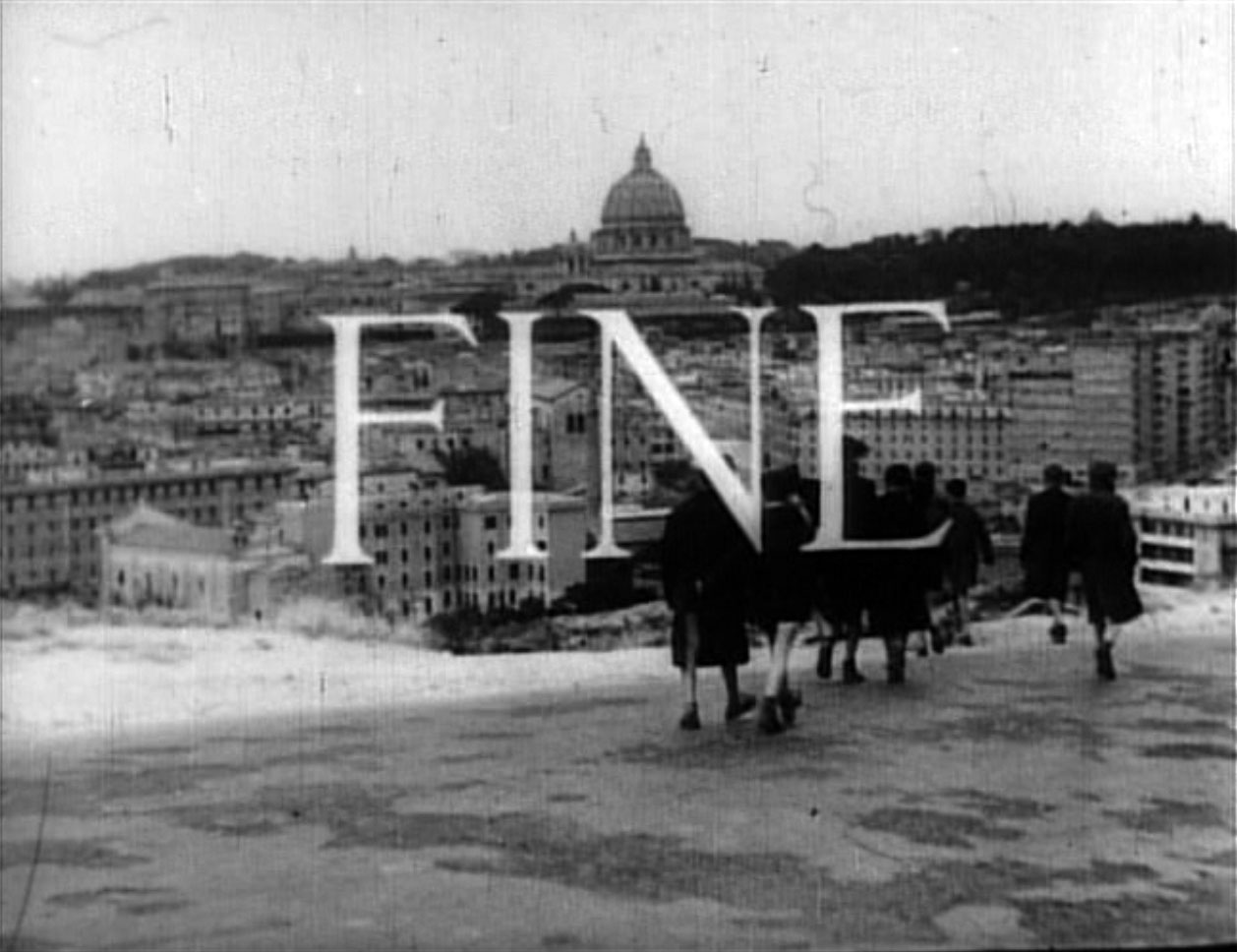
One aspect of Italian neo-realism is its ability to take the ordinary, portray it rather straightforwardly, and yet load it with both connotative and denotative meaning. The ending is a good example. After Don Pietro is murdered by the fascists, his students, who watched his killing, walk together back to the city. In the middle ground are modern apartment buildings. In the distance is the dome of St. Peter’s (I believe).
This image all about the future. Life goes on. The future will need to be rebuilt from the ruins of the present. These kids represent that future. The adults have let them down as a result of their wars. But their teacher has shown what a true hero is made of. It’s a simple ending, in a way. And yet, it has weight, depth, and irony. The irony comes from the fact that while we watch the future walk into the city we also see the word FINE across the image. It is both the end and a new beginning, however uncertain. This is the kind of filmmaking that I love.
*This may be why I find movies like Ironman to be all surface and ultimately unsatisfying – even boring. There are thrills but nothing really of any consequence. Ironman, as just an example of many, is somewhat entertaining, but already consumed and forgotten.
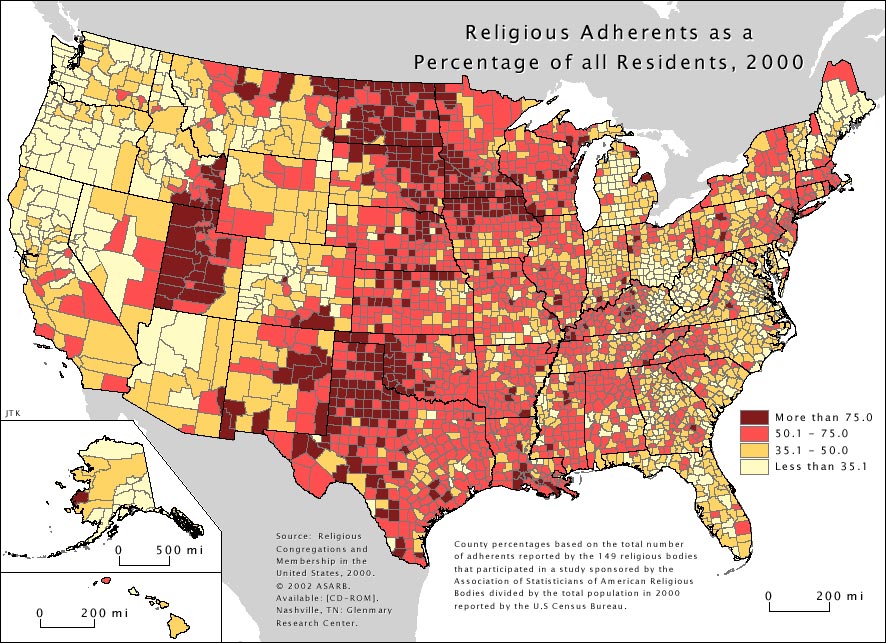
I live in the least religious region of the United States.
The map above (click to enlarge) is from a 2000 study of religious population densities in the U.S. I live in the upper left area, the Northwest, which has the largest percentage of “un-churched” people per-capita in the country. Because I have, for the most part, lived my entire life in this area of the country I am curious as to how the religious make-up of my regional culture has played a part in my formation as a thinking/feeling person. I have always thought of myself as a person of faith, even propositional faith, but not as particularly religious in an external sense. Regardless, I think I would be called religious in light of these demographics. But I find myself to be rather un-dogmatic as well as prone to questioning even long-held Christian doctrines – not because I think they are necessarily wrong, but because I value critical thinking and I don’t place much value in tradition when it comes to truth, except as a catalyst.
Then I look at the rest of the country and I wonder what set of beliefs, what religious and philosophical values I would have if I had lived elsewhere. Look at those red and deep red areas of the map. What kind of choices, what kind of pressure would I have experienced if I had grown up there. I don’t know. Maybe you know. What I do know is that in the West and Northwest there is a trend toward “missional” churches, that is churches who are built around the idea that the very cities in which they exist are every bit as much mission fields as anywhere else in the world. Mars Hill Church in Seattle is particularly committed to reaching out to its un-churched city (I don’t attend Mars Hill, but I listen sometimes to their podcasts).
What is remarkable is how religious, and in particular how Christian, is the U.S. Not long ago many predicted the collapse of religion in the U.S., instead it has flourished. I wish I could say Christianity has always been a source of light in this country, but that has not been the case. The present political season is evidence enough. But Christians are really no different than anyone else who holds to a set of beliefs about the world, about right and wrong, and about the future. What is all to evident, however, is the fact that Christians are specifically called to love their neighbor as themselves and they fail in big ways. Of course, so does everyone else. You can certainly count me in that number.
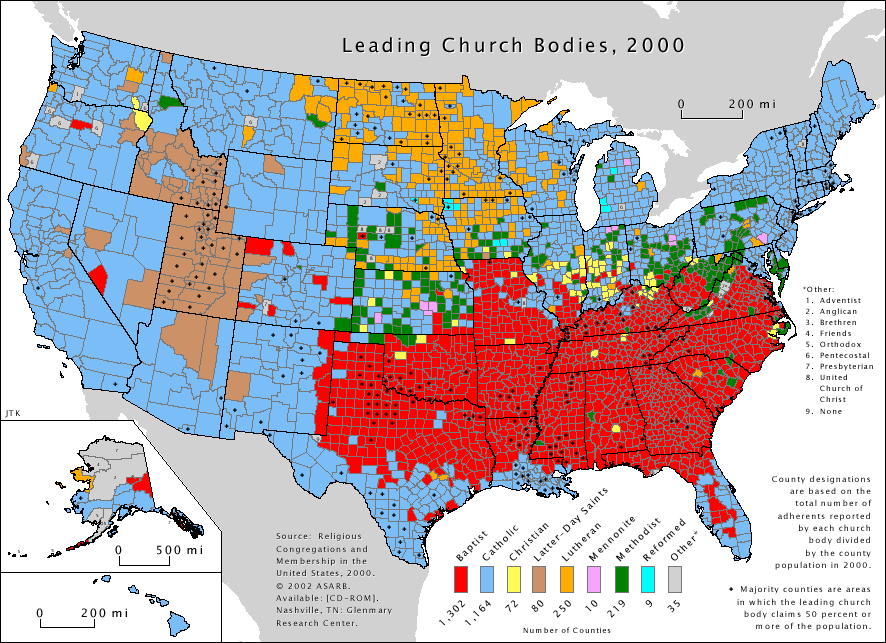
Here’s another map I find interesting. Of those who are religious, and again its mostly Christian in this country, this is how they break down geographically by basic religious groups:
What is interesting for me is that I grew up a red (Baptist on the map) but not in the Southeast. Later in college I left “redworld,” but my faith deepened and grew as I became, for lack of a better description, a non-denominational Christian. I began residing at McKenzie Study Center, which was conveniently close to the campus (I was an undergrad), but was also a place that allowed me to ask tough questions about my faith. I was given room to actually think outside the box. Far too often one is only allowed to lightly question approved doctrines in traditional churches as long as there is no chance that one will actually disagree with those doctrines. Freedom to think is often perceived as a threat to religion, but it is central to faith. 20 years later, and a lot of water under the bridge, I am still plugging along, sorting out my faith (with fear and trembling) and seeking to love others regardless of what or who the maps say I am.
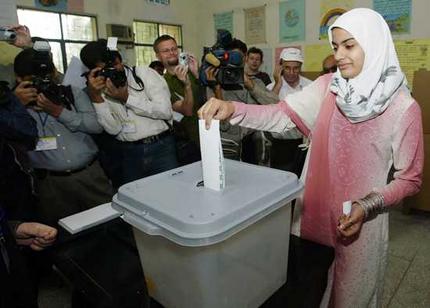
Democratic elections in Afghanistan reminds me of how precious and hard won is the right to vote.
Like you I’ve been curious about the upcoming presidential vote. I think Obama is going to win. It’s not a forgone conclusion, but it’s heading in that direction, which is fine by me, all things considered. There are many things that will not change if Obama gets into the oval office, and there are some that will. I hope many things with our foreign policy changes. I hope we focus more on helping the poor and downtrodden rather than the rich. I hope we restore basic human rights, like the right to habeas corpus. We’ll see.
For too many, though, it still comes down to uncritical perceptions and single issues.
I have noticed that many conservative Christians – those who supported G.W. Bush because he is a “strong Christian man” – are now finding no clear choice in this election. They don’t really like McCain, but they feel they can’t vote for Obama. I have heard a few say they are not going to vote at all, which is good for Obama and bad for the democratic process. One of the biggest reasons conservative Christians would cast a vote for McCain is because of his supposedly “pro-life” stance. I think McCain is lying, but that’s beside the point. Christians are just as Pavlovian as everyone else. If a candidate says he’s pro-life he will automatically get votes from many who are single issue voters or those who think abortion is a hugely critical issue and they can’t find any other issues in this election to care about.* It allows people to vote their conscience, which is something we all should do, but just how informed are we? If one is pro-life (which I am) and one wants to vote her or his conscience, where should one cast their vote? I can only answer for myself. I believe Obama is more consistently pro-life than McCain. That may sound strange to say, but there are good reasons. McCain, apart from merely using a new-found pro-life stance to get votes, has a decidedly less pro-life stance when it comes to a holistic evaluation of his platform. Obama, on the other hand, has done more, and is for more, in terms of changing and dealing with the multiplicity of issues that make unwanted pregnancies a sad fact in this country. Obama is also someone who, much more than McCain (whose enthusiasms tends toward ‘us’ and ‘them’ scenarios), seeks to affirm the value of the whole person and a world of hope. Hope, as I see it, can be a kind of antidote to unwanted pregnancies as much as addressing poverty. That doesn’t solve the problem of abortion, but it seems clear to me that no final or complete solution is coming from this election.
Maybe it’s ironic, but Christians may find a more Christ-like platform with Obama than McCain.** I am becoming more convinced that’s true. I also am not a “single issue” person. If it were even possible for me to speak for God, I would say God is not “single issue” either.
Of course I certainly do not speak as an expert, just an ordinary citizen schmuck like you. I am trying to get myself informed. You may disagree with me on this or other issues. If you do then vote your conscience, but try, as I will, to get the whole picture. That’s the least we can do, really.
If you have the time and inclination, read these two articles by pro-life voters who are both voting for Obama precisely because they’re pro-lifers:
In conclusion, I have to say that image at the beginning of this post of the first democratic elections in Afghanistan challenges me of how much we take voting for granted. I know that being a good citizen is more than only voting every four years, but I am also reminded of just how precious is a cast vote. If you don’t like the two candidates that are getting all the headlines, then vote for someone else. There are a lot to chose from.
* I must say that abortion is a very serious issue for many reasons. One can easily trot out a laundry list of reasons that show abortion for what it is – evil. But one can also do the same for war, especially preemptive wars that kills hundreds of thousands of innocent lives (including many thousands of children) for the sake of “peace” and oil. One can also make laundry lists for poverty, greed, lying, capital punishment, denying basic rights, spying, and the ruthless craving of power. There are so many important issues to care about. Regardless, abortion is undoubtedly an important issue.
* * I want to be clear that I do not see Obama, or any politician as a “savior.” Salvation, on almost any level, is not coming with this election. We still, however, should do everything we can to move in the right direction. For me that includes moving towards ending wars, ending poverty, and helping those at the bottom of society, including the disenfranchised and socially outcast. It also includes trying to love my neighbor as myself in the most tangible and meaningful ways that I can. I think we find greater hints at that kind of thinking in Obama’s platform than we do in either McCain’s or Bush’s.
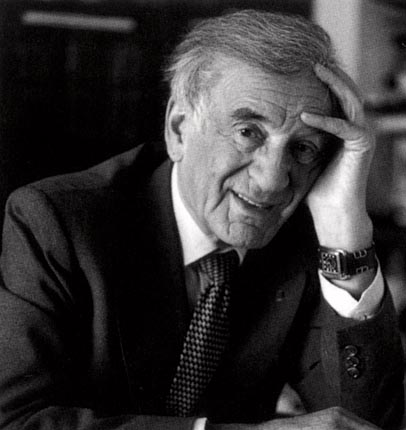
I have not lost faith in God. I have moments of anger and protest. Sometimes I’ve been closer to him for that reason.
~ Elie Wiesel
If I had to make a top ten list of those events of the 20th century most critical to know and remember, the Holocaust would be in the top three. Wieselsurvived the Holocaust, I suppose, as well as anyone could. His memoir Night is brilliant and staggering.
I swore never to be silent whenever and wherever human beings endure suffering and humiliation. We must always take sides. Neutrality helps the oppressor, never the victim. Silence encourages the tormentor, never the tormented.
And sometimes I discover that I am not late, in fact I’m very early, I just didn’t realize it was going to be a party. So has it been with me and emerging Christianity.
As I continue to dive deeper into what the emerging/emergent church is all about I am finding that there are a lot of voices opposed to much or all of the whole shebang. This is old news. These voices have been around for a long time, even decades before the term “emerging” was applied to Christianity. YouTube is full of them. Some rant, some blather, some are articulate, and some of these voices come from individuals I respect. I must consider those voices I respect. These voices include R. C. Sproul and Ravi Zacharias – who represent for me a kid of “old guard” of apologists – and Mark Driscoll, who represents a younger generation of reformed preachers. All of these men I have heard and/or read their teaching and greatly appreciate what they do and their contributions to the Church and the furtherance of the Gospel.
But I am not entirely convinced by these guys. I am interested in your thoughts as well.
Here are a couple of clips about the emerging/emergent movement from those concerned voices. This first clip is of Mark Driscoll explaining how he understands this thing called emerging/emergent, and what he sees as deeply troubling problems:
Driscoll was part of the emerging/emergent conversation a decade ago, but he split away largely over doctrinal differences. I am not entirely in his camp. I love that he is a champion for truth, but some of his doctrinal positions are ones that I have wrestled with for more than 20 years and my beliefs have subtly changed over the years and are still in flux. I do know, however, that Driscoll does his homework and is worth listening to.
This second clip is of a conversation with R. C. Sproul, Ravi Zacharias, plus Vance Havner and Al Mohle (both of whom I have not heard before):
These guys are heavy hitters in the world of Christian apologetics and evangelism. I appreciate their perspectives on the topic at hand. I have some of the same concerns as they do, but I am also concerned they may be confusing their entrenchment in reformed theology and a modernist Christianity with defending the truth of the Bible. I don’t say this lightly. Such entrenchment is one of my personal concerns and something I have been working through for a long time – and I’m still in process.
Side note: I cannot help but see four old guys in suits and ties. There is nothing wrong with that of course, but it doesn’t help quell my thoughts that these guys are from a different generation, a different era, and a different world. None of that means they don’t know what is true, but I have concerns that the Christianity they preach is a mix of Truth and the culture in which their understanding was formed.
As I said, I feel the need to take all these guys seriously and consider what they say. The fact is, I already have been taking these topics seriously for a quite a while. I am someone who became a Christian at an early age and then within several years became intellectually interested in theology, history, philosophy, the pursuit of Truth, the nature of ministry and evangelism, and in what it means to work out one’s salvation with fear and trembling. I would pinpoint my first rumblings of emerging to circa 1986. soon after I joined a community that has many “emerging” characteristics – though we’ve never used that term.
I know the guys in the clips above do their homework for sure, they love God, and they pursue Truth, but I am not convinced they have Truth cornered.One of my biggest concerns with what these guys are saying is the way they brush off postmodernism as merely another form of liberalism and truth evasion. I have begun to dive into postmodernism again, after having done so years ago in grad school. This time I am finding much more. Postmodernism, we know, is not a school of thought, rather it is a recognition that we are in an age that is beyond modernism, which opens up lots of possibilities and re-evaluations of much of what has been considered the sacred cows of Christianity (I love that expression – I just made it up).
What I am trying to do is actually look to the sources – the Bible first of course, and then some of the writers who either claim or are tagged with being emerging/emergent or postmodern. My desire in the midst of this process is a combination of open-mindedness and discernment.

 pilgrimakimbo