I have been thinking a great deal about non-violence, pacifism, the example of Jesus (and many of the things he said), and the idea/reality of the Kingdom of God. I am haunted by the idea that I should be living a life entirely committed to such things. That I should be living peacefully, non-violently, lovingly, and mercifully. I am to love my neighbor. I am to love my enemy. I am to lay down my life for others. I am to seek God’s kingdom and live in light of what that kingdom stands for.
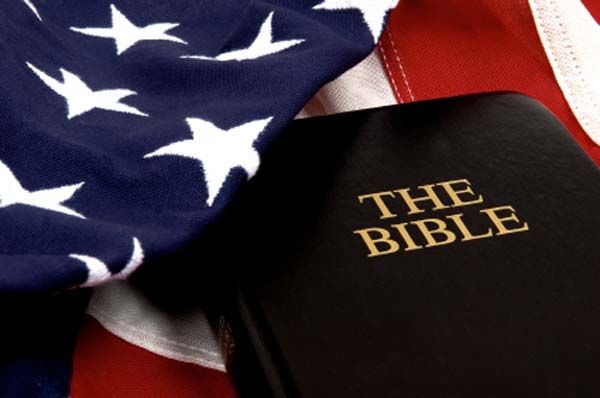
So what do I do with the fact that I live in a flag-waving, war loving, gun toting, patriotic nation that is supposedly built on biblical principles and calls professional soldiers heroes but underfunds education and healthcare, while maintaining the world’s most powerful and advanced military industrial complex? Should my money go to such a system? I don’t know. I want to be wise and not foolish. Ironically, I started out more or less conservative in my youth and am now becoming more and more “radical” in my middle age. I say radical because I want to avoid strictly politicized terms. I am not specifically liberal or conservative. I think the truth hovers above such dichotomies. The call of Jesus is far more radical than any political system can accommodate.
Are U.S. Christians Americans first, then Christians?
Imperialists first, then followers of Jesus?
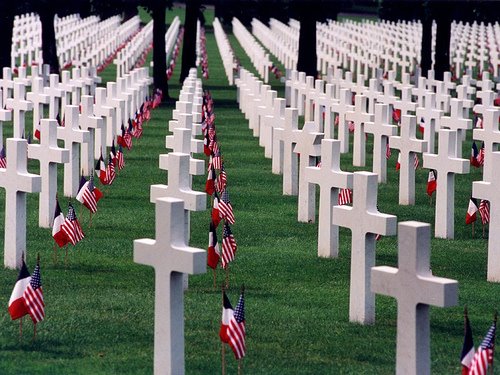
Christianity in the U.S. is rather varied, but one faction gets a lot of attention – the conservative evangelical fundamentalists. They are outspoken, politically to the right, and flag waving – sometimes with really big flags. They are also typically in support of the current war on terror and the wars against the Iraqi and Afghan peoples. They also, generally, support torture when used to ensure the uninterrupted continuation their own quiet suburban neighborhoods (read “keep America safe”). But they are not the only Christians who support war and soldiering. The U.S. is a war loving culture and most Christians support, yea even glorify, war and soldiers. Frequently the Bible is brought in to support the this position.
One of the scriptural foundations for supporting the U.S. military and its mythologies is a biblical passage in which some soldiers come to that famous Palestinian, John the Baptist and ask what they should do and John doesn’t say “leave the army.” Many Christians would say that John is merely counseling these soldiers to be good, moral soldiers while they do their soldiering because being a soldier is still a fine, even noble profession. That is an interpretation that fits nicely with our own mythological understanding of the soldier as the duty bound exemplar of personal sacrifice for the sake of a higher good.
But John is, in fact, not saying be a good soldier, or even a righteous soldier. He is calling for repentance and fundamental righteousness – not a righteousness filtered and conformed to the needs of a profession. What John tells these soldiers fundamentally contradicts what their particular soldiering is all about. If they do as he says they will face a contradiction that will force them to chose Christ or soldiering. But that contradiction does not emerge from a conflict of piety versus profession, rather it emerges from a convicted heart in the midst of a fallen world.
The Bible passage is from the Gospel of Luke, chapter 3:12-14 in the New American Standard translation:
And some tax collectors also came to be baptized, and they said to him, “Teacher, what shall we do?” And he said to them, “Collect no more than what you have been ordered to.” Some soldiers were questioning him, saying, “And what about us, what shall we do?” And he said to them, “Do not take money from anyone by force, or accuse anyone falsely, and be content with your wages.”
The scene is of John the Baptist preaching and baptizing seekers and converts coming to him at the Jordan river. He is calling for their repentance and with that in view the tax collectors and the soldiers ask the above questions. Keep that in mind, John has just called for repentance and it’s the tax collectors and soldiers that are the ones who, as distinctly identified groups in the text, are mentioned. Why?
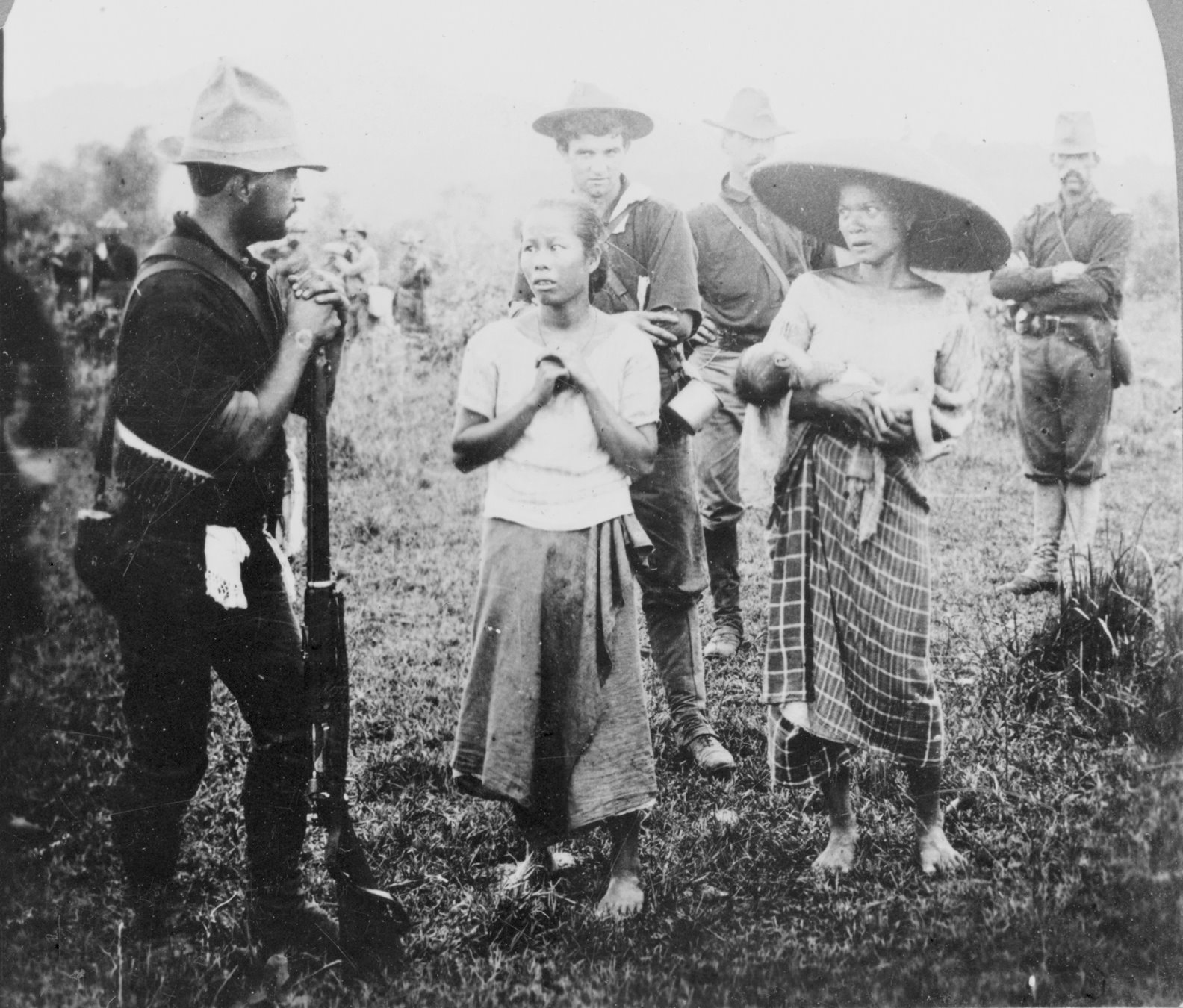
U.S. Soldiers supporting U.S. imperialist
interests in the Philippines, ca. 1900
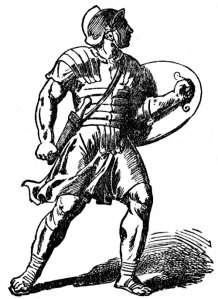
The tax collectors and the soldiers worked for the imperial/colonial power. They worked for Rome. The tax collectors took the taxes on behalf of Caesar, which is one of the reasons to have an empire in the first place, and the soldiers were the brutal military presence required for empire. The tax collectors were required to collect whatever Rome demanded and then made their living by demanding more. It was a perk of the job and many tax collectors could get quite wealthy. If they did not demand more than what was required they would live very meager existences. Soldiers, who were officially paid a very meager yearly salary (some say $45 per annum, which was extremely low even in those days) made their fortunes by claiming the spoils of war. Typically the spoils were given to the commander who then evenly distributed them to his troops. In both cases tax collectors and Roman soldiers made their living by taking more than what they were either ordered to take or by dividing up what was taken by force. This was the accepted system that both provided their living and supported the domination of the region and its people. This system was endemic to the very nature of Roman imperialism.
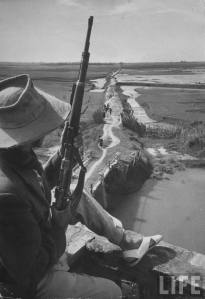
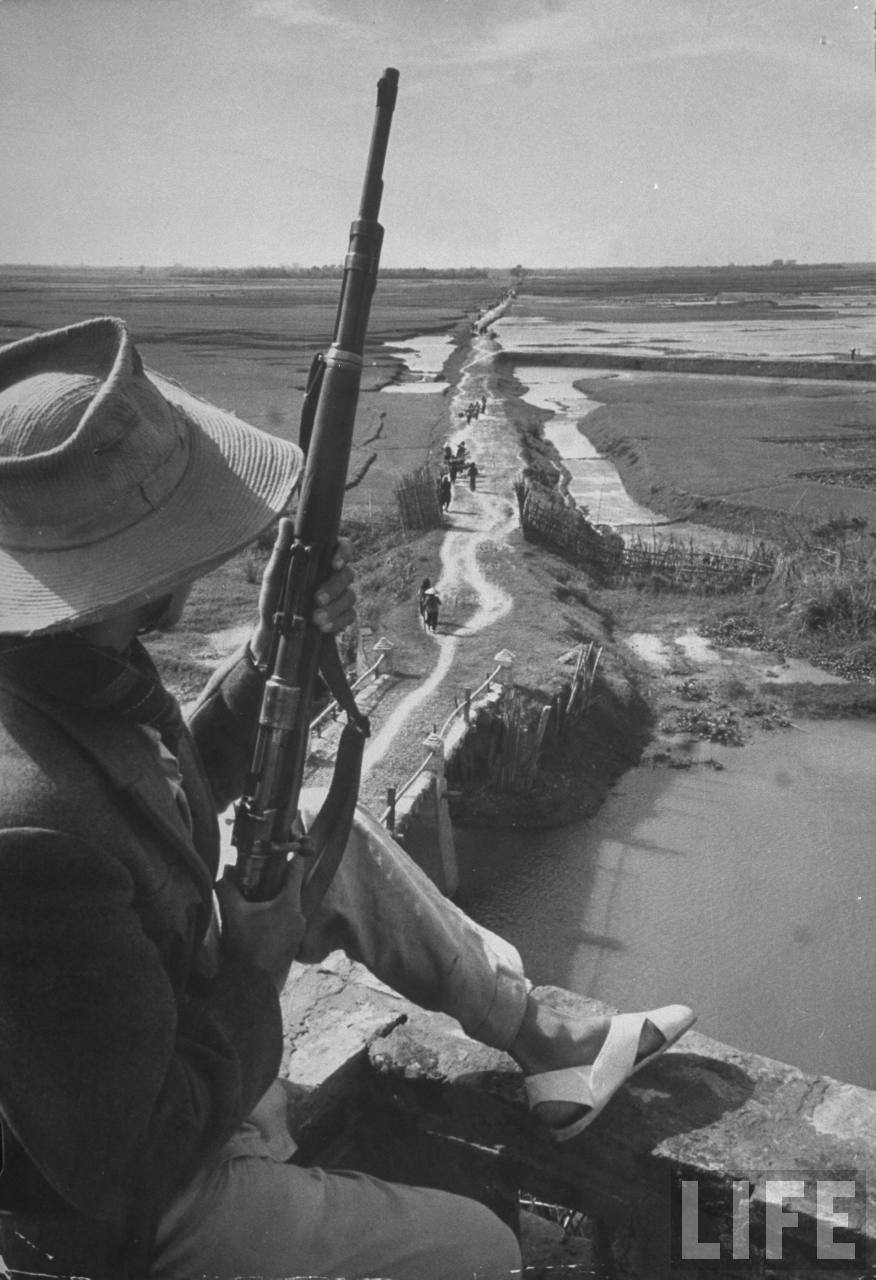
Indochina: French soldier guarding against
Communist infiltration – protecting
colonial interests, 1950.
We know that Rome was a mean ruler of its empire. Judging by our recent history (as well as from the British Empire, the French in Algeria & Indochina, the U.S. in Latin America, but especially now in Iraq) we can surmise the tax collectors and soldiers of Rome were critical elements in keeping the colonized subdued and oppressed enough so as to cut to the quick any attempts at insurrection. Life was hard under Roman rule and the tax collector and soldiers made sure it would stay that way, but in order for tax collecting and soldiering to be viable professions then tax collectors and soldiers would have to take more than they were required to take and to do so by force.
I believe there were at least three reasons why tax collectors and soldiers were called out as distinct groups in the passage above. 1) To Luke’s readers the repentance of these groups would have been particularly significant. 2) The members of these groups would have been particularly convicted by John’s message of repentance. 3) John’s specific messages to these two groups calls them to live righteously which, by implication, challenges the very existence of their professions and the empire which they serve.
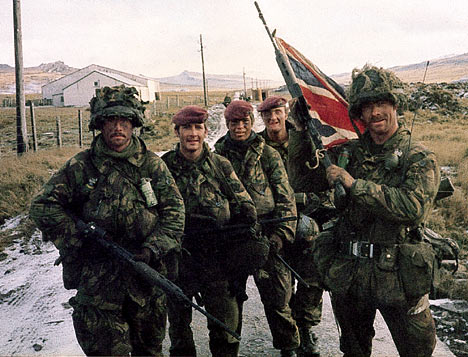
Saving imperial face: British soldiers in
the Falkland islands, 1982.
John does not directly say all tax collecting or all soldiering is wrong (at least at first glance and with our modern assumptions). But he also does not say anything in support of either. Rather than say to quit their jobs he merely says don’t do those things in your job you rationalize but know are immoral. Of course that’s like telling a politician not to lie. At some point a crisis will emerge and one will have to decide to choose the status quo or what is right. A politician who refuses to lie will eventually be crucified on the altar of politics.
Tax collecting and soldiering for Rome had at their very roots in rationalizations of immorality. John was not interested in followers who made surface choices only to regret them later. He wanted heart changes that would then have more visible and social evidences as a natural consequence of the heart change. He focused on the heart of his listeners because he knew the rest would follow. He did not have to say don’t collude with Rome or don’t work for the empire. All he had to say was repent and be committed to righteousness.
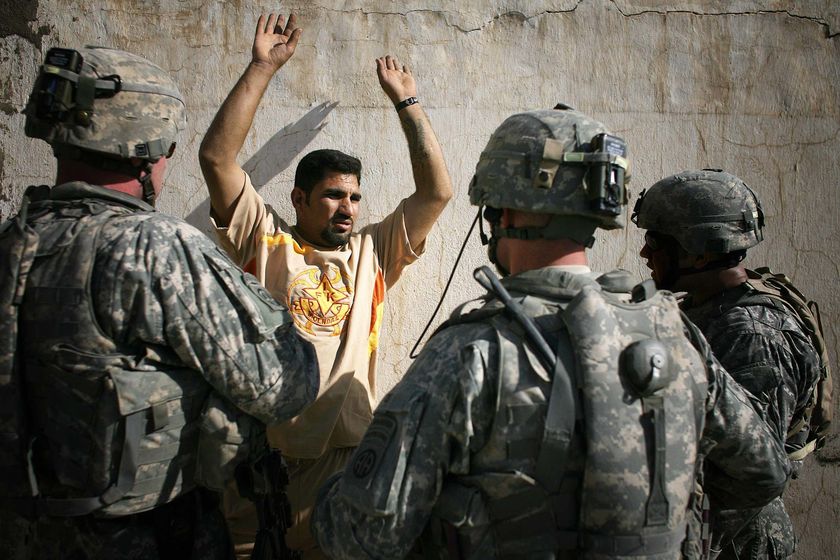
“Democracy” at gun point: U.S. soldiers in
someone else’s country (Iraq).
One could then draw a conclusion: To be either a tax collector or a soldier in support of an empire is ultimately a choice for unrighteousness. If this is what John is saying then we can also draw the conclusion that the ministry and message of John was both spiritual (of the inner person) and political (of the social relations we create and inhabit). For the Christian this has great significance. The implication is that there are many things we will have to give up if we are to truly repent – truly repent as the most existential of all radical, life changing, loving choices we make – precisely because we find there are no other possible choices. We may have to give up our professions, our security, our apparent good standing in society, and much of what we cling to. But there is no formula for sorting it out. If we follow John’s command then we begin with repentance. What this leaves us with is the difficult fact that there are no easy answers, or maybe it’s better to say there are no easy choices – something John’s tax collectors and soldiers were just finding out.
As a final note I must say that I have not sorted all this out for myself either. I have not gone so far as to stop paying taxes or to stand in protest outside the federal building. I also still love a good war movie, I am still amazed at the courage of many soldiers, and I still get emotional when I hear the Star Spangled Banner. But I don’t like saying the pledge of allegiance very much or saluting the flag. I find being a U.S. citizen to be rife with contradictions. But I find the same thing within myself as well.


 pilgrimakimbo