>Hauerwas on Bonhoeffer

>I have been reading Stanley Hauerwas’ book The Peaceable Kingdom: A Primer in Christian Ethics and I love it. I must say that this book, along with some others, are encouraging my views to change (views that were trained into me by the chistianity in which I grew up) regarding politics, faith, and action. In other words, I am slowly shedding my Baptist/Evangelical acceptance (dare I say love) of “righteous violence” and “just war” for a more pacifist perspective.

Because I know little of Hauerwas I went looking for him on the Interwebs. I came across this lecture of Hauerwas speaking on Dietrich Bonhoeffer’s perspective on truth. It is excellent.

>Zinn on War and Social Justice

>Howard Zinn gave a talk just after the presidential election. It is worth listening to. The audio/picture don’t quite match in the video in the intro, but the rest looks okay.

http://video.google.com/googleplayer.swf?docid=-7945130554885211401&hl=en&fs=true

He mentions the Universal Declaration of Human Rights. If you are not familiar with it, check it out here, and learn more about it here.

Also, Democracy Now is one of my favorite news programs. I usually watch/listen to it online while I eat lunch and do emails.

hero of the open city

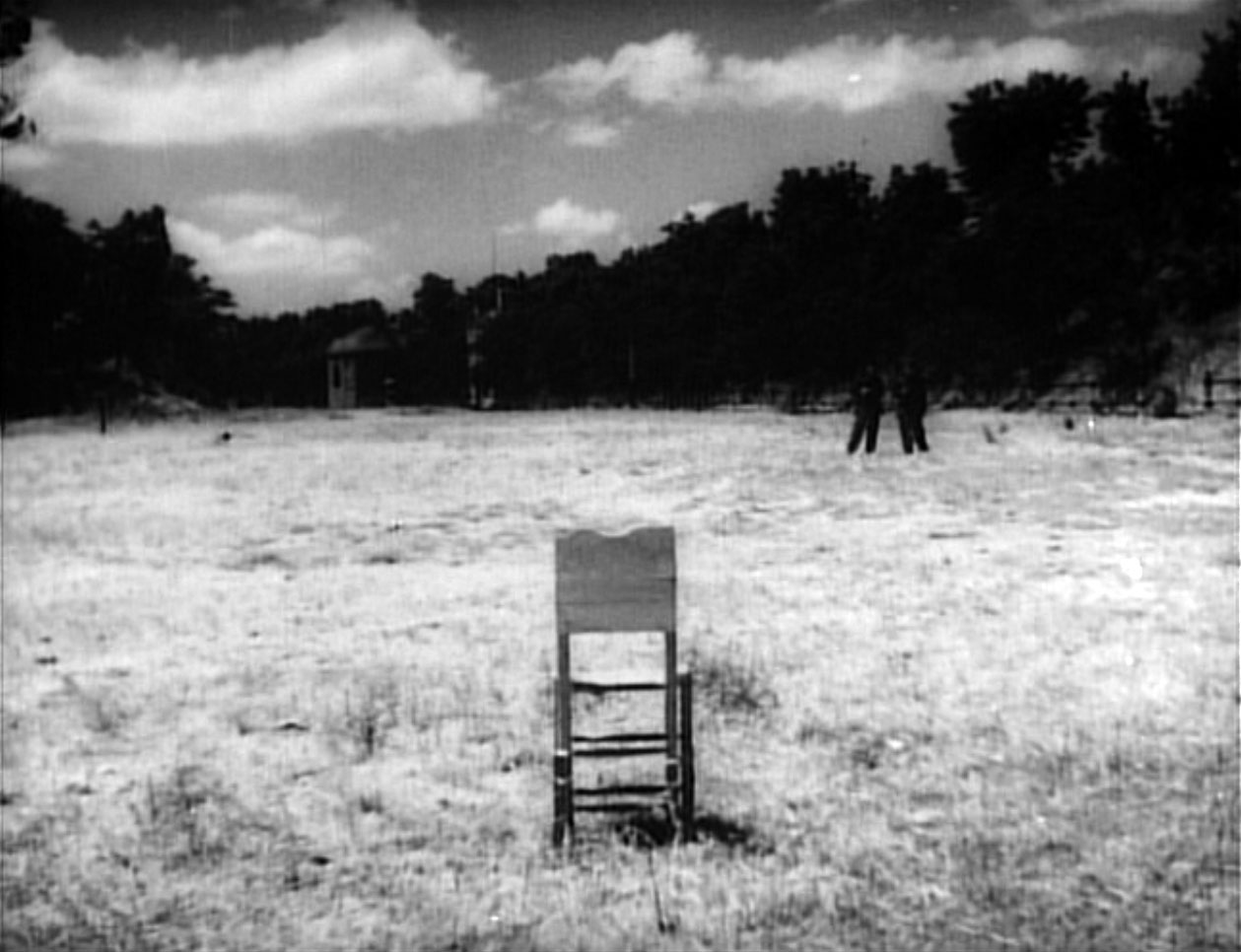
This is one of the most haunting images I can think of in cinema.

It is a simple image, not particularly artistic or striking. It is just a chair in a field on a bright sunny day, but it is loaded with meaning. This image comes toward the end of Roma, città aperta (1945). The chair is the place of execution of for Don Pietro Pellegrini (Aldo Fabrizi), a collaborator in the resistance against the fascists.


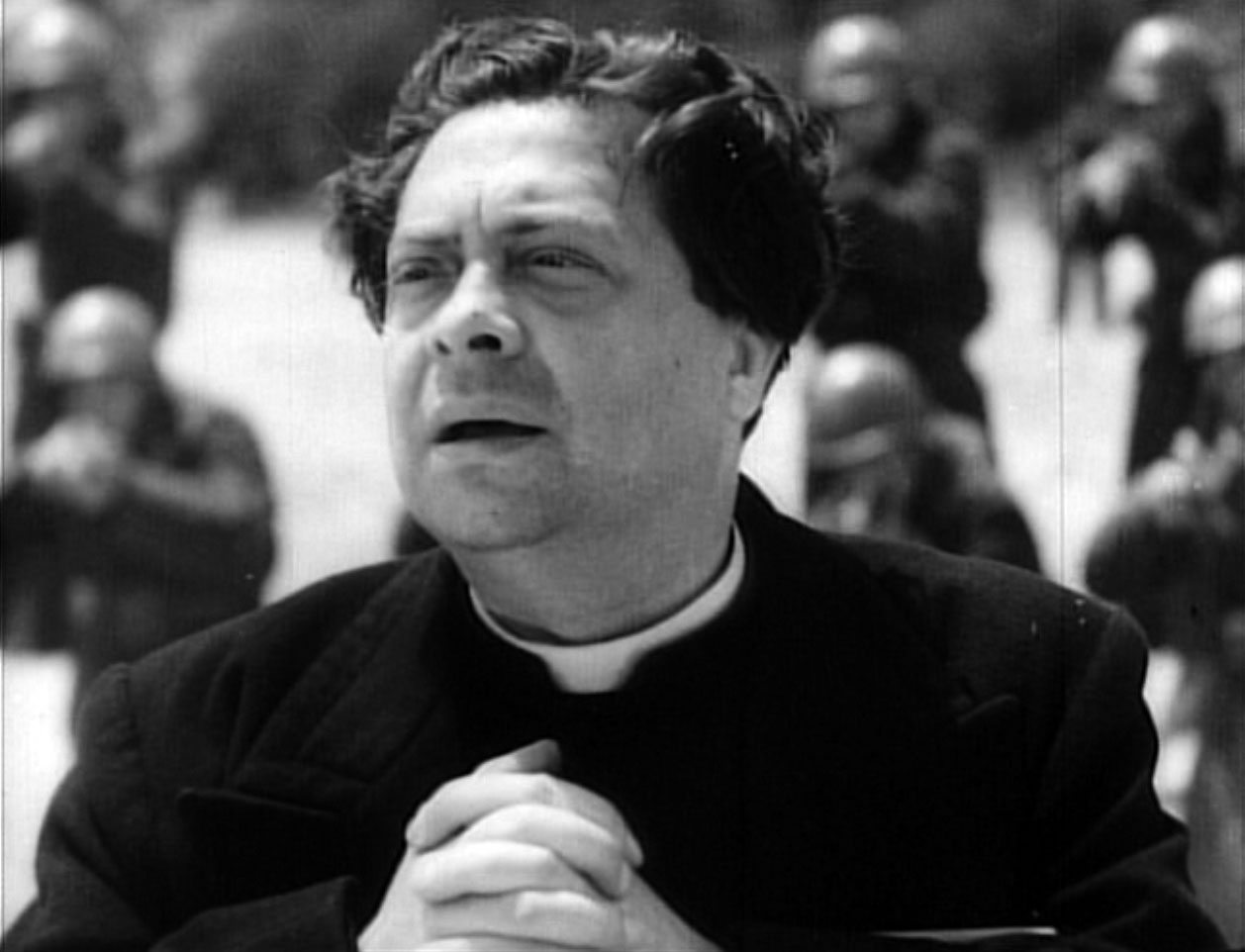
I find that great films often draw me in because of their heroes. Though I care about good cinematography and editing, or creative soundtracks and screenplays, what sticks with me longest are the heroes. And let’s not forget, superheroes are not heroes. Ordinary people who do what is right in the midst of extraordinary circumstances are heroes.* Don Pietro is a hero in this sense. A priest and a schoolteacher, he also knows that doing what is right trumps mere survival. He says, just prior to his execution, that it’s easy to die well, but living well is the real challenge. He is a man who lived well and the forces of darkness killed him for it.

I am not saying anything new here. If you’ve seen Roma, città aperta then you know I have not discovered anything new in the film. But I am struck by two things: 1) the film foregrounds the socialist/communist struggle against the fascists, and yet it is a priest of the most traditional of traditional Christian traditions who is the hero, and 2) it seems we don’t see these kinds of heroes in film as much anymore. What makes both of these points linger is the deep sense of humanity into which Rossellini taps.

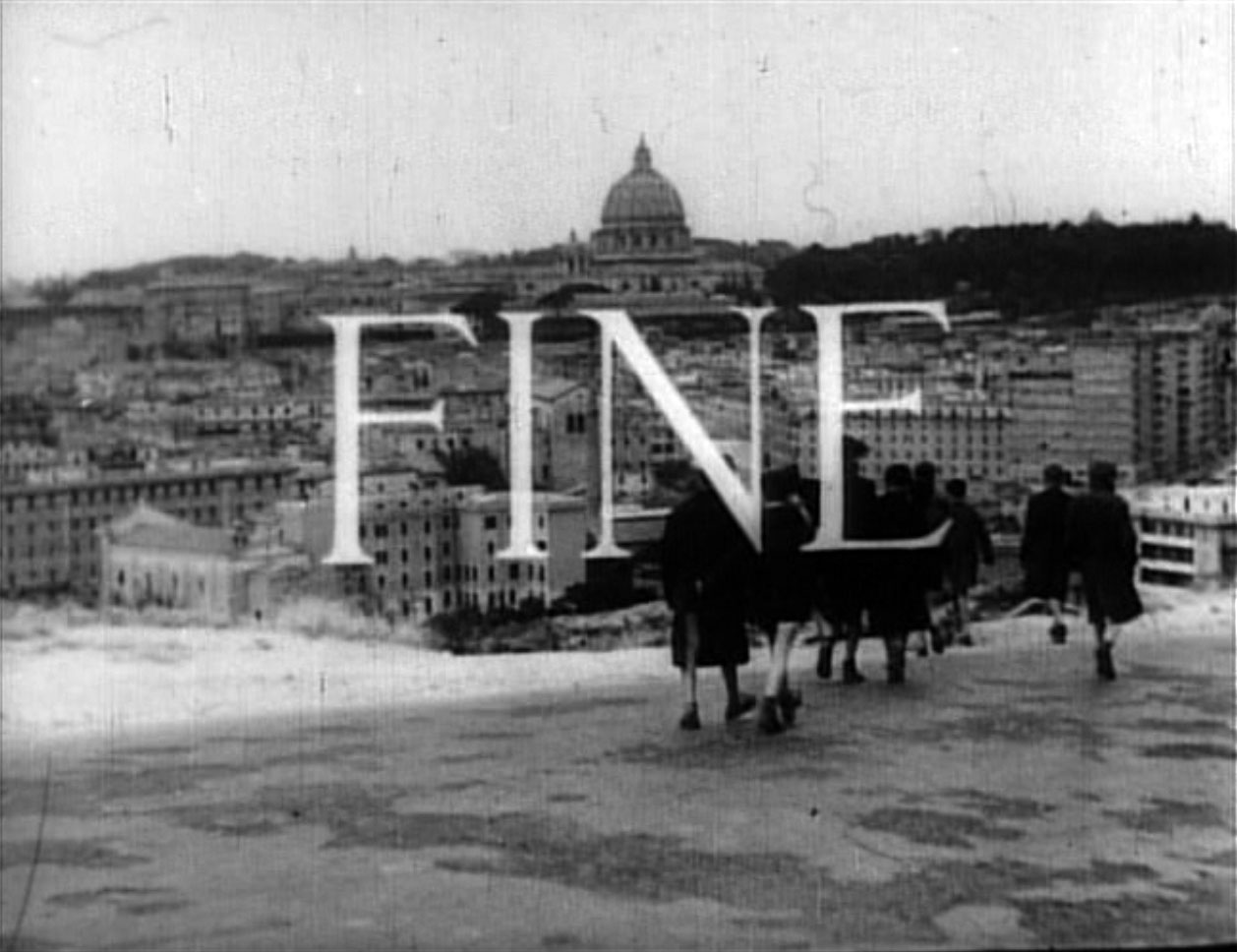
One aspect of Italian neo-realism is its ability to take the ordinary, portray it rather straightforwardly, and yet load it with both connotative and denotative meaning. The ending is a good example. After Don Pietro is murdered by the fascists, his students, who watched his killing, walk together back to the city. In the middle ground are modern apartment buildings. In the distance is the dome of St. Peter’s (I believe).

This image all about the future. Life goes on. The future will need to be rebuilt from the ruins of the present. These kids represent that future. The adults have let them down as a result of their wars. But their teacher has shown what a true hero is made of. It’s a simple ending, in a way. And yet, it has weight, depth, and irony. The irony comes from the fact that while we watch the future walk into the city we also see the word FINE across the image. It is both the end and a new beginning, however uncertain. This is the kind of filmmaking that I love.

*This may be why I find movies like Ironman to be all surface and ultimately unsatisfying – even boring. There are thrills but nothing really of any consequence. Ironman, as just an example of many, is somewhat entertaining, but already consumed and forgotten.

>Walter Wink on Nonviolence for the Violent

>I knew next to nothing about Walter Wink until recently. Now I have become a fan.

Henry V


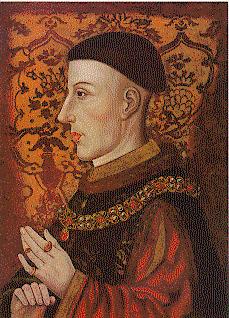
Good king Henry V sporting a
popular haircut of the day.

I haven’t been blogging as much about movies lately, and that’s for a number of reasons, mostly because it’s been Summer and we’ve been outside more than in, and also because I’ve been picking up books more than films. Now the leaves are beginning to turn and we are watching a few more films. Recently Lily and I watched Kenneth Branagh’s brilliant Henry V (1989). This was not Lily’s first Shakespeare, but it’s one of her first, and maybe her first not directed for kids. A few times we paused and I explained what was going on, or who was who, but for the most the part the film is easy to follow. More than this, it is a powerful play with great scenes, and great dialogue and speeches. But what struck me the most this time was how it portrayed war.

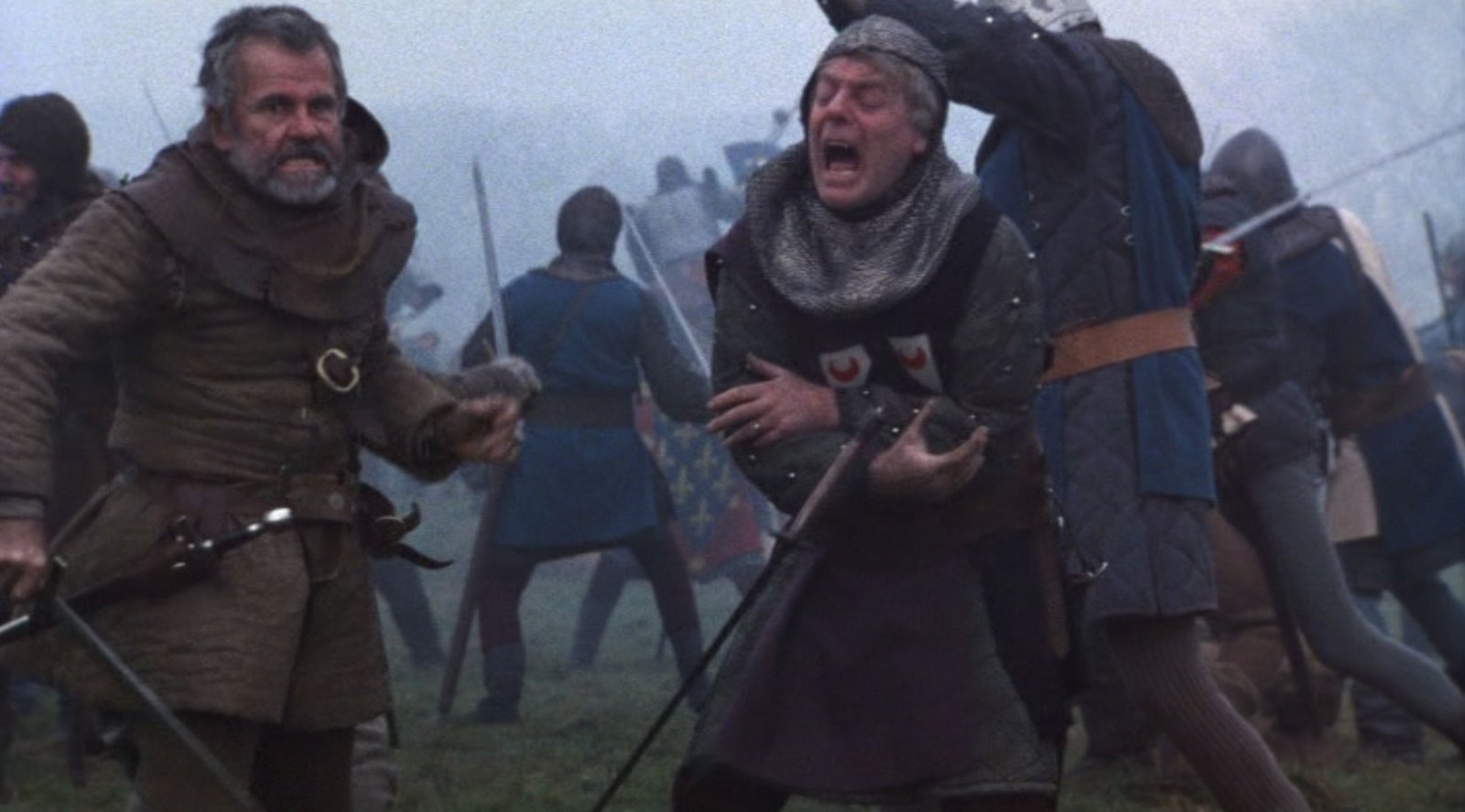
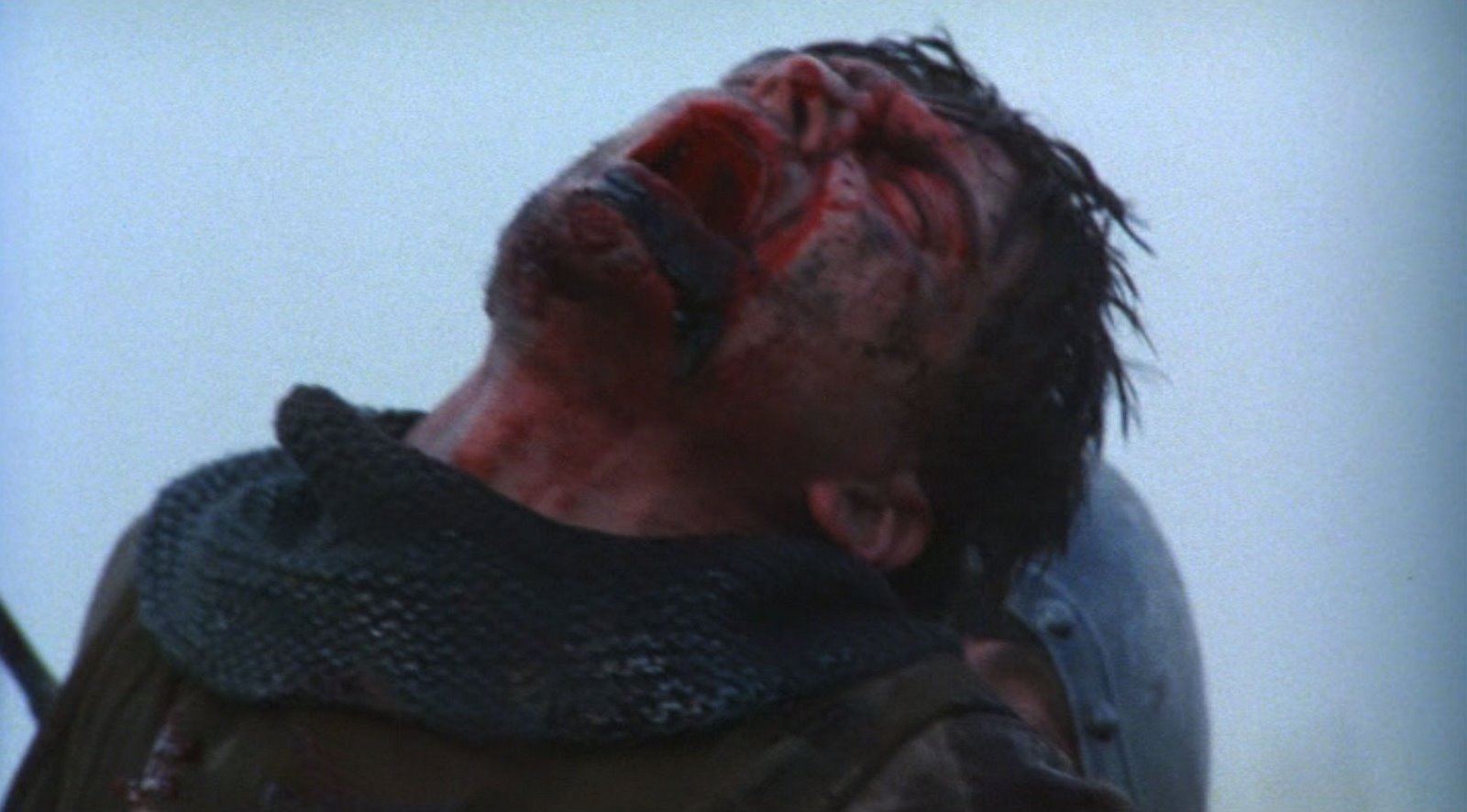
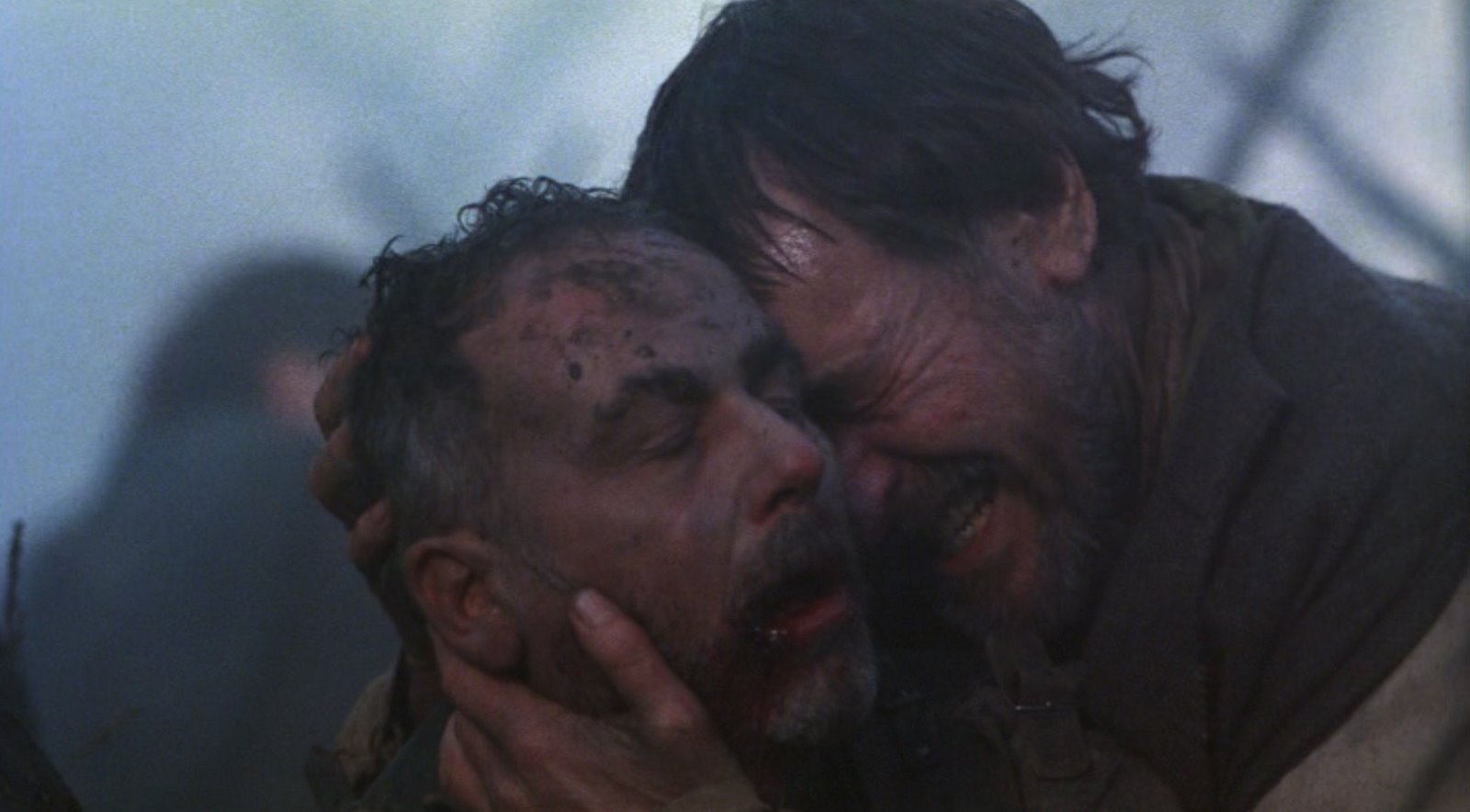
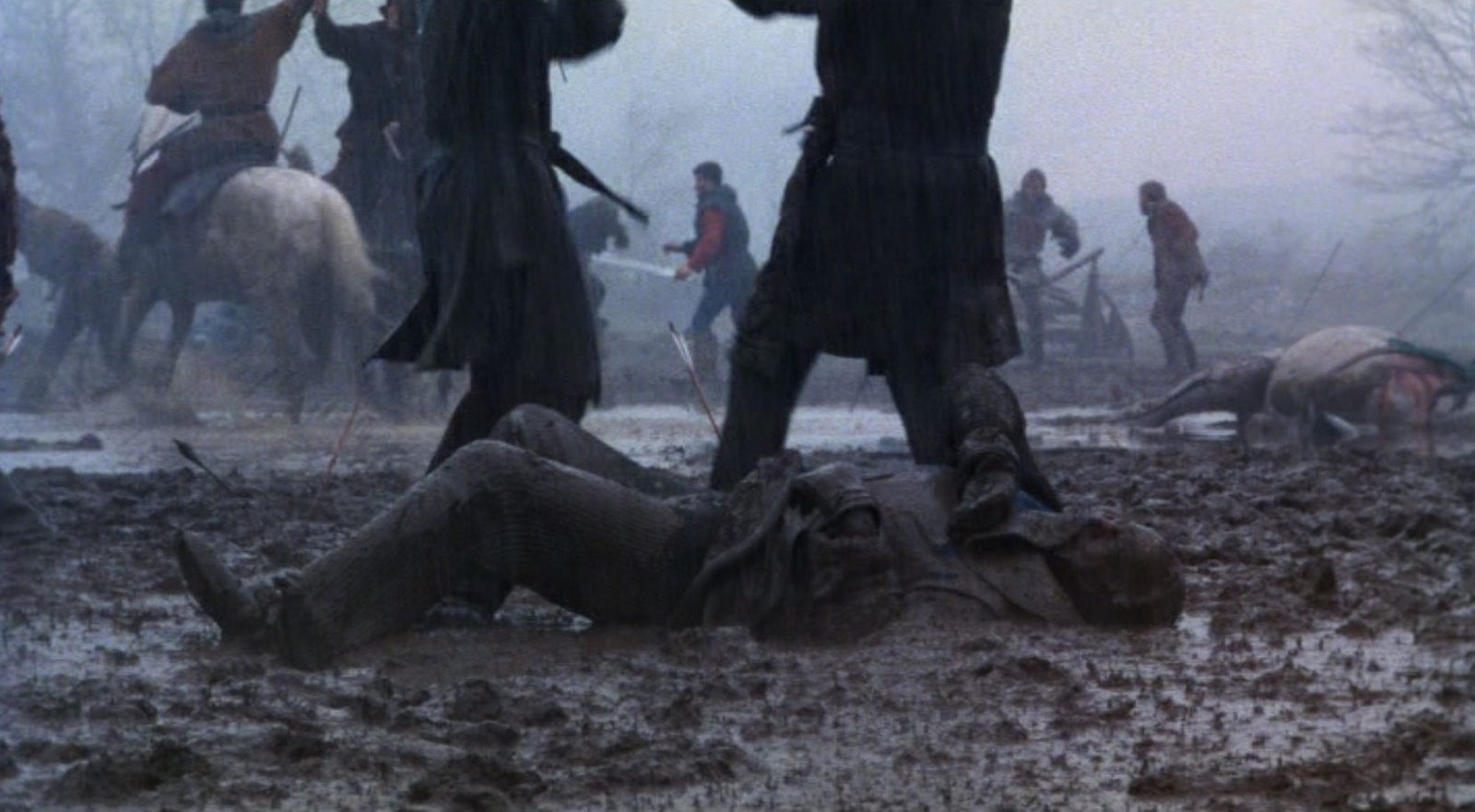
War is terrible. The great battle in Henry V comes right after one of the English language’s greatest rallying speeches – the St. Crispin’s Day speech. From the speech we get the title for Band of Brothers. In that speech young king Henry rallies his troops with promises of glory and honor, of future stories and brotherhood. That speech spins a aura of wonder and excitement around the coming battle. But then we get into the battle and it is awful. I am thankful Branagh took that opportunity to de-glorify war somewhat.

I was a little concerned showing Lily this film because of both the war images and the difficulty of the language, but I’m glad I did. We talked about the gruesomeness of the fighting and what that means. She and I have also talked numerous times about how films are made and that movie blood is really red paint, etc., so she gets it, but still images do move the soul.

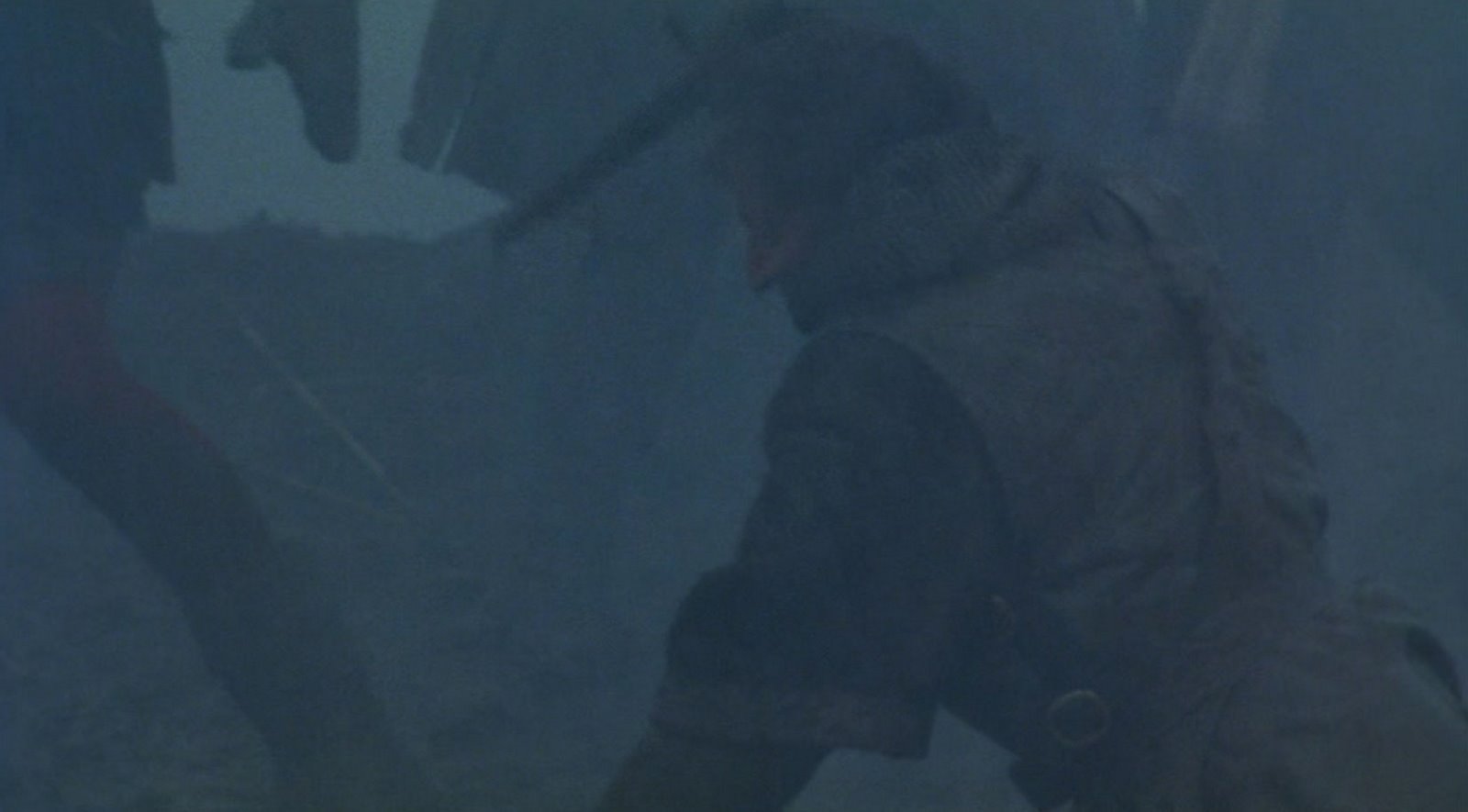
Here are just a few of the many images of the horror, sadness, ugliness, and suffering of war from Henry V:

Of course the English win that war and they do go on to bask in a kind of earthly glory. Such are the lives of victors. But I hope I never forget the great gulf there is between speeches made about war and war itself – even if the speeches be written by the Bard himself and the battles won. I always want to remember that political speeches about the sacrifices made by soldiers and their families are easy to give.

>Democracy at a Crossroads: Structures of Power Outside the RNC

>We know this country has become polarized on multiple levels. We know that a thriving democracy is a struggle. But we also know that there is a difference between the messiness of democratic action and the actions of heavy handed social control. Sometimes (usually) messiness is better, though it is unpredictable.

With this in mind I have been curious about the two big political party conventions and the manner in which those with the guns and body armor are going to support democracy. The Democratic National Convention seemed to go off without a hitch. They even opened up a giant stadium to let in everyone they could. The Republican National Convention (RNC) is another story. So far there have been numerous riots, police violence, and arrests.

Question: Should police use force against peaceful political protesters? I can understand trying to stop violent protesters from hurting others or damaging property – though property is not so nearly as sacred as human life or well being. Although I am against violence I am not against being rowdy and noisy for important social and political concerns. Consider this video* of police attacking apparently peaceful protesters at the RNC:

What you see in this clip are people walking along a street. What you also see and hear are heavily armored police officers shooting some of the walkers with rubber bullets, which is even more aggressive than hitting someone with a baton in my opinion. The police also use tear gas to split up the crowd. I cannot tell exactly what is was these particular walkers were doing that was so bad, but I doubt rubber bullets and tear gas was necessary… unless the goal is to make sure, with complete certainty, that the hierarchies of power remain intact and understood.

Or consider this video clip that hearkens back to those flower-power protest images from the 1960s:

http://www.indybay.org/js/flowplayer/FlowPlayer.swf?config=%7BvideoFile%3A%27http%3A%2F%2Fwww%2Eindybay%2Eorg%2Fuploads%2F2008%2F09%2F01%2Fpepper%2Empg%5Fpreview%5F%2Eflv%27%2CsplashImageFile%3A%27http%3A%2F%2Fwww%2Eindybay%2Eorg%2Fim%2Fplay%2Dbutton%2D328x240%2Ejpg%27%2Cloop%3Afalse%2CautoPlay%3Afalse%2CautoBuffering%3Afalse%2CbufferLength%3A5%2CinitialScale%3A%27fit%27%2CbaseURL%3A%27http%3A%2F%2Fwww%2Eindybay%2Eorg%2Fjs%2Fflowplayer%27%2Cembedded%3Atrue%7D

I cannot say the woman in the green tank-top is acting in the most wise manner (at least for her own safety), but take a moment to compare the dress and collective action of the two different kinds of people in this video. One group seems rather loosely organized at best, wearing ordinary street clothes, and looking much like you and your friends. The other group is clad head-to-toe in black armor (rainbow plaid armor is not nearly as menacing), is fully organized into a phalanx, and is looking like extras from a Robocop movie. Honestly, I bet they love putting on that stuff.

Democracy is messy. Protest are necessary. Violence should be avoided. And people should be able to march up and down the streets without fear of tear gas, rubber bullets, or menacing storm troopers inciting violence. (I say inciting because their very presence, demeanor, and visual appearance is designed to be threatening.) I cannot help but think of some police officer yelling “This is no time for democracy, this the the Republican National Convention!” Or, the police thinking these protesters are stupid idiots for showing up with flowers to a tear gas fight.

But other interesting things have been happening related to the RNC. These include the raiding of homes of “suspected” protesters, such as in this video:

In light of that video remember these important words:

The right of the people to be secure in their persons, houses, papers, and effects, against unreasonable searches and seizures, shall not be violated, and no Warrants shall issue, but upon probable cause, supported by Oath or affirmation, and particularly describing the place to be searched, and the persons or things to be seized. (Amendment 4 to the U.S. Constitution)

Has line been crossed here? I can’t say for sure, but seems likely. I doubt there was probable cause.

And there was the raiding of homes of “suspected” journalists (who WERE journalists), such as in this video:

In light of this raid consider these important words:

Congress shall make no law respecting an establishment of religion, or prohibiting the free exercise thereof; or abridging the freedom of speech, or of the press; or the right of the people peaceably to assemble, and to petition the Government for a redress of grievances. (Amendment 1 of the U.S. Constitution)

Has line been crossed here? Looks probable.

Police also confiscated citizen journalists’ cameras and computers, as described in this video:

What is going on here? What is the answer to the question: Why are these police actions necessary? What is being protected? What is gained?

Not necessarily more important than the above situations and police actions, but certainly very critical when it comes to the importance and necessity of a free press in a democracy, here is a clip of the intrepid Amy Goodman of Democracy Now being arrested for investigating the brutal arrest of her producers Sharif Abdel Kouddous and Nicole Salazar:

And here is the video taken by Nicole Salazar as she was beaten and thrown to the ground by police even though she was telling them she was Press and was clearly wearing her Press card around her neck.

One can only conclude one of three things: 1) The safety of the police and of others was so grave that the police had no other choice but to treat her that way, 2) the police became so angry that their emotions made them act irrationally, or 3) there is a planned and concerted effort to intimidate and control any media that does not conform to the predictable and safe (to the established hierarchy of power) norms as exhibited by the major networks. The first choice is, at best, a stretch, and mostly likely ludicrous. The second choice is probably partly true, but too many law enforcement individuals were involved for it to merely be runaway emotions. The third is the most likely scenario, and is born of fear. And fear is one of the greatest threats to democracy.

A whole lot of questions are raised by these video clips, and there are many more videos of the same. I would argue that we are witnessing a time in which a sector of the population is living in fear that their world will not last, and that sector are those currently in positions of power. This may or may not be true. I also believe, however, that this is really nothing new. We have seen this many times before in this country in many different forms. In fact, that is part and parcel of the story of humankind.

Keep this in mind, if a free press is critical for a thriving democracy then it will, by definition and implication, be a threat to someone. If a democracy is threatening to those who need predictable power to get and keep what they want, then, logically a free press is a threat to those people. What do we have if we don’t have a free press? Do we have a democracy?

* Several of the video clips above were produced by The Uptake.
In Memoriam

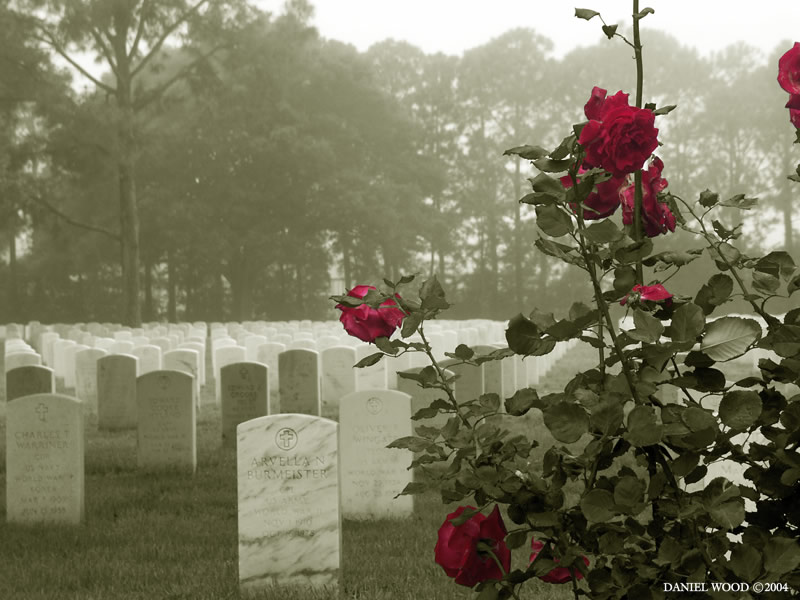
War is a nasty business. This Memorial Day gives us a chance to remember those U.S. soldiers who have died fighting in wars. This is important. The sacrifice of a life for any cause is a substantial tear in the fabric of creation. Death affects many, and not only those who die. Death affects families, friends, co-workers, and communities. Death affects us all. Death is ugly, horrible, detestable. Let us then commemorate the sacrifice innumerable soldiers have made over the years.

Let us also remember that the reasons soldiers go to war and are willing to lay down their lives are often very different reasons than of those who send them to war. This is not to say every soldier has pure and righteous motives, but the glory of the soldier often hides the duplicitous and dubious goals of the political and economic motivations that seem to underlie every war. Let us not forget the difference.

And then we have the great burden on all of humanity that are wars. That soldiers die is terrible, but non-soldiers die too, and in often far greater numbers. These other members of humanity include children and other innocents. Let us remember them too.

And let us remember that wars are no grounds upon which to build mythologies.

My desire is to know truth, to understand the consequences, and to act in whatever way I can in light of that truth. My hope is that this Memorial Day is more than just remembering, rather I hope we honor the dead by creating a world in which the soldier is a thing of the past.

Death of even one affects us all.

No man is an island, entire of itself; every man is a piece of the continent, a part of the main. If a clod be washed away by the sea, Europe is the less, as well as if a promontory were, as well as if a manor of thy friend’s or of thine own were: any man’s death diminishes me, because I am involved in mankind, and therefore never send to know for whom the bell tolls; it tolls for thee.

~John Donne, from Meditation XVII
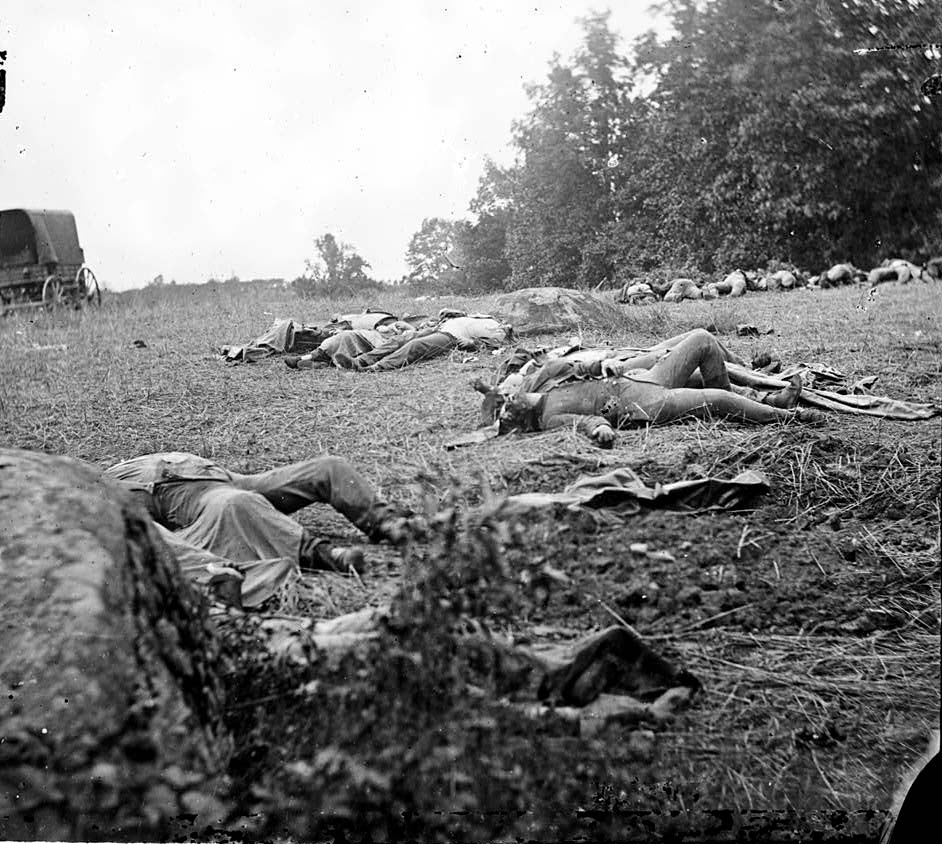
Memorial day was first enacted to commemorate Union soldiers who had died in the bloody American Civil War.

Battle of Gettysburg aftermath. Dead soldiers in the
wheatfield near the Emmittsburg road; 1863 July.
Photograph by Alexander Gardner.

As I get older I have a harder time seeing war as an adventure to be enveloped with brass bands and waving flags, and my simplistic reverence for war heroes is being replaced by a deeper sense of the tragedy of war and the stunning sacrifices made by those who have fought and are currently in war zones.