>Christmas

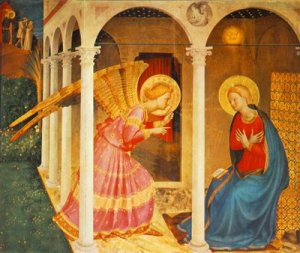
>The Annunciation

And in the sixth month, the angel Gabriel was sent from God into a city of Galilee, called Nazareth, to a virgin espoused to a man whose name was Joseph, of the house of David; and the virgin’s name was Mary. And the angel being come in, said unto her: Hail, full of grace, the Lord is with thee: blessed art thou among women. Who having heard, was troubled at his saying, and thought with herself what manner of salutation this should be. And the angel said to her: Fear not, Mary, for thou hast found grace with God. Behold thou shalt conceive in thy womb, and shalt bring forth a son; and thou shalt call his name Jesus. He shall be great, and shall be called the Son of the most High; and the Lord God shall give unto him the throne of David his father; and he shall reign in the house of Jacob for ever. And of his kingdom there shall be no end. And Mary said to the angel: How shall this be done, because I know not man? And the angel answering, said to her: The Holy Ghost shall come upon thee, and the power of the most High shall overshadow thee. And therefore also the Holy which shall be born of thee shall be called the Son of God. And behold thy cousin Elizabeth, she also hath conceived a son in her old age; and this is the sixth month with her that is called barren: Because no word shall be impossible with God. And Mary said: Behold the handmaid of the Lord; be it done to me according to thy word. And the angel departed from her.


The Nativity

And it came to pass, that in those days there went out a decree from Caesar Augustus, that the whole world should be enrolled. This enrolling was first made by Cyrinus, the governor of Syria. And all went to be enrolled, every one into his own city. And Joseph also went up from Galilee, out of the city of Nazareth into Judea, to the city of David, which is called Bethlehem: because he was of the house and family of David, To be enrolled with Mary his espoused wife, who was with child. And it came to pass, that when they were there, her days were accomplished, that she should be delivered. And she brought forth her firstborn son, and wrapped him up in swaddling clothes, and laid him in a manger; because there was no room for them in the inn.

The Pesentation of Jesus
in the Temple
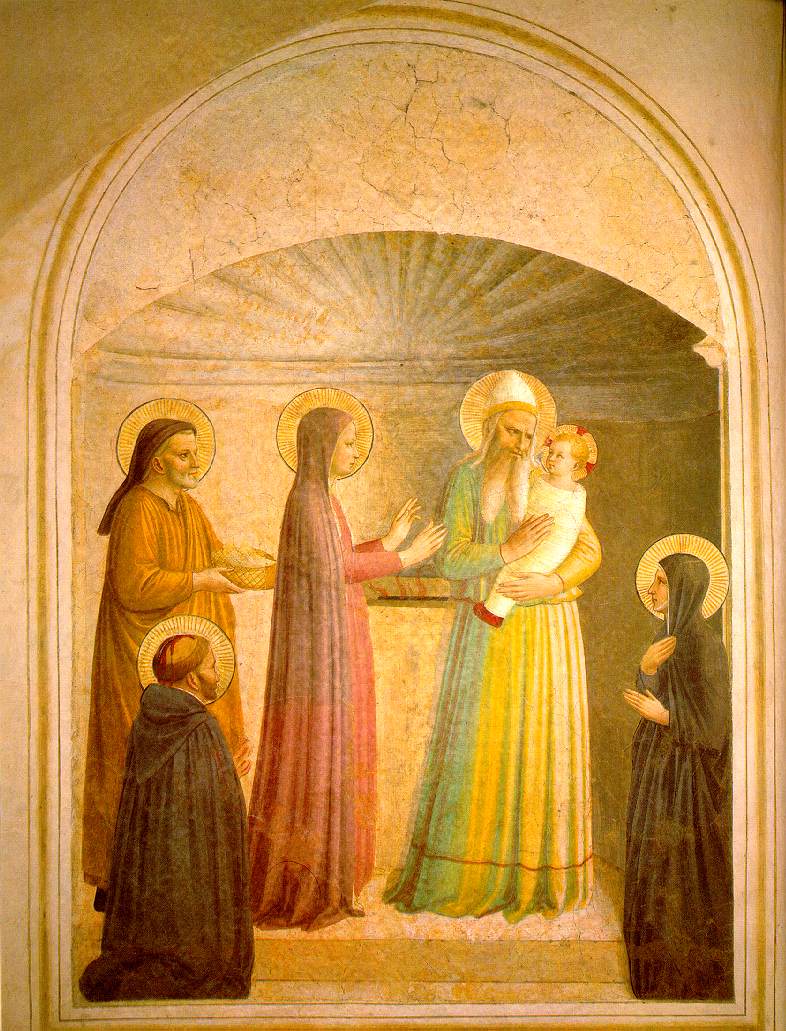

And after the days of her purification, according to the law of Moses, were accomplished, they carried him to Jerusalem, to present him to the Lord: As it is written in the law of the Lord: Every male opening the womb shall be called holy to the Lord: And to offer a sacrifice, according as it is written in the law of the Lord, a pair of turtledoves, or two young pigeons:

And behold there was a man in Jerusalem named Simeon, and this man was just and devout, waiting for the consolation of Israel; and the Holy Ghost was in him. And he had received an answer from the Holy Ghost, that he should not see death, before he had seen the Christ of the Lord. And he came by the Spirit into the temple. And when his parents brought in the child Jesus, to do for him according to the custom of the law, He also took him into his arms, and blessed God, and said:

Now thou dost dismiss thy servant, O Lord, according to thy word in peace;

Because my eyes have seen thy salvation,

Which thou hast prepared before the face of all peoples:

A light to the revelation of the Gentiles, and the glory of thy people Israel.

And his father and mother were wondering at those things which were spoken concerning him. And Simeon blessed them, and said to Mary his mother: Behold this child is set for the fall, and for the resurrection of many in Israel, and for a sign which shall be contradicted; And thy own soul a sword shall pierce, that, out of many hearts, thoughts may be revealed.


The Adoration of the Magi
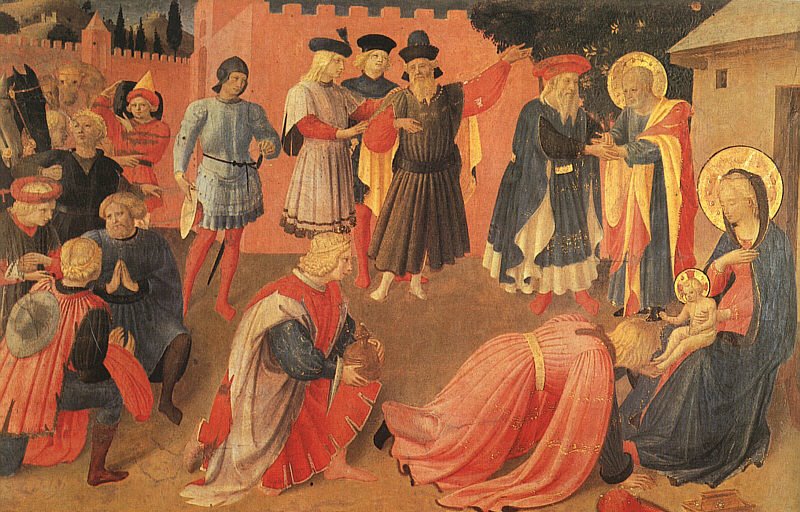
Then Herod, privately calling the wise men, learned diligently of them the time of the star which appeared to them; And sending them into Bethlehem, said: Go and diligently inquire after the child, and when you have found him, bring me word again, that I also may come to adore him. Who having heard the king, went their way; and behold the star which they had seen in the east, went before them, until it came and stood over where the child was. And seeing the star they rejoiced with exceeding great joy. And entering into the house, they found the child with Mary his mother, and falling down they adored him; and opening their treasures, they offered him gifts; gold, frankincense, and myrrh. And having received an answer in sleep that they should not return to Herod, they went back another way into their country


The Flight to Egypt
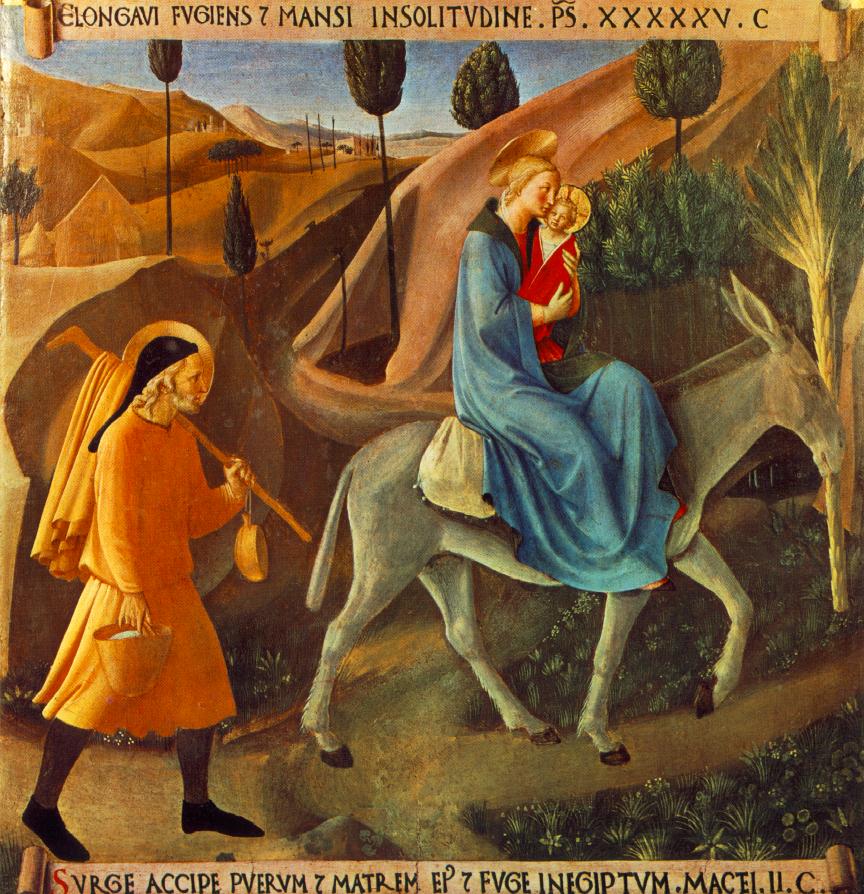

And after they were departed, behold an angel of the Lord appeared in sleep to Joseph, saying: Arise, and take the child and his mother, and fly into Egypt: and be there until I shall tell thee. For it will come to pass that Herod will seek the child to destroy him.

Who arose, and took the child and his mother by night, and retired into Egypt: and he was there until the death of Herod: That it might be fulfilled which the Lord spoke by the prophet, saying: Out of Egypt have I called my son.

The Masacre of the Innocents
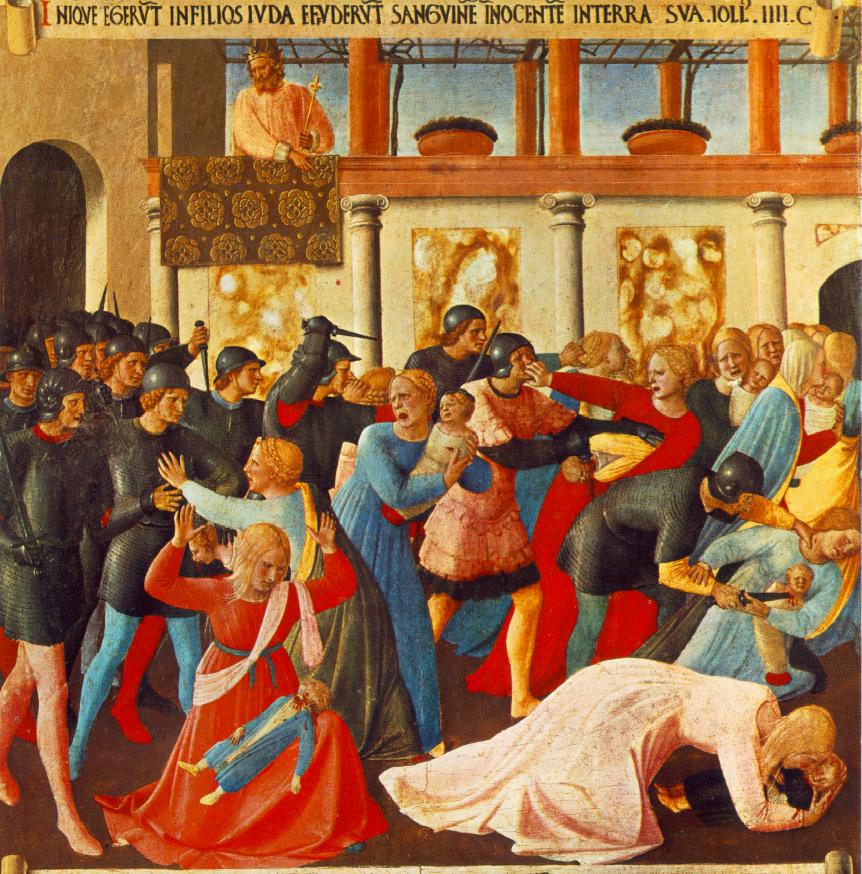

Then Herod perceiving that he was deluded by the wise men, was exceeding angry; and sending killed all the men children that were in Bethlehem, and in all the borders thereof, from two years old and under, according to the time which he had diligently inquired of the wise men. Then was fulfilled that which was spoken by Jeremias the prophet, saying:

A voice in Rama was heard, lamentation and great mourning; Rachel bewailing her children, and would not be comforted, because they are not.

* The paintings are by Fra Angelico (c. 1395 – February 18, 1455). The texts are from the accounts of Luke and Matthew, Douay-Rheims translation (published in 1582).

>Christmas Eve

>The kids are excited. We parents are thinking of all we still have to do. Friends are coming over for dinner and celebration this evening. I hope you too are having a good Christmas Eve.


Vintage 1950s Soviet Christmas card

Lot’s more of those here.

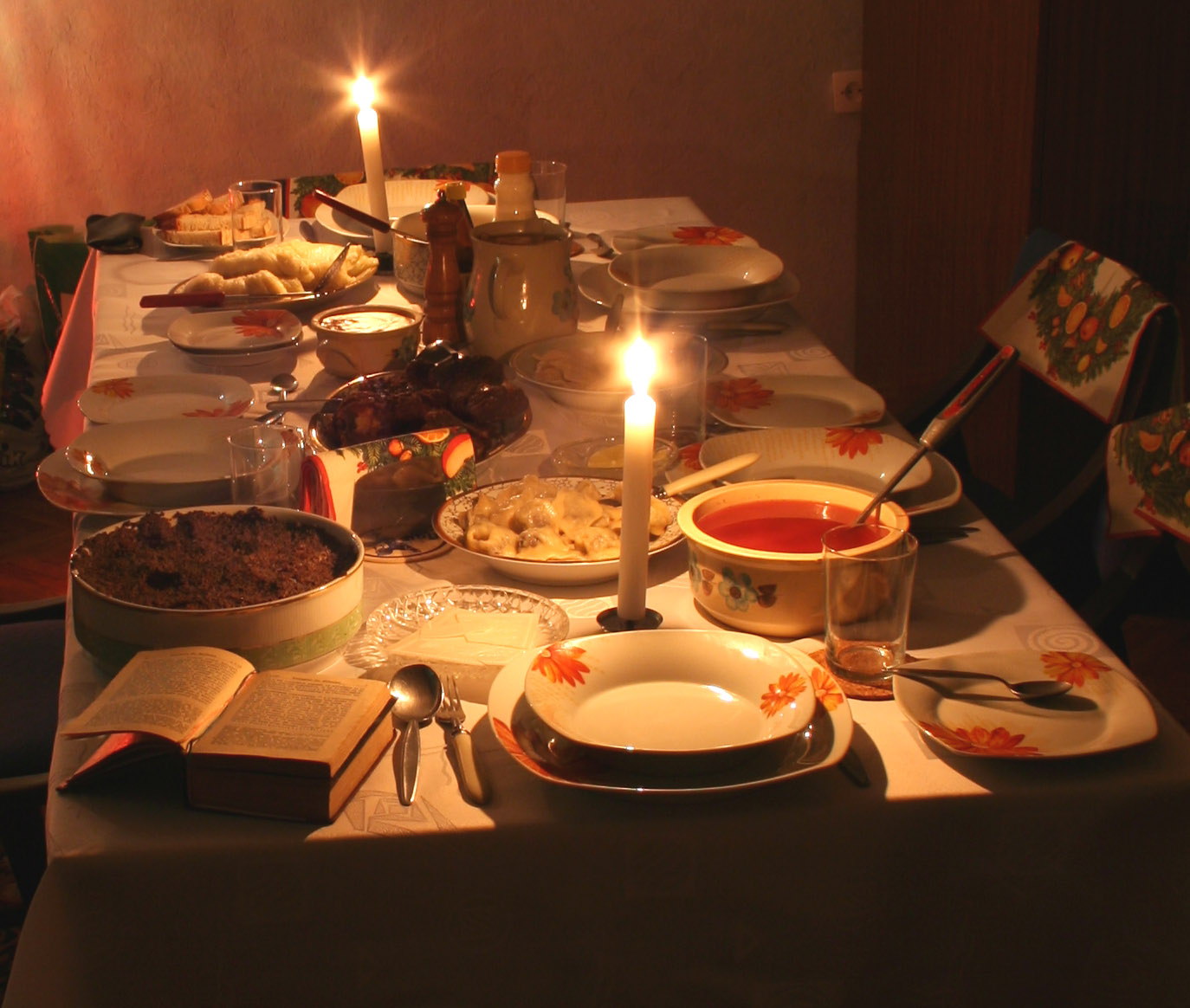
An image of a Polish table spread for a Christmas Eve feast:

I don’t know why I picked this image. We are not Polish. But we are having a feast tonight.

Special Christmas Eve bonus video:

>The Magnificat

>
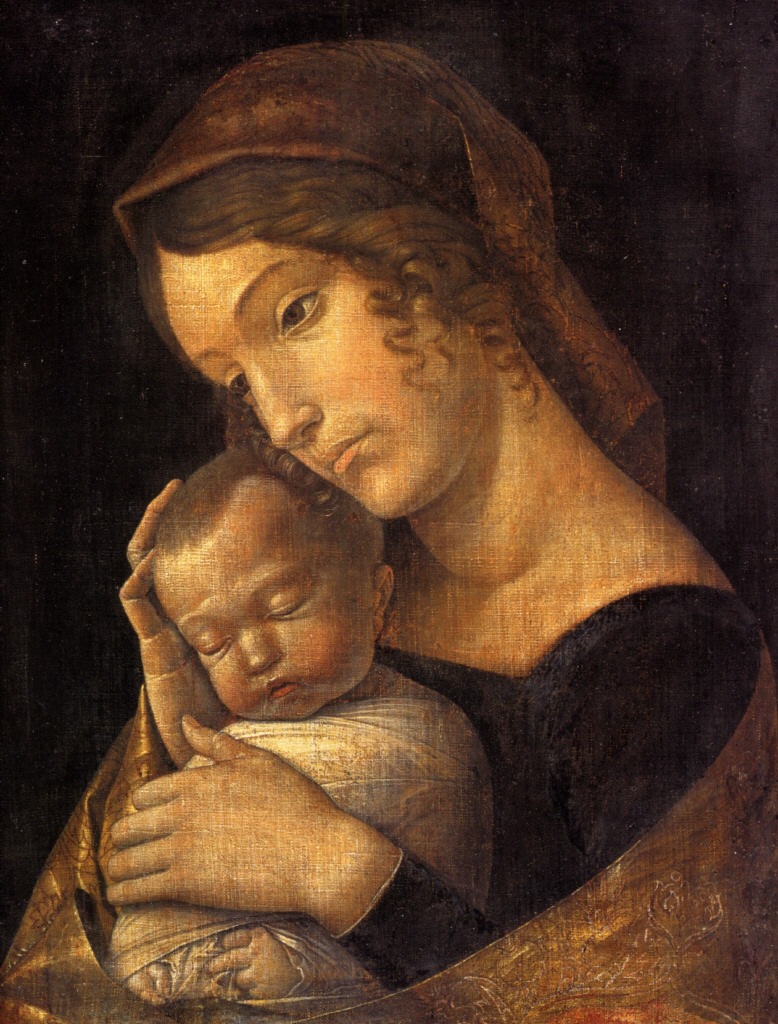
Madonna with Sleeping Child
Andrea Mantegna, 1465-70


And Mary said: My soul doth magnify the Lord.

And my spirit hath rejoiced in God my Saviour.

Because he hath regarded the humility of his handmaid; for behold from henceforth all generations shall call me blessed.

Because he that is mighty, hath done great things to me; and holy is his name.

And his mercy is from generation unto generations, to them that fear him.

He hath shewed might in his arm: he hath scattered the proud in the conceit of their heart.

He hath put down the mighty from their seat, and hath exalted the humble.

He hath filled the hungry with good things; and the rich he hath sent empty away.

He hath received Israel his servant, being mindful of his mercy:

As he spoke to our fathers, to Abraham and to his seed for ever.

* From the Douay-Rheims Bible

>radical is root: emergent once again

>Peter Rollins and Phyllis Tickle are two luminaries in what is being called The Great Emergence. That term, The Great Emergence, comes from Tickle’s book of the same name. That slim book may very well be destined to become a key work in the present and future history or Christianity. I am not yet convinced she is entirely right, but she is interesting and passionate. Rollins, another passionate “emergent”, has written a book called How (Not) to Speak of God which is also a key work of the present and future church.

Here are the two discussing several topics of present day Christianity:

I have to say I like these two a lot. I am still sorting out my thoughts on the whole emergent thing. I am in the process of reading their books as well. Sometimes I feel that I am in the middle of a personal revolution of sorts. Their thinking is helping raise questions that are acting like catalysts to my journey.

Note: I first came across these clips at the Emergent Village site.

>Jesus went to a seminar (and cast his vote?)

>

When we had better cable TV I used to love watching those Biblical histories, those “other” gospels stories, and the various histories of Christianity shows on the History & Discovery channels. A frequent guest interviewee on almost all these programs is John Dominic Crossan, one of the founders of The Jesus Seminar, and an interesting cat. I don’t know much about The Jesus Seminar, and I have nothing new to say about it, but the more I look at it the more fascinated I become. However, the more I look at it the more I also think it represents an entirely wrong way of reading the Bible, or really any work of literature, fiction or non-fiction. This is not to dispute the level of intense scholarship that some of its members achieve, nor the brilliance of individuals such as Crossan. Nor do I wish to dismiss the fundamental questions that it tries to answer.


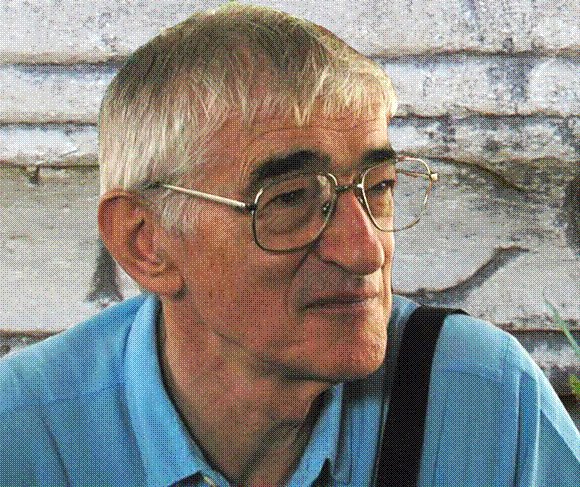
John Dominic Crossan

One thing I find interesting and troubling is that the members of the Jesus Seminar vote on the authenticity of various saying and passages from the Bible. Voting isn’t a bad thing, and it can be a very good way of seeing which way the wind is blowing, as it were. But voting is neither proof nor argument, and thus it can muddy waters already in need of clarity. Voting is also a good way to have one’s say while hiding within a group. Of course Crossan does not hide his thoughts. And to that point I have to say that upon hearing Crossan talk about Jesus I don’t think he fully gets him. Crossan likes to point out that Jesus came to show us a different way to peace, the way of non-violence. Certainly Jesus taught non-violence, but that was a secondary purpose. He was an example for certain, but he was first a priest, and a sacrifice, and an advocate, and a king. He fulfilled a functional role in the story of this world, a role all about our relationship to God first, and then our relationship to each other.


I am not a defender of traditional orthodoxy per se. This is not say that I don’t believe in truth or in the veracity of the Bible, but I do know that there are a lot of “untouchable” doctrines that should be re-examined, even if only to more fully establish their validity. Christianity is a history of doctrines, among other things, and history has a way of entrenching ideas such that they have the appearance of immovability. There is a tendency among all of us to see what we want to see, which includes what we expect to see. With that in mind I welcome challenges to orthodoxy as catalysts toward truth. But it seems to me that voting on the authenticity of Bible passages is a sure way to see what one wants to see and expects to see. It’s a good way to see what it is a group of people generally want to believe. It is not necessarily the truth, or any closer to the truth. And it is not an argument for the truth.

Here are some examples of how the votes have played out regarding some of the most famous sayings of Jesus:

Authentic sayings, as determined by the seminar:

1. Turn the other cheek (92%): Mt 5:39, Lk6:29a

2. Coat & shirt: Mt5:40 (92%), Lk6:29b (90%)

3. Congratulations, poor!: Lk6:20b (91%), Th54 (90%), Mt5:3 (63%)

4. Second mile (90%): Mt5:41

5. Love your enemies: Lk6:27b (84%), Mt5:44b (77%), Lk6:32,35a (56%)

6. Leaven: Lk13:20–21 (83%), Mt13:33 (83%), Th96:1–2 (65%)

7. Emperor & God (82%): Th100:2b–3, Mk12:17b, Lk20:25b, Mt22:21c

8. Give to beggars (81%): Lk6:30a, Mt5:42a

9. Good Samaritan (81%): Lk10:30–35

10. Congrats, hungry!: Lk6:21a (79%), Mt5:6 (59%), Th69:2 (53%)

11. Congrats, sad!: Lk6:21b (79%), Mt5:4 (73%)

12. Shrewd manager (77%): Lk16:1–8a

13. Vineyard laborers (77%): Mt20:1–15

14. Abba, Father (77%): Mt6:9b, Lk11:2c

15. The Mustard Seed: Th20:2–4 (76%), Mk4:30–32 (74%), Lk13:18–19 (69%), Mt13:31–32 (67%)

Some probably authentic sayings, as determined by the seminar:

16. On anxieties, don’t fret (75%): Th36, Lk12:22–23, Mt6:25

17. Lost Coin (75%): Lk15:8–9

18. Foxes have dens: Lk9:58 (74%), Mt8:20 (74%), Th86 (67%)

19. No respect at home: Th31:1 (74%), Lk4:24(71%), Jn4:44 (67%), Mt13:57 (60%), Mk6:4 (58%)

20. Friend at midnight (72%): Lk11:5–8

21. Two masters: Lk16:13a, Mt6:24a (72%); Th47:2 (65%)

22. Treasure: Mt13:44 (71%), Th109 (54%)

23. Lost sheep: Lk15:4–6 (70%), Mt18:12–13 (67%), Th107 (48%)

24. What goes in: Mk7:14–15 (70%), Th14:5 (67%), Mt15:10-11 (63%)

25. Corrupt judge (70%): Lk18:2–5

26. Prodigal son (70%): Lk15:11–32

27. Leave the dead (see also But to bring a sword, Nazirite): Mt8:22 (70%), Lk9:59–60 (69%)

28. Castration for Heaven (see also Origen, Antithesis of the Law) (70%): Mt19:12a

29. By their fruit (69%) (see Antinomianism): Mt7:16b, Th45:1a, Lk6:44b (56%)

30. The dinner party, The wedding celebration: Th64:1–11 (69%), Lk14:16-23 (56%), Mt22:2-13 (26%)

This strikes me as odd. Is it scholarship? What do you think?

hero of the open city

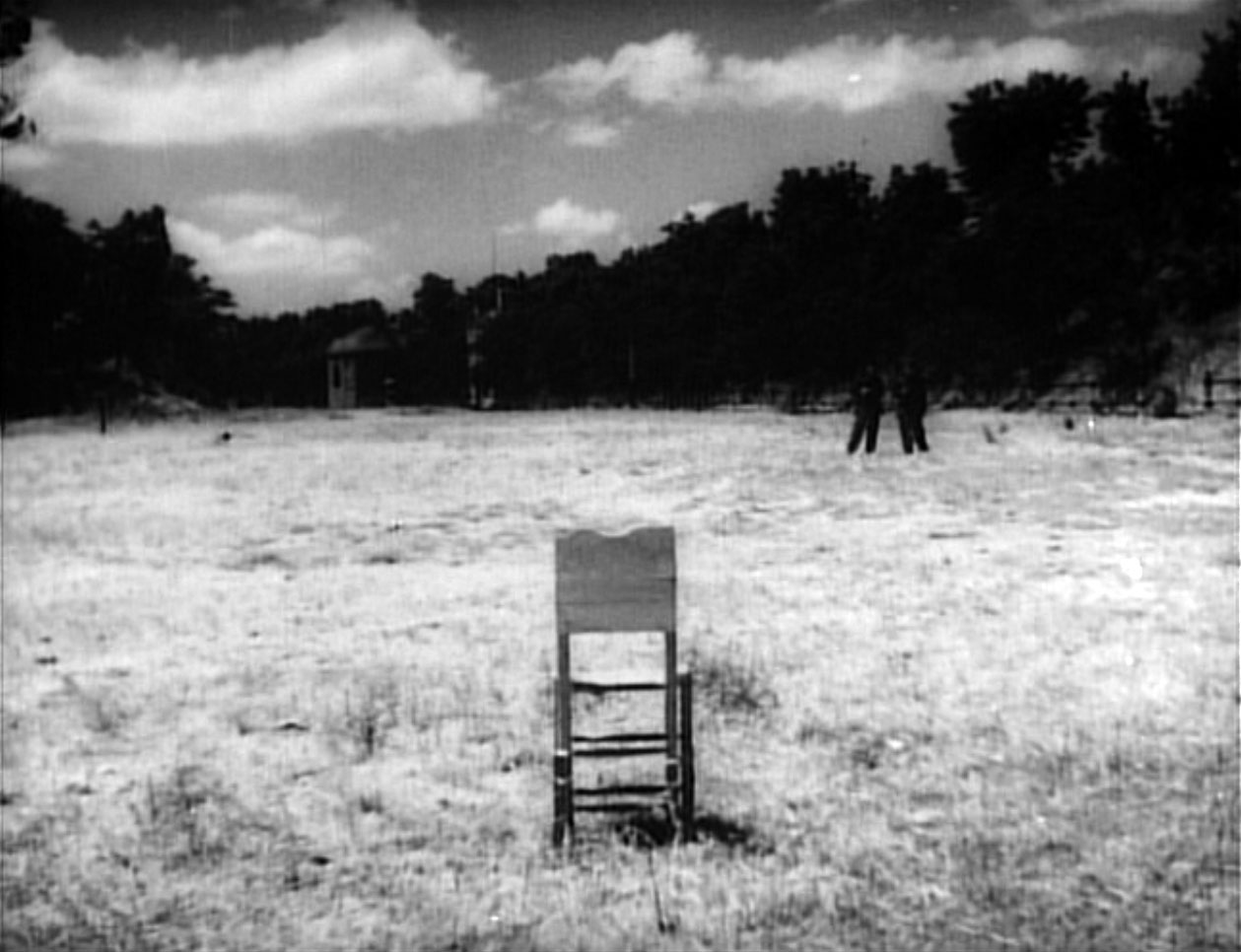
This is one of the most haunting images I can think of in cinema.

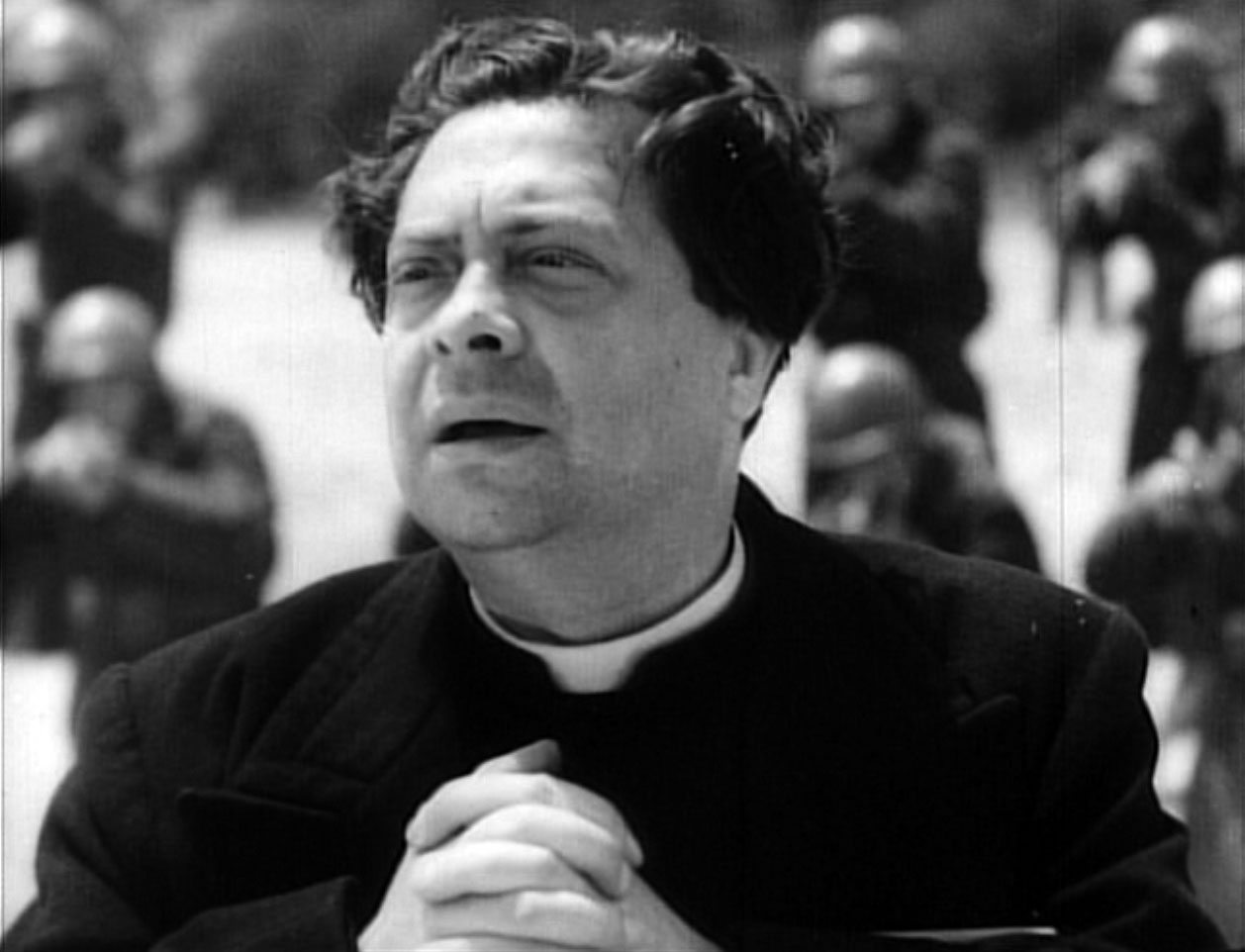
It is a simple image, not particularly artistic or striking. It is just a chair in a field on a bright sunny day, but it is loaded with meaning. This image comes toward the end of Roma, città aperta (1945). The chair is the place of execution of for Don Pietro Pellegrini (Aldo Fabrizi), a collaborator in the resistance against the fascists.


I find that great films often draw me in because of their heroes. Though I care about good cinematography and editing, or creative soundtracks and screenplays, what sticks with me longest are the heroes. And let’s not forget, superheroes are not heroes. Ordinary people who do what is right in the midst of extraordinary circumstances are heroes.* Don Pietro is a hero in this sense. A priest and a schoolteacher, he also knows that doing what is right trumps mere survival. He says, just prior to his execution, that it’s easy to die well, but living well is the real challenge. He is a man who lived well and the forces of darkness killed him for it.

I am not saying anything new here. If you’ve seen Roma, città aperta then you know I have not discovered anything new in the film. But I am struck by two things: 1) the film foregrounds the socialist/communist struggle against the fascists, and yet it is a priest of the most traditional of traditional Christian traditions who is the hero, and 2) it seems we don’t see these kinds of heroes in film as much anymore. What makes both of these points linger is the deep sense of humanity into which Rossellini taps.

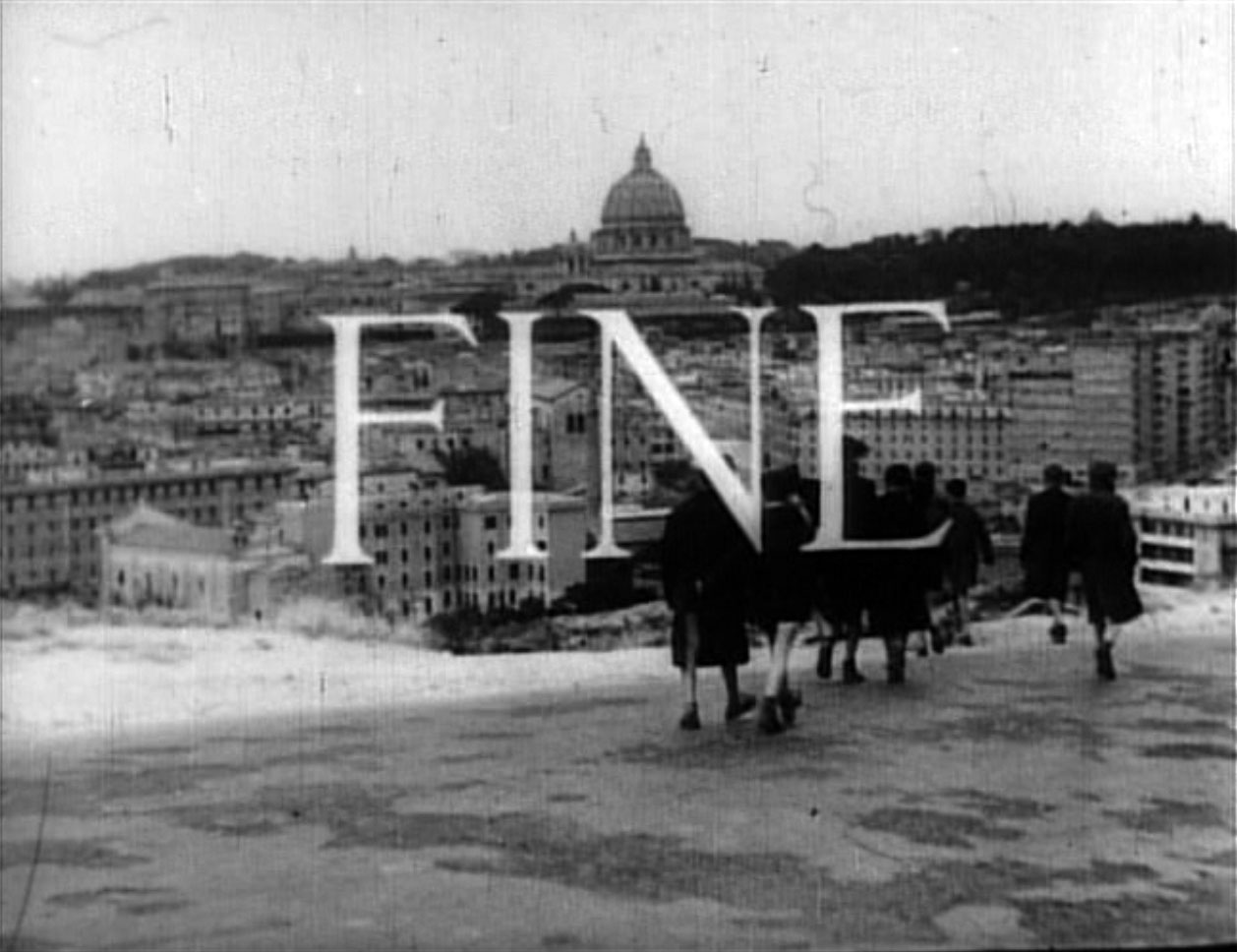
One aspect of Italian neo-realism is its ability to take the ordinary, portray it rather straightforwardly, and yet load it with both connotative and denotative meaning. The ending is a good example. After Don Pietro is murdered by the fascists, his students, who watched his killing, walk together back to the city. In the middle ground are modern apartment buildings. In the distance is the dome of St. Peter’s (I believe).

This image all about the future. Life goes on. The future will need to be rebuilt from the ruins of the present. These kids represent that future. The adults have let them down as a result of their wars. But their teacher has shown what a true hero is made of. It’s a simple ending, in a way. And yet, it has weight, depth, and irony. The irony comes from the fact that while we watch the future walk into the city we also see the word FINE across the image. It is both the end and a new beginning, however uncertain. This is the kind of filmmaking that I love.

*This may be why I find movies like Ironman to be all surface and ultimately unsatisfying – even boring. There are thrills but nothing really of any consequence. Ironman, as just an example of many, is somewhat entertaining, but already consumed and forgotten.

>Phil Keaggy 1980

>You know it’s vintage when there’s a flute solo. More music from the early days of Christian rock:

>Advent: Oh come, Oh come, Emmanuel

>
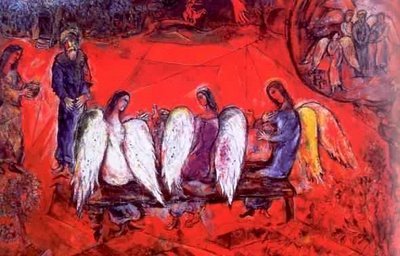
Three Angels, from Marc Chagall’s advent series.

Advent is a time of looking to the future with hope as we look back to the birth of Emmanuel (a.k.a. Jesus). This hope was described by the Apostle Paul in his letter to the Christians in Rome. He says:

For I consider that the sufferings of this present time are not worthy to be compared with the glory that is to be revealed to us. For the anxious longing of the creation waits eagerly for the revealing of the sons of God. For the creation was subjected to futility, not willingly, but because of Him who subjected it, in hope that the creation itself also will be set free from its slavery to corruption into the freedom of the glory of the children of God. For we know that the whole creation groans and suffers the pains of childbirth together until now. And not only this, but also we ourselves, having the first fruits of the Spirit, even we ourselves groan within ourselves, waiting eagerly for our adoption as sons, the redemption of our body. For in hope we have been saved, but hope that is seen is not hope; for who hopes for what he already sees? But if we hope for what we do not see, with perseverance we wait eagerly for it.

In light of those words I think of one of my favorite Christmas hymns:

Oh come, Oh come, Emmanuel,
And ransom captive Israel,
That mourns in lonely exile here
Until the Son of God appear.

Rejoice, rejoice Emmanuel
Shall come to thee, Oh Israel.

Oh come, Oh come, Thou Lord of Might ,
Who to Thy tribes, on Sinai’s height,
In ancient times didst give the law,
In cloud, and majesty, and awe.

Rejoice, rejoice Emmanuel
Shall come to thee, Oh Israel.

Oh come, Thou Rod of Jesse, free
Thine own from Satan’s tyranny;
From depths of hell Thy people save
And give them victory o’er the grave.

Rejoice, rejoice Emmanuel
Shall come to thee, Oh Israel.

Oh come, Thou Dayspring, come and cheer
Our spirits by Thine advent here;
Disperse the gloomy clouds of night,
And death’s dark shadows put to flight.

Rejoice, rejoice Emmanuel
Shall come to thee, O Israel.

Oh come, Thou Key of David, come,
And open wide our heavenly home;
Make safe the way that leads on high,
And close the path to misery.

Rejoice, rejoice Emmanuel
Shall come to thee, Oh Israel.

Oh come, Thou Wisdom from on high,
And order all things, far and nigh;
To us the path of knowledge show,
And cause us in her ways to go.

Rejoice, rejoice Emmanuel
Shall come to thee, Oh Israel.

Oh come, Desire of nations, bind
In one the hearts of all mankind;
Bid Thou our sad divisions cease,
And be Thyself our King of peace.

Rejoice, rejoice Emmanuel
Shall come to thee, Oh Israel.

I too long for Emmanuels’s return and to leave the sufferings of this world behind. For this reason, and others, I love this time of year.

>Advent

>
St Anne with the Virgin and Child, 1519
by Albrecht Dürer

Advent begins today. This is my favorite time of year. I love getting past Thanksgiving so we can start getting ready for Christmas. Our society has made Christmas all about consuming, but that doesn’t mean we have to follow suit. Nor does it mean we can’t set all that aside and focus on what the birth of Jesus means for us and the world. This is a season to commemorate Christ’s birth and anticipate his second coming.

My religious background does not include Advent, or really much at all of the Christian calendar. Now I am discovering for myself some of those rich traditions. I have no idea how to celebrate Advent in a formal way outside of visiting a church that has Advent services. I remember as a kid getting those Advent calendars with pieces of chocolate for each day of Advent, but having no idea what that was all about.The church I attend doesn’t do anything in particular that I know of for Advent, but we will have a Christmas service. I also know there are differences in the traditions – for example today marks many church’s beginning of Advent, but for others they have a different day.

So how does one celebrate Advent? What are your Advent traditions?

Here is an Advent prayer I found:

Father in heaven, our hearts desire the warmth of your love and our minds are searching for the light of your Word. Increase our longing for Christ our Savior and give us the strength to grow in love, that the dawn of his coming may find us rejoicing in his presence and welcoming the light of his truth. We ask this in the name of Jesus the Lord. Amen.


Finally, a video that is showing up on a lot of blogs today is this one from Advent Conspiracy:

Is your church participating in Advent Conspiracy?

>thanks

>We have a lot for which we are thankful. My family is especially thankful for the blessings God has bestowed on us. We are thankful for the outpouring of love and caring from so many people in recent days. In fact, words cannot describe how kindhearted and sacrificial folks have been for us.

I have already posted some of my thanks on my wife’s blog here.

We have been trough a lot in the past two weeks. I have often thought of the Thanksgiving holiday as a kind of throwaway holiday – a day off work and good food but not much more. I always figured we should be thankful all the time anyway, and I’m not into the traditional American mythologies about its history, etc. My feelings have not changed about most of that, but this Thanksgiving has an added dimension. This year we give thanks while my wife is still in the hospital recuperating from a near death experience – that is, I am thankful she and my daughter are still alive.

I wrote in more detail about the experience here and what it means to us.

I have wondered often how one can sometimes be more thankful when in the midst of suffering than in more typical circumstances. I look back on the time when our little family went on the difficult journey of a hard pregnancy, emergency c-section, heart surgery, meningitis, and then death. I look back with wonder and remember how hard it was and also how I felt so grateful and close to God. I felt close to God because he came close to me when I needed it but did not deserve it. We made some great friendships, had others strengthen and deepen, and came to know ourselves in ways we never imagined. I learned how fierce my wife can be when it comes to her children. I learned how gracious and giving our friends and family can be. And now we are experiencing something similar again. I was and am thankful for that experience even though I would not wish it on anyone.

Why God would have us go through these things I don’t know, except that I know deep in my soul it is because he loves us. At the end of the book of Job God comes to Job and gives his answer. In short God does not say why, only that God is God. We are always looking for the “why.” If the answer is that I come to know that much better the nature of the relationship between me and God I am happy. If I become wiser I rejoice. If I learn to love more fully with a genuine spirit then I know I am that much closer to Heaven and its glories.

In times like these theology seems to take a back seat, but not as much as one might think. Not all is emotion when there is suffering. How we understand suffering is always grounded on how we answer the big questions. Is God all powerful? Is he sovereign over reality? If so, just HOW sovereign? Does life have meaning and purpose? If so, does suffering as well? How we answer these questions profoundly guides our response to suffering. Sometimes we can know where we stand on these questions when we listen closely to our prayers.

When we were in the midst of holding out for hope with our second daughter and she was fighting for her life, the terrible tsunami overwhelmed Indonesia. Many, many thousands of people died in that disaster. We had our one life to worry and pray for, but our suffering was only a fragment of what was happening on the other side of the world. I found myself at that time thanking God that we were not going through what those people were going through. I was actually thankful that our suffering was merely difficult and heartbreaking rather than devastating. We can learn from degrees of suffering. As I write this, and as my wife is in pain, and as our daughters cannot climb easily into her arms, I know that much of the world is starving. I know that millions of children have no parents or clean water or adequate health care. I know that, for all my suffering, I live in relative luxury. Suffering reminds me of these things and shows me how complacent and selfish I have become. I live too much for myself and not enough for others. Jesus is my example and I am not a very good disciple. But I know God is faithful and I trust he will create in me a new heart.

I have much to be thankful for.

The name of this blog is not inspired by the pilgrims who had that first Thanksgiving. Here the word pilgrim has everything to do with the journey I am on. In part it is inspired from Pilgrim’s Progress. In part it is from the idea of going on a pilgrimage. I often feel that I am a sojourner in a foreign land. I long for my true homeland, which is not the United States of America, rather it is someplace infinitely better. But I am still glad I live in this country – but not necesarrilly more glad than if I was living in another good country, of which there are many. So my thanks is not so much that I am an American, but that I have been blessed in so many ways and that God can be trusted.

In closing, I must say I am thankful for my family. My wife is my love and my joy. My kids are wonderful lights that brighten my life. The community in which we live supports and loves us. And God continues to pour out his blessings on us, though we do not deserve them.