Of Dead Popes, Faith and Reengaging

I don’t know where to begin, so I’ll start here…

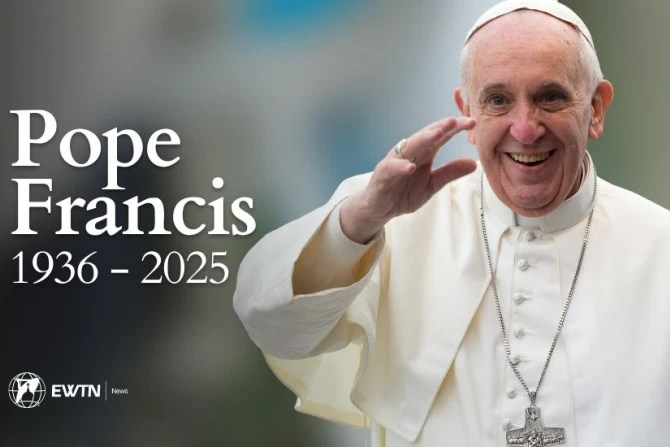
On the morning after Easter Sunday 2025 Pope Francis died.

I entered the Catholic Church in 2013, the same year Jorge Mario Bergoglio was elected pope. He took the name Francis. Later that year I also took that name when I became Catholic. My journey to that moment began, one could say, with the death of another pope, John Paul II.

I grew up Baptist and anti-Catholic. I never knew any Catholics, never even set foot inside a Catholic church, but when JPII died in 2005 I found myself watching on television the throngs of mourners outside St. Peter’s and I was deeply moved. In fact, I was strangely transfixed. Then I found myself closely following the conclave that elected Pope Benedict XVI. I knew it was more than curiosity but no way in hell would I have believed if someone told me that a journey had begun and I would someday be Catholic.

But I did become Catholic and I am glad I did. And yet, we all go through dry spells and recently I’ve been far from the Church. I never gave up claiming my faith but I also took a big step backwards and began exploring other areas of faith, other religions, and even some esoterica. I won’t go into all the reasons why but in short I was pulling back from having fallen into a kind of ultra-conservative traditionalist Catholic swamp (it’s a long story). I needed to clear my head and realign my heart. Then Covid hit and it became easy to pull back and not go back.

But now I’m thinking about a dead pope and I feel drawn to the faith that drew me before and still holds me even if I didn’t know what I wanted. Then there was another conclave and I couldn’t stop following the coverage. And now I’m going back to Mass. And I’m praying the Rosary again. And I like the new pope, Leo XIV. What a great name! I’m very curious about him.

But my faith isn’t about popes. It’s about Christ. And I’m dong a lot of thinking and discerning these days. Perhaps even this old blog of mine will be resurrected.

Number One Enemy: Liberation Theology

The Jesuits of UCAII watched television in amazement one night as Molina made a campaign broadcast on behalf of the PCN “candidate” General Romero. The president stood before a large blackboard with a piece of chalk in his hand. Then he slowly drew a line down the middle and announced that on one side of the line were to be found the enemies of El Salvador, and on the other, the friends. “Starting with the enemies,” he went on, “number one: liberation theology.” 1

Arturo Armando Molina was president of El Salvador 1972-1977 and was a murderer, including overseeing the assassination of political opponents, students, and priests.

The quote above references the 1977 presidential election in El Salvador. Liberation Theology, and many other forces, were at play in that country. Opposition to the murderous thugs who ruled the country and their oppressive policies was growing. The Vatican sided with the government. Many of the priests in El Salvador sided with the people and especially with the poor.

I think about the opposition to the beatification of the martyred Archbishop Óscar Romero by men such as Archbishop Emanuele Gerada because he disapproved of Romero’s breaking with the El Salvadoran government.2 I also think of Pope John Paul II’s disregard of Romero’s warnings, a disregard that arguably3 contributed to the Archbishop’s death. I think of these things and I cannot help but believe fear of the radical Gospel of Jesus Christ is an underlying constant in the life of the Church and especially of powerful men of the cloth. Of course, I cannot pass judgement on others if I don’t also pass judgement on myself. I know of no one more fearful of the demands of the Gospel than myself. It is a fear that plagues all human beings, perhaps Christians most of all.

But under that fear is a deep longing; a longing for true and complete liberation. This is why Liberation Theology increasingly reveals itself as one of the truest expression of the Gospel in our world today. However, I do recognize many claim Liberation Theology is too interested in Marxist ideas at best or outright leftist ideological heresy at worst. I would counter by saying if someone such as Molina publicly states Liberation Theology is enemy number one, maybe that’s because the darkness hates the light and Liberation Theology deserves a more honest look than many are willing to give.

Liberation Theology has not only been a threat to the sin of oppression and arrogant rulers who grind the poor into subservience, and to governments who prop up dictators, it has also been felt as a threat by many in the Church who sadly fear a truly integral salvation. Fortunately not all are threatened.


1 Teresa Whitfield, Paying the Price: Ignacio Ellacuria and the Murdered Jesuits of El Salvador (Philadelphia, PennsylvaniaPA: Temple University Press, 1995), 100.

2Carlos Dada, “The Beatification of Óscar Romero,” The New Yorker, May 19, 2015, https://www.newyorker.com/news/news-desk/the-beatification-of-oscar-romero.

3 Claire Saldana, “Oscar Romero: The Fight for Beatification,” STMU research scholars, April 5, 2022, https://stmuscholars.org/oscar-romero-the-fight-for-beatification/. I must also note that Saint John Paul II has been a kind of hero of mine and his example played a role in my becoming Catholic. And yet, the more I learn of his pontificate the less I can stomach some of the hagiographies of him. Nonetheless, I think he was a generally good pope and a very good and holy man. I do believe, however, the Church should not have rushed his canonization for sainthood.

The way of Nature, the way of Grace

Grace is a gift from God. And so is Nature.


TOL 0

TOL 1

TOL 2

TOL 3

At the beginning of Terrence Malick’s masterpiece, THE TREE OF LIFE, we hear Mrs. Obrien’s voice speaking these words:

The nuns taught us there are two ways through life … the way of Nature… and the way of Grace. You have to choose which one you’ll follow. Grace doesn’t try to please itself. Accepts being slighted, forgotten, disliked. Accepts insults and injuries. Nature only wants to please itself. Get others to please it too. Likes to lord it over them. To have its own way. It finds reasons to be unhappy… when all the world is shining around it… when love is smiling through all things. They taught us that no one who loves the way of grace… ever comes to a bad end. I will be true to you. Whatever comes.

These words come over images of a young girl (images above), the young Mrs. Obrien, as she interacts with Nature, and also with her father. We don’t really see her face much, we don’t see her father except for his hand and shoulder. Instead we see the world as the girl sees it, big, wonderful, full of life – and she is safe in the arms of her father.

Naturally these words set up a kind of interpretive lens through which we might analyse the film. As we follow the story we can’t help but think in terms of nature and grace. In these words we find a perspective of life held on to by Mrs. Obrien, a perspective that she learned as a child, taught to her by nuns presumably at a parochial school. Perhaps Malick is hinting at the kind of spiritual education common to Catholic schools seventy five plus years ago, and maybe he is commenting on that teaching. What is interesting, however, is how the film seemingly undercuts this philosophy. Although one is tempted to say Mrs. Obrien (in her softness and beauty) is grace and Mr. Obrien (in his hardness and anger) is nature, it is amazing how much nature permeates the film in the most loving and awesome ways. Even the film’s title, The Tree of Life, speaks of nature in connection with life. We might be tempted to see grace as the way to life, and yet we are continually being drawn back to images of nature, and in particular the tree the boys climb in the film, and by which the vision of their mother dancing in the air appears.

An interesting question is who is the protagonist in this film. Most are likely to see Jack as the protagonist. But is he? Might not Mrs. Obrien be the protagonist. If the film is a meditation on the book of Job (it opens with the book’s most famous verse), then we see both Jack’s and his mothers struggles in that light. When a boy dies in the story, a young Jack asks of God, “Where were You? You let a boy die. You let anything happen. Why should I be good when You aren’t?” This is a big moment, and a huge question for Jack. But similarly, after Jack’s brother R.L. dies (which we do not see, but only hear that he died at age 19), Mrs. Obrien cries out to God, “Lord, Why? Where were you? Did you know what happened? Do you care?” It is arguable that Mrs. Obrien’s struggle and final acceptance is the greater arc. If so, then it is possible that the film is about her coming to terms with the ideas taught to her when she was a kid, held dear for many years, and only later in life revealed to her (perhaps because of her willingness to see) as being false, or at least not entirely true.

Though my inclinations are that Jack is protagonist #1, it could be argued that the story, with all it sweeping and ephemeral qualities, is entirely in Jack’s head, being essentially his memory. If that’s the case, then it could be argued that Mrs. Obrien is the protagonist in the story going on in Jack’s head, or perhaps a co-protagonist.

Other interesting questions include which son is Mrs. Obrien giving to God at the end of the film? We assume it must be R.L., but could it be Jack? And who are the women with her at the end? We might think they are angels, but the one on the right is the girl Mrs. Obrien we saw at the film’s beginning. Might she represent the previous and less mature understanding of nature and grace? She is, after all, representing a more innocent time before adulthood, child rearing, marriage struggles, and the death of a child. And is the other woman an angel, or might she be the personification of grace itself?

TOL 4

I am inclined to think the trouble many people have with watching Terrence Malick’s films, especially the later ones, is that we are a culture that no longer reads poetry. Reading poetry alters the mind to think in different ways. Poetry is the highest form of writing, and thus taps into parts of us that other writing does not, or not as well. Secondly, we do not read the classics enough, especially theology. A good dose of St. Augustine wouldn’t be bad. I’ll leave it at that.

Finally, an interesting connection is that Mrs. Obrien’s verbiage is very similar to that of Chapter 91 of The Imitation of Christ by Thomas à Kempis, quoted here in it entirety:

On the Contrary Workings of Nature and Grace (found here)

My son, carefully observe the impulses of nature and grace, for these are opposed one to another, and work in so subtle a manner that even a spiritual, holy and enlightened man can hardly distinguish them. All men do in fact desire what is good, and in what they say and do pretend to some kind of goodness, so that many are deceived by their appearance of virtue.

Nature is crafty, and seduces many, snaring and deceiving them, and always works for her own ends. But Grace moves in simplicity, avoiding every appearance of evil. She makes no attempt to deceive, and does all things purely for love of God, in whom she rests as her final goal.

Nature is unwilling to be mortified, checked or overcome, obedient or willingly subject. Grace mortifies herself, resists sensuality, submits to control, seeks to be overcome. She does not aim at enjoying her own liberty, but loves to be under discipline ; and does not wish to lord it over anyone. Rather does she desire to live, abide and exist always under God’s rule, and for His sake she is ever ready to submit it to all men.(I Pt.2:13)

Nature works for her own interest, and estimates what profit she may derive from others. Grace does not consider what may be useful or convenient to herself, but only what may be to the good of many.(I Cor.10:33) Nature is eager to receive honour and reward : Grace faithfully ascribes all honour and glory to God .(Ps 26:2:96:7) Nature fears shame and contempt: Grace is glad to suffer reproach for the Name of Jesus.(Act 5:41) Nature loves ease and rest for the body ; Grace cannot be idle, but welcomes work cheerfully.

Nature loves to enjoy rare and beautiful things, and hates the cheap and clumsy. Grace takes pleasure in simple and humble things, neither despising the rough, nor refusing to wear the old and ragged. Nature pays regard to temporal affairs, takes pleasure in this world’s wealth, grieves at any loss, and is angered by a slighting remark. But Grace pays attention to things eternal, and is not attached to the temporal. The loss of goods fails to move her, or hard words to anger her, for she lays up her treasure and joy in Heaven where none of it can be lost(Matt.6:20)

Nature is greedy, and grasps more readily than she gives, loving to retain things for her personal use. But Grace is kind and generous, shuns private interest, is contented with little, and esteems it more blest to give than to receive.(Acts 20:35) Nature inclines a man towards creatures – to the body, tovanities, to restlessness. But Grace draws a man towards God and virtue. Renouncing creatures, she flees the world, loathes the lusts of the flesh, limits her wanderings, and shuns public appearances. Nature is eager to enjoy any outward comfort that will gratify the senses. Grace seeks comfort in God alone, and delights in the Sovereign Good above all visible things.

Nature does everything for her own gain and interest; she does nothing without fee, hoping either to obtain some equal or greater return for her services, or else praise and favour. But Grace seeks no worldly return, and asks for no reward, but God alone. She desires no more of the necessaries of life than will serve her to obtain the things of eternity.

Nature takes pleasure in a host of friends and relations; she boasts of noble rank and high birth; makes herself agreeable to the powerful, flatters the rich, and acclaims those who are like herself. But Grace loves even her enemies,(Matt.5:44; Luke 6:27) takes no pride in the number of her friends, and thinks little of high birth unless it be allied to the greater virtue. She favours the poor rather than the rich, and has more in common with the honourable than with the powerful. She takes pleasure in an honest man, not in a deceiver ; she constantly encourages good men to labour earnestly for the better gifts, (I.Cor.12:31) and by means of these virtues to become like the Son of God.

Nature is quick to complain of want and hardship ; but Grace bears poverty with courage. Nature, struggling and striving on her own behalf, turns everything to her own interest: but Grace refers all things to God, from whom they come. She attributes no good to herself; she is not arrogant and presumptuous. She does not argue and exalt her own opinions before others, but submits all her powers of mind and perception to the eternal wisdom and judgement of God. Nature is curious to know secrets and to hear news; she loves to be seen in public, and to enjoy sensations. She desires recognition, and to do such things as win praise and admiration. But Grace does not care for news or novelties, because all these things spring from the age-old corruption of man, for there is nothing new or lasting in this world.

Grace therefore teaches us how the senses are to be disciplined and vain complacency avoided ; how anything likely to excite praise and admiration should be humbly concealed ; and how in all things and in all knowledge some useful fruit should be sought, together with the praise and honour of God. She wants no praise for herself or her doings, but desires that God may be blessed in His gifts, who out of pure love bestows all things.

Grace is a supernatural light, and the especial gift of God,( Eph. 2:8) the seal of His chosen and the pledge of salvation,(Eph.1:14) which raises man from earthly things to love the heavenly, and from worldly makes him spiritual. The more, therefore, that Nature is controlled and overcome, the richer is the grace bestowed, while man is daily renewed by fresh visitations after the likeness of God .(Col. 3:10)
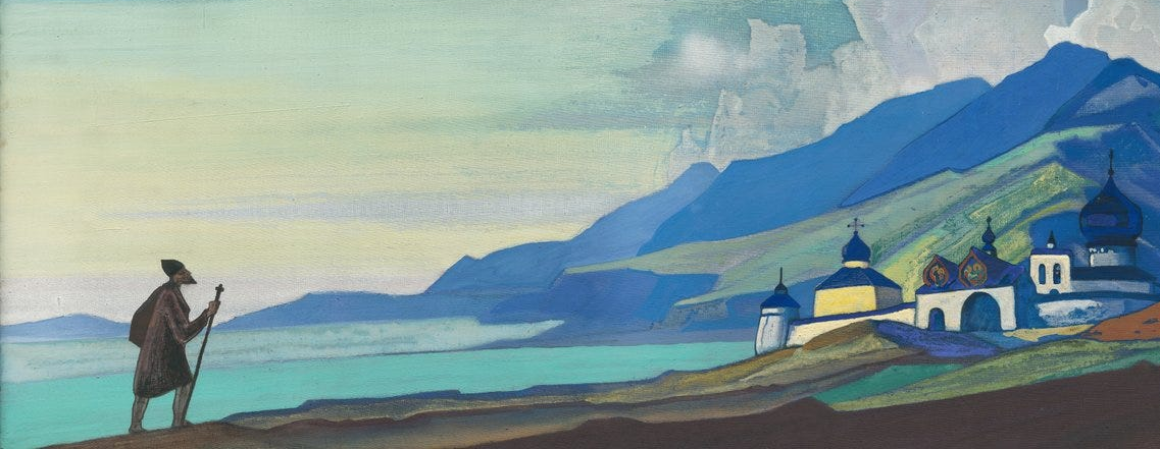
The Gospel of Supply Side Jesus

Thank you Al Franken, thank you.

Who inherits the earth?


Protesters outside the G20 in Pittsburgh
demanding fundamental change.

Consider these quotes:

“The great and chief end…of men’s uniting into commonwealths and putting themselves under government, is the preservation of their property.”

~ John Locke, 1689

“But as the necessity of civil government gradually grows up with the acquisition of valuable property, so the principal causes which naturally introduce subordination gradually grow up with the growth of that valuable property.”

~ Adam Smith, 1776

“Till there be property there can be no government, the very end of which is to secure wealth, and to defend the rich from the poor.”

~ Adam Smith, 1776


Pittsburgh police, defending the rich
from the poor at the G20.

If you didn’t know who wrote these words you might think they were from the pen of Karl Marx. Interesting. More substantive than economic systems and their ideologies (and their debates) is the concentration of power and its supporting hegemonies. In other words its all about who inherits the earth and how they keep it. Little do they know…

“Blessed are the gentle, for they shall inherit the earth. ”

~ Jesus, c. 30

The gentle, or meek, have a different relationship to property and wealth than those who climb over others to make the world their own. It is not that they do not want the world, it is that they recognize having the world for their own is not worth being the kind of person who has no interest in loving others as their primary motivation. To love the world is to give up loving people. It is not a good trade – no matter how free the market. Gaining the world is not worth a lousy character, and no amount of economic ideology can convince otherwise.


Mr. Obama hamming at the G20.

Questions of character are always personal, but what about our institutions of power? We live in a world that places a kind of sacred halo around the idea of private property. We know that the Declaration of Independence almost contained the phrase “life, liberty and the protection of property.” I don’t want anyone to take my home away from me, but I have to think that the ownership of property and all its attendant rights (real or perceived) only gets understood as sacred in a world that has turned its back on truth. The irony is not merely that to gain the whole world is to lose one’s soul, but also to gain one’s soul is to gain the world.

There is that old adage that all governments lie. It is just as true that governments, first and foremost, exist to protect the haves and the things they own. Only secondarily, and usually through great struggle, are benefits secured for the have-nots.

I stand, in spirit, with the protesters who call for change and accountability from our governments and the captains of industry. I stand against the obvious seeking of power and influence for selfish ends. I stand against clearcutting forests and mountain top removal mining, and against the pollution of our air and water, and against insurance companies managing our healthcare, and subsidies to weapons manufacturers and to farmers of vast genetically modified monocultures. And I stand against the use of violence to solve problems, such as the wars in Iraq and Afghanistan. (The list can go on and on.) On the other hand, I cannot demand that those in power give up the world, as it were, so that I might have it instead. Though my power and influence is small, I am not morally superior than they. Rather, they must give up the world because it does not belong to them.

Goodnight September Eleventh

“In a Parish” by Czesław Miłosz, trans. from the Polish by Miłosz and Robert Hass. Read by Haas on Fresh Air on NPR remembering 9/11.


Were I not frail and half broken inside I wouldn’t be thinking of them who are like me half broken inside. I would not climb the cemetery hill by the church to get rid of my self pity. Crazy Sophies, Michaels who lost every battle, self-destructive Agathas lie under crosses with their dates of birth and death. And who is going to express them. Their mumblings, weepings, hopes, tears of humiliation in hospital muck and the smell of urine with their weak and contorted limbs and eternity close by, improper indecent like a dollhouse crushed by wheels, like an elephant trampling a beetle, an ocean drowning an island. Our stupidity and childishness do nothing to fit us for this variety of last things. They had no time to grasp anything of their individual lives. Any principiam individuaisonous(ph) nor do I grasp, yet what can I do enclosed all my life in a nutshell trying in vain to become something completely different from what I was. Thus we go down into the earth, my fellow parishioners, with the hope that the trumpet of judgment will call us by our names instead of eternity, greenness and the movement of clouds they rise then thousands of Sophies, Michaels, Matthews, Marias, Agathas, Bartholomews so at last they know why and for what reason.


War, what is it good for? Considering the reasons for Memorial Day

42 million people died as a result of war in the 20th century. 42 million. And that’s only military deaths.*


Graveyards turn death into solemn beauty.

This is not beautiful.


War is evidence of something else. That something else has everything to do with what was in the heart of Cain as he slew his brother. That thing that war is, that indivisible characteristic, is the deeply felt need to use violence, even murder, as a means to achieve ends – certain or uncertain. War is the violent extension of the human heart’s corruption – a corruption that produces pride, envy, condemnation, selfishness, self loathing, and a host of other sins. Intrinsic to that characteristic is the justification of war. Possibly to oversimplify, violence and its justification is war.

As a Christ follower I cannot support war. Nor can I fully support any government that uses violence to achieve its ends, even if those ends may somehow benefit me. And I cannot celebrate with that government and participate in it nationalistic liturgies in glorifying the deaths of those who died carrying out such violence. But I can remind myself of how much people have suffered under the brutal hand of war. And I can still be amazed at the personal sacrifices so many individual soldiers have made.** I wrote about this last year.

A survey of history shows the human tendency to make war. Not only that, but to glory in war. Not only that, but to love war – and then be shocked at its brutality. When God points to Jesus on the cross and says that’s my attitude toward sin (just to throw in a little Christian theology here) it’s as if humankind said alright we’ll do that – and then set about to recreate that bloody crucifixion and kill and torture as many people as possible. When Jesus said whatever you do to the least of these you do to me, humanity seems to have largely shrugged its shoulders and gone on to other things – like justifying war and creating war heroes.

There is nothing good about war. Even victory is a tragedy. In deeply profound and unavoidable ways all wars throughout all of history have been grave failures. War is truly good for nothing.


If there is one thing I dislike about this video, it’s setting
the horror of war to a catchy tune. Still, it makes me weep.


Of course we are always looking for ways to find nobility in war making. We have our war heroes and give them medals, even if we often refuse to look directly at what they did to get those honors, and then go on to ignore many of their long lasting war-related troubles (physical, mental, spiritual). But there is no nobility in war. When we celebrate such “holidays” as memorial day (formerly known as decoration day) we must keep in mind the tragic nature of those days. Memorial day is not a day of celebration but of grieving. If you take the time to remember the fallen this memorial day, if you put out a flag as we do, do so not to praise but to weep.

We know blessed are those who mourn, for they shall be comforted, But also, blessed are the peacemakers, for they shall be called sons of God. Let us stop praising war and the war makers and start being people of peace.

* The number is much higher, closer to 200 million, if we consider any deaths by mass unpleasantness including genocide, tyranny, civilian deaths in war, and man made famines – all of which can be considered war.

** I have always been someone drawn to war and its stories. I love good war movies and novels. As a child I was fascinated with the machines of war. If a fighter jet flies overhead I cannot help but stare in awe. I also have relatives who fought in wars and relatives who are currently in the military. To not praise war and to not celebrate those who wage war is an unnatural act for me, but it is and act I am obligated to make.

>Considering Christian Pacifism vs. Just War Theory

>http://video.google.com/googleplayer.swf?docid=-3666549326759968489&hl=en&fs=true

In this debate I side with the pacifists, although I might prefer the term “active non-violence” rather than pacifism – though they are two sides of the same coin.

taxes and soldiers


I have been thinking a great deal about non-violence, pacifism, the example of Jesus (and many of the things he said), and the idea/reality of the Kingdom of God. I am haunted by the idea that I should be living a life entirely committed to such things. That I should be living peacefully, non-violently, lovingly, and mercifully. I am to love my neighbor. I am to love my enemy. I am to lay down my life for others. I am to seek God’s kingdom and live in light of what that kingdom stands for.

So what do I do with the fact that I live in a flag-waving, war loving, gun toting, patriotic nation that is supposedly built on biblical principles and calls professional soldiers heroes but underfunds education and healthcare, while maintaining the world’s most powerful and advanced military industrial complex? Should my money go to such a system? I don’t know. I want to be wise and not foolish. Ironically, I started out more or less conservative in my youth and am now becoming more and more “radical” in my middle age. I say radical because I want to avoid strictly politicized terms. I am not specifically liberal or conservative. I think the truth hovers above such dichotomies. The call of Jesus is far more radical than any political system can accommodate.

Are U.S. Christians Americans first, then Christians?
Imperialists first, then followers of Jesus?

Christianity in the U.S. is rather varied, but one faction gets a lot of attention – the conservative evangelical fundamentalists. They are outspoken, politically to the right, and flag waving – sometimes with really big flags. They are also typically in support of the current war on terror and the wars against the Iraqi and Afghan peoples. They also, generally, support torture when used to ensure the uninterrupted continuation their own quiet suburban neighborhoods (read “keep America safe”). But they are not the only Christians who support war and soldiering. The U.S. is a war loving culture and most Christians support, yea even glorify, war and soldiers. Frequently the Bible is brought in to support the this position.

One of the scriptural foundations for supporting the U.S. military and its mythologies is a biblical passage in which some soldiers come to that famous Palestinian, John the Baptist and ask what they should do and John doesn’t say “leave the army.” Many Christians would say that John is merely counseling these soldiers to be good, moral soldiers while they do their soldiering because being a soldier is still a fine, even noble profession. That is an interpretation that fits nicely with our own mythological understanding of the soldier as the duty bound exemplar of personal sacrifice for the sake of a higher good.

But John is, in fact, not saying be a good soldier, or even a righteous soldier. He is calling for repentance and fundamental righteousness – not a righteousness filtered and conformed to the needs of a profession. What John tells these soldiers fundamentally contradicts what their particular soldiering is all about. If they do as he says they will face a contradiction that will force them to chose Christ or soldiering. But that contradiction does not emerge from a conflict of piety versus profession, rather it emerges from a convicted heart in the midst of a fallen world.

The Bible passage is from the Gospel of Luke, chapter 3:12-14 in the New American Standard translation:

And some tax collectors also came to be baptized, and they said to him, “Teacher, what shall we do?” And he said to them, “Collect no more than what you have been ordered to.” Some soldiers were questioning him, saying, “And what about us, what shall we do?” And he said to them, “Do not take money from anyone by force, or accuse anyone falsely, and be content with your wages.”

The scene is of John the Baptist preaching and baptizing seekers and converts coming to him at the Jordan river. He is calling for their repentance and with that in view the tax collectors and the soldiers ask the above questions. Keep that in mind, John has just called for repentance and it’s the tax collectors and soldiers that are the ones who, as distinctly identified groups in the text, are mentioned. Why?

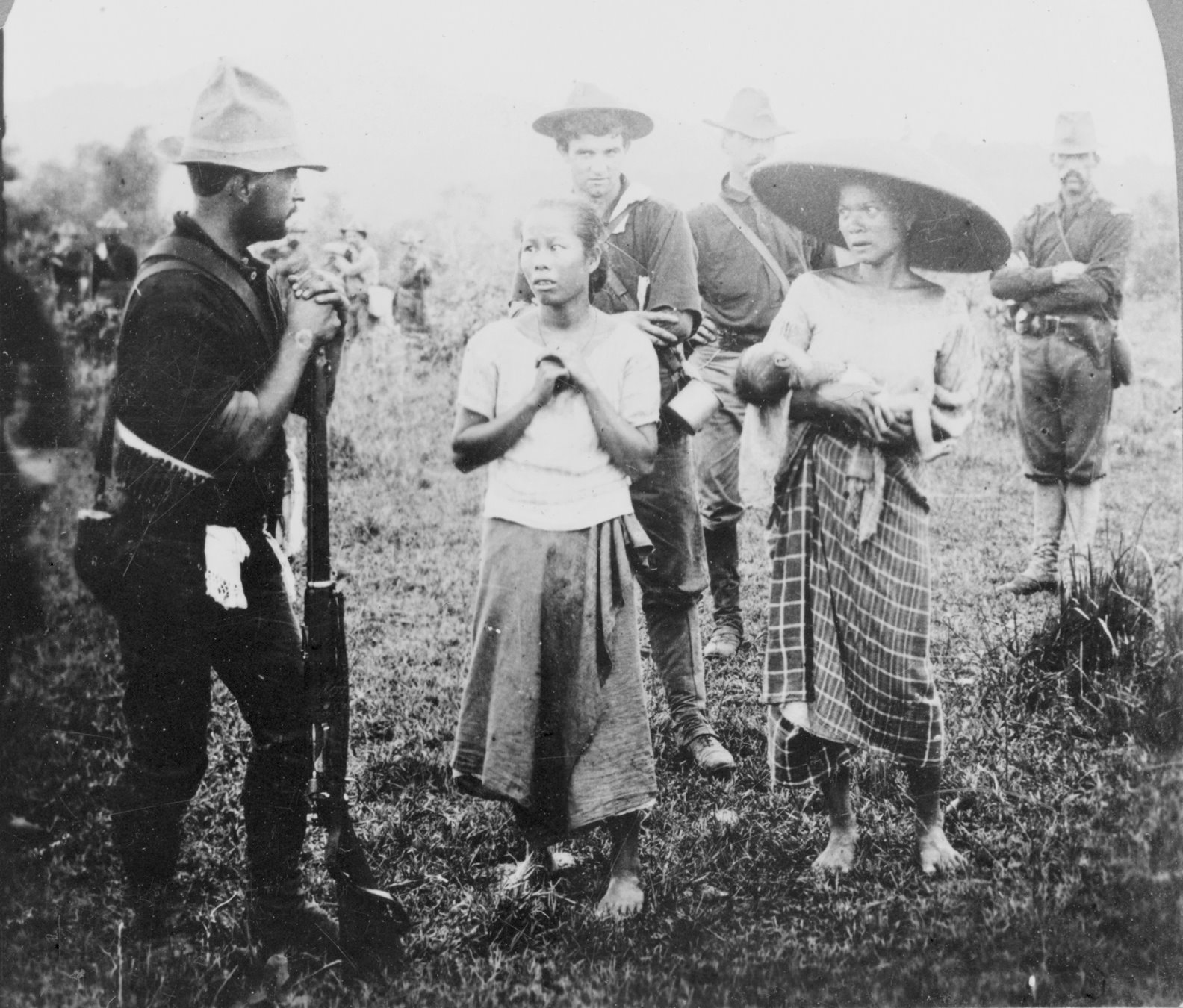
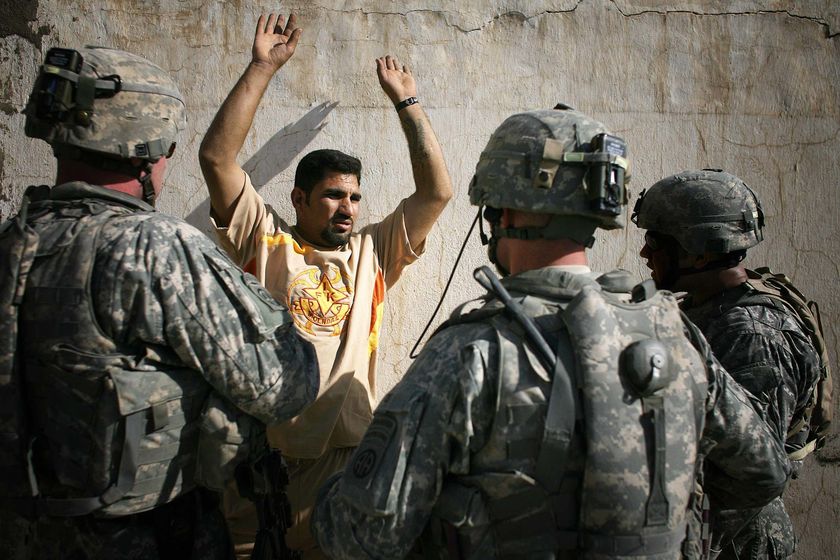
U.S. Soldiers supporting U.S. imperialist
interests in the Philippines,
ca. 1900

The tax collectors and the soldiers worked for the imperial/colonial power. They worked for Rome. The tax collectors took the taxes on behalf of Caesar, which is one of the reasons to have an empire in the first place, and the soldiers were the brutal military presence required for empire. The tax collectors were required to collect whatever Rome demanded and then made their living by demanding more. It was a perk of the job and many tax collectors could get quite wealthy. If they did not demand more than what was required they would live very meager existences. Soldiers, who were officially paid a very meager yearly salary (some say $45 per annum, which was extremely low even in those days) made their fortunes by claiming the spoils of war. Typically the spoils were given to the commander who then evenly distributed them to his troops. In both cases tax collectors and Roman soldiers made their living by taking more than what they were either ordered to take or by dividing up what was taken by force. This was the accepted system that both provided their living and supported the domination of the region and its people. This system was endemic to the very nature of Roman imperialism.

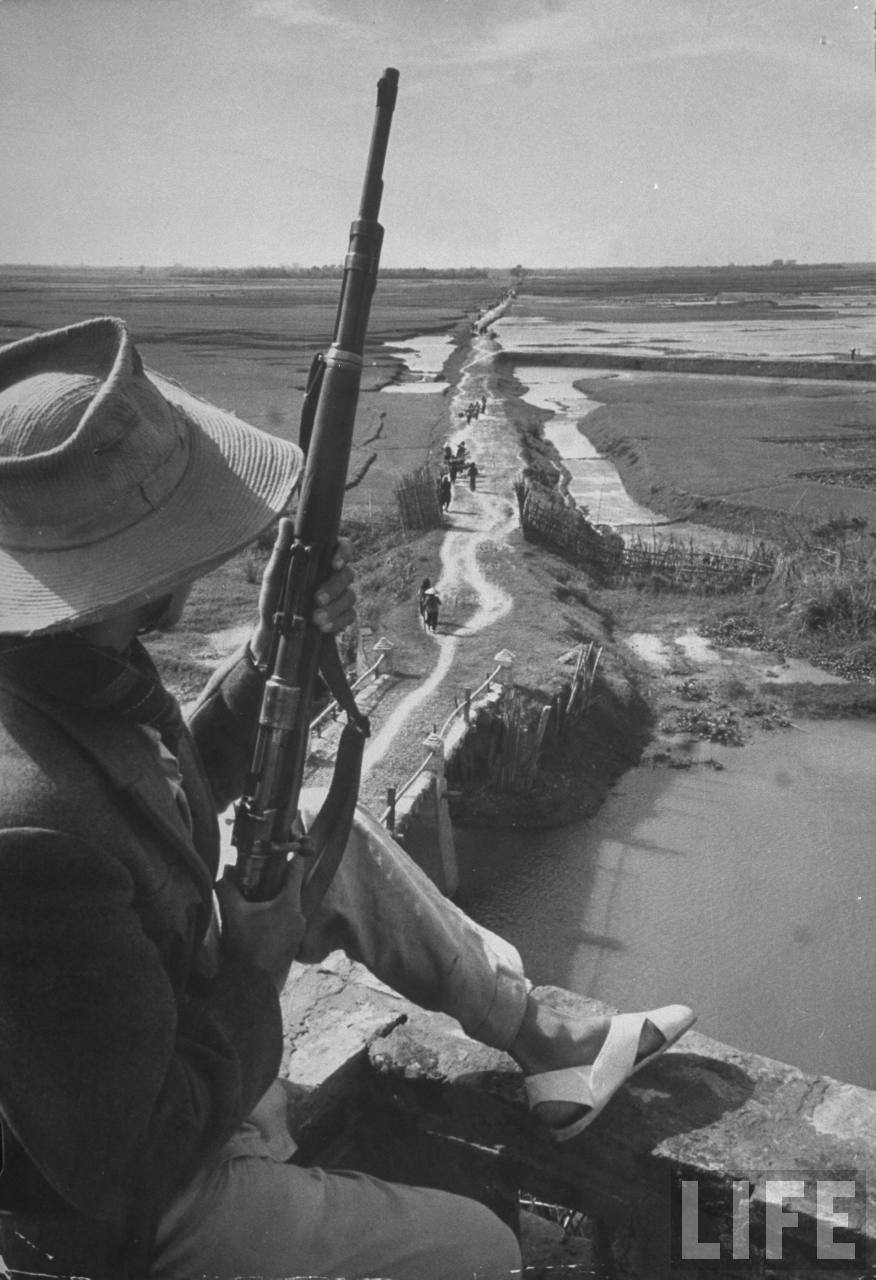
Indochina: French soldier guarding against
Communist infiltration – protecting
colonial interests,
1950.

We know that Rome was a mean ruler of its empire. Judging by our recent history (as well as from the British Empire, the French in Algeria & Indochina, the U.S. in Latin America, but especially now in Iraq) we can surmise the tax collectors and soldiers of Rome were critical elements in keeping the colonized subdued and oppressed enough so as to cut to the quick any attempts at insurrection. Life was hard under Roman rule and the tax collector and soldiers made sure it would stay that way, but in order for tax collecting and soldiering to be viable professions then tax collectors and soldiers would have to take more than they were required to take and to do so by force.

I believe there were at least three reasons why tax collectors and soldiers were called out as distinct groups in the passage above. 1) To Luke’s readers the repentance of these groups would have been particularly significant. 2) The members of these groups would have been particularly convicted by John’s message of repentance. 3) John’s specific messages to these two groups calls them to live righteously which, by implication, challenges the very existence of their professions and the empire which they serve.

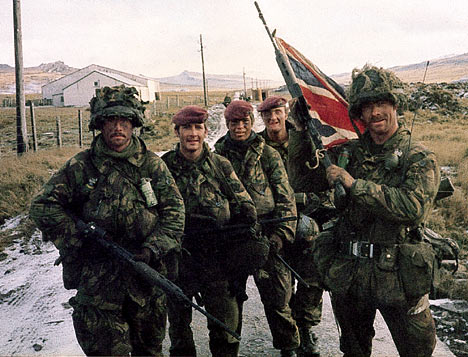
Saving imperial face: British soldiers in
the Falkland islands, 1982.

John does not directly say all tax collecting or all soldiering is wrong (at least at first glance and with our modern assumptions). But he also does not say anything in support of either. Rather than say to quit their jobs he merely says don’t do those things in your job you rationalize but know are immoral. Of course that’s like telling a politician not to lie. At some point a crisis will emerge and one will have to decide to choose the status quo or what is right. A politician who refuses to lie will eventually be crucified on the altar of politics.

Tax collecting and soldiering for Rome had at their very roots in rationalizations of immorality. John was not interested in followers who made surface choices only to regret them later. He wanted heart changes that would then have more visible and social evidences as a natural consequence of the heart change. He focused on the heart of his listeners because he knew the rest would follow. He did not have to say don’t collude with Rome or don’t work for the empire. All he had to say was repent and be committed to righteousness.

“Democracy” at gun point: U.S. soldiers in
someone else’s country (Iraq).

One could then draw a conclusion: To be either a tax collector or a soldier in support of an empire is ultimately a choice for unrighteousness. If this is what John is saying then we can also draw the conclusion that the ministry and message of John was both spiritual (of the inner person) and political (of the social relations we create and inhabit). For the Christian this has great significance. The implication is that there are many things we will have to give up if we are to truly repent – truly repent as the most existential of all radical, life changing, loving choices we make – precisely because we find there are no other possible choices. We may have to give up our professions, our security, our apparent good standing in society, and much of what we cling to. But there is no formula for sorting it out. If we follow John’s command then we begin with repentance. What this leaves us with is the difficult fact that there are no easy answers, or maybe it’s better to say there are no easy choices – something John’s tax collectors and soldiers were just finding out.

As a final note I must say that I have not sorted all this out for myself either. I have not gone so far as to stop paying taxes or to stand in protest outside the federal building. I also still love a good war movie, I am still amazed at the courage of many soldiers, and I still get emotional when I hear the Star Spangled Banner. But I don’t like saying the pledge of allegiance very much or saluting the flag. I find being a U.S. citizen to be rife with contradictions. But I find the same thing within myself as well.

>Lord, Save Us From Your Followers

>

This is a plug for a little documentary/polemic that I found myself truly enjoying. I meant to post this months ago, but it got lost in the shuffle somehow.

Recently I watched a documentary three times in rather short succession; first by myself, then with my wife, then again with my daughter. (And then I loaned it out to someone, but I can’t remember who.) Each time it has challenged me, at moments moved me to tears, brought about conviction, made me laugh, and truly encouraged me. The film is Lord, Save Us from Your Followers by Dan Merchant (Writer/Director/Producer) and Jeff Martin (Executive Producer).

A large part of the film is an overview of how Christians are viewed in popular culture. This overview includes interviews and television clips of many people, including Bill Maher, John Stewart, Bill O’Reilly, and many others. Many of these clips are priceless and spot on. Dan Merchant also walked the streets in his bumper-sticker suit interviewing people.

Although the suit is a bit of a stunt, it did help people open up their thoughts.

Many ordinary people said, in short, that they like and admire Jesus, but they don’t like Christians very much. Funny thing, I am a Christian and I generally feel the same way. Tony Campolo had some of the best moments in the film. He is a devoted Christian who wonderfully discussed this contradiction we call Christianity. He states how all too often the “church” is an exemplar of hypocrisy while still being the “vessel” that has carried the gospel and preserved the Bible.

But what got me the most are the four end segments that focus on the ways some Christians have set aside all the garbage of the “Christian right” and looked instead to Jesus as their example.

Helping rebuild after hurricane Katrina:

Seeking forgiveness for the way Christians
have treated (and still treat) gays and lesbians:

Bringing help to starving communities, and
especially children, in Africa by bringing food,
medicine, and planting crops:

Comforting and helping the homeless:

Each of these segments brought tears to my eyes and deeply convicted me for my selfishness and self-absorption. They also challenged me to consider the kind of community, Christian or otherwise, I want to live in and how I might help make it happen.

I will recommend this film for anyone, but in particular for Christians. My suggestion is to watch it with a group and then discuss its implications afterwards. I don’t typically plug films on my blog, but I have to say this little, low budget film is worth seeing.