Revisiting my visit to St. John the Wonderworker

In 2013, by the Grace of God, I entered the Catholic Church. My journey to that personally momentous event took seven years (really, my whole life) and a great deal of searching. For a while I seriously considered becoming Orthodox; reading a lot of Orthodox books and, once in 2011, visiting a local Orthodox church and experiencing Divine Liturgy. Of probably every church experience I’ve had, including Protestant and Catholic (both ordinary and extraordinary forms), more than any other, that one Sunday has stuck with me. For numerous reasons I didn’t become Orthodox but I love the Orthodox Church(es). Currently, I am regularly attending Divine Liturgy at an Eastern Catholic parish and I love it. I will always be Catholic and every day I pray for the reconciliation of East and West.

The post below is from 2011 when I visited that Orthodox church. I re-post it here because I think about this experience frequently. More than this, as I have been reconnecting with my faith and going to church again I remembered this experience which then posed a question for me: Why, when the Divine Liturgy had so affected me, have I not gone to the Easter Catholic church from which I know the priest and several members? Now I am there and it means so much to me.

Visiting St. John the Wonderworker Serbian Orthodox Church

Deacon: Bless, Master.

Priest: BLESSED is the kingdom of the Father, and of the Son,
and of the Holy Spirit, now and ever, and unto ages of ages.

Choir: Amen.

And thus began the Divine Liturgy of St. John Chrysostom at the little and beautiful St. John the Wonderworker Serbian Orthodox Church this last Sunday of All Saints morning. This was my first time to ever cross the threshold of an Eastern Orthodox church. This was my first time to participate in an Orthodox liturgy. This was my first time to hear Russian (or was it Serbian?) spoken in a church (though most of the service was in English). This was my first time to see icons in a truly reverential context. It was an hour and a half of a lot of personal firsts.

I was very nervous about going. I am wary of both my tendencies to romanticize experiences and to be cynical. I am also a ponderer and book-learner more than a doer much of the time, which allows me to keep experiences (and their required responses) at bay. I have been reading about Eastern Orthodoxy for a while now. Why I am doing so is a long story, nonetheless I am loving it and being challenged. But I had never been to an Orthodox church. So, when a couple weeks ago my wife and a very good friend of ours visited this same church on a sudden and impulsive whim, I knew I would finally have to make a visit as well.

What did I find there? Walking to the entrance I met some friends that I did not know attended the church. That was a blessing. The church is small and, as you can see from the image above, stands out architecturally. I find it beautiful. I took my eldest daughter with me; she was eager and liked it very much. My daughter knows several of the people that were there. The service was not like anything I grew up with (Baptist/Radical Reformation). Though translated into English (and thank God for the printed handout so I could follow along) the liturgy is ancient. People entered quietly, greeted each other quietly, lit candles, kissed icons (not something with which I am familiar), and stood through most of the service. We did our best to follow, to sing the words (I found it beautiful), to cross ourselves when we should (this was another first for me), and to show appropriate reverence and not look too out of place. We did not participate in either the communion (because we are not Orthodox) or in the kissing of icons, etc. There was the constant noise of children and babies; this is a family oriented community. The interior was dim, but not dark, solemn but not dour, colorful but simple, and of course, the icons which are unique and beautiful (a common word in this whole experience). The homily delivered was excellent–a remembering of all the Saints and the martyrs that are examples to us, and a reminder that Christ’s resurrection really means something, not only in terms of final salvation, but that we are not the same because of Christ’s glory; something profound has changed within us. After the service my daughter and I spoke with Father David (I believe that is how one should address him). He made a point of coming up to us and welcoming us. We did not stay for the after-service meal, but most did. They have a large backyard with garden and play structure for the kids.

What did I think about it all? I should qualify my thoughts first, and maybe get just a little too personal. I am not a “church shopper.” I do not want to consume Christianity. I am not looking for the next “meaningful” thing. I do not want a hip church, or a programmatic church, or a second chapter of Acts church, or an un-church, or a high church. I am not searching for something new or even something old. And I do not want to make decisions based on emotions, and certainly not on heresy. I am not seeking out an “experience.” In fact, I am not really searching for a church at all. And certainly I do not want to go in any direction without my wife with me. Still, and with trepidation, I am exploring. I have been on a journey, a slow journey for sure, examining the tradition I grew up in and was trained in. I have had a lot of questions, a lot of soul searching, a lot of reading. I have tended to be wary of just about everything one finds in an Orthodox church (keep in mind my limited experience): Formal liturgy, recited prayers, icons, religious garb, incense, etc., etc. And yet, my world has been subtlety shifting for several years. I do not know where God will lead me and my family. Wherever He leads that is where I want to go.

With all that in mind, I will say two things about this one visit: a) I am still on my journey, still wondering, still studying, still praying, still seeking God’s guidance and wisdom, and b) I loved it, really loved it. I want to go back and learn more about what I experienced that first time. I want to understand why I loved it and what that means.

Final thoughts: I am humbled by how much I don’t know about Christianity, about those who came before, about the practices of Christians around the world. Orthodoxy is an entirely new study for me. I am often conflicted in what I believe, and what I want to believe. This is a bad place to be according to my past Christian training, but I have since come to believe that I would rather be in the hands of God on a surreptitious  journey than out of His hands with full confidence in my beliefs. I can only praise God for His love and fall on my face and ask for His mercy. I thank Him for this church experience and I pray for His guidance.

A footnote: Take another look at the beginning of the liturgy quoted at the beginning of this post. Now consider these words by Alexander Schmemann in For the Life of the World (1963/2004, p. 28):

The Orthodox liturgy begins with the solemn doxology: “Blessed is the Kingdom of the Father, the Son and the Holy Spirit, now and ever, and unto ages of ages.” From the beginning the destination is announced: the journey is to the Kingdom. This is where we are going–and not symbolically, but really. In the language of the Bible, which is the language of the Church, to bless the Kingdom is not simply to acclaim it. It is to declare it to be the goal, the end of all our desires and interests, of our whole life, the supreme and ultimate value of all that exists. To bless is to accept in love, and to move toward what is loved and accepted. The Church thus is the assembly, the gathering of those to whom the ultimate destination of all life has been revealed and who have accepted it. This acceptance is expressed in the solemn answer to the doxology: Amen. It is indeed one of the most important words in the world, for it expresses the agreement of the Church to follow Christ in His ascension to His Father, to make this ascension the destiny of man. It is Christ’s gift to us, for only in Him can we say Amen to God, or rather He himself is our Amen to God and the Church is the Amen to Christ. Upon this Amen the fate of the human race is decided. It reveals that the movement toward God has begun.

Amen.

[Feast of the Holy Dormition]

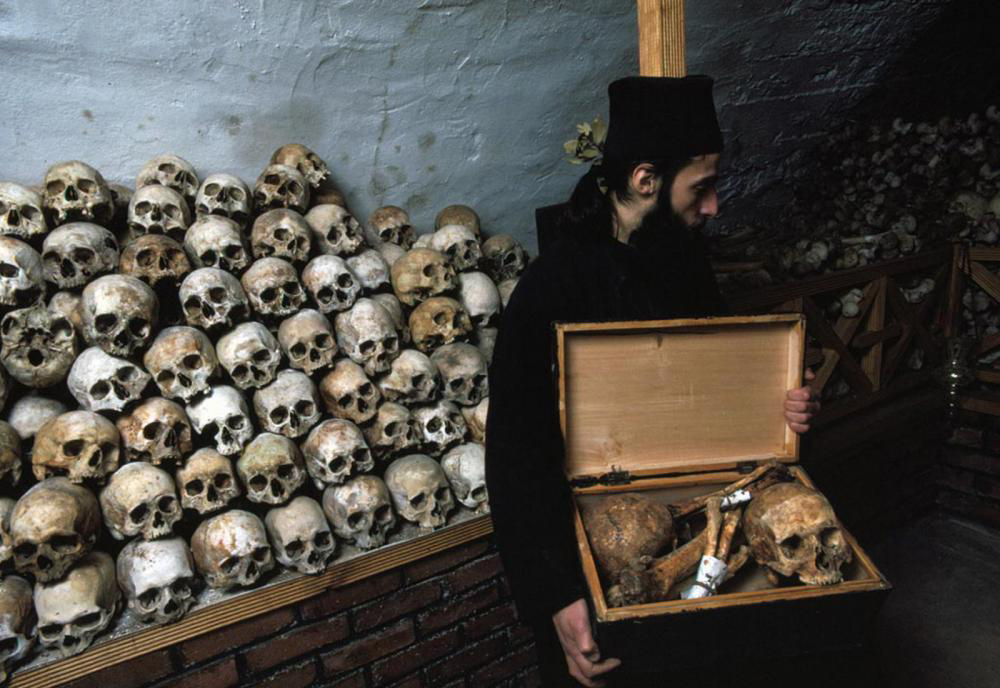
Death to the World

But far be it from me to glory except in the cross of our Lord Jesus Christ, by which the world has been crucified to me, and I to the world. (Galatians 6:14)

Source: https://www.youthoftheapocalypse.com/

Increasingly I have been drawn to examples of monks and saints who gave up everything for Christ, that is, they died (or are dying) to the world. I read the words of Saint Paul above and I think, “I, and nearly every Christian I’ve ever known personally, have never taken those words seriously.”

I have written a lot on this site about my journey of faith from Protestantism to the Catholic Church. I have covered topics about tradition and liturgy, politics and culture, scripture and prayer, and a lot of other things of interest to me. I regularly read the Bible and pray, I go to confession and I go to Mass/Divine Liturgy, I even sang in the church choir for a while, but I feel as though I’m always standing at a threshold looking in the direction of some deeper desire that I am perpetually unwilling to fully acknowledge and embrace.

For if I do embrace it… I know I shall die.

And he said to all, “If any man would come after me, let him deny himself and take up his cross daily and follow me.” (Luke 9:23)

Slowly, every so slowly, I’ve been coming to the realization that the answer to LIFE is DEATH.

Truly, truly, I say to you, unless a grain of wheat falls into the earth and dies, it remains alone; but if it dies, it bears much fruit. He who loves his life loses it, and he who hates his life in this world will keep it for eternal life. (John 12:24-25)

Can I truly fully acknowledge and embrace these words of Christ, words that, having read many times over, I rationalized and never accepted their clear demands? Am I willing to die, to give up my passions, to die to the world? Am I willing, even able, to hate my life? And if I am, what will that look like, what will be asked of me? What are the actions, the tasks, the daily choices I must make? How do I commit to such an endeavor? This, I believe, is that threshold before me.

Beneath the brittle surface,
The vain, self-interested, clinging love,
The maddening longing,
Which only obscures what lies below,
There is a silently flowing river:
A river of compassion, bowels of mercy,
A feeling of the other’s pain,
Flowing into a vast, vast ocean of sorrow.
It is the sorrow of a great funeral:
The death of sensual self-love.
Although it is a sorrow,
One enters it willingly, with joy,
For there is such tenderness in its pain.
And at last, in this sorrow,
There is perfect freedom.
This is the love that never dies, never fails:
A proof of immortality.
This is the pain that the everlasting Way
Embraced willingly, sharing our pain.
This is the cross that He asks us to bear.
This is the death that He asks us to die.
And at last, in this death,
There is perfect peace.
(from Christ the Eternal Tao, chapter 39, by Hieromonk Damascene)

Two Analogies of Freedom

Beautiful snow-capped mountain peaks jut into a glorious blue sky. Climbers, dark silhouettes in the clear air, make their way up a ridge on their way to the summit. Their movements are slow and methodical yet graceful. Distant peaks ring the horizon like stunning diamonds. This is an image of freedom. In fact, one of the most popular mountaineering books in English is called “Mountaineering: The Freedom of the Hills.”

Alison Hargreaves in 1986 on a first ascent of a hard route on Kangtega (6779), Nepal. Hargreaves was one of the most accomplished high alpine climbers with a stunning carreer. In 1995 she would die at age 33 while descending K2, thje second highest mountain in the world, leaving behind a husband and two children.
Source: https://alpinist.com/features/freedom-in-the-hills/

A sailboat glides along the rolling waves of a blue sea under bright sunny skies. The sails are full of wind and the boat leans gracefully as it moves quickly through the water. The crew sits along the windward rail as they scan the undulating surface of the sea. This too is an image of freedom. In fact, “freedom” is a common word in sailing book titles, sailing social media account names, boat names, and sailing videos.

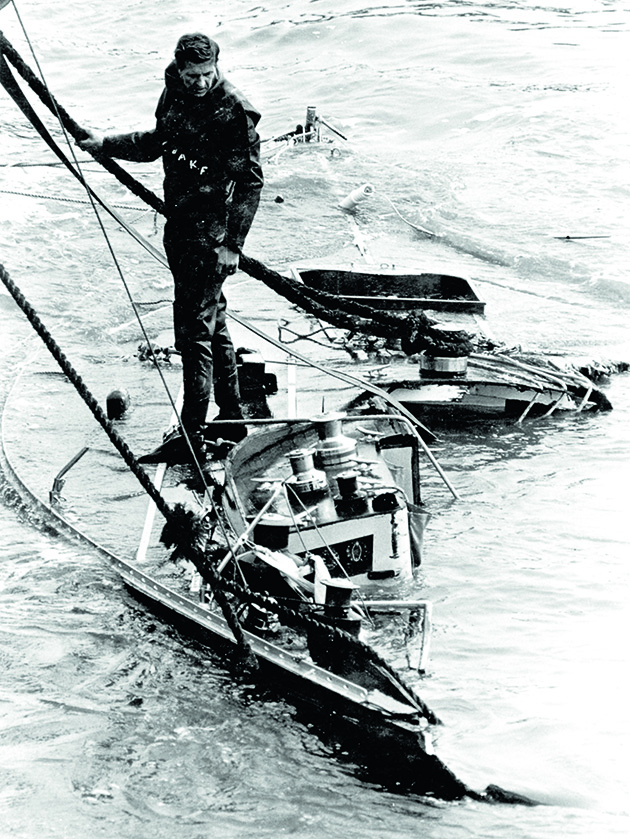
Morning Cloud 3, 45ft ocean racing yacht, beginning her fateful voyage in 1974, The yacht was severely damaged by two mammoth waves off the coast of West Sussex. Two of the seven crew members would not return alive.
Source: https://www.pbo.co.uk/seamanship/lessons-learned-from-the-sinking-of-morning-cloud-3-88859

When I was younger I climbed mountains and I am still an armchair mountaineer. But these days you will more often find me and my family on our little sailboat at our local lake. From experience I can attest to the beauty of these sports. I can also attest to what freedom actually means when climbing mountains and sailing boats. It’s not exactly the romantic image of freedom of the book cover or poster. And here lies a lesson on true freedom compared to the popular libertine and libertarian concepts of liberty we often find today.

Both of these analogies of freedom offer us images of people who have left behind the cares of the world. Life is more simple, it seems, when one hikes the hills and sails the seas. In a real sense that is true. But it’s also deceptive. At every moment the mountains and the seas put up challenges and dangers that are very real and often require strict movements and calculated responses. In fact, each sport has its own highly specific tools, knowledge, actions, and language. Make a mistake and one will suffer, perhaps even die. That sounds rather harsh but it is, in fact, part of the appeal. It is also, ironically, where one finds freedom.

These little scenes are much like life, but we often don’t see it that way. Freedom, we are told, is to be able to do whatever one wants without restrictions. Yet this kind of freedom quickly becomes a form of slavery to one’s passions. True freedom comes from stripping away everything that is unnecessary, everything that is unfruitful. But that only makes sense when one seeks a goal of great value.

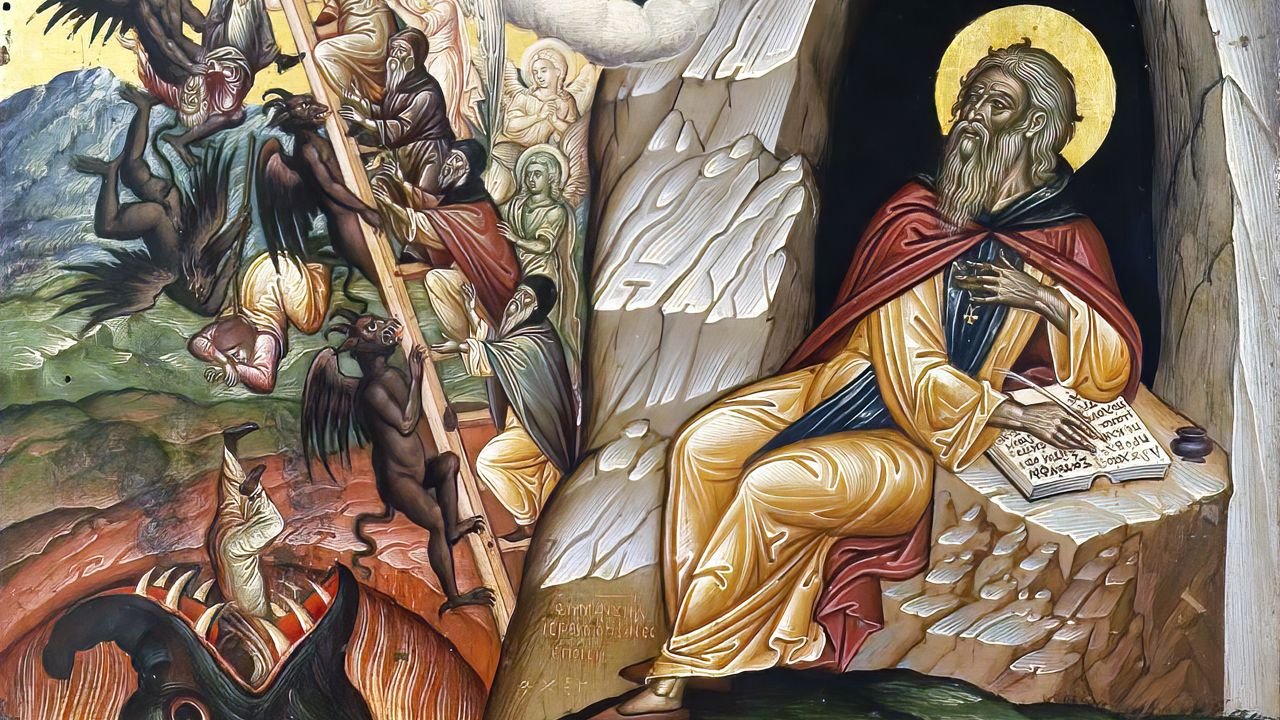
Around 600 A.D., John Climacus wrote his famous ascetical treatise, The Ladder of Divine Ascent, outlining thirty steps upwards towards the perfect model of perfection, Jesus Christ. Those steps are the virtues that counter the passions, and by overcoming the passions we increase in righteousness and begin, by God’s grace through the saving actions of Jesus Christ, to enter into the process of theosis. That ascetical work, hard as it is, leads us towards the freedom from sin and into the joy of union with God. That ascetical work is like the limitations self imposed by the mountaineer and sailor done to ensure success.

The 12th century Ladder of Divine Ascent icon (Saint Catherine’s Monastery, Sinai Peninsula, Egypt) showing monks, led by John Climacus, ascending the ladder to Jesus, at the top right.
Source: https://en.wikipedia.org/wiki/The_Ladder_of_Divine_Ascent

For the Christian the goal of great value, also called the pearl of great price, is theosis. More than being free of sin and going to Heaven, although that is part of it, theosis is about partaking in the Divine Life. We are told by Christ that the first shall be last, that only the man who gives up his life will find it, that the seed must die in order for the tree to grow, to take up our crosses and follow Him. Emptying ourselves we will receive a fullness beyond compare. Only in giving up our freedom will we receive true freedom. These are hard words to take. In fact, they are impossible to accept unless the Holy Spirit softens our hearts because it is so unnatural to us sinners.

If we are to be like God, to partake of the Divine Life, then we must give up everything that is not a part of God. We must give up our passions, that is our pride, anger, vanity, lusts, and self-centeredness. We must become poor in spirit, mourn, be meek, hunger and thirst for righteousness, be merciful, be pure in heart, be peacemakers, be willing to be persecuted because of righteousness, and accept that others will insult us falsely say all kinds of evil against us. In broad strokes this is the “ladder” we must climb if we are to reach the summit.

Although we need to be reminded of this regularly we also know it to be true, our consciences bearing this out. If we reject our consciences then we are rejecting our salvation. This is the height of foolishness. We become like ships that founder and sink.

This charge I commit to you, Timothy, my son, in accordance with the prophetic utterances which pointed to you, that inspired by them you may wage the good warfare, holding faith and a good conscience. By rejecting conscience, certain persons have made shipwreck of their faith[.] (1 Timothy 1:18-19)

Mountaineers and sailors know that accepting severe limits on their freedom within the context of mountaineering and sailing is the only way to achieve true freedom and thus true joy in those endeavors. Only through sever limits do we truly live. By analogy it is also the way for the disciple of Christ, the one who takes up their cross and follows Him.

G345XN AJAX NEWS PHOTOS – 10TH SEPTEMBER,1974. SHOREHAM, ENGLAND. – WRECK SALVAGED – 741009/741109/GR1. A DIVER FROM THE SALVAGE BARGE SURVEYS ALL THAT REMAINS OF THE HULL OF MR HEATH’S YACHT MORNING CLOUD AS SHE WAS BROUGHT INTO SHOREHAM HARBOUR. THE £45,000 OCEAN RACER, THE THIRD WHICH MR HEATH HAS OWNED, WAS WRECKED IN A GALE OFF THE SUSSEX COAST ON SEPT 2ND,1974. TWO MEN LOST THEIR LIVES IN THE TRAGEDY. A YACHT SURVEYOR AT THE SCENE IN SHOREHAM SAID THE BOAT WAS A TOTAL LOSS. MOST OF THE STARBOARD SIDE WAS MISSING AND THE MAST AS WELL AS THE ENGINE HAD GONE.
PHOTO:JONATHAN EASTLAND/AJAX
REF:7410. Image shot 1974. Exact date unknown.
Source: https://www.pbo.co.uk/seamanship/lessons-learned-from-the-sinking-of-morning-cloud-3-88859

Grieving the Loss of the Spirit of Vatican II (or not)

In 2020 I posted this essay on another blog but I think it is still relevant and a very live issue today. I repost it here with a number of changes.

Not long ago I had the opportunity to read an email that had been sent by a parishioner to his priest and also to members of that parish’s pastoral council, of which I was a member. I’ve removed the parishioner’s name, the name of the priest, and the name of the parish for reasons of confidentiality. I believe there is something important in this letter and I feel the need to pass it on. In particular, I believe the sentiments expressed are common to many Catholics, and not merely older Catholics, the so called “boomer” Catholics, who lived through and promoted the changes after Vatican II. Here is the letter:

Dear Fr. [REDACTED],

I have made the decision to leave [REDACTED] Parish. Please accept my resignation from the Pastoral Council, the Lectors, and Sunday Hospitality. Additionally, please stop my Sunday envelopes.

I am sixty-six years old. I was an altar boy during the sixties. I remember the pre-Vatican2 church. It has been over fifty years that the institutional Church , as we know it, has functioned in the light of the Second Vatican Council. Yet, since coming to [REDACTED] and belonging to [REDACTED], I am slowly watching the institutional Church in our Parish retreating backward as demonstrated in the frequent Latin Masses, the men’s Schola, the effort to re-locate the tabernacle back to the center of the sanctuary (at an exorbitant cost, I might add), and … now you speak of reinstalling the communion rail. I don’t see myself participating in any of it. I happen to appreciate the Church for what it is. I considered doing research to dissuade you from the path you are on but then I realized the voices you are listening to are louder than mine. In my opinion what you are doing is not in the spirit of Vatican 2 and that grieves me.

Thank you for the rich homilies; they offer the Parish more that you may think.

Respectfully,
[REDACTED]

Before I comment I should say that the church did eventually move the old and beautiful marble altar and tabernacle, which had been moved out of the sanctuary in the early 1970s, back to the center of the sanctuary for a very reasonable cost and, by the way, at the request of the bishop. (But what is cost when compared to reverence for our Lord? We could ask the woman with the alabaster box.) Altar rails, which had been removed in the early 1970s, were also eventually reinstalled. The men’s Schola ceased during Covid and has not restarted. Regardless, it was a wonderful opportunity for men of the church to gather, fellowship, and sing old hymns and chant at the 7:30 AM Sunday Mass. (Why this is an issue I don’t know, except that they did sing old songs and prayers.) I know I was deeply blessed to be in the Schola. And there was never “frequent Latin Masses” at this parish. At most there was, perhaps, a couple of Novus Ordo masses done in Latin, and never on Sunday mornings, and never an actual TLM.

There are many Catholics, especially those older Catholics who lived through the changes of the post-Vatican II era, and who are still active Catholics (of course, a staggering number left the Church since the council), who look back fondly on that era and still believe to this day that those radical changes were the best thing to ever happen to the Church. As they see it, the spirit of Vatican II is wonderful, and they love that the barriers came down, the stuffy altar was replaced by the communion table, the priest finally turned to face the people who could now see what he was doing, and they even love its music, fondly humming its (objectively) poor and insufferable tunes. Many of these Catholics are looked down on and summarily dismissed as “boomers” (a term used pejoratively) by so many today including members of the so-called traditionalist movement. And many traditionalists are waiting for that generation to die off so the Church can finally return to its roots and become more traditional again. Personally, I don’t like this attitude. I think many older parishioners, like this man above, probably sharply feel that dismissive sentiment aimed squarely at them and that their voices are ignored.

The documentary “Rebel Hearts,” directed by Pedro Kos, tells the story of the Sisters of the Immaculate Heart of Mary, an order that thrived in the nineteen-sixties.It is a fascinating documentary and provides great insight to the Spirit of Vatican II in action. Source: https://www.newyorker.com/news/daily-comment/is-the-vatican-finally-ready-to-get-serious-about-women-in-the-church

I believe this parishioner’s frank frustration, blunt verbiage, and his sudden resignation is exactly the kind of reaction that many Novus Ordo but tradition-leaning priests fear. There are very few parishes in the world today that are not fundamentally “spirit of Vatican II churches,” that is, they have been built on the modernist traditions of the past 50 years (and arguably the past 200 years). It is what they know, it is their life as it were. This means that any priest who discovers the rich traditions of the Church and comes to see the need to reintroduce those traditions into their parish, and then tries to bring changes to his parish in light of those traditions, is likely to have at least some, and perhaps many, parishioners reacting as our letter-writer did. Or perhaps the frustrated parishioners don’t leave the parish; perhaps they even don’t let the priest know how they feel. They may instead just work to undermine his efforts in any number of ways and eventually get him ousted. I imagine this letter cut to the heart of the priest and was grieved over. I do not know the outcome of what happened next. I hope reconciliation can happen. I doubt it will. But I do appreciate letter-writer’s forthrightness.

I believe the Traditional Latin Mass is fundamentally and in nearly every way far superior than the Novus Ordo. I am even inclined to believe the Church has substantially and spiritually suffered because of the Novus Ordo. However, I am not a RadTrad as some traditionalists call themselves positively and others call them pejoratively. In fact, I go to both the TLM and the Novus Ordo for various reasons (mostly availability) and I have been blessed by both. [Note: lately I’ve been attending a Byzantine Catholic church and loving the Divine Liturgy, which is even older than the TLM.]

I have never been someone who loves tradition either merely for aesthetic or nostalgic reasons. I’m not into tradition in the way some men love 1957 Chevys or others collect vintage radios. I came to a love for tradition because my life’s journey took me, as a parent, through the world of Christian classical homeschooling, which begins with the nature of man and his purpose in relation to God. I began to critique my presuppositions in light of my experience of living in a post-modern world, growing up Baptist/evangelical, and being curious about history, philosophy, and the arts. Within the Protestant milieu I experienced an anemic stance towards holiness, a total absence of the concept of theosis, personally fashioned images of Jesus, and a profoundly false anthropology. I experienced worship redefined as pop-music and sentimentalism rather than sacrifice. Of course, I didn’t know that at the time. Then I came into the Church (God be praised!) and I saw this same spirit of the modern Protestant and American culture substantially infused (though often as a poor imitation) syncretically throughout the local parishes I visited. The leaven of the modernist world had worked its way into so much of the Church. (Forgive me if I come across as though I view myself as an expert in these matters. I am not.)

I also noticed both a mix of blindness to the syncretism and a thorough love of it. Parishioners were not chafing under the weight of modernism corrupting the Church, they were loving it. Or, at least, that’s how it looked to me. And remember, people can believe and be committed to any number of half-truths, lies, and crazy ideas and still be the most wonderful people in the world.

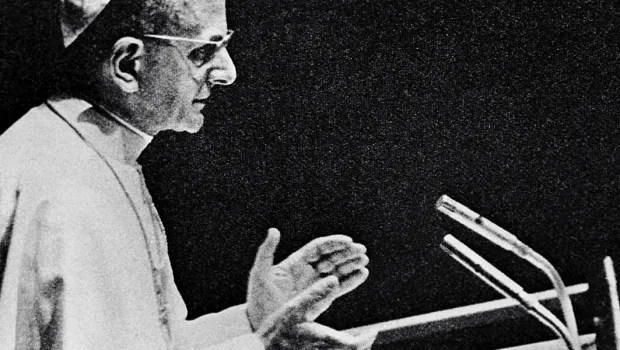
Pope Paul VI: “We would say that, through some mysterious crack—no, it’s not mysterious; through some crack, the smoke of Satan has entered the Church of God.”

I felt like the bank teller who has learned to identify counterfeit bills by first becoming highly familiar with the real thing, but in this case I knew the counterfeit all too well and was only coming to learn of the real thing. I was just so happy to be in the true Church that I let a lot slide for a while— and I still do, and I’m still happy. I love being Catholic, not merely for the joy I find, but because Catholicism is true. Also, I am no expert. And who am I anyway? And yet, I feel that God has given me the eyes I have, formed on the journey I’ve traveled, to see some things that others might not; perhaps especially so-called cradle Catholics. I believe that the long tradition of the Church, especially that old “stuffy” Latin Mass, lived out in love and relying on the Holy Spirit, is an antidote needed for the world today — not just the for the Church, but for the world.

Thus I am bothered by the letter above. I see it run through with problems, false assumptions, ignorance, and immaturity. I want to be dismissive.

And yet, and yet…

Two things: First we must look for the silver linings. In many ways the Church needed to be challenged. Before the Spirit of Vatican II there was the Spirit of the Counter Reformation. This spirit built a powerful, almost fortress-like Church. But, I believe, it was becoming hollow within. Bishops were used to being unchallenged and, it seems to me, too often didn’t distinguish between the core faith that could not be changed and cultural norms that could. Many men became priests and young women nuns for cultural reasons. Prayers were recited because that’s what had always been done. When I hear about bishops sometimes ruling over over nuns in harsh and tone-deaf ways and then those nuns pushing back I tend to side with the nuns. I believe the Church needed to be shook up. The question is how far does one go with that shaking?

Second, I (and we) must have compassion for those who love the Novus Ordo and its music and its culture. For that’s what it is, a culture and it has shaped them. Culture arises from cultus. How we worship, including the nuts and bolts of our liturgies, form us. Lex orandi, lex credendi. Even what direction the priest faces during the Liturgy works within us at such a deep level and in such a precognitive way that the simple fact of orientation teaches us about God and man, saying one thing or another thing. How we receive the Blessed Sacrament, whether on the tongue or in the hand, whether standing or kneeling, teaches (instilling within us) us at a deeply subconscious level knowledge (true or false) of Christ and our relationship to Him, saying one thing and not another thing. At the end of Mass, when we are told to go out into the world, we take with us that cultus which has formed deep within us, formed even minutes before, and so deeply that much of it is subconscious and intuitive and works on our minds to such a degree that what seems right to us seems so as though from the foundations of the earth. But this is not the same thing as being right, for we can be formed by a bad cultus just as easily as a good cultus. And even the best Catholic cultus has to contend with the world’s cultus, which smothers us nearly every minute.

The power of formation is not primarily at the conscious level. Much like the bank teller intuitively knowing a good bill from a false one, the well formed Catholic recognizes truth and error, depth and shallowness, beauty and mediocrity, faith and sentimentality, in an almost precognitive manner. (Oh that we were all that well formed!) Overwhelming evidence declares that Catholics can be poorly formed. Our sensibilities can lead us to wrong understandings, poor interpretations, and misguided evaluations. And our conclusions will feel absolutely right. We almost can’t help it; no one knowingly believes falsehoods, we can only believe what we believe is true. Therefore, we must have compassion and empathy for others. We must seek humility. Our true battle is not over liturgy, or tradition, or theology. Our true battle is against Satan and his devils, against the forces of sin within us, and against the temptations of the world. We are in a profound spiritual, physical, and metaphysical battle for our faith, the Church, and our souls. That battle, of course, plays out much of the time within the physical realm, including the realm of liturgy, culture, and even politics, but we must seek to have eyes that see and ears that hear, we must seek soft hearts and and sensitive souls, so that we may know where the real battle lies, otherwise we will miss it — perhaps even joining an enemy who tricks and beguiles us.

Lord Jesus Christ, Son of God, have mercy on me a sinner.

If you watch documentaries about the 1960s, such as Ken Burns film The Vietnam War, especially the parts that focus on the homefront in the US, or the PBS documentary Woodstock: Three Days that Defined a Generation, you can’t help but feel for the youth caught up in the spirit(s) of the age. There was little chance of any young Catholic at that time, living in the midst of that culture, who would not have also interpreted the post-Vatican II changes, especially those done under the spirit of Vatican II mantra, as utterly comprehensible and necessary. Many of these young Catholics supported refocusing the Church towards the burning issues of the day and, more importantly, defining the approach to those issues in the same terms used by the campus radicals, the feminists, the neo-socialists, and especially those of the anti-war and civil rights movements.

Consider this truly amazing time-capsule below from 1968. This NBC documentary shows us the world in which our letter writer above was formed and of which he clearly is still fond, much like an old man remembering the glory days of his youth. Keep in mind that the Novus Ordo was not promulgated until 1969, so this is even before the new Mass radically changed the Church.

This video feels like a crash in slow motion. I am aghast at the naivete and delirious utopianism expressed, and yet… I too would have likely joined in with enthusiasm if I had been a young adult Catholic at that time. But this is where we need to understand clearly that what is often called the “spirit of Vatican II” was really just the spirit of the age. What was new and “alive” then seems dated and, at best, quaint today. But let’s not be too sentimental, it was also a tragedy in the making.

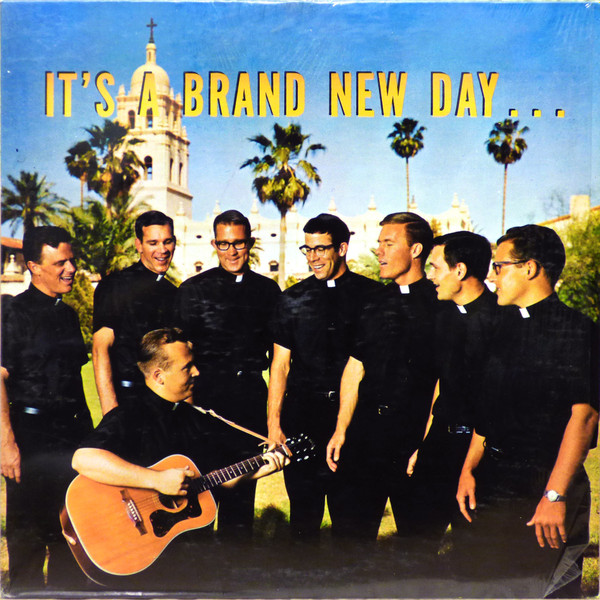
The goal wasn’t just a matter of getting rid of what was old. Underneath it was the belief that what we call traditional Catholicism was being fundamentally incompatible with the modern age and, thus, being a barrier to spiritual growth, a meaningful relationship with Christ, evangelization, and even authentic Catholicism (nevermind the saints, great and small, who knew nothing else but traditional Catholicism because it was just Catholicism). Traditional priestly garb and religious habits began to look more and more like anachronistic costumes, almost laughable; Latin like a language mummified. The key word in the documentary is “relevant.” The Church must become relevant. The disease of relevancy infected the Protestant world too, something I experienced growing up.

As a side note: Look up each priest and bishop interviewed in the documentary above and see how many were eventually laicized and got married in less than ten years of this film.

With time, statistics, and much wide-eyed hand wringing we have come to see that the radical experiments of the 1960s and 1970s largely failed and a great deal has been lost, not least are increasingly diminishing numbers of faithful Catholics in the pews and vocations to the priesthood and religious life. But also so much depth and richness has been lost. It was, it would appear, the Church declaring that the Real Presence was dogma but not really true, and that faith was merely a matter of personal preference after all. Our priests, by no longer having the Traditional Latin Mass available to them, perhaps have suffered the most for they are no longer being fed daily on the more nourishing food of tradition (such as the profoundly rich prayers of the Extraordinary Form) but rather “eating” a less spiritually enriching fair that is bound to leave one at the very least rather anemic. And if one has never eaten from the sumptuous feast’s table one will neither know the riches available or the true depth of satiation.

The Novus Ordo is a living culture and it produces sons and daughters of itself. It is an engine of formation. I believe that many priests have gone into the priesthood thinking and hoping that within the Novus Ordo culture they will become the kind of men that only a TLM culture can produce. (I experienced something similar coming into the Church as a convert.) Many, many things went terribly amiss during the frantic hubbub of the radical sixties. Much good has been destroyed. In one generation enough destruction and spiritual darkness was unleashed that it may take five generations to recover. The “good” bishops and popes have been trying to fix it ever since — tinkering here, adjusting there, moving slowly out of caution? concerns? fear? Of course, I don’t have the answer, and who am I anyway?

The “boomers” and the rest of the Novus Ordo crowd (I also frequently attend the Novus Ordo and just missed being called a boomer by only one year, and not all boomers are pro-Novus Ordo culture) are not the enemy. Even if you are a staunch traditionalist you ought to see them as our brothers and sisters in Christ. One might choose to “fight” for the great traditions of the Church, especially the Traditional Latin Mass, to return in a big way, but one must not fall into a hardened “us and them” mentality. And you ought to love them. They have been taught and formed by the Church and their culture, just as we all have. Their formation, good or bad, falls largely upon the shoulders of those bishops who had that responsibility and who eagerly welcomed the spirit of the age into the Church and often veered wildly beyond the councils documents.

Our job is to love God and each other. We are to seek unity in love, with humility, and with total faith in God — which means we need patience and know that it is God who fights our battles. But the older crowd are not the only ones who love the Novus Ordo more than the TLM. Even many younger folks do so as well, for reasons I can’t quite fathom. People love things for different reasons. And they don’t love other things for different reasons; sometimes merely out of ignorance, sometimes because of their formation, and sometimes for good reasons. But this is a larger topic.

I feel for the man who wrote the letter above. I believe he wrote honestly from his heart. I believe his grievances came from real grieving. I also wonder, without wanting to psychoanalyze him, if his grieving doesn’t come from having had a kind of “mountain top” experience in his youth (think of those in the 1968 documentary above), being caught up in the spirit of the age and feeling like he had truly received a “new Pentecost,” which has stayed with him and sustained him for many years, and now he feels it’s being taken away. I’m sure he’s not alone.

But I don’t feel too sorry for the guy. His letter is also an expression of ignorance, selfishness and shows lack of empathy for those suffering under the revolution he so loves. That parish he left was very accommodating and, it turns out, he wasn’t. His letter was heartfelt and honest but it is also an expression of myopic self-centeredness. I hope* he found a parish with the felt banners and Marty Haugen hymns he’s used to, and with the tabernacle hidden somewhere to the side so as not to conflict with the worship. I’m sure he did, there’s still a lot of them around.

*Not really.

Becoming Divine

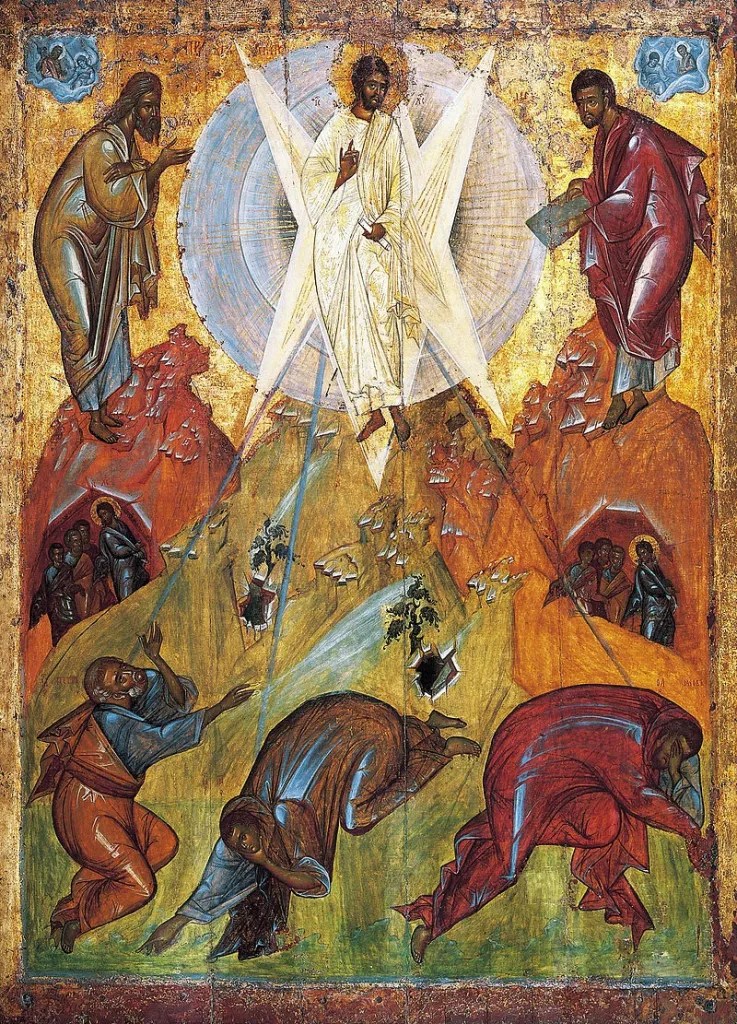
The icon of the Transfiguration by Theophan the Cretan depicts the event where Jesus Christ is transformed, revealing his divine glory to his disciples, Peter, James, and John, on Mount Tabor. Theophan the Cretan, also known as Theophanes the Greek, was a renowned iconographer of the late 14th and early 15th centuries. His Transfiguration icon is known for its use of color, particularly warm earth tones and gold, to unify the heavenly and earthly realms depicted in the scene.

May grace and peace be multiplied to you in the knowledge of God and of Jesus our Lord. His divine power has granted to us all things that pertain to life and godliness, through the knowledge of him who called us to his own glory and excellence, by which he has granted to us his precious and very great promises, that through these you may escape from the corruption that is in the world because of passion, and become partakers of the divine nature. (2 Peter 1:2–4)

Many times I read over these words from Saint Peter but I never paused to contemplate the phrase “become partakers of the divine nature.” The very idea of becoming partakers of the divine nature, though boldly stated here, was never a topic of preaching or teaching in my Protestant upbringing. And later, when I first heard the words of Saint Athanasius below, I was shocked.

“God became man so that man might become god” (St. Athanasius, On the Incarnation 54:3)

These words have rung like a bell down through the history of the apostolic Church(es) ever since they were penned in the 4th century. Alas, they have also been forgotten by many who call themselves Christian and some have even felt themselves scandalized by those words. I know the Protestant world from which I came would have rejected such ideas. And yet…

Be imitators of me, as I am of Christ. (1 Corinthians 11:1)

Are we not to be imitators of Christ? Yes! Is He not the Son of God? Of course! But these words roll off our tongues too easily. Have we not become complacent, given over to excuses? I have.

If imitation of Christ is about checking the boxes of moral perfection it’s easy to back away a bit. No one can reasonably expect me to actually check all those boxes. Right? But if imitation is to become divine… that sounds very interesting.

“You, therefore, must be perfect, as your heavenly Father is perfect.” (Matthew 5:48)

But what is this perfection? I was always taught being a good Christian is to seek moral perfection. And that is true but that is only part of the picture. When something is perfect it is, in the ancient and Biblical sense, to be brought to its proper end, to be finished, completed, lacking in nothing. For humans it means to be what a human is meant to be, that is, fully human as God intends. This is the telos of salvation. To seek it is to seek God, to desire to be like God, to be the Image of God finally and fully realized. So yes, it does mean moral perfection because it means total perfection, to be as God is, perfect.

This is theosis. This is what being a disciple of Christ is all about. This is the pearl of great price.

I’m not writing this to say anything new or profound, rather I want to point to a book and two videos that have helped me to understand that the burning in my soul is my desire for theosis.

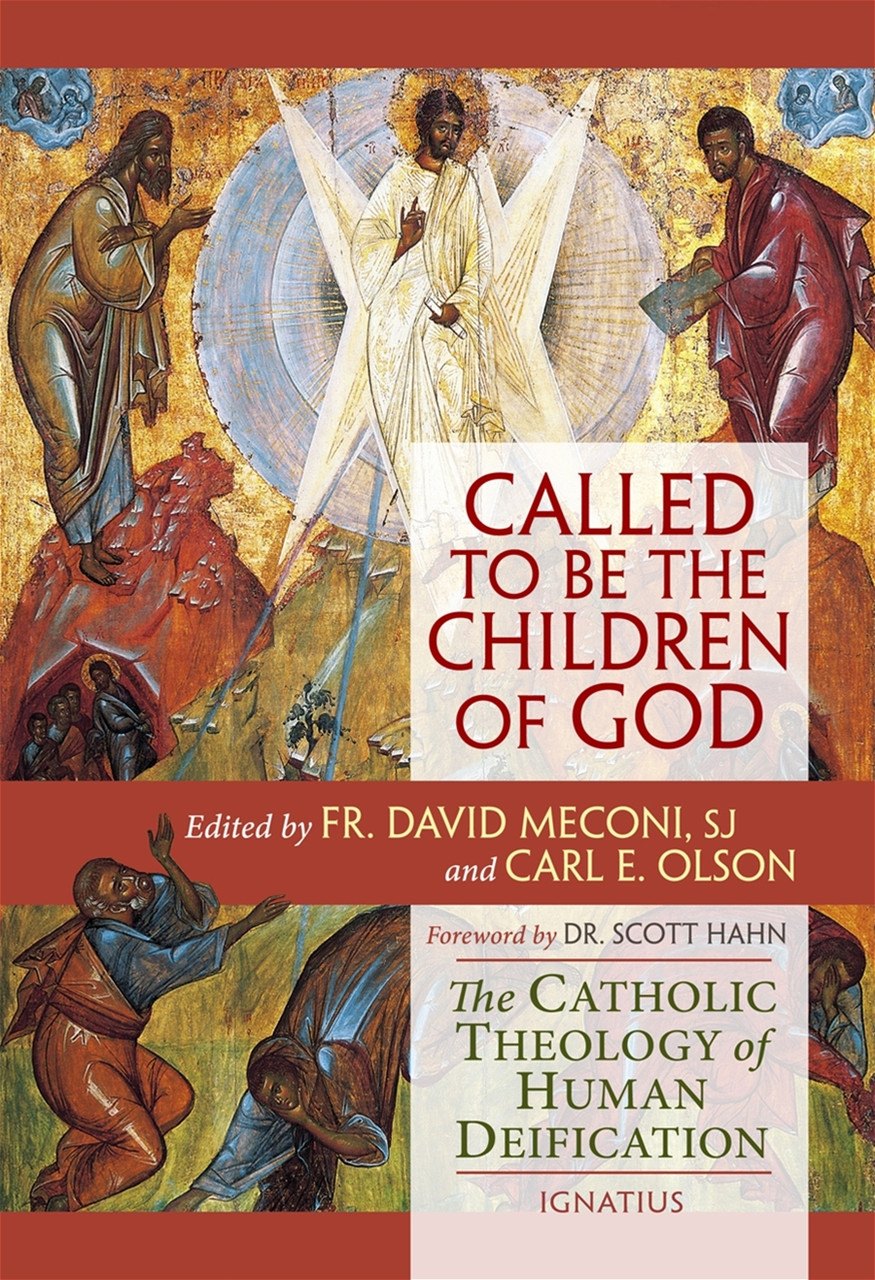
The book is: Called to Be the Children of God: The Catholic Theology of Human Deification Edited by a friend of mine, this book looks at the concept of theosis/deification/divinization from the Old Testament down through the centuries, much of it as understood within the Catholic Church. It’s an excellent overview with countless quotes from the Bible and Church history. For a Christian not familiar with the concept of theosis (so easy to be ignorant these days) this book might blow their mind.

The videos, which are from the Eastern Orthodox viewpoint and are also excellent, are here:

Blessings to you.

[Third Sunday After Pentecost, Feast of Saints Peter and Paul, Apostles]

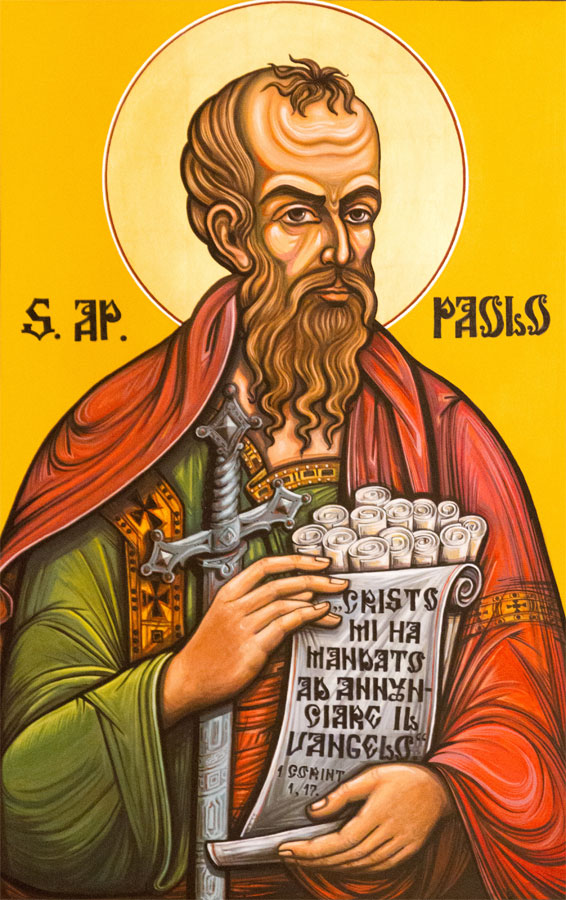
Saint Paul and Christian Classical Education

We used to be in the Christian Classical Home Schooling Movement. We home schooled our three kids until they moved over to public high school. I wrote the article below in 2011. I think it still holds up. In fact, as I re-read it today, I feel convicted. I need to follow the great saint’s teaching myself. I don’t so much of the time.

I do not know if Saint Paul ever developed a detailed educational foundation or curriculum or program in the way that we might today. He may have in person as he spread the Gospel, but he certainly didn’t in his letters. And I doubt he ever founded a school (of course, if he did he would not have needed to use the word “classical” in its name). I guess that for Paul “starting” this thing we call Christianity was enough to keep him busy and get him killed (of course he didn’t start it but he was a laborer laying the foundation). But still, as I ponder what Christian Classical Education is or might be, I wonder what Paul would contribute. Without trying to turn this into an overwhelming project for which I am unprepared, I want to briefly look at only a couple of verses from Paul’s letter to the church at Philippi. He writes in Philippians 4:8-9:

Finally, brothers, whatever is true, whatever is honorable, whatever is just, whatever is pure, whatever is lovely, whatever is commendable, if there is any excellence, if there is anything worthy of praise, think about these things. What you have learned and received and heard and seen in me—practice these things, and the God of peace will be with you. (ESV)

Consider this list:

  • What is true
  • What is honorable
  • What is just
  • What is pure
  • What is lovely
  • What is commendable
  • What is excellent
  • What is worthy of praise

What do we do with such a list? Imagine going to your local school board and proposing that the district’s curriculum be revamped to begin with this list. Ha! I dare you.

Paul says to think about these things.

To think. In the minds of our modern educators, and most of the rest of us, thinking is almost tantamount to doing nothing. Ever see someone thinking? What are they doing? On the outside they are often quite still, maybe staring into the distance. In effect, they are doing nothing. And yet, they are doing a great deal. Now, if they are not thinking alone, staring placidly off into space, then they are probably in dialogue with someone. But a true dialogue can seem to be unfocused and wandering, which is also antithetical to teaching in the modern sense. Our modern education system is partially based on a sense of urgency–we cannot afford to waste time with thinking when we have so much knowledge to get into those little brains. It is a system that must swap dialogue with lecture. But this modern system denies the existence of the human soul. Is that what we want?

Paul says to think about these things.

What is thinking? I know nothing about the brain as a subject of scientific study. I know there are chemicals and electrical impulses involved, but more than that? I know nothing. However, I gather thinking is a mystery of our minds, of our humanity. I use the word mystery because I doubt science can ever, truly plumb the depths and workings of thinking. Thinking is a mystery because it is a force of great power that seems to have no substance, no true existence, no way to completely contain it and control it as a totality. We can guide it, use it, encourage it, welcome it, and share it, sometimes even fear it, but we cannot subdue it. To think is to ponder, to wonder, to suppose, to engage, to meditate. More importantly, thinking is to take an idea into oneself, into one’s soul, and turn it over and over and make it one’s own, or to reject it in favor of another.

So then we ponder and wonder, suppose and engage, meditate and bring into one’s soul

  • What is true
  • What is honorable
  • What is just
  • What is pure
  • What is lovely
  • What is commendable
  • What is excellent
  • What is worthy of praise

Can you think of any better education? I can’t.

Paul could have left it there, but he goes on. He writes, “What you have learned and received and heard and seen in me…” Consider this, Paul is able to confidently write that the Philippians have directly experienced him in such a way that they have:

  • learned from Paul
  • received from Paul
  • heard from Paul
  • seen in Paul

This list is somewhat cryptic, but I think we can get a glimpse into how Paul was a teacher. First the Philippians learned from Paul. He saw himself as a teacher. He had intent. He knew what he wanted to teach them. And he taught them thoroughly enough, with enough feedback, to know that they leaned. Then he says they have received. This implies a giving, a handing over. There was something that he left with them, something they now have. He can write to them because he knows they have what he gave. In this sense they are more like Paul than they were before. The goal of the classical educator is that his pupils will one day become his colleagues. The Philippians are now that much closer to being colleagues of Paul; they have something that Paul has. Third he says they heard from Paul. Teaching often involves speaking and hearing, but sometimes we forget what a gift is language. If you are like me then you love Paul’s letters, but you would really love to hear him speak, to ask him questions, to sit at his feet. Paul engaged their minds as God intended, as their minds were designed to function, by using language. Speaking also requires presence. Paul was with the Philippians, in person, in the flesh; they heard his voice, knew its sound, picked up on nuances of meaning in the subtleties of his voice. To hear in this way, that is to listen to ideas spoken, is a profoundly human experience. We do not know if the Philippians heard Paul specifically because he preached, or perhaps led them in Socratic dialogue, or even just through conversation, but they heard. Finally, and this may be the most important, they saw. Paul presented himself as an example. He lived what he taught. Or better yet, he embodied the Logos. The Gospel, the message, the content that Paul taught, handed over, and spoke, was also visible in his life and actions. Paul could rightly say, “look at me.” The best teachers embody the logos.

Can we find more about how Paul taught? Yes, I’m sure we can. But just from these two verses we get something profound. We find that Paul, with confidence, can say the Philippians

  • learned from Paul
  • received from Paul
  • heard from Paul
  • saw in Paul

And what did they learn?

  • What is true
  • What is honorable
  • What is just
  • What is pure
  • What is lovely
  • What is commendable
  • What is excellent
  • What is worthy of praise

From this alone we can know that Paul was a master teacher in the fullest Christian Classical model. How this will look in your own teaching will be unique, but there is no better foundation that I can find.

And then Paul writes:

“…practice these things…”

Paul both taught in person and was writing to the Philippians with an Ideal Type in mind, that is the complete or perfect Christian, that is Christ. Christ is the logos. We, because we are Christians, because we are disciples, seek to embody the Logos in our lives. It is not enough to find the idea of the Ideal Type good or fascinating or excellent. One must put it into practice and live it. To practice is to work and persevere at imitation. To imitate is to behold, to embrace, to take into one’s being and seek to embody the Ideal Type in one’s life and actions.

David Hicks wrote: “To produce a man or woman whose life conforms to the Ideal in every detail is education’s supremely moral aim.” (Norms and Nobility, p. 47) Is this not also the passion of Paul, that the Philippians live’s would conform to the Ideal of Christ in every detail? And how are the Philippians to do this?

“…practice these things…”

Now, if you haven’t noticed, I have not defined what Christian Classical Education is or how to do it. Partly this is tactical; I don’t have a clear answer. On the other hand I will offer a quote from Andrew Kern:

Education is the cultivation of wisdom and virtue by nourishing the soul on truth, goodness, and beauty so that the student is better able to know and enjoy God.

I cannot think of a better, more fundamental description of what a Christian Classical Education is all about. There is a lot in there, and a lot of room for developing strategies of teaching, but if this is what we are aiming for, if this is what we are building on, if this is our longing, then consider again the words of Saint Paul:

Finally, brothers, whatever is true, whatever is honorable, whatever is just, whatever is pure, whatever is lovely, whatever is commendable, if there is any excellence, if there is anything worthy of praise, think about these things. What you have learned and received and heard and seen in me—practice these things, and the God of peace will be with you.

Do that and the God of peace shall be with you.

Celebrating and Proclaiming Corpus Christi

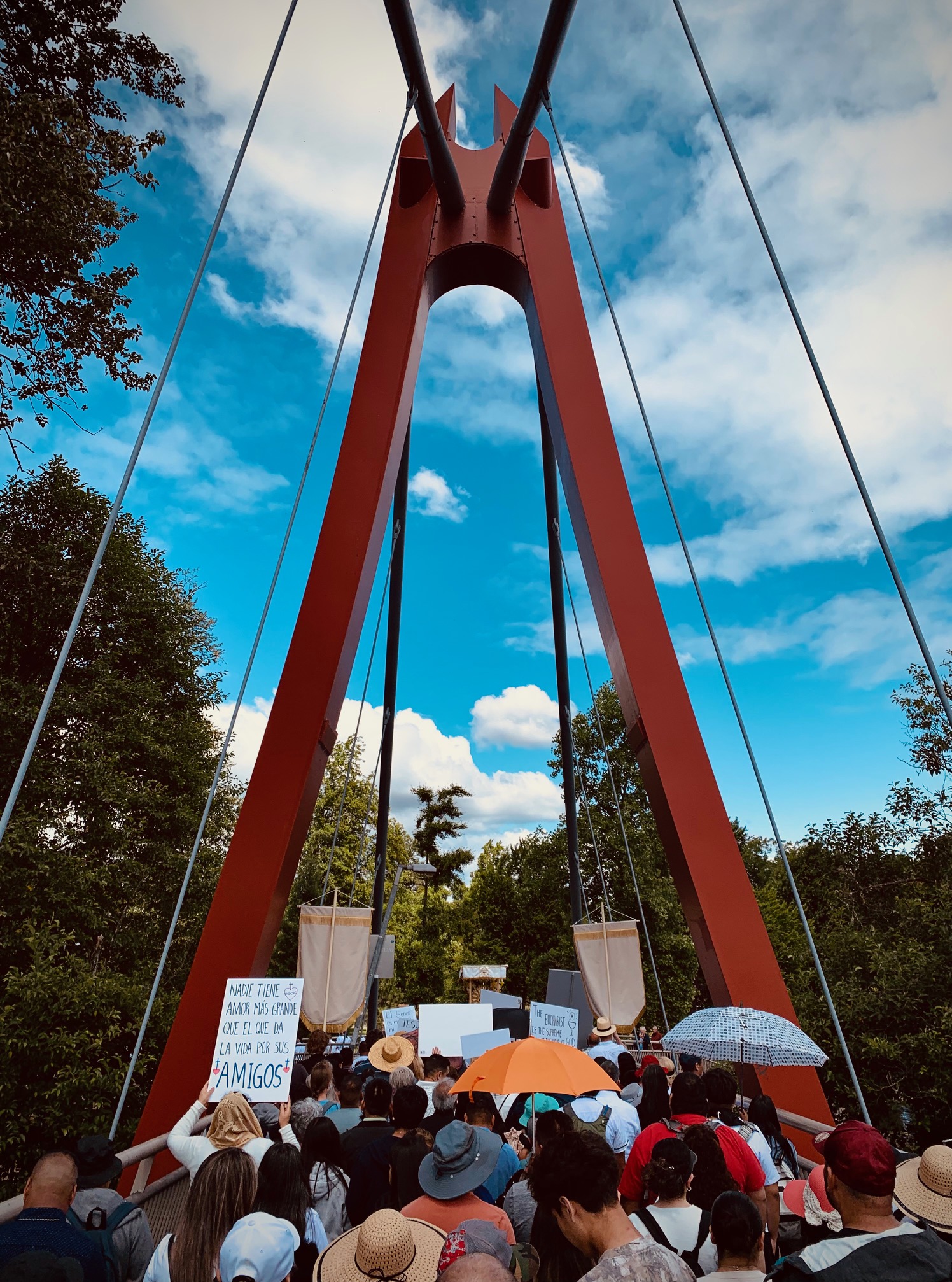
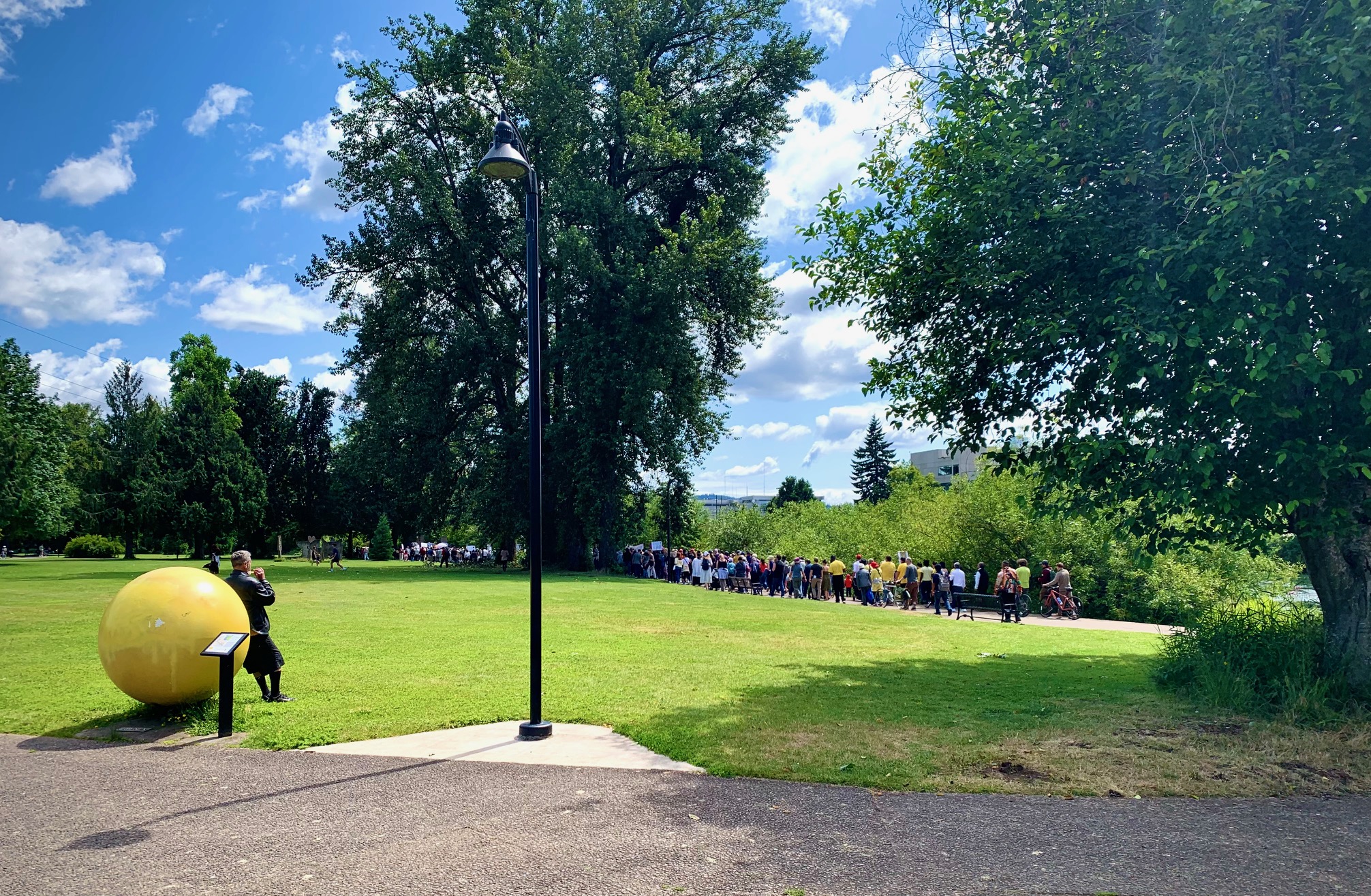
On Corpus Christi Sunday* my teenage son and I joined in our local Corpus Christi procession. This was a joint effort between several parishes and the route traveled over 6.8 miles between our two metro-area cities. My son and I only walked the first part (about 2 miles) because that’s all my bad knee could handle. It was a joyful affair with much singing, mostly in Spanish, and recited prayers, mostly the Rosary. We also stopped in front of the jail and prayed for the inmates. We had great police support as we walked down blocked off streets through the center of the city.

All in all, this was a kind of culmination of a great several days for me.

The procession makes its way across a footbridge over the river.

I have written previously about coming back to the Church. This return has been a true joy for me.

On Saturday before Corpus Christi Sunday I went to confession for the first time in a long time. What a blessing! Later that day my Father’s Day gift arrived in the mail; three icons and some candles (that quote from Ephesians above came in the packaging). I put the icons on the wall near my desk for my prayer corner. Sunday morning I went to church, this time to a parish I had not visited for a long time and things had changed… for the better! What a reverent and beautiful Mass. It was a Novus Order Mass done mostly in Latin, with Gregorian Chant beautifully sung, lots of incense, the priest facing Ad orientem, ten male altar servers, and recently installed altar rails where I received the Blessed Host on the tongue. I’m not waving the traditionalist flag here, just noting that reverence due is helped by reverent forms of worship. Then, that afternoon, was the procession. I would say that was a great several days.

The procession walks along the river on the way to the next city.

*What is Corpus Christi? Here is a statement from the Archdiocese of Portland’s website:

The Feast of Corpus Christi, also known as the Solemnity of the Most Holy Body and Blood of Christ, is a Catholic celebration of the real presence of Jesus Christ in the Eucharist—and thus a sacred reminder that, in every Mass, Jesus’ one sacrifice of Calvary is sacramentally made present and offered anew for “the forgiveness of the sins we daily commit” (CCC 1366). While Holy Thursday recalls Christ’s institution of the Eucharist at the Last Supper, Corpus Christi gives Catholics a joyful opportunity to honor our Eucharistic Lord Jesus in the Blessed Sacrament. This includes public devotion apart from Mass.

I want to live in a union of love with God

Alleluia! The Spirit of the Lord has filled the whole world.
Come, let us adore him, alleluia.

Apologetics played a big part in my conversion but they always left me wanting. In the end I wanted not an argument or a logical proof of the Church’s validity and authenticity, rather I wanted to become a different person. I wanted deification, theosis, divinization. I do find this concept within Catholicism but it is from the Eastern Orthodox and Byzantine Catholicism that one find deification emphasized. In short, I want nothing else than to experience God, to be united with God.

I’ve been reading The Mountain of Silence: A Search for Orthodox Spirituality by Kyriacos C. Markides. In it I find this wonderful exchange:

“So, when during the liturgy we recite the prayer “I believe in one God…,” Father Maximos went on after I shifted to second gear, “we try in reality to move from an intellectual faith in God to the actual vision of God. Faith become Love itself. The Creed actually mean ‘I live in a union of love with God.’ This is the path of the saints. Only then can we say that we are true Christians. This is the kind of Faith that the saints possess as direct experience. Consequently they are unafraid of death, of war, of illness, or anything else of this world. They are beyond all worldly ambition, of money, fame, power, safety, and the like. Such person transcend the idea of God and enter into the experience of God.”

“But how many people can really know God that way?” I complained.

“Well, as long as we do not know God experientially then we should at least realize that we are simply ideological believers,” Father Maximos relied dryly. “The ideal and ultimate form of true faith means having direct experience of God as a living reality.”

This morning I recited the Creed with a group of local believers as we celebrated Pentecost Sunday and I thought about those Christians two thousand years ago experiencing God come upon them and transform them. The world has not ever been the same since.

[Pentecost Sunday]

Biblical references for the unique role and responsibility the Apostle Peter

I first published this post in 2012, just one year before I officially converted to the Catholic Church. My journey up to that point had included a possible conversion to Eastern Orthodoxy but I first had to sort out my thinking on the Pope. This post was a piece of that process.
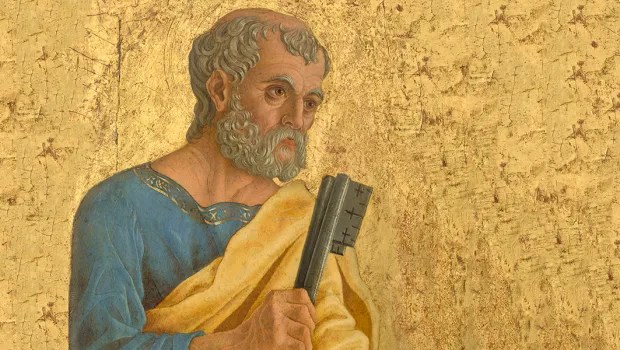
The Apostle Peter is a fascinating man in the New Testament. In the Protestant world it is common for pastors to say they love Peter because he was such a  goof-up. Peter gives us all kinds of hope that any of us can be saved. But anyone who has grown up in, or spent a lot of time in, the Protestant world and worldview knows it is Paul who is Apostle number one. There are at least two good reasons for this. One is that Paul wrote those books of the Bible that are most central for Protestants: Romans, Galatians, 1 Corinthians, etc. Second is that Protestants are wary of Peter because Catholics say the true Church founded by Christ was founded upon Peter (the rock) as the first of the apostles, as the first “pope”. Get too close to Peter and one might be tempted to think Catholics are on to something.

But Peter is a big deal. To my count Peter is mentioned in the New Testament something like 155 times, whereas the rest of the apostles combined are only mentioned around 130 times. Of course mere numbers don’t necessarily add up to importance. It’s how Peter is mentioned, what he does, what he says, what others say about him, and especially what Christ says to Peter that show Peter is the central Apostle, the key figure of the New Testament Church. As we look at the Biblical references to Peter the picture begins to fill out.

An aside: I have heard many Protestant teachings on the famous Matthew 16:18 passage where Jesus says “upon this rock I will build My church.” That passage in isolation can be taken any number of ways. But after looking at a more complete picture of Peter as the New Testament writers saw him, I must say the Roman Catholic understanding of Peter as the Rock upon which Christ will build His Church makes the most sense. In fact, even without this particular passage, the other passages below add up to the same idea. Rather than seeing the Catholic position as some kind of crazy overlay to this passage, it now seems clear to me that it is the Protestants who must come up with a better argument. So far I have not heard anything better. Of course, this makes me, an old Protestant, very curious.

Below are the New Testament references I was able to find regarding Peter. I have tried to group them a bit, and added a few of my thoughts. I have not ranked them in any particular order. I’m sure I’ve made some mistakes. All quotations are from the New American Standard Bible.

Peter listed/mentioned first with the apostles

Peter being mentioned or listed first among the apostles:

Matt. 10:2  Now the names of the twelve apostles are these: The first, Simon, who is called Peter, and Andrew his brother; and James the son of Zebedee, and John his brother;
Mark 1:36  Simon and his companions searched for Him;
Mark 3:16  And He appointed the twelve: Simon (to whom He gave the name Peter),
Luke 6:14-16  Simon, whom He also named Peter, and Andrew his brother; and James and John; and Philip and Bartholomew;  and Matthew and Thomas; James the son of Alphaeus, and Simon who was called the Zealot; Judas the son of James, and Judas Iscariot, who became a traitor.
Acts 2:37  Now when they heard this, they were pierced to the heart, and said to Peter and the rest of the apostles, “Brethren, what shall we do?”
Acts 5:29  But Peter and the apostles answered, “ We must obey God rather than men.

Peter is first when entering upper room after our Lord’s ascension:

Acts 1:13  When they had entered the city, they went up to the upper room where they were staying; that is, Peter and John and James and Andrew, Philip and Thomas, Bartholomew and Matthew, James the son of Alphaeus, and Simon the Zealot, and Judas the son of James.

Peter leads the fishing and his net does not break. According to Catholics, the boat (the “barque of Peter”) is seen as a metaphor for the Church:

John 21:2-3  Simon Peter, and Thomas called Didymus, and Nathanael of Cana in Galilee, and the sons of Zebedee, and two others of His disciples were together. Simon Peter said to them, “I am going fishing.” They said to him, “We will also come with you.” They went out and got into the boat; and that night they caught nothing.
John 21:11  Simon Peter went up and drew the net to land, full of large fish, a hundred and fifty-three; and although there were so many, the net was not torn.

Though Peter and John are both very important figures in the early church, Peter is always mentioned before John:

Luke 8:51  When He came to the house, He did not allow anyone to enter with Him, except Peter and John and James, and the girl’s father and mother.
Luke 9:28  Some eight days after these sayings, He took along Peter and John and James, and went up on the mountain to pray.
Luke 22:8  And Jesus sent Peter and John, saying, “Go and prepare the Passover for us, so that we may eat it.”
Acts 1:13  When they had entered the city, they went up to the upper room where they were staying; that is, Peter and John and James and Andrew, Philip and Thomas, Bartholomew and Matthew, James the son of Alphaeus, and Simon the Zealot, and Judas the son of James.
Acts 3:1-4  Now Peter and John were going up to the temple at the ninth hour, the hour of prayer. And a man who had been lame from his mother’s womb was being carried along, whom they used to set down every day at the gate of the temple which is called Beautiful, in order to beg alms of those who were entering the temple. When he saw Peter and John about to go into the temple, he began asking to receive alms. But Peter, along with John, fixed his gaze on him and said, “Look at us!”
Acts 3:3  When he saw Peter and John about to go into the temple, he began asking to receive alms.
Acts 3:11  While he was clinging to Peter and John, all the people ran together to them at the so-called portico of Solomon, full of amazement.
Acts 4:13  Now as they observed the confidence of Peter and John and understood that they were uneducated and untrained men, they were amazed, and began to recognize them as having been with Jesus.
Acts 4:19  But Peter and John answered and said to them, “ Whether it is right in the sight of God to give heed to you rather than to God, you be the judge;
Acts 8:14  Now when the apostles in Jerusalem heard that Samaria had received the word of God, they sent them Peter and John,

Peter is mentioned first as going to mountain of transfiguration. He is also the only disciple to speak at the transfiguration:

Luke 9:28  Some eight days after these sayings, He took along Peter and John and James, and went up on the mountain to pray.
Luke 9:33  And as these were leaving Him, Peter said to Jesus, “ Master, it is good for us to be here; let us make three tabernacles: one for You, and one for Moses, and one for Elijah”— not realizing what he was saying.

Peter is the first of the apostles to confess the divinity of Christ:

Matt. 16:16  Simon Peter answered, “You are the Christ, the Son of the living God.”
Mark 8:29  And He continued by questioning them, “But who do you say that I am?” Peter answered and said to Him, “You are the Christ.”
John 6:69  We have believed and have come to know that You are the Holy One of God.”

Peter ranked(?) higher than John

John arrived at the tomb first but stopped and waited for Peter. Peter then arrived and entered the tomb first:

Luke 24:12  But Peter got up and ran to the tomb; stooping and looking in, he saw the linen wrappings only; and he went away to his home, marveling at what had happened.
John 20:4-6  The two were running together; and the other disciple ran ahead faster than Peter and came to the tomb first; and stooping and looking in, he saw the linen wrappings lying there; but he did not go in. And so Simon Peter also came, following him, and entered the tomb; and he saw the linen wrappings lying there,

It is Peter that is named as the eye witness even though both Peter and John had seen the risen Jesus the previous hour:

Luke 24:34  saying, “ The Lord has really risen and has appeared to Simon.”

Peter seen as the Leader of the Apostles

In the garden of Gethsemane, Jesus asks Peter, and no one else, why he was asleep. It would seem Peter is held accountable, on behalf of the apostles, for their actions:

Mark 14:37  And He came and found them sleeping, and said to Peter, “Simon, are you asleep? Could you not keep watch for one hour?

Peter is designated (called out) by an angel as unique among the apostles:

Mark 16:7  But go, tell His disciples and Peter, ‘ He is going ahead of you to Galilee; there you will see Him, just as He told you.’”

Peter receiving Special Instruction and Revelation

Peter alone is told he has received special, divine revelation from God the Father:

Matt. 16:17  And Jesus said to him, “Blessed are you, Simon Barjona, because flesh and blood did not reveal this to you, but My Father who is in heaven.

Jesus instructs the disciples by specifically instructing Peter to let down their nets for a catch. Peter specifically is told he will be a “fisher of men”:

Luke 5:4,10  When He had finished speaking, He said to Simon, “Put out into the deep water and let down your nets for a catch… and so also were James and John, sons of Zebedee, who were partners with Simon. And Jesus said to Simon, “ Do not fear, from now on you will be catching men.”

Peter speaking/Asking on Behalf of the Disciples

Peter asks Jesus about the rule of forgiveness. Peter frequently takes a leadership role among the apostles in seeking understanding of Jesus’ teachings:

Matt. 18:21  Then Peter came and said to Him, “Lord, how often shall my brother sin against me and I forgive him? Up to seven times?”

Peter speaks on behalf of the apostles by telling Jesus that they have left everything to follow Him:

Matt. 19:27  Then Peter said to Him, “Behold, we have left everything and followed You; what then will there be for us?”

Peter speaks for the disciples on their following Jesus:

Mark 10:28  Peter began to say to Him, “Behold, we have left everything and followed You.”

Peter speaks for the disciples about their witnessing Jesus’ curse on the fig tree:

Mark 11:21  Being reminded, Peter said to Him, “ Rabbi, look, the fig tree which You cursed has withered.”

Peter functions as the spokesman or representative (or vicar, to use popular a Catholic term) for Jesus:

Matt. 17:24-25  When they came to Capernaum, those who collected the two-drachma tax came to Peter and said, “Does your teacher not pay the two-drachma tax?” He *said, “Yes.” And when he came into the house, Jesus spoke to him first, saying, “What do you think, Simon? From whom do the kings of the earth collect customs or poll-tax, from their sons or from strangers?”

When Jesus asked who touched His garment, it is Peter who answers:

Luke 8:45  And Jesus said, “Who is the one who touched Me?” And while they were all denying it, Peter said, “Master, the people are crowding and pressing in on You.”

It is Peter who seeks clarification of a parable on behalf on the disciples:

Luke 12:41  Peter said, “Lord, are You addressing this parable to us, or to everyone else as well?”

After many of the disciples leave Jesus, it is Peter who speaks on behalf of the remaining disciples and confesses their belief in Christ after the Eucharistic discourse:

John 6:68 Simon Peter answered Him, “Lord, to whom shall we go? You have words of eternal life.

Peter as Christ’s Representative on Earth

Protestants debate this, but it would seems that Jesus builds the Church primarily (only?) on Peter, the rock:

Matt. 16:18  I also say to you that you are Peter, and upon this rock I will build My church; and the gates of Hades will not overpower it.

Only Peter receives the keys of the kingdom of heaven:

Matt. 16:19  I will give you the keys of the kingdom of heaven; and whatever you bind on earth shall have been bound in heaven, and whatever you loose on earth shall have been loosed in heaven.”

Peter, by paying the tax for both Jesus and himself, is acting Christ’s “representative” on earth:

Matt. 17:26-27  When Peter said, “From strangers,” Jesus said to him, “Then the sons are exempt. However, so that we do not offend them, go to the sea and throw in a hook, and take the first fish that comes up; and when you open its mouth, you will find a shekel. Take that and give it to them for you and Me.”

Peter given charge/care of the other disciples

Jesus prays specifically for Peter, that his faith may not fail, and charges him to strengthen the rest of the apostles:

Luke 22:31-32  “Simon, Simon, behold, Satan has demanded permission to sift you like wheat; but I have prayed for you, that your faith may not fail; and you, when once you have turned again, strengthen your brothers.”

In front of the apostles, Jesus asks Peter if he loves Jesus “more than these,” which likely refers to the other apostles. Peter has a special role regarding the apostles:

John 21:15  So when they had finished breakfast, Jesus said to Simon Peter, “Simon, son of John, do you love Me more than these?” He said to Him, “Yes, Lord; You know that I love You.” He said to him, “Tend My lambs.”

Jesus charges Peter to “feed my lambs,” “tend my sheep,” “feed my sheep.” Sheep appears to mean all people (or all believers), including the apostles:

John 21:15-17  So when they had finished breakfast, Jesus said to Simon Peter, “Simon, son of John, do you love Me more than these?” He *said to Him, “Yes, Lord; You know that I love You.” He said to him, “Tend My lambs.” He said to him again a second time, “Simon, son of John, do you love Me?” He said to Him, “Yes, Lord; You know that I love You.” He said to him, “ Shepherd My sheep.” He said to him the third time, “Simon, son of John, do you love Me?” Peter was grieved because He said to him the third time, “Do you love Me?” And he said to Him, “Lord, You know all things; You know that I love You.” Jesus said to him, “ Tend My sheep.


Peter Leading the Early Church

Peter initiates the selection of a successor to Judas immediately after Jesus ascended into heaven. Note: This passage also supports (or establishes) the concept of apostolic succession:

Acts 1:15  At this time Peter stood up in the midst of the brethren (a gathering of about one hundred and twenty persons was there together), and said,

Peter is the first apostle to preach the Gospel:

Acts 2:14  But Peter, taking his stand with the eleven, raised his voice and declared to them: “Men of Judea and all you who live in Jerusalem, let this be known to you and give heed to my words.

Peter is the first to preach on repentance and baptism in the name of Jesus Christ:

Acts 2:38  Peter said to them, “ Repent, and each of you be baptized in the name of Jesus Christ for the forgiveness of your sins; and you will receive the gift of the Holy Spirit.

Peter performs the first healing miracle of the apostles:

Acts 3:6-7  But Peter said, “I do not possess silver and gold, but what I do have I give to you: In the name of Jesus Christ the Nazarene—walk!” And seizing him by the right hand, he raised him up; and immediately his feet and his ankles were strengthened.

Peter is the first to teach that there is no salvation other than through Christ:

Acts 3:12-26  But when Peter saw this, he replied to the people, “Men of Israel, why are you amazed at this, or why do you gaze at us, as if by our own power or piety we had made him walk? The God of Abraham, Isaac and Jacob, the God of our fathers, has glorified His servant Jesus, the one whom you delivered and disowned in the presence of Pilate, when he had decided to release Him. But you disowned the Holy and Righteous One and asked for a murderer to be granted to you, but put to death the Prince of life, the one whom God raised from the dead, a fact to which we are witnesses. And on the basis of faith in His name, it is the name of Jesus which has strengthened this man whom you see and know; and the faith which comes through Him has given him this perfect health in the presence of you all. And now, brethren, I know that you acted in ignorance, just as your rulers did also. But the things which God announced beforehand by the mouth of all the prophets, that His Christ would suffer, He has thus fulfilled. Therefore repent and return, so that your sins may be wiped away, in order that times of refreshing may come from the presence of the Lord; and that He may send Jesus, the Christ appointed for you, whom heaven must receive until the period of restoration of all things about which God spoke by the mouth of His holy prophets from ancient time. Moses said, ‘ The Lord God will raise up for you a prophet like me from your brethren; to Him you shall give heed to everything He says to you. And it will be that every soul that does not heed that prophet shall be utterly destroyed from among the people.’ And likewise, all the prophets who have spoken, from Samuel and his successors onward, also announced these days. It is you who are the sons of the prophets and of the covenant which God made with your fathers, saying to Abraham, ‘ And in your seed all the families of the earth shall be blessed.’ For you first, God raised up His Servant and sent Him to bless you by turning every one of you from your wicked ways.”

Acts 4:8-12  Then Peter, filled with the Holy Spirit, said to them, “Rulers and elders of the people, if we are on trial today for a benefit done to a sick man, as to how this man has been made well, let it be known to all of you and to all the people of Israel, that by the name of Jesus Christ the Nazarene, whom you crucified, whom God raised from the dead—by this name this man stands here before you in good health. He is the stone which was rejected by you, the builders, but which became the chief corner stone. And there is salvation in no one else; for there is no other name under heaven that has been given among men by which we must be saved.”

Peter resolves the first doctrinal issue on circumcision at the Church’s first council at Jerusalem, and no one questions him. After Peter the Papa spoke, all were kept silent:

Acts 15:7-12  After there had been much debate, Peter stood up and said to them, “Brethren, you know that in the early days God made a choice among you, that by my mouth the Gentiles would hear the word of the gospel and believe. And God, who knows the heart, testified to them giving them the Holy Spirit, just as He also did to us; and He made no distinction between us and them, cleansing their hearts by faith. Now therefore why do you put God to the test by placing upon the neck of the disciples a yoke which neither our fathers nor we have been able to bear? But we believe that we are saved through the grace of the Lord Jesus, in the same way as they also are.” All the people kept silent, and they were listening to Barnabas and Paul as they were relating what signs and wonders God had done through them among the Gentiles.

Only after Peter finishes speaking do Paul and Barnabas speak in support of Peter’s definitive teaching:

Acts 15:12  All the people kept silent, and they were listening to Barnabas and Paul as they were relating what signs and wonders God had done through them among the Gentiles.

The church prayed for Peter while he was in prison:

Acts 12:5  So Peter was kept in the prison, but prayer for him was being made fervently by the church to God.

Peter acts as the chief elder (or bishop?) by exhorting all the other elders of the Church:

1 Peter 5:1  Therefore, I exhort the elders among you, as your fellow elder and witness of the sufferings of Christ, and a partaker also of the glory that is to be revealed,

Peter brings the Gospel to the Gentiles

Peter is first Apostle to teach that salvation is for all, both Jews and Gentiles:

Acts 10:34-48 Opening his mouth, Peter said: “I most certainly understand now that God is not one to show partiality, but in every nation the man who fears Him and does what is right is welcome to Him. The word which He sent to the sons of Israel, preaching peace through Jesus Christ (He is Lord of all)— you yourselves know the thing which took place throughout all Judea, starting from Galilee, after the baptism which John proclaimed. You know of Jesus of Nazareth, how God anointed Him with the Holy Spirit and with power, and how He went about doing good and healing all who were oppressed by the devil, for God was with Him. We are witnesses of all the things He did both in the land of the Jews and in Jerusalem. They also put Him to death by hanging Him on a cross. God raised Him up on the third day and granted that He become visible, not to all the people, but to witnesses who were chosen beforehand by God, that is, to us who ate and drank with Him after He arose from the dead. And He ordered us to preach to the people, and solemnly to testify that this is the One who has been appointed by God as Judge of the living and the dead. Of Him all the prophets bear witness that through His name everyone who believes in Him receives forgiveness of sins.” While Peter was still speaking these words, the Holy Spirit fell upon all those who were listening to the message. All the circumcised believers who came with Peter were amazed, because the gift of the Holy Spirit had been poured out on the Gentiles also. For they were hearing them speaking with tongues and exalting God. Then Peter answered, “ Surely no one can refuse the water for these to be baptized who have received the Holy Spirit just as we did, can he?” And he ordered them to be baptized in the name of Jesus Christ. Then they asked him to stay on for a few days.

Acts 11:1-18  Now the apostles and the brethren who were throughout Judea heard that the Gentiles also had received the word of God. And when Peter came up to Jerusalem, those who were circumcised took issue with him, saying, “ You went to uncircumcised men and ate with them.” But Peter began speaking and proceeded to explain to them in orderly sequence, saying, “ I was in the city of Joppa praying; and in a trance I saw a vision, an object coming down like a great sheet lowered by four corners from the sky; and it came right down to me, and when I had fixed my gaze on it and was observing it I saw the four-footed animals of the earth and the wild beasts and the crawling creatures and the birds of the air. I also heard a voice saying to me, ‘Get up, Peter; kill and eat.’ But I said, ‘By no means, Lord, for nothing unholy or unclean has ever entered my mouth.’ But a voice from heaven answered a second time, ‘ What God has cleansed, no longer consider unholy.’ This happened three times, and everything was drawn back up into the sky. And behold, at that moment three men appeared at the house in which we were staying, having been sent to me from Caesarea. The Spirit told me to go with them [m] without misgivings. These six brethren also went with me and we entered the man’s house. And he reported to us how he had seen the angel standing in his house, and saying, ‘Send to Joppa and have Simon, who is also called Peter, brought here; and he will speak words to you by which you will be saved, you and all your household.’ And as I began to speak, the Holy Spirit fell upon them just as He did upon us at the beginning. And I remembered the word of the Lord, how He used to say, ‘ John baptized with water, but you will be baptized with the Holy Spirit.’ Therefore if God gave to them the same gift as He gave to us also after believing in the Lord Jesus Christ, who was I that I could stand in God’s way?” When they heard this, they quieted down and glorified God, saying, “Well then, God has granted to the Gentiles also the repentance that leads to life.”

Peter binds and looses

Peter exercises his binding authority by declaring the first anathema of Ananias and Sapphira (which is ratified by God):

Acts 5:3  But Peter said, “Ananias, why has Satan filled your heart to lie to the Holy Spirit and to keep back some of the price of the land?

Peter again exercises his binding and loosing authority by casting judgment on Simon’s quest for gaining authority through the laying on of hands:

Acts 8:20-23  But Peter said to him, “May your silver perish with you, because you thought you could obtain the gift of God with money! You have no part or portion in this matter, for your heart is not right before God. Therefore repent of this wickedness of yours, and pray the Lord that, if possible, the intention of your heart may be forgiven you. For I see that you are in the gall of bitterness and in the bondage of iniquity.”

Peter heals others

Peter’s own shadow has healing power:

Acts 5:15  to such an extent that they even carried the sick out into the streets and laid them on cots and pallets, so that when Peter came by at least his shadow might fall on any one of them.

Peter is mentioned first among the apostles and works the healing of Aeneas:

Acts 9:32-34  Now as Peter was traveling through all those regions, he came down also to the saints who lived at Lydda. There he found a man named Aeneas, who had been bedridden eight years, for he was paralyzed. Peter said to him, “Aeneas, Jesus Christ heals you; get up and make your bed.” Immediately he got up.

Peter is mentioned first among the apostles and raises Tabitha from the dead:

Acts 9:38-40  Since Lydda was near Joppa, the disciples, having heard that Peter was there, sent two men to him, imploring him, “Do not delay in coming to us.” So Peter arose and went with them. When he arrived, they brought him into the upper room; and all the widows stood beside him, weeping and showing all the tunics and garments that Dorcas used to make while she was with them. But Peter sent them all out and knelt down and prayed, and turning to the body, he said, “ Tabitha, arise.” And she opened her eyes, and when she saw Peter, she sat up.

Angels are active in Peter’s life and ministry

Cornelius is told by an angel to call upon Peter. Peter was granted this divine vision:

Acts 10:5  Now dispatch some men to Joppa and send for a man named Simon, who is also called Peter;

Peter is freed from jail by an angel. He is the first Apostle to receive direct divine intervention:

Acts 12:6-11  On the very night when Herod was about to bring him forward, Peter was sleeping between two soldiers, bound with two chains, and guards in front of the door were watching over the prison. And behold, an angel of the Lord suddenly appeared and a light shone in the cell; and he struck Peter’s side and woke him up, saying, “Get up quickly.” And his chains fell off his hands. And the angel said to him, “Gird yourself and put on your sandals.” And he did so. And he said to him, “Wrap your cloak around you and follow me.” And he went out and continued to follow, and he did not know that what was being done by the angel was real, but thought he was seeing a vision. When they had passed the first and second guard, they came to the iron gate that leads into the city, which opened for them by itself; and they went out and went along one street, and immediately the angel departed from him. When Peter came to himself, he said, “Now I know for sure that the Lord has sent forth His angel and rescued me from the hand of Herod and from all that the Jewish people were expecting.”

Other Apostles Testify to Peter’s Teaching and Leadership

James speaks to acknowledge Peter’s definitive teaching. “Simeon” is a reference to Peter:

Acts 15:13-14  After they had stopped speaking, James answered, saying, “Brethren, listen to me. Simeon has related how God first concerned Himself about taking from among the Gentiles a people for His name.

Paul says he doesn’t want to build on “another man’s foundation” which may refer to Peter and the church Peter may have built in Rome:

Rom. 15:20  And thus I aspired to preach the gospel, not where Christ was already named, so that I would not build on another man’s foundation;

Paul distinguishes Peter from the rest of the apostles and brethren:

1 Cor. 9:5  Do we not have a right to take along a believing wife, even as the rest of the apostles and the brothers of the Lord and Cephas?

Paul distinguishes Jesus’ post-resurrection appearances to Peter from those of the other apostles:

1 Cor. 15:4-8  and that He was buried, and that He was raised on the third day according to the Scriptures, and that He appeared to Cephas, then to the twelve. After that He appeared to more than five hundred brethren at one time, most of whom remain until now, but some have fallen asleep; then He appeared to James, then to all the apostles; and last of all, as to one untimely born, He appeared to me also.

Paul spends fifteen days with Peter privately before beginning his ministry. This comes even after Christ’s revelation to Paul. Paul needed Peter’s acceptance and blessing:

Gal. 1:18  Then three years later I went up to Jerusalem to become acquainted with Cephas, and stayed with him fifteen days.

Interesting

Peter is the only man to walk on water other than Christ:

Matt. 14:28-29  Peter said to Him, “Lord, if it is You, command me to come to You on the water.” And He said, “Come!” And Peter got out of the boat, and walked on the water and came toward Jesus.

Jesus teaches from Peter’s boat. The boat may be a metaphor for the Church, the so-called “barque of Peter”:

Luke 5:3  And He got into one of the boats, which was Simon’s, and asked him to put out a little way from the land. And He sat down and began teaching the people from the boat.

Peter speaks out to the Lord in front of the apostles concerning the washing of feet:

John 13:6-9  So He came to Simon Peter. He said to Him, “Lord, do You wash my feet?” Jesus answered and said to him, “What I do you do not realize now, but you will understand hereafter.” Peter said to Him, “Never shall You wash my feet!” Jesus answered him, “ If I do not wash you, you have no part with Me.” Simon Peter *said to Him, “Lord, then wash not only my feet, but also my hands and my head.”

Only Peter got out of the boat and ran to the shore to meet Jesus:

John 21:7  Therefore that disciple whom Jesus loved said to Peter, “It is the Lord.” So when Simon Peter heard that it was the Lord, he put his outer garment on (for he was stripped for work), and threw himself into the sea.

Jesus predicts Peter’s death:

John 13:36  Simon Peter said to Him, “Lord, where are You going?” Jesus answered, “ Where I go, you cannot follow Me now; but you will follow later.”
John 21:18  Truly, truly, I say to you, when you were younger, you used to gird yourself and walk wherever you wished; but when you grow old, you will stretch out your hands and someone else will gird you, and bring you where you do not wish to go.”

Peter is mentioned first in conferring the sacrament of confirmation:

Acts 8:14  Now when the apostles in Jerusalem heard that Samaria had received the word of God, they sent them Peter and John,

Peter was most likely in Rome. “Babylon” was often used as a code word for Rome:

1 Peter 5:13  She who is in Babylon, chosen together with you, sends you greetings, and so does my son, Mark.

Peter writes about Jesus’ prediction of Peter’s death:

2 Peter 1:14  knowing that the laying aside of my earthly dwelling is imminent, as also our Lord Jesus Christ has made clear to me.

Peter makes a judgement of Paul’s letters:

2 Peter 3:16  as also in all his letters, speaking in them of these things, in which are some things hard to understand, which the untaught and unstable distort, as they do also the rest of the Scriptures, to their own destruction.

Peter was the first among the Apostles, perhaps struggled with that position at times, but proved to be the servant of all:

Matt. 23:11  But the greatest among you shall be your servant.
Mark 9:35  Sitting down, He called the twelve and *said to them, “ If anyone wants to be first, he shall be last of all and servant of all.”
Mark 10:44  and whoever wishes to be first among you shall be slave of all.
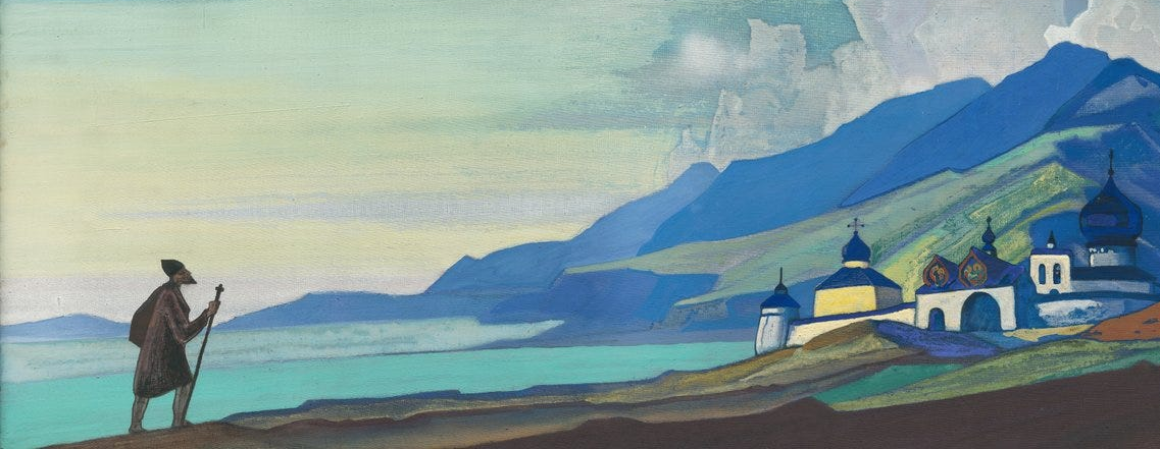
Ascending to God

Awake, O north wind,
and come, O south wind!
Blow upon my garden,
let its fragrance be wafted abroad.
Let my beloved come to his garden,
and eat its choicest fruits.

(Song of Solomon 4:16)

My fellow pilgrims may God bless you. I’ve begun reading The Ladder of Divine Ascent by Saint John of the Ladder (a.k.a. St. John Climacus). I cannot say that I am prepared to read such a work. I long for the holiness of the saints but I am so caught up in the things of this world. Nonetheless, I am encouraged reading the words of St. John of the Ladder.

Of course, he is writing primarily for monks and not for those of us with wives and children and jobs. But he did not forget us:

“Some people living carelessly in the world have asked me ‘We have wives and are beset with social cares, and how can we lead the solitary life?’ “I replied to them, ‘Do all the good you can. Do not speak evil of anyone. Do not steal from anyone. Do not lie to anyone. Do not be arrogant towards anyone. Do not hate anyone. Do not be absent from the divine services. Be compassionate to the needy. Do not offend anyone. Do not wreck another man’s domestic happiness and be content with what your own wives can give you. If you behave in this way, you will not be far from the Kingdom of Heaven.”

Simple enough, right? The closer I examine myself the more clear it is to me that I have a long way to go. All to easily I can speak evil of another, lie and be arrogant, hate and lack compassion, etc. I have also been “absent from divine services” far too often. Perhaps it is simple but it is not easy. In fact, it’s impossible without the mercies and grace of God. I have no reason to boast except in the Lord (1 Corinthians 1:31).

With the help of Christ, the Holy Spirit and intercessory prayer, perhaps I will climb that ladder of divine ascent. “If you behave in this way, you will not be far from the Kingdom of Heaven.” But for now, my feet are on the ground of this world and I am even challenged by the first rung of the ladder.

Blessed be the God and Father of our Lord Jesus Christ,
the Father of mercies and the God of all consolation
[.]
(2 Corinthians 1:3)

May God bless you.

[Seventh Sunday of Easter, Solemnity of the Ascension of the Lord]