>traffic & prejudice

>

When bicyclists violate a traffic law, research has showed it is because, in the eyes of drivers, they are reckless anarchists; drivers, meanwhile, are more likely to view the violation of a traffic law by another as somehow being required by the circumstances.

~ from Traffic: Why We Drive the Way We Do (and what it says about us), p.23
 

We cannot help but bring our prejudices with us where ever we go. My observations have shown me just how easy it is to lump people together into false “guilty by association” relationships. Not all bicyclists are the same and not all drivers are the same. But we can easily pejoratively categorize all those who ride bicycles into a single, unified group of “those cyclists.” Bicycle advocates, nearly as much a motorists do, chastise the bad cyclists for breaking laws and being irresponsible. It is said that bad cyclists give good cyclists a bad name. And yet, the reality is that bad cyclists don’t really give good cyclists a bad name, they give bad cyclists the name they deserve. In terms of “bad name” giving the problem is not with the bad cyclists, rather it is with anyone who is willing and eager to make the logical fallacy that since one person behaves badly and is a cyclist that therefore all cyclists are bad.

We know not to do this, but we do it anyway. I can make the error with both eyes closed and one arm tied behind my back.
Pushed to the proverbial wall most makers of such claims will equivocate and claim that they are sure there must be plenty of good cyclists. I would agree, but there lies the problem. Good cyclists, like good motorists are hard to spot precisely because they are good, that is, they are not breaking any obvious laws nor are they inconveniencing anyone. I don’t like bad cycling behavior. I have done some in the past and I still regret my foolishness. I also do not like bad driving behavior. I also have done some in my time. The thing is, if I take the time to notice the way the world really is, I see most drivers drive acceptably. I also see most cyclists cycle just fine. Bad cyclists are few compared to the rest. That they give the rest of us a bad name has more to do with societal prejudices than facts. People believe what they want to believe.
Many cyclists will say similar things about motorists. However I don’t see a corresponding tendency of motorists saying motorists need to behave because a few bad apples are giving all motorists a bad name. I also do not see articles saying that if drivers want to be taken seriously and respected then they need to behave. What I do see is a lot of finger pointing going both ways: Cars are heavy and can kill, and cyclists need to start respecting the law and stop being irresponsible, etc.
Which makes me think of some questions:
  1. Have you ever heard of a cyclist getting killed by a car or truck? (Probably yes.)
  2. Have you ever heard of a motorist getting killed by a bicycle? (Probably no.)
  3. Have you ever heard of a car or truck literally forcing a cyclist off a road intentionally or not? (I have experience this personally.)
  4. Have you ever heard of a cyclist doing such a thing to a car or truck? (Probably no.)
  5. When driving your car have you ever been so inconvenienced by a cyclist that you were 1) late to work, 2) late to a meeting, or 3) saw your life flash before your eyes? (Probably no.)
  6. Who is more to suffer from making an error in judgment when traveling in traffic, a motorist or a cyclist? (Probably the cyclist.)
  7. Do bicycling activists groups/activities like Critical Mass exists because they are expressing their “reckless anarchist” natures or because they are trying to find a way to say they want to keep on living and not get killed by motorists who, as it turns out, have the upper hand everywhere in the world? (Probably an expression of vulnerability in light of unfair odds and a felt lack of respect.)
I am a driver more frequently than I am a cyclist. I have seen all sides and felt most all the emotions from every angle. I love having a car. I love riding my bike. I don’t like to see bad cycling. However, I have come to realize that the questions above have, in some fashion of another, gone through the minds of most cyclists. For how great cycling is it also brings into focus the fragility of the human body next to an SUV traveling at 40 miles an hour. And considering how distracted most drivers are…

As the inner life of the driver begins to come into focus, it is becoming clear not only that distraction is the single biggest problem on the road but that we have little concept of just how distracted we are.

~ from Traffic: Why We Drive the Way We Do (and what it says about us), p.77
Be safe.

>The Rights and Duties of Cyclists

>

There is a philosophy of cycling that sees the best way for cyclists to deal with car traffic is to fully embrace the idea of vehicular cycling. In order to be successful at vehicular cycling one has to be traffic, that is, one has to “take the lane” and not be timid, not break the law, and “drive” one’s bike just as though it has the same rights as a car – which it does. I agree this is often the best way to ride one’s bike in traffic. I also like the idea of bicycling specific infrastructure. I think the ideal is a combination of both – good cycling skills and good cycling infrastructure.
Here is a classic video from the League of American Bicyclists on good cycling technique:

>cycling infrastructure and urban planning

>

We all face dangerous situations from time to time. Cyclists will occasionally come across structural traffic creations that actually offer (guide, one might say) pathways into danger. Here is an example:
But it does not have to be.
I find urban planning fascinating, particularly when it comes to traffic, congestion, and bicycles. I recently came across two videos from the Netherlands that look at different aspects/results of urban planning. The first shows us how a busy intersection incorporates the needs of cyclists and legally allows right turns without stopping for cyclists at red lights. The second looks at the transformation of a city when it is turned over to pedestrians and cyclists rather to automobiles.
Years ago the city of Eugene, Oregon closed off several downtown streets and made a kind of walking mall. At the time the goal was to revitalize a dying downtown. Many downtowns were dying as the suburbanization of America bloomed. “Create a European style environment,” some said and it will attract more people. It did not work. I give two reasons:

  1. They blocked off streets and filled them in with brick but they did not change the overall configuration of the space which was originally created around the needs of cars and trucks and still had that feeling. Thus walkers felt somewhat undersized in the space. It was obvious that the space was made so that cars and trucks could get within twenty feet of any store front. It was obvious that the new mall design was only a temporary experiment. This is the kind of “solution” one gets when the goal is to see how to improve business through schemes rather than make structural changes that are first about people.
  2. No bike riding was allowed on the mall. If they had encouraged cyclists, added bike lanes, added more bike parking (made it covered as well), and created better bike paths/lanes to and from the mall, it might have worked. In short they only went so far and not far enough in their commitment, and it showed. For all the so-called bike friendliness of Eugene there is still a strong undercurrent of fear; fear that cyclists will hurt pedestrians, fear that cyclists will interfere with motorists, fear that cycling is really just another form of anarchy.

Then a few years ago the city reopened the streets to cars and trucks, again to revitalize a still dying downtown. It didn’t work. Now, in another scheme to help businesses, they are offering free parking to motorists. I predict it also will not work. Plus it is going in the wrong direction that the city needs to go. They should be encouraging more cyclists and pedestrians, not more cars. Eugene is a rather bike friendly city compared with much of the U.S., but it is far from where it could be.

As a bonus, and just a freely delivered as the previous three videos, here is a look at bike parking infrastructure in the same magical bikeland as the two previous videos:
Of course, to create a similar magical bikeland here requires the desires of a lot more people to want to ride their bikes year round to work, school, and play. Building infrastructure is also necessary, but I would not want to see miles of empty bike racks paid for with my taxes. It takes more than bike racks and bike lanes. It takes better laws, more intelligent policing, and structural designs that make it easier to get around by bike than by car. Fortunately, and a sign of a better-than-average social sensibility, the City of Eugene is better than most cities in the U.S. for bicycle friendliness, ranked #5 from Bicycling Magazine. But it is still a ways from Copenhagen.

>Commuting through ambiguity, or wishing for better cycling infrastructure

>

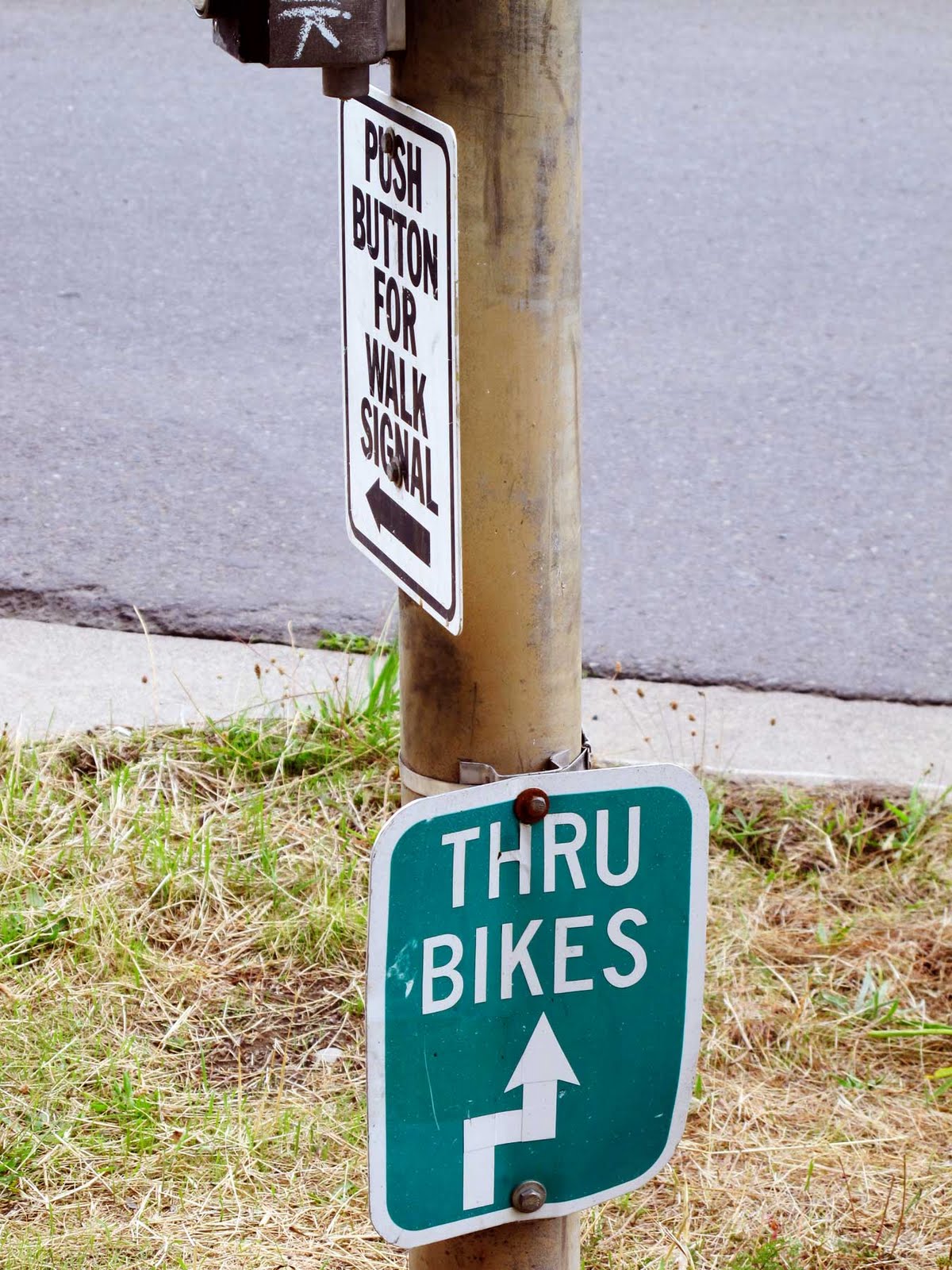
Every morning when I commute to work on my bike (that is, when I do commute) I see this small and slightly sad sign sign:
The sign comes at the end of the popular river front bike path coming from the west and at the beginning of this busy intersection:
My city is generally a bike friendly city and has many fair, and some good, bike lanes. However, this intersection from this direction is a difficult one for the bike commuter. First of all the intersection is often very busy with motor traffic. Second, there is no natural flow for bikes coming from the river front bike path. The design, from the west, is entirely for pedestrians. It is, in a sense, a gap in the bicycling infrastructure, coming at a critical and dangerous junction, with a non-bike-friendly bandaid as compensation.
The sign tells the biker that some sort of 90 degree turns are required, or at least suggested (it is not clear). One assumes that it means cyclists should use the cross walks in order to get to the bike lane on the far side (diagonally from this vantage point) of the intersection. But the sign is somewhat cryptic. Utilizing the crosswalks is technically feasible but, in practice, this is a real pain for the cyclist. What the cyclist wants to do is to keep riding without having to dismount and walk, or even having to cross one crosswalk, wait for the light, then cross another crosswalk, before regaining normal commuting speed. Stopping at the light is not the issue of course. Just stopping at two lights in short order is the pain, especially if one is trying to get to work. Plus, to the sensible mind, it is a clunky “solution.”
For some people this is no big deal. For the bicycle commuter who comes to this intersection everyday this is an annoyance. Most cyclists that I have observed, including myself, go straight across and then try to find some way to cross the lanes to the other side. With traffic coming from at least two directions this can get dicey. Often I ride up on the sidewalk, work my way down a hundred meters or so, and then wait until the road is clear to cross. Getting into the far bike lane is always a welcome relief. To me that is only slightly less annoying than using the the two crosswalks. And honestly, since this intersection was one of the places where, as I once entered the crosswalk from the other direction (with the light in my favor) a motorist nearly right hooked me as she talked on her cell phone, so I don’t feel my method is the less safe of the two. Needless to say the driver never saw me and kept on driving, and I could not have been more visible unless, or course, I had lit several flairs and posted signs (which I did not).
What I would like to see here is a diagonal bike lane through the intersection with its own traffic lights. The path could be marked for bikes only, with directional arrows. It could the first of its kind of experiment in this city, and very progressive I should say. Plus it would be one more great way to encourage more people to get out of their cars and bike.

The reason I write this post is because I am increasingly aware of the importance of infrastructure to the habits of both motorists and cyclists. If someone is driving or cycling in an unpredictable or unusual way it is likely they are trying to navigate a situation that is not entirely clear or does not adequately suit their commonsense needs. There are often tensions between motorists and cyclists and part of the reason is that motorists forget just how much motorized-vehicle-specific infrastructure is in place to control their driving actions and decisions, and they may not understand that similar infrastructure for cyclists lags far behind that of motorists. Another part of the reason is that when cyclists face ambiguity or nonsense, and because they are human, they will make choices that suit their needs.

Finally, the real reason I write this is because every time I ride I think about how fragile life is, how easy it is for humans to (in the moment, without thinking) value the lives of others dramatically less than their own, and of my own family at home.We have faced some difficult times in the past due to reckless motorists. My wife and kids do not want me to get hurt or die. Neither do I. So I ride carefully and defensively. I try to take no chances. But I still love riding, and it is good for me in many ways. There are no guarantees that even the best infrastructure will ensure any cyclists will avoid death, but good infrastructure can help.

>There is nothing new under the sun, or how bicycling behavior has always been worthy of satire

>

What is new is old. Some advice from 1934:
As there has recently been a rather tactless criticism directed towards us cyclists, it must be permitted for me to bring some modest, if not harmful, proposals for a new traffic etiquette for cyclists and other wheeled persons.

Let us begin at the beginning. You set yourself up on the bicycle, have a good look around – first up and down and then from side to side – wherefter you rest for a moment whilst regarding the road ahead and behind. Do this several times and take your time doing it. Therefter you push down on one pedal and up with the other. The bicycle is then propelled into motion. You can, of course, repeat this process, but experienced cyclists rarely need to.

You will now find yourself in the so-called traffic, unless you are riding on the island of Saltholm, but we’ll assume you’re on a busy street.

As soon as you’ve run over the first person you come across you immediately accelerate and try to dash across the intersection while the yellow light is lit. If the light turns red in the process, pretend like nothing happend and continue on – there is nothing easier than pretending like nothing happened. Those who are approaching from the side – whether in a car or on foot – will no doubt let you pass. They will think that it is them who has made a mistake. So ingrained is the bad conscience in all of us.

Never cross an intersection when the light is green, as you risk being knocked over by someone running a red light from the other direction. This is very important as it can still cause misunderstandings, court cases and outbursts of anger.

Now you continue riding. Let’s say you have to turn to the left. Extend your hand – please be careful it can’t be seen – to the right. This means that you won’t be turning that way. There has been some discussion about this question but as a cyclist you must never doubt. Your entire focus must be on your riding.

The use of a bicycle bell is absolutely out-of-date and simply unecessary. The bell can’t be heard above the noise and you should therefore only use your bell after midnight – or after you’ve arrived home.

During the day, instead of a bell, you should use different verbal expressions, shouted with a loud, high-pitched voice. It is recommended to acquire a copy of J.F. Braldrelunds ”Dictionary of Danish Swear Words”. It contains more than enough content for this purpose.

On corners you attempt, wherever possible, to brush the person or persons who dare to stand there. It is best if you’re travelling fast enough that you manage to knock one of them over. Then you can confirm beyond a doubt that the person in question was in your way or, in other words, ”That taught them a lesson!”

If you’re going from the street into a port leading to a courtyard or similar, always weave through the pedestrians as dramatically as possible. The bell must NOT be used here – remember that! If you use your bell you’ll make people jumpy and it will be much more difficult to weave past them.

In the courtyard you discard the bicycle as carelessly as possible, in order to give any potential bystanders the impression that you’re cool (superior in intelligence).

Ensure that the bicycle is placed so that anyone and everyone can trip over it. You’ll quickly discover that the person who trips over it will pick it up and place it politely against the wall – usually under a sign that reads: ”Bicycles will be removed”.

Regarding bicycle lights, you need not take this question too seriously. Bicycle lights are simply no longer used and are only rarely seen on bicycles.

This is generally because the police aren’t bothered much if you cycle without lights, as the statistics show. In 1932-1933, on the stretch between Here and There, only one bicycle light was observed. According to the police report it wasn’t possible to identify the cyclist – he was riding like a madman.

An absurd idea has popped up in the minds of some so-called people who are believed to live inside unexcavated bronze-age burial mounds. Putting a licence plate on bicycles, as well as a hook under the saddle on which to hang a telephone book and a pair of eyeglasses.

The thought is incredibly impossible – a licence plate that must host a number like seven million three hundred and thirty thousand, six hundred and forty three would be wide enough to fill City Hall Square, and if you placed the digits vertically the licence plate would rip down the electricity wires.

Yes, well, those were my modest proposals for a new traffic etiquette for cyclists. We have, for far too long, been viewed in a negative manner by Mr Motorist and pedestrians – or rather sleepestrians – and I feel that these proposals will please every motorist and sleepestrian – we apparently haven’t evolved any further than this in our sorry old world.

I found this on the blog, Copenhagenize. From Copenhagenize: “The above was translated, modernised and edited for clarity from the original text by one of Denmark’s most loved satirists and cartoonists, Robert Storm Petersen. Better known at Storm P.. It was first published way back in 1934 (in ‘Snak om en ting’) and again in 1993 (in ‘Udvalgte historier’)” 

groceries by bike, or how biking makes the ordinary better

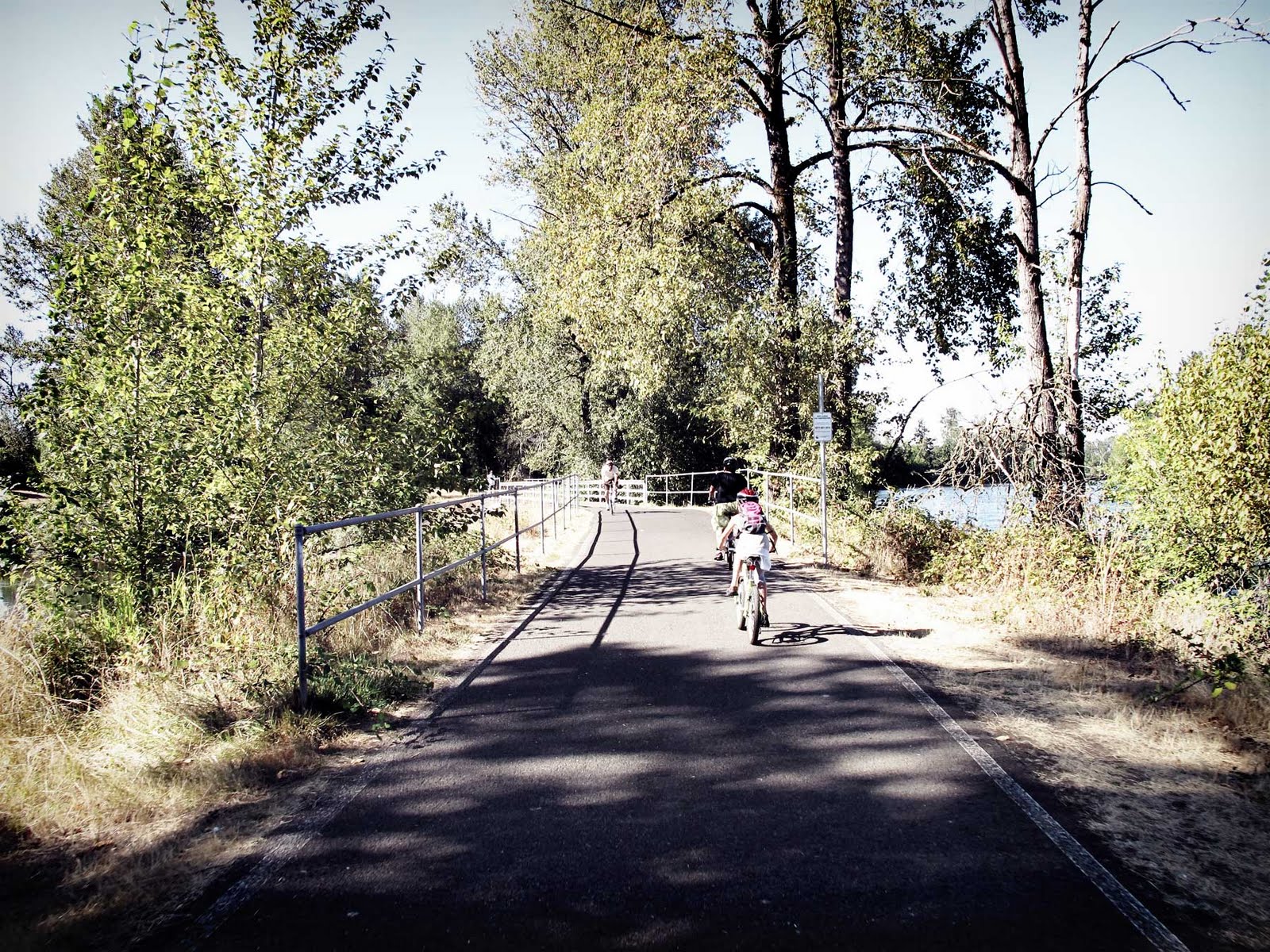
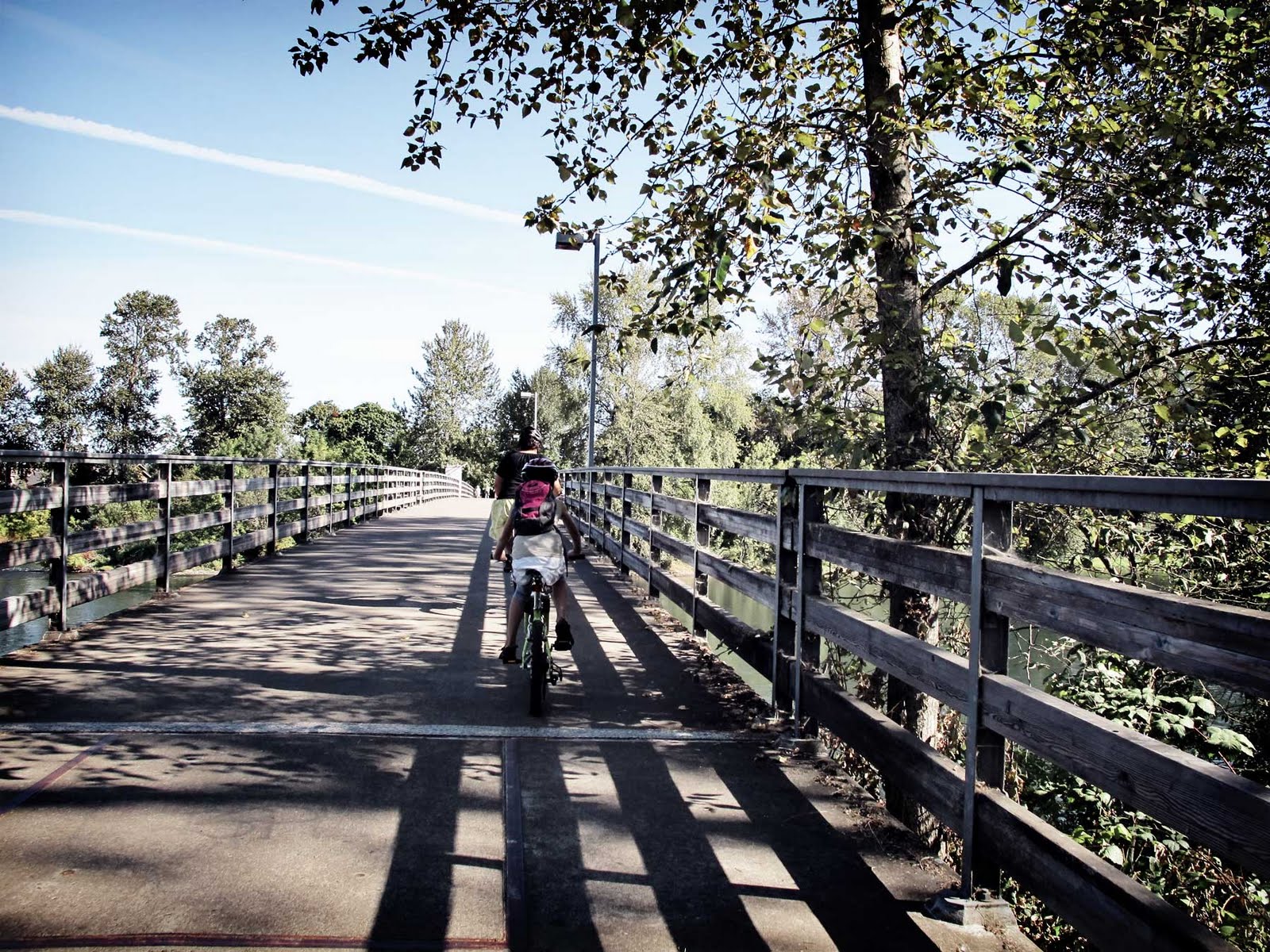
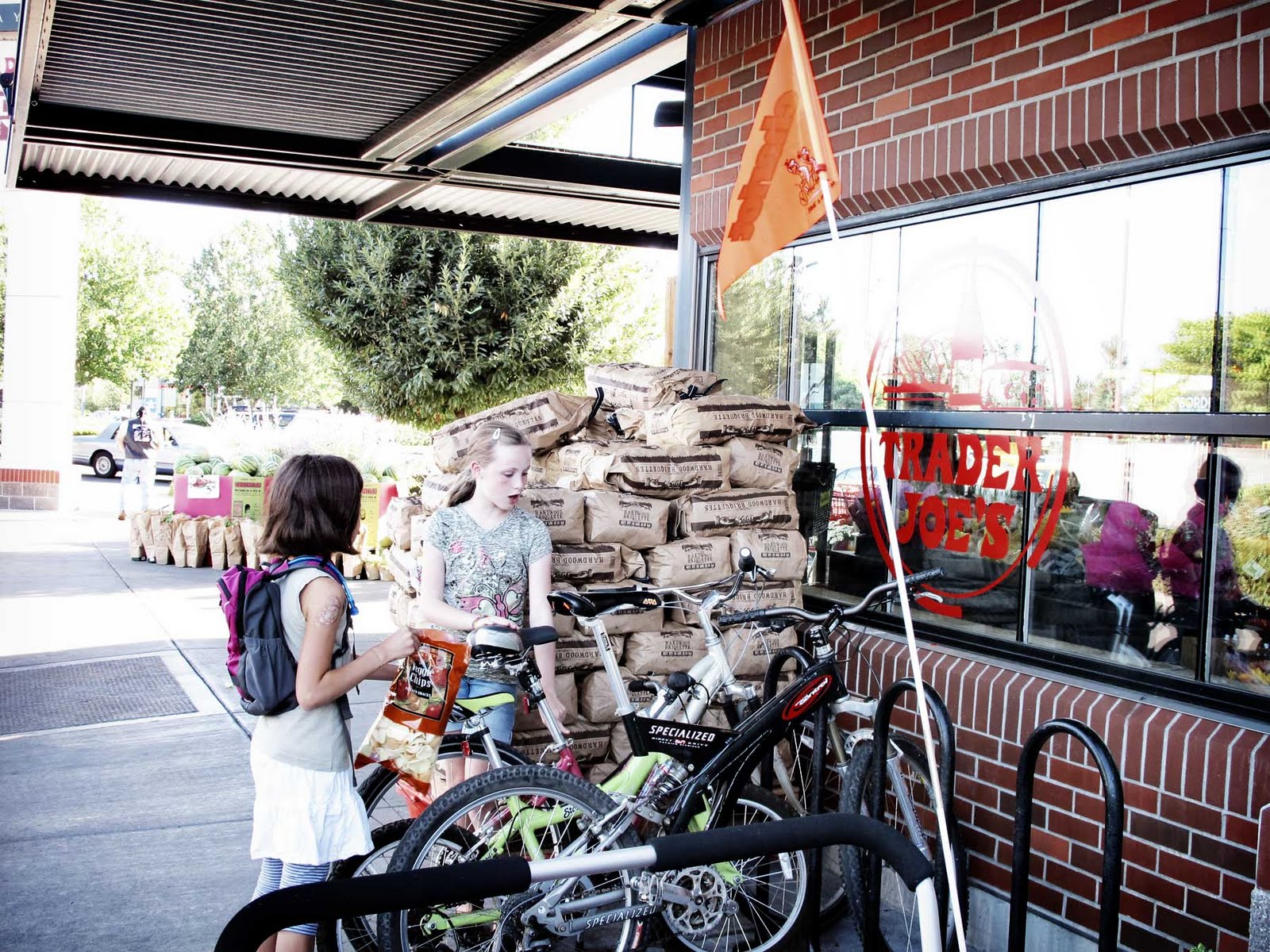
Last weekend we decided to do some grocery shopping via the bike path. We loaded the two little kids in the trailer and set out on our 9.2 mile round trip to Trader Joe’s. It was fun and a healthy way to do some shopping.

On the Ruth Bascom bike path.

Over the Owosso bike bridge.

Out front at Trader Joe’s.
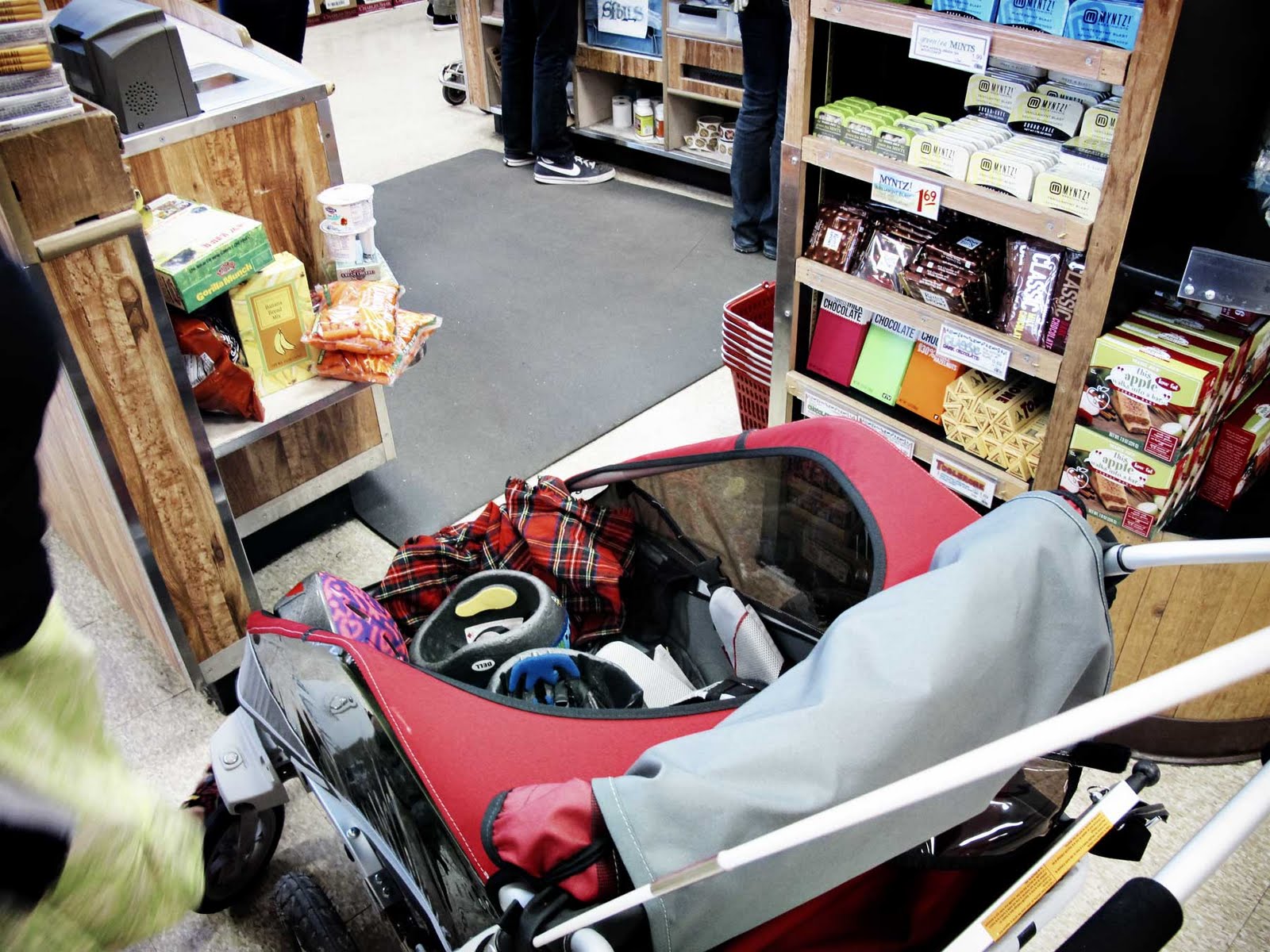
Checking out. The trailer is the shopping cart.
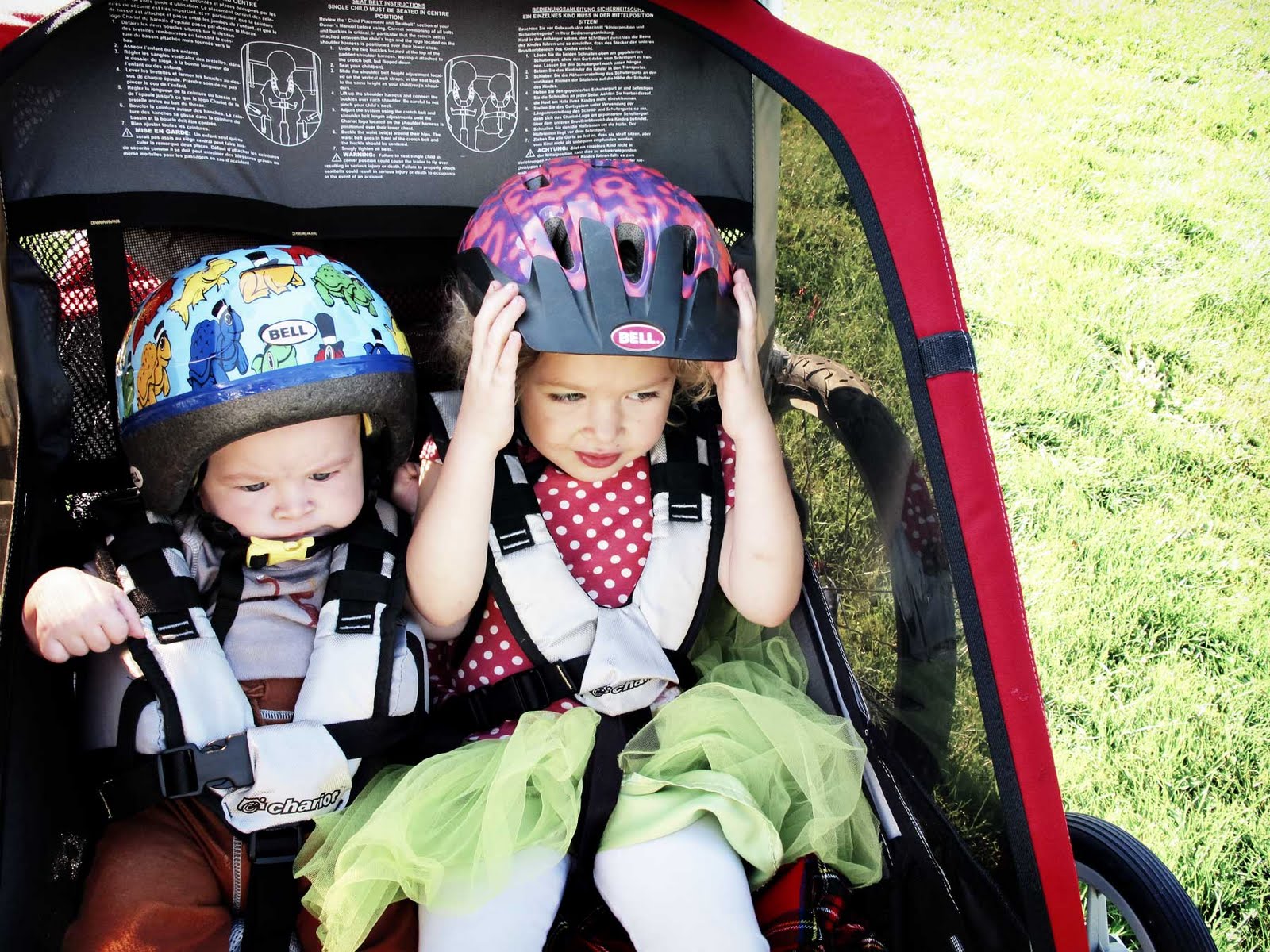
The littles ready to go.

Meeting friends at the park.
It was one of those times when the weather is perfect, the ride is great, and when we got there we ran into friends. We have decided that we will try to do more family bike trips, even during winter if it is not torrential rain or icy (remember to old Scandinavian adage: there is no such thing as bad weather, only the wrong clothes). Going by car is just less adventurous. One additional benefit: When grocery shopping by bike one is less likely to buy lots of stuff one does not need.
This past week, though, I had no chance to bike. I was in long, all day, data & business intelligence workshops for my job and I just could not fit biking in, whether for the commute or just working out. So yesterday I came home a little early and rode across town to meet up with the family (they had biked to a friend’s home) and rode home with them. That was the perfect end to my work week.

I have to say that every ride includes some crazy motorist choices, like the guy with his large pickup and trailer who decided to turn into his driveway immediately across my path forcing me to hit my brakes or hit him. I could tell it was one of those situations where a driver thinks he is going so much faster than the cyclist that he can zoom right past, but not realizing the cyclist’s speed or the fact that a small misjudgment on his part could end tragically. It may also have been a situation where a motorist just does not think (maybe subconsciously) that a cyclist is a legitimate user of the road and, therefore, does not require the same courteous consideration as motorists. Ah, biking. Ride defensively.

>is that a stop sign?

>

I have a family, so I tend to ride my bike cautiously. I stop for stop lights, I stop (or nearly so) for stop signs, and I tend to ride defensively. I’ve made a few mistakes, but I have not paid dearly for them, thank God. I do, though, understand the raging debate (yes it is raging, in case you were unaware) about whether cyclists should be required by law to come to a full stop at stop signs. As of now, in Oregon and most states, cyclists are required to obey the same laws as autos, including coming to a full stop at stop signs.

To not stop completely is to encourage the wrath of motorists.

Cyclists are often the target of road rage. I have written about this before. Motorists accuse cyclists of never obeying laws designed for automobiles, but which are also applied to bicycles, like stopping at stop signs. And the motorists are somewhat correct, and also hypocritical. Bring the topic up with someone who has not commuted on a bike since they were in short pants and you are likely to get eye rolling and something like, “Those crazy cyclists! They never stop, never signal, and they just don’t give a damn about the law. Too bad if some of them get hit by drivers. It’s their own fault.” Not only does this lump all cyclists together, it’s filled with pro-car/anti-bike prejudice.
When it comes to comparing drivers and cyclists though, I can’t help but wonder at the potential and real implications of a motorist running a stop sign versus a cyclist. And the problem is that motorists run stop signs all the time, and I mean all the time, just like cyclists do. Of course, rarely do either motorists or cyclists blow through stop signs as much as they roll slowly through, making the judgement call that doing so will cause no harm. This has been called a California stop. But cyclists are the ones most thought of as the prime offenders. They are also the ones most vocal (naturally) in calling for stop signs to be, by law, merely yield signs for cyclists.

As an aside, think about road rage. If a cyclists exhibits road rage it’s almost laughable. What’s he going to do, throw his shoe at a car? What happens when a motorist exhibits road rage? Sometimes it’s also comical, but it can have very lethal consequences for a motorist has a heavy vehicle at his disposal. But regardless of road rage, think about the driver who is generally unconcerned and unaware of cyclists and just happens to not look for the biker coming up the path on the right. When he turns across the biker’s path who is most in danger? I think about these things all the time. But I don’t let it keep me from biking.

What is more interesting to me is the issue of the rolling stop, the law, and all the assumptions of both cyclists and drivers. Should a cyclist have to come to a complete stop at a stop sign (or even a red light), put their foot down, and then start pedaling again once the way is clear? Even if the way was already clear and obviously so?

The point I bring up is one that has been discussed, written about, and debated in state capitals and city councils for decades. Hundreds of bloggers have weighed in on the subject, mostly from the cyclist’s perspective. The problem is that drivers, of which I am one, often consider that all roads belong to them and bikers are mere guests. Many drivers also feel it is unfair if cyclists get to treat stop signs as yield signs while drivers have to completely stop. Those pedaling their way through life, of which I am also frequently one, know they are allowed (by law) on the road as much as cars, though some do not know the law as well as they should.
Part of the problem is that some cycling situations are unclear. In those situations cyclists, as motorists do, will usually make a judgement call in their favor. In other situations, following the law seems downright unsafe. All too often cyclists face unsound roadway solutions supposedly created for cyclists but, in fact, are dangerous. This is compounded by the fact that cyclists also frequently face unsafe conditions as well, such as bike lanes containing debris or even a delivery truck. So cyclists often feel they already get the short end of the stick. Being allowed to roll slowly through a stop sign is just a small concession.
The truth is, most cyclists are very aware of the vehicles around them, the needs of motorists, and their own perilous relationship with three tons of inertia. Most cyclists value their own lives and do not want to tangle with a car. But a bicycle is a very different kind of vehicle than a car. It takes human power to make it go. It takes balance to keep it upright and to turn it. And though I like cars too, I have to say I would argue that bikes are intrinsically better than cars for many reasons. And that might be one of the issues. Cyclists and motorists often approach the tension between the two with their own sense of moral superiority and intrinsic superior self worth. If that’s true, then it is going to be hard to get both groups to agree on anything.
Back to the rolling stop idea. Known these days as the Idaho stop, a bill in the Oregon legislature did not advance and died in August of last year, apparently for lack of interest. Here is what the Idaho stop is all about:
For many motorists that’s a weak argument. In my mind, however, that argument makes a lot of sense. I would like to see more thoughtful legislation in favor of cyclists that consider the true nature of what cycling is and what it can be. I would also like to see more cyclists riding safely and courteously.

As for me, I will continue to ride cautiously and defensively, and slowly roll through stop signs when my judgement says it’s safe to do so.

>cycling and croissants (or ‘have bikes will roll’)

>

We loaded the kids in the trailer and rode our bikes to Hideaway Bakery one recent Saturday morning.

We rode along the Willamette River, through Skinner’s Butte Park, through the Univ of Oregon campus, then some neighborhoods, along the Amazon bike path, to the bakery. The ride is about 7 miles one way.

I shot this on my Canon G11 – a little tricky hand holding it at times while riding and pulling the trailer. I wish this camera shot in HD, but it’s not bad for what it is. Edited in the Canon utility that came with the camera, and with Windows Live Movie Maker (yes, I’m cheap).

Music is by Caribou, from ‘The Milk of Human Kindness.’ Song is track 5: ‘Bees.’

>Let’s go Dutch

>

Great vintage footage of a bicycling culture that we just don’t have in the U.S.A.
I live in a bike friendly city (for the most part), but I wish it was more like Holland (or much of Europe for that matter). In fact, I would love to see bikes outnumber cars.

I think what I am most struck by is that no one is wearing all the cycling gear that we feel we need today. Of course they are not wearing helmets, which were not available then, but they also don’t need bike shorts, jerseys, etc. Dresses and sport coats were just fine – even wooden shoes!

As a comparison, I’m adding this video of rush hour, April 2010, 8:30 AM in Utrecht Netherlands.