Andrey Tarkovsky, the brilliant Russian filmmaker, kept a diary: Time Within Time: The Diaries, 1970-1986. It is filled with ideas, random thoughts, complaints about the Soviet film industry and his health, future film plans, descriptions of his family, reviews of books he’s read, and the regular inability to get the support he needed to make and distribute his films. He also talks about his process as a filmmaker and traces his spiritual journey to God.
Recently, I’ve been rereading his diaries and a passage jumped out at me.
Lord! I feel You drawing near. I can feel Your hand upon the back of my head. Because I want to see Your world as You made it, and Your people as You would have them be. I love You, Lord, and want nothing else from You. I accept all that is Yours, and only the weight of my malice and my sins, the darkness of my base soul, prevent me from being Your worthy slave, O Lord! Help me, Lord, and forgive me! (February 10, 1979)
Wow.
This was written about three months before his film STALKER was released in May of 1979. The film had already had a famously tumultuous production and now Tarkovsky was facing issues with the authorities about the film’s final edit and whether it would actually ever see the light of day.
Fortunately, the film was released and the world was given one of cinema’s greatest artworks.
“Because I want to see Your world as You made it.” When Jesus took Peter, James, and John up the mountain and was transfigured before them, they saw something of that world. “His face shone like the sun, and his garments became white as light.” (Matthew 17:2) What an experience that must have been. Art, at its best, gives us hints at the transcendent, calling us to something greater within us, to what we were created to be.
Tarkovsky’s films have never ceased to impact me. Each viewing offers new depths of meaning. Each film is utterly unique. His best films are like no other films. STALKER is one of my favorite films and at times it feels like a religious icon offering a kind of window into another realm, a higher realm of spirituality and beauty while simultaneously harrowing my soul and preparing it for death. This is, to me, the essence of a truly “faith based” film.
I have been reading The Brothers Karamazov by Fyodor Dostoevsky. I do not believe I was ready to read it before, though I tried several times. But now I am truly amazed. Every page has depth, riches, and profound psychological and spiritual characters studies. And the descriptions of life in 19th century Russia are utterly fascinating.
Perhaps I am ready to read this masterwork because I have been diving into Eastern Orthodox Christian spirituality. My mind and heart have been coming alive as I’ve explored the Divine Liturgy, monasticism, prayer, and the lives of the eastern saints. Naturally, this has led me to the Slavic (especially east Slavic) countries and their lived experience.
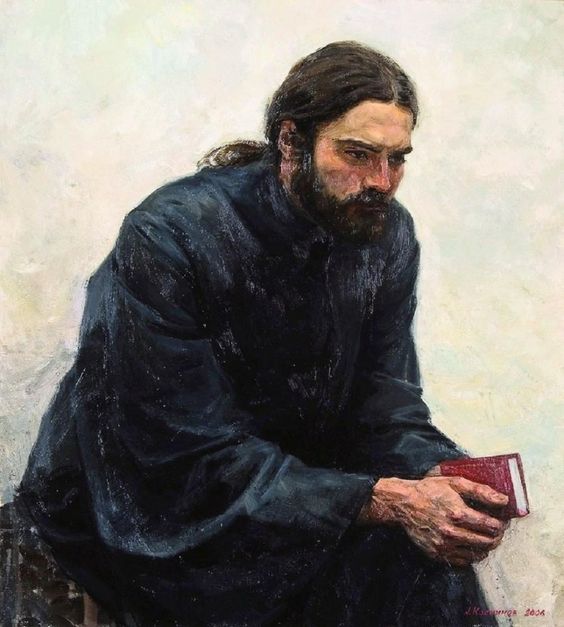
A Monk (Aleksandr Kosnichyov, 2006)
And then this passage caught my attention. It is showing the mind of Alyosha, a novice in the local Russian Orthodox monastery and the hero of the story:
Oh, how well he understood that for the humble soul of the simple Russian, worn out by toil and grief, and, above all, by everlasting injustice and everlasting sin, his own and the world’s, there is no stronger need and consolation than to find some holy thing or person, to fall down before him and venerate him: “Though with us there is sin, unrighteousness, and temptation, still, all the same, there is on earth, in such and such a place, somewhere, someone holy and exalted; he has the truth; he knows the truth; so the truth does not die on earth, and therefore someday it will come to us and will reign over all the earth, as has been promised.” — from The Brothers Karamazov
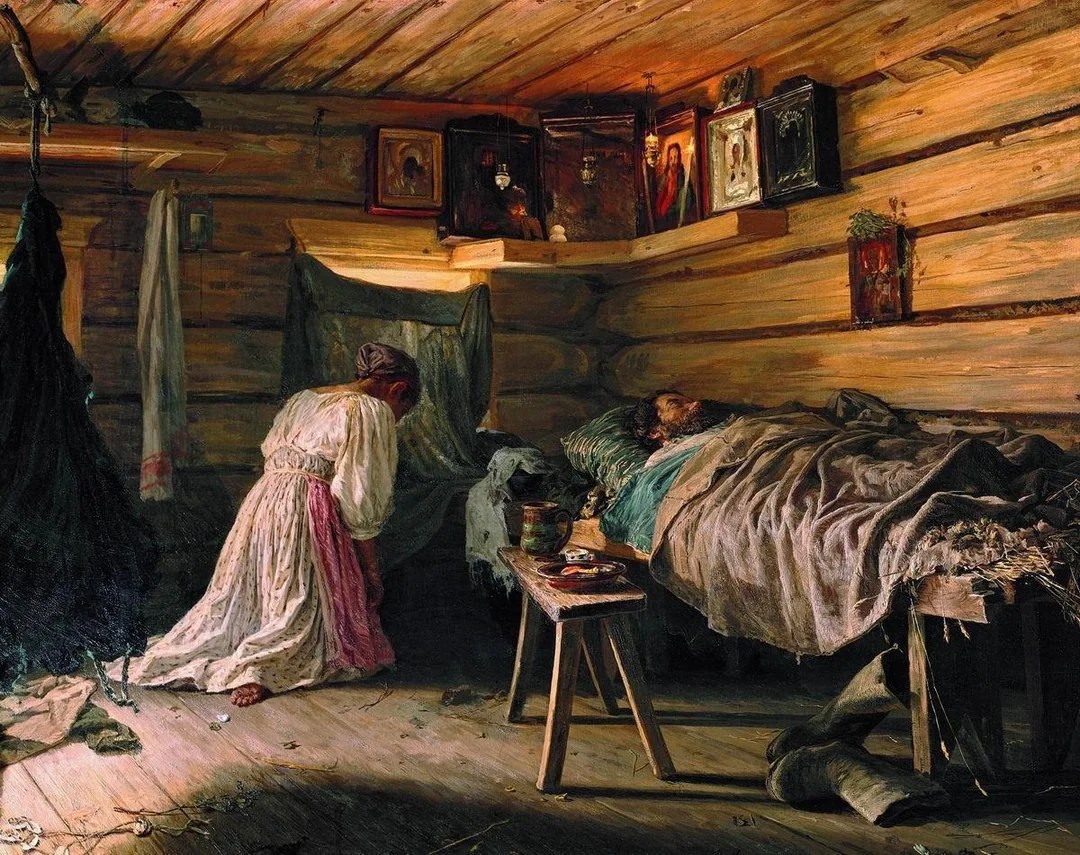
The Sick Husband (Vassily Maximov,1881)
I think of how desperate we all are to know that somehow the promises of God are true, that they will be fulfilled someday, and that He can be trusted. I look at myself and see a wretched sinner and I think the world cannot count on me to be holy enough or faithful enough such that truth will not die on earth. But if I am not attentive I might think of myself as different than that simple Russian and start to believe that, perhaps, I don’t need the saints. But I know in my heart the world needs holy people, saints, living and dead, that can be counted on. And as I see them I see too that the promises of God are true and good.
[published on the Feast of the Holy Cross]
Procession of the Cross in Kursk Province by Ilya Repin (1880–1883; Tretyakov Gallery, Moscow)
From the movie THE BRUTALIST (2024, dir. Brady Corbet)
The 2024 film, THE BRUTALIST, brought into focus a kind of 20th century modernist architecture that has polarized people from day one and continues to do so up to today. That style of architecture is known, rightly or wrongly, as brutalism. The film’s main character László Tóth (Adrien Brody), is loosely based on several modernist architects, one of which is Marcel Breuer, a Hungarian-American modernist architect and furniture designer. One of Breuer’s more famous works is Saint John’s Abbey Church (discussed below).
It is not uncommon for people to point to modernist architecture as visual examples in massive concrete of all that has gone wrong with society as a whole. Many Catholics have lamented the loss of traditional style churches for modernist designs and brutalist churches get the most derision. Personally, I love brutalist architecture. I don’t consider myself a modernist, though I’m also not a traditionalist. I love old churches. I love Gothic cathedrals. But I also love at least some of the brutalist churches.
But there is always an important question when it comes to any kind of church architecture: Is the design properly suited to the purpose of the space? The old Gothic churches certainly are suited for Eucharistic worship and prayer, but many modern churches are not well suited and some are very poor indeed.
Are modernist buildings good places to pray? to celebrate the Eucharist?
Saint John’s Abbey Church, architect: Marcel Breuer, source and overview
I may be somewhat of an anomaly. On the one hand I am an advocate of Traditional Catholicism, including Traditional Catholic architecture designed to serve Traditional Catholic worship which, it must be said, is actual and proper worship. On the other hand I love much of modern architecture. I love many buildings that many others do not like. I grew up in a modernist house, I studied modern art and architecture in college, and I have been a fan of early twentieth century and mid-century modern art and design. With this in mind, I found this lecture about one of the more famous (infamous?) modernist churches to be quite fascinating, not only for its informative content, but also because the lecturer gives a highly (almost ecstatically) positive perspective on exactly the kind of church design many would deride without hesitation.
Saint John’s Abbey Church, architect: Marcel Breuer, source and more images
This lecture below is by monk, educator, and artist David Paul Lange, OSB. Whether you agree with his assessments or not, this is an excellent overview of modernist principles in architecture, especially at the mid-twentieth century point, and why it made sense to people at that time to build a church according to those principles. It is also an excellent “unpacking” of the design, and the ideas behind the design, of a particular church, the Saint John’s Abbey Church:
I find Brother David Paul Lange’s speaking style to be a bit too breathless for my tastes, but he is a great evangelist for the modernist perspective in architecture, and for this church. But I have some questions:
Is his understanding correct about both modernist architecture and his interpretation of this church? I think absolutely.
Is this church a good representation of modernist architecture? I say, yes.
Is this church worthy of praise? As an example of modernist thinking, yes. As an example of excellent construction, yes. As a place for worship, you tell me, but I think no, at least not within a proper understanding of ideal Catholic worship.
Therefore, does this church represent a different ideal of worship than traditional Catholic worship? I think definitely so. But you tell me.
Notice a few things:
He speaks of praying more than worshiping. This makes sense given this church is for a monastic community which is focused a great deal on prayer, but it is also significant. The focus is more about the nature and needs of praying than offering a sacrifice to God. Praying in a church is a good and normal thing. However, prayer is a part of worship, but not the only part. Many spaces can be prayerful. Only specific kinds of spaces serve the needs of worship.
He speaks a lot of his own feelings. In a sense this entire talk is an explanation of his personal experiences of this church, and his feelings during and about those experiences. There’s nothing wrong with that up to a point, but as a Catholic would it not be better to also foreground the Body of Christ as a corporate entity a bit more? In that sense he would then speak more of the nature of man in general and his relationship with God. And then tie it back to this church and how it functions. The 20th century “turn” in the Catholic Church was arguably away from Eucharistic sacrifice and towards communal meal as the primary meaning of the Mass. I believe this radically changed Catholic’s focus towards their feelings and personal experience rather than the duty of giving Christ His due and seeking union with God.
This is more about a “modernist space” than a church (hence the title of the lecture), even though it is a church where the Eucharist is celebrated. He points out the way the outside comes into the church interior, reminding those inside of the connection with nature, what time of day it is, what weather is outside, etc. In this sense I gather the space functions a bit like stepping into a forest and praying. I like this in up to a point, but when I think of celebrating Mass I wonder about the idea of Heaven on earth and the traditional way churches close off the outside world and creating a space that is more heavenly than earthly.
He speaks of the honest use of materials, and how older churches seem dishonest somehow, using paint to create false impressions and faux marble, etc. This is a particularly important part of the lecture. I too love the modernist focus on materials. I also don’t believe such focus is necessarily bad for church design, but a church interior should be (traditionally speaking) a kind of three-dimensional icon of Heaven. Rough, earthy materials that evoke nature have their place, but they should serve a heavenly image, no? Here’s something I might explore in another post, but consider this: Is not a statue of St. Michael (for example) fake because it is not actually St. Michael? Same for the Holy Mother, etc? Would not any church that aspires to create a sense of the heavenly liturgy within its walls be a dishonest use of materials? Maybe. But perhaps that’s a “dishonest” use of the word dishonest.
The bell tower, he argues, with its horizontal lines, points to (or mirrors) the horizontal earth rather than to God. He claims it reminds him that God is everywhere and in all things, and perhaps that’s a good reminder, but this is a curious claim and raises the question, in my mind at least, what is the purpose of a church? To call us to the earth or to call us to Heaven? Do we not minister to each other (horizontally) because we have first sought out and worshiped God—a vertical action? If we do not begin with the vertical does not our horizontal orientation eventually become skewed?
He also mentions that the population of monks used to be 350, but now are only 150. They don’t need such a big church anymore. Only by way of correlation, but still interesting (and troubling): They commit themselves to modernist ideas, they build a modernist church to symbolically represent that modernist spirit, and not long after they lose 60% of their members. Apparently modernism doesn’t need monks. Perhaps modernism doesn’t really need man either. This is too big of a topic for a mere blog post.
At the end of the lecture, just before questions, he jokingly apologizes for going a bit long and keeping the Downton Abbey fans from their show — a show whose popularity arose from a longing for an earlier time, represented, in part, not by modernist architecture, but very traditional architecture, and clothing, and customs, etc. Will future generations swoon over the modernist mid-twentieth century in the same way? Perhaps Mad Men did some of that (but what a dark show), and perhaps The Brutalist does so as well.
The first question at the end, by another monk (I believe), is exactly my question, and worth the time for watching this lecture. I have never been in this church, so I have no way of saying what my thoughts would be, but I also wonder if such a place is naturally conducive to prayer, or liturgy at all for that matter. And I truly get the experience from having studied art and swooning over art that others think is stupid or meaningless. And I also find the questioner’s reference to the new cathedral in Los Angeles being obvious a place of prayer puzzling, since it also has been roundly derided for its modernist and non-Catholic design. The answer to his question included: “Do people get modernism? I think the answer is no, by and large,” and “Until I explain this…” In other words, modernist art and architecture requires explanation in order to appreciate it. This is one of the attractions and weaknesses of modern art. I have experienced exactly that feeling of “getting it” after studying it. And yet, I think this may be why modernist architecture is not a good choice for Catholic churches. He also says we are not actually living in a “modernist” society. In terms of art and architecture this may be true specifically in light of design principles–modernism, from an art historical perspective occurred at a time in history which is now past. However, the spirit of modernism as a philosophical and theological undergirding of society and the Church is still very pervasive. How modernism in ideas and modernism in design interrelate is a fascinating topic too big for this post.
In the end I find the Abbey Church a beautiful and amazing space I would love to visit. However, I do believe it is probably best suited as a performance space than as a church. I would not advocate a church being built along these lines. Rather, I think we should be informed more by the needs of the Traditional Latin Mass (or the Divine Liturgy of the East) with its focus on God rather than man, uniformity with the Church through history, and creative use of new and old materials that look to the past for inspiration and the future for permanence and authentic timelessness — which can only be done by beginning with a true understand of both God and man.
Finally, I wonder if much of the problems with using modernist design principles and materials for Catholic churches could be solved if the liturgy was the Traditional Latin Mass. In other words, imagine if Vatican II never happened, and the Novus Ordo Mass never promulgated, could churches have been designed in somewhat contemporary and modernist fashion and still fulfill the needs of the TLM? Can architects build “honest” churches and still be Catholic? I think so. But also keep in mind that the St. John’s Abbey church construction began on May 19, 1958, and lasted until August 24, 1961 — well before the council even began, and long before the Novus Ordo Mass was promulgated.
WHAT DO YOU THINK? LET ME KNOW IN THE COMMENTS!
Also, if you want to know a bit more about the architect Marcel Breuer:
If you want to know a bit more about the building of the church:
This post was first published August 6th, 2007, shortly after two of the greatest filmmakers who every lived died on the same day. In many ways the sentiments of hopelessness are just as much with us now, haunting our world, as then. I feel this post still resonates. Therefore, I am republishing it again.
If I should cast off this tattered coat, And go free into the mighty sky; If I should find nothing there But a vast blue, Echoless, ignorant— What then?
– Stephen Crane
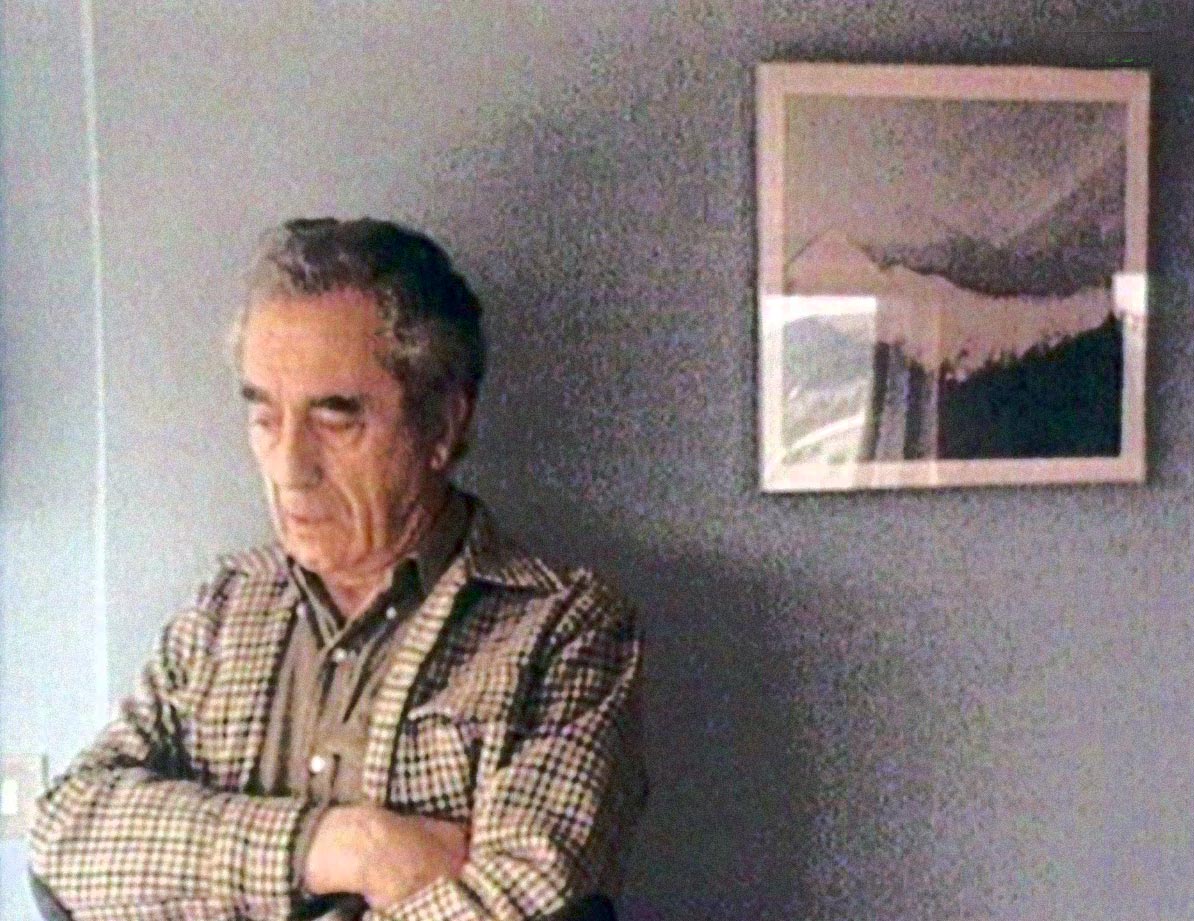
The recent deaths of Michelangelo Antonioni and Ingmar Bergman, on the same day no less, highlighted two realizations for me: 1) I am, in many ways, a “high modernist” in my aesthetic tastes and passions, and 2) the prevalent and particular questioning of the concepts of truth and hope found in high modernism seems to have disappeared as a noble pursuit. In other words, I long for the days (which were before my time) when artists and filmmakers saw the modern, industrialized, nuclear world as harsh and bleak, but believed that art could truly change that world for the better – even if only by asking the tough questions. (Of course we all imagine the past as we wish.) Today, artmaking is too often viewed cynically, that is, there is no point in tackling the grander themes, rather art is merely about what is only personal and private, and therefore essentially non-transferable, and therefore merely kitsch. That filmmaking can no longer change the world seems to be the prevailing perspective.
There was a kind of hopelessness in both Bergman and Antonioni, but there was also a sense that at least art and human creativity meant something, and therefore it was worth giving it a try anyway. It was also true that each of them, in their own ways, saw that the big questions of life – is there a god? what does it mean to be human? is there a viable salvation for humankind? etc. – were worth asking and pondering and turning inside out. I believe those are still live questions. I am inclined to think, however, that for the most part, filmmakers (except maybe some at the fringes) today do not see those questions as worth being asked.
Consider Antonioni.
Maybe no other filmmaker captured the alienation of humanity in (and to) the modern world as well as Antonioni. He cut to the heart of the difficulty of people loving each other, and finding authentic love, within the world that humanity had created for itself. According to Stephen Holden:
He was a visionary whose portrayal of the failure of Eros in a hypereroticized climate addressed the modern world and its discontents in a new, intensely poetic cinematic language. Here was depicted for the first time on screen a world in which attention deficit disorder, and the uneasy sense of impermanence that goes with it, were already epidemic.
This condition has not left us. In many ways we are still profoundly alienated from this world and from each other. The alienation may even be greater now than when Antonioni first portrayed it on screen. And although he did not give us an outright solution, the response should not be to throw up one’s hands, exclaim life is just absurd and devoid of answers, and then fall into hedonism, consumerism, narcissism, or suburban apathy.
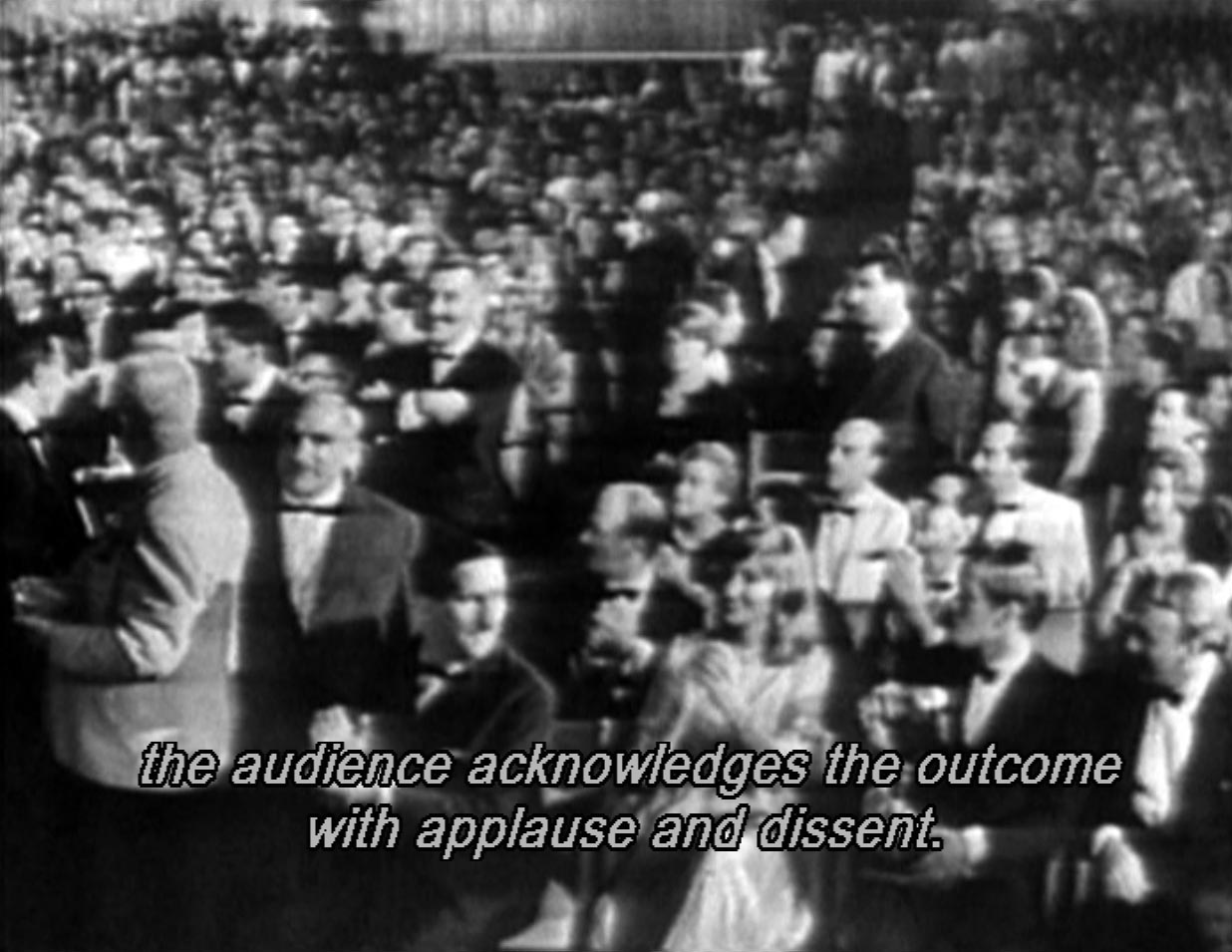
When Anotnioni won the Golden Lion award at the 1964 Venice Film Festival for The Red Desert (1964), the crowd had mixed feelings.
What is great about such contrasting responses is that it signals that people cared about the outcome, that what Antonioni was creating had meaning, that he was saying things that required a response – love them or hate them. Four years earlier he was also booed at Cannes for L’Avventura. But that was then.
Rosenbaum, in his piece on L’eclisse for the Criterion Collection release of that film, states:
This was a time when intellectual activity about the zeitgeist could be debated, if not always welcomed, with Godard and Antonioni the two most commanding figureheads. L’eclisse (1962) appeared the year after Chronicle of a Summer, Last Year in Marienbad, and Paris Belongs to Us, the same year as The Exterminating Angel and Vivre sa vie, and the year before Contempt and Muriel—a period, in short, when large statements and narrative innovations often came together.
That is my understanding (of course not my experience) of the late Fifties and Sixties. The zeitgeist was critical. Mankind was in a giant philosophical flux, and big issues, existential issues were on the table and debated. Film was seen as important, and film departments were started at universities and colleges. Film festivals were important for political reasons and not merely for the glam. Bergman and Antonioni, among many others, were hotly debated, loved and despised, revered and condemned. And then it seemed like none of that really mattered so much. The mid-1970s arrived and the pursuit of these higher goals began to wane. The great leaders had been shot, Vietnam had “ended”, the counterculture became more and more of a drug culture, humans had already walked on the moon and that wasn’t so exciting anymore, the Beatles broke up, Nixon brought even more shame to government, and a self-absorbed “me” generation began to create a new zeitgeist of cynical pleasure. People didn’t go to the theater to find god anymore, they went to the theater to find a thrill. They didn’t go seeking truth, they went seeking a shark, or a spaceship, or the next escape from reality. I know I did.
I, of course, am over-simplifying and romanticizing a bit. People have always sought the thrill and the escape. Truth has always been debated. And some films still stir the soul-searching imagination and foster debate. Plus the 1970s were also an age that started many great things: personal computers, the environmental movement, the slow-food movement, to name just a few. But we are living in an age where the struggle after god and truth are essentially passé. The assumption is that there is no Truth (with a capital “T”), there are no true ethics, there is no God, there are only situations and opinions, and so, for the most part, nobody really cares anymore. The death of Bergman and Antonioni remind us of of a time when cinema was a medium for these pursuits to play themselves out, and people went to the theater to see them played out, and later, over coffee and cigarettes, or walking across campus after the student union showing of a Godard, or later still in bed with one’s lover, debated the meaning of those films and of ourselves.
No need to despair, though. The big questions of our existence are still with us, and if we are brave enough we can still talk about them. And film is still of of the great mediums with which to explore who we are.
As for Antonioni, much has been said by those more intelligent than I about his genius. But what is important to separate is the ennui of his characters and his own personal hope – I say this only from watching his films, not studying the man himself.
In fact, I think it is important to consider that Anotnioni was no true pessimist. He saw people as being trapped in the world that they have created. But he does not say there is nothing they can do, or that there is no other world. Consider this little scene from L’eclisse:
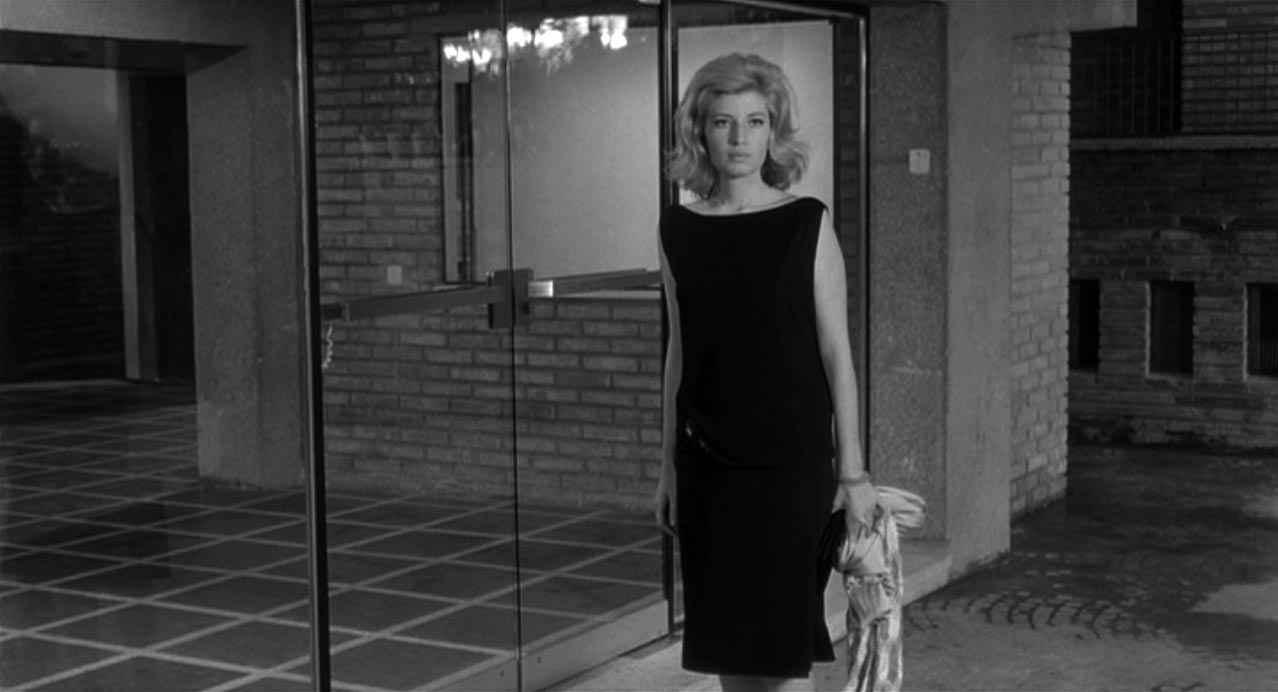
Vittoria (Monica Vitti) has left her lover. The relationship has been empty and she feels the ennui of living in the modern age. Although her feelings may not be entirely clear to herself. She walks back to her apartment.
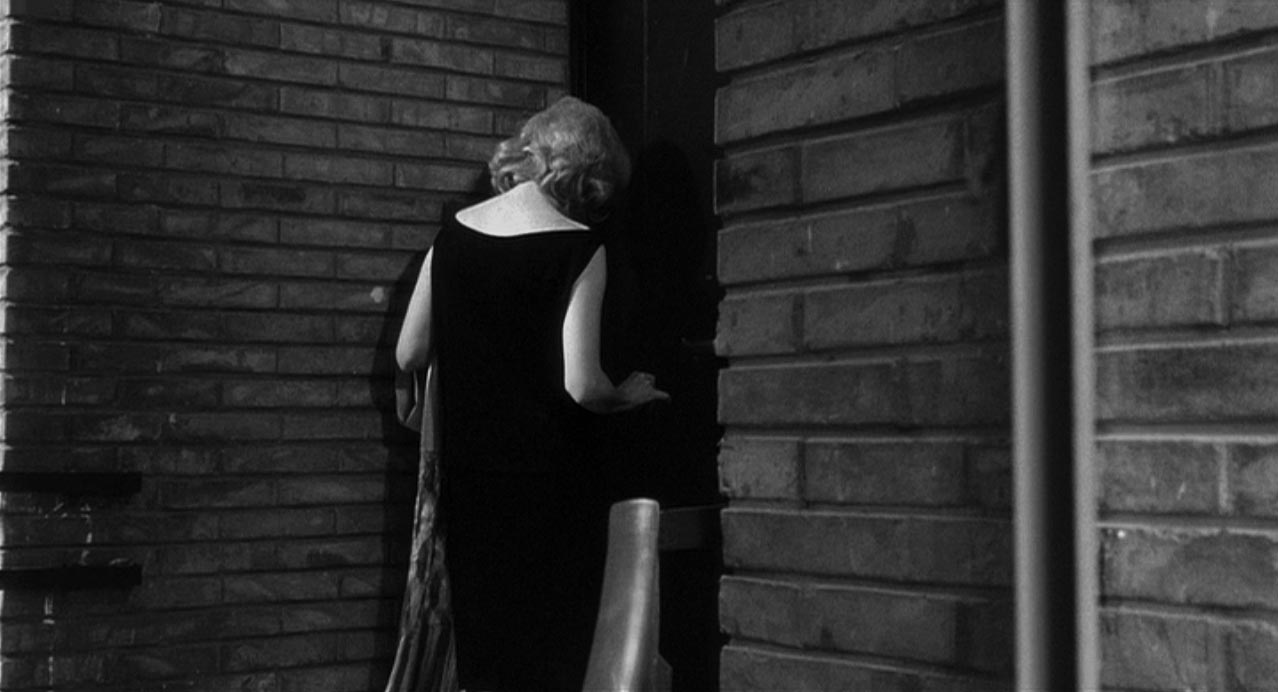
Here she watches her ex-lover walk away as she stands at the entrance of her apartment building. She is visually framed by elements of that building which seems to dominate the scene. There is a kind of hopeless emptiness in her eyes and posture. She does not yet know that it was not that she was trapped in an empty relationship from which she is now free, rather she is still trapped in herself in the modern world. Antonioni uses modern architecture to symbolize the prison of modern society.
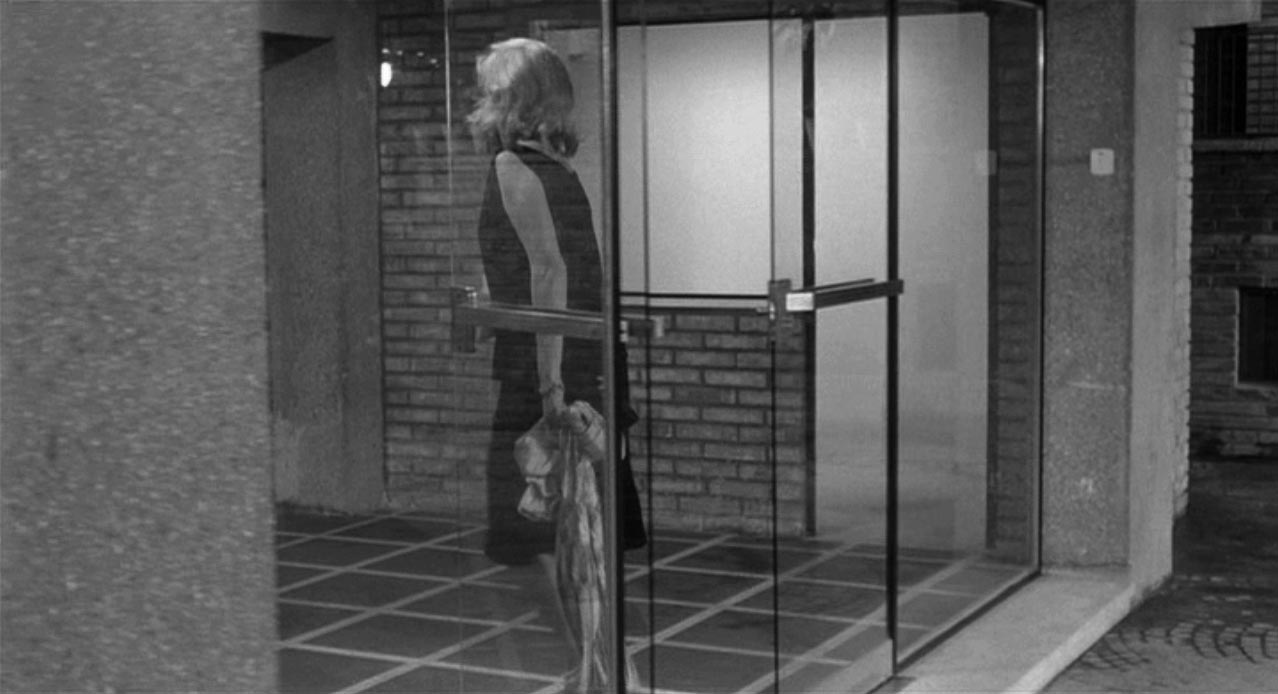
Then Vittoria goes through the glass doors. The camera tracks left to follow her movements.
In the foreground the corner pillar of the building comes into the frame.
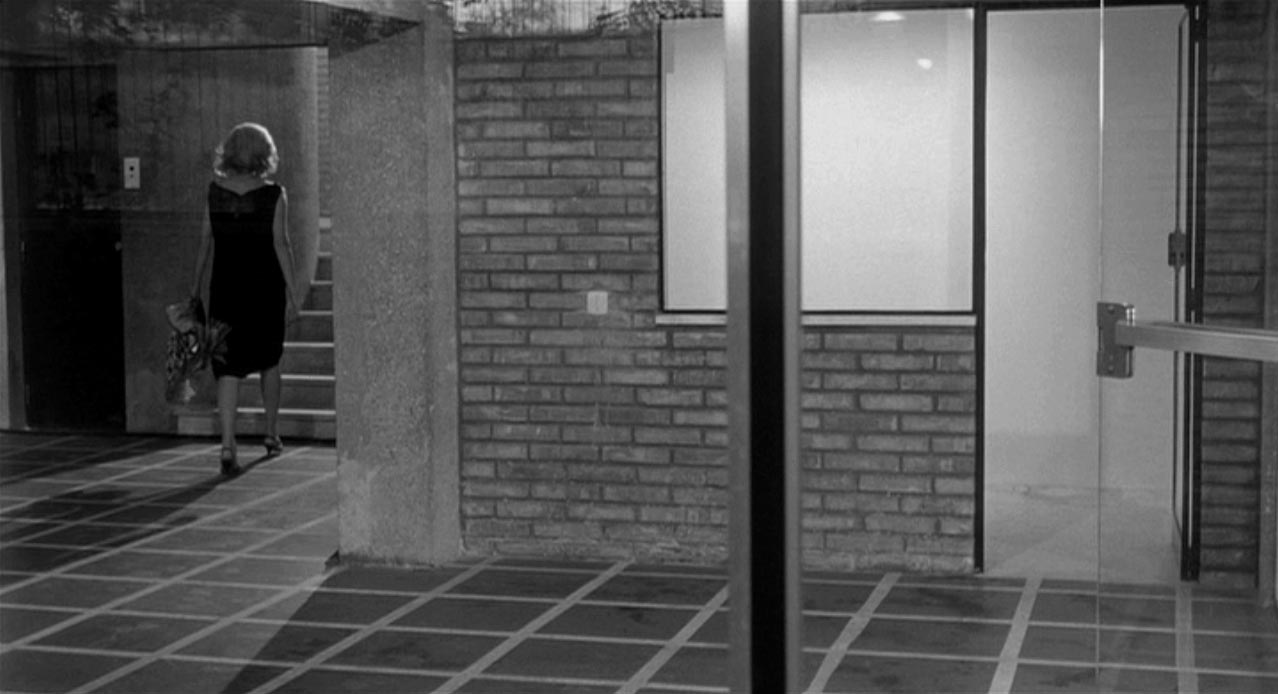
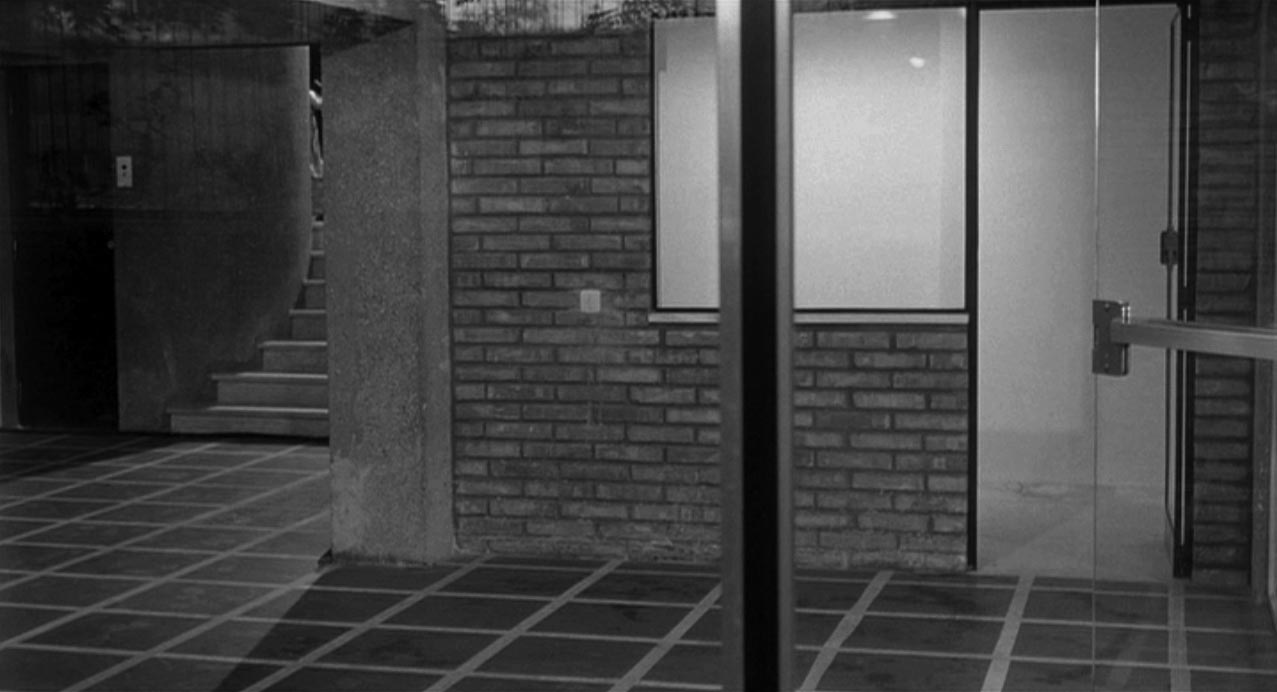
Vittoria walks through the foyer as the camera continues to track left. But then the camera stops so that we see only a sliver of the stairwell.
Vittoria walks up the stairwell and disappears around the corner.
It is as though she has been swallowed by the building.
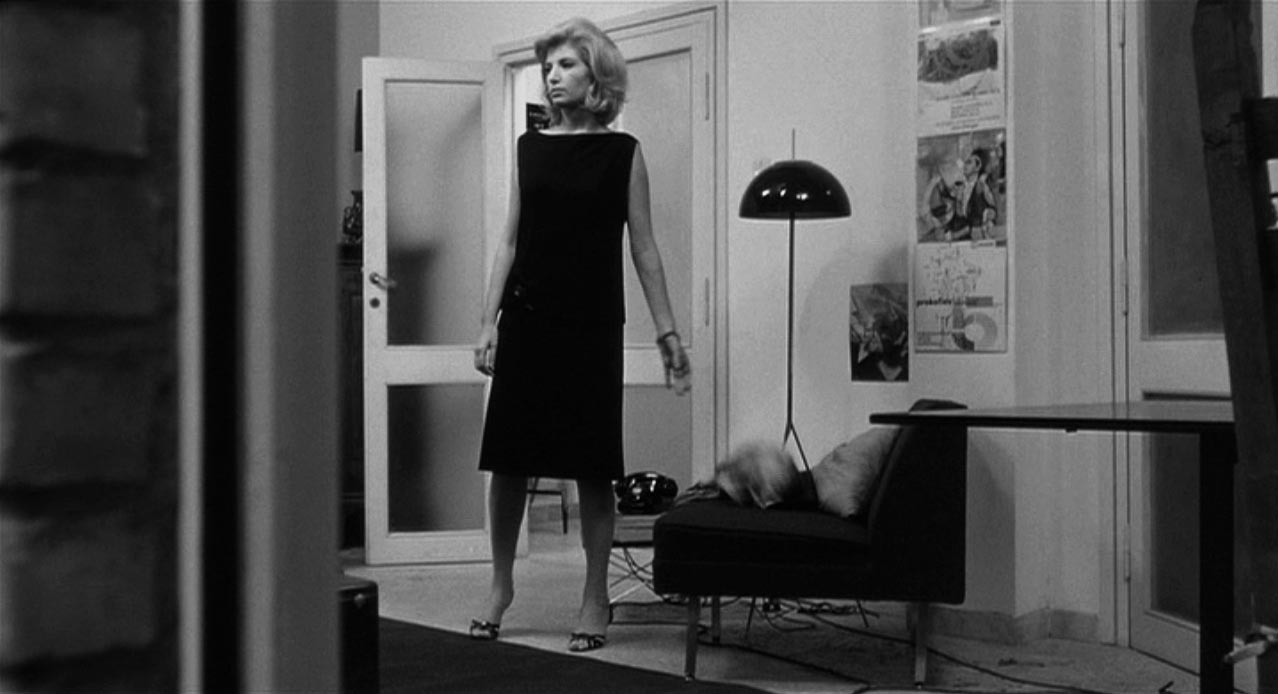
Then we see her at her apartment door. Again she is visually framed by the building’s architecture.
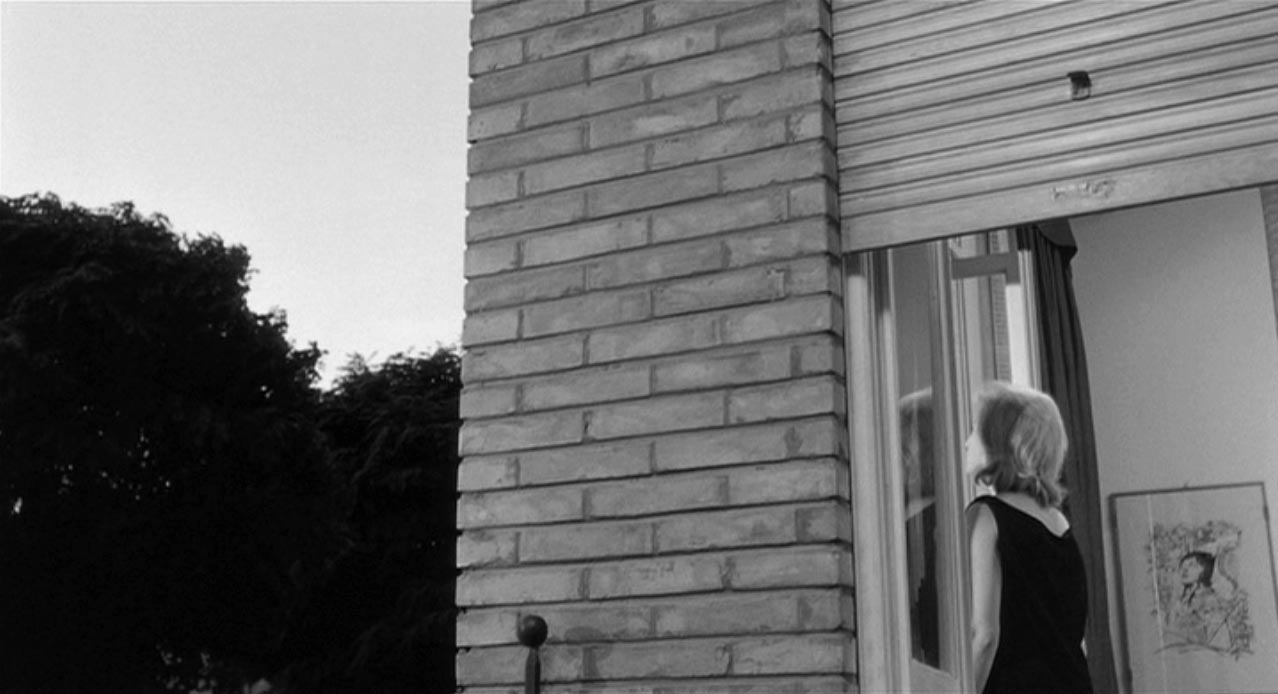
As she enters her apartment the camera is placed outside her windows in such a way as to emphasize that she is inside the building. And again, the architecture dominates, framing her “within” its space.
It should be noted as well that her apartment is chic and modern. She is a beautiful, rich woman living in a beautiful, richly furnished apartment which surrounds her with the bounty of wealth. She has it good, one could say.
She then walks through her apartment and goes to the window. Outside the wind is blowing the trees.
The only thing we hear is the wind in the trees. Here we have the modern world set against the timeless natural world. One world is visceral the other is sterile. One world is dead the other is alive.
The final shot of this sequence is critical, and one of the most important shots of the film. Antonioni is setting up a contrast, one that Vittoria sees but does not see. The truth is she is not lost, she is choosing her life.
Every pessimist is an optimist, and so was Anotnioni. When Vittoria looks out that window at the trees, she is trapped by her own choosing, but she can still choose. The walls of her chic apartment are a barrier to the life beyond those walls, but the apartment has a door. The question is whether she has the eyes to see that she has a choice.
And what is truly important anyway is that we can see, and we can choose. Ennui is a challenge to us, but it is also a door through which we discover ourselves and to understand that we must choose. Antonioni helps us see, and his films are but one doorway to that choice.
Priests celebrate Mass for protesters in the middle of a rural street in Honduras in 2017 in an effort to block the passage of equipment for a construction project that would be harmful to the environment. (source)
Latin is a beautiful and ancient language. Many consider it a sacred language as it is one of the three languages used for the inscription Pilate had affixed to the Cross declaring Jesus king of the Jews (the other two being Hebrew and Greek). Latin was also the language used for centuries for the Roman Rite Mass. Of course, few people, including Catholics, know Latin well (even the U.S. bishops who participated in Vatican II famously struggled with the Latin documents). 1969 was perhaps the most pivotal year for many decades for the Church, for the Mass was changed and the vernacular, which was now allowed, soon became the dominant language, in some cases entirely replacing Latin. The flood gates were opened for the vernacular.
For many Catholics around the world, this was the first time they had heard the Mass in their own tongue. Think about that—the first time hearing the prayers, the chants, the creed, and especially the readings in one’s own language. Not only does that mean they could understand what they were hearing, they now could, in a sense, own it. There was no longer a distance, a gulf between the laity and the Mass.The Mass became their own, not a foreign thing.
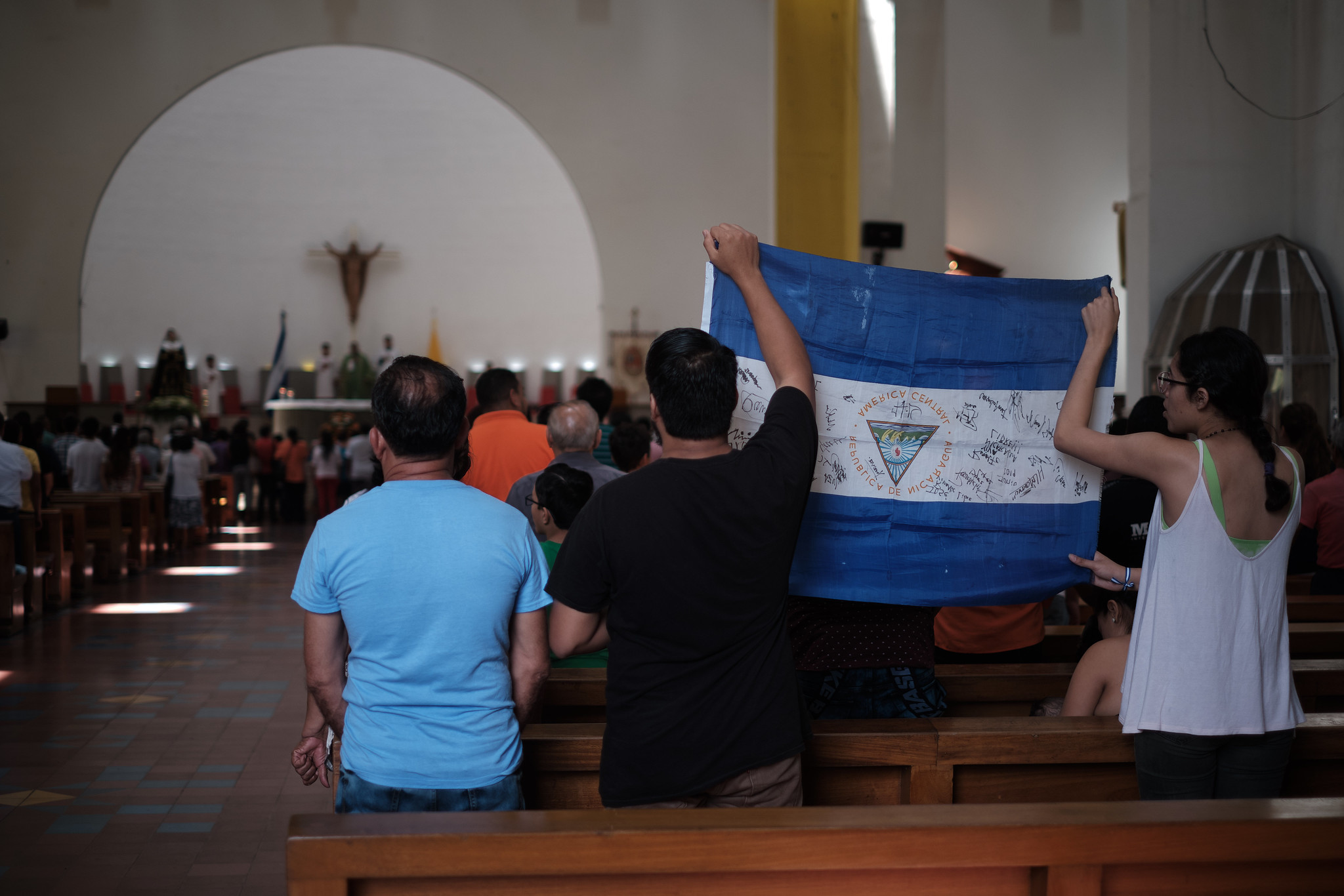
Citizens raising the Nicaraguan flag upside down as a way to protest at the Managua cathedral. Photo: Carlos Herrera (source)
There has been a consistent lament about the loss of Latin from some corners of the Church since 1969 but, for the most part, use of the vernacular was fully embraced and celebrated by most Catholics and remains their preference. This is true for both laity and priesthood. The distance shrinking between the two was a welcome change. Something surprising also happened. When Catholics began hearing the Gospels read in their own language—and remember many around the world cannot read or don’t have the means to afford a Bible, thus the Mass is where they heard the Gospels—they heard the radical nature, the explosive content of Holy Scripture no longer hidden behind a veil. They could also begin to judge the homilies as they compared the preaching to the words of the Gospels, and in some cases they began to see a disparity between the two. For some, that disparity shone a light on the dichotomy between rich and poor, oppressor and oppressed, and between the earthly kingdom and the Kingdom of God.
Roman Catholic pilgrims travel in a boat as they accompany the statue of Our Lady of Conception during an annual river procession and pilgrimage along the Caraparu River in Santa Izabel do Para, in the Amazon jungle December 8, 2012. The statue is transported by boat along this small Amazon tributary to a small chapel in the village of Cacoal, where a mass is held. Picture taken December 8, 2012. REUTERS/Paulo Santos (source)
We have all heard of people who once denigrated Christianity only to later change their views because they read the Bible for themselves rather than receiving it through the filter of organized religion. Consider this passage from The Gospel in Solentiname in which some poor folks (campesinos), who have been reading and discussing the Gospels, point out a fascinating fact:
[Ernesto Cardenal] said: “I’ve just had a visit from a young fellow from the north, from Estelí, from a poor town. He is a campesino like yourselves, and he was saying that there, to get together for their Masses first they have to ask permission from the police, and the police captain said that those gatherings were dangerous. The captain is right, for they gather to talk about the Gospels.” […]
TOÑO: “That didn’t use to happen here because the Masses were in Latin. The priest read these things but he read them in Latin, and he didn’t explain them to the people. So the Gospels didn’t bother the rich or the military.”1
Now that the Mass was celebrated in the vernacular the reality of the Gospel frightened the earthly rulers and the rich who oppressed the poor. All saw the possibility of revolution. Some were afraid and others found joy.
Christ made it clear that one of the fundamental enemies of the Gospel are the rich. The Church has spent nearly two thousand years trying to downplay and obfuscate that clear truth. But there’s only so much evasion one can get away with once the Gospels are read or heard as they are. Fortunately, there have been many in the Church who didn’t play along with the dominant ideologies. Some became well known—Saint Francis comes to mind, and so does Óscar Romero—but most are not, such as the many priests, religious, and even more laity killed in Latin America at the hands of US-backed governments because they defended the suffering poor against the oppressive rich. All were marked by a direct confrontation with the Gospel.
Vatican II and the Mass of Pope Saint Paul VI which flowed from the council took the bold step to get the Gospels more directly into the hands of the faithful.
In Latin America the vernacular Mass began to appear even earlier than 1969, such as the Misa típica panameña de San Miguelito (Panamanian Folk Mass of San Miguelito, 1966).2 Of course, when we refer to the Mass we refer not merely to the readings, homilies, and spoken prayers but also to the chants, songs, and creeds. Spanish language Masses began to be written and even recorded and spread via LPs. For example, the Misa Campesina Nicaragüense (“Nicaraguan Peasants’ Mass”) with words and music by Carlos Mejía Godoy, and incorporating liberation theology and Nicaraguan folk music. It was inspired by the faith community in Solentiname and was first celebrated in 1975. Here is the entrance hymn from the Misa Campesina Nicaragüense:
Notice the addition of liberation-themed images in the video above. The use of the vernacular encouraged the development of folk Masses and thus reached the hearts of the people more readily—those people included priests as well. The writing and recording of these Masses, in forms that could be easily sung by the faithful, and with the fundamental Gospel theme of liberation, contributed to the spread of liberation as a social and political force in Latin America and, not only that, linked that liberation to the saving work of Christ and the faithful life Christians are called to live. Liberation, as a political force, was seen as a call to the faithful, thus countering the over-spiritualization of the faith, of interpretations of Scripture, and even of worship itself.
Bernard Gordillo writes of the power of the new Mass settings in Latin America and how they helped change the culture and enriched the faith [emphasis added]:
The Catholic Church underwent profound renewal during the 1960s. The bishops of the Second Vatican Council elected to engage the modern world in response to its social and political challenges. Catholics saw the church acknowledge them and adapt to their realities. The once steadfast celebration of the liturgy, a bedrock of sacred rituals, now addressed local or regional identity. Latin and plainsong gave way to vernacular languages, musics, and performance practices. Taking inspiration from this wave of change, Catholic musicians, writers, and artists created diverse musical settings and textual translations of the liturgy, in addition to innovative visual art. These developments took on particular resonances in Latin America, where the bishops of CELAM sought to confront systemic poverty and injustice by affirming the experience of the poor, as well as the social and political processes that would give rise to a theology of liberation. Singing was an abiding collective expression wherever concientización took place, not as a secondary feature, but as part and parcel of a ritual whole, forming a circular relationship between concientización, prayer, and song. This uniquely Latin American postconciliar ritual (concientización-prayer- song) was the fundamental building block of the liberation method for the Familia de Dios movement. The vernacular masses that emerged from San Miguelito, San Pablo Apóstol, and Solentiname musically embodied the community in reflection of its collective identity. They accompanied the transition of liberation practices from internal community building to outward social and political engagement, as enacted by postconciliar priests, religious, and lay people. If the origins of liberation theology lie in the experiences and critical awakening of the poor, they also lie in their expressions— spoken and sung. The Familia de Dios masses were thus musical emblems of this process within their respective popular church communities. They were liberation masses that sang of faith, hope, and struggle in a post conciliar world.3
Consider, that after centuries of Christendom and the Church, in collusion with governments and ruling powers, seeking worldly power, after centuries of the Church protecting itself from the challenges and judgements of the Gospel and the often frightening workings of the Holy Spirit, a council, a new Mass, and a group of Latin American bishops took the risk and sought to allow worship that might address local and regional identity, getting the Gospel into the vernacular, and promoting the radical message of liberation. No wonder Liberation Theology took root in Latin America.
The Gospel is like a hidden treasure because nobody used to understand it, right? They used to read it to us in Latin, and they preached on it in a way that wasn’t even close to the true Gospel. And now we’re discovering it, as you might say: we’re finding a treasure.4
1Ernesto Cardenal, The Gospel in Solentiname, trans. Donald D. Walsh (Maryknoll, NY: Orbis Books, 2010), 122-123.
2Note: I have no personal history or real connection with Latin American histories or cultures. I am merely at the beginning of my own journey of discovery arising from my interest in Liberation Theology. My own background includes being a descendent of mixed European origins and having benefited from an American society whose economic opportunities, of which I have enjoyed somewhat, are connected to the plundering of Latin America.
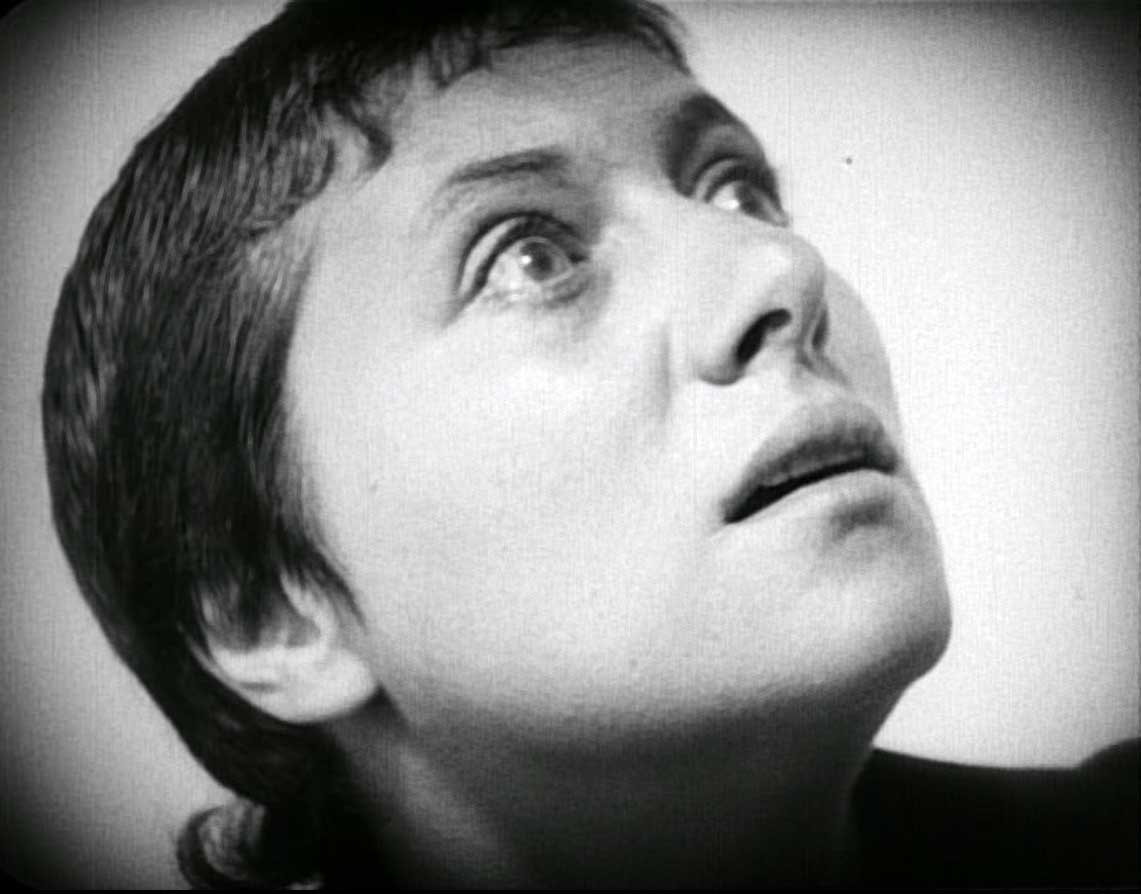
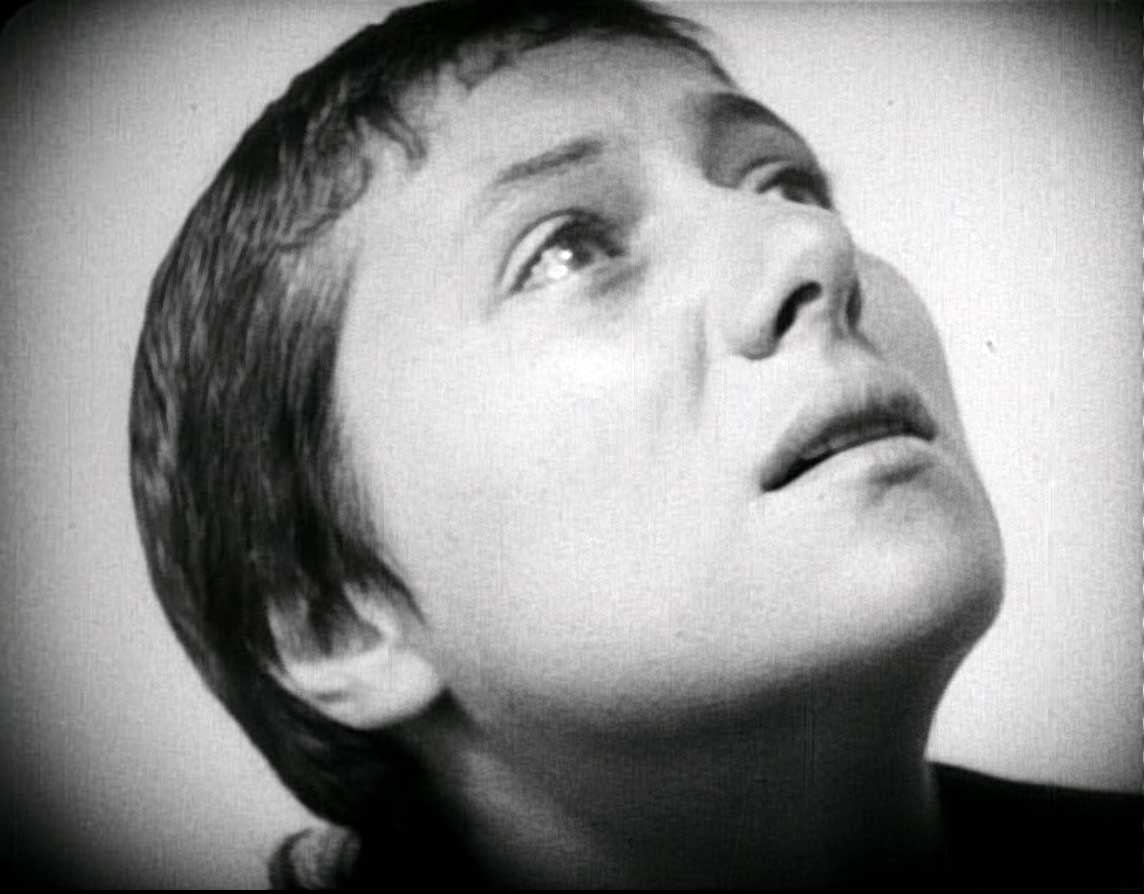
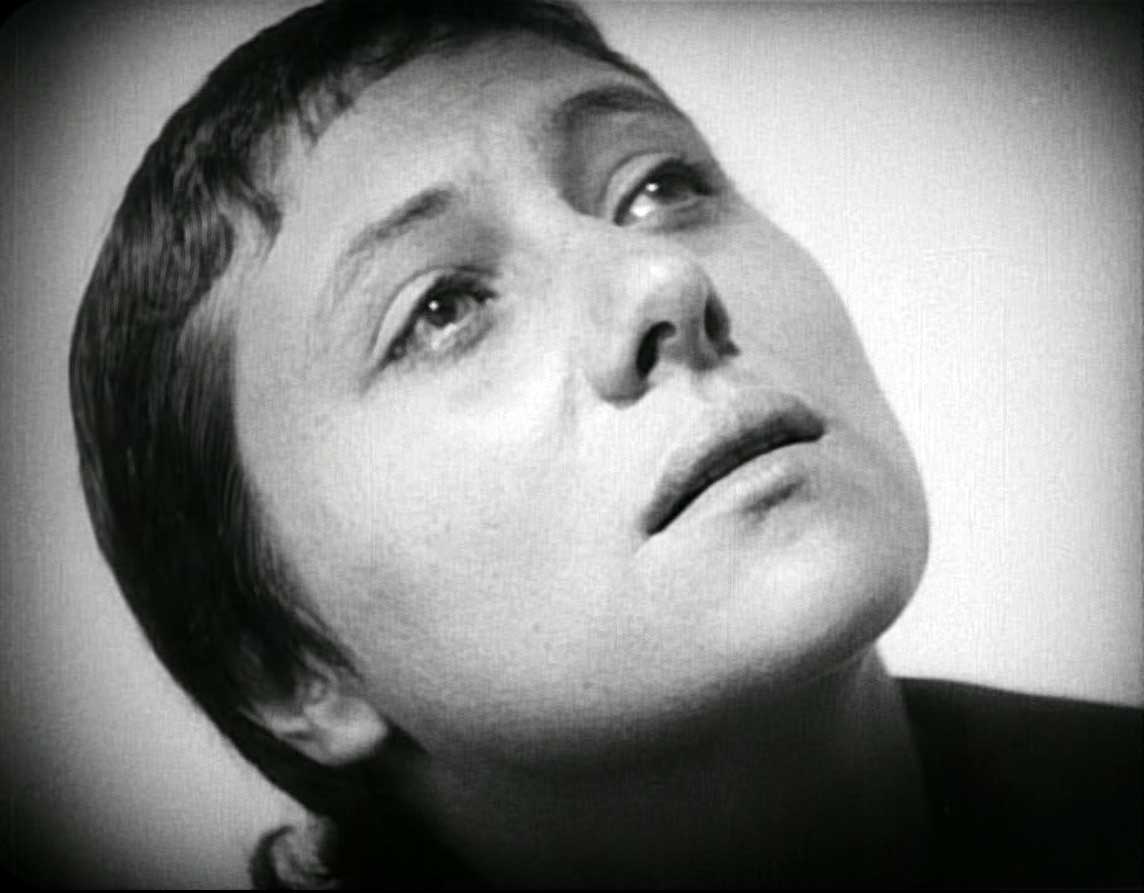
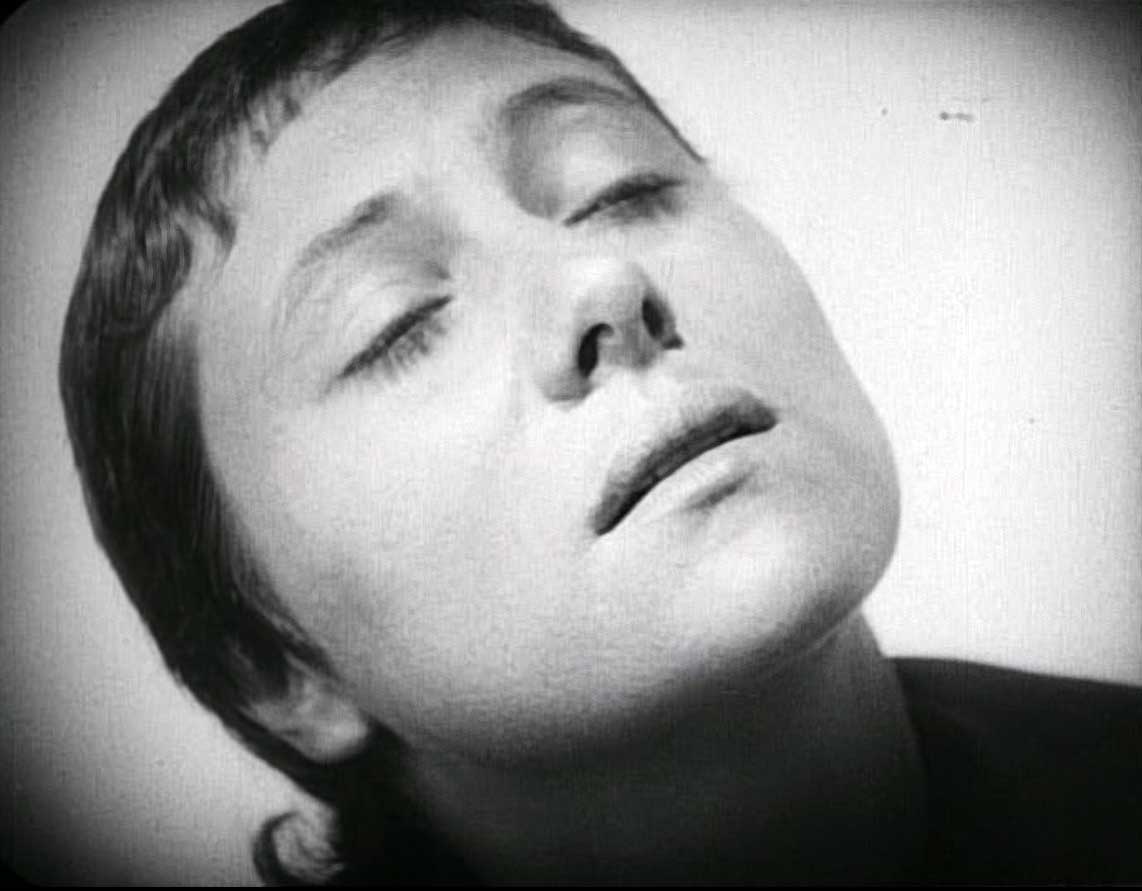
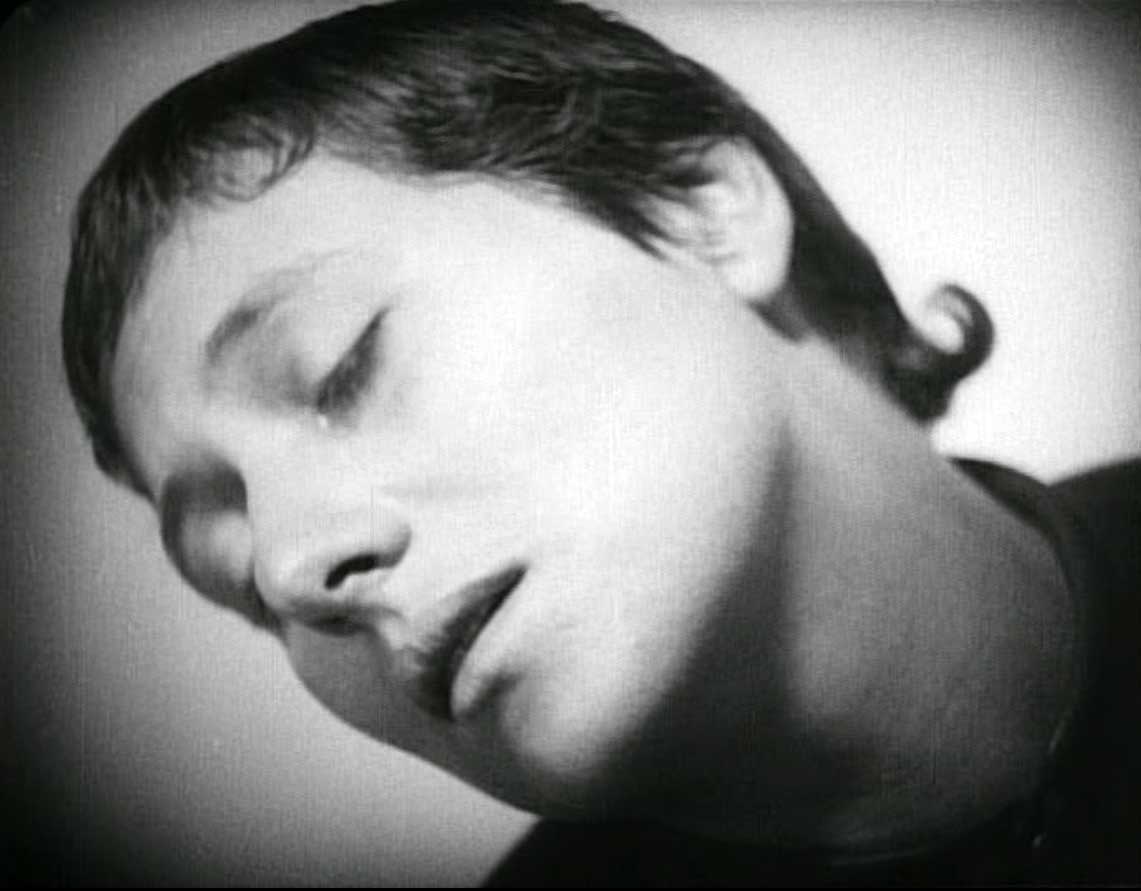
The following seven frames are from Dreyer’s La Passion de Jeanne d’Arc (1928). They occur just after Joan has been told that she will not be allowed to attend mass.
There are so many memorable moments in this incredible film that it is hard to pick out any one, but this brief moment caught me emotionally. It seems to exemplify the role that religion so often plays in claiming rights it can only pretend to own.
Typically one does not go to Godard seeking a spiritual film. Not that his films are devoid of spiritual concerns (his 1985 film Je vous salue, Marie deals directly with spiritual concerns) but Tarkovsky or Bresson or Kieslowski are more typical choices for spiritual cinema. On the other hand, through a different lens as it were, Godard is a very spiritual director, particularly when it comes to his critiques of modern society. On the surface he catalogs – in his own dry humor – the many phenomena of our strange and extravagant late-industrial culture with all of its gaudy materialism, its objects, and its fetishes. And yet are not his characters often living out their new modern spirituality in a sea of things, words, actions, violence, sex, love, books, images, ideas, advertising, and every other signifier of something other? That something other may, in fact, be faith. The question, then, is what is this modern faith?
Godard’s cinema has always been a cinema de jour. His emerges from the endless world of the now. In this age where “God is dead” the drive within each of us for meaning, and finding that meaning in relation to something outside of ourselves, has not gone away. If we find no God we will make one, and as is always the case, we fashion our gods according to our own needs and desires, and in our own image. We then adopt forms of spiritual disciplines that serve our image of God and the imagined requirements of our new spirituality.
What is a spiritual discipline? There are numerous definitions but, in short, a spiritual discipline is a habit or regular pattern of specific actions repeatedly observed in order to bring one into closer relation to God and to what God desires for one to know. It is something one does as an act of devotion and a means of advancement or growth.
How do we see this playing itself out in Godard’s films? In À bout de souffle (1960), a paean to the Hollywood gangster film, Michel exhibits a kind of ritualistic and constant homage to the film gangster archetype, Humphrey Bogart. He goes through the motions, adopts character traits, tropes, stylistic postures, and language to inhabit the ideal of his film hero. His focus and devotion are fundamentally religious, and his actions play out like spiritual disciplines – immature and humorous at times, but spiritual disciplines nonetheless. What Godard gives us in his unique way is a portrait of the spiritual status of French youth in 1960. In a world where traditional religious options fade they are replaced by a new religion, that of the cinema.In the end Michel dies as a martyr to his faith.
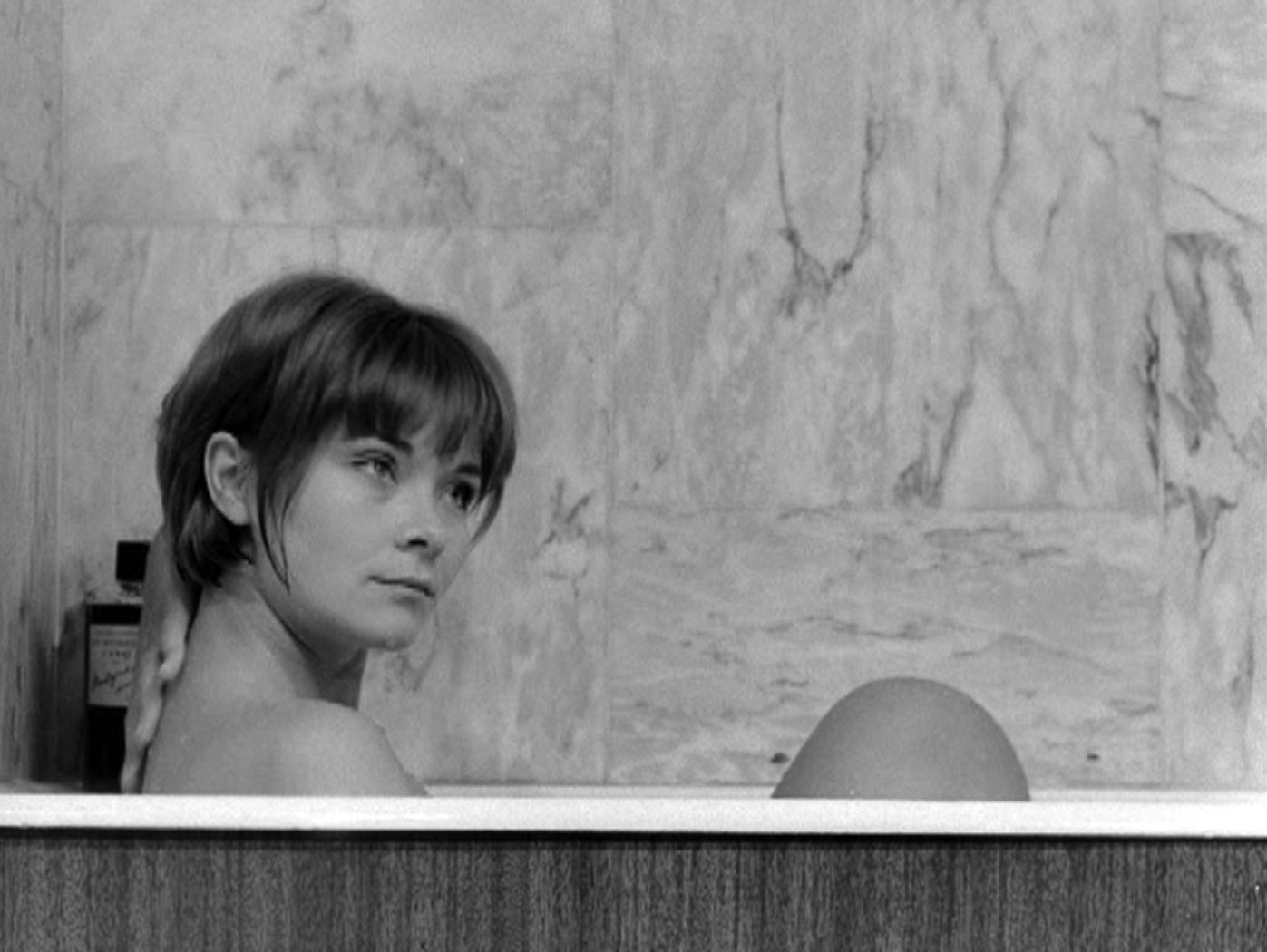
In Une femme mariée: Suite de fragments d’un film tourné en 1964 (1964) Godard presents another kind of spirituality, that of the sexual body in a consumeristic world. Although sexuality is one of the oldest “religions” in human history Godard examines it within a thoroughly modern context. Charlotte, who is married to one man and in love with another, is juggling her relationships while gauging herself against the constant inputs she receives (accepts, seeks) from advertising – in particular, advertisements about female beauty and, especially, those pertaining to the ideal bust. Her life becomes a constant calculation of actions – maybe motions is a better word – to present herself both to the world and to herself. She becomes both priestess and offering at the altar of modern woman.
One scene in the film highlights Charlotte’s commitments. Here she is finishing her bath.
She meditates (on what we do not know) with perhaps an intelligent expression, perhaps vacuous. She exits the bath. The camera followers her legs. She dries off.
She then used scissors to trim her leg hair.
Then trims her already carefully coiffed locks.
She then trims her pubic hair.
The camera does not follow the scissors, but we hear them and assume she is not trimming her bellybutton hair.
European films of the 1960s gained a reputation in the U.S. for being risqué. Though tame by today’s standards, to have a woman trim her pubic hair, even if only suggested, would have called attention to itself, and Godard makes sure the camera holds long enough for us to notice. Within the context of the film this shot makes a great deal of sense. Her bathing and grooming, and the calling attention to the details of her actions present to us the actions of her spirituality, her disciplines. This is not a world without a god, rather it is a world of many gods (her husband worships airplanes and is a pilot) and her god is a combination of love, sex, her body, her image as woman, etc. In this quiet moment we are voyeurs to her prayer, to her communion.
More than Godard’s other films of this era Une femme mariée is a highly formalized, stylish, and unusually crafted visual fugue of body parts, actions and gestures, and environments. At times we are drawn toward comparisons with Dreyer’s La Passion de Jeanne d’Arc (1928) for its uncompromising formalism and spiritual quest of its protagonist, and to Resnais’ Hiroshima Mon Amour (1959) also for its formalism, sexuality and the spiritual struggle of its characters in light of nuclear weapons. Godard takes the next step to characterize the spiritual quest of the modern woman (we should included men as well, though that is sometimes debatable with Godard) as neither traditionally religious/Christian or driven by existential terror, rather the new spirituality is a commodity based religion of self-image mediated through the world of late industrial production and consumerism. What makes this work, and elevates the film, is that Godard’s characters do not suffer the anguish of extreme religious piety or existential nihilism, rather they fully inhabit their world as accepting individuals who embrace the proscriptions of their circumstances – like peasants in medieval Europe, like good 20th century bourgeoisie.
In this way Godard stands as one of the more significant artists of the late modern/post-modern period. Later he would take these themes to greater and more political heights with such films as 2 ou 3 choses que je sais d’elle (1967) and Weekend (1967). Godard, though thoroughly materialistic, may also be a more spiritual director than most – a consideration we do not consider enough.
A few days ago I had some fun posting and commenting on various “alternative” images of Jesus that have become increasingly popular on the Internet. I titled that post another jesus. If you follow this blog at all you know I occasionally write on religious topics, mainly because I am a Christian trying to sort out the differences of my cultural Christianity from my faith. This is part of my overall journey in search of Truth, wisdom, and an authentic Christianity. So with that in mind, I had a recently amusing and disconcerting experience the other day which has prompted me to change my comments policies for now (they’re now moderated).
On that “another jesus” post I got the following comments (I made some slight changes to make it less offensive. I apologize if any here are offended.):
Hello i dont know who ur but i warn u if u display such kind of pictures and if u display jesus in very wrng ting…if u do this i will kick ur a** through visiting ur place ur mother f**ker….jesus is real son of a god he cures us and he helps every moments and loves us all the times…..f**k i kill u …ur a** f**ker….contact me if u have guts rohith_fancy25585@yahoo.com
Apart from the fact that this is actually a death threat if taken seriously, there are a lot of things one could say about these comments. At first I thought it might be a joke. In my experience such comments are so the opposite of what a Christ follower would say or do that I just new they couldn’t be serious. But then I realized, no, this commenter thinks he/she is defending Jesus. I could be wrong – maybe someone knows different.
Regardless, this commenter’s thoughts/assumptions/insults have given me some pause. Here are some attempts at understanding this helpful soul:
The commenter means to be giving me a word of encouragement, but the only English he knows was learned from watching Quentin Tarantino films. I realize Rohith is an Indian name. It could just be a “cultural divide” kind of thing. I need to be more sensitive to these things.
Maybe I should have known that “jesus is real son of a god he cures us and he helps every moments and loves us all the times” means we personally don’t have to worry about curing, helping, or loving – since he does that for us. That must be why he can immediately follow that sentence with “f**k i kill u.” It’s because of the freedom he has in Christ.
But then, he does say “son of a god” – a god. Which god does he mean? How many gods are we talking about here? I will try to keep an open mind.
If I don’t email him back do I not “have guts”? Is that what it takes these day to be evangelized? To “have guts”? I’m assuming here that what he really means by wanting me to contact him is so he can let me know God loves me and has a wonderful plan for my life.
It could be that he really is not a Christian (surprise) but is, in fact, a new-age dialecticist who is hoping to create some new religious synthesis through confrontation and this is just his way of inviting me to his new religion. So this could be a very sophisticated Hegelian tactic, just cleverly disguised as something opposite.
Grammatical clarification: Can “ur” mean both “you are” and “your” in the same comment? Is that legal? It certainly makes it difficult to understand what exactly he means by “ur a** f**ker.” Of course, if I had guts I would just ask him.
Maybe you have some additional thoughts. Maybe you “have guts” to contact Mr. Fancy25585 and carry on a meaningful dialog. Let me know how it goes. As for my part, I’m already on to other things.
If you search for images of Jesus on the Internet you will find an unending supply of everything from the serious to the comic, pious to the sacrilegious, realistic to the saccharine. Jesus has always been an appropriated figure by different Christian groups, but now it seems everyone appropriates Jesus for any reason, group, or perspective. Or, to put it another way, Jesus is increasingly seen as a non-religious figure who can be anything you want him to be. I think this can be seen as both a bad thing and a good thing.
Bad because Jesus was and is who he was and is. Any other perspective or viewpoint is not true. That would hold true for our perspective of anyone. But it’s good because so many traditional images of Jesus are just as wrong headed as the many non-traditional. It is a good thing to have our assumptions challenged, and to be reminded that we may not know as much as we think we do. If we don’t take Jesus seriously then, I suppose, anything goes. But if we do take him seriously then it makes sense to find out who he really was – and is. I would expect non-Christians to have fairly limited knowledge of Jesus but, ironically, many Christians do as well.
I saw a lot of politicized images of Jesus. One of the biggest debates going on today (consciously and unconsciously) is whether Jesus was a political figure with a political agenda and whether that political agenda was conservative or liberal. I am inclined to think Jesus was more of a political figure than I have been taught, and I am inclined to see the more liberal side of his politics. However, I think his politics were far more radical than either left or right.
As for those images, here are some of the least offensive, but still non-reverent, images I found in just a few minutes:
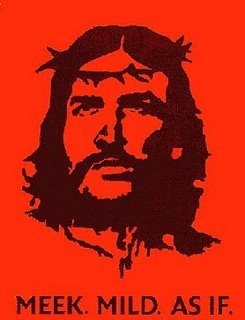
The not-meek, not-mild Jesus. Sure he’ll die for your sins, but he’s still as tough as a Chevy truck.
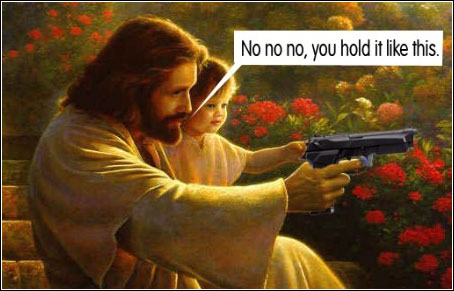
No comment needed – except – reminds me of the ‘who would Jesus bomb’ slogan.
The kind, teaching non-non-violent Jesus.
The Jesus for whom there will be no cross, I suppose. Lookout Romans, it’s smackdown time.
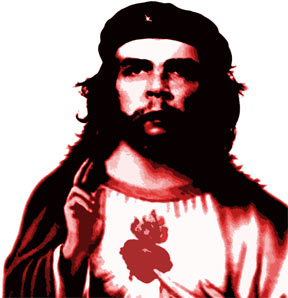
The radical leftist Jesus.“After fasting for forty days, Jesus put on his beret and returned to the collective.”
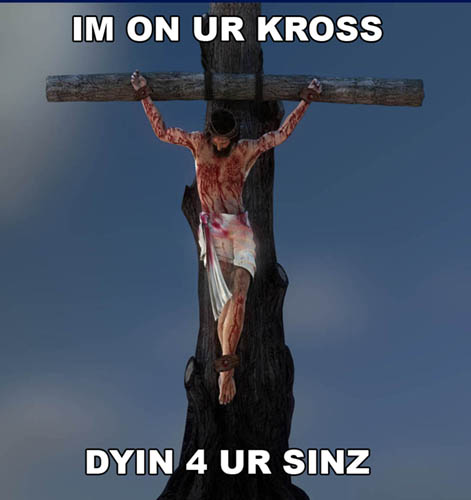
The twitter gospel Jesus. But why does “sins” have to be spelled with a “z”? It’s not any shorter or easier to type on your blackberry.
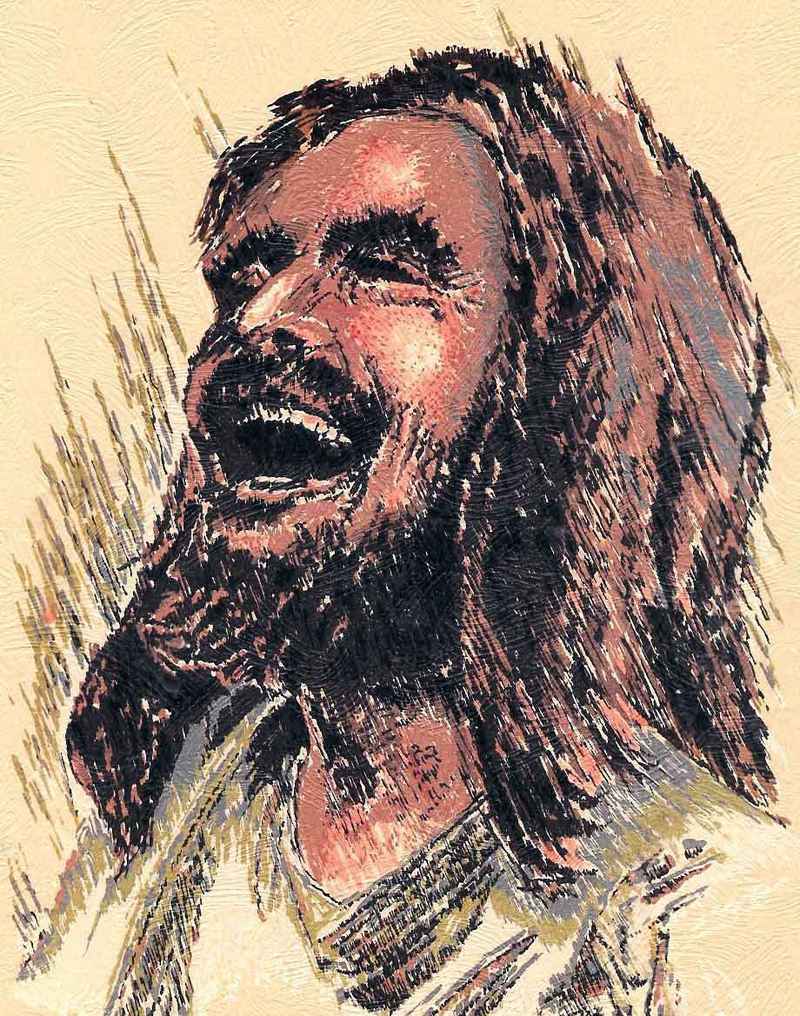
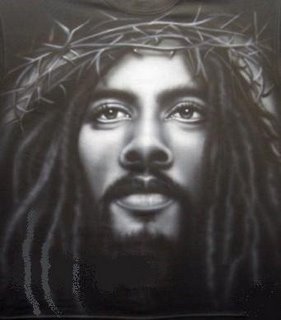
The Rastafarian Jesus (I suppose).Is he actually looking at anything?
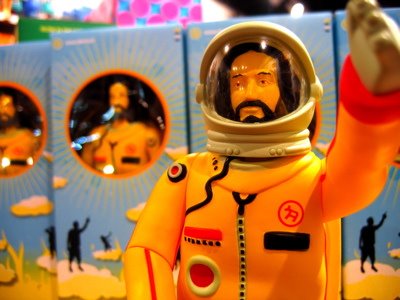
The astronaut Jesus. He’s in orbit and he’s coming back!
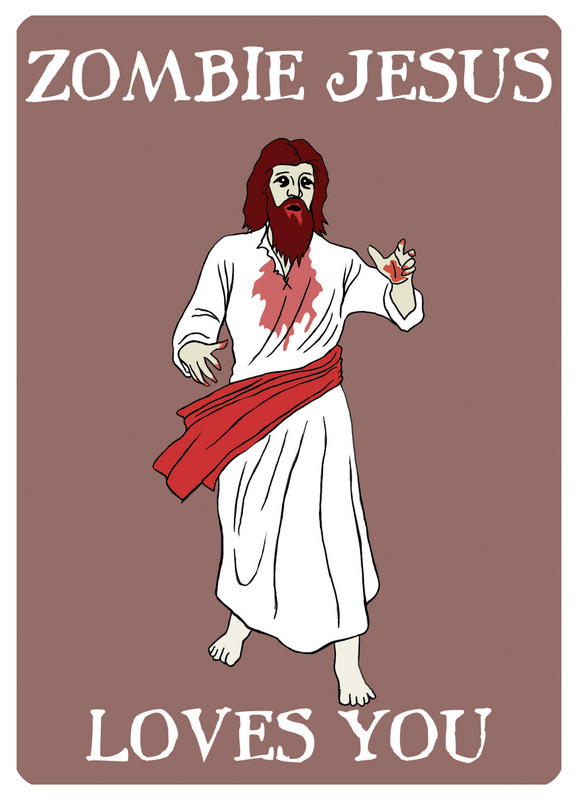
And ironically, maybe the most scriptural of all, the un-dead Jesus. He lives!
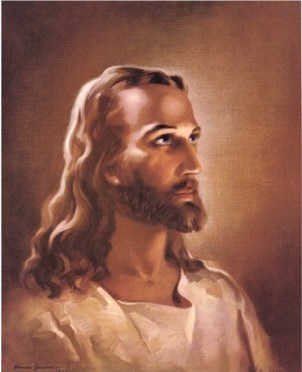
Now I recognize how goofy these images of Jesus are, but so are classic Victorian ones like this:
And yet, we have this one in our house and I like it. Hmm.














 pilgrimakimbo