The casualties of Operation Overloard

One of the truest clichés is that war is hell.


New Zealand Commandos ready to hit the beach

Today is 65 years since Operation Overlord began – also known as D-Day. This day stands as one of the great moments of triumph in the wars of good versus evil that are seared into our consciousness. I have always viewed the actions of the soldiers who landed on the beaches to be nothing short of heroic, and I still do, but I am burdened by the casualties from the event. I wrote a post recently on my attitude towards war and I must confess I have difficulties bringing together my hatred of war and my thanks for the heroes of D-Day.


British commandos in a ruined French town, Normandy.

Consider the casualties from Operation Overlord. This is taken directly from Wikipedia and it bears reading and pondering:

The cost of the Normandy campaign had been high for both sides. From D-Day to 21 August the Allies had landed 2,052,299 men in northern France. The Allies lost around 209,672 casualties from June 6 to the end of August, around 10 % of the forces landed in France. The casualties breaks down to 36,976 killed, 153,475 wounded and 19,221 missing. Split between the Army-Groups; the Anglo-Canadian Army-Group suffered 16,138 killed, 58,594 wounded and 9,093 missing for a total of 83,825 casualties. The American Army-Group suffered 20,838 killed, 94,881 wounded and 10,128 missing for a total of 125,847 casualties. To these casualties it should be added that no less then 4,101 aircrafts were lost and 16,714 airmen were killed in direct connection to Operation Overlord. Thus total Allied casualties rises to 226,386 men. 78 Free French SAS (Special Air Service) killed, 195 wounded in Brittany from 5 June to the beginning of August. For Allied tank losses there are no direct number. A fair estimate is that around 4,000 tanks were destroyed, of which 2,000 were fighting in American units.

The German casualties remains unclear. The estimates of the German casualties stretches from 288,000 men to 450,000 men. Just in the Falaise Gap the Germans lost around 60,000 men in killed, wounded and captured. The majority of the German casualties contained of POWs as nearly 200,000 were captured during the closure of the battle. The Germans committed around 2,300 tanks and assault guns to the battle in Normandy, and only around 100 to 120 were brought back across the Seine. The overwhelming majority of the German tanks destroyed were put out of action by the Allied airforce, while very few of the Allied tank losses were inflicted by the Luftwaffe.

19,860 French civilians were killed during the liberation of Normandy, and an even greater number were wounded. The number excludes the 15,000 civilians killed and the 19,000 wounded in the bombings of Normandy in preparation of the invasion. Many cities and towns in Normandy and northern France were totally devastated by the fighting and the bombings. As many as 70,000 French civilians may have been killed during the liberation of France in 1944.

These numbers are staggering. Keep in ming that is for less than two months of fighting and such losses are entirely unbelievable by today’s expectations.


Dead U.S. soldier, Omaha beach

D-Day is considered a great triumph. It was the first major stake through the heart of European fascism and Nazi ambitions. We use the words “saved the world from fascism” and “liberated Europe” when we talk about D-Day and its heroes. I have always had strong emotions about WWII and D-Day. The opening sequence of Saving Private Ryan truly chokes me up. I spent hundreds of hours as a kid pouring over my WWII book collection, closely examining photographs, reading the stories, and wishing I had been there. However, D-Day can also be seen a part of a huge failure. A failure not merely because there where many political options not exercised by the Europeans and Americans all through the 1930s that could have dealt with the rise of Hitler and fascism and avoided war altogether, and not merely because one source of WWII was the WWI (the war to end all wars) which also could have been avoided but was entered into with relish by all sides, but D-Day is a failure because all war is failure. War is a powerful and profound testament of human evil. To seek war, whether from selfish ambition, glory, or even from a felt obligation is, to use an old but still valid term, sinful.


Dead German soldier, Normandy.

More than ever on days like this one, where we appropriately remember the sacrifices of so many human lives for causes that we believe in, I am in conflict. Should those soldiers have stormed the beaches in Normandy 65 years ago to save the world? Maybe not, for war is wrong. And yet they did and I am grateful they did. So today I will remember what those soldiers did and what they gave (in fact I am in awe of their service), but I will also remember and grieve the casualties on all sides, including the civilian casualties, and I will remember that the human tendency to war and glorify war is my tendency too because I am a sinner.
>Memorial Day 1865/1945

>According to Wikipedia: “[T]he first memorial day was observed by liberated slaves at the Washington Race Course (today the location of Hampton Park) in Charleston, South Carolina. The race course had been used as a temporary Confederate prison camp in 1865 as well as a mass grave for Union soldiers who died there. Immediately after the cessation of hostilities, freed slaves exhumed the bodies from the mass grave and reinterred them properly with individual graves. They built a fence around the graveyard with an entry arch and declared it a Union graveyard. The work was completed in only ten days. On May 1, 1865, the Charleston newspaper reported that a crowd of up to ten thousand, mainly black residents, including 2800 children, processed to the location for a celebration which included sermons, singing, and a picnic on the grounds, thereby creating the first Decoration Day.”

>walden

>Deep within the American psyche is a pond.

That pond is called Walden and it was, as we all know, made famous in a book called Walden by the ubiquitous American writer Henry David Thoreau.

Here is a wonderful photo essay (if that’s the right word) on Walden Pond in a year.

And here’s a video piece on Walden Pond with the words of Thoreau:

I live in the Northwest where we have many lakes and ponds as or more beautiful than Walden, but none so important.

I post this because I am thinking about nature, and getting into nature, more and more now that it is Spring and my kids need to get out as much a me.

>Happy Birthday Frances Perkins

>

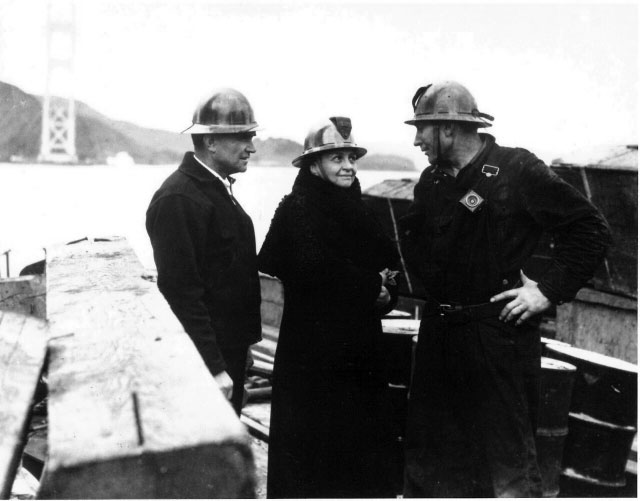
Frances Perkins is one of the many great women that have helped shape this country. I believe she could be a good example for my daughters. She was the first woman appointed to the U.S. Cabinet and served as U.S. Secretary of Labor from 1933 to 1945.

Here’s a short news piece on Ms. Perkins on Democracy Now. It starts with the voice of Frances Perkins as she talks about her witnessing the infamous Triangle Shirtwaist Factory fire.

>God help us to be human: Happy Birthday Cesar Chavez

>

Today is the birthday of activist Cesar Chavez.

>Capitalism Hits the Fan

>Professor Rick Wolff is a passionate and animated lecturer. He is also a Socialist. With all the discussion these days about the supposed Socialist solution proposed by the Bush/Obama power brokers, it might be worth understanding what an actual Socialist perspective is all about. (This video was recorded before Obama was sworn in as president.) I have to say Wolff’s analysis is, at least, fascinating and worth thinking about. Truth is, Karl Marx’s understanding of Capitalism is a powerful critique and possibly more important than ever.

http://vimeo.com/moogaloop.swf?clip_id=1962208&server=vimeo.com&show_title=1&show_byline=1&show_portrait=0&color=00ADEF&fullscreen=1

As with most Socialist/Communist proposed “solutions” to things like economic crises, labor issues, government regulations, market fluctuations, and the like, I am not sure where I stand. I am not yet a Socialist, but can’t say I’m a Capitalist either. Wolff’s conclusions in this video also seem somewhat simplistic to me, but that might be because he had limited time to speak. My guess is that given more time he could give much more detail and answer objections.

>20 years ago today…

>…the Exxon Valdez ran aground.

http://vimeo.com/moogaloop.swf?clip_id=3213063&server=vimeo.com&show_title=1&show_byline=1&show_portrait=0&color=ff0179&fullscreen=1

Some questions:

  • What is the relationship between capitalism and the well being of us all?
  • Can an economic system that relies on the fundamental self-interest of us all be considered good?
  • What is my role in the system?

>Conquered and held by free men…

>Happy 150th Birthday Oregon.

Of course, I find it rather troubling to live in a state that exists, in large part, because the indigenous peoples who were living here were conquered. But then, so exists the U.S.

>The Mother of All Demos

>Here are some things that I use and rely on in both my personal life and my work:

  • Email
  • Hypertext
  • Computer mouse
  • Interactive text
  • Video conferencing
  • Teleconferencing
  • …and geographically dispersed teams connected by these technologies

Any one of these technologies is remarkable. If someone did a presentation that demonstrated any one for the first time it would be a seminal presentation. But what about a presentation that demonstrated all of them for the first time? That would certainly be the Mother of All Demos.

For you computer geeks, tech heads, and inventors, here is the Mother of All Demos:

http://video.google.com/googleplayer.swf?docid=-8734787622017763097&hl=en&fs=true

This presentation was given by the brilliant Douglas Engelbart in 1968! Learn more about this early technology here. I find this stuff to be fascinating.

>BHO

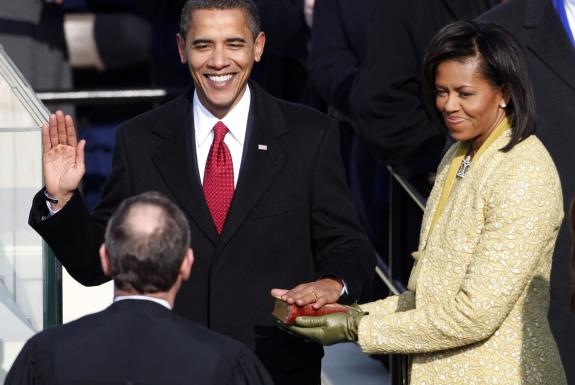
>It is difficult for words to express what this truly means.

There is a kind of glory happening here. This, of course, is not really about Obama, rather it is a claiming of that which we know is a better idea, a nobler nature, and a call to a higher goal. While not forgetting the reality of the world we inhabit, including our own corruption, let us promote this experiment we call freedom and seek to love each other better.

I have to say this makes me happy.