Grieving the Loss of the Spirit of Vatican II (or not)

In 2020 I posted this essay on another blog but I think it is still relevant and a very live issue today. I repost it here with a number of changes.
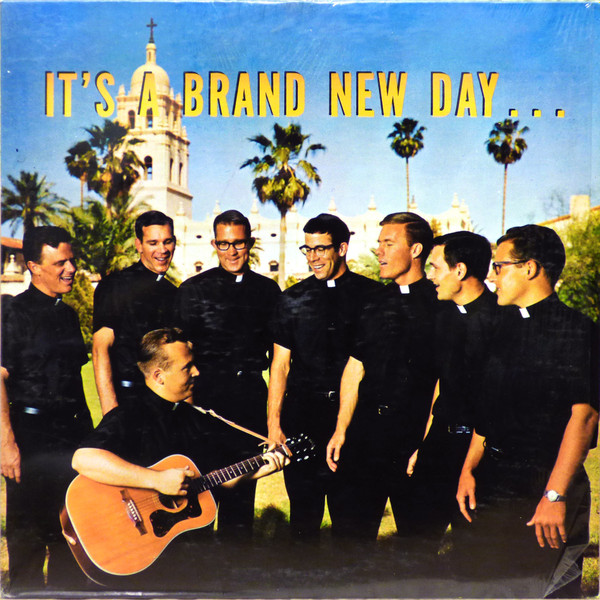
Not long ago I had the opportunity to read an email that had been sent by a parishioner to his priest and also to members of that parish’s pastoral council, of which I was a member. I’ve removed the parishioner’s name, the name of the priest, and the name of the parish for reasons of confidentiality. I believe there is something important in this letter and I feel the need to pass it on. In particular, I believe the sentiments expressed are common to many Catholics, and not merely older Catholics, the so called “boomer” Catholics, who lived through and promoted the changes after Vatican II. Here is the letter:

Dear Fr. [REDACTED],

I have made the decision to leave [REDACTED] Parish. Please accept my resignation from the Pastoral Council, the Lectors, and Sunday Hospitality. Additionally, please stop my Sunday envelopes.

I am sixty-six years old. I was an altar boy during the sixties. I remember the pre-Vatican2 church. It has been over fifty years that the institutional Church , as we know it, has functioned in the light of the Second Vatican Council. Yet, since coming to [REDACTED] and belonging to [REDACTED], I am slowly watching the institutional Church in our Parish retreating backward as demonstrated in the frequent Latin Masses, the men’s Schola, the effort to re-locate the tabernacle back to the center of the sanctuary (at an exorbitant cost, I might add), and … now you speak of reinstalling the communion rail. I don’t see myself participating in any of it. I happen to appreciate the Church for what it is. I considered doing research to dissuade you from the path you are on but then I realized the voices you are listening to are louder than mine. In my opinion what you are doing is not in the spirit of Vatican 2 and that grieves me.

Thank you for the rich homilies; they offer the Parish more that you may think.

Respectfully,
[REDACTED]

Before I comment I should say that the church did eventually move the old and beautiful marble altar and tabernacle, which had been moved out of the sanctuary in the early 1970s, back to the center of the sanctuary for a very reasonable cost and, by the way, at the request of the bishop. (But what is cost when compared to reverence for our Lord? We could ask the woman with the alabaster box.) Altar rails, which had been removed in the early 1970s, were also eventually reinstalled. The men’s Schola ceased during Covid and has not restarted. Regardless, it was a wonderful opportunity for men of the church to gather, fellowship, and sing old hymns and chant at the 7:30 AM Sunday Mass. (Why this is an issue I don’t know, except that they did sing old songs and prayers.) I know I was deeply blessed to be in the Schola. And there was never “frequent Latin Masses” at this parish. At most there was, perhaps, a couple of Novus Ordo masses done in Latin, and never on Sunday mornings, and never an actual TLM.

There are many Catholics, especially those older Catholics who lived through the changes of the post-Vatican II era, and who are still active Catholics (of course, a staggering number left the Church since the council), who look back fondly on that era and still believe to this day that those radical changes were the best thing to ever happen to the Church. As they see it, the spirit of Vatican II is wonderful, and they love that the barriers came down, the stuffy altar was replaced by the communion table, the priest finally turned to face the people who could now see what he was doing, and they even love its music, fondly humming its (objectively) poor and insufferable tunes. Many of these Catholics are looked down on and summarily dismissed as “boomers” (a term used pejoratively) by so many today including members of the so-called traditionalist movement. And many traditionalists are waiting for that generation to die off so the Church can finally return to its roots and become more traditional again. Personally, I don’t like this attitude. I think many older parishioners, like this man above, probably sharply feel that dismissive sentiment aimed squarely at them and that their voices are ignored.

The documentary “Rebel Hearts,” directed by Pedro Kos, tells the story of the Sisters of the Immaculate Heart of Mary, an order that thrived in the nineteen-sixties.It is a fascinating documentary and provides great insight to the Spirit of Vatican II in action. Source: https://www.newyorker.com/news/daily-comment/is-the-vatican-finally-ready-to-get-serious-about-women-in-the-church

I believe this parishioner’s frank frustration, blunt verbiage, and his sudden resignation is exactly the kind of reaction that many Novus Ordo but tradition-leaning priests fear. There are very few parishes in the world today that are not fundamentally “spirit of Vatican II churches,” that is, they have been built on the modernist traditions of the past 50 years (and arguably the past 200 years). It is what they know, it is their life as it were. This means that any priest who discovers the rich traditions of the Church and comes to see the need to reintroduce those traditions into their parish, and then tries to bring changes to his parish in light of those traditions, is likely to have at least some, and perhaps many, parishioners reacting as our letter-writer did. Or perhaps the frustrated parishioners don’t leave the parish; perhaps they even don’t let the priest know how they feel. They may instead just work to undermine his efforts in any number of ways and eventually get him ousted. I imagine this letter cut to the heart of the priest and was grieved over. I do not know the outcome of what happened next. I hope reconciliation can happen. I doubt it will. But I do appreciate letter-writer’s forthrightness.

I believe the Traditional Latin Mass is fundamentally and in nearly every way far superior than the Novus Ordo. I am even inclined to believe the Church has substantially and spiritually suffered because of the Novus Ordo. However, I am not a RadTrad as some traditionalists call themselves positively and others call them pejoratively. In fact, I go to both the TLM and the Novus Ordo for various reasons (mostly availability) and I have been blessed by both. [Note: lately I’ve been attending a Byzantine Catholic church and loving the Divine Liturgy, which is even older than the TLM.]

I have never been someone who loves tradition either merely for aesthetic or nostalgic reasons. I’m not into tradition in the way some men love 1957 Chevys or others collect vintage radios. I came to a love for tradition because my life’s journey took me, as a parent, through the world of Christian classical homeschooling, which begins with the nature of man and his purpose in relation to God. I began to critique my presuppositions in light of my experience of living in a post-modern world, growing up Baptist/evangelical, and being curious about history, philosophy, and the arts. Within the Protestant milieu I experienced an anemic stance towards holiness, a total absence of the concept of theosis, personally fashioned images of Jesus, and a profoundly false anthropology. I experienced worship redefined as pop-music and sentimentalism rather than sacrifice. Of course, I didn’t know that at the time. Then I came into the Church (God be praised!) and I saw this same spirit of the modern Protestant and American culture substantially infused (though often as a poor imitation) syncretically throughout the local parishes I visited. The leaven of the modernist world had worked its way into so much of the Church. (Forgive me if I come across as though I view myself as an expert in these matters. I am not.)

I also noticed both a mix of blindness to the syncretism and a thorough love of it. Parishioners were not chafing under the weight of modernism corrupting the Church, they were loving it. Or, at least, that’s how it looked to me. And remember, people can believe and be committed to any number of half-truths, lies, and crazy ideas and still be the most wonderful people in the world.
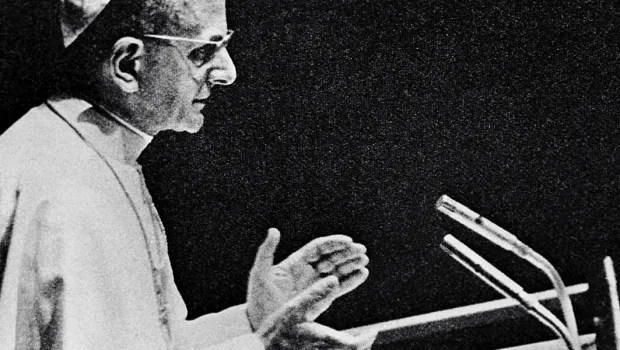
Pope Paul VI: “We would say that, through some mysterious crack—no, it’s not mysterious; through some crack, the smoke of Satan has entered the Church of God.”

I felt like the bank teller who has learned to identify counterfeit bills by first becoming highly familiar with the real thing, but in this case I knew the counterfeit all too well and was only coming to learn of the real thing. I was just so happy to be in the true Church that I let a lot slide for a while— and I still do, and I’m still happy. I love being Catholic, not merely for the joy I find, but because Catholicism is true. Also, I am no expert. And who am I anyway? And yet, I feel that God has given me the eyes I have, formed on the journey I’ve traveled, to see some things that others might not; perhaps especially so-called cradle Catholics. I believe that the long tradition of the Church, especially that old “stuffy” Latin Mass, lived out in love and relying on the Holy Spirit, is an antidote needed for the world today — not just the for the Church, but for the world.

Thus I am bothered by the letter above. I see it run through with problems, false assumptions, ignorance, and immaturity. I want to be dismissive.

And yet, and yet…

Two things: First we must look for the silver linings. In many ways the Church needed to be challenged. Before the Spirit of Vatican II there was the Spirit of the Counter Reformation. This spirit built a powerful, almost fortress-like Church. But, I believe, it was becoming hollow within. Bishops were used to being unchallenged and, it seems to me, too often didn’t distinguish between the core faith that could not be changed and cultural norms that could. Many men became priests and young women nuns for cultural reasons. Prayers were recited because that’s what had always been done. When I hear about bishops sometimes ruling over over nuns in harsh and tone-deaf ways and then those nuns pushing back I tend to side with the nuns. I believe the Church needed to be shook up. The question is how far does one go with that shaking?

Second, I (and we) must have compassion for those who love the Novus Ordo and its music and its culture. For that’s what it is, a culture and it has shaped them. Culture arises from cultus. How we worship, including the nuts and bolts of our liturgies, form us. Lex orandi, lex credendi. Even what direction the priest faces during the Liturgy works within us at such a deep level and in such a precognitive way that the simple fact of orientation teaches us about God and man, saying one thing or another thing. How we receive the Blessed Sacrament, whether on the tongue or in the hand, whether standing or kneeling, teaches (instilling within us) us at a deeply subconscious level knowledge (true or false) of Christ and our relationship to Him, saying one thing and not another thing. At the end of Mass, when we are told to go out into the world, we take with us that cultus which has formed deep within us, formed even minutes before, and so deeply that much of it is subconscious and intuitive and works on our minds to such a degree that what seems right to us seems so as though from the foundations of the earth. But this is not the same thing as being right, for we can be formed by a bad cultus just as easily as a good cultus. And even the best Catholic cultus has to contend with the world’s cultus, which smothers us nearly every minute.

The power of formation is not primarily at the conscious level. Much like the bank teller intuitively knowing a good bill from a false one, the well formed Catholic recognizes truth and error, depth and shallowness, beauty and mediocrity, faith and sentimentality, in an almost precognitive manner. (Oh that we were all that well formed!) Overwhelming evidence declares that Catholics can be poorly formed. Our sensibilities can lead us to wrong understandings, poor interpretations, and misguided evaluations. And our conclusions will feel absolutely right. We almost can’t help it; no one knowingly believes falsehoods, we can only believe what we believe is true. Therefore, we must have compassion and empathy for others. We must seek humility. Our true battle is not over liturgy, or tradition, or theology. Our true battle is against Satan and his devils, against the forces of sin within us, and against the temptations of the world. We are in a profound spiritual, physical, and metaphysical battle for our faith, the Church, and our souls. That battle, of course, plays out much of the time within the physical realm, including the realm of liturgy, culture, and even politics, but we must seek to have eyes that see and ears that hear, we must seek soft hearts and and sensitive souls, so that we may know where the real battle lies, otherwise we will miss it — perhaps even joining an enemy who tricks and beguiles us.

Lord Jesus Christ, Son of God, have mercy on me a sinner.

If you watch documentaries about the 1960s, such as Ken Burns film The Vietnam War, especially the parts that focus on the homefront in the US, or the PBS documentary Woodstock: Three Days that Defined a Generation, you can’t help but feel for the youth caught up in the spirit(s) of the age. There was little chance of any young Catholic at that time, living in the midst of that culture, who would not have also interpreted the post-Vatican II changes, especially those done under the spirit of Vatican II mantra, as utterly comprehensible and necessary. Many of these young Catholics supported refocusing the Church towards the burning issues of the day and, more importantly, defining the approach to those issues in the same terms used by the campus radicals, the feminists, the neo-socialists, and especially those of the anti-war and civil rights movements.

Consider this truly amazing time-capsule below from 1968. This NBC documentary shows us the world in which our letter writer above was formed and of which he clearly is still fond, much like an old man remembering the glory days of his youth. Keep in mind that the Novus Ordo was not promulgated until 1969, so this is even before the new Mass radically changed the Church.

This video feels like a crash in slow motion. I am aghast at the naivete and delirious utopianism expressed, and yet… I too would have likely joined in with enthusiasm if I had been a young adult Catholic at that time. But this is where we need to understand clearly that what is often called the “spirit of Vatican II” was really just the spirit of the age. What was new and “alive” then seems dated and, at best, quaint today. But let’s not be too sentimental, it was also a tragedy in the making.

The goal wasn’t just a matter of getting rid of what was old. Underneath it was the belief that what we call traditional Catholicism was being fundamentally incompatible with the modern age and, thus, being a barrier to spiritual growth, a meaningful relationship with Christ, evangelization, and even authentic Catholicism (nevermind the saints, great and small, who knew nothing else but traditional Catholicism because it was just Catholicism). Traditional priestly garb and religious habits began to look more and more like anachronistic costumes, almost laughable; Latin like a language mummified. The key word in the documentary is “relevant.” The Church must become relevant. The disease of relevancy infected the Protestant world too, something I experienced growing up.

As a side note: Look up each priest and bishop interviewed in the documentary above and see how many were eventually laicized and got married in less than ten years of this film.

With time, statistics, and much wide-eyed hand wringing we have come to see that the radical experiments of the 1960s and 1970s largely failed and a great deal has been lost, not least are increasingly diminishing numbers of faithful Catholics in the pews and vocations to the priesthood and religious life. But also so much depth and richness has been lost. It was, it would appear, the Church declaring that the Real Presence was dogma but not really true, and that faith was merely a matter of personal preference after all. Our priests, by no longer having the Traditional Latin Mass available to them, perhaps have suffered the most for they are no longer being fed daily on the more nourishing food of tradition (such as the profoundly rich prayers of the Extraordinary Form) but rather “eating” a less spiritually enriching fair that is bound to leave one at the very least rather anemic. And if one has never eaten from the sumptuous feast’s table one will neither know the riches available or the true depth of satiation.

The Novus Ordo is a living culture and it produces sons and daughters of itself. It is an engine of formation. I believe that many priests have gone into the priesthood thinking and hoping that within the Novus Ordo culture they will become the kind of men that only a TLM culture can produce. (I experienced something similar coming into the Church as a convert.) Many, many things went terribly amiss during the frantic hubbub of the radical sixties. Much good has been destroyed. In one generation enough destruction and spiritual darkness was unleashed that it may take five generations to recover. The “good” bishops and popes have been trying to fix it ever since — tinkering here, adjusting there, moving slowly out of caution? concerns? fear? Of course, I don’t have the answer, and who am I anyway?

The “boomers” and the rest of the Novus Ordo crowd (I also frequently attend the Novus Ordo and just missed being called a boomer by only one year, and not all boomers are pro-Novus Ordo culture) are not the enemy. Even if you are a staunch traditionalist you ought to see them as our brothers and sisters in Christ. One might choose to “fight” for the great traditions of the Church, especially the Traditional Latin Mass, to return in a big way, but one must not fall into a hardened “us and them” mentality. And you ought to love them. They have been taught and formed by the Church and their culture, just as we all have. Their formation, good or bad, falls largely upon the shoulders of those bishops who had that responsibility and who eagerly welcomed the spirit of the age into the Church and often veered wildly beyond the councils documents.

Our job is to love God and each other. We are to seek unity in love, with humility, and with total faith in God — which means we need patience and know that it is God who fights our battles. But the older crowd are not the only ones who love the Novus Ordo more than the TLM. Even many younger folks do so as well, for reasons I can’t quite fathom. People love things for different reasons. And they don’t love other things for different reasons; sometimes merely out of ignorance, sometimes because of their formation, and sometimes for good reasons. But this is a larger topic.

I feel for the man who wrote the letter above. I believe he wrote honestly from his heart. I believe his grievances came from real grieving. I also wonder, without wanting to psychoanalyze him, if his grieving doesn’t come from having had a kind of “mountain top” experience in his youth (think of those in the 1968 documentary above), being caught up in the spirit of the age and feeling like he had truly received a “new Pentecost,” which has stayed with him and sustained him for many years, and now he feels it’s being taken away. I’m sure he’s not alone.

But I don’t feel too sorry for the guy. His letter is also an expression of ignorance, selfishness and shows lack of empathy for those suffering under the revolution he so loves. That parish he left was very accommodating and, it turns out, he wasn’t. His letter was heartfelt and honest but it is also an expression of myopic self-centeredness. I hope* he found a parish with the felt banners and Marty Haugen hymns he’s used to, and with the tabernacle hidden somewhere to the side so as not to conflict with the worship. I’m sure he did, there’s still a lot of them around.

*Not really.
Leaning Left Towards Christ

I asked what they thought Herod would have said if he had known that a woman of the people had sung that God had pulled down the mighty and raised up the humble, filled the hungry with good things and left the rich with nothing.

NATALIA laughed and said: “He’d say she was crazy.”

ROSITA: “That she was a communist.”

LAUREANO: “The point isn’t that they would just say the Virgin was a communist. She was a communist.”

“And what would they say in Nicaragua if they heard what we’re saying here in Solentiname?”

Several voices: “That we’re communists.” *

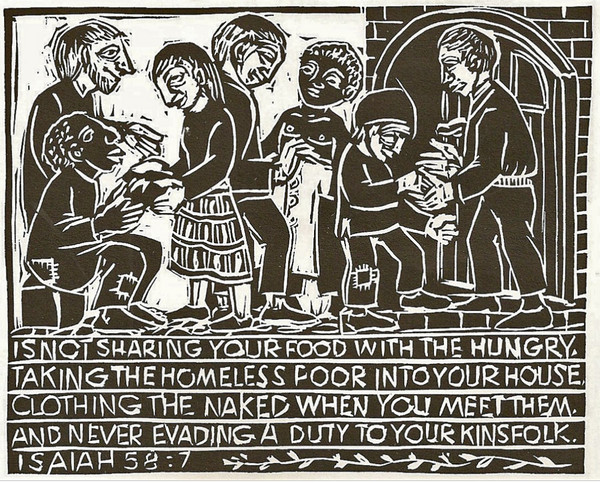
Isaiah 58:7, Woodblock print by Helen Siegl (1924-2009)

Maybe you or someone you know has followed a path analogous to mine.

On January 16, 1991—a Wednesday, if I remember—I walked across the university campus to my cinema discussion group. I was a graduate student pursuing my first Masters degree. When I arrived the classroom was nearly empty and dim. A boombox sat on a table airing an NPR radio newscast. The bombing campaign had just begun for what was officially called Operation Desert Storm and which would eventually be called the First Gulf War. Put simply, my class was spontaneously cancelled because war had started. The few students that showed up milled around gloomily and then left one by one. It was the first time in my life I could recall war having a direct impact on me, and the first time I experienced people emotionally distraught from such an event.

The actual impact to me was objectively almost nothing—class was cancelled—but I was quietly shocked and didn’t know what to do with my feelings. My feelings, however, were not about the war itself but about not feeling what the others were feeling. The other students were upset and I couldn’t understand why. I knew something was wrong with me, and I knew this because I claimed to follow Christ. Should not I too be weeping?

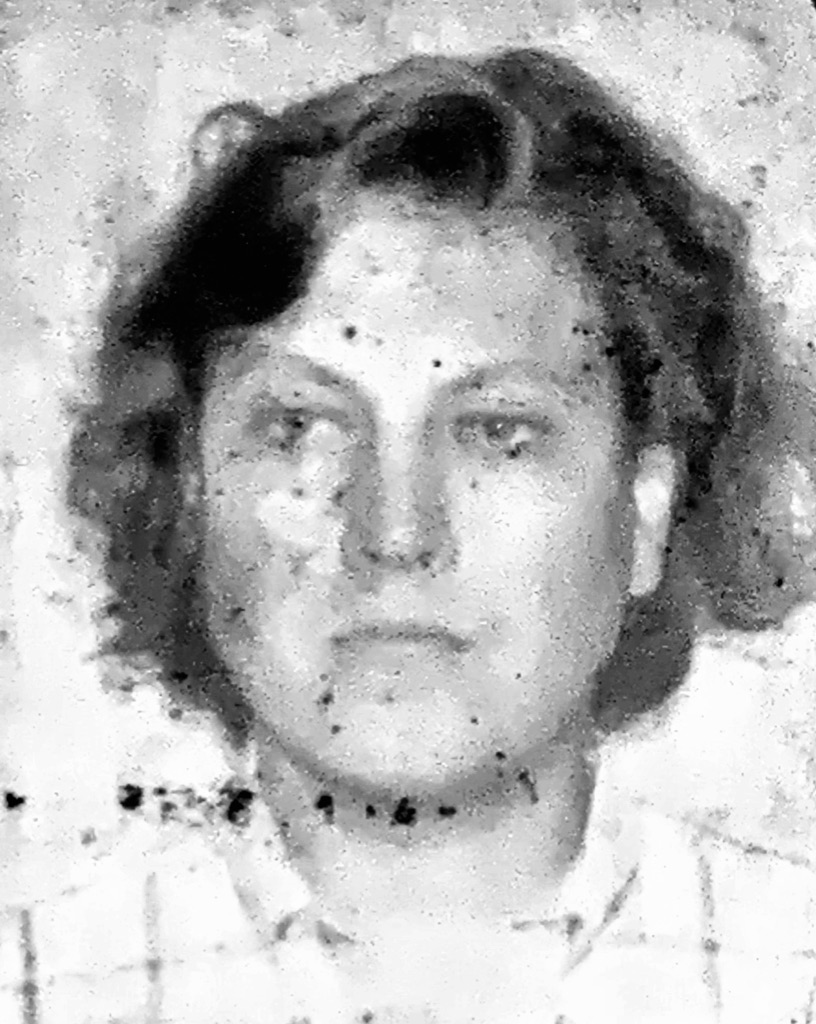
My student card photo, circa 1990

I realized I knew almost nothing about politics, or contemporary world events or having (let alone airing) opinions about any of that. I knew nothing about how my thinking about being an American was largely formed by others intent on shaping the world according to their image. My family never talked about politics. In fact, I can’t remember ever having a truly serious conversation about anything like this with my family. We just didn’t go there. I had a feeling I was somehow very late to the discussion and everyone else seemed to know something I didn’t. I wasn’t prepared to learn much from this event but that feeling stuck with me. I also wondered why no one in my Christian social group had a similarly distraught reaction to the war as did my classmates. All the Christians I knew either were excited about the war or didn’t care. I wondered if something was deeply wrong with the Christianity I inhabited. And then I forgot about it.

I forgot about it but I can trace the beginning of my slow conscientization, coming to realize I had uncritically and happily accepted the dominant paradigm of the ruling class.

Ironically, in grad school (and even as an undergraduate) I was being introduced to Feminism and Critical Theory, to Structuralism, Post-Structuralism, Semiotics, and Deconstructionism, as well as to various Marxist concepts of power structures and superstructures, and of the manipulation of media by the ruling class. I read the Frankfurt School authors, also Jakobson, Gramsci, Parenti, Chomsky, Foucault, Derrida, Barthes, Ecco, Berger, and others. And I loved it. I still do, reading them from time to time. In a sense my head and my heart, both formed by my love for Christ and the Scriptures, were becoming informed by (pulled towards) a Marxist/Leftist/Socialist way of thinking, but I didn’t really grasp that was happening at the time. I didn’t even pick up on that fact that most of those authors were either Marxists or were writing in response to Marxism. I can just kick myself now for wasting that opportunity.

I was also a “good Christian boy” raised as a Baptist who voted Republican because that’s what my parents and all their Christian friends did. I was fundamentally clueless about politics or the “big picture.” Rather, I was enjoying being in the weeds of film and art theory, not realizing many of its political orientations. My focus was aesthetics not politics. Real world implications did tug at me but subconsciously knew (trained to “know”) the radicality of Leftist thinking and I retreated. I had been formed to believe there could never be any sympathies between the Christianity I knew (presented in culturally, nationally, and ethnically circumscribed forms as timeless and natural Truth) and Socialism (always presented as gravely evil and stupid).

Much of my formation came in the form of everyday conversations and actions from those in my social group. One’s beliefs are often carried along by the pervasive but subtle subtexts of conversations, social groups, unspoken presuppositions, and cultural aesthetics. I was careful not to take a misstep. Belonging and being accepted is a powerful drug.

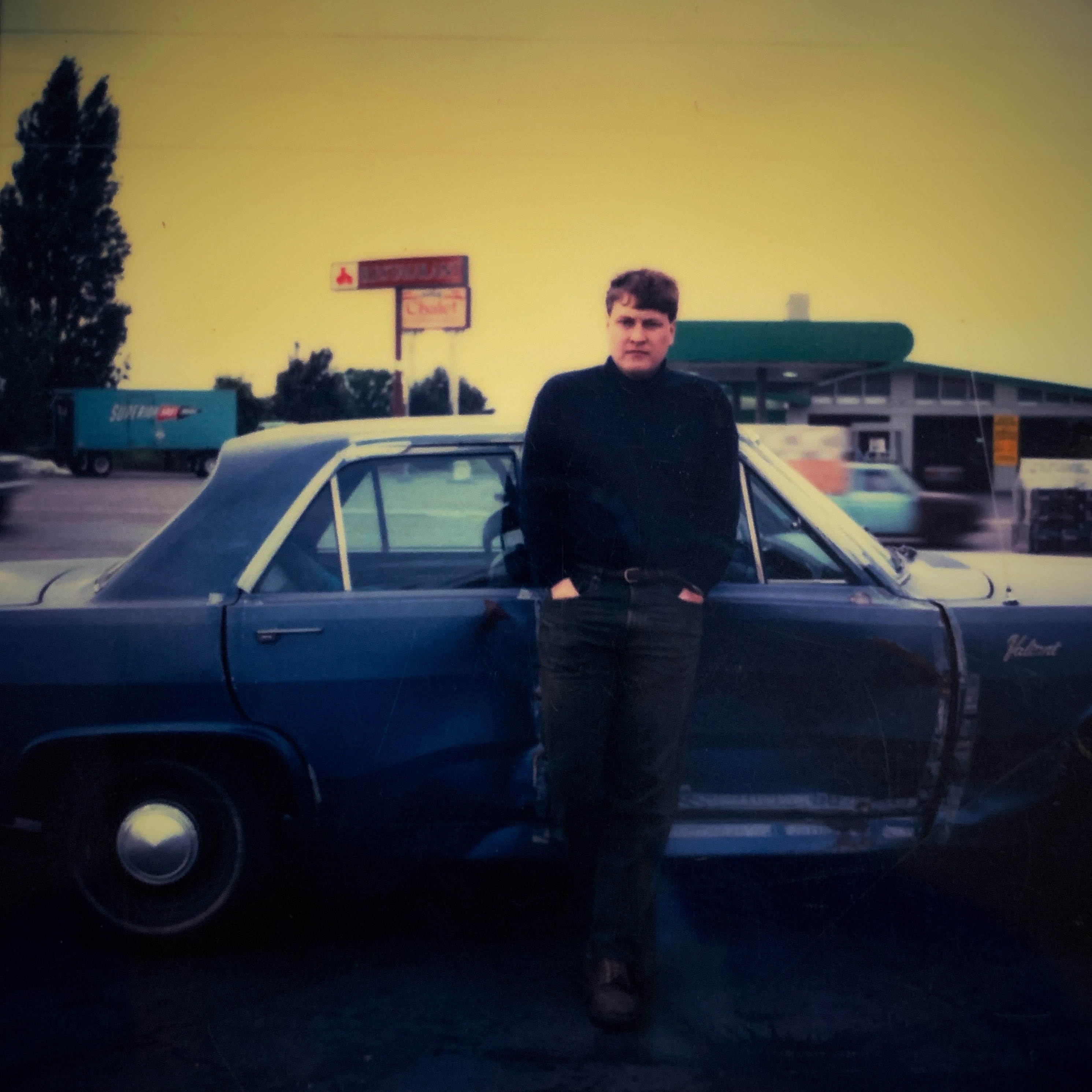
Me in 1992, Portland, OR, on the way to see filmmaker Jon Jost at the NW Film Center where he showed a film and lectured. The car is a late 60s Ford Valiant with the passenger doors crushed in. We called it the batmobile. I was writing my MA thesis on Jost and independent filmmaking.

A decade or so later I followed the Iraq War (the Second Gulf War) with far more curiosity. My initial interests in both the first and second gulf wars arose from a fascination with how powerful the United States military is and how was the rest of the world going to acquiesce. Military might in action is powerful stuff—shock and awe. It was exciting and excellently choreographed theater viewed from my television and computer screens. But soon my personal views began to change. The more I learned the more I became deeply skeptical of the narrative. I could no longer accept U.S. politics. I did not trust or respect our leaders who were clearly lying, even the “good ones.” I searched out alternative news sources, different perspectives, and a few voices I had listened to before. I learned of various anti-war positions and Leftist critiques, and I discovered for myself an entire area of Christianity I didn’t know existed. In short, I learned about anti-war and pacifist Christianity and Liberation Theology. I learned about American Christians who sharply criticized the pro-war, flag waving, God bless America version of Christianity. And it all rang true for me. It took a while, though. This is the short version, the reality was a complex, back-and-forth process. A lot of people have taken this journey I’ve learned.

I left the Republican Party. I came to believe I could no longer continue as a member of that party and be a faithful follower of Jesus Christ. But I could not see how I could be a member of the Democratic Party. So I became an Independent. I wanted no requirements placed upon me to acquiesce to any party platform. This seemed like the right choice both in terms of my faith and for my own intellectual integrity. I still hold these views today (though at times I toy with the idea of joining an alternative party).

Eventually, and through a lot of twists and turns, I became a Catholic, in part, because the Catholic Church is a “big tent.” One finds a multitude of perspectives and proclivities in the Church. I wanted to be where I could continue to explore my ideas and thoughts on politics, economics, sociology, and more. I was attracted to Catholic Social Teaching, to people like Dorothy Day, and to papal encyclicals criticizing capitalism all within the boundaries of an orthodoxy going back to apostles. I also love how truly global the Catholic Church is compared to the myopic, self-absorbed, geographically limited, socially stunted, and often nationalistically American cul-de-sac Christianity within which I was struggling. I also wanted a Church that would allow me to explore Socialism, or any other politics, from within a Christian framework, encouraging me in my freedom to do so, but also providing some guardrails and cautions along the way.

I suppose this post is one where I get myself in trouble (with myself mostly) for finally admitting something I’ve wanted to admit for twenty-plus years in one way or another.

I am still figuring things out for myself, still on this journey. But when I look at the social and economic options available in the world, when I look at the example of the early Church, when I take seriously the commandments of Christ, what I find is that Liberation Theology strikes me as the most Gospel-oriented, most Christ-centered socially, most humanitarian economic and political position to take. And with Liberation Theology one gets a rich interaction with Marxist ideas and Socialist praxis, both of which are merely subservient tools of the ultimate Truth of Christ who is the standard. If we insist on using the very limited terms of Right and Left, then I would say the Gospel of Christ, arising from and rooted in the very person of Christ Himself and in the ultimate goal of divinization, leans politically, economically, and socially more Left than Right, more to the future than the past, more to love of neighbor than protection of the self. **

Fiddler on the roof? Living in the PNW, singing ♫ If I was a rich man…♫

Responding to real-world situations of colonialism, capitalism, authoritarian violence, exploitation, and foreign influence in Latin America, Liberation Theology sought to address these evils from a truly Catholic perspective, rooted deeply in Christ, rooted deeply in Scripture, rooted deeply in Vatican II, ever seeking the examples of those who have struggled before, and helped by cautiously leveraging the tools of Marxist critique and communist praxis. [Queue the bourgeois American eye roll.] Ironically, by focusing on the unique historical situation of Latin America, Liberation Theology addresses the universal situation of humanity—bondage and suffering across the globe because of sin, the poor besieged by the rich, labor unfairly exploited by capital, lack of democracy, propaganda promoting ideologies of oppression, social and legal systems in place to ensure the poor and weak are perennially oppressed and their own human flourishing suppressed, and finally, Christian/Catholic pastors turning their backs to the poor and preaching in support of the ruling class and a bourgeois church.

Beginning with Christ, Liberation Theology seeks to fashion a Gospel response to the evils of the world, and it did so, in part, by finding truth in the fundamental insights of scientific Marxism (not unlike Thomas Aquinas finding truth in Aristotle). But the Church hierarchy has, since Constantine, sided with the ruling class and with capital, thus the work of Liberation Theology tends to fall on the shoulders of a few theologians, priests, and ordinary Catholic laity willing to take the risk and put in the labor out of love and necessity. Carrying the gospel and Catholic social teaching to their proper and logic ends, Liberation Theologians found connections with the goals of many Leftists. Consequently, and employing various tactics, the Church denounced Liberation Theology. But I find Liberation Theology both true and refreshing. I am convinced by its understanding of the gospel, and I am moved deeply by the martyrdom of many faithful Catholics, including laity, bishops, priests, and nuns, at the hands of evil men merely because they stood for the poor against the rich as Christ commands us. I am disgusted by the efforts of Catholic prelates to squash Liberation Theology, denouncing saints such as Oscar Romero (but now they can’t because he’s finally and properly declared a saint) and supporting evil structures of power. The church is peopled with many who hate Christ in the name of Christendom and national politics; this even includes bishops. Sadly, much of this vilification is as much about race as it is about class.

So here I am, a devout Christian, a white middle-aged American working class man with inherited bourgeois values, a husband and father, a happy convert to the Catholic Church, leaning fairly hard to the Left and thinking maybe I should lean harder, and finally realizing that much of Christendom probably was and still is largely a human construct designed to “protect” the Church and the ruling classes from the convicting nature of the Gospel, from the internal revolutions of the Holy Spirit, and from the burdensome cries of the poor. Will I be marching in the streets waving a red flag? Will I be joining DSA, wearing a Karl Marx t-shirt, calling my friends comrades? Not likely, but I do want to be more sensitive to the liberating and this-world message of the Gospel. I want to be a follower of Christ.

A crazy journey I guess. I hope yours is going well. God be with you.


* Quoted from The Gospel in Solentiname by Ernesto Cardenal from the chapter on the Magnificat. This book is a collection of discussions of Gospel passages that happened in the artist/peasant community on the big island of Solentiname in Nicaragua between 1976 and 1982.
Cardenal, Ernesto. Gospel in Solentiname. REV One-Vol ed., ORBIS, 2010.

** I hope the reader understands that Right and Left in the US does not map to Republican and Democrat. Rather, Democrat and Republican are center-Right and further Right. The Democrats are arguably the primary nemesis of the Left.

Bobby Fischer Against the World

This film could also be titled The Tragedy of Bobby Fischer. Though I hate to say it, I feel much of the blame should fall on Bobby’s mother who abandoned him for her social causes and taught him, by her example, to make oneself the center of the world. Chess was Fischer’s escape, but chess is neither a loving parent nor a philosophy to sustain one through the dark hours. Still, and though he may have had a psychological disease, Fischer must bear at least most of the blame for his own choices and his spiritual darkness. And yet, and ironically, what a truly marvelous chess player and an example of dedication to excellence. As they say in the film, what he left us were his games.

And if you are curious: Fischer vs Spassky 1972 Game 6

>The ultimate family vacation super-8 movie

>Disneyland Dream (1956)
http://www.archive.org/flow/flowplayer.commercial-3.2.1.swf

In July 1956, the five-member Barstow family of Wethersfield, Connecticut, won a free trip to newly-opened Disneyland in Anaheim, California, in a nationwide contest. This 30-minute amateur documentary film tells the fabulous story of their fun-filled, dream-come-true, family travel adventure, filmed on the scene at Walt Disney’s “Magic Kingdom” by Robbins Barstow.

In December 2008, “Disneyland Dream” was named to the National Film Registry by the Librarian of Congress.

Note: The first uncredited screen appearance by Steve Martin occurs in the film at around the 20:20 mark – very brief, in the lower right corner. He is the 11 year old in pink shirt, black vest and top hat, hawking guidebooks.

Found at the Internet Archive.

Robbins Barstow, the creator of (and the dad in) the film died in November of this year. His obit is here.

>40 years ago today

>Quoted from Democracy Now:

[F]orty years ago today, the Ku Klux Klan bombed the transmitter of Pacifica station KPFT in Houston, Texas. The bombing came just months after KPFT went on the air. The bombing forced the station off the air for several weeks. The station’s transmitter was bombed again on October 6, 1970. At the time, George H.W. Bush was a congressman representing Houston. He condemned the October bombing, saying, “It’s outrageous. It’s against everything this country stands for.” In 1981, the Grand Wizard of the Ku Klux Klan admitted that his greatest feat “was engineering the bombing of a left-wing radio station.” The KKK understood how dangerous Pacifica was, as it allowed people to speak for themselves.

Pacifica was playing Arlo Guthrie’s Alice’s Restaurant at the time of the bombing. If you ever needed some visuals to get you through the 20 minute song…

>Bluegrass time capsule

>This is a clip from a film on American bluegrass culture – its music, its dance, and the people who created it. I love being able to find gems like this.

Here is the blurb about this piece:

Way back in 1964, New York filmmaker, David Hoffman was headed down with his new 16mm hand help camera (weight 49 lbs!) to spend three weeks driving the backcountry around Madison County, North Carolina, in the center of Appalachia, with the 82 year old founder of the pioneer Asheville Mountain Music and Dance Festival, Bascom Lamar Lunsford. The resulting film, “Bluegrass Roots” lets you hear and experience the hard scrabbling, dirt road real people sounds that dominated the back country of the southern mountains 40 years ago. It presents a string of the most extraordinary singers, players and dancers the BlueGrass Mountains had to offer. Many later became famous. Some were never heard from again. Most of the songs are classics, including Lunsford’s own tune, “Mountain Dew.” This scene was filmed at Bascom’s home with a local dance group came to dance in Bascom’s living room.

When this film aired on Public Television in 1965, TV Guide gave it a full-page positive review, because Americans had never seen a documentary on the roots of Bluegrass and Country music. Today, the dirt roads and the moonshine counties are largely modernized, and Bluegrass Roots, stands as a record of a uniquely talented group of people at a time just before the coming of television, changed them.

More can be found at the film’s official web site.

>Chomsky on the roots of libertarian socialism in the U.S.

>

Although I have yet to research the history that Chomsky talks about, it seems to make sense, and it highlights how much things change over time and how much we tend to lose touch with our past. I find this fascinating.

>brother can you spare a taser?

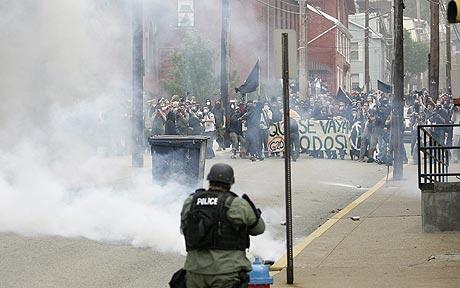
>We glorify the protests of the past. We have seen (or remember) the civil rights marches, the sit-ins and other actions. We remember the anti-war movement. We remember May 1968 and other important dates. But where are we today? Remember the huge global anti-war protests just prior to the invasion of Iraq. Or the mass protests at the Republican convention. Remember the police crackdown on the protesters? It was like clockwork, surgical, carefully crafted like extraordinary rendition. But it also got violent at times – the anti-riot police were the ones who typically led with the violence. And recently we saw the same thing at the G20 protests in Pittsburgh. But, like the protests of the romantic past, we once again wonder at the role of the police and the individual choices of each officer.

Check out this video and ask yourself what is really going on.

Now read this excerpt from a news report on National Public Radio regarding the G20 summit and, specifically, the protests outside the summit.

ROBERT SIEGEL (host): And have the protests been going on throughout the entire city?

SCOTT DETROW (on scene reporter): They have. After the tear gas, the march broke into many small groups. It stayed out of downtown, from what we can tell. Police are responding by breaking up these clumps of protesters. I saw one after the tear gas was fired. They were peacefully marching down the street and police officers swarmed the block from all directions. They got out of the car and they just pushed the protesters into side streets, and that’s what they’ve been doing. There have been arrests here and there, we’re hearing from other news outlets. But that seems to only be happening when marchers are directly confronting police officers. For the most part, police are just trying to show a presence and trying to get these marchers to break up on their own.

I find both the video clip and the NPR report fascinating, not because they are anything special, but because they say a lot about the structures of power that we have come to view as normal. But should they be normal? Consider the situation: A group of representatives from the richest and most powerful nations on earth come together to discuss the future for all of us. But the the G20 has been around for some time already and the world is in trouble with widening gaps between rich and poor, increasing corporate control over such basic things as water rights, food distribution, farmer’s crops, and of course the economy. In fact, it could be said the recent bailouts of large companies around the world represent a kind of coup d’état. It may just be that the current economic crisis (and the steps to remedy it with tax dollars) is evidence of the increasing loss of real power on the part of the government (a government of the people) over the economic/big business sector.

Consider this exchange from Michael Moore’s Capitalism a Love Story:

MICHAEL MOORE: We’re here to get the money back for the American People. Do you think it’s too harsh to call what has happened here a coup d’état? A financial coup d’état?

MARCY KAPTUR (Representative from Ohio): That’s, no. Because I think that’s what’s happened. Um, a financial coup d’état?

MICHAEL MOORE: Yeah.

MARCY KAPTUR: I could agree with that. I could agree with that. Because the people here really aren’t in charge. Wall Street is in charge.

Given our democratic ideals the situation looks grim. One could easily see the recent election as a kind of sham (as are most elections but especially this one), a game those in power managed in order to help all of us feel like we participated in their power play. Maybe democracy as it’s been sold to us is a way to tie us up with mythological fairly tales so that the powerful few remain in power. So why would not people peacefully (or even angrily) march down the streets where the G20 is being held to protest? And why wouldn’t those marchers see the police as something like turncoats?

And this brings me to more questions: Why do police (working class men and women apparently there to uphold basic freedoms of speech, especially when it is most needed) seem to automatically view protesters and demonstrators as enemies and radical provocateurs? Are they trained to think that way? Or is it something closer to social influence and group think? Why, when anti-riot forces come out in overwhelming force, they end up being the group most prone to violence? Could it be something like the old adage, ‘to the man with a hammer every problem looks like a nail?’

Why does our society accept as normal such activities as the use of tear gas, batons, knocking people to the ground, tasers and rubber bullets, and now anti-riot siren devices, by police against weaponless, non-violent protesters? What is the psychology?

I won’t pretend to have the answers to these questions. However, when I see the way the police in this country deal with protesters I cannot help but be reminded of some very famous sociological studies, horrific events, and historic observations. My point here is not to equate actions so much as highlighting the way the human mind works in various situations.

  • Milgram experiment: Showing that people will do terrible things as long as someone (preferably someone “official”) tells them to.
  • Stanford prison experiment: Demonstrated the impressionability and obedience of people when provided with an apparently legitimizing ideology along with social and institutional support.
  • My Lai Massacre: Showing that individuals are capable of anything when part of a group, following orders blindly (as soldiers and police are trained to do), and operating in a tense situation outside of normal experience.
  • Banality of evil: Hannah Arendt’s observation that evil acts are most typically carried out by ordinary people viewing their actions as normal.
  • Social influence: How we are all greatly influenced by others around us, the situation we are in, and tendencies we have toward self preservation, being liked, and not being stigmatized.

I have come to believe the actions of police toward protesters reflects aspects of all these sociological and psychological characteristics found in the list above – though to a substantially lesser degree in some cases. But there is one other factor that possibly plays to largest role, that of hegemony.

Now hegemony is a good college level word for why people acquiesce, and even embrace, the power structures that control, and even sometimes enslave, them. If you did not study the word in college you may remember when Hugo Chavez touted the book Hegemony or Survival: America’s Quest for Global Dominance by Noam Chomsky when he spoke at the U.N.

Chavez aside, the concept of hegemony, first proposed by Antonio Gramsci as a way of trying to understand why the working classes did not rise up against their oppressors as the Marxists predicted, is a way to understand how the powerful persuade the less powerful to adopt the values of the ruling class. We live in a country that denies the existence of class structures in terms of power. We speak of middle class or working class merely as sympathetic terms used by politicians to manipulate votes. We do not accept the concept of a ruling class, but maybe we should.

In the videos on this page look at the faces of the police (the ones not wearing Darth Vader masks). There is a lot of anger in their eyes. I wonder if the anger comes from an internal struggle. I can only hope. I imagine the police feel a tension between the hierarchies of power they have come to believe must be protected (of which they are sworn to uphold) and their deeply internal sense of humanity and their belief in democracy (an understanding of which was probably formed in grade school like it was for most of us). They are caught in the clash of values, but they are a group operating with broad impunity and supported by the social dynamic of being able to hide within the apparent pawnship of their job. So they continue to manhandle, arrest, and attack the protesters. But their anger gives them away. They are alienated from the power they protect, and suppressing the very voices that are pointing out that alienation. That would make just about anyone angry.

Consider this video of another protest. If not for the police intervention it would almost be humorous.

I cannot imagine a less threatening protest. In fact I find it almost comical. Why then the overwhelming police force? Are they afraid of another Battle in Seattle? Clearly this is an example of those in power acting out of fear, but what do they fear? In fact, the whole thing has a kind of choreographed arc that not only speaks of a profound lack of imagination on both sides, but indicates the protest may be as much a product of hegemony as the police presence.

What do we do with all this? First, we should not romanticize the past. The efforts of the civil rights and anti-war movements of the past were often heroic, but they were also brutal and scary at times. People were seriously hurt and some died. Many went to prison. And we should know that external actions come from what is inside, but also know that one’s external actions affects one’s soul. The police who give in to the psychosis of power, abuse other humans, act out of anger, and stand in the way of freedoms that are not given by governments but only taken away, those police are damaging their own souls. And they are human just like me – frail, prone to delusion, living in a powerful culture, needed to be loved, and wanting to do what is right. We should not feel sorry for them, but we should empathize.

The fact is many of the above sociological/psychological concerns raised about police action can apply to the protesters. At times it appears some of the protesters are seeking to recreate a May ’68 kind of experience for their own pleasure. I wonder how many made the effort to reach out to the police in the days or weeks prior to their marches. I wonder how many pre-judged the police as irredeemable, in part because it is both the easier route and less romantic than manning the barricades. This is one reason that, while I support the protesters in general, I think the predictable protests outside every G20, G7, World Bank, etc., meeting may be as much a symbol of failure as righteous anger. We need more than theater, we need transformation.

Finally, we are all in this thing called life together, whether we want to admit that or not. It’s easy to march, easy to crack skulls, and very easy to write blog posts, and it’s difficult to love, forbear, and forgive.

>The world according to W. E. Deming

>So much has been said about the so-called financial crisis and the bailouts of banks and auto makers. Little focus has been placed on the real roots of the problem, which go back decades and not merely to a few “bad apples” abusing the system in recent years. Some of those roots are the way power seeks power – and all of the human foibles that go along with that. Other roots go back to the reasons Japanese manufacturing taught the U.S. a lesson in quality. The Japanese learned their lesson in quality largely from one man, W. Edward Deming, who was dismissed by U.S. industry, so he went to Japan where they were eager to learn. The rest is history.

I first came across Deming by reading his book, Out of the Crisis, after having read a number of other popular business books. Deming’s ideas rock my thinking and I have been a fan ever since.

Never heard of Mr. Deming? The short documentary below, made in the early 90s, is a great introduction. It is also remarkable in light of what we are going through today. People smashing Japanese cars and products with sledge hammers says a lot about how incapable people are at swallowing their pride and be willing to own up to their own roles in crises.

Goodnight September Eleventh

“In a Parish” by Czesław Miłosz, trans. from the Polish by Miłosz and Robert Hass. Read by Haas on Fresh Air on NPR remembering 9/11.


Were I not frail and half broken inside I wouldn’t be thinking of them who are like me half broken inside. I would not climb the cemetery hill by the church to get rid of my self pity. Crazy Sophies, Michaels who lost every battle, self-destructive Agathas lie under crosses with their dates of birth and death. And who is going to express them. Their mumblings, weepings, hopes, tears of humiliation in hospital muck and the smell of urine with their weak and contorted limbs and eternity close by, improper indecent like a dollhouse crushed by wheels, like an elephant trampling a beetle, an ocean drowning an island. Our stupidity and childishness do nothing to fit us for this variety of last things. They had no time to grasp anything of their individual lives. Any principiam individuaisonous(ph) nor do I grasp, yet what can I do enclosed all my life in a nutshell trying in vain to become something completely different from what I was. Thus we go down into the earth, my fellow parishioners, with the hope that the trumpet of judgment will call us by our names instead of eternity, greenness and the movement of clouds they rise then thousands of Sophies, Michaels, Matthews, Marias, Agathas, Bartholomews so at last they know why and for what reason.