“Stravinsky is waiting…”

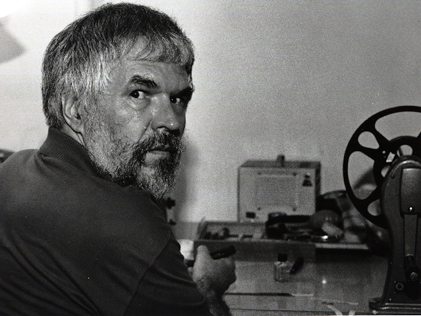
I love this video clip. It is of a moment when Julian Bream has maneuvered himself into a meeting with Stravinsky. As you can see, one had to catch Stravinsky whenever and wherever one could, and Bream takes what opportunity he could find.

The apparent psycho-emotional dynamics of this meeting are also interesting. Bream, who is undoubtedly a master musician, is still nervous and desirous of approval from someone of such eminence as Stravinsky. And Stravinsky gives some “story” of always being too busy in order to not commit anything. But then he shows real interest in Bream’s playing. Kudos to Bream for being so bold.

King’s Indian Attack

At best I am a mediocre chess player. But I like the game and want to get better. I have been playing some games over at Chess World and mostly figuring out I need to work on my game. Lately I have been studying a particular opening for White, the King’s Indian Attack. This is a well-known opening, and it is well documented in the chess literature.

Here is the basic position one aims for with the White pieces after the first few moves:

One can get to this position by different orders of moves. It’s not that complicated, and it puts White in a nice asymmetrical position that allows for various attacking options. I am not having too much trouble getting to the King’s Indian Attack position, but I don’t know what to do next. So I am contemplating the possibilities. What I am finding is that the King’s Indian Attack provides a slightly better opening than what I was doing before, which was a more symmetrical attack on the center–a kind of basic “take the high ground” idea one learns as a first principle when one is a beginner. My understanding of chess has been at the beginner level for a long time. I figure a little study couldn’t hurt, though I only have time for a little.

For more insight, here are a couple of videos that explain how the King’s Indian Attack works:

Bobby Fischer Against the World

This film could also be titled The Tragedy of Bobby Fischer. Though I hate to say it, I feel much of the blame should fall on Bobby’s mother who abandoned him for her social causes and taught him, by her example, to make oneself the center of the world. Chess was Fischer’s escape, but chess is neither a loving parent nor a philosophy to sustain one through the dark hours. Still, and though he may have had a psychological disease, Fischer must bear at least most of the blame for his own choices and his spiritual darkness. And yet, and ironically, what a truly marvelous chess player and an example of dedication to excellence. As they say in the film, what he left us were his games.

And if you are curious: Fischer vs Spassky 1972 Game 6

The Host’s Puzzle

The following fun puzzle is from The Canterbury puzzles: and other curious problems by Henry Ernest Dudeney published in 1908.

6.—The Host’s Puzzle.
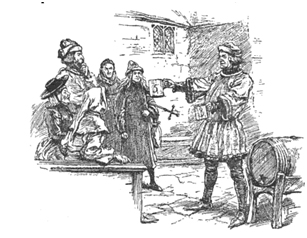
Perhaps no puzzle of the whole collection caused more jollity or was found more entertaining than that produced by the Host of the “Tabard,” who accompanied the party all the way. He called the pilgrims together and spoke as follows: “My merry masters all, now that it be my turn to give your brains a twist, I will show ye a little piece of craft that will try your wits to their full bent. And yet methinks it is but a simple matter when the doing of it is made clear. Here be a cask of fine London ale, and in my hands do I hold two measures—one of five pints, and the other of three pints. Pray show how it is possible for me to put a true pint into each of the measures.” Of course, no other vessel or article is to be used, and no marking of the measures is allowed. It is a knotty little problem and a fascinating one. A good many persons to-day will find it a by no means easy task. Yet it can be done.

The Solution

The puzzle propounded by the jovial host of the ” Tabard” Inn of Southwark had proved more popular than any other of the whole collection. “I see, my merry masters,” he cried, “that I have sorely twisted thy brains by my little piece of craft. Yet it is but a simple matter for me to put a true pint of fine old ale in each of these two measures, albeit one is of five pints and the other of three pints, without using any other measure whatsoever.”

The host of the ” Tabard” Inn thereupon proceeded to explain to the pilgrims how this apparently impossible task could be done. He first filled the 5-pint and 3-pint measures, and then, turning the tap, allowed the barrel to run to waste, a proceeding against which the company protested, but the wily man showed that he was aware that the cask did not contain much more than eight pints of ale. The contents, however, do not affect the solution of the puzzle. He then closed the tap and emptied the 3-pint into the barrel; filled the 3-pint from the 5-pint; emptied the 3-pint into the barrel; transferred the two pints from the 5-pint to the 3-pint; filled the 5-pint from the barrel, leaving one pint now in the barrel; filled 3-pint from 5-pint; allowed the company to drink the contents of the 3-pint; filled the 3-pint from the 5-pint, leaving one pint now in the 5-pint; drank the contents of the 3-pint; and finally drew off one pint from the barrel into the 3-pint. He had thus obtained the required one pint of ale in each measure, to the great astonishment of the admiring crowd of pilgrims.

Vintage psychedelia by Ryan Larkin

Two more psychedelic classics from animator Ryan Larkin. As I watch these pieces I can’t help but think how wonderful it is that Larkin turned his amazing artistic talents to the hard work of animation. I wish more artists would do so.

Walking (1968)

Street Musique (1975)

These films bring back many vague but good memories of the aesthetics of my youth, that is, I seem to remember the cool, funky, colorful, and exploratory art of the late sixties and early seventies that these films exemplify. I miss that period, but I also am glad we have moved on. I am also reminded that Larkin did these films by hand: each frame is an actual drawing or painting on paper or canvas—no computers, no cgi, just one photograph taken for every 1/24 of a second of finished film.

Syrinx (1965)

Syrinx, 1965: The first film by Ryan Larkin, student of Norman McLaren.


I post this because it is beautiful, but also because it seems important to me to know Larkin and McLaren.

Night Mayor by Guy Maddin

More about the film and it’s filmmaker here.

Maddin was influenced by the beautiful 1953 Paul Tomkowicz film, Street-railway Switchman.

The Stars Are Beautiful

The Stars Are Beautiful (1974) 19 min 16mm, by Stan Brakhage (1933-2003):

Part 1

Part 2

More on Brakhage at Senses of Cinema.

I find this kind of non-narrative experimental filmmaking wonderful. When I studied film in college my interests gravitated to this kind of art. Maybe it was because I was also studying art history and had a fondness for modern art. Maybe also because I love poetry. I think any work of art is a kind of test of what we bring to it. That test is not only of us, but of the artist and his/her work of art. A kind of dialogue ensues if we pursue it. Brakhage worked with a language, at least on its surface, that is foreign to most people. One could say it is abstract, I prefer poetic. However, I think there is a universal resonance within his best films that makes them work at a deeper level than is possible with more common forms of film language. I also had the privilege of attending a two evening presentation and discussion with Brakhage where he talked of his processes, inspirations, showed a number of his films, and introduced us to other filmmakers. It was revelatory.

Stan Brakhage

cyclocross

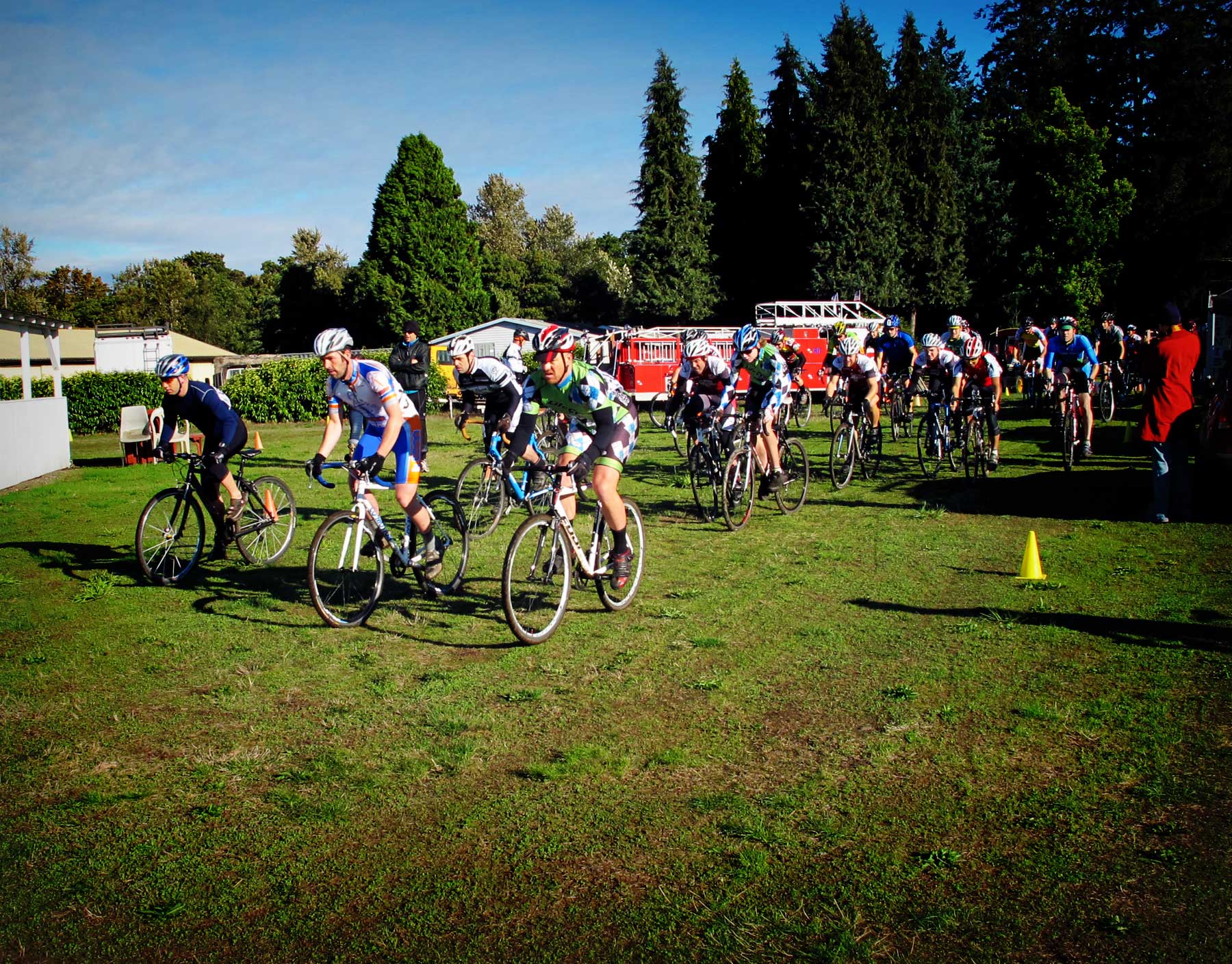
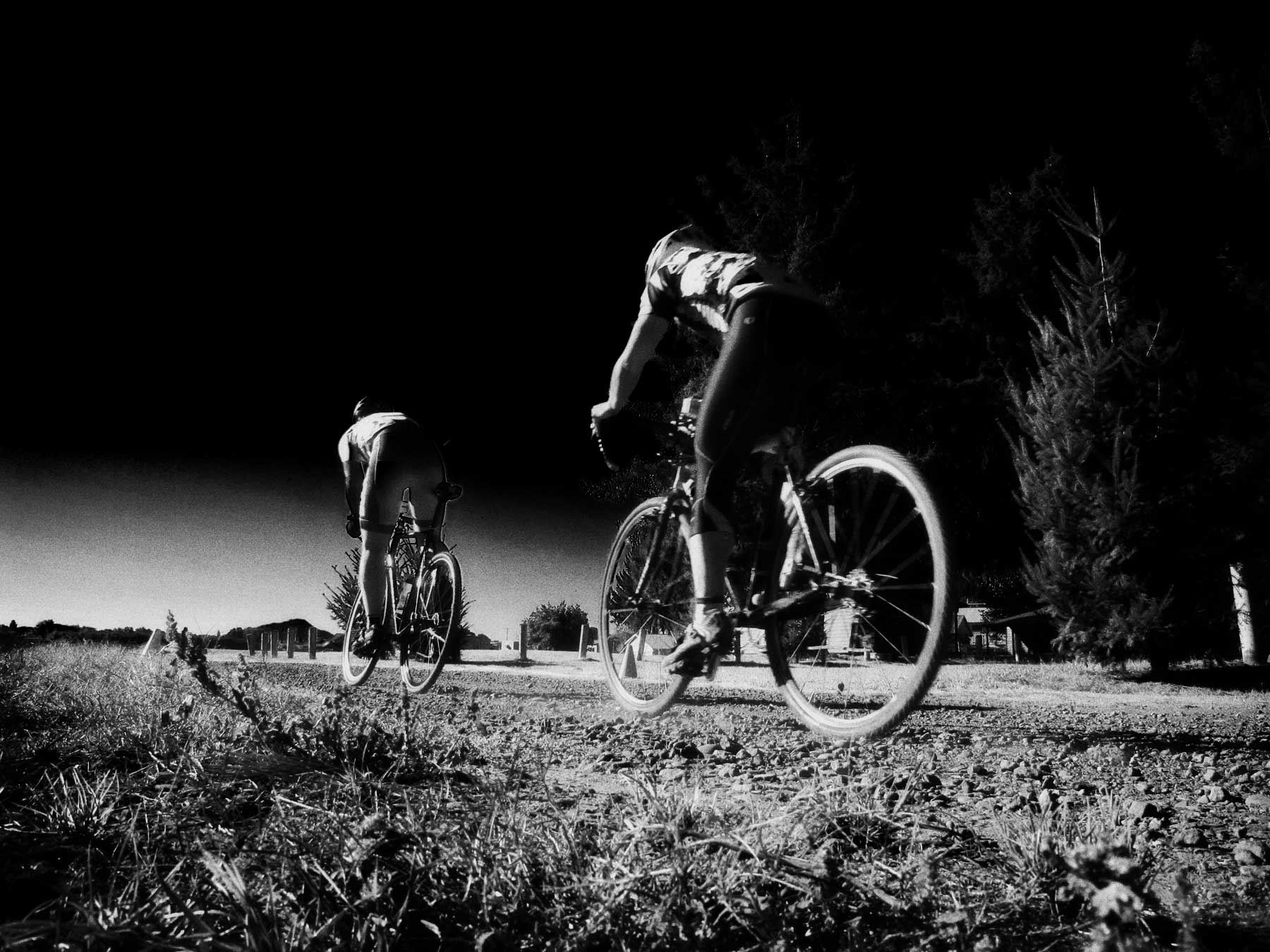
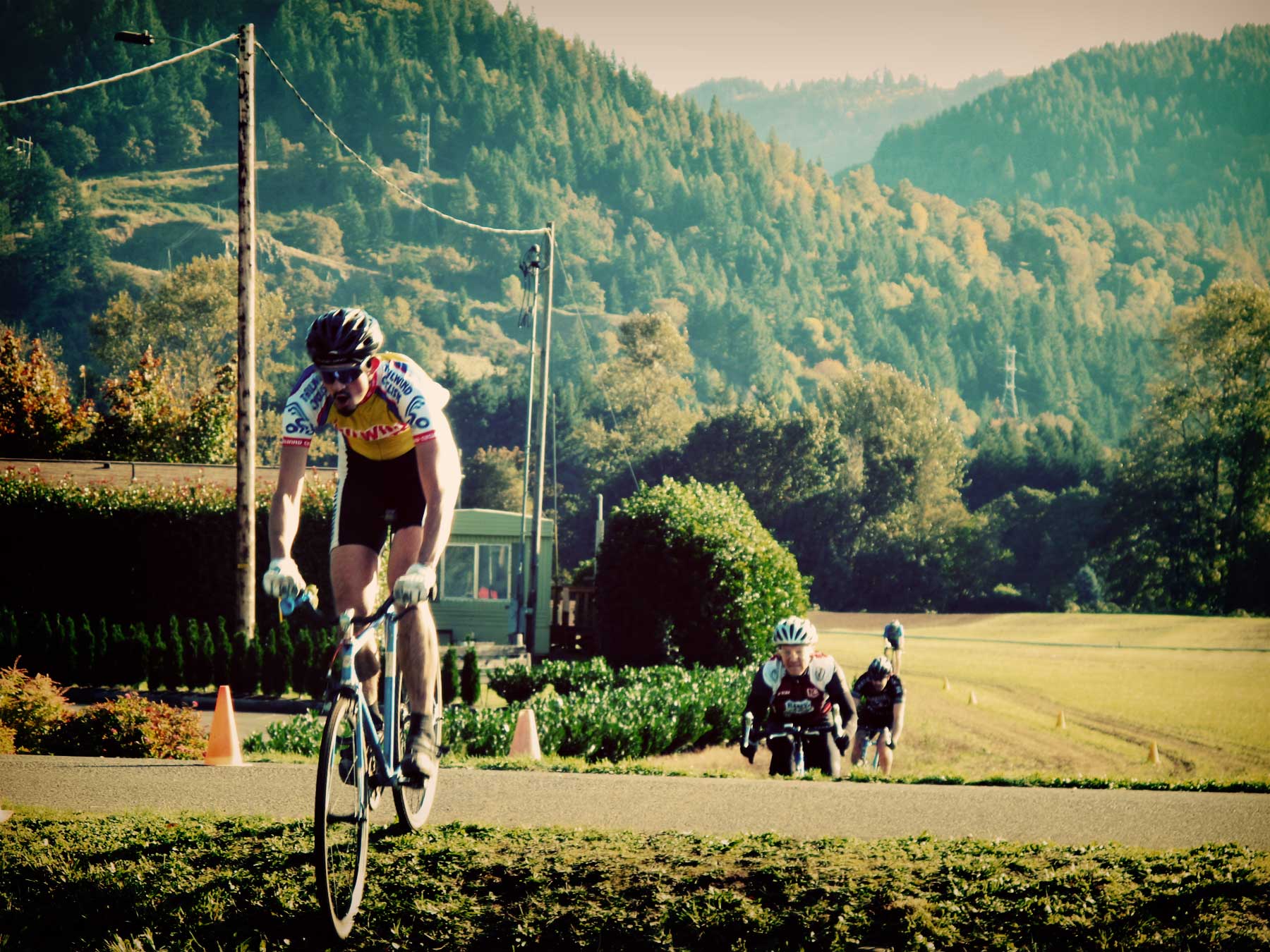
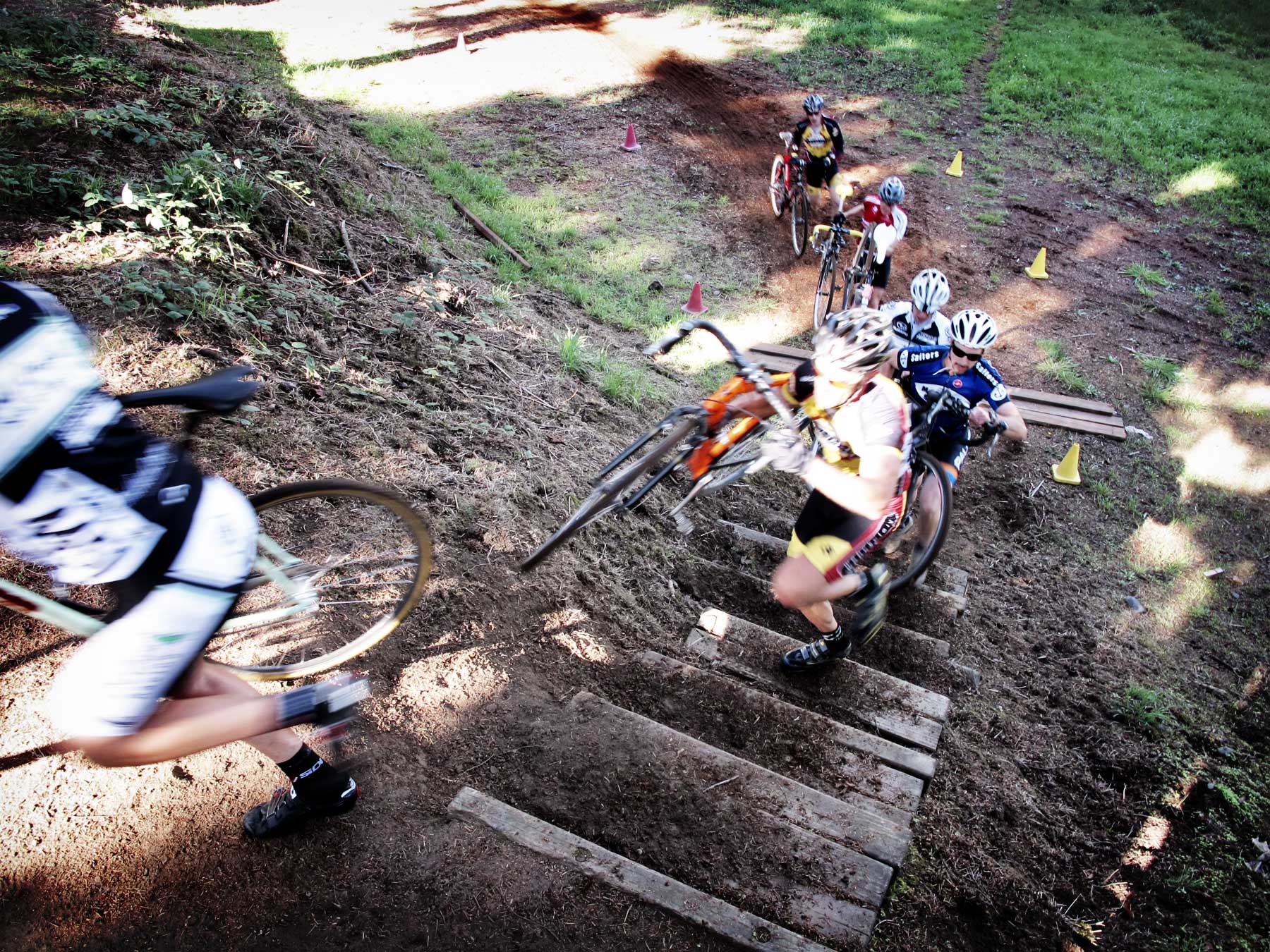
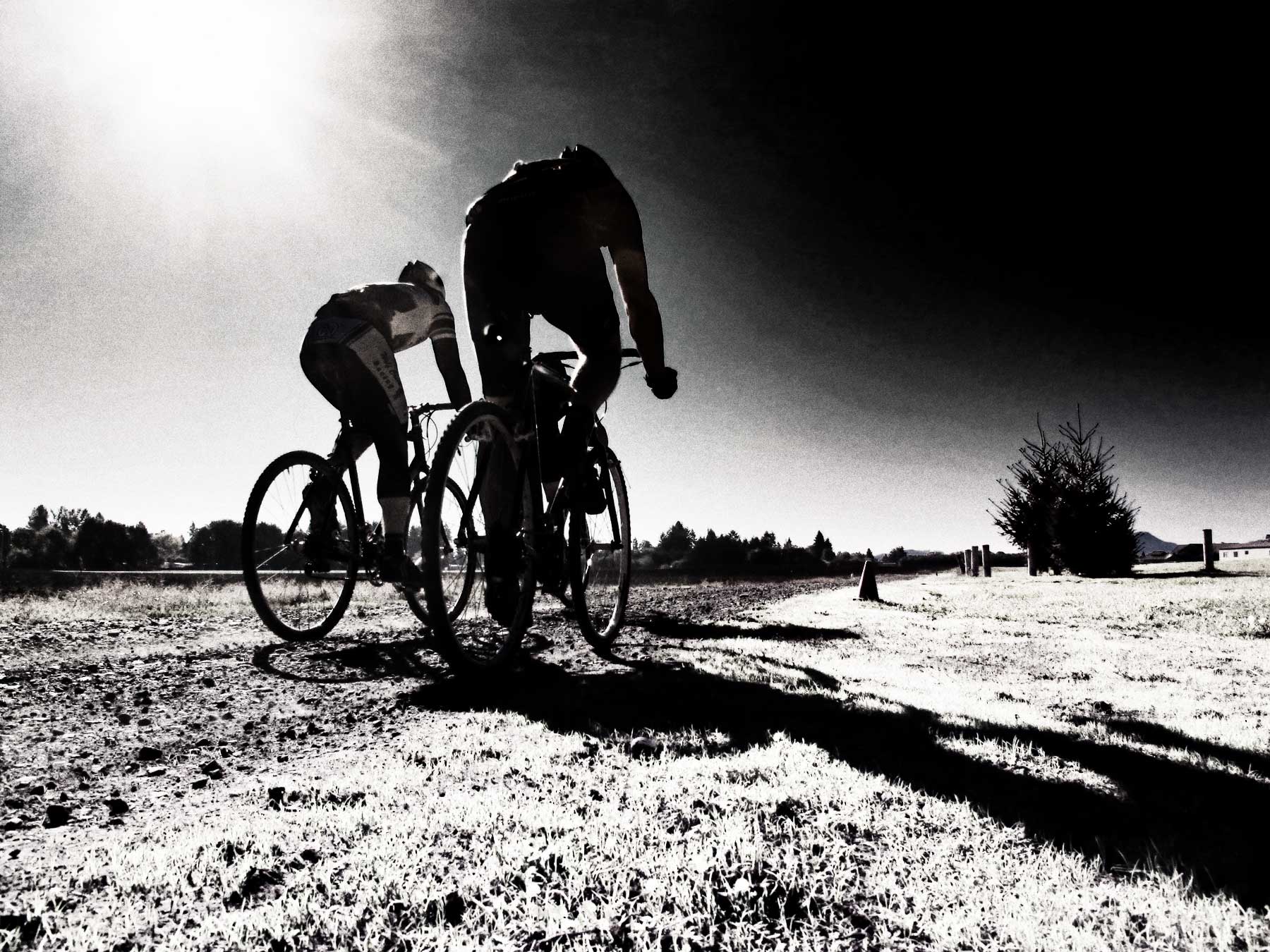
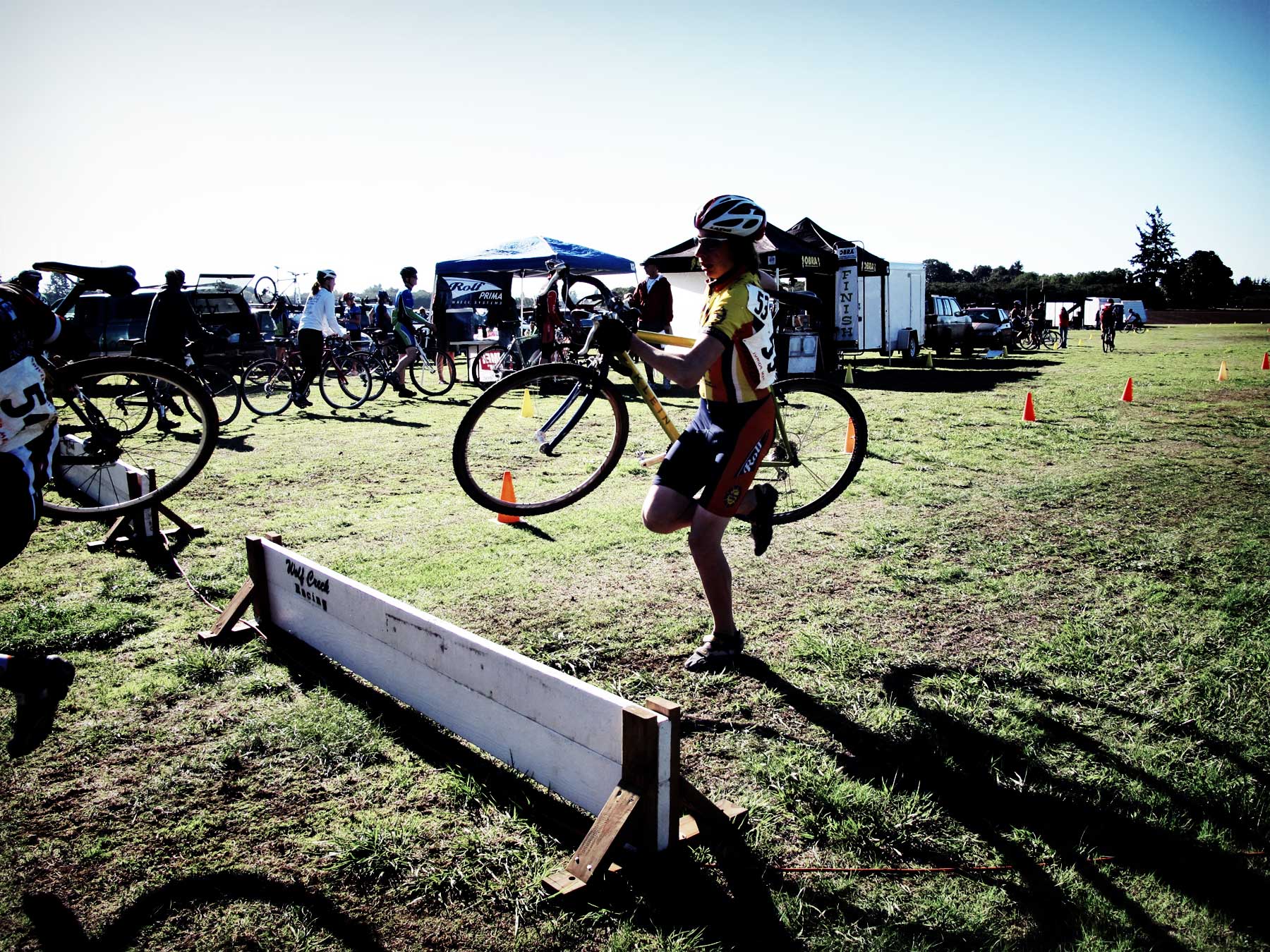
Today we watched our first ever cyclocross race. Here are a few snaps of the fun:

The start
Into a headwind on the back stretch
Up and down, over the road
The stairs
Again, headwind on the back stretch
Over the barriers

The race took place at Camp Harlow and is part of the OBRA cyclocross racing season.

I am now thinking of training for cyclocross in the future. The event looked fun, is rather low-key, and is open to all levels. It reminded me of a 10k road run where some come to win and most come for their personal goals and the challenge. Unlike the tense and high-strung world of road racing, cyclocross is more like a family affair with some very serious competitors, but most just having a lot of fun.

Harvest Century Adventure

This past weekend we attempted to ride the Harvest Century (100 mile bike ride) which started in Hillsboro, Oregon. I say attempted because we only made it to mile 81. Three flat tires, one damaged tire, a late start, and too many hills finally wore us out. But it was a glorious day.

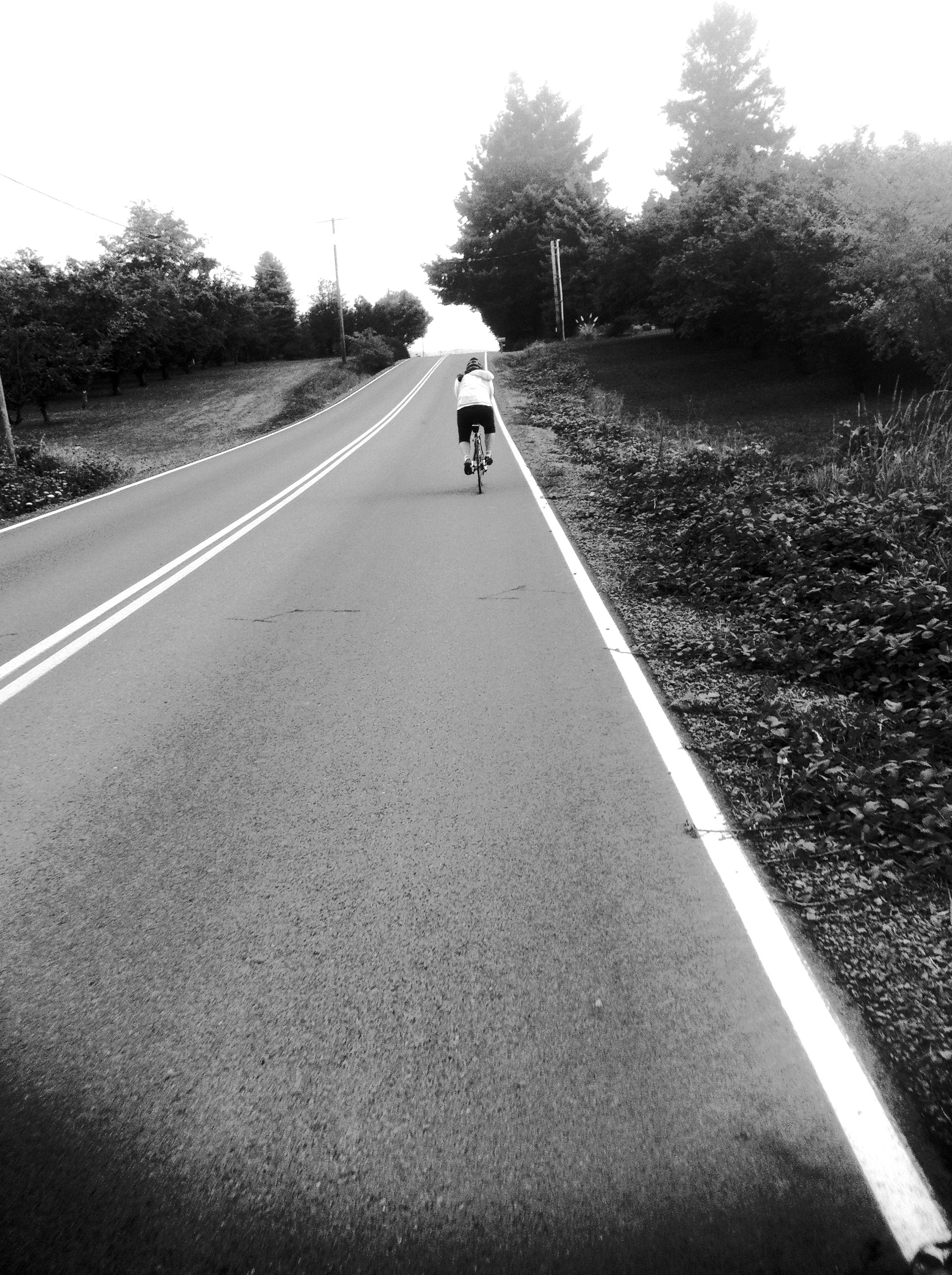
On the road around mile 30

Both of us were surprised by how many folks rode. We estimate somewhere between 1500 and 2000 riders. We were also pleased by how well it was organized and run. We have ridden other centuries in years past, but never one this big or well run.

Stopping at the winery

One of our problems was lack of training. We just didn’t put in enough miles prior to the ride. On the other hand, the entire thing turned out to be a fun adventure, and the day itself was beautiful, perfect weather.

Riding with my honey

I find nothing better than riding bikes with my wife. If I had ridden this by myself it still would have been okay, but not nearly as much fun. Someday maybe we will get a tandem.