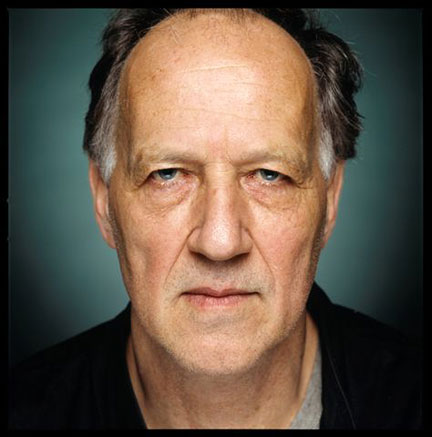
>Winter Fires

>1.
The hills in the distance
are eggplant and somber
heavy outlines separating
the sky and valley
like divisions of life
and their smooth testimony
harbors a silent ache
created by inches
and terrific pressures
in a time of inherited archetypes

And this young valley
is an ancient ocean
I live at the bottom
where the grass is greenest
and sometimes I am
below the grass, below the roots
deep, deep in the difficult clay
that is my life

In the mornings
I find my way
by the belt of Orion
and the cats
on neighborhood lawns
at times
when Winter makes the ridges bleak
I feel the Senate at my back
but I am no Fabius
and these fires are all my own

2.
There is a river
that runs like an eel
down the guts of the valley
but no matter that it keeps moving
the river never takes away
any sorrows

The water along the bank
is almost invisible
except for the sheerest gleam of sky
like fire leaping
above the dark browns and ocres
of the river’s edge

and even here
the infinite calls me
to empty visions
waiting to be filled
with new flesh and new bone
to hollow figures
waiting for a finer blood
and a purer light
a change so complete
one is carved through
and left for dead
along the quiet fire of the river

>A through K links

>A.
Screening the Past’s
Field survey: the poll results
This has got to be one of the most interesting lists I’ve come across in a long time. It is an informal survey of key film-related writings and cinematic events over the past ten years or so as highlighted by film scholars. There is a lot here to chew on. Thanks Girish for posting this at Dr. Mabuse’s Kaleido-Scope.

B.
stunning photographs by Chris Jordan

Cell phones #2, Atlanta 2005 44 x 90″

C.
Fascinating photo collages of typologies of everyday life by Mark Luthringer.

D.
The opening shot from The Enigma of Kaspar Hauser (1974), a.k.a. Every Man for Himself and God Against All:

This is one of my favorite opening shots. From the first time I saw it on video, somewhere in the mid 1980s, it has haunted me.

E.
Art assignments for ordinary people. Yes, you too can get involved!

F.
Photography by Michael Stipe (yes, that Stipe)

G.
Delicate Situations

H.
Extremely independent radio online: SomaFM

I.
The Immigrant (1917)
http://video.google.com/googleplayer.swf?docId=-6961048885792851539&hl=en
Over at their blog Kristin Thompson and David Bordwell wish classical cinema a happy birthday. They pick 1917 as the key year. They list Chaplin’s The Immigrant as one of the important films of that year.

J.
My next important project: How to Brew

K.
My favorite segment from the 1987 ensenmble film Aria:
http://video.google.com/googleplayer.swf?docId=-6601322802908624594&hl=en
Directed by Charles Sturridge. The music is from G. Verid’s La forza del destino.

>some (not-personally-related-to-me) events that happened new year’s

>Two things you might have missed New Year’s Eve, each important (and not important) in their own way:

1. The new Radiohead concert film Scotch Mist

Okay, so it’s not A Hard Day’s Night, but I love these guys, and this kind of thing truly inspires me. I’ve got to do a better job of learning to play my telecaster!

2. The new record for the longest motorcycle jump

My first thought was “get thee to a James Bond movie.” Don’t you think Bond films should once again set the standards for record breaking stunts? Sign this guy up.

>urban athletic trangressions: buildering & parkour in cinema & life

>I’ve done this before and I’m doing it again. I’m blogging for my own collected thoughts and to wrap my brain around old and new.

I recently watched the Pierre Morel/Luc Besson film Banlieue 13 (2004), and it got me thinking about related and somewhat-related things – mainly things having to do with urban athletics.

First: the somewhat-related . . .

When I was a young man I became fascinated with the idea of buildering, the climbing of buildings as though they were rock cliffs. This interest was spawned by an early 1980s Outside Magazine article profiles Dan Goodwin (Spider Dan) who had illegally climbed the North tower of the World Trade Center using those suction-cup devices that glaziers use when moving large panes of glass. He did so while wearing a Spiderman suit and was arrested as soon as he reached the top. He had also climbed the Sears Tower a couple of year before.


Dan Goodwin passing the 83rd floor of the Sears Tower in 1981

Many others have followed. Here’s Alain Robert:

Buildering was first documented in the 1800s by the amazing Geoffrey Winthrop Young during his days at Cambridge in his humorous The Roof Climbers Guide to Trinity.

Others joined in, including Harry Gardiner.


Harry Gardiner climbs the Hamilton Bank Building on November 11, 1918 to celebrate Peace Day. He wears ordinary street clothes. He is the one who looks like a white lizard just passing the sixth floor.

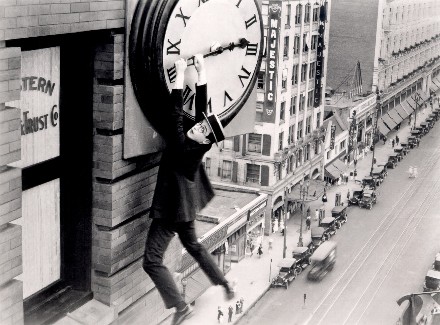
And of course, one of the most famous images from the history of cinema is of Harold Lloyd hanging from a clock high up on a building that he has been climbing from the film Safety Last (1923).


You can see the entire Safety Last building climbing sequence
here and here.

Second: the related . . .

We’ve all seen opening chase sequence from Casino Royale (2006). I remember being rather stunned by how great a chase sequence it was.

What I did not know is that that chase was derived from an old, but new, form of urban activity known as parcours, or parkour, or free running. This style, or philosophy, of urban travel was featured in Banlieue 13, two years before Casino Royale. Here’s a clip from B13:

Recently I was watching some kind of extreme sports show on television. On that show they profile a group of young New Yorkers who were working toward establishing competitive free running in the city. I looked it up online and that brought me to B13.

Needless to say, parkour is not limited only to narrative cinema. Here’s some rather great free runners showing off:

I am, as you are, amazed and the physical capabilities of these athletes. I think of parkour as, in part, a response to the hegemonic force of urban design and dominant structures of power.

…and then sometimes parkour is just a learning experience:

Irma Vep | Avatar | Maggie Cheung

In Olivier Assayas’ 1996 film Irma Vep, Hong Kong film and television actress Maggie Cheung plays the Hong Kong film and television actress known as Maggie Cheung – what some would call “playing herself.”

The story revolves around a film crew on a production that is spinning out of control as its director has a nervous breakdown and the production staff fight amongst themselves. The film they are trying to create is a remake of the classic Les Vampires, a French serial from 1915. Maggie Cheung is cast in the role of the central character, Irma Vep, originally played by Musidora.

During the shooting Cheung is told by the director René Vidal (played by Jean-Pierre Léaud) that she needs to become the character more, to dive in and exude the role, to be Irma Vep – a rather typical bit of advice given by directors, especially from those who have grown unsure of their own talents. With this critique Cheung feels the pressure to jump more fully into the character, and this pressure underlies my favorite scene in the film.

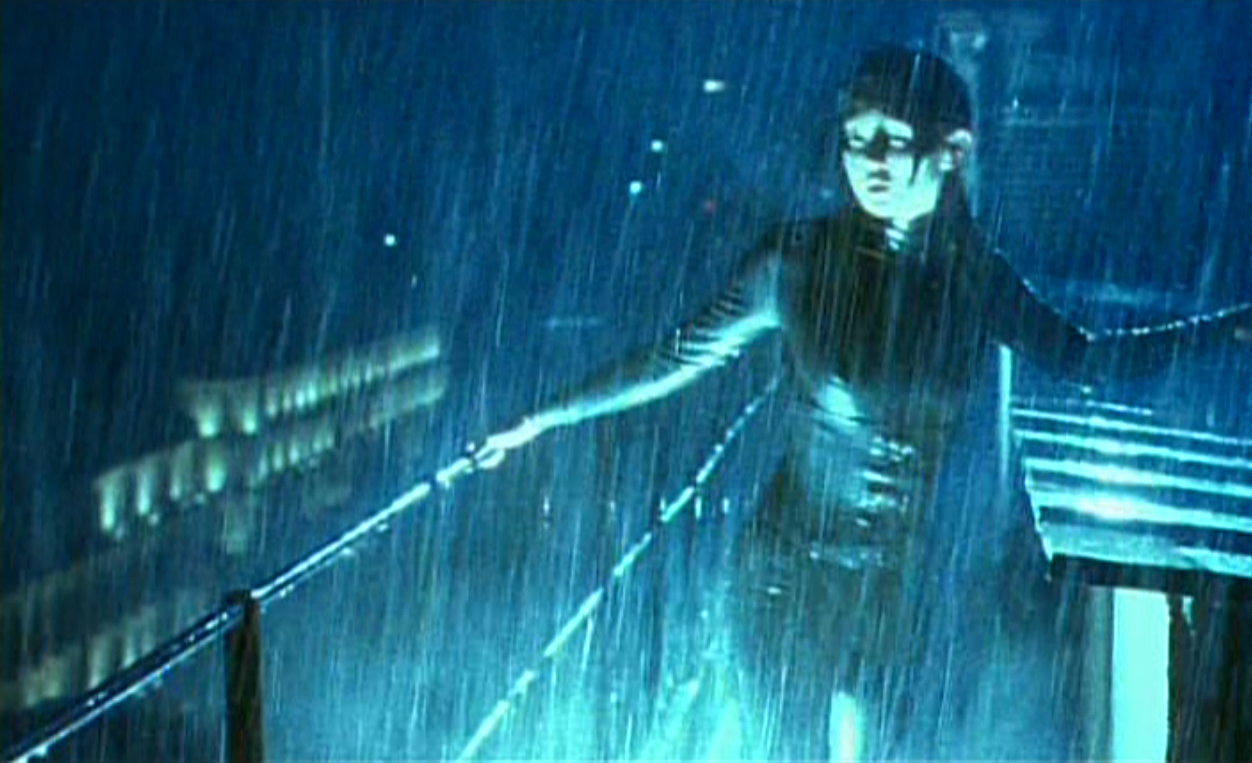
Later that evening, when she is alone in her hotel room, Cheung wears her costume and roams around her room. She struggles to find the right emotion and truly sense Vep. At one point she seems like she might lose her mind.

Then she quickly exits into the hallway and begins to prowl. She acts out the role of Irma Vep, sneaking around, avoiding others and doing a bit of spying. She eventually notices a maid carrying some food to a room. After the maid enters, Cheung slips in quietly. The maid leaves and Cheung is hiding in the room watching and listening a woman talk on the phone.

Cheung then notices some costume jewelry lying on a counter.

She takes the jewels and sneaks out of the apartment. At several moments she is nearly seen.

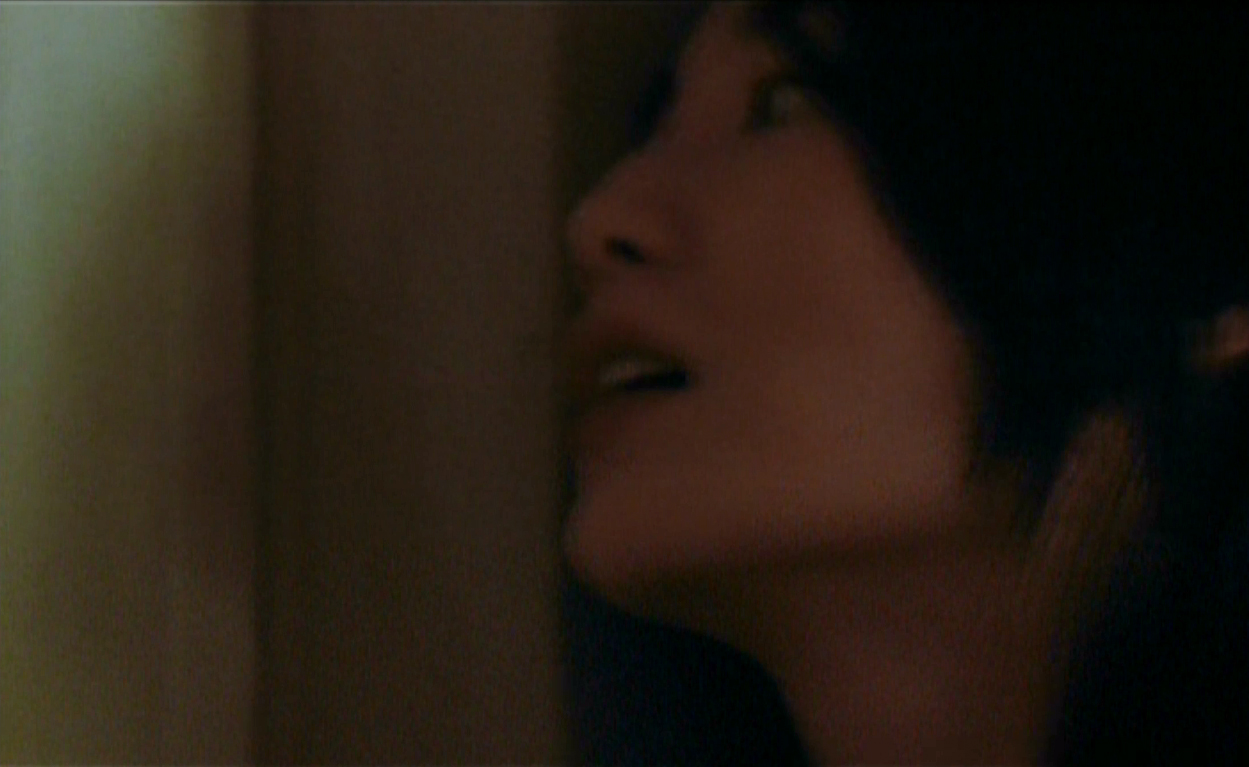
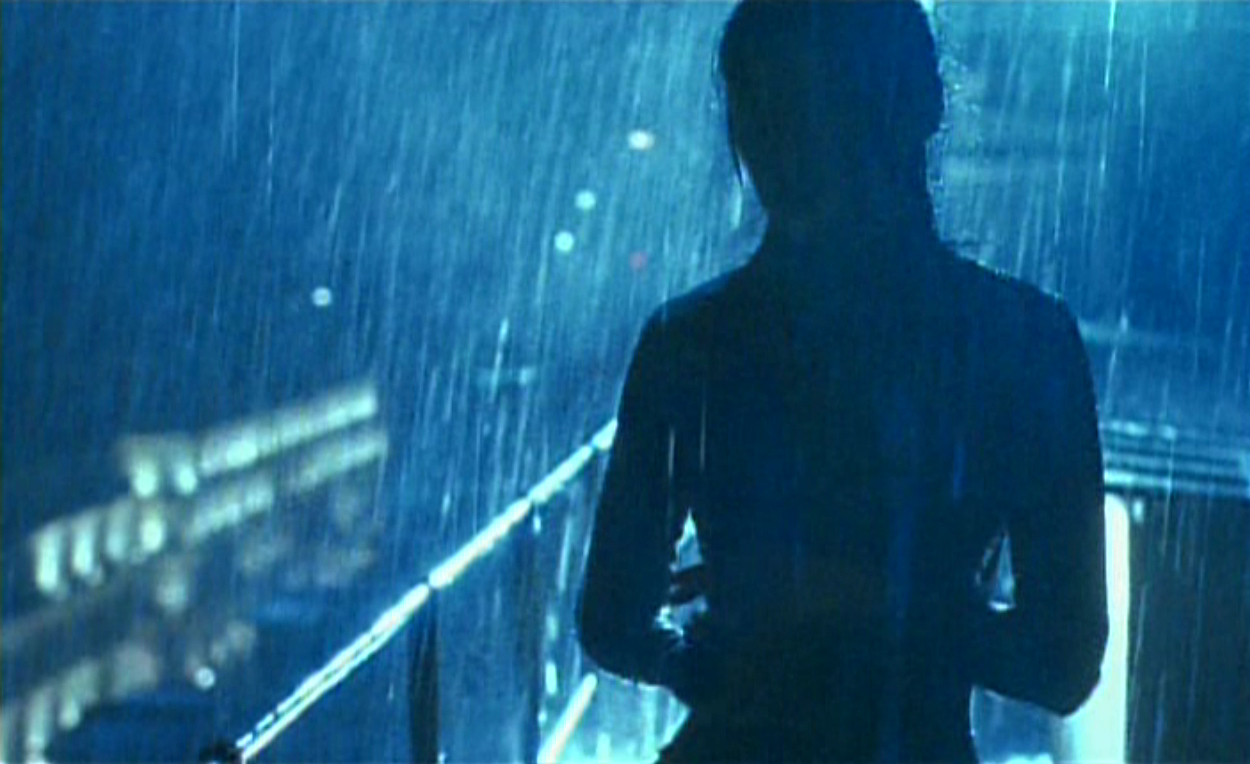
Then, to avoid bumping into some others, she exits out onto the roof, which produces these wonderful images.

After a few moments of contemplation Cheung holds the jewels over the edge of the building and then lets them drop.

The jewels fall, disappearing into the rain.

What I find so fun about this scene is how the character Cheung crosses over into an approximate real-life version of Vep in order to better understand Vep and then, possibly, play Vep better in the film. But it is also a moment in which we get to really see Vep for the first time. And it is also a scene in which the vicarious and transcendent aspects of viewing movies get played out as action itself. When Cheung leaves her room and begins to be Vep she acts out visually/physically the mental condition of that viewers go through as they “play” the characters on the screen in their own fantasies. In other words, she acts the avatar we aspire to in our waking dreams, whether that avatar is Vep or any other character we love, hate, or fetishize.

>contemplate cinema

>A reminder . . .


. . . about the upcoming 2nd annual
Contemplative Cinema Blogathon, Sunday 6th – Sunday 13th, January 2008, at Unspoken Cinema.

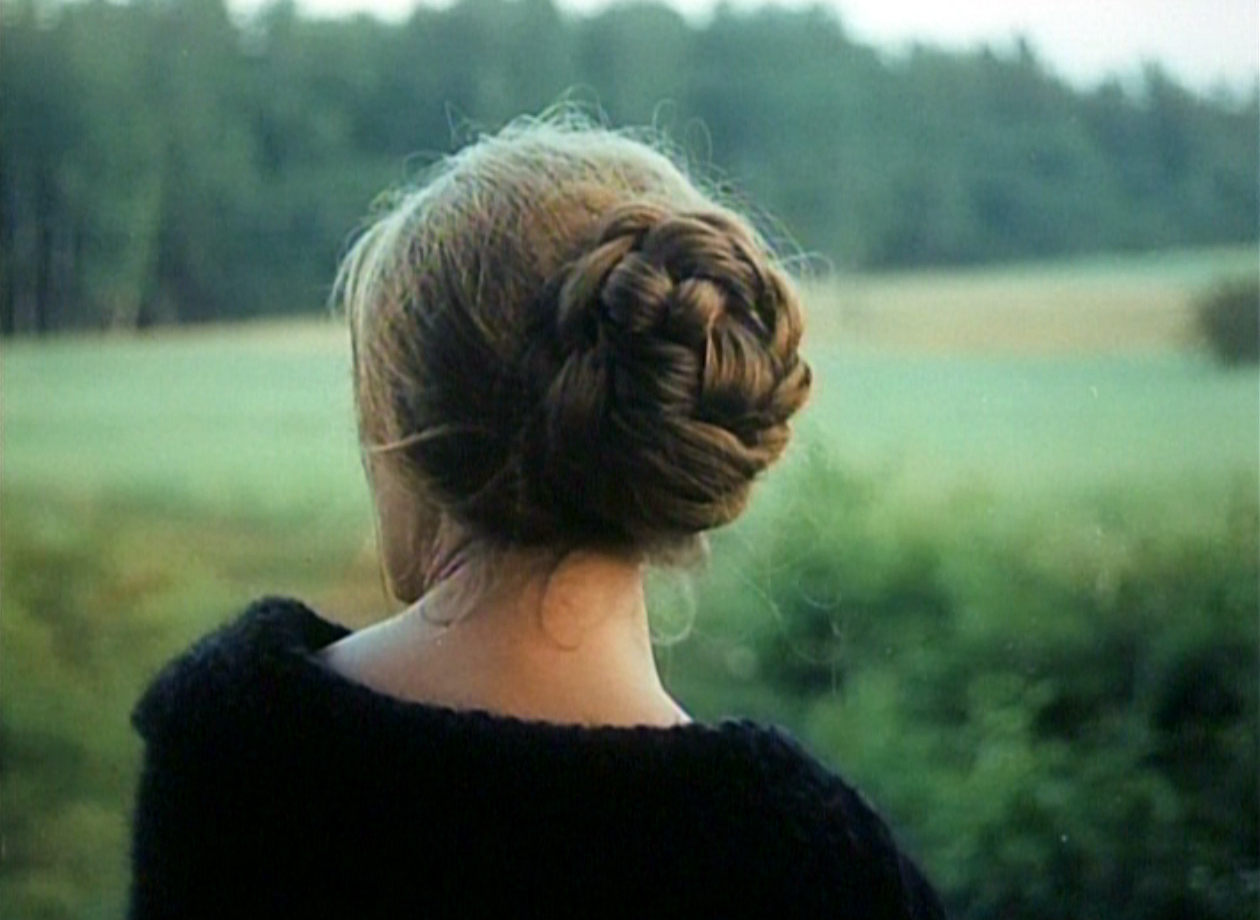
[Image above from Zerkalo (1975), Tarkovsky]

>Resolutions

>

I was just looking at last year’s resolutions and I have to say that I mostly failed.

I won’t call myself a failure, for life is too complex for that, but I will say that I am a bit surprised by how little I did from my list. So now we are at the beginning of another year and I want to sweep out the cobwebs and get moving.

Here are a few of the things (not in any particular order) that I am thinking about now and want to accomplish in 2008:

  • Graduate
  • Spend more time with my kids
  • Write several short stories
  • Brew my own beer
  • Run a half-marathon
  • Run a marathon
  • Finish remodeling the house
  • Sell the house and upgrade
  • Get a better job
  • Watch more movies
  • Get outside more
  • Skate, as in get a skateboard and skate with my daughter
  • Downhill ski again
  • Make an album (music)
  • Blog makeover
  • Ride another century bike race/ride
  • Get finances in order
  • Take the family on a good vacation
  • Finish reading books I start

I don’t really know if making a list means all that much. What I need to do is turn these goals into plans and stick to the plans. Just having the list, though, allows for more introspection and evaluation. It helps to put things into perspective.

I am using the website 43 Things to keep track of my goals.

[The picture above is of my daughter on a walk we took in the fall.]

>The Shins & Arcade Fire

>Three of my favorite videos from the great music site La Blogothèque.


>Glory to God in the highest

>Four paintings by Giotto, from his fresco cycle in the Scrovegni Chapel:


The Birth of Christ
Now the birth of Jesus Christ was as follows: when His mother Mary had been betrothed to Joseph, before they came together she was found to be with child by the Holy Spirit. And Joseph her husband, being a righteous man and not wanting to disgrace her, planned to send her away secretly. But when he had considered this, behold, an angel of the Lord appeared to him in a dream, saying, “Joseph, son of David, do not be afraid to take Mary as your wife; for the Child who has been conceived in her is of the Holy Spirit. “She will bear a Son; and you shall call His name Jesus, for He will save His people from their sins.” Now all this took place to fulfill what was spoken by the Lord through the prophet: “BEHOLD, THE VIRGIN SHALL BE WITH CHILD AND SHALL BEAR A SON, AND THEY SHALL CALL HIS NAME IMMANUEL,” which translated means, “GOD WITH US.” And Joseph awoke from his sleep and did as the angel of the Lord commanded him, and took Mary as his wife, but kept her a virgin until she gave birth to a Son; and he called His name Jesus. (Matthew 1:18-25)


The Adoration of the Magi
Now after Jesus was born in Bethlehem of Judea in the days of Herod the king, magi from the east arrived in Jerusalem, saying, “Where is He who has been born King of the Jews? For we saw His star in the east and have come to worship Him.” When Herod the king heard this, he was troubled, and all Jerusalem with him. Gathering together all the chief priests and scribes of the people, he inquired of them where the Messiah was to be born. They said to him, “In Bethlehem of Judea; for this is what has been written by the prophet: ‘AND YOU, BETHLEHEM, LAND OF JUDAH, ARE BY NO MEANS LEAST AMONG THE LEADERS OF JUDAH; FOR OUT OF YOU SHALL COME FORTH A RULER WHO WILL SHEPHERD MY PEOPLE ISRAEL.’” Then Herod secretly called the magi and determined from them the exact time the star appeared. And he sent them to Bethlehem and said, “Go and search carefully for the Child; and when you have found Him, report to me, so that I too may come and worship Him.” After hearing the king, they went their way; and the star, which they had seen in the east, went on before them until it came and stood over the place where the Child was. When they saw the star, they rejoiced exceedingly with great joy. After coming into the house they saw the Child with Mary His mother; and they fell to the ground and worshiped Him. Then, opening their treasures, they presented to Him gifts of gold, frankincense, and myrrh. And having been warned by God in a dream not to return to Herod, the magi left for their own country by another way. (Matthew 2:1-12)


The Presentation in the Temple
And when eight days had passed, before His circumcision, His name was then called Jesus, the name given by the angel before He was conceived in the womb. And when the days for their purification according to the law of Moses were completed, they brought Him up to Jerusalem to present Him to the Lord (as it is written in the Law of the Lord, “EVERY firstborn MALE THAT OPENS THE WOMB SHALL BE CALLED HOLY TO THE LORD”), and to offer a sacrifice according to what was said in the Law of the Lord, “A PAIR OF TURTLEDOVES OR TWO YOUNG PIGEONS.” And there was a man in Jerusalem whose name was Simeon; and this man was righteous and devout, looking for the consolation of Israel; and the Holy Spirit was upon him. And it had been revealed to him by the Holy Spirit that he would not see death before he had seen the Lord’s Christ. And he came in the Spirit into the temple; and when the parents brought in the child Jesus, to carry out for Him the custom of the Law, then he took Him into his arms, and blessed God, and said, “Now Lord, You are releasing Your bond-servant to depart in peace, According to Your word; For my eyes have seen Your salvation, Which You have prepared in the presence of all peoples, A LIGHT OF REVELATION TO THE GENTILES, And the glory of Your people Israel.” And His father and mother were amazed at the things which were being said about Him. And Simeon blessed them and said to Mary His mother, “Behold, this Child is appointed for the fall and rise of many in Israel, and for a sign to be opposed— and a sword will pierce even your own soul—to the end that thoughts from many hearts may be revealed.” And there was a prophetess, Anna the daughter of Phanuel, of the tribe of Asher. She was advanced in years and had lived with her husband seven years after her marriage, and then as a widow to the age of eighty-four. She never left the temple, serving night and day with fastings and prayers. At that very moment she came up and began giving thanks to God, and continued to speak of Him to all those who were looking for the redemption of Jerusalem. (Luke 2:21-38)


The Flight to Egypt
Now when they had gone, behold, an angel of the Lord appeared to Joseph in a dream and said, “Get up! Take the Child and His mother and flee to Egypt, and remain there until I tell you; for Herod is going to search for the Child to destroy Him.” So Joseph got up and took the Child and His mother while it was still night, and left for Egypt. He remained there until the death of Herod. This was to fulfill what had been spoken by the Lord through the prophet: “OUT OF EGYPT I CALLED MY SON.” (Matthew 2:13-15)

Merry Christmas!

Der alte Film ist tot

If you can forgive me, which you must, then you will understand I blog much of the time for my own selfish edification and education. This is one of those times.

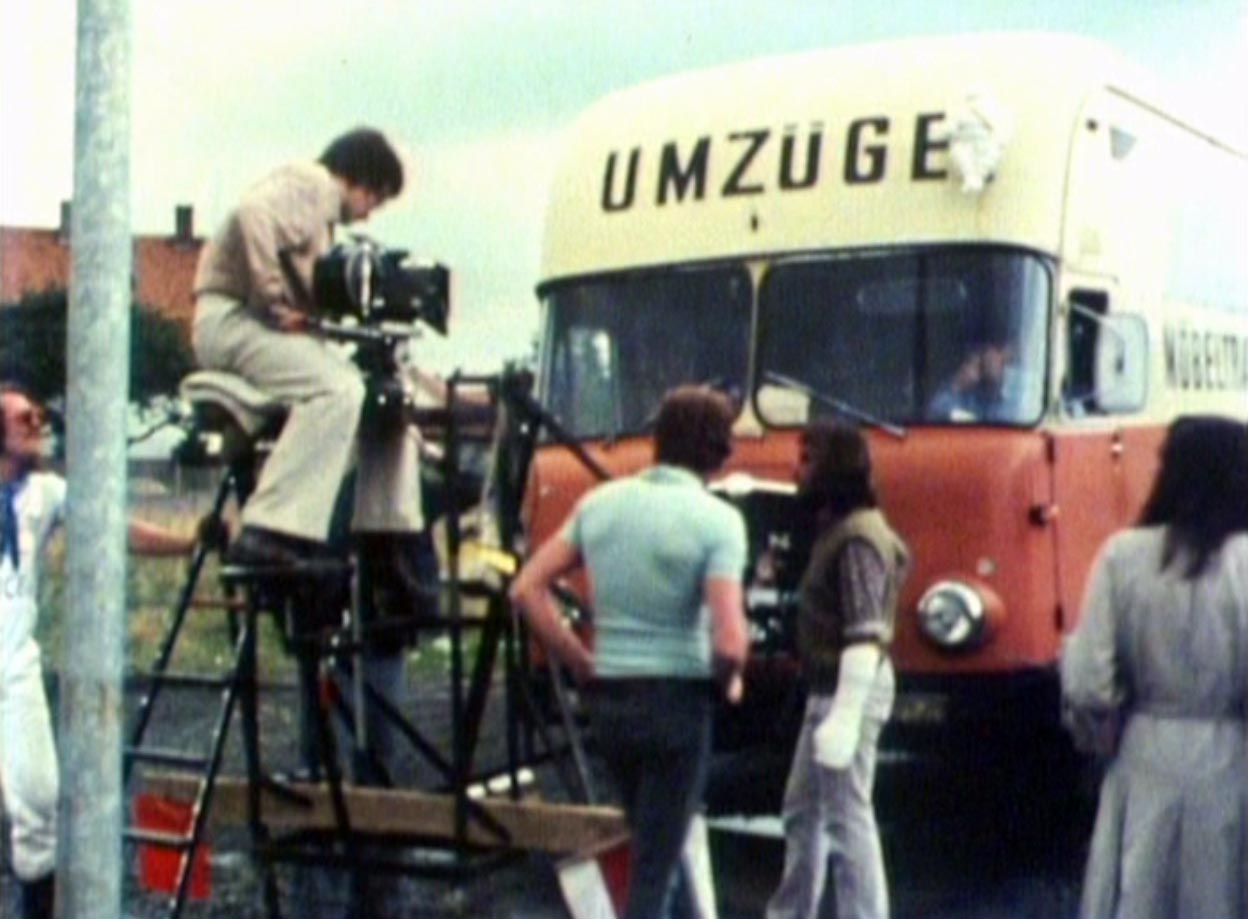
I do not know much about the history of modern German cinema. But I am interested. In my more brilliant moments I might say something like “the present is always built on the past.” How true that is! On the DVD extras for the Criterion release of Ali: Fear Eats the Soul there is a short documentary by the BBC called Signs of Vigorous Life: New German Cinema (1976). From today’s perspective one might say the film is about how one person’s past is another person’s present is another person’s future. On the other hand, the film is also about breaking with the past and creating something genuinely new and authentic.

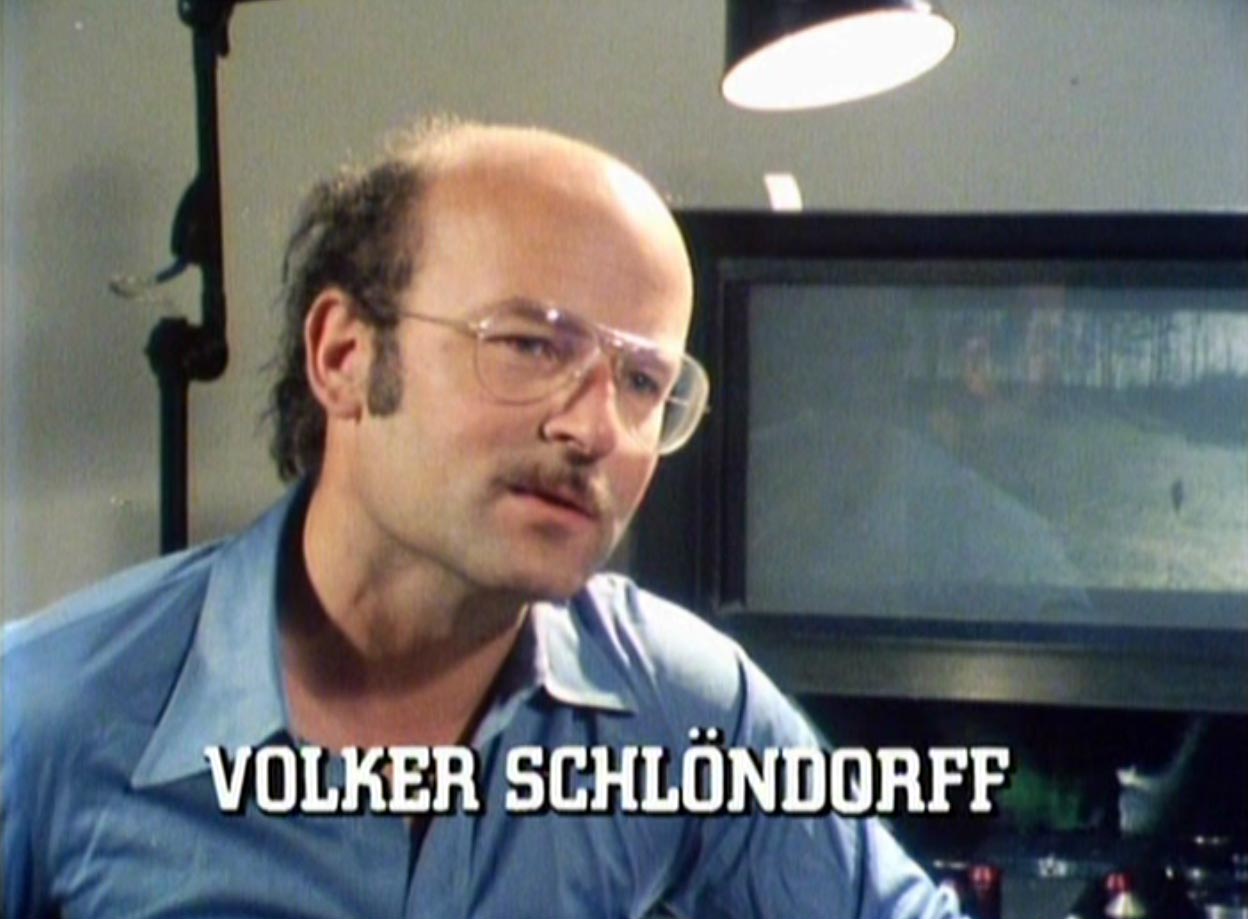
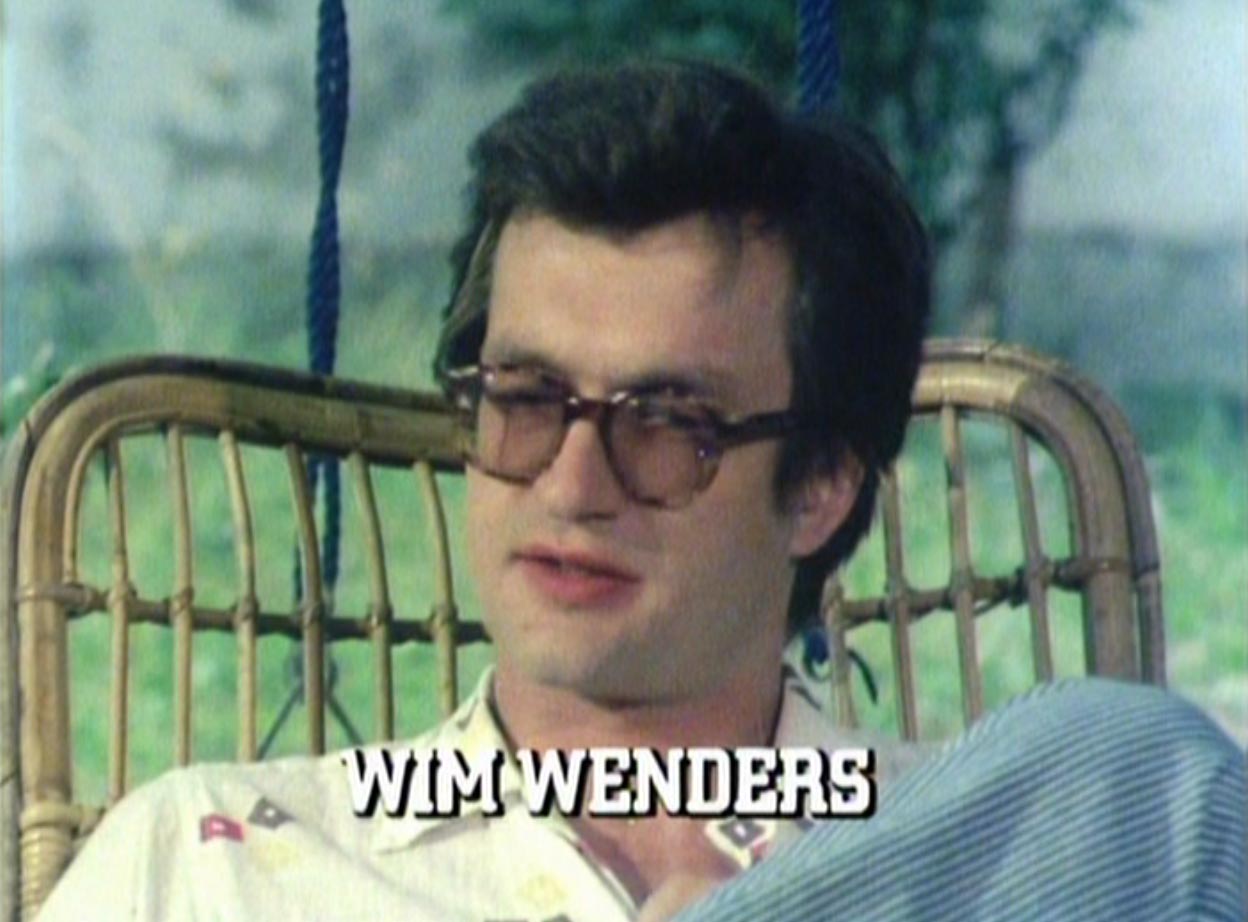
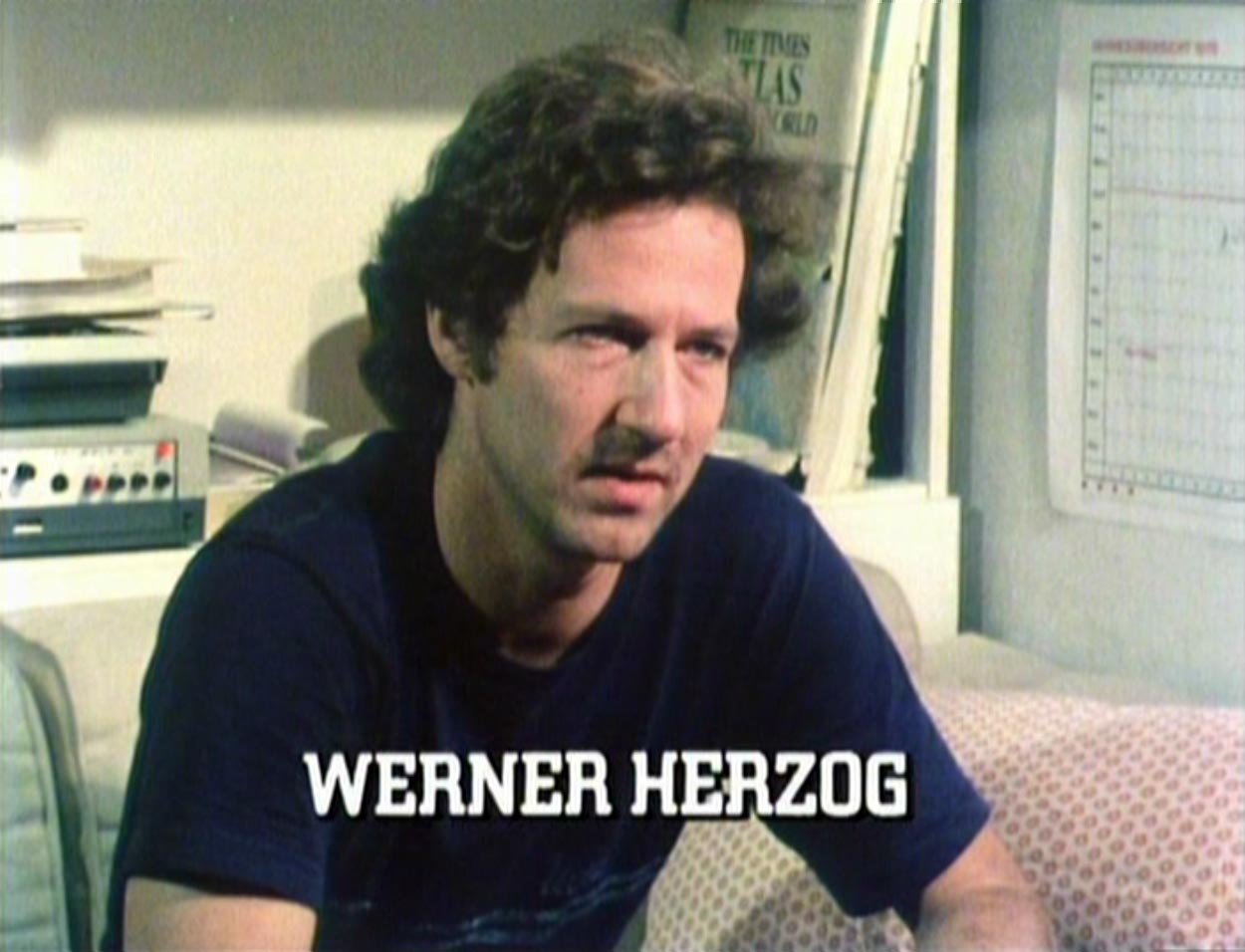
Now, this documentary is not at all dazzling, but it does focus on several filmmakers (Fassbinder, Schlöndorff, Wenders, Herzog) who exemplified the New German Cinema, as it is called. These filmmakers continue to influence film history and other filmmakers on numerous levels. Ironically, it is the one filmmaker who died too young that may still have the most influence.

One thing that filmmakers like to do when the camera is turned on them is to talk. Especially if talking is a means of saying what is wrong with the world and what it is that filmmaker is uniquely doing to change it. We get some of that in this film. New German Cinema began, like most all of the “new” cinemas, in and around the early 1960s, which was a time all about what was wrong world and how to fix it. (It still should be in my opinion.)

The group of filmmakers featured in this documentary are/were part of the second generation of the New German Cinema. The first generation never achieved quite the level of critical acclaim, financial success, or notoriety as the second, but it did establish a kind of vision that, though not exactly marching orders, did point to the future. This vision, expressed in writing, is known as the Oberhausen Manifesto, with with the old film was declared dead – Der alte Film ist tot. (I’ve included the manifesto below.)

Whether the second generation was influenced directly by the manifesto is debatable.

L’enfant terrible

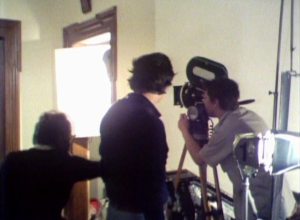
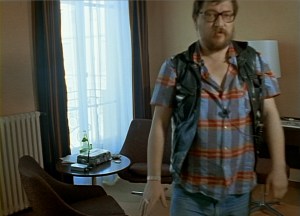
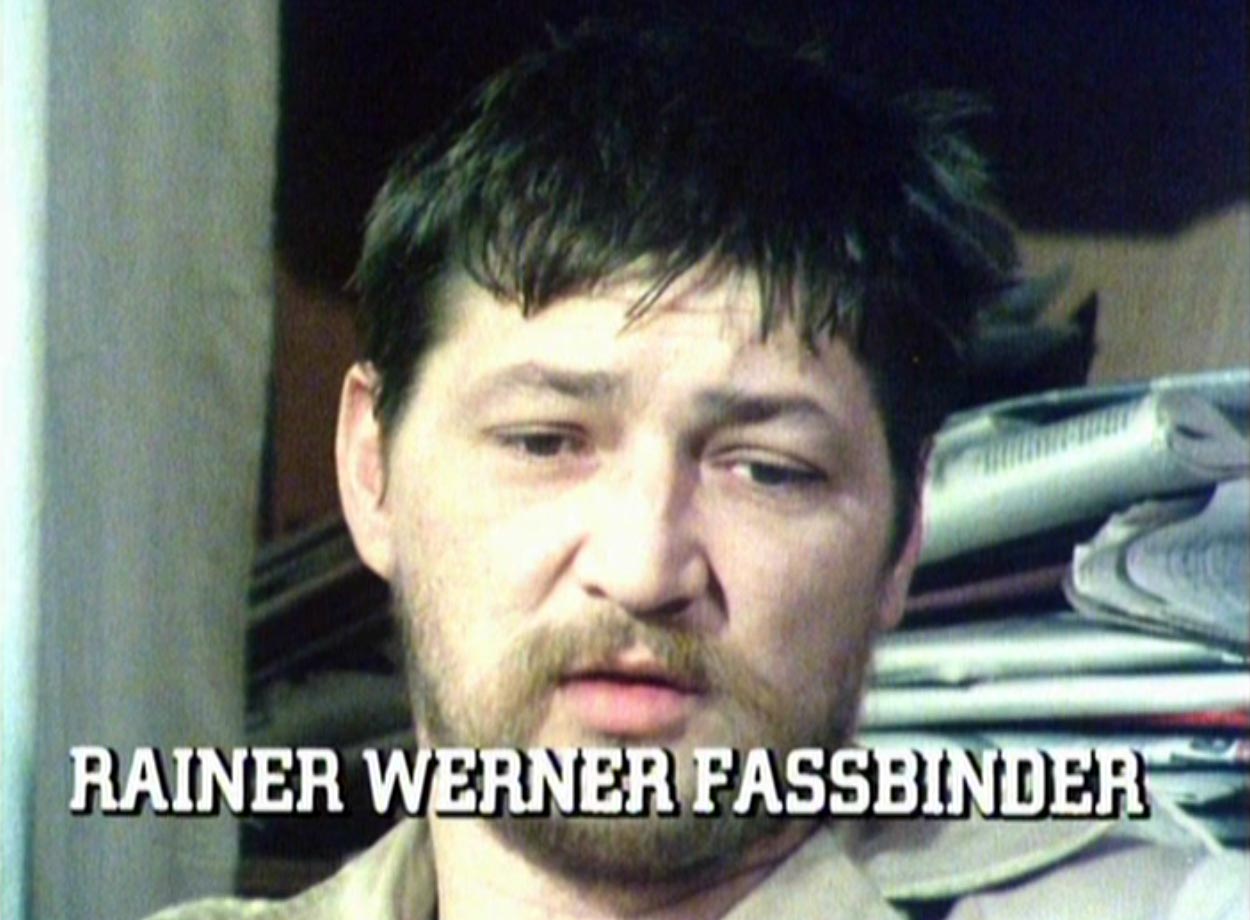
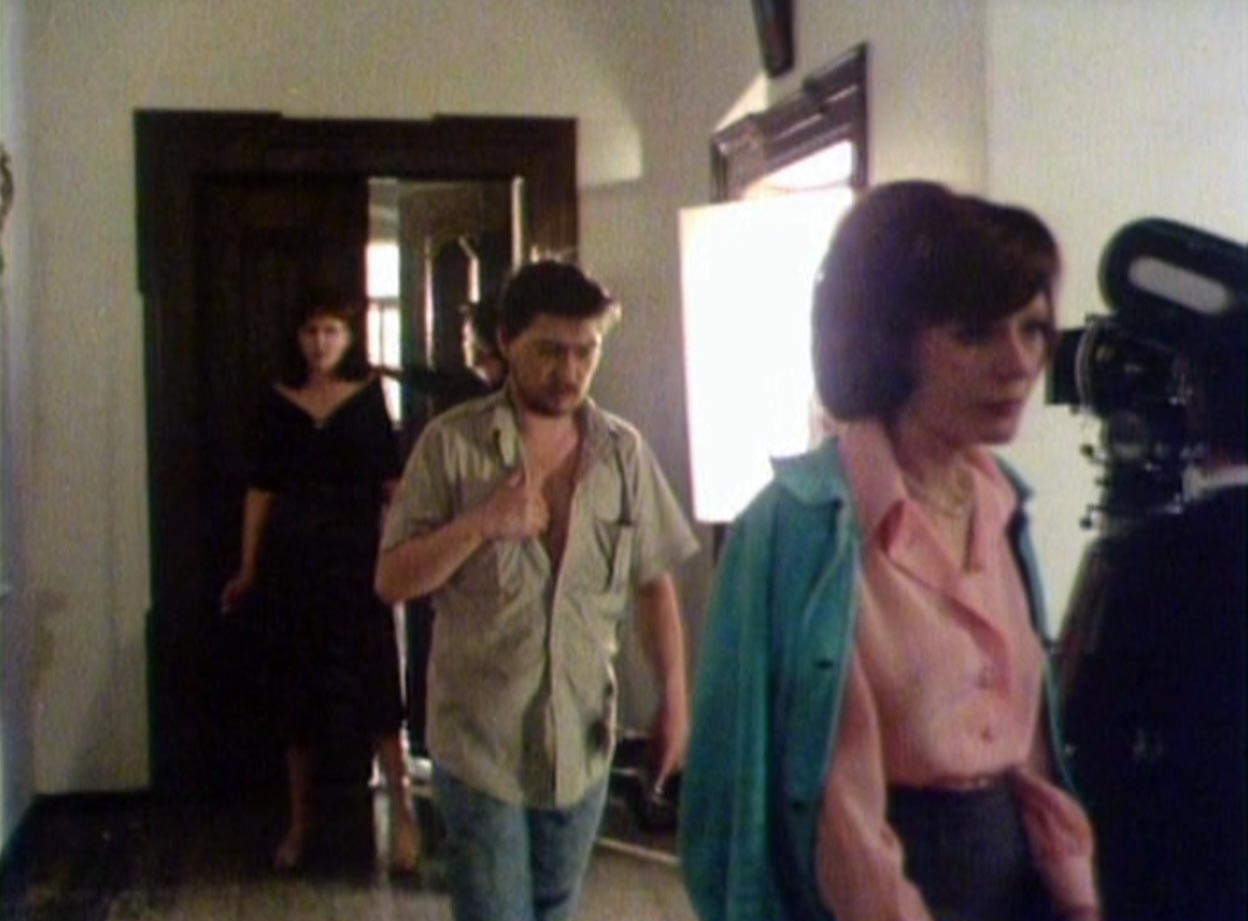
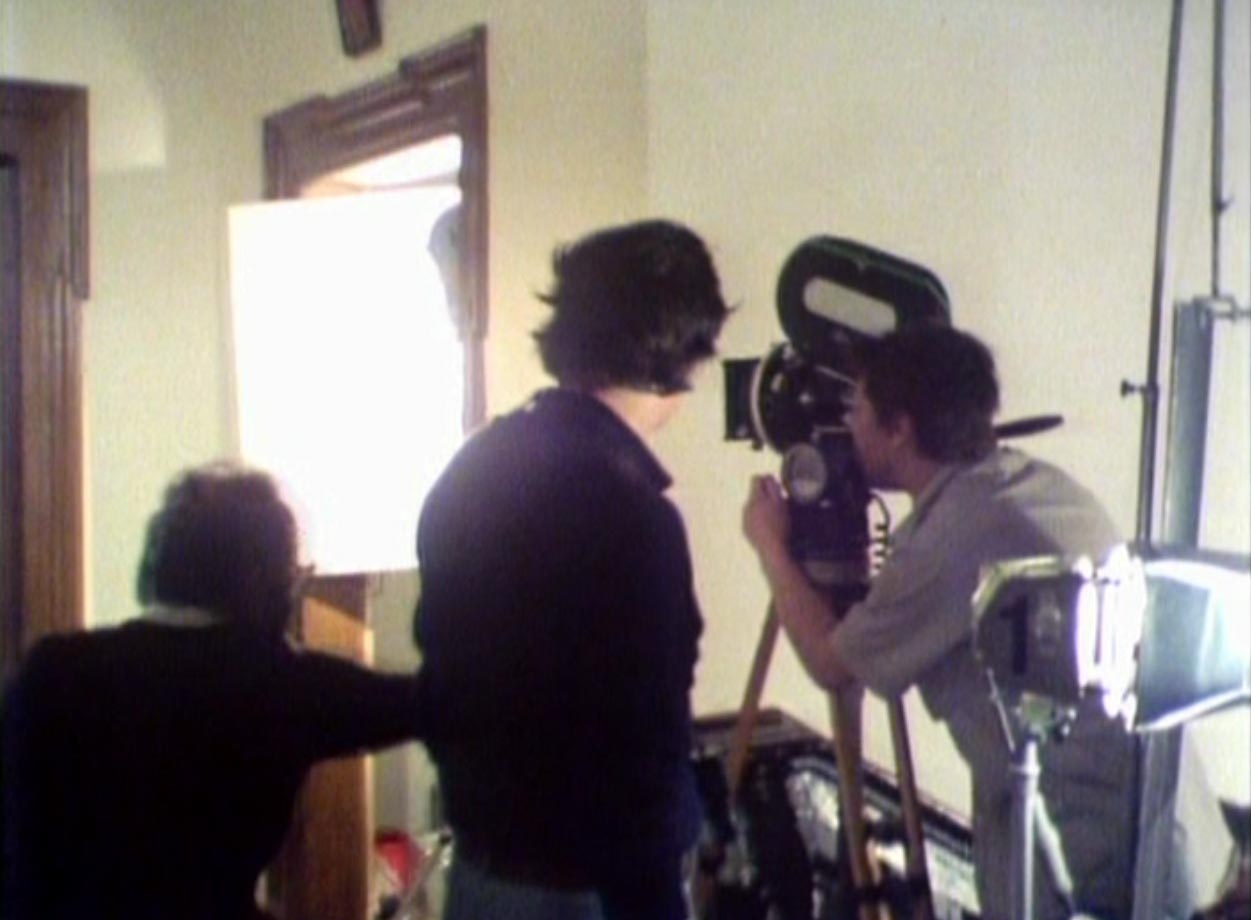
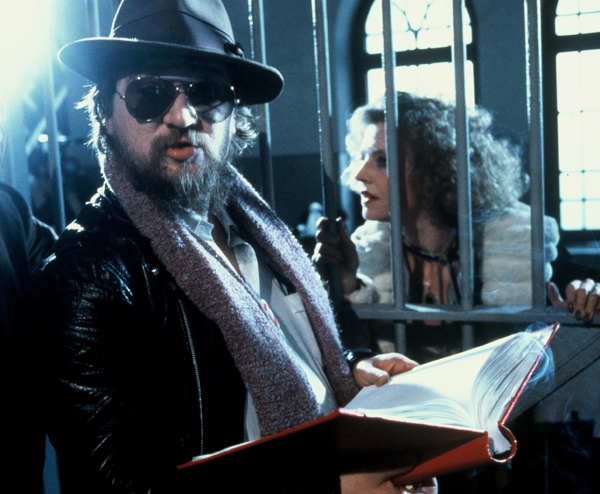
Two shots of Fassbinder on the set somewhere in the 1970s:
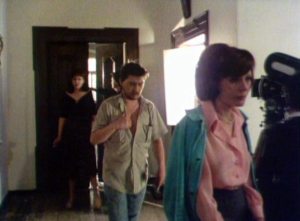


Fassbinder on the set of Berlin Alexanderplatz two years before his death:

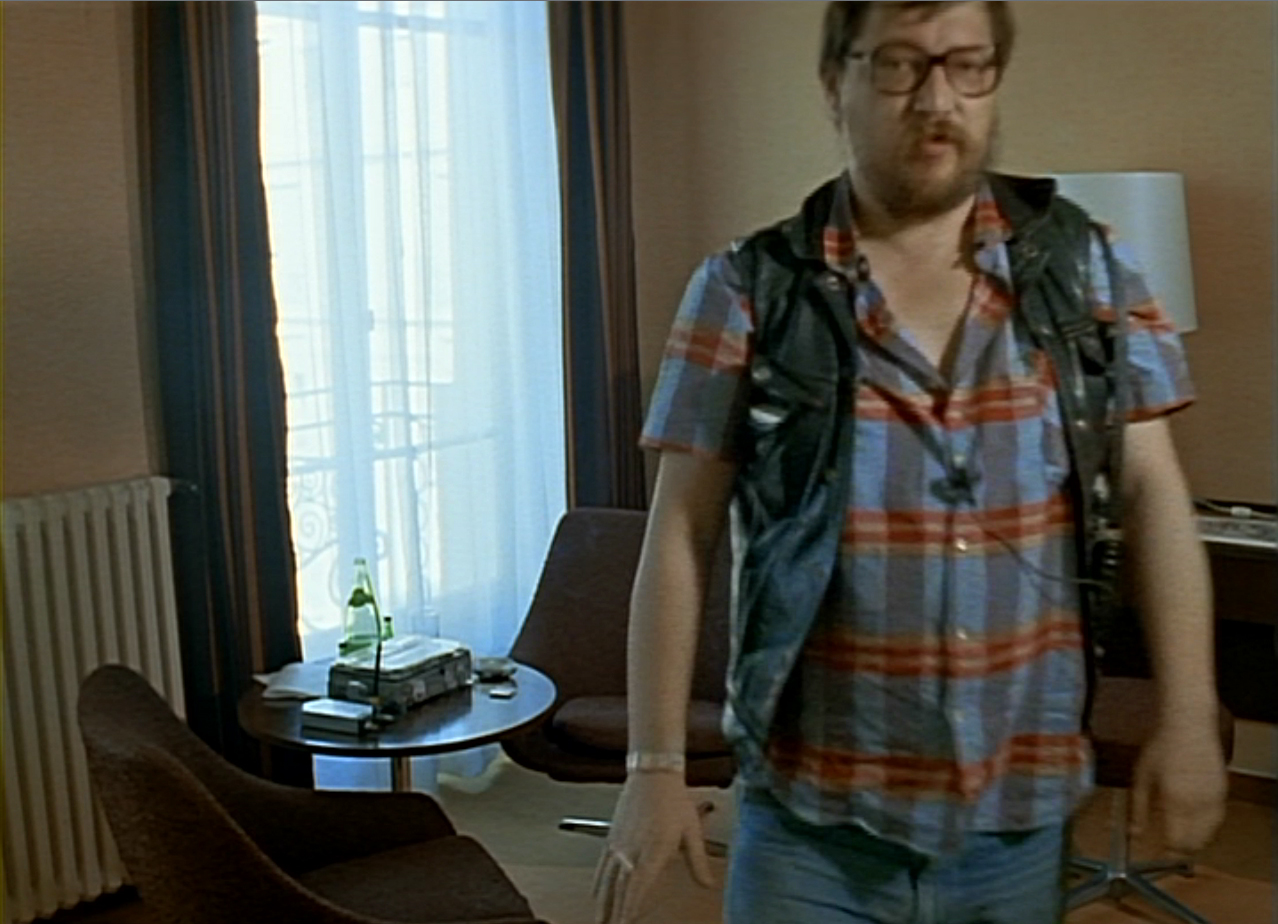
Two images of a dishelved Fassbinder from Wenders’ film Room 666 (1982):


Room 666 was shot in May of 1982 at the Cannes film festival. Fassbinder died on June 10, 1982.

What do I think of Fassbinder? I am troubled by him. I no longer hold the romantic view of artists that I once did, so I cannot look at his life and swoon over how beautifully tragic is was. And yet I know that his drug use, high energy, promiscuity, etc., played a huge part in the creation of his art – and I love his films. The BDR trilogy ranks for me as a pinnacle of filmmaking. I cannot wait to get my hands on Berlin Alexanderplatz (1980).

I have a feeling that Fassbinder might have made an annoying friend, one of those friends that you cannot let go of and yet you’re always shaking your head at wondering when he is going to excavate himself from the mess of his life. Of course, I only know of him from what I’ve read, which is quite limited, so maybe his excesses got all the press and there is more to him than that.

The Brain
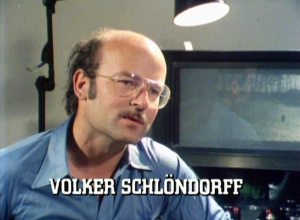
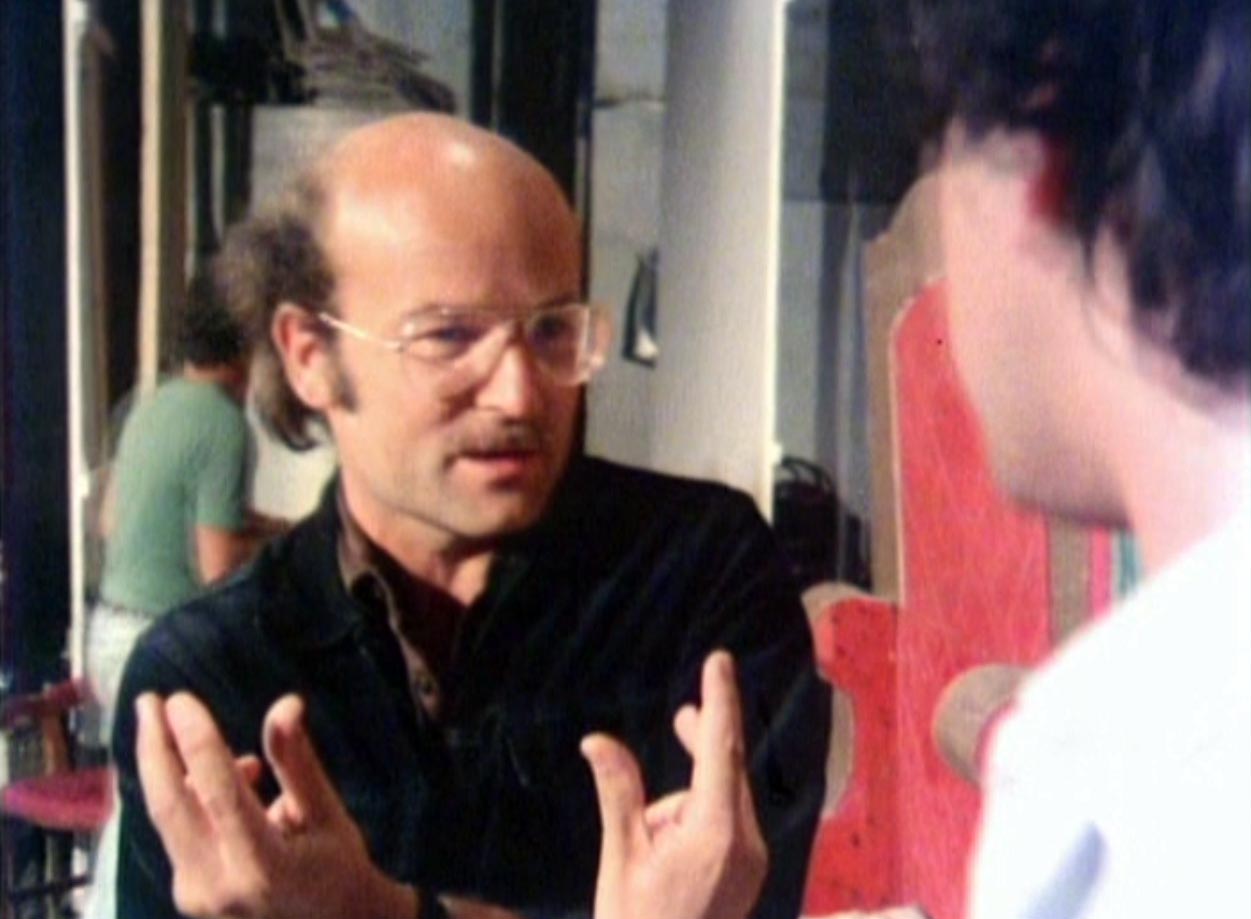
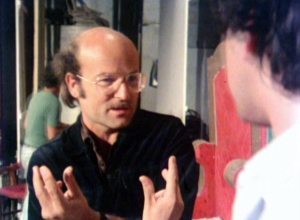
Schlöndorff confers with someone on the set somewhere in the 1970s:
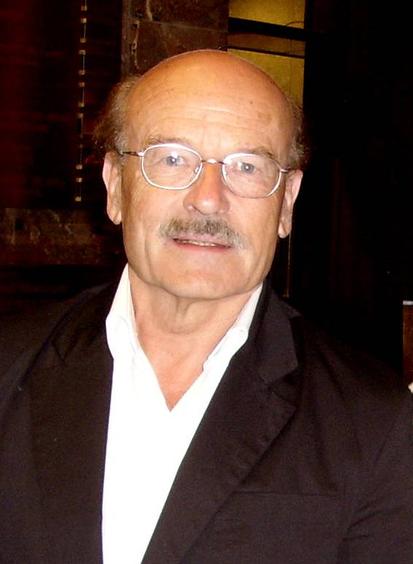
Schlöndorff now:
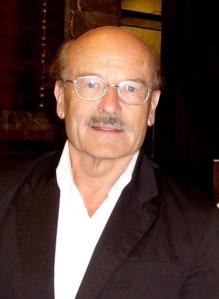
What do I think of Schlöndorff? I cannot speak of Schlöndorff with any authority. I have only seen part of The Lost Honor of Katharina Blum (1975) – which I thought was incredible, but need to finish. I have not seen The Tin Drum (1979), which looks really heavy. I did see his version of Death of a Salesman (1985), which I loved, as well as the documentary about the making of the film. Any recommendations as to which of his films I should see I welcome.

Somehow I think that having Schlöndorff over for dinner would be an evening of interesting conversation. But I imagine he would be the kind of guest to sneak into the kitchen and nibble on the food before it’s brought out.

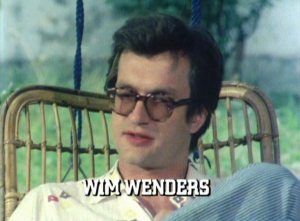
The Metro-Intellectual
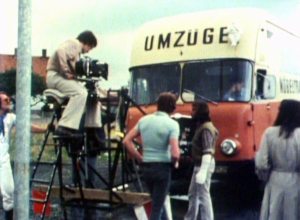
Wenders looks through the camera for a moving shot on Kings of the Road:
Wenders now:

Wenders discusses using music in his films, a failed attempt to work with Radiohead on a film, and his past collaborations with U2:

What do I think of Wenders? I have been a big fan of his for years. A number of his films I love, and a number I like despite their flaws. In the 1980s I “found” him, and his films were part of the introduction I received into the world of non-U.S. films. I do have an issue with him though: Wenders has a way of letting a certain hipness get in the way of going as deep philosophically as his films seem to promise. I feel that he, like Woody Allen, often comes up to the precipice and then turns away. And yet, Wenders has so often captured the post-war German angst on film as good, or better, than anyone. And I find that angst to be far more universal than nationalistic. I can see myself in his characters. That may be why I gravitate to his films so much.

I can imagine that if Wenders was staying over as a house guest one would have great conversations about the relationship between images and one’s identity in the post-modern world. One would also have to tell him to stop video taping everything.

Mr. Serious
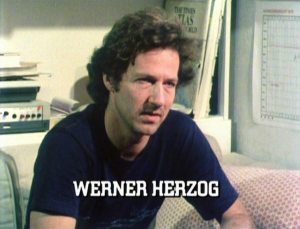
It has been a while since I have seen any of Herzog’s films. I certainly have not kept up with his more recent efforts.

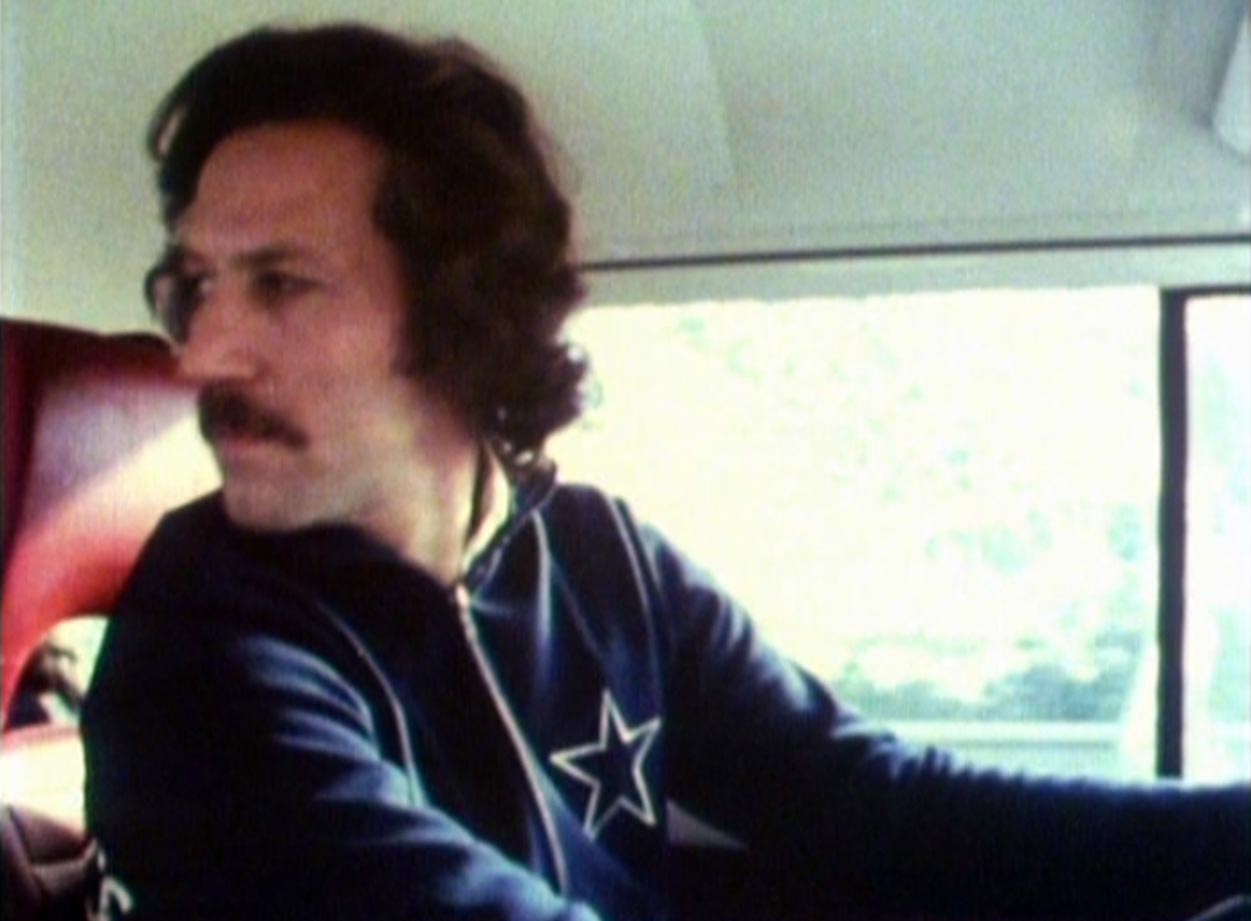
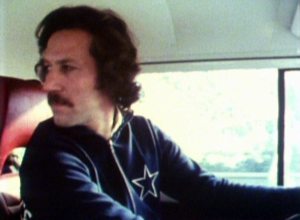
Herzog scouts locations somewhere in the 1970s:
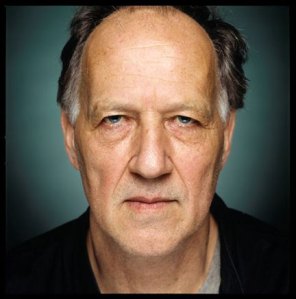
Herzog now (looking more and more like Pete Townshend):
After losing a bet to filmmaker Errol Morris, Herzog eats his own shoe:

What he’s after:

What do I think of Herzog? For me Herzog might be the best of the bunch, but it might be a toss up with Fassbinder. Herzog’s films, especially from the 1970s, are a combination of classical narrative and significant boundary pushing. I was blow away when I saw Stroszeck (1977), Aguirre: The Wrath of God (1972), The Enigma of Kaspar Hauser (1974), and Fitzcarraldo (1982). All films I need to revisit soon.

On the other hand, I think Herzog is probably the kind of house guest who would take off his shoes and socks as soon as he sat down in one’s livingroom, and then complain about working with actors and producers. On the other hand he probably is very funny when he gets a little drunk.

Conclusion:
My soul resonates with many of the films of the New German Cinema. There is often a sense of emptiness, of being lost, of trying to find one’s way in the darkness, that I see in my own life. There is also a sense that there is something darker and less life-giving under the shinier aspects of society. I know this to be true. I am not a morose person, and yet I am inclined more towards a glass-half-full perspective, as my wife will remind me. In that respect the New German Cinema seems more authentic and true to me.

Oberhausen Manifesto
The collapse of the conventional German film finally removes the economic basis for a mode of filmmaking whose attitude and practice we reject. With it the new film has a chance to come to life.

German short films by young authors, directors, and producers have in recent years received a large number of prizes at international festivals and gained the recognition of international critics. These works and these successes show that the future of the German film lies in the hands of those who have proven that they speak a new film language.

Just as in other countries, the short film has become in Germany a school and experimental basis for the feature film. We declare our intention to create the new German feature film.

This new film needs new freedoms. Freedom from the conventions of the established industry. Freedom from the outside influence of commercial partners. Freedom from the control of special interest groups.

We have concrete intellectual, formal, and economic conceptions about the production of the new German film. We are as a collective prepared to take economic risks.

The old film is dead. We believe in the new one.

Oberhausen, February 28, 1962


Oberhausen Manifesto discussion forum 1962