>The challenge of July 4th

>

Make sure you’ve got on your flag pin.

When I think about celebrating this Fourth of July, I find myself wondering about where we are and what has got us here. What most fascinates me, and what I am most amazed by, are the stories of people like you and me who have fought for freedom. I don’t necessarily mean soldiers, but ordinary people who became extraordinary because of circumstances. I mean those who stood up against slavery, stood up for women’s right to vote, stood up for workers’ rights, stood up for civil rights, stood up for you and me.

One of the finest works of historical investigation and writing is Howard Zinn’s remarkable A People’s History of the United States. Throughout that book there are challenges on every page, challenges that remind us what freedom really means and what it takes for people to be free, and just how much freedom is truly a deep, deep longing.

Recently there have been public readings of that book. Here are some excerpts:

Brain Jones reads Frederick Douglass

Lili Taylor reads Susan B. Anthony

Steve Earl reads Joe Hill

This country has always been an experiment. Our freedoms are probably more tenuous than we tend to believe. We have freedoms because they were fought for, because they are still being fought for. Those freedoms will, I’m sure, need to be fought for again. I believe the Fourth of July should be more than a commemoration of 1776. I want to remember how so many ordinary people all along the way have struggled to achieve this country’s ideals. And how many still do. Every Fourth reminds us of how we too are part of this on-going experiment. It is a challenge to each of us to do the work of freedom. I do not want to forget that.

May you have a great Fourth of July!

>Chomsky on the U.S. elections, oil politics, and the current state of resistence

>Inside USA, an English language program on Al Jazeera recently did an interview with Noam Chomsky. I have never watched or read anything from Al Jazeera, that I know of. I did not realize they had an English version, but I guess that makes sense.

From the website, Inside USA says this about its mission:

Inside USA’s mission is to strip away the spin, and highlight some of the real issues in America – poverty, violence, race, health, and immigration.

We will be speaking to people on the ground – not television pundits, but real people with stories to tell – a full spectrum assault of American voices -young, old, white, black, immigrant, rich, and poor.

Here is the interview with Noam Chomsky:

Part one:

Part two:

I have always found Chomsky fascinating. His work on East Timor and Latin America is groundbreaking. So is his work on US politics. Maybe his biggest contribution is his relentless focus on power, that is, political, social, imperial, military power, and its role in shaping how the world functions. This focus puts him somewhere else than simply “left” in terms of politics. The great irony is that although he most likely should be labeled as a radical his views are very close to what most ordinary people think, even if they think they must disagree with Chomsky.

La Chinoise & The Weather Underground

The other day I inadvertently created one of the best double features that I’ve ever seen: First, the fictional narrative La Chinoise (1967) and then, second, the documentary The Weather Underground (2002), based on the revolutionary group of that name.

Silhouetted hands in La Chinoise.

What makes this double features so powerful? We live in an age where violence against human beings in the name of some cause (religious jihad, war on terror, patriotism, personal peace and prosperity, etc.) is accepted by many generally reasonable people. The U.S. government and TV pundits are currently debating whether torture is okay, or whether certain kinds of torture can be called something else to get around legal requirements. Some argue that extreme force, including the killing of innocent people (collateral damage) in order to send a message (to those who would dare to use violence as a means of sending a message), is an acceptable response to terrorist acts – in other words, matching fatal violence with increased levels of the same.

But does violence work? I suppose it depends on what are one’s goals. In general, though I would argue, violence does not incite peace.

La Chinoise plays out the philosophical debates underlying these issues within a somewhat humorous and heavily symbolic world that might be called godardian. La Chinoise is a fictional tale of what underlies potential violent action, and of political idealism amongst the educated children of the bourgeois. La Chinoise is also considered to have presaged (and possibly encouraged) the student protests in Paris that occurred exactly one year after the film’s release.

The Weather Underground, on the other hand, exposes the reality of those actions and their implications by showing what actually played out in the U.S. In other words La Chinoise says “suppose” and The Weather Underground says “regard.”

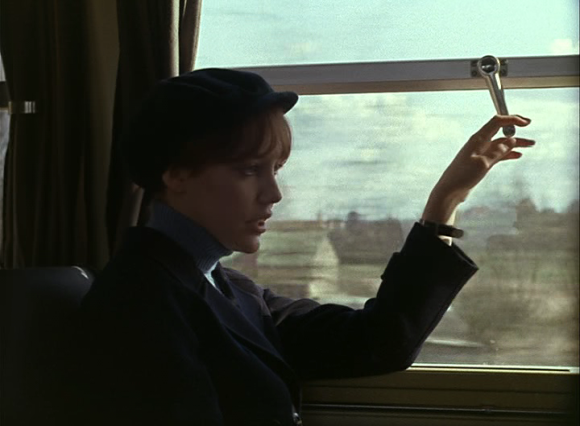
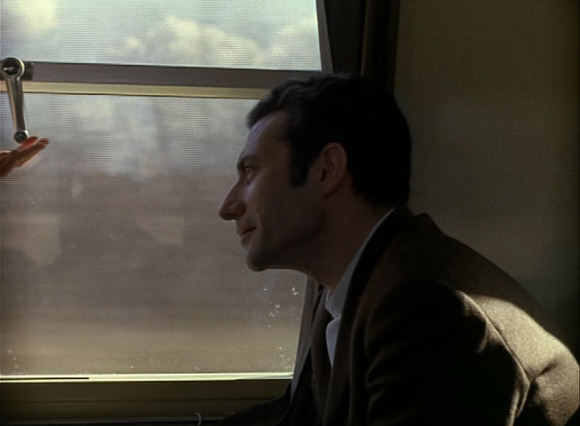
La Chinoise is a kind of remarkable film. I say kind of remarkable because it is also enigmatic and therefore its remarkableness is still very much open to interpretation and evaluation (but isn’t most Godard?). One asks is Godard serious or making fun? Is the film a polemic or a comedy? Is it meaningful or ultimately empty? I can’t say. Many others have done a far better job than I at exegeting the film. But I can say there is one scene I believe is the centerpiece of the film, at least philosophically. That scene is the discussion on the train between Veronique and Blandine Jeanson (playing himself).

Veronique argues for violence.

In that scene they talk about the value and implications of using terrorism in the service of a cause. Veronique, and the revolutionary cell of which she is a part, is planning on using a bomb to kill some students and teachers at the university in order to jump-start a revolution. She argues that the bomb will convince others of the seriousness of their cause. Jeanson argues that violence will not produce the results she is looking for. In fact, killing others will only cause everyone to turn against her and her political group.

Jeanson argues for non-violence.

From my perspective Veronique seems very naive. However, many people felt similarly in the 1960s and early 1970s. I suppose some still do. What would drive a person to such conclusions as Veronique? The Weather Underground explores just such a question.

Haskell Wexler films the Underground.

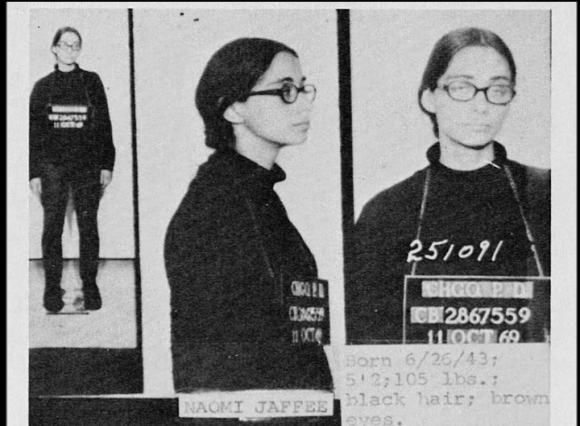
The activist group The Weather Underground began as the Weathermen, a radical outgrowth of Students for a Democratic Society. The film The Weather Underground is a history of that group and the times in which it functioned. It is one of the best documentaries I have seen.

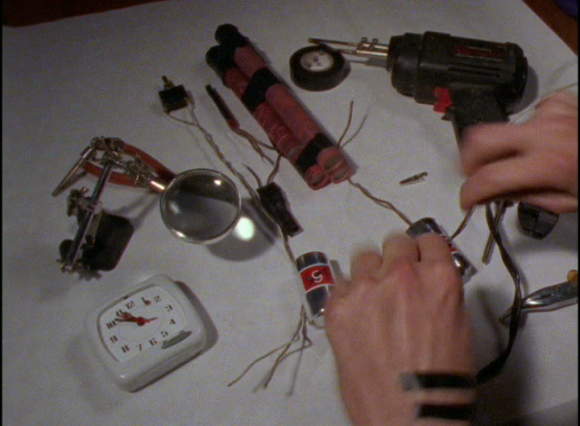
Bomb making.

What drove the Weathermen was a desire to change the world. Frustration in the slowness of change, and even the continued deterioration of certain concerns (such as the escalating war against the Vietnamese), gradually led the group down the path toward violent action.

A revolutionary gets nabbed.

Much of the film includes interviews with former members of the group. It is fascinating to hear them describe what choices they made, why they made those choices, and what they think of them now. There is a lot of regret for some of the former members. In a sense the film pulls back the romantic veneer of the 1960s anti-war movement and shows a more realistic complexity. What we get is something that makes La Chinoise appear to be both more profound and more like a cartoon of itself.

>sunday morning coffee and books

>

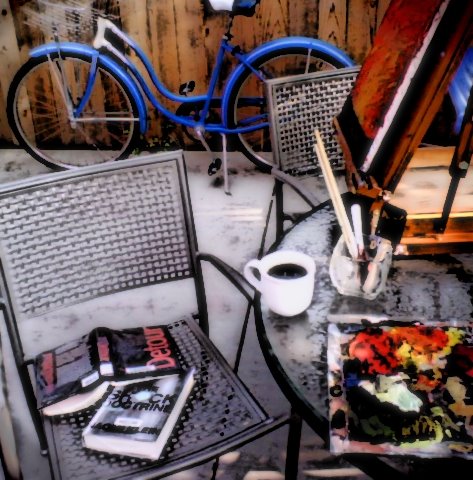
Sometimes it is a perfect pleasure to sit outside on a Sunday morning, before the day has turned its heat against us, and read a good book or two while drinking black coffee. So it was this morning.

>a foreign policy

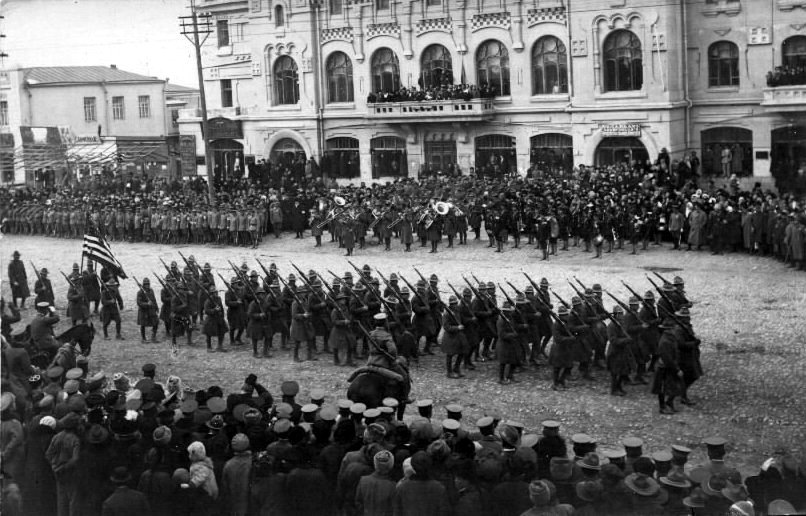
>What makes this image so interesting?

Those are U.S. soldiers marching on Russian soil in order to fight the Bolsheviks after the Russian Revolution of 1917. Yes, the United States, along with several other countries, invaded the fledgling Soviet Union to put an end to their civil war and destroy the chances of Lenin and his comrades from establishing the first communist country. They failed.

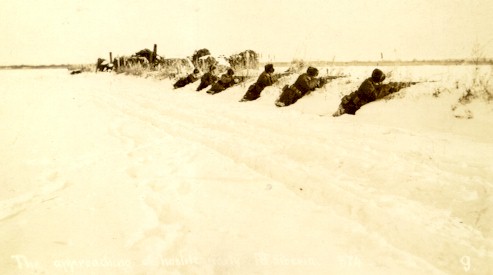
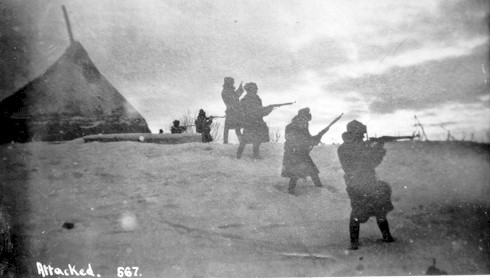
Below are a couple of additional pics of U.S. soldiers suffering the harsh winter in northern Russia as they take the fight to the communists. One wonders if the extreme paranoia of the Soviet leadership towards the U.S. government didn’t stem, in part, from this failed attempt to turn the Bolshevik tide at its most critical time. Regardless, it is a fascinating time in history that I knew nothing about.

Here is some movie footage of the event:

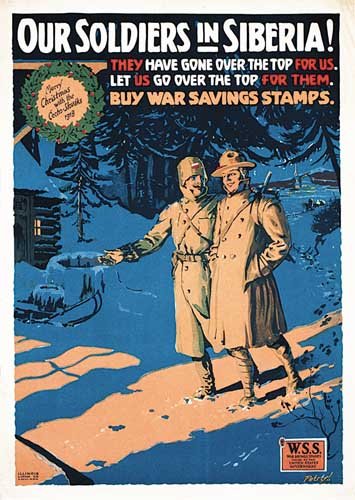
There were even ads for government stamps to fund the affair.

I have to add that, although I have no particular feelings of fondness for Lenin and his buddies (to put it mildly), I am often non-plussed by U.S. foreign policy. These are the kinds of actions about which the U.S. public forgets quickly (if they know about it at all), but many others in the world do not forget so quickly. To me that truly is a “foreign” policy.

>some summits (and nearly so)

>

Doubly happy, however, is the man to whom lofty mountain-tops are within reach.

~ John Muir

In this post I reminisce.

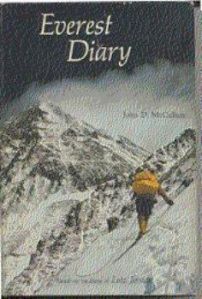
When I was much younger I got the idea in my head that I would climb a mountain. The idea was planted by my reading the book Everest Diary based on the personal diary of Luther “Lute” Jerstad, one of the first Americans to climb Mount Everest. I loved the book, still do. I quickly became an armchair mountaineer, which I still am. I read many climbing books, especially ones about climbing Everest (a.k.a Chomolungma). In college, however, I decided to embrace my dreaming and actually climb a mountain.
Given that I am a “book person” I learned how to climb mountains first by reading books on the topic. I learned how to use crampons and an ice ax. I learned to use a rope and belay another climber. But no amount of book reading compares with putting on your boots and trying to scale a mountain. So eventually I had to do it. I have to say, though, that I am not mountaineer, just an enthusiast, and mostly still from the armchair.

The following are the mountains I have summited, or nearly summited. All are in Oregon except Longs Peak, which is in Colorado. All these were climbed by me more than 15 years ago.

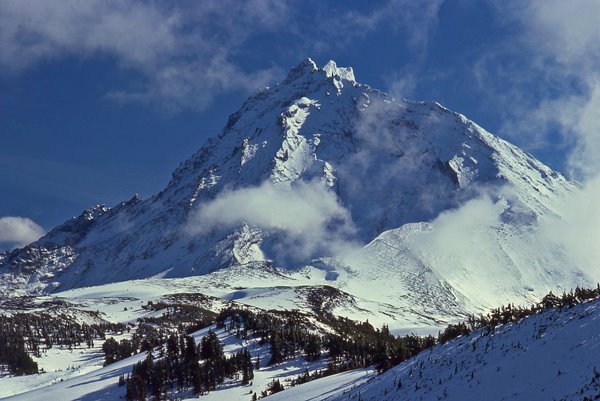
North Sister (10,085 feet, 3074 meters)
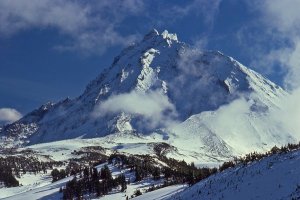
The North Sister is a beautiful peak and one of a group of three dormant volcanoes called The Three Sisters. Of the three it is the most rugged, the oldest, and the most difficult to climb. I have summited it twice. The first time I climbed with a friend – both of us were essentially novices and we traversed an exposed slope near the top without a rope. I vowed never to do that again. The next time I climbed with the local Mountain Rescue team – plenty of ropes this time! I held my own, but was in so much pain getting back to the car that I vowed never to climb another mountain unless I was in sufficient physical shape.

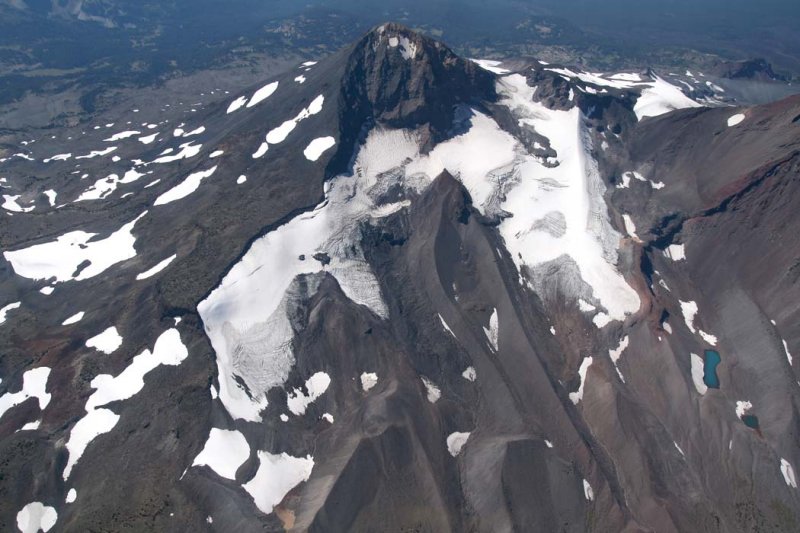
Middle Sister (10,047 feet, 3062 meters)
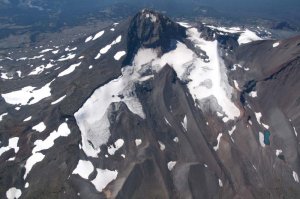
I climbed the Middle Sister with my dad. I felt strong and the weather was beautiful. For my dad it was his first mountain climb. The Middle Sister is not a technical climb from the North, which is the way we went. The North East face, however, is a good training ground for steep snow climbing.

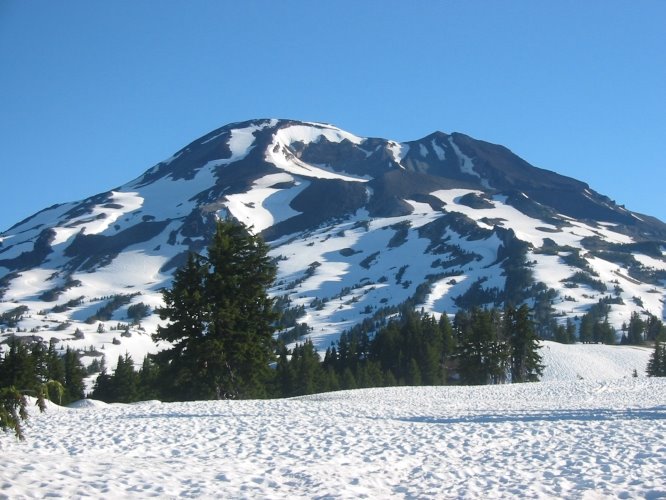
South Sister (10,358 feet, 3157 meters)
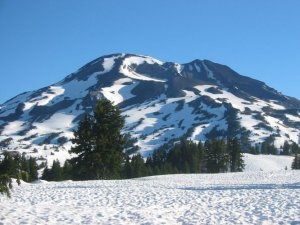
The South Sister is the third highest peak in Oregon. I have summited the South Sister twice and it was my first mountain summit. The climb is essentially non-technical climb. It is therefore is a popular climb for many first-time climbers. It is one of the most climbed mountains in Oregon. Mostly it is just a long 5.5 mile hike uphill from the trailhead (or an 11 mile round trip from the car with a mountain in the middle). On any weekend in August one might find 10 to 50 people on the summit. On its summit is a small lake (when not frozen over) called teardrop pool. It is the highest lake in Oregon.

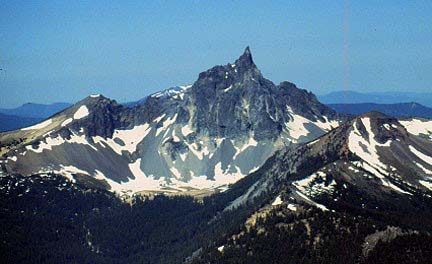
Mount Thielsen (9,182 feet2,799 meters)
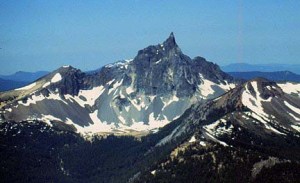
Mt. Thielsen is called the lighting rod of the Cascades because of its spire-like summit. This is an old volcano. Most of the mountain has fallen away and what remains is the inner plug. Most of the climb is easy, but the last 50 feet is a rocky scramble to a small pinnacle that can hold about three people. Many climbers rope up at that point, but I didn’t, and didn’t feel the need to.

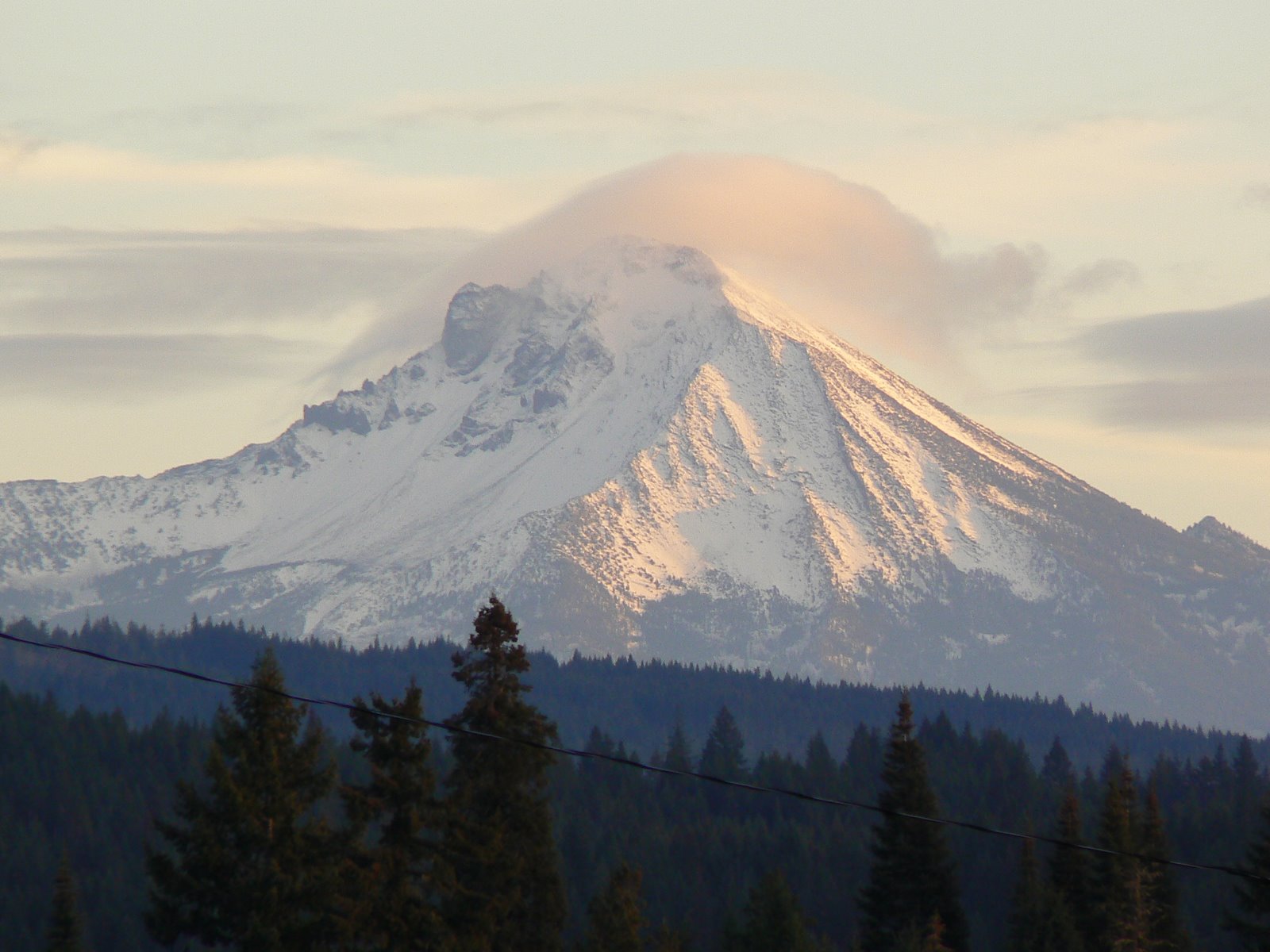
Mount McLaughlin (9495 feet, 2894 meters)
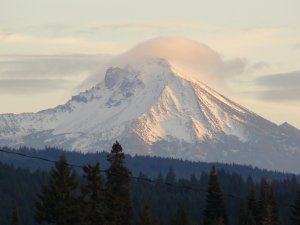
The day before climbing Mt. Thielsen I climbed Mt. McLaughlin. The trip went something like this: Saturday drive five hours to Mt. McLaughlin, climb it, then drive to Mt. Thielsen trailhead, sleep on the ground under the stars, Sunday morning climb Thielsen, then drive three hours home, sleep in comfy bed for ten hours. It was a long weekend, but was also a lot of fun. Climbing Mt. McLaughlin is as technically easy as the South Sister, but not as long.

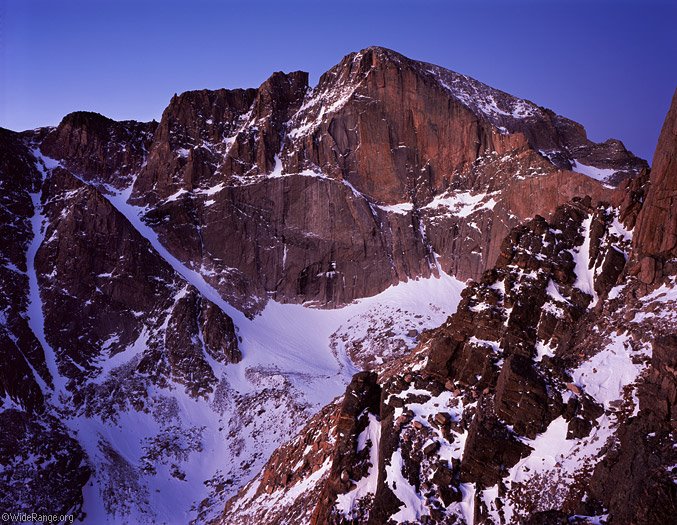
Longs Peak (14,259 feet, 4,346 meters)
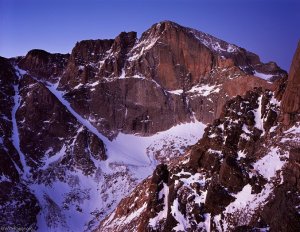
In the Spring of 1984 I and a group of fellow students tried to climb Longs Peak. We got up to 13,200 feet elevation, about 1000 feet below the summit at a place know as the keyhole. We had to turn back because of a storm that had blown in. Climbers were coming off the top and telling us that it was getting dangerous above. The wind where we were was very strong coming through the keyhole. There is a stone climbers hut near the keyhole where we met a bunch other folks. The heavy wooden door to the hut had been blown off its hinges and was no longer to be seen. To make up for the disappointment of not summiting several of us decided to race each other back to the cars. We ran in heavy hiking boots and carrying daypacks about 6 or 7 miles downhill. Needless to say I wish I could do that today, but my knees won’t let me and my lungs thank my knees.

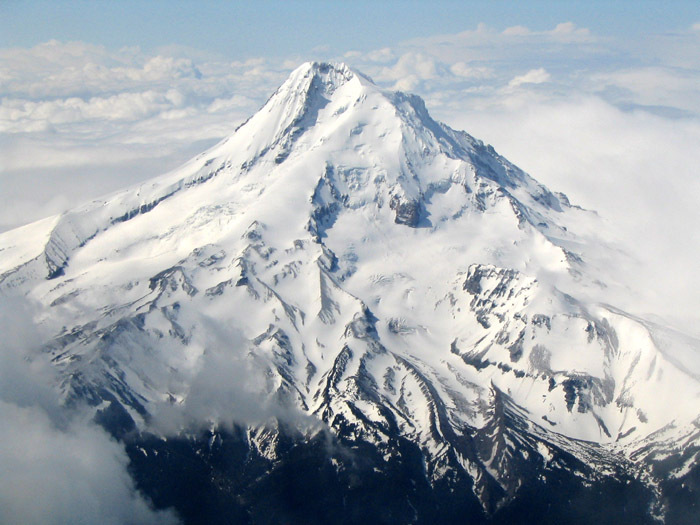
Mount Hood (11,249 feet, 3,429 meters)

Mount Hood is the tallest mountain in Oregon and one of the most climbed mountains in the world. I and two friends attempted to climb it in the early 1990s. We started from Timberline Lodge at around 1:00 AM. The day was stunningly beautiful. We could see all the way South to Mount Shasta in California! We got very near the summit, but then one of my friends got sick and couldn’t go any further. We decided to head down, ascribing to the philosophy that we would be back soon enough. I have not been back. But I still plan on climbing it someday.

Many people believe that climbing mountains is something they could never do. Climbing mountains is very near lunacy they assume. Why would anyone want to do such a thing, they ask. Maybe they are right, but I have to say that there is nothing quite like the experience. Many peaks are technically easy to climb, most are just an uphill trail to the top. Standing on top of a mountain is glorious. The exercise is tremendous. I say pick one and go! Of course, do your homework and be prepared.

>independent media and the future

>

If a nation expects to be ignorant and free … it expects what never was and never will be.

~ Thomas Jefferson

It ain’t what you don’t know that gets you into trouble. It’s what you know for sure that just ain’t so.

~ Mark Twain

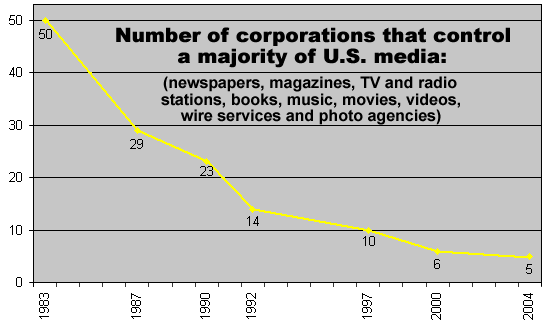
Where do you get your news? Increasingly I find myself seeking out alternative sources of news, that is, independent news. I am deeply concerned that a small group of very large corporations own most of the media in the U.S. (See the chart below.) I am certainly not against all corporations, or even the idea of corporations, and I am not against the idea or the fact that most news outlets are companies with bottom lines. But in practice, corporations, especially large corporations, do not want democracy in the same way that the average person thinks of democracy.


Chart from the Media Reform Center.

Democracy is messy, unpredictable, works from the ground-up, is slow in making decisions, includes everyone, and is uplifting to both the individual and the masses. Democracy also challenges capitalism because capitalism seeks that all problems be solved by the market and the inherent selfishness of the individual. Ideally democracy requires compromise and some level of caring for others. Corporations want to reduce that messiness in order to maximize profits and makes them more predictable. Democracy wants to keep that messiness in order to foment the exchange of ideas.


The “corporate flag” by Adbusters.

Corporations are, by definition and design, expressions of capitalism. Thus, if democracy gets in the way, or even threatens the forward march of capitalism, then corporations will usually choose capitalism over democracy. That, at least partially, explains the constant collusion between big business and government. But a thriving democratic government takes active and informed citizens. If only a handful of corporations own all the media how does that affect the news citizens receive? Do we get the full picture? Do we have the facts we need to be committed to democracy and make informed decisions?

We all know the world we live in today is saturated with an overwhelming amount of information and entertainment, and that much of it is just garbage. And we know this includes the mainstream news. We live in an age of gross media mediocrity. Mainstream news tends, regardless of its name or origin, tends toward homogeneity rather than true diversity. But there are still many good alternative news choices, if one makes a little effort to find them.

Recently the National Conference for Media Reform highlighted some of those good choices. There is a groundswell of independent media in this country. Much of it is driven by its opposition to the War in Iraq and the never ending War on Terror.* It is also driven by the Internet. One of the key moments of that conference was the speech given by Bill Moyers.

Moyers speech is truly wonderful and worth taking the time to view.

Adbusters was there too. Here they interview several individuals, like Robert Greenwald and Amy Goodman, who are playing important roles in the independent media movement:

http://blip.tv/scripts/flash/showplayer.swf?enablejs=true&feedurl=http%3A%2F%2Fadbusters%2Eblip%2Etv%2F%2Frss&file=http%3A%2F%2Fblip%2Etv%2Frss%2Fflash%2F993923&showplayerpath=http%3A%2F%2Fblip%2Etv%2Fscripts%2Fflash%2Fshowplayer%2Eswf

Independent media is not a guarantee of democracy or of quality news. But it does offer a better chance for building a foundation for good debate and informed choices. Of course the individual still has to take responsibility for sorting through it all. But that process is, in itself, informative.

I truly believe the future of this country, and of the world, politically, socially, and economically hinges more on the future of independent media and its relationship to democracy than just about anything else, along with love, human sin, and the hand of God of course. I should say that when I refer to the future of this country and the world I have in view a future where democracy and peace can thrive, and where ordinary people play a greater part in shaping this world and creating flourishing lives. It is not a complicated vision.

I have recently discovered the links page at the Independent Media Center. This looks like a decent place to start looking for alternative un-embedded sources of news and opinion. Feel free to suggest alternative news sources you enjoy.

I have just added this clip which takes a look at the new Newseum, or news museum, and highlights some of the same concerns I mention above:

*One of the ironies of alternative news is that by being animated by the ideals of a democratic society such news begins to look and feel radical and even “left wing” regardless of the issues. Democracy should not, in my opinion, be a radical idea in a free society, but it often seems that it is.

>biking to work

>Two weeks ago I started biking to work. It makes sense given gas prices, but my main reason is to make concrete choices to get healthier. I want to be a more active person, do more outdoor activities, play with my kids, live longer, and have more energy. Biking to work seemed to be a good place to start.

The trip takes about 30 minutes. So I get an hour of cardio workout each day. I have to say that I do feel better. I can tell that the riding is helping. I also have to say that a big extra for me is just getting outside. I work in an office all day. Riding my bike puts my face into the wind. I see the morning arrive, I see the city wake up, I feel closer to nature which is good for the soul.

Also, I do like sticking it to the gas companies. I just know they began trembling in their oil-soaked boots as soon as I began riding my bike. Can’t you hear their gnashing of teeth?

My goal is to become a long-term bike commuter. I want biking to become a normal, everyday part of my life year-round. I don’t see gas prices ever going back to where they were, and maybe they shouldn’t. Where prices are now is probably closer to what they actually should be. Regardless, biking doesn’t require gas, nor does it produce carbon dioxide.

If there is a downside it’s that I need to get to work by 6:00 AM. But that’s not really so bad. I’m used to it, and I get done with work by 3:00 PM. Of course I do get sleepy around 8:00 PM.

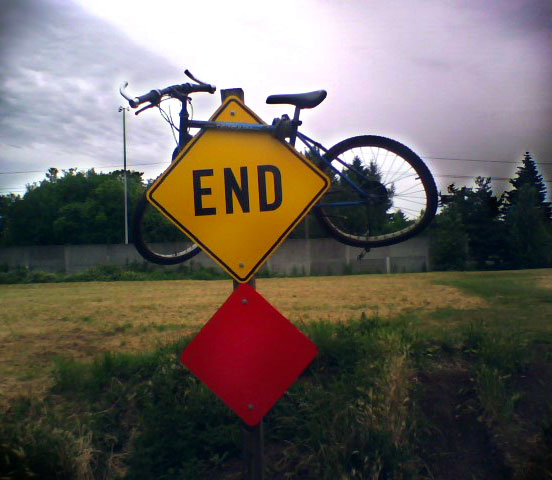
I took the picture above yesterday. I would like to believe every end is also a beginning, but I think that bike really has met its end.

>the true light

>1.
Where are these times,
these moments so in the clutch
of nomads: history and faith
and dark matter?

Where are we now, our souls
I mean, when we lay down
at night, flying between stars
and dust?

Who has taken us, is taking us,
through this murky
looking glass,
more deeply into our present,
more deeply into our wondering,
and deeper still into our darkened selves?
(More glorious than we can admit.)

Can we stand?
Can we stand it,
stand this hope in truth and love
and mercy?
Can we hope that much?


2.
What goes for understanding
on this outer crust?
The trees bare their leaves,
the flowers open,
the robins sit nervously
on the fence rail,
the park is full of children,
the machines make machines.

What is our shape, our color,
our wishful thinking?
I wonder.
I wonder about these things
like a stone cracks another.
Hulking shoulders or
straining sinews
cannot pull down my wondering.

And I take in the news,
which burns like paper
and disappears like vapor,
so that I might know.
I know so much less
I know.

3.
I think about my my children’s future
everyday.

Blood flows in the streets,
under the rubble,
into the sand.
Limbs go missing like
a favorite song that cannot
be remembered.
Only my children do not yet
know the song.

I hope they never know.
I hope they understand.

I think about my loved ones
who live in me.
Fire can rain down,
chariots can crush,
deceit can harness the darkness,
but I have seen a ghost,
like the wind in the trees.
I pray for my loved ones.

I pray about the future
when I think about today.

And this is the true light:
Love the poor,
Love the weak,
Love the hopeless,
Love the dying,
Love the orphan,
Love the homeless,
Love the widow,
Love your brother,
Love your enemy,
Love the other.

– June, 2008

>vive la commune | vive la vérité

>

Freedom of the press is guaranteed only to those who own one.

~A. J. Liebling

One of the most fascinating and important scenes in Watkins nearly 6 hour (the shortened version) masterpiece La Commune (Paris, 1871) is when the established press (print) discusses with the burgeoning Commune TV* crew about the nature and goals of journalism. They argue over the nature of television news and its relationship to the worker’s uprising and the establishment of La Commune de Paris (the temporary socialist/anarchist government that ruled Paris in mid 1871).

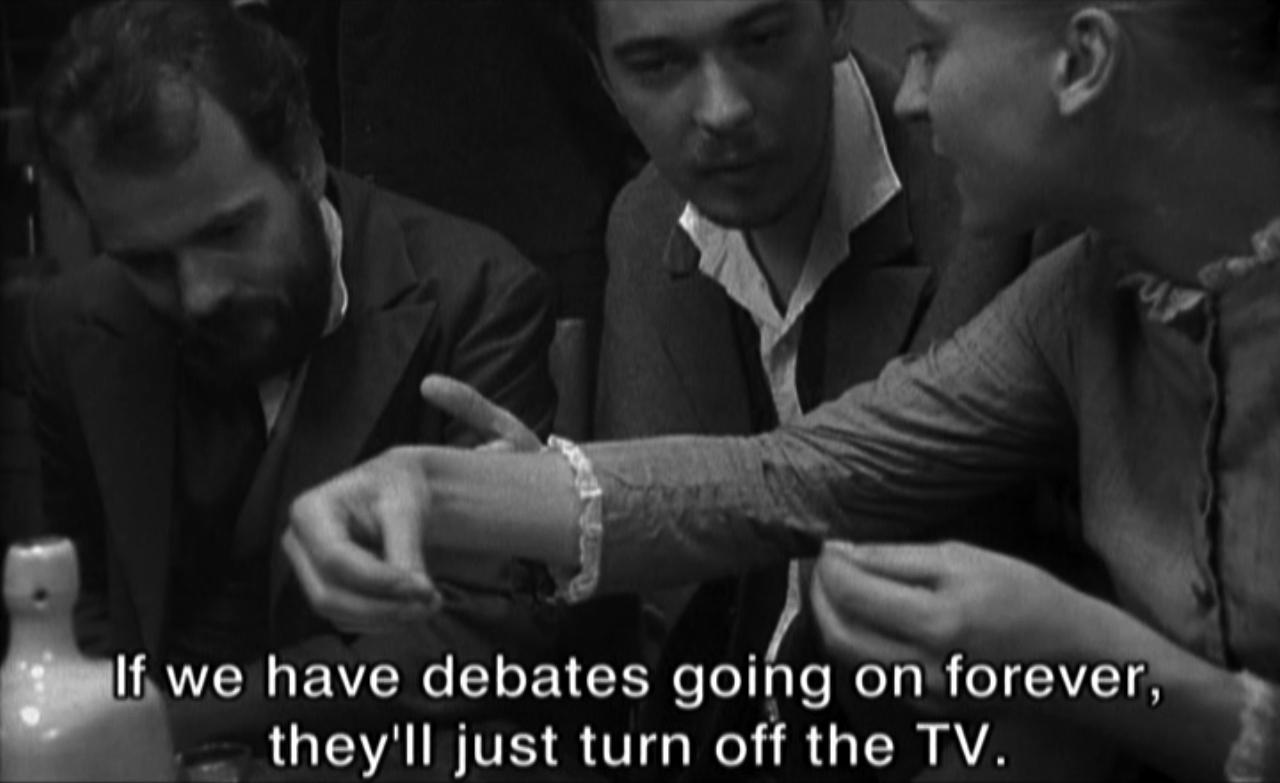
The question on the table is why the television team doesn’t dive more deeply into the issues and, in particular, focus on the debates raging within the new government about its policies and procedures. The short answer is that serious debate just isn’t appropriate to the nature of television. This is the same concern we have today.

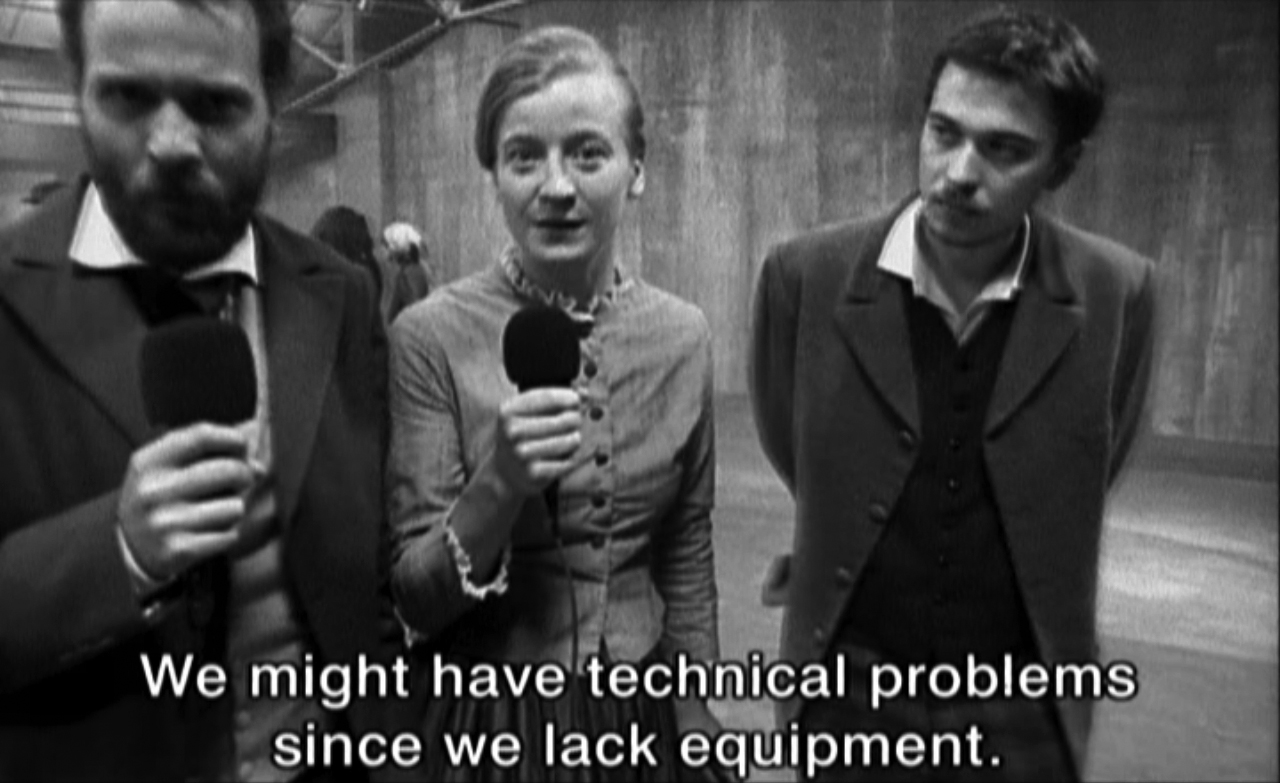
At its inception Commune TV was all enthusiasm. They had taken/stolen some television equipment and started covering the revolution like some community television crew – great ebullience and limited technical knowledge.

Here the two reporters, male and female (as apposed to the single male reporter for national television), introduce themselves. Alongside them stands a representative of the revolutionary press.

Commune TV gets many of its ideas from the press. In some ways they become a kind of mouthpiece for the revolutionary newspapers, but they also back away from getting too deep into the issues. Their goal is to primarily give voice to the citizen revolutionaries. So they provide lots of individuals’ opinions and talking heads without a lot of organization.

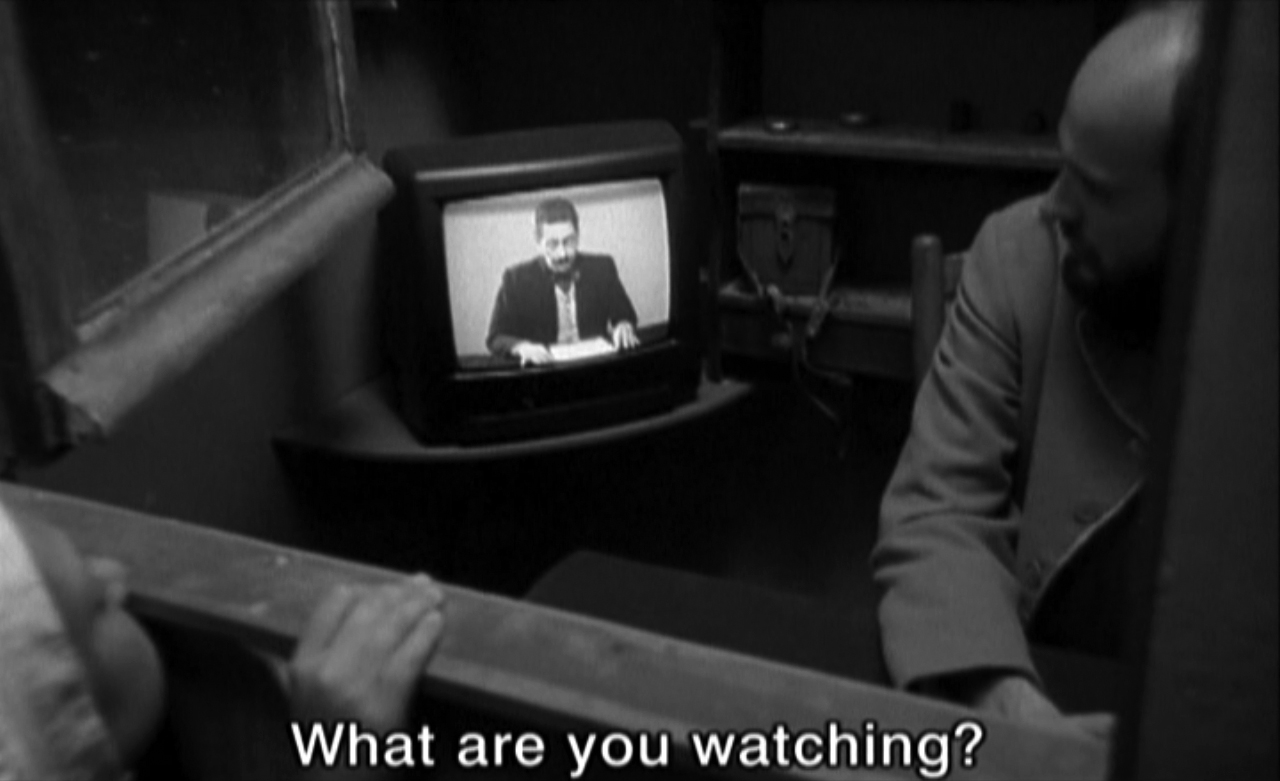
The national television station provides the “official” perspective on the revolution. This perspective represents the traditional bourgeois and ruling class interests. Its format and style is much more professional and apparently reasonable, conveying ideas and perspectives in a droll monotone as though they are merely unarguable facts.

And here is the scene in which the revolutionary press argues with Commune TV about how they cover the revolution and why they don’t present some ideas critical to the raging debates about the new government and its direction.

The answer given by Commune TV is essentially two parts, 1) They don’t want to cover anything that isn’t import, thus censoring their coverage based on what they like and don’t like, and 2) They don’t like long, drawn out debates, rather they like short, exciting pieces that keep people interested. In this way Commune TV provides a kind of in-the-trenches, embedded revolutionary news while following some of the assumptions of the national news about the television medium itself. Thus, what we find is that both the national television news and the commune’s television news provide limited and distorted perspectives on what is happening.

La Commune (Paris, 1871) is a remarkable film. It is a far more important film than its largely unknown status might indicate. It will never be widely popular because it does not fit the mold of popular films, but it is both mesmerizing and challenging. By raising the questions of what is the role of news and, in particular, what is the role of news in a time of revolution (war), this film calls us to re-evaluate the present. We are in a time of revolution. There are those today who, with unprecedented corporate power and military might, are seeking to shape the world according to imperialistic philosophies of power. This is truly revolutionary. And the mainstream media plays along. I would argue that we need another revolution, one that is not based on imperialism, “might equals right”, corporate greed, or nationalistic patriotism – even if the words freedom or democracy are attached.

If this is brought up in polite conversation many will say, “I just don’t see it.” At least that has been my experience. But we are often like fish in water when it comes to our own culture. I think of it like the visual puzzles that look like one thing, but if you stare long enough, and maybe with someone guiding your vision a little, you begin to see the “buried” image hidden within. Look behind our popular media and you will find amazing and troubling things.

That is why I like Democracy Now.


Amy Goodman and Juan Gonzalez of Democracy Now.

Democracy Now is just one outlet, but a great one for alternative news, and this is not an endorsement, just a statement of fact. Other outlets include The Guerrilla News Network and Truthdig.

What then is the role of independent news? The following video is one of the most powerful examinations of how the media and the Iraq war have and continue to go together like hand and glove. Without an independent media, without other sources of news, how are we to know what is really going on in the world? How are we to realize that when we think we understand even the basics we too easily don’t?

http://video.google.com/googleplayer.swf?docid=-6546453033984487696&hl=en

*Just in case your were wondering, television had not yet been invented in 1871. Watkins uses this creative device to draw comparisons with that era and ours, and the to highlight the relationship of news media to truth.