>Christmas Eve

>The kids are excited. We parents are thinking of all we still have to do. Friends are coming over for dinner and celebration this evening. I hope you too are having a good Christmas Eve.


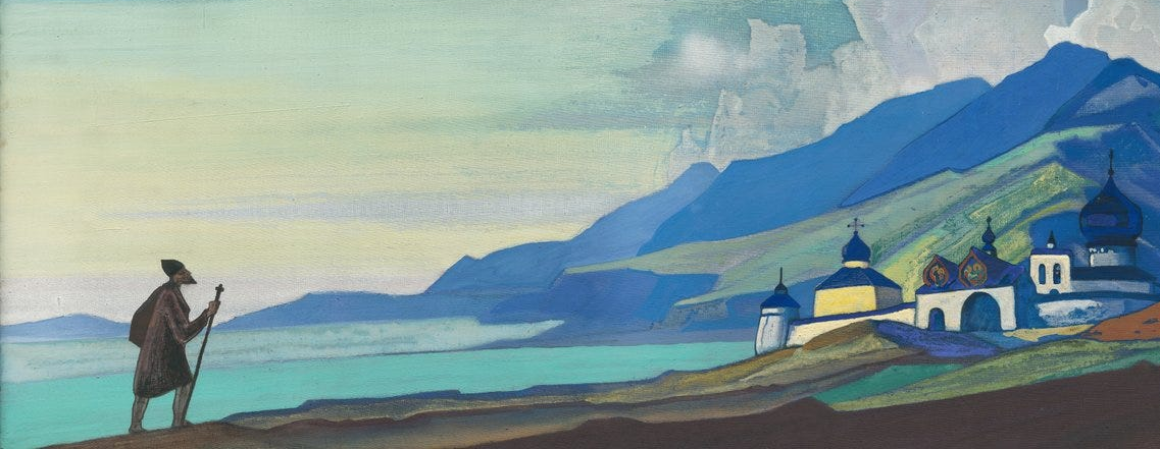
Vintage 1950s Soviet Christmas card

Lot’s more of those here.

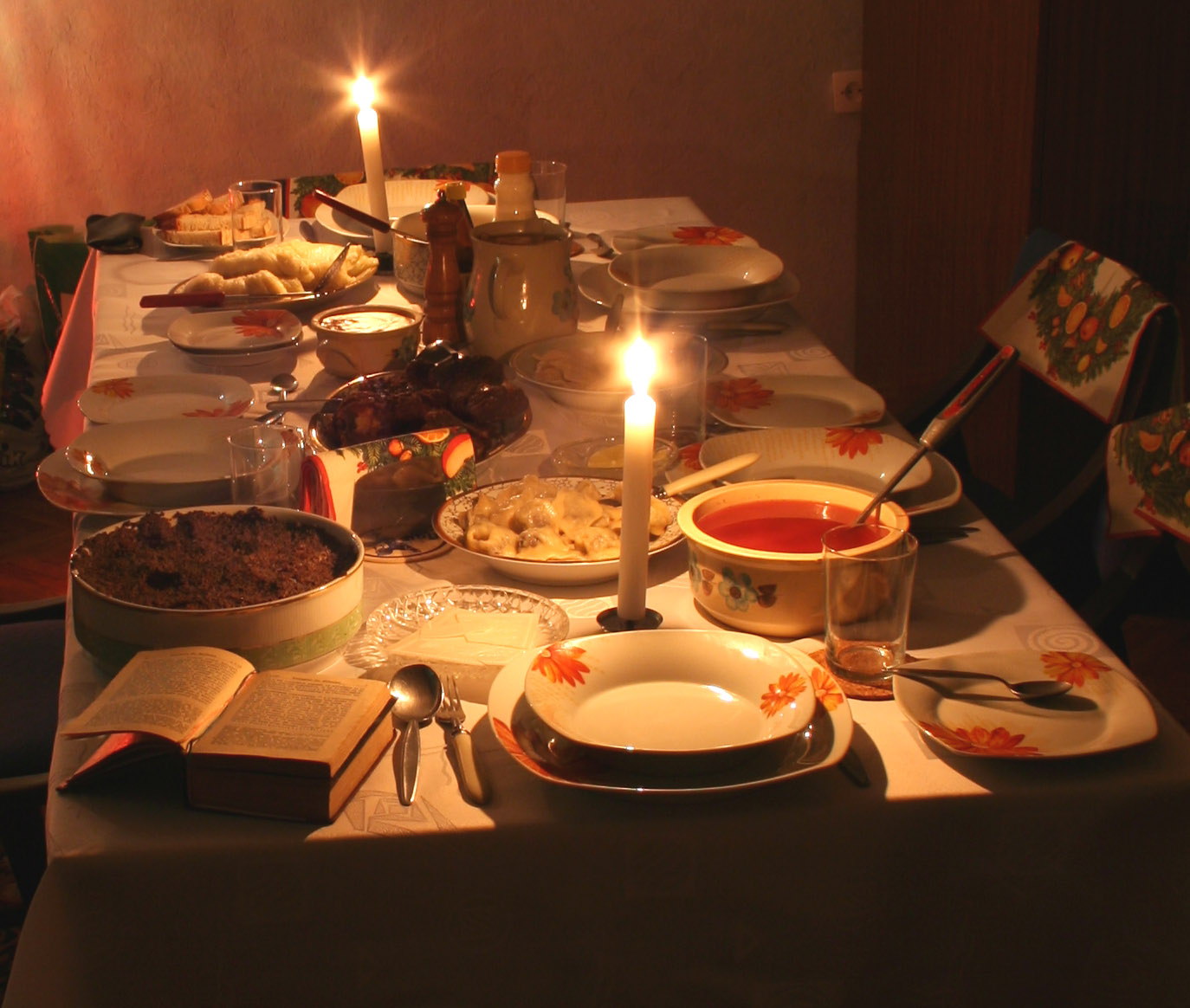
An image of a Polish table spread for a Christmas Eve feast:

I don’t know why I picked this image. We are not Polish. But we are having a feast tonight.

Special Christmas Eve bonus video:

>The Magnificat

>
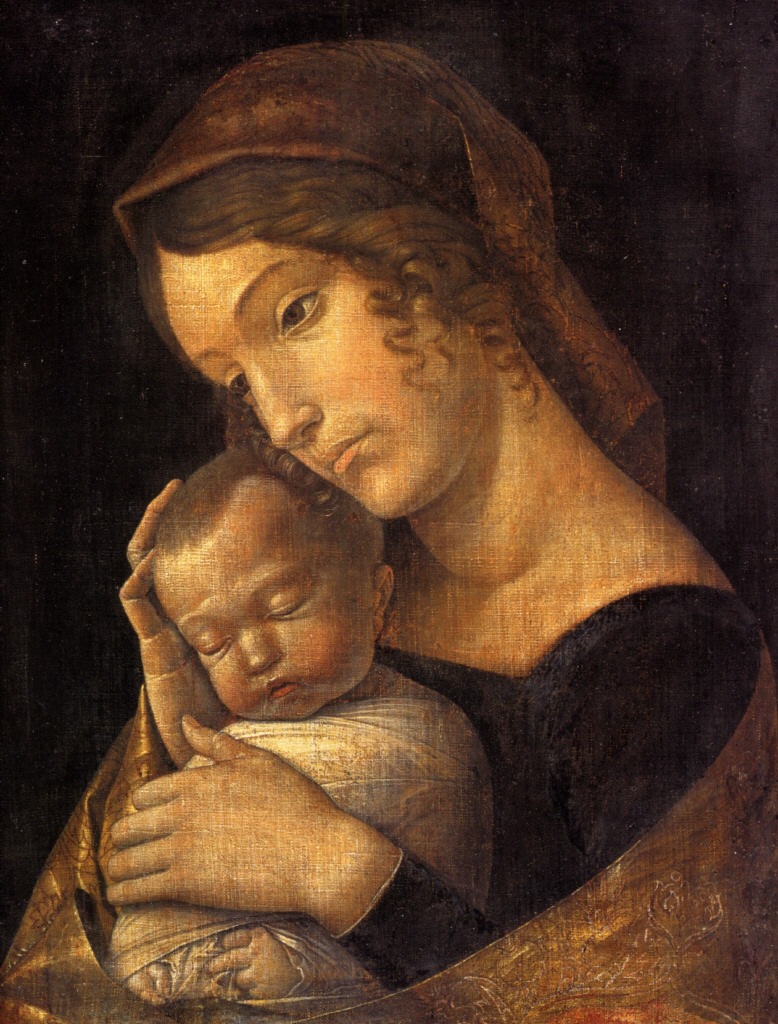
Madonna with Sleeping Child
Andrea Mantegna, 1465-70


And Mary said: My soul doth magnify the Lord.

And my spirit hath rejoiced in God my Saviour.

Because he hath regarded the humility of his handmaid; for behold from henceforth all generations shall call me blessed.

Because he that is mighty, hath done great things to me; and holy is his name.

And his mercy is from generation unto generations, to them that fear him.

He hath shewed might in his arm: he hath scattered the proud in the conceit of their heart.

He hath put down the mighty from their seat, and hath exalted the humble.

He hath filled the hungry with good things; and the rich he hath sent empty away.

He hath received Israel his servant, being mindful of his mercy:

As he spoke to our fathers, to Abraham and to his seed for ever.

* From the Douay-Rheims Bible

>radical is root: emergent once again

>Peter Rollins and Phyllis Tickle are two luminaries in what is being called The Great Emergence. That term, The Great Emergence, comes from Tickle’s book of the same name. That slim book may very well be destined to become a key work in the present and future history or Christianity. I am not yet convinced she is entirely right, but she is interesting and passionate. Rollins, another passionate “emergent”, has written a book called How (Not) to Speak of God which is also a key work of the present and future church.

Here are the two discussing several topics of present day Christianity:

I have to say I like these two a lot. I am still sorting out my thoughts on the whole emergent thing. I am in the process of reading their books as well. Sometimes I feel that I am in the middle of a personal revolution of sorts. Their thinking is helping raise questions that are acting like catalysts to my journey.

Note: I first came across these clips at the Emergent Village site.

>snow again

>

A couple days ago


I thought we were done with snow.

This whole week has been a snow week, affecting work and play, and taking care of my wife, who is still recovering from being hit by a SUV. I love snow, and I love being able to do work from home, but this is a big time of year for my job and the distractions of home make it more difficult to get work done. Of course the kids love it.

Now it is snowing again. This time a wetter kind of snow that won’t stay around as long – probably.


This morning


And again

>Jesus went to a seminar (and cast his vote?)

>

When we had better cable TV I used to love watching those Biblical histories, those “other” gospels stories, and the various histories of Christianity shows on the History & Discovery channels. A frequent guest interviewee on almost all these programs is John Dominic Crossan, one of the founders of The Jesus Seminar, and an interesting cat. I don’t know much about The Jesus Seminar, and I have nothing new to say about it, but the more I look at it the more fascinated I become. However, the more I look at it the more I also think it represents an entirely wrong way of reading the Bible, or really any work of literature, fiction or non-fiction. This is not to dispute the level of intense scholarship that some of its members achieve, nor the brilliance of individuals such as Crossan. Nor do I wish to dismiss the fundamental questions that it tries to answer.


John Dominic Crossan

One thing I find interesting and troubling is that the members of the Jesus Seminar vote on the authenticity of various saying and passages from the Bible. Voting isn’t a bad thing, and it can be a very good way of seeing which way the wind is blowing, as it were. But voting is neither proof nor argument, and thus it can muddy waters already in need of clarity. Voting is also a good way to have one’s say while hiding within a group. Of course Crossan does not hide his thoughts. And to that point I have to say that upon hearing Crossan talk about Jesus I don’t think he fully gets him. Crossan likes to point out that Jesus came to show us a different way to peace, the way of non-violence. Certainly Jesus taught non-violence, but that was a secondary purpose. He was an example for certain, but he was first a priest, and a sacrifice, and an advocate, and a king. He fulfilled a functional role in the story of this world, a role all about our relationship to God first, and then our relationship to each other.


I am not a defender of traditional orthodoxy per se. This is not say that I don’t believe in truth or in the veracity of the Bible, but I do know that there are a lot of “untouchable” doctrines that should be re-examined, even if only to more fully establish their validity. Christianity is a history of doctrines, among other things, and history has a way of entrenching ideas such that they have the appearance of immovability. There is a tendency among all of us to see what we want to see, which includes what we expect to see. With that in mind I welcome challenges to orthodoxy as catalysts toward truth. But it seems to me that voting on the authenticity of Bible passages is a sure way to see what one wants to see and expects to see. It’s a good way to see what it is a group of people generally want to believe. It is not necessarily the truth, or any closer to the truth. And it is not an argument for the truth.

Here are some examples of how the votes have played out regarding some of the most famous sayings of Jesus:

Authentic sayings, as determined by the seminar:

1. Turn the other cheek (92%): Mt 5:39, Lk6:29a

2. Coat & shirt: Mt5:40 (92%), Lk6:29b (90%)

3. Congratulations, poor!: Lk6:20b (91%), Th54 (90%), Mt5:3 (63%)

4. Second mile (90%): Mt5:41

5. Love your enemies: Lk6:27b (84%), Mt5:44b (77%), Lk6:32,35a (56%)

6. Leaven: Lk13:20–21 (83%), Mt13:33 (83%), Th96:1–2 (65%)

7. Emperor & God (82%): Th100:2b–3, Mk12:17b, Lk20:25b, Mt22:21c

8. Give to beggars (81%): Lk6:30a, Mt5:42a

9. Good Samaritan (81%): Lk10:30–35

10. Congrats, hungry!: Lk6:21a (79%), Mt5:6 (59%), Th69:2 (53%)

11. Congrats, sad!: Lk6:21b (79%), Mt5:4 (73%)

12. Shrewd manager (77%): Lk16:1–8a

13. Vineyard laborers (77%): Mt20:1–15

14. Abba, Father (77%): Mt6:9b, Lk11:2c

15. The Mustard Seed: Th20:2–4 (76%), Mk4:30–32 (74%), Lk13:18–19 (69%), Mt13:31–32 (67%)

Some probably authentic sayings, as determined by the seminar:

16. On anxieties, don’t fret (75%): Th36, Lk12:22–23, Mt6:25

17. Lost Coin (75%): Lk15:8–9

18. Foxes have dens: Lk9:58 (74%), Mt8:20 (74%), Th86 (67%)

19. No respect at home: Th31:1 (74%), Lk4:24(71%), Jn4:44 (67%), Mt13:57 (60%), Mk6:4 (58%)

20. Friend at midnight (72%): Lk11:5–8

21. Two masters: Lk16:13a, Mt6:24a (72%); Th47:2 (65%)

22. Treasure: Mt13:44 (71%), Th109 (54%)

23. Lost sheep: Lk15:4–6 (70%), Mt18:12–13 (67%), Th107 (48%)

24. What goes in: Mk7:14–15 (70%), Th14:5 (67%), Mt15:10-11 (63%)

25. Corrupt judge (70%): Lk18:2–5

26. Prodigal son (70%): Lk15:11–32

27. Leave the dead (see also But to bring a sword, Nazirite): Mt8:22 (70%), Lk9:59–60 (69%)

28. Castration for Heaven (see also Origen, Antithesis of the Law) (70%): Mt19:12a

29. By their fruit (69%) (see Antinomianism): Mt7:16b, Th45:1a, Lk6:44b (56%)

30. The dinner party, The wedding celebration: Th64:1–11 (69%), Lk14:16-23 (56%), Mt22:2-13 (26%)

This strikes me as odd. Is it scholarship? What do you think?

hero of the open city

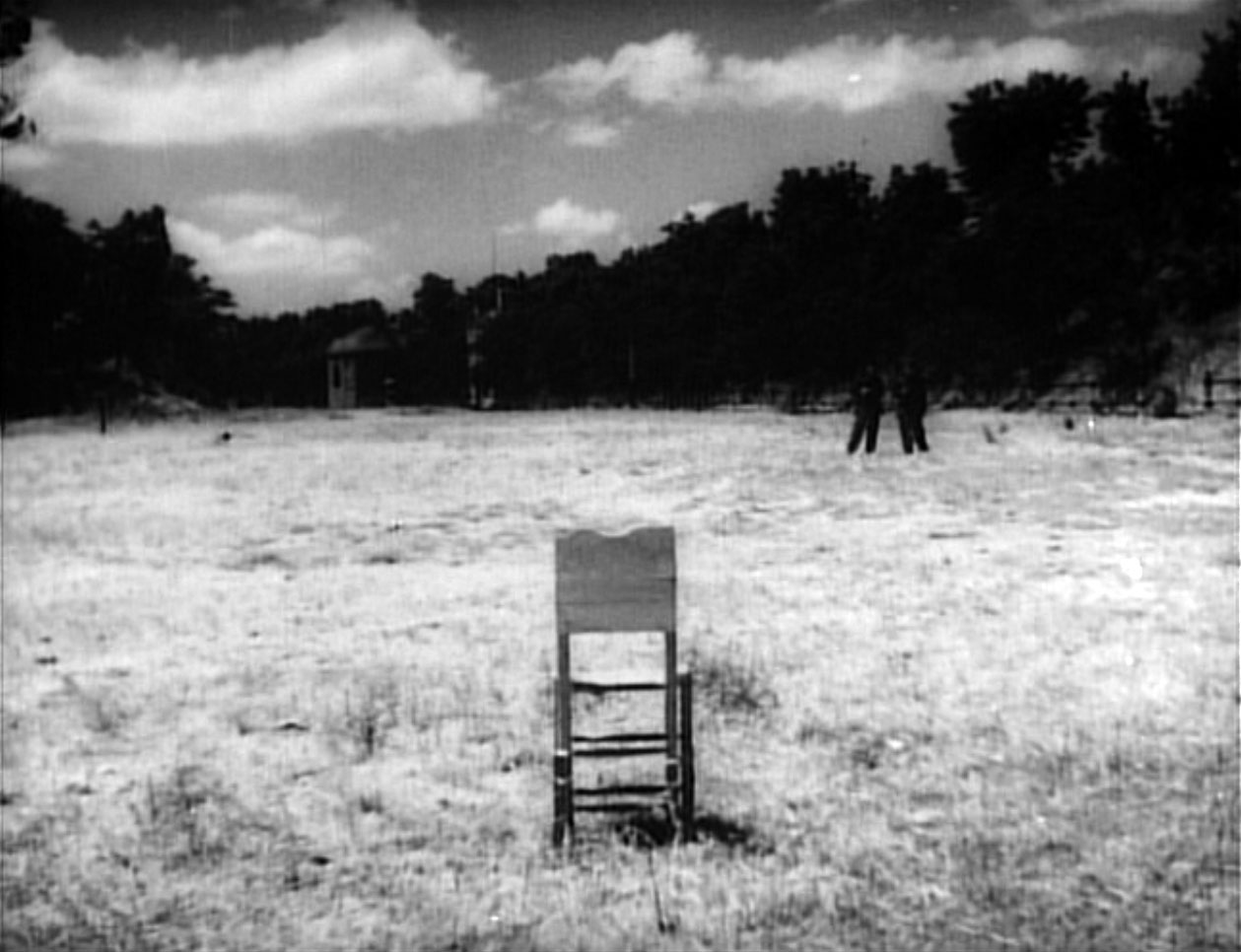
This is one of the most haunting images I can think of in cinema.

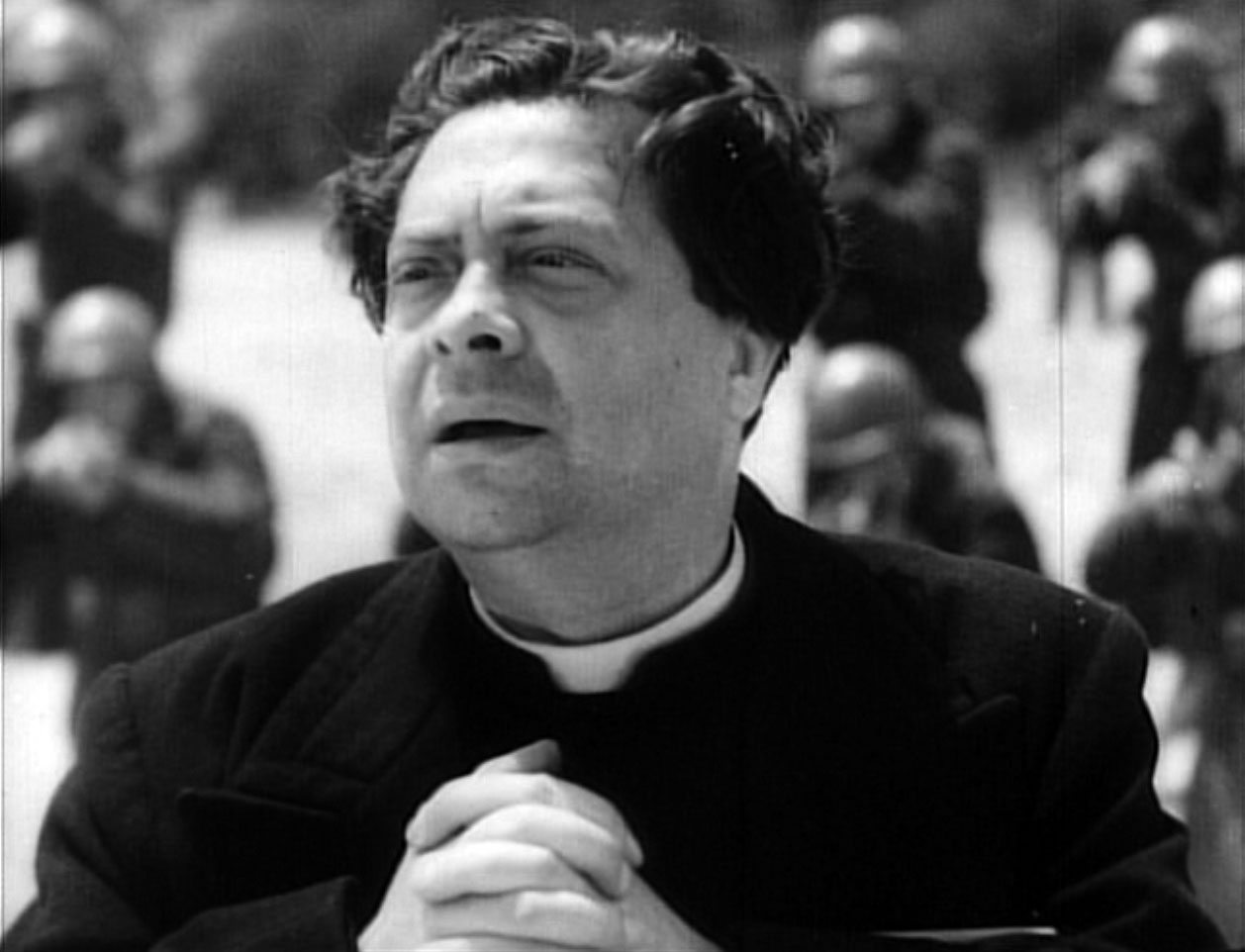
It is a simple image, not particularly artistic or striking. It is just a chair in a field on a bright sunny day, but it is loaded with meaning. This image comes toward the end of Roma, città aperta (1945). The chair is the place of execution of for Don Pietro Pellegrini (Aldo Fabrizi), a collaborator in the resistance against the fascists.


I find that great films often draw me in because of their heroes. Though I care about good cinematography and editing, or creative soundtracks and screenplays, what sticks with me longest are the heroes. And let’s not forget, superheroes are not heroes. Ordinary people who do what is right in the midst of extraordinary circumstances are heroes.* Don Pietro is a hero in this sense. A priest and a schoolteacher, he also knows that doing what is right trumps mere survival. He says, just prior to his execution, that it’s easy to die well, but living well is the real challenge. He is a man who lived well and the forces of darkness killed him for it.

I am not saying anything new here. If you’ve seen Roma, città aperta then you know I have not discovered anything new in the film. But I am struck by two things: 1) the film foregrounds the socialist/communist struggle against the fascists, and yet it is a priest of the most traditional of traditional Christian traditions who is the hero, and 2) it seems we don’t see these kinds of heroes in film as much anymore. What makes both of these points linger is the deep sense of humanity into which Rossellini taps.

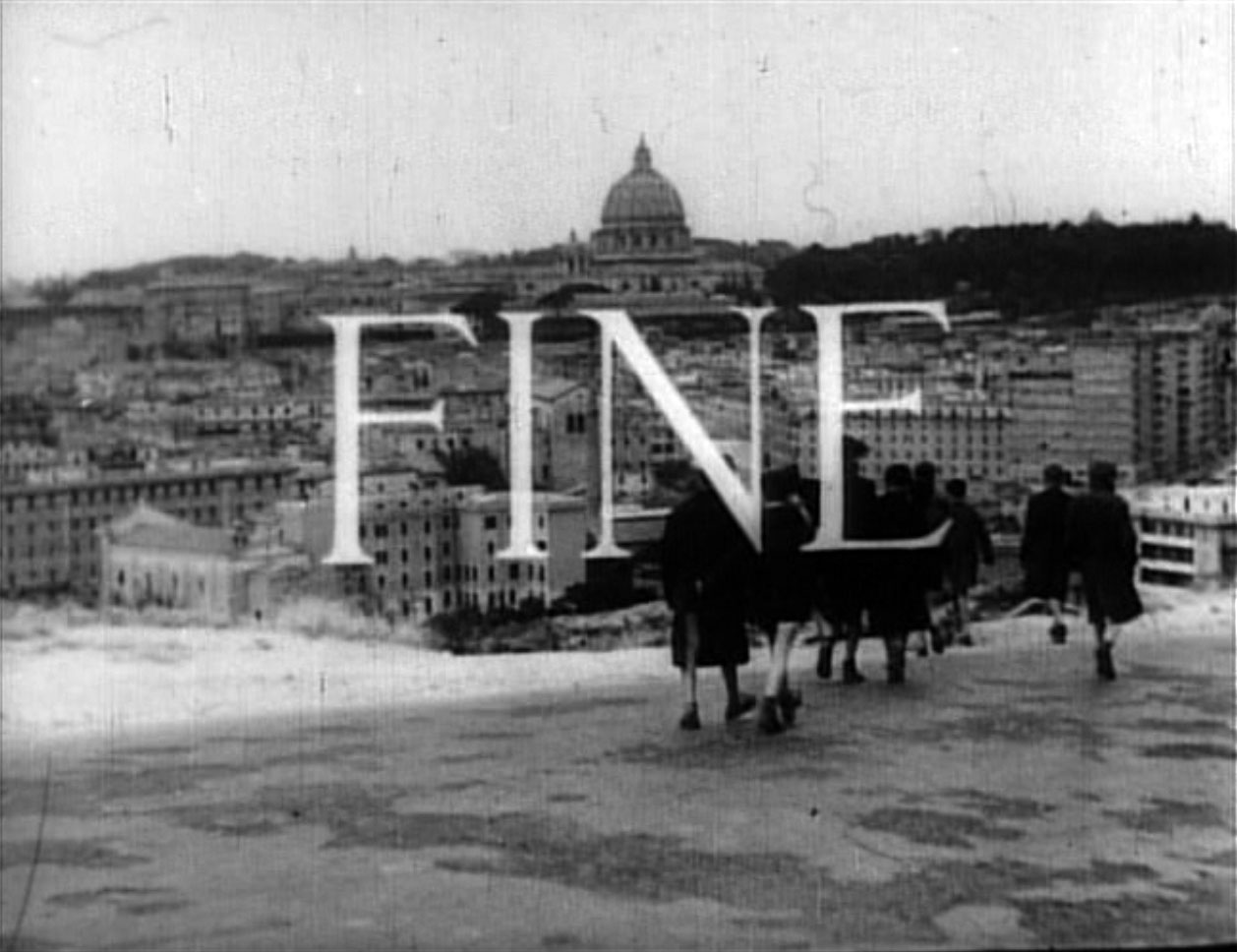
One aspect of Italian neo-realism is its ability to take the ordinary, portray it rather straightforwardly, and yet load it with both connotative and denotative meaning. The ending is a good example. After Don Pietro is murdered by the fascists, his students, who watched his killing, walk together back to the city. In the middle ground are modern apartment buildings. In the distance is the dome of St. Peter’s (I believe).

This image all about the future. Life goes on. The future will need to be rebuilt from the ruins of the present. These kids represent that future. The adults have let them down as a result of their wars. But their teacher has shown what a true hero is made of. It’s a simple ending, in a way. And yet, it has weight, depth, and irony. The irony comes from the fact that while we watch the future walk into the city we also see the word FINE across the image. It is both the end and a new beginning, however uncertain. This is the kind of filmmaking that I love.

*This may be why I find movies like Ironman to be all surface and ultimately unsatisfying – even boring. There are thrills but nothing really of any consequence. Ironman, as just an example of many, is somewhat entertaining, but already consumed and forgotten.

>Lotte Lenya

>

I recently viewed G. W. Pabst’s 1931 film version of The Threepenny Opera. That has led me down a path of discovery to Kurt Weill and, in particular, Lotte Lenya.


Lotte Lenya posing as herself

Below is a 30 minute documentary on Lotte.

part 1

part 2

part 3

>Richard & Mimi

>I am on a journey of discovery, and I feel like what I’m discovering is not new, but the footprints of those who went before me. That’s how I feel about my woeful and wonderful ad hoc wanderings though folk music. But I am not worried, I keep finding amazing gems everywhere.

Below are some clips of Rainbow Quest with Richard and Mimi Fariña originally broadcast Saturday, February 26, 1966. Tragically, on April 30, 1966, a mere two months after this show aired, Richard would be dead from a motorcycle accident. His death occurred only minutes after leaving his wife’s 21st birthday party. Mimi was the sister of Joan Baez.

I have to say that for all the improvements in technology since Rainbow Quest was on the air I can’t think of a better way to present great folk music. Sitting around a kitchen table, drinking coffee, and jamming with Pete Seeger is just the best.

>Phil Keaggy 1980

>You know it’s vintage when there’s a flute solo. More music from the early days of Christian rock:

>Holy Ground

>
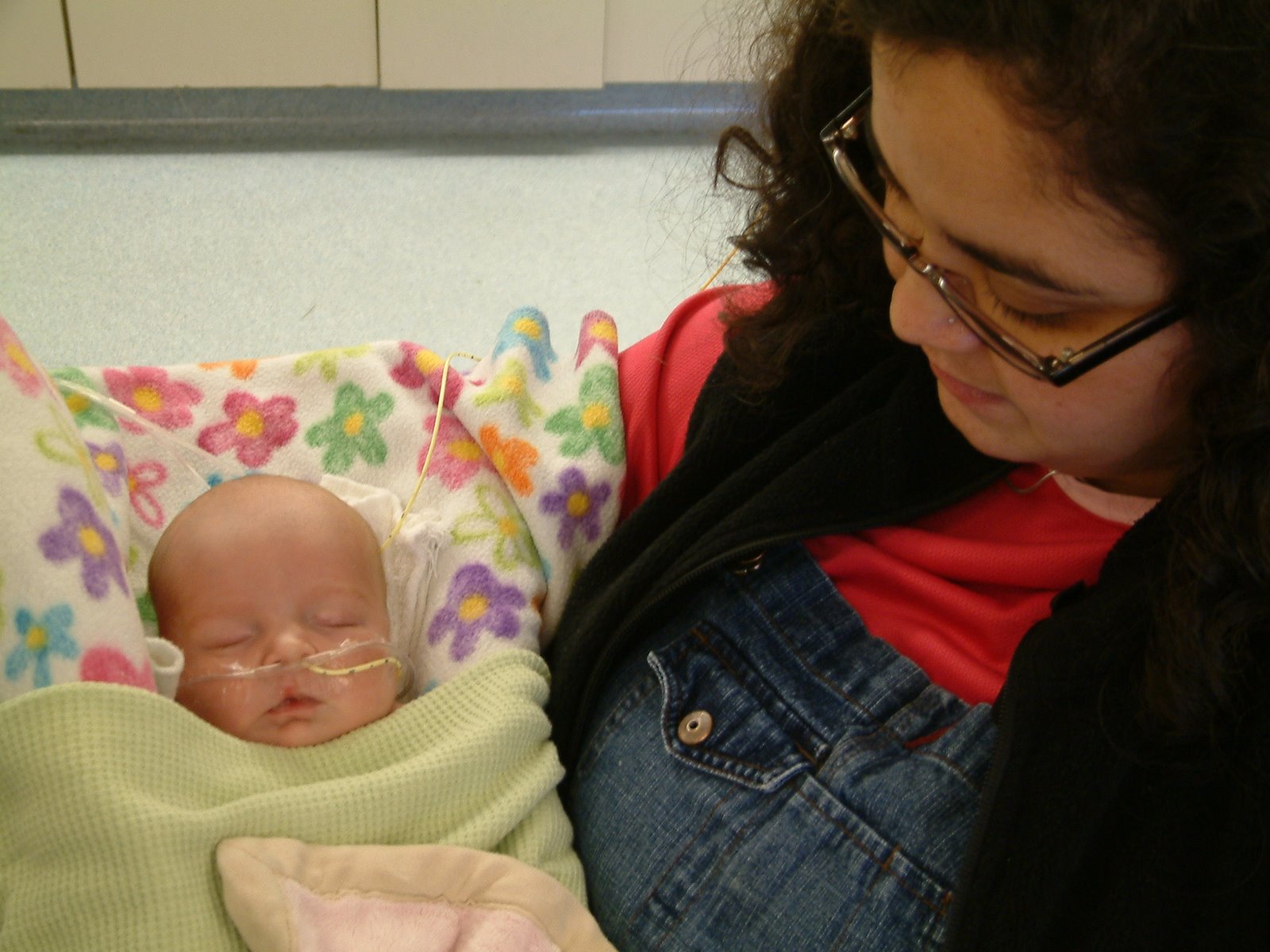
Today is the birthday of our middle daughter, Coco Madalena. She was born in 2005 with a congenital heart problem, was born a month early, had heart surgery a couple days after birth, and died of meningitis a month later. She would have been three years old today.

We have been unbelievably blessed with two other daughters who bring tremendous joy into our lives. Losing a child was one of the most difficult experiences in my life, but I have to say that God worked joy into our lives during that time. It is strange to suffer and find joy in the midst of suffering, but here we are again, in a way, with Maricel bedridden with a broken pelvis and an outpouring of love and help from friends and family.

Suffering is a kind of Holy Ground. It is where God reaches in to one’s life in a big way. God is always there, always present, always creating, but suffering can make his presence powerful. I think of Moses before the burning bush when the voice told him to take off his sandals for he was standing on holy ground. Moses was about to enter the next phase of his life, a life of great burdens and suffering, but also great joy. I don’t know what Moses felt at that moment, and I certainly do not put myself in the same category as him, but he must have felt a mixture of elation and dread. There is no more significant place to be this side of God’s kingdom than standing on holy ground, and no more difficult and terrifying place to be. Burning bushes are rare these days, but suffering is not.

At Coco’s wake, in January of 2006, I read the following words:

Last June, when Maricel and I found out that we were pregnant, we were so overjoyed. I could not have known that seven months later, on a rainy Thursday evening, I would be holding my beautiful daughter in my arms when she died.

There is no doubt this whole process has been very emotional and difficult for us. I have never cried so many tears. And yet, we have also found great joy and much for which to be thankful.

We are amazed at the concern that so many people have shown toward us. In so many ways people have come along side and helped us, whether through prayer, letters and emails of encouragement, meals, places to stay, taking care of our needs, and just being there when we needed moral support. I cannot begin to thank you all for your love and care.

We are also so thankful for the doctors and nurses at OHSU & Doernbecher. Not only are they great at doing what they do everyday, they showed real care and concern for us, for what we were going through. And they truly cared for Coco, not merely as another patient, but as the treasured, beautiful person that she was. That was a great gift to us. Thank you.

I also want to say thank you to our daughter Lily. The first time she saw Coco her whole body reacted with joy. She was so excited to be a big sister. This process has been difficult for her, but she has really done well; she asked a lot of great questions, was remarkably understanding with her parents, and is very excited to see Coco again someday.

I have to say that in all this, the person I am most amazed with is my wife. Maricel has gone through more than I ever imagined and in all of it she has been so gracious, so kind to others, so thoughtful to me and Lily, and so tough. There was not a single day that she was not at the hospital with Coco, often for most of the day. She gave all she had, physically and emotionally, to her baby, and still found time to be a loving mother, wife, and friend. Thank you.

We entered into this whole process as excited parents with great hopes and many conversations about the future. We also came with a perspective about God’s love and sovereignty that carried us through all of it, the best and the worst. At those times when life seemed most bleak I found myself constantly turning to the suffering of our lord and hero Jesus Christ.

I put on my computer’s screensaver the verse: “For to this you have been called, because Christ also suffered for you, leaving you an example, that you should follow in his steps.” It reminds me that when Jesus came to this earth he did not take away our suffering in this life, but entered into it fully, and gave us the perspective we should take when we experience suffering ourselves. He gave meaning to suffering. I can see that more clearly now.

Suffering in one form or another seems to be the lot of all of us, and yet we have a deep solidarity with Jesus in our suffering. I see this is a great gift, and although we would not wish what we have gone through on anyone, we know that Coco has had a profoundly lasting impact on our lives for the better. We certainly do not have all the answers we would like, but we do know that God loves us and is the author of Coco‘s story. In this we have found joy amidst our tears.

I am thankful that we still have hope, that we still have faith, and that we know that God is good even though the story He is writing with our lives is sometimes difficult to bear.

You honor us all so much for coming and sharing this with us. Thank you.

Happy Birthday Coco Madalena Teague!