The casualties of Operation Overloard

One of the truest clichés is that war is hell.


New Zealand Commandos ready to hit the beach

Today is 65 years since Operation Overlord began – also known as D-Day. This day stands as one of the great moments of triumph in the wars of good versus evil that are seared into our consciousness. I have always viewed the actions of the soldiers who landed on the beaches to be nothing short of heroic, and I still do, but I am burdened by the casualties from the event. I wrote a post recently on my attitude towards war and I must confess I have difficulties bringing together my hatred of war and my thanks for the heroes of D-Day.


British commandos in a ruined French town, Normandy.

Consider the casualties from Operation Overlord. This is taken directly from Wikipedia and it bears reading and pondering:

The cost of the Normandy campaign had been high for both sides. From D-Day to 21 August the Allies had landed 2,052,299 men in northern France. The Allies lost around 209,672 casualties from June 6 to the end of August, around 10 % of the forces landed in France. The casualties breaks down to 36,976 killed, 153,475 wounded and 19,221 missing. Split between the Army-Groups; the Anglo-Canadian Army-Group suffered 16,138 killed, 58,594 wounded and 9,093 missing for a total of 83,825 casualties. The American Army-Group suffered 20,838 killed, 94,881 wounded and 10,128 missing for a total of 125,847 casualties. To these casualties it should be added that no less then 4,101 aircrafts were lost and 16,714 airmen were killed in direct connection to Operation Overlord. Thus total Allied casualties rises to 226,386 men. 78 Free French SAS (Special Air Service) killed, 195 wounded in Brittany from 5 June to the beginning of August. For Allied tank losses there are no direct number. A fair estimate is that around 4,000 tanks were destroyed, of which 2,000 were fighting in American units.

The German casualties remains unclear. The estimates of the German casualties stretches from 288,000 men to 450,000 men. Just in the Falaise Gap the Germans lost around 60,000 men in killed, wounded and captured. The majority of the German casualties contained of POWs as nearly 200,000 were captured during the closure of the battle. The Germans committed around 2,300 tanks and assault guns to the battle in Normandy, and only around 100 to 120 were brought back across the Seine. The overwhelming majority of the German tanks destroyed were put out of action by the Allied airforce, while very few of the Allied tank losses were inflicted by the Luftwaffe.

19,860 French civilians were killed during the liberation of Normandy, and an even greater number were wounded. The number excludes the 15,000 civilians killed and the 19,000 wounded in the bombings of Normandy in preparation of the invasion. Many cities and towns in Normandy and northern France were totally devastated by the fighting and the bombings. As many as 70,000 French civilians may have been killed during the liberation of France in 1944.

These numbers are staggering. Keep in ming that is for less than two months of fighting and such losses are entirely unbelievable by today’s expectations.


Dead U.S. soldier, Omaha beach

D-Day is considered a great triumph. It was the first major stake through the heart of European fascism and Nazi ambitions. We use the words “saved the world from fascism” and “liberated Europe” when we talk about D-Day and its heroes. I have always had strong emotions about WWII and D-Day. The opening sequence of Saving Private Ryan truly chokes me up. I spent hundreds of hours as a kid pouring over my WWII book collection, closely examining photographs, reading the stories, and wishing I had been there. However, D-Day can also be seen a part of a huge failure. A failure not merely because there where many political options not exercised by the Europeans and Americans all through the 1930s that could have dealt with the rise of Hitler and fascism and avoided war altogether, and not merely because one source of WWII was the WWI (the war to end all wars) which also could have been avoided but was entered into with relish by all sides, but D-Day is a failure because all war is failure. War is a powerful and profound testament of human evil. To seek war, whether from selfish ambition, glory, or even from a felt obligation is, to use an old but still valid term, sinful.


Dead German soldier, Normandy.

More than ever on days like this one, where we appropriately remember the sacrifices of so many human lives for causes that we believe in, I am in conflict. Should those soldiers have stormed the beaches in Normandy 65 years ago to save the world? Maybe not, for war is wrong. And yet they did and I am grateful they did. So today I will remember what those soldiers did and what they gave (in fact I am in awe of their service), but I will also remember and grieve the casualties on all sides, including the civilian casualties, and I will remember that the human tendency to war and glorify war is my tendency too because I am a sinner.
>Being changed by the digital: A brief consideration of chess before & after computers

>There is something truly beautiful about human creativity and intuition. We can see that beauty in the way chess was played a hundred or more years ago. But today the game of chess is dominated by the use of computers, not merely to play games but to analyze them. Chess aficionados and serious players constantly use chess ‘engines’ to analyze games. Computers are changing the way we play chess, but is that a good thing? Are we losing the beauty of the game? Can we see correlations in other areas of life? Are we dominated too much by technology?

I am interested in this topic not merely for myself, but also for my kids. To what degree should I steer them away from technology and to what degree should I make sure they know, use, and understand technology? I don’t want to to be a Luddite, but I don’t want my kids to be dominated by technology.

Here is a wonderful analysis of both the impact of technology on chess/life and a classic game from chess’ romantic era (19th century):

What a beautiful game. Known as “The Evergreen” this game shows two humans matching wits and daring in a game of strategy and tactics that, in the end, is a kind of work of art. And yes, many of the most famous games of chess have names – another great aspect of chess.

Note: The analysis in the video is by a chess player known in cyberspace as kingcrusher. His real name is Tryfon Gavriel and he is the main force behind Chessworld.net. He has analyzed many chess games like this on youtube.

>recent chess win

>I was playing black.

http://www.chessworld.net/chessclubs/PGNViewer/pgnboard.asp?from=489318&bv=1&bgcolor=000000&fontcolor=ffffff&PgnMoveText=%5B%5B1.e3%20e5%202.Bc4%20Qe7%203.Nc3%20b6%204.Nh3%20Nc6%205.Nb5%20d6%206.Nc3%20g6%207.a3%20Nf6%208.Bb5%20Bd7%209.e4%20Bg7%2010.Qf3%20O-O%2011.d3%20Nd4%2012.Qd1%20Nxb5%2013.Ne2%20d5%2014.a4%20Nd6%2015.Qd2%20Bxa4%2016.Rxa4%20a6%2017.b3%20b5%2018.Ra2%20c5%2019.b4%20c4%2020.d4%20Ng4%2021.dxe5%20Bxe5%2022.Qxd5%20Rad8%2023.Qd2%20Nxe4%2024.Qh6%20Bc3+%2025.Kf1%20Rd1+%5D

1.e3 e5 2.Bc4 Qe7 3.Nc3 b6 4.Nh3 Nc6 5.Nb5 d6 6.Nc3 g6 7.a3 Nf6 8.Bb5 Bd7 9.e4 Bg7 10.Qf3 O-O 11.d3 Nd4 12.Qd1 Nxb5 13.Ne2 d5 14.a4 Nd6 15.Qd2 Bxa4 16.Rxa4 a6 17.b3 b5 18.Ra2 c5 19.b4 c4 20.d4 Ng4 21.dxe5 Bxe5 22.Qxd5 Rad8 23.Qd2 Nxe4 24.Qh6 Bc3+ 25.Kf1 Rd1+ {White king mated} 0-1

I think my opponent was trying a slightly tricky opening, but it allowed for me to develop my pieces into a more formidable structure. His pieces tended to be more scattered and isolated. By move 23 he was still hanging in there, but then his Qh6 move proved fatal. His ranking is lower than mine (which doesn’t always mean a lot) so I was ‘predicted’ to win, but I’m just glad to get a win.

This game was played at chessworld.net

>The Flight of the Gossamer Condor

>I just wrote a post on bicycle speed records and the really cool human powered streamliners. That got me remembering to my childhood and one of the most amazing accomplishments that got my attention – human powered flight and specifically the Gossamer Condor. I want a plane like that.

That was in 1977. It’s amazing how far we’ve come in technology in general since those days, yet the Gossamer Condor still look state-of-the-art.

>How fast can a bicycle go?

>I remember when John Howard broke the land speed record for a bicycle in 1985. I thought that was the coolest thing ever at the time. He did it by having a modified car tow him up to a minimum speed so his high gearing could begin to work and having the car block the wind for him while he pedaled in the still air just behind the car. He reached an amazing 152.2 MPH. That record was broken later by another cyclist using the same basic technique.

But what if no fossil fuels were present? What if one had to start from zero without being pulled up to a ‘starting speed,’ and then continue pushing through the wind yourself? That is the real test for bicycle and human powered vehicle speed records.

82.3 MPH on a bicycle:

Trying to break the record:

I have to say I would LOVE to ride in one of these bikes. Years ago I once rode a recumbent. It was a lot of fun, but a little strange too. Nowadays I see lots of recumbents and human powered vehicles. But it would be so cool to pedal a streamliner bicycle, even if there’s not much practical application beyond mere speed.

>anti-war songs

>The 1960s (which really ran from about 1956 to 1974) produced some of the greatest anti-war songs. For example follow this link and look under Vietnam War. During the 1960s music played a huge part in how people thought and felt about the Vietnam War, war in general, and violence around the world. Today there is a War on Terror (whatever that means) and there is music being produced in response as well – follow that same link and look under 9/11, War on Terror, and Iraq. But, and tell me if I am wrong, the anti-war music of today is not yet anywhere near the cultural impact as during that famous previous era. Of course, neither is the anti-war movement itself.

Here are some ‘under the radar’ recent anti-war songs:

I have to say none of these songs do it for me. The first two are nice soul searching and sad, but so what? I want anti-war songs that shake it up, move me to action, rally the protesters, and most especially, songs that people can sing along to. The third song is a critique of U.S. foreign policy. Although I agree with some of the sentiments in that song, again it just doesn’t work. It doesn’t say anything new and the video is mostly distracting.

Maybe what needs to happen first is a stronger groundswell of anti-war sentiment. We need more protests, more action, more visible activity on the whole if we want songs that can rally us. And it should not have to be the old-timers from the sixties that lead the charge.

>the un-silence of silence

>There are many significant musical works of the 20th century. Perhaps none more important than John Cage’s 4’33” Here is a wonderful performance of the seminal work:

And if you are wondering why the heck did Cage write such a piece, here he explains:

I do not know what I think of Cage’s philosophy. Much of my favorite art is 20th century abstract work, so I like Cage’s too. But I don’t know if I think it is music, or if is just sound that I like. I also don’t entirely agree with him that his sounds are merely sounds with no meaning or internal connection. To me his work seems both inner and outer, but maybe not is the same way we are used to more conventional art. Regardless, it speaks to his genius that compositions many decades old can still be considered avant garde.

>Baroque, Werkmeister, and Orbits

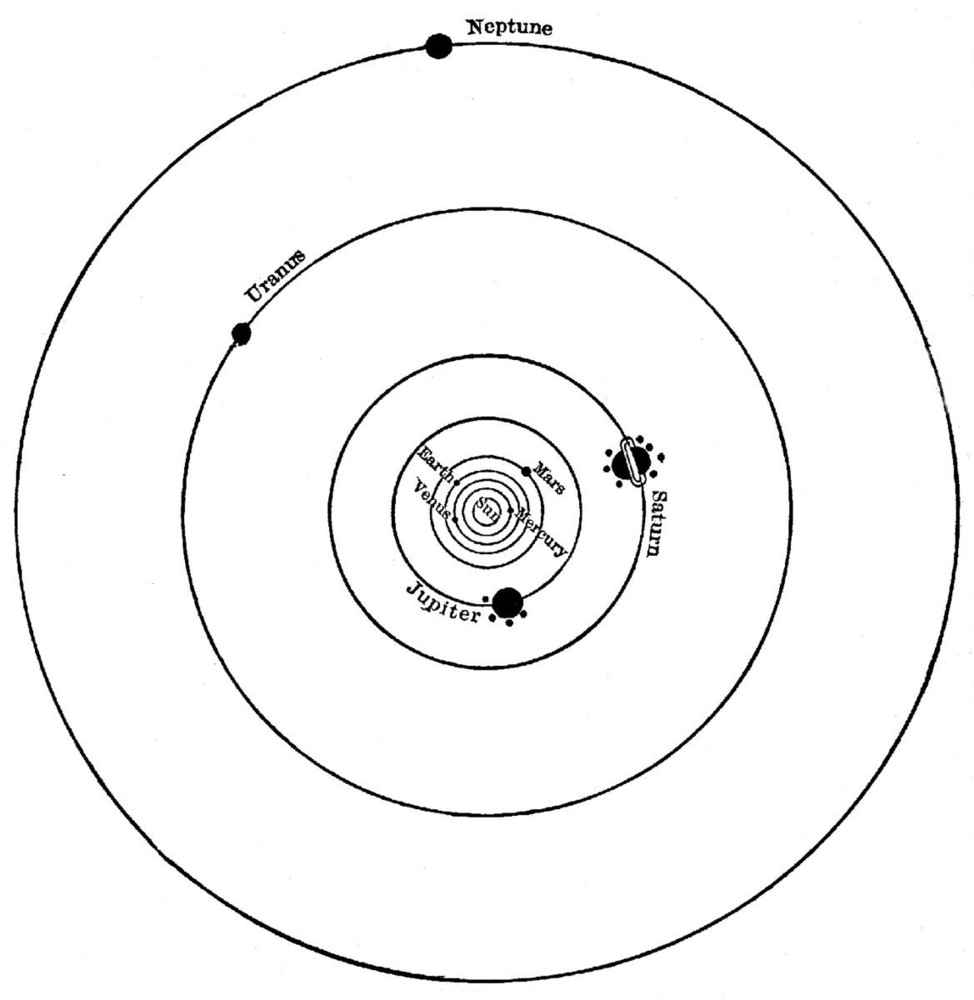
>Consider the planets…

…and how they move.

And then consider the music of Bach, here performed by Glenn Gould:

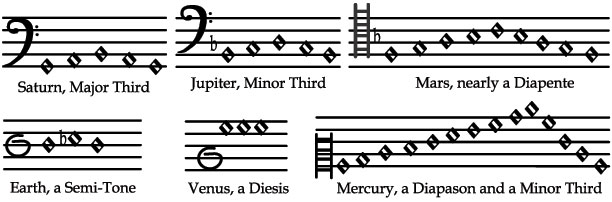
There is a connection of sorts between the two. That connection would be Andreas Werckmeister and his theories about music, mathematics, and the orderly movement of the planets.

And then consider the opening scene from the Werckmeister Harmonies:

I cannot say I have any comments – except to say it is interesting to put these different pieces side by side.

>Memorial Day 1865/1945

>According to Wikipedia: “[T]he first memorial day was observed by liberated slaves at the Washington Race Course (today the location of Hampton Park) in Charleston, South Carolina. The race course had been used as a temporary Confederate prison camp in 1865 as well as a mass grave for Union soldiers who died there. Immediately after the cessation of hostilities, freed slaves exhumed the bodies from the mass grave and reinterred them properly with individual graves. They built a fence around the graveyard with an entry arch and declared it a Union graveyard. The work was completed in only ten days. On May 1, 1865, the Charleston newspaper reported that a crowd of up to ten thousand, mainly black residents, including 2800 children, processed to the location for a celebration which included sermons, singing, and a picnic on the grounds, thereby creating the first Decoration Day.”

War, what is it good for? Considering the reasons for Memorial Day

42 million people died as a result of war in the 20th century. 42 million. And that’s only military deaths.*


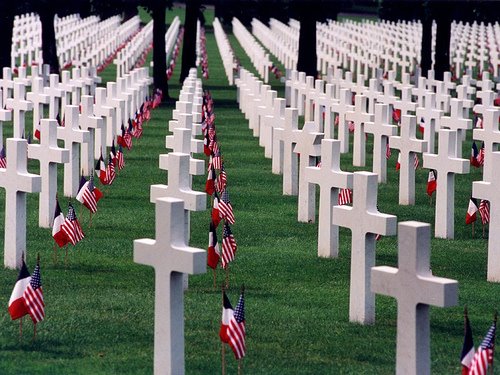
Graveyards turn death into solemn beauty.

This is not beautiful.


War is evidence of something else. That something else has everything to do with what was in the heart of Cain as he slew his brother. That thing that war is, that indivisible characteristic, is the deeply felt need to use violence, even murder, as a means to achieve ends – certain or uncertain. War is the violent extension of the human heart’s corruption – a corruption that produces pride, envy, condemnation, selfishness, self loathing, and a host of other sins. Intrinsic to that characteristic is the justification of war. Possibly to oversimplify, violence and its justification is war.

As a Christ follower I cannot support war. Nor can I fully support any government that uses violence to achieve its ends, even if those ends may somehow benefit me. And I cannot celebrate with that government and participate in it nationalistic liturgies in glorifying the deaths of those who died carrying out such violence. But I can remind myself of how much people have suffered under the brutal hand of war. And I can still be amazed at the personal sacrifices so many individual soldiers have made.** I wrote about this last year.

A survey of history shows the human tendency to make war. Not only that, but to glory in war. Not only that, but to love war – and then be shocked at its brutality. When God points to Jesus on the cross and says that’s my attitude toward sin (just to throw in a little Christian theology here) it’s as if humankind said alright we’ll do that – and then set about to recreate that bloody crucifixion and kill and torture as many people as possible. When Jesus said whatever you do to the least of these you do to me, humanity seems to have largely shrugged its shoulders and gone on to other things – like justifying war and creating war heroes.

There is nothing good about war. Even victory is a tragedy. In deeply profound and unavoidable ways all wars throughout all of history have been grave failures. War is truly good for nothing.


If there is one thing I dislike about this video, it’s setting
the horror of war to a catchy tune. Still, it makes me weep.


Of course we are always looking for ways to find nobility in war making. We have our war heroes and give them medals, even if we often refuse to look directly at what they did to get those honors, and then go on to ignore many of their long lasting war-related troubles (physical, mental, spiritual). But there is no nobility in war. When we celebrate such “holidays” as memorial day (formerly known as decoration day) we must keep in mind the tragic nature of those days. Memorial day is not a day of celebration but of grieving. If you take the time to remember the fallen this memorial day, if you put out a flag as we do, do so not to praise but to weep.

We know blessed are those who mourn, for they shall be comforted, But also, blessed are the peacemakers, for they shall be called sons of God. Let us stop praising war and the war makers and start being people of peace.

* The number is much higher, closer to 200 million, if we consider any deaths by mass unpleasantness including genocide, tyranny, civilian deaths in war, and man made famines – all of which can be considered war.

** I have always been someone drawn to war and its stories. I love good war movies and novels. As a child I was fascinated with the machines of war. If a fighter jet flies overhead I cannot help but stare in awe. I also have relatives who fought in wars and relatives who are currently in the military. To not praise war and to not celebrate those who wage war is an unnatural act for me, but it is and act I am obligated to make.