>
Here’s the original KLUNKERZ film trailer (V. 1.0) I posted:
Here’s the better (V. 2.0) trailer (as suggested to me by Billy Savage, writer/producer/director/distributor of KLUNKERZ):
>
Here’s the original KLUNKERZ film trailer (V. 1.0) I posted:
Here’s the better (V. 2.0) trailer (as suggested to me by Billy Savage, writer/producer/director/distributor of KLUNKERZ):
>
When bicyclists violate a traffic law, research has showed it is because, in the eyes of drivers, they are reckless anarchists; drivers, meanwhile, are more likely to view the violation of a traffic law by another as somehow being required by the circumstances.
~ from Traffic: Why We Drive the Way We Do (and what it says about us), p.23
We cannot help but bring our prejudices with us where ever we go. My observations have shown me just how easy it is to lump people together into false “guilty by association” relationships. Not all bicyclists are the same and not all drivers are the same. But we can easily pejoratively categorize all those who ride bicycles into a single, unified group of “those cyclists.” Bicycle advocates, nearly as much a motorists do, chastise the bad cyclists for breaking laws and being irresponsible. It is said that bad cyclists give good cyclists a bad name. And yet, the reality is that bad cyclists don’t really give good cyclists a bad name, they give bad cyclists the name they deserve. In terms of “bad name” giving the problem is not with the bad cyclists, rather it is with anyone who is willing and eager to make the logical fallacy that since one person behaves badly and is a cyclist that therefore all cyclists are bad.
As the inner life of the driver begins to come into focus, it is becoming clear not only that distraction is the single biggest problem on the road but that we have little concept of just how distracted we are.
~ from Traffic: Why We Drive the Way We Do (and what it says about us), p.77
>
>
>
Then a few years ago the city reopened the streets to cars and trucks, again to revitalize a still dying downtown. It didn’t work. Now, in another scheme to help businesses, they are offering free parking to motorists. I predict it also will not work. Plus it is going in the wrong direction that the city needs to go. They should be encouraging more cyclists and pedestrians, not more cars. Eugene is a rather bike friendly city compared with much of the U.S., but it is far from where it could be.
>
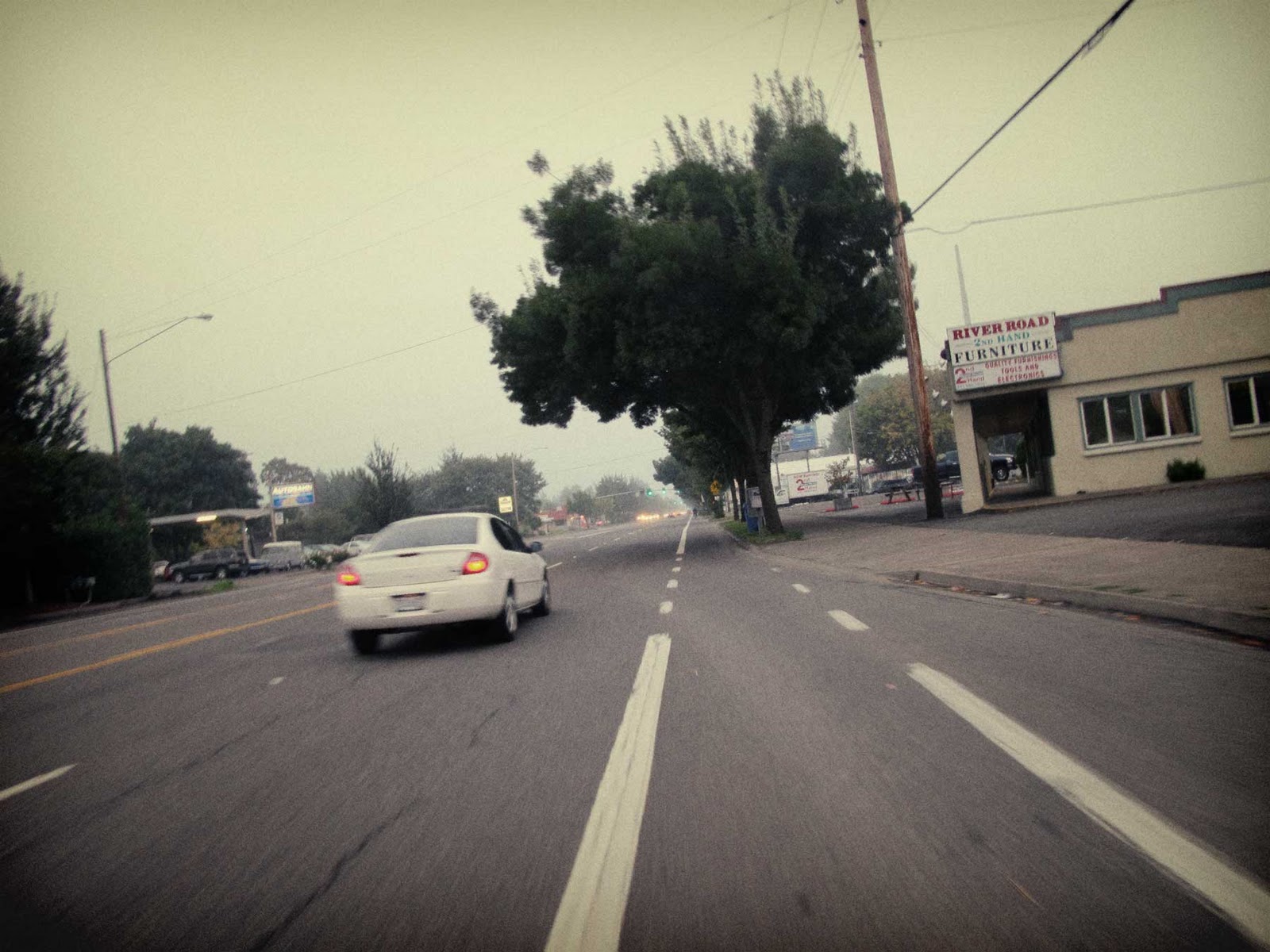
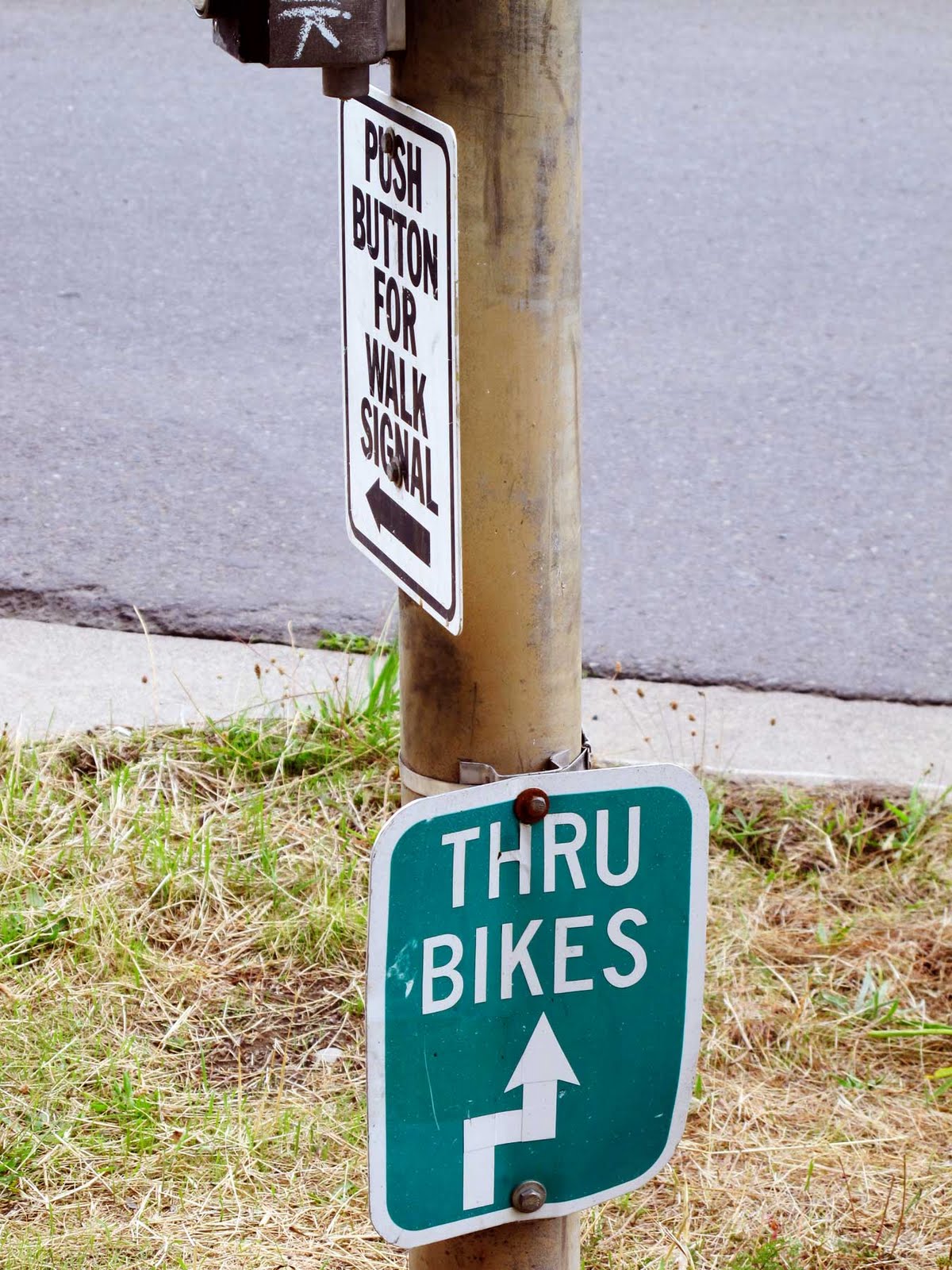
The reason I write this post is because I am increasingly aware of the importance of infrastructure to the habits of both motorists and cyclists. If someone is driving or cycling in an unpredictable or unusual way it is likely they are trying to navigate a situation that is not entirely clear or does not adequately suit their commonsense needs. There are often tensions between motorists and cyclists and part of the reason is that motorists forget just how much motorized-vehicle-specific infrastructure is in place to control their driving actions and decisions, and they may not understand that similar infrastructure for cyclists lags far behind that of motorists. Another part of the reason is that when cyclists face ambiguity or nonsense, and because they are human, they will make choices that suit their needs.
Finally, the real reason I write this is because every time I ride I think about how fragile life is, how easy it is for humans to (in the moment, without thinking) value the lives of others dramatically less than their own, and of my own family at home.We have faced some difficult times in the past due to reckless motorists. My wife and kids do not want me to get hurt or die. Neither do I. So I ride carefully and defensively. I try to take no chances. But I still love riding, and it is good for me in many ways. There are no guarantees that even the best infrastructure will ensure any cyclists will avoid death, but good infrastructure can help.
>
>
As there has recently been a rather tactless criticism directed towards us cyclists, it must be permitted for me to bring some modest, if not harmful, proposals for a new traffic etiquette for cyclists and other wheeled persons.Let us begin at the beginning. You set yourself up on the bicycle, have a good look around – first up and down and then from side to side – wherefter you rest for a moment whilst regarding the road ahead and behind. Do this several times and take your time doing it. Therefter you push down on one pedal and up with the other. The bicycle is then propelled into motion. You can, of course, repeat this process, but experienced cyclists rarely need to.
You will now find yourself in the so-called traffic, unless you are riding on the island of Saltholm, but we’ll assume you’re on a busy street.
As soon as you’ve run over the first person you come across you immediately accelerate and try to dash across the intersection while the yellow light is lit. If the light turns red in the process, pretend like nothing happend and continue on – there is nothing easier than pretending like nothing happened. Those who are approaching from the side – whether in a car or on foot – will no doubt let you pass. They will think that it is them who has made a mistake. So ingrained is the bad conscience in all of us.
Never cross an intersection when the light is green, as you risk being knocked over by someone running a red light from the other direction. This is very important as it can still cause misunderstandings, court cases and outbursts of anger.
Now you continue riding. Let’s say you have to turn to the left. Extend your hand – please be careful it can’t be seen – to the right. This means that you won’t be turning that way. There has been some discussion about this question but as a cyclist you must never doubt. Your entire focus must be on your riding.
The use of a bicycle bell is absolutely out-of-date and simply unecessary. The bell can’t be heard above the noise and you should therefore only use your bell after midnight – or after you’ve arrived home.
During the day, instead of a bell, you should use different verbal expressions, shouted with a loud, high-pitched voice. It is recommended to acquire a copy of J.F. Braldrelunds ”Dictionary of Danish Swear Words”. It contains more than enough content for this purpose.
On corners you attempt, wherever possible, to brush the person or persons who dare to stand there. It is best if you’re travelling fast enough that you manage to knock one of them over. Then you can confirm beyond a doubt that the person in question was in your way or, in other words, ”That taught them a lesson!”
If you’re going from the street into a port leading to a courtyard or similar, always weave through the pedestrians as dramatically as possible. The bell must NOT be used here – remember that! If you use your bell you’ll make people jumpy and it will be much more difficult to weave past them.
In the courtyard you discard the bicycle as carelessly as possible, in order to give any potential bystanders the impression that you’re cool (superior in intelligence).
Ensure that the bicycle is placed so that anyone and everyone can trip over it. You’ll quickly discover that the person who trips over it will pick it up and place it politely against the wall – usually under a sign that reads: ”Bicycles will be removed”.
Regarding bicycle lights, you need not take this question too seriously. Bicycle lights are simply no longer used and are only rarely seen on bicycles.
This is generally because the police aren’t bothered much if you cycle without lights, as the statistics show. In 1932-1933, on the stretch between Here and There, only one bicycle light was observed. According to the police report it wasn’t possible to identify the cyclist – he was riding like a madman.
An absurd idea has popped up in the minds of some so-called people who are believed to live inside unexcavated bronze-age burial mounds. Putting a licence plate on bicycles, as well as a hook under the saddle on which to hang a telephone book and a pair of eyeglasses.
The thought is incredibly impossible – a licence plate that must host a number like seven million three hundred and thirty thousand, six hundred and forty three would be wide enough to fill City Hall Square, and if you placed the digits vertically the licence plate would rip down the electricity wires.
Yes, well, those were my modest proposals for a new traffic etiquette for cyclists. We have, for far too long, been viewed in a negative manner by Mr Motorist and pedestrians – or rather sleepestrians – and I feel that these proposals will please every motorist and sleepestrian – we apparently haven’t evolved any further than this in our sorry old world.
I found this on the blog, Copenhagenize. From Copenhagenize: “The above was translated, modernised and edited for clarity from the original text by one of Denmark’s most loved satirists and cartoonists, Robert Storm Petersen. Better known at Storm P.. It was first published way back in 1934 (in ‘Snak om en ting’) and again in 1993 (in ‘Udvalgte historier’)”
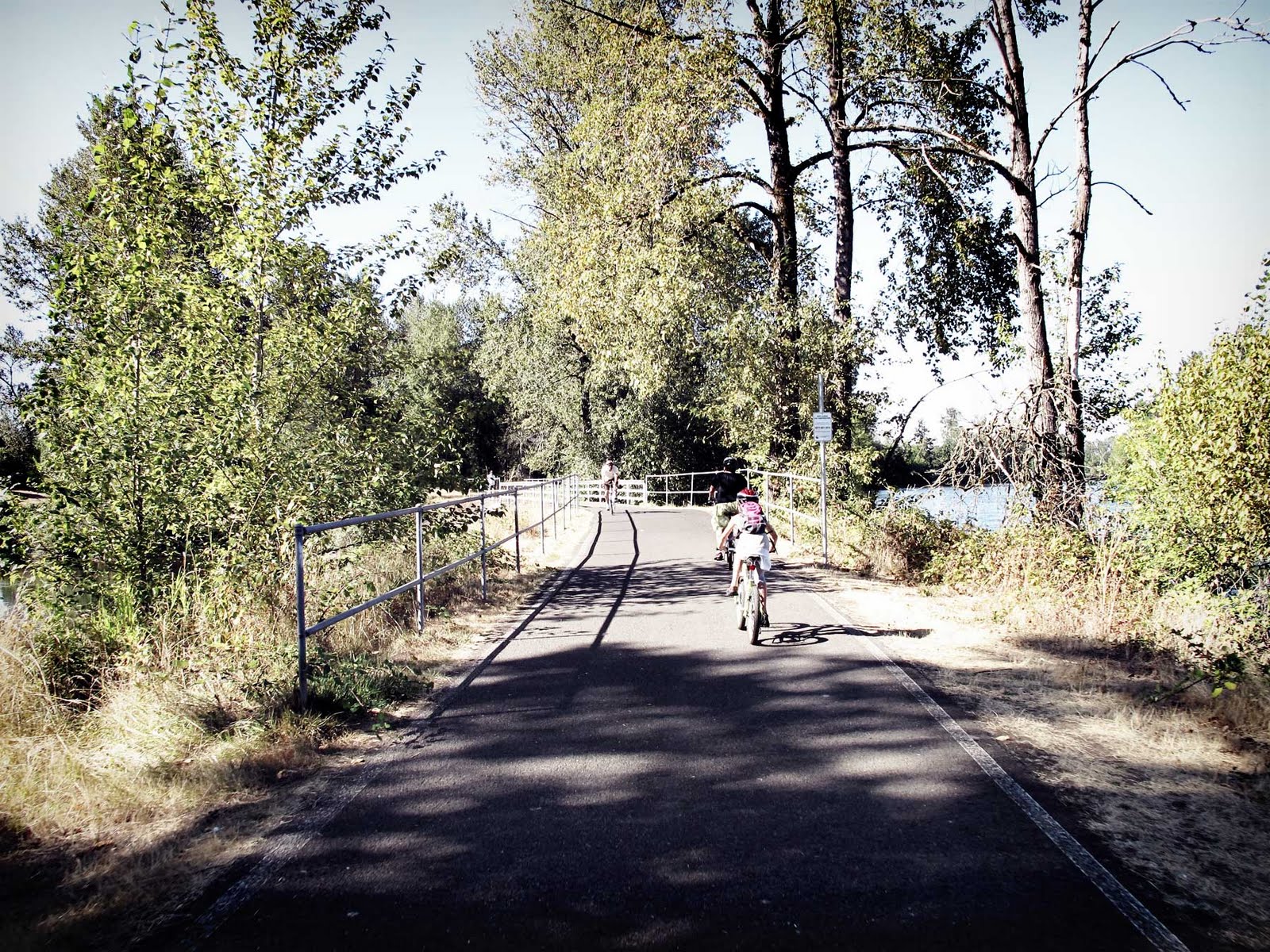
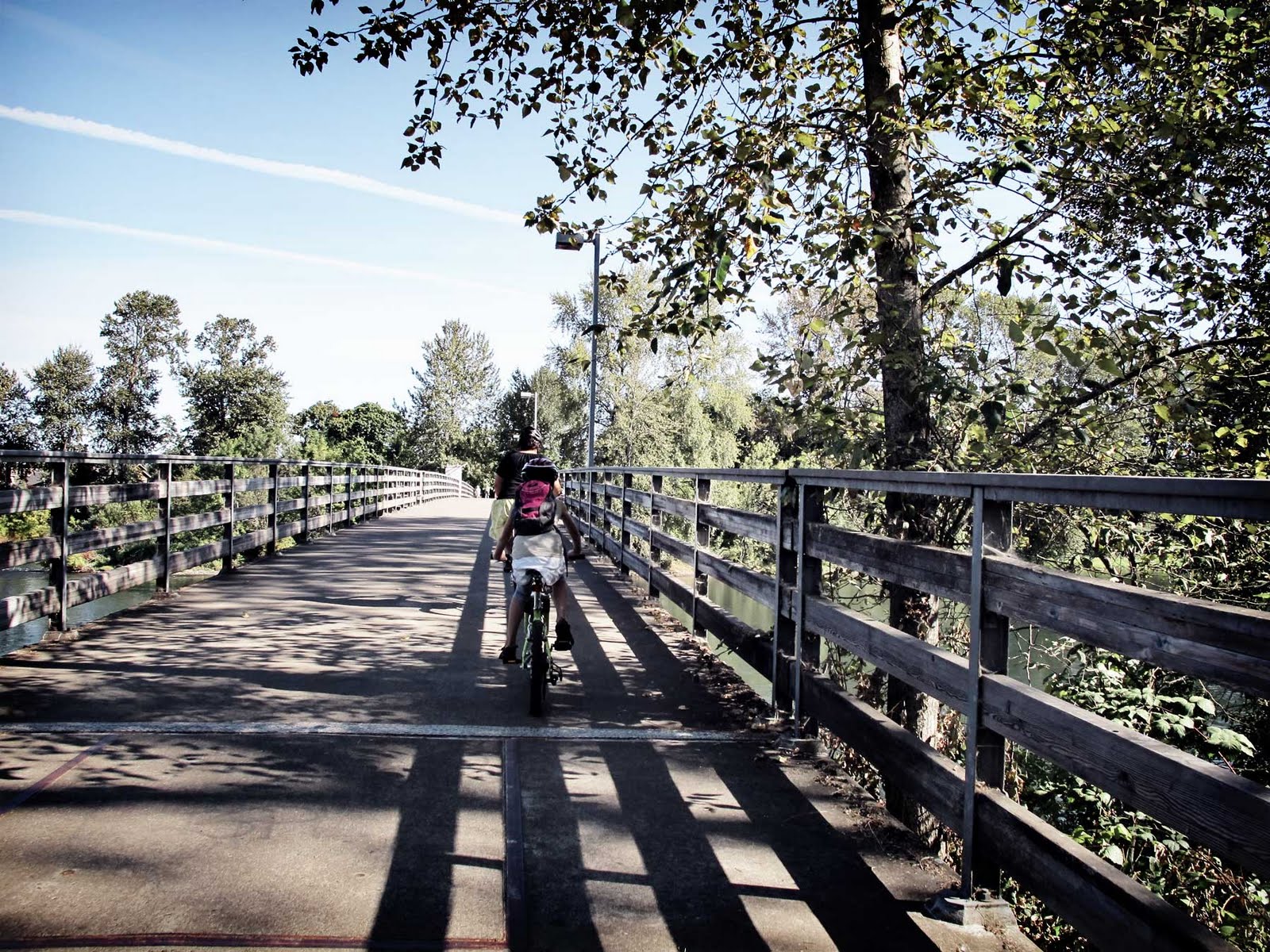
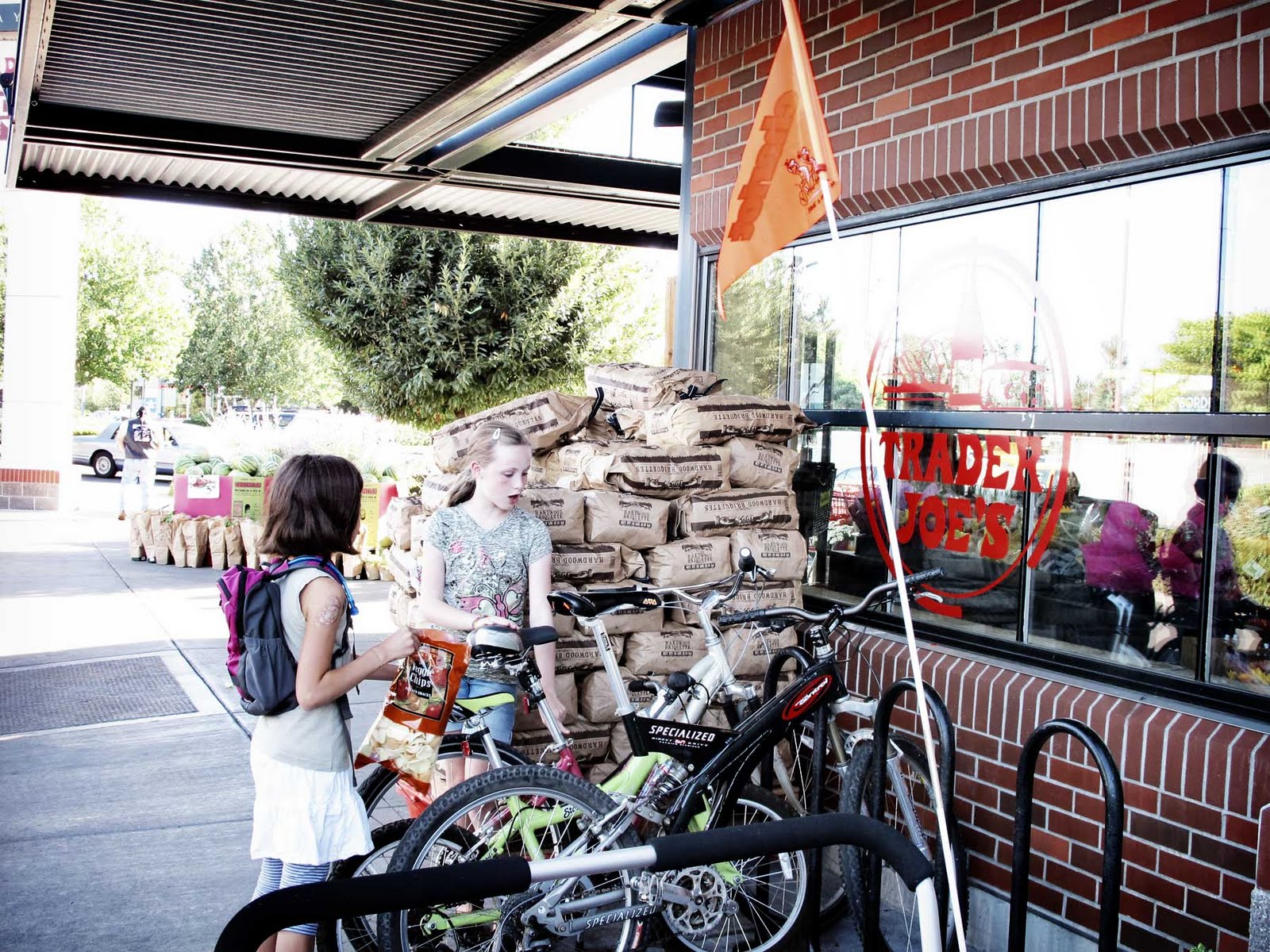
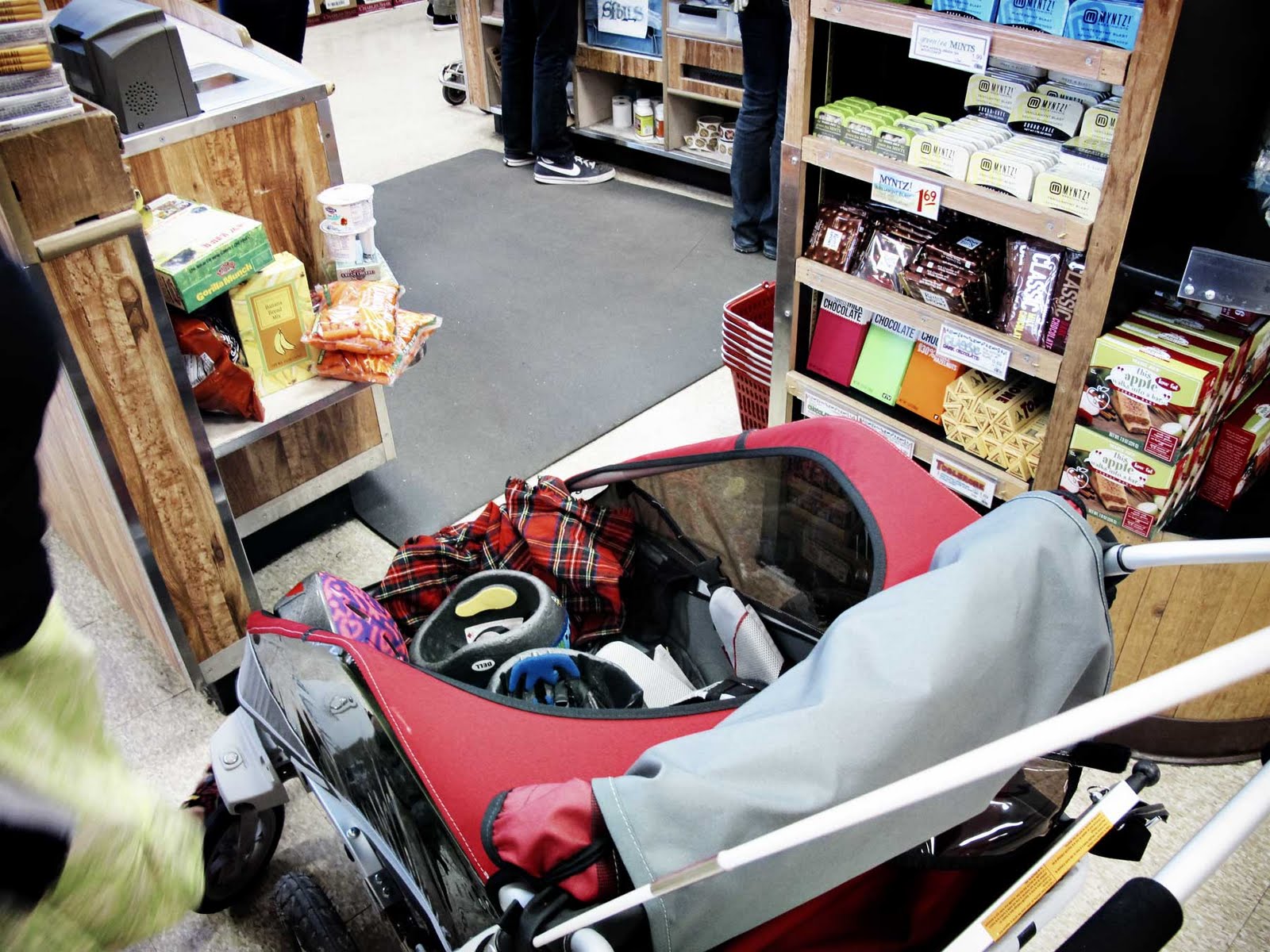
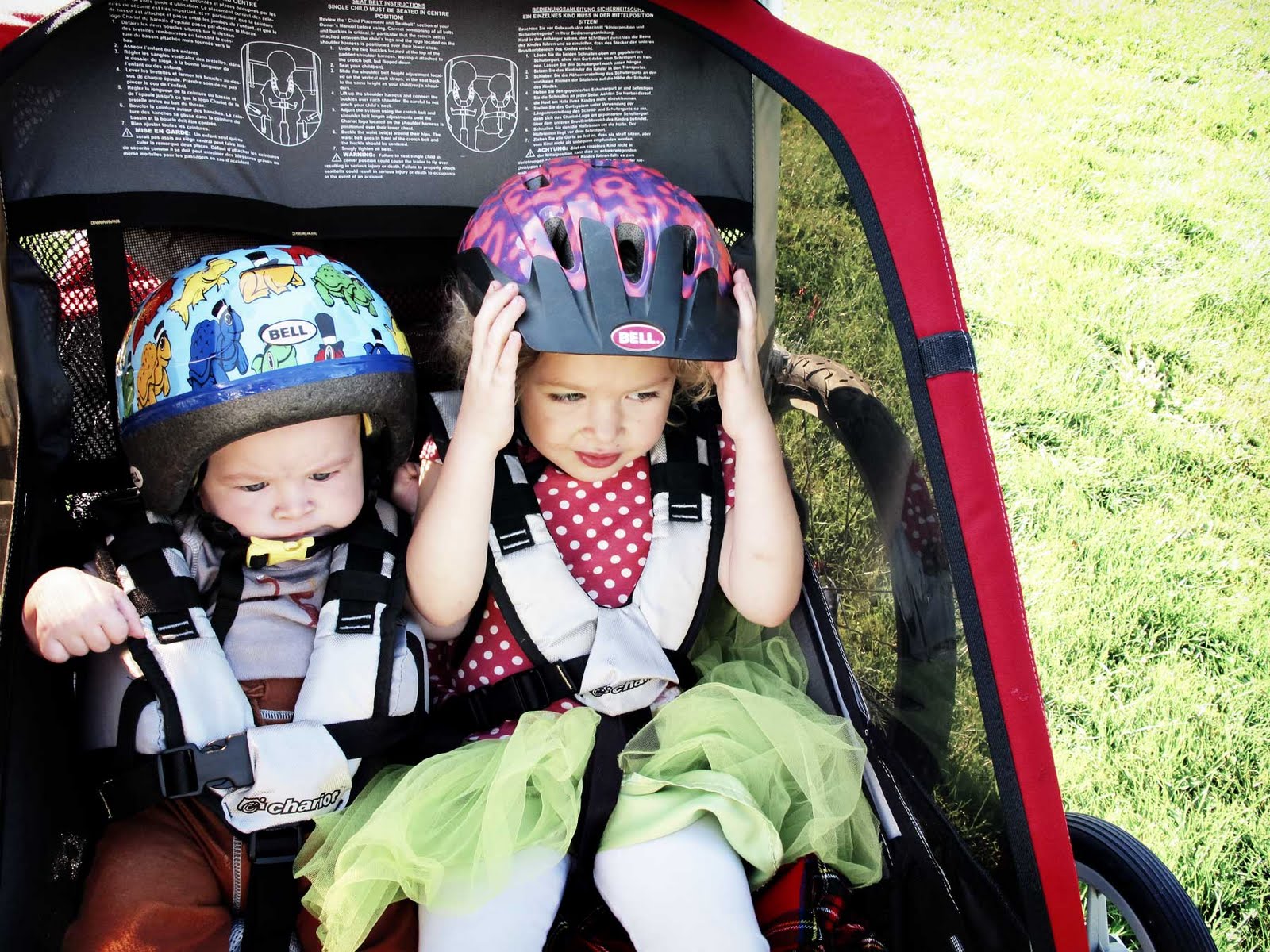
Last weekend we decided to do some grocery shopping via the bike path. We loaded the two little kids in the trailer and set out on our 9.2 mile round trip to Trader Joe’s. It was fun and a healthy way to do some shopping.
I have to say that every ride includes some crazy motorist choices, like the guy with his large pickup and trailer who decided to turn into his driveway immediately across my path forcing me to hit my brakes or hit him. I could tell it was one of those situations where a driver thinks he is going so much faster than the cyclist that he can zoom right past, but not realizing the cyclist’s speed or the fact that a small misjudgment on his part could end tragically. It may also have been a situation where a motorist just does not think (maybe subconsciously) that a cyclist is a legitimate user of the road and, therefore, does not require the same courteous consideration as motorists. Ah, biking. Ride defensively.