In 2020 I posted this essay on another blog but I think it is still relevant and a very live issue today. I repost it here with a number of changes.
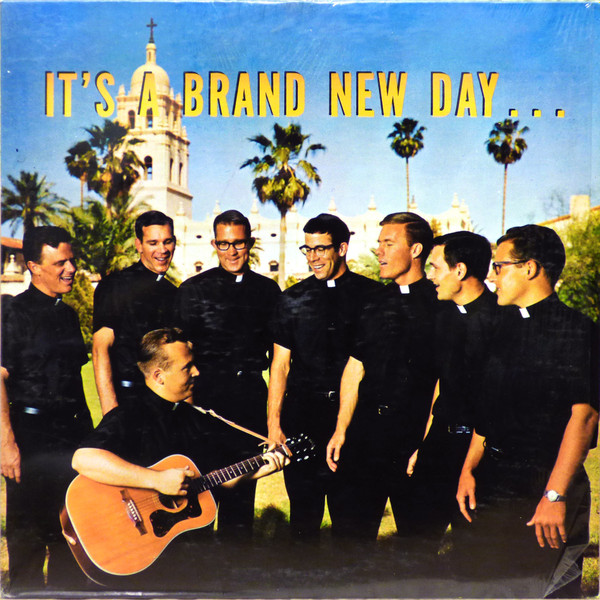
Not long ago I had the opportunity to read an email that had been sent by a parishioner to his priest and also to members of that parish’s pastoral council, of which I was a member. I’ve removed the parishioner’s name, the name of the priest, and the name of the parish for reasons of confidentiality. I believe there is something important in this letter and I feel the need to pass it on. In particular, I believe the sentiments expressed are common to many Catholics, and not merely older Catholics, the so called “boomer” Catholics, who lived through and promoted the changes after Vatican II. Here is the letter:
Dear Fr. [REDACTED],
I have made the decision to leave [REDACTED] Parish. Please accept my resignation from the Pastoral Council, the Lectors, and Sunday Hospitality. Additionally, please stop my Sunday envelopes.
I am sixty-six years old. I was an altar boy during the sixties. I remember the pre-Vatican2 church. It has been over fifty years that the institutional Church , as we know it, has functioned in the light of the Second Vatican Council. Yet, since coming to [REDACTED] and belonging to [REDACTED], I am slowly watching the institutional Church in our Parish retreating backward as demonstrated in the frequent Latin Masses, the men’s Schola, the effort to re-locate the tabernacle back to the center of the sanctuary (at an exorbitant cost, I might add), and … now you speak of reinstalling the communion rail. I don’t see myself participating in any of it. I happen to appreciate the Church for what it is. I considered doing research to dissuade you from the path you are on but then I realized the voices you are listening to are louder than mine. In my opinion what you are doing is not in the spirit of Vatican 2 and that grieves me.
Thank you for the rich homilies; they offer the Parish more that you may think.
Respectfully,
[REDACTED]
Before I comment I should say that the church did eventually move the old and beautiful marble altar and tabernacle, which had been moved out of the sanctuary in the early 1970s, back to the center of the sanctuary for a very reasonable cost and, by the way, at the request of the bishop. (But what is cost when compared to reverence for our Lord? We could ask the woman with the alabaster box.) Altar rails, which had been removed in the early 1970s, were also eventually reinstalled. The men’s Schola ceased during Covid and has not restarted. Regardless, it was a wonderful opportunity for men of the church to gather, fellowship, and sing old hymns and chant at the 7:30 AM Sunday Mass. (Why this is an issue I don’t know, except that they did sing old songs and prayers.) I know I was deeply blessed to be in the Schola. And there was never “frequent Latin Masses” at this parish. At most there was, perhaps, a couple of Novus Ordo masses done in Latin, and never on Sunday mornings, and never an actual TLM.
There are many Catholics, especially those older Catholics who lived through the changes of the post-Vatican II era, and who are still active Catholics (of course, a staggering number left the Church since the council), who look back fondly on that era and still believe to this day that those radical changes were the best thing to ever happen to the Church. As they see it, the spirit of Vatican II is wonderful, and they love that the barriers came down, the stuffy altar was replaced by the communion table, the priest finally turned to face the people who could now see what he was doing, and they even love its music, fondly humming its (objectively) poor and insufferable tunes. Many of these Catholics are looked down on and summarily dismissed as “boomers” (a term used pejoratively) by so many today including members of the so-called traditionalist movement. And many traditionalists are waiting for that generation to die off so the Church can finally return to its roots and become more traditional again. Personally, I don’t like this attitude. I think many older parishioners, like this man above, probably sharply feel that dismissive sentiment aimed squarely at them and that their voices are ignored.

I believe this parishioner’s frank frustration, blunt verbiage, and his sudden resignation is exactly the kind of reaction that many Novus Ordo but tradition-leaning priests fear. There are very few parishes in the world today that are not fundamentally “spirit of Vatican II churches,” that is, they have been built on the modernist traditions of the past 50 years (and arguably the past 200 years). It is what they know, it is their life as it were. This means that any priest who discovers the rich traditions of the Church and comes to see the need to reintroduce those traditions into their parish, and then tries to bring changes to his parish in light of those traditions, is likely to have at least some, and perhaps many, parishioners reacting as our letter-writer did. Or perhaps the frustrated parishioners don’t leave the parish; perhaps they even don’t let the priest know how they feel. They may instead just work to undermine his efforts in any number of ways and eventually get him ousted. I imagine this letter cut to the heart of the priest and was grieved over. I do not know the outcome of what happened next. I hope reconciliation can happen. I doubt it will. But I do appreciate letter-writer’s forthrightness.
I believe the Traditional Latin Mass is fundamentally and in nearly every way far superior than the Novus Ordo. I am even inclined to believe the Church has substantially and spiritually suffered because of the Novus Ordo. However, I am not a RadTrad as some traditionalists call themselves positively and others call them pejoratively. In fact, I go to both the TLM and the Novus Ordo for various reasons (mostly availability) and I have been blessed by both. [Note: lately I’ve been attending a Byzantine Catholic church and loving the Divine Liturgy, which is even older than the TLM.]
I have never been someone who loves tradition either merely for aesthetic or nostalgic reasons. I’m not into tradition in the way some men love 1957 Chevys or others collect vintage radios. I came to a love for tradition because my life’s journey took me, as a parent, through the world of Christian classical homeschooling, which begins with the nature of man and his purpose in relation to God. I began to critique my presuppositions in light of my experience of living in a post-modern world, growing up Baptist/evangelical, and being curious about history, philosophy, and the arts. Within the Protestant milieu I experienced an anemic stance towards holiness, a total absence of the concept of theosis, personally fashioned images of Jesus, and a profoundly false anthropology. I experienced worship redefined as pop-music and sentimentalism rather than sacrifice. Of course, I didn’t know that at the time. Then I came into the Church (God be praised!) and I saw this same spirit of the modern Protestant and American culture substantially infused (though often as a poor imitation) syncretically throughout the local parishes I visited. The leaven of the modernist world had worked its way into so much of the Church. (Forgive me if I come across as though I view myself as an expert in these matters. I am not.)
I also noticed both a mix of blindness to the syncretism and a thorough love of it. Parishioners were not chafing under the weight of modernism corrupting the Church, they were loving it. Or, at least, that’s how it looked to me. And remember, people can believe and be committed to any number of half-truths, lies, and crazy ideas and still be the most wonderful people in the world.
I felt like the bank teller who has learned to identify counterfeit bills by first becoming highly familiar with the real thing, but in this case I knew the counterfeit all too well and was only coming to learn of the real thing. I was just so happy to be in the true Church that I let a lot slide for a while— and I still do, and I’m still happy. I love being Catholic, not merely for the joy I find, but because Catholicism is true. Also, I am no expert. And who am I anyway? And yet, I feel that God has given me the eyes I have, formed on the journey I’ve traveled, to see some things that others might not; perhaps especially so-called cradle Catholics. I believe that the long tradition of the Church, especially that old “stuffy” Latin Mass, lived out in love and relying on the Holy Spirit, is an antidote needed for the world today — not just the for the Church, but for the world.
Thus I am bothered by the letter above. I see it run through with problems, false assumptions, ignorance, and immaturity. I want to be dismissive.
And yet, and yet…
Two things: First we must look for the silver linings. In many ways the Church needed to be challenged. Before the Spirit of Vatican II there was the Spirit of the Counter Reformation. This spirit built a powerful, almost fortress-like Church. But, I believe, it was becoming hollow within. Bishops were used to being unchallenged and, it seems to me, too often didn’t distinguish between the core faith that could not be changed and cultural norms that could. Many men became priests and young women nuns for cultural reasons. Prayers were recited because that’s what had always been done. When I hear about bishops sometimes ruling over over nuns in harsh and tone-deaf ways and then those nuns pushing back I tend to side with the nuns. I believe the Church needed to be shook up. The question is how far does one go with that shaking?
Second, I (and we) must have compassion for those who love the Novus Ordo and its music and its culture. For that’s what it is, a culture and it has shaped them. Culture arises from cultus. How we worship, including the nuts and bolts of our liturgies, form us. Lex orandi, lex credendi. Even what direction the priest faces during the Liturgy works within us at such a deep level and in such a precognitive way that the simple fact of orientation teaches us about God and man, saying one thing or another thing. How we receive the Blessed Sacrament, whether on the tongue or in the hand, whether standing or kneeling, teaches (instilling within us) us at a deeply subconscious level knowledge (true or false) of Christ and our relationship to Him, saying one thing and not another thing. At the end of Mass, when we are told to go out into the world, we take with us that cultus which has formed deep within us, formed even minutes before, and so deeply that much of it is subconscious and intuitive and works on our minds to such a degree that what seems right to us seems so as though from the foundations of the earth. But this is not the same thing as being right, for we can be formed by a bad cultus just as easily as a good cultus. And even the best Catholic cultus has to contend with the world’s cultus, which smothers us nearly every minute.
The power of formation is not primarily at the conscious level. Much like the bank teller intuitively knowing a good bill from a false one, the well formed Catholic recognizes truth and error, depth and shallowness, beauty and mediocrity, faith and sentimentality, in an almost precognitive manner. (Oh that we were all that well formed!) Overwhelming evidence declares that Catholics can be poorly formed. Our sensibilities can lead us to wrong understandings, poor interpretations, and misguided evaluations. And our conclusions will feel absolutely right. We almost can’t help it; no one knowingly believes falsehoods, we can only believe what we believe is true. Therefore, we must have compassion and empathy for others. We must seek humility. Our true battle is not over liturgy, or tradition, or theology. Our true battle is against Satan and his devils, against the forces of sin within us, and against the temptations of the world. We are in a profound spiritual, physical, and metaphysical battle for our faith, the Church, and our souls. That battle, of course, plays out much of the time within the physical realm, including the realm of liturgy, culture, and even politics, but we must seek to have eyes that see and ears that hear, we must seek soft hearts and and sensitive souls, so that we may know where the real battle lies, otherwise we will miss it — perhaps even joining an enemy who tricks and beguiles us.
Lord Jesus Christ, Son of God, have mercy on me a sinner.
If you watch documentaries about the 1960s, such as Ken Burns film The Vietnam War, especially the parts that focus on the homefront in the US, or the PBS documentary Woodstock: Three Days that Defined a Generation, you can’t help but feel for the youth caught up in the spirit(s) of the age. There was little chance of any young Catholic at that time, living in the midst of that culture, who would not have also interpreted the post-Vatican II changes, especially those done under the spirit of Vatican II mantra, as utterly comprehensible and necessary. Many of these young Catholics supported refocusing the Church towards the burning issues of the day and, more importantly, defining the approach to those issues in the same terms used by the campus radicals, the feminists, the neo-socialists, and especially those of the anti-war and civil rights movements.
Consider this truly amazing time-capsule below from 1968. This NBC documentary shows us the world in which our letter writer above was formed and of which he clearly is still fond, much like an old man remembering the glory days of his youth. Keep in mind that the Novus Ordo was not promulgated until 1969, so this is even before the new Mass radically changed the Church.
This video feels like a crash in slow motion. I am aghast at the naivete and delirious utopianism expressed, and yet… I too would have likely joined in with enthusiasm if I had been a young adult Catholic at that time. But this is where we need to understand clearly that what is often called the “spirit of Vatican II” was really just the spirit of the age. What was new and “alive” then seems dated and, at best, quaint today. But let’s not be too sentimental, it was also a tragedy in the making.
The goal wasn’t just a matter of getting rid of what was old. Underneath it was the belief that what we call traditional Catholicism was being fundamentally incompatible with the modern age and, thus, being a barrier to spiritual growth, a meaningful relationship with Christ, evangelization, and even authentic Catholicism (nevermind the saints, great and small, who knew nothing else but traditional Catholicism because it was just Catholicism). Traditional priestly garb and religious habits began to look more and more like anachronistic costumes, almost laughable; Latin like a language mummified. The key word in the documentary is “relevant.” The Church must become relevant. The disease of relevancy infected the Protestant world too, something I experienced growing up.
As a side note: Look up each priest and bishop interviewed in the documentary above and see how many were eventually laicized and got married in less than ten years of this film.
With time, statistics, and much wide-eyed hand wringing we have come to see that the radical experiments of the 1960s and 1970s largely failed and a great deal has been lost, not least are increasingly diminishing numbers of faithful Catholics in the pews and vocations to the priesthood and religious life. But also so much depth and richness has been lost. It was, it would appear, the Church declaring that the Real Presence was dogma but not really true, and that faith was merely a matter of personal preference after all. Our priests, by no longer having the Traditional Latin Mass available to them, perhaps have suffered the most for they are no longer being fed daily on the more nourishing food of tradition (such as the profoundly rich prayers of the Extraordinary Form) but rather “eating” a less spiritually enriching fair that is bound to leave one at the very least rather anemic. And if one has never eaten from the sumptuous feast’s table one will neither know the riches available or the true depth of satiation.
The Novus Ordo is a living culture and it produces sons and daughters of itself. It is an engine of formation. I believe that many priests have gone into the priesthood thinking and hoping that within the Novus Ordo culture they will become the kind of men that only a TLM culture can produce. (I experienced something similar coming into the Church as a convert.) Many, many things went terribly amiss during the frantic hubbub of the radical sixties. Much good has been destroyed. In one generation enough destruction and spiritual darkness was unleashed that it may take five generations to recover. The “good” bishops and popes have been trying to fix it ever since — tinkering here, adjusting there, moving slowly out of caution? concerns? fear? Of course, I don’t have the answer, and who am I anyway?
The “boomers” and the rest of the Novus Ordo crowd (I also frequently attend the Novus Ordo and just missed being called a boomer by only one year, and not all boomers are pro-Novus Ordo culture) are not the enemy. Even if you are a staunch traditionalist you ought to see them as our brothers and sisters in Christ. One might choose to “fight” for the great traditions of the Church, especially the Traditional Latin Mass, to return in a big way, but one must not fall into a hardened “us and them” mentality. And you ought to love them. They have been taught and formed by the Church and their culture, just as we all have. Their formation, good or bad, falls largely upon the shoulders of those bishops who had that responsibility and who eagerly welcomed the spirit of the age into the Church and often veered wildly beyond the councils documents.
Our job is to love God and each other. We are to seek unity in love, with humility, and with total faith in God — which means we need patience and know that it is God who fights our battles. But the older crowd are not the only ones who love the Novus Ordo more than the TLM. Even many younger folks do so as well, for reasons I can’t quite fathom. People love things for different reasons. And they don’t love other things for different reasons; sometimes merely out of ignorance, sometimes because of their formation, and sometimes for good reasons. But this is a larger topic.
I feel for the man who wrote the letter above. I believe he wrote honestly from his heart. I believe his grievances came from real grieving. I also wonder, without wanting to psychoanalyze him, if his grieving doesn’t come from having had a kind of “mountain top” experience in his youth (think of those in the 1968 documentary above), being caught up in the spirit of the age and feeling like he had truly received a “new Pentecost,” which has stayed with him and sustained him for many years, and now he feels it’s being taken away. I’m sure he’s not alone.
But I don’t feel too sorry for the guy. His letter is also an expression of ignorance, selfishness and shows lack of empathy for those suffering under the revolution he so loves. That parish he left was very accommodating and, it turns out, he wasn’t. His letter was heartfelt and honest but it is also an expression of myopic self-centeredness. I hope* he found a parish with the felt banners and Marty Haugen hymns he’s used to, and with the tabernacle hidden somewhere to the side so as not to conflict with the worship. I’m sure he did, there’s still a lot of them around.
*Not really.
 pilgrimakimbo