“Art-Cinema” Narration: Part Two

This is part of a three-part posting taken from a brief lecture I gave during a film class.

“Art-Cinema” Narration

Part Two: The Background
In order to understand art-cinema narration, and the underlying post-Enlightenment project, one needs to grasp the historical and philosophical pressures that gave it birth.

The coming of the 20th Century, bringing with it so many new technological changes, and dragging along with it the those 19th Century harbingers of new ideas: the industrial revolution, Darwin, Marx, and Freud, seemed, in many people’s minds, to have changed everything.

The path of the 20th Century, with the devastation of the First World War, the horror of the Holocaust, both the reality and threat of nuclear weapons, and the waning of Christianity in the West, gave impetus to new challenges. Human beings now struggled with the loss of God, of place, of self, of truth, even of time thanks to Einstein. This has been called, amongst many other things, the “crisis” of modern man. It is also, as some have said, the burden of freedom.

Dostoyevsky pointed this out, when he wrote in the Bothers Karamazov, that if there is no God then everything is permitted. Some saw this as their salvation, some saw it as their undoing.

People began to question everything once taken for granted and to see life as much a struggle to find oneself, to understand the nature of love and sexuality, to discover meaning, and to mourn the evaporation of Truth, as it is a struggle over the more common difficulties of living – like saving the world or saving the farm. In fact, it all gets turned on it head so that saving the farm (and even saving the world) seems so trivial compared to the inner turmoil now plaguing modern man. Why bother with saving the farm if you can’t even save yourself?

The questions, as really they have always been, are:
“Who are you?”
“Why do you exist?”
“Where is you hope?”

Of course, it’s not all doom and gloom, at least in terms of how people live their lives. There are still a lot of life affirming choices people make, but underlying it all, especially from a Christian perspective, is a great sense of loss and uncertainty.

And of course, from a Christian perspective, the problems of human beings are not ultimately the result of mere historical forces, but arise from the deeply profound tensions between being made in the image of God (and all the glory that that means) and being burdened and affected by the corrupting nature of our inherent sinfulness (and all the difficulties that that means).

Cinema, then, confronted these changes and perspectives by challenging conventional wisdoms of narrative structure and subject matter. Art-cinema narration can then be understood as a response to a post-industrial, post-Christian, post-Enlightenment world.
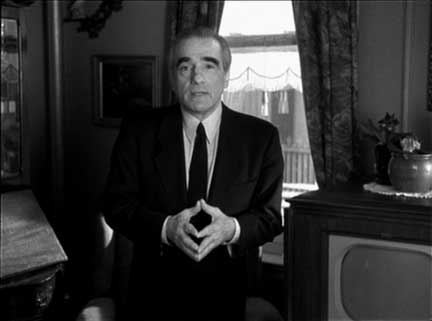
>Il Mio viaggio in Italia

>

I’m a sucker for movies about the history of film. I just finished watching Il Mio viaggio in Italia (My Voyage to Italy) by Martin Scorsese. Essentially it is a personal and nostalgic look at the Italian films that influenced (and still influence) Scorsese as both a filmmaker and as a person. My Voyage to Italy is also a testament to the powerful effect that cinema can have on all of us.

Structurally the film is simple. Scorsese walks the viewer through the history of Italian cinema up to Fellini by way of his personal experience of those films. It is as though a good friend who, as a deeply passionate connoisseur of great art, is giving you a personally guided tour through his favorite museum. What is particularly interesting to me are his descriptions of watching many of those films as a child on a 16″ black & white television screen, often with several generations of his family around him, and often watching very poor quality prints of the films. And yet, those films still had a powerful effect on him.

I have to admit my favorite section of the film is Scorsese’s description of Italian Neo-Realist cinema.

He says:
“If you ever have any doubt about the power of movies to effect change in the world, to interact with life, and to fortify the soul, then study the example of neo-realism. So what was neo-realism? Was it a genre, was it a style, was it a set of rules? Or, more than anything else, it was a response to a terrible moment in Italy’s history. The neo-realists had to communicate to the world everything their county had gone through. They needed to dissolve the barrier between documentary and fiction, and in the process they permanently changed the rules of moviemaking.”

I have had the pleasure of seeing many of the films he discusses, yet there are many more I have not seen. My own personal response to Scorsese’s own personal journey is to consider doing my own close examination of neo-realism, beginning with the earlier films and working my way forward. All in all, I recommend the film.

>top ten film lists

>I don’t have any particular reason for posting these lists, other than curiosity. Personally I find these kinds of list interesting, even though they may not mean a lot. If they say anything, it is about the different reasons people vote for their top films. Although we cannot delve into the psychology of the voters, I believe directors pick films they wish they had directed, critics pick films they wish they had had the chance to write about when they first appeared, and the IMDb highlights the tendency to pick audience favorites and recent films. It would be interesting to have some demographics to go with these lists.

Assuming there is any level of objectivity in such lists, a question I have is, who might the better person be to create a top-ten list: the professional filmmaker, the professional critic, or the avid fan? Is this even a fair question?

Internet Movie Database top ten film – based on users’ votes
1. The Godfather
2. The Shawshank Redemption
3. The Godfather: Part II
4. The Lord of the Rings: The Return of the King
5. The Good, the Bad, and the Ugly
6. Casablanca
7. Schindler’s List
8. Pulp Fiction
9. Seven samurai
10. Star Wars: Episode V – The Empire Strikes Back

Sight & Sound Critics Top Ten List
1. Citizen Kane
2. Vertigo
3. Rules of the Game
4. The Godfather & Godfather part 2
5. Tokyo Story
6. 2001: A Space Odyssey
7. Battleship Potemkin
8. Sunrise
9. 8 ½
10. Singing in the Rain

Sight & Sound Director’s Top Ten List
1. Citizen Kane
2. The Godfather & Godfather part 2
3. 8 ½
4. Lawrence of Arabia
5. Dr. Strangelove
6. Bicycle Thieves
7. Raging Bull
8. Vertigo
9. Rashomon
10. Rules of the Game
11. Seven Samurai

“Art-Cinema” Narration: Part One

This is part of a three part posting taken from a brief lecture I gave during a film class.

“Art-Cinema” Narration

Part One: Introduction

As I have been doing, I want to talk in very broad categories, recognizing the reality of many exceptions to the “rule.”

Classical Hollywood Narration presents rather clearly defined individuals struggling toward rather clear-cut goals. These characters move and have their being within clearly presented worlds according to clearly understood time and space norms. And when all is said and done, when the story has finally concluded, these characters have unambiguously either reached their goals or not reached their goals. Typically causality, that thing that keeps the story moving forward and gives a reason to do so, is also unambiguous – such as the solving of a crime, saving the world or saving a private, falling in love, wining a race, escaping death, killing a giant shark, blowing up a deathstar, running from dinosaurs, throwing a ring into a volcano, disarming a bomb, bending it like Beckham, and finding a Nemo, etc.

Life, that great big thing that we are all doing, is typically presented as coherent and free of ambiguities – at least true ambiguities. Characters do have decisions to make – and even decisions are between right and wrong itself. But the characters are understood, the decisions are understood, the world is understood, and we are along for a story that rests upon, and works within this clarity. Of course there might be moments of confusion, but that is part of encouraging tension in the viewer for the purpose of moving the narrative to its climax. In the Classical Hollywood Narrative those moments of confusion are never too long and ideally are not left unresolved at the end of the film.

And an incredibly large number of films have been exceedingly successful within these parameters.

But is life always neatly arranged, clearly understood, free of ambiguities, plainly motivated, distilled into lucid and obvious choices?

If the Classical Hollywood narrative film has it roots in 19th Century drama and short stories (with Edgar Allan Poe being a prime example), then what is often called Art-Cinema Narration has it roots clearly in the 20th Century (with writers such as Anton Chekhov being a prime example). Art-Cinema is firmly a 20th Century phenomena.

These two kinds of narrative structures can be simplistically summed up this way:

  • 19th Century drama is about characters, who in the midst of life, are confronted with some external situation (maybe rather ordinary or rather extraordinary) which they must resolve or come to terms with. An internal, spiritual, mental struggle might play into the larger goal of the external struggle, but is ultimately subservient to it.
  • 20th Century drama is about characters, who in the midst of life, are confronted with some internal, spiritual, mental struggle with which they must resolve or come to terms with. An external situation may play a significant part in the larger, internal struggle, but is ultimately subservient to it.

Remember, there are many exceptions to this division. The 19th Century writer Fyodor Dostoyevsky being just one.

Other influential writers – along with Chekhov:
James Joyce (Ulysses, etc.)
Ernest Hemingway (The Snows of Kilimanjaro)
Virginia Wolf (The Voyage Out, etc.)
Thomas Mann (The Magic Mountain, Death in Venice, etc.)

>Peter Boyle 1935 – 2006

>

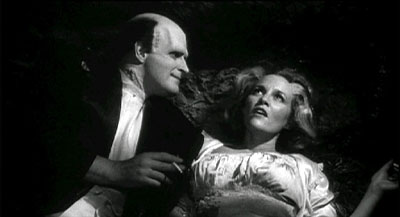
Peter Boyle died this week. Of course, most people certainly remember him from Everybody Loves Raymond. I first saw him in Young Frankenstein (1974) and a small role he played in Taxi Driver (1976) – both on video in the mid ‘80s. He was one of our more interesting, and funny, character actors. Now I will need to watch Young Frankenstein again.

Woody Allen is famously quoted as saying, “I don’t want to achieve immortality through my work. I want to achieve it through not dying.” However, I find it interesting (if that is the right word) that when an film actor or filmmaker passes away, one can remember them by viewing their work. Peter Boyle left a significant body of work behind him for us to enjoy.

Some interesting information about him from CNN.com:
Educated in Roman Catholic schools in Philadelphia, Boyle would spend three years in a monastery before abandoning his studies there. He later described the experience as similar to “living in the Middle Ages.”

He explained his decision to leave in 1991: “I felt the call for awhile; then I felt the normal pull of the world and the flesh.”

He traveled to New York to study with Uta Hagen, supporting himself for five years with various jobs, including postal worker, waiter, maitre d’ and office temp. Finally, he was cast in a road company version of “The Odd Couple.” When the play reached Chicago he quit to study with that city’s famed improvisational troupe Second City.

Upon returning to New York, he began to land roles in TV commercials, off-Broadway plays and finally films.

Through Alterman, a friend of Yoko Ono, the actor became close friends with John Lennon.

“We were both seekers after a truth, looking for a quick way to enlightenment,” Boyle once said of Lennon, who was best man at his wedding.

In 1990, Boyle suffered a stroke and couldn’t talk for six months. In 1999, he had a heart attack on the set of “Everybody Loves Raymond.” He soon regained his health, however, and returned to the series.

From Wikipedia:
His first starring role was as the title character in the movie Joe which was released in 1970, in which Boyle played a hardhat bigot to wide acclaim. The film’s release was surrounded by controversy over its violence and language. Ironically, it was during this time that Boyle became close friends with the actress Jane Fonda, and with her he participated in many protests against the Vietnam War. After seeing people cheer at his role in Joe, Boyle refused the lead role in The French Connection (1971) as well as other movie and TV roles that, he believed, glamorized violence.

>Pickpocket (1959)

>

A man walks out of the room through the open door, into the hall and, presumably, out of the building. When he leaves the room his footsteps can still be heard echoing in the hall, but you do not follow him. You stay, staring at the open doorway, waiting. You are waiting for something, the next thing, a new image, action, gesture. You hear the sound of footsteps fading away. But you stay because you are the camera. Or is the camera is you? So you wait because the director controls you because the camera is you and the director decides to make you wait. Your waiting is only a second too long; just enough to make you sense a tension somewhere, but not enough for you to realize the plan behind that feeling. Now you are on to the next thing (an edit has shifted you) and you have forgotten the waiting, but the tension has left its ghost-image at the back of your mind.

That is the simple beauty of Bresson and his little film, Pickpocket.

>a pageant

>A Pageant for the Living and the Dead

1.
if this were gingham blankets and carafes of wine I’d still wonder
but I know it’s more
more than a day of graceful postures
more than cool shadows, lounging
it’s all of it
it’s Nineveh and fear and the piercing of the turbulent surface
it’s china horses buried in second century clay
it’s fish idling gently in clear green streaked riffles
it’s the tense and trembling fist clenching Abraham’s knife
and it’s really simply your heart
creating and receiving the wounds of the world
like apples hitting the ground
beautiful hues bruised and bruising
Sunday’s souls Monday to Monday

2.
turning slowly in the quiet stillness I see
on that bedroom wall a barn
in August hanging peacefully;
a Vermeer poster in a second-hand frame;
a black and white café; and suitcases
painted by someone we’ve known,
and beyond that wall
the great wheel turns like a millstone

when the sky is blue
it is the gleaming face of destruction
and down among the roots
in the tangles of soil an ancient vine
threatens our hedges
tangling our hopes with darkness
calling to us from the tomb of this world

some set up stones
some sacrificed
some spilled blood
and when night descended
the sun fought its way through hell

this is the ancient of days
the ever coming of the storm
the swelling of the tender buds

3.
we create beauty to fight death
circling the wagons against the beast of nature

in the beginning
we did not think of cities;
seeking arcadia along the rivers
and in the fertile valleys
collecting goats
corroborating stars
wearing our dreams on our skins

and quickly our sons grew up
and killed each other
oh heavens!
the pyramids never reached you,
not really
and all this is more like a parking lot
than an orchard
but still I see the leaves kicked up

4.
(I am a trunk
hewn and mobile
bone and blood
a serpent and a god
I am viscera
I am pouring forth
I am crawling through
and you
the world
a treachery
a beautiful death
an angel and a sword
a streaming light
can only cast your voice
in the stillness of my desires
like leaves falling in the shadows
of their trees)

Postscript
so finally
your sorrows never leave you
not even when you’ve left them
not even when you’ve crossed the Alps with elephants
and threatened Rome’s weathered gates
for every move you make is ancient
every step is already dead and still to come
and you can spread that blanket to the corners of the world
until a better feast arrives.

>film quiz

>A little film quiz that doesn’t really mean anything…

1) What was the last movie you saw, either in a theater or on DVD, and why?
Theater:
Casino Royale – for fun
DVD:
Pickpocket (dir. Bresson) – to show some friends
Derrida –
documentary – curiosity

2) Name the cinematographer whose work you most look forward to seeing, and an example of one of his/her finest achievements.
Aleksandr Knyazhinsky – Stalker (1979, dir. Tarkovsky)
Henri Alekan – Wings of Desire (1987, dir. Wim Wenders), Beauty and the Beast (1946, dir. Jean Cocteau)
Vadim Yusov – Andrey Rublyov (1969, dir. A. Tarkovsky)

3) Joe Don Baker or Bo Svenson?
Joe Don Baker

4) Name a moment from a movie that made you gasp (in horror, surprise, revelation…)
Opening shot of Star Wars: Episode IV (seen for first time in theater in 1977) – I still think it’s cool.

5) Your favorite movie about the movies.
Visions of Light

6) Your Favorite Fritz Lang movie.
M

7) Describe the first time you ever recognized yourself in a movie.
In junior high making films with my friends.

8) Carole Bouquet or Angela Molina?
Angela Molina

9) Name a movie that redeems the notion of nostalgia as something more than a bankable commodity.
Nostalghia (1983, dir. A. Tarkovsky)

10) Favorite appearance by an athlete in an acting role.
Kareem Abdul Jabar in Airplane!

11) Favorite Hal Ashby movie.
Being There

12) Name the first double feature you’d program for opening night of your own revival theater.
81/2 and Stardust Memories
The Big Sleep (1946) and The Long Goodbye (1973)

13) What’s the name of your revival theater?
Art House

14) Humphrey Bogart or Elliot Gould?
Elliot Gould

15) Favorite Robert Stevenson movie.
Old Yeller

16) Describe your favorite moment in a movie that is memorable because of its use of sound.
When Kane slaps his wife in their tent at the beach party.

17) Pink Flamingos— yes or no?
No

18) Your favorite movie soundtrack score.
Vertigo (for original)
Help (by the Beatles)

19) Fay Wray or Naomi Watts?
Naomi Watts

20) Is there a movie that would make you question the judgment and/or taste of a film critic, blogger or friend if you found out they were an advocate of it?
Many (but I am always willing to be convinced)

21) Pick a new category for the Oscars and its first deserving winner.
Most Improved Director – not sure
Best Effort – don’t know

22) Favorite Paul Verhoeven movie.
RoboCop

23) What is it that you think movies do better than any other art form?
“The cinema gives us a substitute world which fits our desires.” ~ Andre Bazin

24) Peter Ustinov or Albert Finney?
Albert Finney

25) Favorite movie studio logo, as it appears before a theatrical feature.
Mosfilm

26) Name the single most important book about the movies for you personally.
Sculpting in Time, by A. Tarkovsky

27) Name the movie that features the best twist ending. (Please note the use of any “spoilers” in your answer.)
Planet of the Apes (1968)

28) Favorite Francois Truffaut movie.
400 Blows

29) Olivia Hussey or Claire Danes?
Olivia Hussey

30) Your most memorable celebrity encounter.
Talking to Wes Craven
Being in the same short film competition with Gus Van Sant

31) When did you first realize that films were directed?
When I began making them myself in junior high school.

You can find this important film quiz at http://sergioleoneifr.blogspot.com/2006/12/professor-dave-jennings-milton-free.html