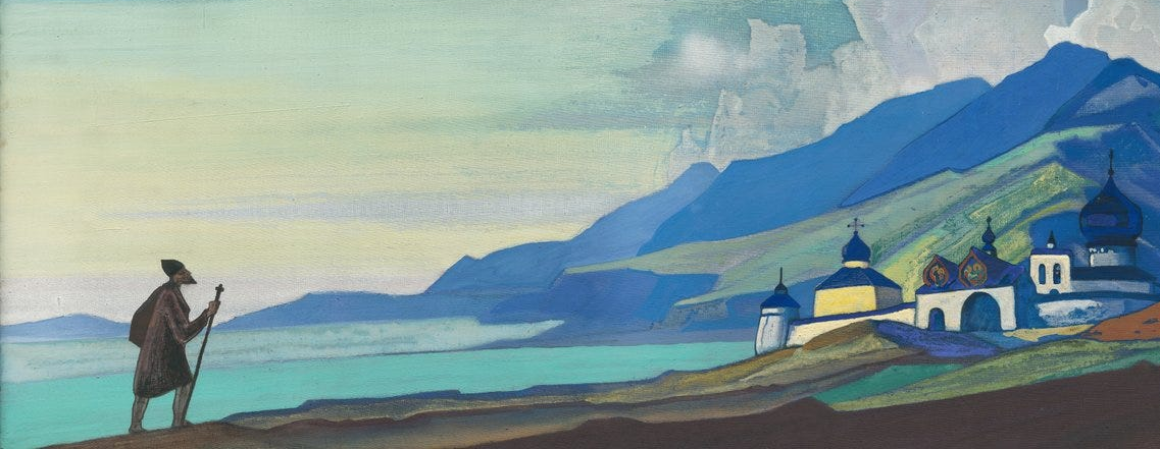
Revisiting my visit to St. John the Wonderworker

In 2013, by the Grace of God, I entered the Catholic Church. My journey to that personally momentous event took seven years (really, my whole life) and a great deal of searching. For a while I seriously considered becoming Orthodox; reading a lot of Orthodox books and, once in 2011, visiting a local Orthodox church and experiencing Divine Liturgy. Of probably every church experience I’ve had, including Protestant and Catholic (both ordinary and extraordinary forms), more than any other, that one Sunday has stuck with me. For numerous reasons I didn’t become Orthodox but I love the Orthodox Church(es). Currently, I am regularly attending Divine Liturgy at an Eastern Catholic parish and I love it. I will always be Catholic and every day I pray for the reconciliation of East and West.

The post below is from 2011 when I visited that Orthodox church. I re-post it here because I think about this experience frequently. More than this, as I have been reconnecting with my faith and going to church again I remembered this experience which then posed a question for me: Why, when the Divine Liturgy had so affected me, have I not gone to the Easter Catholic church from which I know the priest and several members? Now I am there and it means so much to me.

Visiting St. John the Wonderworker Serbian Orthodox Church

Deacon: Bless, Master.

Priest: BLESSED is the kingdom of the Father, and of the Son,
and of the Holy Spirit, now and ever, and unto ages of ages.

Choir: Amen.

And thus began the Divine Liturgy of St. John Chrysostom at the little and beautiful St. John the Wonderworker Serbian Orthodox Church this last Sunday of All Saints morning. This was my first time to ever cross the threshold of an Eastern Orthodox church. This was my first time to participate in an Orthodox liturgy. This was my first time to hear Russian (or was it Serbian?) spoken in a church (though most of the service was in English). This was my first time to see icons in a truly reverential context. It was an hour and a half of a lot of personal firsts.

I was very nervous about going. I am wary of both my tendencies to romanticize experiences and to be cynical. I am also a ponderer and book-learner more than a doer much of the time, which allows me to keep experiences (and their required responses) at bay. I have been reading about Eastern Orthodoxy for a while now. Why I am doing so is a long story, nonetheless I am loving it and being challenged. But I had never been to an Orthodox church. So, when a couple weeks ago my wife and a very good friend of ours visited this same church on a sudden and impulsive whim, I knew I would finally have to make a visit as well.

What did I find there? Walking to the entrance I met some friends that I did not know attended the church. That was a blessing. The church is small and, as you can see from the image above, stands out architecturally. I find it beautiful. I took my eldest daughter with me; she was eager and liked it very much. My daughter knows several of the people that were there. The service was not like anything I grew up with (Baptist/Radical Reformation). Though translated into English (and thank God for the printed handout so I could follow along) the liturgy is ancient. People entered quietly, greeted each other quietly, lit candles, kissed icons (not something with which I am familiar), and stood through most of the service. We did our best to follow, to sing the words (I found it beautiful), to cross ourselves when we should (this was another first for me), and to show appropriate reverence and not look too out of place. We did not participate in either the communion (because we are not Orthodox) or in the kissing of icons, etc. There was the constant noise of children and babies; this is a family oriented community. The interior was dim, but not dark, solemn but not dour, colorful but simple, and of course, the icons which are unique and beautiful (a common word in this whole experience). The homily delivered was excellent–a remembering of all the Saints and the martyrs that are examples to us, and a reminder that Christ’s resurrection really means something, not only in terms of final salvation, but that we are not the same because of Christ’s glory; something profound has changed within us. After the service my daughter and I spoke with Father David (I believe that is how one should address him). He made a point of coming up to us and welcoming us. We did not stay for the after-service meal, but most did. They have a large backyard with garden and play structure for the kids.

What did I think about it all? I should qualify my thoughts first, and maybe get just a little too personal. I am not a “church shopper.” I do not want to consume Christianity. I am not looking for the next “meaningful” thing. I do not want a hip church, or a programmatic church, or a second chapter of Acts church, or an un-church, or a high church. I am not searching for something new or even something old. And I do not want to make decisions based on emotions, and certainly not on heresy. I am not seeking out an “experience.” In fact, I am not really searching for a church at all. And certainly I do not want to go in any direction without my wife with me. Still, and with trepidation, I am exploring. I have been on a journey, a slow journey for sure, examining the tradition I grew up in and was trained in. I have had a lot of questions, a lot of soul searching, a lot of reading. I have tended to be wary of just about everything one finds in an Orthodox church (keep in mind my limited experience): Formal liturgy, recited prayers, icons, religious garb, incense, etc., etc. And yet, my world has been subtlety shifting for several years. I do not know where God will lead me and my family. Wherever He leads that is where I want to go.

With all that in mind, I will say two things about this one visit: a) I am still on my journey, still wondering, still studying, still praying, still seeking God’s guidance and wisdom, and b) I loved it, really loved it. I want to go back and learn more about what I experienced that first time. I want to understand why I loved it and what that means.

Final thoughts: I am humbled by how much I don’t know about Christianity, about those who came before, about the practices of Christians around the world. Orthodoxy is an entirely new study for me. I am often conflicted in what I believe, and what I want to believe. This is a bad place to be according to my past Christian training, but I have since come to believe that I would rather be in the hands of God on a surreptitious  journey than out of His hands with full confidence in my beliefs. I can only praise God for His love and fall on my face and ask for His mercy. I thank Him for this church experience and I pray for His guidance.

A footnote: Take another look at the beginning of the liturgy quoted at the beginning of this post. Now consider these words by Alexander Schmemann in For the Life of the World (1963/2004, p. 28):

The Orthodox liturgy begins with the solemn doxology: “Blessed is the Kingdom of the Father, the Son and the Holy Spirit, now and ever, and unto ages of ages.” From the beginning the destination is announced: the journey is to the Kingdom. This is where we are going–and not symbolically, but really. In the language of the Bible, which is the language of the Church, to bless the Kingdom is not simply to acclaim it. It is to declare it to be the goal, the end of all our desires and interests, of our whole life, the supreme and ultimate value of all that exists. To bless is to accept in love, and to move toward what is loved and accepted. The Church thus is the assembly, the gathering of those to whom the ultimate destination of all life has been revealed and who have accepted it. This acceptance is expressed in the solemn answer to the doxology: Amen. It is indeed one of the most important words in the world, for it expresses the agreement of the Church to follow Christ in His ascension to His Father, to make this ascension the destiny of man. It is Christ’s gift to us, for only in Him can we say Amen to God, or rather He himself is our Amen to God and the Church is the Amen to Christ. Upon this Amen the fate of the human race is decided. It reveals that the movement toward God has begun.

Amen.

[Feast of the Holy Dormition]
Praying in a Modernist Space — Musings on Liturgy, Prayer, Eucharist and Church Architecture

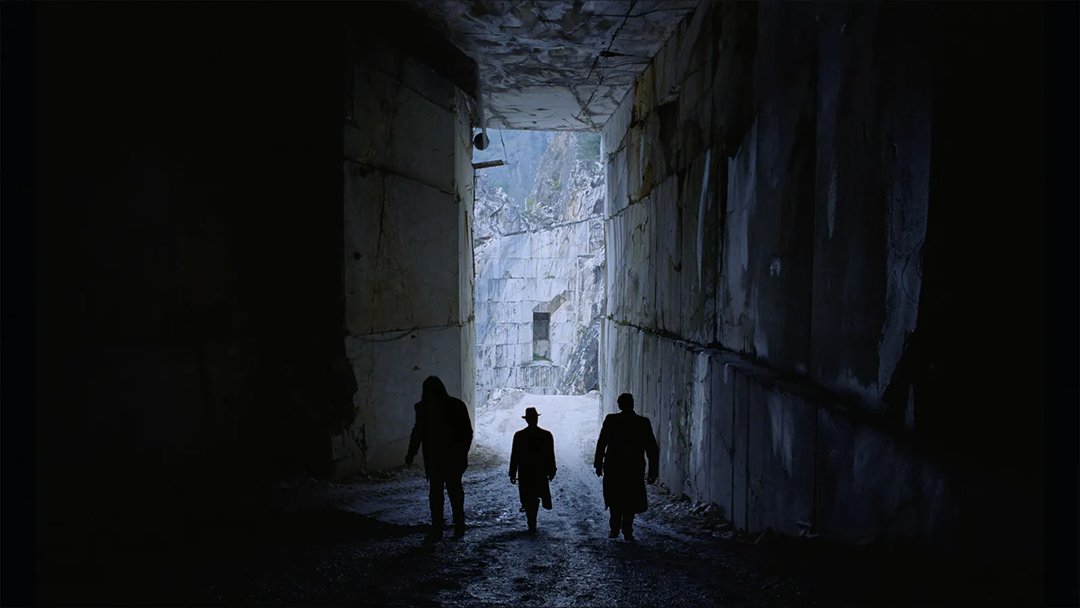
From the movie THE BRUTALIST (2024, dir. Brady Corbet)

The 2024 film, THE BRUTALIST, brought into focus a kind of 20th century modernist architecture that has polarized people from day one and continues to do so up to today. That style of architecture is known, rightly or wrongly, as brutalism. The film’s main character László Tóth (Adrien Brody), is loosely based on several modernist architects, one of which is Marcel Breuer, a Hungarian-American modernist architect and furniture designer. One of Breuer’s more famous works is Saint John’s Abbey Church (discussed below).

It is not uncommon for people to point to modernist architecture as visual examples in massive concrete of all that has gone wrong with society as a whole. Many Catholics have lamented the loss of traditional style churches for modernist designs and brutalist churches get the most derision. Personally, I love brutalist architecture. I don’t consider myself a modernist, though I’m also not a traditionalist. I love old churches. I love Gothic cathedrals. But I also love at least some of the brutalist churches.

But there is always an important question when it comes to any kind of church architecture: Is the design properly suited to the purpose of the space? The old Gothic churches certainly are suited for Eucharistic worship and prayer, but many modern churches are not well suited and some are very poor indeed.

Are modernist buildings good places to pray? to celebrate the Eucharist?

abbey church interior
Saint John’s Abbey Church, architect: Marcel Breuer, source and overview

I may be somewhat of an anomaly. On the one hand I am an advocate of Traditional Catholicism, including Traditional Catholic architecture designed to serve Traditional Catholic worship which, it must be said, is actual and proper worship. On the other hand I love much of modern architecture. I love many buildings that many others do not like. I grew up in a modernist house, I studied modern art and architecture in college, and I have been a fan of early twentieth century and mid-century modern art and design. With this in mind, I found this lecture about one of the more famous (infamous?) modernist churches to be quite fascinating, not only for its informative content, but also because the lecturer gives a highly (almost ecstatically) positive perspective on exactly the kind of church design many would deride without hesitation.

Abbey Church SJU_Inaguration__020
Saint John’s Abbey Church, architect: Marcel Breuer, source and more images

This lecture below is by monk, educator, and artist David Paul Lange, OSB. Whether you agree with his assessments or not, this is an excellent overview of modernist principles in architecture, especially at the mid-twentieth century point, and why it made sense to people at that time to build a church according to those principles. It is also an excellent “unpacking” of the design, and the ideas behind the design, of a particular church, the Saint John’s Abbey Church:

I find Brother David Paul Lange’s speaking style to be a bit too breathless for my tastes, but he is a great evangelist for the modernist perspective in architecture, and for this church. But I have some questions:

  1. Is his understanding correct about both modernist architecture and his interpretation of this church? I think absolutely.
  2. Is this church a good representation of modernist architecture? I say, yes.
  3. Is this church worthy of praise? As an example of modernist thinking, yes. As an example of excellent construction, yes. As a place for worship, you tell me, but I think no, at least not within a proper understanding of ideal Catholic worship.
  4. Therefore, does this church represent a different ideal of worship than traditional Catholic worship? I think definitely so. But you tell me.

Notice a few things:

  1. He speaks of praying more than worshiping. This makes sense given this church is for a monastic community which is focused a great deal on prayer, but it is also significant. The focus is more about the nature and needs of praying than offering a sacrifice to God. Praying in a church is a good and normal thing. However, prayer is a part of worship, but not the only part. Many spaces can be prayerful. Only specific kinds of spaces serve the needs of worship.
  2. He speaks a lot of his own feelings. In a sense this entire talk is an explanation of his personal experiences of this church, and his feelings during and about those experiences. There’s nothing wrong with that up to a point, but as a Catholic would it not be better to also foreground the Body of Christ as a corporate entity a bit more? In that sense he would then speak more of the nature of man in general and his relationship with God. And then tie it back to this church and how it functions. The 20th century “turn” in the Catholic Church was arguably away from Eucharistic sacrifice and towards communal meal as the primary meaning of the Mass. I believe this radically changed Catholic’s focus towards their feelings and personal experience rather than the duty of giving Christ His due and seeking union with God.
  3. This is more about a “modernist space” than a church (hence the title of the lecture), even though it is a church where the Eucharist is celebrated. He points out the way the outside comes into the church interior, reminding those inside of the connection with nature, what time of day it is, what weather is outside, etc. In this sense I gather the space functions a bit like stepping into a forest and praying. I like this in up to a point, but when I think of celebrating Mass I wonder about the idea of Heaven on earth and the traditional way churches close off the outside world and creating a space that is more heavenly than earthly.
  4. He speaks of the honest use of materials, and how older churches seem dishonest somehow, using paint to create false impressions and faux marble, etc. This is a particularly important part of the lecture. I too love the modernist focus on materials. I also don’t believe such focus is necessarily bad for church design, but a church interior should be (traditionally speaking) a kind of three-dimensional icon of Heaven. Rough, earthy materials that evoke nature have their place, but they should serve a heavenly image, no? Here’s something I might explore in another post, but consider this: Is not a statue of St. Michael (for example) fake because it is not actually St. Michael? Same for the Holy Mother, etc? Would not any church that aspires to create a sense of the heavenly liturgy within its walls be a dishonest use of materials? Maybe. But perhaps that’s a “dishonest” use of the word dishonest.
  5. The bell tower, he argues, with its horizontal lines, points to (or mirrors) the horizontal earth rather than to God. He claims it reminds him that God is everywhere and in all things, and perhaps that’s a good reminder, but this is a curious claim and raises the question, in my mind at least, what is the purpose of a church? To call us to the earth or to call us to Heaven? Do we not minister to each other (horizontally) because we have first sought out and worshiped God—a vertical action? If we do not begin with the vertical does not our horizontal orientation eventually become skewed?
  6. He also mentions that the population of monks used to be 350, but now are only 150. They don’t need such a big church anymore. Only by way of correlation, but still interesting (and troubling): They commit themselves to modernist ideas, they build a modernist church to symbolically represent that modernist spirit, and not long after they lose 60% of their members. Apparently modernism doesn’t need monks. Perhaps modernism doesn’t really need man either. This is too big of a topic for a mere blog post.
  7. At the end of the lecture, just before questions, he jokingly apologizes for going a bit long and keeping the Downton Abbey fans from their show — a show whose popularity arose from a longing for an earlier time, represented, in part, not by modernist architecture, but very traditional architecture, and clothing, and customs, etc. Will future generations swoon over the modernist mid-twentieth century in the same way? Perhaps Mad Men did some of that (but what a dark show), and perhaps The Brutalist does so as well.
  8. The first question at the end, by another monk (I believe), is exactly my question, and worth the time for watching this lecture. I have never been in this church, so I have no way of saying what my thoughts would be, but I also wonder if such a place is naturally conducive to prayer, or liturgy at all for that matter. And I truly get the experience from having studied art and swooning over art that others think is stupid or meaningless. And I also find the questioner’s reference to the new cathedral in Los Angeles being obvious a place of prayer puzzling, since it also has been roundly derided for its modernist and non-Catholic design. The answer to his question included: “Do people get modernism? I think the answer is no, by and large,” and “Until I explain this…” In other words, modernist art and architecture requires explanation in order to appreciate it. This is one of the attractions and weaknesses of modern art. I have experienced exactly that feeling of “getting it” after studying it. And yet, I think this may be why modernist architecture is not a good choice for Catholic churches. He also says we are not actually living in a “modernist” society. In terms of art and architecture this may be true specifically in light of design principles–modernism, from an art historical perspective occurred at a time in history which is now past. However, the spirit of modernism as a philosophical and theological undergirding of society and the Church is still very pervasive. How modernism in ideas and modernism in design interrelate is a fascinating topic too big for this post.

In the end I find the Abbey Church a beautiful and amazing space I would love to visit. However, I do believe it is probably best suited as a performance space than as a church. I would not advocate a church being built along these lines. Rather, I think we should be informed more by the needs of the Traditional Latin Mass (or the Divine Liturgy of the East) with its focus on God rather than man, uniformity with the Church through history, and creative use of new and old materials that look to the past for inspiration and the future for permanence and authentic timelessness — which can only be done by beginning with a true understand of both God and man.

Finally, I wonder if much of the problems with using modernist design principles and materials for Catholic churches could be solved if the liturgy was the Traditional Latin Mass. In other words, imagine if Vatican II never happened, and the Novus Ordo Mass never promulgated, could churches have been designed in somewhat contemporary and modernist fashion and still fulfill the needs of the TLM? Can architects build “honest” churches and still be Catholic? I think so. But also keep in mind that the St. John’s Abbey church construction began on May 19, 1958, and lasted until August 24, 1961 — well before the council even began, and long before the Novus Ordo Mass was promulgated.

Also, if you want to know a bit more about the architect Marcel Breuer:

If you want to know a bit more about the building of the church: