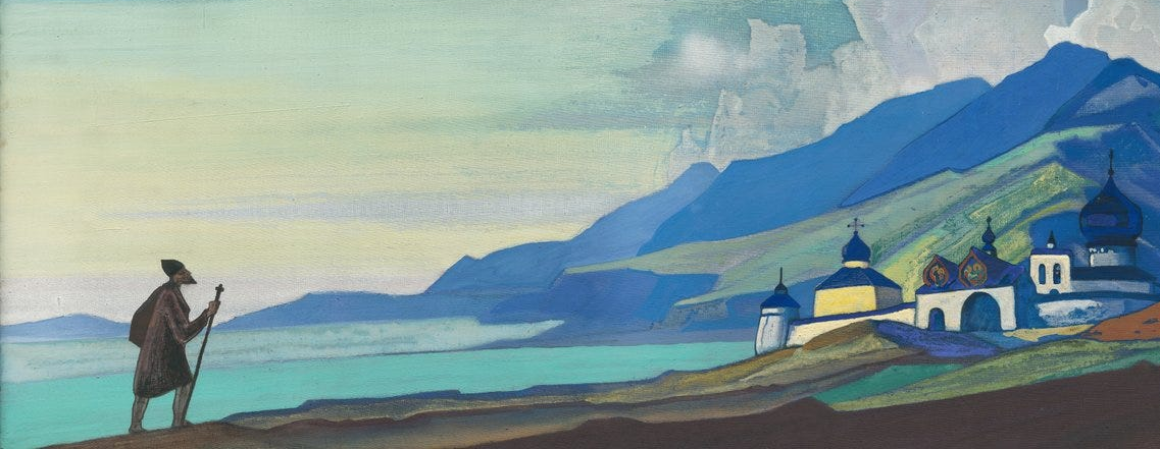
>Given that this is National Poetry Month, here is a poem…
Category: poetry
>Messiah (Christmas Portions)
>A poem for the season and other great things:
Waiting for Monet
Monet painted many lilies,
vibrant under a summer light
more so than even life,
but life in winter
with its bare trees in the park
and its buried bulbs
has another vibrance
that Monet also knew I’m sure.
Think of the beauty of a starry night
above the high desert where
city lights are forgotten;
those lights speckling the darkness
are really just stars in an
immenseness so much more
than all the stars put together,
and yet we fall down before
all that beauty
like toppling statuaries.
But we have not really acquiesced,
like when we drove out before dawn
through thick stubble of sheared hay
under and moonless sky as we opened
stretched barbed wire gates and
following barely visible tracks
toward the canal
then checked our pockets for cartridges
and our packs for lunches.
We beheld the sky
once blanketed with stars
lit up with pale blue and the
dotted lines of high flying geese.
We waited motionless
for the low flying ducks.
We hid like children
playing adults playing soldiers
fighting the force of nature.
There was really no acquiescence
except the fading stars before
the sun, then the sun,
then the stunning beauty
of the fragile beasts
dead in our hands, gutted,
and their dead eyes still staring,
perhaps pleading,
as though God’s eyes might
be looking for an answer
to a question He will ask
at an undisclosed time.
And the line is drawn
to the killing of all things
and the spilling of blood
overspilling the altars.
From tabernacles everywhere,
those sacred places we call home
and elsewhere,
the ground cries out
like it did to heaven when
Cain shrugged and really
did not think it such
a big deal,
though he must have thought
it would be nice for lambs
and lions to get along at least.
But today soldiers walk the streets
where they say the garden
must have been,
and where the angel with
the flaming sword left
his post eventually of boredom.
Other angels came later
carrying messages. They always
seem to start with “Be not afraid”
but I think they were joking,
a little fun you know,
because angels do not normally
get out much I would think.
I also think Monet saw the stars,
and the dead eyes questioning,
and the horrors of war.
Yet I doubt he saw an angel
whether with message
or with sword.
But he did paint water lilies
as though he was teaching God
something about His creation
something that God already knew
but was waiting
for Monet.
>Czesław Miłosz interviews in French
>
"I Am Your Waiter Tonight, and My Name Is Demetri"
…a poem by Robert Hass. Is this not an example of what a poem should be? If I could write a poem half this good only once in my life I would be pleased.
Goodnight September Eleventh
“In a Parish” by Czesław Miłosz, trans. from the Polish by Miłosz and Robert Hass. Read by Haas on Fresh Air on NPR remembering 9/11.
Were I not frail and half broken inside I wouldn’t be thinking of them who are like me half broken inside. I would not climb the cemetery hill by the church to get rid of my self pity. Crazy Sophies, Michaels who lost every battle, self-destructive Agathas lie under crosses with their dates of birth and death. And who is going to express them. Their mumblings, weepings, hopes, tears of humiliation in hospital muck and the smell of urine with their weak and contorted limbs and eternity close by, improper indecent like a dollhouse crushed by wheels, like an elephant trampling a beetle, an ocean drowning an island. Our stupidity and childishness do nothing to fit us for this variety of last things. They had no time to grasp anything of their individual lives. Any principiam individuaisonous(ph) nor do I grasp, yet what can I do enclosed all my life in a nutshell trying in vain to become something completely different from what I was. Thus we go down into the earth, my fellow parishioners, with the hope that the trumpet of judgment will call us by our names instead of eternity, greenness and the movement of clouds they rise then thousands of Sophies, Michaels, Matthews, Marias, Agathas, Bartholomews so at last they know why and for what reason.
Turning
1
Along the shiny edge of a scar
There are no nerve endings.
Along the desert road
There is only the desert and the road.
I rose to standing in the still air;
Blue sky, circling hawk,
The smell of pine trees and gasoline,
The dust slowly settling.
Silence.
Watersheds come like the molting of birds
And snake skins,
Like pulling teeth and peeling scabs.
Sometimes they come slowly
Like the blue ice of a glacier.
Sometimes they come quickly
Like flames leaping to touch a hand.
Later we calculated the distance.
Thirty paces in the air,
Then another ten.
How fast had I been going?
The impact still hides in shadows,
Memories concealed like a hilltop in fog.
But there,
Eighty feet from the half buried stone
I stood,
Traces of a struggle before me,
A vivid recollection without images,
A dream in darkness.
There is no moment
Like the moment you can’t remember,
Like the mind waking from
The anesthetic, alone, with
Only white sheets and stitches.
I leaned over,
Lifted the motorcycle
To its proper position.
Blood coming through my shirt sleeve,
Adrenaline rushing away in waves,
My broken foot
Secretly swelling inside my boot,
Still days from home and hospital.
2
The severed tails of lizards grow back
And shoots sprout from old roots
And some things never return.
The clouds finally cleared,
Emerald valley pulsing with music and incense,
Trampled grass, the smell of oils,
Burnt shoulders gyrating by the stage,
Honey colored sun reflecting
On drums.
I balanced carefully,
Blue bike handlebars,
Left tennis shoe, aluminum crutch,
Evening light in the trees,
A landscape lush with life,
And the two of us
Pedaling to the campus festival.
How far from here to the desert road,
Now glowing in moonlight,
To the place where it curves right, then left,
Under a sky now filling with stars?
How far back to the hilltop in fog,
Through the shadows of fragility and anguish
And mortality?
Recklessly I danced on one foot
the other turning black, purple, yellow,
Mottled image across tight skin,
The misshapen appendage
Now a symbol of transition,
Suspended above the earth.
Leaves turn in the wind
Like faces turn from suffering,
Like water turning into wine,
Like a young man, turning in the rhythm
Faces the sky’s constant rotation
And a childhood turning into memory
Like dust settling on a desert road.
June 1998
>Gary Snyder
>If you have red Jack Kerouac’s The Dharma Bums then you know a little something about Gary Snyder. Here Snyder reads and discusses his poetry at a lunch time gathering. He is introduced by Robert Hass
Here’s an image of Snyder in his younger days when he traveled to India with Allen Ginsberg and Peter Orlovsky.
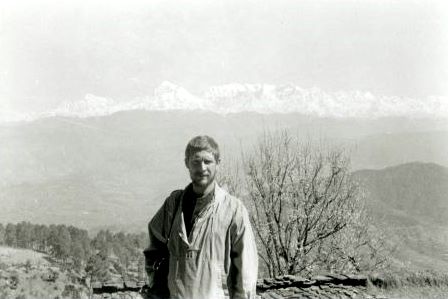
I post this because this is National Poetry Month.
"Life at War" by Denise Levertov, 1966
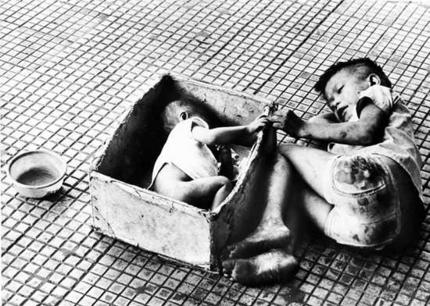
Photograph by Chick Harrity, 1973, Vietnam
The disasters numb within us
caught in the chest, rolling
in the brain like pebbles. The feeling
resembles lumps of raw dough
weighing down a child’s stomach on baking day.
Or Rilke said it, ‘My heart. . .
Could I say of it, it overflows
with bitterness . . . but no, as though
its contents were simply balled into
formless lumps, thus
do I carry it about.’
The same war
continues.
We have breathed the grits of it in, all our lives,
our lungs are pocked with it,
the mucous membrane of our dreams
coated with it, the imagination
filmed over with the gray filth of it:
the knowledge that humankind,
delicate Man, whose flesh
responds to a caress, whose eyes
are flowers that perceive the stars,
whose music excels the music of birds,
whose laughter matches the laughter of dogs,
whose understanding manifests designs
fairer than the spider’s most intricate web,
still turns without surprise, with mere regret
to the scheduled breaking open of breasts whose milk
runs out over the entrails of still-alive babies,
transformation of witnessing eyes to pulp-fragments,
implosion of skinned penises into carcass-gulleys.
We are the humans, men who can make;
whose language imagines mercy,
lovingkindness we have believed one another
mirrored forms of a God we felt as good—
who do these acts, who convince ourselves
it is necessary; these acts are done
to our own flesh; burned human flesh
is smelling in Vietnam as I write.
Yes, this is the knowledge that jostles for space
in our bodies along with all we
go on knowing of joy, of love;
our nerve filaments twitch with its presence
day and night,
nothing we say has not the husky phlegm of it in the saying,
nothing we do has the quickness, the sureness,
the deep intelligence living at peace would have.
I post this because this is National Poetry Month.
This poem was featured on Poetry Off the Shelf. You can hear Levertov read the poem, and a discussion about it here.
Thoughts: This poems stabs deep, as great poetry should do much of the time. We see the past too often as a presented and mediated set of ideas, truncated and accepted and reaffirmed. But the war against the Vietnamese people was little different than the current wars against the Iraqi and Afghan peoples, or the war against the Palestinians. They are all raw and ugly. They are all about the human urge for power and security and control. This poem, from 1966, reminds me that the same war continues today.
>Zbigniew Herbert
>Marta Kuczyńska (age 15) presents “The Seventh Angel” by Zbigniew Herbert:
http://video.google.com/googleplayer.swf?docid=1605299038165530167&hl=en&fs=true
Seamus Heaney reads Zbigniew Herbert:
http://video.google.com/googleplayer.swf?docid=-4526079571665894544&hl=en&fs=true
I post this because this is National Poetry Month.
 pilgrimakimbo