War and Peace

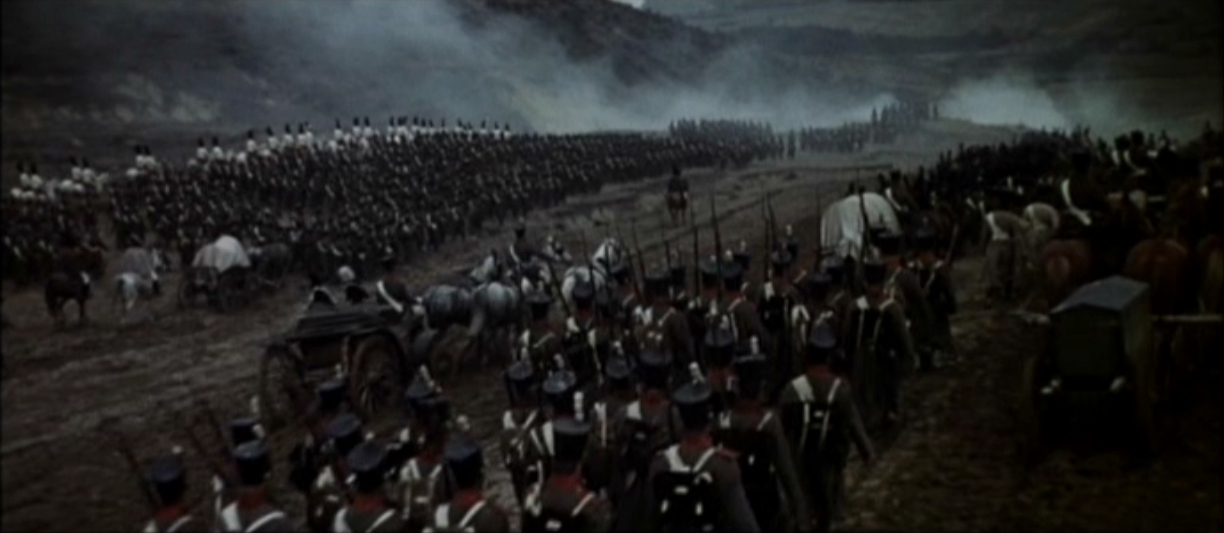
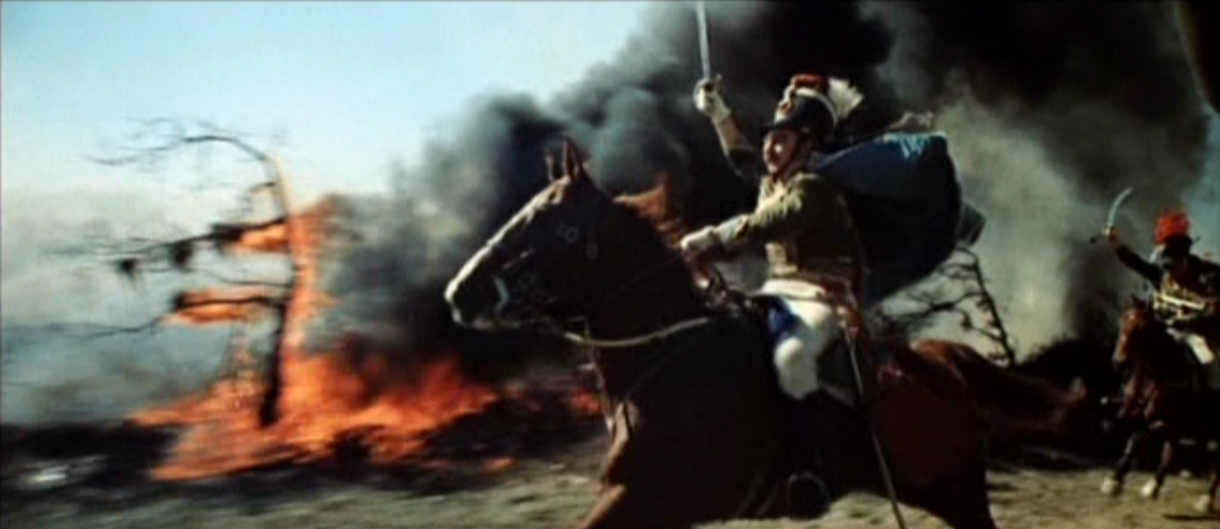
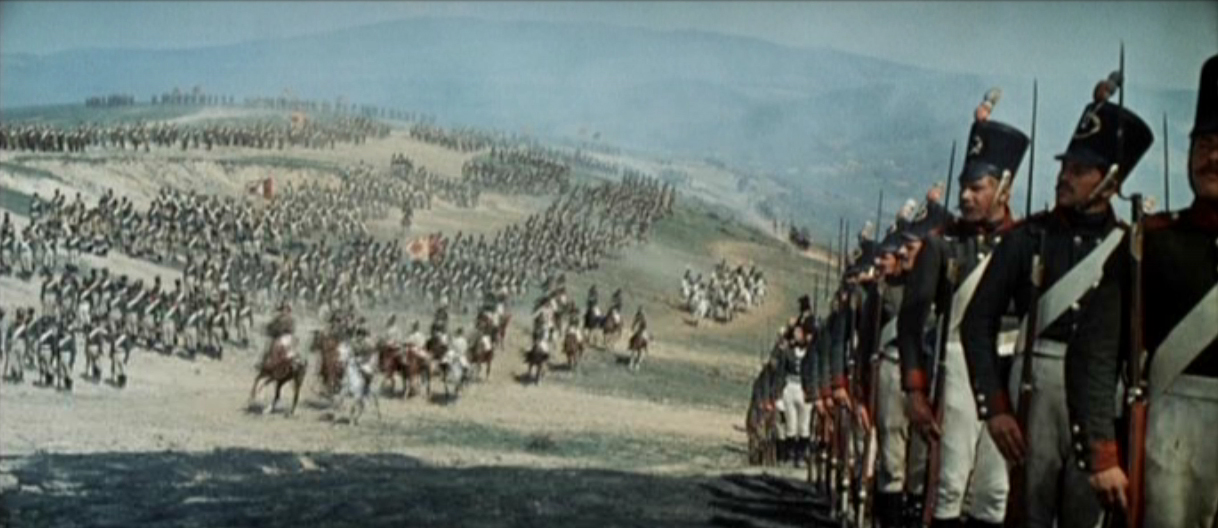
I am making my way through one of the most amazing films I have ever seen: Sergei Bondarchuk’s 1965-1968 Soviet era epic War and Peace (Voyna i mir).Amongst the many stunning aspects of the film, the battle sequences must be some of the best ever put on film. Here are a few screengrabs from the battle in part one:

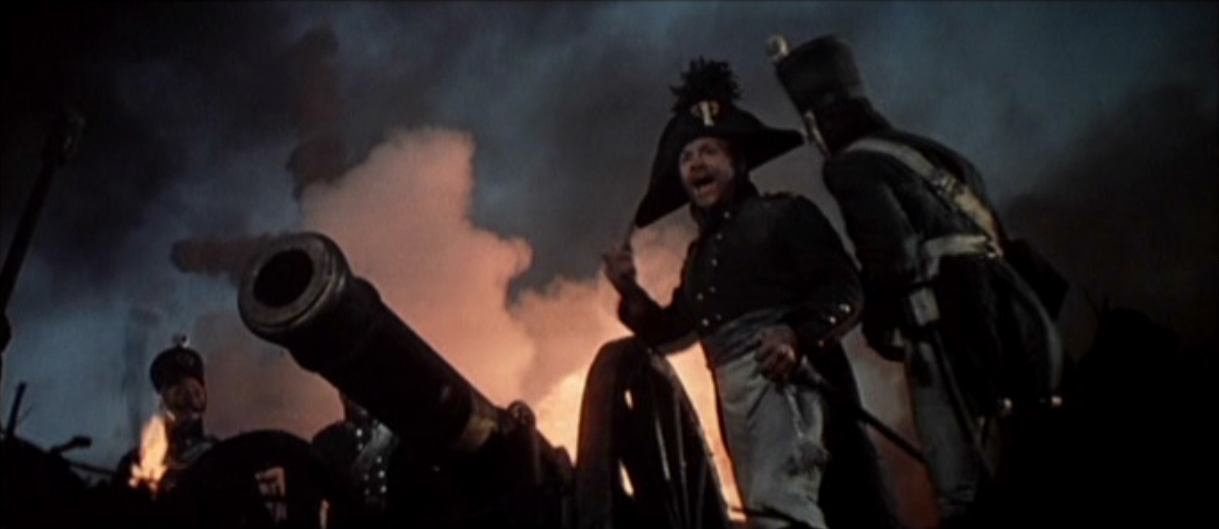
The night sequence of the battery firing its canons, and then its retreat, visually rivals, and often exceeds, night sequences of other films:

Bondarchuk even takes the time to show the smoke and ash flying up from a campfire as seen from a wounded soldier’s perspective:

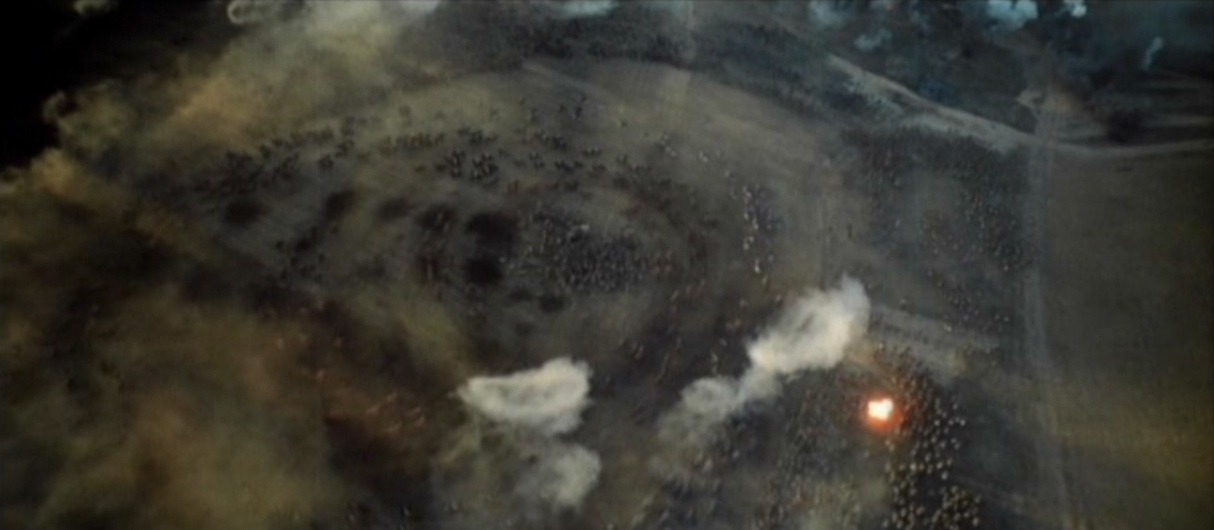
No CGI in 1965:

Many of the tracking shots remind me of John Ford’s films:

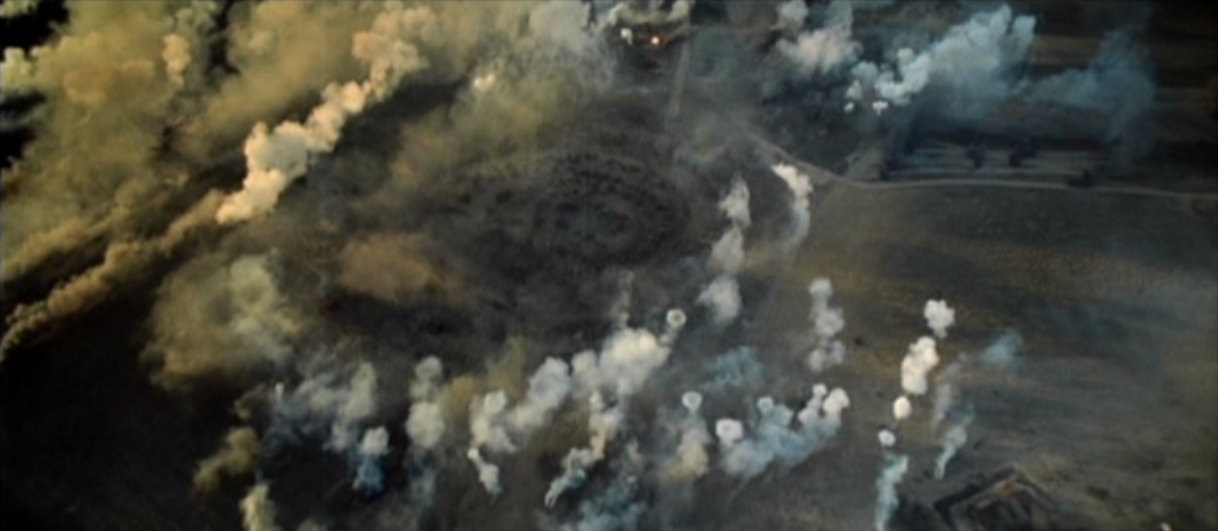
This last shot staggers the imagination. The troops swirl in a visual maelstrom as the camera pulls slowly back, turning the battle into a kind of dream or nightmare:

I found myself again and again comparing the battle sequences to those of Apocalypse Now (1979), at least for their shear scale and frightening beauty. I do not know if Coppola saw War and Peace before making his film, but I would not be surprised if he had.

The version I have access to is 403 minutes long, and my copy was due back to the library. So I will have to return and watch the rest later. So far the film has been both and joy and a kind of cinematic archaeological find. Great art can transcend both time and place, and good stories hold up forever.

>a beatlely evening

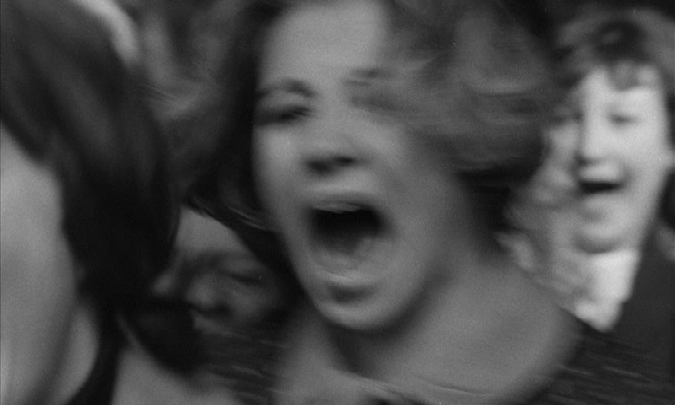
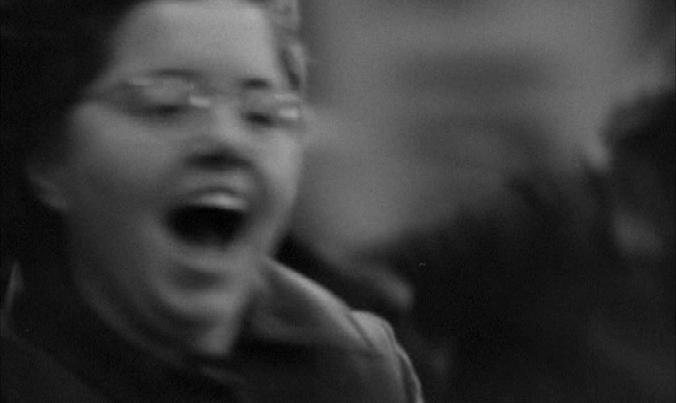
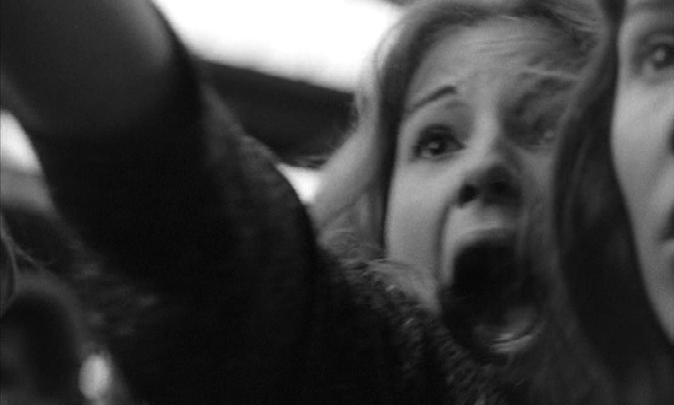
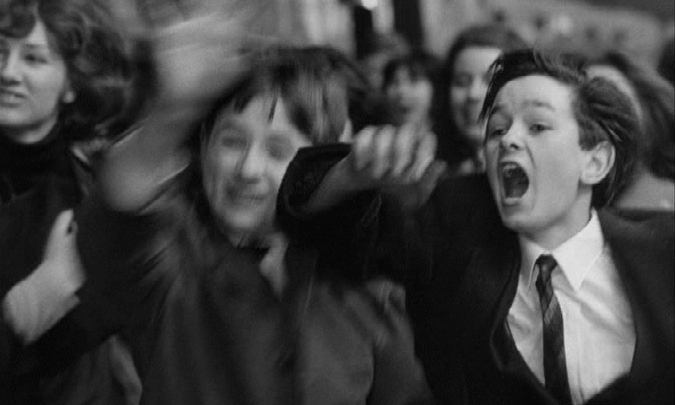
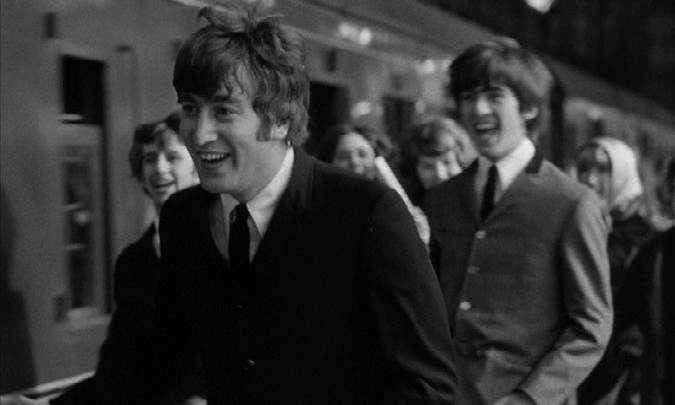
>Last night Lily and I watched A Hard Day’s Night (1964). It was a first for both of us. Here are some images from the opening sequence:


Even now, 44 years later, the film still is fun to watch and one can get a glimpse of why the Beatles were so popular, and still are. Lily asked me why everyone was chasing them and screaming so much. When the end credits showed up she exclaimed “it’s over?!” as though she could have watched at least another hour or so.

>Time, Memory, Mystery, Narrative

>

Stavrogin
…in the Apocalypse the angel swears that there’ll be no more time.

Kirillov
I know. It’s quite true, it’s said very clearly and exactly. When the whole of man has achieved happiness, there won’t be any time, because it won’t be needed. It’s perfectly true.

Stavrogin
Where will they put it then?

Kirillov
They won’t put it anywhere. Time isn’t a thing, it’s an idea. It’ll die out in the mind.

-F. Dostoievsky, The Possessed

There are few filmmakers, if any, who have philosophized as deeply about the nature of time as Andrey Tarkovsky. Time, as a philosophical concept, has been examined in depth by many, but rarely do filmmakers seem to step, philosophically or artistically, beyond commonly accepted film school concepts of time. In other words, for most filmmakers time is a concrete conceptual medium which one manipulates with accepted narrative forms according to common schemata in order to tell a clearly defined and easily understood cause and effect story. But that is not really time itself.

from Stalker (1979)

What do we talk about when we talk about time? For the most part we talk of time’s effects, of managing time, of the past or the future, of what could have happened or what did, of how one thing led to another. But time is none of these things in itself. Time is a mystery, and we relate to time in ways far more complex than the march of cause and effect. When we bring in the relationship of memory to time, and we dig into the nature of reality and its relationship to truth, we begin to exponentially expand the concept of time. Because memory is related to morality, time can also be understood as a spiritual concept.

from Mirror (1975)

In his book Sculpting in Time (pp. 57-8), Tarkovsky says this about time:

Time is necessary to man, so that, made flesh, he may be able to realize himself as a personality. But I am not thinking of linear time, meaning the possibility of getting something done, performing some action. The action is a result, and what I am considering is the cause which makes man incarnate in a moral sense.

History is still not Time; nor is it evolution. They are both consequences. Time is a state: the flame in which there lives the salamander of the human soul.

Time and memory merge into each other; they are like the two side of a medal. It is obvious enough that without Time, memory cannot exist either. But memory is something so complex that no list of all its attributes could define the totality of the impressions through which it affects us. Memory is a spiritual concept! For instance, if somebody tells us of this impressions of childhood, we can say with certainty that we shall have enough material in our hands to form a complete picture of that person. Bereft of memory, a person becomes the prisoner of an illusory existence; falling out of time he is unable to seize his own link with the outside world–in other words he is doomed to madness.

As a moral being, man is endowed with memory which sows in him a sense of dissatisfaction. It makes us vulnerable, subject to pain.

Cinema has a unique relationship with time. Of all the art forms only film can capture time, as it were, and preserve it. Tarkovsky says this as critical. Here he talks of this unique aspect of cinema around the time of filming The Sacrifice (1986):


His speech begins at 5:37 into the piece.

To think of time as a state, as that flame in the soul, and of action as merely a result of time, and to think of cinema as a medium that preserves time, provides the foundation upon which a different kind of film can be constructed. Different, not in the sense of odd or misshapen, but different from the conventions and expectations of what we have typically received. The history of cinema is replete with action driven plots, with stories that emerge from a fascination with time’s results, the effects of time. When the underlying state of time is manifest, if at all, it is too often the representation of shrunken persons and truncated souls.


from Nostalgia (1983)

What then is the role, even responsibility of cinema? Or of the filmmaker? The role of cinema has necessarily changed over the years. In years past the mere existence of a short film brought about wonderment, and sometimes caused viewers to run for the exits. But cinema has changed, and so have we. Tarkovsky writes:

Cinema is therefore evolving, its form becoming more complex, its arguments deeper; it is exploring questions which bring together widely divergent people with different histories, contrasting characters and dissimilar temperaments. One can no longer imagine a unanimous reaction to even the least controversial artistic work, however profound, vivid or talented. The collective consciousness propagated by the new socialist ideology has been forced by the pressures of real life to give way to personal self-awareness. The opportunity is now there for filmmaker and audience to engage in constructive and purposeful dialogue of the kind that both sides desire and need. The two are united by common interests and inclinations, closeness of attitude, even kinship. Without these things even the most interesting individuals are in danger of boring each other, of arousing antipathy or mutual irritation. That is normal; it is obvious that even the classics do not occupy an identical place in each person’s subjective experience.

Sculpting in Time (pp. 84-85)

Tarkovsky goes on to say about the filmmaker’s responsibility:

Directing in the cinema is literally being able to ‘separate light from darkness and dry land from the waters’. The director’s power is such that it can create the illusion for him of being a kind of demiurge; hence the grave temptations of his profession, which can lead him very far in the wrong direction. Here we are face with the question of the tremendous responsibility, peculiar to cinema, and almost ‘capital’ in its implications, which the director has to bear. His experience is conveyed to the audience graphically and immediately, with photographic precision, so that the audience’s emotions become akin to those of a witness, if not actually of an author.

Sculpting in Time (p. 177)

from The Sacrifice (1986)

In a sense the filmmaker is the creator of time. The audience enters into the world of the film, the mental/emotional space circumscribed by the filmmaker, and lives, as it were, in that space for at least the duration of screen time, if not on some level for ever after. Clearly this has implications for issues of responsibility, both for filmmaker and audience. But this kind of thinking opens up possibilities for ‘approach’ as well. In other words, to think of time as “the cause which makes man incarnate in a moral sense” is to confront something living rather than a mere object of manipulation. This approach is what turns Tarkovsky’s film into what they are: films that contemplate the deeper truths of the soul and call us to do the same. This approach is also the antidote to the ‘boring art film’ in that it does not allow for the mere application of style for artistic effect. And it can, at times, be as a kind of lens that helps reveal the more profound aspects of one’s soul.

*All quotes come from Sculpting in Time by Andrey Tarkovsky, trans. Kitty Hunter-Blair, University of Texas Press, 1986.

>Wrong Move & our institution of high art

>This post can be considered a contribution to the contemplative cinema blogathon over at Unspoken Cinema.

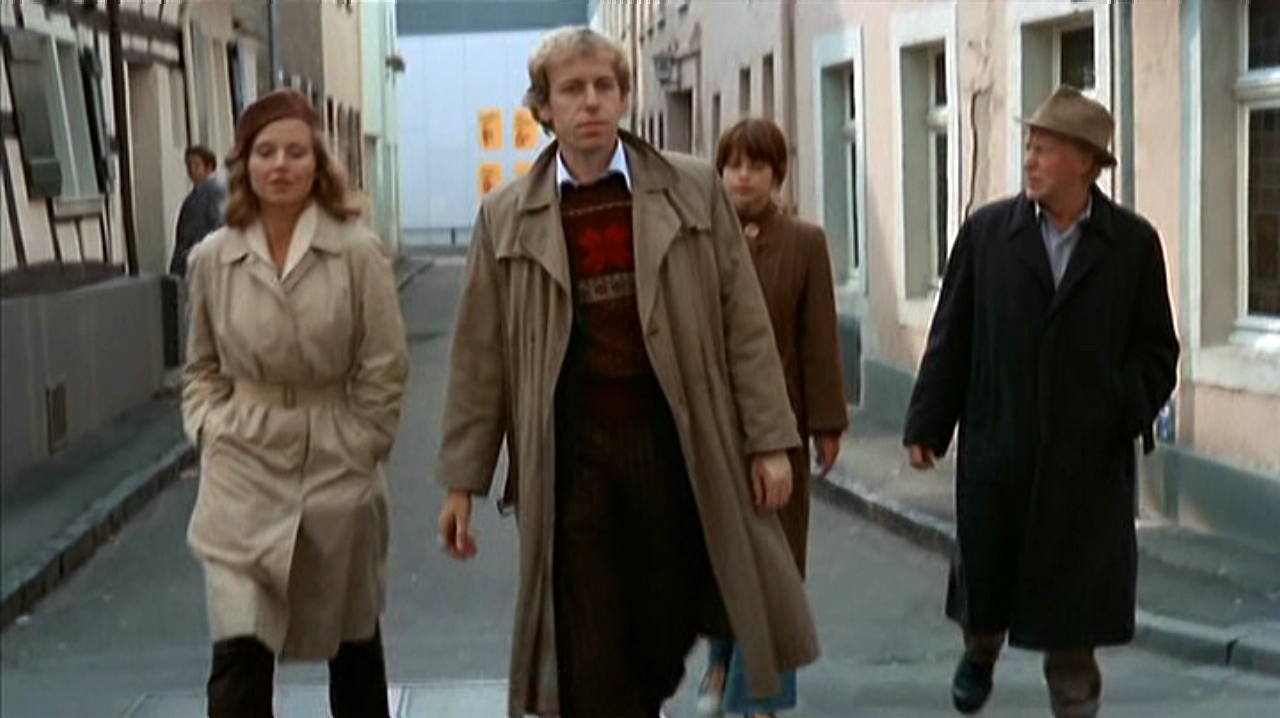
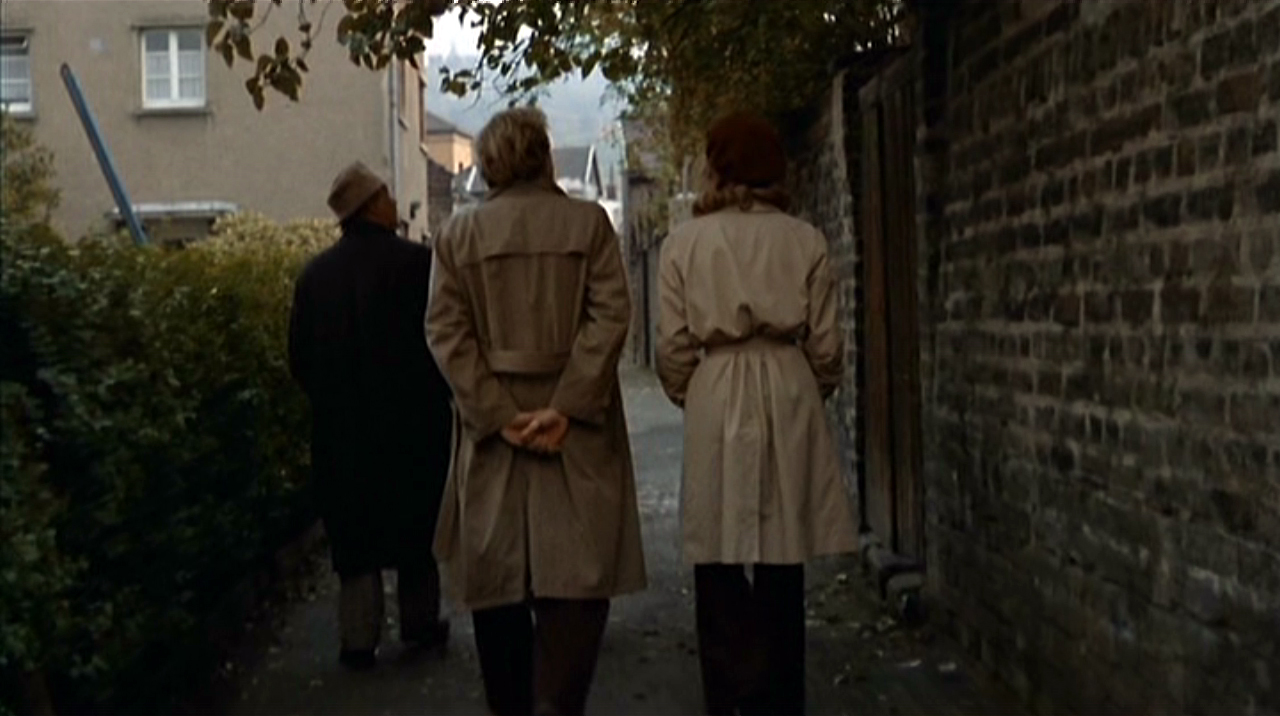
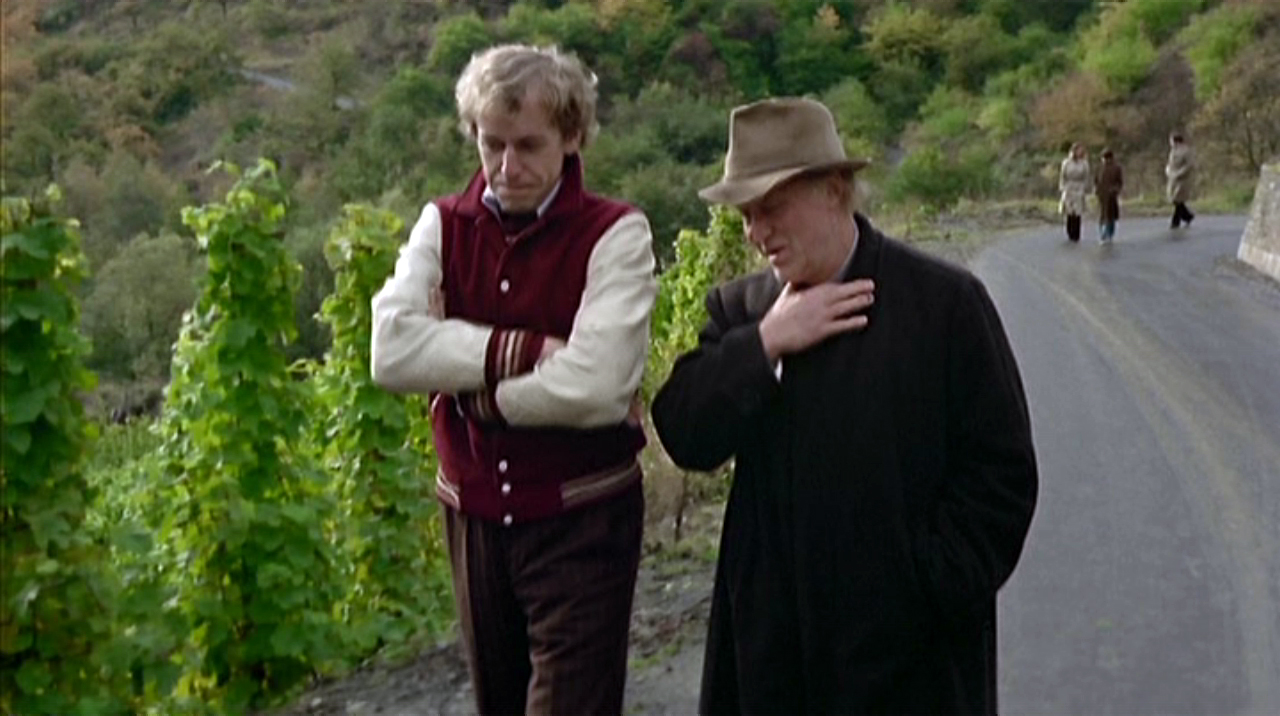
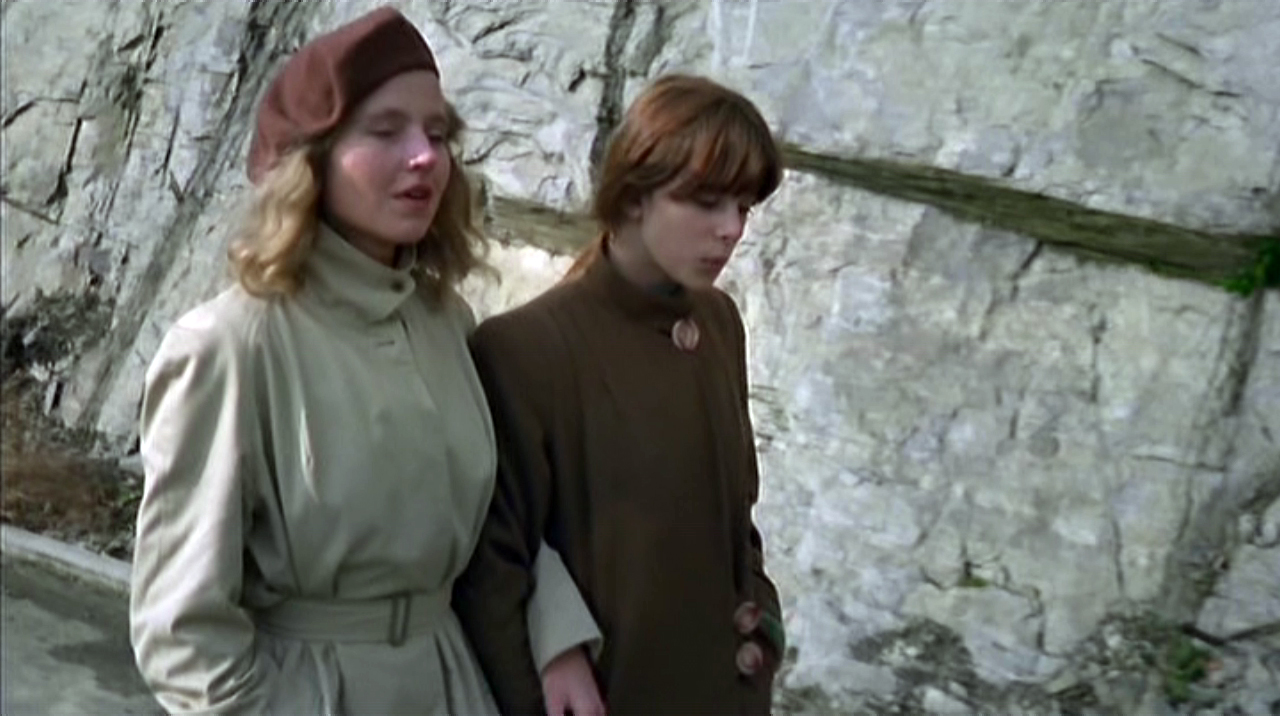
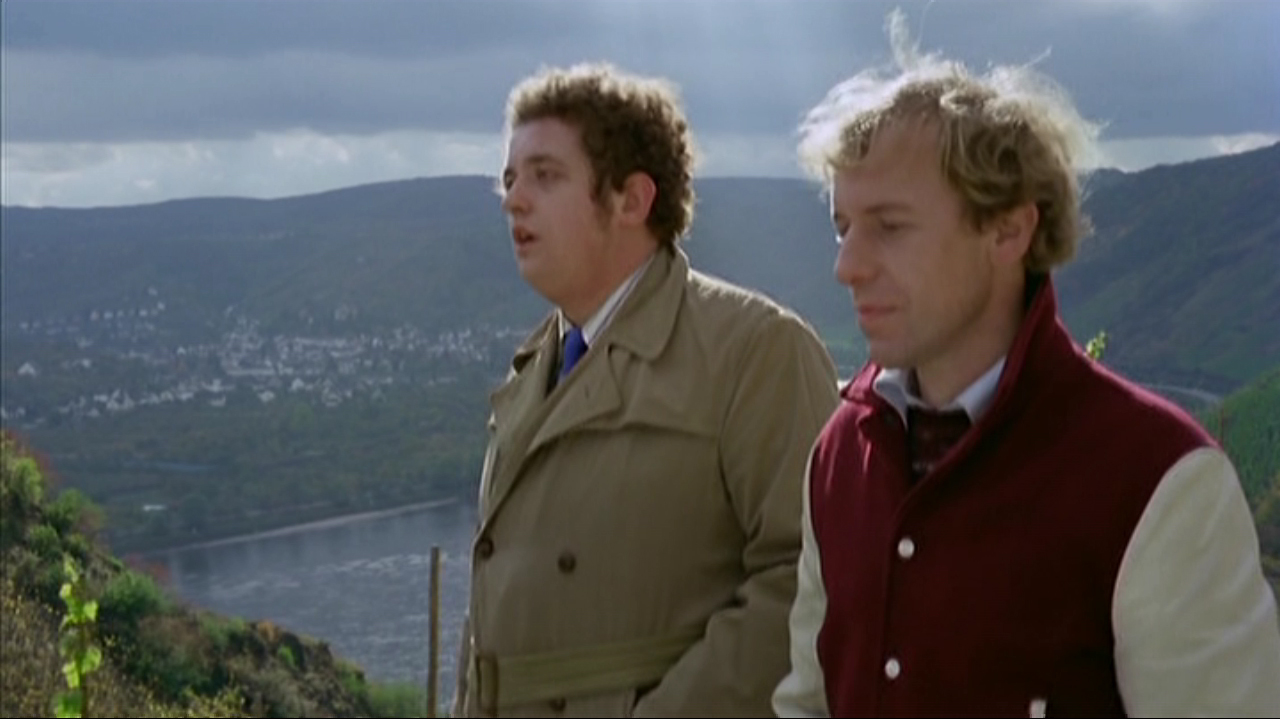
I am convinced that the existence of the contemplative in cinema gains or loses its power from the historical and cultural contexts in which it plays. In other words, one person’s contemplative moment is another person’s boring-art-film moment is another person’s slice of reality. And that those cinematic moments shift over time, for example traveling from a formerly populist cultural object used for “mere” entertainment to an archaeological/social artifact used for contemplation by a cultural elite. Take for example the two scenes in Wim Wenders’ Wrong Move (1975) in which the five central characters proceed on extended walks while talking, observing, and not talking.

Wrong Move is not a contemplative film the way a Tarkovsky or Tarr film might be, but it uses some contemplative devices. The plot is apparently thin, the motivations of characters are somewhat obscure, and the focus is on the character’s trying to solve the question of their existence and understand themselves. I do not imagine Wrong Move was a particularly popular film in its day. I know that no one would bother watching it today except for those who have an interest in such films. Regardless, it is a very good film.

In many films walking, like car chases, is a time filler. A director can lengthen or shorten such scenes to fit the desired length for the film. Ellipses exist, in part, to do away with obvious time-wasters as extended walking scenes. That is why we see a character leave an apartment and then see her driving her car; we just assume the action between leaving and driving took place and we do not care to see it anyway.

In Wrong Move Wenders uses ellipses when it is appropriate to telling the story. But then, twice, he creates scenes in which characters just walk, amble really, through a city first, and then through the countryside. In both cases the walking takes up minutes of screen time. And in both cases there are significant pauses in the conversations, which, other than the walking, is also the only “action” going on.

In the first walking scene the characters walk along side streets and back alleys, mostly in silence, observing the world around them.

Several times they stop and observer and listen to the sights and sounds of the city and its inhabitants. In one instance a man and woman are fighting and the man begins beating the woman. The walkers turn and keep walking. Another time a man yells out of his upstairs window about his extreme suffering. They stop, listen, and keep walking.

In the second sequence the characters walk up a long road in the country until they are high above the valley and the river below.

At moments they pair up and then switch pairings in a natural way that amblers do.

Along the way they talk of various things such as art and politics and history.

Overall, neither of these walks advances the plot with any kind of action. These walks are almost like detours from the story. That’s one way of looking at them. Another way of looking at them is that these walks are central to the story and that the plot revolves, in a sense, around these moments. In fact, these walking scenes are key contemplative moments that both draw us into the characters as human beings who think, rather than merely act, and foreground the film as a film, thus substantiating our own ambling.

By having the characters walk for such extended screen time one is faced with non-normative cinematic conventions. By having the characters talk one is drawn into their thinking. In both instances one is faced with either turning away or contemplating the film and one’s own thoughts. The fact that a film would ask the viewer to participate in contemplation places that film outside the assumptions underlying more popular films. Wrong Move, though it is built with a populist technology, nonetheless resides outside populist conventions, even if its themes are universal.

This “foregrounding” is a common contemplative process. By deviating from classical cinematic narrative norms, in this case by just having the characters walk for minutes of screen time, the viewer is made more aware of being a viewer, and of the film being a film. In this sense the contemplative aspects include not only what is happening on the screen, but the act of viewing, including one’s relationship to the film as film.

A note on contemplative cinema: We live at a time in which the discussion of art often assumes one underlying purpose of art, that is, art is for perceptual contemplation, and more specifically, for aesthetic contemplation. But art is also for many things, not least of which includes religious rites, or telling stories, or public ceremonies. We can also assume that art can roughly be categorized as works of high art, works of popular art, and works of the tribe. In all these distinction there is great cross-over and cross-pollinating, so much so that clear divisions are often impossible to maintain.

I want to point this out because when we talk of contemplative cinema we are typically referring to basic assumptions of our institution of high art. First, to borrow from Nicholas Wolterstorff, a society’s institution of art can be summed as

[T]he characteristic arrangements and patterns of action whereby works of art are produced in that society, whereby they are made available for the use of members of that society, and whereby members of that society are enabled to make use of them.

Art in Action, 1980

Thus, the institution of high art consists of those patterns and arrangements that create, support, and suite the needs and desires of those who would “use” works of high art. That art is for aesthetic contemplation is probably the single most assumed characteristic of this institution.

I recognize the term “high art” can be somewhat pejorative, but I do not intend it so, for it is not necessarily a question of valuation. But it might be a question of social class – an unwelcome and unrecognized term in the U.S.

One can observe that in our society there is a cultural elite: a group that is both open (anyone can join) and is closely tied to our intellectual elite (which also anyone can join). Lest we chafe at such notions, we should keep in mind that a very small percentage of people in our society will ever step into an art gallery or concert hall, and very few people will ever watch a Tarkovsky or Tarr film, or a Wenders film from the 1970s, or even a great Hollywood studio era film outside a handful of titles. And certainly even fewer individuals will read works of film theory or film history, or bother to write down their own thoughts on the subject.

We should also believe, however, that this cultural elite consists of individuals fundamentally no different than anyone else. The term is largely a technical one. I like to think that our cultural elite behaves as it does for much the same reasons, as described by Pauline Kael, that educated audiences see “art” films:

I would like to suggest that the educated audience often uses “art” films in much the same self-indulgent way as the mass audience uses the Hollywood “product,” finding wish fulfillment in the form of cheap and easy congratulation on their sensitivities and their liberalism.

from Fantasies of the Art-House Audience, in I Lost It at the Movies (1965)

Contemplative cinema is more than a category of cinematic effects or a collection of stylistic characteristics. It is also a social term, and maybe even a political term. To speak of contemplative cinema is to draw connections with our institution of high art with all of its assumptions, expectations, and motivations.

>A through K links

>A.
Screening the Past’s
Field survey: the poll results
This has got to be one of the most interesting lists I’ve come across in a long time. It is an informal survey of key film-related writings and cinematic events over the past ten years or so as highlighted by film scholars. There is a lot here to chew on. Thanks Girish for posting this at Dr. Mabuse’s Kaleido-Scope.

B.
stunning photographs by Chris Jordan

Cell phones #2, Atlanta 2005 44 x 90″

C.
Fascinating photo collages of typologies of everyday life by Mark Luthringer.

D.
The opening shot from The Enigma of Kaspar Hauser (1974), a.k.a. Every Man for Himself and God Against All:

This is one of my favorite opening shots. From the first time I saw it on video, somewhere in the mid 1980s, it has haunted me.

E.
Art assignments for ordinary people. Yes, you too can get involved!

F.
Photography by Michael Stipe (yes, that Stipe)

G.
Delicate Situations

H.
Extremely independent radio online: SomaFM

I.
The Immigrant (1917)
http://video.google.com/googleplayer.swf?docId=-6961048885792851539&hl=en
Over at their blog Kristin Thompson and David Bordwell wish classical cinema a happy birthday. They pick 1917 as the key year. They list Chaplin’s The Immigrant as one of the important films of that year.

J.
My next important project: How to Brew

K.
My favorite segment from the 1987 ensenmble film Aria:
http://video.google.com/googleplayer.swf?docId=-6601322802908624594&hl=en
Directed by Charles Sturridge. The music is from G. Verid’s La forza del destino.

Irma Vep | Avatar | Maggie Cheung

In Olivier Assayas’ 1996 film Irma Vep, Hong Kong film and television actress Maggie Cheung plays the Hong Kong film and television actress known as Maggie Cheung – what some would call “playing herself.”

The story revolves around a film crew on a production that is spinning out of control as its director has a nervous breakdown and the production staff fight amongst themselves. The film they are trying to create is a remake of the classic Les Vampires, a French serial from 1915. Maggie Cheung is cast in the role of the central character, Irma Vep, originally played by Musidora.

During the shooting Cheung is told by the director René Vidal (played by Jean-Pierre Léaud) that she needs to become the character more, to dive in and exude the role, to be Irma Vep – a rather typical bit of advice given by directors, especially from those who have grown unsure of their own talents. With this critique Cheung feels the pressure to jump more fully into the character, and this pressure underlies my favorite scene in the film.

Later that evening, when she is alone in her hotel room, Cheung wears her costume and roams around her room. She struggles to find the right emotion and truly sense Vep. At one point she seems like she might lose her mind.

Then she quickly exits into the hallway and begins to prowl. She acts out the role of Irma Vep, sneaking around, avoiding others and doing a bit of spying. She eventually notices a maid carrying some food to a room. After the maid enters, Cheung slips in quietly. The maid leaves and Cheung is hiding in the room watching and listening a woman talk on the phone.

Cheung then notices some costume jewelry lying on a counter.

She takes the jewels and sneaks out of the apartment. At several moments she is nearly seen.

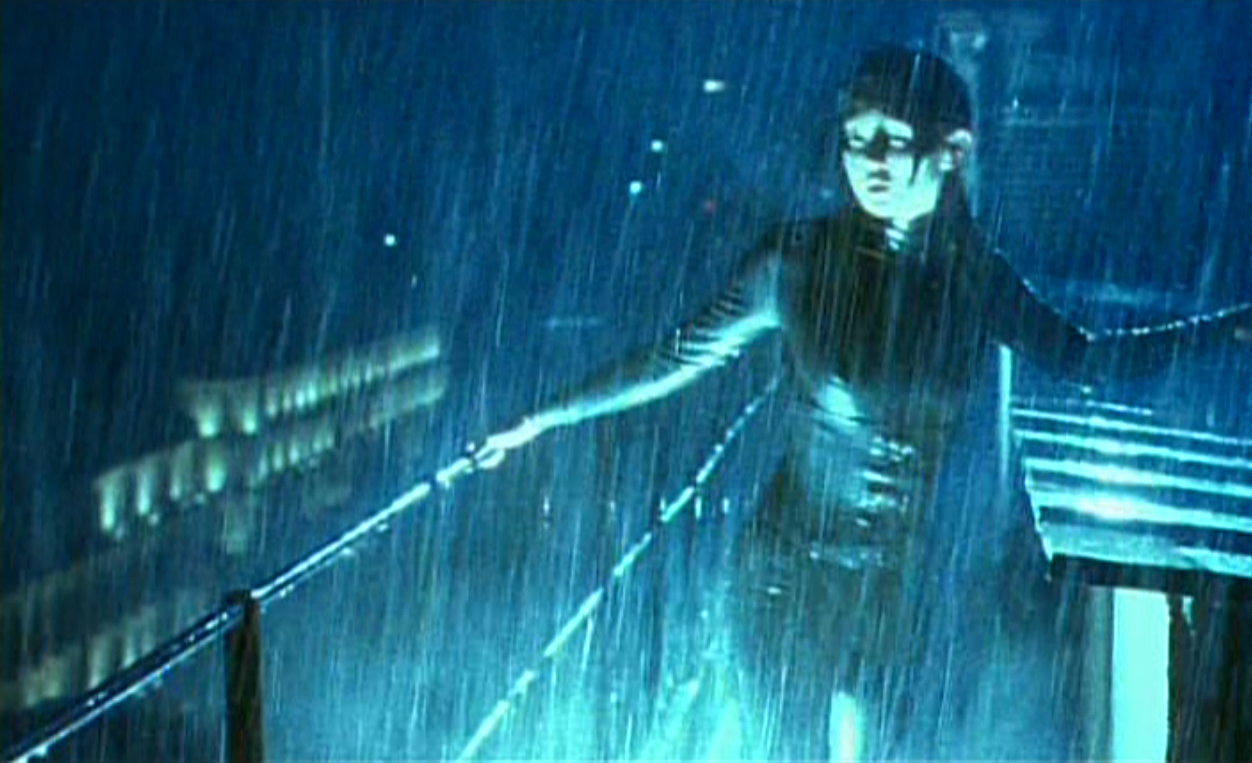
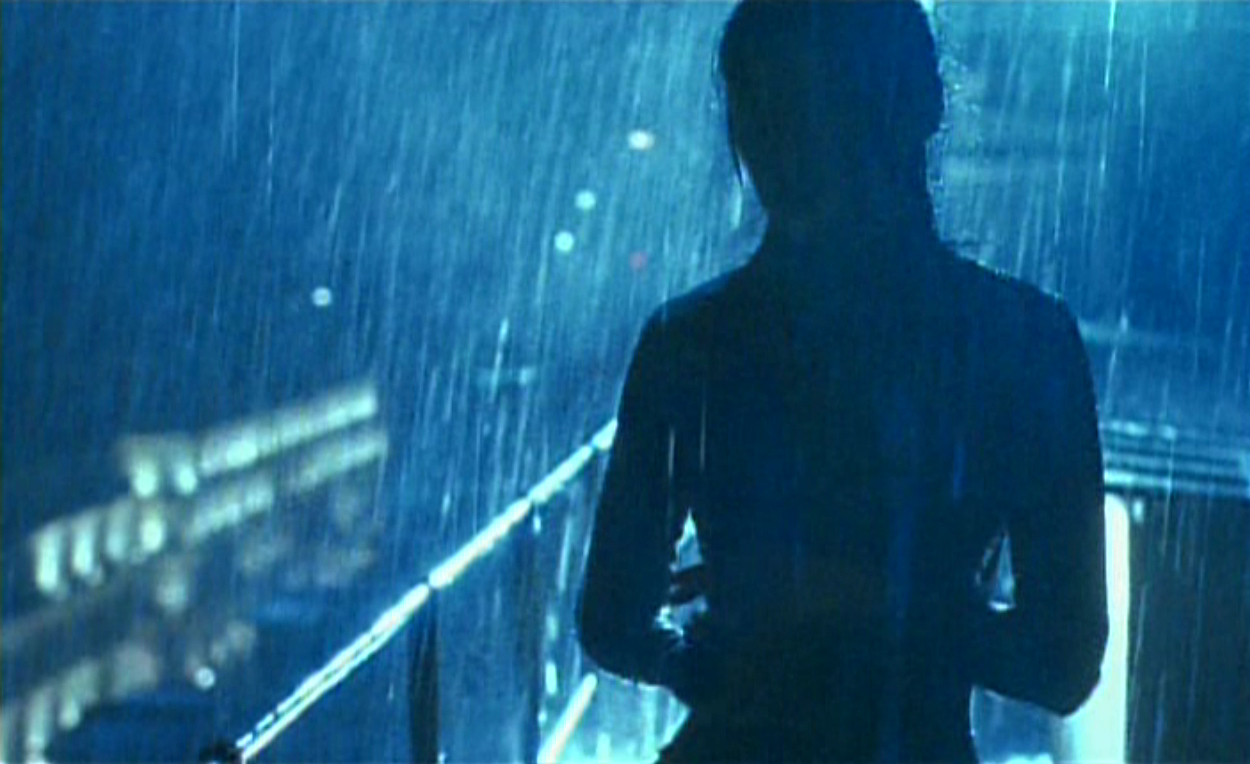
Then, to avoid bumping into some others, she exits out onto the roof, which produces these wonderful images.

After a few moments of contemplation Cheung holds the jewels over the edge of the building and then lets them drop.

The jewels fall, disappearing into the rain.

What I find so fun about this scene is how the character Cheung crosses over into an approximate real-life version of Vep in order to better understand Vep and then, possibly, play Vep better in the film. But it is also a moment in which we get to really see Vep for the first time. And it is also a scene in which the vicarious and transcendent aspects of viewing movies get played out as action itself. When Cheung leaves her room and begins to be Vep she acts out visually/physically the mental condition of that viewers go through as they “play” the characters on the screen in their own fantasies. In other words, she acts the avatar we aspire to in our waking dreams, whether that avatar is Vep or any other character we love, hate, or fetishize.

>contemplate cinema

>A reminder . . .


. . . about the upcoming 2nd annual
Contemplative Cinema Blogathon, Sunday 6th – Sunday 13th, January 2008, at Unspoken Cinema.

[Image above from Zerkalo (1975), Tarkovsky]

Der alte Film ist tot

If you can forgive me, which you must, then you will understand I blog much of the time for my own selfish edification and education. This is one of those times.

I do not know much about the history of modern German cinema. But I am interested. In my more brilliant moments I might say something like “the present is always built on the past.” How true that is! On the DVD extras for the Criterion release of Ali: Fear Eats the Soul there is a short documentary by the BBC called Signs of Vigorous Life: New German Cinema (1976). From today’s perspective one might say the film is about how one person’s past is another person’s present is another person’s future. On the other hand, the film is also about breaking with the past and creating something genuinely new and authentic.

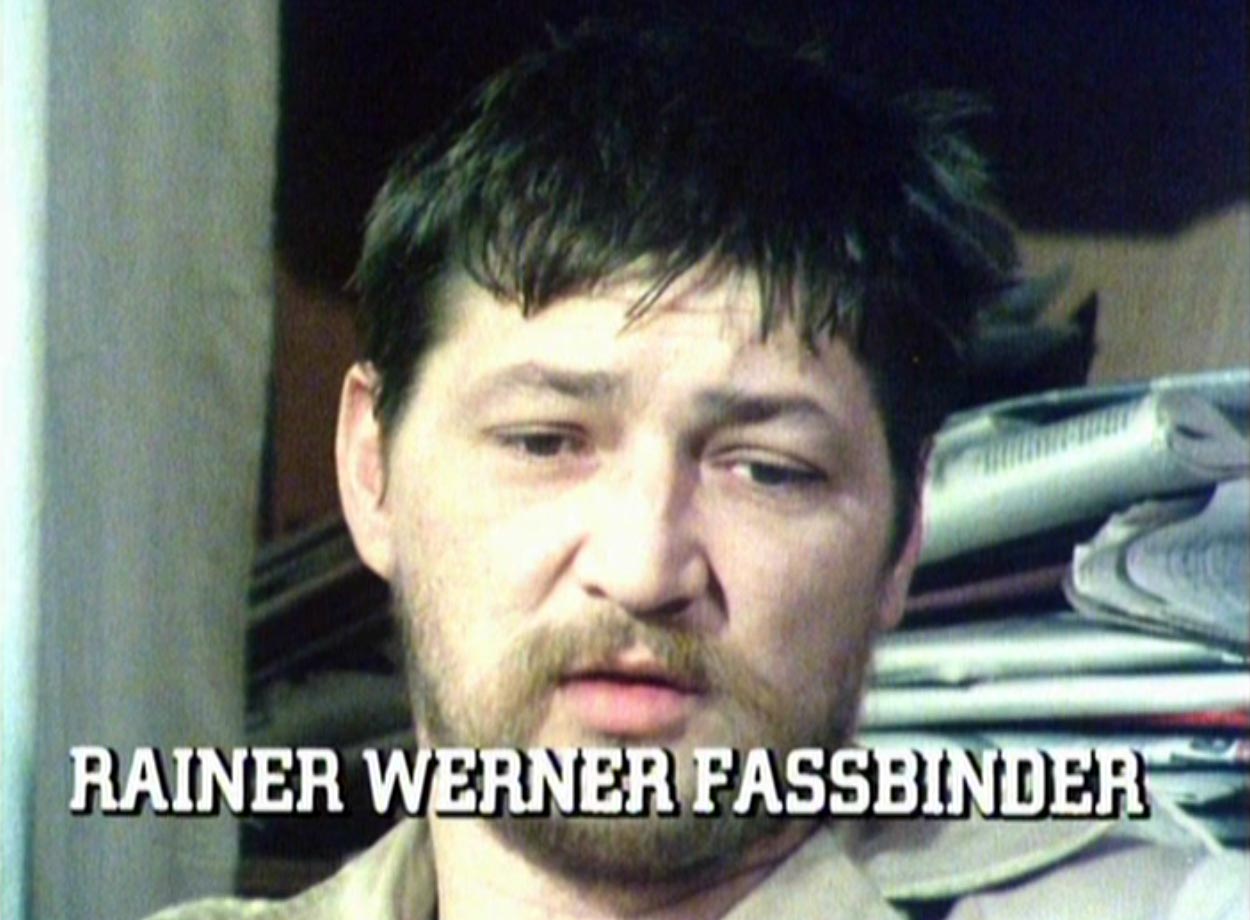
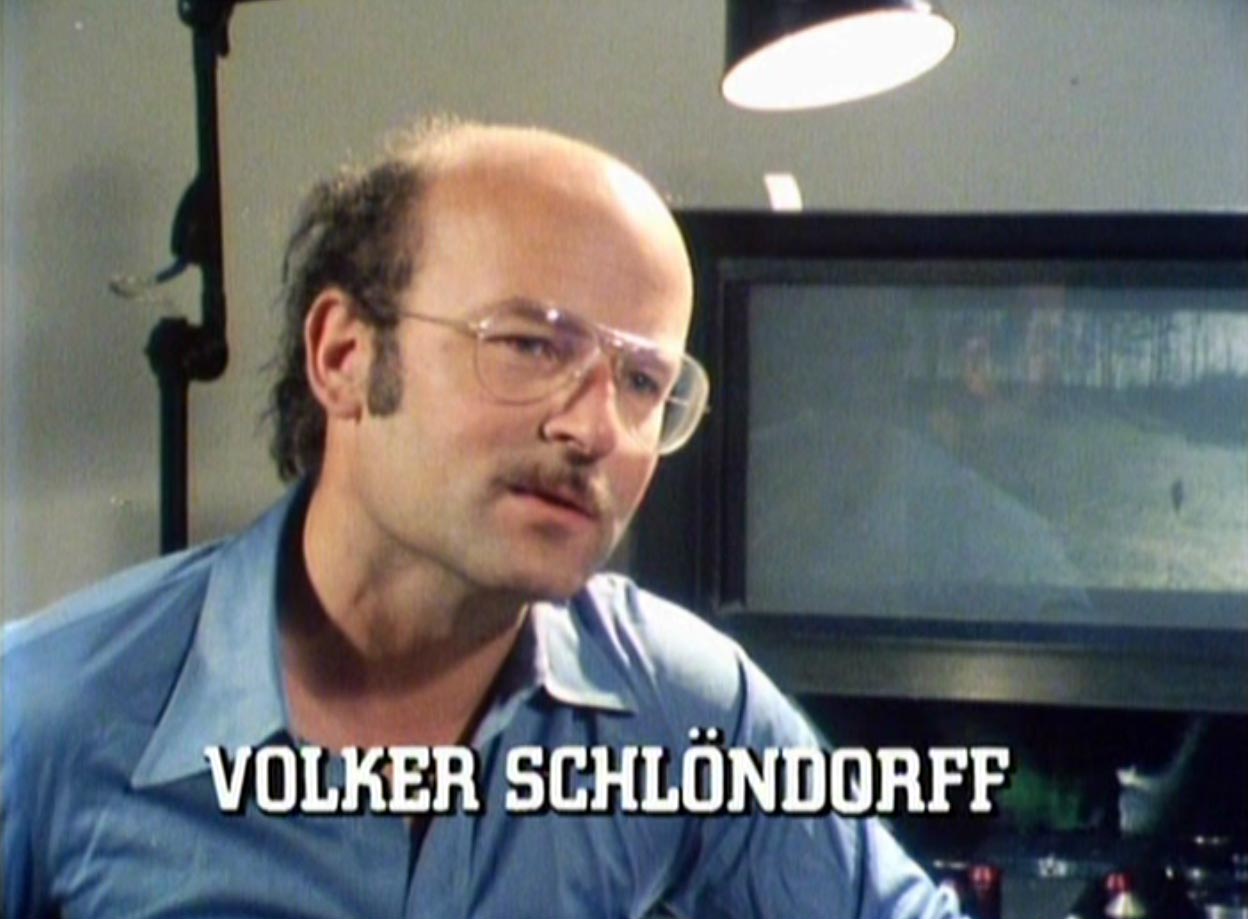
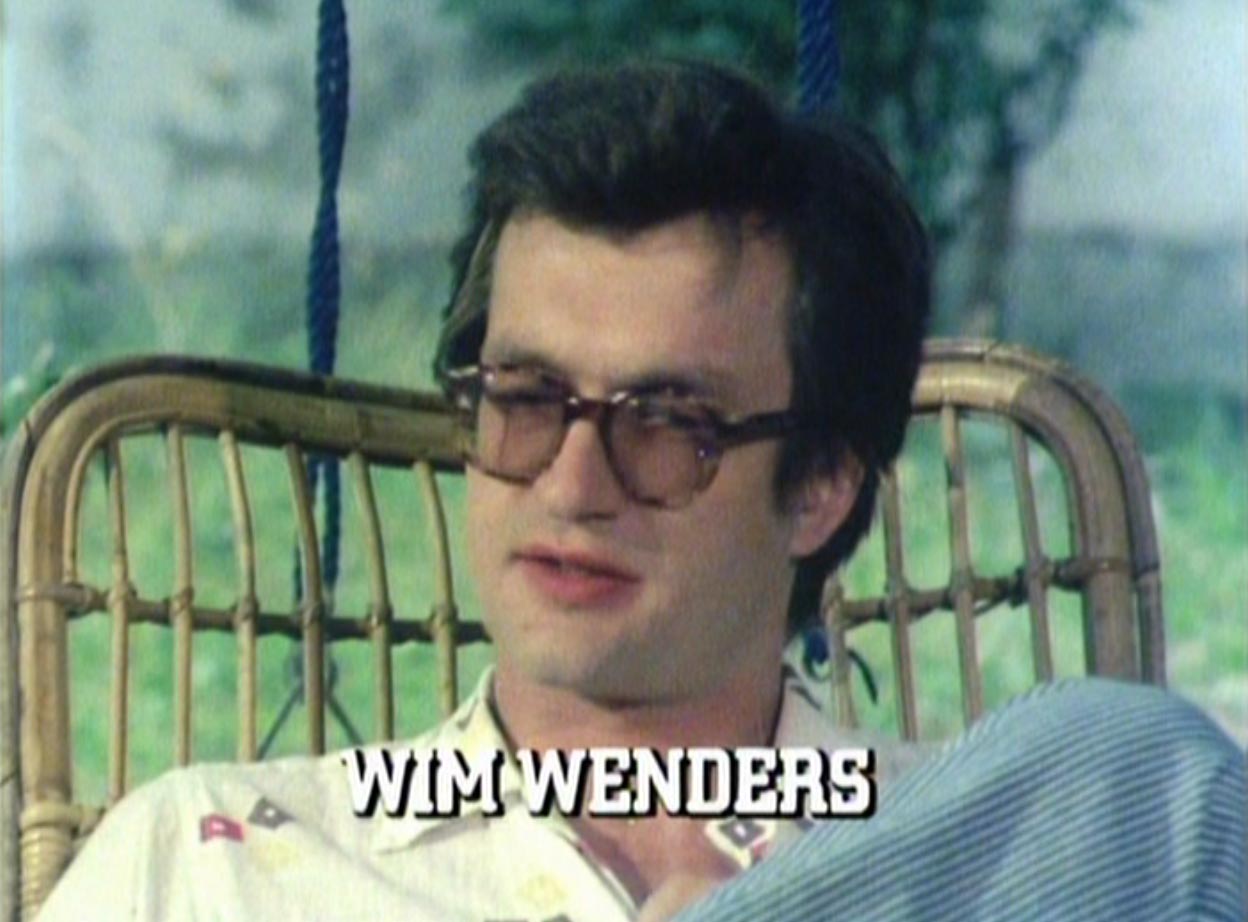
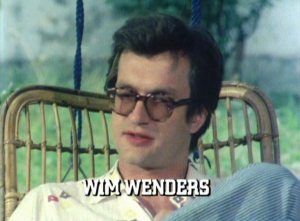
Now, this documentary is not at all dazzling, but it does focus on several filmmakers (Fassbinder, Schlöndorff, Wenders, Herzog) who exemplified the New German Cinema, as it is called. These filmmakers continue to influence film history and other filmmakers on numerous levels. Ironically, it is the one filmmaker who died too young that may still have the most influence.

One thing that filmmakers like to do when the camera is turned on them is to talk. Especially if talking is a means of saying what is wrong with the world and what it is that filmmaker is uniquely doing to change it. We get some of that in this film. New German Cinema began, like most all of the “new” cinemas, in and around the early 1960s, which was a time all about what was wrong world and how to fix it. (It still should be in my opinion.)

The group of filmmakers featured in this documentary are/were part of the second generation of the New German Cinema. The first generation never achieved quite the level of critical acclaim, financial success, or notoriety as the second, but it did establish a kind of vision that, though not exactly marching orders, did point to the future. This vision, expressed in writing, is known as the Oberhausen Manifesto, with with the old film was declared dead – Der alte Film ist tot. (I’ve included the manifesto below.)

Whether the second generation was influenced directly by the manifesto is debatable.

L’enfant terrible

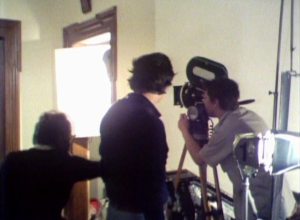
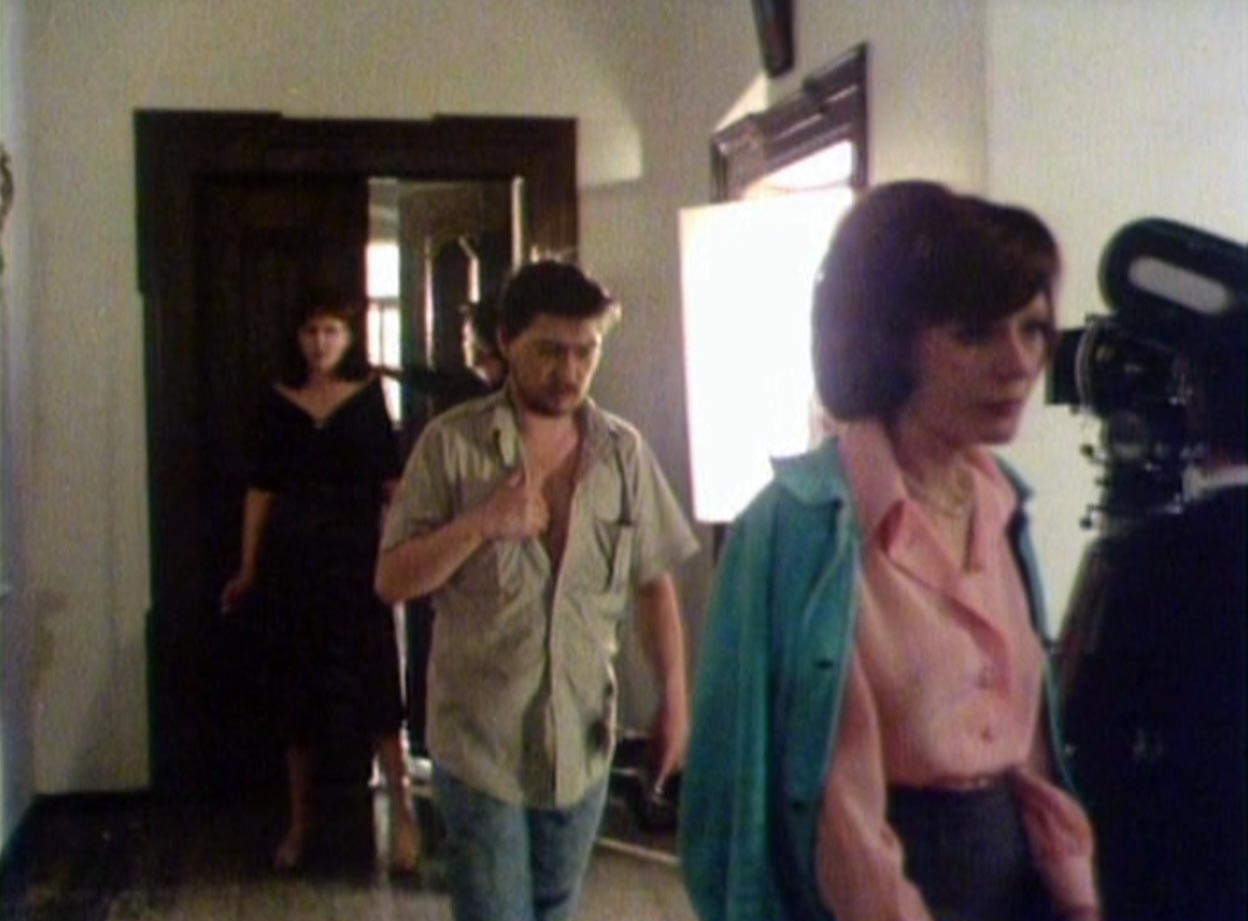
Two shots of Fassbinder on the set somewhere in the 1970s:
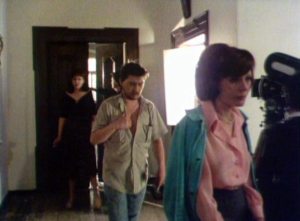


Fassbinder on the set of Berlin Alexanderplatz two years before his death:

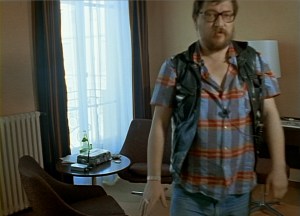
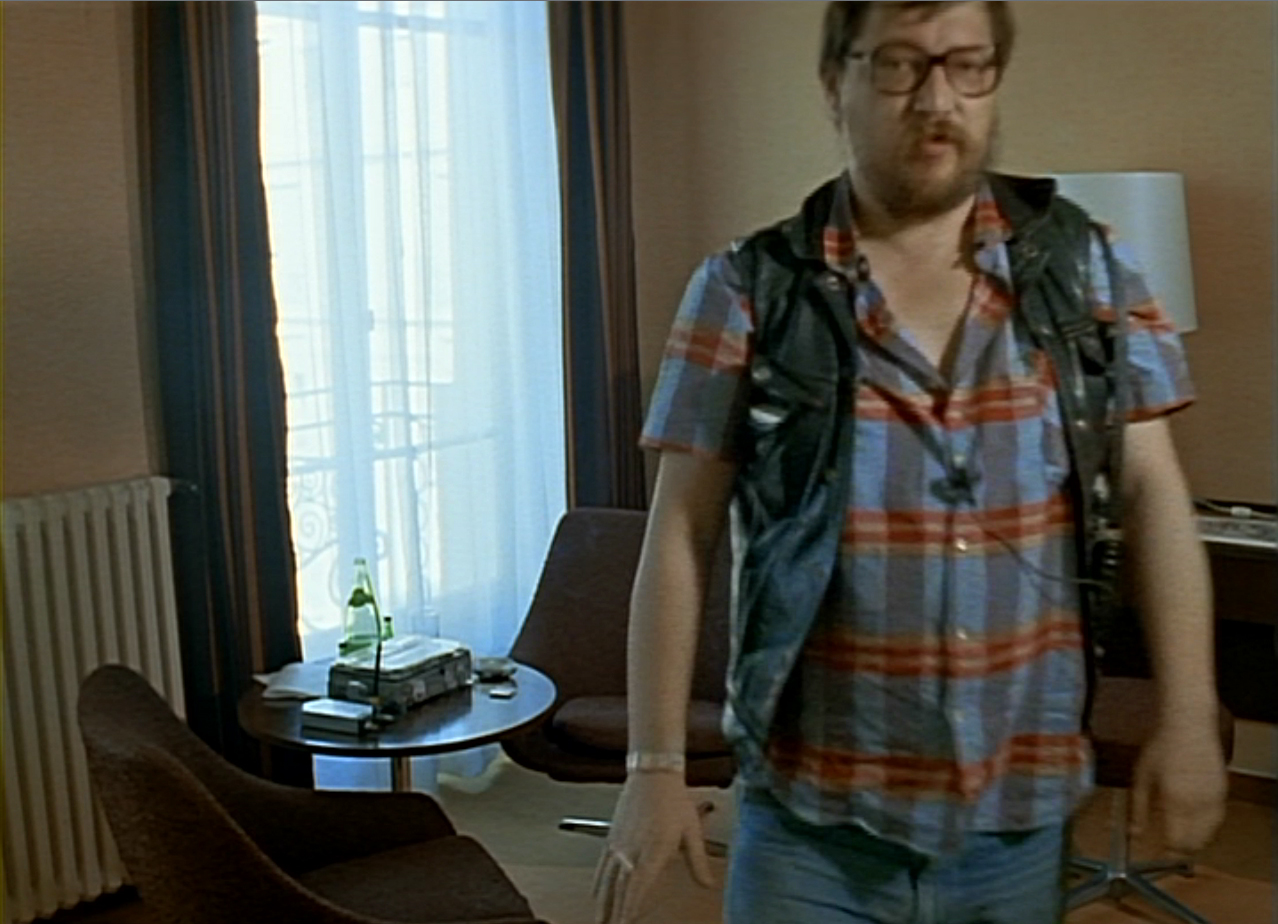
Two images of a dishelved Fassbinder from Wenders’ film Room 666 (1982):


Room 666 was shot in May of 1982 at the Cannes film festival. Fassbinder died on June 10, 1982.

What do I think of Fassbinder? I am troubled by him. I no longer hold the romantic view of artists that I once did, so I cannot look at his life and swoon over how beautifully tragic is was. And yet I know that his drug use, high energy, promiscuity, etc., played a huge part in the creation of his art – and I love his films. The BDR trilogy ranks for me as a pinnacle of filmmaking. I cannot wait to get my hands on Berlin Alexanderplatz (1980).

I have a feeling that Fassbinder might have made an annoying friend, one of those friends that you cannot let go of and yet you’re always shaking your head at wondering when he is going to excavate himself from the mess of his life. Of course, I only know of him from what I’ve read, which is quite limited, so maybe his excesses got all the press and there is more to him than that.

The Brain
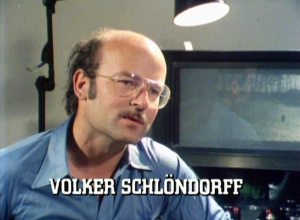
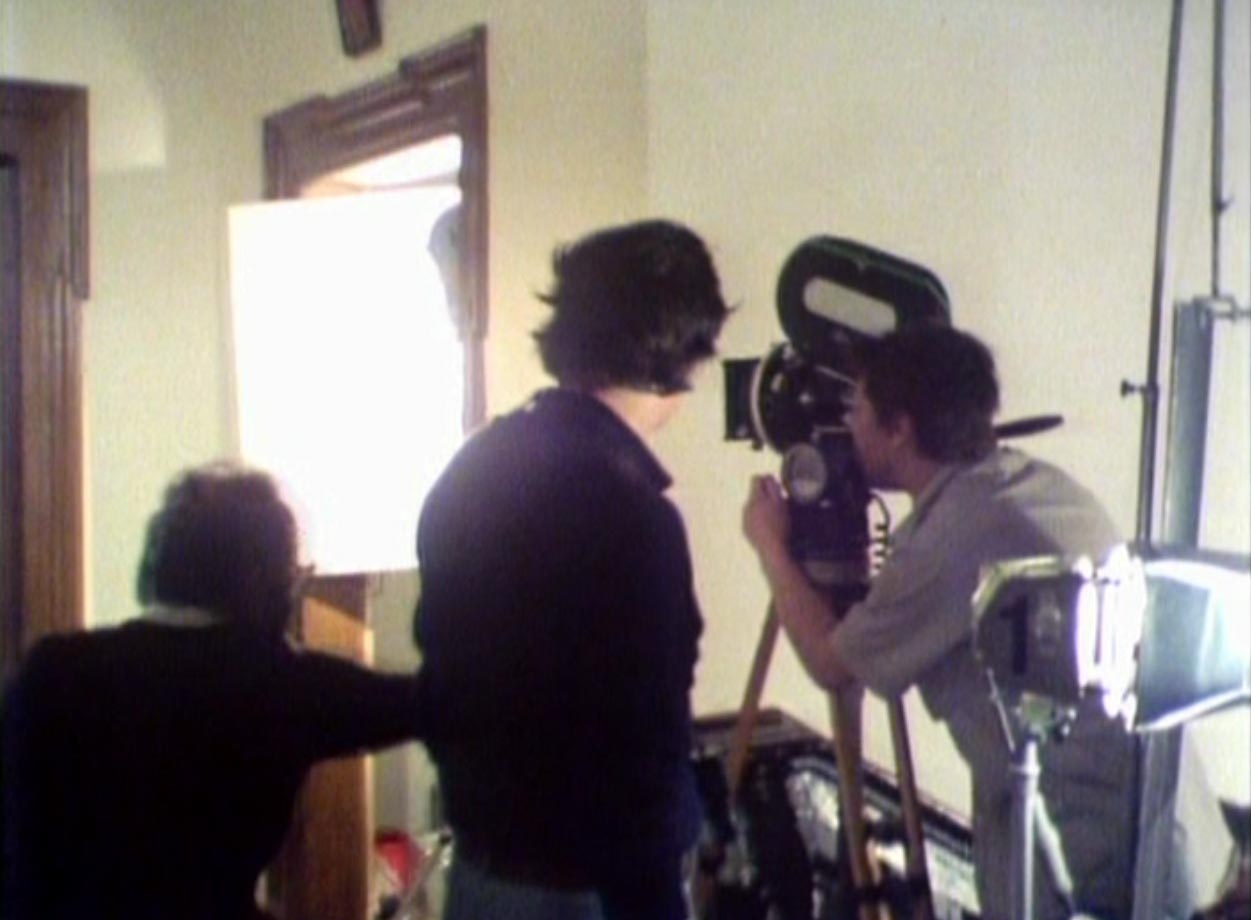
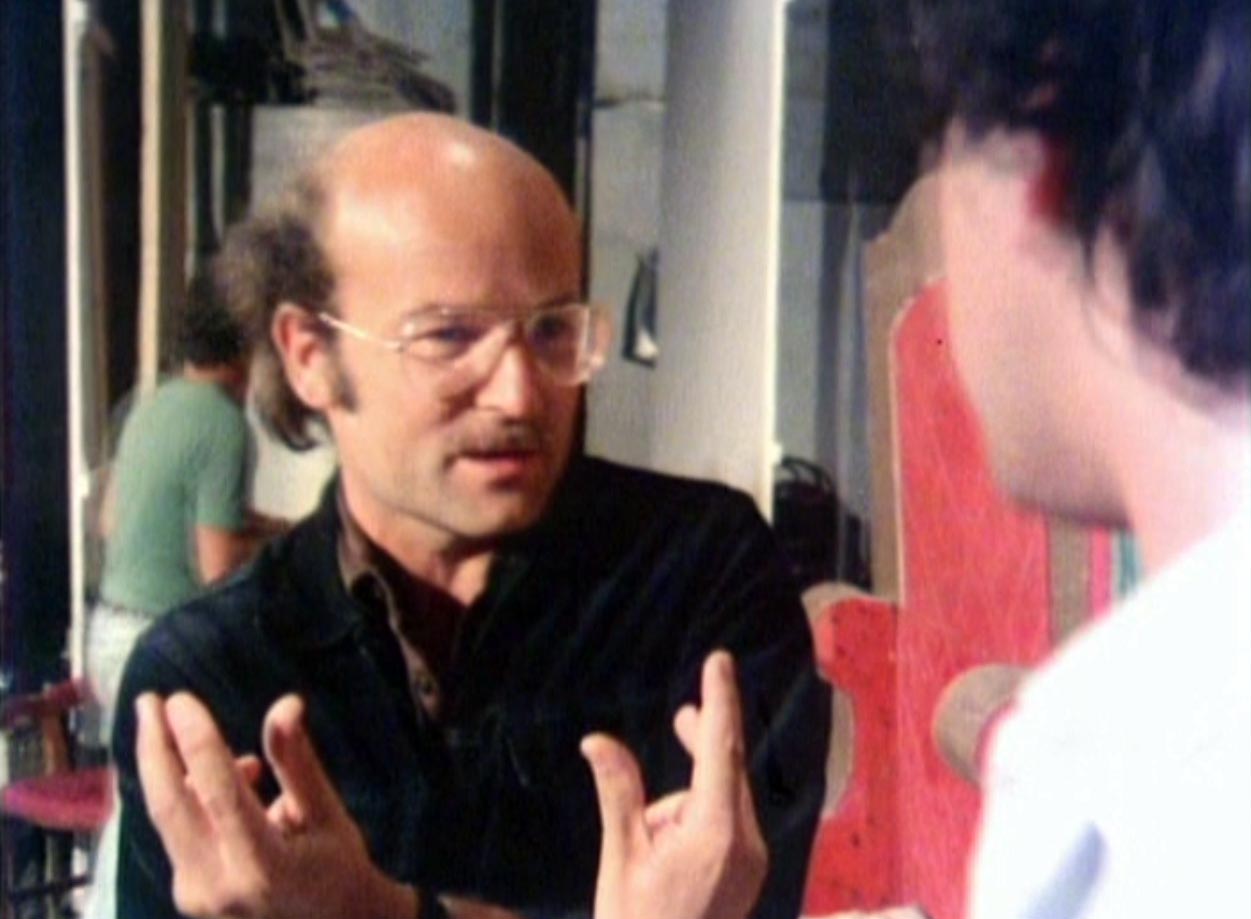
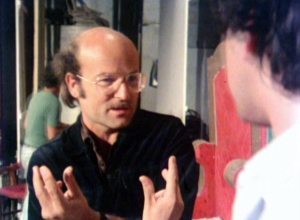
Schlöndorff confers with someone on the set somewhere in the 1970s:
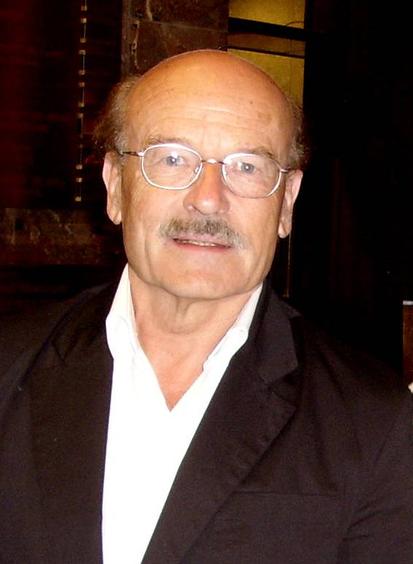
Schlöndorff now:
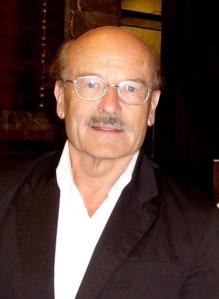
What do I think of Schlöndorff? I cannot speak of Schlöndorff with any authority. I have only seen part of The Lost Honor of Katharina Blum (1975) – which I thought was incredible, but need to finish. I have not seen The Tin Drum (1979), which looks really heavy. I did see his version of Death of a Salesman (1985), which I loved, as well as the documentary about the making of the film. Any recommendations as to which of his films I should see I welcome.

Somehow I think that having Schlöndorff over for dinner would be an evening of interesting conversation. But I imagine he would be the kind of guest to sneak into the kitchen and nibble on the food before it’s brought out.

The Metro-Intellectual
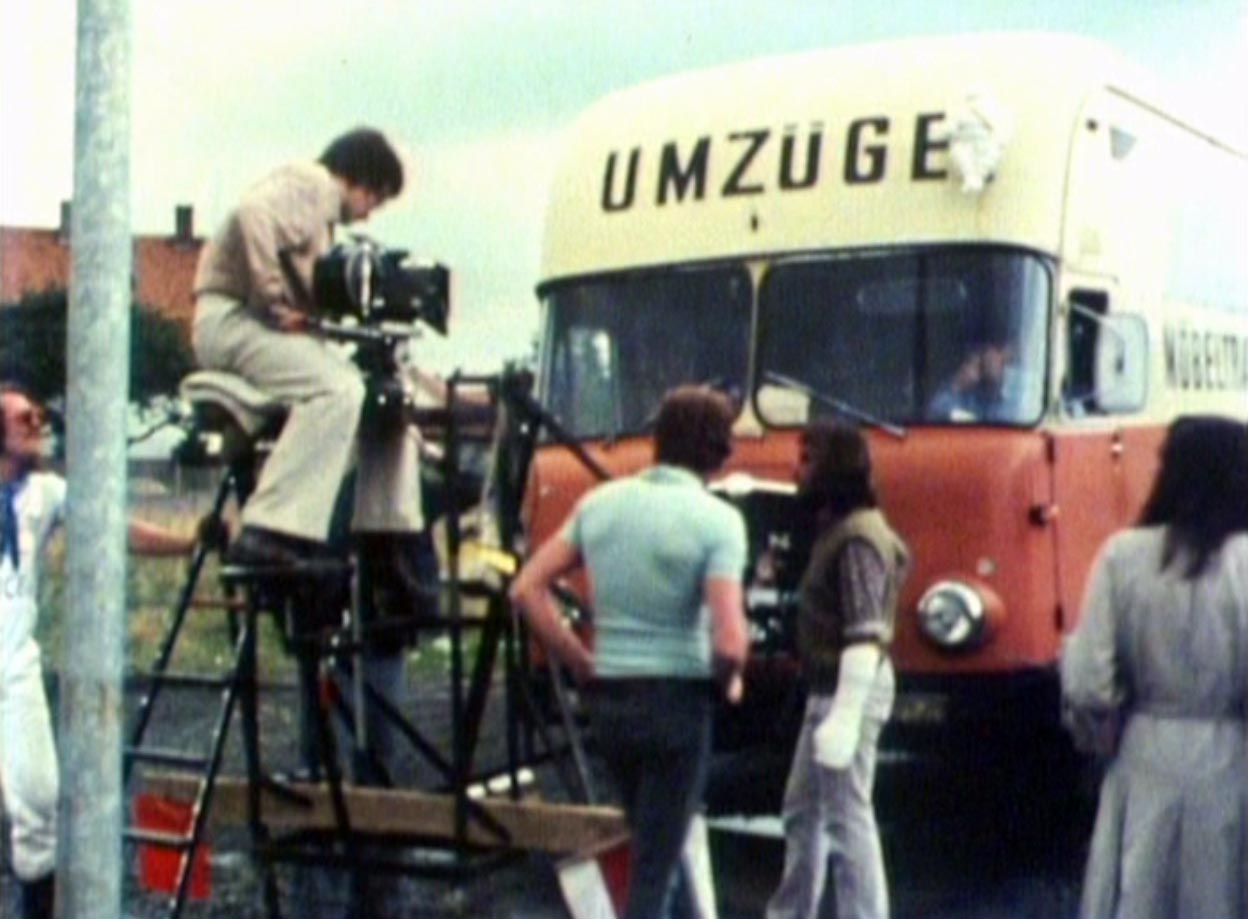
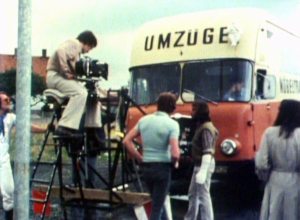
Wenders looks through the camera for a moving shot on Kings of the Road:
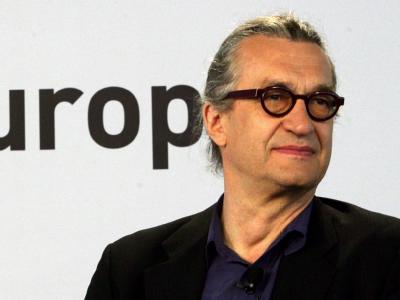
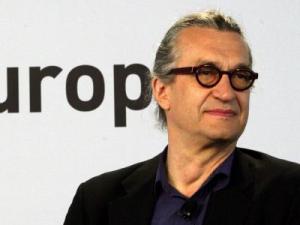
Wenders now:
Wenders discusses using music in his films, a failed attempt to work with Radiohead on a film, and his past collaborations with U2:

What do I think of Wenders? I have been a big fan of his for years. A number of his films I love, and a number I like despite their flaws. In the 1980s I “found” him, and his films were part of the introduction I received into the world of non-U.S. films. I do have an issue with him though: Wenders has a way of letting a certain hipness get in the way of going as deep philosophically as his films seem to promise. I feel that he, like Woody Allen, often comes up to the precipice and then turns away. And yet, Wenders has so often captured the post-war German angst on film as good, or better, than anyone. And I find that angst to be far more universal than nationalistic. I can see myself in his characters. That may be why I gravitate to his films so much.

I can imagine that if Wenders was staying over as a house guest one would have great conversations about the relationship between images and one’s identity in the post-modern world. One would also have to tell him to stop video taping everything.

Mr. Serious
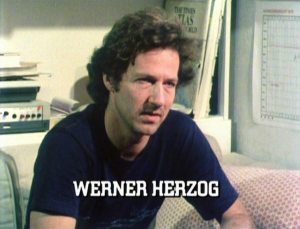
It has been a while since I have seen any of Herzog’s films. I certainly have not kept up with his more recent efforts.

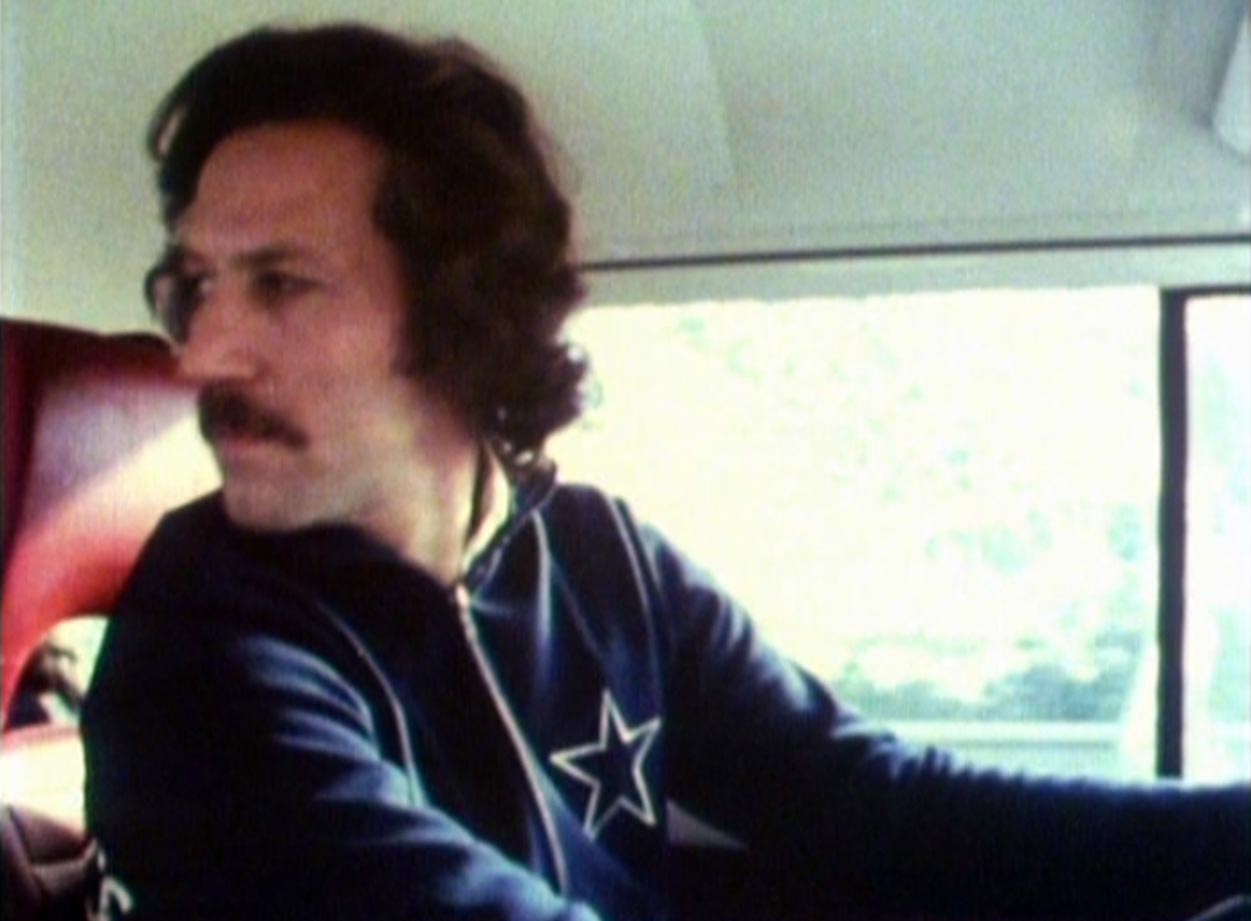
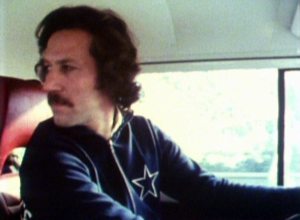
Herzog scouts locations somewhere in the 1970s:
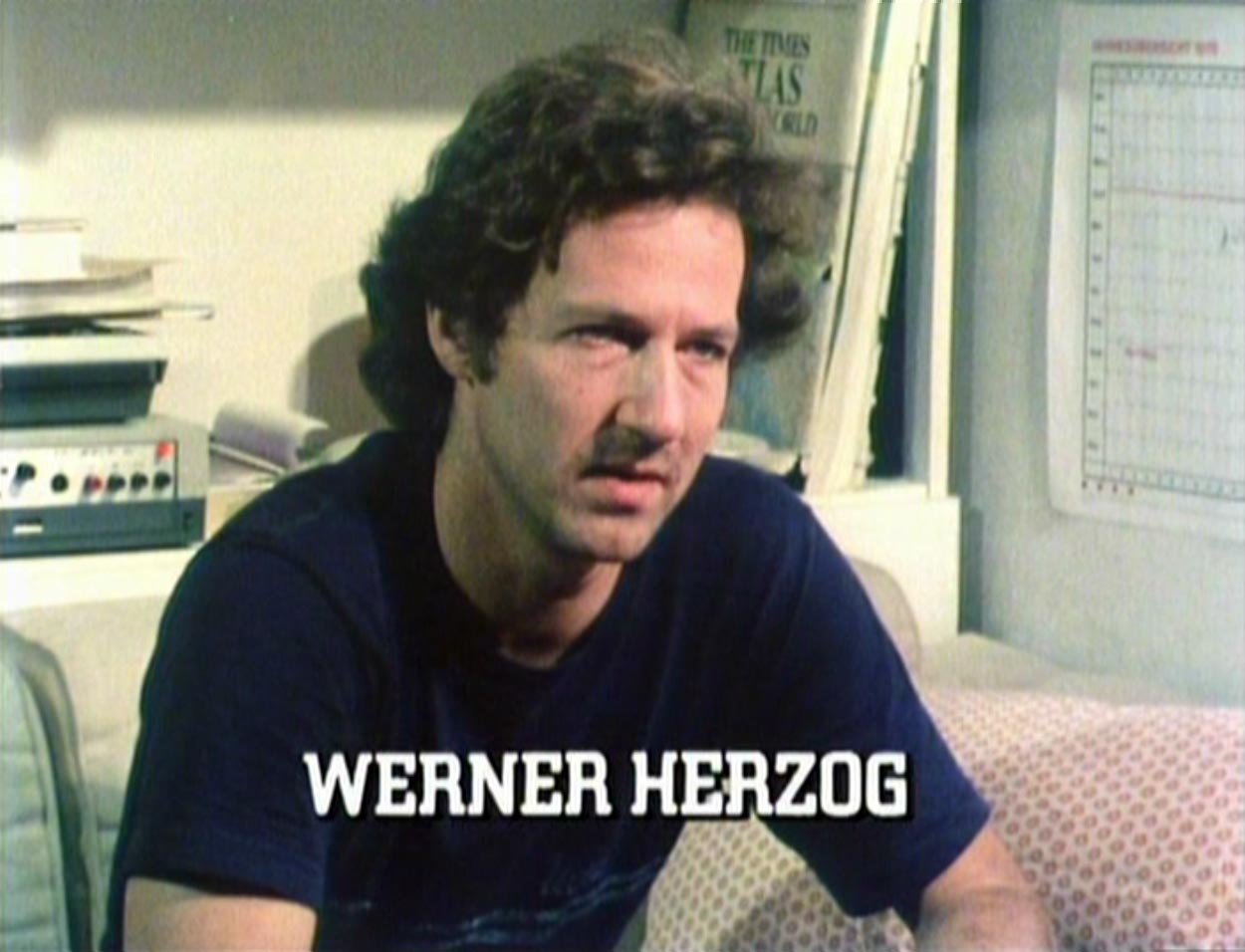
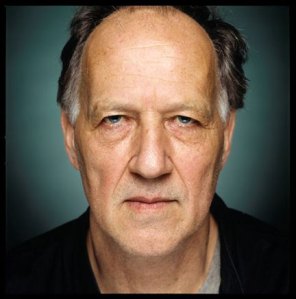
Herzog now (looking more and more like Pete Townshend):
After losing a bet to filmmaker Errol Morris, Herzog eats his own shoe:

What he’s after:

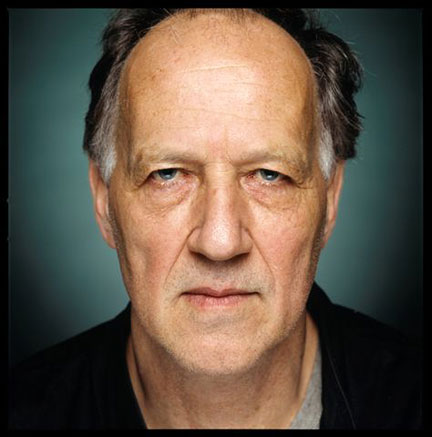
What do I think of Herzog? For me Herzog might be the best of the bunch, but it might be a toss up with Fassbinder. Herzog’s films, especially from the 1970s, are a combination of classical narrative and significant boundary pushing. I was blow away when I saw Stroszeck (1977), Aguirre: The Wrath of God (1972), The Enigma of Kaspar Hauser (1974), and Fitzcarraldo (1982). All films I need to revisit soon.

On the other hand, I think Herzog is probably the kind of house guest who would take off his shoes and socks as soon as he sat down in one’s livingroom, and then complain about working with actors and producers. On the other hand he probably is very funny when he gets a little drunk.

Conclusion:
My soul resonates with many of the films of the New German Cinema. There is often a sense of emptiness, of being lost, of trying to find one’s way in the darkness, that I see in my own life. There is also a sense that there is something darker and less life-giving under the shinier aspects of society. I know this to be true. I am not a morose person, and yet I am inclined more towards a glass-half-full perspective, as my wife will remind me. In that respect the New German Cinema seems more authentic and true to me.

Oberhausen Manifesto
The collapse of the conventional German film finally removes the economic basis for a mode of filmmaking whose attitude and practice we reject. With it the new film has a chance to come to life.

German short films by young authors, directors, and producers have in recent years received a large number of prizes at international festivals and gained the recognition of international critics. These works and these successes show that the future of the German film lies in the hands of those who have proven that they speak a new film language.

Just as in other countries, the short film has become in Germany a school and experimental basis for the feature film. We declare our intention to create the new German feature film.

This new film needs new freedoms. Freedom from the conventions of the established industry. Freedom from the outside influence of commercial partners. Freedom from the control of special interest groups.

We have concrete intellectual, formal, and economic conceptions about the production of the new German film. We are as a collective prepared to take economic risks.

The old film is dead. We believe in the new one.

Oberhausen, February 28, 1962


Oberhausen Manifesto discussion forum 1962
>The Wind Blows Where It Will

>

Unconsciousness of despair is like unconsciousness of dread: the dread characteristic of spiritlessness is recognizable precisely by the spiritless sense of security; but nevertheless dread is at the bottom of it, and when the enchantment of illusion is broken, when existence begins to totter, then too does despair manifest itself as that which was at the bottom.

-Kierkegaard, from The Sickness unto Death

What is a life without faith? Is it possible for such a life to sustain itself? The history of film is replete with stories of characters wrestling with who they are and what it is they truly believe. We don’t get tired of such films, if they are honest, for that struggle is deep within each of us as well. Our souls resonate with that struggle. Maybe it’s because we all know something about the dread at the bottom, even when we construct lives designed to deny it.

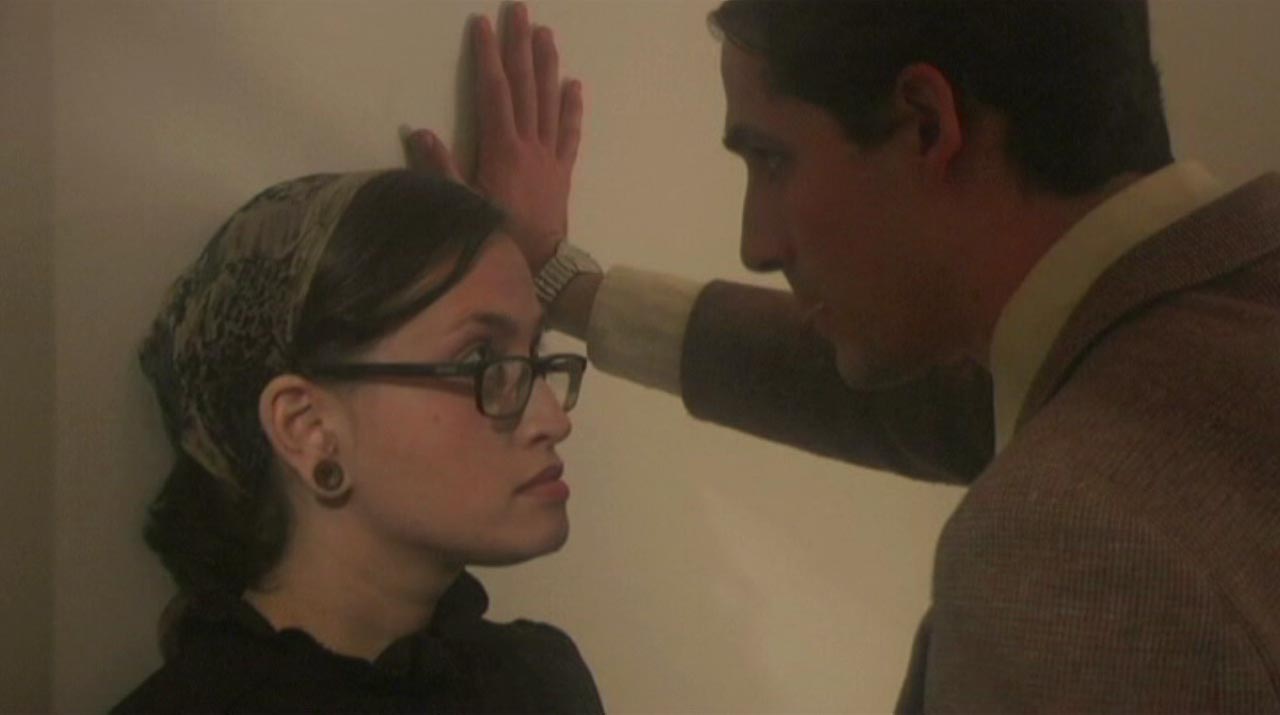
In Kunal Mehra’s new film The Wind Blows Where It Will (2007), Phillippe (played by Josh Boyle) is forced to confront the very foundations of his life. Phillipe’s life is one carefully constructed of his own making. He lives a spartan existence of work, art, limited relationships, and few things. He is fastidious to an extreme. He likes to have everything in its place. He is also quiet, soft spoken, and thoughtful. But his carefully constructed world is as much an illusion as it is real. In the beginning he does not realize just how fragile is his world.

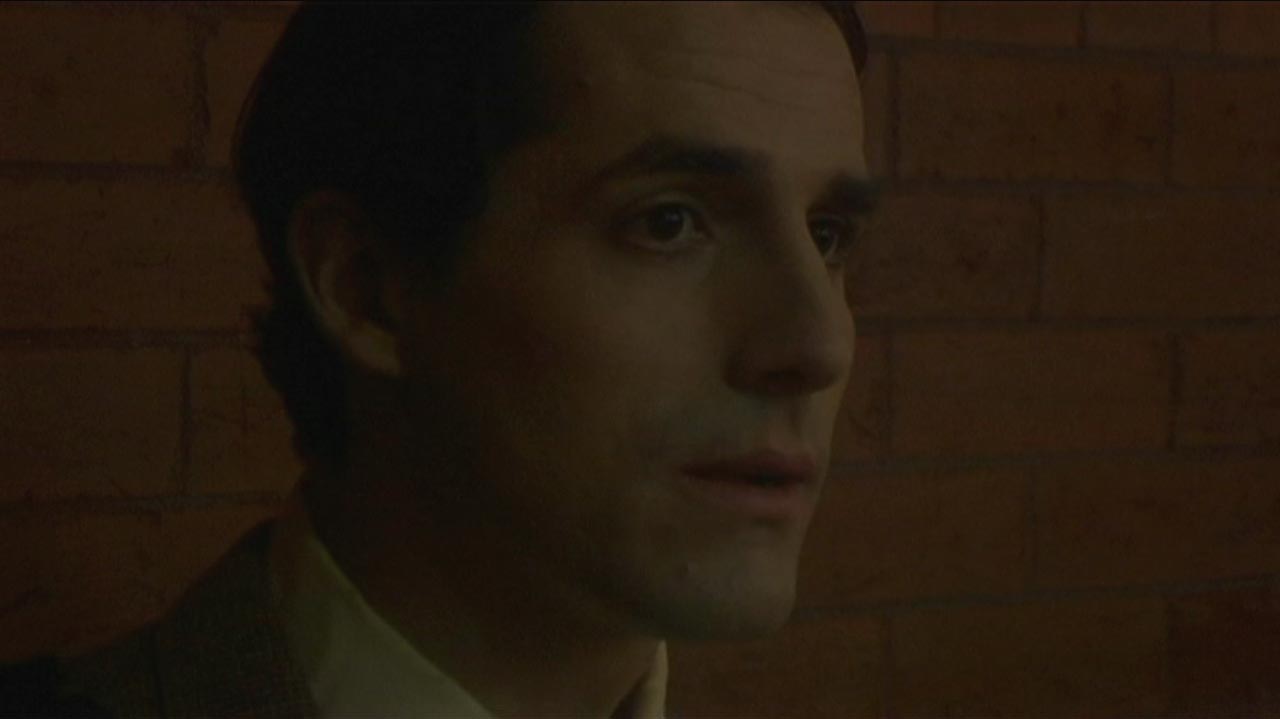
We get a hint that all is not well early in the film when Philippe waits for Jeanne (played by Wendy Harmon), his girlfriend, to arrive by train. As he quietly waits in the half-light of the station, Philippe is alone and longing for Jeanne’s arrival. [Note: for some reason my screengrabs are much darker and less rich than the DVD.]

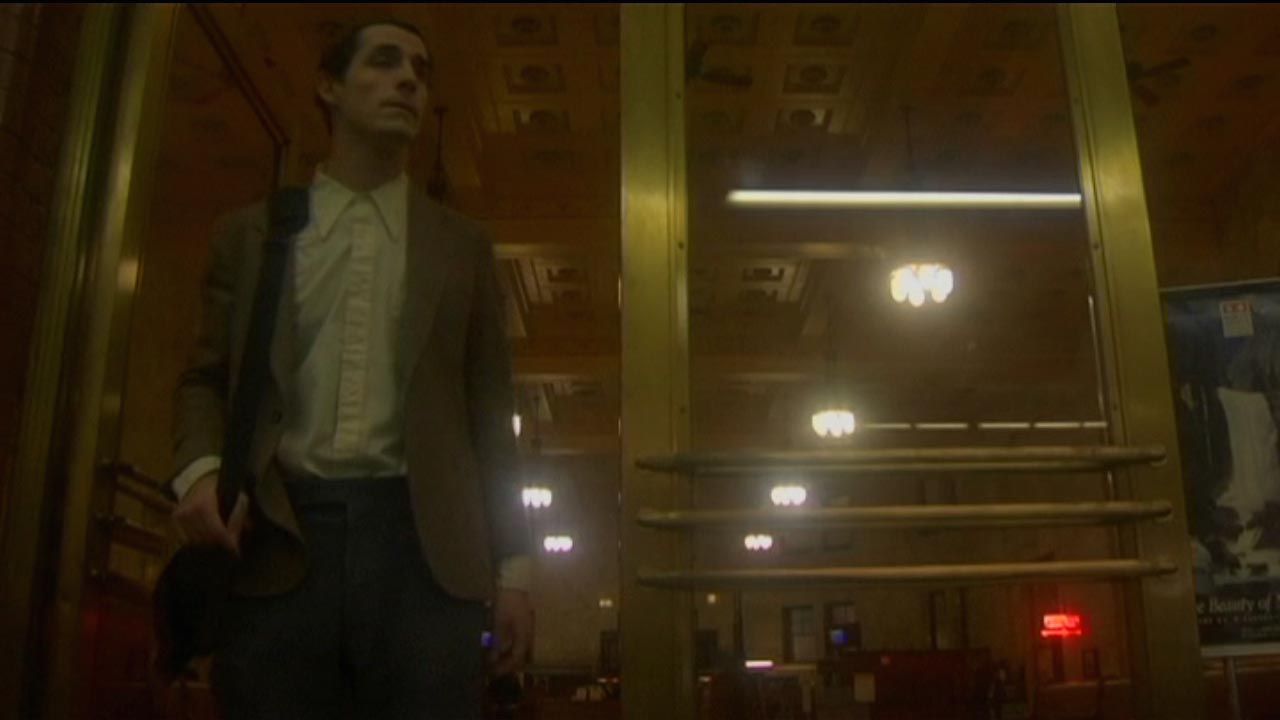
When the train finally arrives he watches the passengers exit the platform.

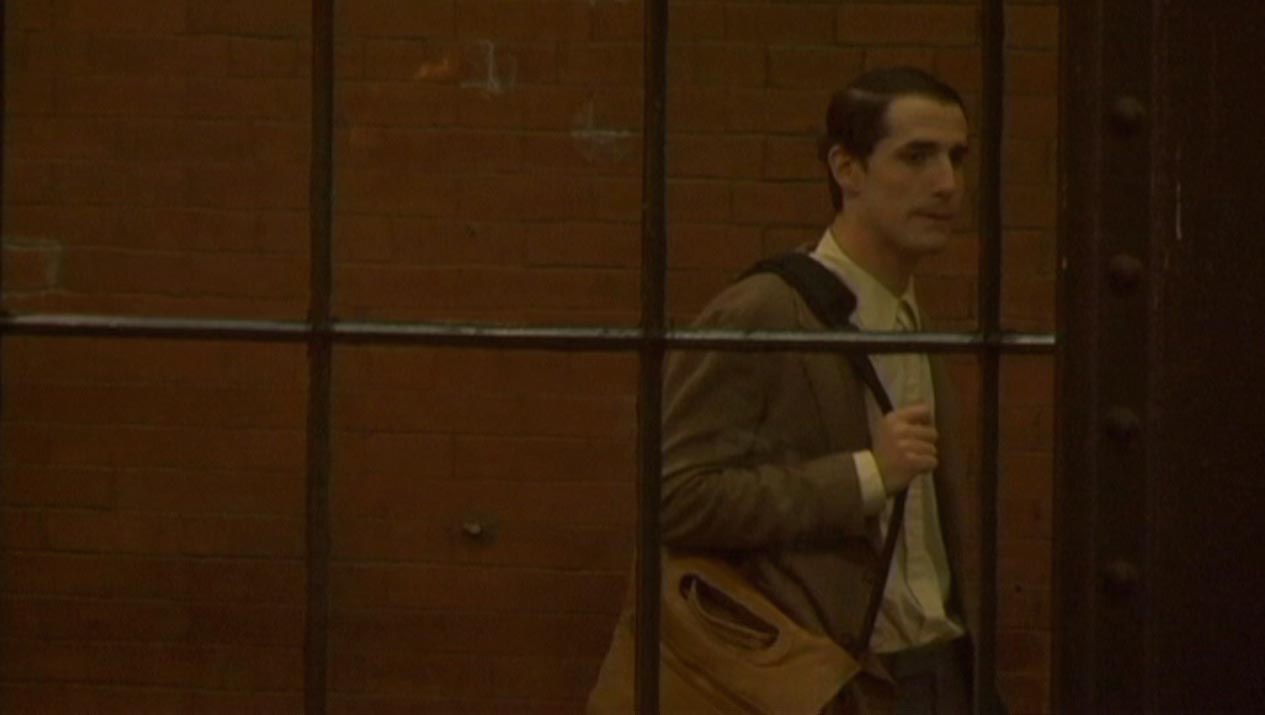
But when Jeanne finally enters the picture she comes from a direction Philippe did not expect.

One could consider this slight miscue as being merely the subtle differences between two people, or even the differences between the sexes. But is it not in the little things that the world turns? Philippe will soon find out how deep the differences are.

Once they arrive at his apartment Philippe tries to get close to Jeanne.

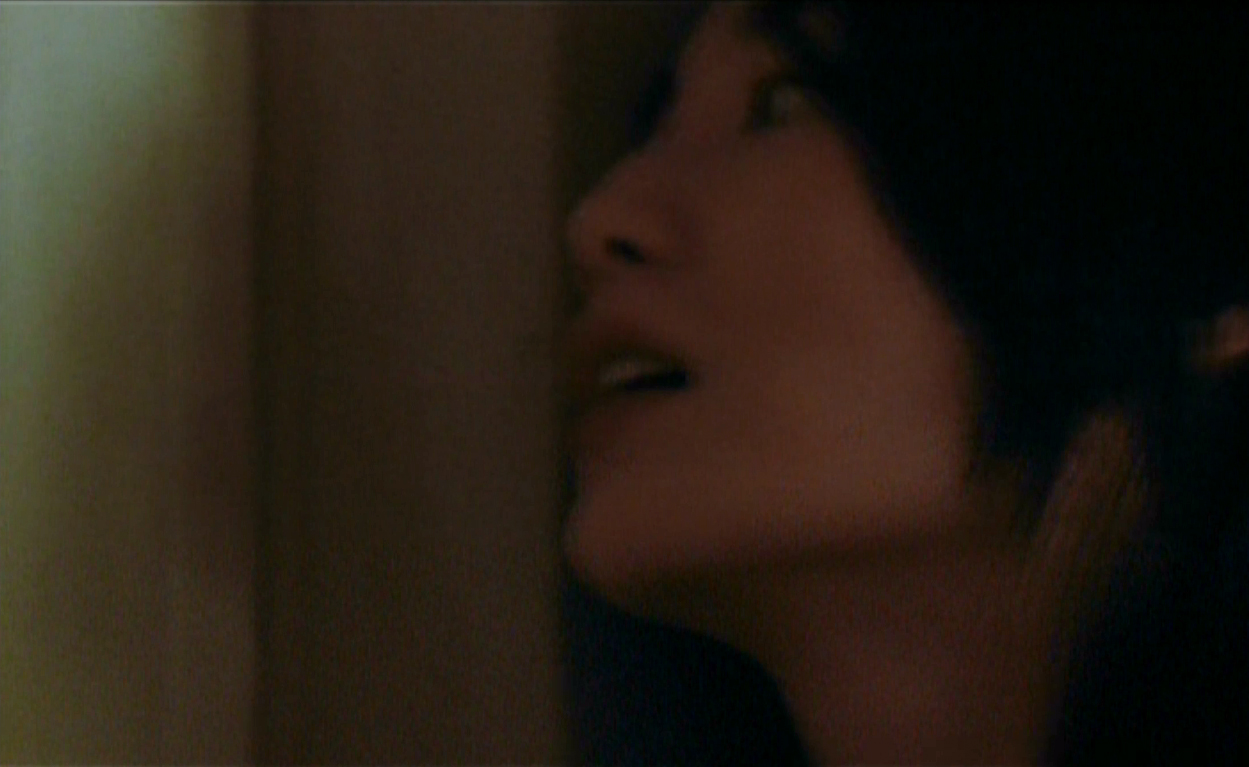
He tries to kiss her, to physically connect, but she denies him. Like Philippe we don’t know why, but she has her reasons, and her reasons are not part of this story. The next day Philippe must begin to face a future without Jeanne. What we have here is the beginning of an unravelling, and that unravelling what the remainder of the film explores.

Since I am an honest sort, I will say that this is not truly a review of The Wind Blows Where It Will, for I am not a critic or film reviewer per se. My interest is not so much in the what, but in the how. And more specifically, I want to explore the idea of a contemplative cinema with this film as one example. I have written elsewhere on the topic of contemplative cinema here, here, and here. I have to say my thoughts are still in the formative stage, and may always be.

The stylistic heritage of The Wind Blows Where It Will is rooted in films like Pickpocket (1959) or The Sacrifice (1986), in which the arch of a soul is foregrounded over and above the machinations of plot. This difference is often the difference between contemplative film and other forms. Here we have a rather simple story on its surface; a man’s girlfriend decides she must leave him, he tries to sort out what this all means, meets some friends along the way, wanders through the city, and then makes a fateful decision. However, it is not the surface that the film is concerned about, it is the interior life of Phillippe. But how does a film convey that interior life? There are a number of choices, such as voice over narration, or by having the character explain his thoughts to another.

Another way is through observation, that is, point the camera at the character in question and let life play itself out. In this case the camera becomes a kind of sociological/psychological recording device that searches for clues as to what must be going on inside the character. This is the primary method of The Wind Blows Where It Will.

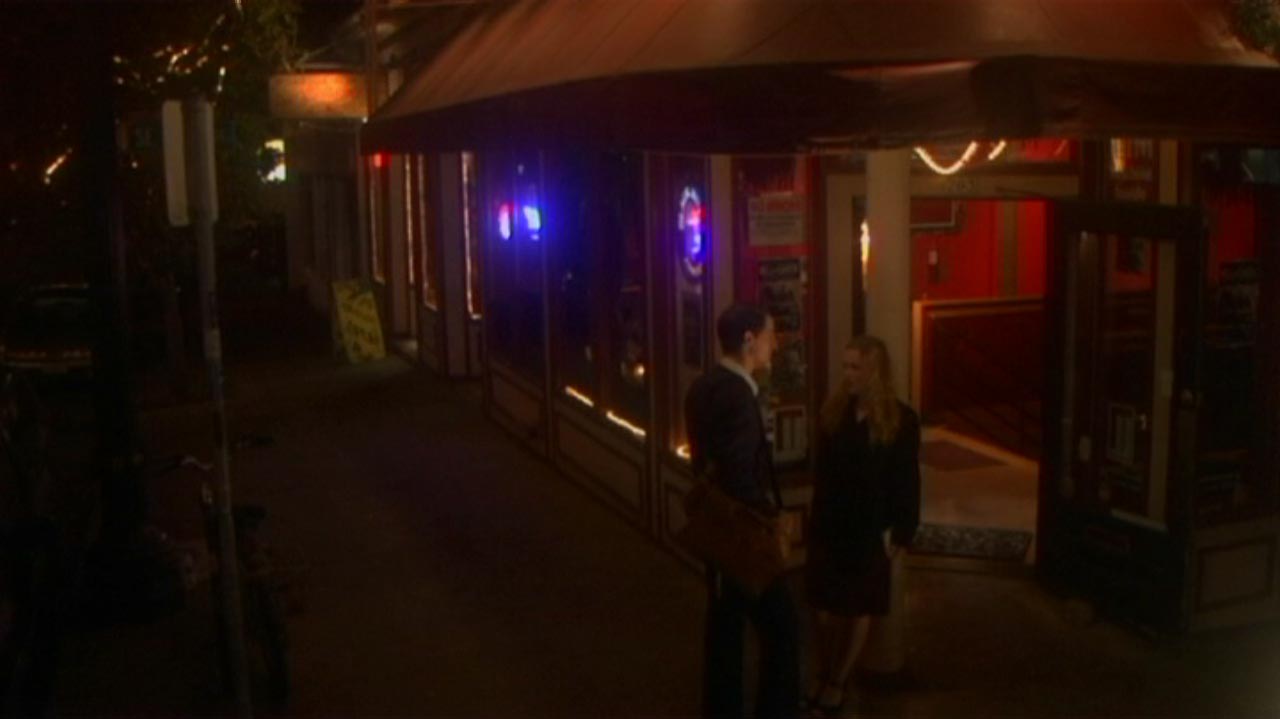
One can see this process at work in this single shot. The scene is Phillippe and a former girlfriend exiting a restaurant where they happened to run into each other. They exit the building, stand outside, talk, hug, talk a little more, and then walk away in opposite directions. We can hear the sounds of traffic and even their footsteps, but we do not hear what they say.

What is interesting is that this shot is in long shot the entire time and the shot lasts for almost a minute, much longer than a more conventional film.

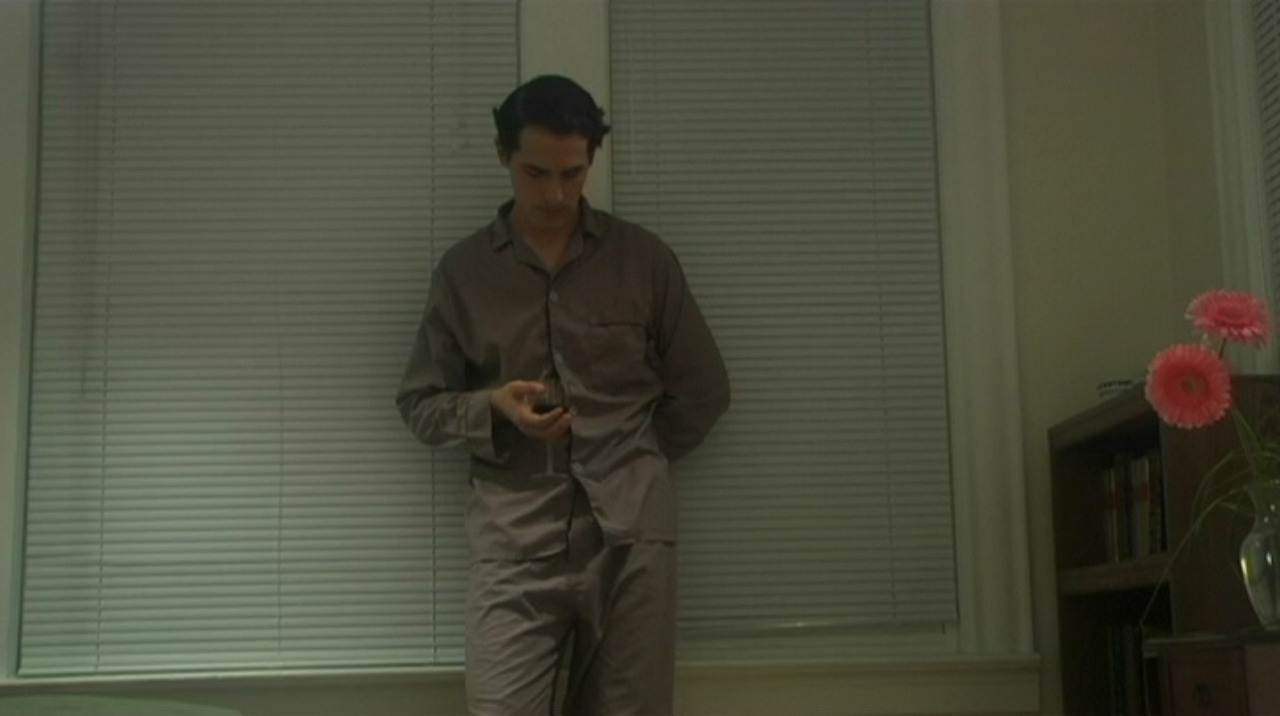
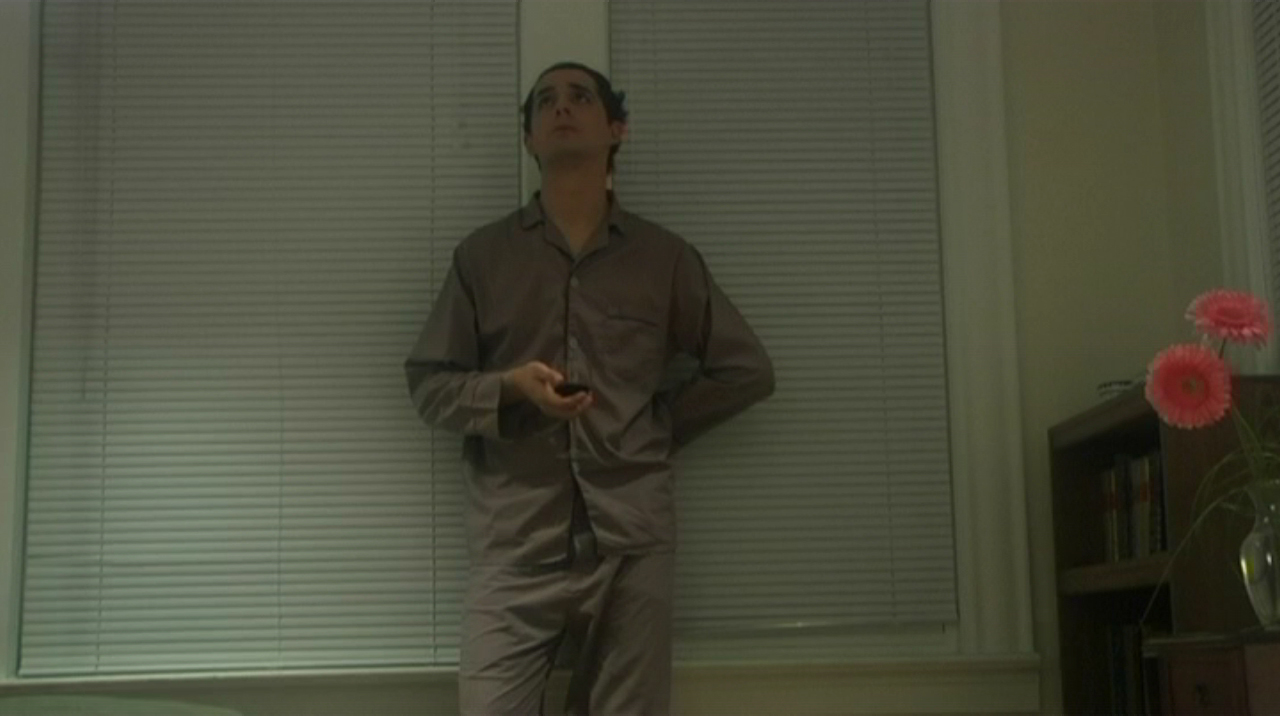
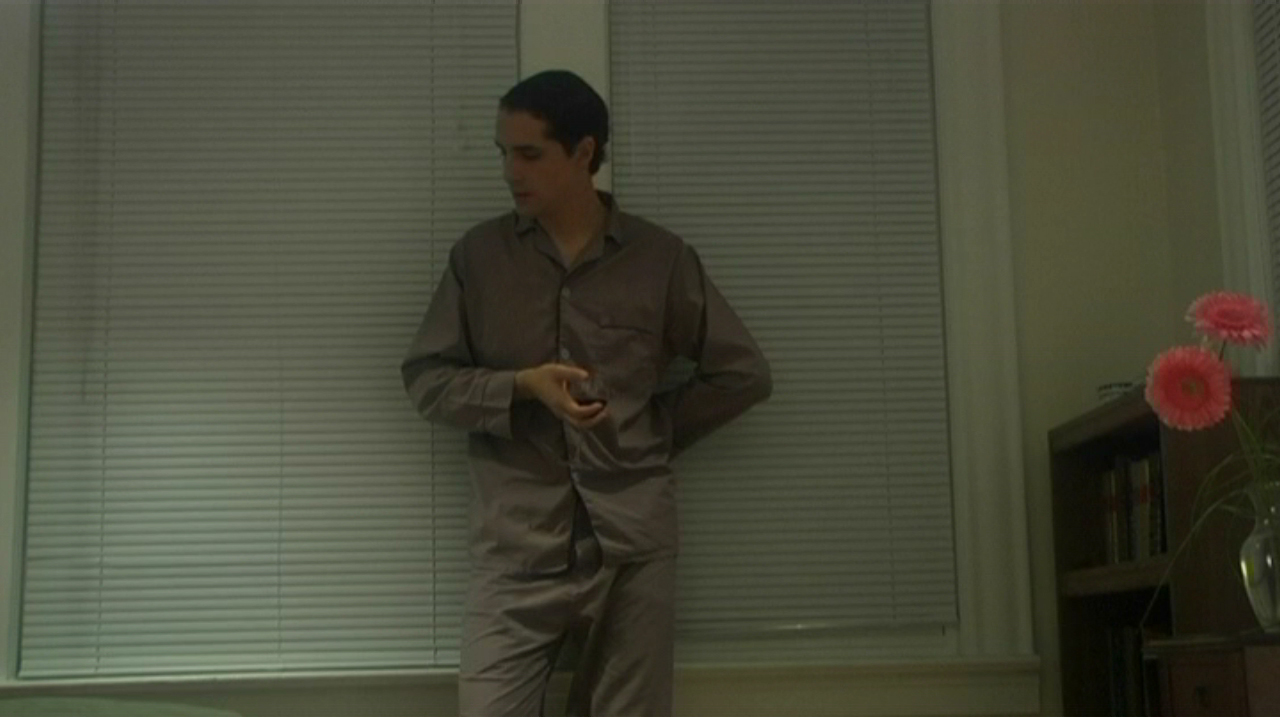
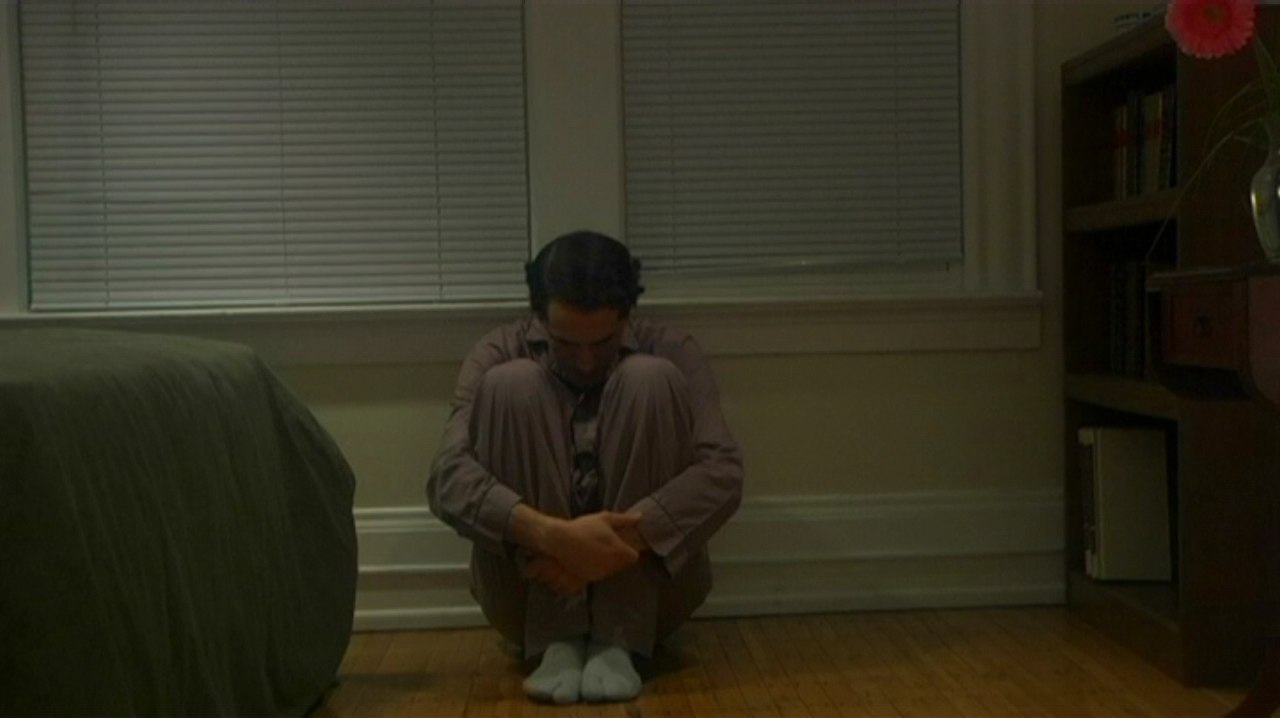
Another example comes after this scene when Phillippe goes back to his apartment carefully hangs up his coat, changes in pajamas, pours himself a glass of wine, waters his plant, and then this…

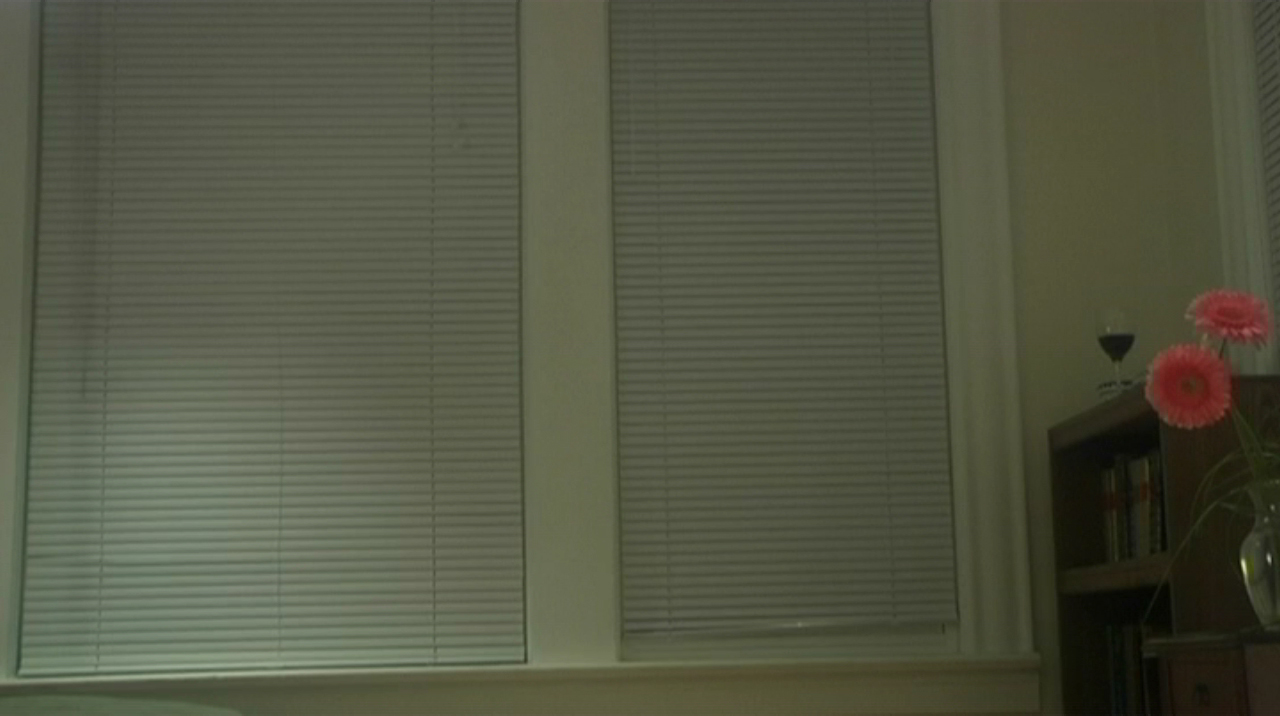
He stands against the wall with his wine glass, thinking. Then he exits the shot.

We hear classical music begin and he then re-enters the shots and goes back to where he was.

He listens.

He hears sounds of a television switched on in the apartment next door.

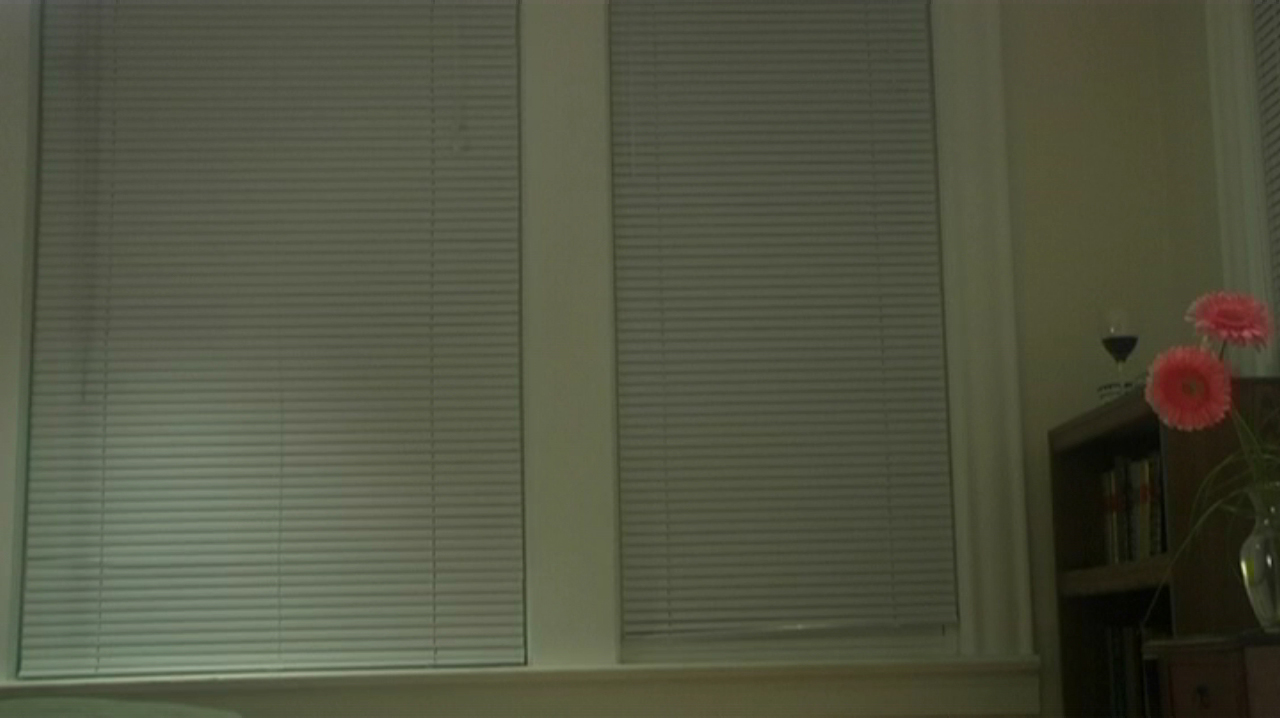
He exits the shot again. We hear the classical music stop.

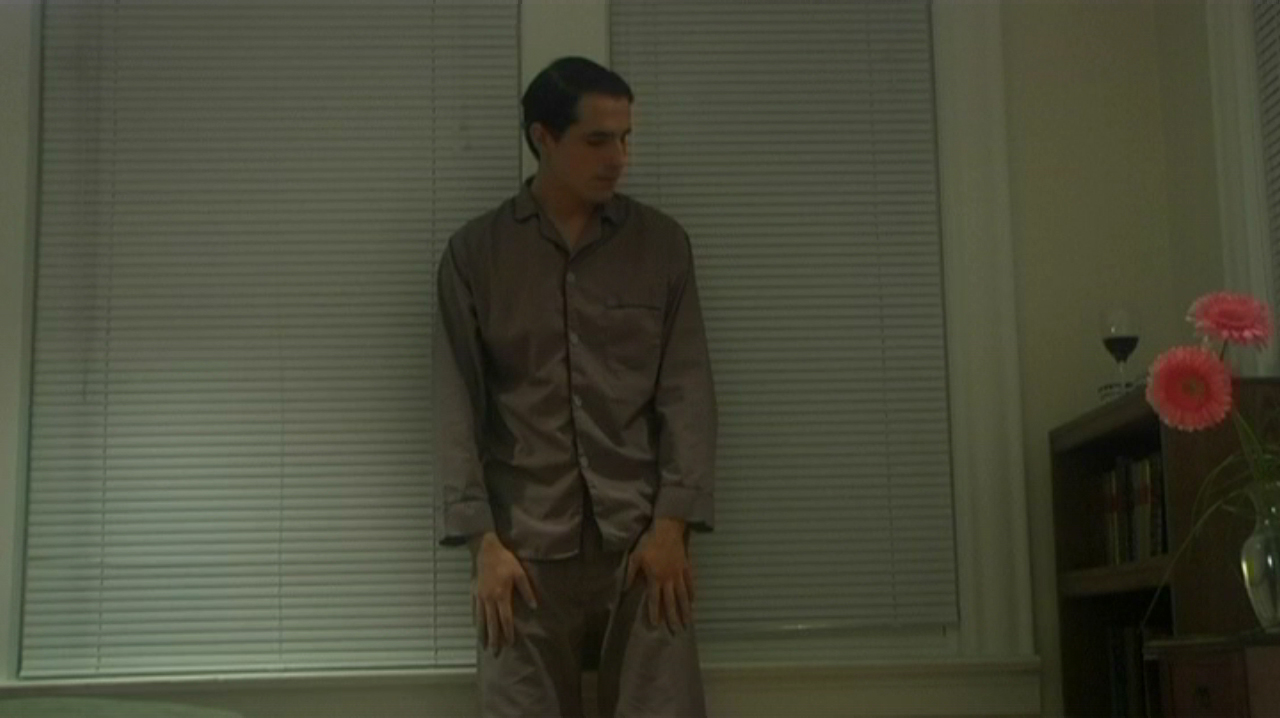
He returns but does not get his wine. Sounds of the television continue.

He lowers himself down to the floor.

He sits there thinking.

This whole episode lasts nearly two and a half minutes. There is no dialogue, and we have not heard any dialogue in the film for a couple of minutes prior to these shots. What is happening here? As far as plot is concerned very little. As far as Phillippe’s inward state, maybe quite a lot. But what exactly? Discovering that is what the film calls the viewer to do, to participate in.

This sort of story telling is not about the exterior, but the interior. The film’s style calls attention to itself by using long takes and little dialogue. But that process of distancing is not to push the viewer away, but to call the viewer to a different experience than merely a train ride through a series of plot points. The viewer must slow down and take in the process – both of Phillippe and of the viewing experience. It is an opportunity for the viewer to plumb the depths of her own soul. This is one key aspect of contemplative cinema.

Both the strength and weakness of this method of storytelling is that it leaves a lot up to the audience. Such films rely on what the viewer brings to the viewing process. In other words, the old adage that one gets out of the film what one brings to the film is critical here. For example, it might help to know the title of the film comes from a famous verse of Christian scripture (John 3:8):

The wind blows where it wishes and you hear the sound of it, but do not know where it comes from and where it is going; so is everyone who is born of the Spirit.

It might also be worth noting that the full title of Bresson’s A Man Escaped (1956) is Un condamné à mort s’est échappé ou Le vent souffle où il veut, where Le vent souffle où il veut is from the same Bible verse.

The reason I say it might be helpful to know these things is because with a contemplative film one often has to make one’s interpretive case, has to argue for one’s position as it were, because the film’s meaning is not obvious. Therefore clues and connections become particularly important. Given the fact that the crux of Phillippe’s personal battle with himself revolves around the question of faith becomes even more interesting in light of both the Biblical and cinematic connections derived from the film’s title. A question to ask is whether the film’s conclusion is also an escape for Phillippe.

I said this is not a review, but I feel that I should offer up some kind of evaluation. The Wind Blows Where It Will does not rank with the likes from Bresson or Tarkovsky, but it is a good film, and it portends good things for Kunal Mehra’s directing future. I look forward to his next film. The acting from all cast members if very good. Josh Boyle is particularly wonderful as Phillippe – keep in mind that Josh was in every scene and in virtually every shot. The digital camera work by Aron Noll is also quite excellent. What I find most promising and fun to consider is how a quality feature film like this can get created these days with limited budget, a small crew, and far outside of the Hollywood landscape, and yet seem to carry more than its own weight. I am also excited to see filmmaking like this occur just down the road from me. My own production experience has taught me that just making a film, let alone one of this quality, is a difficult and challenging undertaking. I commend Mehra’s obvious tenacity as well as his desire to make films that seek to understand the soul when so many filmmakers seem to avoid it.

the tops…

I do not like top ten lists at all, not one bit, but I do love them because they’re candy. I have avoided jumping into the ever present top-ten-film-list milieu because, I say, I just don’t see the point. Fact is, I really want to, but can’t make up my mind.

I also cannot rank films – I mean, it’s like choosing between steak and lobster, how can I pick a favorite? So what I have is a top 25 “pool” of films that seem to constantly swirl around my consciousness, that I find myself returning to over and over, and that send me into the closest thing to a religiously ecstatic experience I can find. This pool is also fed by underground springs and winding tributaries, and it empties into larger and larger pools until it connects with a vast ocean where all the films swim. Huh?

my top 25 favorite films (in alphabetical order):
Andrei Rublev (1966)
Apocalypse Now (1979)
Au hasard Balthazar (1966)
BDR Trilogy (The Marriage of Maria Braun, 1979; Lola, 1981; Veronika Voss, 1982)
Boudu Saved from Drowning (1932)
Breathless (1960)
Hiroshima mon amour (1959)
La Dolce Vita (1960)
L’avventura (1960)
Monsieur Hulot’s Holiday (1953)
Nights of Cabiria (1957)
Rashomon (1950)
Rules of the Game (1939)

Singing in the Rain (1952)
Stalker (1979)
Street of Crocodiles (1986)

The American Friend (1977)
Bicycle Thieves (1948)
The Blue Angel (1930)
The Godfather II (1974)
The Last Laugh (1924)
The Searchers (1956)
The World of Apu (1959)
Vertigo (1958)
Wings of Desire (1987)

25 films is really not a lot. If I had the inclination I could come up with a lot more, but to what end? At some point all cinephiles end up mentioning most of the same films over an over, and then throw in a few odd ones as if to say “I’m also a unique cine-hipster.” The truth is, great films are objectively great on some level. To recognize those films is to be human and, in some instances, thoughtful and observant too. So the above list isn’t really all that insightful. Consider it a kind of common ground.

But I can’t just stop there, for movies are like potato chips, and I gots the cravings…

My 25 favorite “makes-me-want-to-be-a-filmmaker” films that are not in my top 25 (in alphabetical order):
A Man Escaped (1956)

Alice in the Cities (1974)

Ashes and Diamonds (1958)
Catch-22 (1970)
Citizen Kane (1941)
Diamonds in the Night (1964)

Dog Star Man (1960s)
Goodfellas (1990)
Harlan County U.S.A. (1976)

Jaws (1975)
La Strada (1954)
La Terra trema (1948)
Lawrence of Arabia (1962)

Life of Oharu (1962)
Mirror (1975)

Orpheus (1950)
sex, lies, and videotape (1989)
Sunrise (1927)
The 400 Blows (1959)
The Civil War (1990)
The Crime of Monsieur Lange (1936)

The Godfather (1972)
The Seventh Seal (1957)
Vagabond (1985)

Week End (1967)

“Why stop there,” said the voice in my head, “you know you don’t want to.”

my 25 favorite films “no one” ever lists on their all-time favorite films lists (in alphabetical order):
20,000 Leagues Under the Sea (1954)
A Room with a View (1986)
Airplane! (1980)

Barcelona (1994)
From Russia with Love (1963)

Full Metal Jacket (1987)
Halloween (1978)
La Belle Noiseuse (1991)

Jean de Florette (1986) & Manon of the Spring (1986)
Meshes in the Afternoon (1943)
Mindwalk (1991)
Monsoon Wedding (2001)
My Dinner with Andre (1981)
My Life as a Dog (1985)

Rear Window (1954)
Scenes from a Marriage (1973)
Stealing Beauty (1996)

Strozyek (1977)
The Boxer and Death (1963)
The Decameron (1971)
The Golden Coach (1953)
The Road Warrior (1981)

Vampyr (1932)
Vanya on 42nd Street (1994)
Window Water Baby Moving (1958)

I have come to the conclusion that top whatever film lists are like tee-shirts and bumper stickers – they have everything to do with telling others about oneself, of staking out some psychic and moral turf and saying “this is who I am… for now.” It’s also like a banker wearing a suit or a professor wearing a sweater with elbow patches; it’s a way for other like minds to say, “ah, you’re one of us!” You can take it or leave it, but when I look at the lists above I see an awful lot of myself up there.

…wait a minute, where are Dr. Strangelove? Umberto D.? The Earrings of Madam d…? Star Wars? Last Tango in Paris? Manhattan? Mulholland Drive? How could I have left them out? And where are Man with the Movie Camera? The Life and Death of Colonel Blimp? The Man Who Skied Down Everest? El Capitan? I just realized I haven’t listed a single film by the Coen brothers! Oh Lord, what have I done?!

I just don’t know where to stop. Or maybe I really don’t know where to begin. I vow in the future I will craft a true top ten list and stand by it… for a while.