>Baroque, Werkmeister, and Orbits

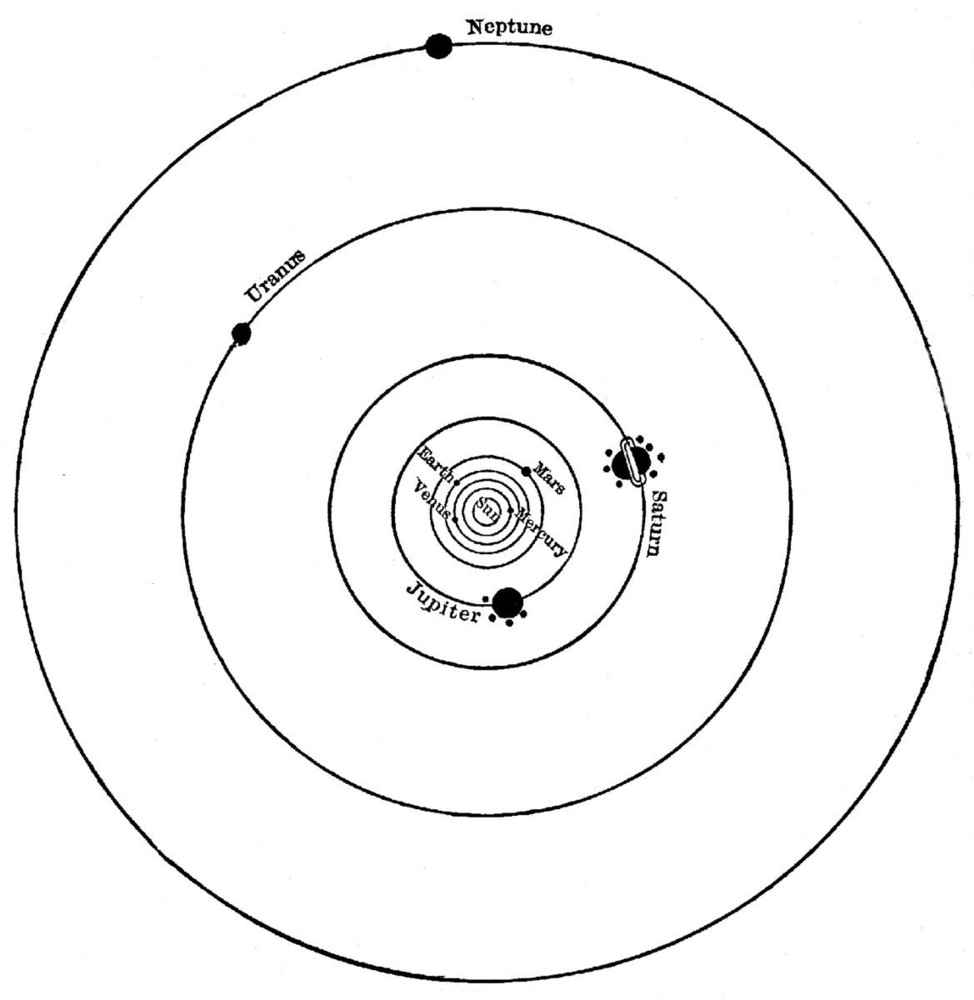
>Consider the planets…

…and how they move.

And then consider the music of Bach, here performed by Glenn Gould:

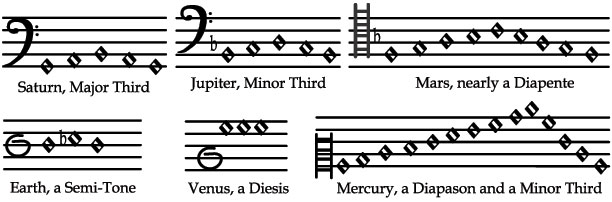
There is a connection of sorts between the two. That connection would be Andreas Werckmeister and his theories about music, mathematics, and the orderly movement of the planets.

And then consider the opening scene from the Werckmeister Harmonies:

I cannot say I have any comments – except to say it is interesting to put these different pieces side by side.

>Lord, Save Us From Your Followers

>

This is a plug for a little documentary/polemic that I found myself truly enjoying. I meant to post this months ago, but it got lost in the shuffle somehow.

Recently I watched a documentary three times in rather short succession; first by myself, then with my wife, then again with my daughter. (And then I loaned it out to someone, but I can’t remember who.) Each time it has challenged me, at moments moved me to tears, brought about conviction, made me laugh, and truly encouraged me. The film is Lord, Save Us from Your Followers by Dan Merchant (Writer/Director/Producer) and Jeff Martin (Executive Producer).

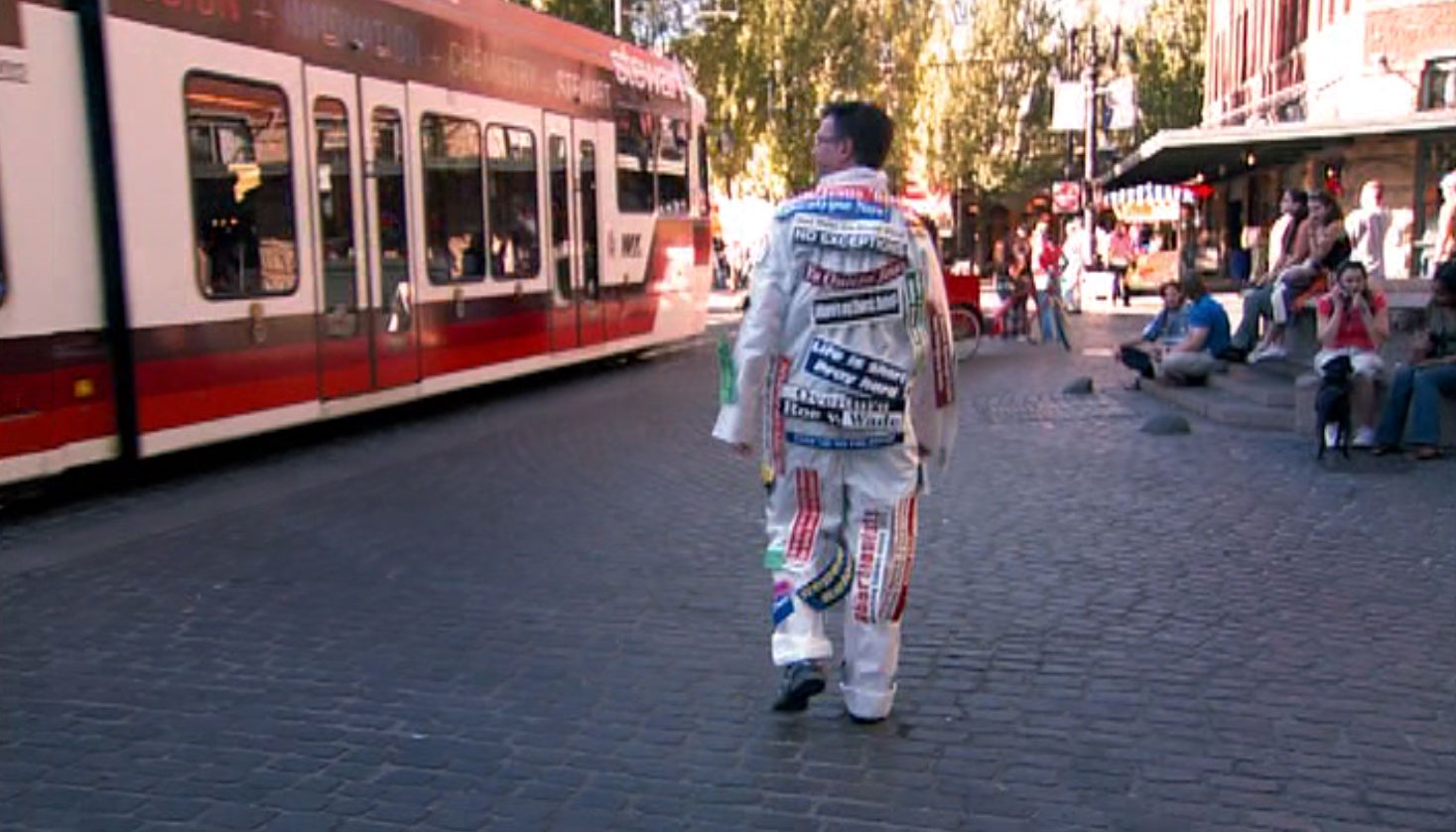
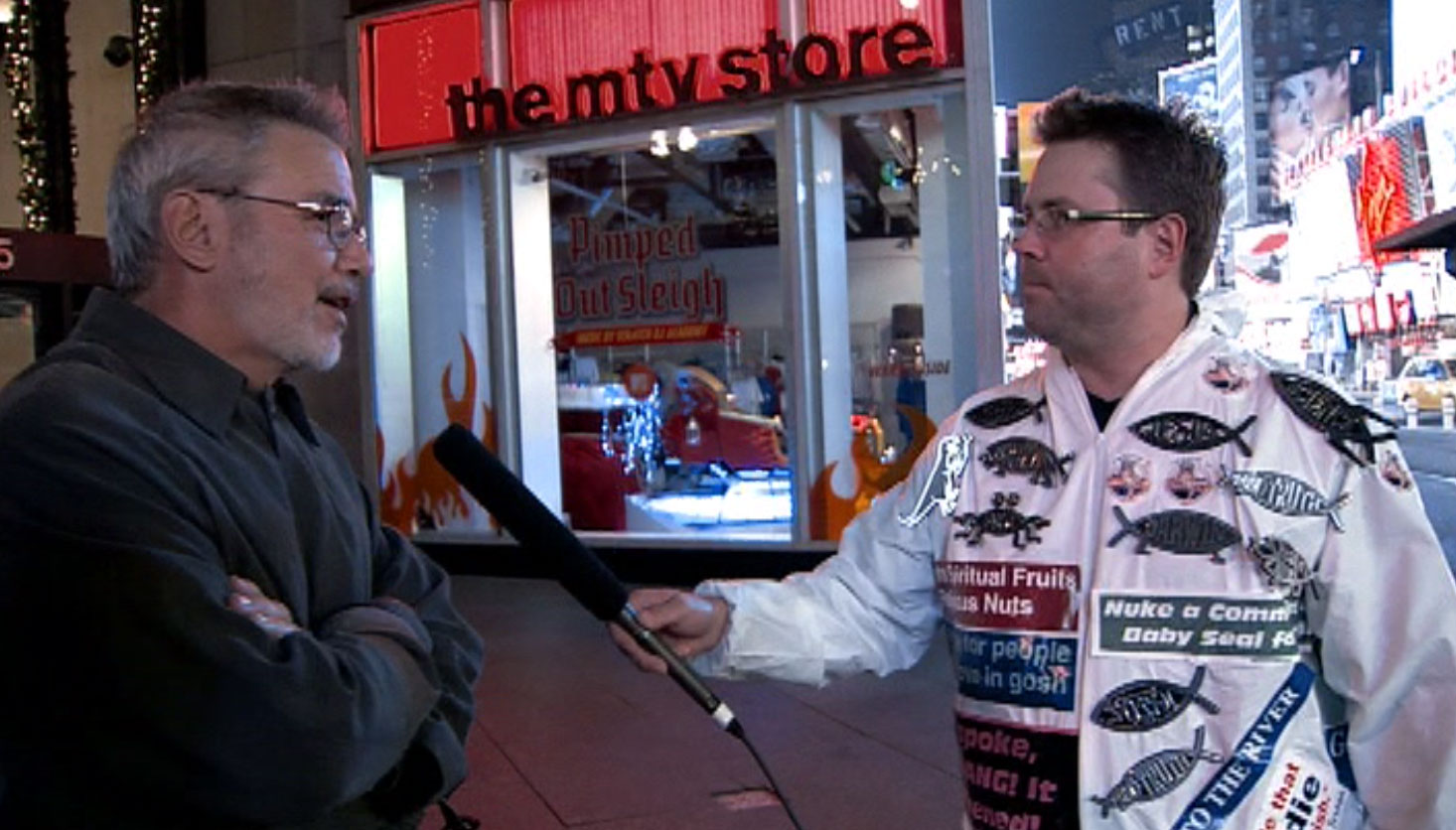
A large part of the film is an overview of how Christians are viewed in popular culture. This overview includes interviews and television clips of many people, including Bill Maher, John Stewart, Bill O’Reilly, and many others. Many of these clips are priceless and spot on. Dan Merchant also walked the streets in his bumper-sticker suit interviewing people.

Although the suit is a bit of a stunt, it did help people open up their thoughts.

Many ordinary people said, in short, that they like and admire Jesus, but they don’t like Christians very much. Funny thing, I am a Christian and I generally feel the same way. Tony Campolo had some of the best moments in the film. He is a devoted Christian who wonderfully discussed this contradiction we call Christianity. He states how all too often the “church” is an exemplar of hypocrisy while still being the “vessel” that has carried the gospel and preserved the Bible.

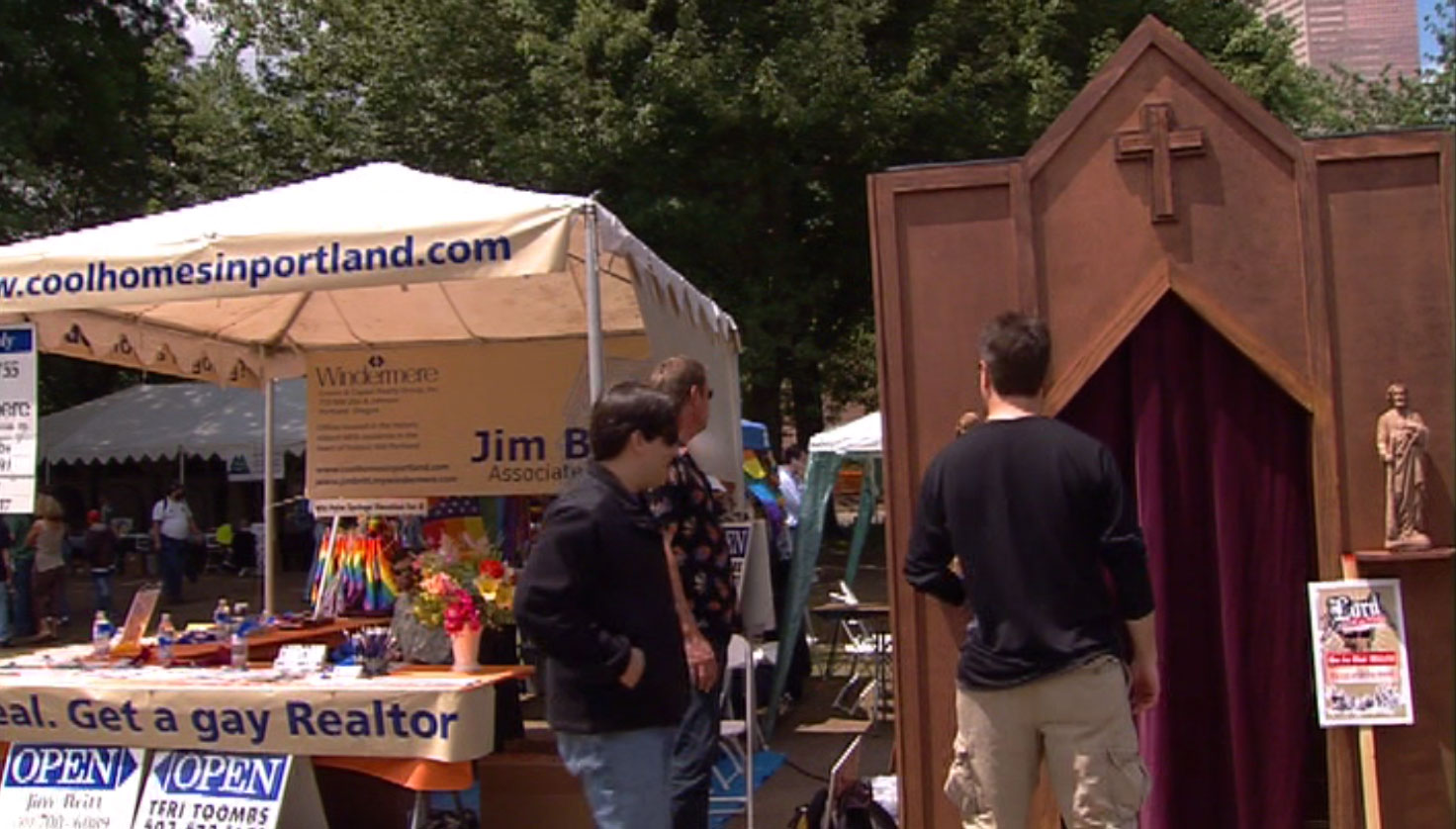
But what got me the most are the four end segments that focus on the ways some Christians have set aside all the garbage of the “Christian right” and looked instead to Jesus as their example.

Helping rebuild after hurricane Katrina:

Seeking forgiveness for the way Christians
have treated (and still treat) gays and lesbians:

Bringing help to starving communities, and
especially children, in Africa by bringing food,
medicine, and planting crops:

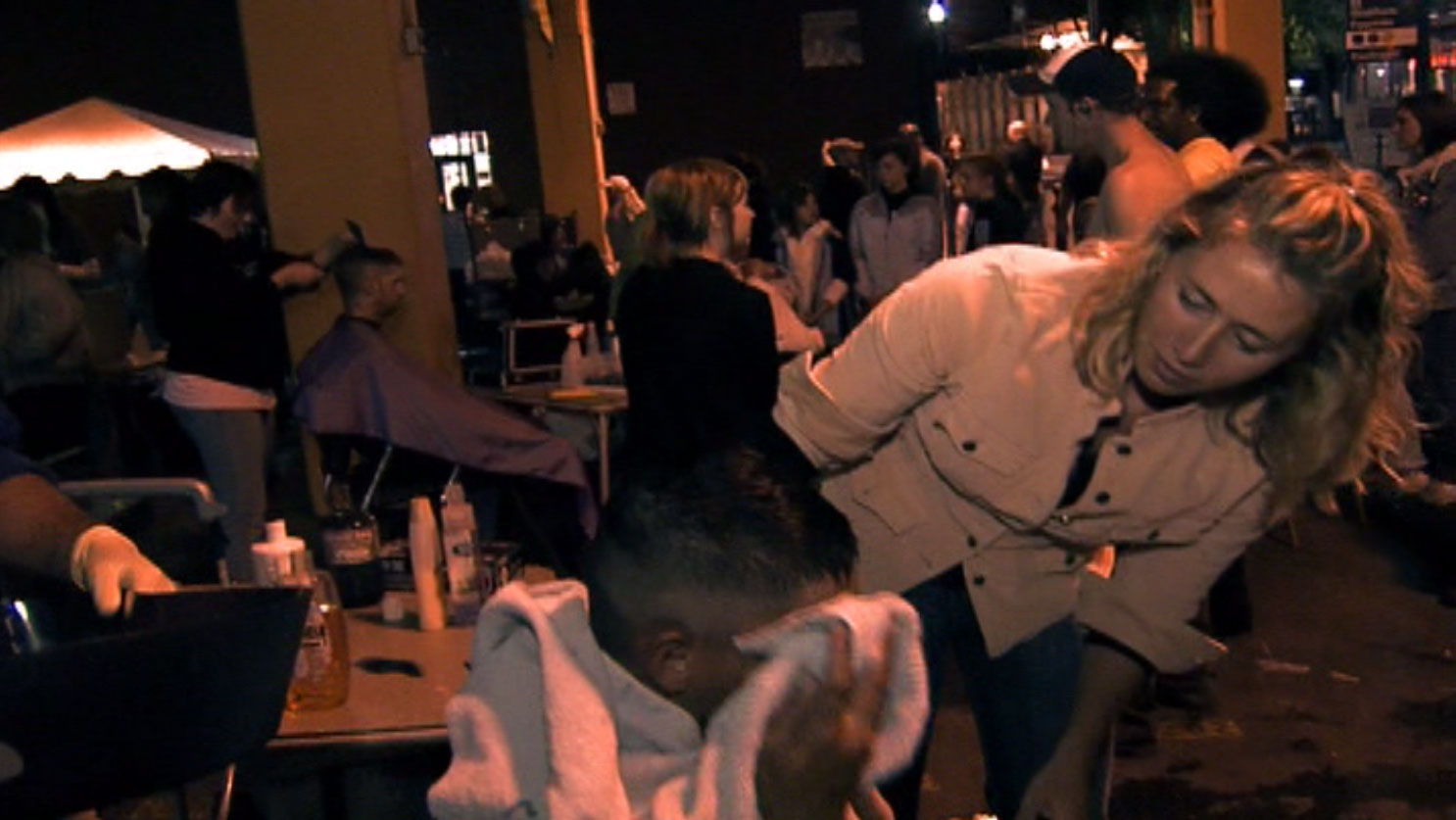
Comforting and helping the homeless:

Each of these segments brought tears to my eyes and deeply convicted me for my selfishness and self-absorption. They also challenged me to consider the kind of community, Christian or otherwise, I want to live in and how I might help make it happen.

I will recommend this film for anyone, but in particular for Christians. My suggestion is to watch it with a group and then discuss its implications afterwards. I don’t typically plug films on my blog, but I have to say this little, low budget film is worth seeing.

Outside looking at another outside: Thoughts sparked by Wajda’s Man of Marble

In the middle of Andrzej Wajda’s Man of Marble (1976) there is a brief moment when the young filmmaker Agnieszka (played by Krystyna Janda in her first film role) is chastised by her producer (played by Boguslaw Sobczuk in his first film role). Agnieszka has been trying to do an investigative piece on a once praised bricklayer, Mateusz Birkut – the man of marble – who was hailed in the 1950s as an example of the communist ideal and then fell out of favor with the government and has since disappeared. Agnieszka has had some difficulty getting the footage and information she needs to tell the story, so she has reverted to subversive techniques – hidden camera and microphone – for an interview with a strip club manager to get material for her film. In the process she is caught and loses her film from that interview. Her producer argues with her about her lack of material and includes the comment: “Besides, this isn’t America, these aren’t the methods to use…”

For some reason this comment seemed to jumped out at me on this second viewing (not so 20 years ago). I have come across similar comments from other Soviet bloc films and books. Maybe my interest was piqued because I’ve grown more sensitive to historical and political issues. Maybe it’s because I’ve read Russian artists who chaffed under the Soviet system, yet they still expressed disdain for the U.S. system and the ugly realities of capitalism. If you are a U.S. citizen of long standing then, like me, you were well trained to despise everything Soviet, to see the CCCP as wildly oppressive, to know the Russians stood against “everything we hold dear”, and tag them as the evil empire (as one populist demagogue once put it).

I am glad I did not grow up anywhere in the Soviet bloc. But I also see the game. We are trained to fear other political and economic systems by those who have a vested interest in us being fearful. I think this is true in many countries. Power seeks to remain in power, and does so in part by being the controller of ideas. Even a person such as myself who tries to think critically about these things is still like a fish trying to see the water – I am profoundly influenced by the limited world in which I live. We like to think the world of ideas is unlimited, that we have equal access to any idea or concept, but unless we do the hard work of seeking out alternative ideas, and then really digging deep into them with the goal of understanding, we will tend toward uncritically believing the ideas which are closest and most prevalent.

So it is interesting to me to hear a line spoken in a 1976 Polish film (a film made by a director who’s own career shortly came to a standstill because of support for the solidarity movement) by a government authority holding the high ground morally regarding U.S. society. I don’t know if the producer’s opinion was right or wrong, or if Wajda intended this as a joke, but it is interesting to get a glimpse from the other side as it were. What we sometimes find when we pull back the curtain on communist countries is not always a longing for western style capitalism and U.S. style democracy, but either a desire for their own government to behave rightly in light of the stated goals of their own system, or for the system to change to a more democratically oriented socialism with improved human rights. I found similar sentiments from Tarkovsky in his diaries. That surprised me given my ideological training.

By the end of the film’s story the investigative implications point to a dark end for Agnieszka’s subject. Mateusz Birkut ended up in Gdańsk working at the Lenin Shipyard, where he died. Those shipyards were the birthplace of the solidarity movement. They were also the place where many were killed by the secret police and one of the locations of the infamous 1970 protests. Very likely Mateusz was killed by the secret police in Gdańsk, this would have been something the audience would presumably understood, but Wajda leaves that an open conclusion – but not entirely open as he took up the story again in Man of Iron (1981) in which the protagonist is Birkut’s son.

I don’t typically give reviews, and this isn’t one, but I will recommend this film. Man of Marble has two qualities: 1) The film is clearly the work of a master filmmaker who has developed into a mature storyteller, and 2) The film feels like a rough around the edges independent film that vibrates with life. It is not like American films, and therefore worth seeing for that reason, but it is more. Man of Marble is a window into another world, two worlds in fact. But it is also a kind of window into our world, for it raises universal questions of official truth and the value of investigative journalism, two things we could use more of today.

West Side Story & The Tragedy of Not Practicing Peace

The other night I introduced my daughters to the film version of West Side Story (1961). In so many ways this is a great film, not least of all because it is a great American sociological document of sorts. The story revolves around the big gang fight, or rumble. Everything leads up to it and then reacts to it. The rumble is not only the central event, but it also contains the key defining moment. That moment is the movement from wanting peace to using violence – the quintessential movement that produces the “how could this have happened” scenario.

Here’s how it plays out: The two gangs, Sharks & Jets, meet under the overpass to fight it out. What they are fighting about is really anyone’s guess – territory, honor, hormones, it’s hard to tell. Tony (a.k.a. Romeo), the former leader of the Jets, but now a guy with a job and a love interest (Maria, a.k.a. Juliet), shows up just as the rumble is getting started. He tries to stop the fight. He pleads, pushes gang member apart, gets mocked and hit, but to no avail.

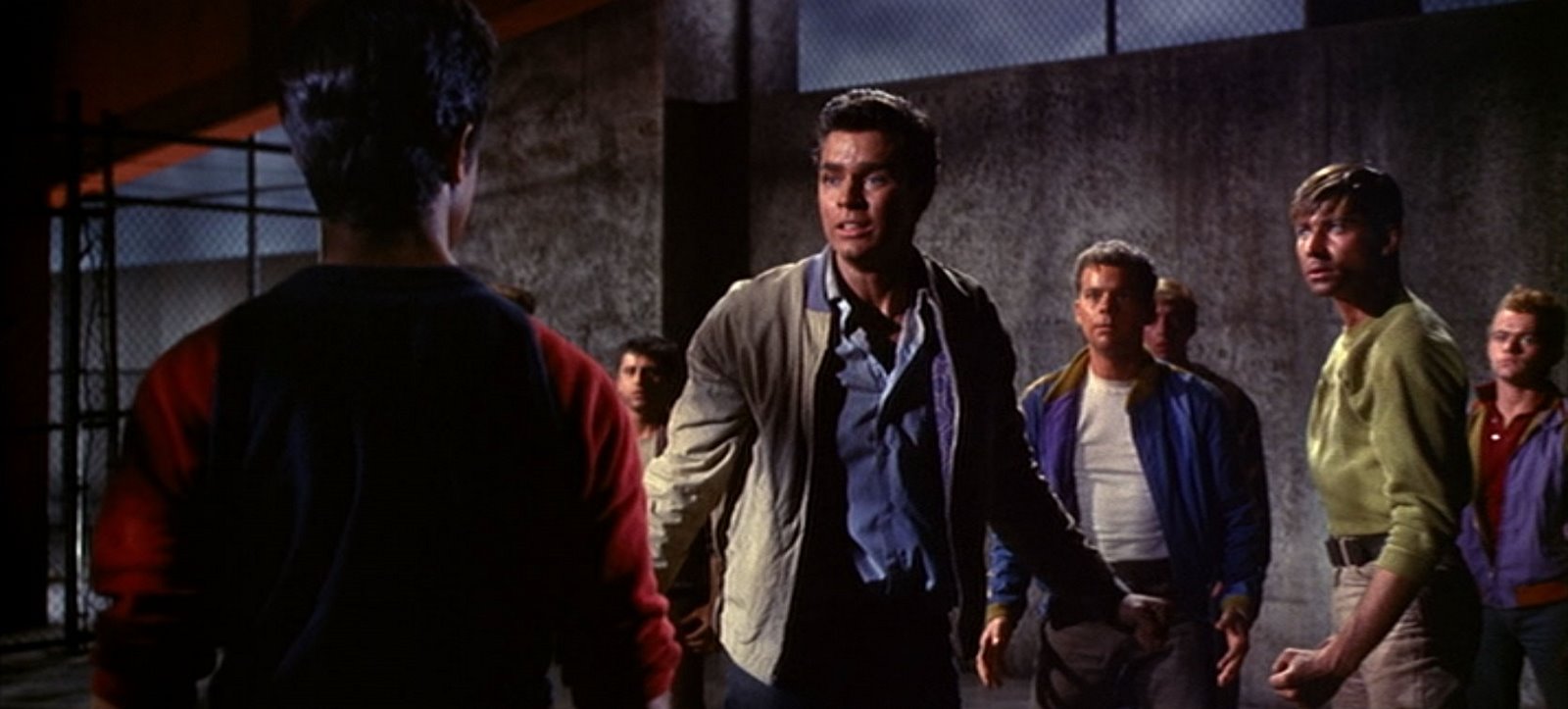
Here he pleads with Bernardo, the Sharks’ leader, to stop the rumble:
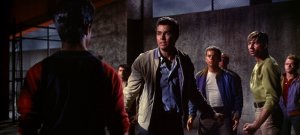
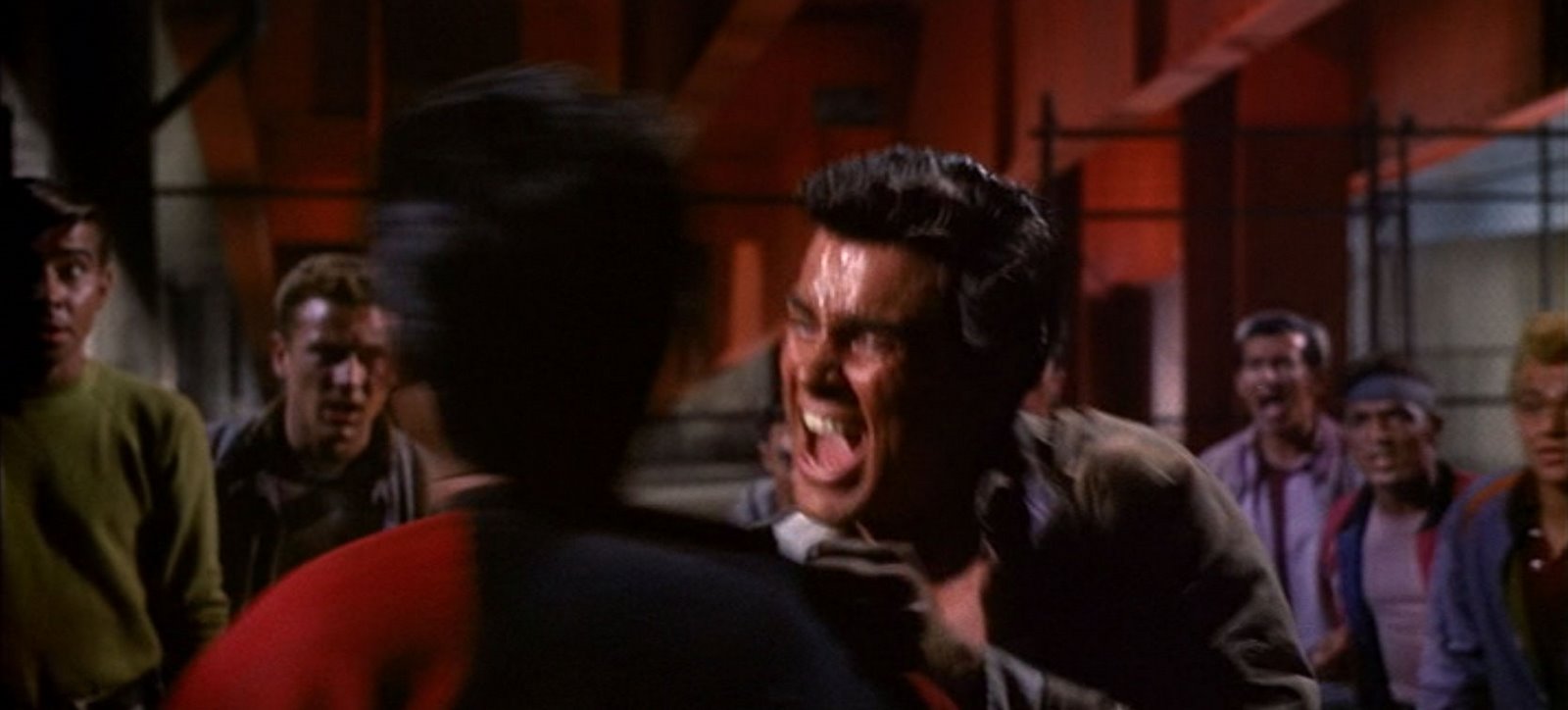
Bernardo has no interest in not fighting. He is there to fight. He calls Tony chicken. Tony is not phased by this. He lets the others mock him, but he cannot let them fight. But then, as Tony tries to keep Ice from fighting Bernardo, Riff strikes Bernardo in the face. The knives come out. Then Riff gets stabbed and killed by Bernardo. Tony, in a moment of rage, picks up the knife and lunges at Bernardo.

With almost identical angle and framing we go from an image moments earlier (the shot above) of attempted reconciliation to this moment on rage and murder:
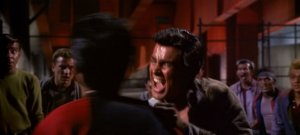
What happened in those few moments between these two shots? How could Tony have gone from seeking peace to vengeful murder in less than three minutes? What caused this movement from peace to violence? One answer is that peace was fundamentally foreign to him. In his life he had gone from being a young man of violence as the leader of the Jets to a slightly older, but still young lowly worker in the same neighborhood. But it’s not just that his environment has not changed much. He hasn’t really changed much. Although his job had begun to civilize him a bit, his problem is that he has not consciously sought peace, or a life of peacefulness, until a girl enters his life. Love is a strong motivator for many things, but not enough to overcome deeply ingrained habits on such short notice.

Practicing peace is a conscious effort to form new habits as well as to engage one’s mind towards peaceful solutions. We not only live in a violent world, but we Americans are trained by our culture to think and behave violently. Our culture provides us with constant justifications for using violent means to “solve” our problems and deal with our enemies. Our country was formed through bloodshed, slavery was overcome through bloodshed, the Westward expansion was accomplished through bloodshed, and it goes on and on. We call heavily armed soldiers paroling the streets of other people’s countries “peacekeepers.” Our nuclear arms policy is “mutually assured destruction.” We believe we can establish democracy in various parts of the world at the end of a gun. These things are reported daily by our popular news outlets and rarely do we cringe. To live in such a world will inevitably train us into people who consider violence a normative option for achieving our goals. Violence is always “on the table” as our politicians are fond of saying – and it’s as old as Cain and Able. It doesn’t take much to encourage and reinforce the violence that is already in our hearts.

Peace is not a state of being as much as it is a way of life. Peace takes courage and creativity. The tragedy for so many people is that peace is something one hopes for after the dust has settled. But peace is not some languid, passionless rest. Peace is the activity of loving our neighbors as ourselves, of loving our enemies, of being servants, and of holding each other accountable. In a violent world peace requires thinking out of the box, out of bounds, charting unfamiliar territory, and being willing to keep asking questions that seem to have already been answered. Peace is something we need to practice everyday, both for today and for tomorrow. Tony did not practice peace and was unprepared at the moment he most needed a creative solution. More than that, he had not been working toward peace in his neighborhood all along. He had no foundation, no authority.

There is a moment late in the film when Doc asks the Jets, “When do you kids stop? You make this world lousy.” And one of the Jets replies, “We didn’t make it, Doc.”

This line could be seen as an indictment of our society. In other words, how else could or should these kids behave when the world given to them is so lousy? But Doc, rather than being silent at that moment, could have answered, “No, we all make this world. With every choice and every action you are making this world just like the rest of us in this neighborhood. You can choose peace or violence, love or hate, but whatever you choose and whatever you do, you are making this world too.” Doc’s lack of a proper response indicts him as well in this mess. The real tragedy of West Side Story is the profound lack of wisdom from every character.

Using West Side Story to discuss the concept of practicing peace may seem a bit strange. West Side Story is a big , colorful, sappy, song and dance spectacle. It is nearly fifty years old and in many ways it is dated, though still a great evening of entertainment. However, sometimes watching films that are outside our own period make it easier to see what is going on. Storytellers rely on conflict to drive a story forward. In fact, I cannot think of a single film that does not have conflict somewhere in the story. Audiences lose interest quickly if there is no conflict. More than that, if there is great conflict with stunning violence and massive destruction, audience flock to the theaters. In West Side Story it is easy to think these characters should just get over it, move on, get jobs. It is easy to ask what is wrong with these kids, why don’t they stop fighting? But in films of our own period (think of all the blockbusters of the last ten years) it can be more difficult to see because we are enjoying them so much.
L’amour est un oiseau rebelle

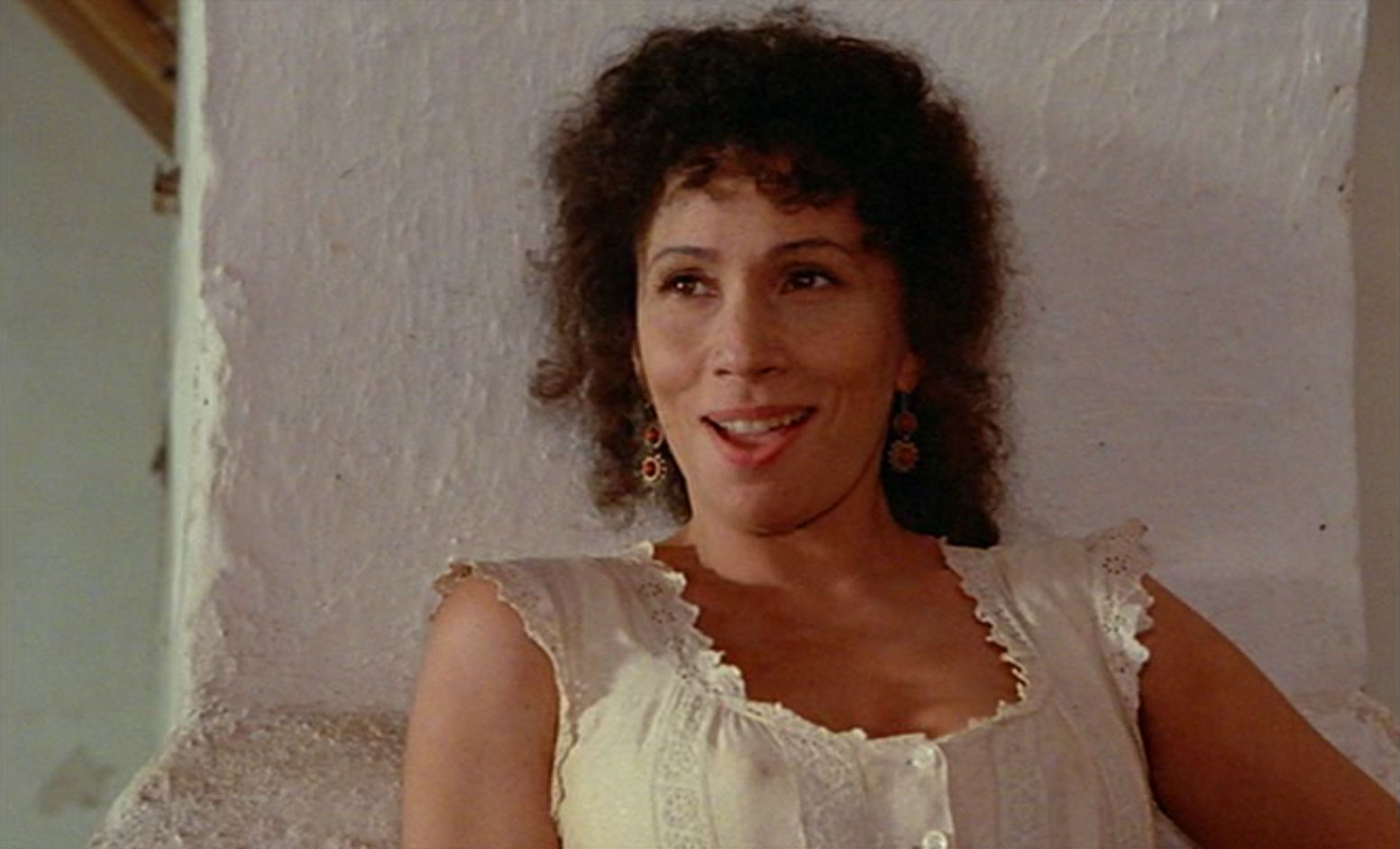
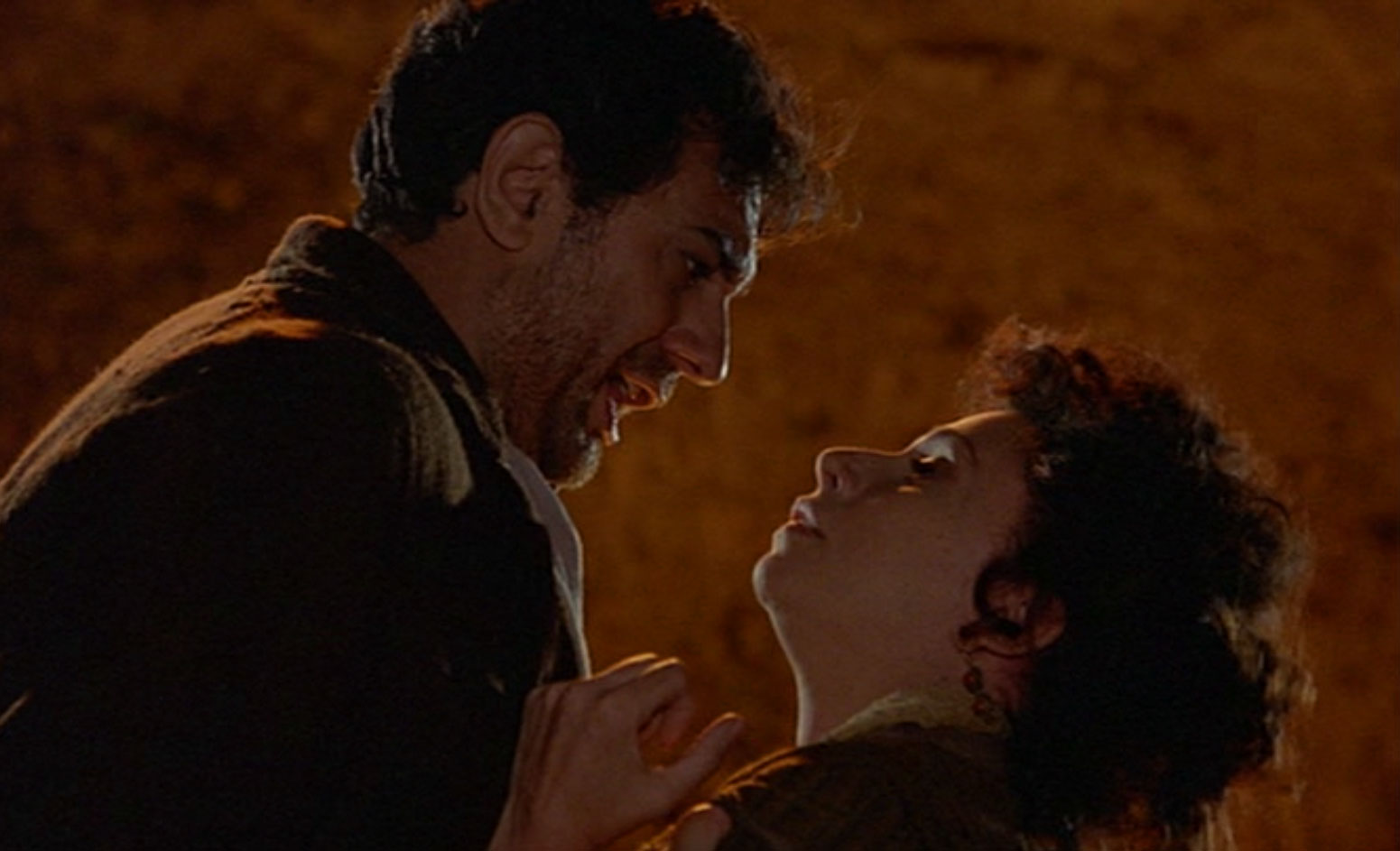
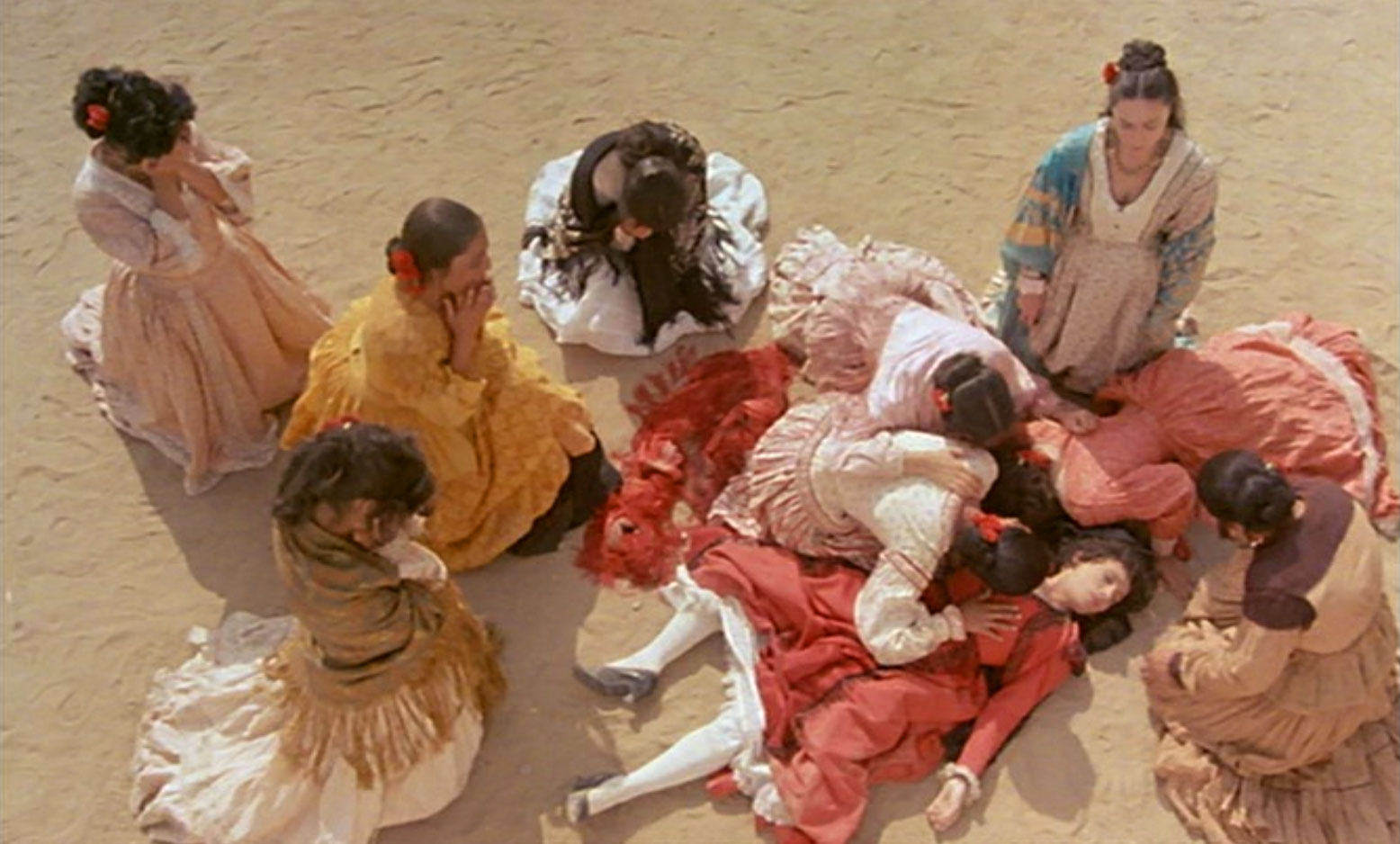
Three images that say just about all you need to know bout the story of Bizet’s Carmen:


And yet, there is so, so much more.

We just finished watching Carmen the other night. This is the 1984 version with Julia Migenes and Plácido Domingo, directed by Francesco Rosi, and filmed on locations in Spain. I recommend this version, though I sometimes found the use of locations and lip-syncing to be a bit distracting.

We are beginning to love opera. My girls think opera is great – they want to see more. Next might be Verdi’s La traviata. We’ll see.

>opera, more opera, and choices worth making

>

If you are like me then your knowledge of opera is largely limited to a few Looney Tunes cartoons (Long-Haired Hare & Rabbit of Seville). I think that’s a bad thing, though I love those cartoons. Recently we got a CD of songs from various operas, sung in English, and geared towards kids – though adults will enjoy them as well. We have been listening to these songs in the car and the girls love them. Our two year old shouts out after each song, “again!”

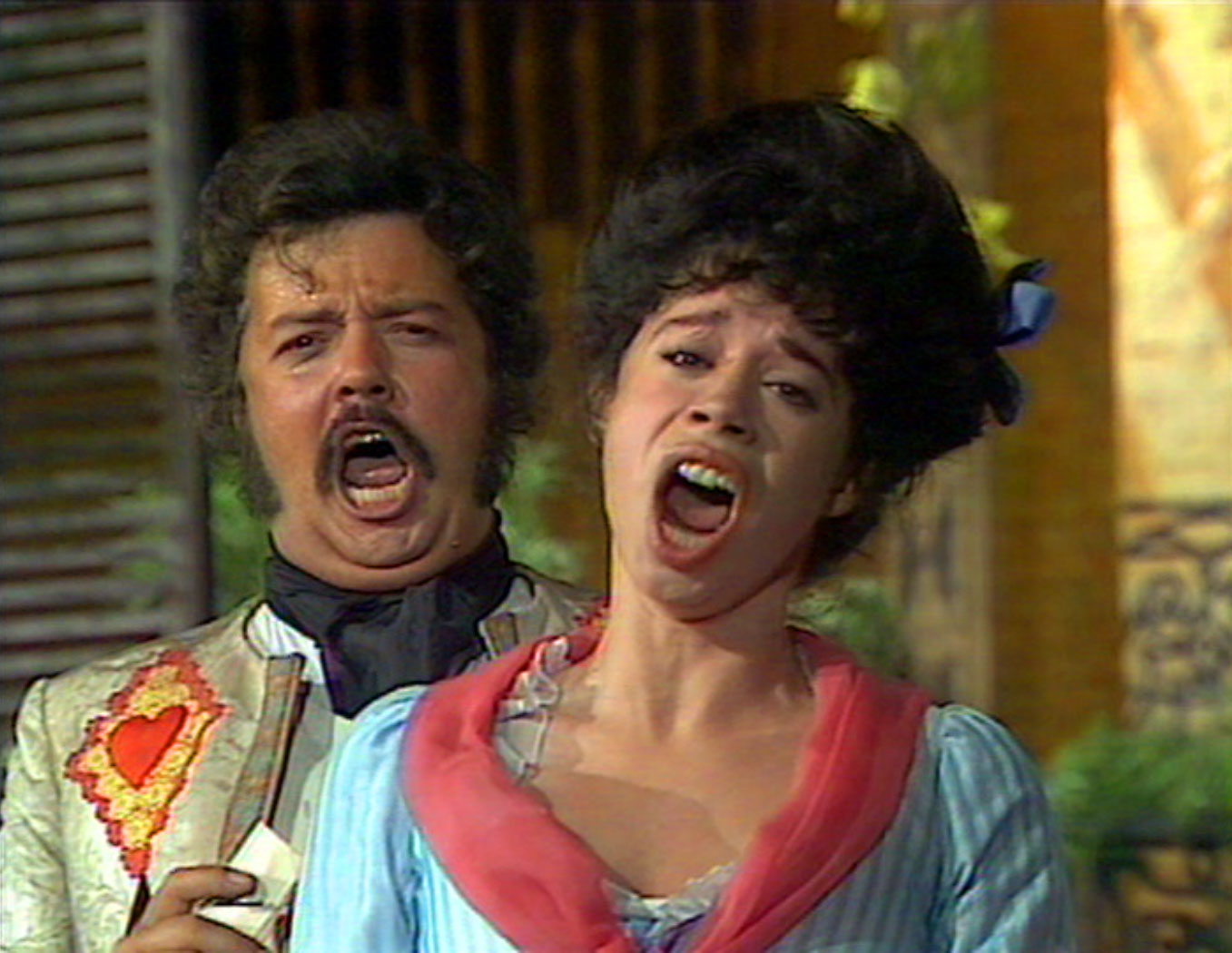
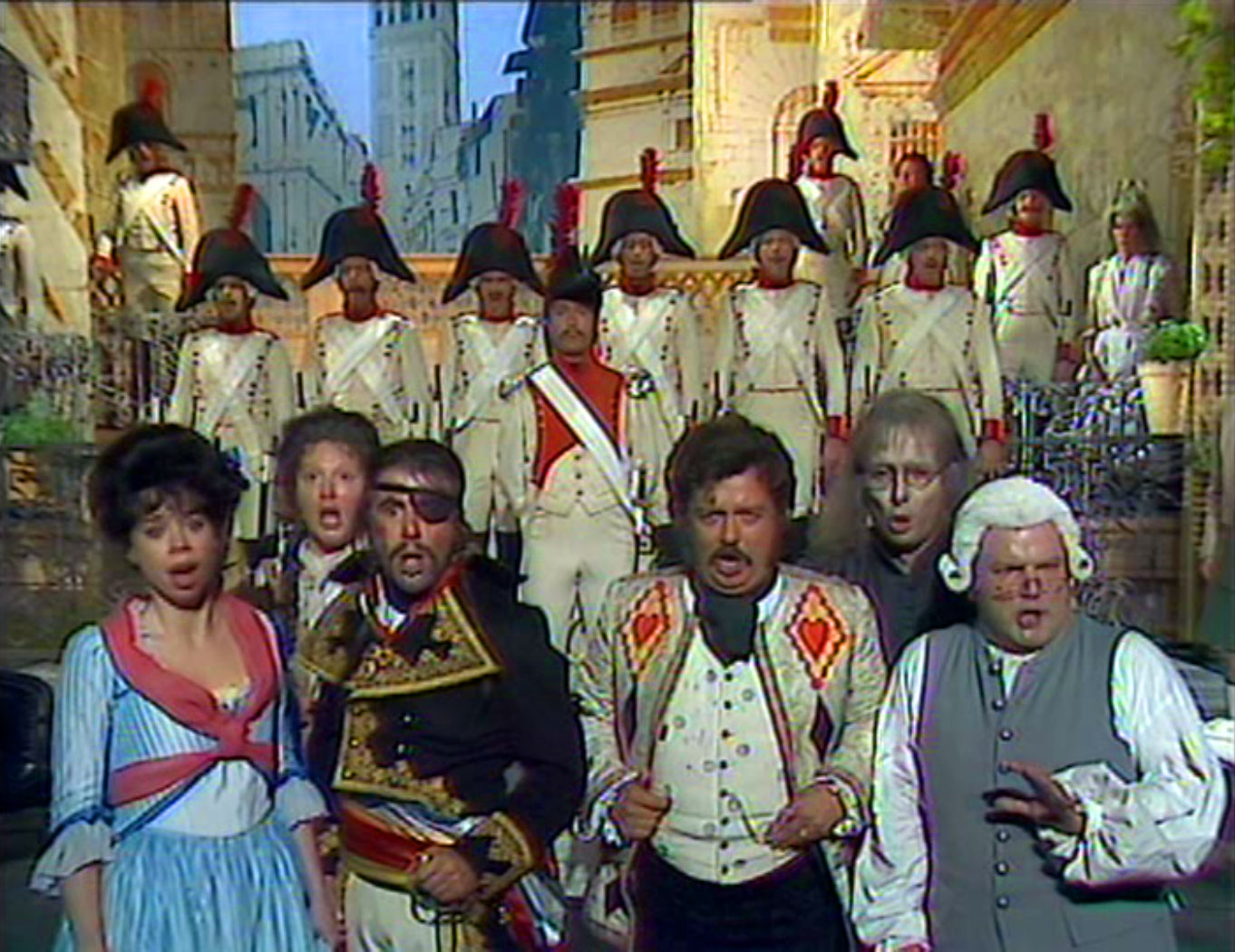
With this in mind I have checked out some operas on DVD from the library and we just finished The Barber of Seville. We loved it. This is the 1982 version made for television and starring John Rawnsley as Figaro and Maria Ewing as Rosina.


Figaro will help Rosina

I was not sure how the kids would take to watching an Italian opera, first performed almost two hundred years ago, now made for 1982 television, with English subtitles, and more than 2.5 hours long. To my surprise and joy they were enraptured. Even our two year old would sit and watch it (sometimes transfixed), then clap at the end of each song. My eight year old watched intently and did not want to spread the viewing over three nights – which we did due to bedtimes.

What a great show. There is no need for me to go into the plot, or say how good the music is, or describe the performances. All that is well known and I am not yet knowledgeable enough to say much, except to say I think it is all really, really good. I can also say that I loved it and so did my family.


Everybody sings: Mi par d’esser con la testa
in un’orrida fucina
“My head seems to be
in a fiery smithy”

I can’t think of anything like opera. I am beginning to see why some people become smitten with opera. I think I could go down that path as well. But it was not always the case. Like most Americans I grew up absorbing our typical dislike of opera. It’s not that we Americans hate opera, though some do. It’s more that we (I mean most Americans of course) think it is funny and corny, something to make fun of and lambaste. It’s good for cartoons and occasionally setting the mood in a film, but not for putting on the car stereo or playing on the radio by the pool, or taking the time to go and see a performance. But for me that is changing.


Figaro has triumphed

The triumph of Figaro is my triumph too. By the end of The Barber of Seville I was thinking that more opera is in my future – and my kid’s future.

Years ago I saw a stage production of Bizet’s Carmen, which I loved. I don’t know why or how I got to the the theater. I only remember the music and the sets, which were wonderful. I had the same experience with Puccini’s La bohème. Why I did not see more opera’s I do not know. More recently I posted briefly on watching Das Rheingold on DVD. We still haven’t made it through that one. I realize now I need to see more opera’s more often.

Finally a note on parenting and some choices worth making. My desire is that my kids grow up loving good art, whatever the form or genre. I hope they love opera. At least they will have had some introduction to it. But whether they love opera or not is not really my concern. I am often taken aback by how many parents limit their kids knowledge and appreciation of art merely because those parents have limited themselves. Parents should continue to expand their own horizons, even get out of their comfort zone, not merely for their own pleasure and personal growth, but also because it will expand their children’s horizons as well. Kids are very attuned to what their parents are doing. So often when we don’t choose the choice is made for us. There are plenty of mediocre cultural products lying around for easy consumption. If we don’t make good choices about the art in our lives then our culture will supply us with mediocrity. That is, unfortunately, the default setting. As a parent I want my kids to know that there are great choices out there and that those choices are worth making – whether it’s about opera or anything else.

hero of the open city

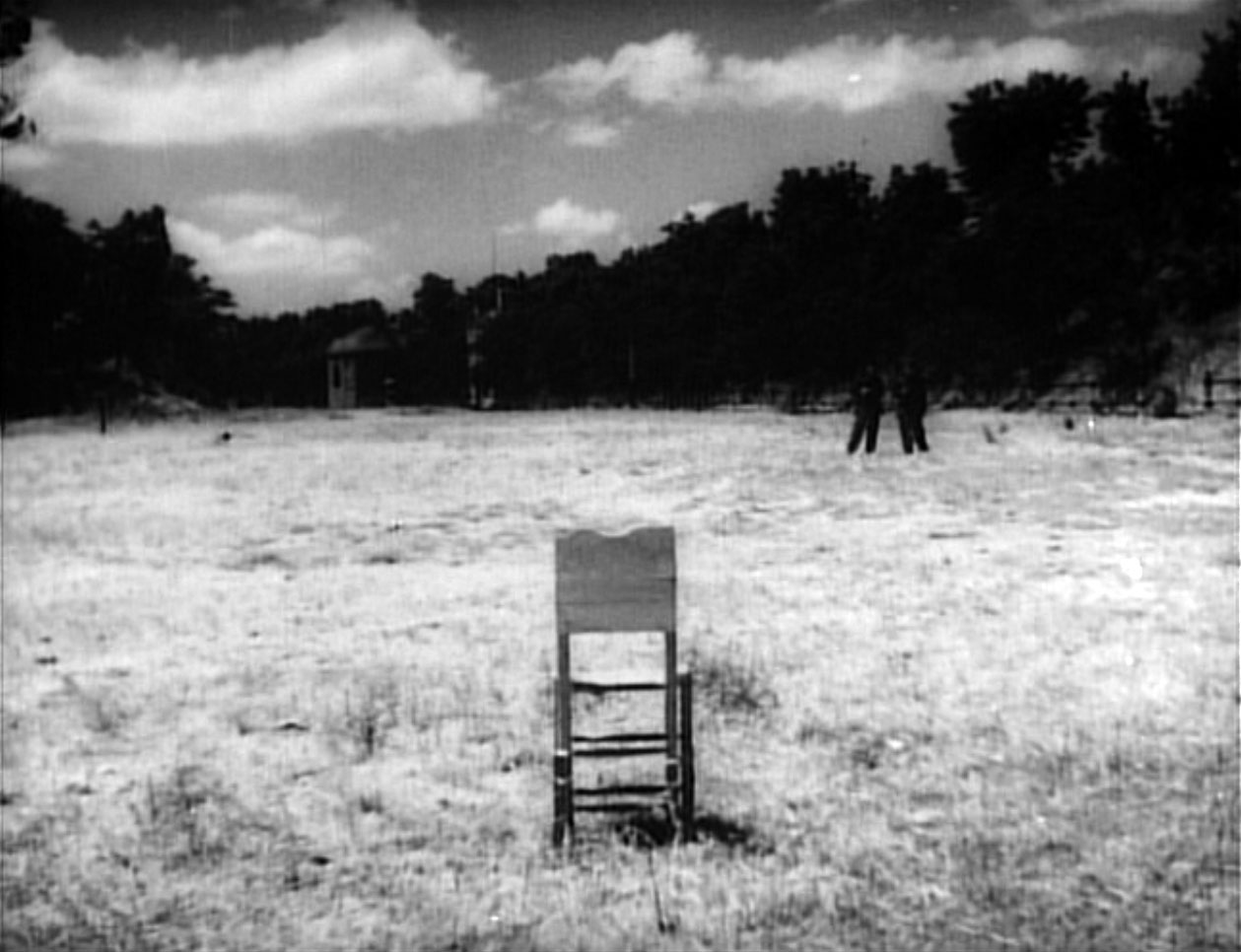
This is one of the most haunting images I can think of in cinema.

It is a simple image, not particularly artistic or striking. It is just a chair in a field on a bright sunny day, but it is loaded with meaning. This image comes toward the end of Roma, città aperta (1945). The chair is the place of execution of for Don Pietro Pellegrini (Aldo Fabrizi), a collaborator in the resistance against the fascists.


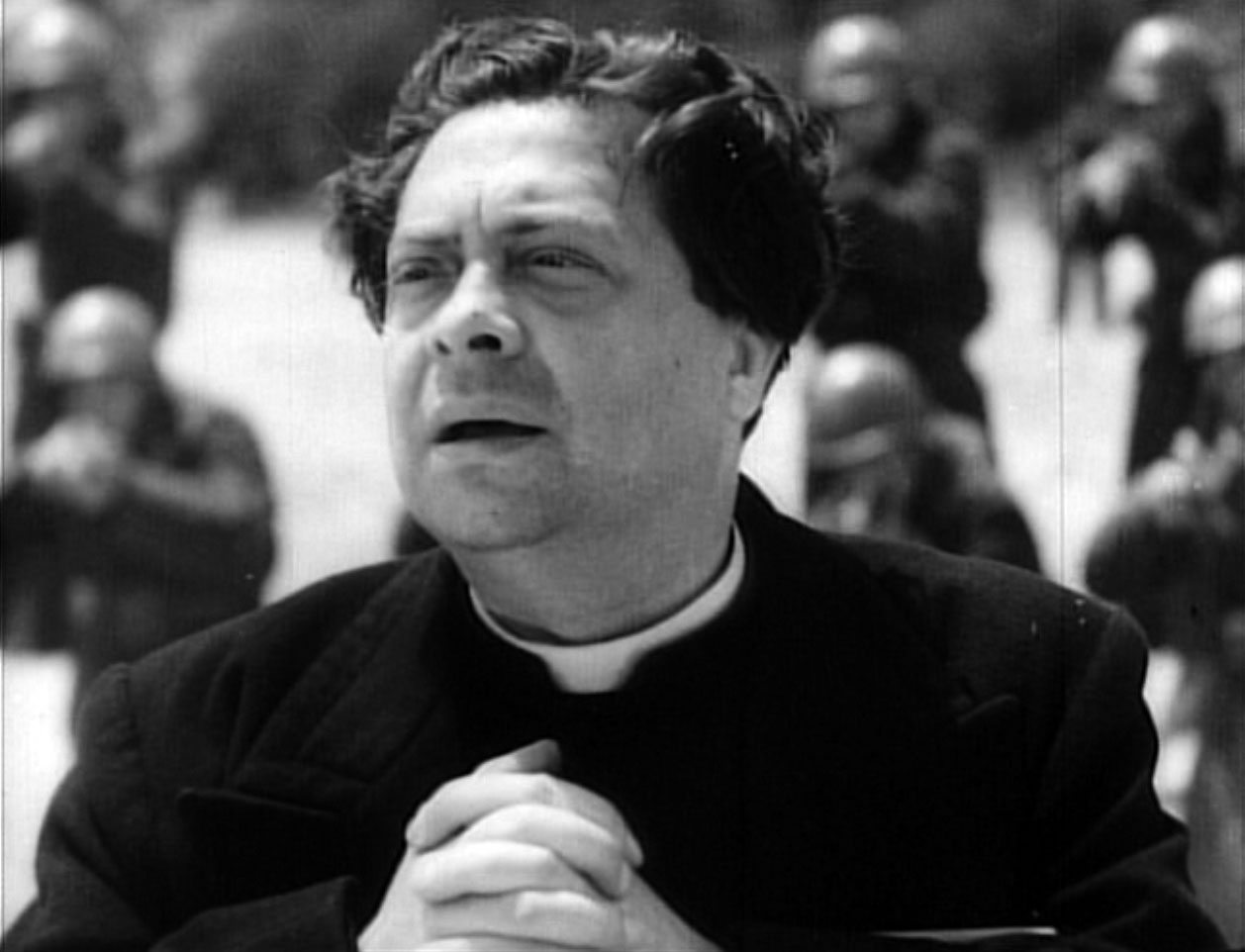
I find that great films often draw me in because of their heroes. Though I care about good cinematography and editing, or creative soundtracks and screenplays, what sticks with me longest are the heroes. And let’s not forget, superheroes are not heroes. Ordinary people who do what is right in the midst of extraordinary circumstances are heroes.* Don Pietro is a hero in this sense. A priest and a schoolteacher, he also knows that doing what is right trumps mere survival. He says, just prior to his execution, that it’s easy to die well, but living well is the real challenge. He is a man who lived well and the forces of darkness killed him for it.

I am not saying anything new here. If you’ve seen Roma, città aperta then you know I have not discovered anything new in the film. But I am struck by two things: 1) the film foregrounds the socialist/communist struggle against the fascists, and yet it is a priest of the most traditional of traditional Christian traditions who is the hero, and 2) it seems we don’t see these kinds of heroes in film as much anymore. What makes both of these points linger is the deep sense of humanity into which Rossellini taps.

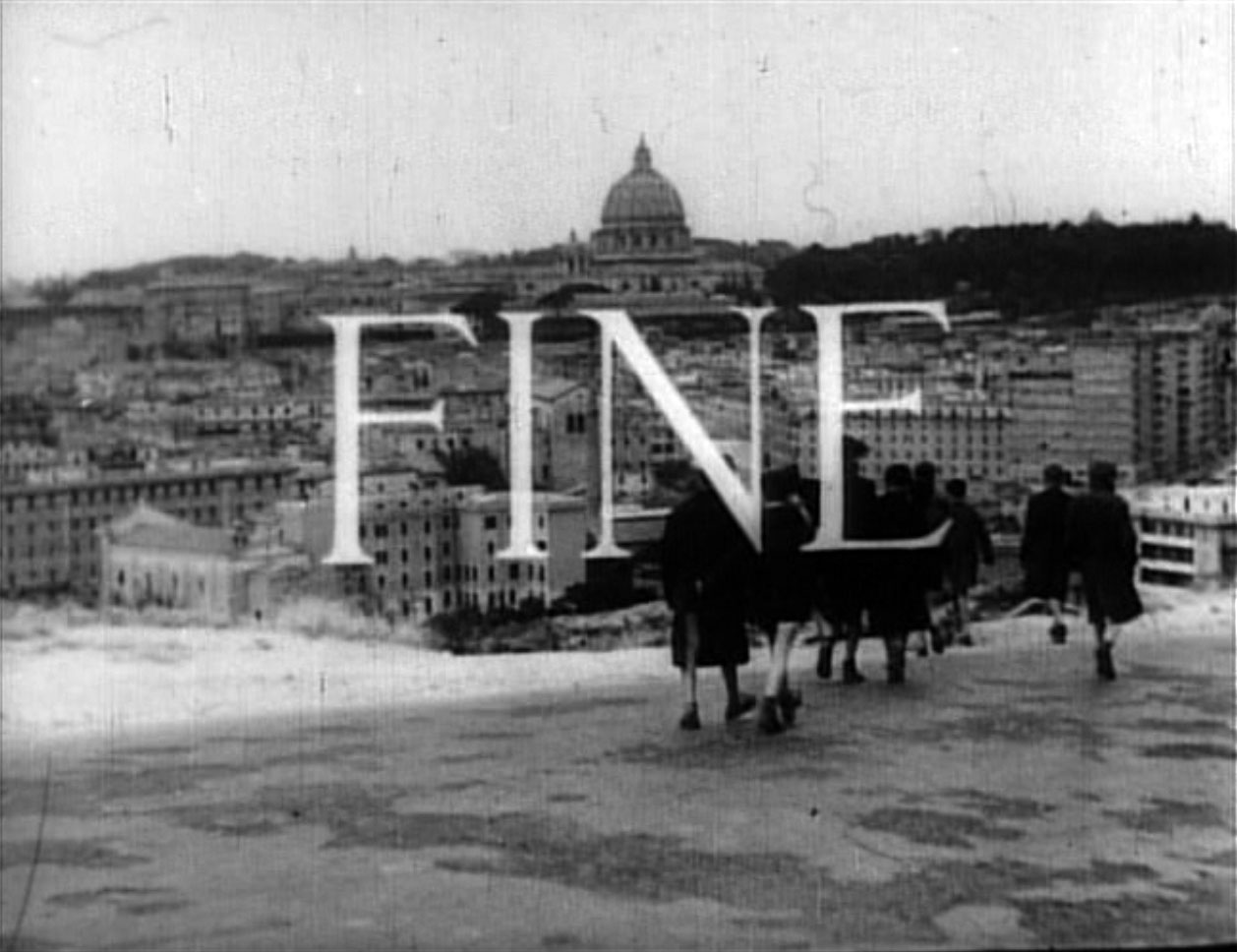
One aspect of Italian neo-realism is its ability to take the ordinary, portray it rather straightforwardly, and yet load it with both connotative and denotative meaning. The ending is a good example. After Don Pietro is murdered by the fascists, his students, who watched his killing, walk together back to the city. In the middle ground are modern apartment buildings. In the distance is the dome of St. Peter’s (I believe).

This image all about the future. Life goes on. The future will need to be rebuilt from the ruins of the present. These kids represent that future. The adults have let them down as a result of their wars. But their teacher has shown what a true hero is made of. It’s a simple ending, in a way. And yet, it has weight, depth, and irony. The irony comes from the fact that while we watch the future walk into the city we also see the word FINE across the image. It is both the end and a new beginning, however uncertain. This is the kind of filmmaking that I love.

*This may be why I find movies like Ironman to be all surface and ultimately unsatisfying – even boring. There are thrills but nothing really of any consequence. Ironman, as just an example of many, is somewhat entertaining, but already consumed and forgotten.

>Lotte Lenya

>

I recently viewed G. W. Pabst’s 1931 film version of The Threepenny Opera. That has led me down a path of discovery to Kurt Weill and, in particular, Lotte Lenya.


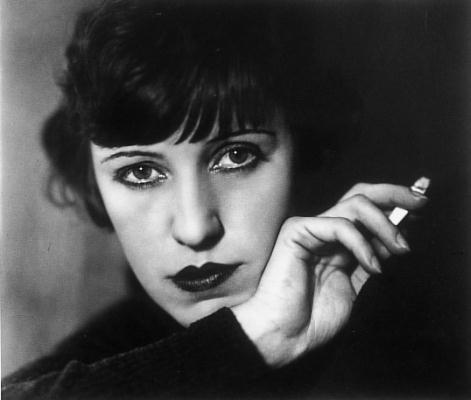
Lotte Lenya posing as herself

Below is a 30 minute documentary on Lotte.

part 1

part 2

part 3

Chinatown and the Rule of Thirds

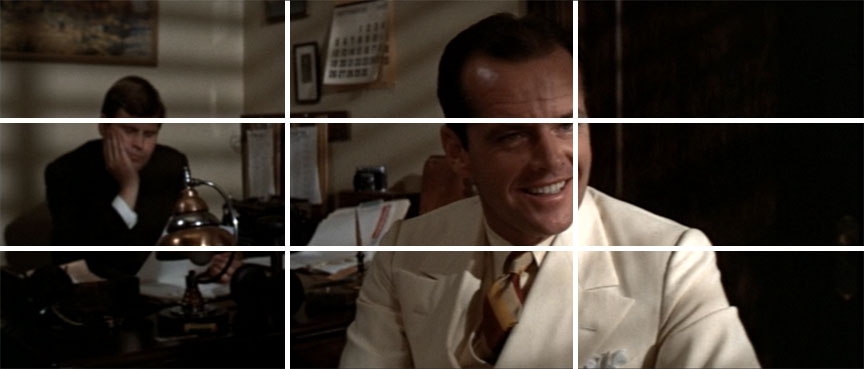
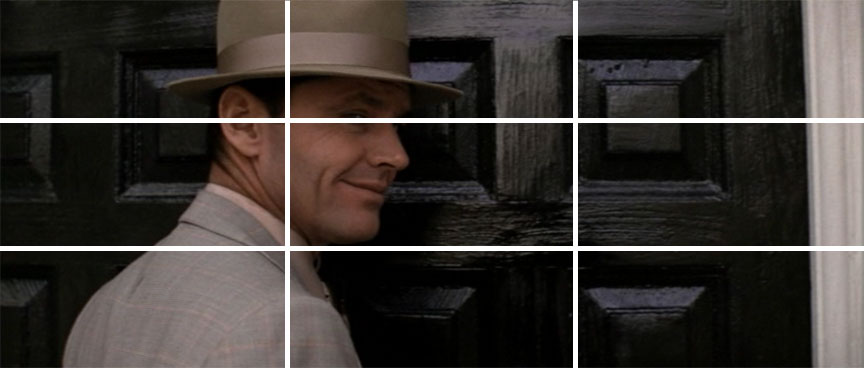
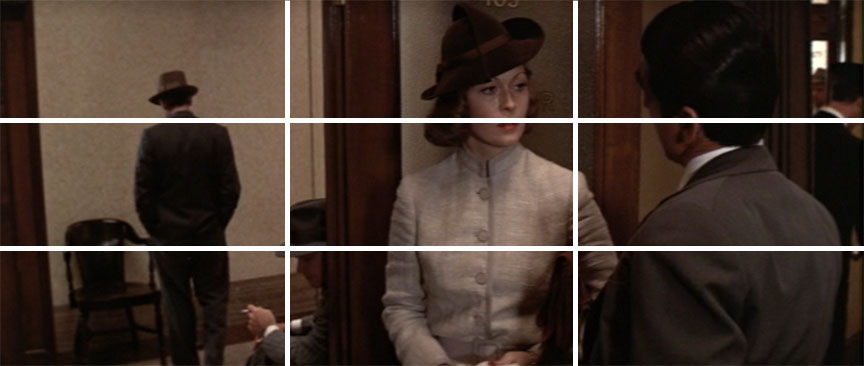
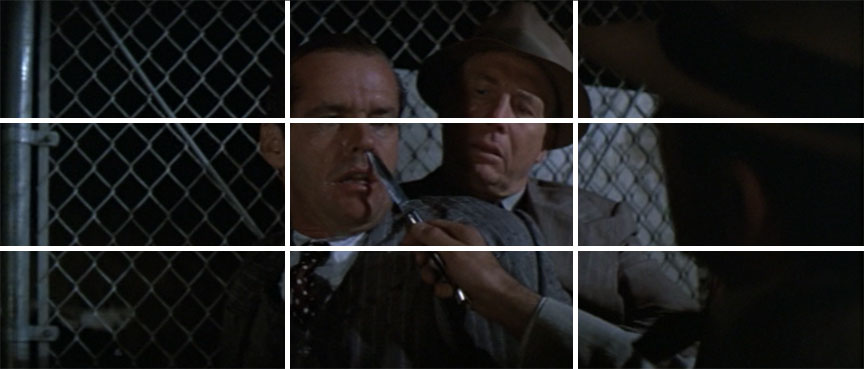
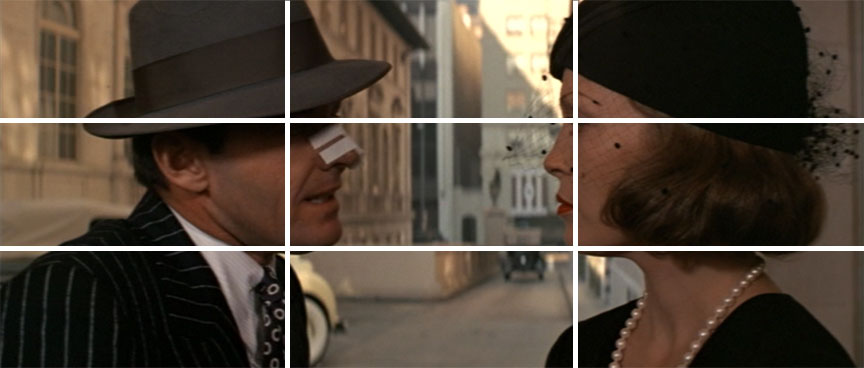
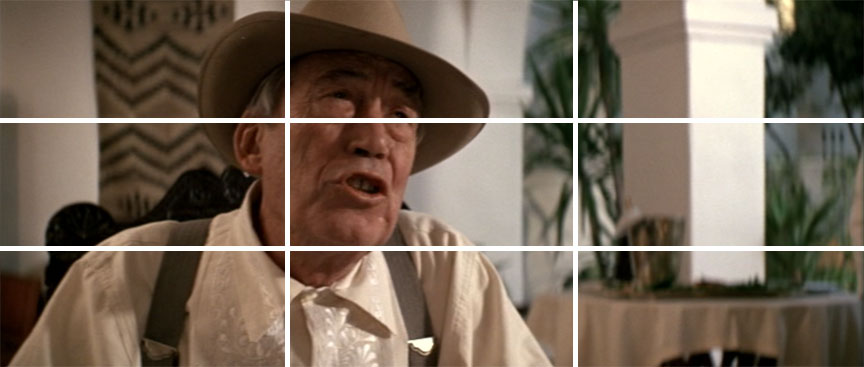
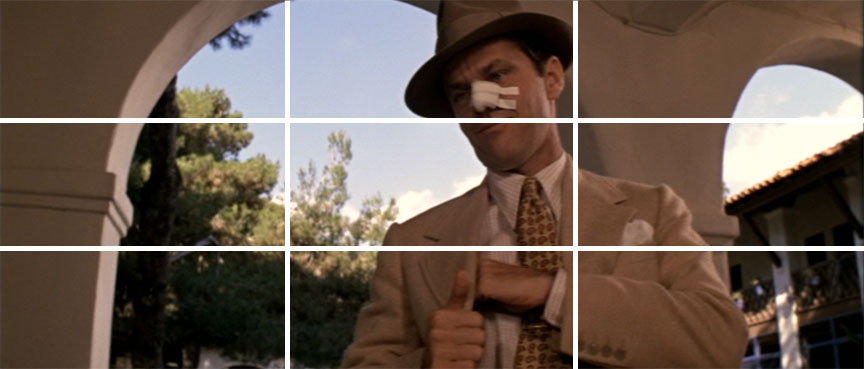
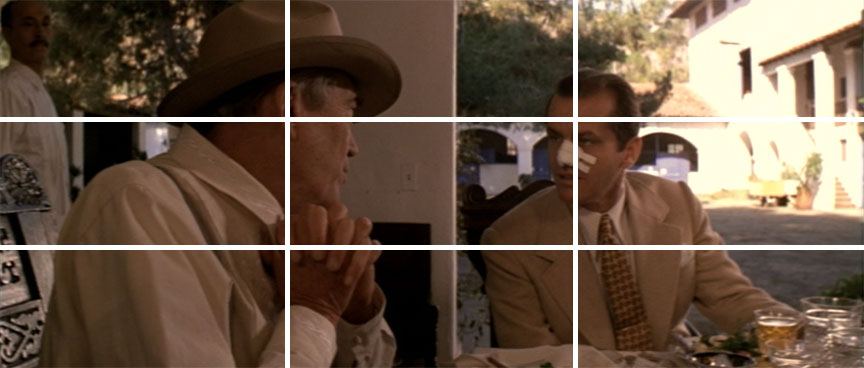
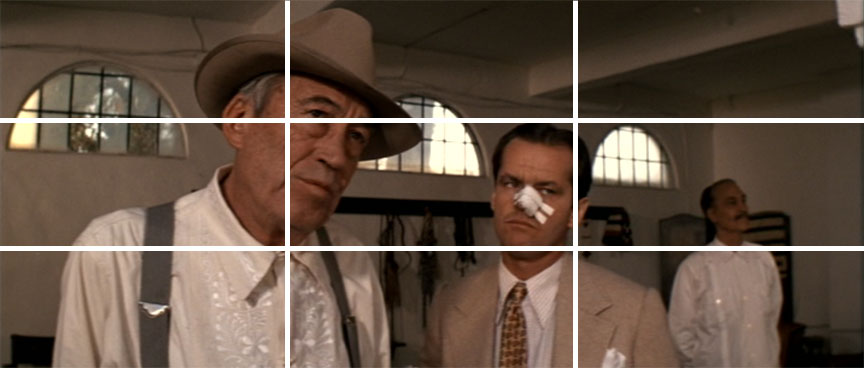
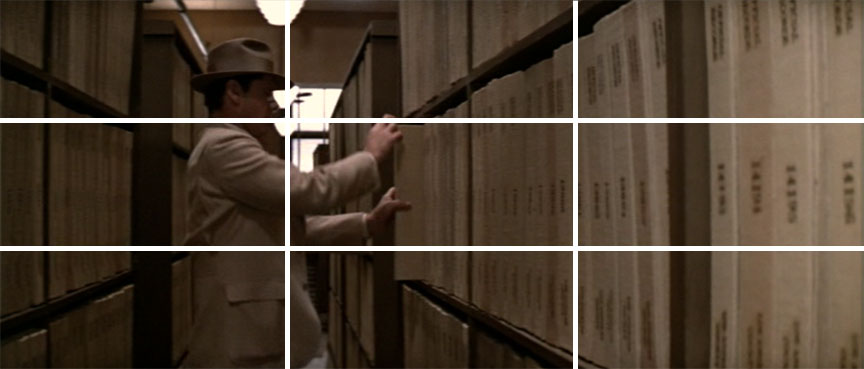
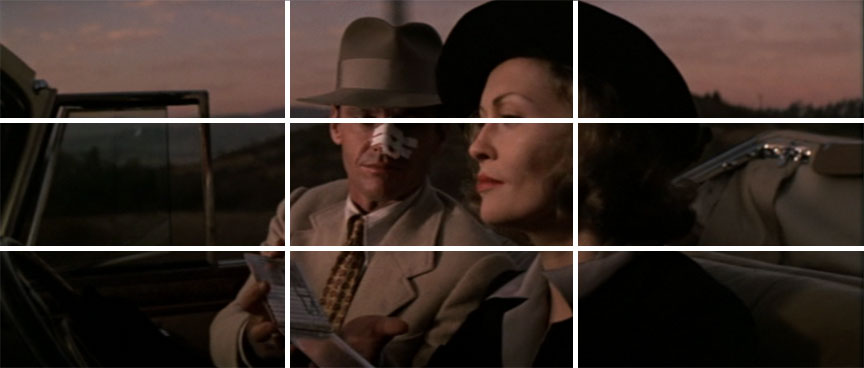
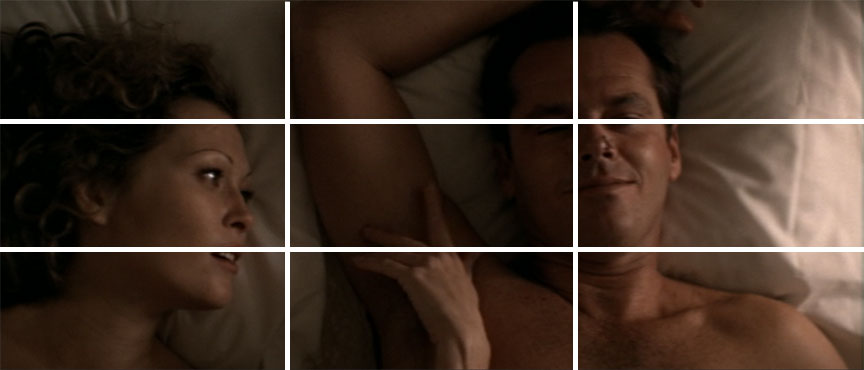
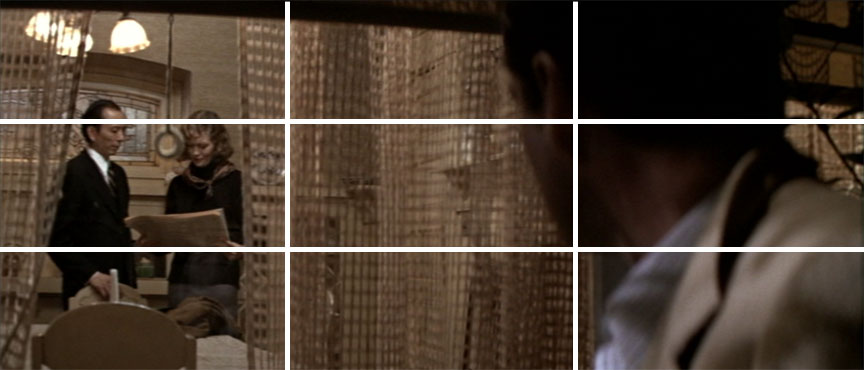
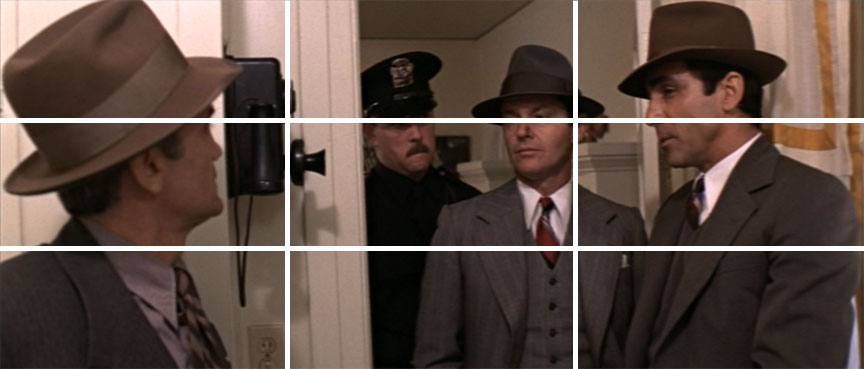
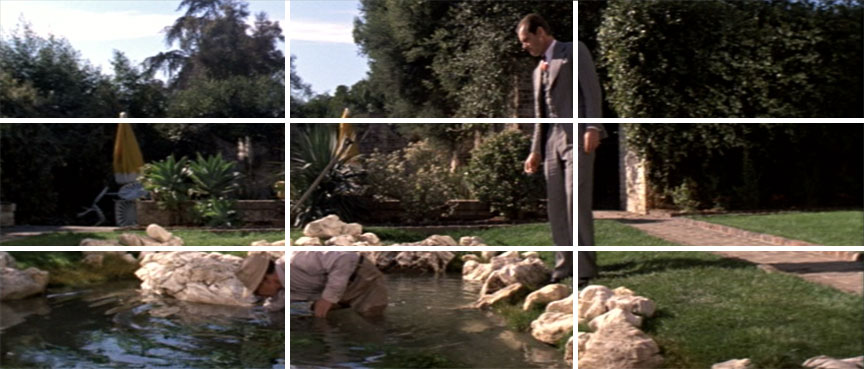
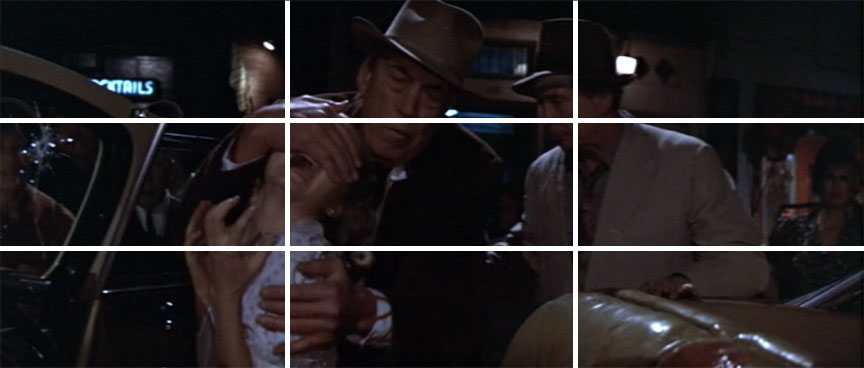
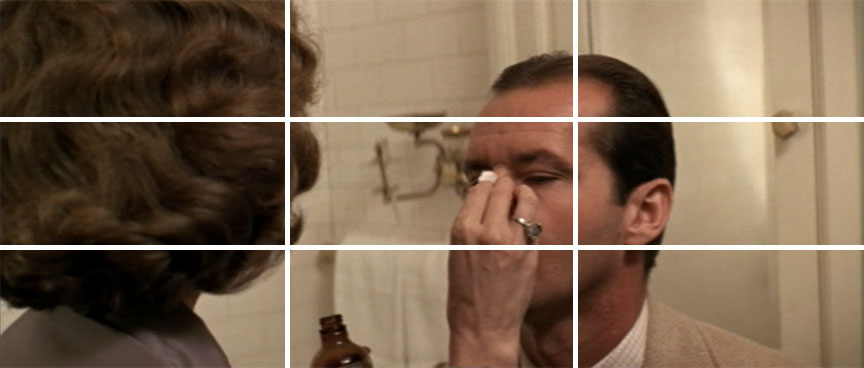
Many films are beautifully shot. Few, though, are as consistently well composed as Chinatown (1974)*. Shot in Panavision (anamorphic) format with a 2.35:1 aspect ratio the somewhat extreme rectangular image would seem to offer significant challenges to effective image composition. As I was pondering this challenge I was struck by how much I loved the images in Chinatown, which I just watched again the other day. That’s when I went back to basics and considered that even with widescreen images there are still fundamentals of composition at play. In this case I figured I would grab a few images from the film and apply the Rule of Thirds to each image.

The Rule of Thirds is simply as follows:

Divide the image into thirds, both horizontally and vertically, then put the focus of the image either one third across (from either side) or one third up or down the screen. Those lines, and the points at which they intersect, are the strongest invisible forces in an image.

In Chinatown the images are constructed around those lines and intersecting points. By doing this the aspect ratio becomes a relatively mute point as the human brain automatically takes in the whole image, mentally divides the image into thirds, and finds pleasure as key visual elements are constructed around those thirds. Of course, deviation from the power of the thirds creates visual tension, which is an additional tool in the filmmaker’s toolbox.

Chinatown was shot by John A. Alonzo. Here are the images from film (I, of course, added the white lines):

This is a simple process of analysis. More involving would be to examine how the rule applies to changing composition withing shots as they are re-framed or the actors move about. One thing I noticed was that all the extreme close-ups put the object of focus directly in the center of the middle square. Placing visual elements along the “third lines” was reserved for medium shots and long shots. Finally, the rule of thirds does not guarantee that an image will be good, or work well for a particular scene. However, fundamentals are fundamentals. Without them one will not only have difficulty maintaining a consistent quality, but one cannot truly “break the rules.” The irony is that fundamentals are what allow filmmakers to innovate and stay fresh.
* This is my opinion, of course, but there is a quality in the film’s imagery that is truly wonderful and yet difficult to pin down.