>gagging and weeping

>

Recently Showbiz Tonight’s AJ Hammer did a story/interview with Tori Spelling. Below is some of the transcript of that segment from CNN.com.

HAMMER: [W]ith everyone talking about sex scandals right now, here’s one I just had to ask about, Tori cheated on her husband number one with now husband number two. I asked Tori point blank if she ever stopped to think about the damage she was doing not only to her marriage but to her now husband’s marriage as well.

SPELLING: That was the hardest thing for both of us is that there were children involved. There were two other people innocently involved. You know, whether they were happy marriages, whether they were meant to work out, it’s still at the end of the day people are going to get hurt. And that was the hardest thing about that whole situation. But, you know, in life you have to really – you have to look out for yourself and I found my soulmate and I couldn’t deny love. So what was I supposed to do?

First of all, GAG!

Second, what a tragedy of morals, not merely in her actions, but more remarkably in her truly sad and hurtful philosophy. I say this not to aim barbs at Ms. Spelling per se, because she is fundamentally no worse than any one else. We all have dark and selfish hearts. But I say it because it is true, and it is so starkly presented by her words.

There are few projects in all of human existence more difficult than marriage. Marriages fail all the time. There is nothing surprising in that.

What I find shocking (but am I really shocked?) is how openly she excuses her actions by saying: “You know, whether they were happy marriages, whether they were meant to work out, it’s still at the end of the day people are going to get hurt.” Yes, people got hurt, by her actions. And that language of “meant to work out” sounds like marriages are fated, that their success or dissolution are matters ultimately beyond anyone involved, that there really is no persons to blame or praise, just luck.

She then says: “And that was the hardest thing about that whole situation.” From what I can tell it looks like she’s over that now. Any bad stuff is apparently all in the past. Clearly the hardest part is not facing into her moral failings or the ongoing effects of two broken marriages.

Finally, to cap it off she says: “But, you know, in life you have to really – you have to look out for yourself and I found my soulmate and I couldn’t deny love. So what was I supposed to do?” Short answer: honor your commitments,love your husband, repent. I didn’t realize that looking out for oneself trumps all other considerations, as though with a wave of the hand it absolves all other choices.

Maybe I’m being too snippy. I know marriages are complex relationships, and the reasons they succeed or fail are also complex. There are no easy answers. There are no quick solutions. Sometimes, even, it is best for a marriage to end. I have a feeling that there was a lot more to the whole affair than Ms. Spelling is saying. I know nothing of her life. But I have to say that it is sad to hear such bald faced excusing and unashamed selfishness presented as a matter of course.

Finally, it is interesting that she says, “I couldn’t deny love.” What does this mean? It sounds as though she understands love to be something outside herself, a kind of force that is undeniable, unstoppable, untamable. But that is not love she is giving in to, that is romance, and romance is a good, but fleeting thing.

Romance is like a drug, it wears off after time. Love, on the other hand, is a choice, a series of actions, an orientation on one’s character towards another. Love is something you don’t feel as much as something you do, for love bears all things, believes all things, hopes all things, and endures all things. Love isn’t here and then gone. One has to work at it, choose it, make the effort, and seek to be the kind of person who loves. Love often (usually?) involves sacrifice, giving of oneself, even denying of oneself and one’s desires.

But, like Tori Spelling, we live for ourselves. In that sense we are all soulmates.

I can see the same tendencies in both myself and in others all the time. In one way or another we all choose to love ourselves more than we love others, and then we all make excuses for it. We tell ourselves stories, and then we actually believe the stories. Now that’s something to really make you weep, if you have eyes to see.

Blesssed are those who mourn . . .

>the trolley problem

>

Original version:
A trolley is running out of control down a track. In its path are 5 people who have been tied to the track by a mad philosopher. Fortunately, you can flip a switch which will lead the trolley down a different track to safety. Unfortunately, there is a single person tied to that track. Should you flip the switch?

Fat man version:
As before, a trolley is hurtling down a track towards five people. You are on a bridge under which it will pass, and you can stop it by dropping a heavy weight in front of it. As it happens, there is a very fat man next to you – your only way to stop the trolley is to push him over the bridge and onto the track, killing him to save five. Should you proceed?

Postscript: Hypothetical ethical dilemmas provide great opportunities to stretch one’s brain. But they can also encourage one to veer away from greater questions by emphasizing the apparent plausibility that truth is finally unknowable and that ethical dilemmas are purely rational formulations. Neither of which are true.

But to continue, what if there are five people on one track and your child is the one on the other? How does that change your decision? Or five very old people one the one track and a young person on the other. Does that change it? Or what if you were one of the five, but still the sole person who could the trolley’s direction. This is rather tricky now.

A different scenario puts you in the position to save both the trolley and all the people on the track if you sacrifice your own life in saving theirs. Would you be willing to do that? What if you did not know those people? What if they were, in fact, your enemies? This is a greater question. However, it is still rather hypothetical.

What if the scenario was not life and death, but benefit and loss? What if you could give someone else a better life if you would give up your own happiness? Is this not a “laying down” of one’s life for another’s? What if the scenario was that you had to give up your pride, be humble, and serve another for their benefit and you get nothing of comparable consequence in return? This is less hypothetical. In fact, it can be part of every relationship, increasing in intensity the closer the relationship.

In terms of profit and loss, what the trolley problem does not ask (maybe it’s assumed) is which decision is better for the decision maker, in terms of damage caused. The scenario assumes that the only consequence is one of numbers of human lives, but there is also the fact that it sets the state of one human soul (the decision maker) against the physical deaths of one to five human beings. The real power of this problem is not in which solution could you better defend in a court room, it is in which decision is truly right, is righteous, which makes it a potentially spiritual problem in a conundrum’s clothing. Thus, the utilitarian solution, which most people say they would choose may, in fact, still create a kind of long-term “haunting” in the decision maker’s soul because there are no good options. This is often a problem in war, where soldiers have to face into the personal ramifications of making terribly unfair choices because the situations themselves provide no other real options. Making such a decision is more than a matter of pure ethics or brain chemistry. In fact, it may have a great deal to do with the state and story of one’s soul.

A humorous take on these kind of ethical conundrums (click to enlarge):

Boudu

Man is the servant of nature, and the institutions of society are grafts, not spontaneous growths of nature. ~Napoleon

The quote above is taken from the introduction of Honore de Balzac’s The physiology of marriage; or the MUSINGS of an eclectic philosopher on the happiness and unhappiness of married life. Balzac, who was the great recorder of the emerging bourgeois class of French (and European) society, and who cast his powerful gaze upon the vagaries of the human soul, plays a part, albeit through his literature, in Jean Renoir’s Boudu sauvé des eaux (1932). The idea that society has rules, and that humans are always trying to break them while judging others by those same rules, is central to understanding Boudu – both the film and the character.

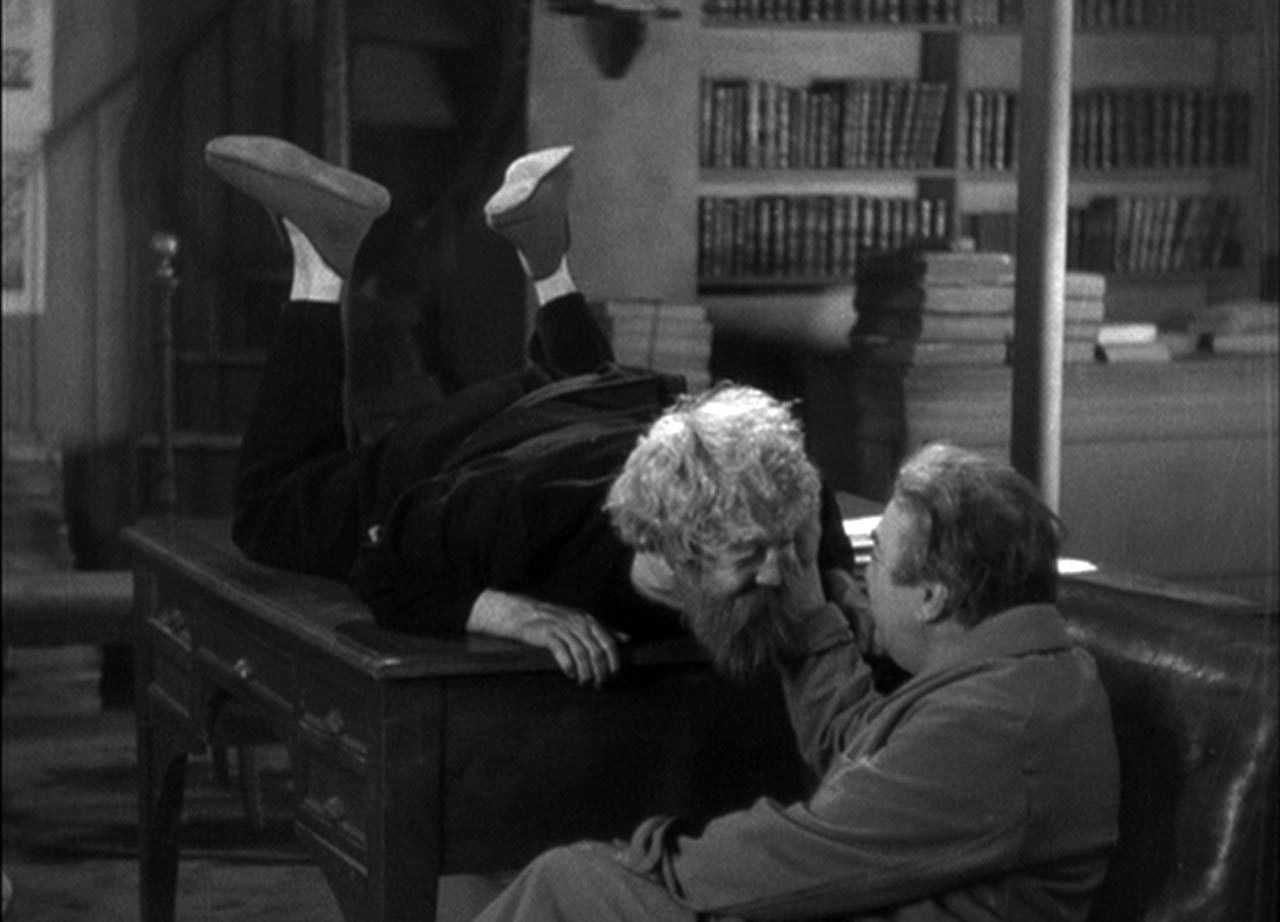
In the story of Boudu, the bookshop owner M. Lestingois (Charles Granval), an example of this new bourgeois male, gets upset when he discovers that Boudu has spat in his copy of The physiology of marriage. “The man who spits in Balzac’s ‘Physiology of Marriage’ is less than nothing to me,” he says. Both comically and symbolically this moment is a nice touch. Renoir is drawing comparisons and contrasts through the film, and especially is poking fun at this new French middle class and all its trappings.

In this sense, though Boudu is the clown, the true comedy is with everyone else.

But Renoir, who, like Luis Buñuel frequently satirized the bourgeois, is ultimately much grander in his scope than mere satirization. I would certainly characterize Renoir’s project as parading before his audience the comical foibles of human beings, and therefore the list of Renoir’s films can, for the most part, be classified as la comédie humaine. But this is not a new insight on my part. What makes Renoir so great (and likely my favorite director), is that he shows humans in all their selfishness, pettiness, and ugliness (he is not afraid to do so), and yet he gets away with it because he has forgiven his characters before the story ever begins. We are watching characters who show us what we are, and yet they have been forgiven by the filmmaker, by their creator, and therefore we can find forgiveness too (for the characters and, by implication, for ourselves). Therefore, we love these characters. With Renoir there is no black and white, and not even grey, there is only the vibrant color of existence and human interaction – something that gets fuller treatment when Renoir begins later shooting his films in color.

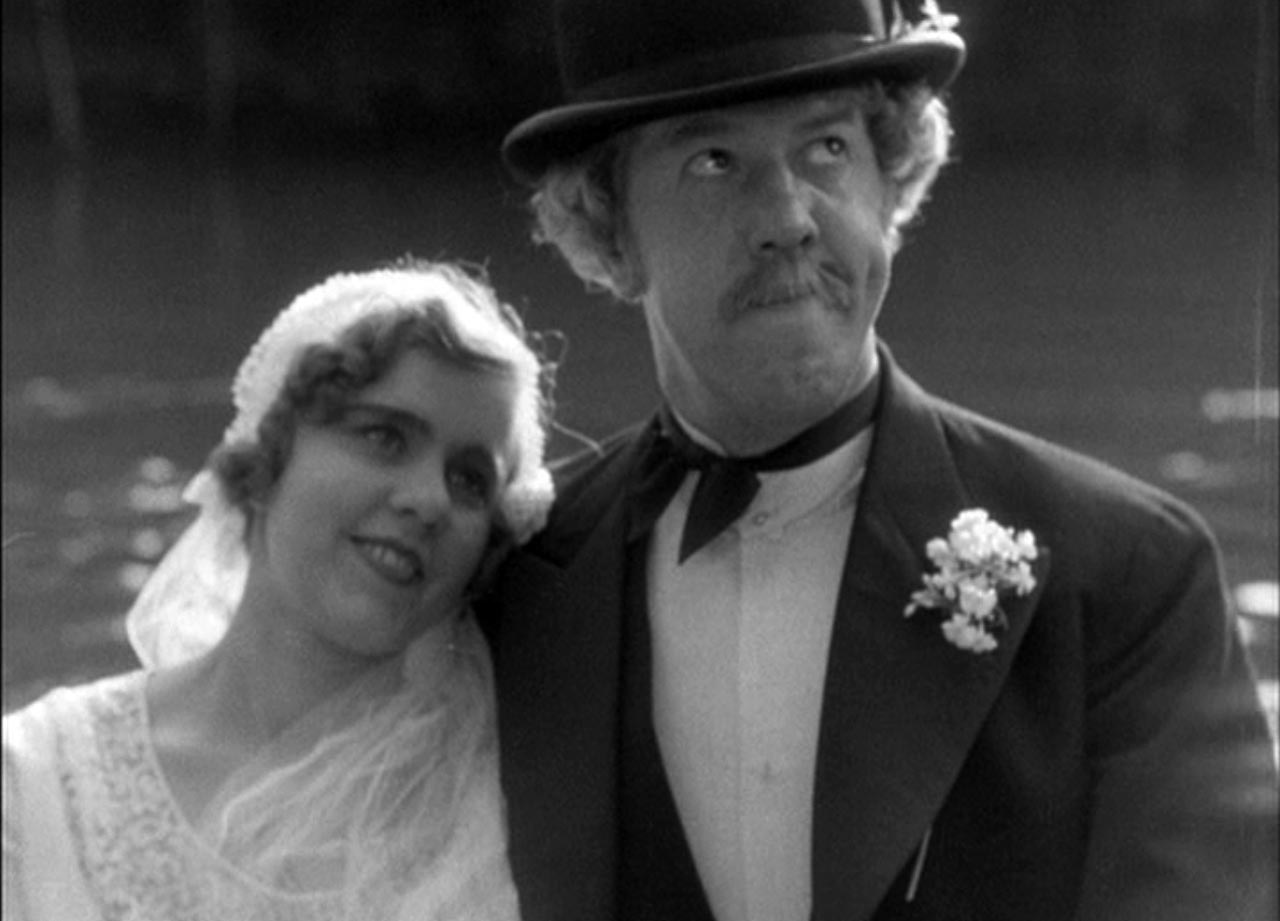
For me, having just seen Boudu twice this past weekend was a revelation. It had been around 23 years since I last saw the film. The Criterion Collection DVD is a wonderfully produced copy of the film. But it is not the quality of the DVD that got to me. And it was not merely the incredible performance by Michel Simon as Boudu, as well as the rest of the cast. No, what got to me was the boldness of Renoir – both in terms of the story’s subject matter and of his directorial choices.

We all know Boudu, so I won’t go into plot synopsis, or produce a review. Thematically, Boudu is decades ahead of classical Hollywood cinema, not merely in terms of the sexual content of the film, but also in terms of class consciousness. I’m sure this is not entirely true, and Boudu is probably also ahead of much of French cinema of the era as well, and yet, while U.S. cinema dealt with class distinctions by thumbing it nose at them (think Fred Astaire – working class hoofer in his tuxedo wise cracking his way through high society, showing us the democratic worldview in action), in Boudu we have carefully drawn out and accepted social lines based in class, possibly democratically organized, but certainly socially stratified. And yet, Renoir is such a lover of people, of humanity, that his class distinctions ultimately get played out as comedy and we see his characters as real people filling the role of their class.

Another great element of Boudu is the use of exteriors and natural sounds. Lest we forget, 1932 was very early in the development of sound-recording technology for cinema. [And really the film is copyrighted in 1931.] Shooting talkies was not easy, and shooting exteriors with natural sounds and large group shots was often very difficult. Scenes tended to be shot in studios, and cameras were rendered almost immobile by placing them in sound booths. Typically, multiple cameras had to be used in order to shoot a scene with cutaways and reverse angles because the audio had to be recorded on one track at the time of the shooting – no sound editing later if one had characters talking. Music typically was included at the time of shooting as well. This has all been well documented by many historians. Renoir is using the latest knowledge of sound recording and finding ways to make it work for him.

In Boudu we have both interiors and exteriors. I find the easy transitions between internal and external to work extremely well, including the difficult process of recording and matching the audio. The exteriors seem to almost prefigure the kind of exteriors one will find with the Nouvelle Vague directors of the later 50s and early 60s. In fact, having just seen a couple of early Rohmer films, Renoir does a better job of capturing and mixing exterior audio for effect than does Rohmer 30 years later. In particular, I’m comparing Boudu with La Carrière de Suzanne (1963) because I just saw it as well (ah, thank you DVD player!). Of course Rohmer was doing something different than Renoir.

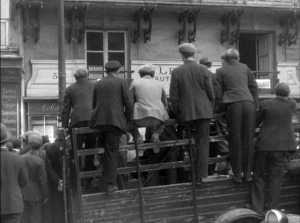
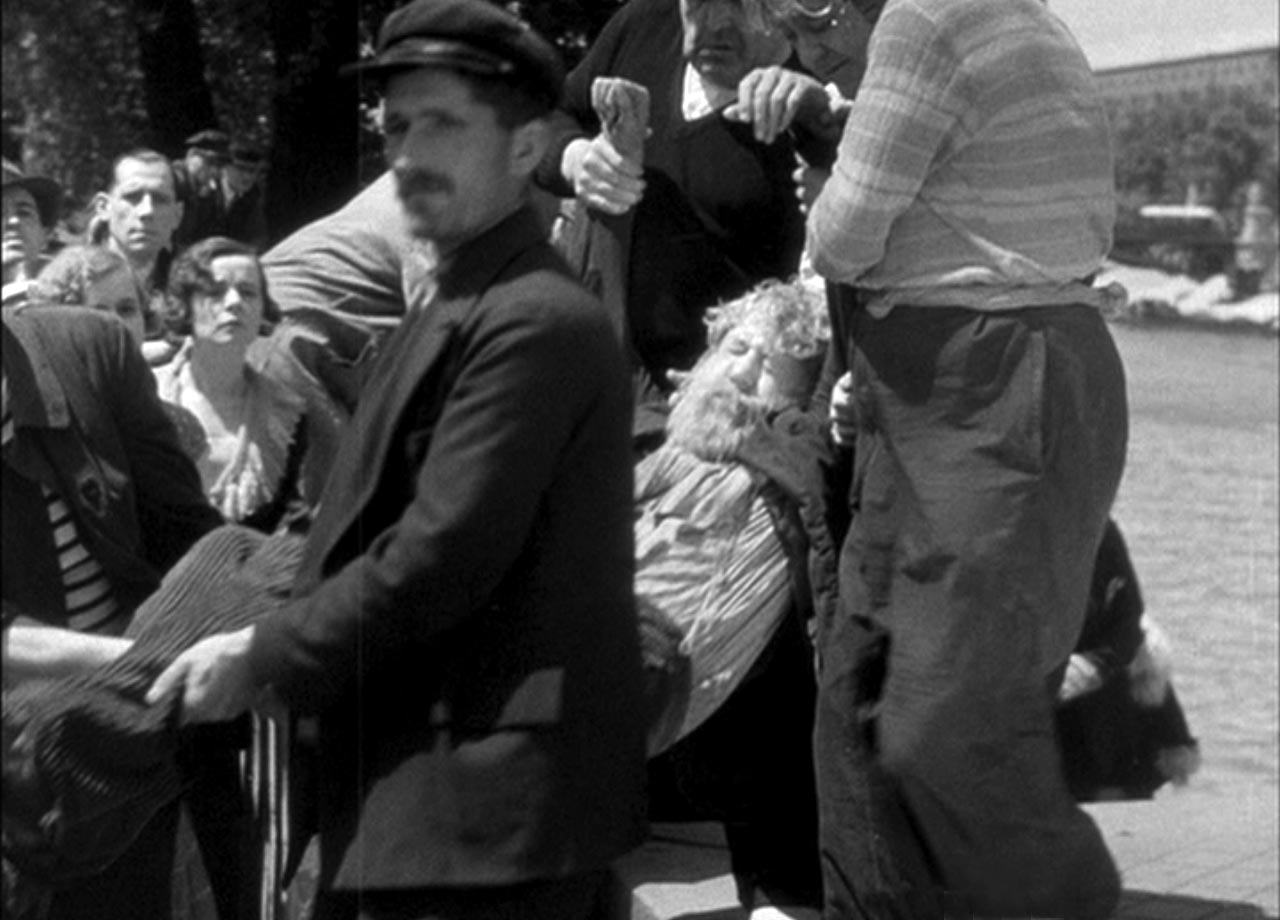
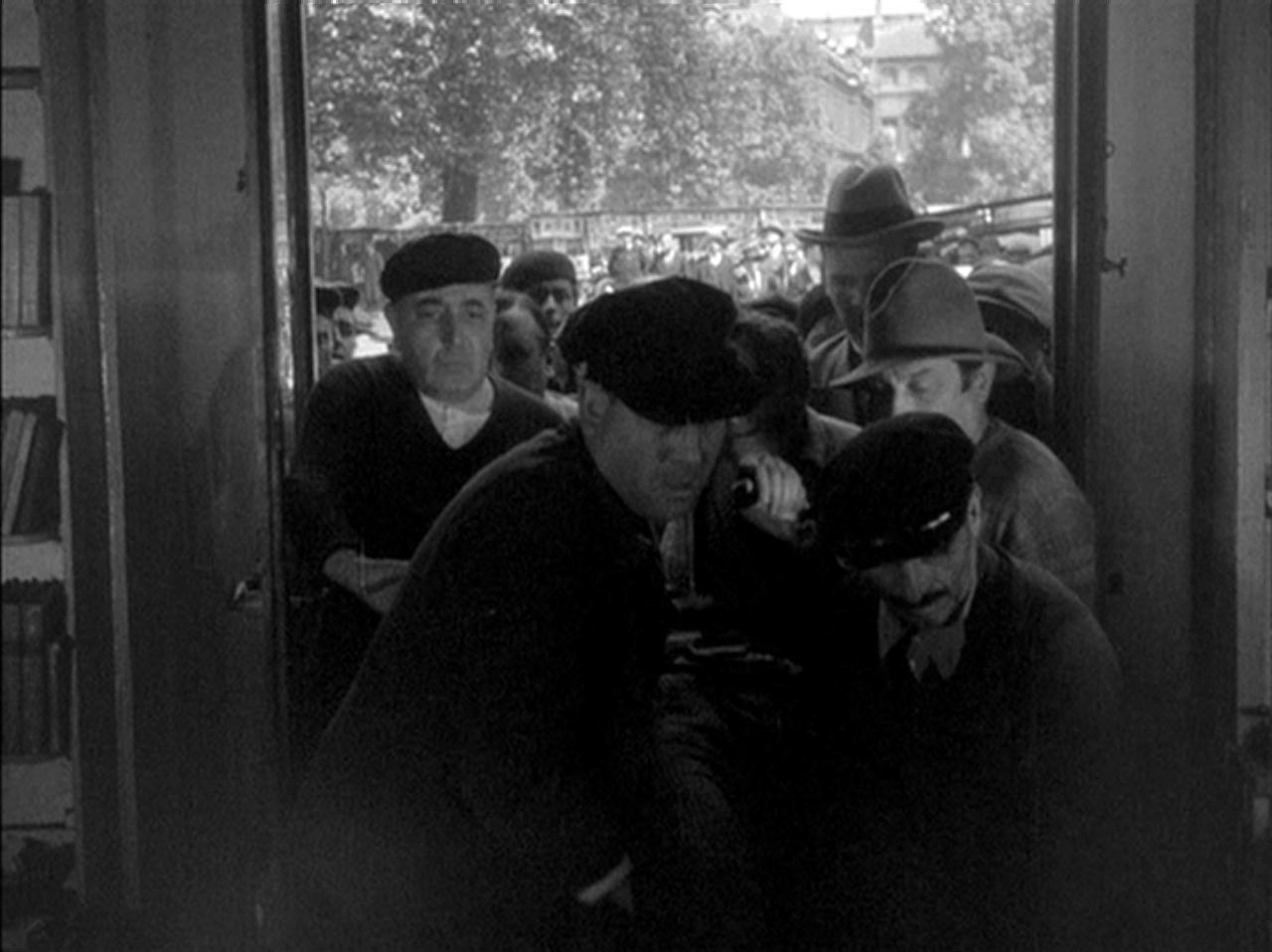
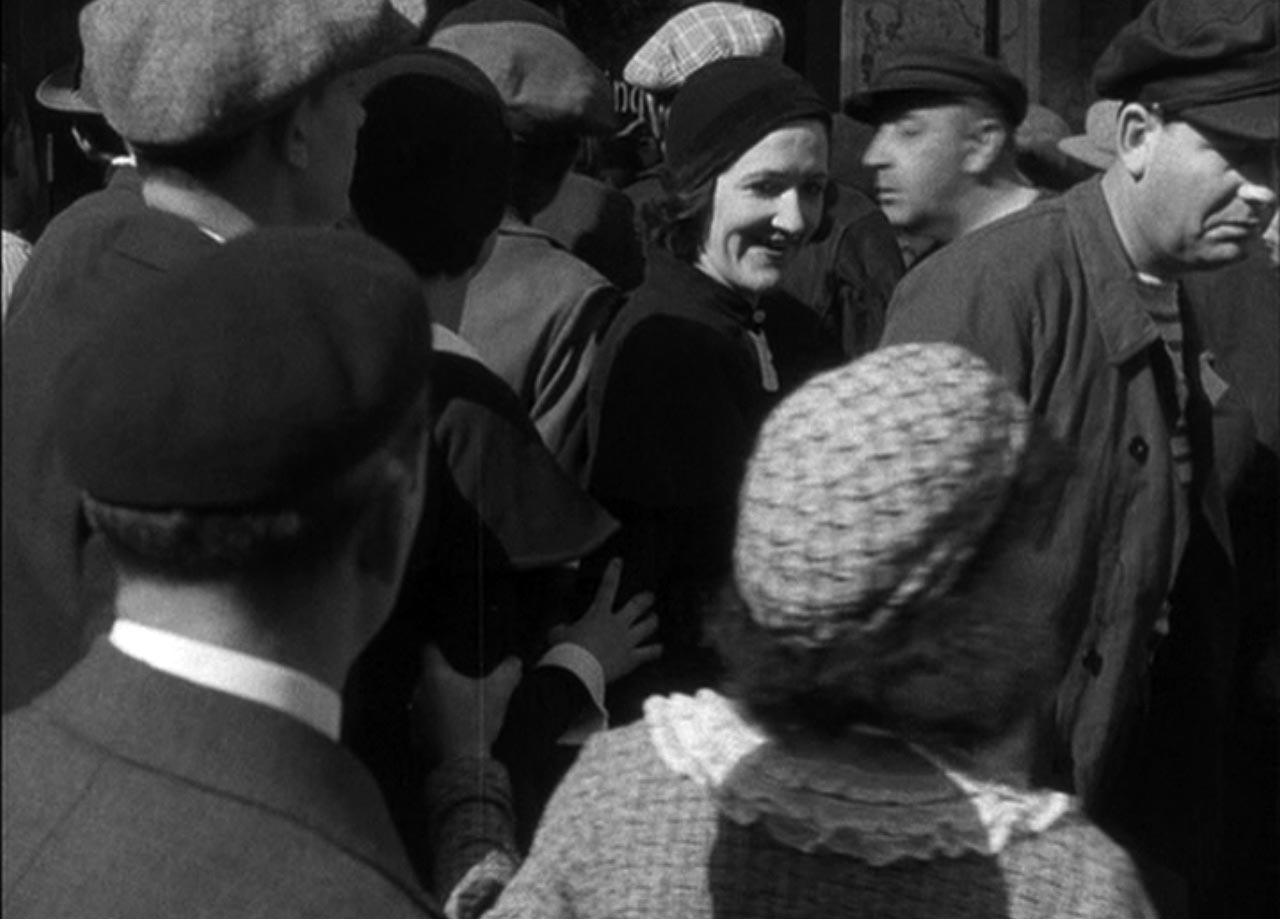
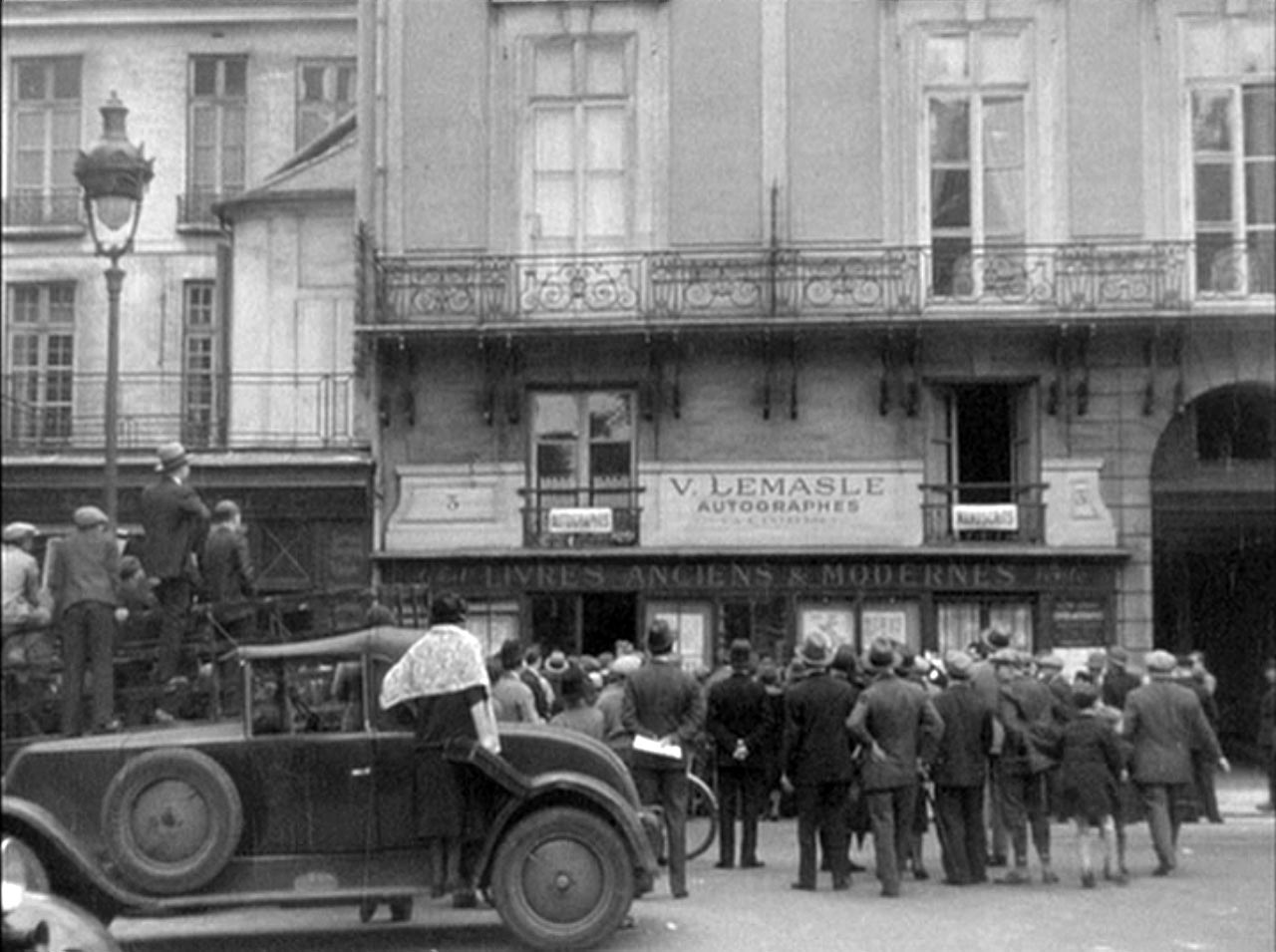
Now here is an exterior/interior transition moment that uses great natural audio and also shows Renoir staging his action along the z-axis. Boudu has just been rescued from the river (in a wonderful exterior rescue sequence with great crowd shots and use of extras) and he is being carried to the Lestingois book shop.
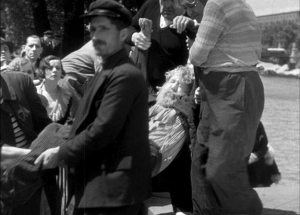
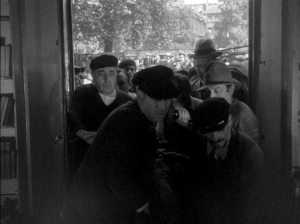
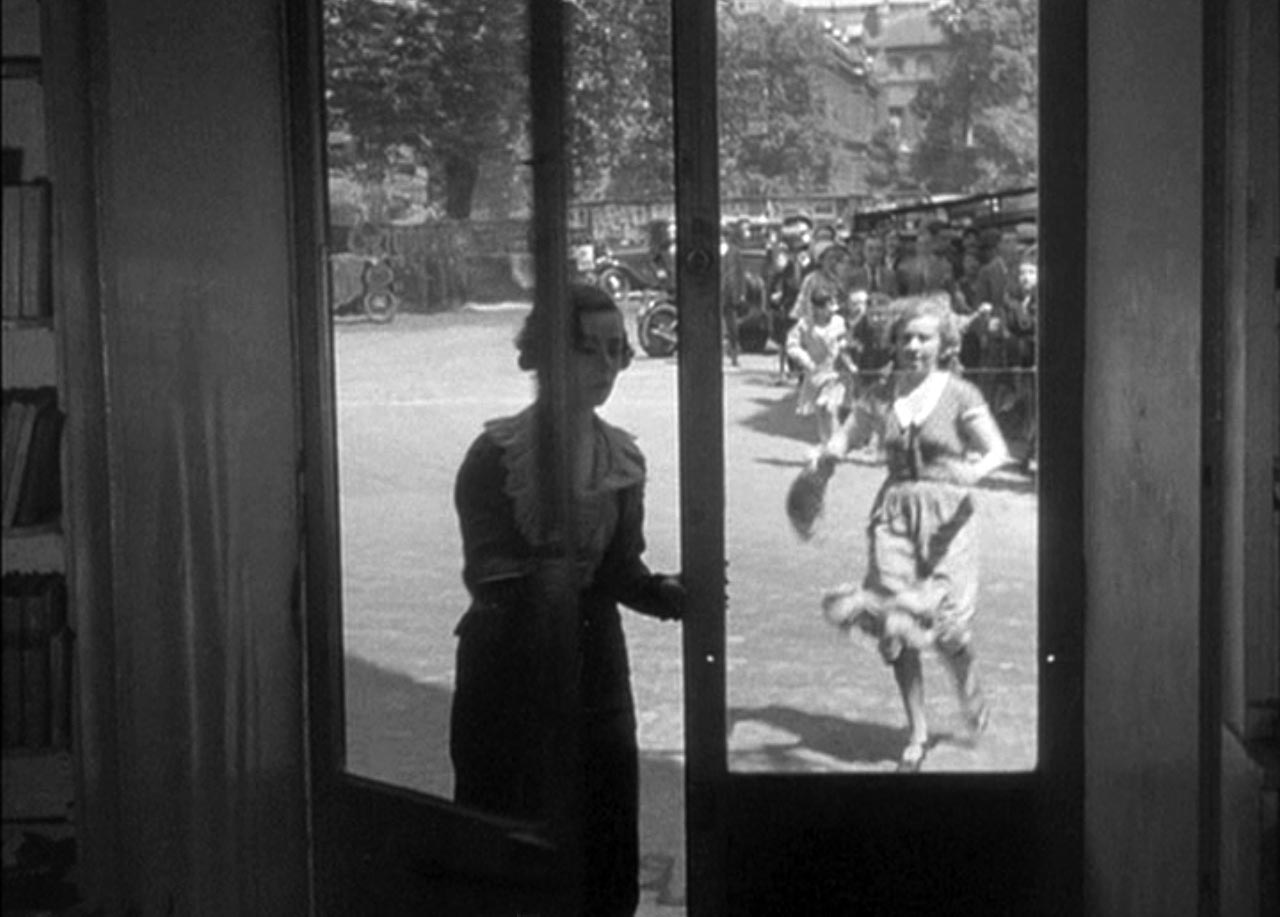
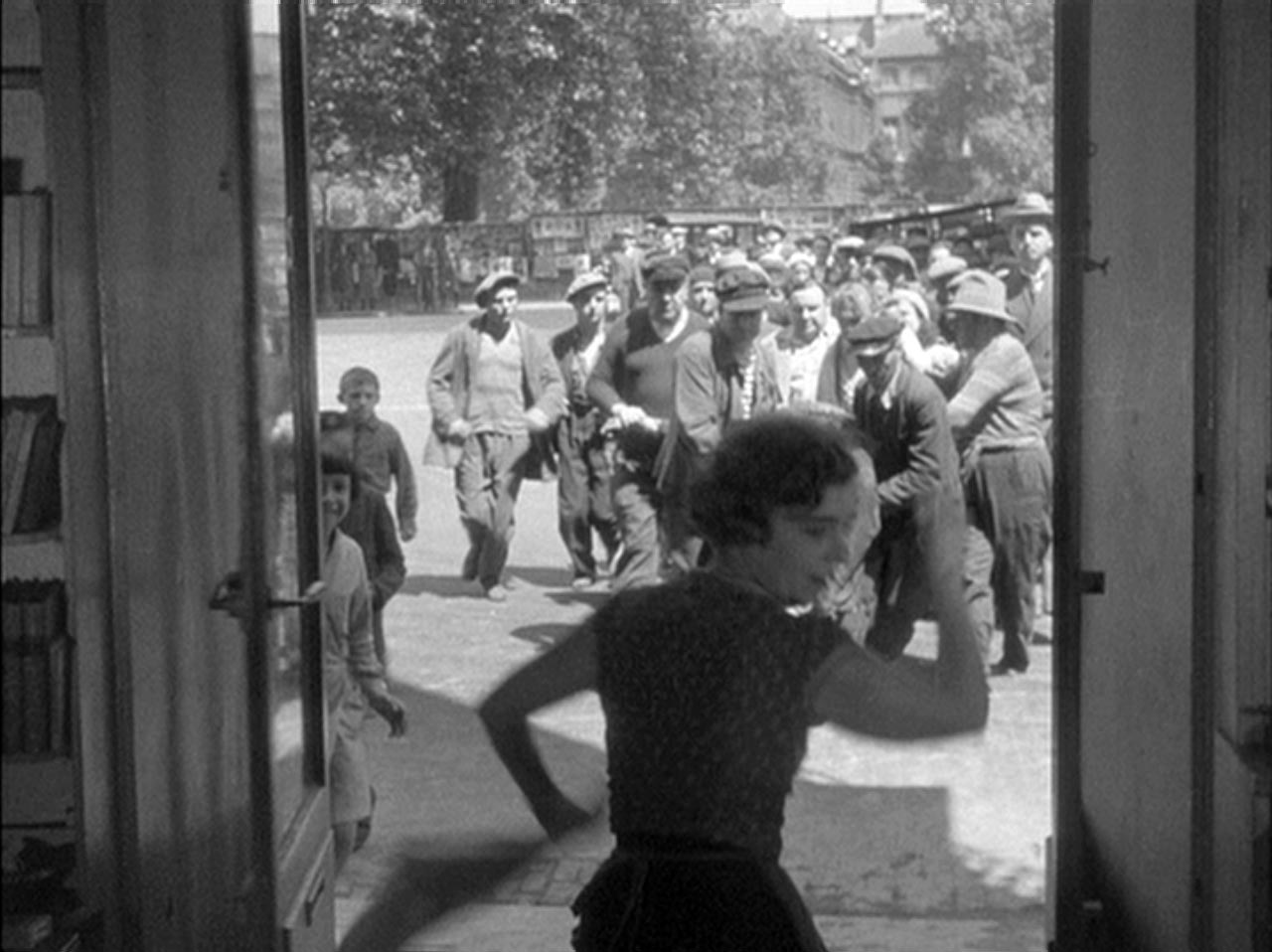
As the crowd moves forward, Mme. Lestingois and the maid rush ahead to open the shop door. The camera has now jumped from exterior to interior, looking through the shop doors.

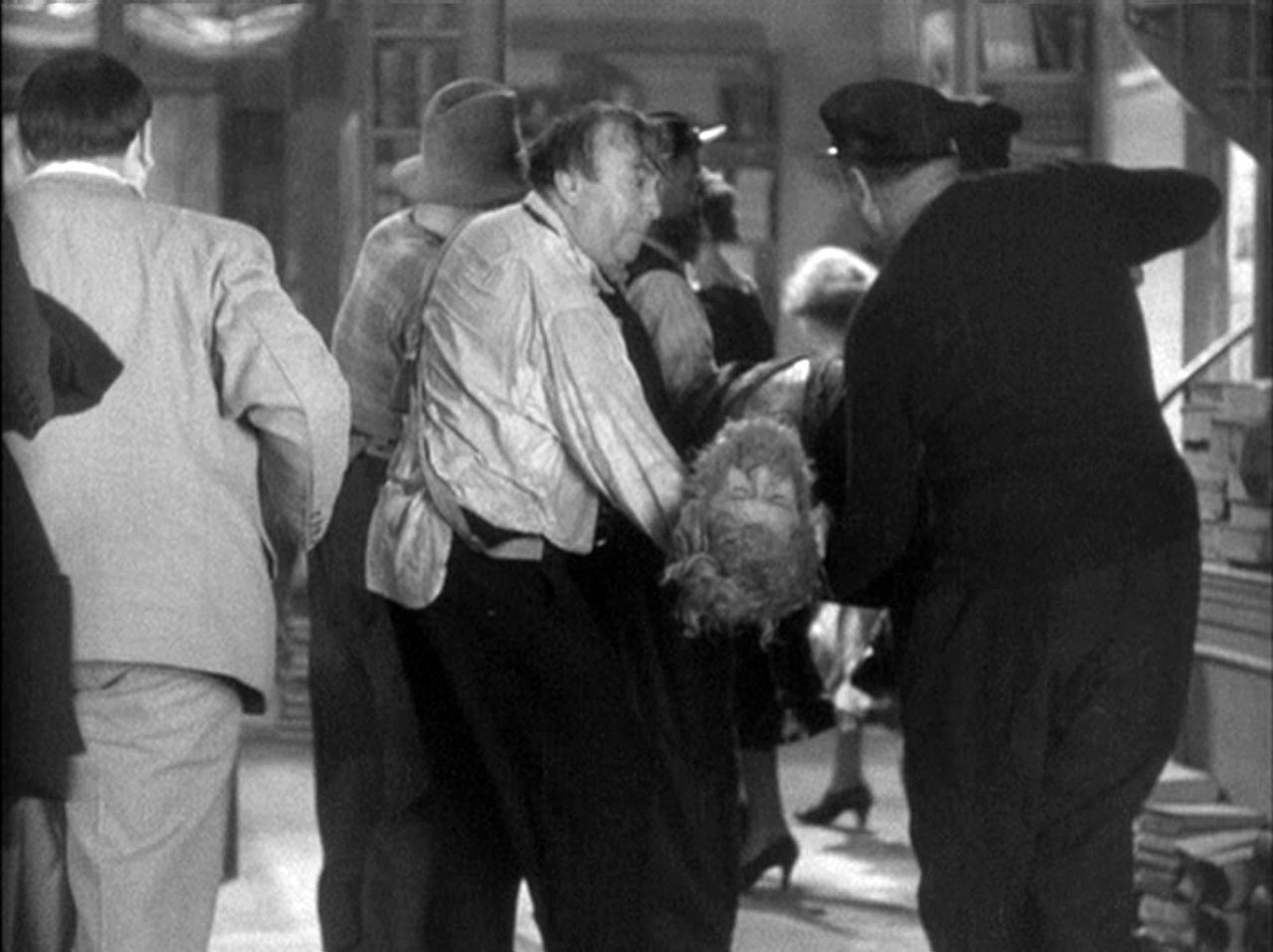
Up to this point the shot from this angle has been in one take with the action coming towards the camera. Now the camera cuts 180° and we see the action moving directly away from the camera.
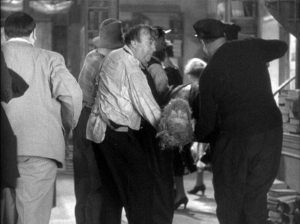
They set Boudu down on a bench and then we get several exterior shots of the curious crowd outside.
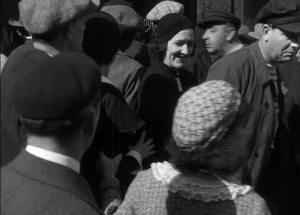
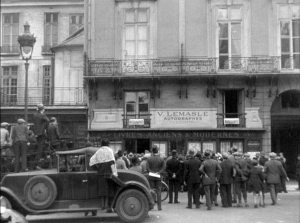
And then we cut back to an interior shot, this time a medium shot, and slightly different angle than before.


What I like about this little sequence is the ease with which Renoir uses a combination of exteriors and interiors, cuts naturally between the two, and stages his action along the z-axis, thus giving the scene a dynamism that is both inherent and fitting to the story. Renoir is also a master at working with crowds. His ensemble staging and use of the natural energy that crowds provide allows him to more deeply examine human nature because of the interplay among his characters.

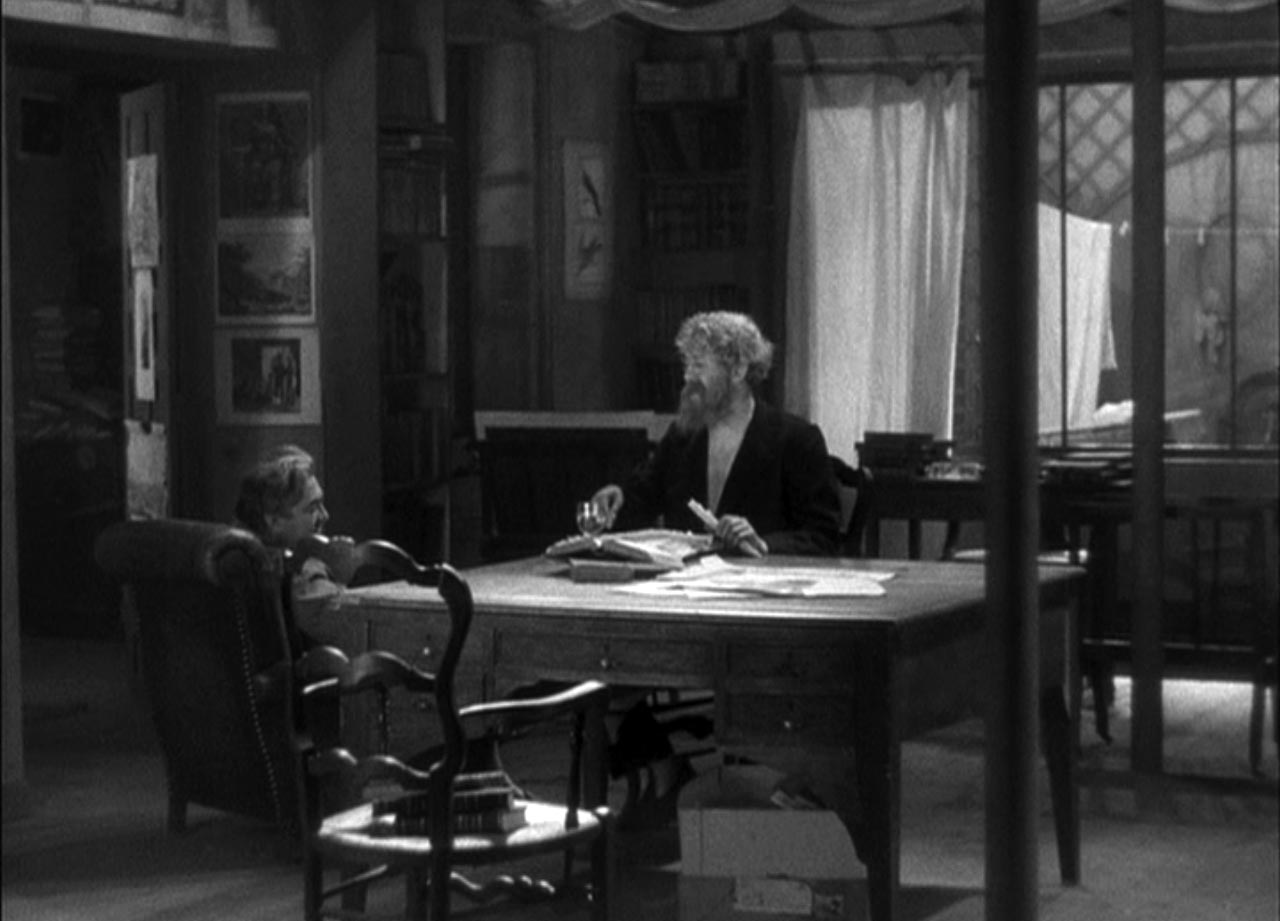
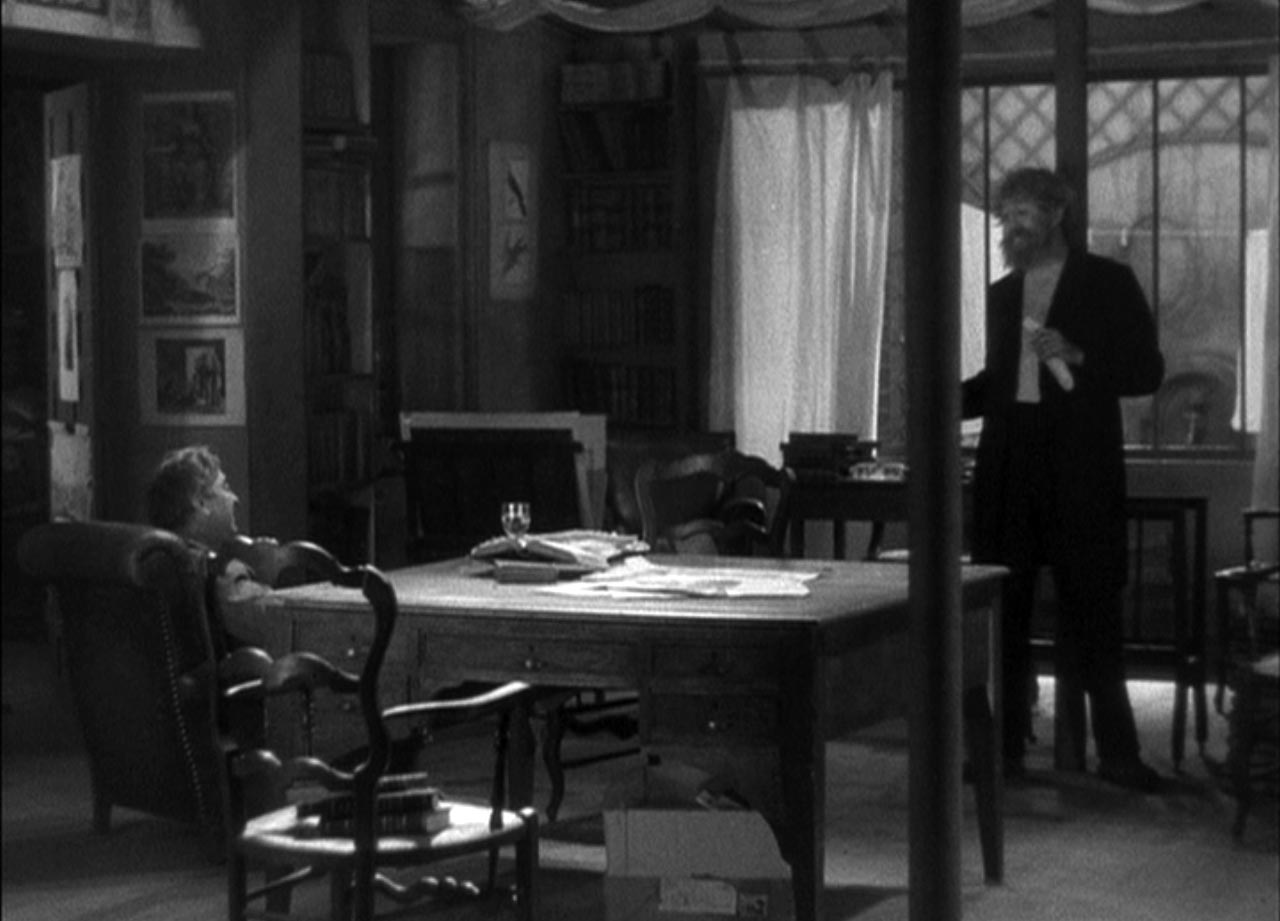
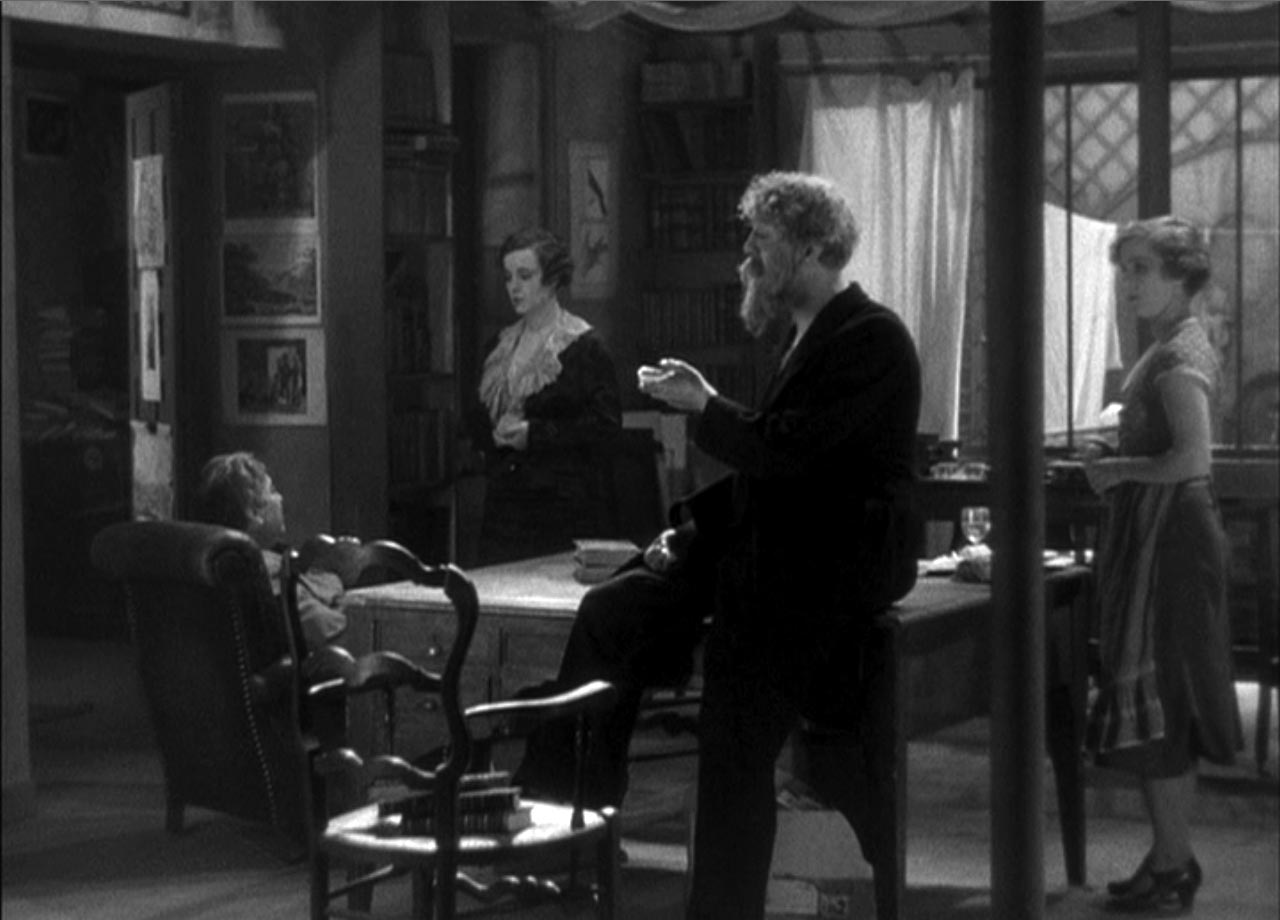
To watch older films is to engage in an act of archaeology. Boudu is an old film that offers evidence of another time and place (even another place for modern Parisians). One aspect of Boudu is the arrangement and development of action in dynamic space through ensemble staging and longer takes. I imagine that the average shot length (ASL) for Boudu is around 15 seconds, much longer than the ASL of most films today. Here we have a scene in which Renoir plays with the arrangement of the characters (four characters) in space (a single room) over the course of a complete scene.
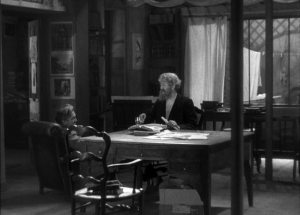
In a wide shot (WS) M. Lestingois and Boudu talk at the table. Boudu gets up and walks over to a post and leans against it.
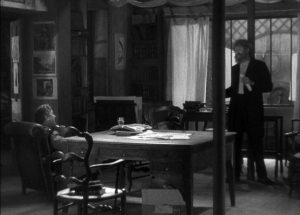
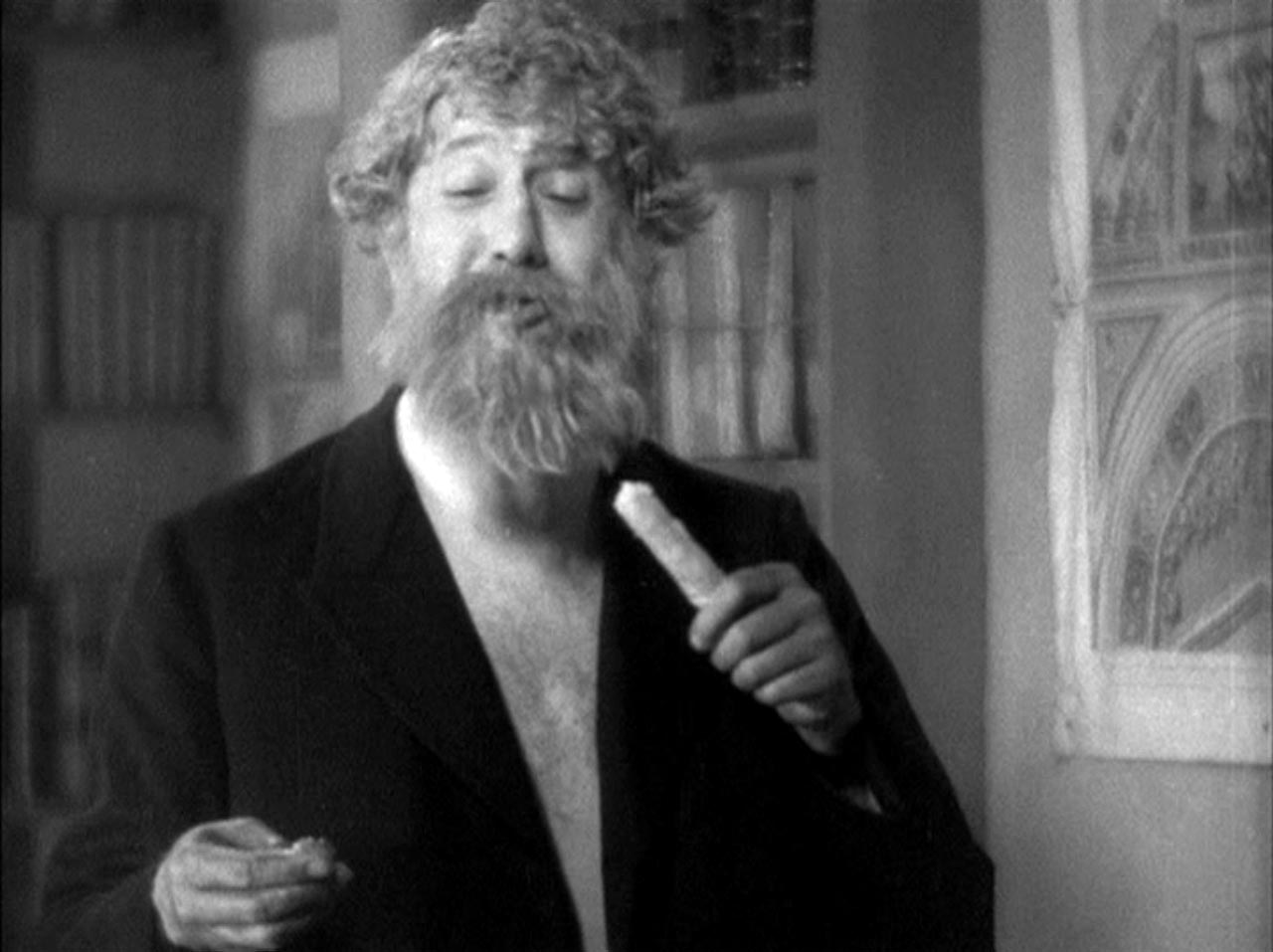
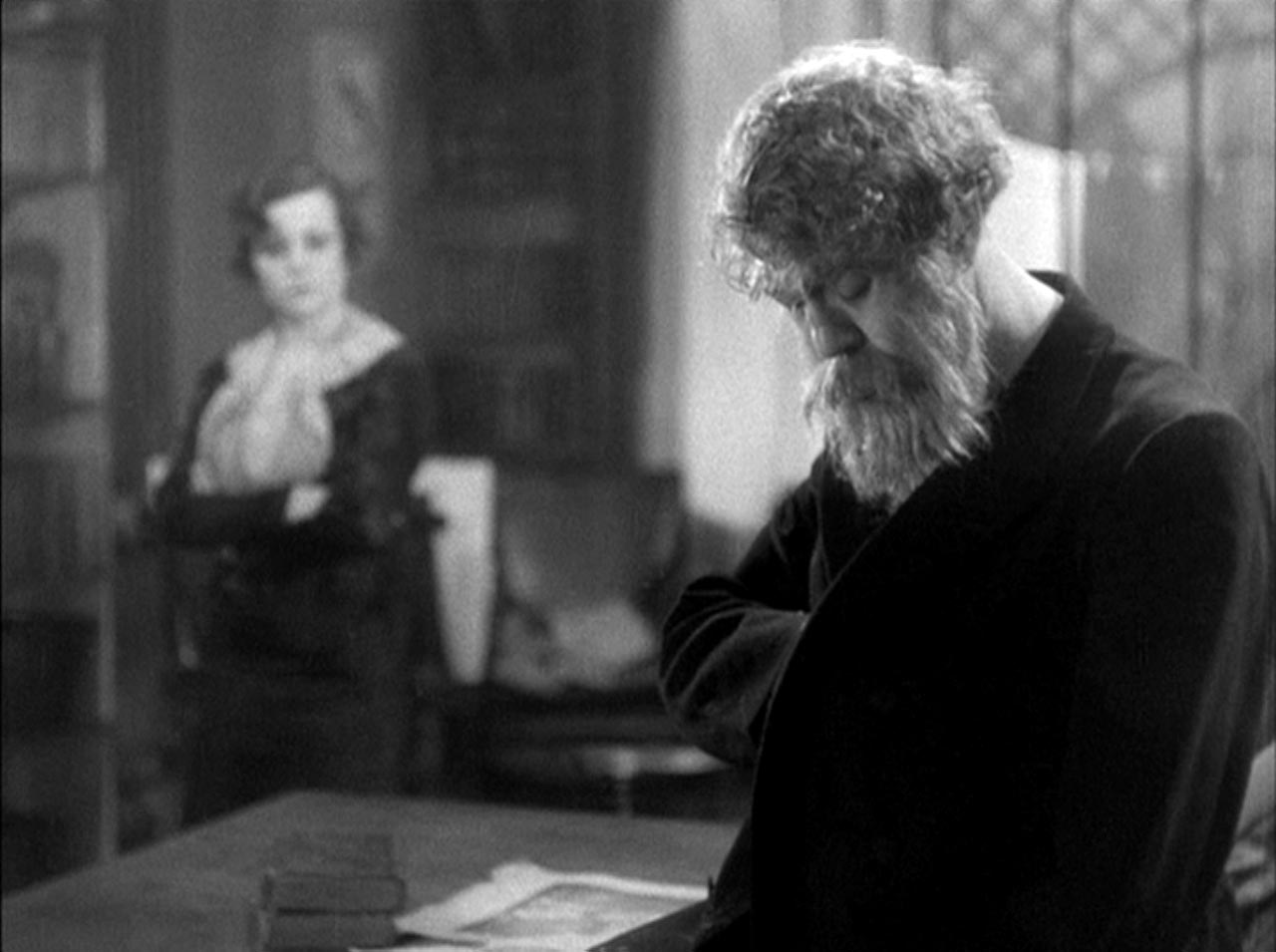
We cut to a medium close up (MCU) of Boudu. This edit, as are all the others in this scene, are both large jumps from WS to MCU and yet are fully beholden to the rules of continuity. In other words, although the edit suddenly brings us in close, we accept it as a seemless moment of the film.

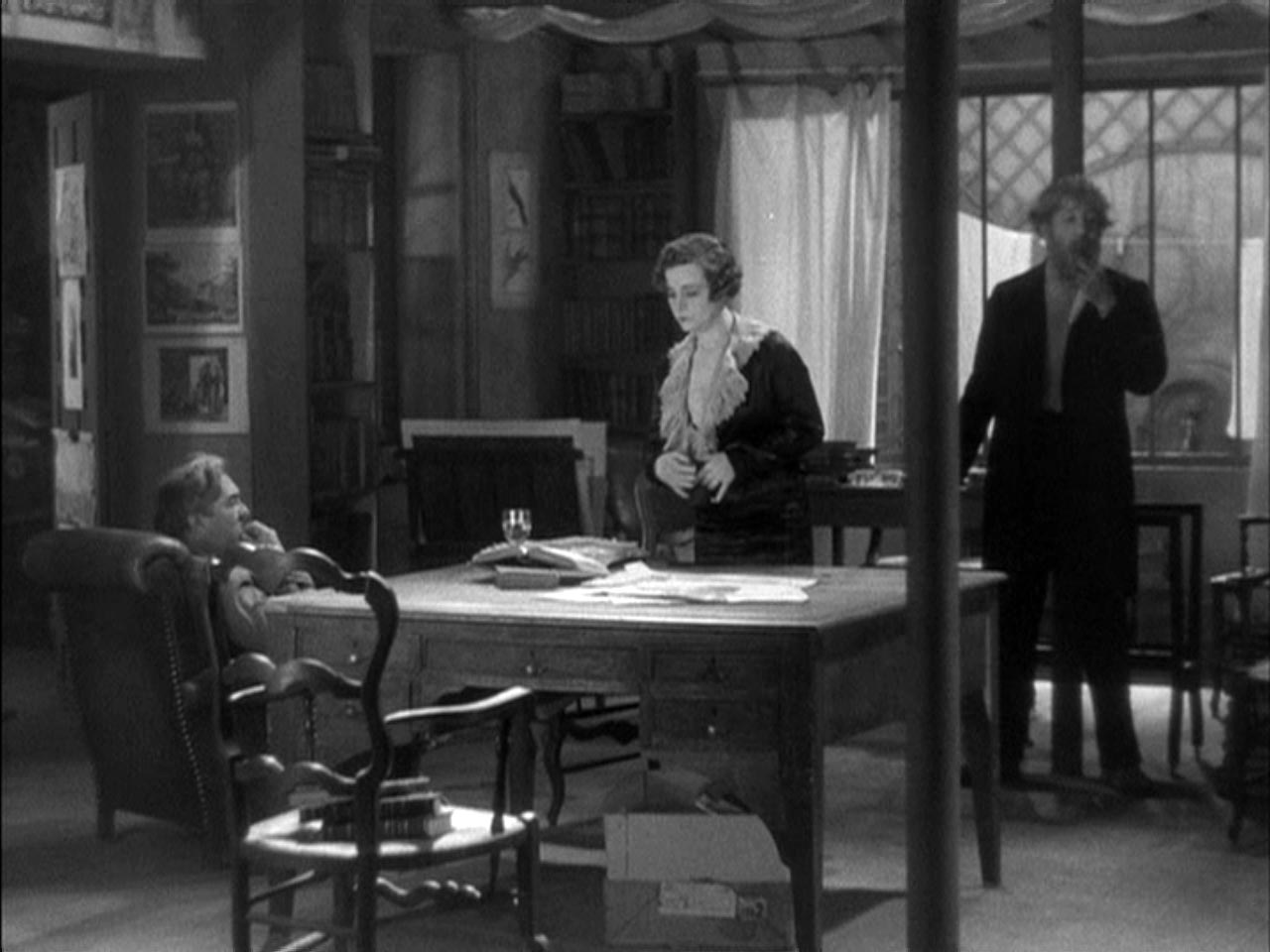
Now the camera is back at the WS and Mme. Lestingois enters.
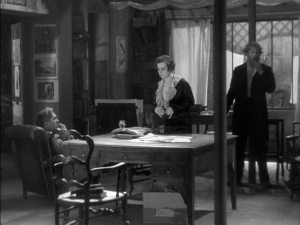
Then the maid enters.
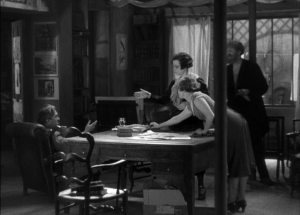
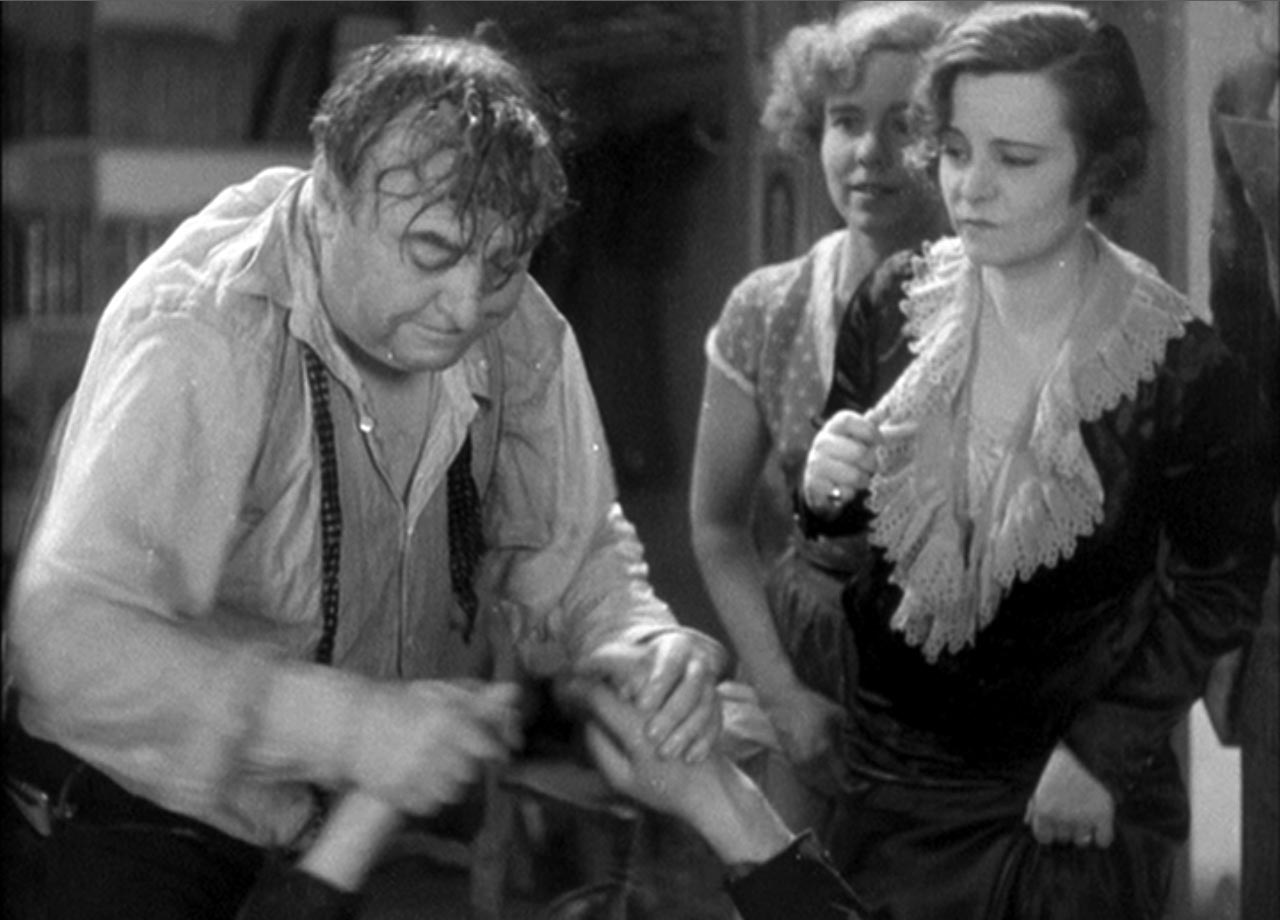
Boudu walks around the far side of the table and leans on it. We cut to a medium shot (MS) showing Mme. Lestingois behind Boudu. This offers a nice opportunity for Boudu to express his thoughts and Mme. Lestingois to show us her reactions. There is also a nice sense of depth in the framing.
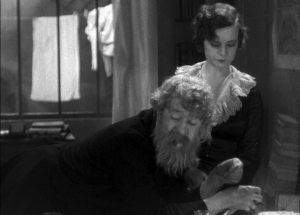
Now back to the WS.
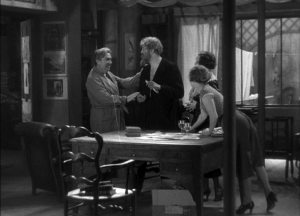
Then another big jump to an MCU to focus our attention on the interplay between M. Lestingois and Boudu.


Boudu now walks around to the front of the table and we are back to the WS.
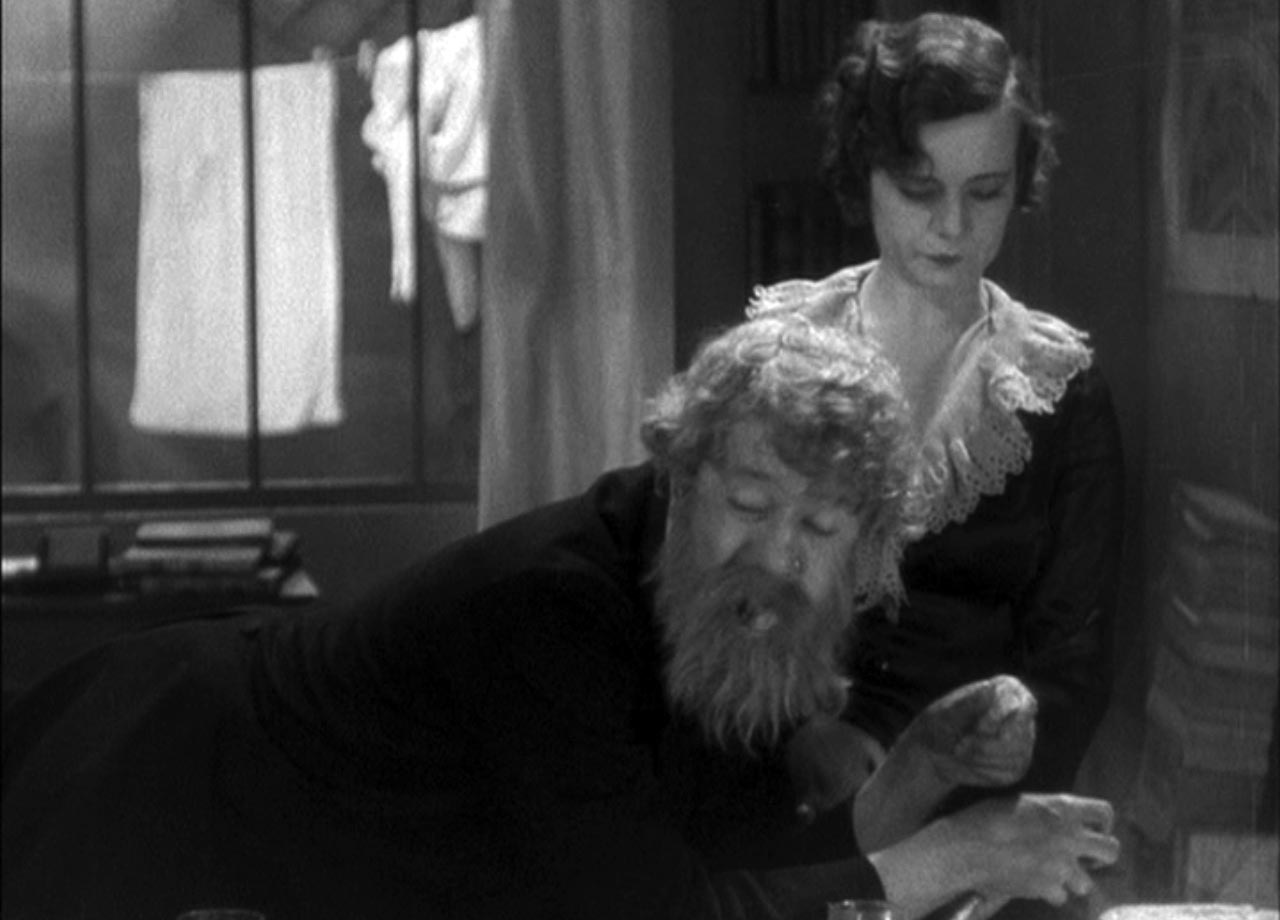
Then we go to a wonderful shot-in-depth of Boudu in the foreground and Mme. Lestingois in the background. What is interesting about this shot is the edit takes us in closer but does not change angle, so it works by being a match-on-action and match-on-dialogue cut so that continuity is not sacrificed. And again we get to see Boudu behave and Mme. Lestingois react.
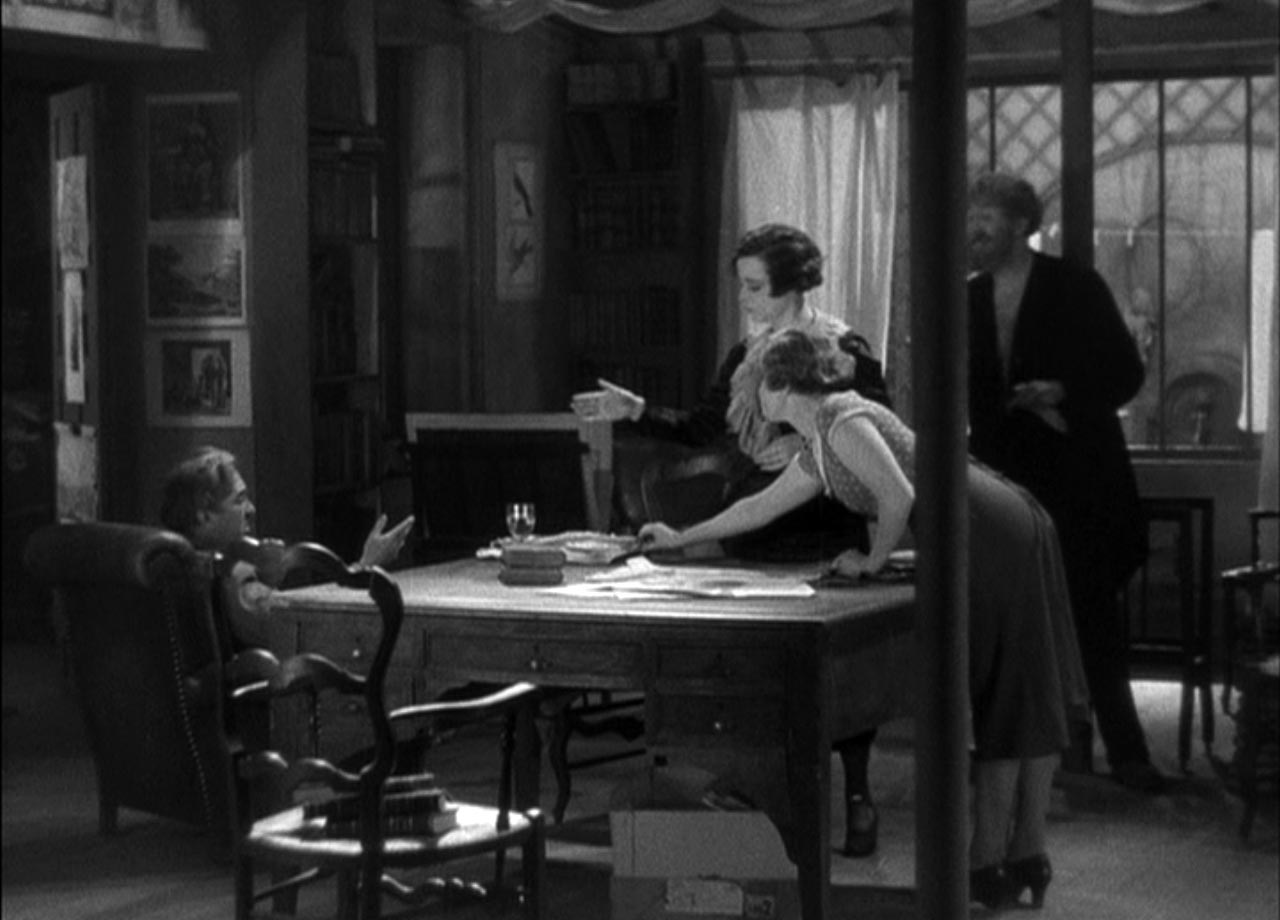
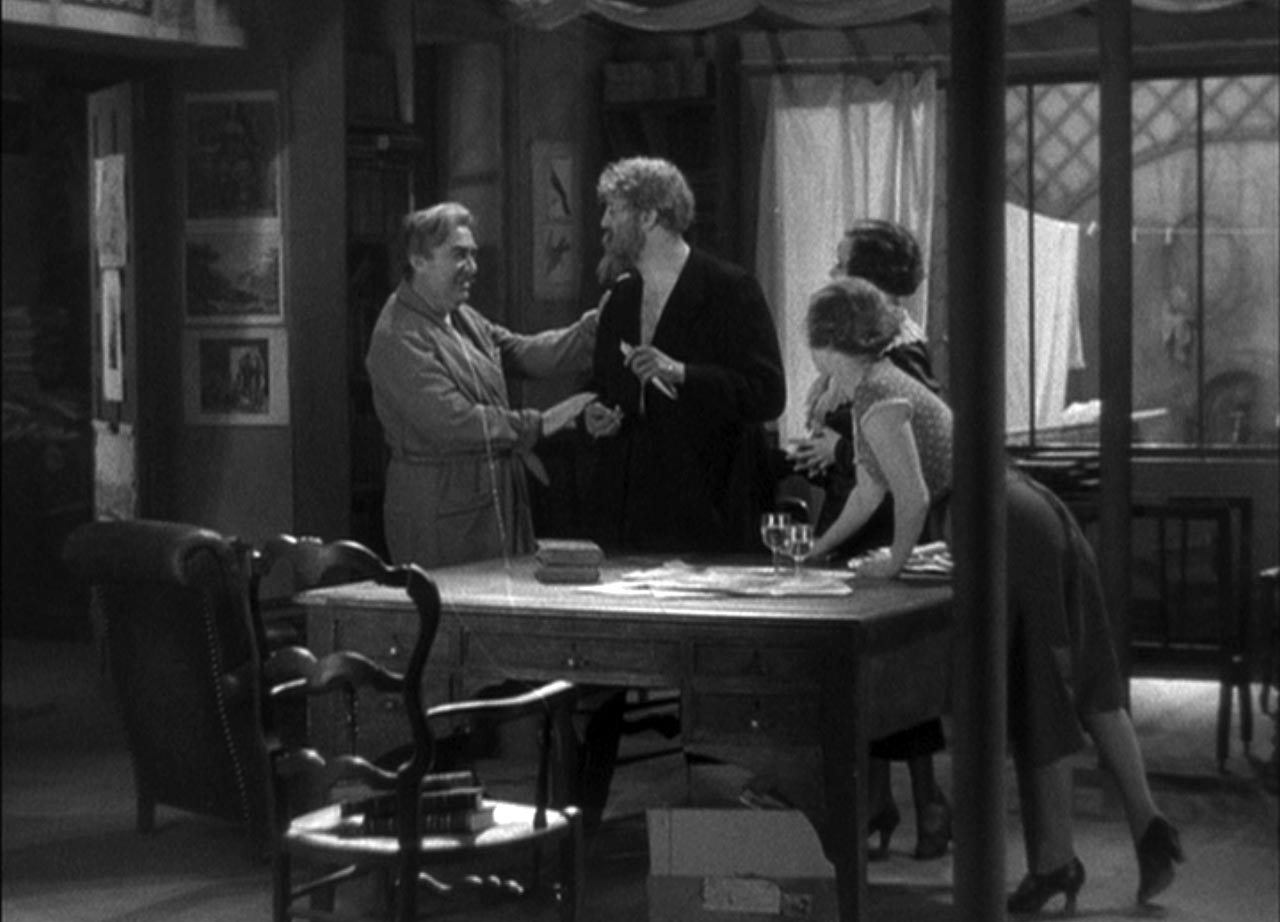
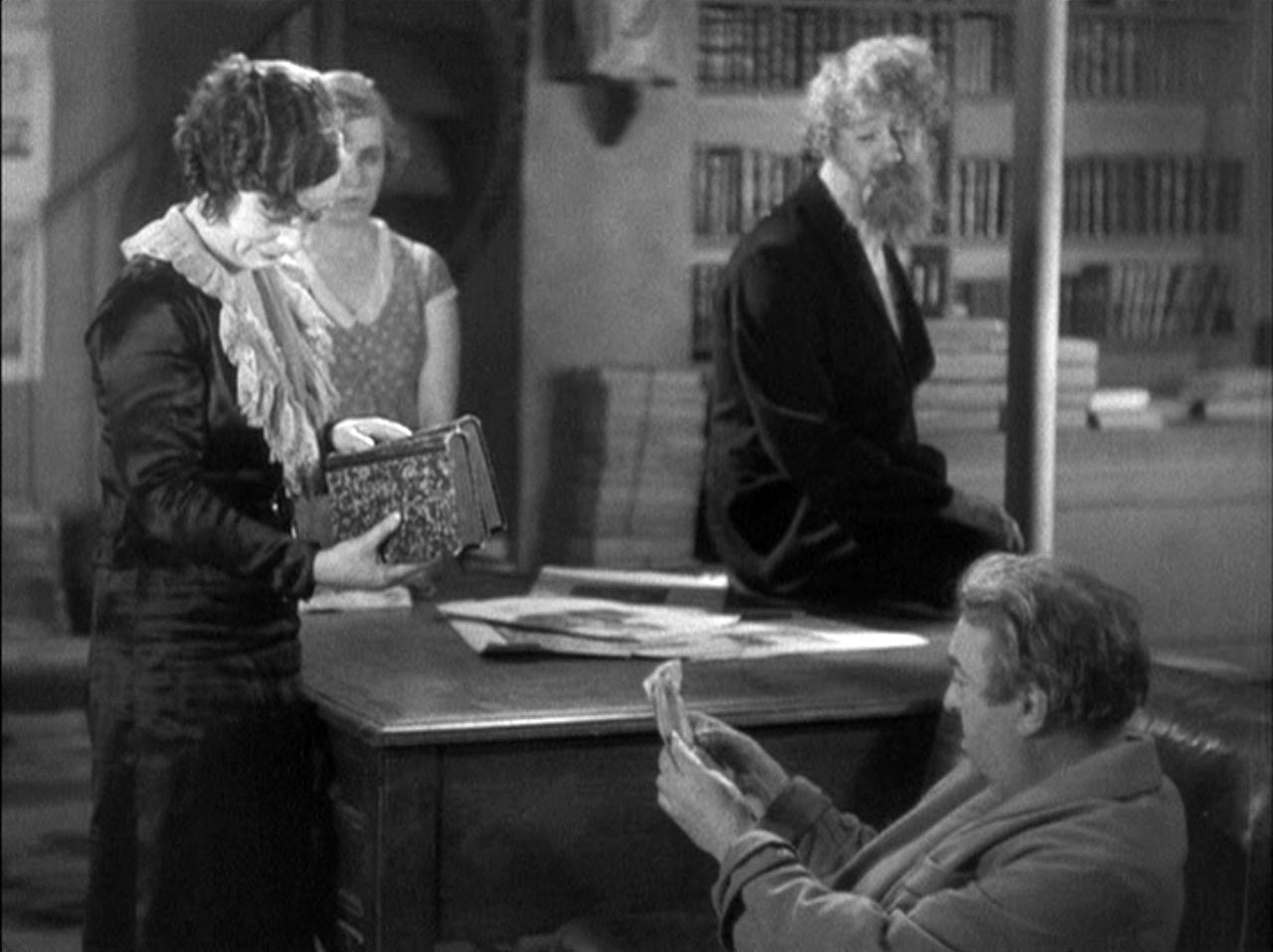
Then we cut to a revers angle medium wide shot (MWS) showing all four characters.
At this point, even with the various edits jumping us from shot to shot, the scene is clearly playing out as a nice ensemble staging, with each character playing their part in relationship to the others and that relationship is clearly defined for us.
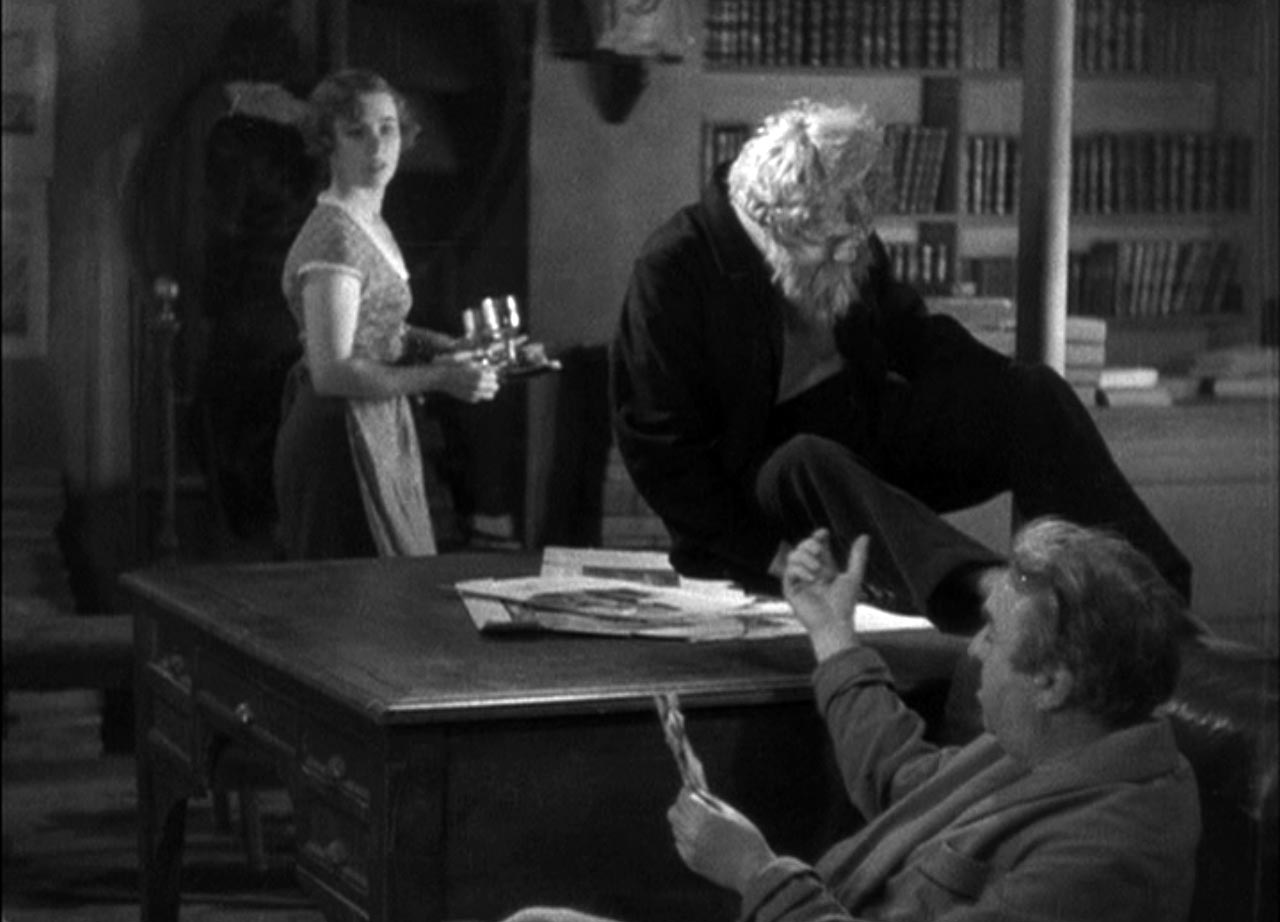
Mme. Lestingois leaves the room. And the maid briefly interacts with M. Lestingois.
The maid leaves. Boudu and M. Lestingois have a moment.
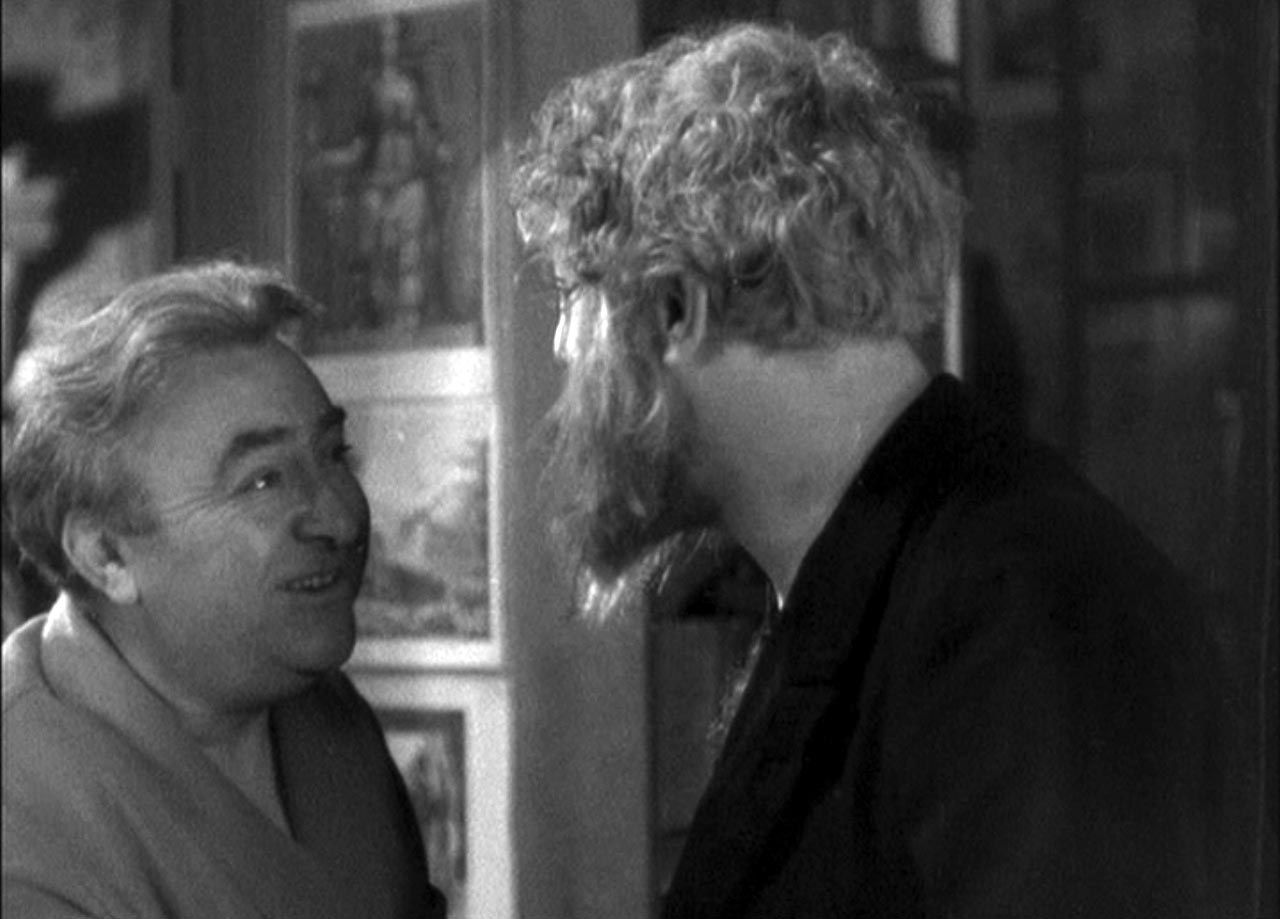
We cut to a close up (CU) of Boudu and M. Lestingois.
Scene ends.

According to Bordwell (The Way Hollywood Tells It, 2006), as cinematic techniques and practices changed over time, past techniques and practices have been lost. Bordwell argues for what he calls intensified continuity where the ASL has dramtically shortened and where action moves forward through editing rather than developing through space over time. What we have lost is the tendcy to stage action with an ensemble of of characters, each playing off each other, editing and shot framing emphasizing the action/reaction between characters, and even gradation or levels of meaning with each shot. Here in Boudu we see Renoir following the older techniques, one might say more theatrical techniques, of a more static camera, longer takes, ensemble staging, and a clearly defined space in which the action can take place. For better or for worse, rarely do filmakers shoot this way anymore.

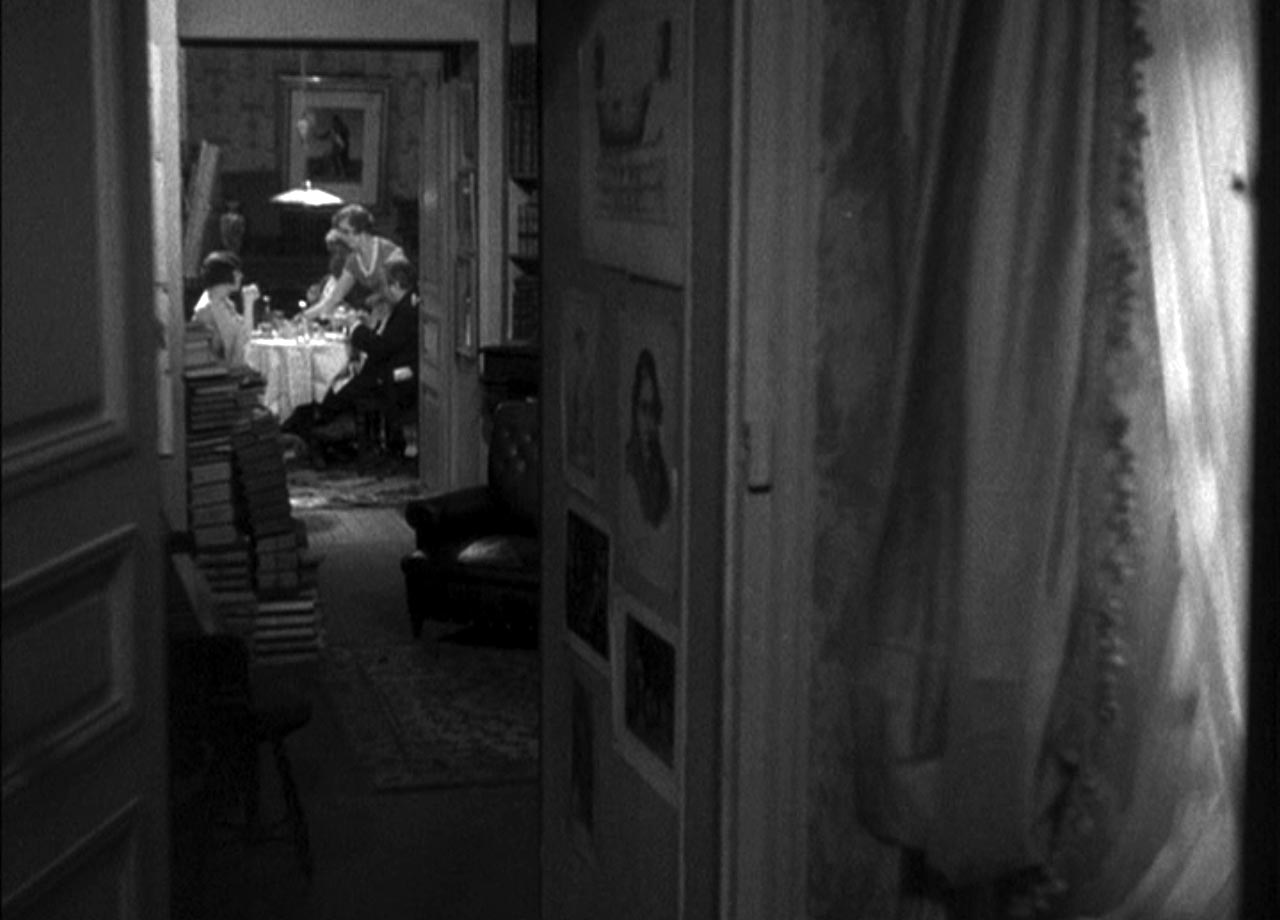
Another great little moment in Bouduis this dinner scene in shich the action is down the hall from the camera. Here the maid leans over the Lestingois’ table and picks up a plate. The camera begins to truck left as the maid also walks to our left.

The maid briefly stops at the end of another hallway while the camera continues to truck past the doorway to the hall. (At this point the image is rather dark because this part of the house is not as well lit.)

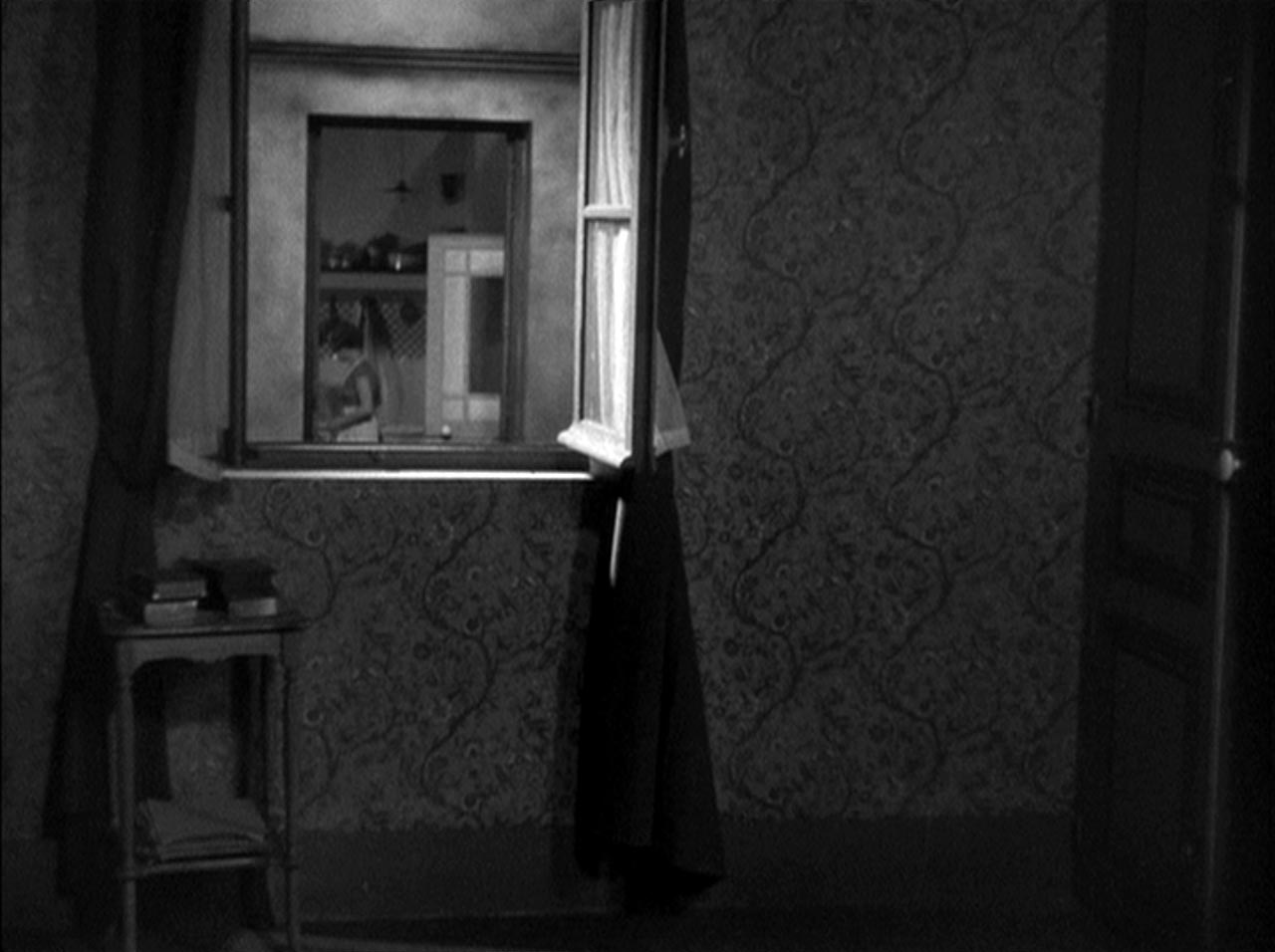
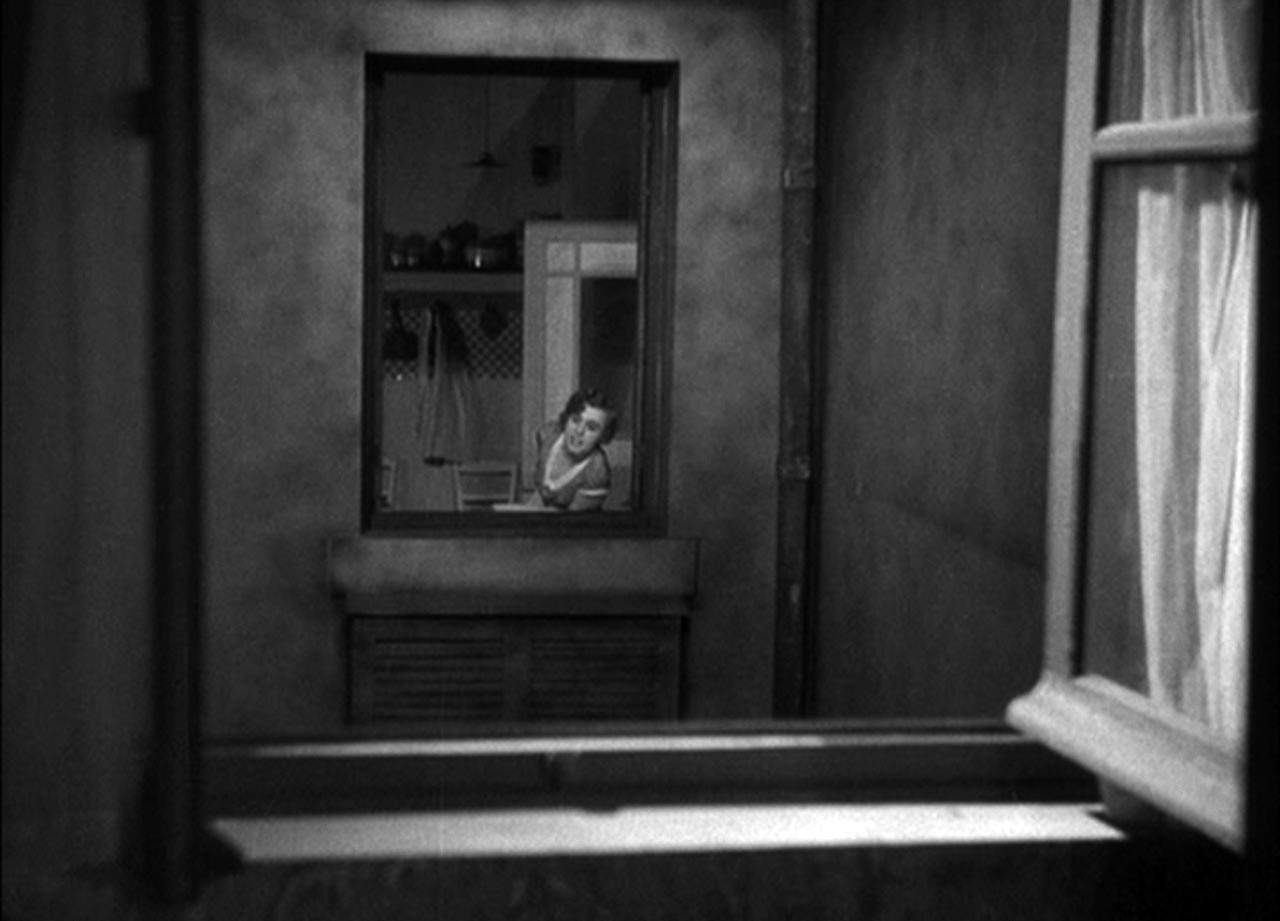
And then the maid stops in the kitchen and takes off her appron. We see here through two indows that look out onto a courtyard.

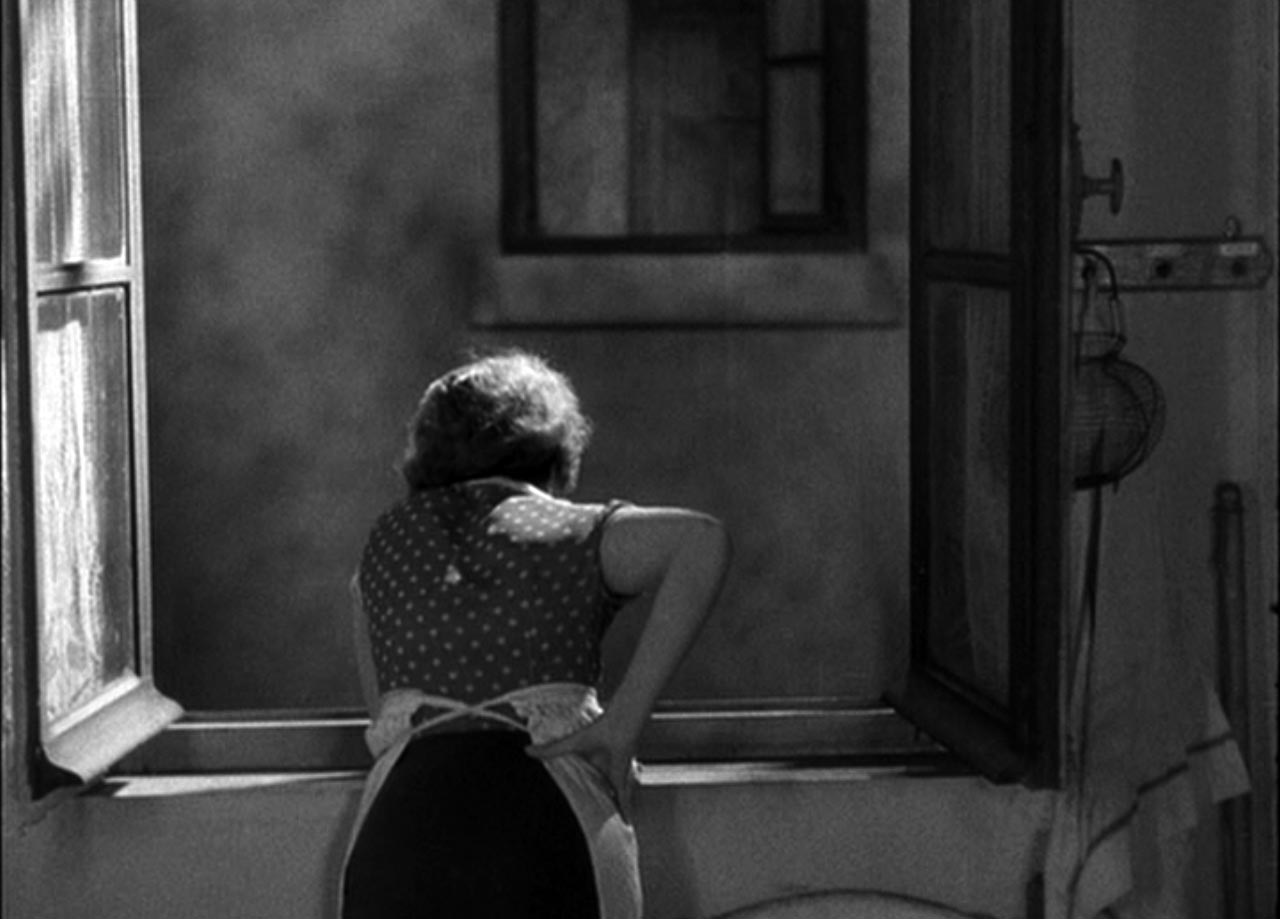
The camera then dollies in to the foreground window. The maid leans out and calls out to someone down below.
The, with a nice match-on-audio, we cut to the far room, from behind the maid as she calls out again.
There is something so simple about this transition scene. Renoir shoots in depth, giving us a a greater sense of the appartment and does so with the simplest of camera movements. The cut to the maid’s side is so effortless and seemless that it displays Renoirs’ masterfull capability with continuity. The scene also evokes a sense of our voyeurism into this little domestic scene. For me, I love these kinds of scenes because I love watching how people lived from other times and places. Although Boudu is not a true ethnographical document, it does provide us with lots of information about that world, which is both so different and so similar to our own.

We also have a glimpse into the way people (or some people) thought (I use that term in the widest sense) in 1931, at least into how they told stories and what stories they told. Renoir, for all his “master” status, was also a man of his times and created films that were both innovative and in the vernacular. We don’t see films such as Boudu being created anymore for many reasons. But we can become explorers, as it were, and look into our cinematic past, much as we look at ancient artifacts or 19th century architecture or Rennaisance painting, and still be amazed by what we find.
Finally, though I’m sure this is old news, I was pleasently surprised to discover that Boudu’s first name is Priape (translated at Priapus in the subtitles, and I know I had seen it before, but just not noticed it). Priapus was a minor god in the Greek mythology. Read about it here. I will not go into “unpacking” what this might mean for understanding the film, but I feel that it might help explain the role Boudu plays in this bourgois morality play (including his spitting in Balzac), and also help explain the odd little Greek theatrical moment at the begining of the film. I would say this also goes to the boldness of Renoir and Boudu’s themes.


Xala, imperialism, and bottled water

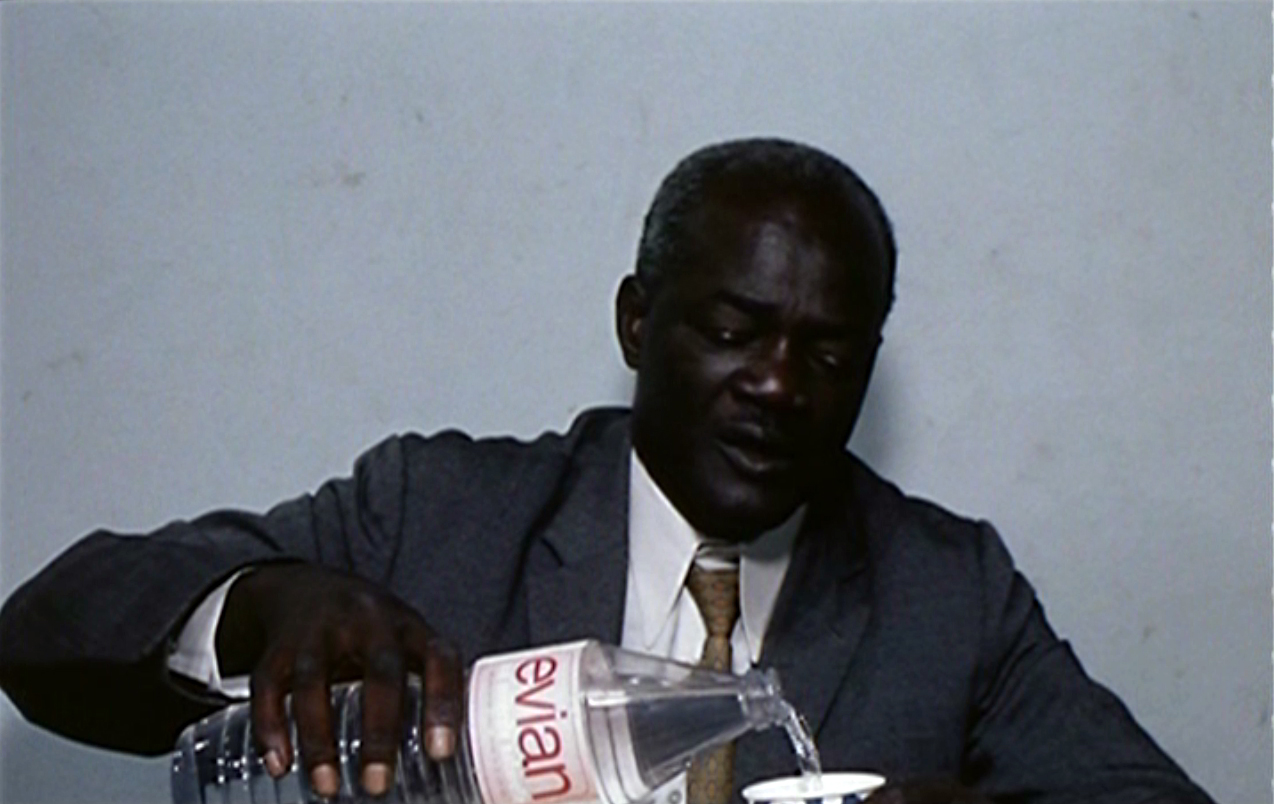
About two days before the great African filmmmaker, Ousmane Sembène, passed away on June 9th of this year, I got the urge to watch one of his masterpieces, Xala (1975). Recently I also watched one of his earlier films, Black Girl, and wrote about it here. Needless to say I was surprised at his death. And I have been thinking of Xala ever since, and in particular two structurally and thematically intertwined scenes that feature the use of bottled water.

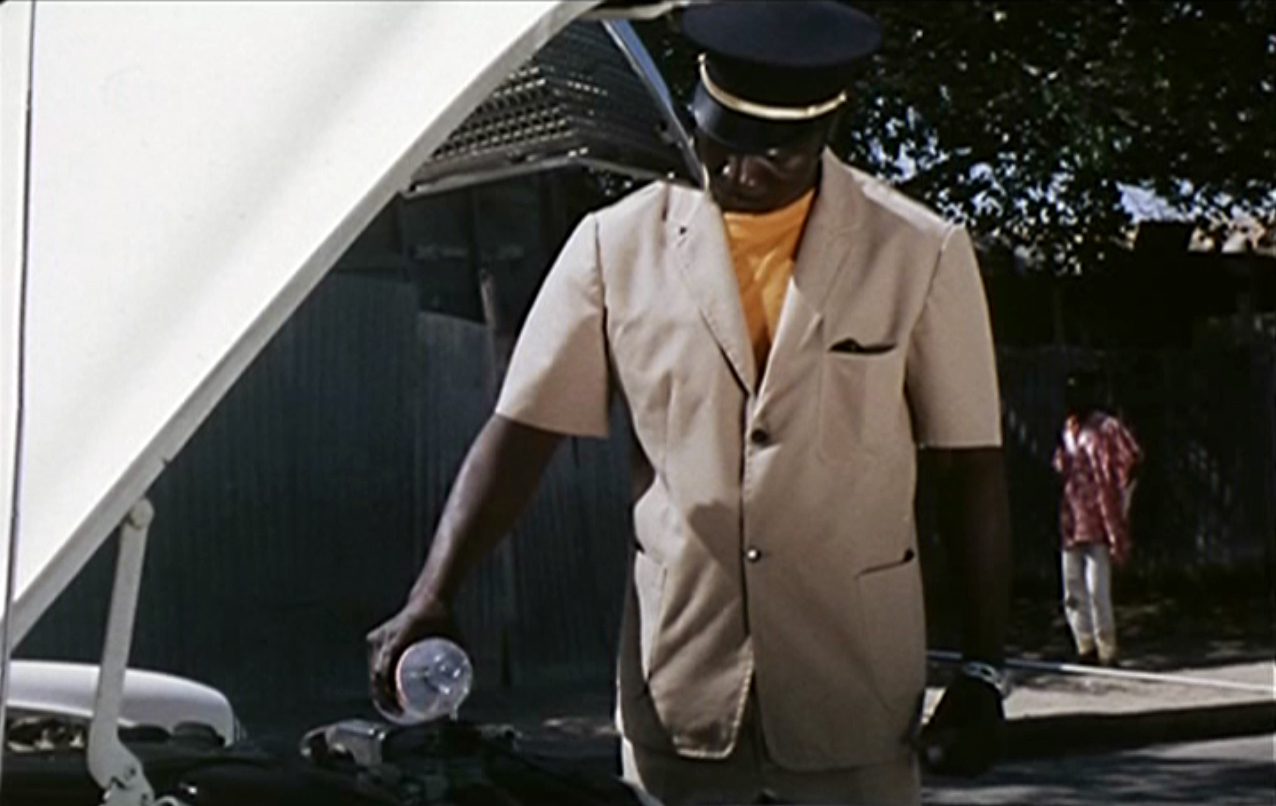
Here we have the chauffeur pouring a bottle of Evian (a French imported water) into a bucket so that a street beggar can make a buck washing the car:

Here the chauffeur pours another bottle into the car’s radiator:

These shots are meant to display a kind of ambivalence towards the product (Evian).

Here we have government minister Hadji Aboucader Beye (the main character if one does not count Africa itself as the main character) offering some Evian to his daughter who has visited him in order to confront him about his marrying a third wife:

We watch Beye pour himself a drink – the daughter declines:

Emphasis is placed on Beye’s preference for Evian:

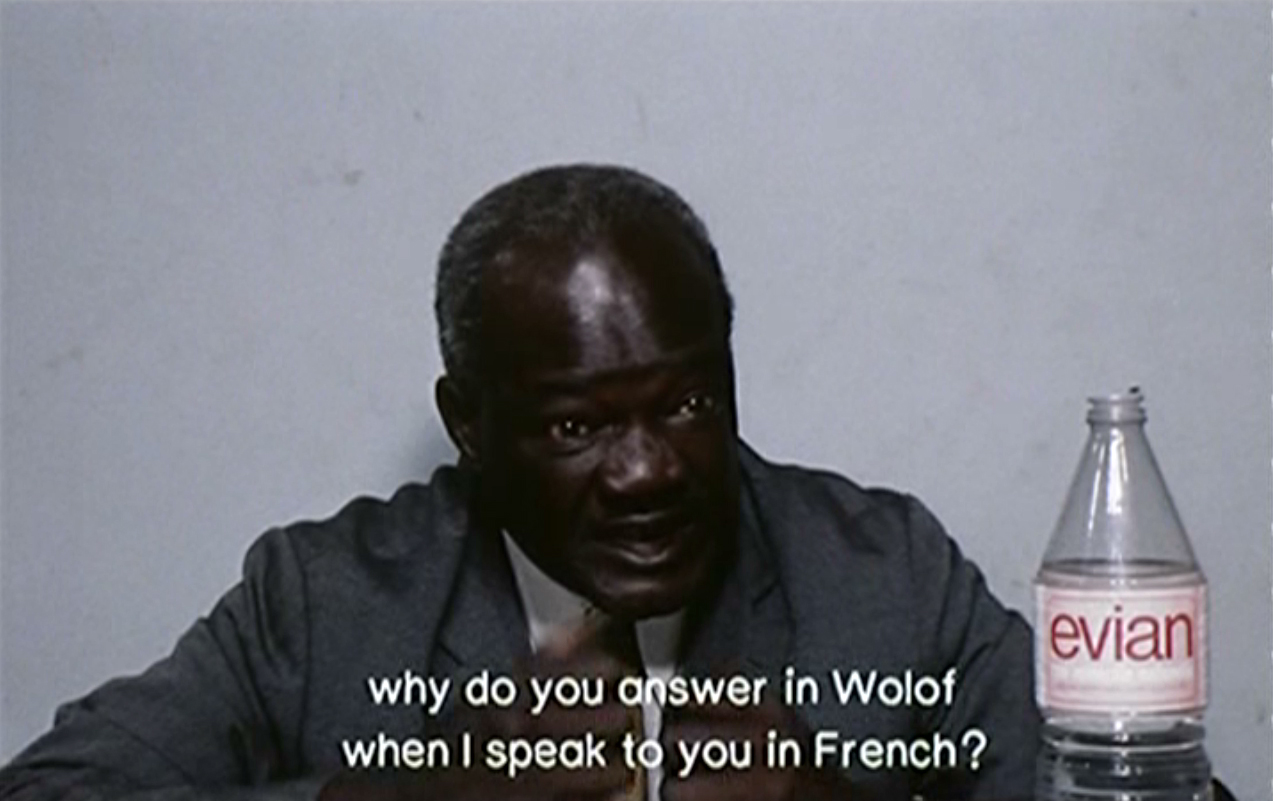
Beye speaks to his daughter in French. His daughter speaks to him in the native Senegalese language of Wolof – which upsets Beye:

In these two scenes an apparently innocuous product, a bottle of Evian water, is used as a kind of metaphorical device standing for the continuing hegemonic power of colonial imperialism, even when the former colony has now gained its Independence. Senegal had been a French colony from about the 1850s until 1960. Xala pokes very serious fun at how the newly elected leaders of Senegal ruled for their own self interests, were corrupt, and were still trying to emulate their former masters.

The bottle of Evian also raises the issue of how products play a role in defining cultures and individuals. As consumers we make choices based on needs and desires. Our choices say a lot about who we are and what we value. Just as when we speak our native tongue, or that of another, the products we buy have a kind of symbolic language that is both an expression of who we are and changes (even slightly) the world in which we live. Brands can have real power in the world, but that power is given to them, not inherent to them. In Xala we find that products are not disconnected from culture or power. Not surprising coming from a Marxist like Sembène.
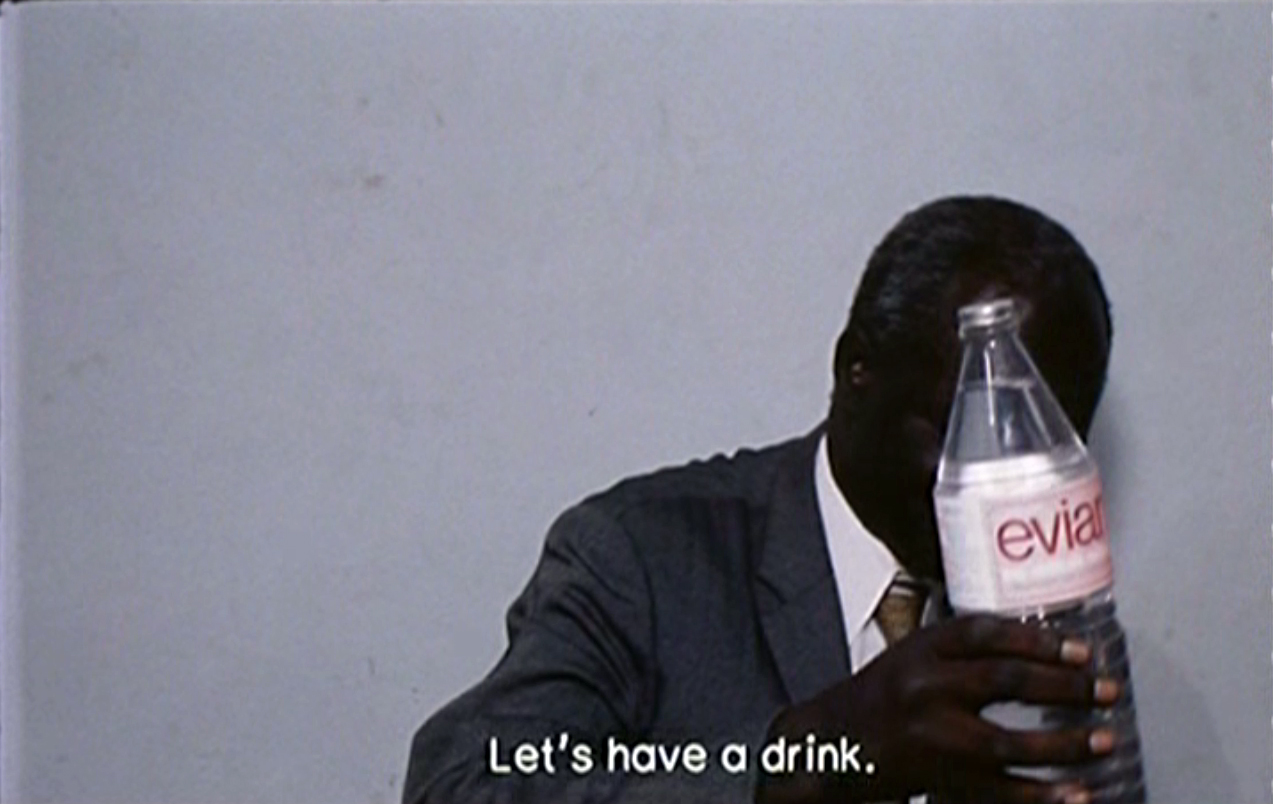
Needless to say, I like Evian, and probably a lot of other products emblematic of imperialism, free trade, and neo-classical economics – for example: Nike, Coke, iPods, low prices, instant gratification, and even organic food grown on farms around the world using low-cost labor. I like to think I am independent of those products, but am I really?

Some good examinations of Xala:
Symbolic Impotence: Role Reversal in Sembene Ousmane’s Xala
Xala at Louis Proyect
The Guardian review

>memories of my development (ye maties!)

>For whatever reason I am selfishly prone to consider my past and reflect on events, people, and things – like films – that have been a part of creating this person I call me. And I realize that lately, maybe from the beginning, my blogging tends towards the personal. So feel free, because you are, to take your precious time elsewhere. Anyway . . .

I suppose I could have titled this post “I want a sailboat real bad.”

Rather consistently and with great joy I spent a portion of my childhood entranced on Sunday evenings by Mutual of Omaha’s Wild Kingdom and then Walt Disney’s long-running television program. Some you you may be old enough to remember the following television schedules on NBC:

September 24, 1961 – September 7, 1969: Sunday, 7:30 p.m. – 8:30 p.m.

September 14, 1969 – August 31, 1975: Sunday, 7:30 p.m. – 8:30 p.m.
September 7, 1975 – September 11, 1977: Sunday, 7:00 p.m. – 8:00 p.m.
September 18, 1977 – October 23, 1977: Sunday, 7:00 p.m. – 9:00 p.m.
October 30, 1977 – September 2, 1979: Sunday, 7:00 p.m. – 8:00 p.m.

So where am I going with this, you ask?
At some point during those years I saw Disney’s Treasure Island (1950). Recently I watched it again with my daughter. Although the film is dated and rather straightforward, it brought back memories and reminded me of some images that must have seared themselves into my brain. Treasure Island is a classic story for all ages, but for young boys especially (at least for me) it is a sort of touchstone.

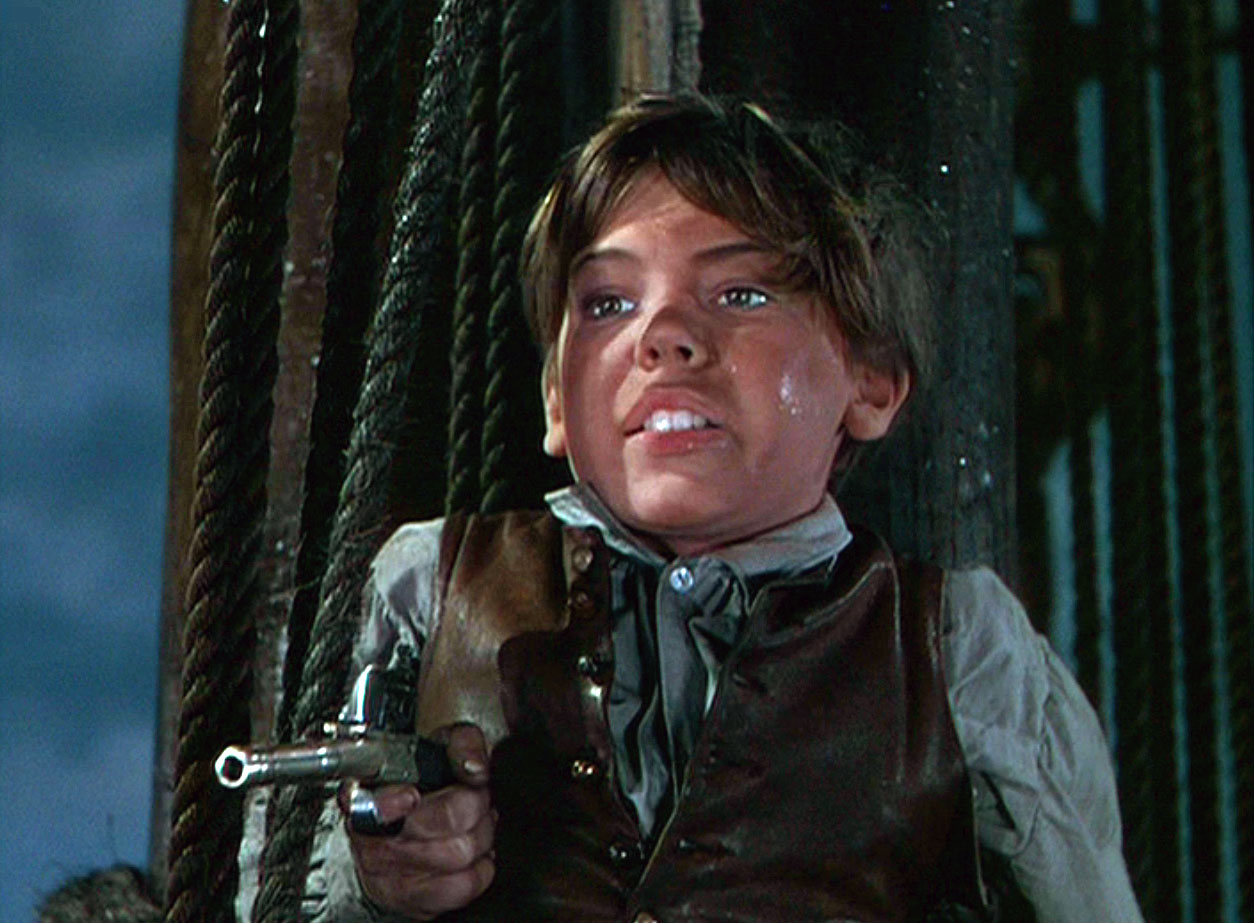
In particular I remember such scenes as the one where young Jim Hawkins (Bobby Driscoll) sneaks back aboard the ship, which the pirates have captured, and reclaims it for the good guys. In that scene Jim has to fight a drunk pirate, Israel Hands (Geoffrey Keen), who is slowly chasing Jim around the ship. Jim climbs the rigging, followed by the Hands. Soon Hands has Jim cornered. Jim pulls out his little pistol . . .
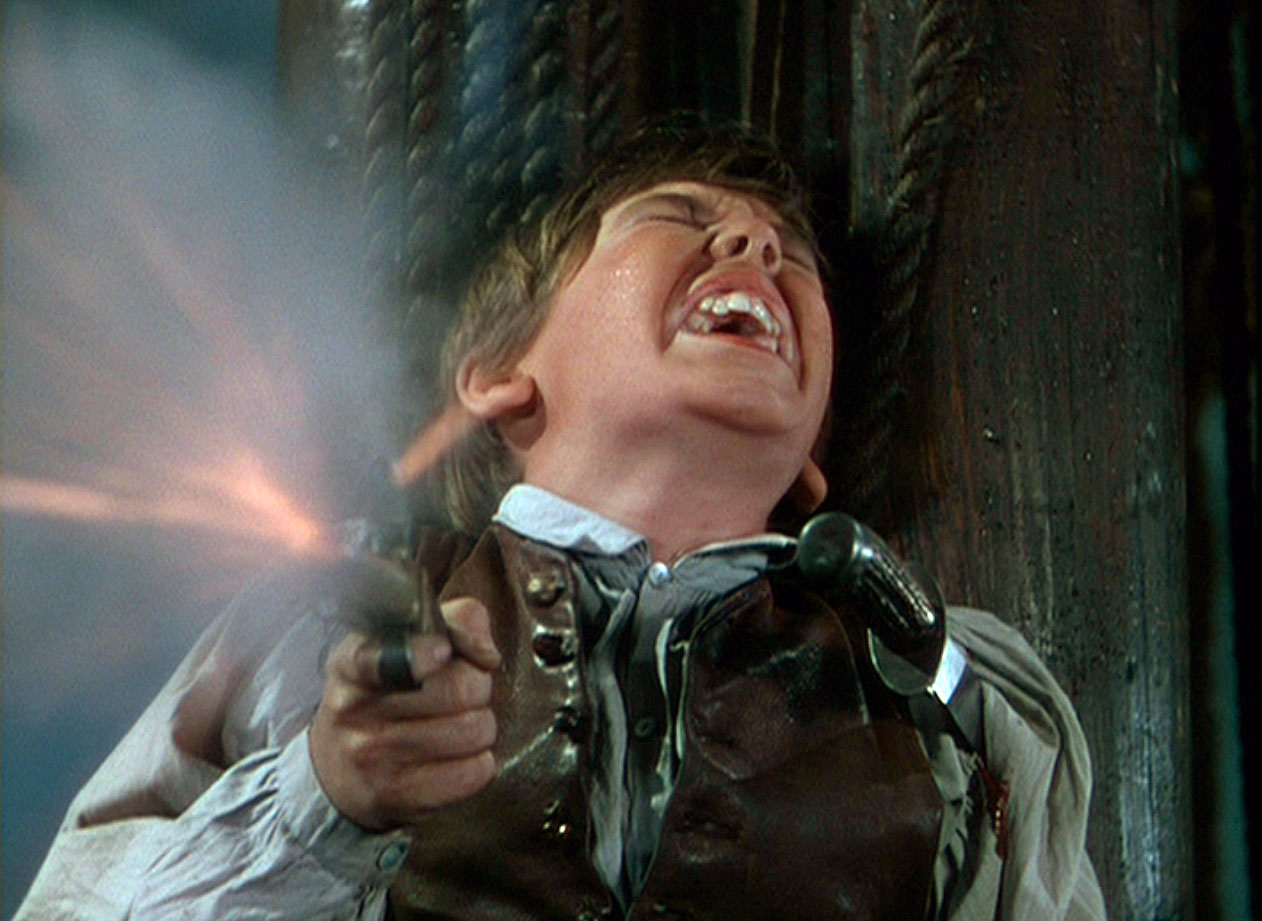
Hands throws his knife at Jim and pegs him in the arm. Jim reacts by shooting Hands who then falls to his death.

As a young boy I often had fantasies about being in dire straits and having to take serious actions in order to survive, even using a gun (sometimes wishing it involved a gun!). I think this is a typical boy’s fantasy (but I’m not offering any excuses). And to be stabbed in the arm by a thrown knife, now that’s really cool. especially if that knife goes through your arm and sticks into a ship’s mast. How much more adventurous and dangerous can you get and still live to tell the tale! If only I had had that kind of life; I know then I wouldn’t be working in a cube farm at some software company, that’s for sure. Avast!

Sadly, Bobby Driscoll’s life did not end well. From IMDB:

Charming as a child actor, he made his mark in films like Song of the South (1946) and Treasure Island (1950). Unfortunately, as he got older and acting offers became fewer, he got involved with hard drugs, which ultimately ruined his health and reduced him to poverty. Years of drug abuse severely weakened his heart, and he died of a heart attack alone in a vacant building in New York. Driscoll’s body was discovered in an abandoned Greenwich Village tenement by two children playing there on March 30, 1968. When found dead, his identity was unknown and he was buried as a “John Doe” in pauper’s grave. A year later, fingerprints finally revealed his identity.

I find that very tragic. I wish someone had come along side him and helped him. But, then again, maybe someone did. Drug addiction is a beast.

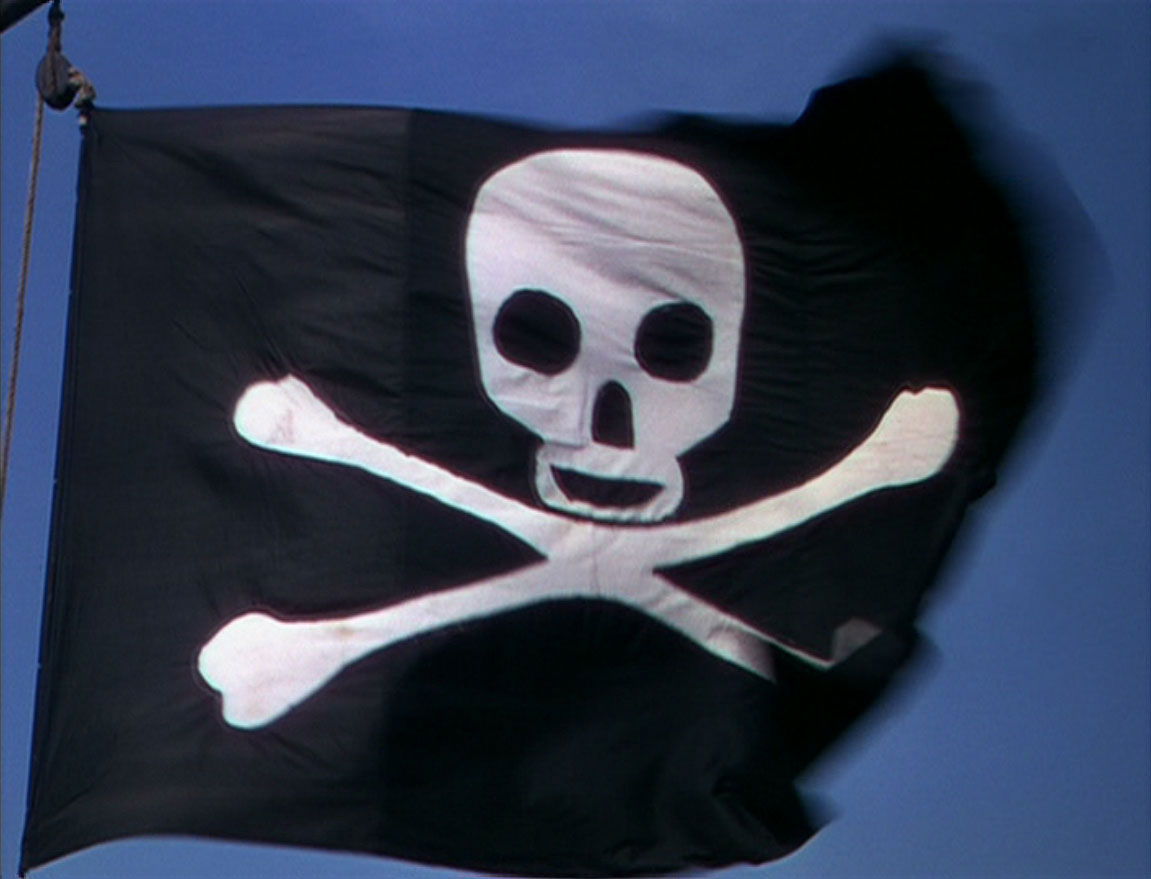
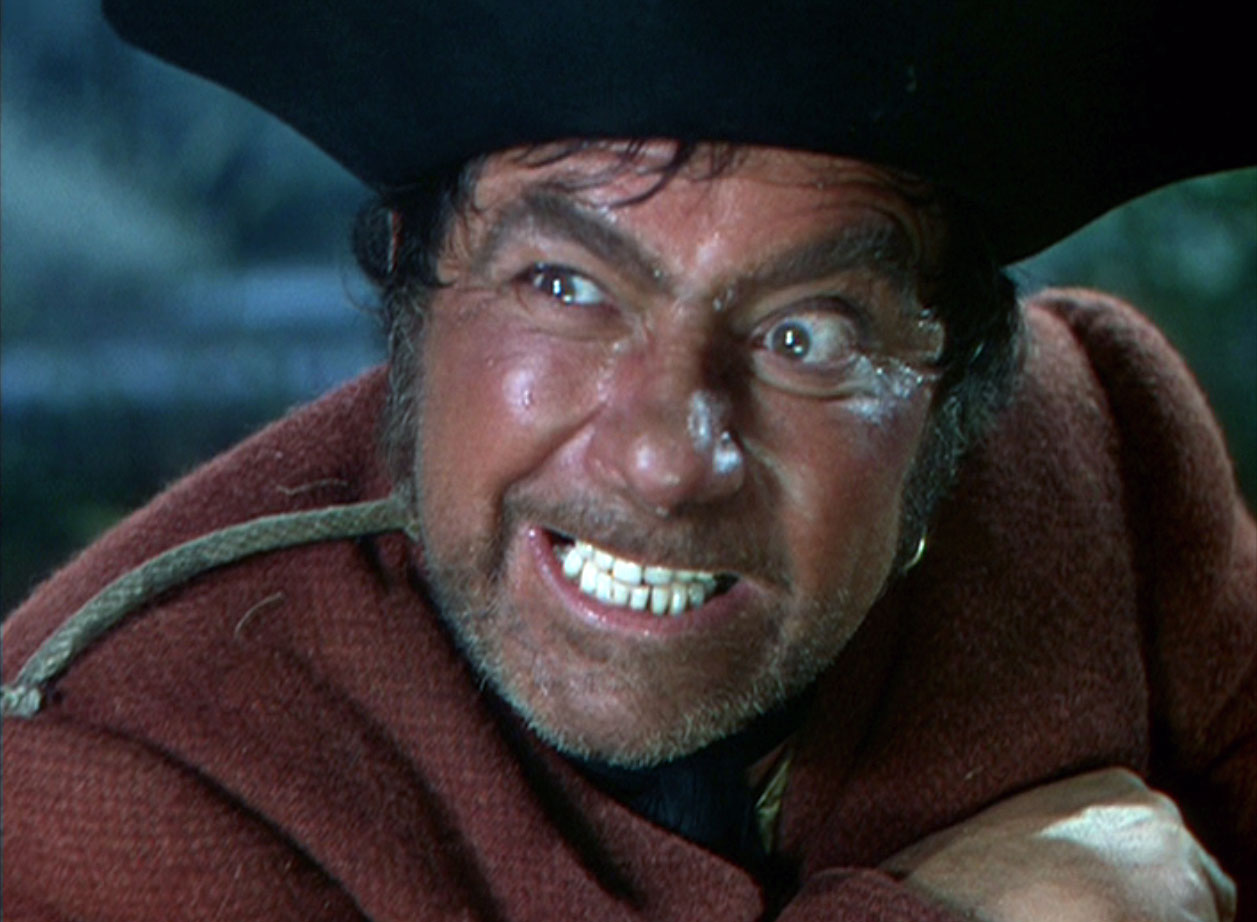
As a boy I could certainly identify with Jim Hawkins in many ways. And I certainly envied him going on his great adventure to find pirate gold. But the real impression the film made on me, and on most I’m sure, was in the character of Long John Silver played brilliantly by Robert Newton. When one thinks of how a pirate should talk (aaarrrggghh!) one is thinking, in fact, of Robert Newton’s John Silver. He created the modern concept what we would call the “classic pirate” archetype. He is the reason behind the reasons why we have Talk Like a Pirate Day and videos that teach us to talk like a pirate.

And who could ever forget that face!

But L.J. Silver was more than that for me. As a boy I new he was a bad guy. But I also knew that he liked Jim as though Jim was the son Silver never had. That was confusing for me. Here was a bad guy that I could legitimately like, not because evil is fascinating, but because he was both bad and good. The idea of moral ambiguity was planted in my soul by Robert Louis Stevenson by way of Robert Newton.

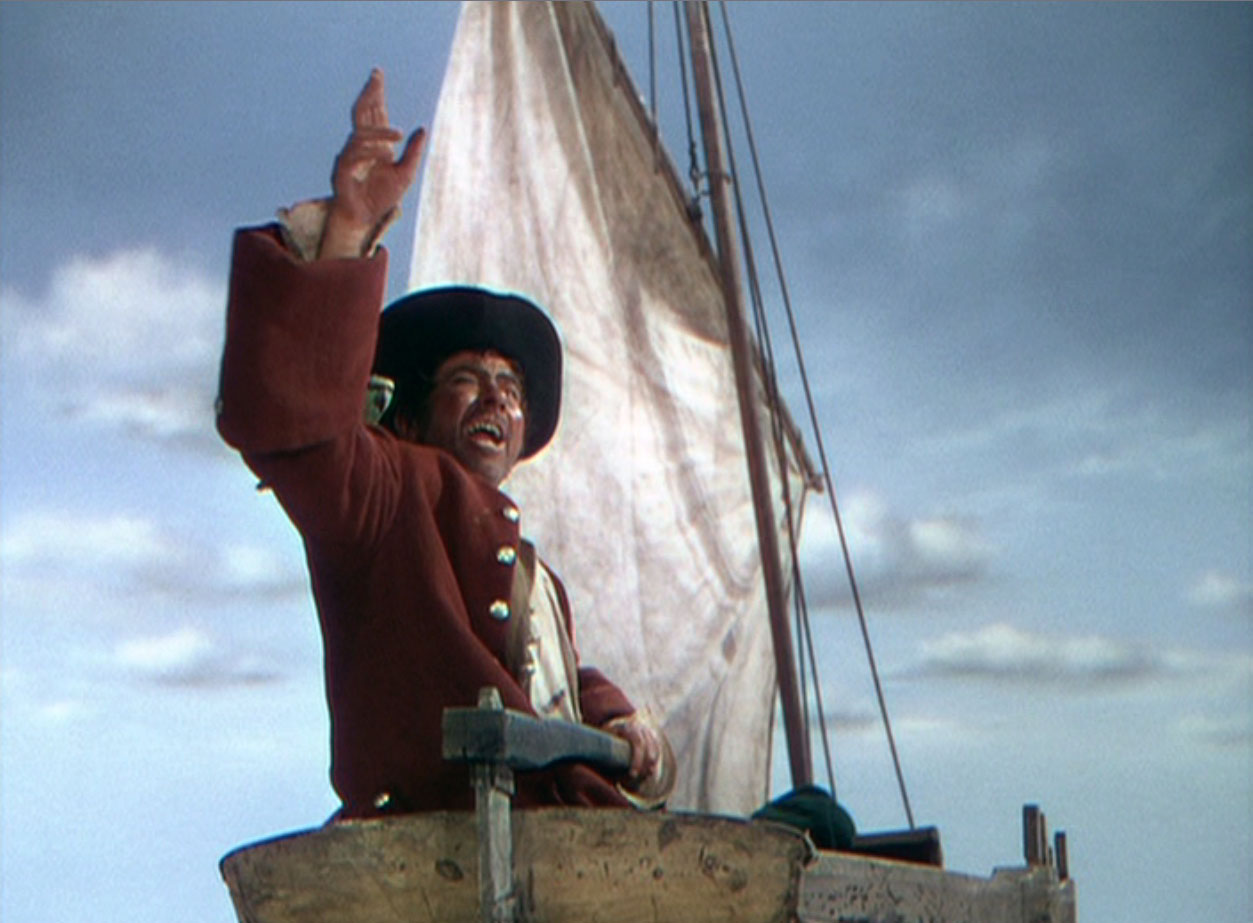
The concept that one could hope for the best for one’s enemies also played itself out in the film. When Silver is trying to escape at the end of the film, Jim helps him. And then Jim and Dr. Livesey (Denis O’Dea) watch as Silver sails away. Dr. Livesey says he almost hopes Silver “makes it.” Silver even waves back – no hard feelings for him either.

And there he is, L.J. Silver sailing away, saving himself from the arm of the law, and here am I wishing he gets away. As a young boy what was I to think? I can tell you it got my head to thinking and wondering, and wishing I could be both good Jim Hawkins and a pirate of the seven seas.


switching gears slightly . . .

BETTER DROWNED THAN DUFFERS IF NOT DUFFERS WONT DROWN

So, the other night I finished reading to my daughter a wonderful book called Swallows and Amazons. Lily loved it, but I have to say I became not a little obsessed with the book. I couldn’t wait to read her the next chapter each night. I would find myself thinking about the book during the day. In short the story is about some kids who, while on Summer vacation near a lake, sail a little sailboat, Swallow, to a little island and camp there for a few days. They meet a couple of other kids who have a boat called Amazon. The kids then have some great adventures and forge life-long friendships. It’s a book I recommend for adults as much for kids.

Apparently there was a film version in 1974, but it sounds like it wasn’t too good.

Anyway, like I said at the beginning, I suppose I could have titled this post “I want a sailboat real bad.”