>be cool ride your bike

>
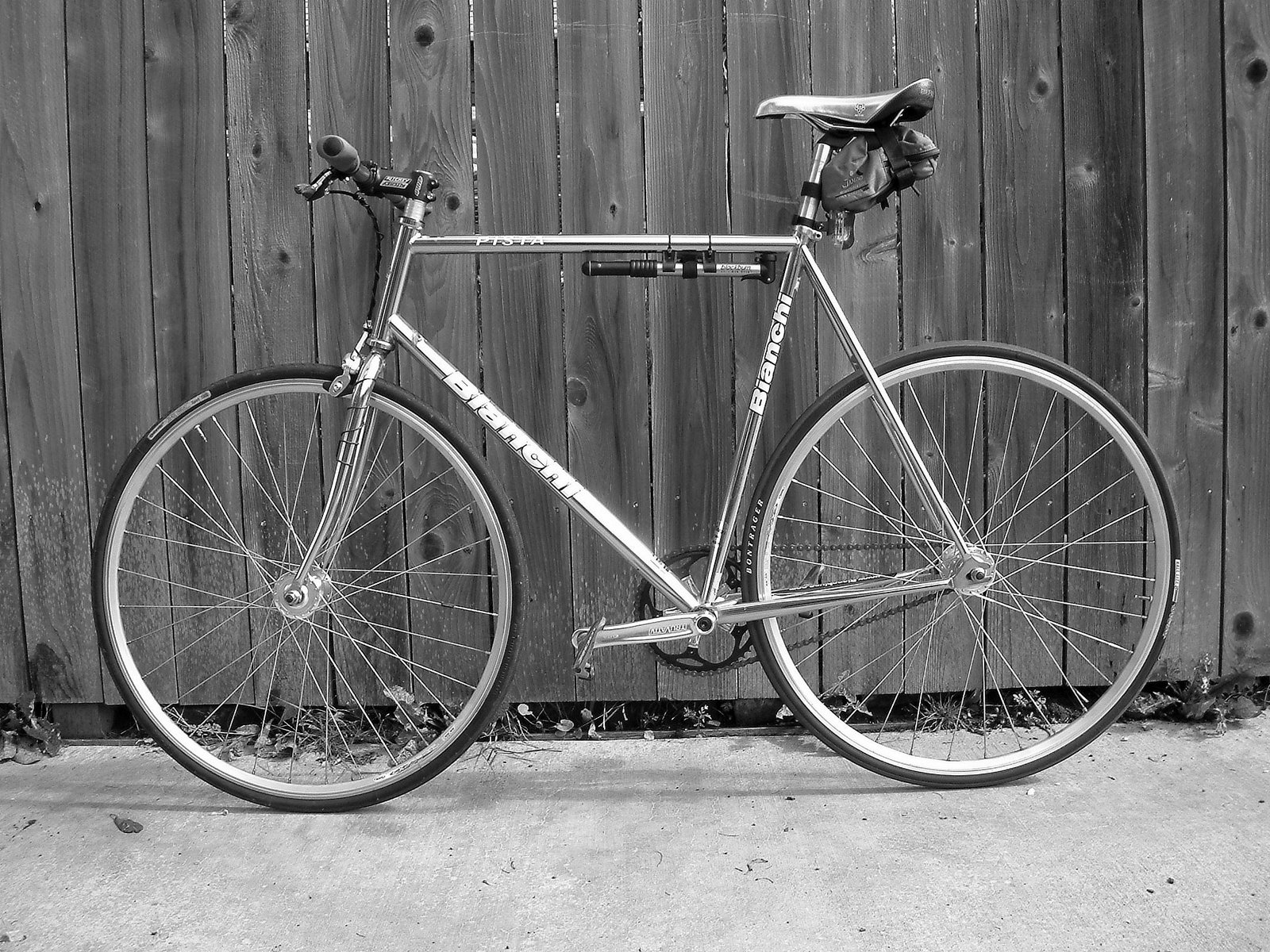
My ride.

I am working on being cool. I have started riding my bike to work again. I do it for several reasons:

  1. I save money on gas, plus my car desperately needs some repairs and I don’t want to spend any money on it right now. Yes, I’m cheap.
  2. Cross training – I have started running and I want to include some additional ‘training’ that is low impact. No, I’m not a professional athlete.
  3. There is nothing quite like bike riding – I know God is good because he gave us bicycles, as well as beer, cheese, mountains, the ocean, and a lot of other things, but you can’t ride a cheese to work – generally.
  4. Biking is better for the world than driving cars. My goal is to become an almost total biking person and cut car use to as much of a minimum as possible. I don’t have really strong emotions about this, but I’ve heard it’s what cool people are doing these days.

It takes me about 30 minutes to get to work, and that means 30 minutes to get home as well. So that’s an hour of cardio each day along with whatever additional workout I do. Currently I have two rideable bikes to choose from. One is an older but totally rad full-suspension mountain bike that needs a lot of TLC. It is rather worn out and could use an overhaul, which I don’t want to pay for. (Remember I’m cheap.) The other bike is a fixed gear track bike that I modified with straight bars and a front brake (track bikes come with no brakes). The fixed gear also gives me a better workout for two reasons:

  1. It cannot coast. In other words, a fixed gear bike is just that, the gearing is fixed, so if the bike moves forward the pedals go round. There is no break in the action unless I come to a complete stop. This “feature” makes riding the bike somewhat tricky, but one gets used to it.
  2. There is only one gear. This means that much of the time the gear is not exactly the right gear for the situation. It’s either too high for going up hills or to low for going down, and the rest of the time it’s just a little off. So one has to work harder because one cannot shift to a more comfortable gear.

I prefer the fixed gear over the mountain bike because it gives me a better workout, is faster, and is simpler (no shifting). Plus, a fixed gear is cooler – and, as you know, I’m all about being cool.
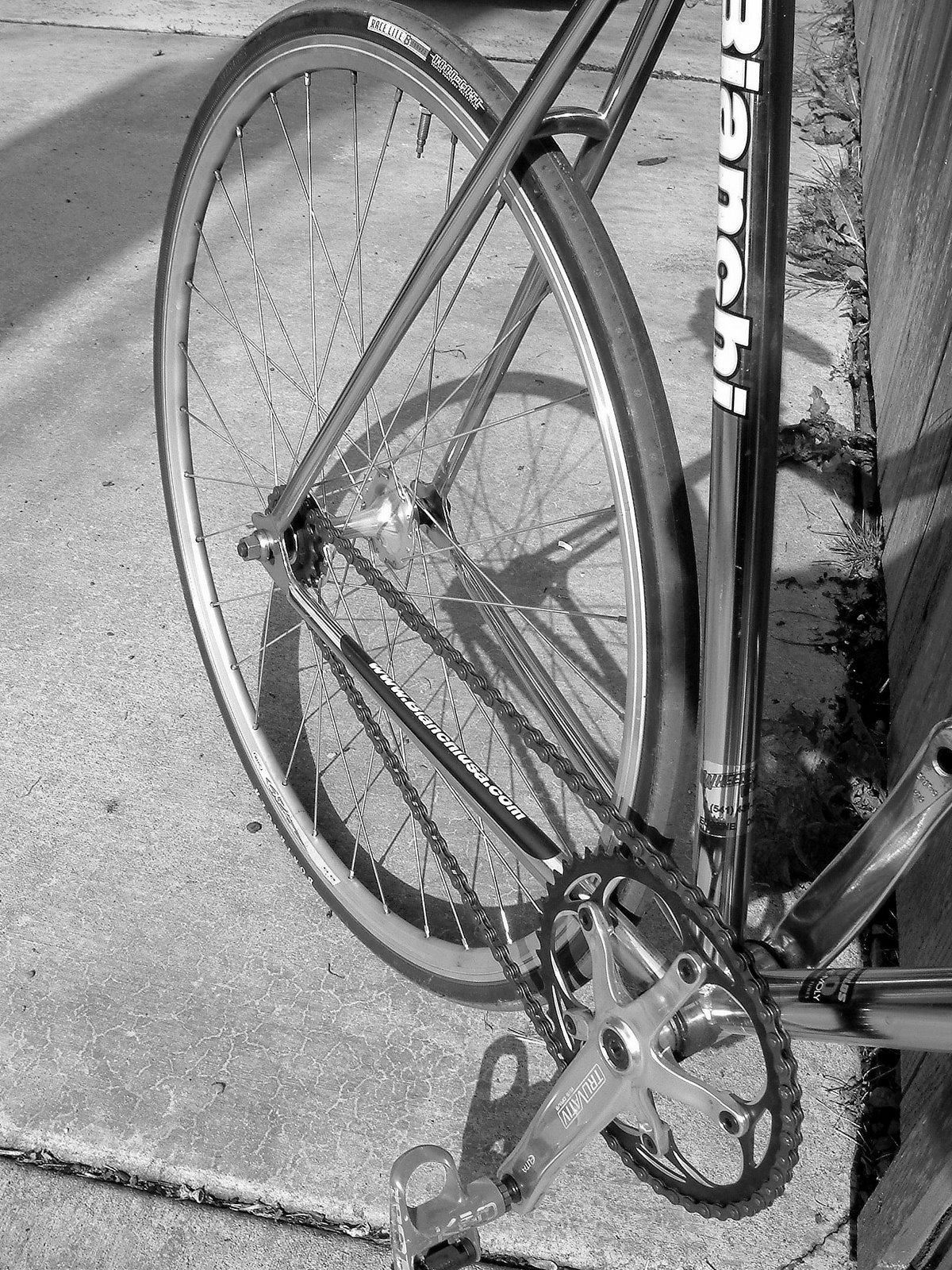

The drive train. As simple as it gets.
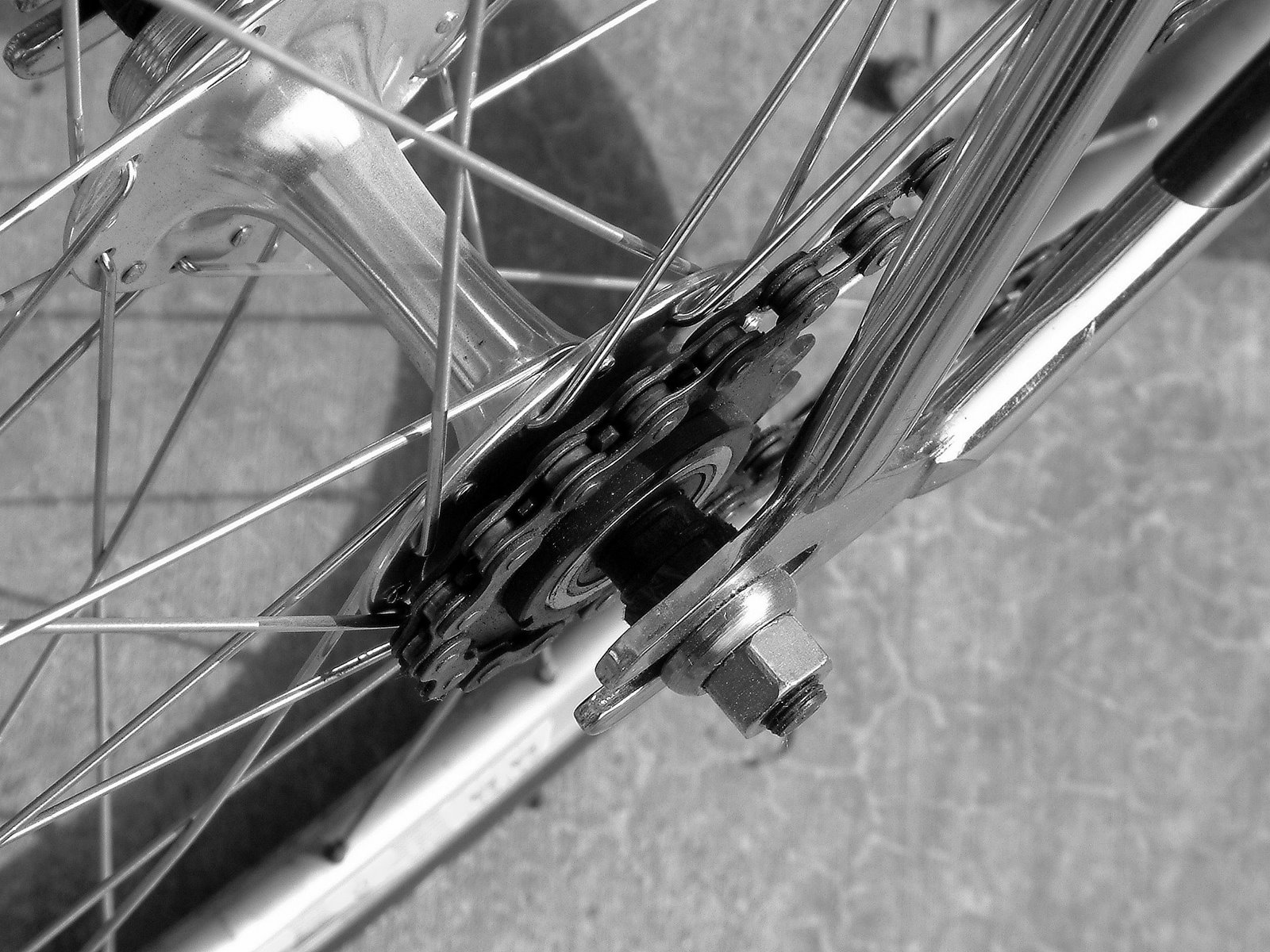

One sprocket in the back. No coasting.

But… there are cars and the people who “drive” them that I still have to deal with. The other day a woman (probably hasn’t ridden a bike since she was a little girl) in her white Lexus SUV (probably never actually been on a dirt road) was waiting to pull out into traffic. She was on her cell phone. She looked right at me and still pulled out. I had to hit my brakes to avoid hitting her. No wonder they say talking on a cell phone while driving is equivalent to being over the legal alcohol limit. But I also think she, like so many people who never ride bikes, have no idea how fast a bike goes, or truly how dangerous it is for a cyclist to tangle with a car. I also think many drivers don’t view (or at least act as though they don’t view) cyclists as legitimate users of the road. Once, years ago, I was pushed off a road into a ditch by a fifth wheel trailer when the truck driver decided to pull far to the right in order to make a sharp left hand turn. I have to say it was surprising to feel the side of the trailer bump up against my left shoulder and just push me off the road. The driver had seen me because he had just passed me. I think everyone should be required to ride a bike for severals days through their city before they are given their driver’s license.

Although I will probably never participate in a naked bike ride, I totally sympathize with the message. I will not yet give up my car. But I want to ride more, drive less, and encourage other to do the same. As you know, it’s cooler to ride a bike – even when you’re not naked. Be cool.

This guy is super cool:
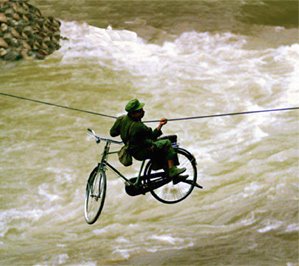
I wish I could be that cool.
>truckin’ – like the doodah man

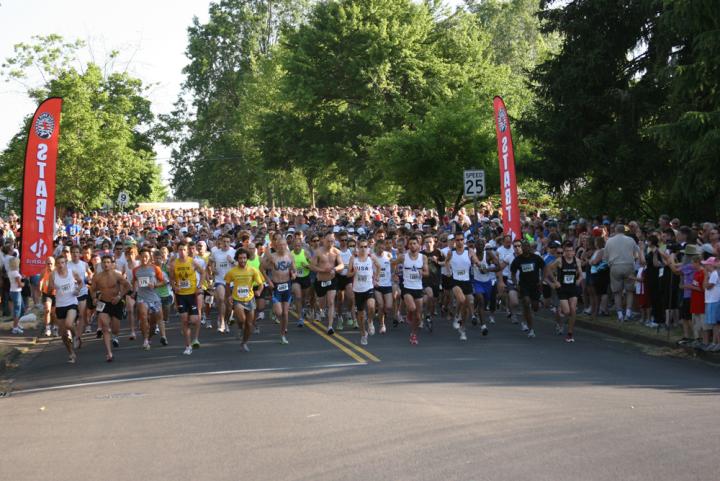
>Today was a milestone for me. After witnessing the famed Butte to Butte 10k road race many times since the mid-1970s, usually cheering on friends, I finally ran the thing. My time was slow, the heat was more than I liked, my gate was more of a pained shuffle than a run, but I made it without walking or stopping.


The start of the race. I was nowhere near
these guys, just in case you were wondering.

The Butte to Butte has become a 4th of July staple in these parts with about 5,000+ runners and walkers. It starts somewhat near the base of one butte at the south end of town and finishes at the base of another butte at the north end of the downtown area. The beginning heads up a steep hill that can just about kill you if you don’t pace yourself, then the next mile is a gradual downhill that helps you catch your breath. The final four miles are on the flats through town.

My wife walked the 4.5 mile Mayor’s Walk with our two girls and the stroller. This was a big deal for her. Less than a year ago she was in a terrible accident that broke her pelvis/sacrum. She used to run 10ks and half-marathons. Now she is in pain all the time and walking 4.5 miles was quite painful for her, but it was also a kind of triumph. I am very proud of her.

I have not been training with my iPod, but last night I put together a playlist. The song I liked the most was Truckin’ by the Grateful Dead – for some reason it just had the right beat and spirit. The song that got me over the finish line? Die, All Right! by The Hives of course.

>qualified to homeschool

>Homeschooling raises basic questions such as “why do we homeschool?” and “how does one homeschool?” But there is also the question, often coming from well meaning, and sometimes concerned, family and friends, “Are you qualified to educate your children?” This question raises a number of other questions, all of which are fueled by numerous assumptions and presuppositions. I want to try to answer the question because it is important to me and to my family, but I also want to try and give an answer because there are a lot of concerns among homeschooling parents as they worry about their “qualifications” and hope they are doing the right thing. Of course I am no expert (we are practicing teachers, like doctors practice medicine or lawyers practice law) and you may have better answers than I.

I want to split the answer into two broad categories: 1) What about being qualified to teach? and 2) What do the statistics say about homeschooling qualifications?

Neither my wife or I are qualified teachers in the eyes of many people. Though we are more educated than most people (our combined formal education includes three BAs, one MA, and an MBA) we do not hold a teaching certificate from any institution. It would not be uncommon for some to think that because we lack official, state sanctioned teaching credentials our abilities to teach our own kids are sorely limited at best and possibly dangerous at worst. Nothing could be further from the truth. I will add that this is true for the parent who has far more limited formal education than we. To be qualified to teach is something wholly other than a state sanctioned credential or even an accumulation of formal higher education.

Do not get me wrong, there are plenty of “official” teachers in my family and among my friends. I had plans myself to become a teacher and I think teaching is a noble profession wherever one teaches (except for places like the School of the Americas, but that’s another story). But someone holding a teacher’s certificate does not make them automatically or fully qualified to teach my child, nor does my not having said certificate disqualify me. Here are my reasons.

  • There is no one, other than my wife, who loves my children as much as I. Nor is there any who desires their well being as much, or an education for them as much. My wife and I have a unique perspective and passion for our children that no one else has. We know their nuances, their learning styles, their hearts. From the day they were born we have been committed to knowing and loving them. Have a teaching certificate does not instill a passion for teaching, and certainly not the level of passion and love I demand for anyone teaching my children. An educator who must carefully manage and teach 20+ students cannot offer the educational focus or specific academic goals that we can, even if they are passionate to teach. Of course, this does not mean I would never allow someone else to educate my children, just that a teaching certificate, or even 20 years of classroom experience, is a thin argument for saying a public school is a better educational choice than homeschooling.
  • In my experience the common educational goals found in most educational systems are below mine and my wife’s standards, whether they be reading, writing, mathematics, science, history, and all the rest. Schools, for the most part, also do not emphasize the arts as much as they should. We are not the kind of parents who seek to drive our children to educational extremes. We don’t want them to enter college at age 9 or receive their second PhD by age 17. We want our kids to grow up rather normally and at the right pace for healthy development, Regardless, many educational systems, and in particular public schools, tend to have lower achievement goals than we do. With our kids we don’t have to teach to the lowest common denominator. We also don’t have to focus on the slower learner and let the faster learner languish.
  • Developing an excellent curriculum is not impossible. There are innumerable resources for home educators to create wonderful, rich, and top-notch curricula. There are also good arguments for choosing some of these curricula over the standard fare found in many schools. We are fond of using the concept of the trivium as an overall guide, but there are others. And we adapt the trivium by including other ideas and constantly testing our choices through experience. We have also been greatly influence by the book The Well Trained Mind as a guide. The specifics of what books, programs, or exercises we use are too numerous to mention here. This means we are not tied to questionable top-down delivered federal or state programs, nor are we slaves to whatever is the latest method. We can change and adapt quickly, focusing more on the needs of our children than the needs of educational bureaucracies.
  • Implementing an excellent curriculum is not impossible. Many good ideas fail because of poor implementation. This is as true in education as is it in business. There is a mindset that sees the need to separate children from their parents and from their home environment in order to effectively implement educational curricula. There may be some wisdom in that, and for some children that might be best. However, we believe, and our experience tells us, that the home environment is highly suited to educating children. A “normal” day may appear less structured than one might find in a public school (no bells, no standing in line, no strict beginning and end of classes) but the integration of education with the rest of life is a better way to teach in our opinion. It is probably more likely that a homeschooled child will grow up with a more holistically integrated sense of learning as a part of life. Another benefit is the ability to move from one subject to another when it is most appropriate for the child. The “class” is over when the lesson is done, not when the bell rings. As we see it, a traditional classroom is not required and may, in fact, be a hindrance.
  • For many the idea of homeschooling does not fit into the common lives of many families where both parents work at full-time jobs and need a place for their children to be during the day. For many homeschooling families it is the wife/mother that does most of the teaching while the husband provides the primary source of income. This scenario just does not work for many women who love their careers and would go insane if they had to stay home all day with the kids even though they truly love their children dearly. (Note: Much homeschooling is actually done outside the home with other families and is not confined to literally staying at home.) But for many the homeschooling scenario is ideal. Some families, however, believe they need two incomes, and certainly some do, but a careful financial analysis often shows this not to be true. Adding up all the costs associated with having both parents working is an eye opener. Think of the costs of day care, dry cleaning, eating out, two cars, higher tax bracket, someone to clean the house and maybe do yard work. It adds up and can dramatically cut into the two incomes. Regardless, each family has to decide for themselves. For us it works, though we see it as an experiment year to year. Our willingness to “go for it” and make it work is another of our qualifications as teachers though it does not come with a signed and sealed certificate that says so.
  • Finally, some might say that all those reasons above may be fine and good, but you can’t deny that teachers are highly trained professionals. I have no reason to deny that. But I would say a couple of things. First, ask any teacher to compare their initial training with their experience and I would guess that hands down their experience trumps their training. Years in a classroom outweighs their official teaching credentials as far as making them truly qualified to teach. Second, we have all experienced the fact that the best teachers in life are often not professional teachers at all, but someone with a passion for the subject at hand, plus a passion that others understand that subject, and the desire to see the subject through another’s eyes. Thirdly, much of the professionalism of modern teachers has to do with things that are of little or no importance to homeschooling scenarios. Homeschooling does not have the same kinds of cultural and societal burdens as does public education. Homeschooling also tends not to be burdened with internal politics or socially cautious ecumenism.

You may have other reasons. I’m sure we do to, but I want to stop there. Of course some will still be skeptical. They might say all those reasons sound fine but let’s be honest. Traditional classroom education has been with us for a long time and is a proven method. Besides, with public education, they say, there is more accountability. Sure some schools might not be so hot, but overall it is still certainly better than a relatively untried and inconsistent homeschool education, right? Wrong. First of all homeschooling has been around for centuries whereas public education is a product of the industrial revolution. Homeschooling has been tried and tested long enough for us to know that prior to the industrial revolution history was largely made by homeschooled individuals, including virtually all of the great scientific, artistic, and social accomplishments that public school children study today. And even since the industrial revolution many individuals of noteworthy accomplishments were educated at home, including most U.S. presidents. Second, let’s look at some statistics that compare median standardized tests scores from public school students with homeschool students.

The following two tables come from a 1998 study comparing homeschool students scholastic achievements compared to both public and private school students. I hope these numbers address the question of whether, on average, homeschooling parents are qualified to teach their kids.

Median Scaled Scores (corresponding national percentile) by Subtest and Grade for Home School Students compared to publicly schooled children:

Grade N Composite Reading Language Math Soc. Stud. Science National
Median
1 1504 170 (91) 174 (88) 166 (82) 164 (81) 166 (80) 164 (78) 150 (50)
2 2153 192 (90) 196 (89) 186 (80) 188 (85) 189 (81) 195 (86) 168 (50)
3 2876 207 (81) 210 (83) 195 (62) 204 (78) 205 (76) 214 (83) 185 (50)
4 2625 222 (76) 228 (83) 216 (67) 220 (76) 216 (68) 232 (81) 200 (50)
5 2564 243 (79) 244 (83) 237 (69) 238 (76) 236 (71) 260 (86) 214 (50)
6 2420 261 (81) 258 (82) 256 (73) 254 (76) 265 (81) 273 (84) 227 (50)
7 2087 276 (82) 277 (87) 276 (77) 272 (79) 276 (79) 282 (81) 239 (50)
8 1801 288 (81) 288 (86) 291 (79) 282 (76) 290 (79) 289 (78) 250 (50)
9 1164 292 (77) 294 (82) 297 (77) 281 (68) 297 (76) 292 (73) 260 (50)
10 775 310 (84) 314 (89) 318 (84) 294 (72) 318 (83) 310 (79) 268 (50)
11 317 310 (78) 312 (84) 322 (83) 296 (68) 318 (79) 314 (77) 275 (50)
12 66 326 (86) 328 (92) 332 (85) 300 (66) 334 (84) 331 (82) 280 (50)

Median Scaled Scores of Home School Students (Corresponding Catholic/Private School Percentile) by Subtest and Grade:

Grade Composite Reading Language Math Soc. Stud. Science
1 170 (89) 174 (86) 166 (80) 164 (80) 166 (73) 164 (75)
2 192 (88) 196 (84) 186 (74) 188 (81) 189 (81) 195 (85)
3 207 (74) 210 (74) 195 (55) 204 (71) 205 (69) 214 (80)
4 222 (72) 228 (72) 216 (58) 220 (69) 216 (56) 232 (76)
5 243 (71) 244 (72) 237 (60) 238 (68) 236 (60) 260 (82)
6 261 (71) 258 (71) 256 (58) 254 (65) 265 (72) 273 (77)
7 276 (72) 277 (77) 276 (63) 272 (70) 276 (68) 282 (73)
8 288 (72) 288 (75) 291 (65) 282 (68) 290 (68) 289 (67)
9 292 (63) 294 (70) 297 (61) 281 (56) 297 (63) 292 (59)
10 310 (71) 314 (81) 318 (71) 294 (57) 318 (72) 310 (66)
11 310 (63) 312 (72) 322 (69) 296 (56) 318 (67) 314 (63)
12 326 (74) 328 (81) 332 (71) 300 (53) 334 (74) 331 (72)

These statistics are from only one study, but a quick survey finds many similar kinds of examples. Given these numbers, one must conclude that in general homeschool students out perform public school and private school students in standardized tests in all subjects and in all grades. This is not to say that our children will out perform the median for public/private education, but if we want to base our decision to homeschool on some objective criteria these numbers are not bad.

In conclusion, we all have a number of prejudices that seem to us to be mere fact. One prejudice I run into is the belief that homeschooling is, at best, taking a big educational gamble with one’s kids. I hope it is clear this a prejudice and not factual. But prejudices aside, many who homeschool, or who are thinking about homeschooling, question their own abilities to do so. They are deeply concerned abut their kid’s education and want to make the right decision. The truth is there may be no right decision, just several decisions that all have validity with both upsides and downsides. We have chosen to homeschool our children because it fits our particular situation, goals, and values. Many of our friends choose public education, and some private. All things being equal there is no universal right answer, but there is no wrong answer either.

Final note: For those who are contemplating homeschooling their children, but who are concerned whether they are qualified to do so, or are feeling pressure from family or friends to choose a more traditional route, I want to say fear not. But I can’t say that entirely. Yes, you are qualified to homeschool, I am certain of that, but whatever educational choice you make for your kids is a big deal. A little fear is a good thing. The truth is, one should have the same fear whether the choice is to homeschool or to send your child off to the schoolbus each morning.

>Noam Chomsky: The Stony Brook Interviews Part Two

>

>Noam Chomsky: The Stony Brook Interviews Part One

>

>Being changed by the digital: A brief consideration of chess before & after computers

>There is something truly beautiful about human creativity and intuition. We can see that beauty in the way chess was played a hundred or more years ago. But today the game of chess is dominated by the use of computers, not merely to play games but to analyze them. Chess aficionados and serious players constantly use chess ‘engines’ to analyze games. Computers are changing the way we play chess, but is that a good thing? Are we losing the beauty of the game? Can we see correlations in other areas of life? Are we dominated too much by technology?

I am interested in this topic not merely for myself, but also for my kids. To what degree should I steer them away from technology and to what degree should I make sure they know, use, and understand technology? I don’t want to to be a Luddite, but I don’t want my kids to be dominated by technology.

Here is a wonderful analysis of both the impact of technology on chess/life and a classic game from chess’ romantic era (19th century):

What a beautiful game. Known as “The Evergreen” this game shows two humans matching wits and daring in a game of strategy and tactics that, in the end, is a kind of work of art. And yes, many of the most famous games of chess have names – another great aspect of chess.

Note: The analysis in the video is by a chess player known in cyberspace as kingcrusher. His real name is Tryfon Gavriel and he is the main force behind Chessworld.net. He has analyzed many chess games like this on youtube.

>waxing and waning

>
The states of affairs these days has led me to post less – about half as much as in the past. I have ideas, and even started some posts, but each time I just feel too tired to carry it through.

I have also noticed a number of the blogs that I’ve followed over the past two-plus years have decreased their posts. Maybe there is a general waning in the blog world. I love to blog, but the urge is less than it was. How about you?

>A New Year coming

>

This is a time for resolutions, and I will get to those, but first a reflection on this past year.

On life and family:
We (my family) have had a good year. Out girls turned eight and one. Our eldest started swim team and has progressed tremendously. She has also turned into a voracious reader, which makes us happy. Our youngest has continued to surprise us with her enthusiasm for just about everything. My job has, for the present, remained secure in the face of cutbacks and a lousy economy.

The biggest “event” by far was the accident my wife was in, and her ensuing injuries. Our youngest was in the accident as well but came away with only a scratch. My wife ended up with a broken pelvis and other painful injuries. That was more than six weeks ago and she is still in a lot of pain and needs a walker or cane to get around – plus strong pain meds. It will be a while for a complete healing, if that ever truly happens. We are hopeful and blessed at the continual gift of life.

What has been the most amazing experience of this year has been the outpouring of help and love we have received in response to Maricel’s accident. This has been a difficult journey for us in many ways and on many levels. I don’t know how we would manage without the graciousness and goodness of others.

What is hard for me to get my mind around is just how close my wife and daughter came to death. I am so thankful they are still alive. Once again we are learning how precious and beautiful life is.

On blogging:
I started this blog two years ago. My initial goal was to blog about movies and connect with other such bloggers. That I did, but quickly this blog became a place for me to explore other interests including (in no particular order) music, poetry, family, art, politics, chess, food, architecture, theology, religion, travels, and much more. In short it became an online journal of whatever I wanted to write about. This is what I think a personal blog should be.

I had high hopes of doing more with this blog. I was thinking of switching from Blogger to some better blogging tool (e.g. WordPress) so I could get more creative with the design and layout. I had plans to do more in-depth film studies and to write more poetry. I was also going to take a lot more pictures and do extended photo essays. Alas, like you I have a busy life. Blogging does not pay the bills, and it can get in the way of paying the bills or doing other important tasks. So blogging has been another thing that takes up precious time but also gives back some personal joys. Finding the balance is where it’s at.

The resolutions:
I am on the band wagon with most people this time of year. I resolve to lose weight and get in shape. My hope, as long as my knee can take it, is to run (or run/walk) a half marathon sometime in 2009. I am not built as a runner, but I think such a goal will encourage me to eat better, get outside more, lose weight, etc., etc. We’ll see. (Related to this resolution: climb a mountain, ride a century bike ride.)

I also resolve to purge our house and our lives of clutter. We are packrats. We could do better with less. So purging is the game plan. This also includes organizing our finances better, cleaning out the garage, setting up the painting studio again for my wife, and setting up a better music situation (for our guitars, piano, and other instruments). Again, we’ll see how that one goes. We have a lot of inertia to overcome.

I resolve to take more time off work and spend more time with my family. This includes doing more activities like camping and general vacationing. I always seem to have maxed out my paid leave hours (accrued) at work, so I need to use them, and my family needs me to use them. (Related to this resolution: go hiking with my family, take my kids to ball games, have friends over for dinner)

I resolve to finally brew my own beer. My wife got me all the stuff I need, but I’ve just been too lazy to actually do it.

I resolve to blog less and write more. I want to get back to revising my screenplay (and finishing another). I also want to write more poetry again.

Finally, but not really finally, I want to re-connect with my love for the arts. This includes going to galleries and museums more (taking my family of course), as well as read/writing about art. I got a college degree in art history and it still means something to me.

In conclusion:
I pray that this new year goes well for my family, for you, and for the world. I am deeply saddened by the violence, suffering, and death in the world. I want my kids to grow up in a better world. More importantly I want my kids to be the kids to grow into the kind of people who make it their life’s work to love their neighbors as themselves, to work for the kingdom here on earth as they long for it in their hearts, and to know that personal freedom is ultimately about character not mere actions. These are also areas in which I need to grow and mature. That, really, is my new year’s resolution. Of course, that should be my resolution every day.

>snow again

>

A couple days ago


I thought we were done with snow.

This whole week has been a snow week, affecting work and play, and taking care of my wife, who is still recovering from being hit by a SUV. I love snow, and I love being able to do work from home, but this is a big time of year for my job and the distractions of home make it more difficult to get work done. Of course the kids love it.

Now it is snowing again. This time a wetter kind of snow that won’t stay around as long – probably.


This morning


And again

>Holy Ground

>
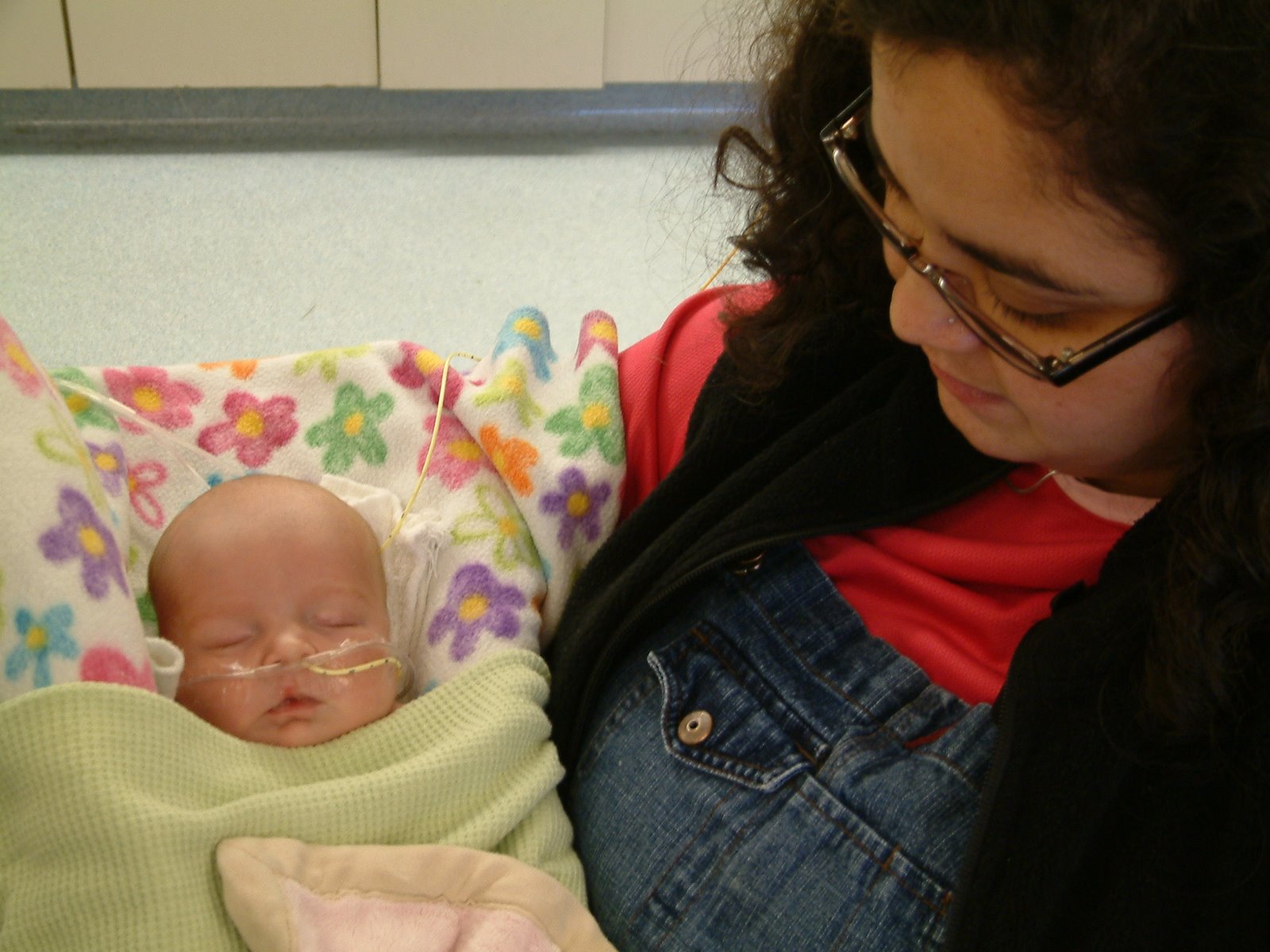
Today is the birthday of our middle daughter, Coco Madalena. She was born in 2005 with a congenital heart problem, was born a month early, had heart surgery a couple days after birth, and died of meningitis a month later. She would have been three years old today.

We have been unbelievably blessed with two other daughters who bring tremendous joy into our lives. Losing a child was one of the most difficult experiences in my life, but I have to say that God worked joy into our lives during that time. It is strange to suffer and find joy in the midst of suffering, but here we are again, in a way, with Maricel bedridden with a broken pelvis and an outpouring of love and help from friends and family.

Suffering is a kind of Holy Ground. It is where God reaches in to one’s life in a big way. God is always there, always present, always creating, but suffering can make his presence powerful. I think of Moses before the burning bush when the voice told him to take off his sandals for he was standing on holy ground. Moses was about to enter the next phase of his life, a life of great burdens and suffering, but also great joy. I don’t know what Moses felt at that moment, and I certainly do not put myself in the same category as him, but he must have felt a mixture of elation and dread. There is no more significant place to be this side of God’s kingdom than standing on holy ground, and no more difficult and terrifying place to be. Burning bushes are rare these days, but suffering is not.

At Coco’s wake, in January of 2006, I read the following words:

Last June, when Maricel and I found out that we were pregnant, we were so overjoyed. I could not have known that seven months later, on a rainy Thursday evening, I would be holding my beautiful daughter in my arms when she died.

There is no doubt this whole process has been very emotional and difficult for us. I have never cried so many tears. And yet, we have also found great joy and much for which to be thankful.

We are amazed at the concern that so many people have shown toward us. In so many ways people have come along side and helped us, whether through prayer, letters and emails of encouragement, meals, places to stay, taking care of our needs, and just being there when we needed moral support. I cannot begin to thank you all for your love and care.

We are also so thankful for the doctors and nurses at OHSU & Doernbecher. Not only are they great at doing what they do everyday, they showed real care and concern for us, for what we were going through. And they truly cared for Coco, not merely as another patient, but as the treasured, beautiful person that she was. That was a great gift to us. Thank you.

I also want to say thank you to our daughter Lily. The first time she saw Coco her whole body reacted with joy. She was so excited to be a big sister. This process has been difficult for her, but she has really done well; she asked a lot of great questions, was remarkably understanding with her parents, and is very excited to see Coco again someday.

I have to say that in all this, the person I am most amazed with is my wife. Maricel has gone through more than I ever imagined and in all of it she has been so gracious, so kind to others, so thoughtful to me and Lily, and so tough. There was not a single day that she was not at the hospital with Coco, often for most of the day. She gave all she had, physically and emotionally, to her baby, and still found time to be a loving mother, wife, and friend. Thank you.

We entered into this whole process as excited parents with great hopes and many conversations about the future. We also came with a perspective about God’s love and sovereignty that carried us through all of it, the best and the worst. At those times when life seemed most bleak I found myself constantly turning to the suffering of our lord and hero Jesus Christ.

I put on my computer’s screensaver the verse: “For to this you have been called, because Christ also suffered for you, leaving you an example, that you should follow in his steps.” It reminds me that when Jesus came to this earth he did not take away our suffering in this life, but entered into it fully, and gave us the perspective we should take when we experience suffering ourselves. He gave meaning to suffering. I can see that more clearly now.

Suffering in one form or another seems to be the lot of all of us, and yet we have a deep solidarity with Jesus in our suffering. I see this is a great gift, and although we would not wish what we have gone through on anyone, we know that Coco has had a profoundly lasting impact on our lives for the better. We certainly do not have all the answers we would like, but we do know that God loves us and is the author of Coco‘s story. In this we have found joy amidst our tears.

I am thankful that we still have hope, that we still have faith, and that we know that God is good even though the story He is writing with our lives is sometimes difficult to bear.

You honor us all so much for coming and sharing this with us. Thank you.

Happy Birthday Coco Madalena Teague!