The spiritual disciplines of a married woman

Typically one does not go to Godard seeking a spiritual film. Not that his films are devoid of spiritual concerns (his 1985 film Je vous salue, Marie deals directly with spiritual concerns) but Tarkovsky or Bresson or Kieslowski are more typical choices for spiritual cinema. On the other hand, through a different lens as it were, Godard is a very spiritual director, particularly when it comes to his critiques of modern society. On the surface he catalogs – in his own dry humor – the many phenomena of our strange and extravagant late-industrial culture with all of its gaudy materialism, its objects, and its fetishes. And yet are not his characters often living out their new modern spirituality in a sea of things, words, actions, violence, sex, love, books, images, ideas, advertising, and every other signifier of something other? That something other may, in fact, be faith. The question, then, is what is this modern faith?

Godard’s cinema has always been a cinema de jour. His emerges from the endless world of the now. In this age where “God is dead” the drive within each of us for meaning, and finding that meaning in relation to something outside of ourselves, has not gone away. If we find no God we will make one, and as is always the case, we fashion our gods according to our own needs and desires, and in our own image. We then adopt forms of spiritual disciplines that serve our image of God and the imagined requirements of our new spirituality.

What is a spiritual discipline? There are numerous definitions but, in short, a spiritual discipline is a habit or regular pattern of specific actions repeatedly observed in order to bring one into closer relation to God and to what God desires for one to know. It is something one does as an act of devotion and a means of advancement or growth.

How do we see this playing itself out in Godard’s films? In À bout de souffle (1960), a paean to the Hollywood gangster film, Michel exhibits a kind of ritualistic and constant homage to the film gangster archetype, Humphrey Bogart. He goes through the motions, adopts character traits, tropes, stylistic postures, and language to inhabit the ideal of his film hero. His focus and devotion are fundamentally religious, and his actions play out like spiritual disciplines – immature and humorous at times, but spiritual disciplines nonetheless. What Godard gives us in his unique way is a portrait of the spiritual status of French youth in 1960. In a world where traditional religious options fade they are replaced by a new religion, that of the cinema. In the end Michel dies as a martyr to his faith.

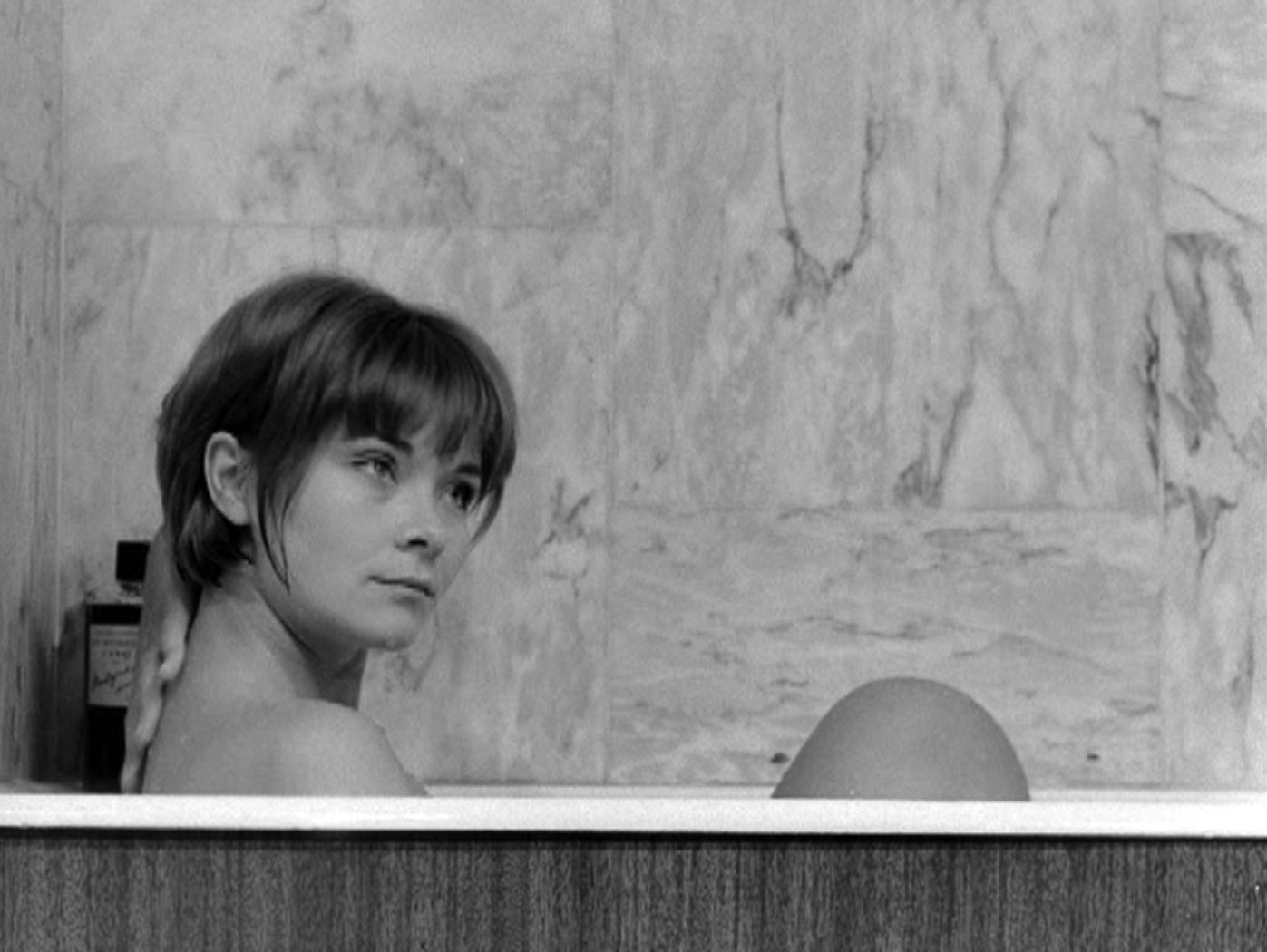
In Une femme mariée: Suite de fragments d’un film tourné en 1964 (1964) Godard presents another kind of spirituality, that of the sexual body in a consumeristic world. Although sexuality is one of the oldest “religions” in human history Godard examines it within a thoroughly modern context. Charlotte, who is married to one man and in love with another, is juggling her relationships while gauging herself against the constant inputs she receives (accepts, seeks) from advertising – in particular, advertisements about female beauty and, especially, those pertaining to the ideal bust. Her life becomes a constant calculation of actions – maybe motions is a better word – to present herself both to the world and to herself. She becomes both priestess and offering at the altar of modern woman.

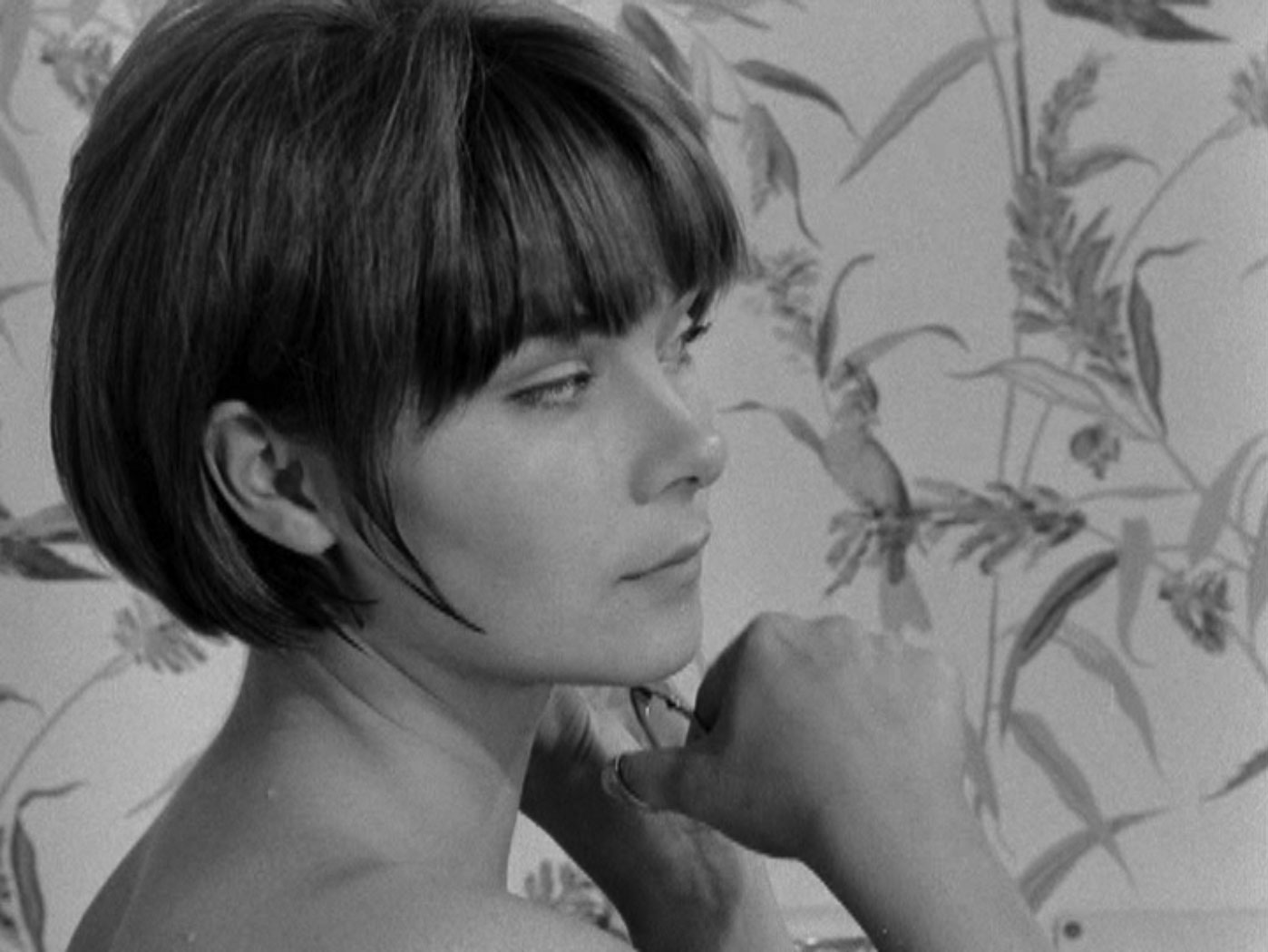
One scene in the film highlights Charlotte’s commitments. Here she is finishing her bath.

une-femme-mariee-1

She meditates (on what we do not know) with perhaps an intelligent expression, perhaps vacuous. She exits the bath. The camera followers her legs. She dries off.

une-femme-mariee-2

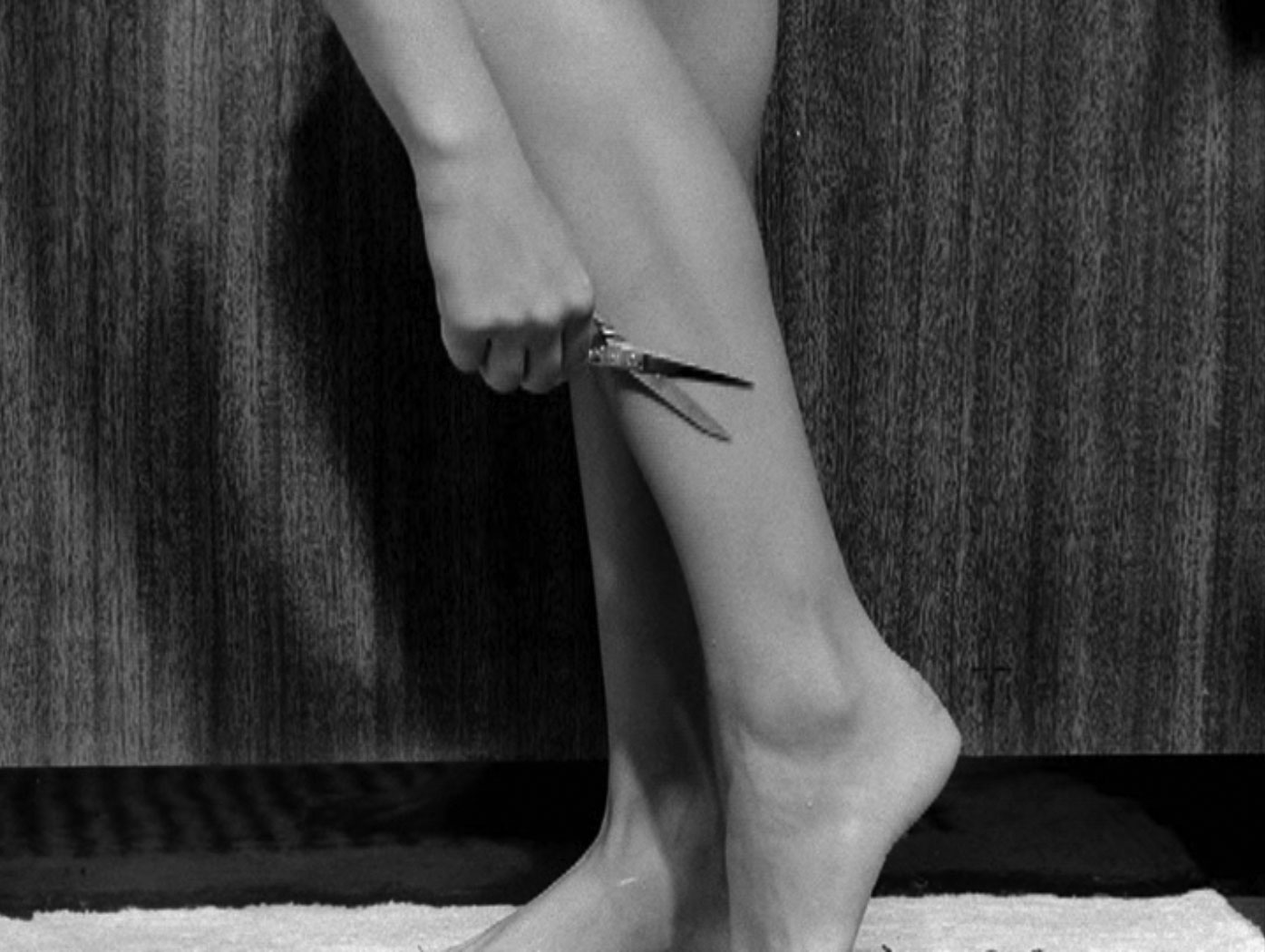
She then used scissors to trim her leg hair.

une-femme-mariee-3

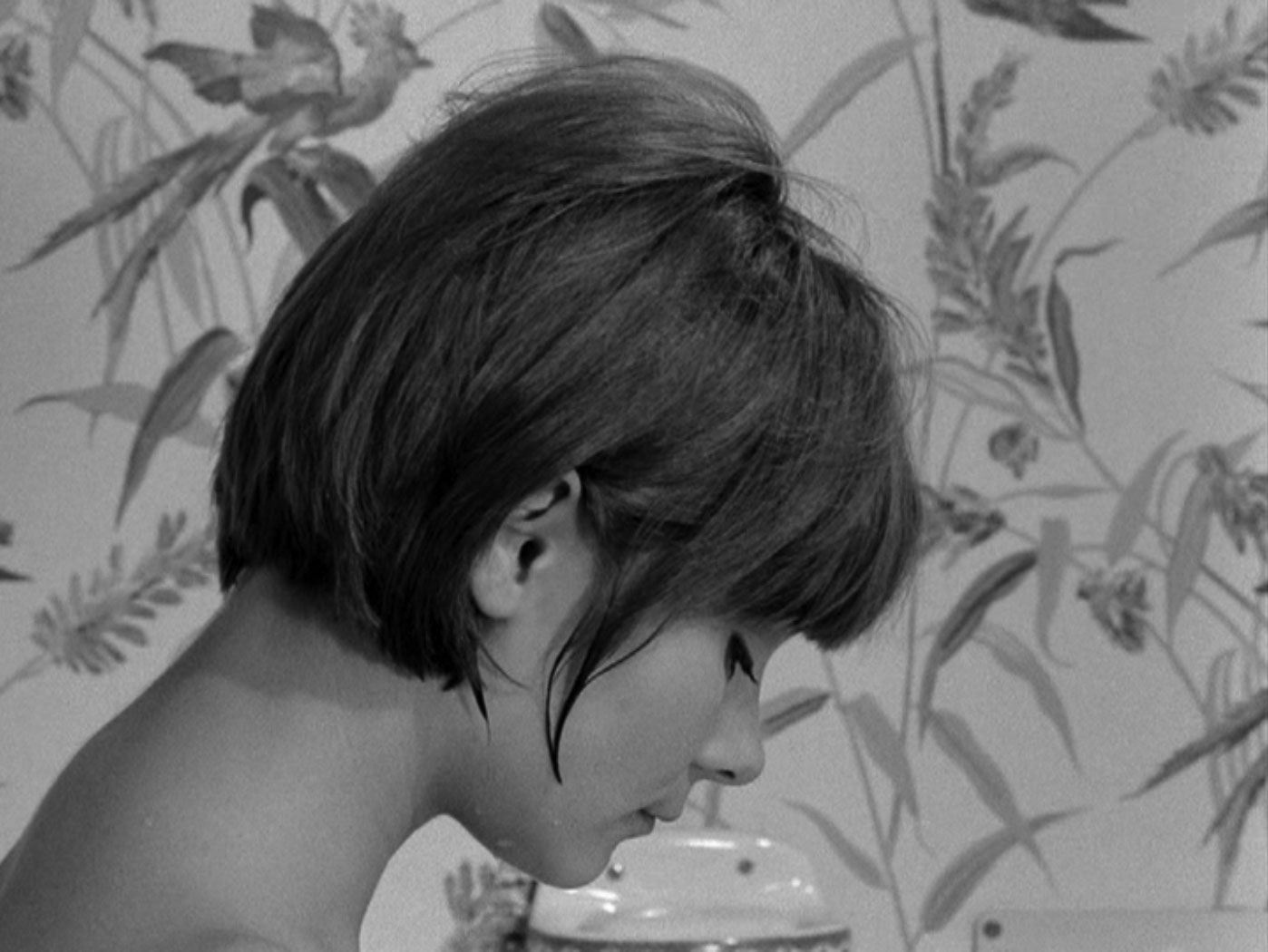
Then trims her already carefully coiffed locks.

une-femme-mariee-4

She then trims her pubic hair.

une-femme-mariee-5

The camera does not follow the scissors, but we hear them and assume she is not trimming her bellybutton hair.

European films of the 1960s gained a reputation in the U.S. for being risqué. Though tame by today’s standards, to have a woman trim her pubic hair, even if only suggested, would have called attention to itself, and Godard makes sure the camera holds long enough for us to notice. Within the context of the film this shot makes a great deal of sense. Her bathing and grooming, and the calling attention to the details of her actions present to us the actions of her spirituality, her disciplines. This is not a world without a god, rather it is a world of many gods (her husband worships airplanes and is a pilot) and her god is a combination of love, sex, her body, her image as woman, etc. In this quiet moment we are voyeurs to her prayer, to her communion.

More than Godard’s other films of this era Une femme mariée is a highly formalized, stylish, and unusually crafted visual fugue of body parts, actions and gestures, and environments. At times we are drawn toward comparisons with Dreyer’s La Passion de Jeanne d’Arc (1928) for its uncompromising formalism and spiritual quest of its protagonist, and to Resnais’ Hiroshima Mon Amour (1959) also for its formalism, sexuality and the spiritual struggle of its characters in light of nuclear weapons. Godard takes the next step to characterize the spiritual quest of the modern woman (we should included men as well, though that is sometimes debatable with Godard) as neither traditionally religious/Christian or driven by existential terror, rather the new spirituality is a commodity based religion of self-image mediated through the world of late industrial production and consumerism. What makes this work, and elevates the film, is that Godard’s characters do not suffer the anguish of extreme religious piety or existential nihilism, rather they fully inhabit their world as accepting individuals who embrace the proscriptions of their circumstances – like peasants in medieval Europe, like good 20th century bourgeoisie.

In this way Godard stands as one of the more significant artists of the late modern/post-modern period. Later he would take these themes to greater and more political heights with such films as 2 ou 3 choses que je sais d’elle (1967) and Weekend (1967). Godard, though thoroughly materialistic, may also be a more spiritual director than most – a consideration we do not consider enough.

>Žižek on Children of Men

>
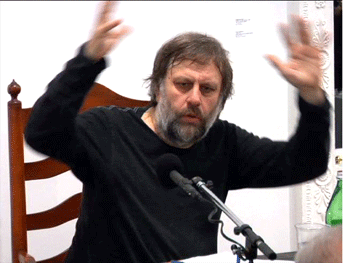
Slavoj Žižek raises his arms.

I wrote a Personal Response to Children of Men, which has received quite a few hits since its posting. I recently came across Slavoj Žižek’s brief commentary on the film here. I think you will find it interesting at least. Žižek is a fascinating cat and one of the more entertaining philosophers.

Chinatown and the Rule of Thirds

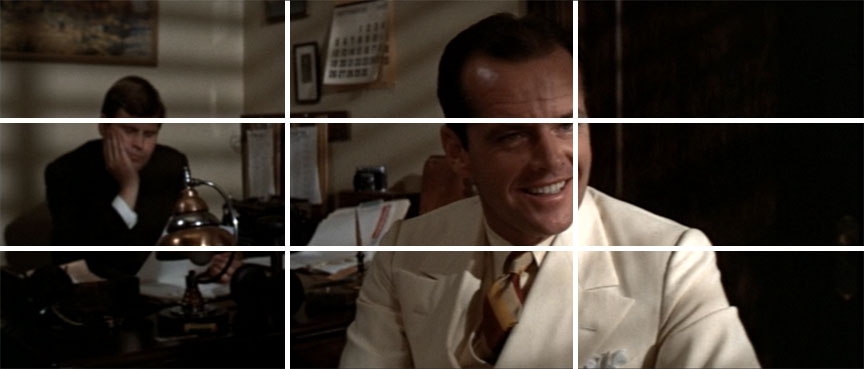
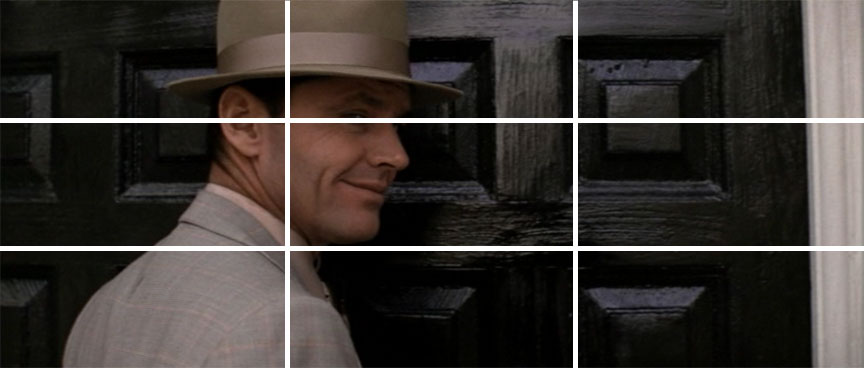
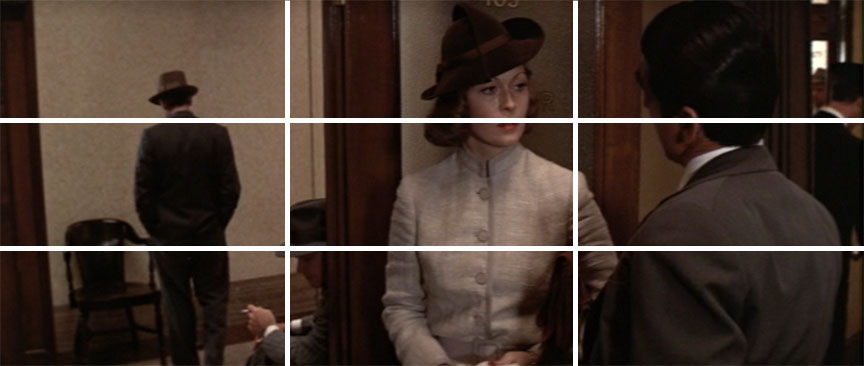
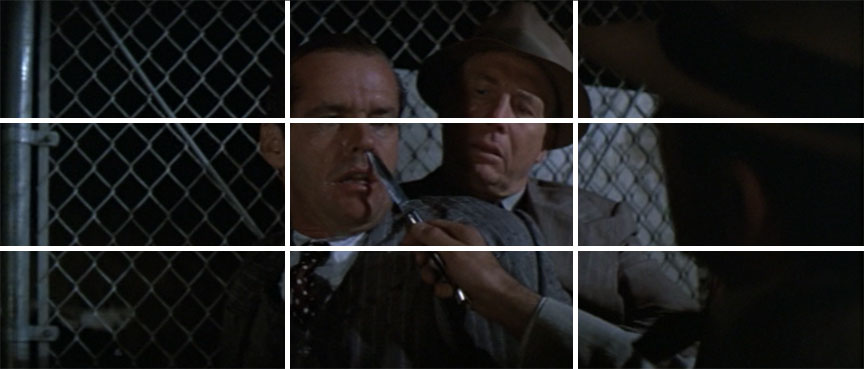
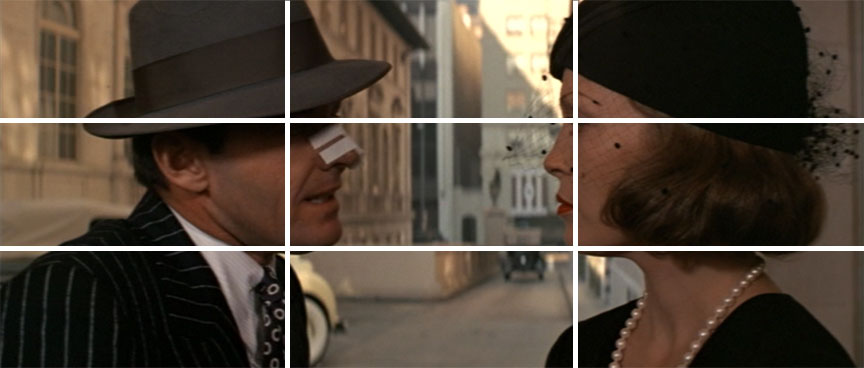
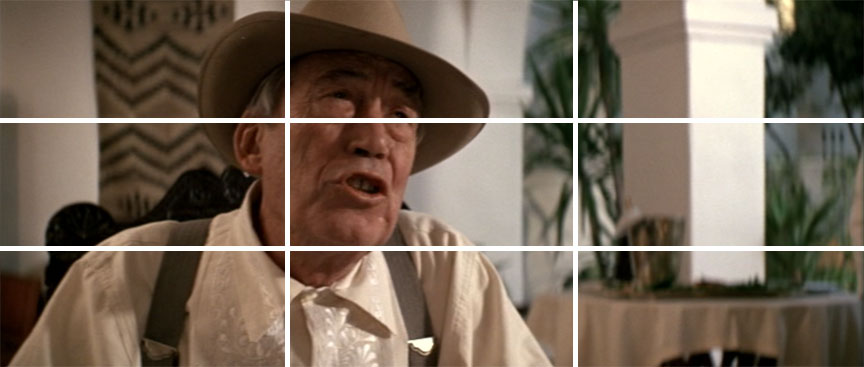
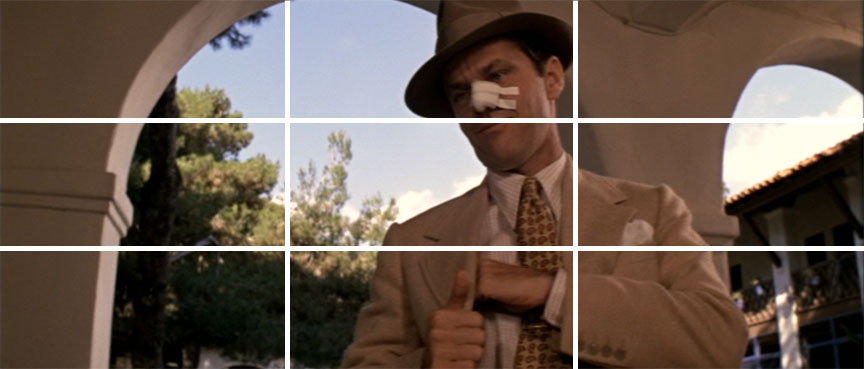
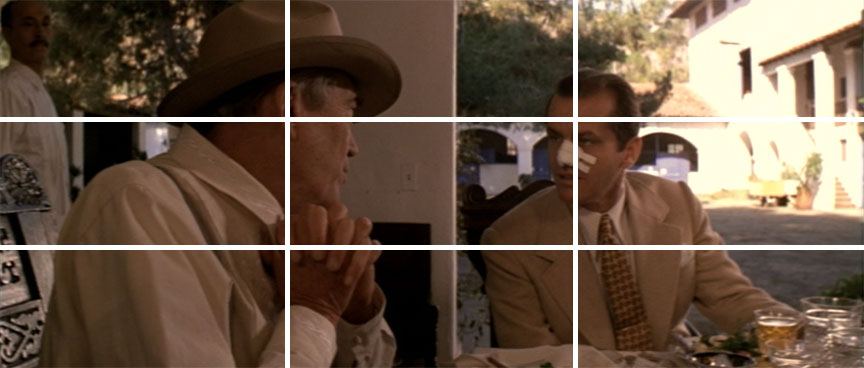
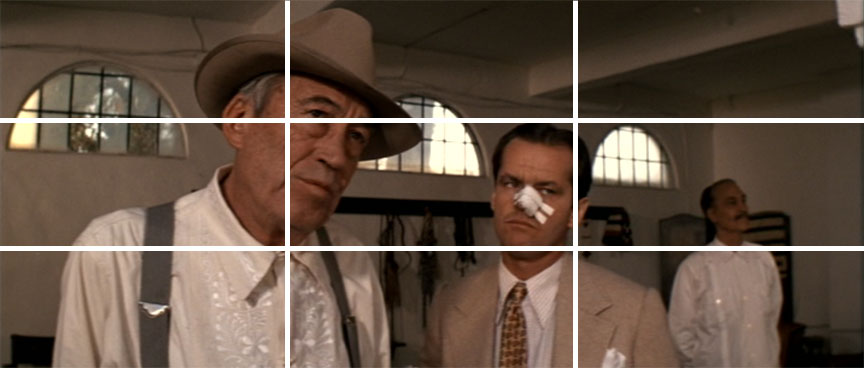
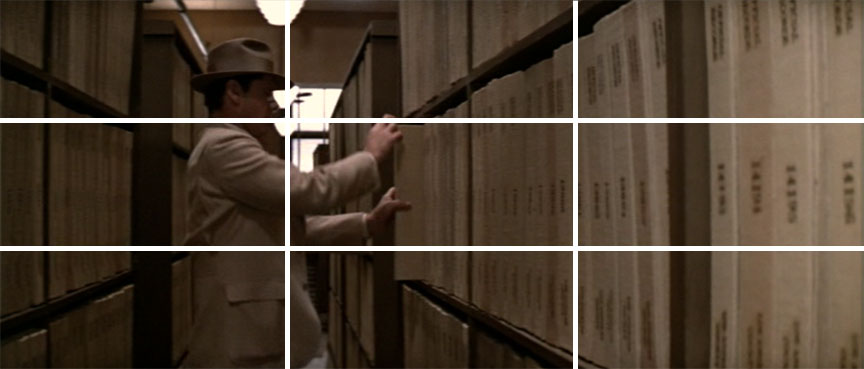
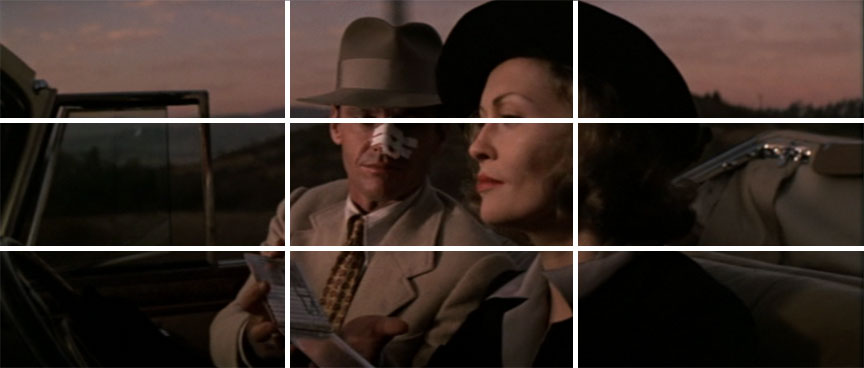
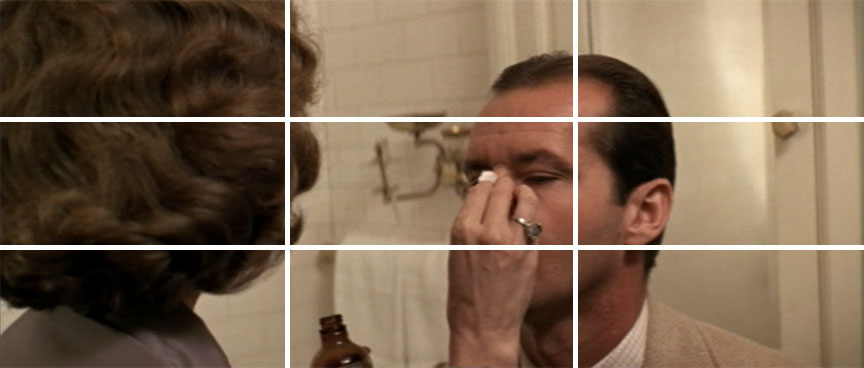
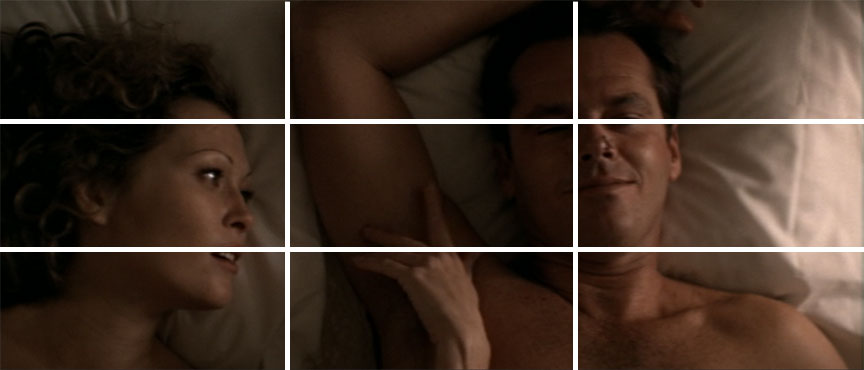
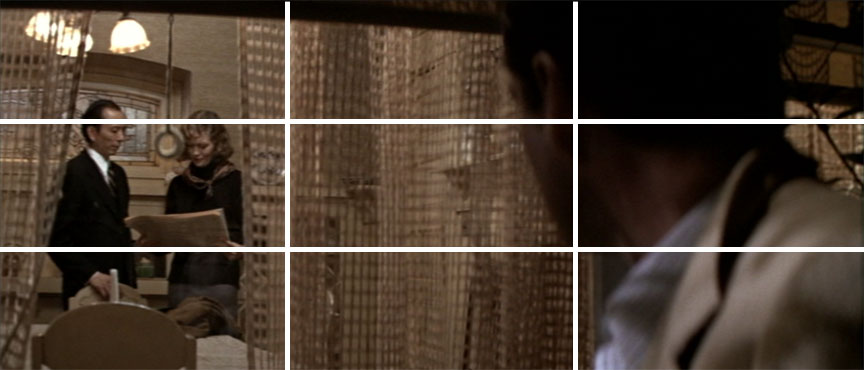
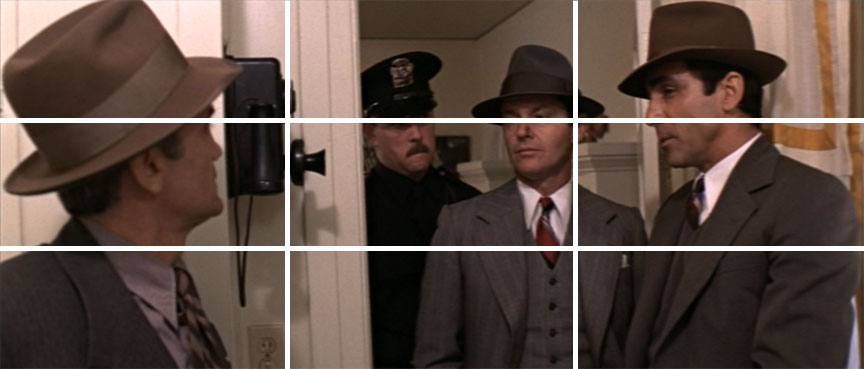
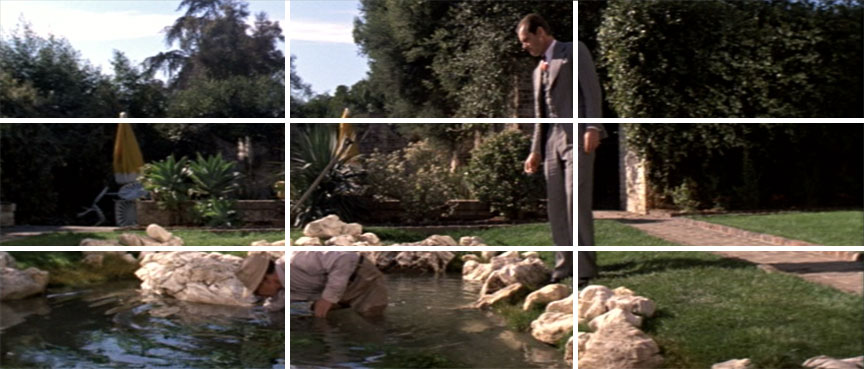
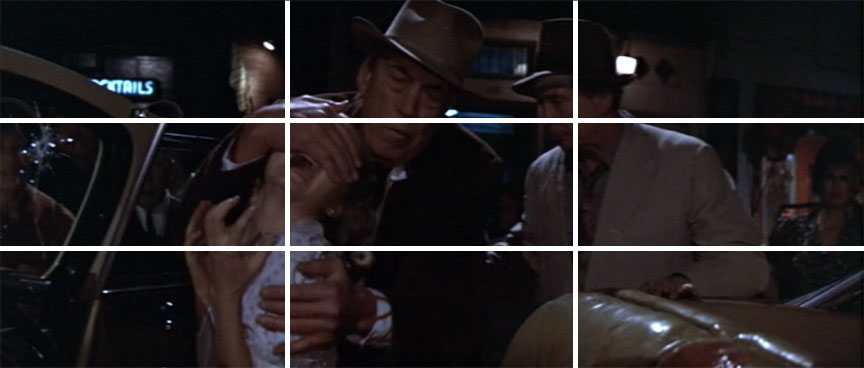
Many films are beautifully shot. Few, though, are as consistently well composed as Chinatown (1974)*. Shot in Panavision (anamorphic) format with a 2.35:1 aspect ratio the somewhat extreme rectangular image would seem to offer significant challenges to effective image composition. As I was pondering this challenge I was struck by how much I loved the images in Chinatown, which I just watched again the other day. That’s when I went back to basics and considered that even with widescreen images there are still fundamentals of composition at play. In this case I figured I would grab a few images from the film and apply the Rule of Thirds to each image.

The Rule of Thirds is simply as follows:

Divide the image into thirds, both horizontally and vertically, then put the focus of the image either one third across (from either side) or one third up or down the screen. Those lines, and the points at which they intersect, are the strongest invisible forces in an image.

In Chinatown the images are constructed around those lines and intersecting points. By doing this the aspect ratio becomes a relatively mute point as the human brain automatically takes in the whole image, mentally divides the image into thirds, and finds pleasure as key visual elements are constructed around those thirds. Of course, deviation from the power of the thirds creates visual tension, which is an additional tool in the filmmaker’s toolbox.

Chinatown was shot by John A. Alonzo. Here are the images from film (I, of course, added the white lines):

This is a simple process of analysis. More involving would be to examine how the rule applies to changing composition withing shots as they are re-framed or the actors move about. One thing I noticed was that all the extreme close-ups put the object of focus directly in the center of the middle square. Placing visual elements along the “third lines” was reserved for medium shots and long shots. Finally, the rule of thirds does not guarantee that an image will be good, or work well for a particular scene. However, fundamentals are fundamentals. Without them one will not only have difficulty maintaining a consistent quality, but one cannot truly “break the rules.” The irony is that fundamentals are what allow filmmakers to innovate and stay fresh.

* This is my opinion, of course, but there is a quality in the film’s imagery that is truly wonderful and yet difficult to pin down.

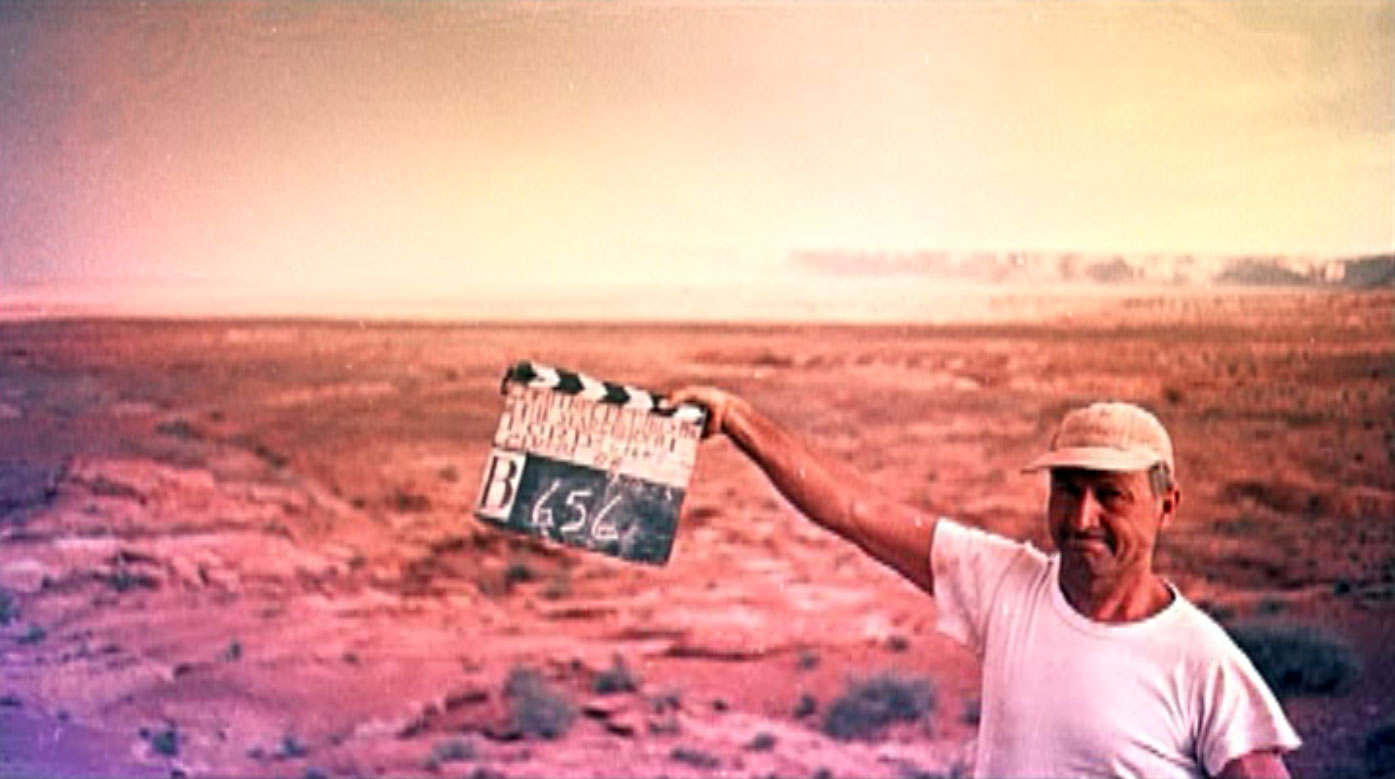
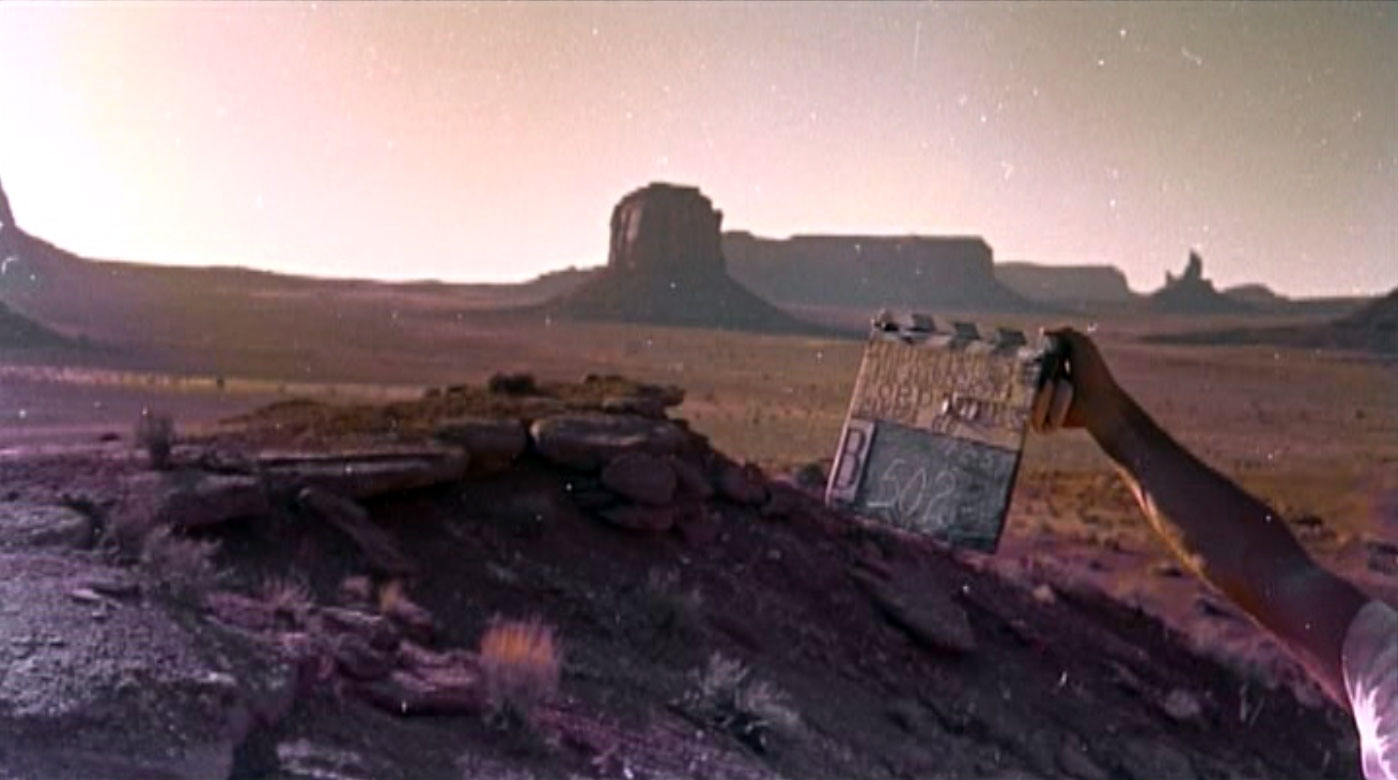
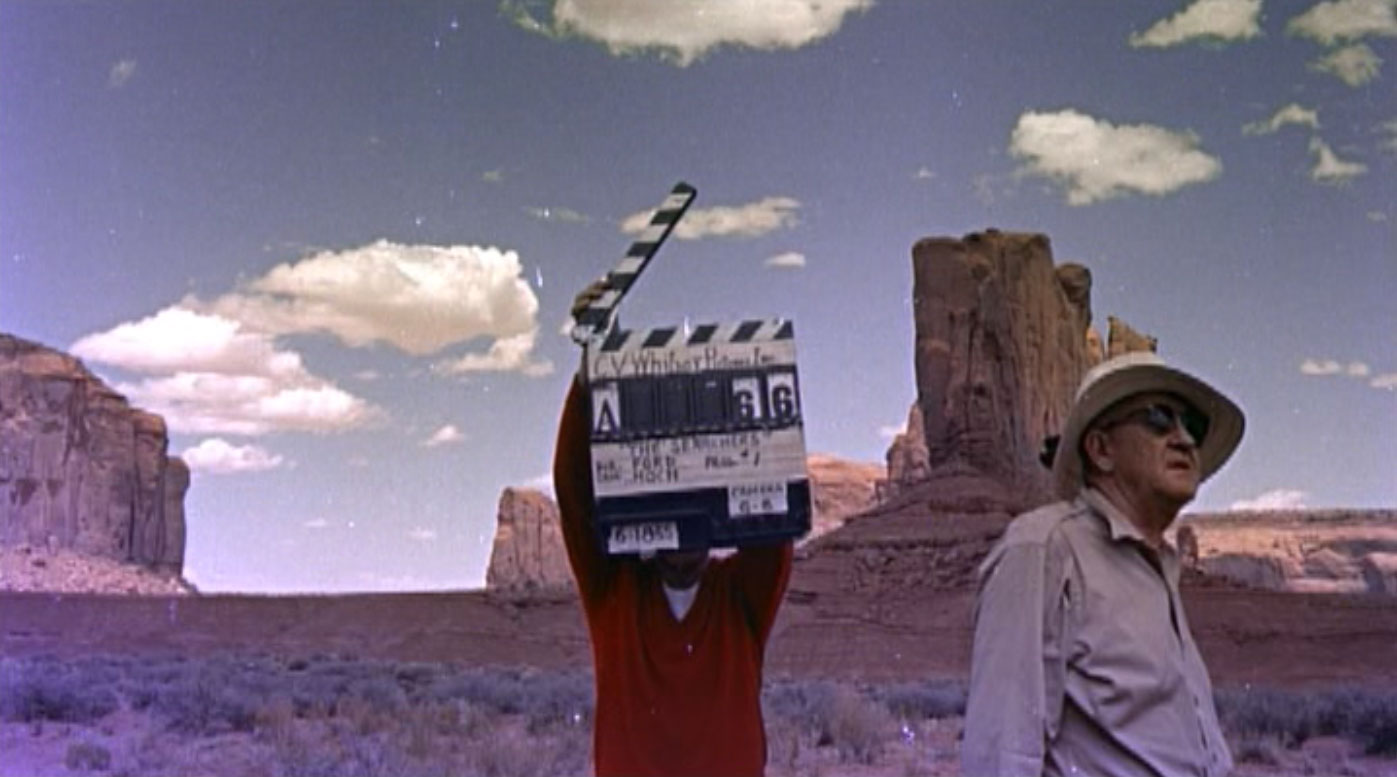
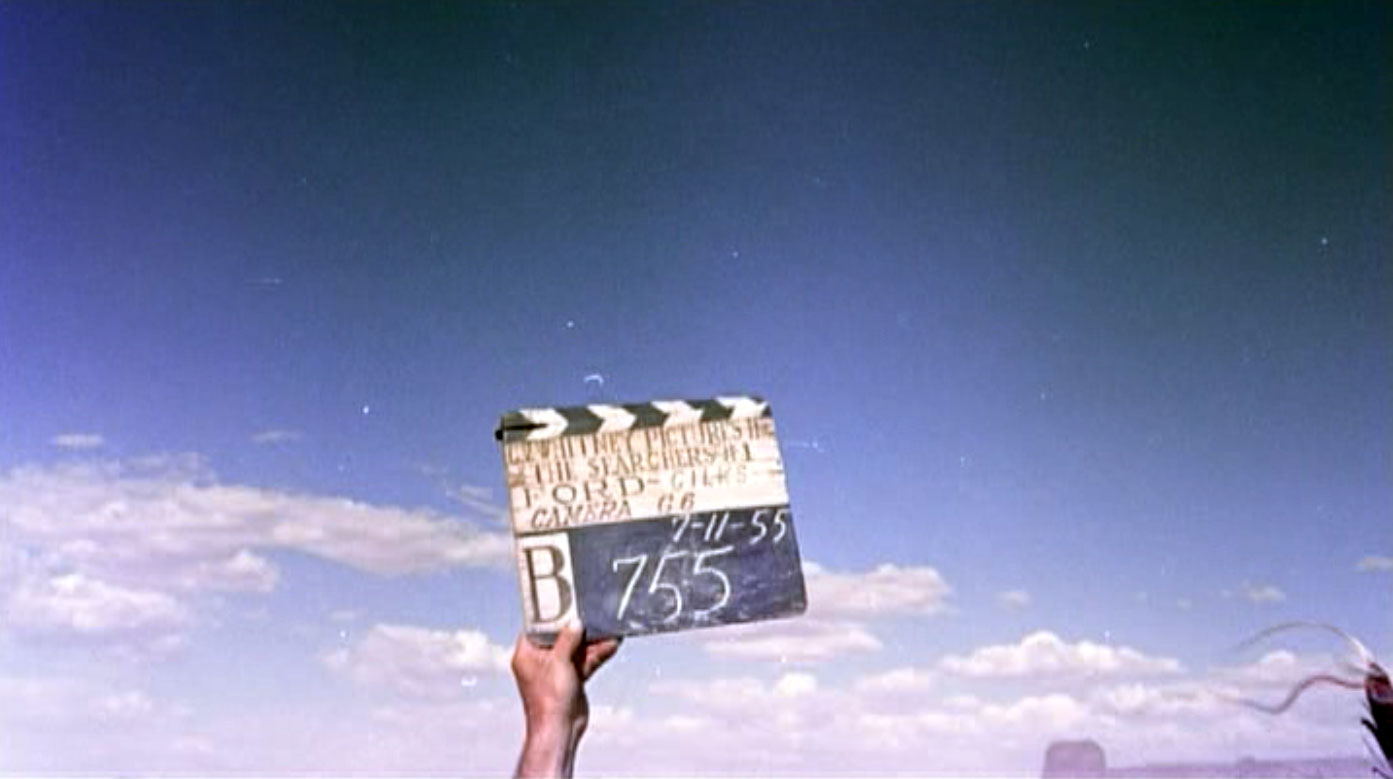
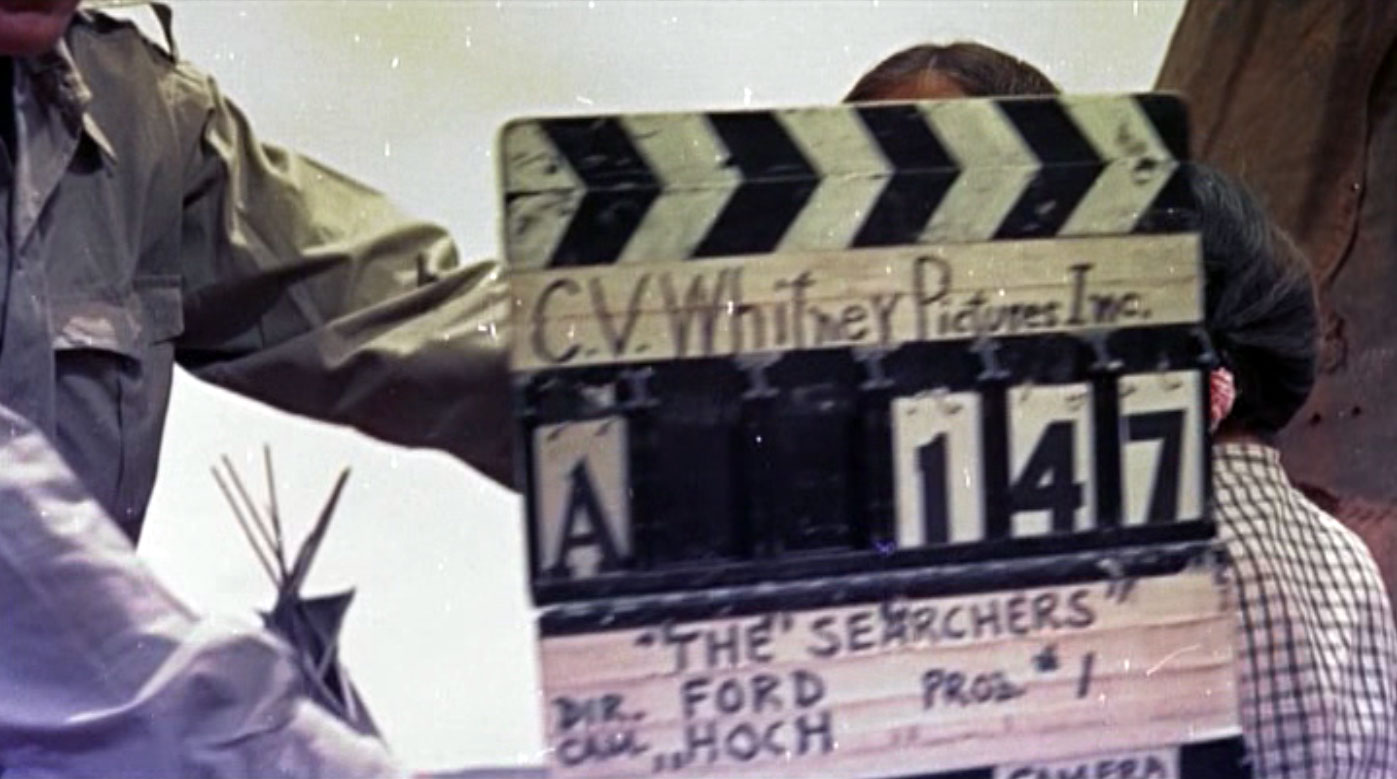
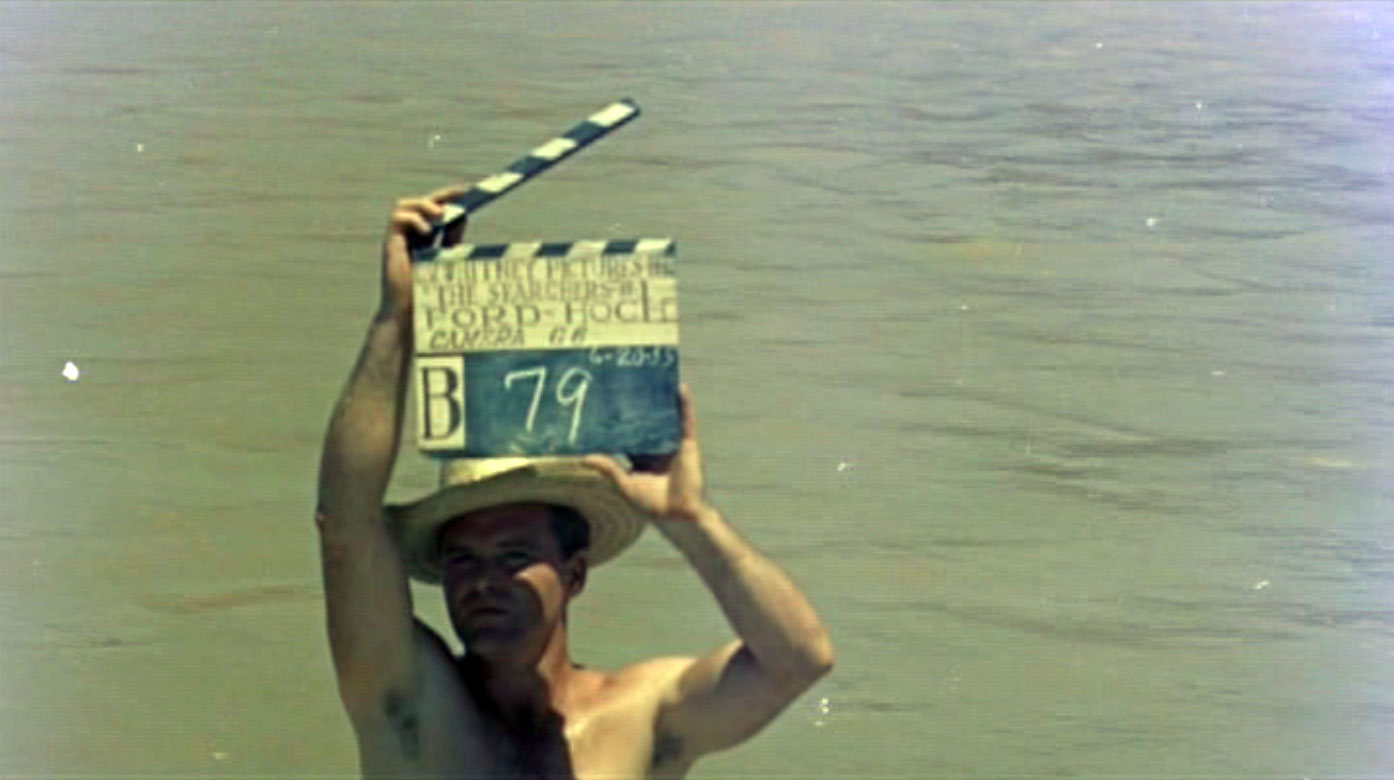
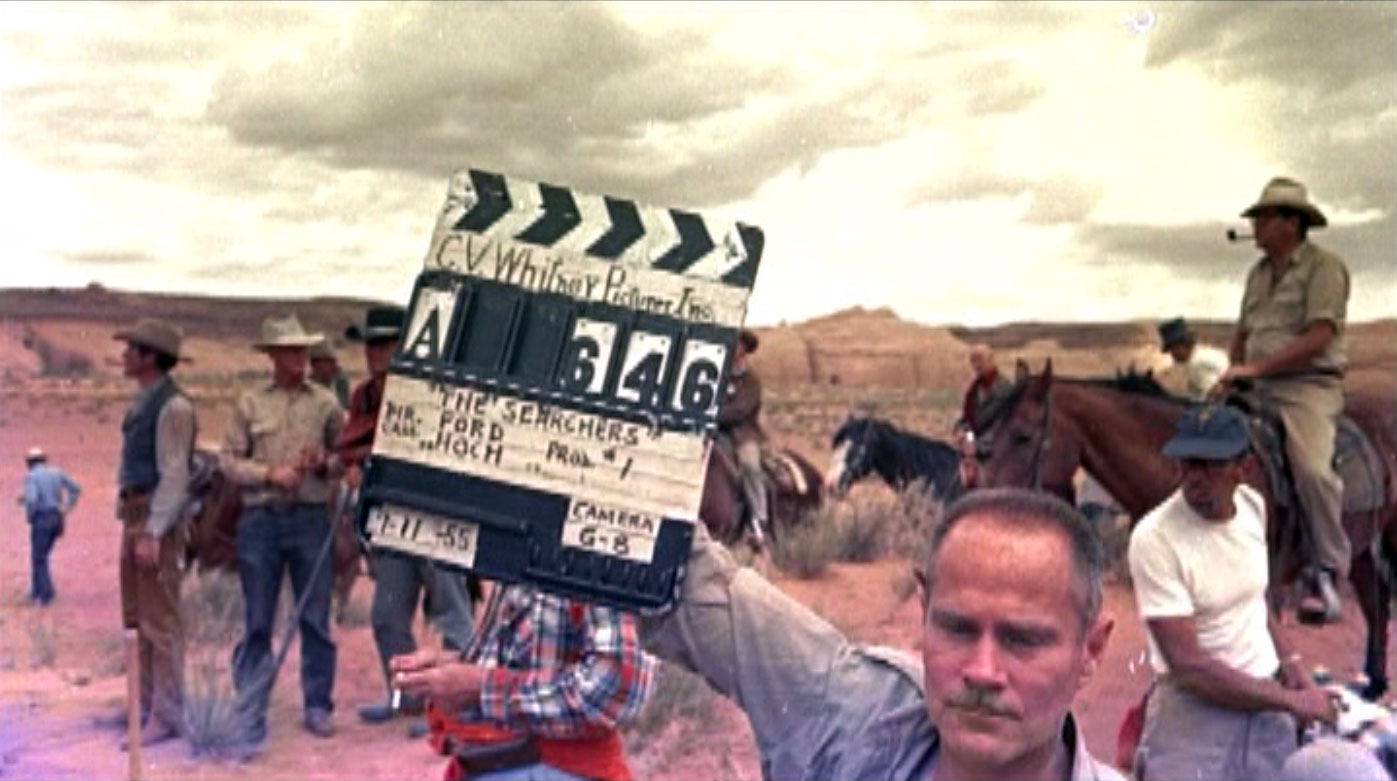
15 slates from The Searchers

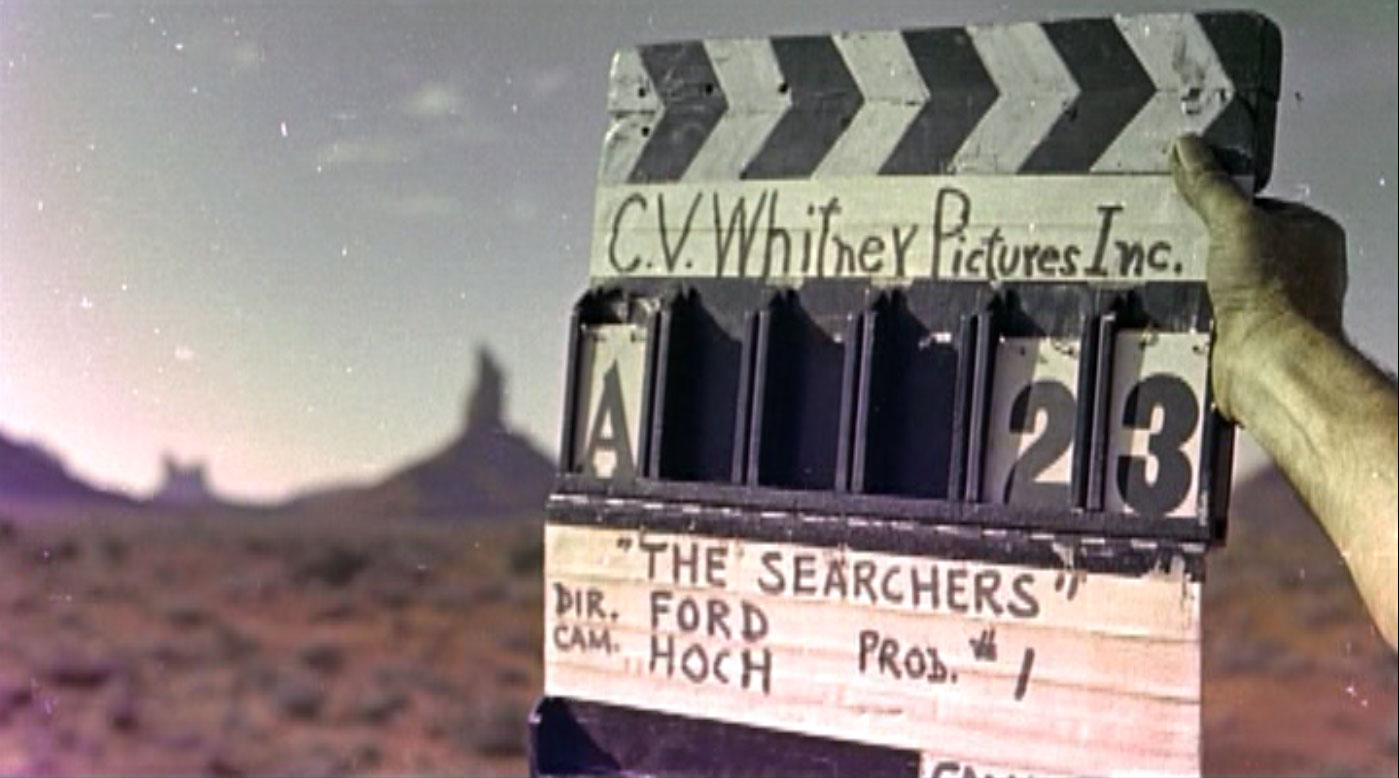
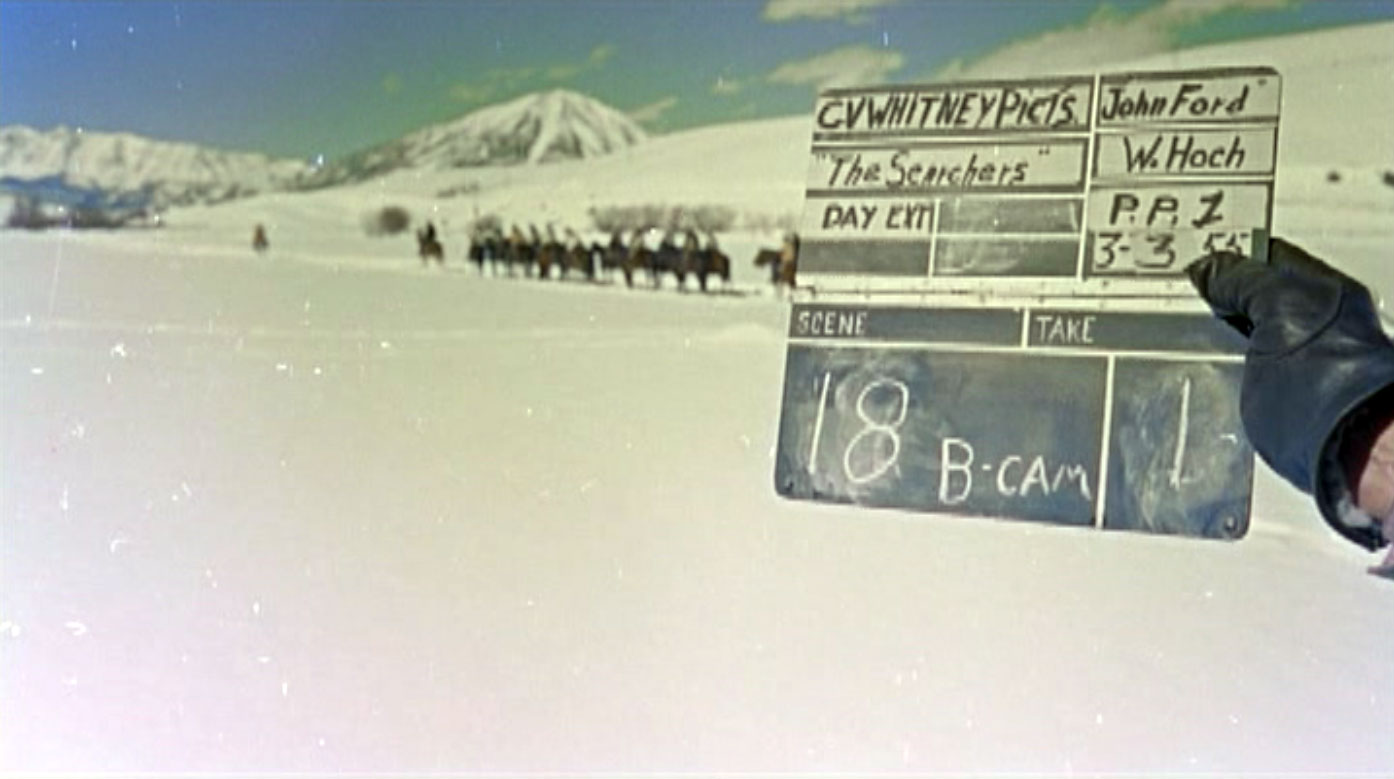
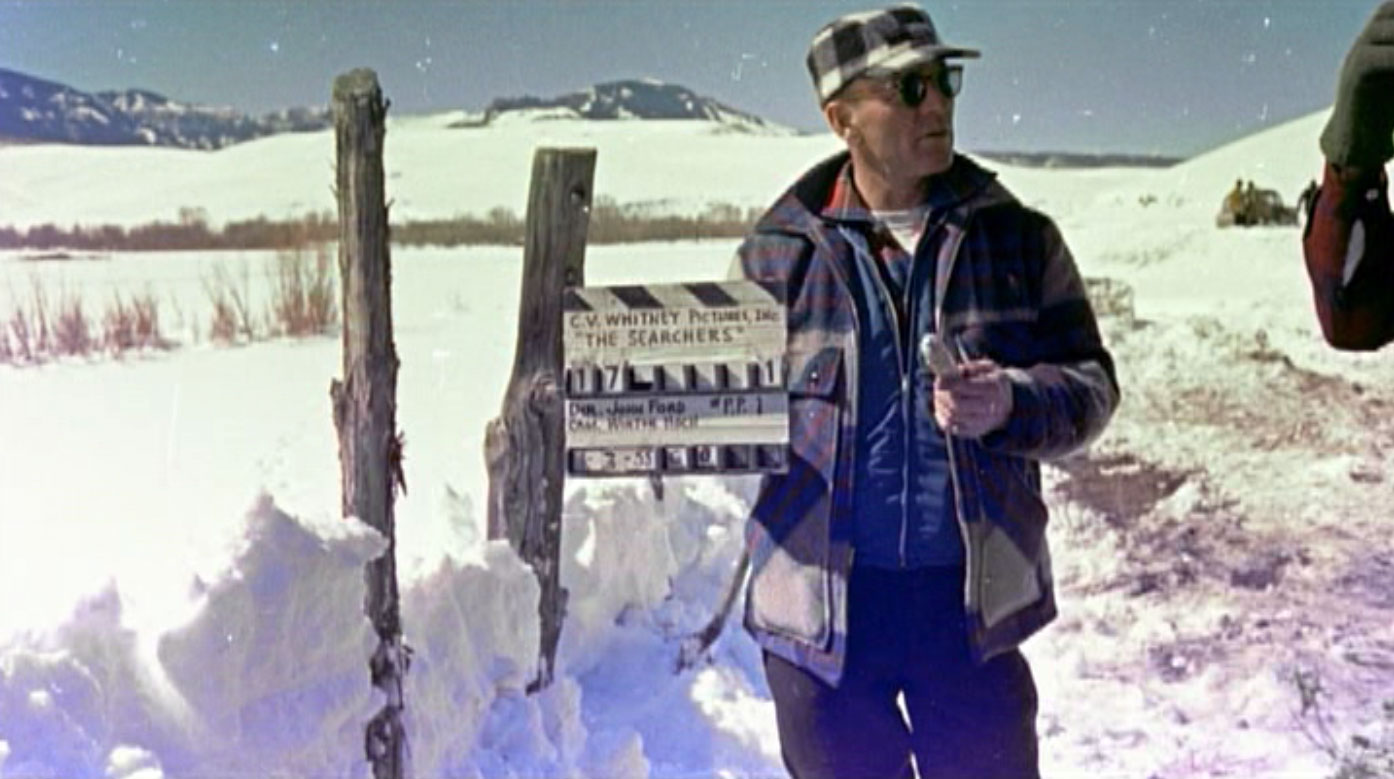
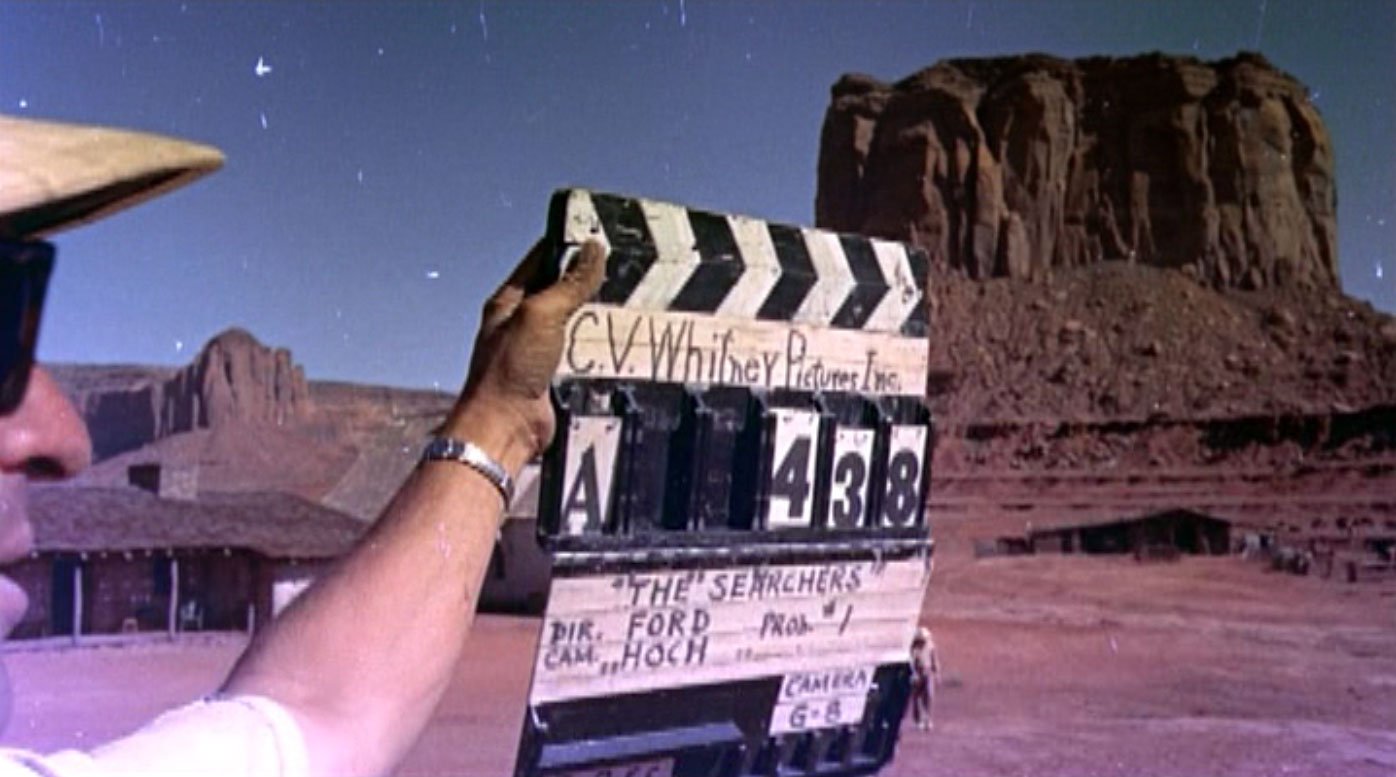
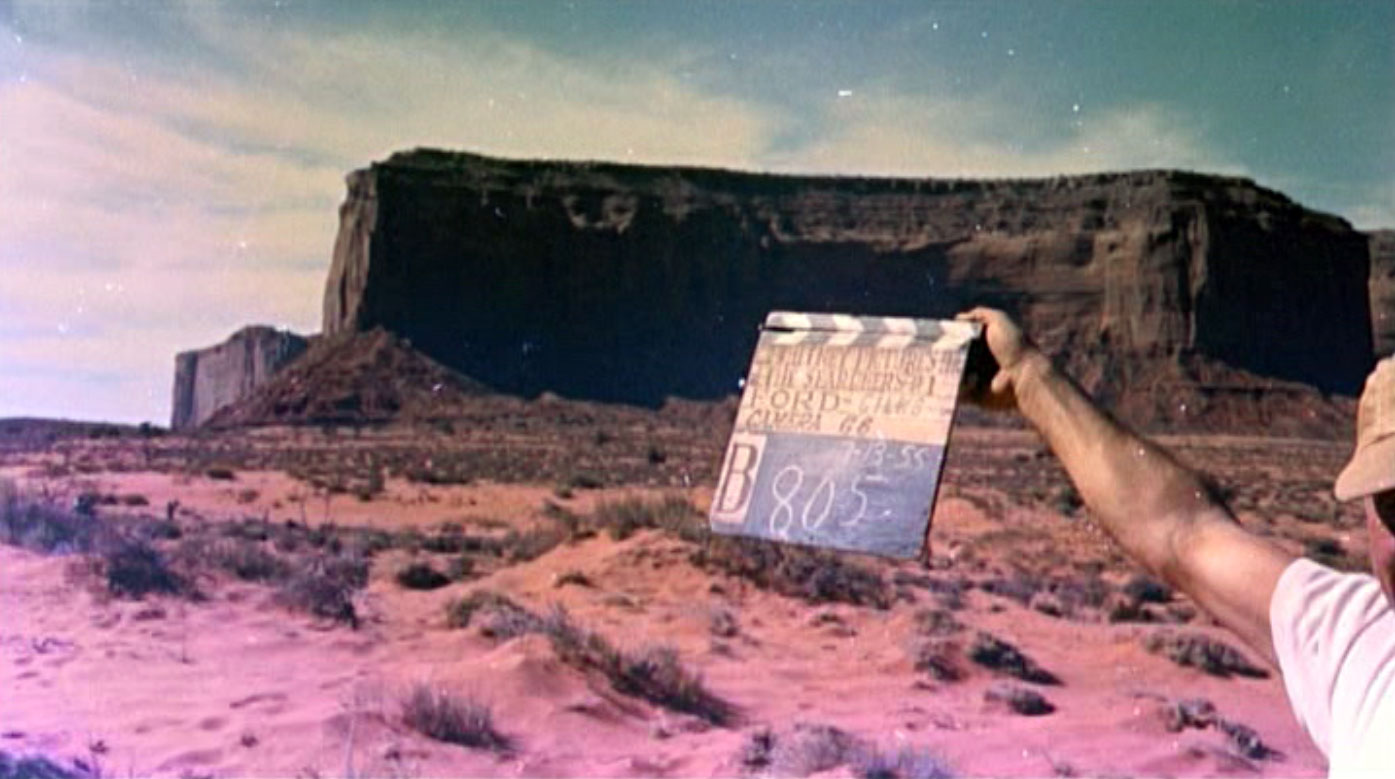
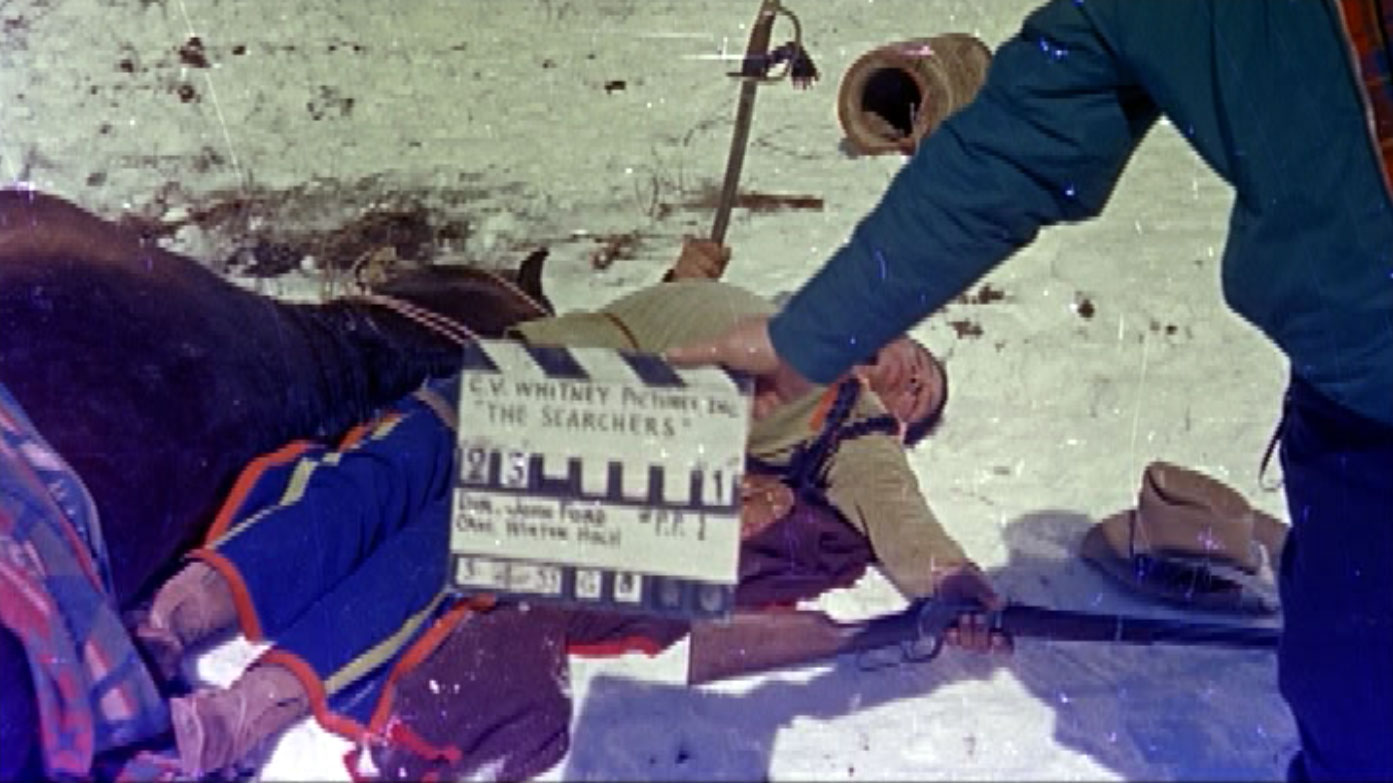
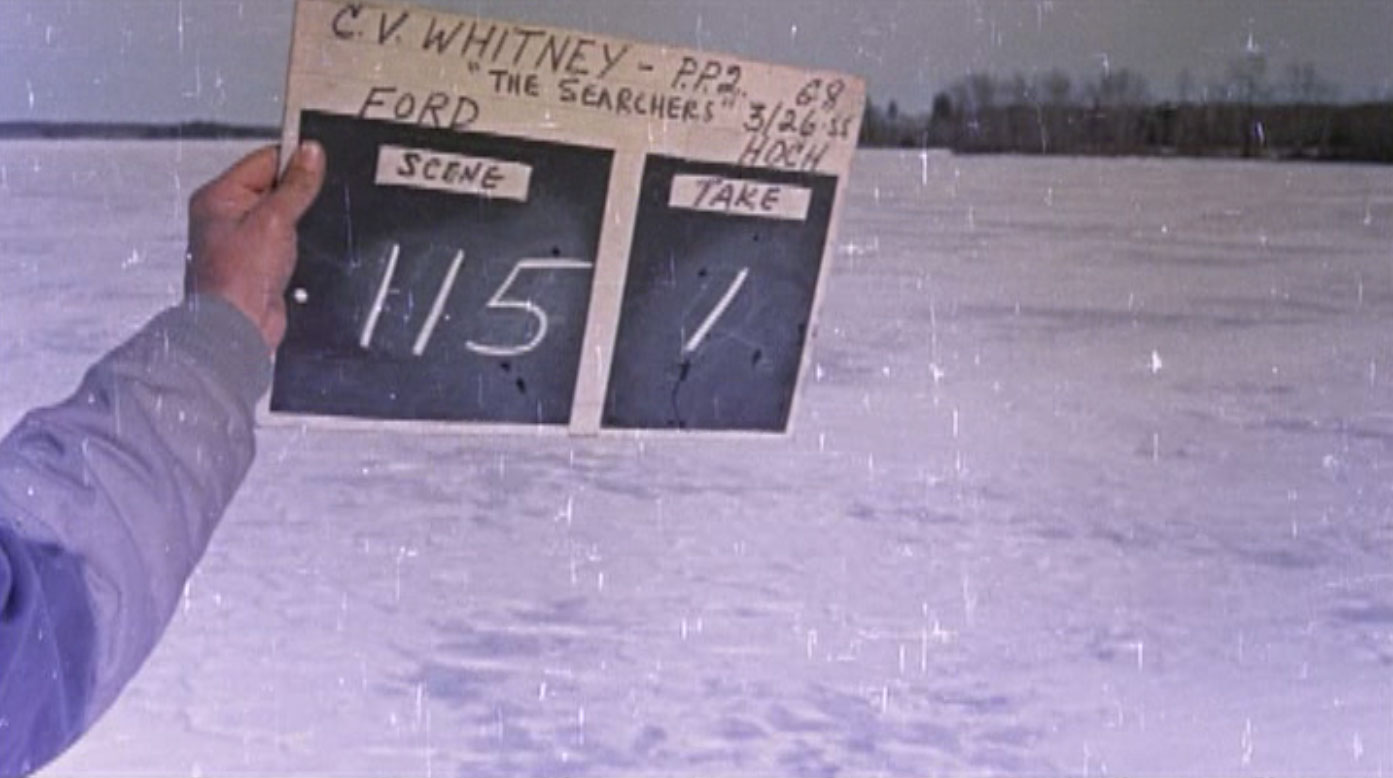
A couple of days ago I had the pleasure of watching The Searchers with my daughter Lily. She had seen a couple of other westerns previously, but this was her first time with The Searchers. Afterwords we talked about it. We talked about the character of Ethan Edwards and the complexity of his character. We talked about how the native Americans were portrayed and the historical reality of the genocide against them. We also watched the extra features and talked about how the film was created. I mentioned that many consider it to be one of the best westerns ever made. Lily said it IS the best western ever made. She’s my kid!

>that wonderful uncle

>

I am reminded again why Jacques Tati is one of my favorite filmmakers. Recently I sat down with my daughter Lily and we watched Mon Oncle (1958). This film is considered Tati’s best film by many, and it truly is a masterwork of the artform. Although my heart leans more towards Monsieur Hulot’s Holiday (1953), I still love Mon Oncle – and so does Lily. I must say both films are glorious.

As I was pondering why Tati’s films endear themselves to my sensibilities so, I thought of Jean Renoir. Renoir may be my favorite director, if I could actually have such a thing. What grabs me and holds me fast about Renoir’s film is their unabashed portrayal and love of humanity. Tati, though more stylized in his aesthetic, has the same generous and loving characteristic. Tati’s characters are closer to types than Renoir’s, but they are types as only the French can do them – a kind of multifaceted simplicity of forgiven sinners.

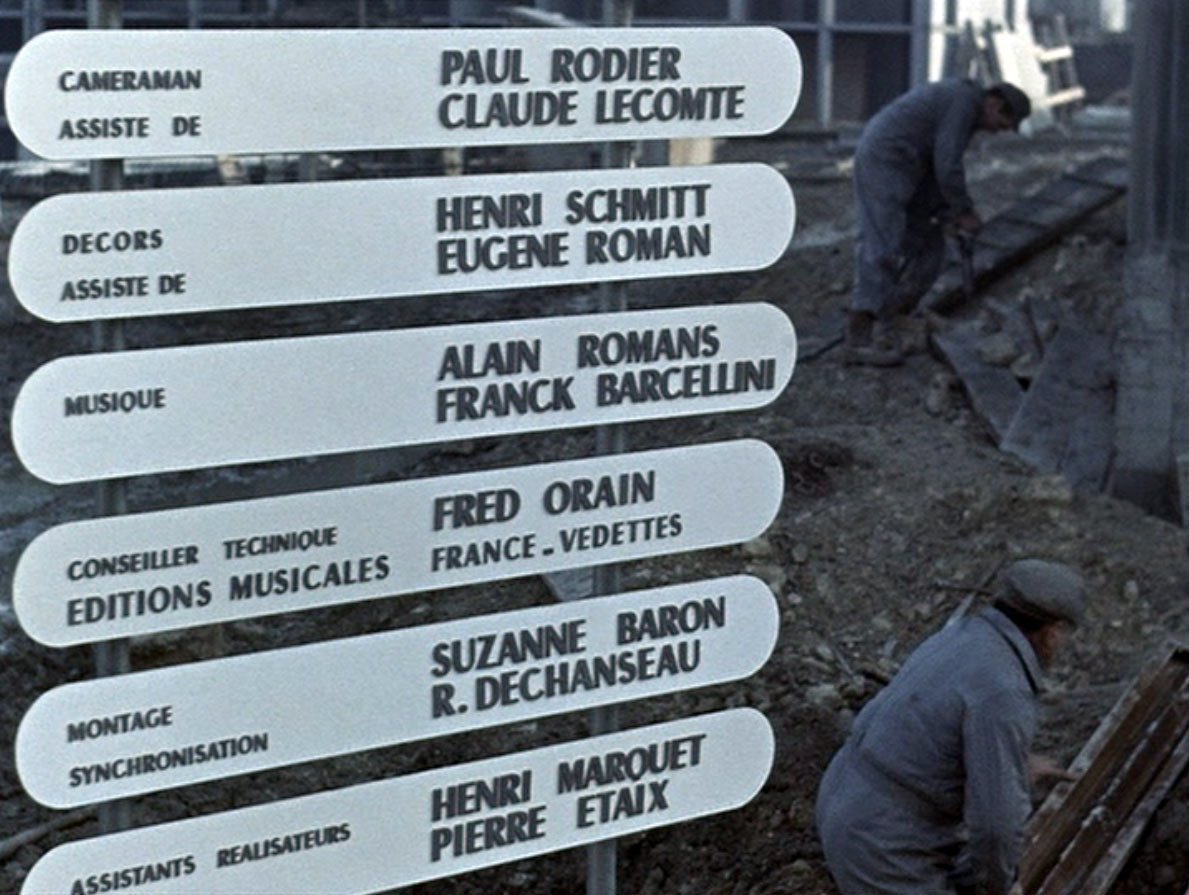
With this love of humanity in mind I was struck afresh by the opening credits. They stand out as an example of creatively dealing with two problems: 1) How can the credits actually be an entertaining part of the film rather than something merely tacked on? and 2) How can the credits actually contribute to the meaning of the film?


Workers labor, as do the filmmakers

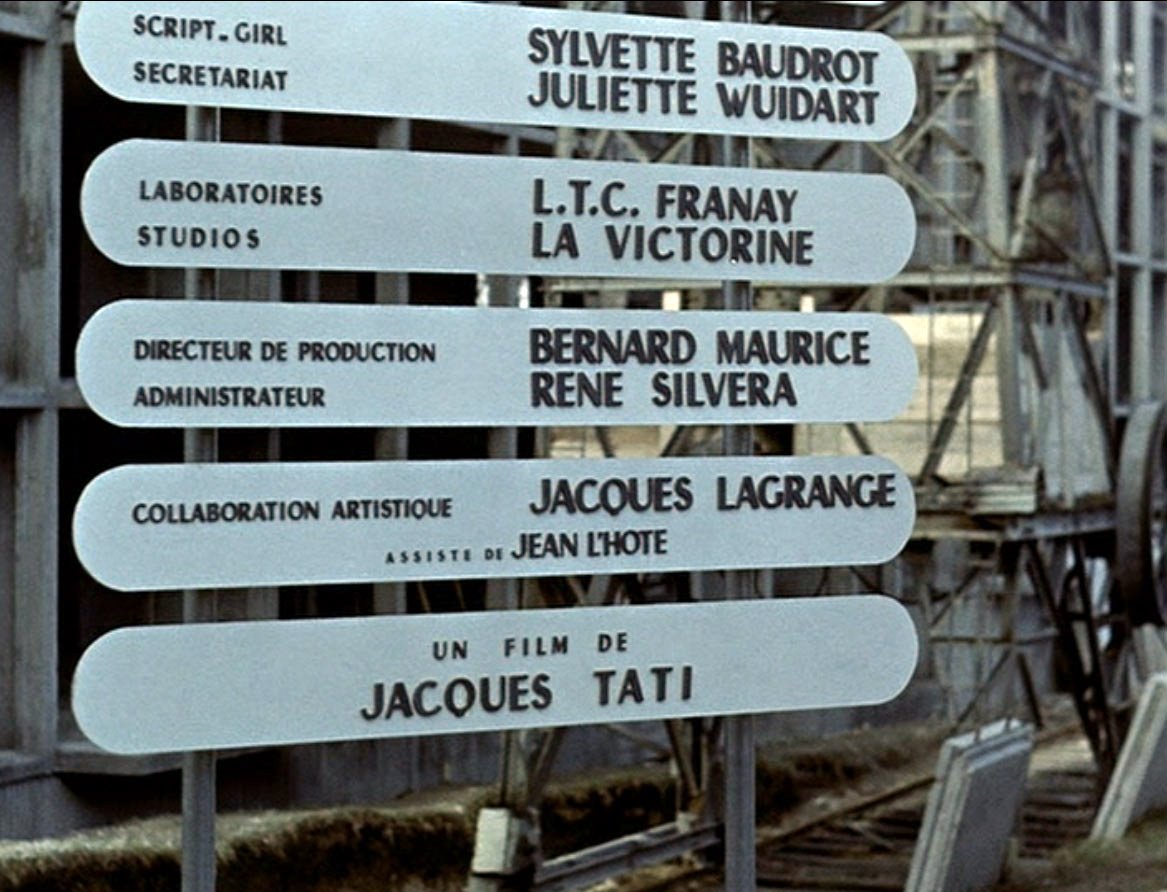
As the film opens we catch a glimpse of a construction site and hear construction noises. In the left foreground are signs with name on them. As I understand it, these signs correspond to the common practice of placing signs with the architect’s name and builder’s name on the construction site. We soon realize these names, however, are of the “architects” and “builders” of the film we are watching. It is both a clever and interesting way to present the film’s credits. It also says something about the story we are about to see and the kind of filmmaker who is giving us this film.


Tati’s name is last, and no more prominent

By juxtaposing the film’s “construction crew” with an actual building construction site the viewer is asked to see the film’s crew as laborers and collaborators. This film is a product of human effort, creativity, sacrifice, and love. Tati’s name is last, but not last as it is with most films for the purpose of being more prominent. Tati has set himself within the circle of collaborators. Yes, it is his film, but it is their film too.

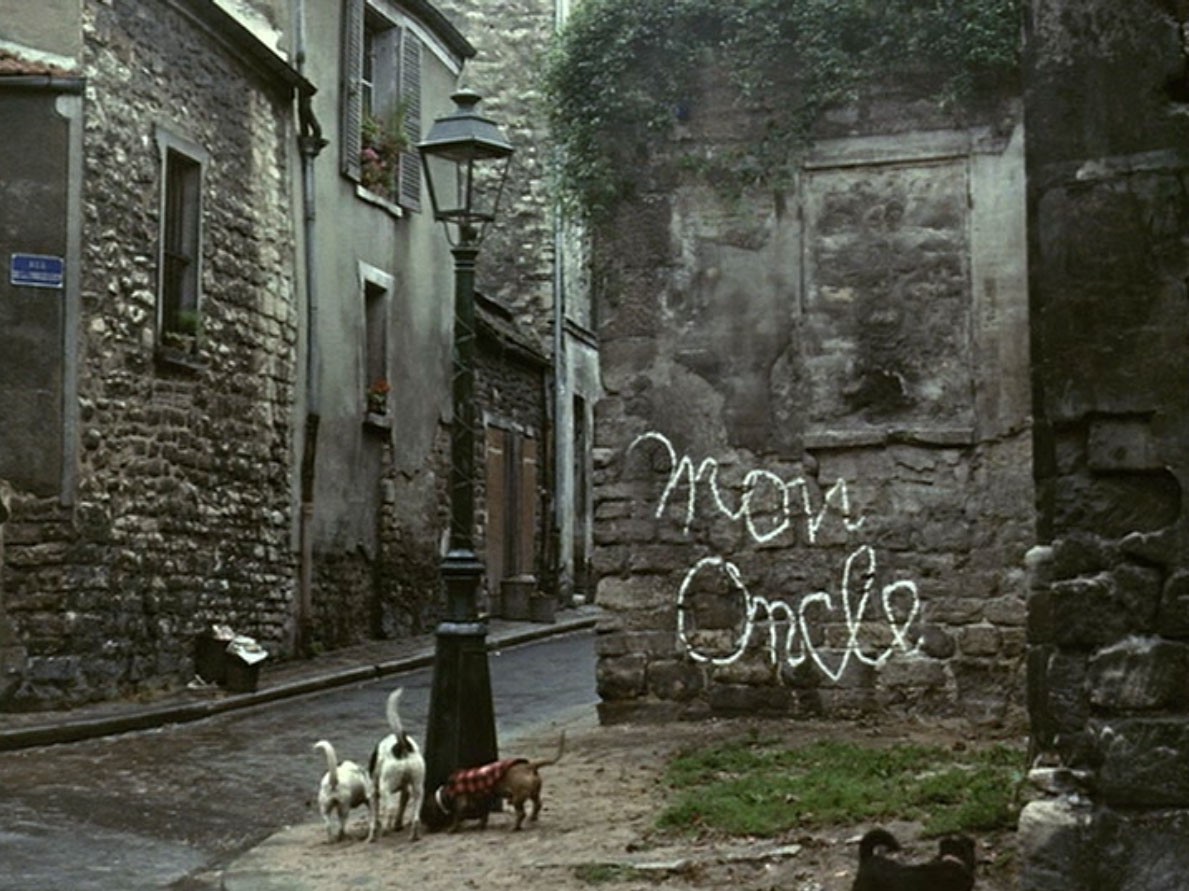
And then we cut to this:

The other world: Decay as Life

To my mind this is one of the great edits in cinema. Still within the credit sequence, we have the juxtaposition of this shot with the previous which loads it up with meaning – a meaning that the rest of the film will explore. We have gone from the new to the old, from a world of freshly built to a world of decay, from life as death to death as life – for it is in this world of decay that we witness the vibrant bustle of humanity interacting with itself rather than with machines and objects. Mon Oncle is a meditation on these two worlds. As we will see, buildings and houses, which are evidences of human activity and intention, seem to stand for the people who inhabit them. In other words, the artifice becomes the humanity. Thus, this run down street, which exudes a deep and flawed beauty, is the truer humanity.

Tati plays Hulot, and one can assume Tati loves Hulot for all his bumbling and goodheartedness. But Tati’s name, as per the credits, is associated with the new, the world of construction and building, the forever present. Hulot, the oncle of the title, is instantly associated with the old and crumbling. It is as though Tati recognizes that he lives and works in the modern world but finds himself reaching back vicariously to another, more romantic time and place. Hulot then may be his avatar as well as his clown.

I’m not the only fan of Jacques Tati. So is Frank Black:

I will now consider Frank a close friend.

Henry V


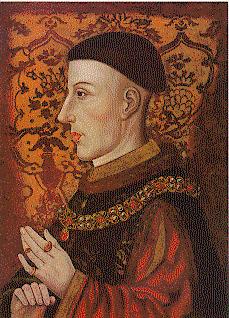
Good king Henry V sporting a
popular haircut of the day.

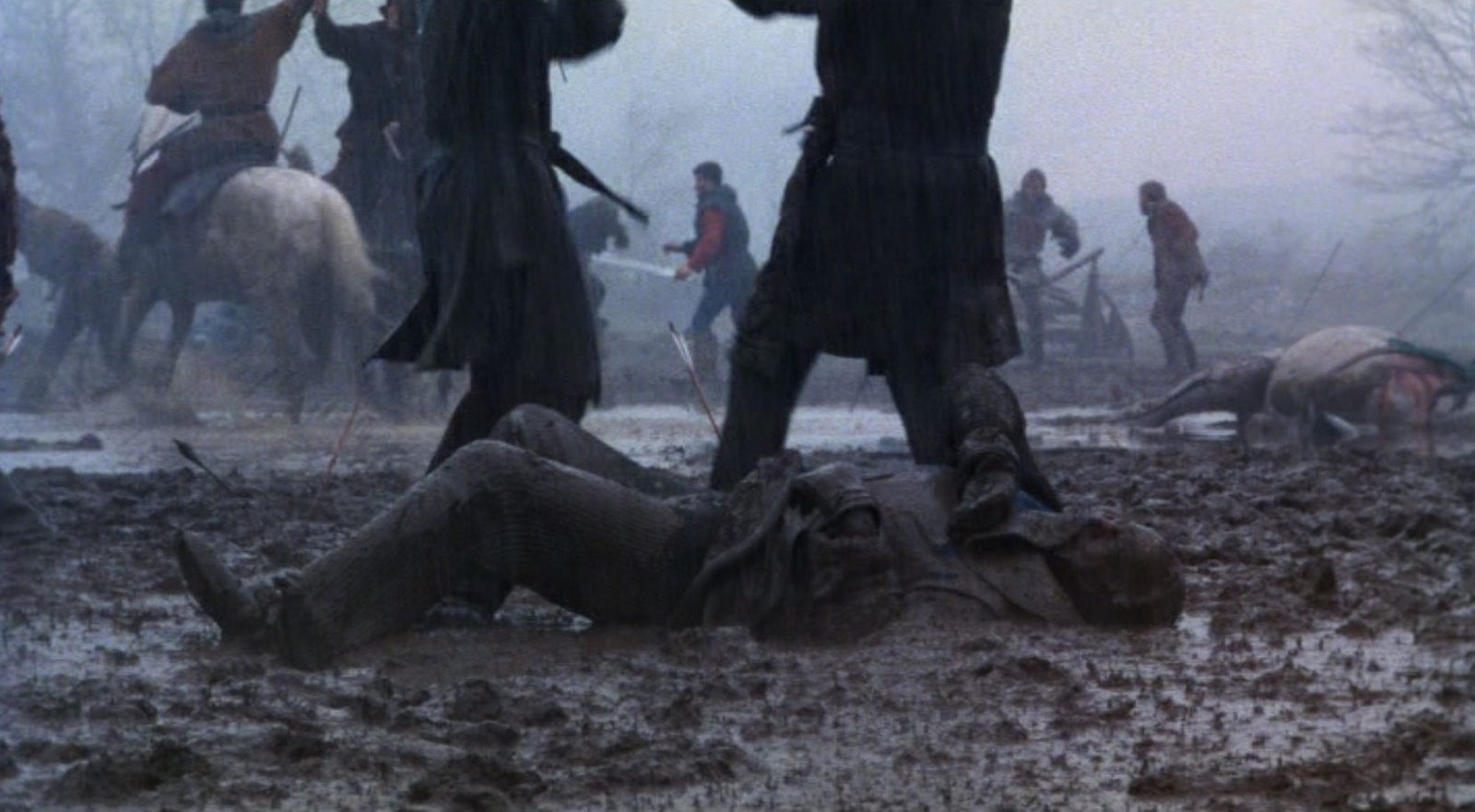
I haven’t been blogging as much about movies lately, and that’s for a number of reasons, mostly because it’s been Summer and we’ve been outside more than in, and also because I’ve been picking up books more than films. Now the leaves are beginning to turn and we are watching a few more films. Recently Lily and I watched Kenneth Branagh’s brilliant Henry V (1989). This was not Lily’s first Shakespeare, but it’s one of her first, and maybe her first not directed for kids. A few times we paused and I explained what was going on, or who was who, but for the most the part the film is easy to follow. More than this, it is a powerful play with great scenes, and great dialogue and speeches. But what struck me the most this time was how it portrayed war.

War is terrible. The great battle in Henry V comes right after one of the English language’s greatest rallying speeches – the St. Crispin’s Day speech. From the speech we get the title for Band of Brothers. In that speech young king Henry rallies his troops with promises of glory and honor, of future stories and brotherhood. That speech spins a aura of wonder and excitement around the coming battle. But then we get into the battle and it is awful. I am thankful Branagh took that opportunity to de-glorify war somewhat.

I was a little concerned showing Lily this film because of both the war images and the difficulty of the language, but I’m glad I did. We talked about the gruesomeness of the fighting and what that means. She and I have also talked numerous times about how films are made and that movie blood is really red paint, etc., so she gets it, but still images do move the soul.

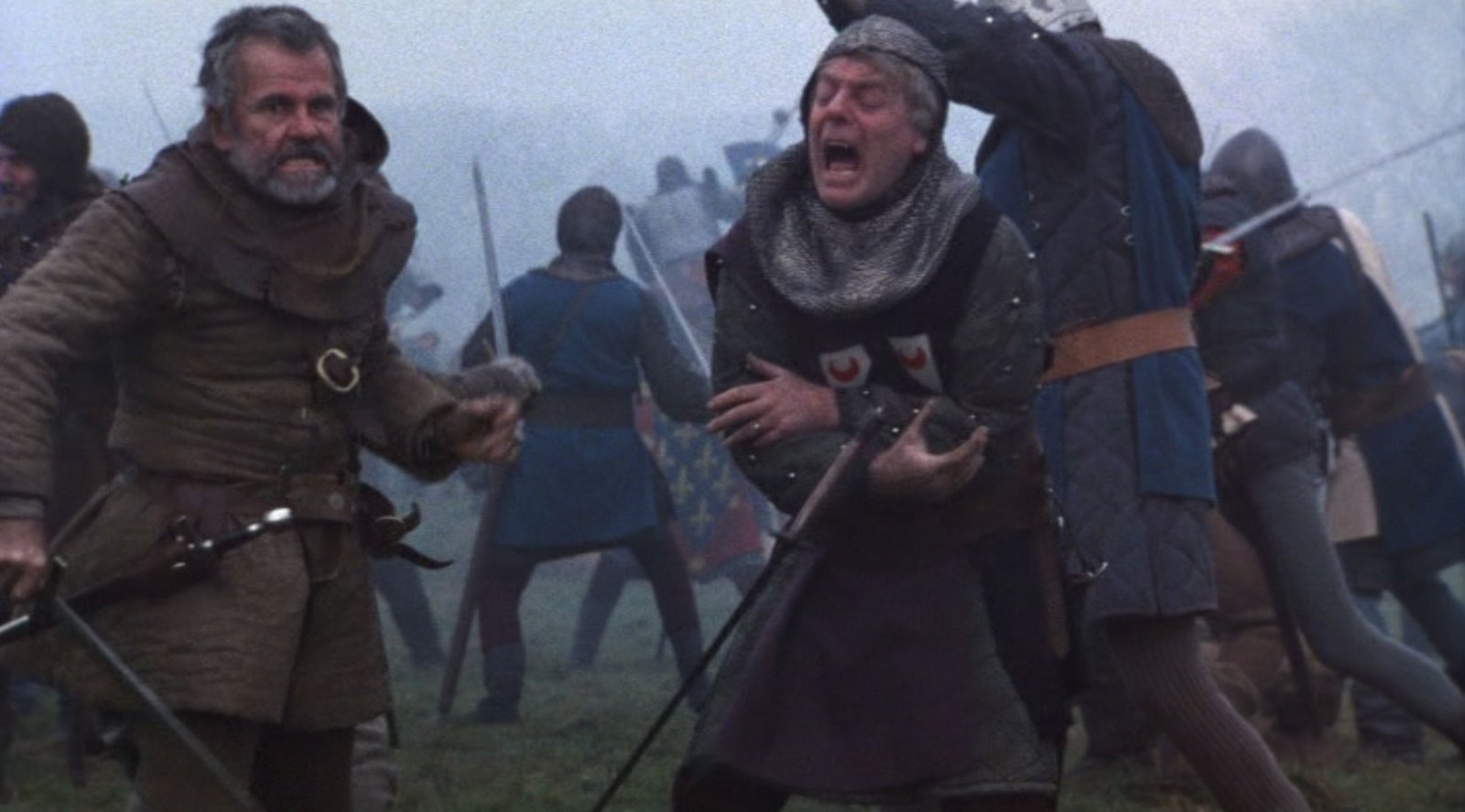
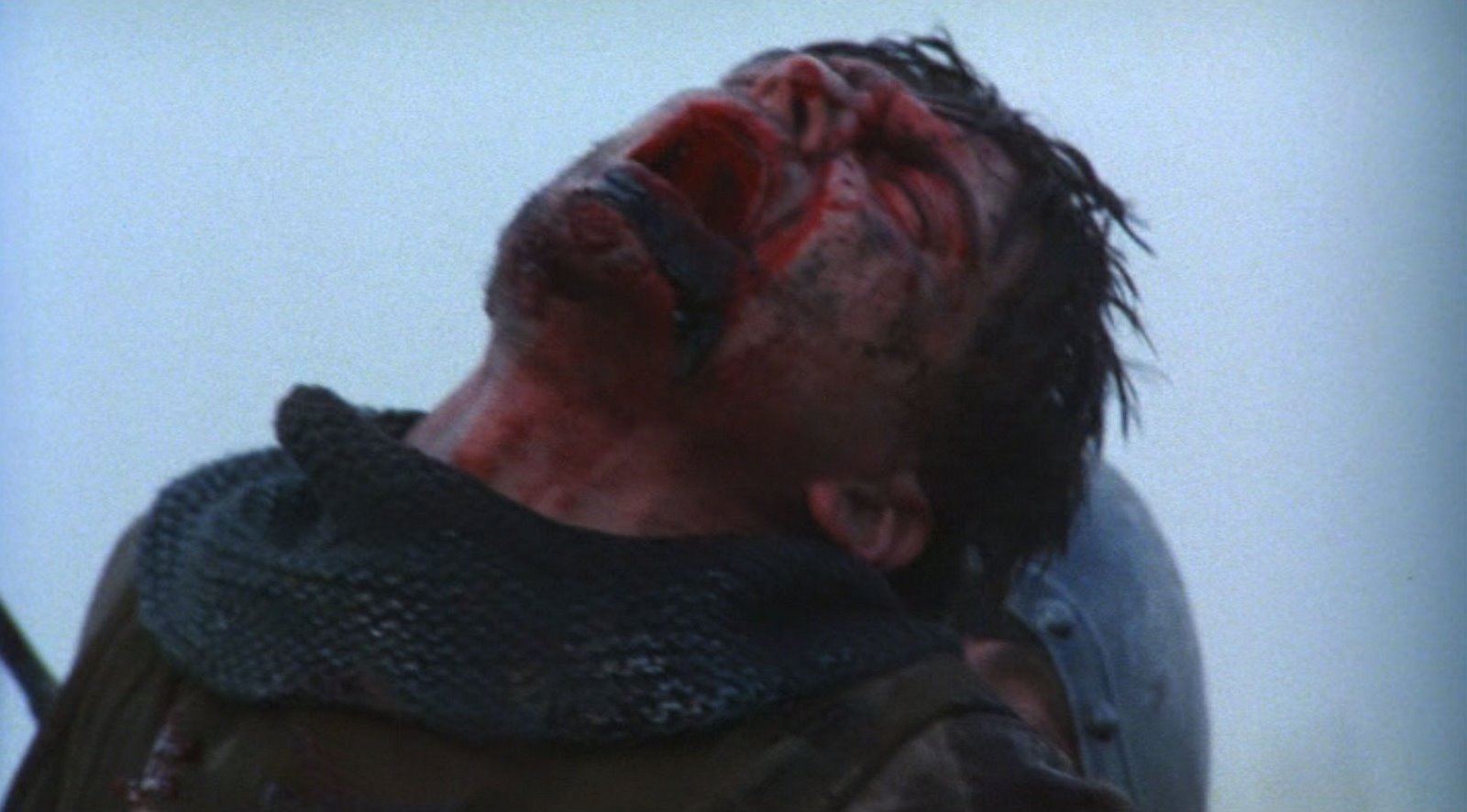
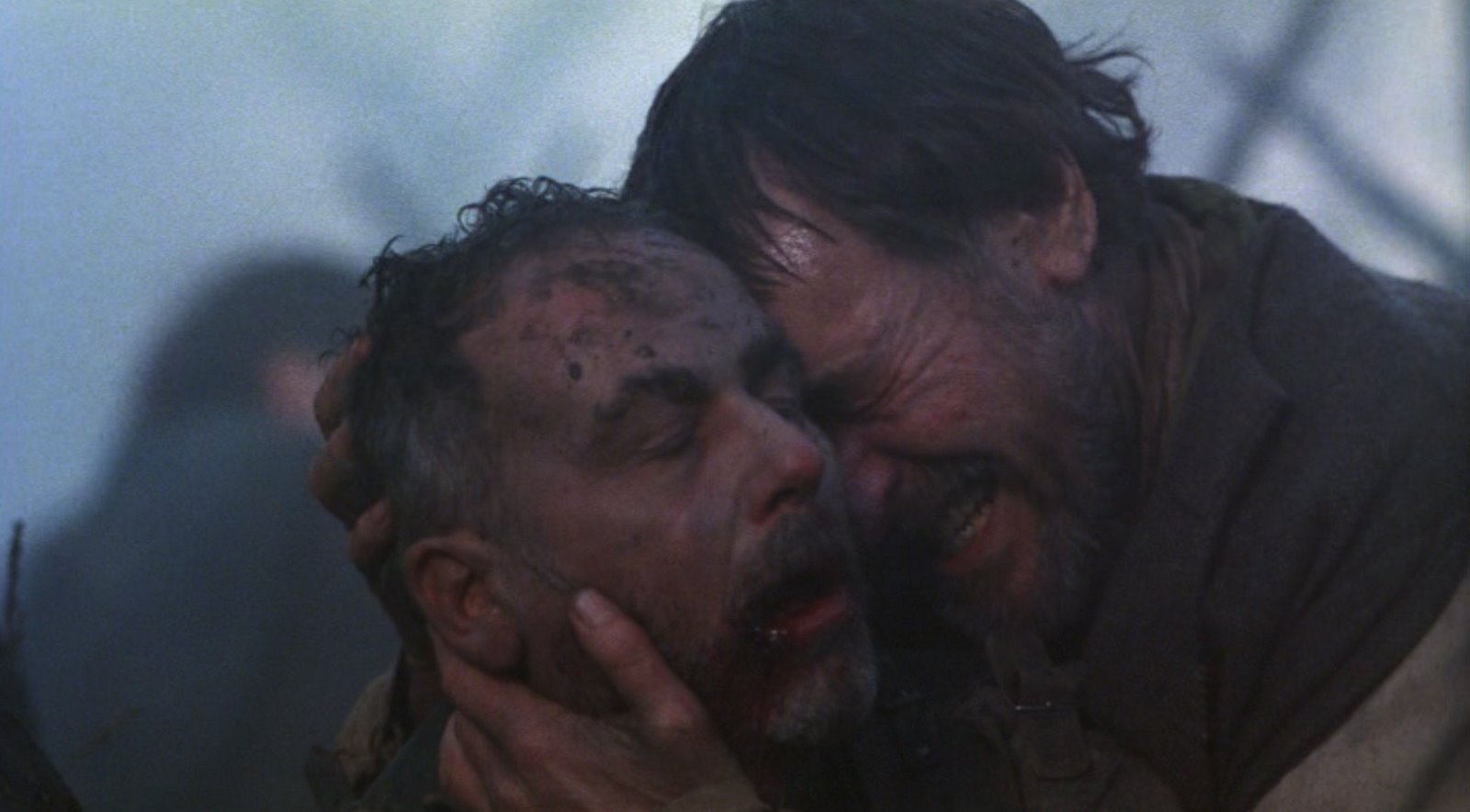
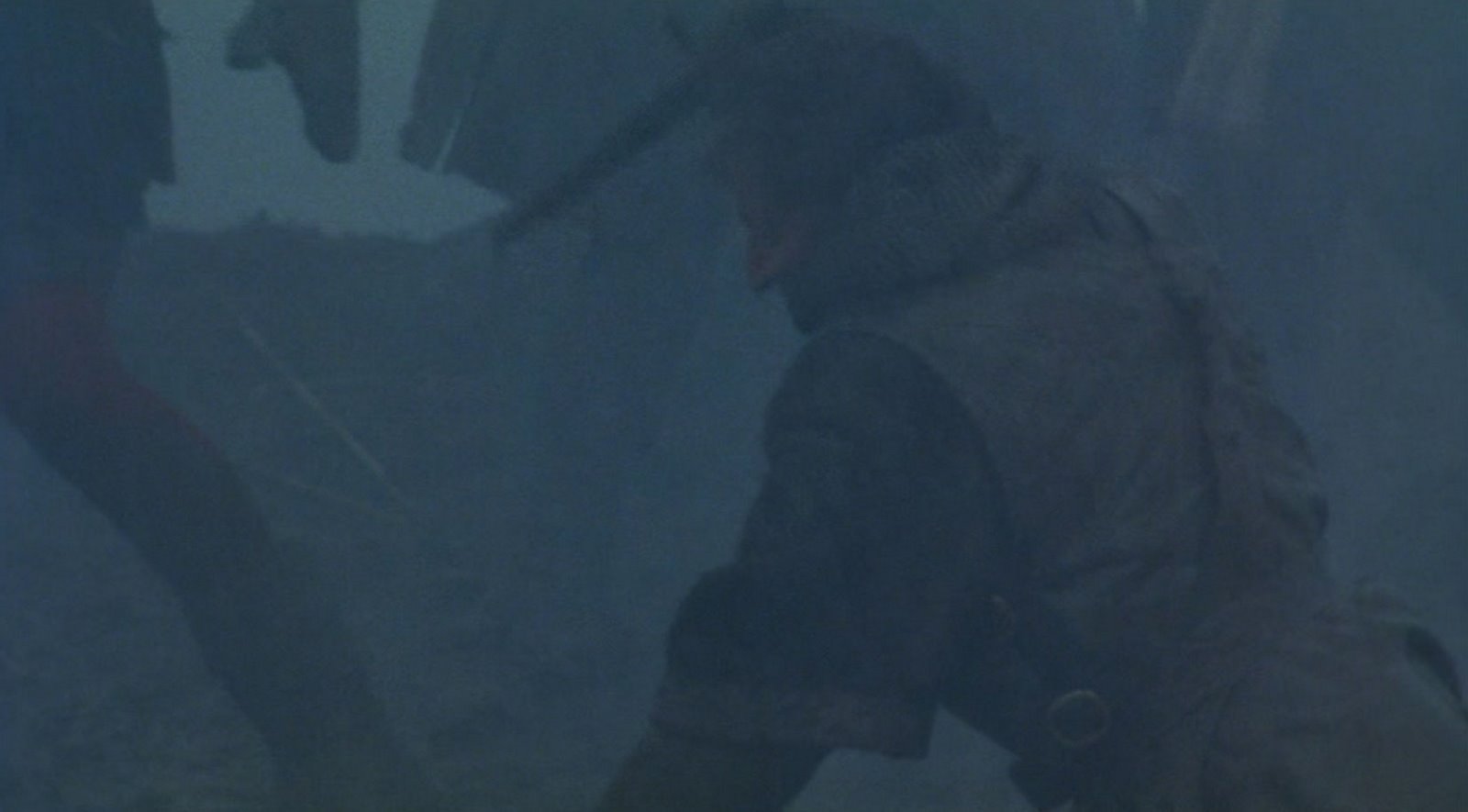
Here are just a few of the many images of the horror, sadness, ugliness, and suffering of war from Henry V:

Of course the English win that war and they do go on to bask in a kind of earthly glory. Such are the lives of victors. But I hope I never forget the great gulf there is between speeches made about war and war itself – even if the speeches be written by the Bard himself and the battles won. I always want to remember that political speeches about the sacrifices made by soldiers and their families are easy to give.

My Darling Clementine: John Ford telling stories

Can a work of art tell us something about the character of the artist?

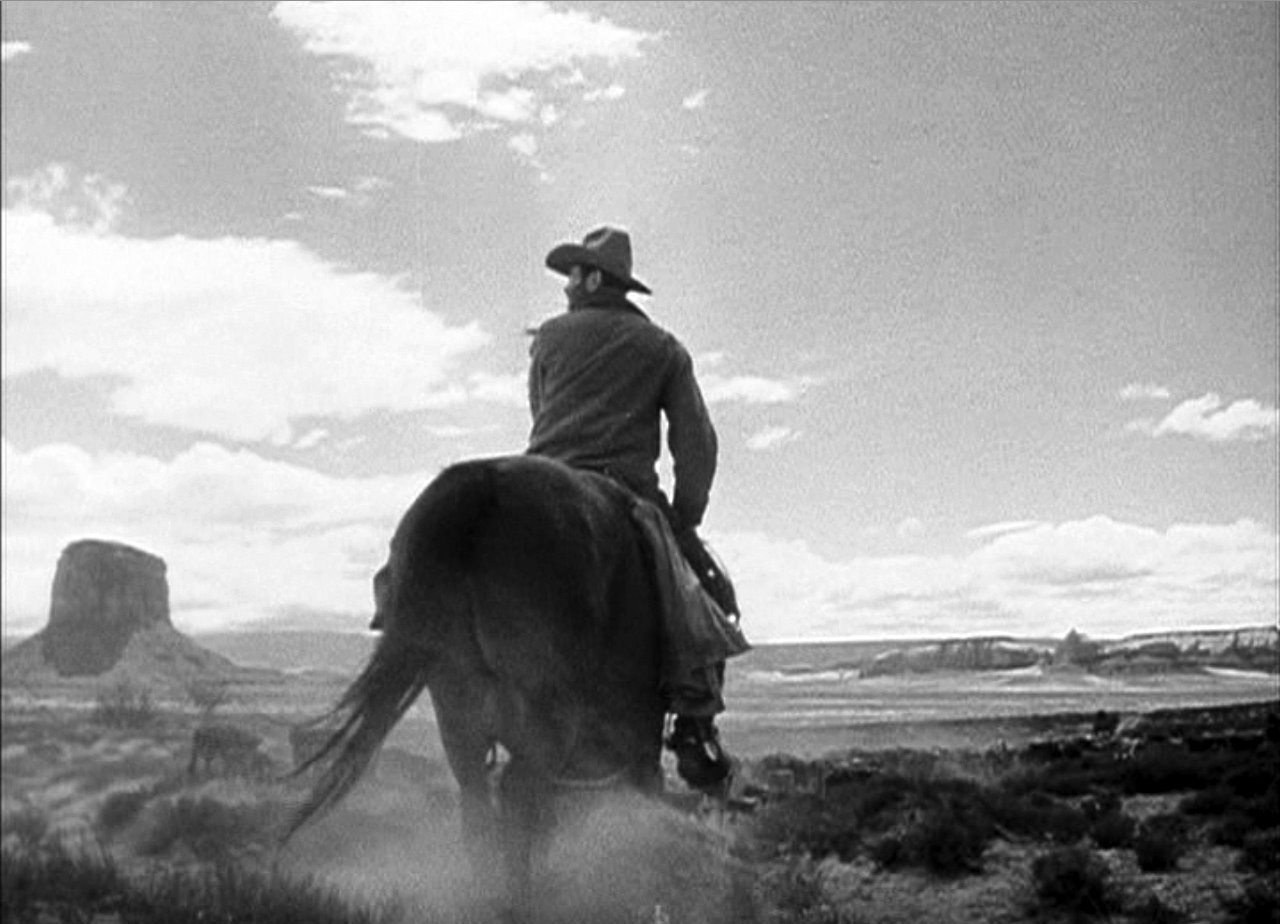
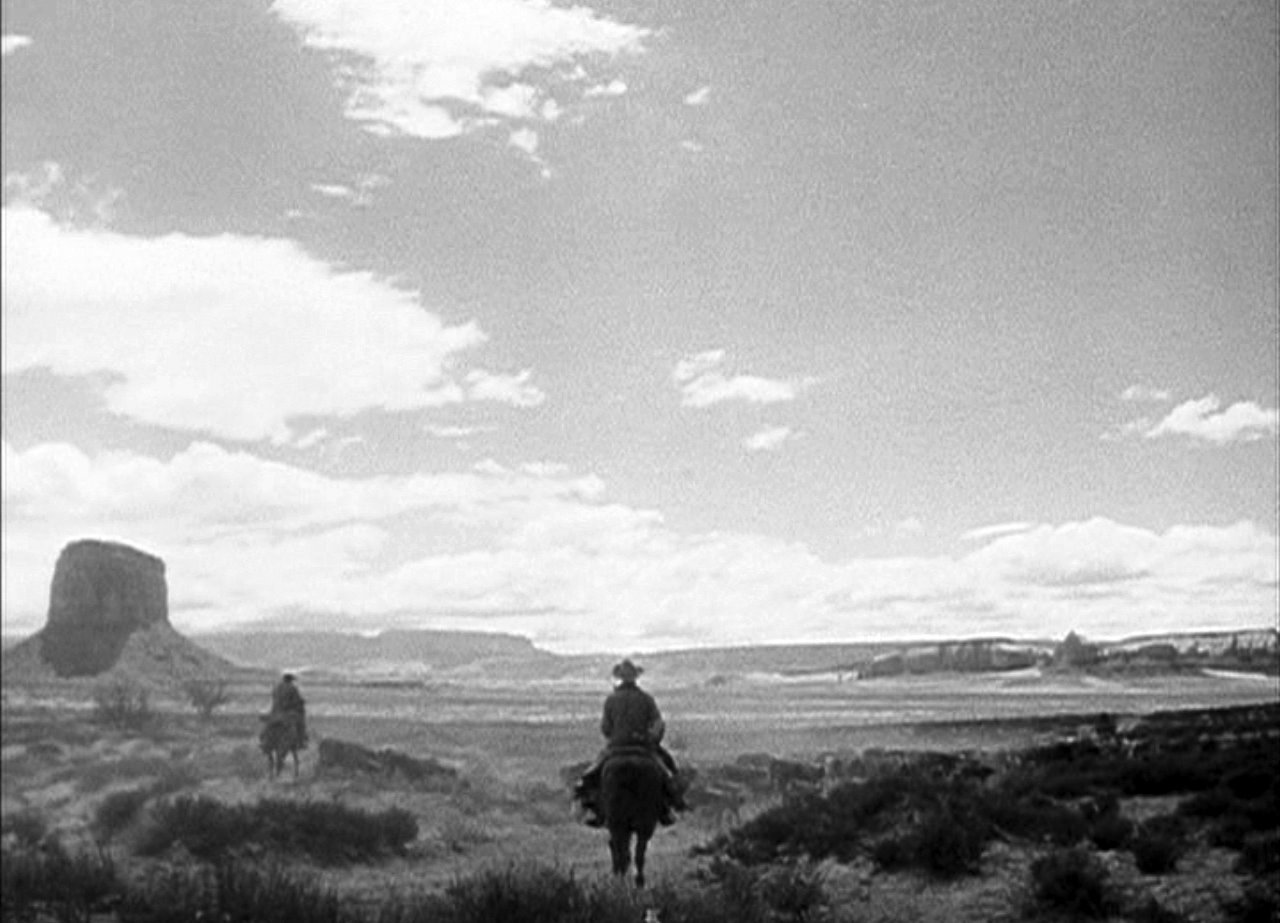
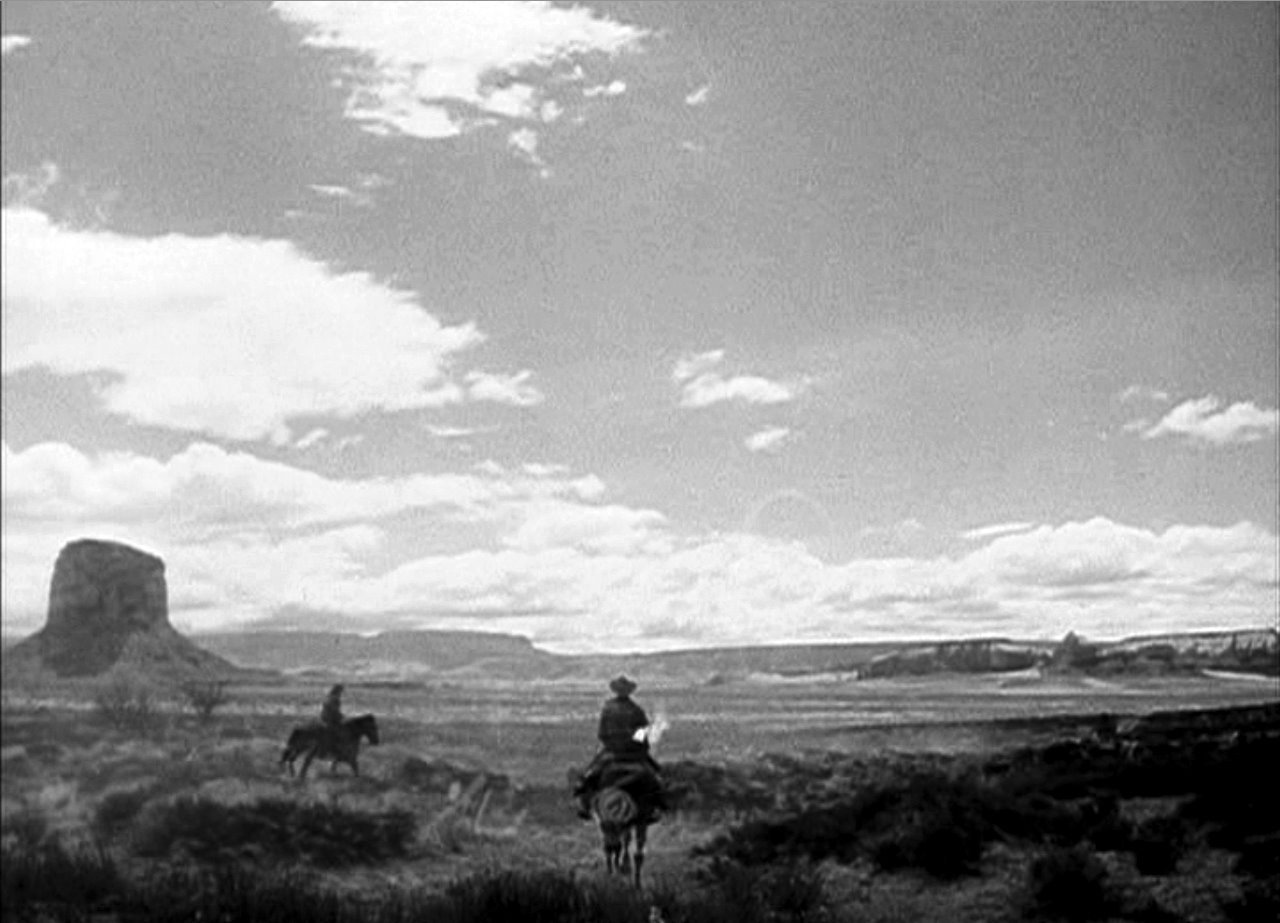
At the beginning of John Ford’s My darling Clementine (1946) there is an interaction between Wyatt Earp (Henry Fonda) and Old Man Clanton (Walter Brennan) that portends things to come. At the end of that conversation Earp rides his horse away and Clanton presumably drives his wagon away. Ford adds a wonderful little sequence of images and sounds at this point that, in effect, sums up the entire film. It goes like this:

Clanton uses his whip to get his horses going. We see the motion of his arm and the curling of the whip in the air.

We then hear the loud, sharp crack of the whip as we cut to Earp riding away.

Earp continues to ride quietly away.

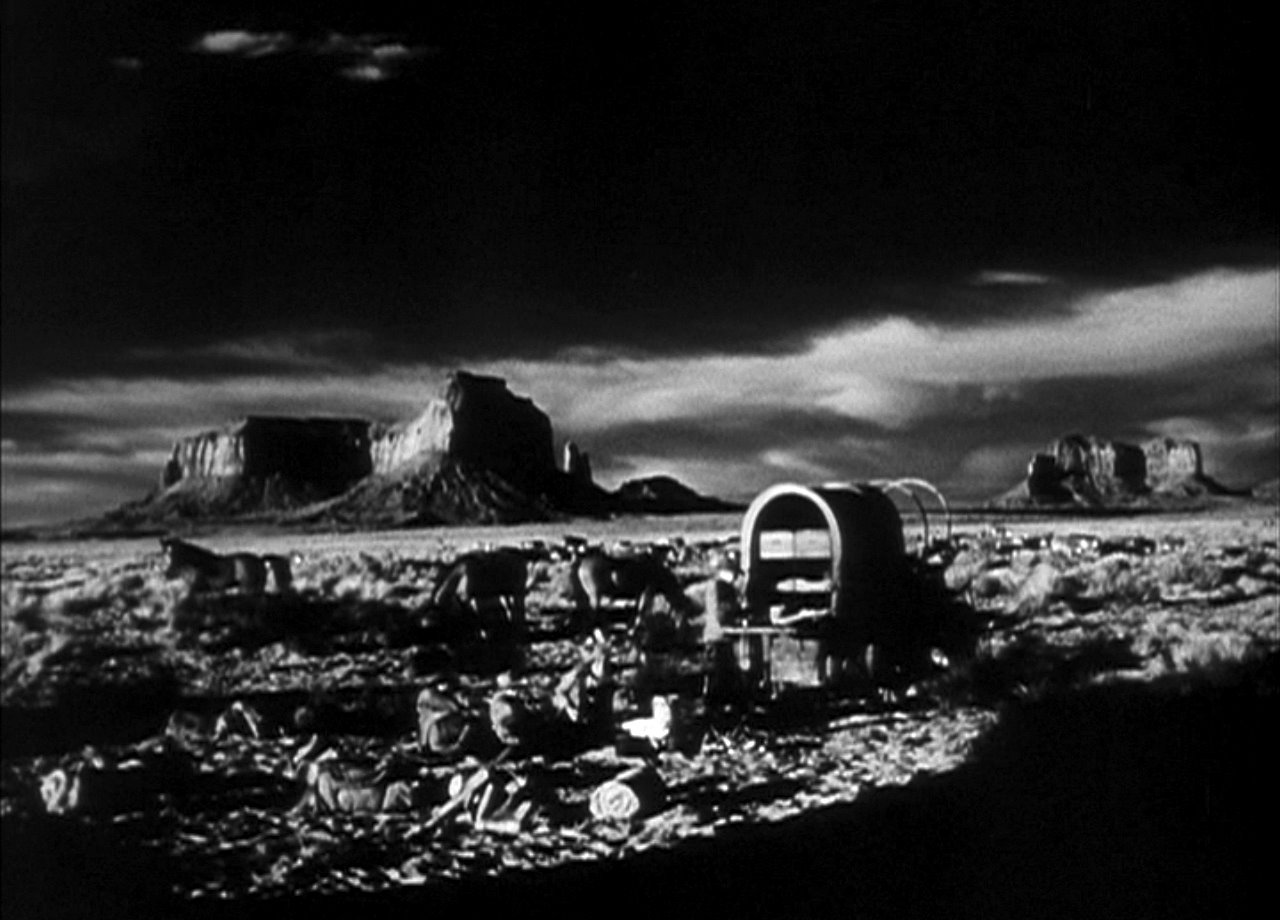
Then, as the shot is beginning to dissolve to the next, we see a fire burning as though it is Earp on fire.

Once the dissolve is complete we discover the fire is the campfire of the Earp’s camp.

The story has Clanton and his sons stealing the Earp brothers’ cattle and killing the youngest brother. This action brings Wyatt Earp out of retirement. In order to mete out justice and get revenge, Earp takes over the recently vacated marshal job for Tombstone.

What I love about this little cinematic moment is the way Ford subtly used the language of cinema to tell a story within the story. The juxtaposition of the whip crack with the image of Earp, and then the fire growing within Earp, tells us what the story arc will be. What I also love is how Ford, in my opinion, frequently demonstrated, with moments like this, that he was every bit the filmmaker of Welles, but that he didn’t care for so much bravado as we find in Kane. He was servant, as it were, to the art & craft of cinema rather than to his ego. He was a master storyteller more about the story than the teller.

Both Welles and Ford needed and respected their audiences, for sure, but Ford’s respect was more self-effacing, more about others than about himself. At least that is what I take from their works of art. Am I right? You tell me.

>the long axis & the interpretive camera

>Alexander Mackendrick was a noted filmmaker and an influential teacher. Below are a couple of clips that focus on his teaching and some of his ideas.

“If a film works it is never simply because it followed the rules. If it fails, however, it is almost certainly that the breaking of one or more rules is the root cause.”

~Alexander Mackendrick

I am only now learning about Mackendrick. These clips, however, remind me so much of my days at university. I love this stuff.

>Time, Memory, Mystery, Narrative

>

Stavrogin
…in the Apocalypse the angel swears that there’ll be no more time.

Kirillov
I know. It’s quite true, it’s said very clearly and exactly. When the whole of man has achieved happiness, there won’t be any time, because it won’t be needed. It’s perfectly true.

Stavrogin
Where will they put it then?

Kirillov
They won’t put it anywhere. Time isn’t a thing, it’s an idea. It’ll die out in the mind.

-F. Dostoievsky, The Possessed

There are few filmmakers, if any, who have philosophized as deeply about the nature of time as Andrey Tarkovsky. Time, as a philosophical concept, has been examined in depth by many, but rarely do filmmakers seem to step, philosophically or artistically, beyond commonly accepted film school concepts of time. In other words, for most filmmakers time is a concrete conceptual medium which one manipulates with accepted narrative forms according to common schemata in order to tell a clearly defined and easily understood cause and effect story. But that is not really time itself.

from Stalker (1979)

What do we talk about when we talk about time? For the most part we talk of time’s effects, of managing time, of the past or the future, of what could have happened or what did, of how one thing led to another. But time is none of these things in itself. Time is a mystery, and we relate to time in ways far more complex than the march of cause and effect. When we bring in the relationship of memory to time, and we dig into the nature of reality and its relationship to truth, we begin to exponentially expand the concept of time. Because memory is related to morality, time can also be understood as a spiritual concept.

from Mirror (1975)

In his book Sculpting in Time (pp. 57-8), Tarkovsky says this about time:

Time is necessary to man, so that, made flesh, he may be able to realize himself as a personality. But I am not thinking of linear time, meaning the possibility of getting something done, performing some action. The action is a result, and what I am considering is the cause which makes man incarnate in a moral sense.

History is still not Time; nor is it evolution. They are both consequences. Time is a state: the flame in which there lives the salamander of the human soul.

Time and memory merge into each other; they are like the two side of a medal. It is obvious enough that without Time, memory cannot exist either. But memory is something so complex that no list of all its attributes could define the totality of the impressions through which it affects us. Memory is a spiritual concept! For instance, if somebody tells us of this impressions of childhood, we can say with certainty that we shall have enough material in our hands to form a complete picture of that person. Bereft of memory, a person becomes the prisoner of an illusory existence; falling out of time he is unable to seize his own link with the outside world–in other words he is doomed to madness.

As a moral being, man is endowed with memory which sows in him a sense of dissatisfaction. It makes us vulnerable, subject to pain.

Cinema has a unique relationship with time. Of all the art forms only film can capture time, as it were, and preserve it. Tarkovsky says this as critical. Here he talks of this unique aspect of cinema around the time of filming The Sacrifice (1986):


His speech begins at 5:37 into the piece.

To think of time as a state, as that flame in the soul, and of action as merely a result of time, and to think of cinema as a medium that preserves time, provides the foundation upon which a different kind of film can be constructed. Different, not in the sense of odd or misshapen, but different from the conventions and expectations of what we have typically received. The history of cinema is replete with action driven plots, with stories that emerge from a fascination with time’s results, the effects of time. When the underlying state of time is manifest, if at all, it is too often the representation of shrunken persons and truncated souls.


from Nostalgia (1983)

What then is the role, even responsibility of cinema? Or of the filmmaker? The role of cinema has necessarily changed over the years. In years past the mere existence of a short film brought about wonderment, and sometimes caused viewers to run for the exits. But cinema has changed, and so have we. Tarkovsky writes:

Cinema is therefore evolving, its form becoming more complex, its arguments deeper; it is exploring questions which bring together widely divergent people with different histories, contrasting characters and dissimilar temperaments. One can no longer imagine a unanimous reaction to even the least controversial artistic work, however profound, vivid or talented. The collective consciousness propagated by the new socialist ideology has been forced by the pressures of real life to give way to personal self-awareness. The opportunity is now there for filmmaker and audience to engage in constructive and purposeful dialogue of the kind that both sides desire and need. The two are united by common interests and inclinations, closeness of attitude, even kinship. Without these things even the most interesting individuals are in danger of boring each other, of arousing antipathy or mutual irritation. That is normal; it is obvious that even the classics do not occupy an identical place in each person’s subjective experience.

Sculpting in Time (pp. 84-85)

Tarkovsky goes on to say about the filmmaker’s responsibility:

Directing in the cinema is literally being able to ‘separate light from darkness and dry land from the waters’. The director’s power is such that it can create the illusion for him of being a kind of demiurge; hence the grave temptations of his profession, which can lead him very far in the wrong direction. Here we are face with the question of the tremendous responsibility, peculiar to cinema, and almost ‘capital’ in its implications, which the director has to bear. His experience is conveyed to the audience graphically and immediately, with photographic precision, so that the audience’s emotions become akin to those of a witness, if not actually of an author.

Sculpting in Time (p. 177)

from The Sacrifice (1986)

In a sense the filmmaker is the creator of time. The audience enters into the world of the film, the mental/emotional space circumscribed by the filmmaker, and lives, as it were, in that space for at least the duration of screen time, if not on some level for ever after. Clearly this has implications for issues of responsibility, both for filmmaker and audience. But this kind of thinking opens up possibilities for ‘approach’ as well. In other words, to think of time as “the cause which makes man incarnate in a moral sense” is to confront something living rather than a mere object of manipulation. This approach is what turns Tarkovsky’s film into what they are: films that contemplate the deeper truths of the soul and call us to do the same. This approach is also the antidote to the ‘boring art film’ in that it does not allow for the mere application of style for artistic effect. And it can, at times, be as a kind of lens that helps reveal the more profound aspects of one’s soul.

*All quotes come from Sculpting in Time by Andrey Tarkovsky, trans. Kitty Hunter-Blair, University of Texas Press, 1986.

Boudu

Man is the servant of nature, and the institutions of society are grafts, not spontaneous growths of nature. ~Napoleon

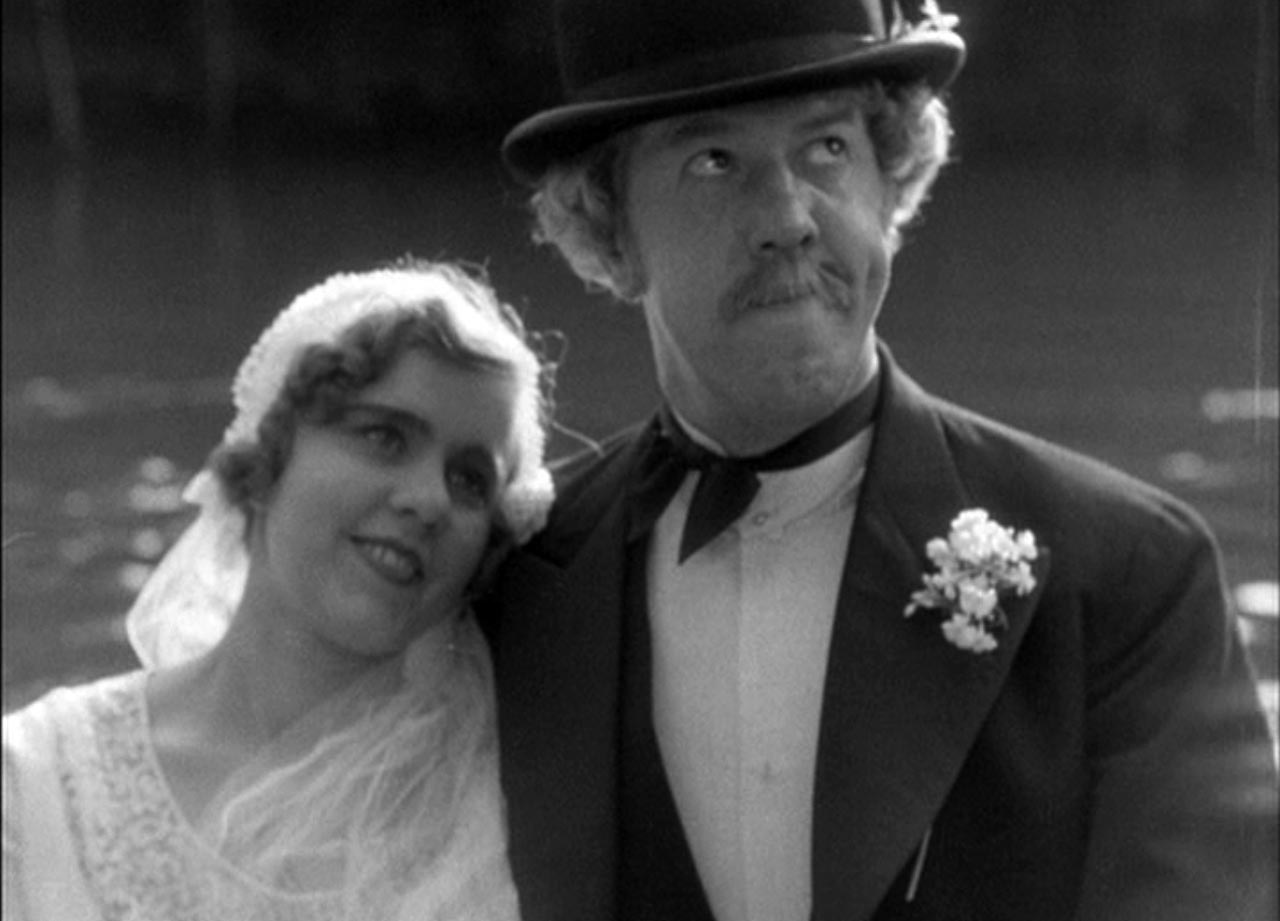
The quote above is taken from the introduction of Honore de Balzac’s The physiology of marriage; or the MUSINGS of an eclectic philosopher on the happiness and unhappiness of married life. Balzac, who was the great recorder of the emerging bourgeois class of French (and European) society, and who cast his powerful gaze upon the vagaries of the human soul, plays a part, albeit through his literature, in Jean Renoir’s Boudu sauvé des eaux (1932). The idea that society has rules, and that humans are always trying to break them while judging others by those same rules, is central to understanding Boudu – both the film and the character.

In the story of Boudu, the bookshop owner M. Lestingois (Charles Granval), an example of this new bourgeois male, gets upset when he discovers that Boudu has spat in his copy of The physiology of marriage. “The man who spits in Balzac’s ‘Physiology of Marriage’ is less than nothing to me,” he says. Both comically and symbolically this moment is a nice touch. Renoir is drawing comparisons and contrasts through the film, and especially is poking fun at this new French middle class and all its trappings.

In this sense, though Boudu is the clown, the true comedy is with everyone else.

But Renoir, who, like Luis Buñuel frequently satirized the bourgeois, is ultimately much grander in his scope than mere satirization. I would certainly characterize Renoir’s project as parading before his audience the comical foibles of human beings, and therefore the list of Renoir’s films can, for the most part, be classified as la comédie humaine. But this is not a new insight on my part. What makes Renoir so great (and likely my favorite director), is that he shows humans in all their selfishness, pettiness, and ugliness (he is not afraid to do so), and yet he gets away with it because he has forgiven his characters before the story ever begins. We are watching characters who show us what we are, and yet they have been forgiven by the filmmaker, by their creator, and therefore we can find forgiveness too (for the characters and, by implication, for ourselves). Therefore, we love these characters. With Renoir there is no black and white, and not even grey, there is only the vibrant color of existence and human interaction – something that gets fuller treatment when Renoir begins later shooting his films in color.

For me, having just seen Boudu twice this past weekend was a revelation. It had been around 23 years since I last saw the film. The Criterion Collection DVD is a wonderfully produced copy of the film. But it is not the quality of the DVD that got to me. And it was not merely the incredible performance by Michel Simon as Boudu, as well as the rest of the cast. No, what got to me was the boldness of Renoir – both in terms of the story’s subject matter and of his directorial choices.

We all know Boudu, so I won’t go into plot synopsis, or produce a review. Thematically, Boudu is decades ahead of classical Hollywood cinema, not merely in terms of the sexual content of the film, but also in terms of class consciousness. I’m sure this is not entirely true, and Boudu is probably also ahead of much of French cinema of the era as well, and yet, while U.S. cinema dealt with class distinctions by thumbing it nose at them (think Fred Astaire – working class hoofer in his tuxedo wise cracking his way through high society, showing us the democratic worldview in action), in Boudu we have carefully drawn out and accepted social lines based in class, possibly democratically organized, but certainly socially stratified. And yet, Renoir is such a lover of people, of humanity, that his class distinctions ultimately get played out as comedy and we see his characters as real people filling the role of their class.

Another great element of Boudu is the use of exteriors and natural sounds. Lest we forget, 1932 was very early in the development of sound-recording technology for cinema. [And really the film is copyrighted in 1931.] Shooting talkies was not easy, and shooting exteriors with natural sounds and large group shots was often very difficult. Scenes tended to be shot in studios, and cameras were rendered almost immobile by placing them in sound booths. Typically, multiple cameras had to be used in order to shoot a scene with cutaways and reverse angles because the audio had to be recorded on one track at the time of the shooting – no sound editing later if one had characters talking. Music typically was included at the time of shooting as well. This has all been well documented by many historians. Renoir is using the latest knowledge of sound recording and finding ways to make it work for him.

In Boudu we have both interiors and exteriors. I find the easy transitions between internal and external to work extremely well, including the difficult process of recording and matching the audio. The exteriors seem to almost prefigure the kind of exteriors one will find with the Nouvelle Vague directors of the later 50s and early 60s. In fact, having just seen a couple of early Rohmer films, Renoir does a better job of capturing and mixing exterior audio for effect than does Rohmer 30 years later. In particular, I’m comparing Boudu with La Carrière de Suzanne (1963) because I just saw it as well (ah, thank you DVD player!). Of course Rohmer was doing something different than Renoir.

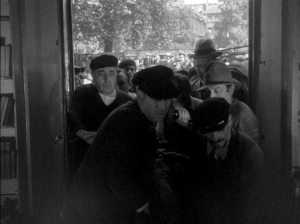
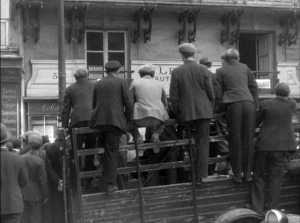
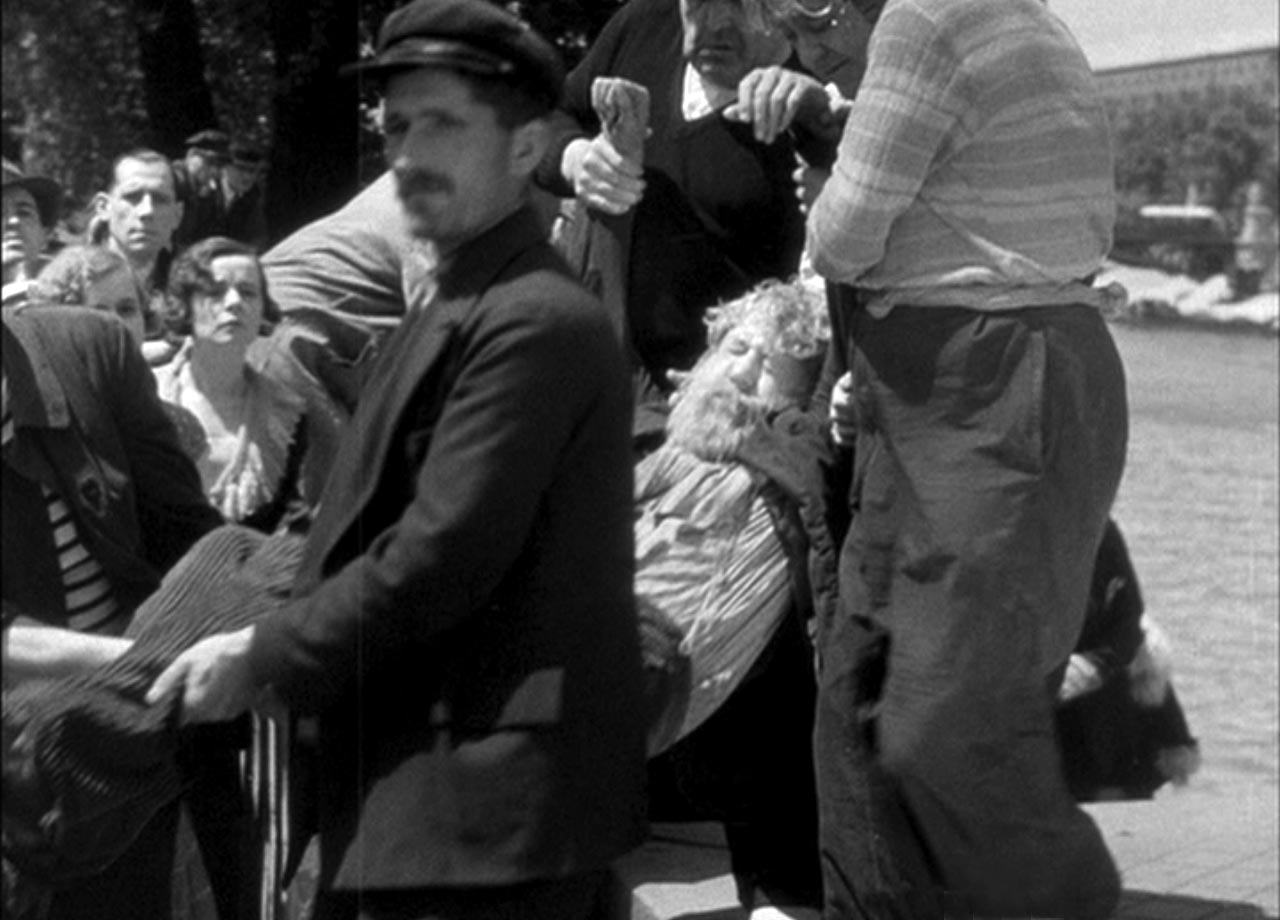
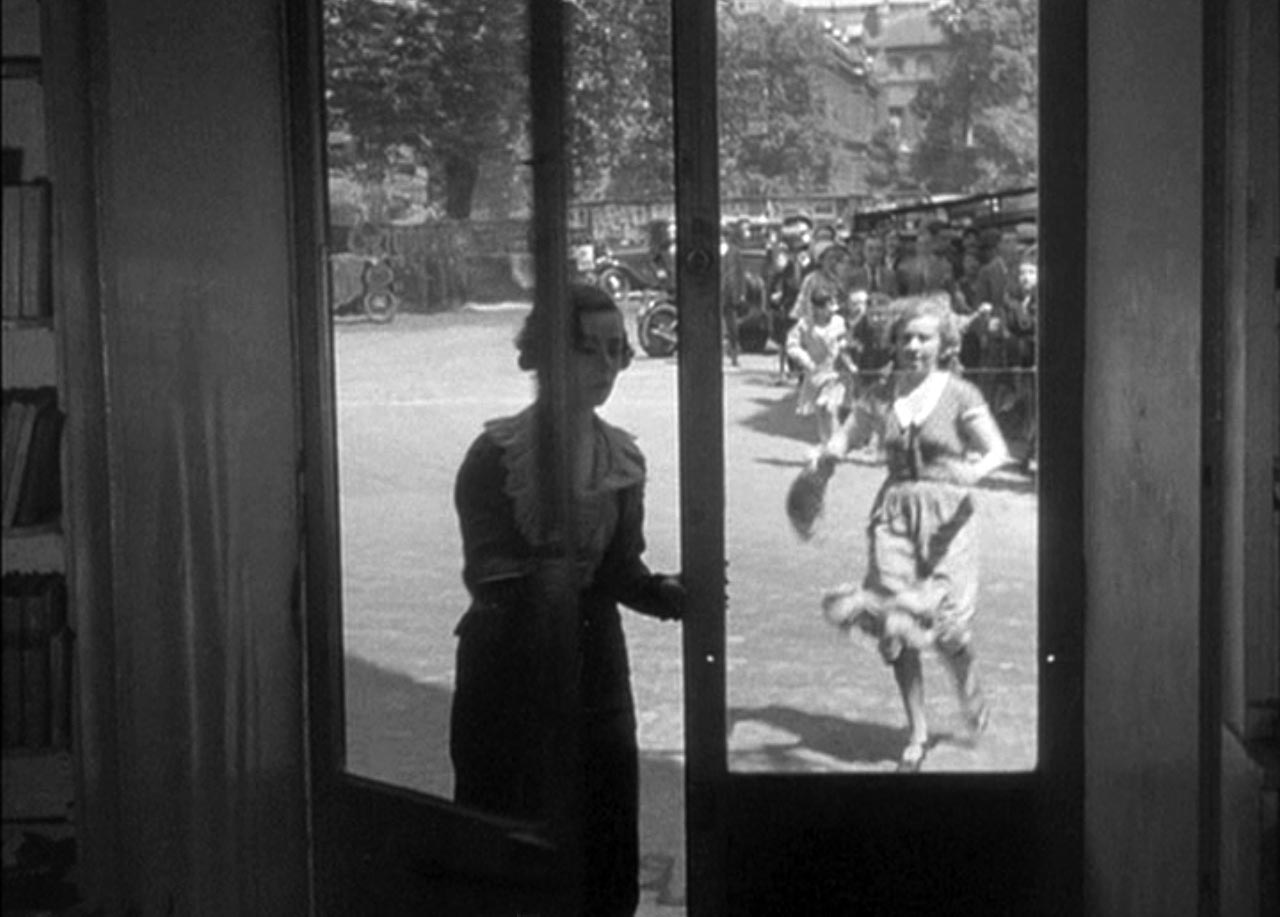
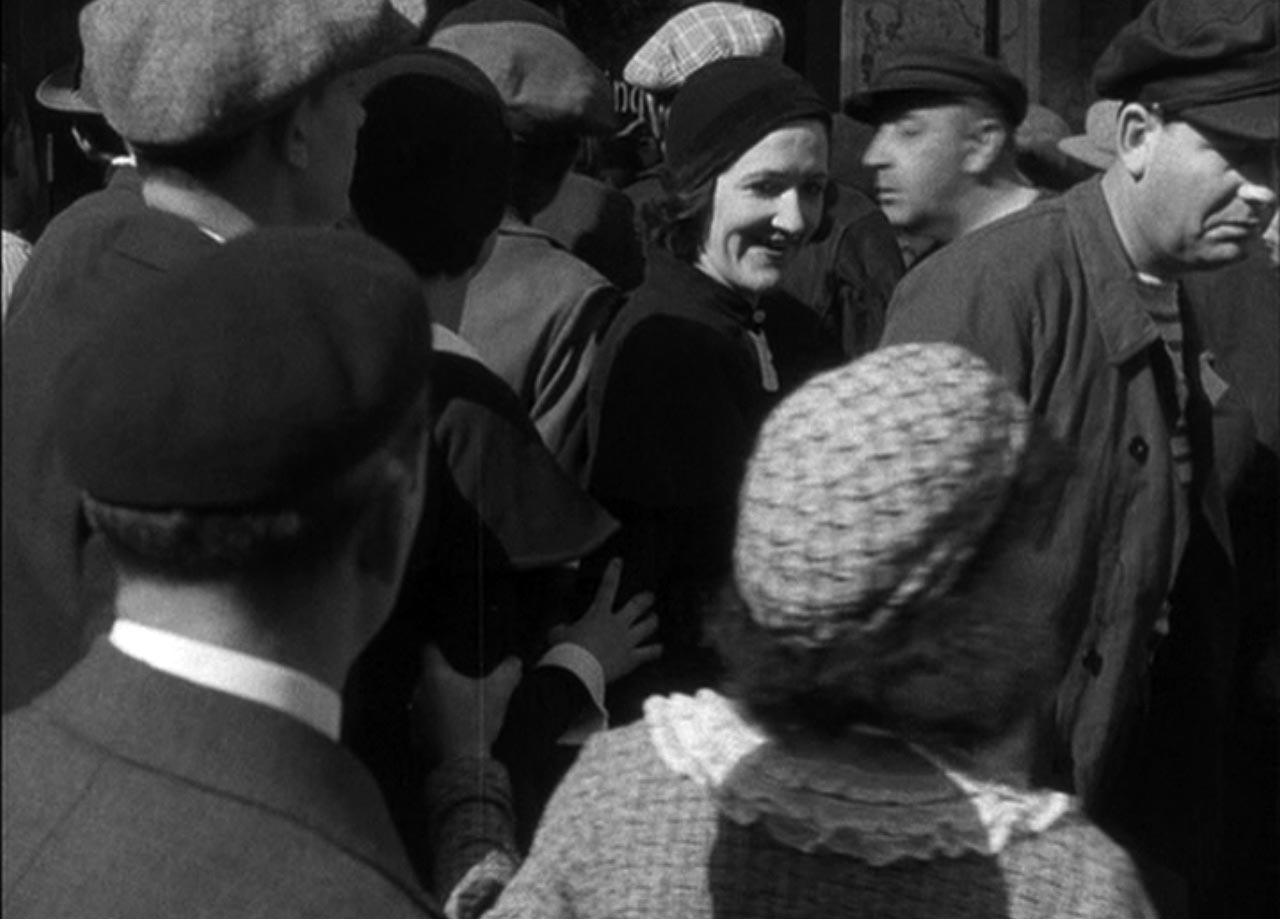
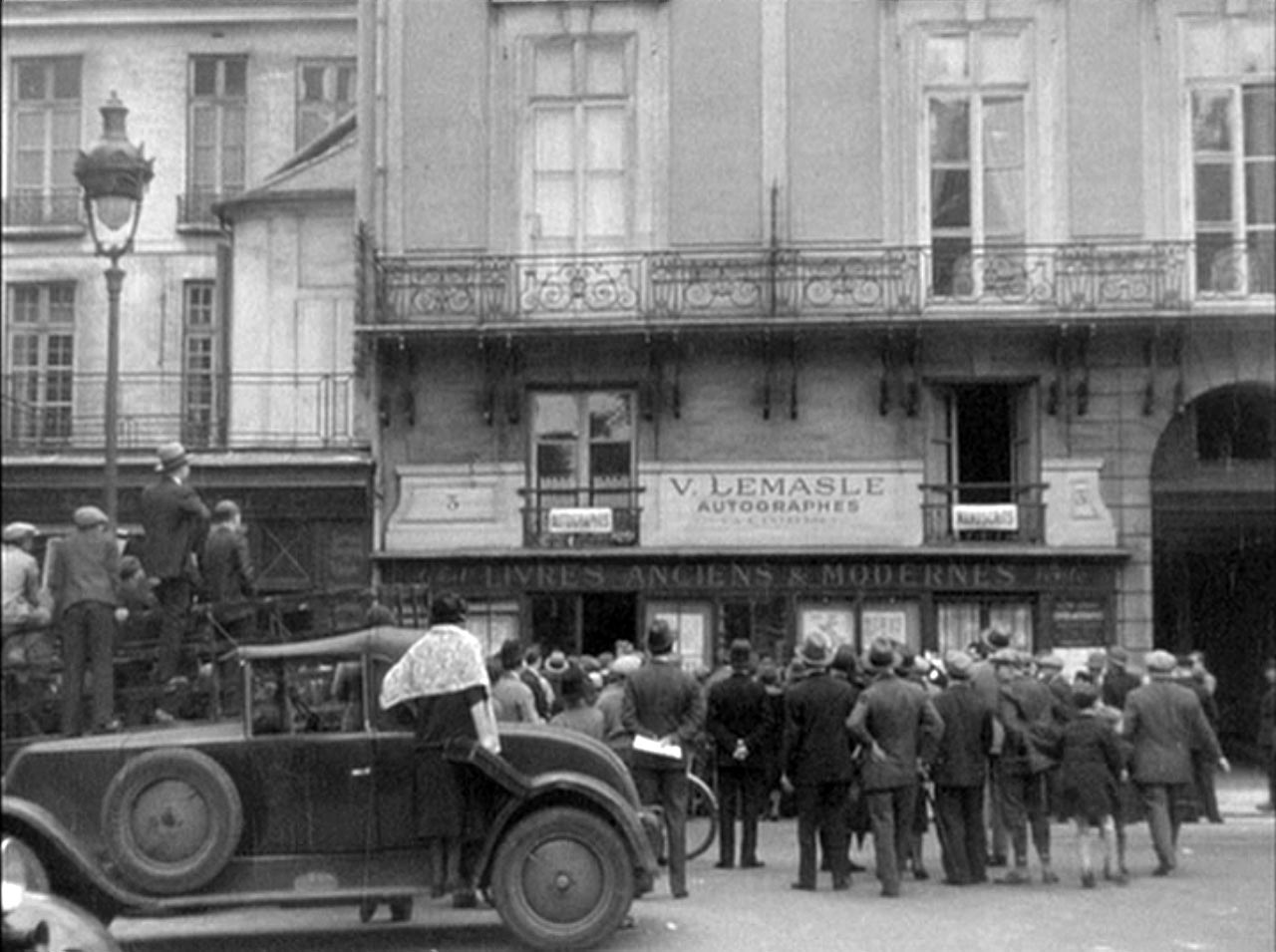
Now here is an exterior/interior transition moment that uses great natural audio and also shows Renoir staging his action along the z-axis. Boudu has just been rescued from the river (in a wonderful exterior rescue sequence with great crowd shots and use of extras) and he is being carried to the Lestingois book shop.
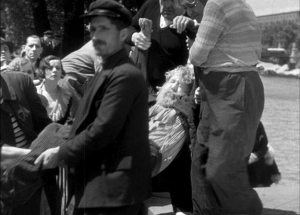
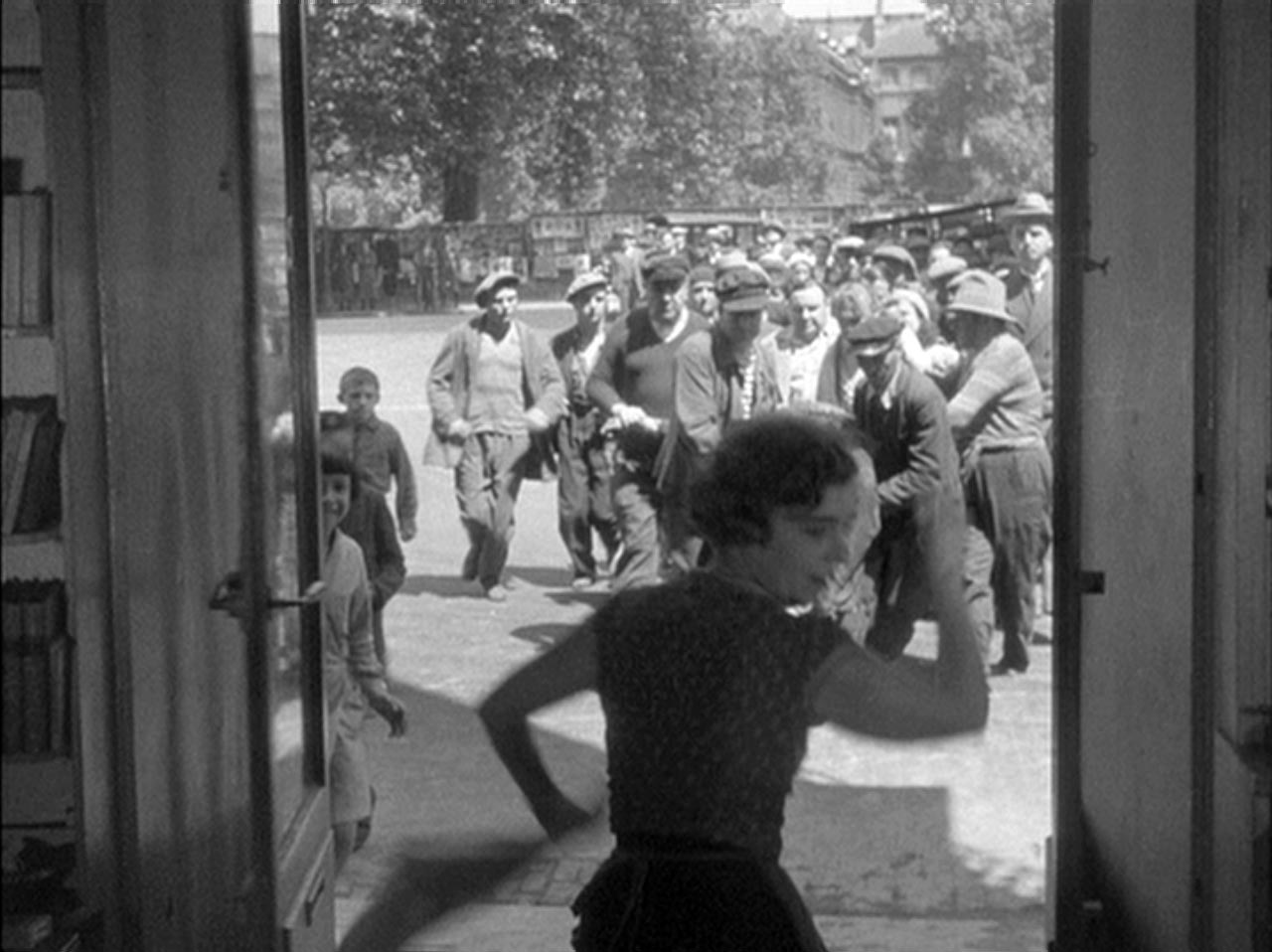
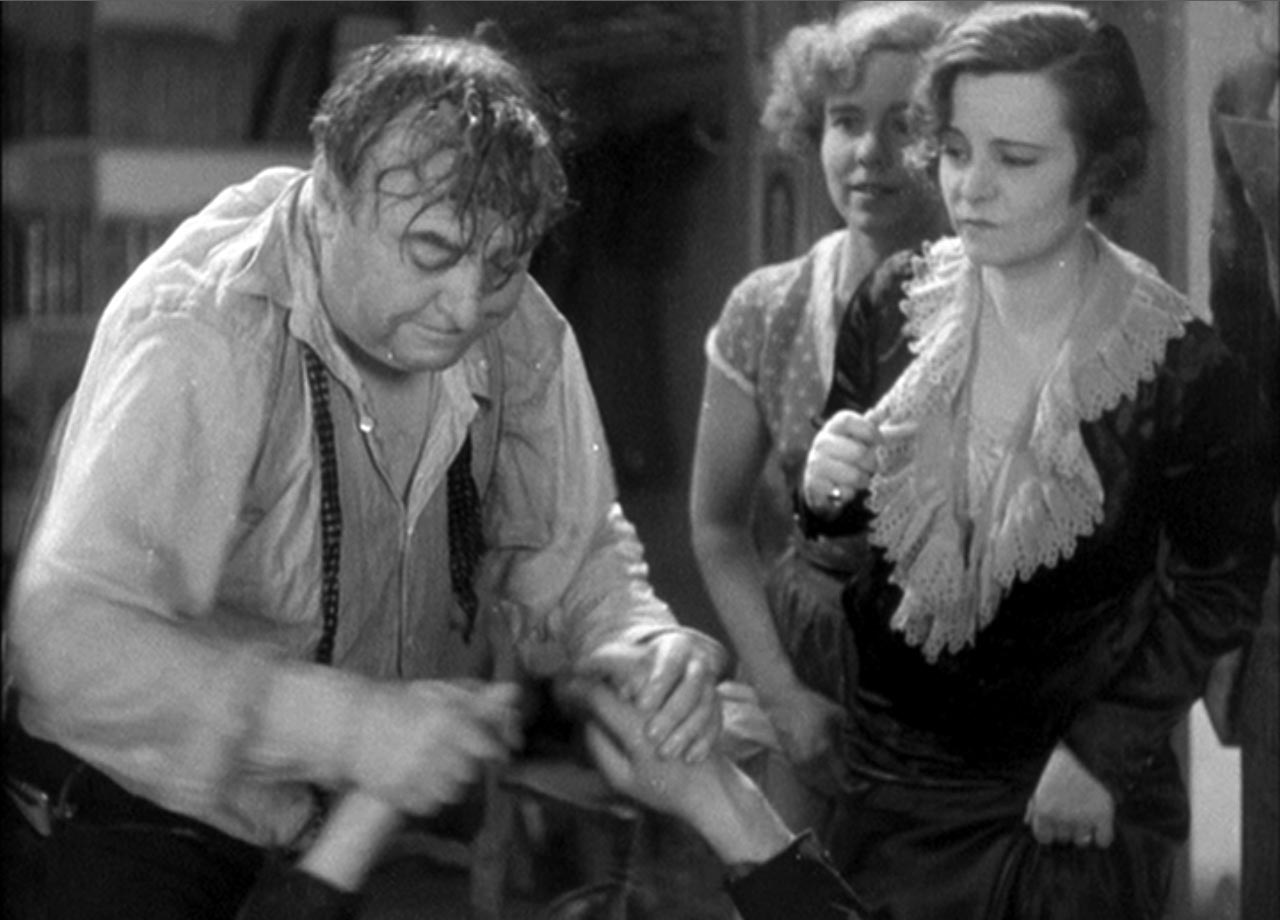
As the crowd moves forward, Mme. Lestingois and the maid rush ahead to open the shop door. The camera has now jumped from exterior to interior, looking through the shop doors.

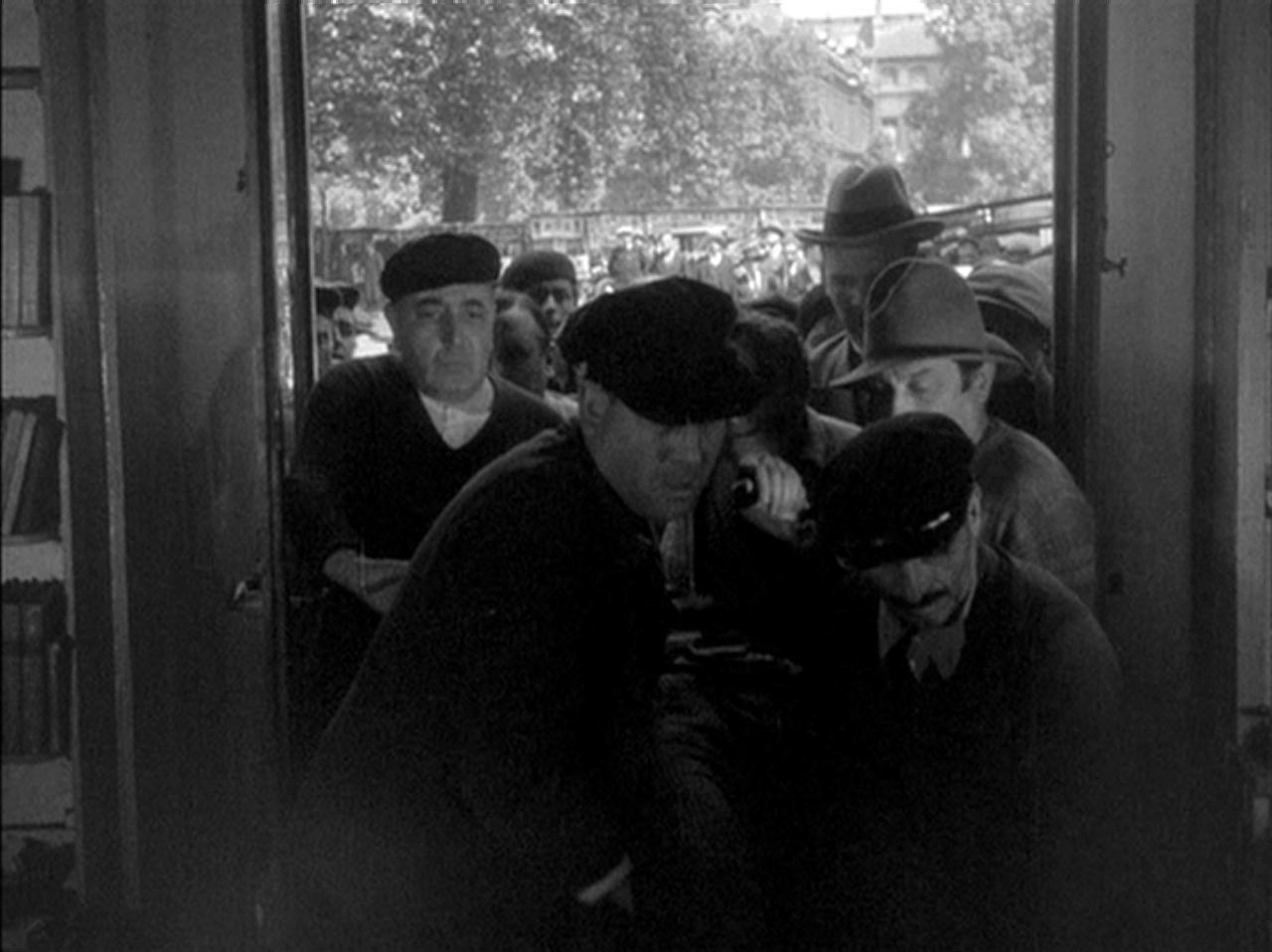
Up to this point the shot from this angle has been in one take with the action coming towards the camera. Now the camera cuts 180° and we see the action moving directly away from the camera.
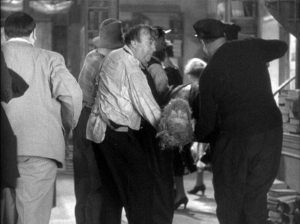
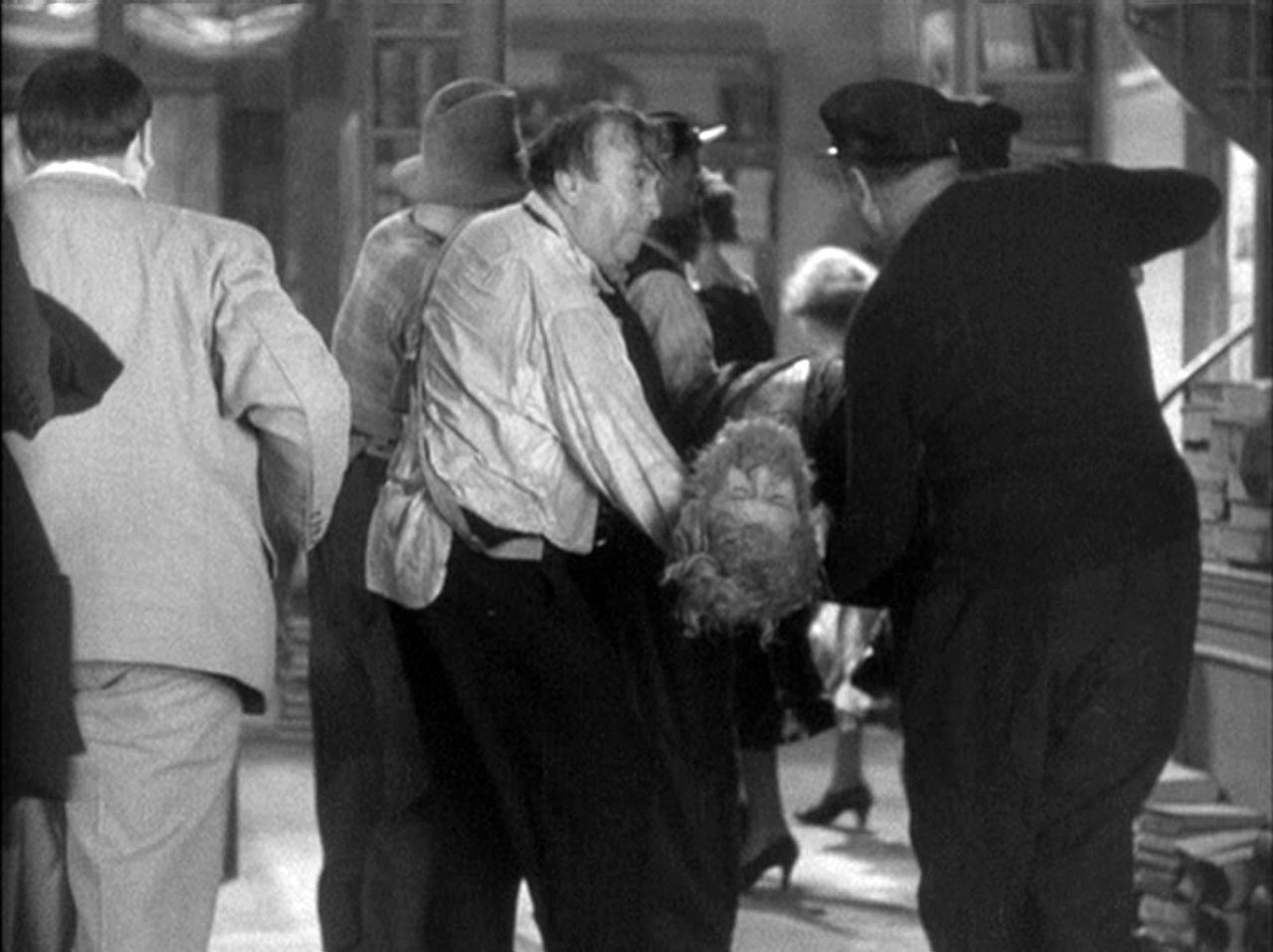
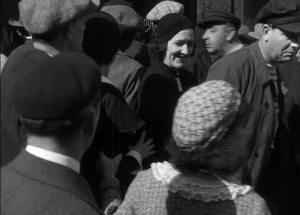
They set Boudu down on a bench and then we get several exterior shots of the curious crowd outside.
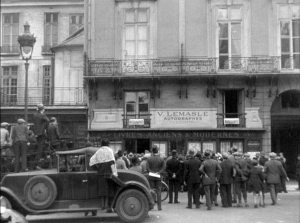
And then we cut back to an interior shot, this time a medium shot, and slightly different angle than before.


What I like about this little sequence is the ease with which Renoir uses a combination of exteriors and interiors, cuts naturally between the two, and stages his action along the z-axis, thus giving the scene a dynamism that is both inherent and fitting to the story. Renoir is also a master at working with crowds. His ensemble staging and use of the natural energy that crowds provide allows him to more deeply examine human nature because of the interplay among his characters.

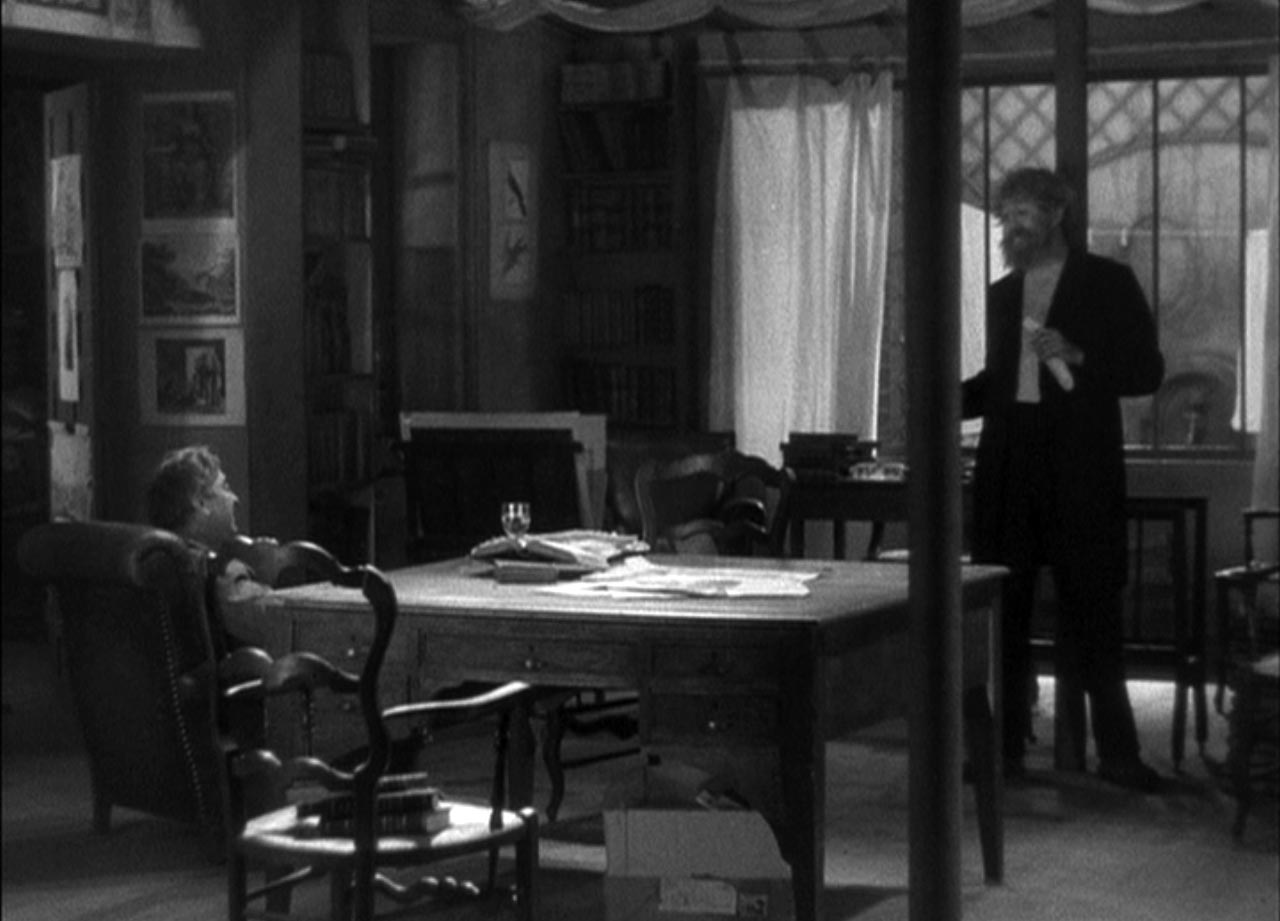
To watch older films is to engage in an act of archaeology. Boudu is an old film that offers evidence of another time and place (even another place for modern Parisians). One aspect of Boudu is the arrangement and development of action in dynamic space through ensemble staging and longer takes. I imagine that the average shot length (ASL) for Boudu is around 15 seconds, much longer than the ASL of most films today. Here we have a scene in which Renoir plays with the arrangement of the characters (four characters) in space (a single room) over the course of a complete scene.
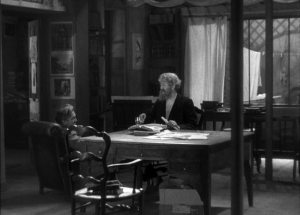
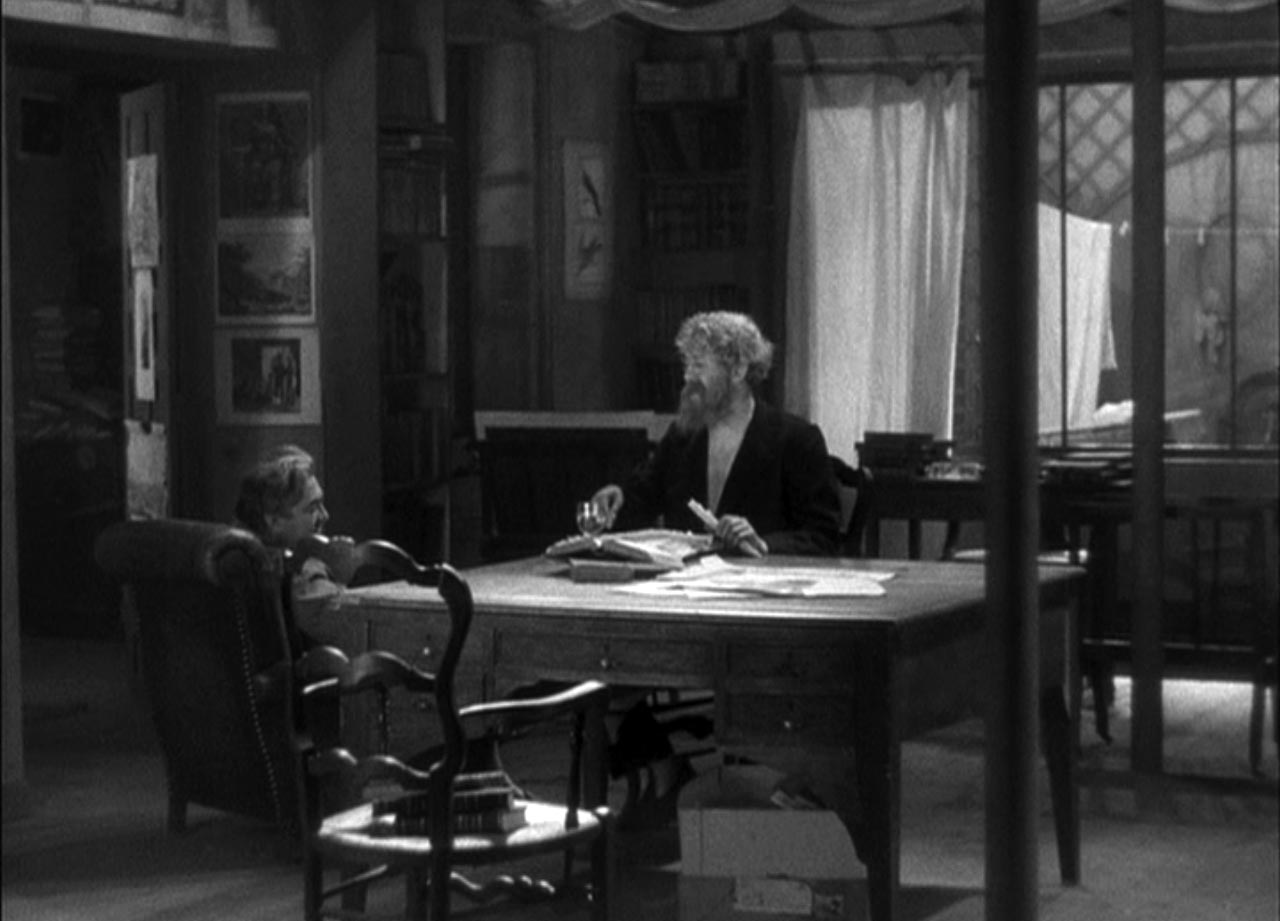
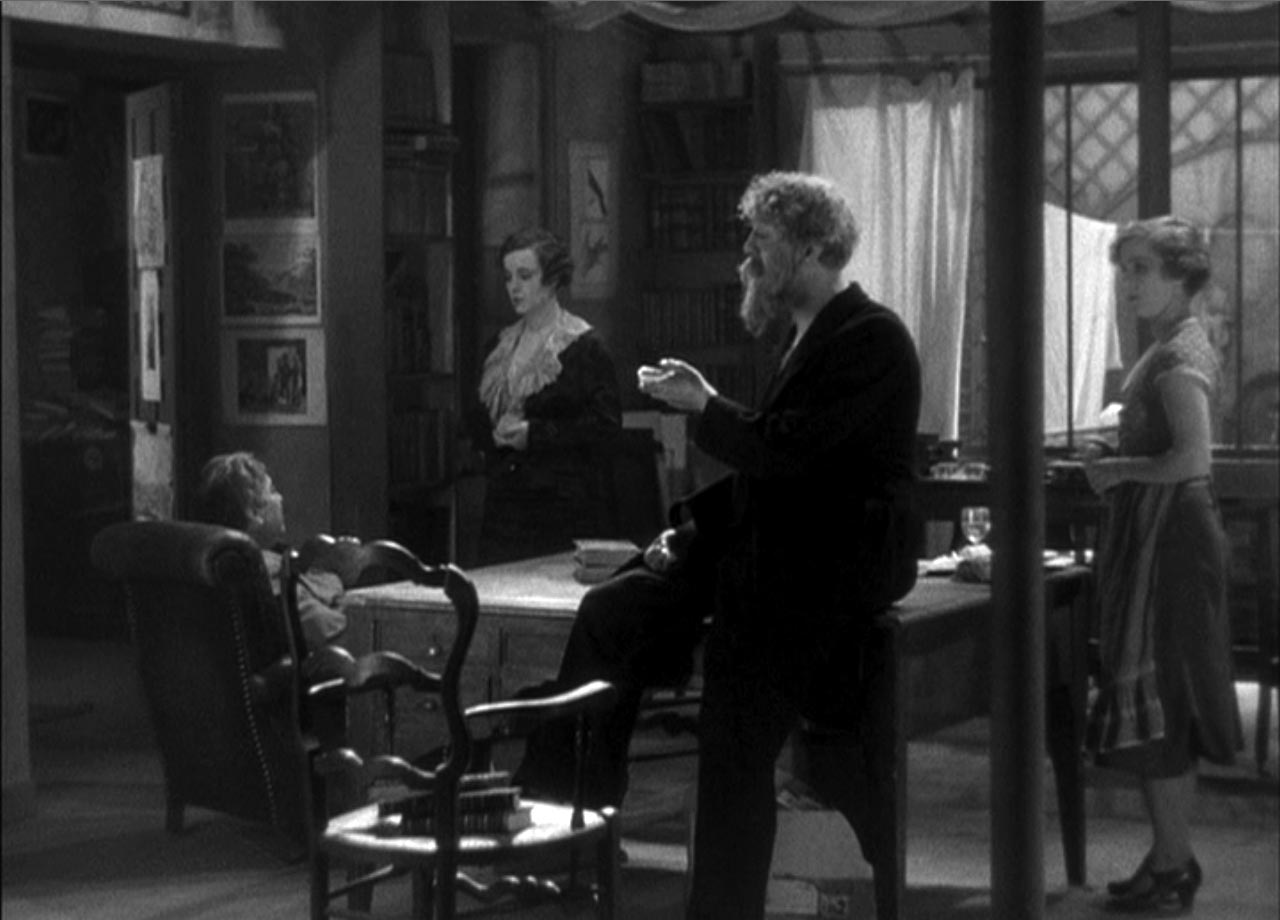
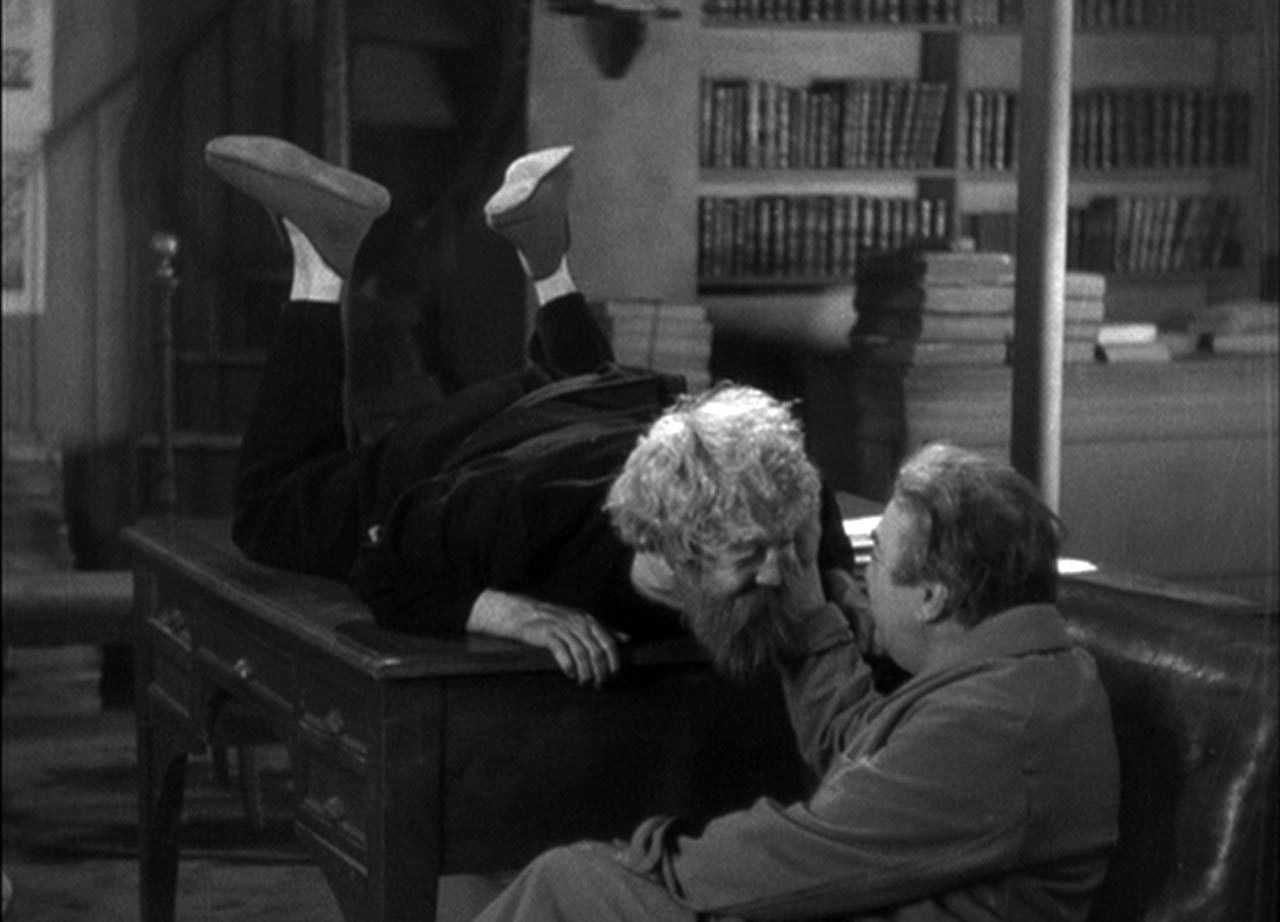
In a wide shot (WS) M. Lestingois and Boudu talk at the table. Boudu gets up and walks over to a post and leans against it.
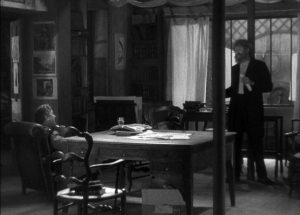
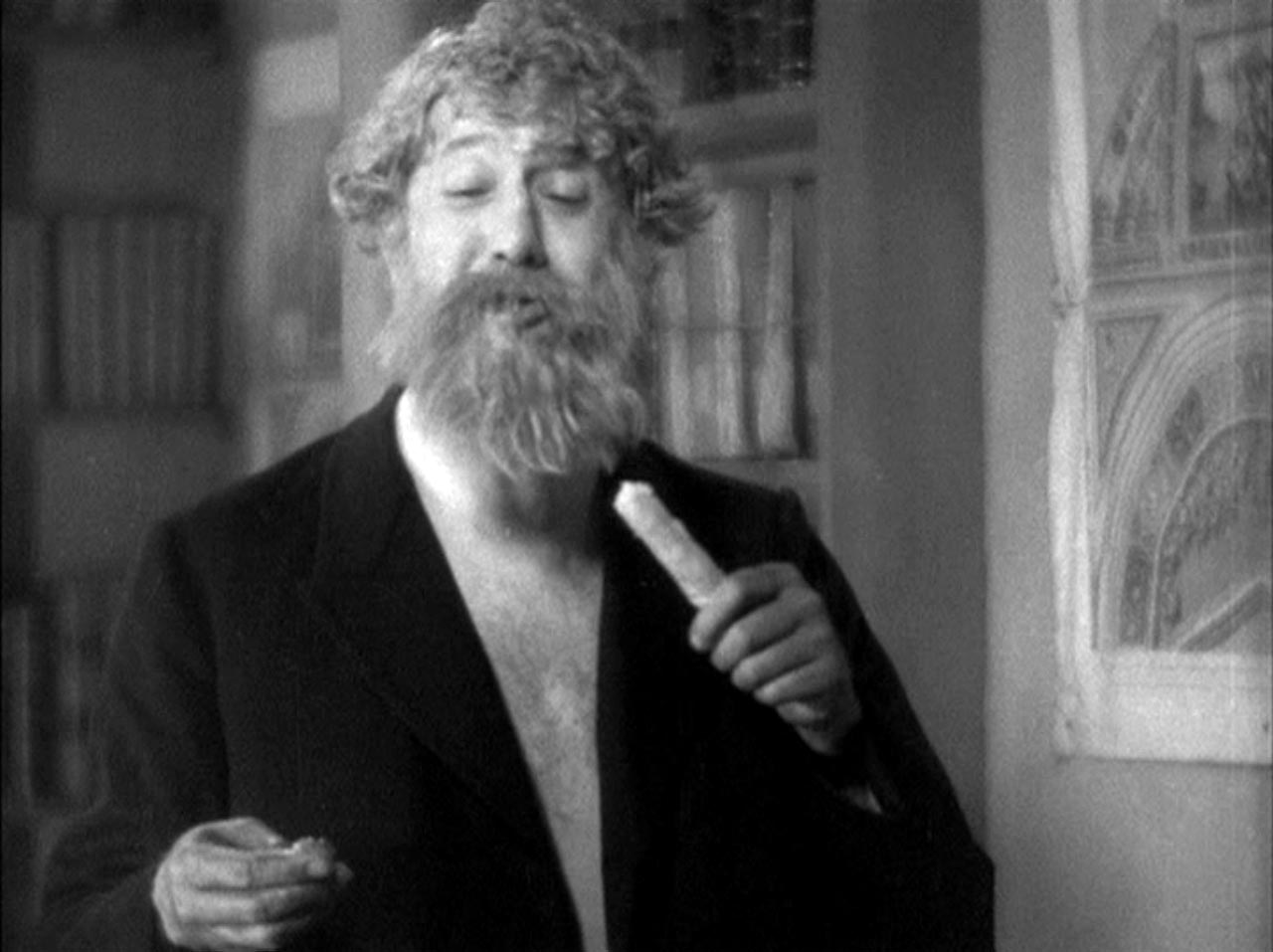
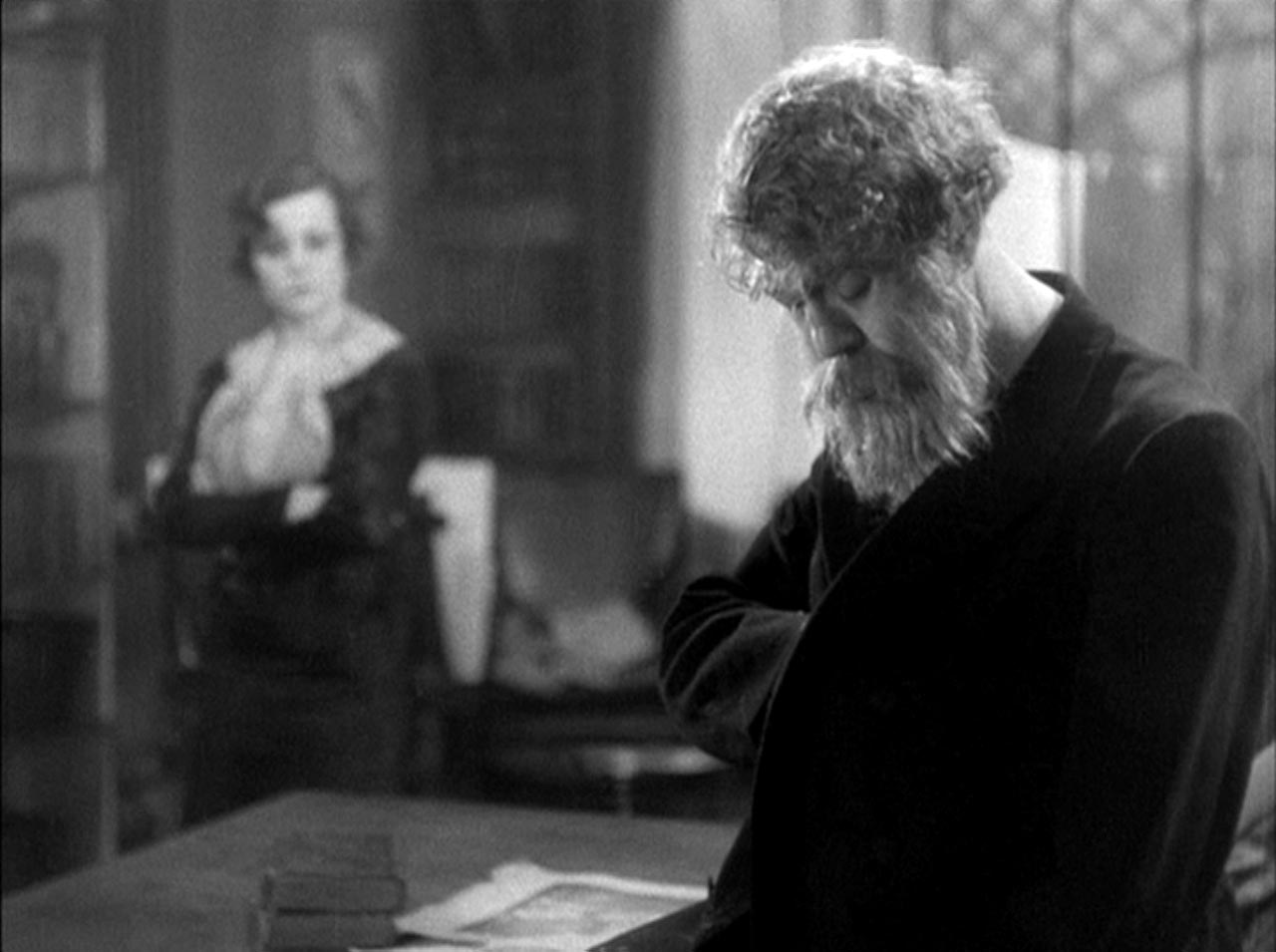
We cut to a medium close up (MCU) of Boudu. This edit, as are all the others in this scene, are both large jumps from WS to MCU and yet are fully beholden to the rules of continuity. In other words, although the edit suddenly brings us in close, we accept it as a seemless moment of the film.

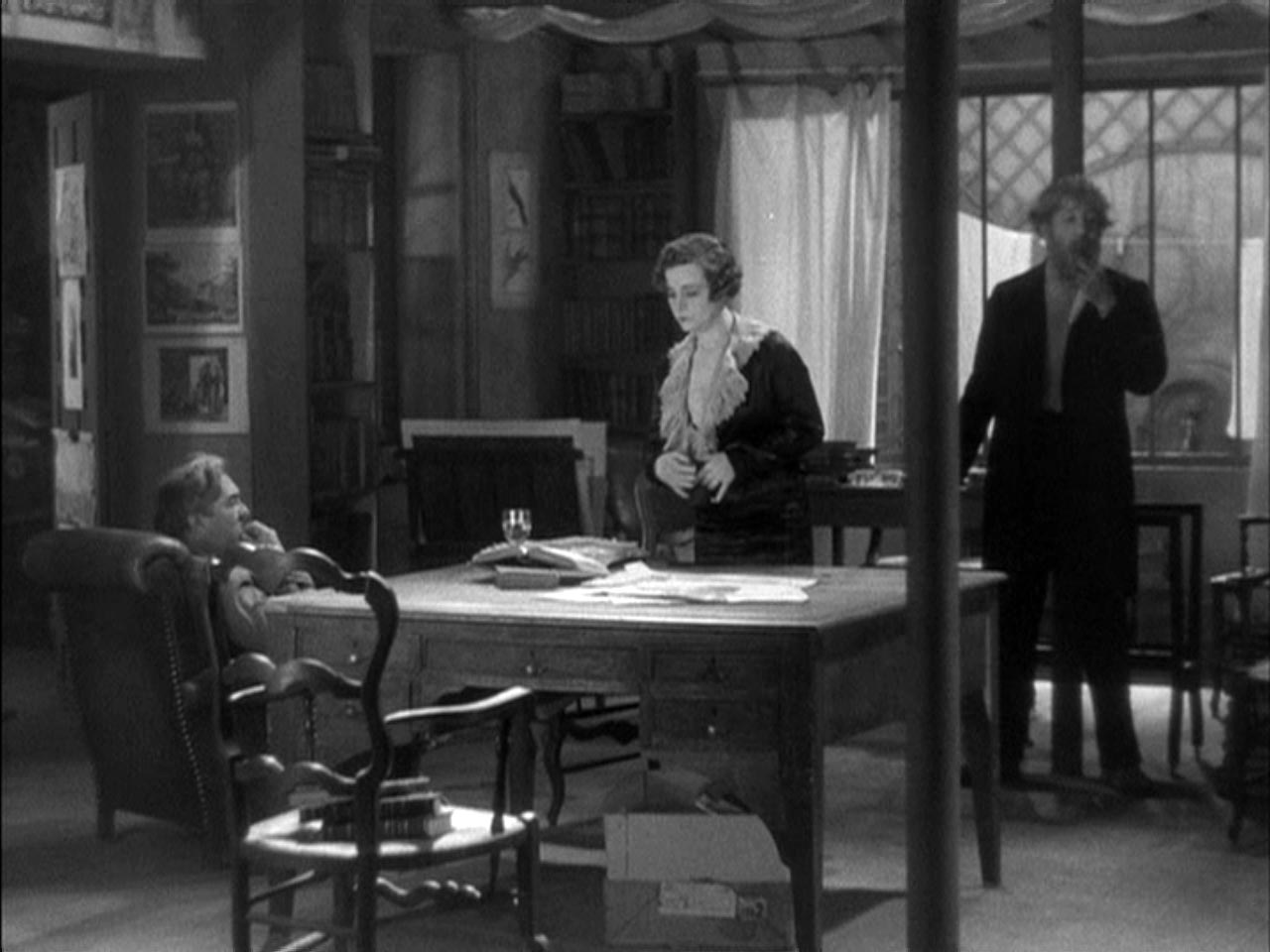
Now the camera is back at the WS and Mme. Lestingois enters.
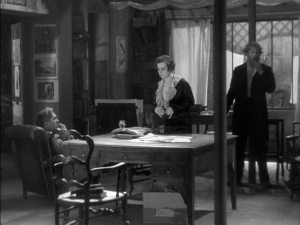
Then the maid enters.
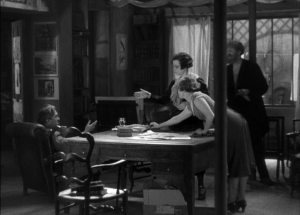
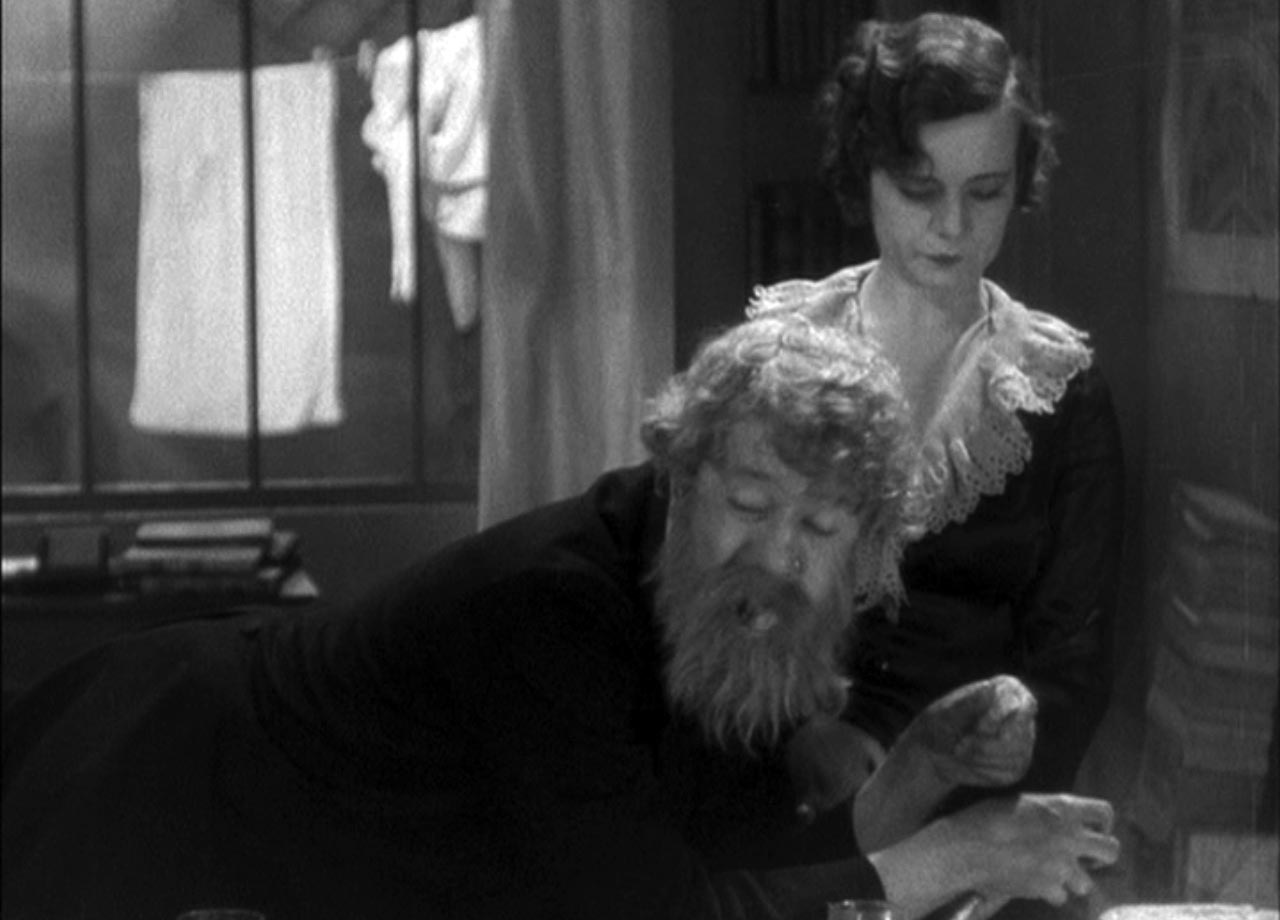
Boudu walks around the far side of the table and leans on it. We cut to a medium shot (MS) showing Mme. Lestingois behind Boudu. This offers a nice opportunity for Boudu to express his thoughts and Mme. Lestingois to show us her reactions. There is also a nice sense of depth in the framing.
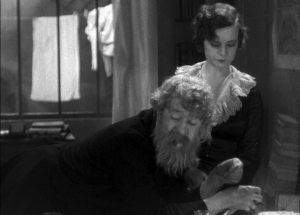
Now back to the WS.
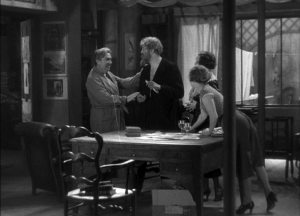
Then another big jump to an MCU to focus our attention on the interplay between M. Lestingois and Boudu.


Boudu now walks around to the front of the table and we are back to the WS.
Then we go to a wonderful shot-in-depth of Boudu in the foreground and Mme. Lestingois in the background. What is interesting about this shot is the edit takes us in closer but does not change angle, so it works by being a match-on-action and match-on-dialogue cut so that continuity is not sacrificed. And again we get to see Boudu behave and Mme. Lestingois react.
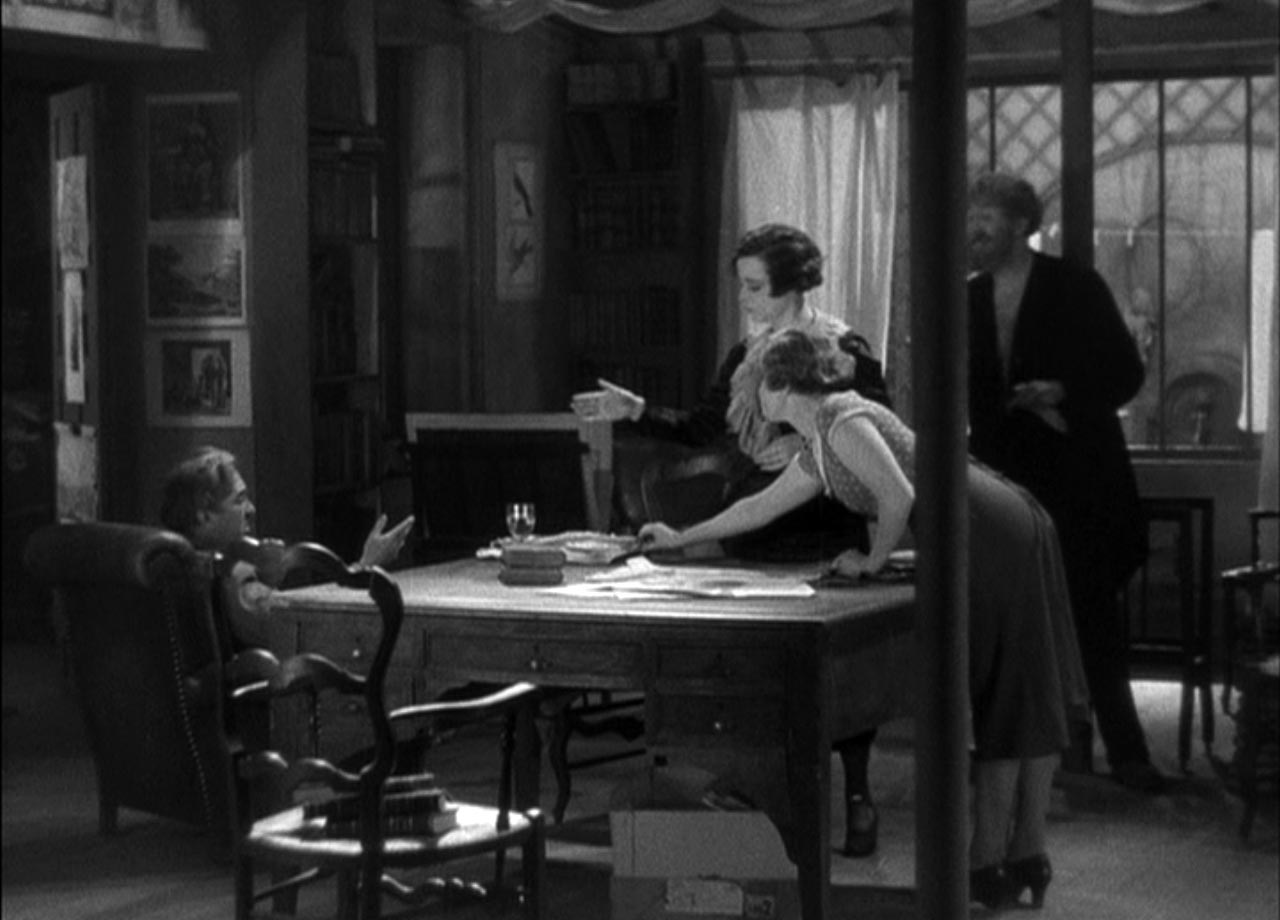
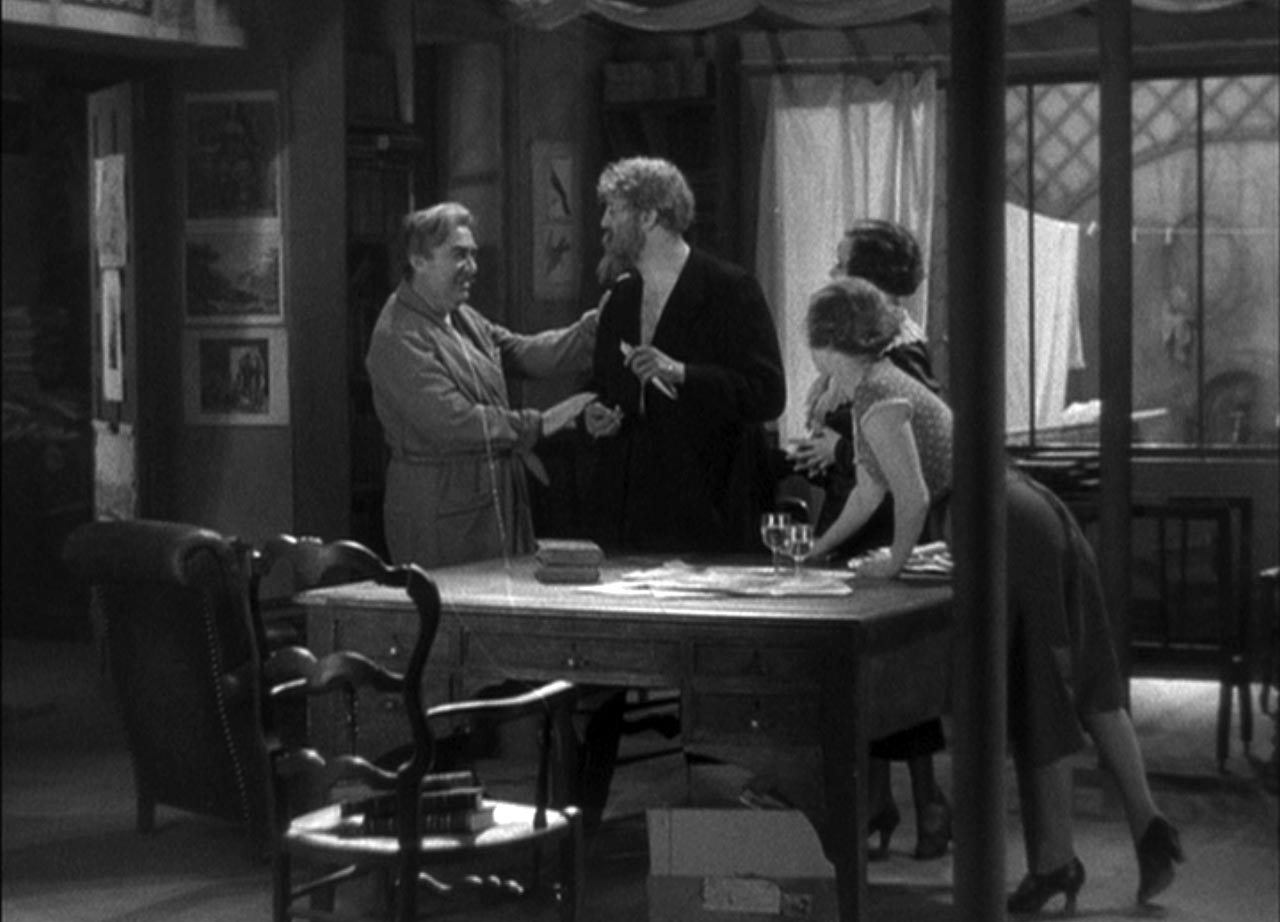
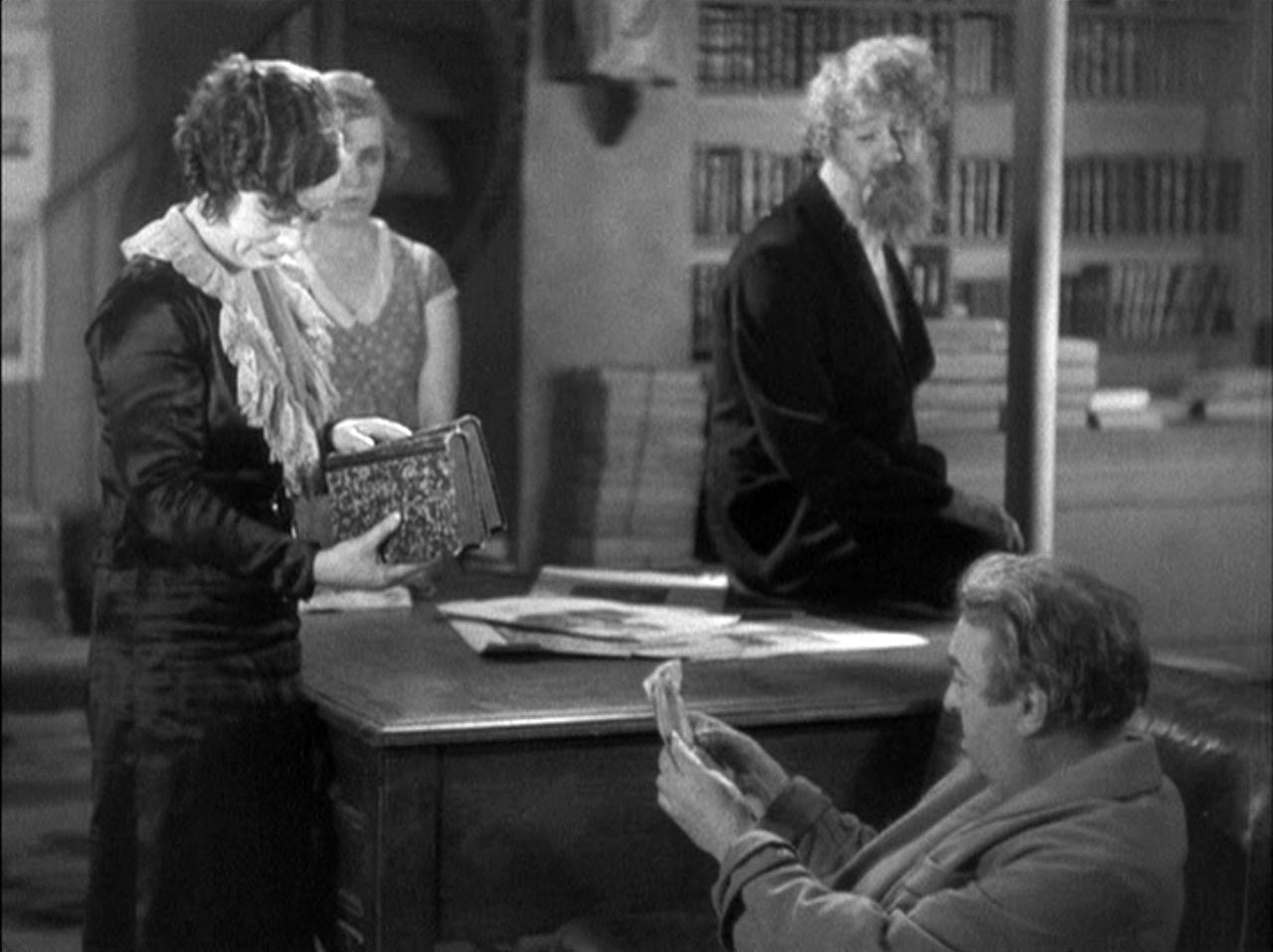
Then we cut to a revers angle medium wide shot (MWS) showing all four characters.
At this point, even with the various edits jumping us from shot to shot, the scene is clearly playing out as a nice ensemble staging, with each character playing their part in relationship to the others and that relationship is clearly defined for us.
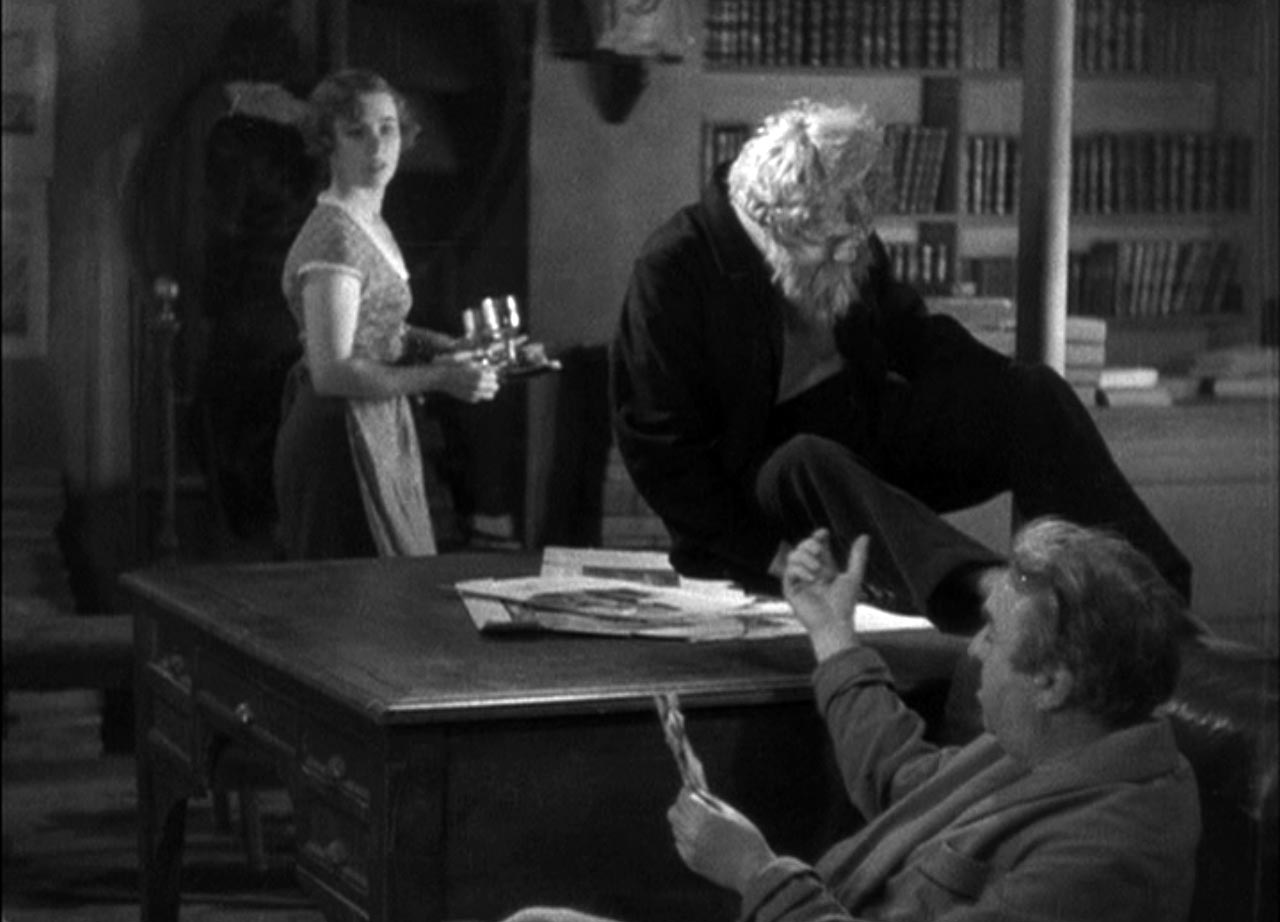
Mme. Lestingois leaves the room. And the maid briefly interacts with M. Lestingois.
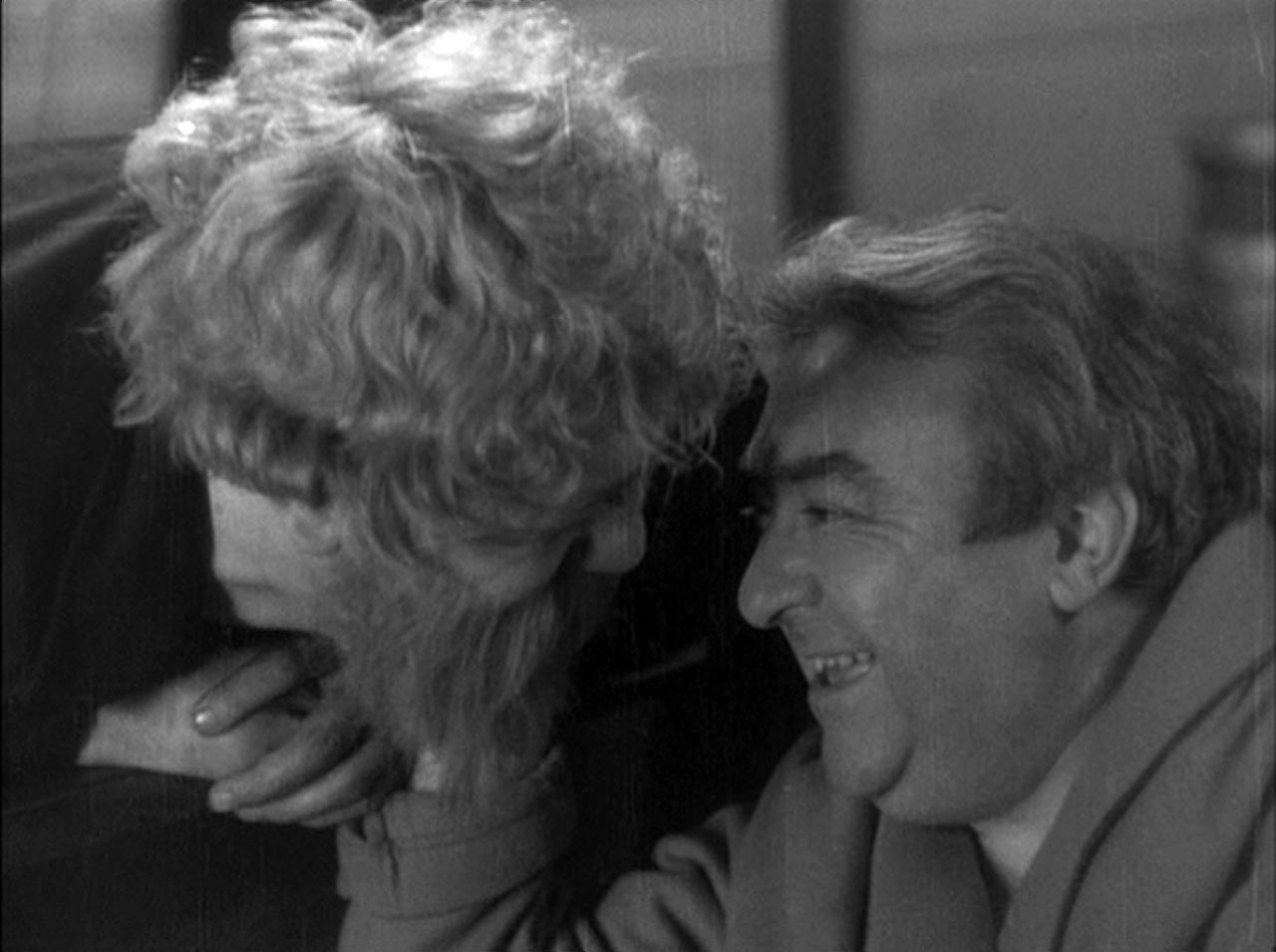
The maid leaves. Boudu and M. Lestingois have a moment.
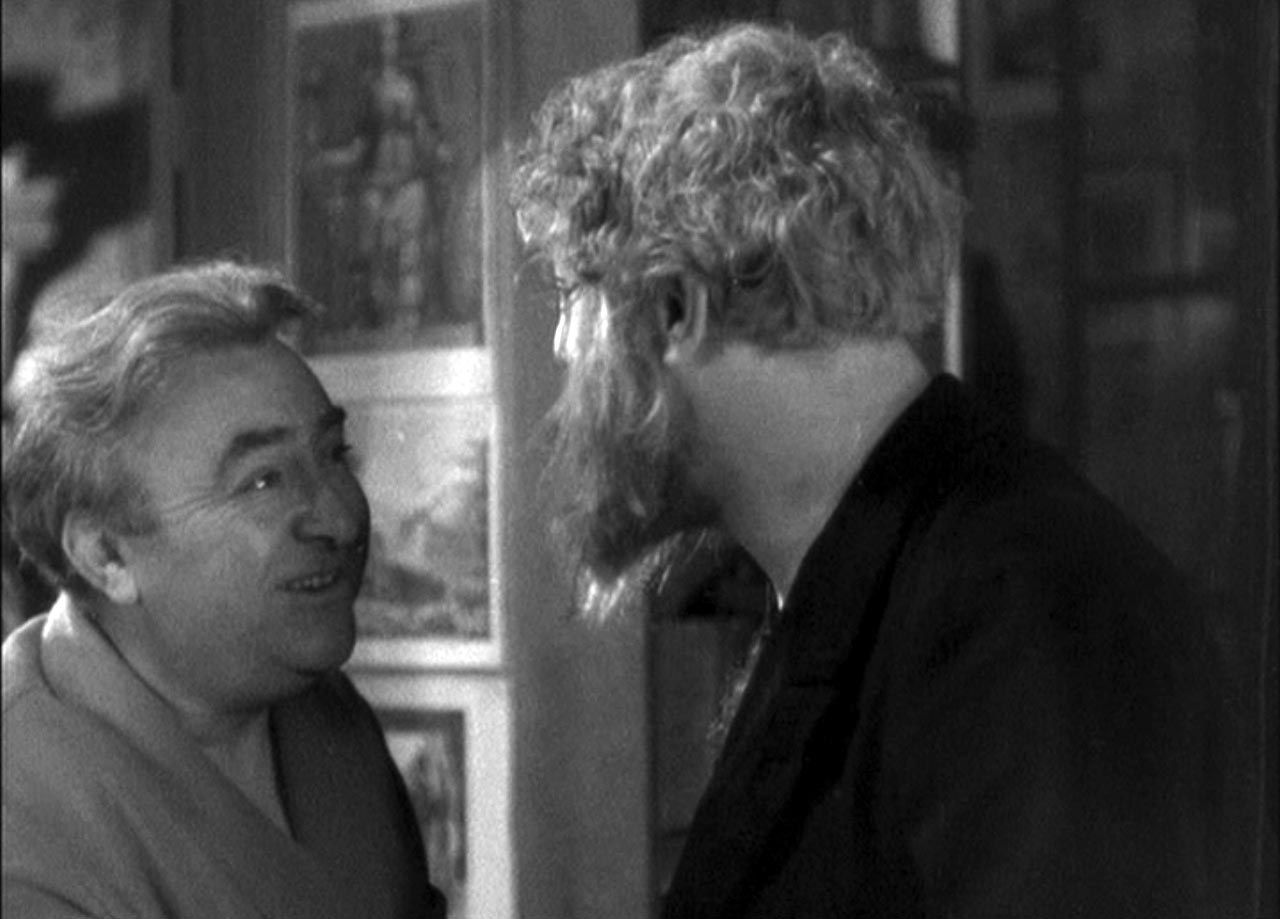
We cut to a close up (CU) of Boudu and M. Lestingois.
Scene ends.
According to Bordwell (The Way Hollywood Tells It, 2006), as cinematic techniques and practices changed over time, past techniques and practices have been lost. Bordwell argues for what he calls intensified continuity where the ASL has dramtically shortened and where action moves forward through editing rather than developing through space over time. What we have lost is the tendcy to stage action with an ensemble of of characters, each playing off each other, editing and shot framing emphasizing the action/reaction between characters, and even gradation or levels of meaning with each shot. Here in Boudu we see Renoir following the older techniques, one might say more theatrical techniques, of a more static camera, longer takes, ensemble staging, and a clearly defined space in which the action can take place. For better or for worse, rarely do filmakers shoot this way anymore.

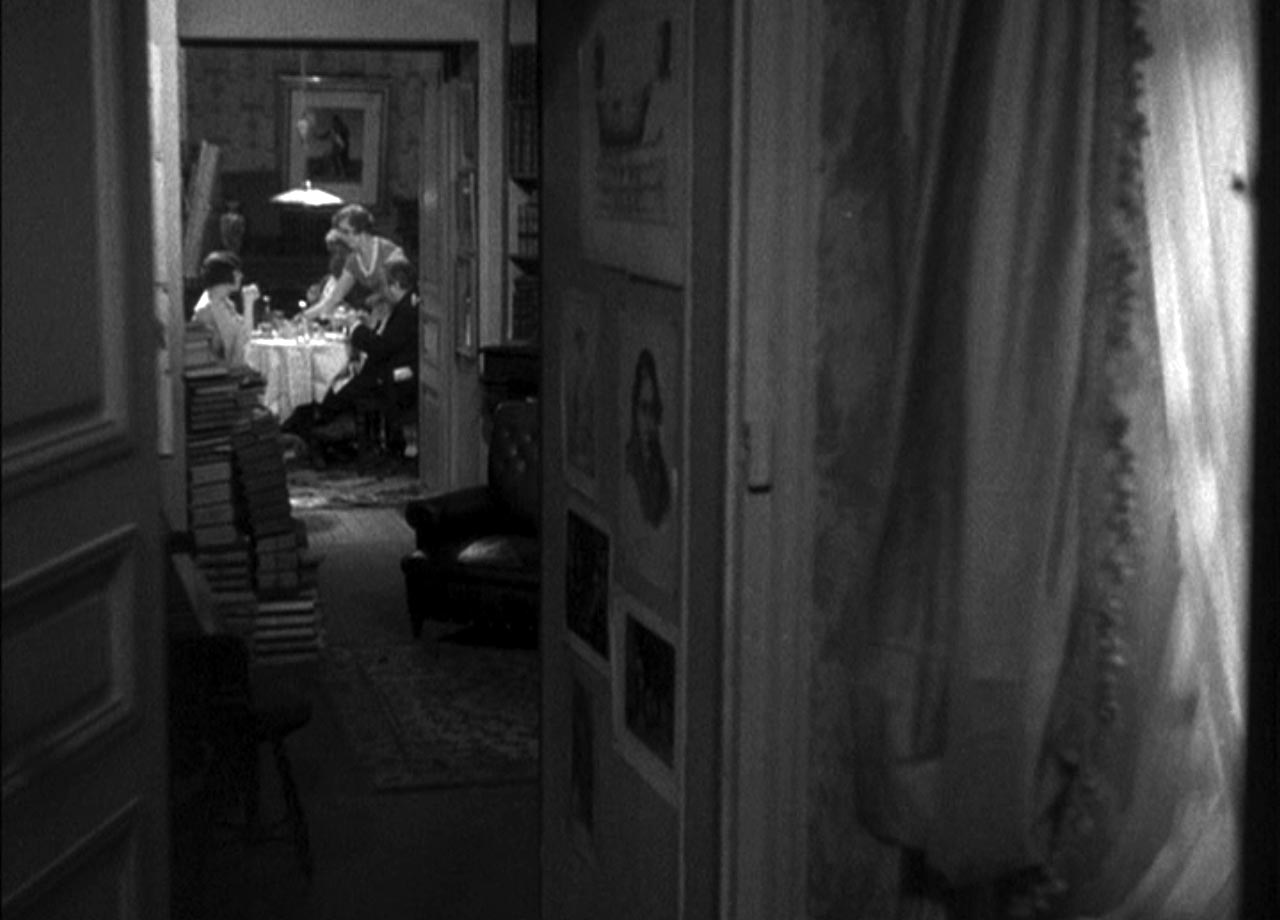
Another great little moment in Bouduis this dinner scene in shich the action is down the hall from the camera. Here the maid leans over the Lestingois’ table and picks up a plate. The camera begins to truck left as the maid also walks to our left.

The maid briefly stops at the end of another hallway while the camera continues to truck past the doorway to the hall. (At this point the image is rather dark because this part of the house is not as well lit.)

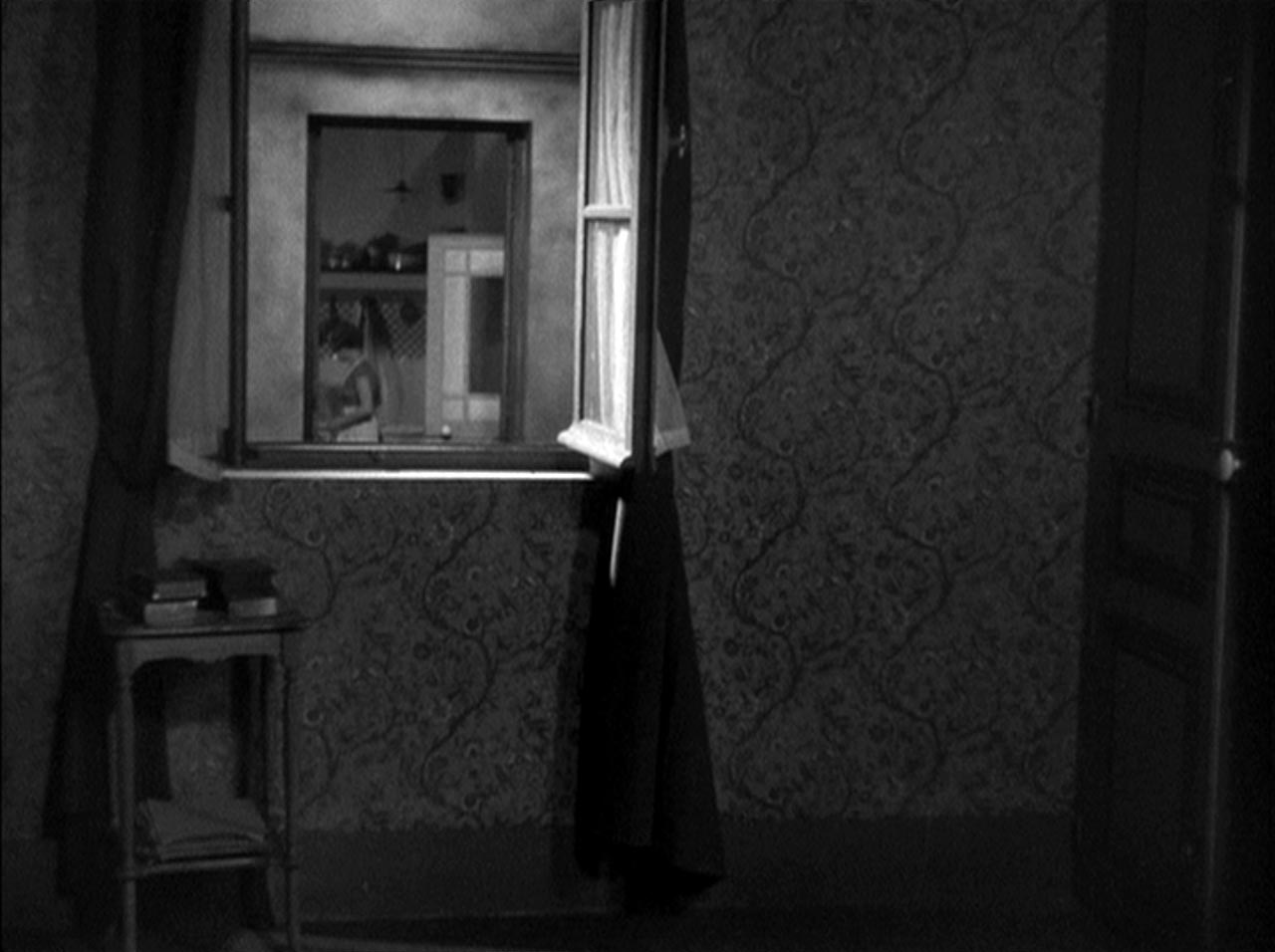
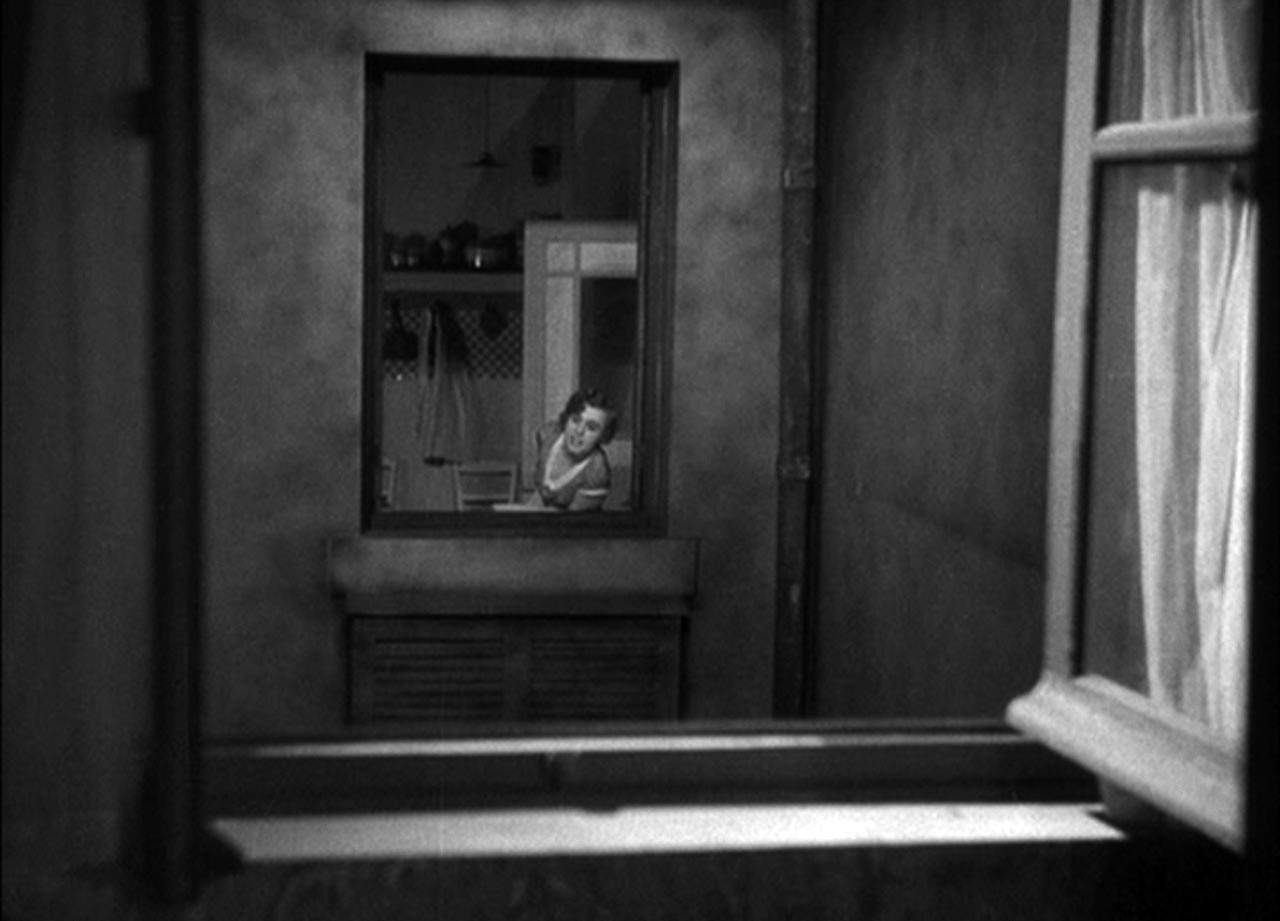
And then the maid stops in the kitchen and takes off her appron. We see here through two indows that look out onto a courtyard.

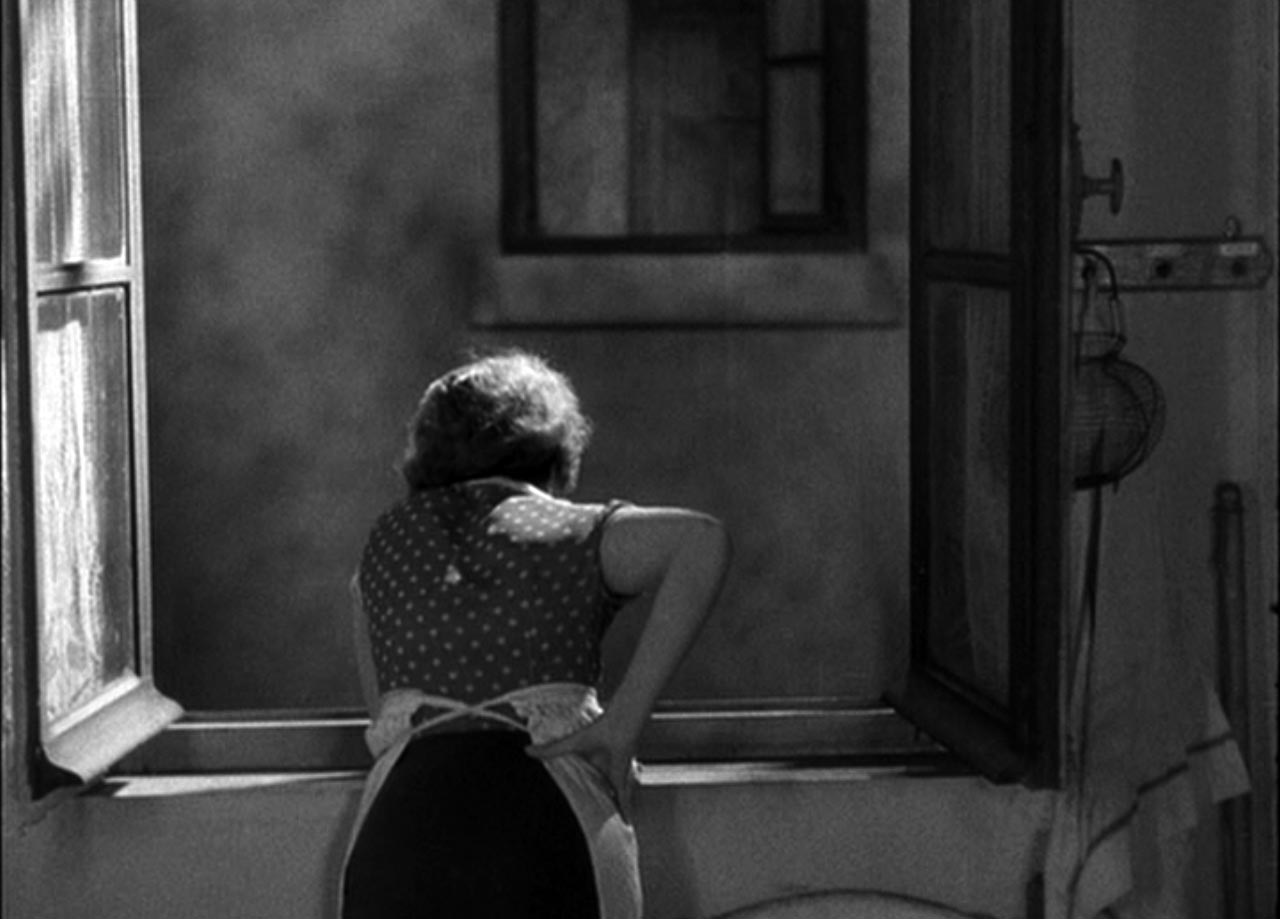
The camera then dollies in to the foreground window. The maid leans out and calls out to someone down below.
The, with a nice match-on-audio, we cut to the far room, from behind the maid as she calls out again.
There is something so simple about this transition scene. Renoir shoots in depth, giving us a a greater sense of the appartment and does so with the simplest of camera movements. The cut to the maid’s side is so effortless and seemless that it displays Renoirs’ masterfull capability with continuity. The scene also evokes a sense of our voyeurism into this little domestic scene. For me, I love these kinds of scenes because I love watching how people lived from other times and places. Although Boudu is not a true ethnographical document, it does provide us with lots of information about that world, which is both so different and so similar to our own.

We also have a glimpse into the way people (or some people) thought (I use that term in the widest sense) in 1931, at least into how they told stories and what stories they told. Renoir, for all his “master” status, was also a man of his times and created films that were both innovative and in the vernacular. We don’t see films such as Boudu being created anymore for many reasons. But we can become explorers, as it were, and look into our cinematic past, much as we look at ancient artifacts or 19th century architecture or Rennaisance painting, and still be amazed by what we find.
Finally, though I’m sure this is old news, I was pleasently surprised to discover that Boudu’s first name is Priape (translated at Priapus in the subtitles, and I know I had seen it before, but just not noticed it). Priapus was a minor god in the Greek mythology. Read about it here. I will not go into “unpacking” what this might mean for understanding the film, but I feel that it might help explain the role Boudu plays in this bourgois morality play (including his spitting in Balzac), and also help explain the odd little Greek theatrical moment at the begining of the film. I would say this also goes to the boldness of Renoir and Boudu’s themes.