
>where life is…

>

My life, metaphorically speaking, is a large stove with three or four big burners up front and about twenty or thirty back burners. There are many things, good things, wonderful things, important things that I have to put on those back burners when the big pots on the front burners start a’rumblin’. (I see you nodding your heads.) PilgrimAkimbo, this little corner of my creative world, has been languishing somewhat on one of those back burners with the heat set on medium-low. It will stay there for a while still, poor little blog, with the occasional bubble and pop.

The front burners are:

  • I am in the final throws of my MBA wrestling match. One more class to go, then finish my thesis. The pressure is on from all fronts.
  • Hey, I have a family! Wow, and they’re still here. Happy Father’s Day! Needless to say, families are big priorities and having a baby in the house adds to the level of constant investment. Big events so far this year: Wilder is born; Lily learns to ride a bike; Maricel starts painting again; Lily finishes 1st grade; Wilder keeps growing…
  • My paying job, you know the one that helps us buy food and shelter, is particularly stressful these days. No blogging at work!
  • Once I finish the MBA we will be looking for a way to make it pay for itself, and then some. Who knows, we could be moving sometime in the next several months. Yay & ugh!

In the mean time, I’ve been thinking about this blog, what it is, how it looks, how it could be organized better, and what content it should purvey. Here are some thoughts:

  • I have added a food blogroll, Viands & Victuals, I am looking for more good food related links. And I plan to populate PilgrimAkimbo with food related writing, including some of my favorite recipes and meals – but that’s down the road. When I will have the time to do some food writing I do not know – even my magic eight ball isn’t being helpful.

  • I plan on revamping my whole approach to tags. For those of you who witnessed my last tag fiasco the answer is “yes, I am not too bright, but I know I can learn, I have a masters degree.”

  • I will likely change some of the look-and-feel of the enterprise, but mostly keep it the same. I am a visual person and the style of PilgrimAkimbo only pleases me a little, but I have not had time to affect any changes. And, I am often impressed with the design of other blogs, but it takes time to get to that level. We’ll see.

So, I will still put up a post here and there, makes a few changes when I can, and suffer, as all bloggers must, with priorities. But not suffer too much.

Oh yes, a film…
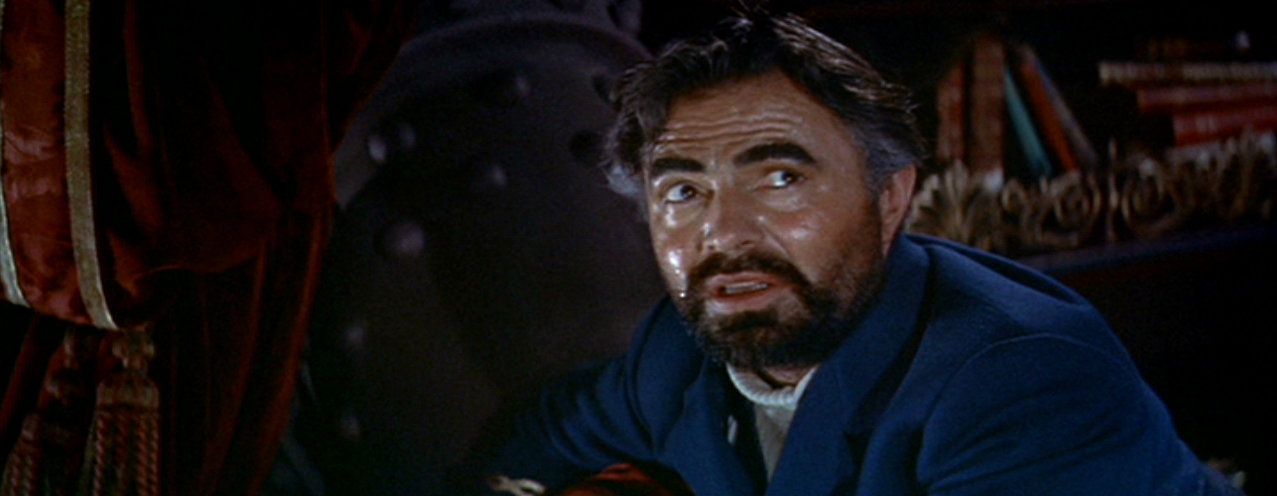
Last night, continuing Lily’s cinematic education, we watched 20,000 Leagues Under the Sea (1954). Lily found the film very moving and was greatly saddened when Captain Nemo died. I found the film better than I had remembered. This film was my favorite film when I was a kid, but in recent years I had come to believe that the film was a bit outdated. After watching it last night I have changed my views and consider it wonderful.

Recently I posted something on watching Treasure Island with Lily. In that post I mentioned the moral conflicts posed by the existence of the Long John Silver character. There is a similar ambiguity with Captain Nemo. As a kid (and still as an adult) I found Nemo (Latin for “no one”) to be both frightfully dark and exhilaratingly compelling. James Mason is wonderful in the part. He is both evil and good, a villain who cares for the oppressed and hates violence, yet uses violence to get revenge. I did not know exactly how to deal with Nemo. Should I like him or hate him? I saw the same tension within Lily. She knew he was bad, and yet she almost cried when he died. In fact, while we were watching the “making of” documentary on the DVD she did not want to see the crew filming the scene where Nemo is shot. I don’t blame her. For me that is a tragic moment as well, even though I know he is getting what he deserves. In this way Nemo is a little like all of us. We (speaking on individual terms) judge the world and others and yet we deserve to be judged ourselves. We (speaking in terms of “humanity”) all too often use evil in the name of good, justifying our actions because we elevate our own personal stories above those of others. Nemo is the evil and self-righteous genius who believes in the goodness of his own heart. I’m no genius, but I know what it is like to experience the rest.

Note: I absolutely loved the look of pure excitement and amazement on Lily’s face when Nemo says “You may call me Captain Nemo.” For a kid who has grown up with Nemo being a cartoon fish, it was great to see her get truly excited about the origins of “Nemo.”
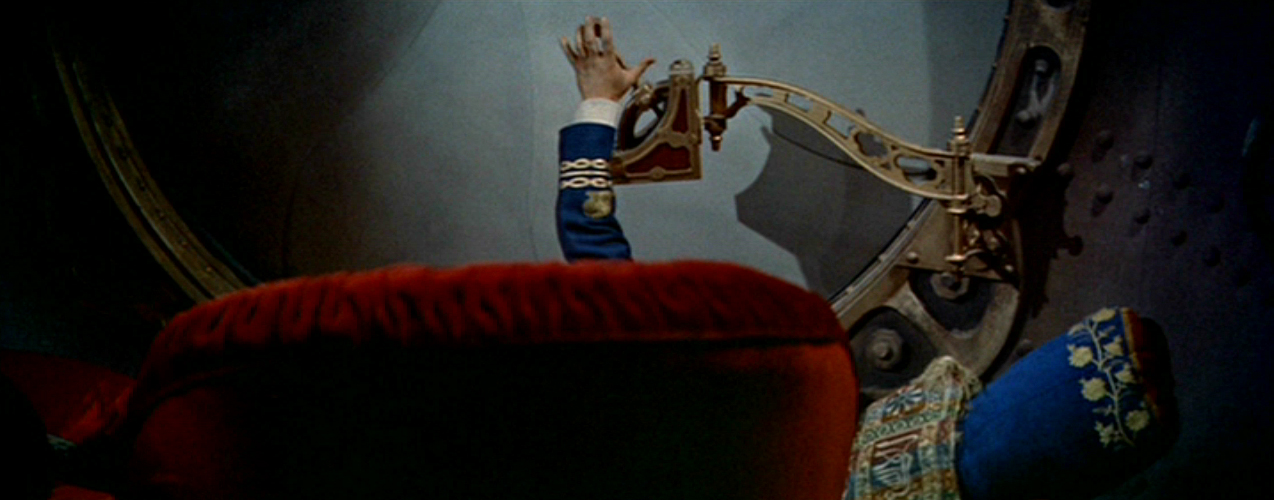
Extra: you can see the 1916 version of 20,000 Leagues Under the Sea here.
educating Lily, educating myself

This blog has languished for lack of time and an abundance of guilt.

Pressures of grad school have kept my head down, which is a good thing since I do need to be working on my thesis – and the thesis is coming along, somewhat. I have several potential posts that I want to write, but they have been pushed aside. I have been reflecting a bit on what this blog is for me and what I want it to be going forward. I don’t have an answer yet. But, at least, it is a chronicle of some features of my life, including my relationship to movies.

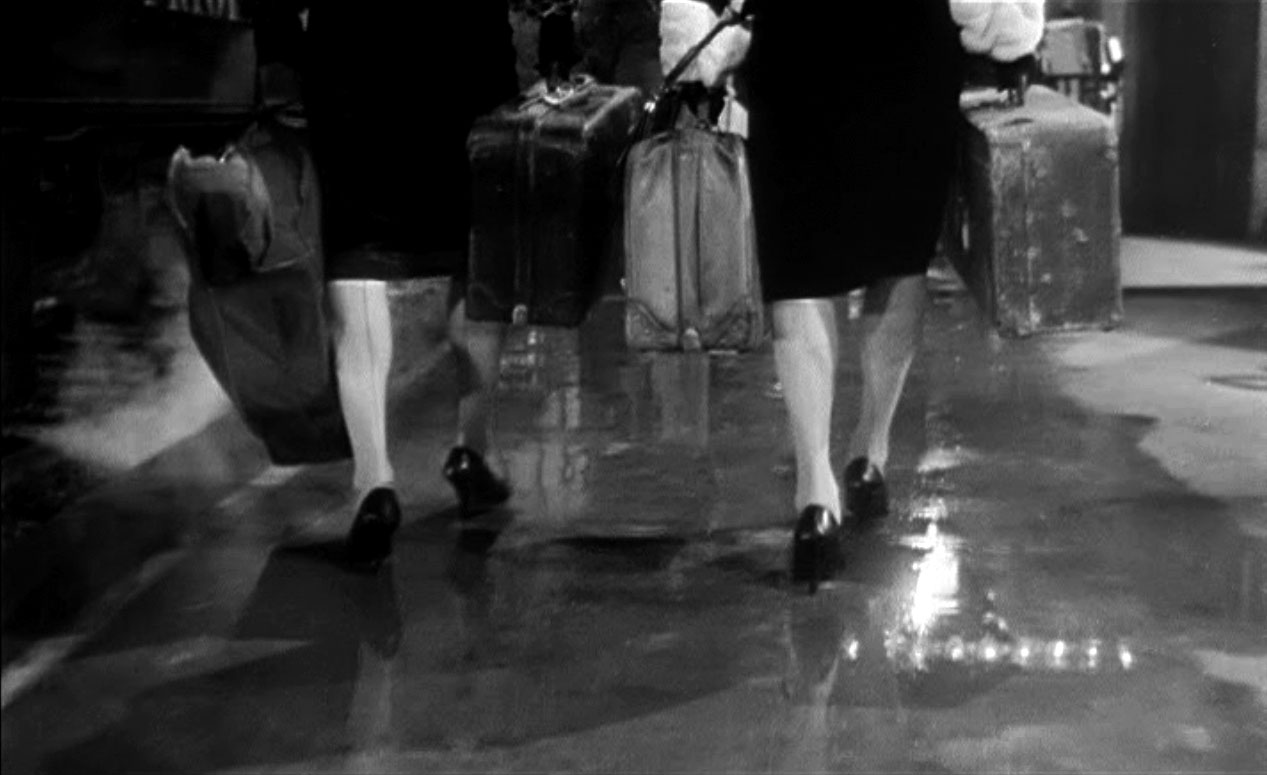
Several times on this blog I have mentioned watching movies with my six (going on seven) year old daughter Lily. I consider these movie viewings part (a fun part) of her education as much as an entertaining evening. Recently we saw Some Like It Hot (1959) and she loved it. Now some might say that my daughter is a bit young for this film, that, even though it is nearly 50 years old, the content needs some explaining about some things that a parent might not want to discuss with a six-year-old.

But she gets it – not all of it of course – but she understands that a couple of guys trying to walk in high heels and pretending to be women as they run away from some gangsters is funny. She also reacted strongly to Sugar Kane Kowalczyk’s (Marilyn Monroe’s) dress in the night-club performance scenes. Lily thought the dress was rather too much. And she was humorously shocked by the famous last line: “nobody’s perfect.” The look on her face was priceless – even better than Jack Lemmon’s. In fact, the parts I had to explain had to do with Spats Colombo and prohibition – which she thought was crazy. Of course, she also liked the fact that the director’s last name is Wilder, and that being the name of her little baby sister, Wilder Rose.

Why do I write all this? For me watching movies is a very personal joy. I’m sure you understand. Certainly films are objects out there in the world, separate from me, with a life of their own. And films are also a way to connect with others, such as through film blogs, etc. But films are also remarkable objects that include the viewer in their existence. I am a part of every film I watch because part of a film’s reality includes my watching of it. Cinema is also one of the most remarkable of human creations – maybe the most powerful art form so far. The life of a film includes the affects it has on and through its viewers. I can say many films have become deeply rooted in my conscious and subconscious. I see films being a personal thing for my daughter as well. She loves movies, as does most everyone. I want her to know the greatness of film, of how wonderful it is, and that it is worth the effort to think about what one watches – in other words, the best films really pay off, and the good ones pay off too.

So then we watched North by Northwest (also 1959). Recently we have seen Rear Window (1954) and To Catch a Thief (1955). I have been picking Hitchcock from the 1950s because these are great films to understand how “classic” Hollywood narrative works while also being introduced to one of the great directors. These films give me the chance to point out things to Lily about filmmaking without getting too involved. There probably aren’t too many six-year-olds who can tell you about Hitchcock, but Lily can (a little).

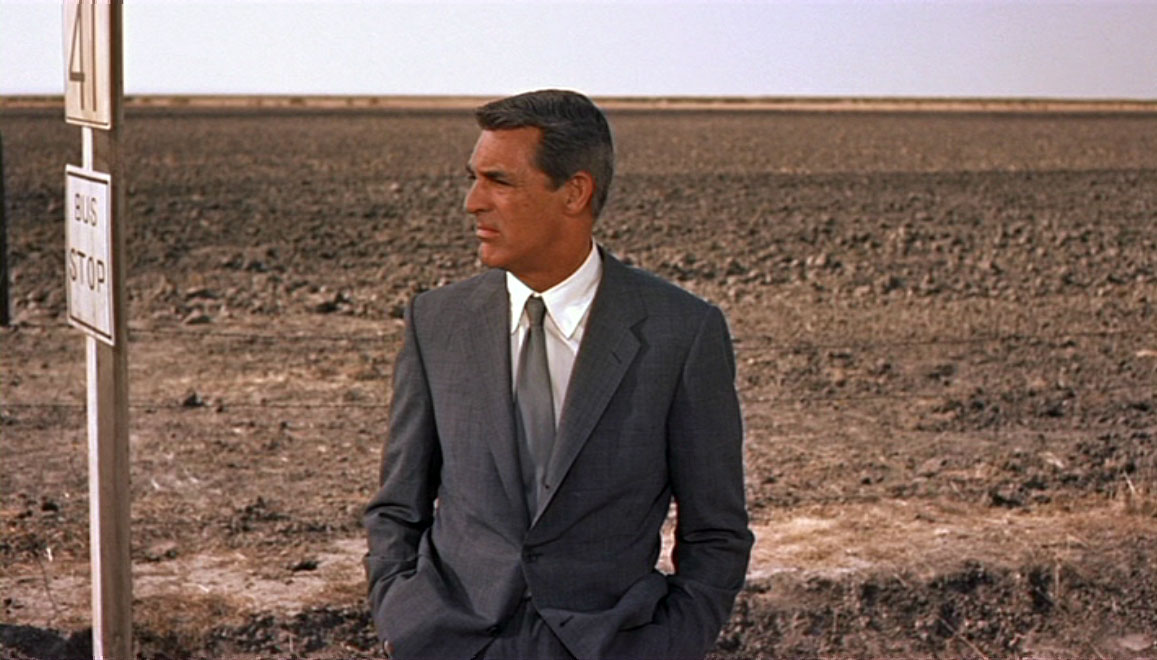
Speaking of North by Northwest, something caught my eye that I really liked. You remember the crop duster scene – it’s so famous that many people know all about it who have never seen the film itself. Well the scene is set up wonderfully, beginning with Roger O. Thornhill (Cary Grant) being dropped off the bus in the middle of nowhere.

He then proceeds to watch cars go by as he waits for George Kaplan (a person who does not exist) to arrive.

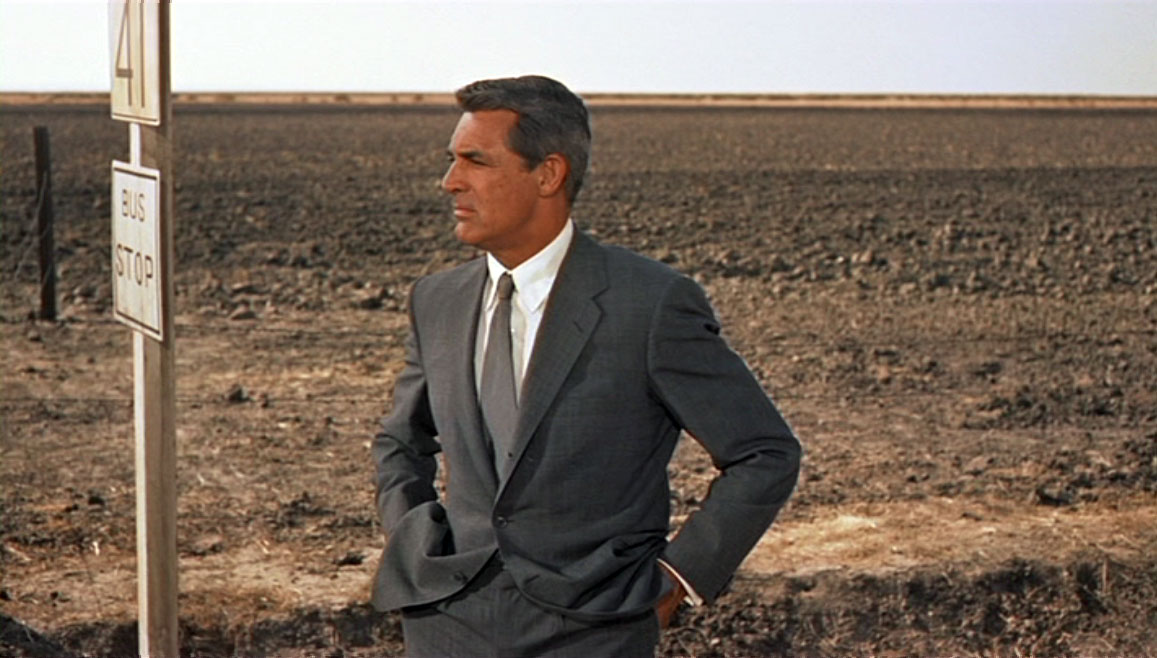
This is what I liked: As he waits, Thornhill sees a car coming, he thinks it might stop, but it goes on by. Cary Grant plays it almost as though it was a silent film.

Grant watches the car coming…


…the car gets closer and he raises his arms, but keeps his hands in his pockets…


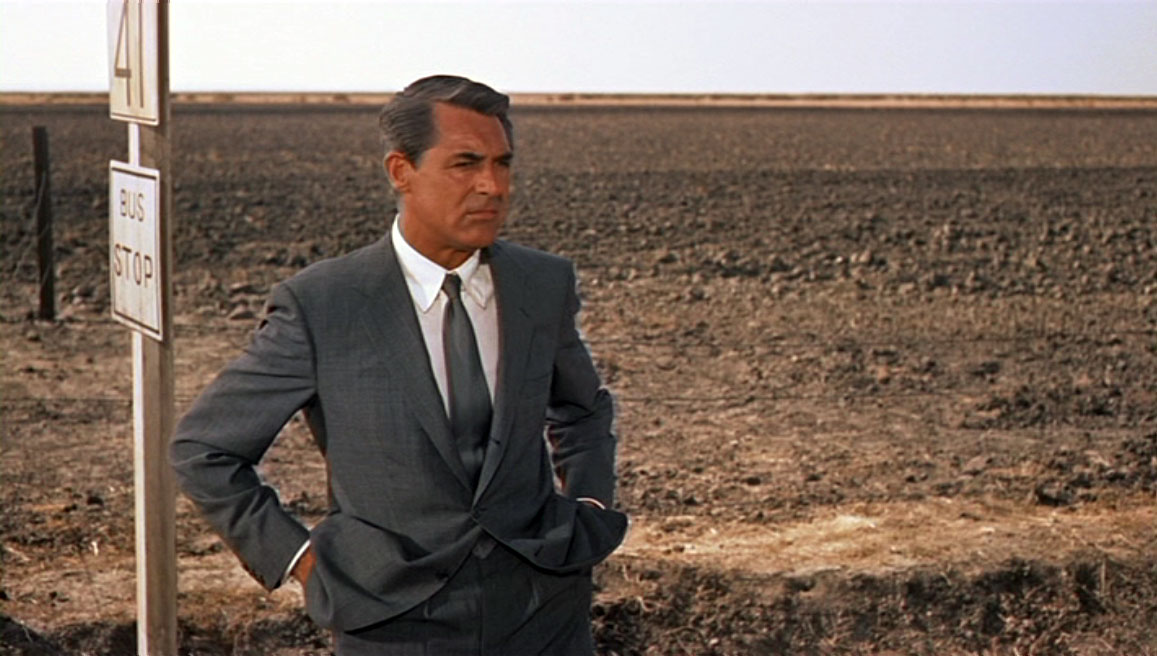
…arms still raise, hands still in pockets, he follows the car with his gaze…


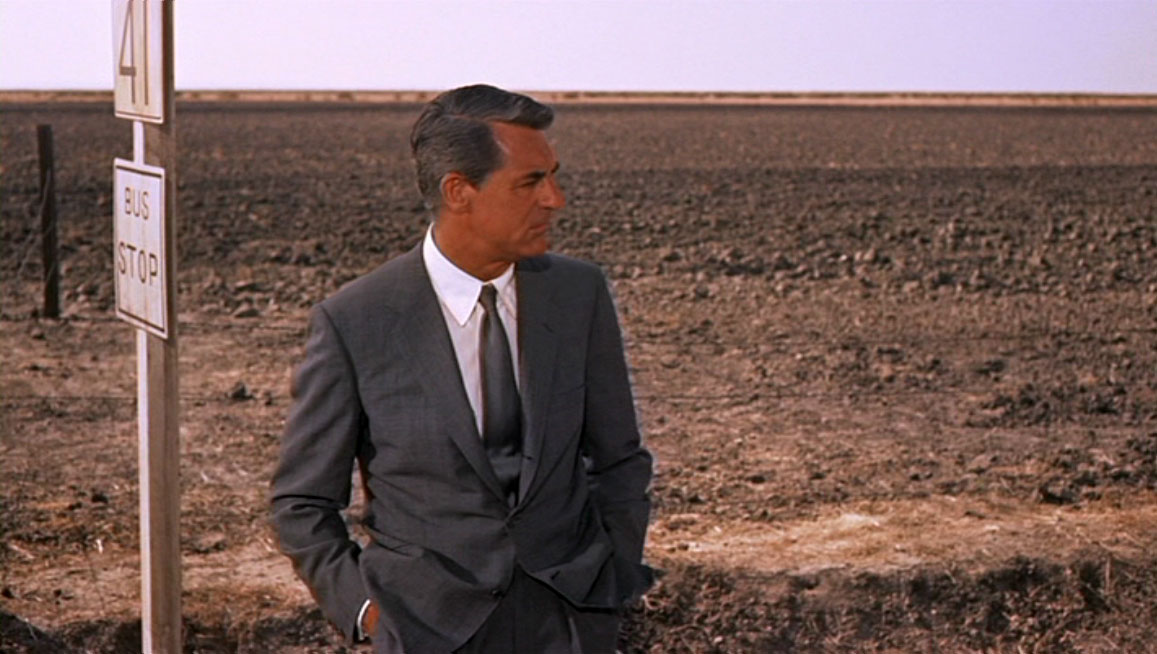
…he then lowers his hands back down into his pockets…

…signaling that the car is not stopping and he is still waiting for Kaplan.

To me this is pure Cary Grant school of acting: simple, physical, perfect, and always with an undercurrent of comedy even when he’s playing it straight. I can imagine Grant being told to stand on the X so they can get the focus fixed, then he is told to pretend a car drives by and he is to find some way to indicate the car has come and gone, and that once again his character is disappointed and perplexed. Grant was a master at this subtle, physical kind of acting; he could do zany pretty well too.

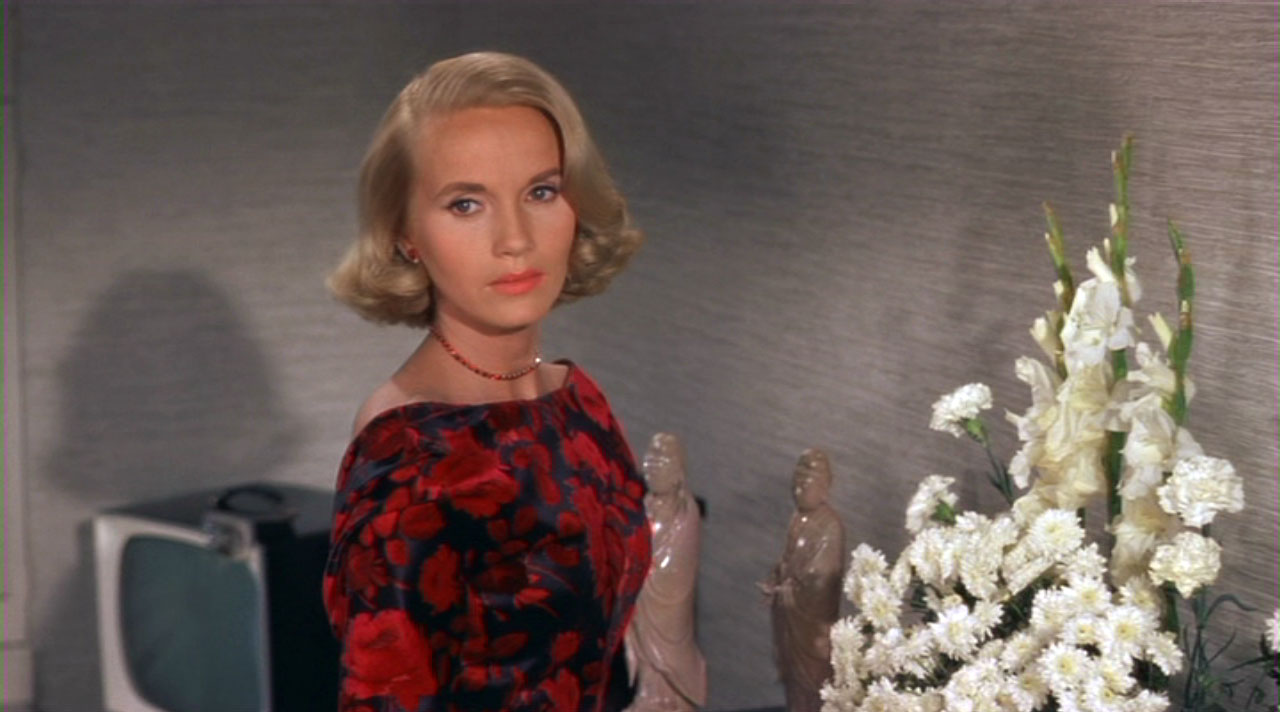
And I just love this shot:


It is so quintessential late 1950s, and it is beautiful while being ordinary. Having been on film and television sets, I know that even such a simple shot as this took a while to make as each little detail was put in its place, as Eva Marie Saint was told exactly where and how to stand, and how to turn toward the camera. This shot is common – especially then – for female leads, with her torso facing to one side of the camera and her gaze going in the other direction.

So then last night we watched Sullivan’s Travels (1941). It was good to see it again. Lily loved it, as I thought she would. The film also gave us some things to talk about, like what was the lesson that Sullivan learned? How did he learn it? etc. I don’t have any thing to say here about the film except that if you have not seen it, you should. I have The Miracle of Morgan’s Creek (1944), also by Sturges, on the docket for a near future viewing with Lily as well. Now I do feel a little bad because Lily had wanted to see (and show me) Milo and Otis (1986) but I pushed for Sullivan’s Travels. I guess it’s parent’s privilege, but now I have to make it up to her. Fortunately she does watch a fair number of “kids” films and current films, so it’s not all Papa’s stodgy old films.

As a side note on Sturges, I don’t know very much about him as a director or his personal life, but the DVD contained an interesting American Experience documentary that made a connection for me. Years ago I read a wonderful little book titled Sylvia Beach and the Lost Generation: A History of Literary Paris in the Twenties and Thirties by Noel Riley Fitch (1983). [Sylvia Beach was a famous expatriate in Paris between WWI and WWII. She owned the bookstore Shakespeare and Company and hung out with the likes of Hemingway, Fitzgerald, and was the publisher of Joyce’s Ulysses.] In Fitch’s book I read about Isadora Duncan, the famous and flamboyant dancer (some say she was the mother of modern dance). She died tragically in a freak automobile accident in 1927 when her long silk scarf got caught in the spoked wheels of the open-cockpit Amilcar she was riding in. Well, that scarf was given to Duncan by her friend Mary Desti who was, as I found out, the mother of Edmund Preston Biden, later know as Preston Sturges. Incidentally, the accident gave rise to Gertrude Stein‘s mordant remark that “affectations can be dangerous.”

Finally, I mentioned earlier that introducing Lily to these great films is part of her education. This is true, but not because it’s a good thing to understand the history of film or to recognize a Hitchcock film against any other film (although there is some value in all that). The fundamental goal, for me, is the ancient idea of a liberal education: an education that seeks to fulfill one’s human nature; an education that asks what it means to be human; and an education that creates a lifelong autonomous seeker. We, my wife and I, have taken on the task of educating our children. This is not easy work. Being an educator is a demanding job that takes great patience and lots of love. Although I am an adherent to the idea of a classical education, one that relies on the written word more than the image, I think some proponents of a classical education wrongly vilify the image more than is warranted. In fact, the tension is not really between word and image. The real issue, as I see it, is a lack of passion for learning. I believe we live in a world that often encourages a kind of “closemindedness” that leads to, or is born out of, fear. What I hope to instill in my daughters is a critical open-mindedness, a perspective on life that seeks understanding and finds real joy in doing so; and is not afraid to do so. So, when I sit down with Lily and watch a film, and while we are having fun watching the film, and when we then discuss the film, I know she is learning about thinking, about pondering what it is films are trying to say to her, and about how fascinating and complex a film can be as it presents its story to her.

So I see this blog as part of an ongoing exploration into my life as a lover of films, as a husband and parent, as an educator, and as someone seeking to be a lifelong autonomous seeker. How often I update it will depend on many things.

>is that the sun? yes dear

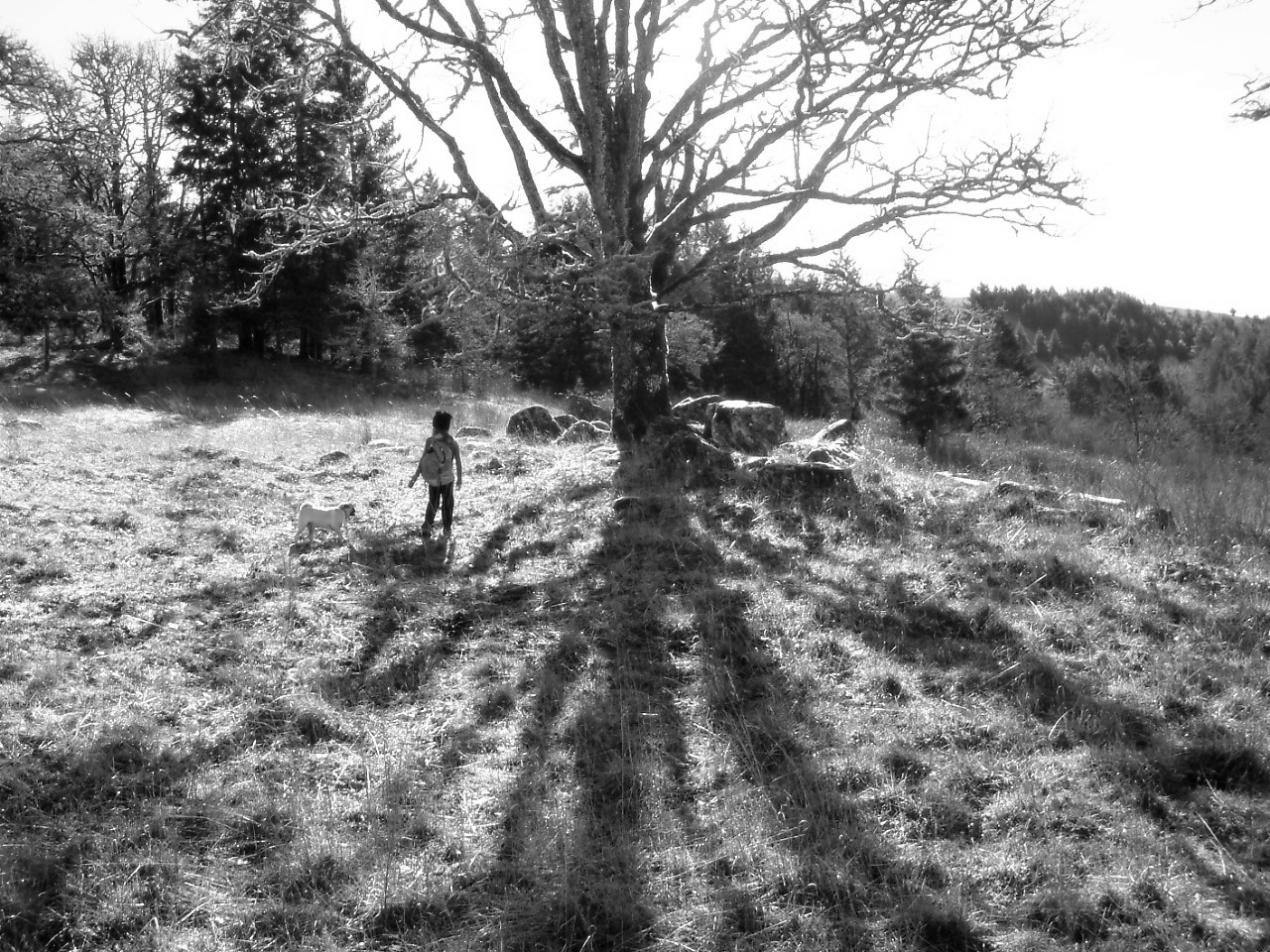
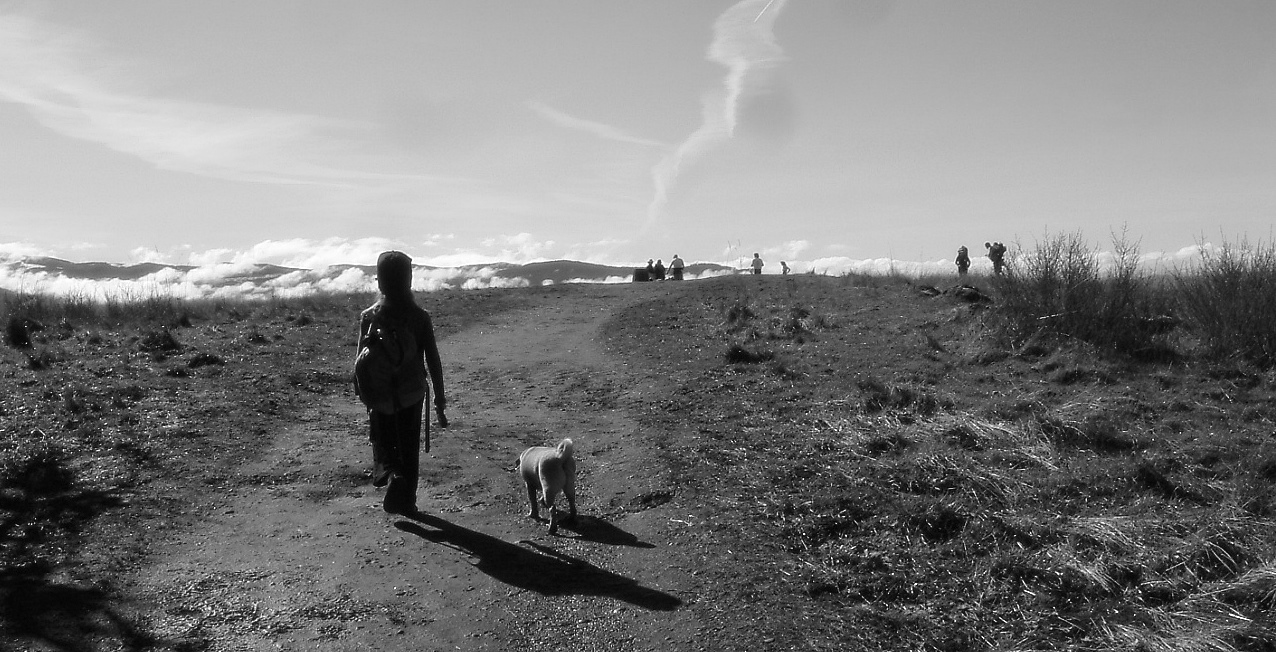
>Today was one of the first sunny days around these parts in quite a while. So instead of staying indoors and watching a film, Lily and I went for a hike up a local mount.

At one point Lily had to take the dog (Aloysius Bonaventure) over to see a tree..

…and many other things for that matter.

There’s nothing quite like getting outdoors after a long, dark, soggy winter and seeing a little blue sky. Even though I have a stack of films I mean to get to, and I should really be writing my thesis anyway, I need the balance of getting away from the city, even if only for a couple of hours.

Sometimes the best work of art is life itself.

Anyhow, we saw our latest film last night – The Return of the Pink Panther (1975) – which she loved, and even my wife laughed out loud at its cornball humor, and I remembered having seeing it over and over as a kid, memorizing all of Clouseau’s lines. I have to say much of my comedic education came from watching Peter Sellers many years ago. In fact, it reminded me that, although I have a fair amount of formal education under my belt, so much of what I have learned in life, and so much of who I am, has come from watching films.

Oui Monsieur!

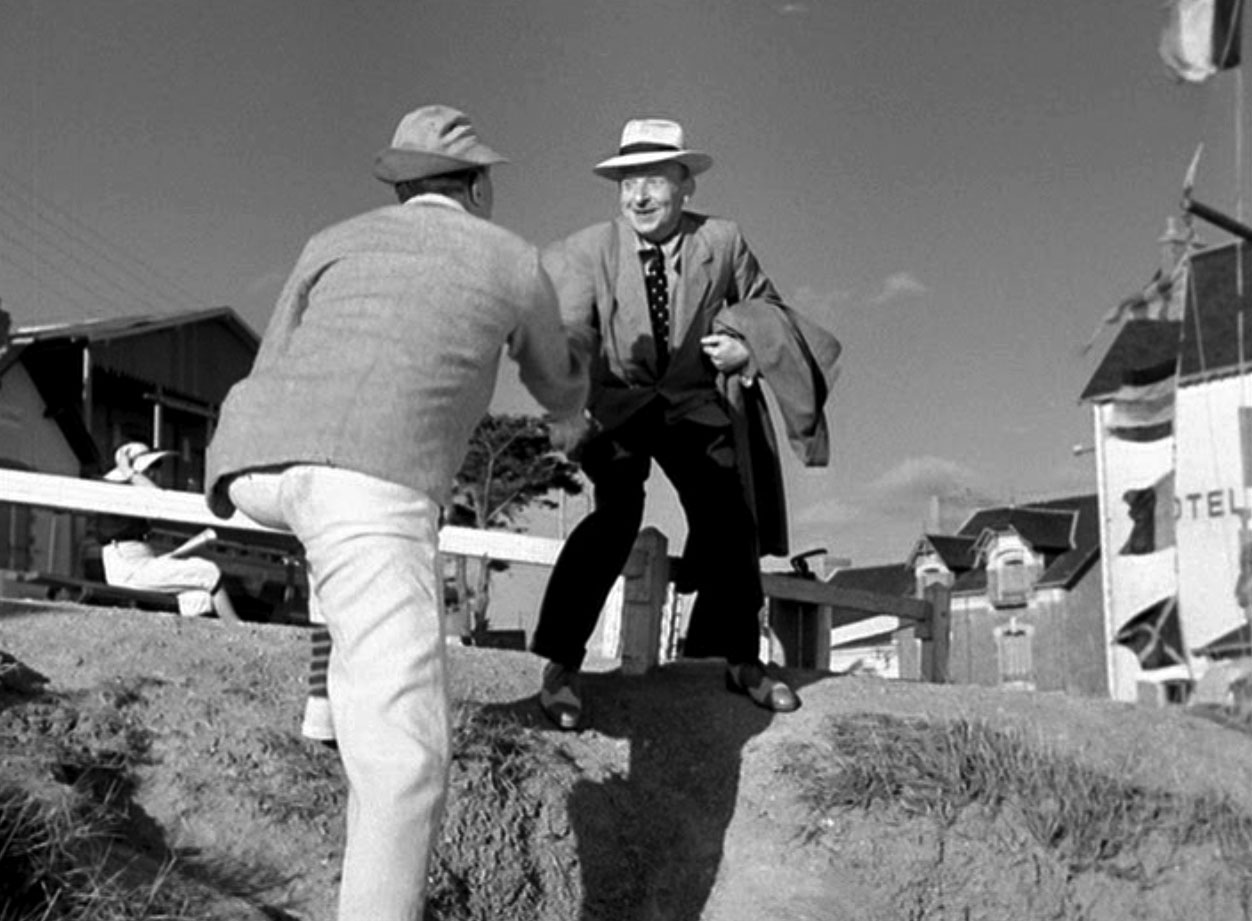
Recently I had le plaisir of introducing my daughter to Monsieur Hulot. I knew that the film Les Vacances de Monsieur Hulot (1953) would work for her since it is essentially a silent film with sound effects – much like Chaplin’s City Lights (1931). Lily (said daughter, 6 yrs old) loved it, and I loved it again. I really should have a reoccurring feature: “Watching movies with Lily”!

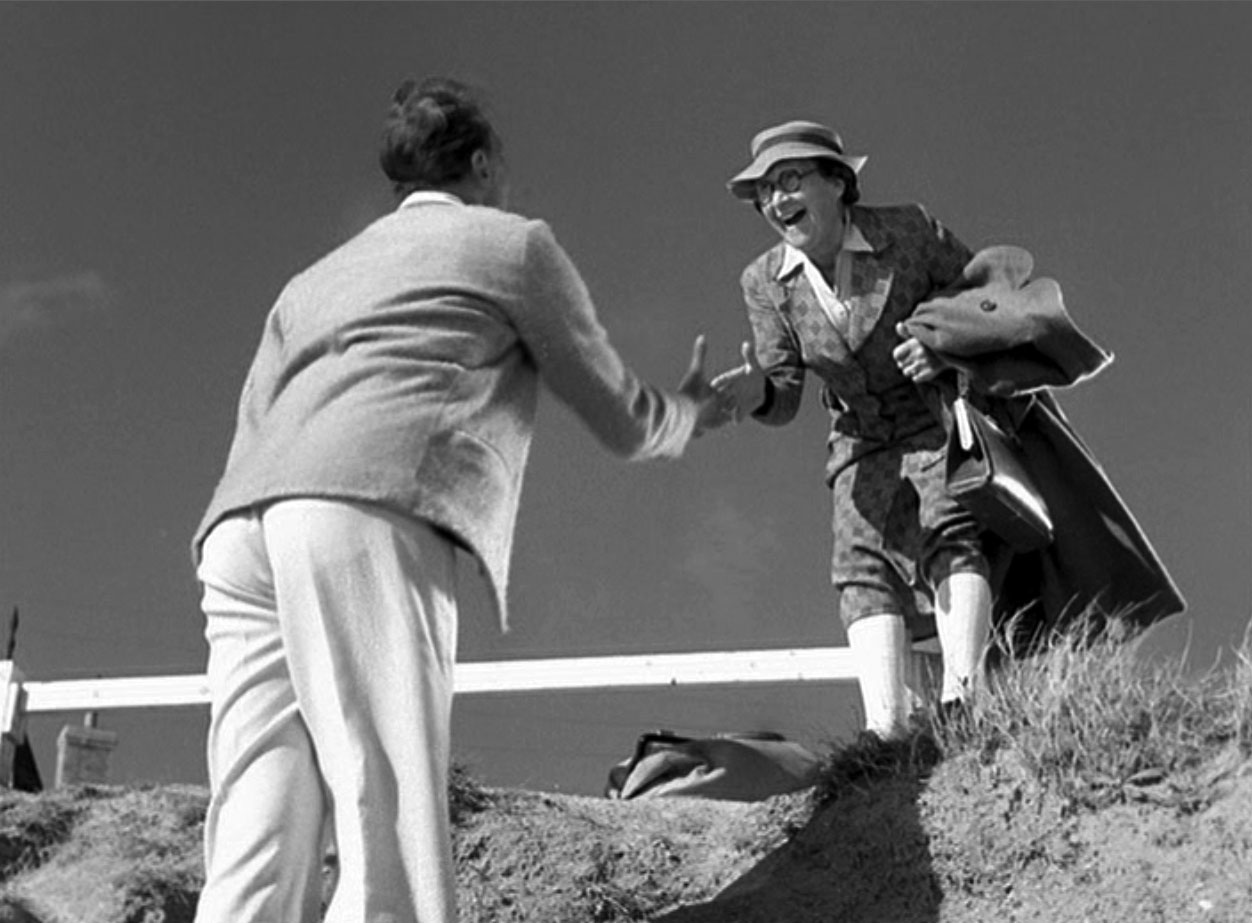
I have been thinking about how this story, which is more a series of light comedy vignettes, ultimately ties together. Now, on second viewing, it seems clear to me that the key is in answering the question: who is it that bothers to say goodbye to Hulot at the end of the film? Of all the characters in the film only two say goodbye to Hulot – the Englishwoman (played by Valentine Camax)…

…and the Strolling Man (played by René Lacourt).

Both of these characters are, in some way, outsiders, either by being culturally different (the Englishwoman) or by being a henpecked observer (the Strolling Man). And, of course, Hulot is an outsider in so many ways. I believe that Jacques Tati sees Hulot as a kind of tonic, or a moment of trueness, for those who have hearts capable of responding.

I find this scene to be one of those wonderful moments because it is so matter-of-fact on the surface, and yet a little melancholy underneath. The scene also speaks volumes in regards to Hulot’s position in society and Tati’s perspective of French (and modern) society as a whole.

>Thinking of you, Conrad Hall (a random observation about a film he didn’t shoot)

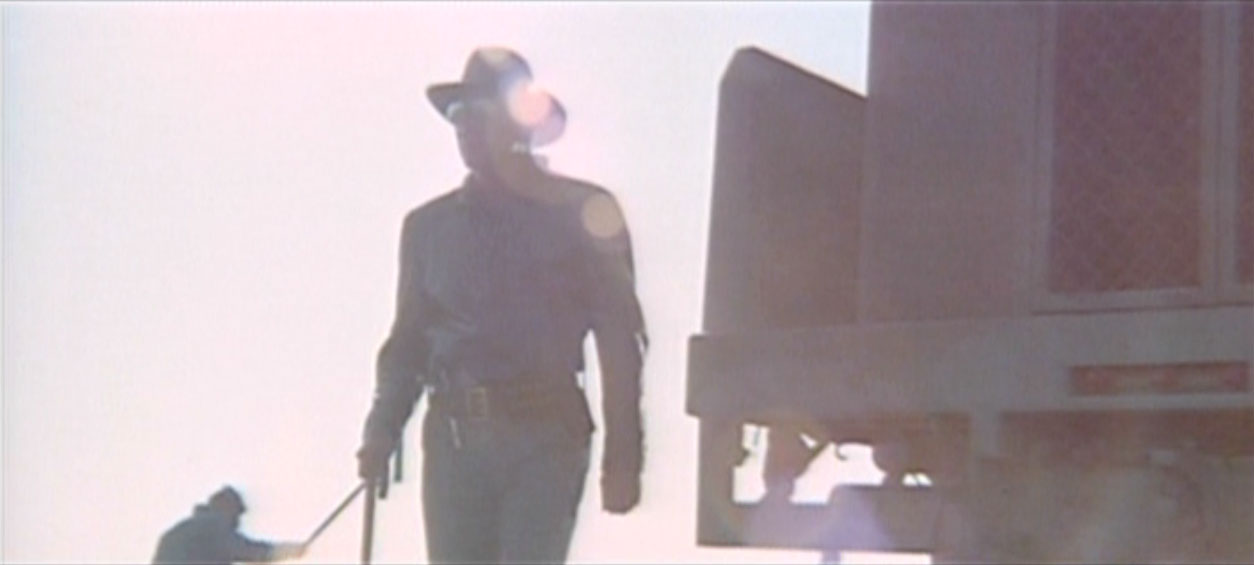
>In the documentary Visions of Light (1992), cinematographer Conrad Hall makes the claim that he contributed to making “mistakes” acceptable. In other words, the kinds of photographic gaffes, such as light flaring in the lens, which previously would have required a retake, began to become expressive filmmaking elements, even normative. The example used in the film was Cool Hand Luke (1967) – a film he did photograph:


This particular scene from Cool Hand Luke is one of the hot “chain gang” moments in which the sun beats down on the convicts slaving away along the road. Certainly, one of the aesthetic goals of the camera work was to create the sense of the sun’s heat and glare. Having the sun’s light flare in the lens helped to create that sense. The danger of this technique is that it may foreground the presence of the camera too much such that the viewer momentarily is drawn out of the narrative and the “fourth wall” is revealed. What cinematographers like Conrad Hall (and director Stuart Rosenberg) understood, however, was that in the photographic world outside of feature filmmaking, especially in journalism, a lens flare is not only commonplace, but may in fact encourage a feeling verisimilitude. Hall, and others, realized that audiences were (maybe always have been) ahead of conventions, and he went for it.

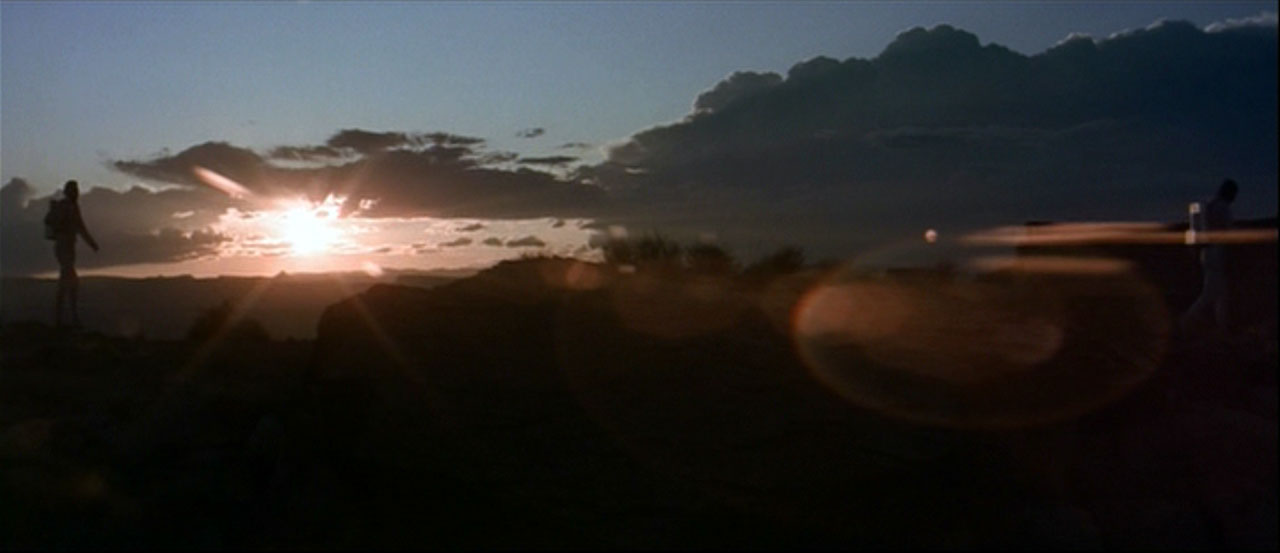
So where in the world does this post really originate? Last night I showed Planet of the Apes (1968) [photographed by Leon Shamroy – a rather accomplished cinematographer] to my daughter (6 yrs old, going on 7). Early in the film, when the three survivors of the crashed spaceship are wandering through the desert (the forbidden zone – as we find out later), I noticed the following shot:


Here we have clear an obvious lens flare. In fact, the lens flare is placed such that it has a visual weight that structurally balances the image. Planet of the Apes was released only a year after Cool Hand Luke, and here Shamroy unflinchingly uses this “new” language of acceptable mistakes. [note: the film was shot in 2:35.1 aspect ratio which only adds to the epic nature of the story and makes the use of such cinematic techniques that more thought-provoking, in my opinion.]

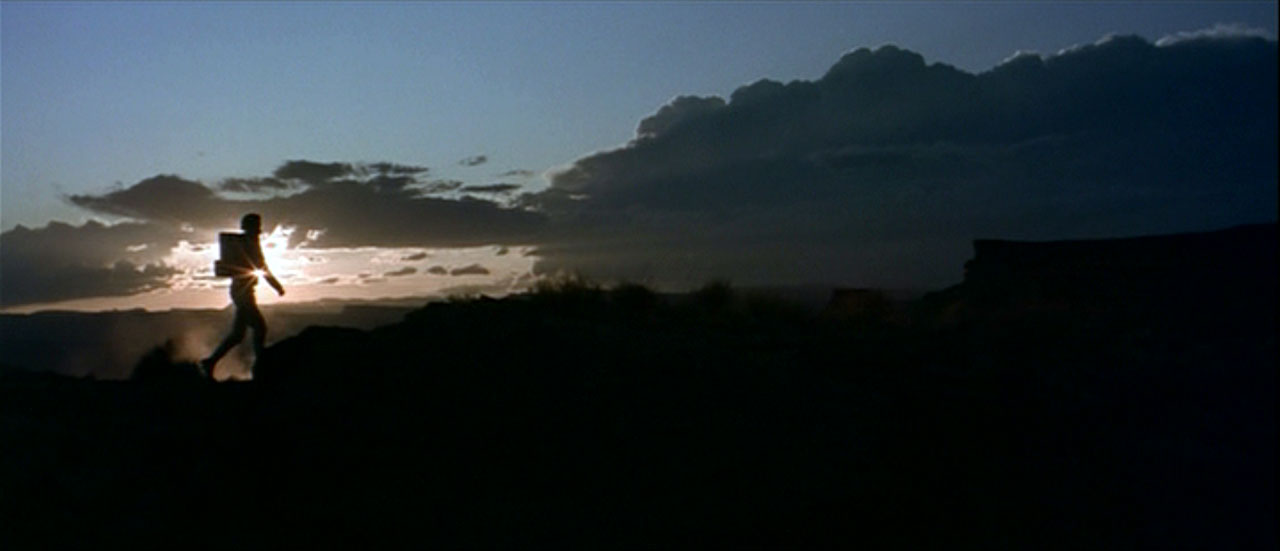
In fact, the way the shot is used we see one of the characters walk in front of the setting sun causing the lens flare to disappear…

…and then re-appear again…

…thus emphasizing the technique even more.

What I find most interesting is the fact that the use of this technique in Planet of the Apes seems to have little functional, thematic, or narrative purpose compared to that in Cool Hand Luke. Nor does it go with much of the rest of the film’s cinematography, which is very good, but rather conventional. In fact, it seems to be used here merely because it is the new thing – a ’60’s thing maybe. Could it be that only a year after Conrad Hall was helping to pioneer new cinematographic horizons that those horizons had now become conquered, colonized, and kitsch-ified? That may too strong of a word. In fact, personally I like the shot in Planet, but I just find the connection a curiosity, and the predictive process of how art affects art typical.

btw, my daughter loved the film. She was fascinated by the ending. Tonight she saw The Princess Bride (1987) for the first time, which she also loved. I have to say, I get a kick out of introducing her to great and fun films.

A Wilder Rose

>

The Universe had changed.

And for the better I have to say. The little family that resides somewhere obliquely behind this little blog are rejoicing at the arrival of its newest member, Wilder Rose. Born January 26, home today, and being most babyish, little Wilder is adjusting to her new digs quite well and we are all needing a bit more sleep.

Needless to say, my hands are full, as life is full, and blogging is an activity that just might have to step aside a little (but not for too long). So that’s where I’ve been, and that’s where I’ll be.

watching movies at home

I have a family. My wife and I have some similarities in our movie preferences, and some real differences (no surprises among the married crowd). I have a six year old daughter who is not likely to, as yet, enjoy watching many of the films I find interesting. And, with a family (who I love more than all the films in the world), I don’t get out to the local theater as much as I might like, and when I do, it is usually with my family. So I find myself trying to eke out a few viewings of “my” movies at home in between family time, home projects, work, homework (‘cause I’m back in school again), downtime, and whatever else pulls at my time; all of which are good, even if I don’t always manage my time very well.

The process of watching movies at home goes something like this: when I feel I have some time I put “my” film into the dvd player, my daughter asks what I am watching, I pause the opening credits and explain it to her, then she settles down next to me as we begin watching the film, soon she begins asking questions like – what language is this? What are they talking about? What is that? etc. – I try to explain, frequently pausing the film, occasionally I read her the subtitles as we watch the film, I pause the film again when my wife asks a question from the computer room, I pause the film again to let the dog outside for a potty break, my daughter then plays with her Legos as I resume the film, occasionally my daughter (who is half-paying attention) asks a question about the film or wants to show me what she has created, the dog wants up on the couch (we have a pug, who can jump up himself, but insists that one of us lift him to the couch), my wife asks if I have paid a particular bill or called someone like I had promised, then, about half-way into the film it is time to put my daughter to bed, once that is done I am too tired to continue my film, so I go to bed. The next evening (or two, or three) I try to finish the film to much the same scenario. And please know that I am not complaining.

All this is affected by a bad habit I got into years ago when I worked at a video store where I could take home any film I wanted after work. During that time I watched the first third of many, many films, but never finished most of them. So now, I have to force myself to get beyond the moment of tension I begin to feel at about a third of the way into any film – that is, the feeling that the other films in the stack next to the tv might be worth a looking at. I am getting better at finishing films, though.

I like the comfort of watching films at home. I like having the kitchen nearby. I like being able to pause the film to take care of business. I also love my family and would generally rather spend time with them than with a movie. But, I have to say, seeing a film in a theater has great advantages. One of which is the unstoppable momentum of the film. Unless you leave the theater you will see the film with relatively few distractions. It is like going to school. You could study a subject on your own, but school adds a level of impetus that carries one along. My suggestion to those who have a deeply abiding interest in film, who are developing their own ideas about film, and who are single (or relatively so), is to take this opportunity see as many films as possible so as to develop a foundation of knowledge and experience while you can.

One final word: Recently I have seen some sections of some great films with my daughter, these include The Seventh Seal, La Terra Trema, The Bicycle Thief, and others. I read the subtitles out loud and she asks questions. We have had some great times, and I believe she is getting introduced to some great works of art (to go along with the history of great painting that her mother is teaching her). She recently told me that when she grows up she wants to live on a farm and write books.