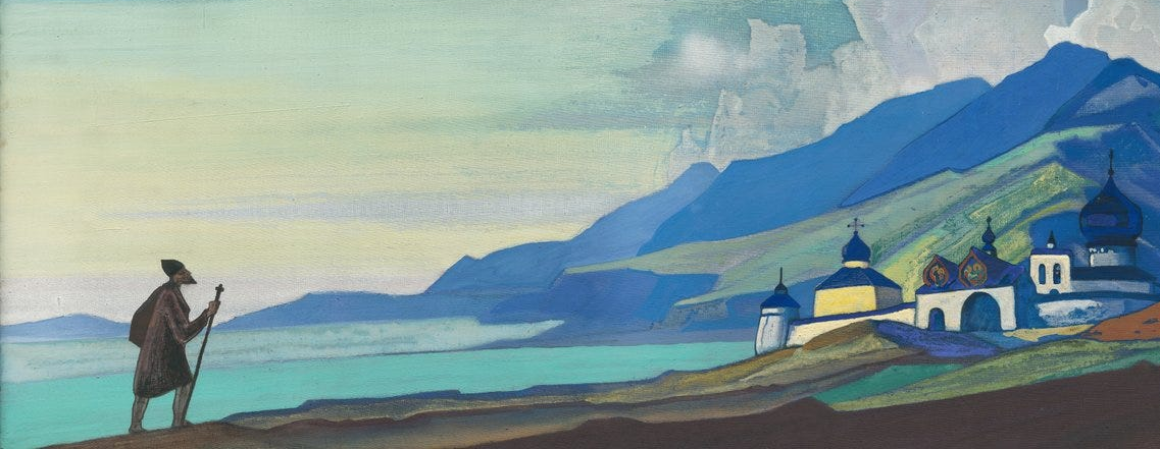
>I have been posting a lot of videos lately, and here is another. Michael Pollan wrote on of the most important books in recent publishing history, The Omnivore’s Dilemma. That book raised so many questions and concerns about the food we eat that many felt they could not eat anything without facing some kind of moral, ethical, or health dilemma. In that light, and to counter fears created by his book, Pollan wrote another book called In Defense of Food. He spoke on that book at Google and, I have to say, this less-than-an-hour talk could change your life. I have not read his new book, but I do know The Omnivore’s Dilemma (which I am currently reading) is amazing.
Category: culture
>Society, Technology, Neil Postman, and Crap-Detection
>I’ve been thinking of the late Neil Postman lately. His seminal book, Amusing Ourselves to Death, would be a great re-read now with the presidential election looming. He was always one to remind us of how technology has changed the way we communicate, think, and conduct public discourse. He warned us of what we lose when politics becomes theater made for television rather than face to face debate and an exchange of substantial ideas. I was thinking of that when I was watching the Democratic convention last night. A convention, I have to say, that I thoroughly enjoyed and by which I was frequently moved to genuine emotion. Nevertheless, it was grand theater and the real proof, as they say, is in the pudding.
Here is Neil Postman speaking ten years ago on technology and society:
Part 1
Part 2
Part 3
Part 4
Part 5
Part 6
Part 7
I cannot help but wonder how the current political campaign, and the way we think about about it, has been affected by the Internet and other technologies, like the way the Obama campaign has been leveraging text messaging. What have we gained that was necessary to gain? What have we lost? And do we know what we have gained and what we have lost? Has political discourse qualitatively improved or declined? Unfortunately we may not know the effects until we’ve swallowed that pill.
FYI: TechPresident is a site dedicated to tracking the use of technology in the presidential election.
Years earlier, and along similar lines, Postman gave a lecture at a convention for English teachers. He titled it “Bullshit and the Art of Crap-Detection.” You can find it here. The basic premise of that lecture is ever more true today. I doubt he was ever invited back.
>The Video New Wave (as of 1973)
>
The portable video camera changed everything. In 1967 Sony introduced its DV-2400 Portapack (the Video Rover) and video production was placed in the hands of ordinary people, almost. It was still expensive, but universities could get the technology and students could take it out and start shooting. This camera system great contributed to the growth of video as an expressive and personal art form. Of course, many still used studio technology as well. By 1973 the form was established and growing, enough so that WGBH in Boston created a show on the topic (see clips below). Now our cell phones create digital videos that can instantly span the globe, or be posted online. But it all started somewhere.
1.
2.
3.
4.
5.
6.
Maybe what is most fascinating about these kinds of technologies (and I include the Internet, mobile phones, etc.) is their democratic nature. Throughout the 1970s and 1980s there was a feeling that video, because it was so portable and instantaneous, could be at the vanguard of personal expression, the interchange of ideas, and forging new ways of seeing ourselves, and thus creating a better world. And it was, though a better world has proven to be elusive. In the 1990s those hopes shifted over towards the Internet, which has proved to be even more conducive to the spread of ideas. But our heritage includes a heavy (by today’s standards), black-and-white, reel-to-reel, portable video tape recorder and camera system invented in the 1960s by a Japanese corporation that would later give us the Walkman, Compact Disc, and DVD.
>independent media and the future
>
If a nation expects to be ignorant and free … it expects what never was and never will be.
~ Thomas Jefferson
It ain’t what you don’t know that gets you into trouble. It’s what you know for sure that just ain’t so.
~ Mark Twain
Where do you get your news? Increasingly I find myself seeking out alternative sources of news, that is, independent news. I am deeply concerned that a small group of very large corporations own most of the media in the U.S. (See the chart below.) I am certainly not against all corporations, or even the idea of corporations, and I am not against the idea or the fact that most news outlets are companies with bottom lines. But in practice, corporations, especially large corporations, do not want democracy in the same way that the average person thinks of democracy.
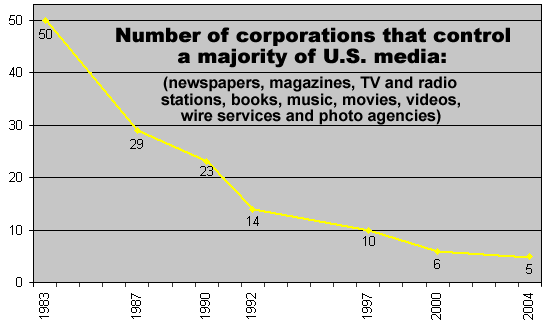
Chart from the Media Reform Center.
Democracy is messy, unpredictable, works from the ground-up, is slow in making decisions, includes everyone, and is uplifting to both the individual and the masses. Democracy also challenges capitalism because capitalism seeks that all problems be solved by the market and the inherent selfishness of the individual. Ideally democracy requires compromise and some level of caring for others. Corporations want to reduce that messiness in order to maximize profits and makes them more predictable. Democracy wants to keep that messiness in order to foment the exchange of ideas.

The “corporate flag” by Adbusters.
Corporations are, by definition and design, expressions of capitalism. Thus, if democracy gets in the way, or even threatens the forward march of capitalism, then corporations will usually choose capitalism over democracy. That, at least partially, explains the constant collusion between big business and government. But a thriving democratic government takes active and informed citizens. If only a handful of corporations own all the media how does that affect the news citizens receive? Do we get the full picture? Do we have the facts we need to be committed to democracy and make informed decisions?
We all know the world we live in today is saturated with an overwhelming amount of information and entertainment, and that much of it is just garbage. And we know this includes the mainstream news. We live in an age of gross media mediocrity. Mainstream news tends, regardless of its name or origin, tends toward homogeneity rather than true diversity. But there are still many good alternative news choices, if one makes a little effort to find them.
Recently the National Conference for Media Reform highlighted some of those good choices. There is a groundswell of independent media in this country. Much of it is driven by its opposition to the War in Iraq and the never ending War on Terror.* It is also driven by the Internet. One of the key moments of that conference was the speech given by Bill Moyers.
Moyers speech is truly wonderful and worth taking the time to view.
Adbusters was there too. Here they interview several individuals, like Robert Greenwald and Amy Goodman, who are playing important roles in the independent media movement:
Independent media is not a guarantee of democracy or of quality news. But it does offer a better chance for building a foundation for good debate and informed choices. Of course the individual still has to take responsibility for sorting through it all. But that process is, in itself, informative.
I truly believe the future of this country, and of the world, politically, socially, and economically hinges more on the future of independent media and its relationship to democracy than just about anything else, along with love, human sin, and the hand of God of course. I should say that when I refer to the future of this country and the world I have in view a future where democracy and peace can thrive, and where ordinary people play a greater part in shaping this world and creating flourishing lives. It is not a complicated vision.
I have recently discovered the links page at the Independent Media Center. This looks like a decent place to start looking for alternative un-embedded sources of news and opinion. Feel free to suggest alternative news sources you enjoy.
I have just added this clip which takes a look at the new Newseum, or news museum, and highlights some of the same concerns I mention above:
*One of the ironies of alternative news is that by being animated by the ideals of a democratic society such news begins to look and feel radical and even “left wing” regardless of the issues. Democracy should not, in my opinion, be a radical idea in a free society, but it often seems that it is.
>modern agitprop and youtube
>From the words “agitation” and “propaganda” we get agitprop. Because this word first showed up in connection with the Bolsheviks it has always had a leftist sense about it. But it really can be applied to just about anything that is about disseminating ideas with the desire to change consciousness and encourage action against the forces of power, blah, blah. From what I can tell today most agitprop, though often leftist in tenor, is mostly about challenging dominant paradigms of power and hegemony. That I can get behind.
It also seems today YouTube is becoming the location of much agitprop.
Here is a provocative and fascinating juxtaposition of images and stereotypes of women and cultures that confront our assumptions of dangerous differences, amongst other things:
Who can forget this amazing anti-war video (a great example of détournement) produced by the Guerrilla News Network only a year into the Iraq War. It is still powerfully relevant and devastating today:
The Billboard Liberation Front “improves” an AT&T advertisement in 2008:
Or this video made by anarchists on how to get the message out (agitprop about doing agitprop):
The question, of course, is how much actual action do things like these produce? For the most part I hope a lot (at least non-violent action), but I fear that YouTube clips may, in fact, exacerbate inaction. It may be “the medium is the message” kind of problem. Sitting at one’s computer and surfing video clips, even agitprop pieces like the ones above, is not the same as doing something. It’s too easy to go to the next clip.
And it’s often unclear what one’s actions should be. This is where the third clip above might be the most effective in encouraging action. People often already have strong emotions about the world they live in, but they don’t always know what to do. Of course, not just anyone is going to be swayed by anarchists and their ilk.
Regardless, getting “the message” out, whatever that message is, is important for the grand dialog. YouTube (and all Internet media) has been affecting the landscape of ideas for a while now. Feel free to add your thoughts.
* * * SPECIAL BONUS * * *
A trip down agitprop memory lane provided at no extra charge.
An excerpt from Ant Farm’s 1975 performance of Media Burn. The original “kill your t.v.” message:
1998 performance of the end of Orwell’s “1984” by The Surveillance Camera Players:
Mai 68
Lest we forget, 40 years ago this month it was “Mai 68”, that is, it was May 1968.

For most Americans (like me) the protests and riots that raged in France in 1968 are largely unknown. Like many protests of the 1960s there are questions as to their ultimate effectiveness. Certainly de Gaul was eventually pushed out, signaling a change from conservatism to liberalism. And, of course, Langlois was restored to his position, which was a part of the whole Mai 68 thing, though protests on his behalf started even earlier than May. But who really knows if any particular protest changed anything that would not have inevitably been changed anyway. And yet, those were glorious days, so I have read.
Here is a nice overview of some key elements of Mai 68:
My français is a bit rusty, but this is a nice retrospective timeline from French television:
There is a part of my soul that loves those protests in France, much like I love the protests in the U.S. in the 60s, or the anti-war protests and anti-globalization protests in recent years. Protesting is so romantic. Many cinephiles may not know that filmmakers shut down the Cannes festival (mentioned in the overview piece above) in 1968 as well.
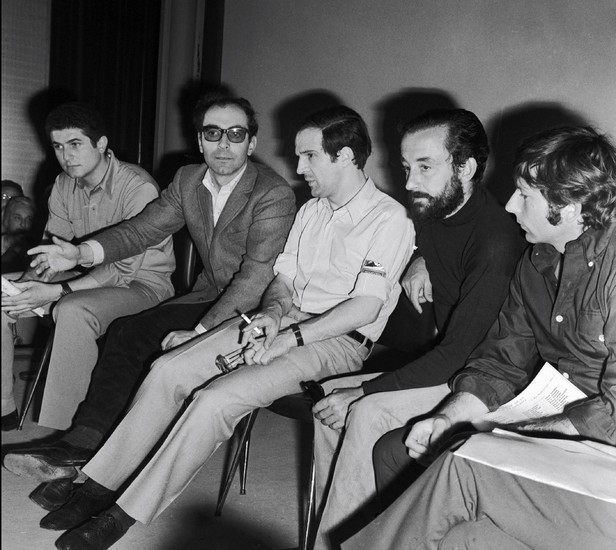
The gang’s all here. Can you name each filmmaker in the photo?
This is a wonderful verité piece showing the debates among the filmmakers at Cannes deciding what their protest was going to mean and what actions that would require:
The fact that Cannes was closed down in 1968 shows that, as a film festival, it had clout, that it was important, and that films were important. I would love to see the Oscars shut down in protest to any number of things, such as the war in Iraq. But that would mean the Oscars are important and are we ready to admit that?
Special bonus: Captain Beefheart live in 1968 on the beach in Cannes.
*Filmmakers in the photo, left to right: LELOUCH, GODARD, TRUFFAUT, MALLE, POLANSKI
>gagging and weeping
>
Recently Showbiz Tonight’s AJ Hammer did a story/interview with Tori Spelling. Below is some of the transcript of that segment from CNN.com.
HAMMER: [W]ith everyone talking about sex scandals right now, here’s one I just had to ask about, Tori cheated on her husband number one with now husband number two. I asked Tori point blank if she ever stopped to think about the damage she was doing not only to her marriage but to her now husband’s marriage as well.
SPELLING: That was the hardest thing for both of us is that there were children involved. There were two other people innocently involved. You know, whether they were happy marriages, whether they were meant to work out, it’s still at the end of the day people are going to get hurt. And that was the hardest thing about that whole situation. But, you know, in life you have to really – you have to look out for yourself and I found my soulmate and I couldn’t deny love. So what was I supposed to do?
First of all, GAG!
Second, what a tragedy of morals, not merely in her actions, but more remarkably in her truly sad and hurtful philosophy. I say this not to aim barbs at Ms. Spelling per se, because she is fundamentally no worse than any one else. We all have dark and selfish hearts. But I say it because it is true, and it is so starkly presented by her words.
There are few projects in all of human existence more difficult than marriage. Marriages fail all the time. There is nothing surprising in that.
What I find shocking (but am I really shocked?) is how openly she excuses her actions by saying: “You know, whether they were happy marriages, whether they were meant to work out, it’s still at the end of the day people are going to get hurt.” Yes, people got hurt, by her actions. And that language of “meant to work out” sounds like marriages are fated, that their success or dissolution are matters ultimately beyond anyone involved, that there really is no persons to blame or praise, just luck.
She then says: “And that was the hardest thing about that whole situation.” From what I can tell it looks like she’s over that now. Any bad stuff is apparently all in the past. Clearly the hardest part is not facing into her moral failings or the ongoing effects of two broken marriages.
Finally, to cap it off she says: “But, you know, in life you have to really – you have to look out for yourself and I found my soulmate and I couldn’t deny love. So what was I supposed to do?” Short answer: honor your commitments,love your husband, repent. I didn’t realize that looking out for oneself trumps all other considerations, as though with a wave of the hand it absolves all other choices.
Maybe I’m being too snippy. I know marriages are complex relationships, and the reasons they succeed or fail are also complex. There are no easy answers. There are no quick solutions. Sometimes, even, it is best for a marriage to end. I have a feeling that there was a lot more to the whole affair than Ms. Spelling is saying. I know nothing of her life. But I have to say that it is sad to hear such bald faced excusing and unashamed selfishness presented as a matter of course.
Finally, it is interesting that she says, “I couldn’t deny love.” What does this mean? It sounds as though she understands love to be something outside herself, a kind of force that is undeniable, unstoppable, untamable. But that is not love she is giving in to, that is romance, and romance is a good, but fleeting thing.
Romance is like a drug, it wears off after time. Love, on the other hand, is a choice, a series of actions, an orientation on one’s character towards another. Love is something you don’t feel as much as something you do, for love bears all things, believes all things, hopes all things, and endures all things. Love isn’t here and then gone. One has to work at it, choose it, make the effort, and seek to be the kind of person who loves. Love often (usually?) involves sacrifice, giving of oneself, even denying of oneself and one’s desires.
But, like Tori Spelling, we live for ourselves. In that sense we are all soulmates.
I can see the same tendencies in both myself and in others all the time. In one way or another we all choose to love ourselves more than we love others, and then we all make excuses for it. We tell ourselves stories, and then we actually believe the stories. Now that’s something to really make you weep, if you have eyes to see.
Blesssed are those who mourn . . .
>urban athletic trangressions: buildering & parkour in cinema & life
>I’ve done this before and I’m doing it again. I’m blogging for my own collected thoughts and to wrap my brain around old and new.
I recently watched the Pierre Morel/Luc Besson film Banlieue 13 (2004), and it got me thinking about related and somewhat-related things – mainly things having to do with urban athletics.
First: the somewhat-related . . .
When I was a young man I became fascinated with the idea of buildering, the climbing of buildings as though they were rock cliffs. This interest was spawned by an early 1980s Outside Magazine article profiles Dan Goodwin (Spider Dan) who had illegally climbed the North tower of the World Trade Center using those suction-cup devices that glaziers use when moving large panes of glass. He did so while wearing a Spiderman suit and was arrested as soon as he reached the top. He had also climbed the Sears Tower a couple of year before.

Dan Goodwin passing the 83rd floor of the Sears Tower in 1981
Many others have followed. Here’s Alain Robert:
Buildering was first documented in the 1800s by the amazing Geoffrey Winthrop Young during his days at Cambridge in his humorous The Roof Climbers Guide to Trinity.
Others joined in, including Harry Gardiner.

Harry Gardiner climbs the Hamilton Bank Building on November 11, 1918 to celebrate Peace Day. He wears ordinary street clothes. He is the one who looks like a white lizard just passing the sixth floor.
And of course, one of the most famous images from the history of cinema is of Harold Lloyd hanging from a clock high up on a building that he has been climbing from the film Safety Last (1923).
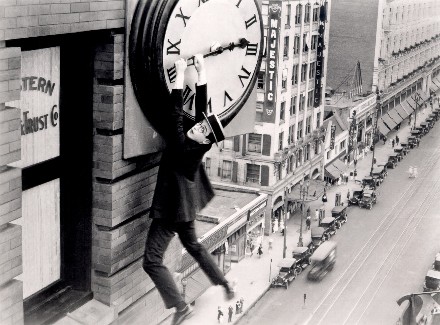
You can see the entire Safety Last building climbing sequence here and here.
Second: the related . . .
We’ve all seen opening chase sequence from Casino Royale (2006). I remember being rather stunned by how great a chase sequence it was.
What I did not know is that that chase was derived from an old, but new, form of urban activity known as parcours, or parkour, or free running. This style, or philosophy, of urban travel was featured in Banlieue 13, two years before Casino Royale. Here’s a clip from B13:
Recently I was watching some kind of extreme sports show on television. On that show they profile a group of young New Yorkers who were working toward establishing competitive free running in the city. I looked it up online and that brought me to B13.
Needless to say, parkour is not limited only to narrative cinema. Here’s some rather great free runners showing off:
I am, as you are, amazed and the physical capabilities of these athletes. I think of parkour as, in part, a response to the hegemonic force of urban design and dominant structures of power.
…and then sometimes parkour is just a learning experience:
 pilgrimakimbo