The Mountaineer

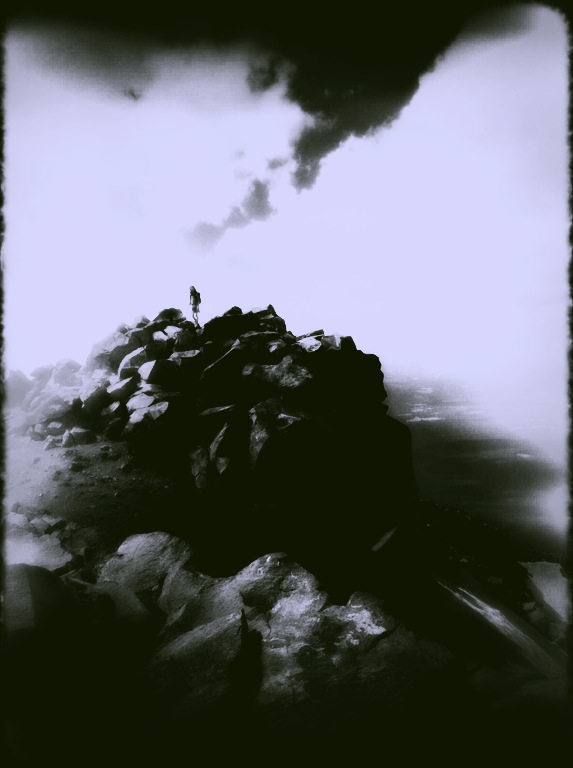
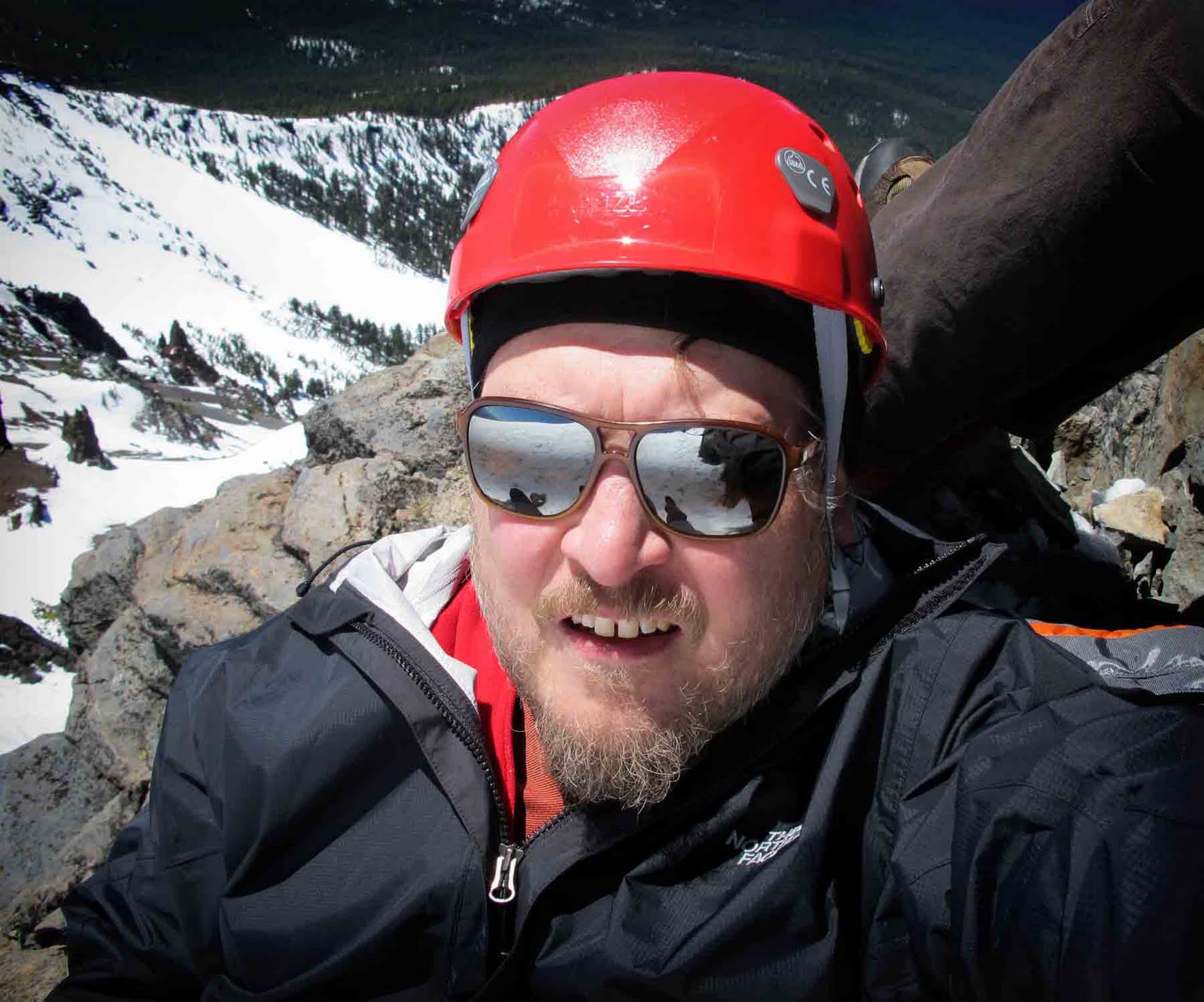
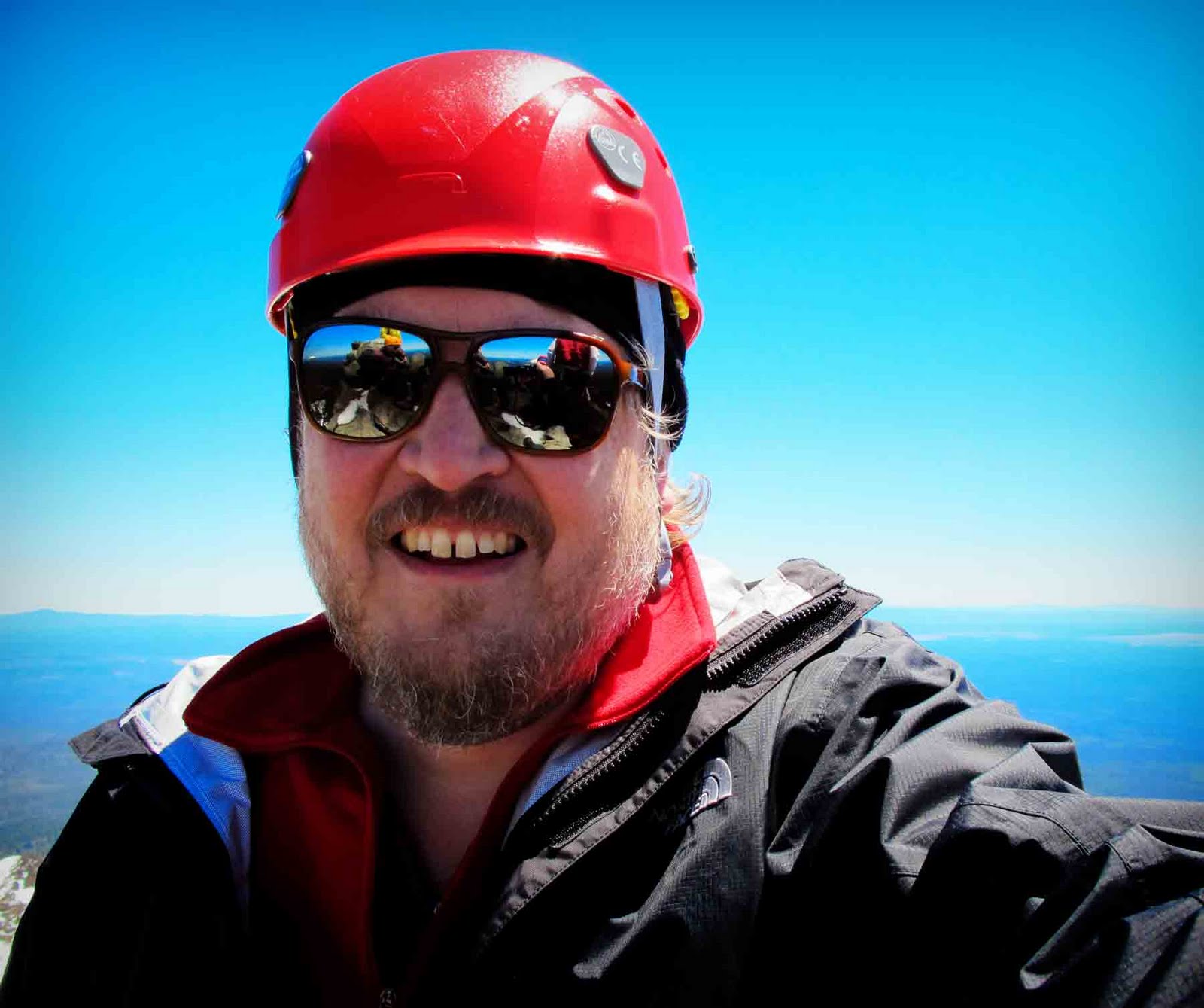
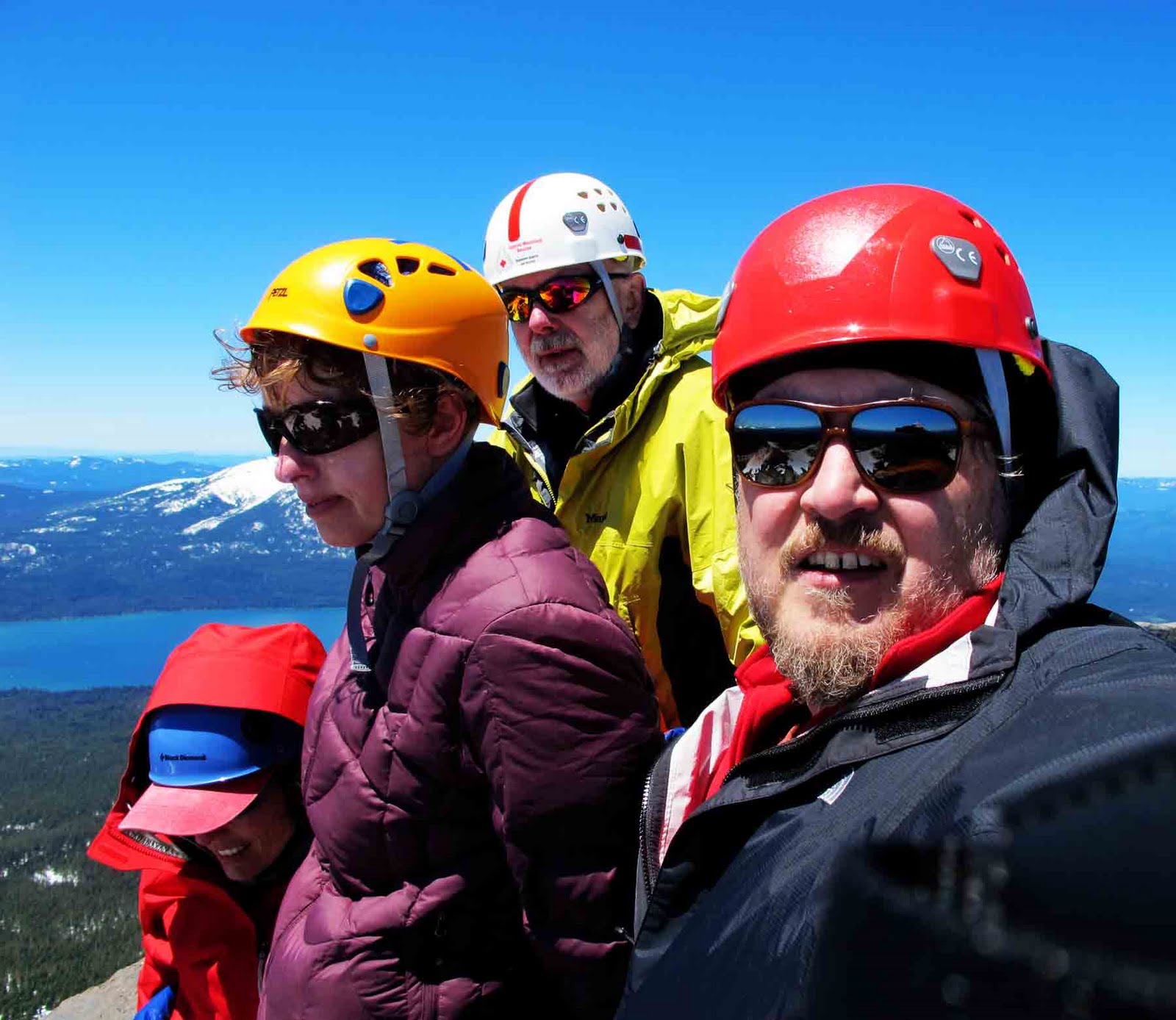
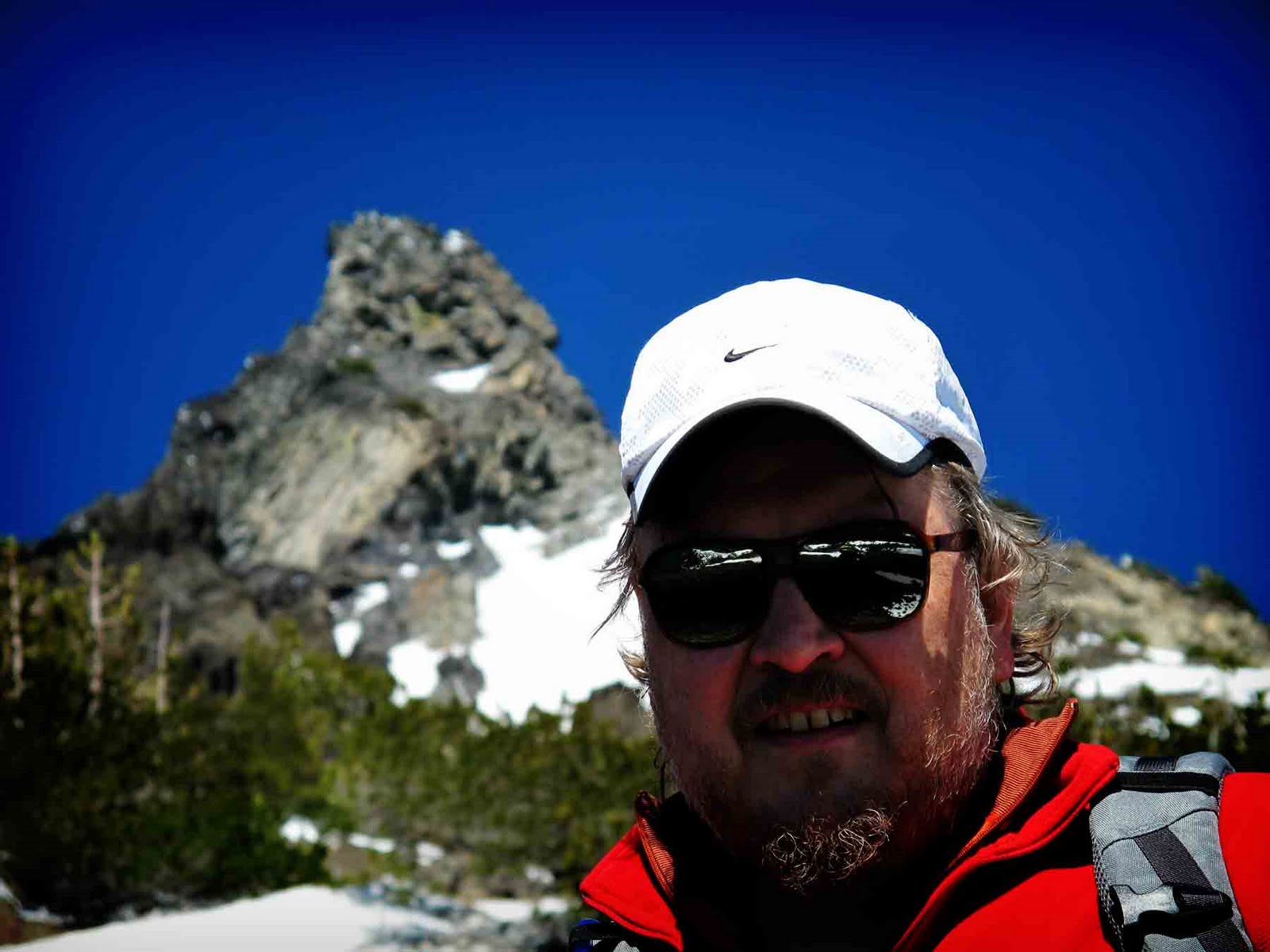
Lily on the summit, Mt. McLoughlin, 2011

OH, at the eagle’s height
To lie i’ the sweet of the sun,
While veil after veil takes flight
And God and the world are one.

Oh, the night on the steep!
All that his eyes saw dim
Grows light in the dusky deep,
And God is alone with him.

~by George William (“A. E.”) Russell (1867–1935)

Getting rescued

We are entering another season of outdoor activities. I am looking forward to doing some climbing this year. Of course, climbing comes with its dangers. Below are two great videos of climbers being rescued from their respective mountains. Being rescued can feel embarrassing, but I think in life and not only in climbing, it is a great thing to be rescued.

In both of these videos it is clear that the rescuers are incredible. that they would do such things is a testament to their courage, but also to their commitment to climbing; climbers rescue climbers.

Climbing Mount Thielsen

The mountains will always be there, the trick is to make sure you are too.
~ Hervey Voge
The three rules of mountaineering:
  1. It’s always further than it looks.
  2. It’s always taller than it looks.
  3. And it’s always harder than it looks.
This past weekend I summited Mount Thielsen. This was the first real summit for me in many years and it became a test of my endurance and will. Climbing mountains is something I love, but in recent years my climbing trailed off and shifted to reading climbing stories and getting out of shape – the summits beckoned from the couch but the couch won out. Finally I got off the couch.
This climb was both a test of my current capabilities and, I hope, a jump start to more of the same. In short, I want to get back into climbing and climbing shape and, I have the say, I’ve got a long ways to go.

We arrived at the trailhead on Friday around 10PM and set up our tents in the dark. The sunset on Mount Bailey was beautiful. I crawled into the tent and began getting my gear sorted for the next day. I was not sure what I was going to need so I stared at my choices for a while and then decided I would make the final choice in the morning. The night was cool but not terribly cold, probably got down to about 30 degrees. I read some of Thomas Mann’s The Magic Mountain (not trying to be ironic) and then listened to my iPod – Arvo Pärt for a while and then John Zorn, and then I fell into an uneasy sleep. I don’t usually sleep on the ground and I was anxious about the climb.

In the morning I opted for a cold breakfast of a Cliff bar and water. I decided not the bring my crampons since no one else was. Our climb coordinator/leader was Wayne from The Obsidians – a Eugene-based outdoor group that organizes hikes and climbs and other trips. The others were Bob, Wendy, and Chrissy.

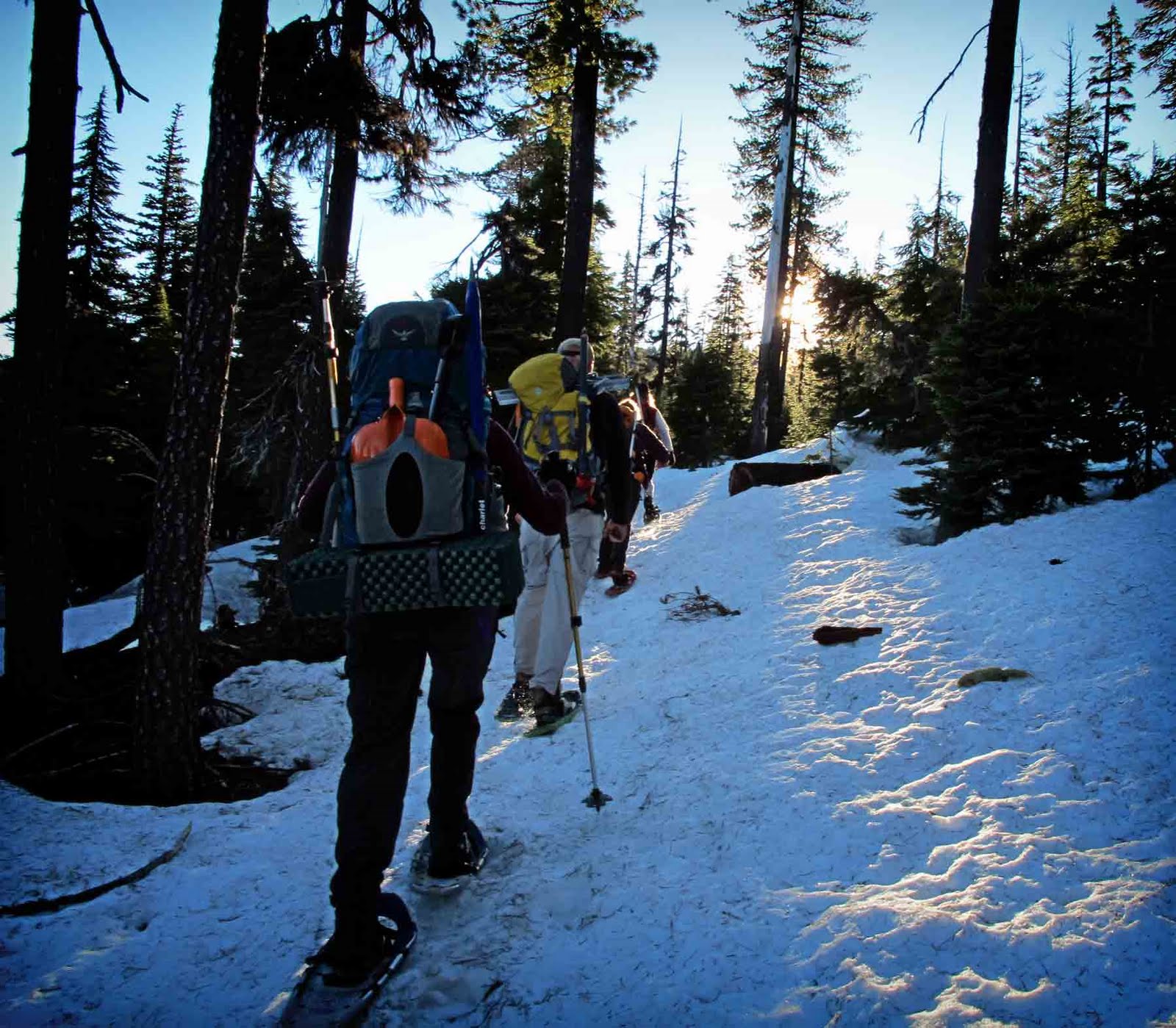
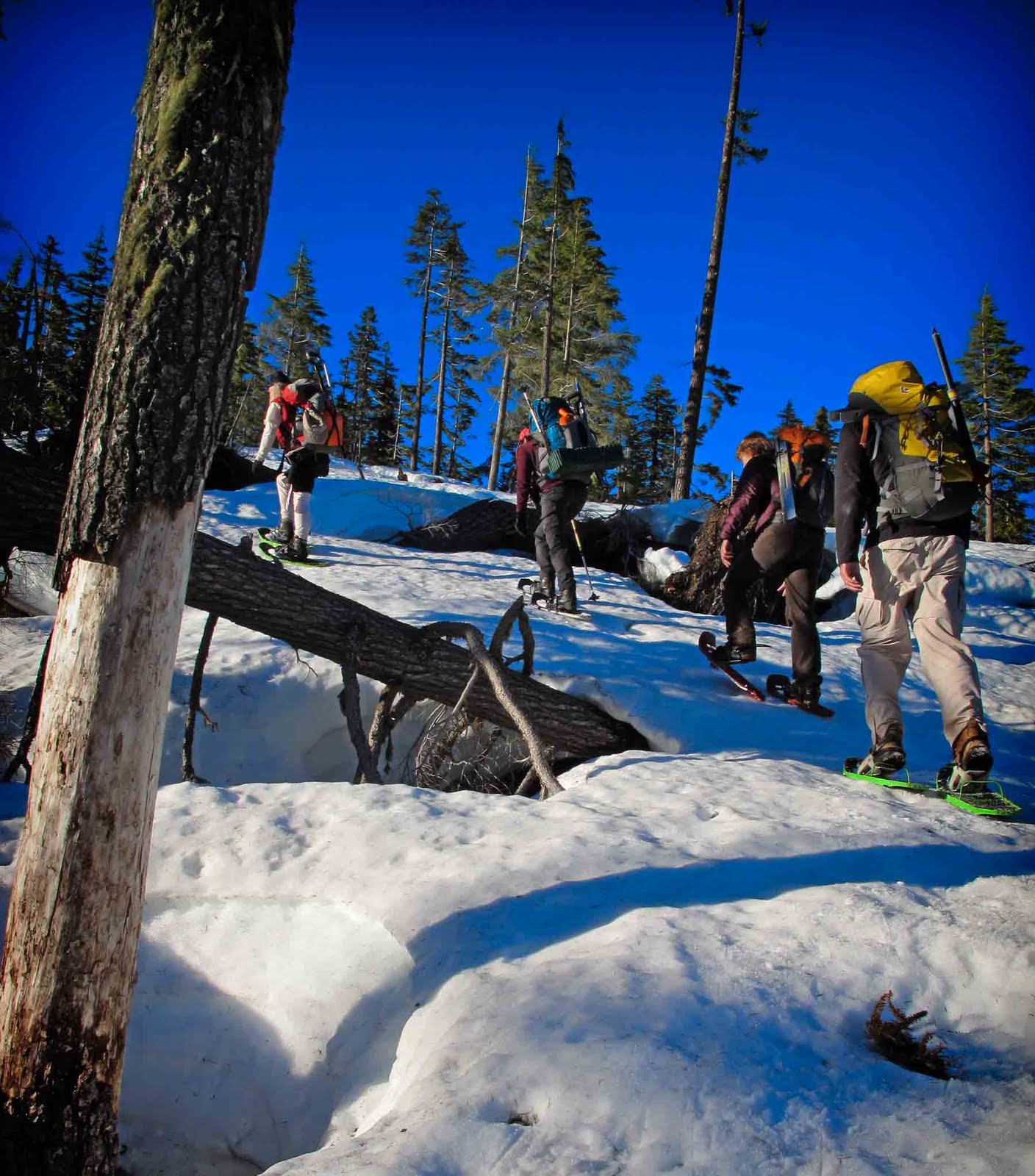
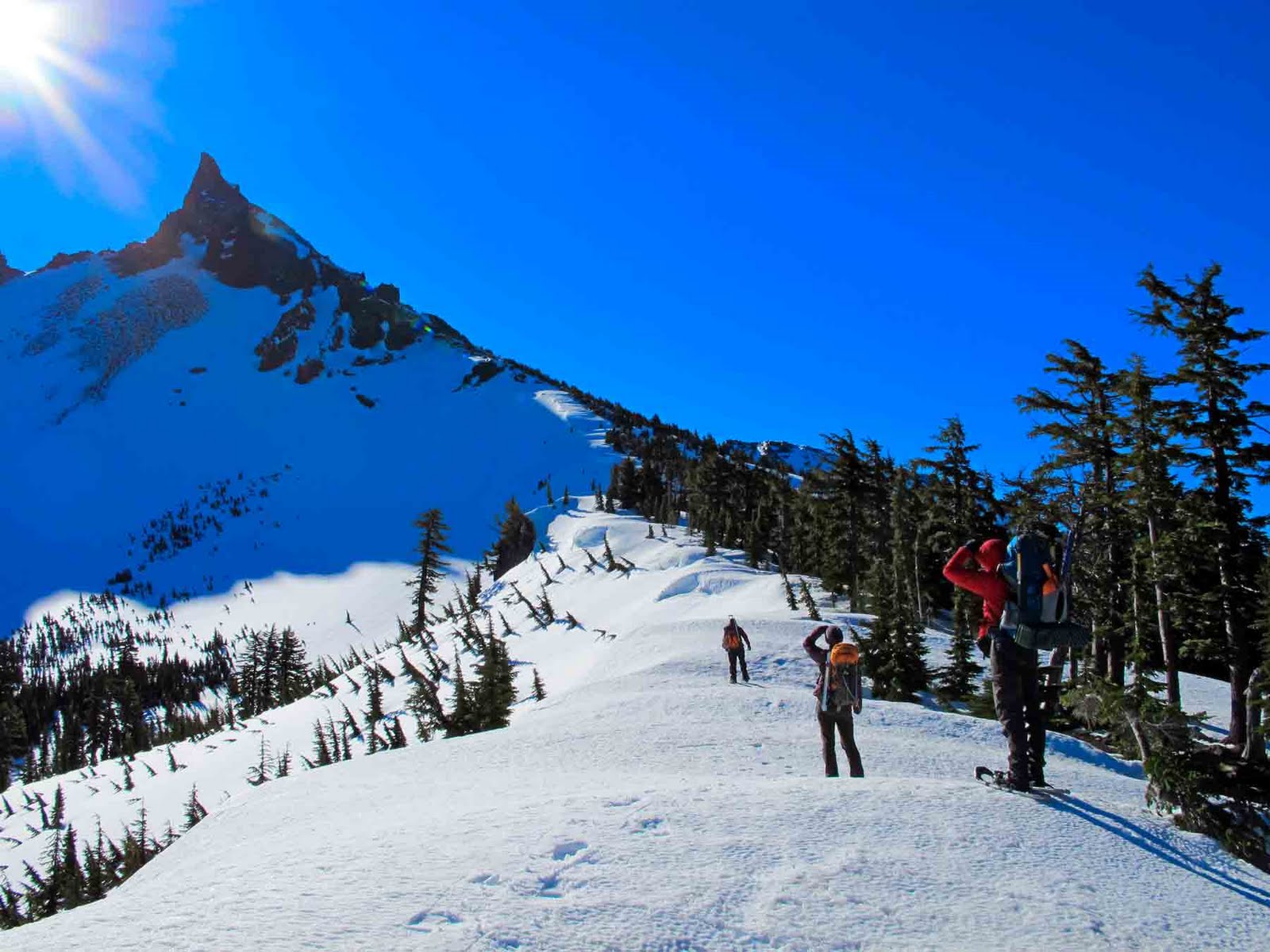
We started hiking around 5:40AM and in a short while I could feel the altitude. A mile in we began to encounter snow patches and eventually we put on our snow shoes. At times we could see the imposing summit peak through the trees. The trail steepened and we powered on. Because of the snow we took a shortcut through a “blow down” area where many large trees were scattered on their sides. It was eerily impressive. I began to tire severely and wondered several times if I would make it. My heart rate maxed out and my breathing was heavy and labored. I felt like I had bit off more than I could chew. I could tell I was getting clumsy. Finally we stopped for about 15 minutes. This allowed me to down some trail mix and electrolyte bites, lots of water, and catch my breath. After that I felt much better, though I was still only hanging on the the back of the group as we continued up the mountain.

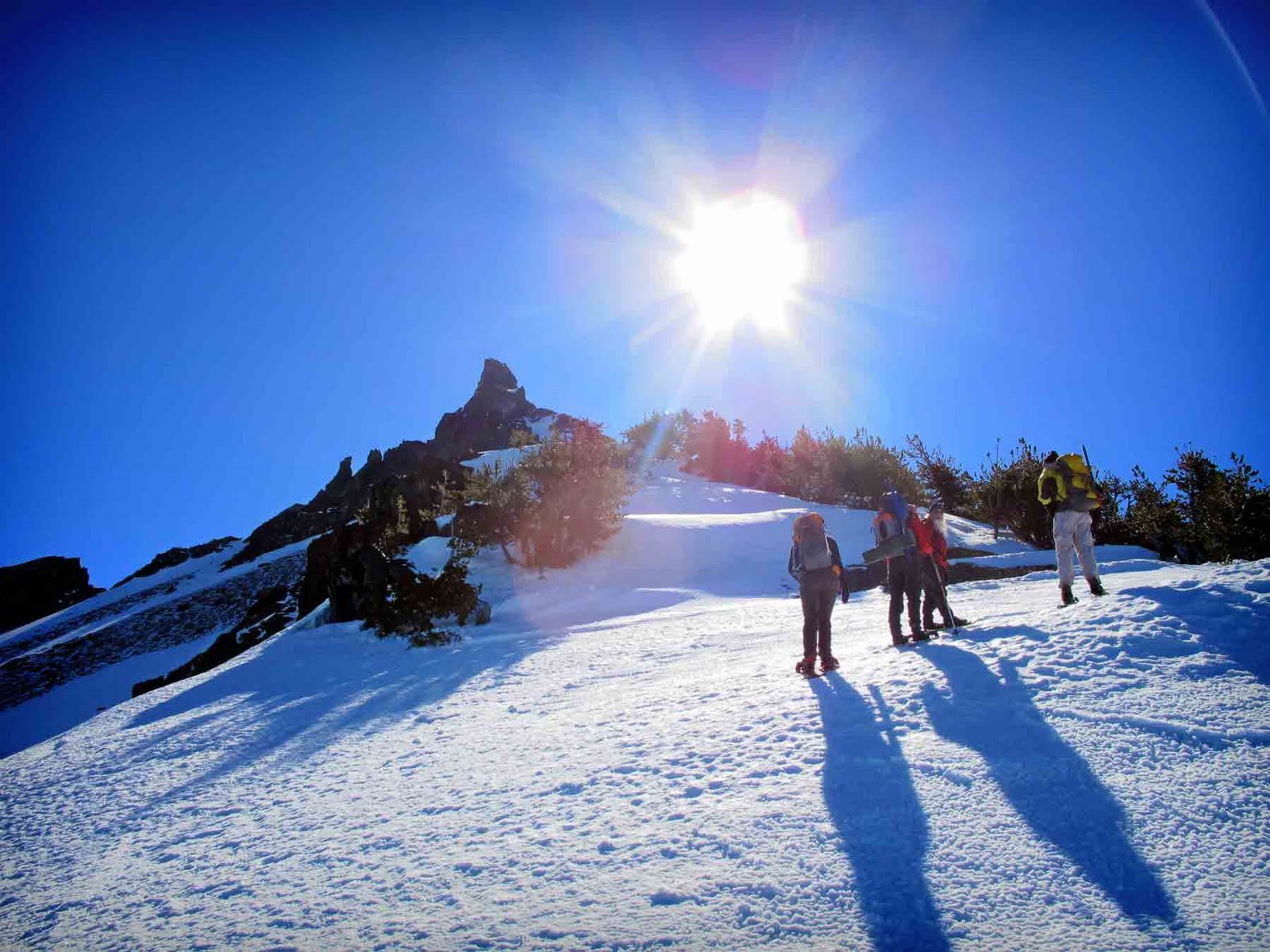
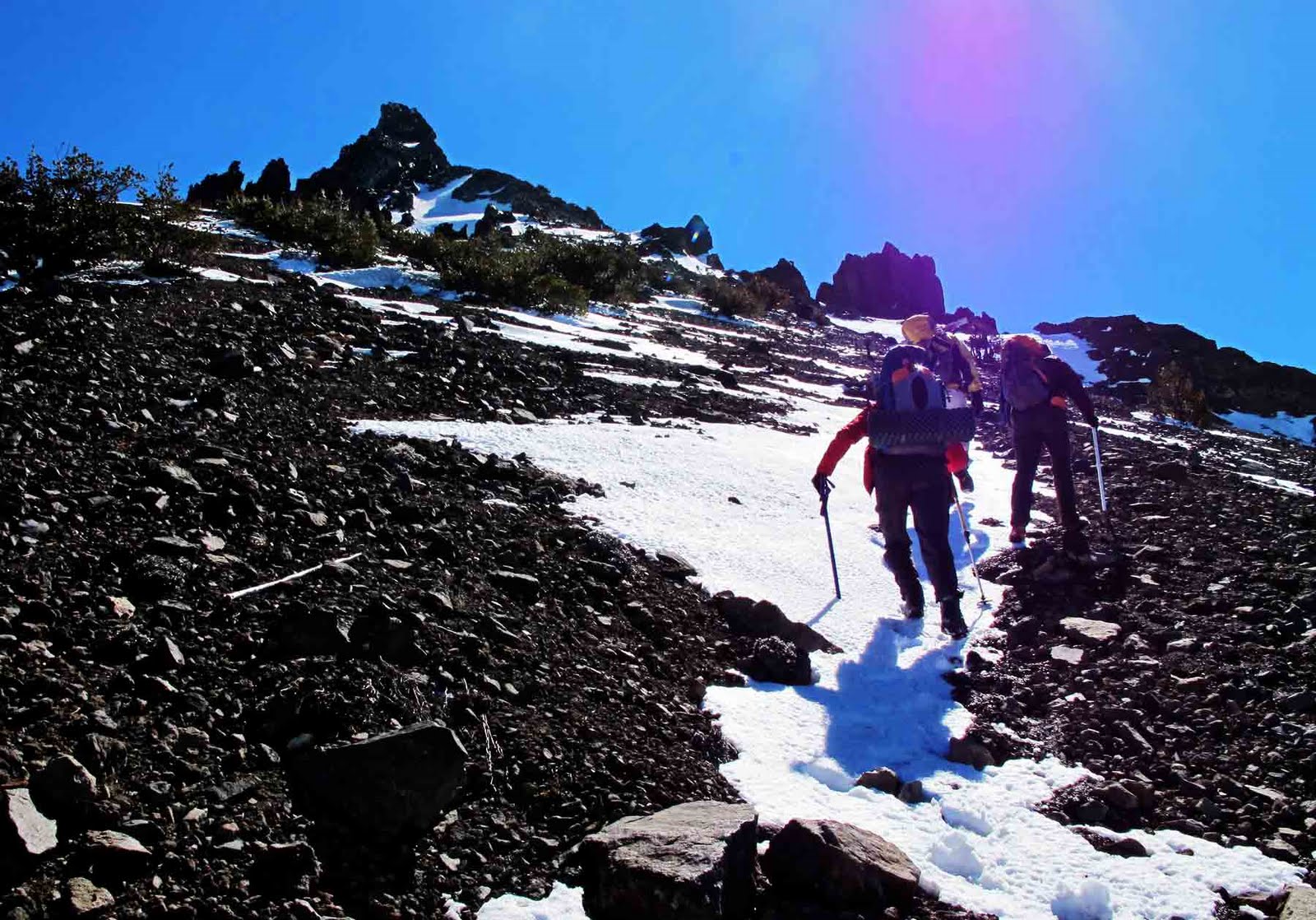
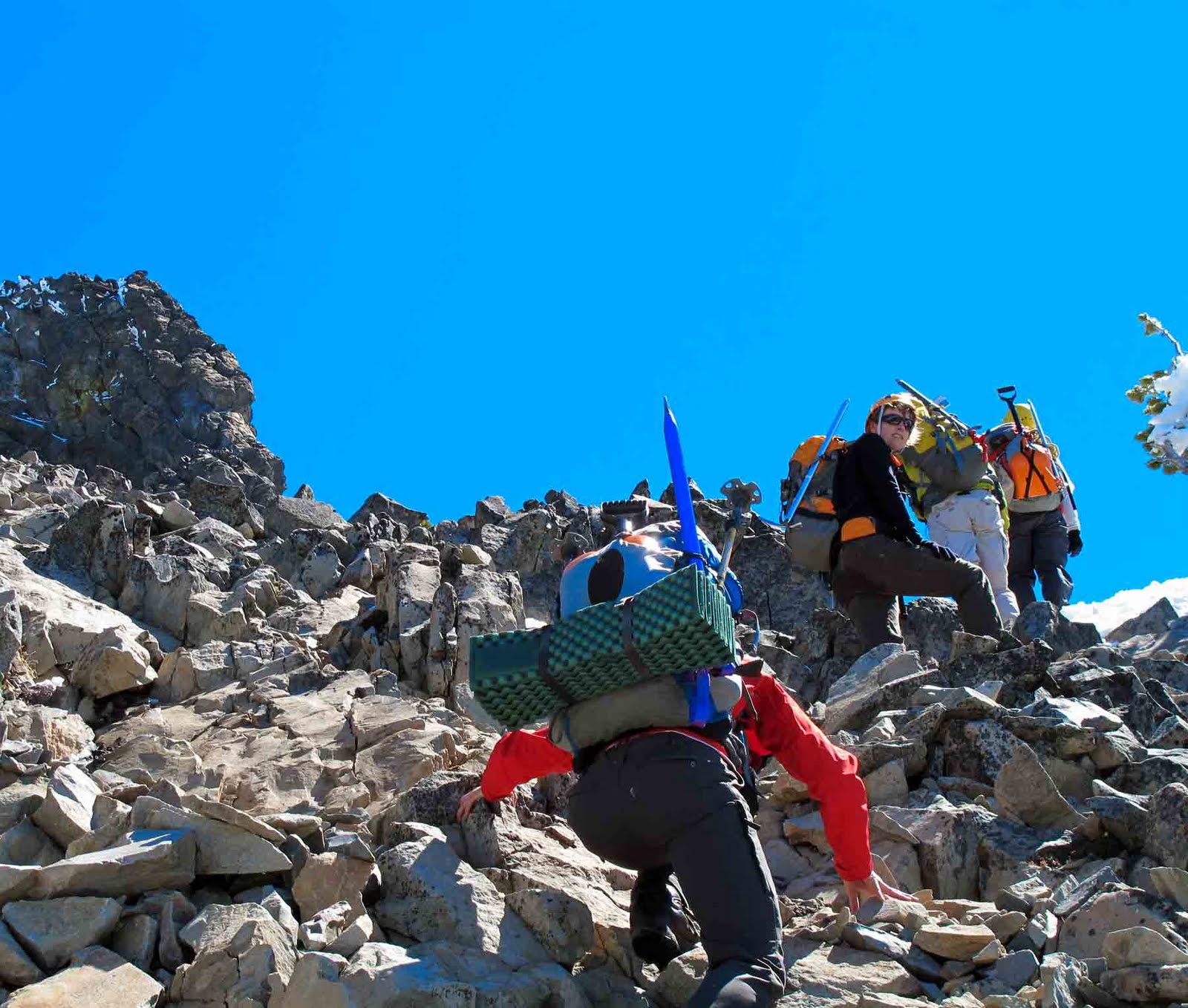
The snow got too steep for snow shoes so we abandoned them by a tree. Wayne marked the way point on his GPS unit so we could find them on the way down. We climbed into a bright sun which rose behind the mountain. The trees on the ridge now thinned out to twisted scrub and the wind picked up for a while. As the ridge steepened we left the snow and climbed scree and then loose rock we called the dinner plates. At this point the route began to get quite steep and our group slowed down. Some in the group said they did not want to “look down” at that point. I appreciated the slowing. It allowed me to catch my breath, but I also began to feel more in my element. Though I am not in mountaineering shape like I should be, I enjoy when the terrain becomes more challenging and alpine. For the first time I felt that I would make it to the summit. We ran into a couple coming down the mountain. They had passed us going in but they had not brought proper gear and were unable to go any further up the mountain. They were moving slowly because one of them was clearly scared of the steep angle of the slope and was going slowly down the mountain scooting on her bottom.
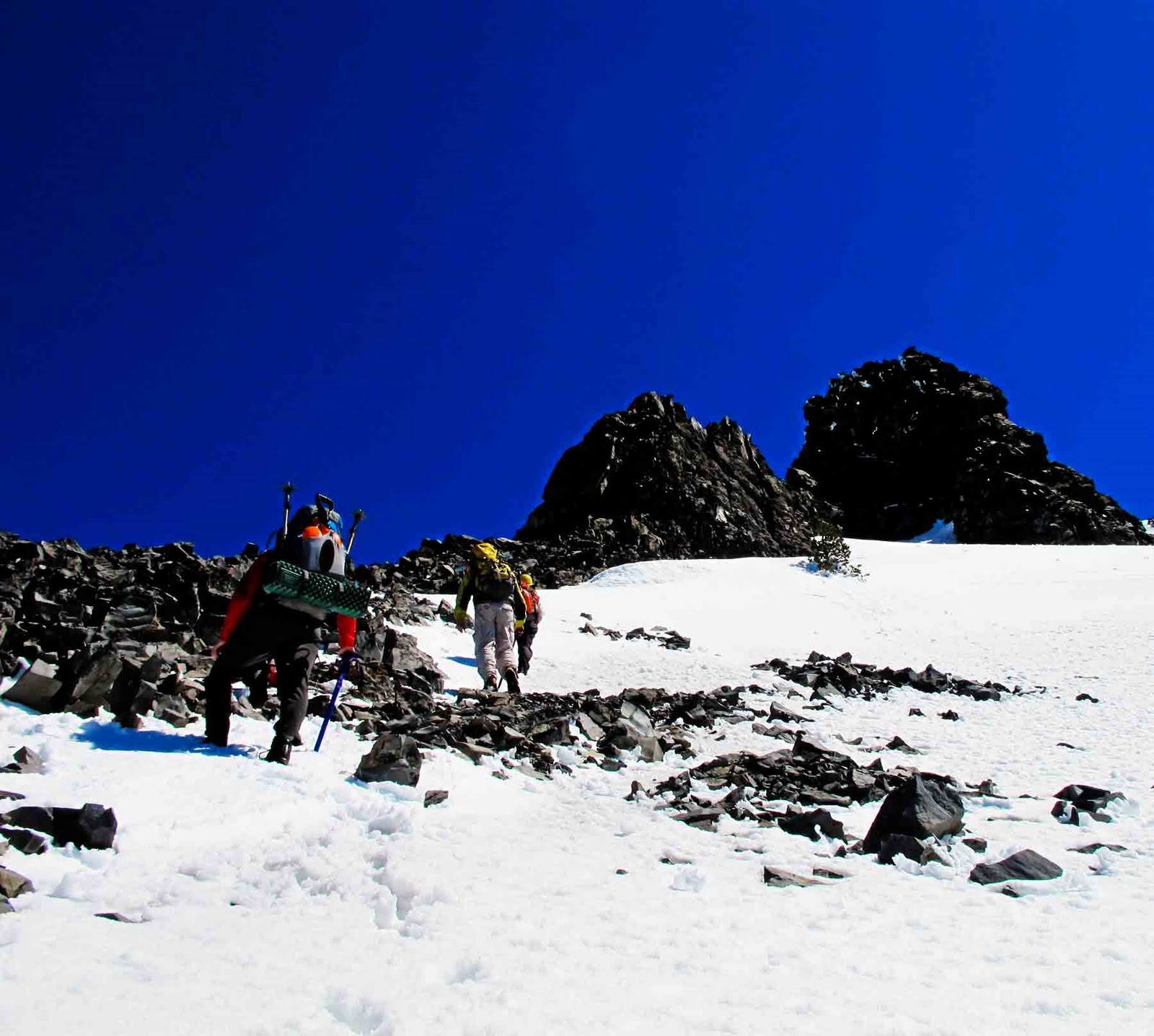
After the dinner plates we hit steep snow and out came the ice axes. The snow was firm but not too hard. We kicked steps at we moved carefully higher across the snow field. The exposure steepened dramatically. We opted not to set up a fixed line though a fall could have sent one of us quite a ways down. But our feet felt solid under us and we felt confident. Finally the slope curved from east to north under the summit block and got very steep and the snow got quite hard. We carefully kicked steps up to a small ledge where the six of us were just able to stand and trade spots as we took off our packs and put on our climbing harnesses.
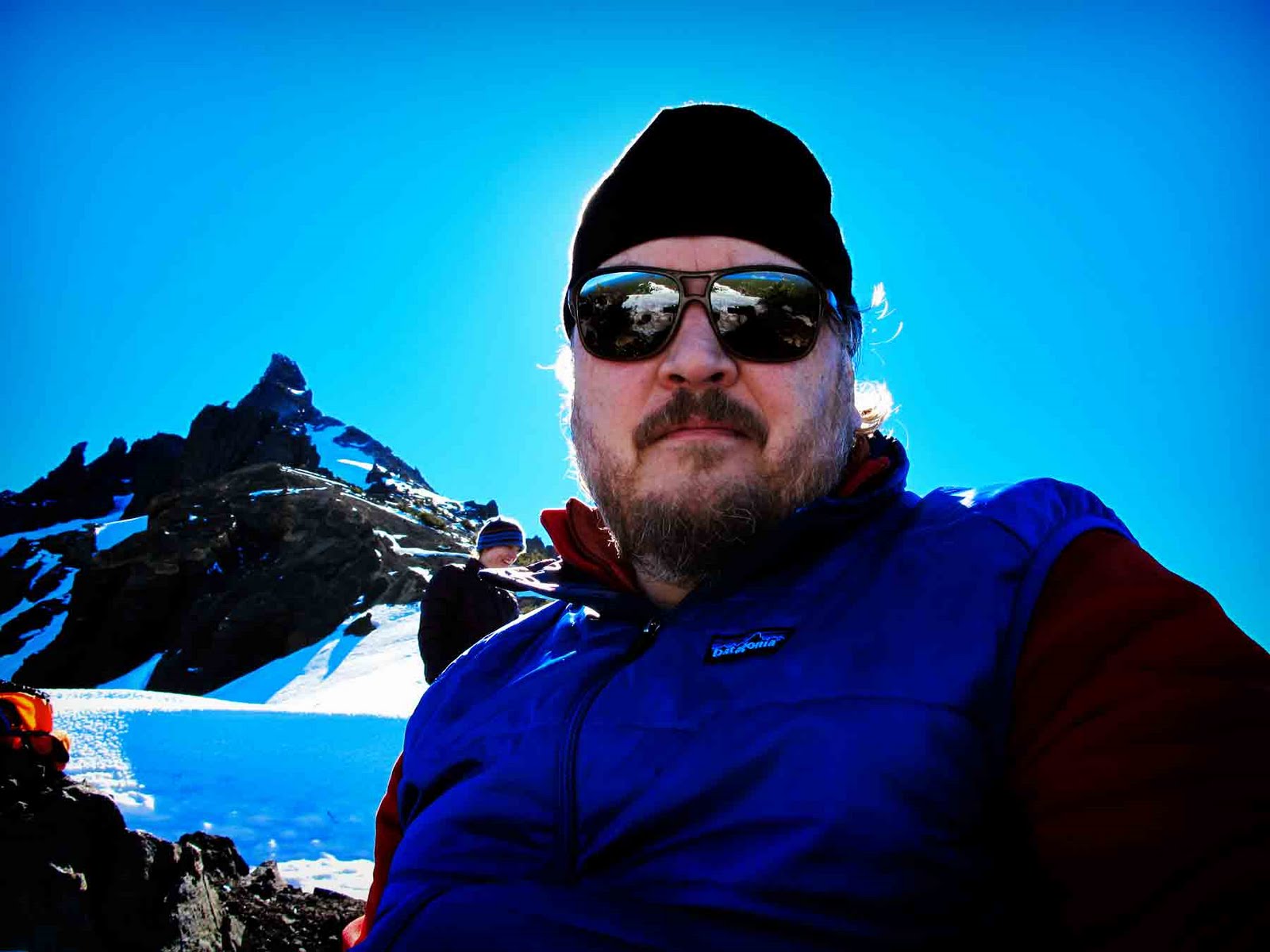
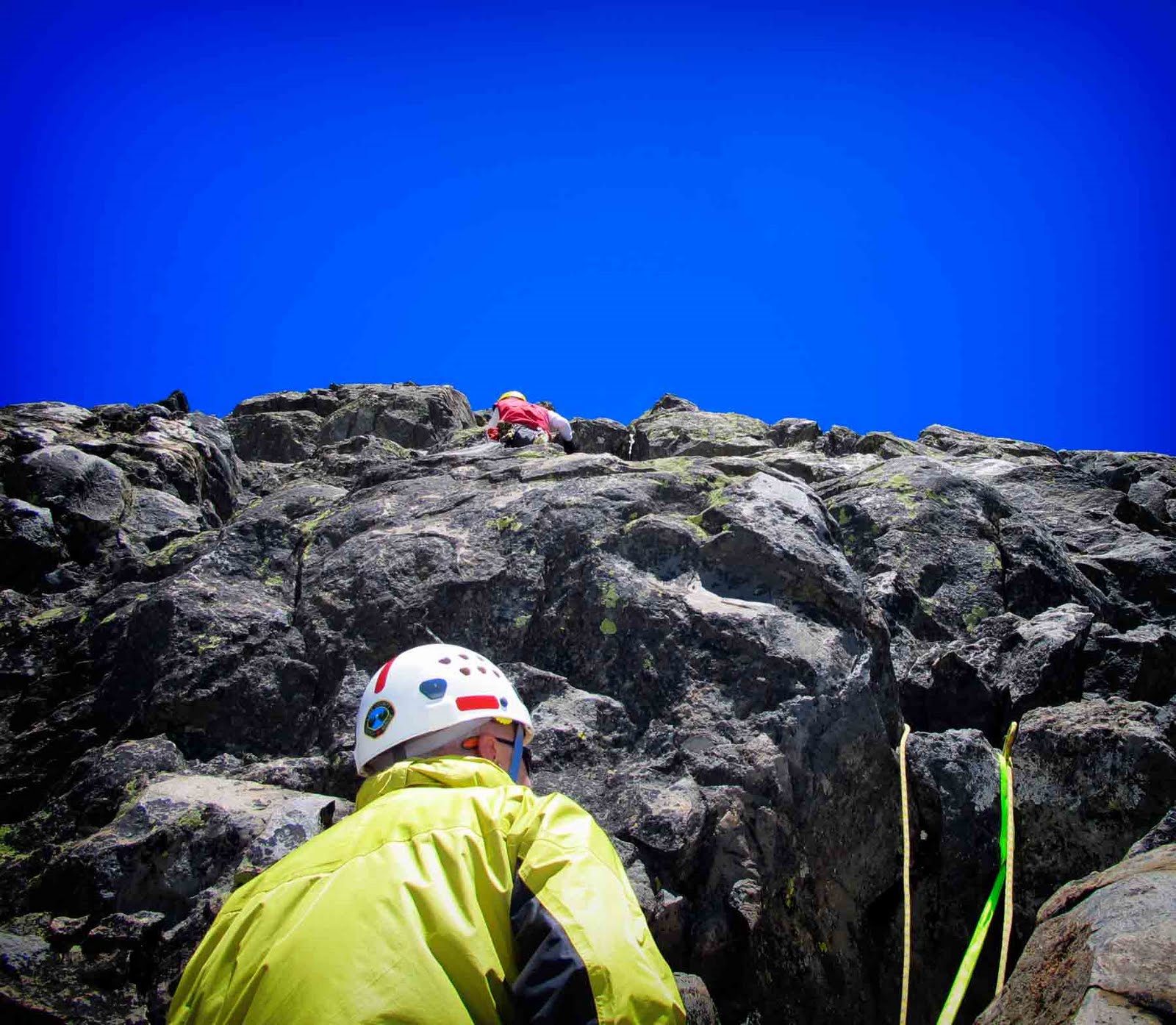
Wayne then led the summit block – 80 feet of near vertical scramble – with Bob belaying him. Once the rope was secured at the top each of us took our turn climbing, using prusiks for self belay. The summit block is a jumble of solid rock with many good foot and hand holds. The exposure, though, is extreme and the running belay was welcome. Finally I stood on the small summit of Mt. Thielsen at 9,184 ft (2,799.3 m).
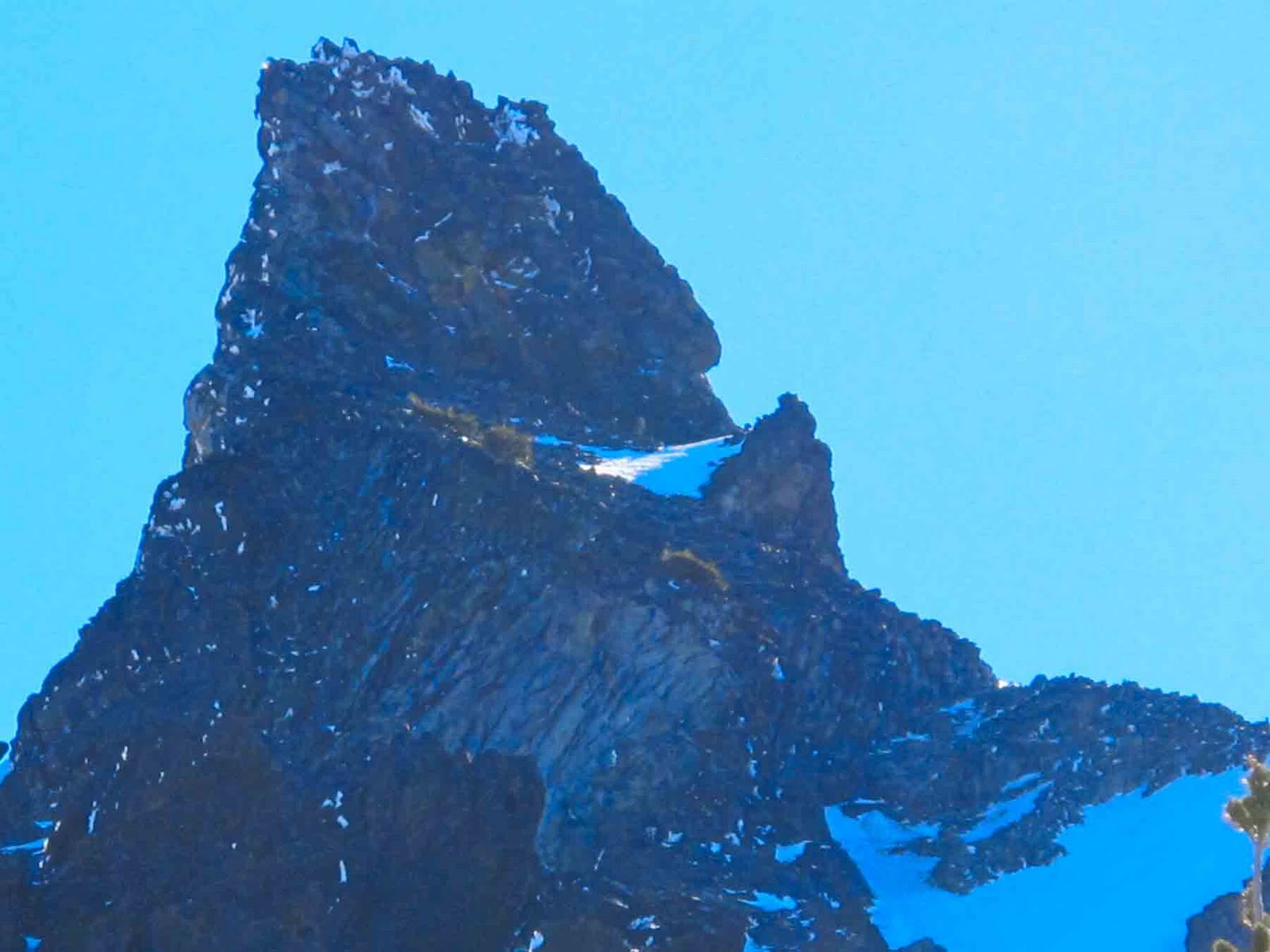
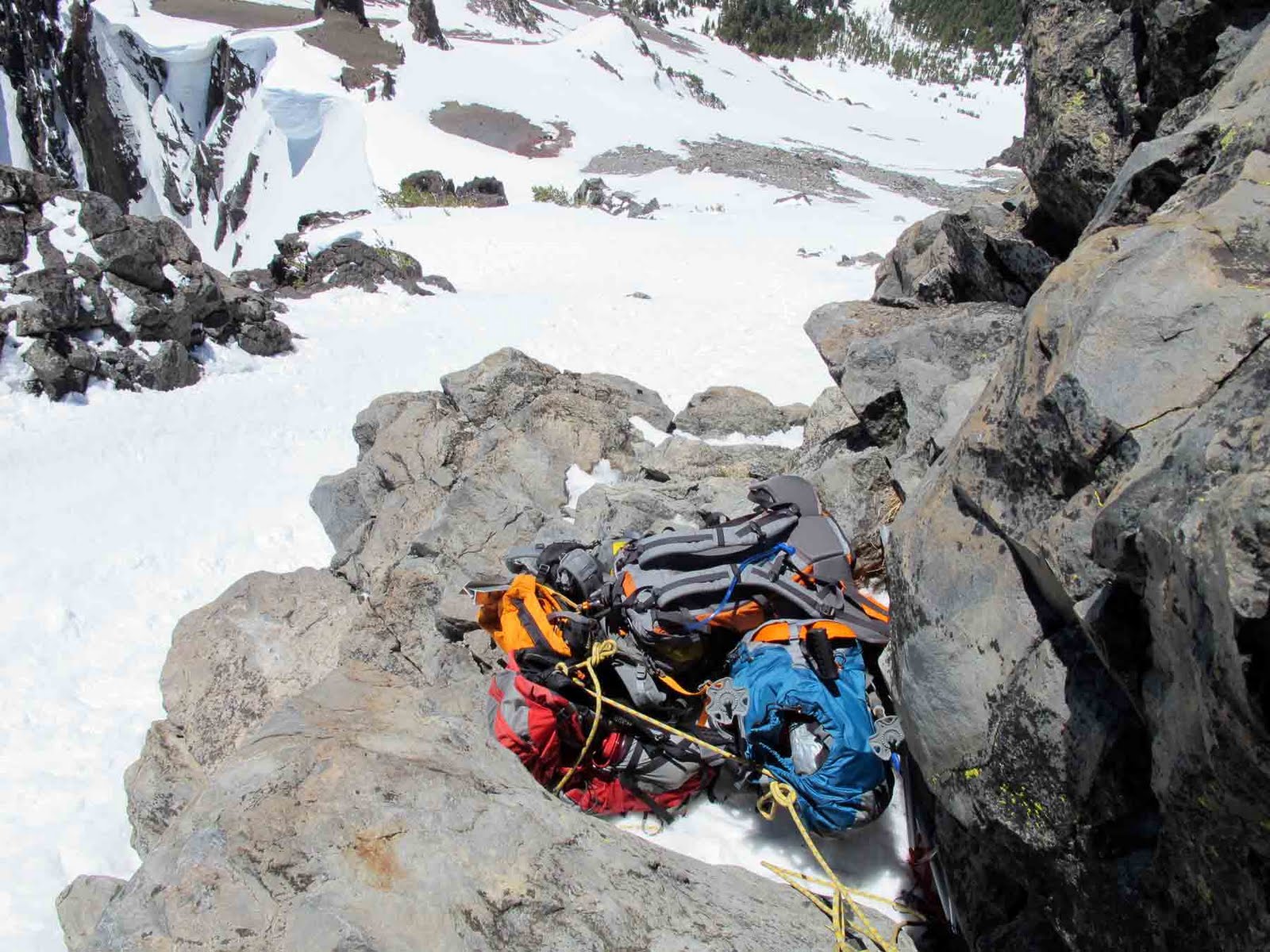
The pinnacle of Mt. Thielsen can only hold about six to eight people. It is known as the lighting rod of the Cascades. On the east side one can look down a couple thousand vertical feet to the glacier. After taking a few photos we each had to down climb to our packs. Going down is usually where climbers get into trouble, so we were very careful. Once we got to our packs as the base of the summit block, we decided to set up anchors and drop the rope down the steep snow slope. It was still icy where we were and some in the group didn’t like down climbing on the ice. I offered to go first to test the slope. The first 20 or so feet was still icy and I gingerly kicked steps backwards. Then the snow became very soft and I turned around and plunge stepped down to the end of the rope and slid my prusik off the end and continued down to a patch of loose rock where the others eventually joined me and we rested, ate, distribute the group gear, and then continued on down the mountain.
Like most hikes out it is easier going down than up, but one’s feet begin to ache and mine did considerably. We got back to the trailhead by 7:30 PM, hiking the last couple miles through mosquitoes. The drive home was long but good. I got a ride from Bob and he and I talked about search and rescue – for which he does a lot of volunteer work.

As I write this my legs are very sore and my sunburn hurts, but I feel very good. I carried sunscreen to the summit and back but forgot to put any on, so my face is as red as a ripe tomato and beginning to peel. I’ll take my sunburn as a temporary badge of honor though. I have been living as an armchair mountaineer for too long. My heart longs to be off the couch and hiking through alpine regions. This climb means a lot to me in that respect. One thing for sure, I need to get into better shape if I am to climb again. Another thing for sure, I loved this experience and can hardly wait for the next.

>family rock climbing

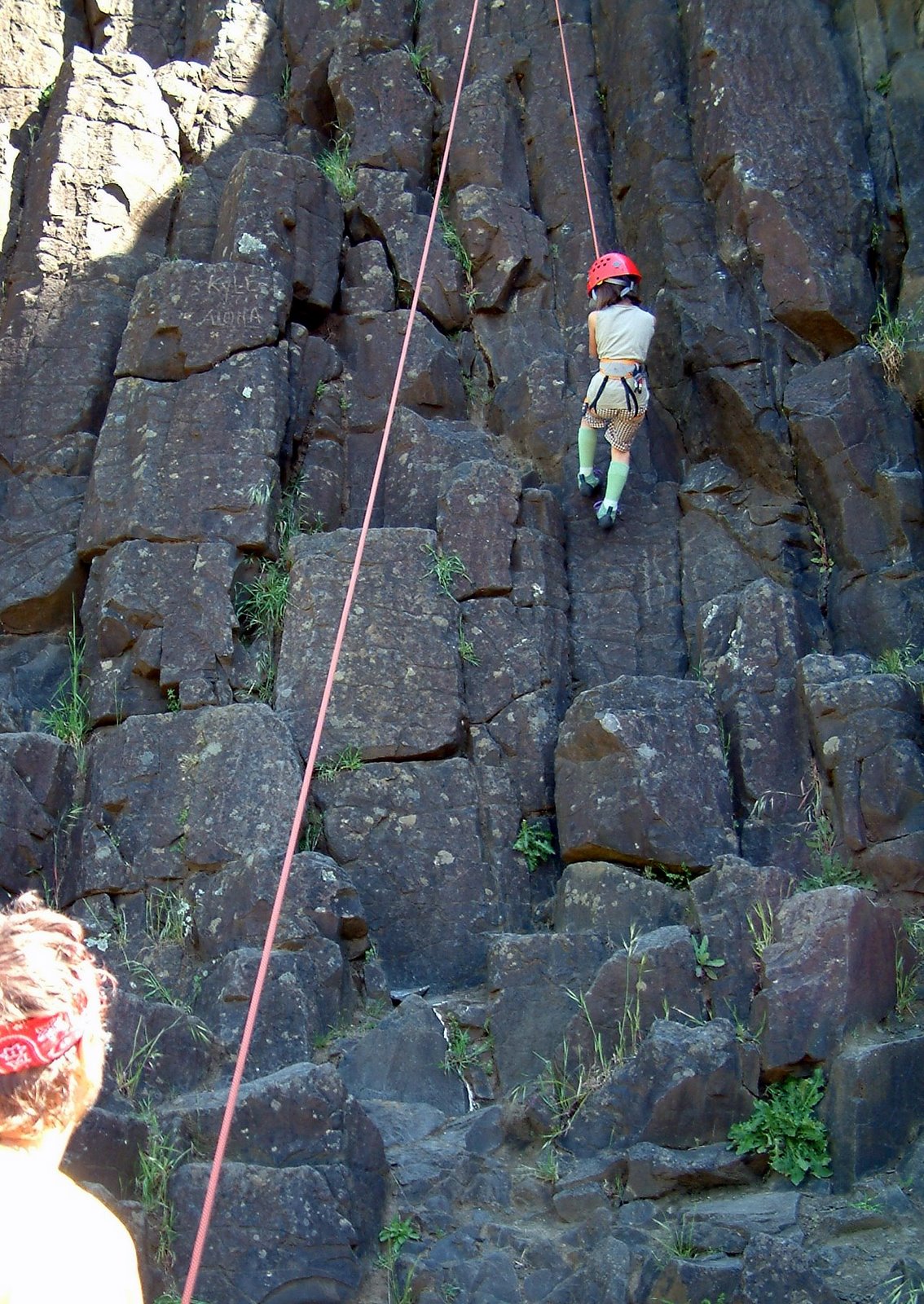
>On Saturday I took my daughter rock climbing at the local rock columns. These columns have been a kind of mecca of sorts, located somewhat near the downtown of our city. Four blocks away is a good rock gym with artificial holds, but there is nothing like real rock. My daughter made it about two thirds of the way to the top and then had to fight against fear to get back down.

Today we went again and this time she made it to the top! The fear was still there, but she did really well and eventually overcame her fear. I think she will become a good rock climber. She started climbing a couple of years ago, first at the rock gym and then once at the columns last year.


Practicing trusting the rope.


Made it to the top!

I am so proud of her.

>don’t drink and climb (or… don’t be dumb with ropes and cliffs)

>Years ago I was a nominal member of the local mountain rescue group. I never had the chance to actually go on a rescue, but I did do some training with them. A couple of times we practiced rescue techniques for lowering an incapacitated climber down a sheer cliff. The technique is a lot more complicated than one might think, and the rescuers have to keep themselves safe too while doing the rescue. With that in my background I find the following rescue video clips interesting.

The notes on the video say the climber was drunk, though he says we wasn’t in the video. I don’t know if the climber was being truthful, but I would say it is probably a good decision to choose not to drink and climb. As with any rescue the process is slow and laborious, so it takes a while to get through these two clips, but I find it fascinating, especially since it’s basically raw video.

For how scary and obviously painful this was for the fallen climber, I also find it comical. He reminds me of so many individuals I knew in college. What’s interesting to note is that no matter how idiotic a climber may have been, the rescue people come to help and take it seriously. The rescuer who jumars up the rope to the stranded climber is putting his life at risk because he does not know how secure the rope is the stranded climber and his buddies are using. But he has to trust that rope and hope it is secure enough to hold both the climber’s and his own weight.

>Americans summit Everest

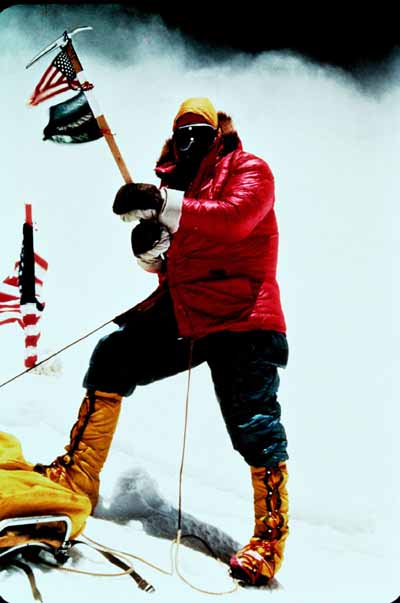
>On this day in 1963 Mount Everest was submitted for the first time by an American.

I find this interesting in part because of how times have changed since then. That year there was only one expedition on the mountain. Today there may be many, with a thousand climbers on its slopes. No longer do climbers plant their country’s flag on the summit, and many since have reached the summit without the use of bottle oxygen. Expeditions are typically much smaller than they used to be, and many climbers are actually clients who have paid their way onto a climbing team. Also, the typical location for base camp is now considered the world’s highest garbage dump, from past expeditions leaving their used equipment, and is often packed with people. In 1963 there would have been few places on earth as wild and pristine.

I first became aware of the 1963 American expedition by reading a copy of Everest Diary John D. McCallum, based on the diary of Lute Jerstad. I mentioned this in an earlier post. For me those early Everest expeditions have a wonderful romantic quality. Although I have climbed several minuscule mountains by comparison I used to think maybe someday I would climb in the Himalayas. Alas, now I hope maybe I will someday get a chance to just see them for myself.

Here is the first three minutes of the documentary made of the expedition:

http://video.google.com/googleplayer.swf?docid=-3937648226832477292&hl=en&fs=true

>free solo

>Fear of heights is a good thing. It’s kinda like fear of great white sharks. If you are in the ocean swimming near great white sharks it does not mean you are going to be eaten. But your chances of being eaten are probably greater than if you are swimming with some otters.

Climbing shear cliff faces without using any ropes or other safety equipment is a little like saying, “Hey look, there’s a whole bunch of great white sharks in the water. I’m going swimming!” If you don’t get eaten still no one will praise you for making a good decision to go swimming. If you do get eaten, well… I guess you won’t care what they say.

Still there is something thrilling about watching someone free solo El Capitan, a 3,000 foot cliff of polished granite. 3,000 feet is really high up. If you want to see what it looks like to look down from about 2,000 feet on El Capitan, click here. If you want to watch Dean Potter free solo El Cap, watch this video:

Now if you think free soloing is just something one or two people do, then watch this video about a Siberian community where everyone does it.

Some people go on nature walks, some bird watch, others paddle around in small boats, and others take the family to the cliffs and say, “Okay kids, up you go!”

>some summits (and nearly so)

>

Doubly happy, however, is the man to whom lofty mountain-tops are within reach.

~ John Muir

In this post I reminisce.

When I was much younger I got the idea in my head that I would climb a mountain. The idea was planted by my reading the book Everest Diary based on the personal diary of Luther “Lute” Jerstad, one of the first Americans to climb Mount Everest. I loved the book, still do. I quickly became an armchair mountaineer, which I still am. I read many climbing books, especially ones about climbing Everest (a.k.a Chomolungma). In college, however, I decided to embrace my dreaming and actually climb a mountain.
Given that I am a “book person” I learned how to climb mountains first by reading books on the topic. I learned how to use crampons and an ice ax. I learned to use a rope and belay another climber. But no amount of book reading compares with putting on your boots and trying to scale a mountain. So eventually I had to do it. I have to say, though, that I am not mountaineer, just an enthusiast, and mostly still from the armchair.

The following are the mountains I have summited, or nearly summited. All are in Oregon except Longs Peak, which is in Colorado. All these were climbed by me more than 15 years ago.

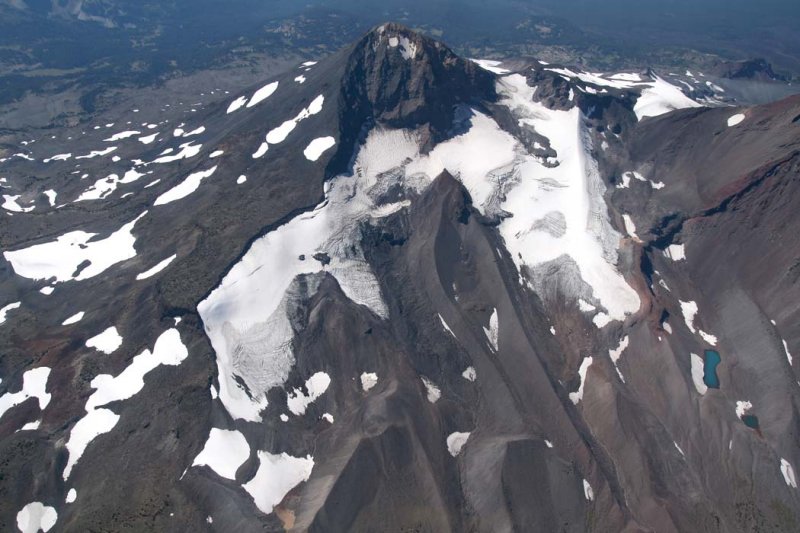
North Sister (10,085 feet, 3074 meters)
The North Sister is a beautiful peak and one of a group of three dormant volcanoes called The Three Sisters. Of the three it is the most rugged, the oldest, and the most difficult to climb. I have summited it twice. The first time I climbed with a friend – both of us were essentially novices and we traversed an exposed slope near the top without a rope. I vowed never to do that again. The next time I climbed with the local Mountain Rescue team – plenty of ropes this time! I held my own, but was in so much pain getting back to the car that I vowed never to climb another mountain unless I was in sufficient physical shape.

Middle Sister (10,047 feet, 3062 meters)
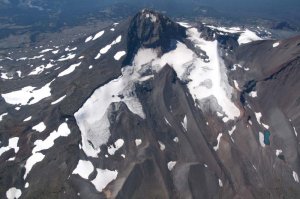
I climbed the Middle Sister with my dad. I felt strong and the weather was beautiful. For my dad it was his first mountain climb. The Middle Sister is not a technical climb from the North, which is the way we went. The North East face, however, is a good training ground for steep snow climbing.

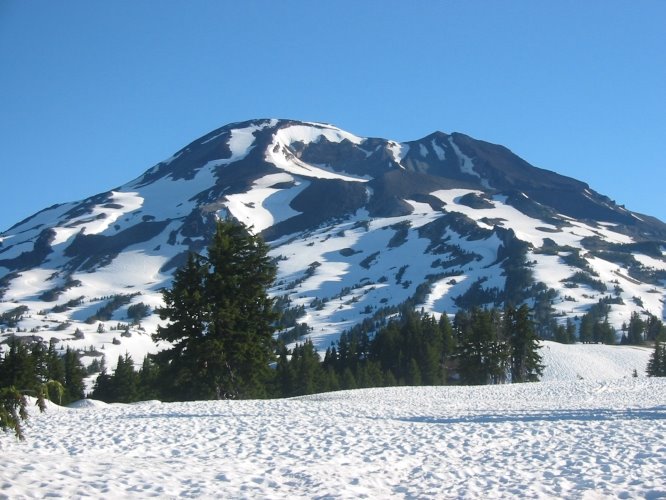
South Sister (10,358 feet, 3157 meters)
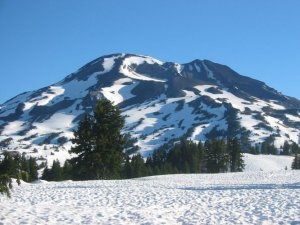
The South Sister is the third highest peak in Oregon. I have summited the South Sister twice and it was my first mountain summit. The climb is essentially non-technical climb. It is therefore is a popular climb for many first-time climbers. It is one of the most climbed mountains in Oregon. Mostly it is just a long 5.5 mile hike uphill from the trailhead (or an 11 mile round trip from the car with a mountain in the middle). On any weekend in August one might find 10 to 50 people on the summit. On its summit is a small lake (when not frozen over) called teardrop pool. It is the highest lake in Oregon.

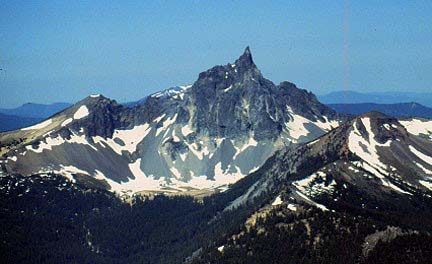
Mount Thielsen (9,182 feet2,799 meters)
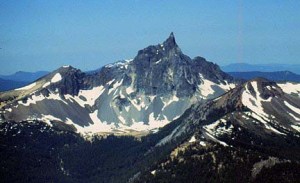
Mt. Thielsen is called the lighting rod of the Cascades because of its spire-like summit. This is an old volcano. Most of the mountain has fallen away and what remains is the inner plug. Most of the climb is easy, but the last 50 feet is a rocky scramble to a small pinnacle that can hold about three people. Many climbers rope up at that point, but I didn’t, and didn’t feel the need to.

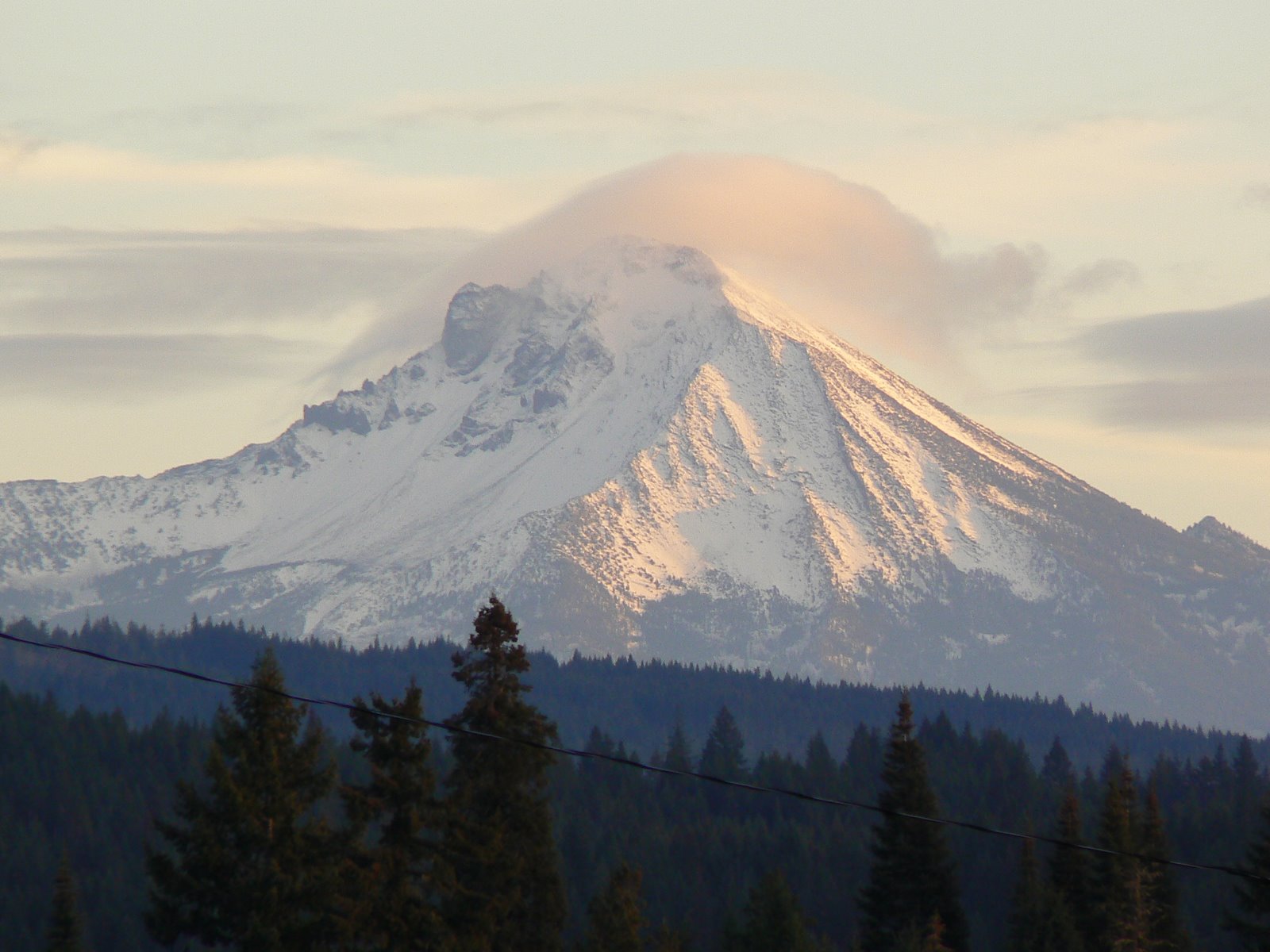
Mount McLaughlin (9495 feet, 2894 meters)
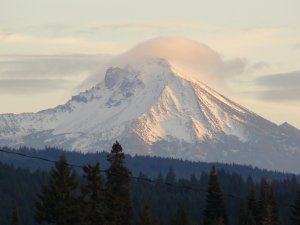
The day before climbing Mt. Thielsen I climbed Mt. McLaughlin. The trip went something like this: Saturday drive five hours to Mt. McLaughlin, climb it, then drive to Mt. Thielsen trailhead, sleep on the ground under the stars, Sunday morning climb Thielsen, then drive three hours home, sleep in comfy bed for ten hours. It was a long weekend, but was also a lot of fun. Climbing Mt. McLaughlin is as technically easy as the South Sister, but not as long.

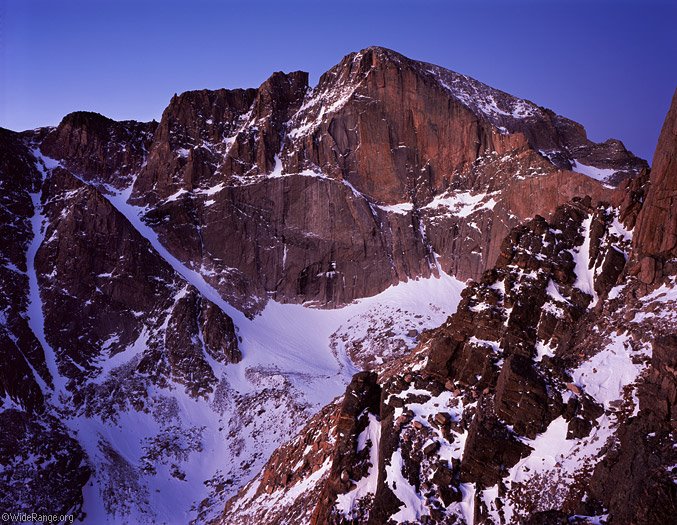
Longs Peak (14,259 feet, 4,346 meters)
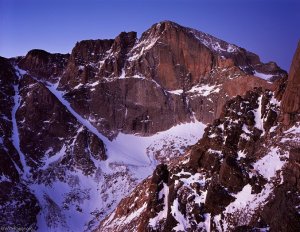
In the Spring of 1984 I and a group of fellow students tried to climb Longs Peak. We got up to 13,200 feet elevation, about 1000 feet below the summit at a place know as the keyhole. We had to turn back because of a storm that had blown in. Climbers were coming off the top and telling us that it was getting dangerous above. The wind where we were was very strong coming through the keyhole. There is a stone climbers hut near the keyhole where we met a bunch other folks. The heavy wooden door to the hut had been blown off its hinges and was no longer to be seen. To make up for the disappointment of not summiting several of us decided to race each other back to the cars. We ran in heavy hiking boots and carrying daypacks about 6 or 7 miles downhill. Needless to say I wish I could do that today, but my knees won’t let me and my lungs thank my knees.

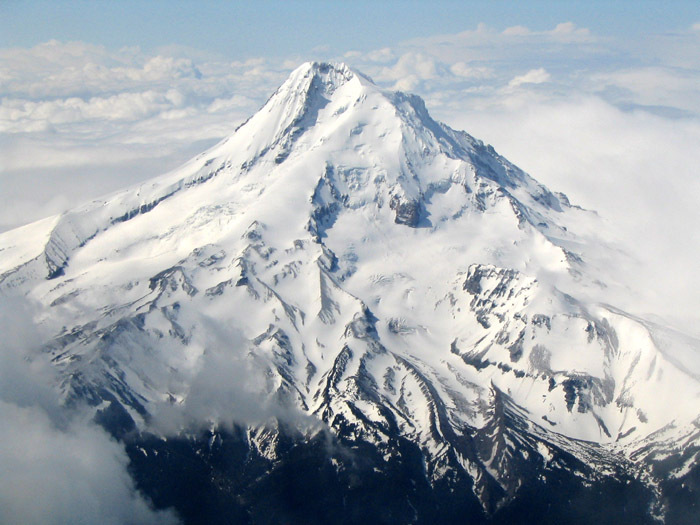
Mount Hood (11,249 feet, 3,429 meters)

Mount Hood is the tallest mountain in Oregon and one of the most climbed mountains in the world. I and two friends attempted to climb it in the early 1990s. We started from Timberline Lodge at around 1:00 AM. The day was stunningly beautiful. We could see all the way South to Mount Shasta in California! We got very near the summit, but then one of my friends got sick and couldn’t go any further. We decided to head down, ascribing to the philosophy that we would be back soon enough. I have not been back. But I still plan on climbing it someday.

Many people believe that climbing mountains is something they could never do. Climbing mountains is very near lunacy they assume. Why would anyone want to do such a thing, they ask. Maybe they are right, but I have to say that there is nothing quite like the experience. Many peaks are technically easy to climb, most are just an uphill trail to the top. Standing on top of a mountain is glorious. The exercise is tremendous. I say pick one and go! Of course, do your homework and be prepared.