>The world according to W. E. Deming

>So much has been said about the so-called financial crisis and the bailouts of banks and auto makers. Little focus has been placed on the real roots of the problem, which go back decades and not merely to a few “bad apples” abusing the system in recent years. Some of those roots are the way power seeks power – and all of the human foibles that go along with that. Other roots go back to the reasons Japanese manufacturing taught the U.S. a lesson in quality. The Japanese learned their lesson in quality largely from one man, W. Edward Deming, who was dismissed by U.S. industry, so he went to Japan where they were eager to learn. The rest is history.

I first came across Deming by reading his book, Out of the Crisis, after having read a number of other popular business books. Deming’s ideas rock my thinking and I have been a fan ever since.

Never heard of Mr. Deming? The short documentary below, made in the early 90s, is a great introduction. It is also remarkable in light of what we are going through today. People smashing Japanese cars and products with sledge hammers says a lot about how incapable people are at swallowing their pride and be willing to own up to their own roles in crises.

>the more things change…

>Consider the following paragraph below. It is from an introduction to Karl Marx’s Capital Volume 1. It was written in 1976 by Ernest Mandel. I was struck by how much it describes our current day.

Periodically the bourgeois class and its ideologues have thought they have found the stone of wisdom; have felt able, accordingly, to announce the end of crises and socio-economic contradictions in the capitalist system. But despite Keynesian techniques, notwithstanding all the various attempts to integrate the working class into late capitalism, for over a decade now the system has appeared if anything more crisis-ridden than when Marx wrote Capital. From the Vietnam war to the turmoil on the world monetary system; from the upsurge of radical workers’ struggles in Western Europe since 1968 to the rejection of bourgeois values and culture by large numbers of young people throughout the world; from the ecology and energy crises to the recurrent economic recessions; there is no need to look very far for indications that capitalism’s heyday is over. Capital explains why the sharpening contradictions of the system were as inevitable as its impetuous growth. In that sense, contrary to a generally accepted belief, Marx is much more an economist of the twentieth century than of the nineteenth. Today’s Western world is much nearer to the ‘pure’ model of Capital than was the world in which it was composed.

Of course, capitalism has had a few more years of its so-called “heyday” since 1976. But maybe we are seeing bigger cracks in the system today than in the past. And yet I don’t think we’ve seen the last of capitalism for a long time now. Marxists have been saying for more than 150 years that capitalism is going to collapse any day now, but it keeps trudging along – making some rich beyond measure.

I must also say that it was fun typing this up while listening the the soundtrack from Repo Man.

>What is Democracy? Beyond Elections documentary

>Democracy is one of those words, like love or justice, that we all know intuitively what it means, but then again we don’t really know as well as we think. I am often surprised by how much I don’t understand democracy and its implications, let alone how it plays out in different parts of the world. Below is the the first part of a documentary on the topic of democracy in the Americas. This might be a good place to start re-examining what democracy is all about.

You see the rest of the documentary here.

>God help us to be human: Happy Birthday Cesar Chavez

>

Today is the birthday of activist Cesar Chavez.

>emotions and economics: real sackings at bmw

>Here is a video (in two parts) of a large group of workers at the BMW Mini factory in Oxford being given one hour’s notice of the termination of their employment in February of this year. The workers don’t like it, understandably, the union leaders get an earful, and management can only say they’re real sorry. This has got to be one of the most interesting examples of what this economy is doing to people. I also find it heart rending and frustrating to watch.

Note: The camera is quiet shaky most likely because the meeting was not to be recorded and the camera had to be hidden, at least until the emotions ran high.

In a sense this video is a bit voyeuristic – we are looking in on people in a personally troubling situation (a kind of tragedy). However, if we pause a moment, we realize we are those people. In the world we live, the economic and political system we’ve inherited, and with the way businesses tend to do business, life is often tenuous for the vast majority of humanity. We all feel the closeness of the precipice, and many have already been tossed off. Although we may never do away with many of the harsh realities of life, it seems we could do much better with our economics than we have been. At least we should be careful when we use phrases like “the current economic conditions” because those conditions are merely the most visible representation of an entire system that has many deep flaws.

>20 years ago today…

>…the Exxon Valdez ran aground.

http://vimeo.com/moogaloop.swf?clip_id=3213063&server=vimeo.com&show_title=1&show_byline=1&show_portrait=0&color=ff0179&fullscreen=1

Some questions:

  • What is the relationship between capitalism and the well being of us all?
  • Can an economic system that relies on the fundamental self-interest of us all be considered good?
  • What is my role in the system?

>A Recomendation: The Take

>There are violent revolutions and there are more peaceful ones. Some revolutions are based on ideals and theories and Utopian visions. Others grow out of simple needs for decent jobs and human dignity. The later is the story of the documentary film The Take (2004).

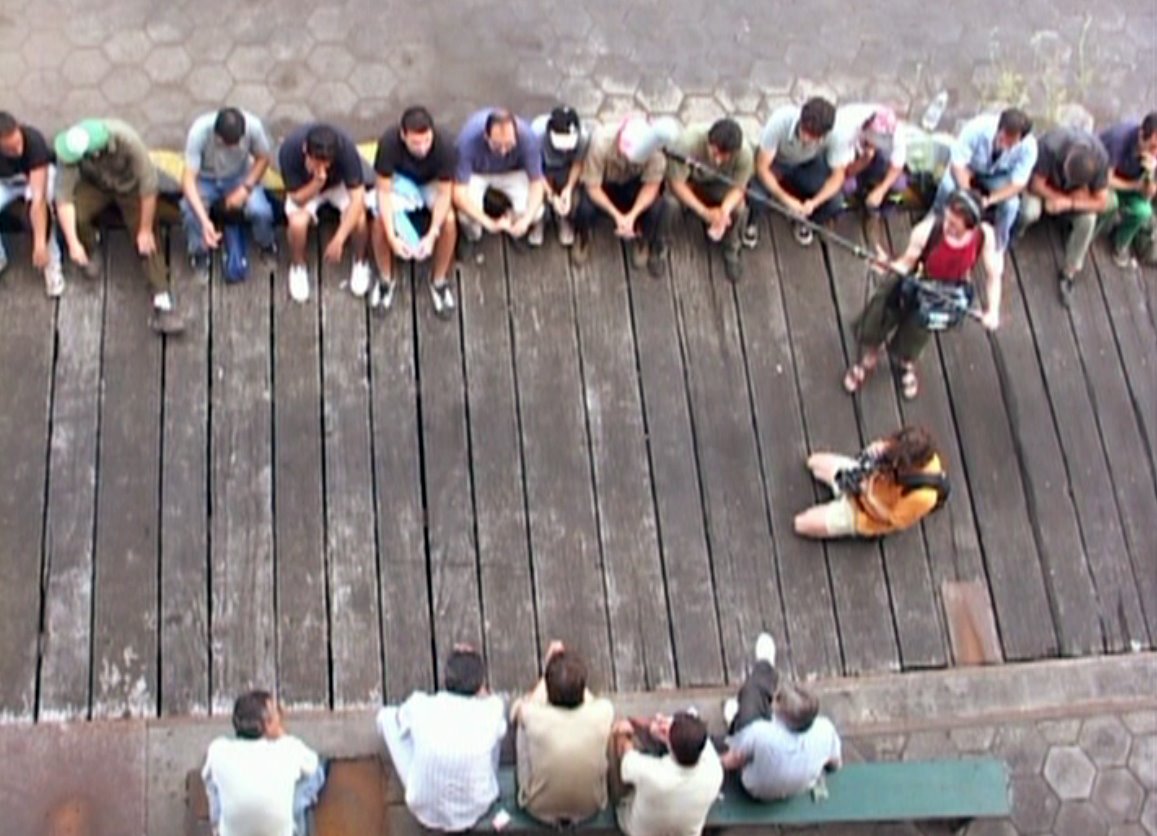
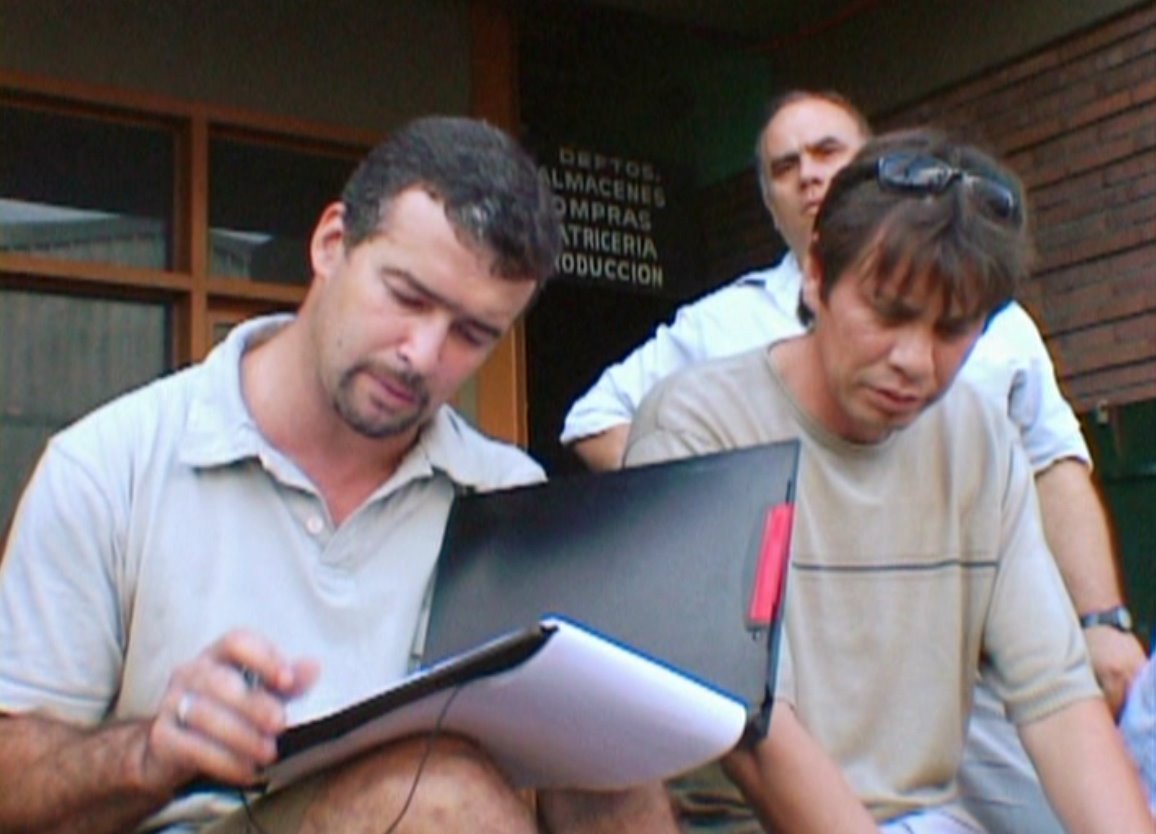
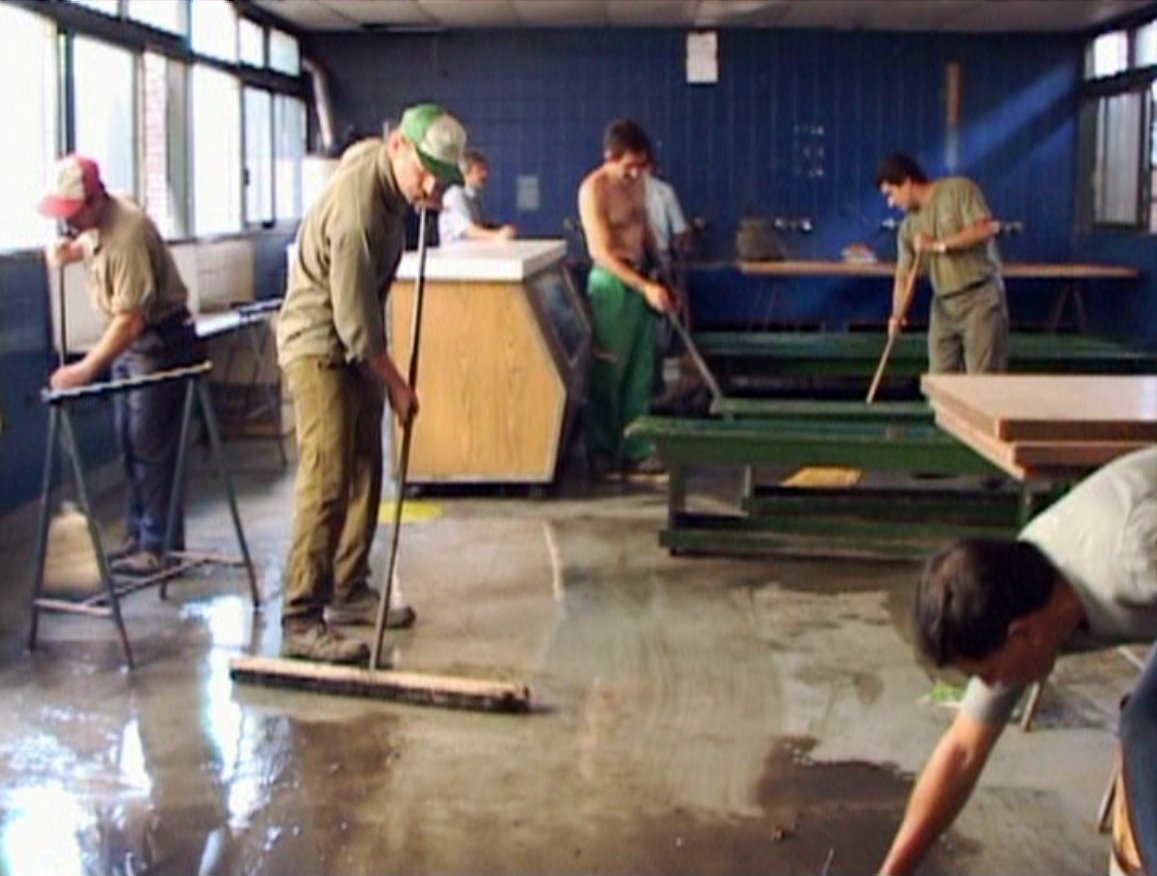
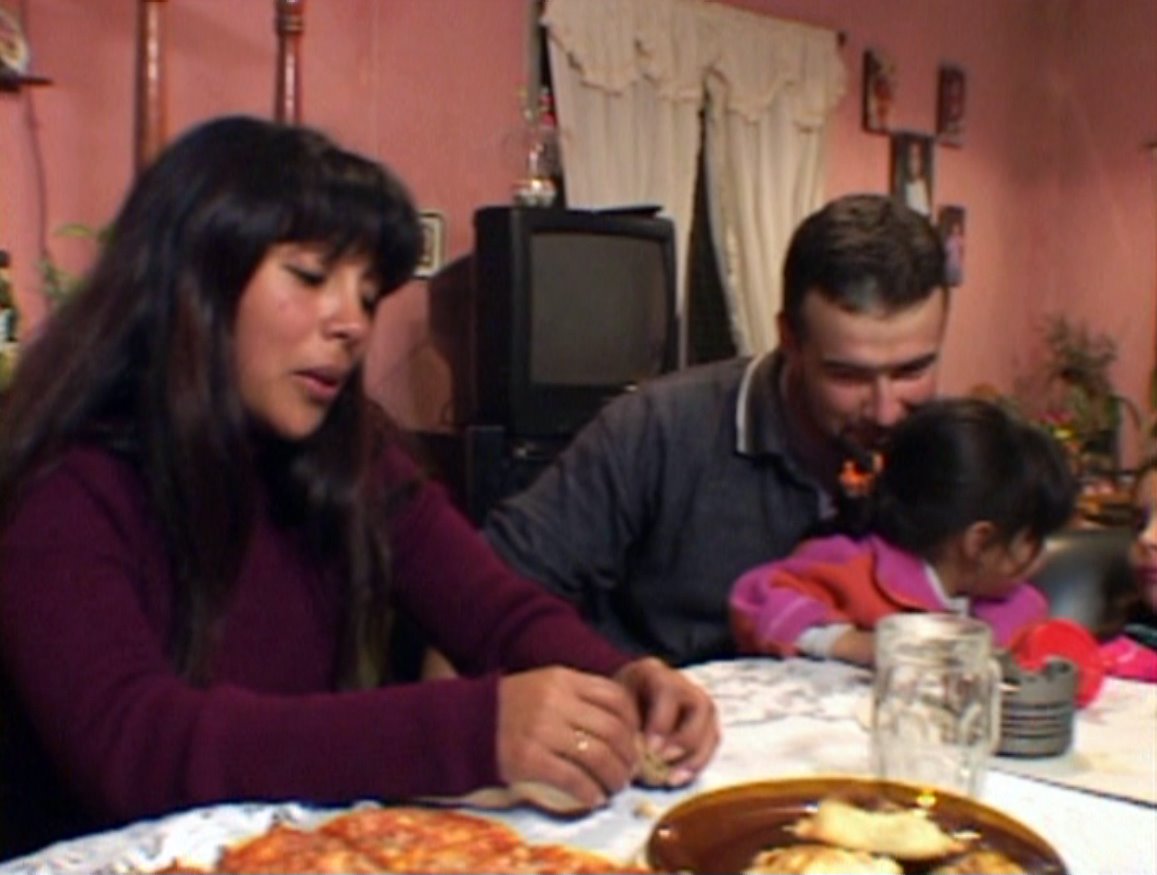
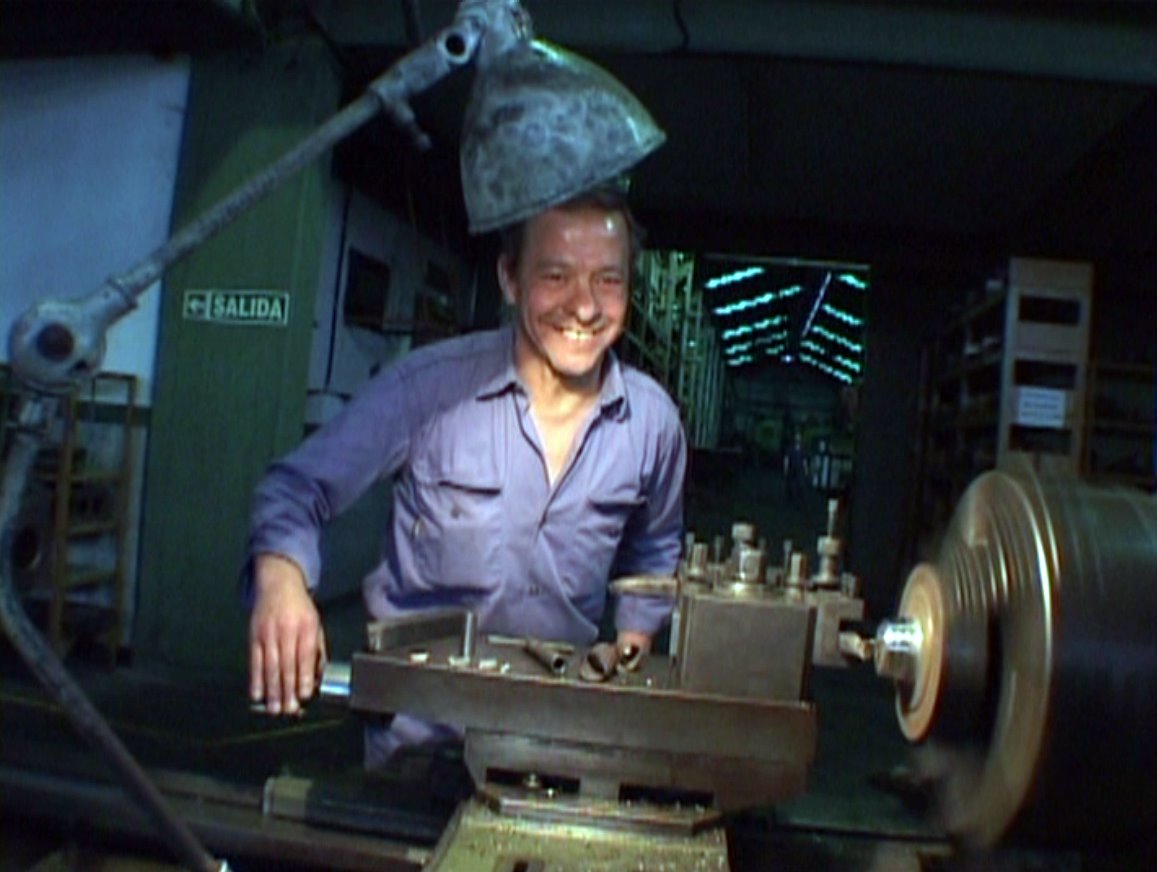
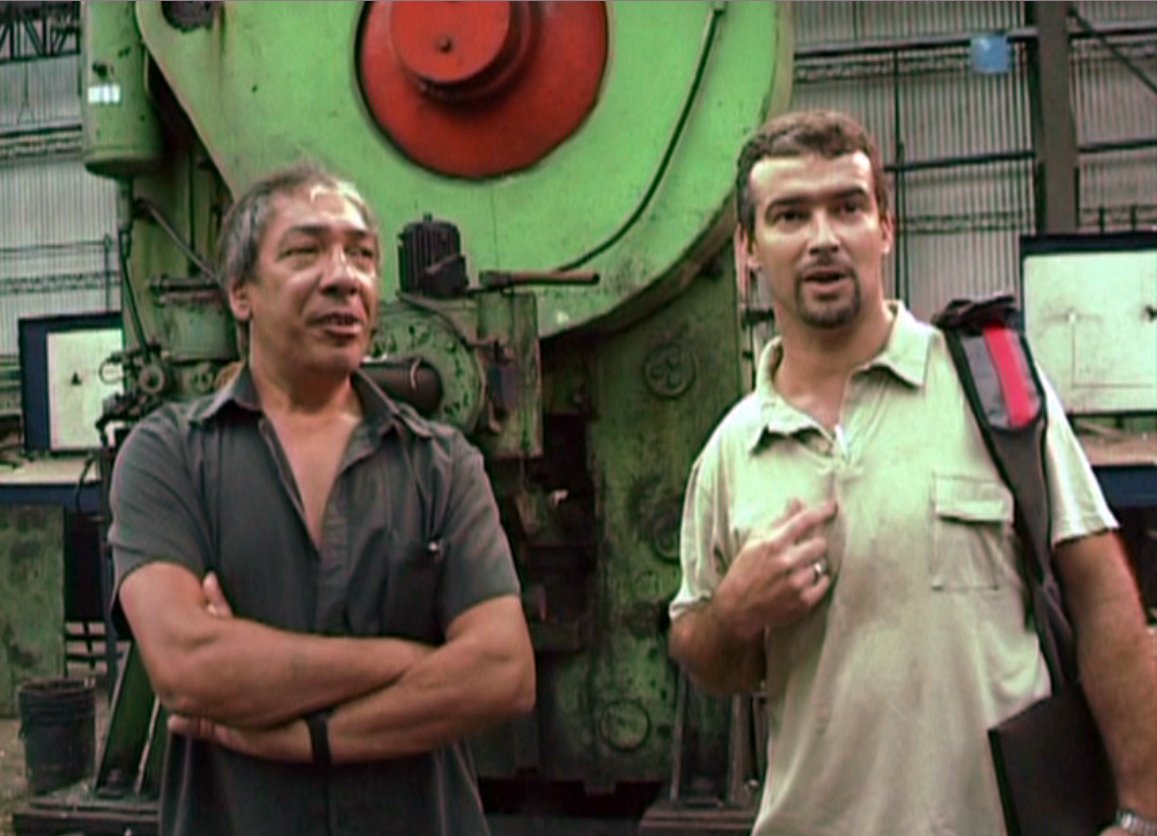
Created by Avi Lewis and Naomi Klein, The Take chronicles the struggles of out-of-work laborers in Argentina trying to take over abandoned factories and run them for themselves. Driven by basic necessity rather than ideology, these workers desire the simple ability to have a job and provide for the basic needs of their families in the wake of devastating economic policies by the county’s capitalist leaders.

What is truly wonderful about this film is it ability to tell a powerful story, set it within a complicated historical context, and do so while showing the very human realities of the struggle. In other words, it’s not really about revolution, or jobs, or capitalism versus a kind of collectivism. It is a story about people.

And yet, even though it is a story about people, it is also a story about a revolution. Argentina once had a thriving economy. But then new strategies were introduced by a government set on getting themselves rich as whatever cost. The country went into a downward spiral. Factories closed, unemployment skyrocketed, and the World Bank and IMF offered the kind of help one gets only from enemies who claim to be friends. The problem with bad macro-economics is the inevitably tragic micro-economic fallout. Simply, it’s the burden placed on the families who can no longer afford to feed themselves, go to the doctor, or pay rent.

But in Argentina something new began happening. The workers went back to the shuttered factories in which they formerly labored and re-opened them. These workers took over the means of production, produced products, sold them, paid their bills, gave themselves paychecks, and ran the factories collectively. The former owners, who legally were still the owners, were kept out, often by court orders based on Argentine laws, and mostly by the sheer tenacity of the workers who put their hearts and bodies on the line.

If there is anything truly remarkable about this story it is the way ordinary people, people with wives and husbands, with kids, with dreams and desires, walk the thin line between despair and possibilities. These are people like me, like you, who want decent jobs, who love their families, love their friends and their communities, who are not seeking power and glory, but only want a chance to live as they should.

Where the film ends is not where the story ends. Some challenges are overcome, but others still loom. The workers get mostly what they seek, but their future is uncertain. The government took a turn towards the left and is therefore more amenable to the workers, but, like all governments, it is still a mixed bag. If anything, The Take is a realistic look at the human struggle for life and liberty, for work and pay, for present needs and future dreams. It is, in short, a story of humanity.

>independent media and the future

>

If a nation expects to be ignorant and free … it expects what never was and never will be.

~ Thomas Jefferson

It ain’t what you don’t know that gets you into trouble. It’s what you know for sure that just ain’t so.

~ Mark Twain

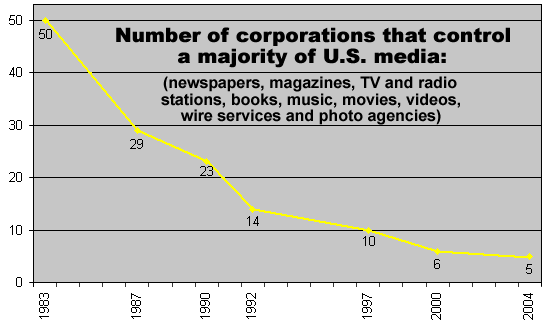
Where do you get your news? Increasingly I find myself seeking out alternative sources of news, that is, independent news. I am deeply concerned that a small group of very large corporations own most of the media in the U.S. (See the chart below.) I am certainly not against all corporations, or even the idea of corporations, and I am not against the idea or the fact that most news outlets are companies with bottom lines. But in practice, corporations, especially large corporations, do not want democracy in the same way that the average person thinks of democracy.


Chart from the Media Reform Center.

Democracy is messy, unpredictable, works from the ground-up, is slow in making decisions, includes everyone, and is uplifting to both the individual and the masses. Democracy also challenges capitalism because capitalism seeks that all problems be solved by the market and the inherent selfishness of the individual. Ideally democracy requires compromise and some level of caring for others. Corporations want to reduce that messiness in order to maximize profits and makes them more predictable. Democracy wants to keep that messiness in order to foment the exchange of ideas.


The “corporate flag” by Adbusters.

Corporations are, by definition and design, expressions of capitalism. Thus, if democracy gets in the way, or even threatens the forward march of capitalism, then corporations will usually choose capitalism over democracy. That, at least partially, explains the constant collusion between big business and government. But a thriving democratic government takes active and informed citizens. If only a handful of corporations own all the media how does that affect the news citizens receive? Do we get the full picture? Do we have the facts we need to be committed to democracy and make informed decisions?

We all know the world we live in today is saturated with an overwhelming amount of information and entertainment, and that much of it is just garbage. And we know this includes the mainstream news. We live in an age of gross media mediocrity. Mainstream news tends, regardless of its name or origin, tends toward homogeneity rather than true diversity. But there are still many good alternative news choices, if one makes a little effort to find them.

Recently the National Conference for Media Reform highlighted some of those good choices. There is a groundswell of independent media in this country. Much of it is driven by its opposition to the War in Iraq and the never ending War on Terror.* It is also driven by the Internet. One of the key moments of that conference was the speech given by Bill Moyers.

Moyers speech is truly wonderful and worth taking the time to view.

Adbusters was there too. Here they interview several individuals, like Robert Greenwald and Amy Goodman, who are playing important roles in the independent media movement:

http://blip.tv/scripts/flash/showplayer.swf?enablejs=true&feedurl=http%3A%2F%2Fadbusters%2Eblip%2Etv%2F%2Frss&file=http%3A%2F%2Fblip%2Etv%2Frss%2Fflash%2F993923&showplayerpath=http%3A%2F%2Fblip%2Etv%2Fscripts%2Fflash%2Fshowplayer%2Eswf

Independent media is not a guarantee of democracy or of quality news. But it does offer a better chance for building a foundation for good debate and informed choices. Of course the individual still has to take responsibility for sorting through it all. But that process is, in itself, informative.

I truly believe the future of this country, and of the world, politically, socially, and economically hinges more on the future of independent media and its relationship to democracy than just about anything else, along with love, human sin, and the hand of God of course. I should say that when I refer to the future of this country and the world I have in view a future where democracy and peace can thrive, and where ordinary people play a greater part in shaping this world and creating flourishing lives. It is not a complicated vision.

I have recently discovered the links page at the Independent Media Center. This looks like a decent place to start looking for alternative un-embedded sources of news and opinion. Feel free to suggest alternative news sources you enjoy.

I have just added this clip which takes a look at the new Newseum, or news museum, and highlights some of the same concerns I mention above:

*One of the ironies of alternative news is that by being animated by the ideals of a democratic society such news begins to look and feel radical and even “left wing” regardless of the issues. Democracy should not, in my opinion, be a radical idea in a free society, but it often seems that it is.

>Global Supply Chains and the Commandment to Love One’s Neighbor as Oneself

>The title of this post is also the title of my thesis which I wrote for my Masters of Business Administration program, which I just completed. To get some idea of what sparked my thinking and led to my thesis topic you can watch the video clip below about workers in developing countries as they support the demands of the developed world. You have already heard about sweat shops in third world countries. Here is what they look like:

…or this parody from The Onion brings up the issue in its way:
http://www.theonion.com/content/themes/common/assets/videoplayer/flvplayer.swf

What are we, those of us in the most powerful nations on earth, going to do about the globalization of capital and corporate power? The world may be becoming increasingly, economically “flat”, as Tom Friedman says, but is it becoming morally flat as well?

It may sound strange to ask what we are “going to do” about globalization. Isn’t it a good thing? Isn’t it about the expansion of wealth and freedom? Isn’t it about the Internet and better communication? What we don’t typically hear about is the hidden costs of globalization, or about what that word conjures up in the minds of those in the developing world. For much of the world globalization includes the realities in the video above. For the rest of us that reality is often hidden.

I am, by nature, a rather conservative type. I don’t get easily bent out of shape over issues. I don’t seek revolution at the drop of a hat. I also grew up a Christian and was, until a few years ago, a registered Republican. I am still a Christian, and because of taking my faith seriously I could no longer be a Republican. Now I am an independent. But it’s not really about politics. It’s about a perspective on the world, on how I want to live. It’s about what kind of person I want to be and where I want to end up. And it’s also about the kind of world I want for my children and their children.

When it came time for me to choose a topic for my MBA thesis I felt the need to tackle something to do with ethics. I felt I needed to address, for myself, the underlying moral issues inherent in business and economics before I went out from my schooling into more business adventures. So I picked the topic of the treatment of women workers in global supply chains and the ethical implications for businesses that rely on the benefits from those supply chains (like lower costs and faster delivery, etc.). My thesis became, for me, a kind of introduction to the larger topic of ethics and, more specifically, how should someone who claims to be a Christian act in the world.

The following is from Chapter One of my thesis:

Consider this scenario: when a shopkeeper opens her doors in the morning and hangs out the welcome sign it is time to get to work. The pressures of the day quickly crowd in as she must meet the demands of her customers and her business’ bottom line. She must manage her time and her employees, deal with suppliers, and try to make plans for the future while also trying to fully understand the past. Questions of ethics are considered, if considered at all, largely in the immediate context of the day-to-day routine. Our shopkeeper will have to decide where she stands on being truthful and honest with those whom she works; she will make ethical decisions around how she manages her accounting and pays her vendors; she may even face moral questions about what products she sells and whether they are good for her community.

Now let’s assume this shopkeeper is also a Christian, one who makes claims to be a follower of Jesus Christ, and one who participates in the life of Christian culture. The ethical issues for the shopkeeper will not be any different from any other shopkeeper. However, she now carries the burden of having to follow some explicit commands with regard to the world, most notably to love her neighbor as herself. And who is her neighbor? Is her neighbor only the immediate customer or vendor with whom she does business? Or, given that she lives in an increasingly globalized world, does her neighbor include those with whom she now has connections, even though they may be on the other side of the planet and at the distant end of her supply chains?

If our shop keeper then decides that she does want to build her business around the idea of loving her neighbor as herself, and then apply that philosophy to her dealings with her supply chains, she must decided how to do that. What options are available to her? Does she choose servant-leadership as a leadership style? That is, will she seek to be a servant first and, as Greenleaf (1991) says, “to make sure that other people’s highest priority meeds are being served” (p. 7)? Does she choose to buy only from suppliers that treat their employees well? Does she seek to instill corporate social responsibility into her business practices?

These kinds of questions might be of little importance if it were not for two realities. The first is that the world is more connected than ever before. The second is that many workers in global supply chains, particularly those in developing countries, often have few of the rights or freedoms those in Western and Northern societies take for granted and may even assume to be inalienable. This is not to say that the benefits of free-market capitalism have not brought greater wealth to many developing countries, nor that many of the world’s poor have not seen at least some economic improvement to their way of life. However, as the gap between the world’s poor and the world’s rich gets bigger, and as facts continue to come out regarding the all too often harsh treatment of laborers, including women and children, within global supply chains, one cannot help but ask whether a laissez fair, free-market philosophy is the best approach for creating a fair and just system that benefits all stakeholders appropriately.

A Christian business person must ask these kinds of questions, not merely because economic systems come with their own set of moral presuppositions about human nature and human needs, but also because in the day-to-day world of business, as it is in life, one’s actions flow from one’s beliefs. If a Christian is to take seriously the commandment to love her neighbor as herself, then it only makes sense that that command, that challenge, would raise such questions. Maybe one of the great historical ironies is the interconnectedness of free market capitalist thinking and Christian theology; ironic because one system is based on self-centeredness for its success and the other is based on other-centeredness. Our shopkeeper will have to decide if this interconnectedness is both useful and valid.

I go on to describe how global supply chains work, including the fundamental pressures they impose, such as cheaper labor and fast delivery. I then describe how those pressures necessarily create negative conditions for many workers. I then describe the common conditions of working women in those supply chains. (I chose women workers because of the data available and because they represent more than half of the global workforce while often being in the weakest position with regards to labor rights and fair treatment.) Finally I examine how some have sought solutions, for example the concepts of corporate social responsibility (CSR), fair trade, and servant leadership.

I also examine how Christianity has shifted away from social concerns by becoming a personal/private faith thing rather than an “all of life” thing. This shift has led many Christians for forsake the requirements of their faith, that is, to be “salt of the earth” as it where. Too many Christians, I argue, see their faith as a purely private matter, except for a small handful of political issues.

I do not see globalization as a specifically “Christian issue.” There are many perspectives and answers available. But I find narrowing the scope down a bit helps to crystallize the issue for me. I do not see in the Bible anything specifically about free trade, but I do see a lot about feeding the hungry and helping the poor. Recently a professor of mine related a story where he was teaching about globalization and one of his students, a man from Africa, said that when he hears the word “globalization” he knows it to mean Western imperialism. There is something that rings true for me about that student’s perspective, and that bothers me.

Much of my thinking has shifted over the past several years as I have tried to take seriously the teachings of Jesus. The irony is that the teachings of Jesus contradict much of modern, popular Christianity in both its focus and its call to action. I have become convinced that mainstream, right-wing (and many left-wing) Christians just may have become the new Pharisees – the pious religious types who Jesus railed against and who eventually killed him. They do church really well, but their hearts have become hard – and I know what I’m talking about because I am one of them. Because of this I chose to focus on the implications of the commandment to love one’s neighbor as a foundational challenge. I figured that commandment cuts through a lot of garbage.

This video interview with Tony Campolo offers some idea of what I am talking about:

I won’t say that I am in Campolo’s camp entirely, and I don’t cite him in my thesis. However, I will say that his teaching challenges me deeply.

I am also challenged by numerous other thinkers, most of whom are not Christians, and some are even anti-Christian. But I believe truth can be found just about everywhere. The following video clips further pad out the topic.

Christian “progressive” Jim Wallis talks about living out one’s faith:

Left-left-wing academic and leading progressive thinker Michael Parenti on globalization and what it really means:

Parenti is no fan of Christianity by any means, or any religion really, but he is a very sharp thinker and erudite historian.

Brilliant and exacerbating Noam Chomsky on globalization:

I find myself more and more fascinated with Chomsky’s work. Years ago I read a book of his on linguistics for my MA thesis. Since then I have most only heard him speak. His observations on power politics are illuminating. Chomsky and Parenti do not see eye-to-eye on several issues.

Naomi Klein, author of The Shock Doctrine speaks on the topic of global brands, the topic of her famous book No Logo:
http://video.google.com/googleplayer.swf?docid=2343596870021245516&hl=en

Famous activist, historian, and progressive thinker Howard Zinn on American Empire (a topic related to globalization):

Not all is doom and gloom. Consider the Tony Campolo and Jim Wallis clips above and the clip below.

Towards a solution – Fair Trade:

I have to say the process of writing and defending my thesis was longer than I anticipated, but it has bee a very rewarding process. I am glad I finished school and I am excited about my future career. I will say, however, that I have not, for me personally, solved the issues raised in my thesis. I still struggle to fulfill the commandment to love my neighbor, and I’m sure I always will.

References
Greenleaf, R. K. (1991). The servant as leader. Westfield, IN: The Robert K. Greenleaf Center.
>Flying United (for the last time?)*

>Becoming one of my least favorite brands.

I arrived home Friday night from the sales conference in Las Vegas. It is good to be back with my wife and kids, sleep in my own bed, etc.

I have to say something about my flight experience. In my previous post I mentioned how great Virgin Airlines is. Now I have to describe my overall experience on United Airlines. Here’s how it went:

Tuesday: Trying to leave town with a 6:15 AM flight. We sit on the plane for an extra hour and a half because of a hydraulics problem with the plane. While we sit there they turn off all power to the plane, which means no lights and no air-conditioning while we wait. Another airline fixes it for United and we’re off. The planes lands with a teeth-rattling thud in San Francisco. We’re late. We all miss our connections.

Friday: Trying to check in my bag. As I stand in line and watch the person ahead of me, I see a man behind the counter working on the printer for the bag-tags. He disconnects the machine and walk away with it. I step up to the counter and the ticket agent goes to print my bag-tag and is stopped short. Where is the printer he wonders. Fifteen minutes later, after getting his supervisor involved and phone calls to tech support, he finally gets a tag printed and checks in my bag. I have been standing at the counter the entire time wondering what kind of airline this is.

Friday: Flying from Las Vegas to San Francisco, trying to get home after a long week. The flight is delayed because some fuses have blown on the plane. An hour an a half behind schedule we board. We are all wondering how old the United fleet must be. My gut tells me United may not be as safe an airline as they should. I pray I see my family again.

Friday: Flying from San Francisco to Oregon. The plane was delayed over two hours because the autopilot was broken. We were told that it was likely we would have to stay the night and take an 8AM flight on Saturday. My wife tells me my oldest is nearly in tears waiting for me to get home. They did get the plane running, but we landed in Oregon almost three hours behind schedule.

Ironically, the nicest United employee I dealt with was the boarding ticket counter person for the last flight – and it was his first day on the job! The others were not so friendly. I guess once someone has worked for United for a while cynicism sets in. No surprise there.

That’s three different flights, three different planes, three different mechanical problems, and three flight delays – all in less than a week! Nice job United! Most of us that were flying United for those flights have vowed not to fly with them in the future if we can help it. Remarkably, it still could have been much worse.

It’s good to be home… finally.

* * * * * * * *

I am not the only person who has struggled with United Airlines, check out
here, here, here, and here.

…or this clip from Mad TV:

*I had titled this post “United Airlines = poo” but my wise wife suggested I change the title.