the personal library (get thee organized)

“Beware the person of one book” ~Latin proverb


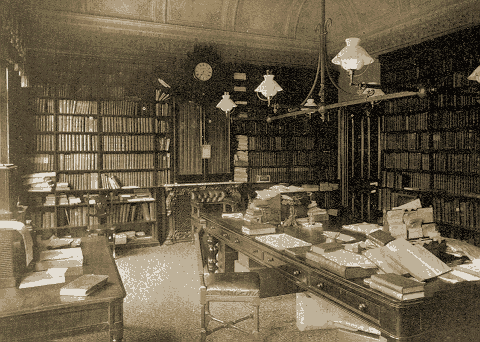
Charles H. Spurgeon’s personal library (19th century)

As I figure it, if you own a book, and you put that book somewhere in your house (or even your car), then you have a personal library. Of course, some libraries are bigger and some are better than others, for any number of reasons. I have been to homes, even homes with kids, that appeared to have no books in them, not a one. Maybe they were hidden. Maybe the family felt they should keep them out of sight in case someone might think they were intellectuals (oops, no chance there). Maybe books are just messy things and I didn’t know. Those families tend to emphasize sports or video games anyway.

I love books. I probably check out over 1,000 books from the public library every year just to keep my costs down. And then, of course, I buy books. I have always been this way. As a child I hoarded the family’s books in my room. My philosophy is that if one is deciding between buying new clothes or old books, buy the books. Maybe I’ve got problems. hhmmm

I am curious about great personal libraries. I know of one guy who has thousands of books. In order to keep track of his mass of books he has implemented a cataloging database that tracks all his books, indexes them, cross-references them, and makes it all quickly searchable. I wonder if he did all the database entries himself.

We only have hundreds of books. We are thinking of putting a bunch of books in storage just to get organized. I need to get our books organized. Maybe I should try LibraryThing. Looks promising.

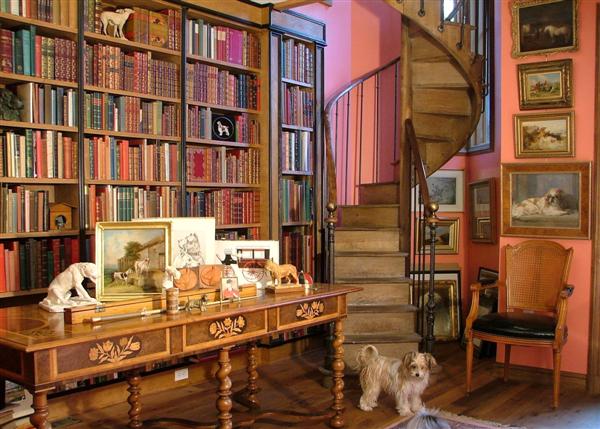
Or I could build a nice new little library room, complete with a dog.

I or maybe not like that.

Of course any advice is welcome. There are tips on-line if you can’t figure out how to organize your books on your own.

hhhhmmmmm

I think one’s personal library says a lot about oneself. A messy library is like a messy desk, a sign of a very creative and possibly brilliant person who would rather just stack books right where they are rather than re-shelve them. Just my opinion. The kinds of books one has obviously says a lot too. Some prefer non-fiction over fiction, some philosophy over car repair. Our library says we like art, history, philosophy, gardening, classic novels, poetry, and lots more. But it takes a while to find any particular book because we are not organized. Getting organized is one of our next projects. And then we will really enjoy our personal library.

Don’t you all wish everyone had their own personal library and could enjoy it in their own special way?

Now that’s livin’! And look how organized is his library!

poem:
I used to need somebody
To sit and read to me.
I’d look at every page they read
And listen carefully.
But now that I am in first grade,
I’m filling up a shelf
With stories, poems, and other books
That I can read myself.

Great kid, but don’t forget to organize your books.

a considered bibliography

I entered the University or Oregon’s film studies department (Dept. of Telecommunication and Film) in 1984. During that period I took classes from Prof. William Cadbury who, in my opinion, was a great teacher and one of my favorites. In one of his classes he handed out a booklist that I have kept with me all these years. I have re-typed it below (any misspellings are my own). There was also a classical music list, but I have not included it.
The list was created by Prof. Cadbury and his wife, the poet Maxine Scates, for her niece Tracy (hence Tracy’s Booklist), who was entering UCLA as a freshman. The list first appeared in 1980 and was then updated. This is the 2nd edition.

The premise of the list is as follows:

“People are rarely told an opinion of the actual bibliography of fictions (mostly novels, a few stories), of which a cultured person in modern America is master. The following is an opinion of that bibliography. It suggests: don’t waste your time reading lesser books when you read; always have at least one book that you’re in the middle of, and usually have it be one of these. The list is divided into translations and English language originals; it is presented in full awareness of the presumption in doing so, and in the hope that the utility will override the presumption.”

(from the introduction)

Naturally, this list is a personal one, and one might feel it is a bit dated (but not very much). The non-fiction section is also skewed towards the arts, which is okay by me. And for myself this list represents the considered opinion of an older and wiser person who, after engaging for many years both intellectually and emotionally with college students felt the neccessity to impart some idea of what it means to be a cultured person – not in totality, but at least a slice of that ideal.

If you see any misspellings, etc., please let me know.
Tracy’s Booklist: 2nd Edition
BOOKS ORIGINALLY NOT IN ENGLISH
Balzac, Honoré de: Eugénie Grandet; Old Goriot; Lost Illusions
Borges, Tomas: Labyrinths
Borowski, Tadeusz: This Way for the Gas, Ladies and Gentlemen
Camus, Albert: The Stranger; The Plague
Cervantes, Miguel: Don Quixote
Chekhov, Anton: The Lady with the Dog and Other Stories
Colette: My Mother’s House; Sido
Condé, Maryse: Segu
Cortazar, Julio: Blow-Up
Döblin, Alfred: Berlin Alexanderplatz
Dostoyevsky, F.: The Brothers Karamozov; Crime and Punishment; The Idiot; Notes from Underground
Eco, Umberto: The Name of the Rose
Flaubert, Gustave: Madame Bovary
Garcia Marquez, G.: 100 Years of Solitude
Kafka, Franz: The Trial; The Castle; “Metamorphosis”; “In the Penal Colony”
Levi, Primo: If Not Now, When?; The Periodic Table
Lustig, Arnost: Night and Hope; The Unloved
Mahfouz, Naguib: The Thief and the Dogs;
Miramar
Malraux, André: Man’s Fate
Mann, Thomas: Death in Venice; The Magic Mountain; Joseph and His Brothers
Murasaki, Lady: The Tale of Genji
Nabakov, Vladimir: Pale Fire
Narayan, R. K.: The Financial Expert; The Man-Eater of Malgudi
Pavese, Cesare: The Moon and the Bonfire
Proust, Marcel: Remembrance of Things Past
Rulfo, Juan: Pedro Paramo
Schwartz-Bart, André: The Last of the Just
Sembene, Ousmane: God’s Bits of Wood
Stendhal: The Red and the Black; The Charterhouse of Parma
Tolstoy, Leo: War and Peace; Anna Karenina

ENGLISH LANGUAGE:
Achebe, Chinua: Things Fall Apart
Amis, Kingsley: Lucky Jim
Arnow, Harriet: The Dollmaker
Austen, Jane: Mansfield Park; Emma; Pride and Prejudice; Persuasion
Baldwin, James: Go Tell It On the Mountain; Another Country;
Tell Me How Long the Train’s Been Gone
Brontë, Charlotte: Jane Eyre
Brontë, Emily: Wuthering Heights
Brooks, Gwendolyn: Maud Martha
Carroll, Lewis: Alice in Wonderland
Cather, Willa: My Anatonia; A Lost Lady
Chandler, Raymond: The Big Sleep; The Long Goodbye
Cherryh, C. J.: “The Chanyr Saga”; the “Cyteen” books
Chopin, Kate: “The Storm” and other stories
Cisneros, Sandra: The House on Mango Street
Conrad, Joseph: Lord Jim; Heart of Darkness; Nostromo
Daley, Grace: Enormous Changes at the Last Moment
Darganyemba, Tsiti: Nervous Conditions
Dickens, Charles: Bleak House; Great Expectations; Hard Times
Eliot, George: Middlemarch
Ellison, Ralph: The Invisible Man
Emecheta, Buchi: In the Ditch
Erdrich, Louise: Love Medicine
Faulkner, William: The Sound and the Fury; Absalom, Absalom
Fielding, Joseph: Tom Jones
Fitzgerald, F. Scott: The Great Gatsby
Ford, Ford Madox: Parade’s End
Forster, E. M.: A Passage to India; Howards End
Fowles, John: The French Lieutenant’s Woman
Glasgow, Ellen: Barren Earth
Golding, William: Lord of the Flies
Gordimer, Nadin: Burgher’s Daughter; Occasion for Loving; July’s People
Green, Graham: The Heart of the Matter; Brighton Rock
Hagedorn, Jessica:
Dogeaters
Hammett, Dashiel: The Thin Man
Hardy, Thomas: Tess of the D’Urbervilles; Jude the Obscure
Hawthorne, Nathaniel: The Scarlet Letter
Head, Bessie: When Rain Clouds Gather
Heller, Joseph: Catch 22
Hemingway, Ernest: The Sun Also Rises
Hogan, Linda: Mean Spirit
Hurston, Zora Neale: Their Eyes Were Watching God
James, Henry: The Ambassadors; The Golden Bowl
Jen, Gish: Typical American
Jones, Gayl: Corregidora
Joyce, James: Portrait of the Artist as a Young Man; Ulysses; Dubliners
Karbo, Karen, The Diamond Lane
Karmel, Ilona: An Estate of Memory
Kincaid, Jamaica: Annie John
Kingston, Maxine Hong:
China Men
Kogawa, Joy: Obasan
Lawrence, D. H.: Sons and Lovers; Women in Love
Lessing, Doris: The Marriage Between Zone 3, 4, and 5; The Golden Notebook;
Shikasta
Lesueur, Meridel: Ripening
Loge, David: Small World
Mansfield, Katharine: Collected Stories
Marshall, Paule: Brown Girl, Brown Stones; Praise Song for the Widow
McCuller, Carson: The Heart is a Lonely Hunter
Melville, Herman: Moby Dick
Meredith, George: The Egoist
Milne, A. A.: Winnie-the-Pooh; The House at Pooh Corner
Momada, N. Scott: House Made of Dawn
Morrison, Toni: Beloved; Sula
O’Brien, Tim: The Things They Carried
O’Connor, Flannery: Wise Blood; The Violent Bear It Away
Olson, Tillie: Tell Me A Riddle
Orwell, George:
1984
Paton, Alan: Cry the Beloved Country
Petry, Ann: The Street
Porter, Katharine Anne: Collected Stories; Ship of Fools
Pratchett, Terry: Moving Pictures
Pynchon, Thomas: Gravity’s Rainbow; V
Rhys, Jean: After Leaving Mr. MacKenzie
Roth, Phillip: Portnoy’s Complaint
Saki (H. H. Munro): The Short Stories of Saki
Salinger, J. D.: The Catcher in the Rye; Nine Stories
Schwartz, Lynne Sharon: Disturbances in the Field; Leaving Brooklyn
Scott, Sir Walter: Rob Roy; The Heart of Midlothian
Silko, Leslie Marmon: Ceremony
Singer, Isaac Bashevis: The Family Moskat; The Magic of Lublin
Stein, Gertrude: The Autobiography of Alice B. Toklas; The Lives
Swift, Jonathan: Gullivers Travels
Tan, Amy: Joy Luck Club
Thackeray, William M.: Vanity Fair
Thomas, D. M.: The White Hotel
Tolkien, J. R. R.: Lord of the Rings
Toomer, Jean: Cane
Trollope, Anthony: Barchester Towers; Phineas Finn
Tutuola, Amos: The Palm-Wine Drinkard
Twain, Mark: Huckleberry Finn
Updike, John: Rabbit Run
Wachtel, Chuck: Joe the Engineer
Walker, Alice: The Color Purple; Meridian; The Short Life of Grange Copeland
Waugh, Evelyn: Vile Bodies; Brideshead Revisited
Welty, Eudora: Collected Stories
West, Nathaneal: The Day of the Locust; Miss Lonelyhearts
White, T. H.: The Sword in the Stone
Wodehouse, P. G.: Blandings Castle
Wolfe, Thomas: Look Homeward Angel
Woolf, Virginia: Mrs. Dalloway; To the Lighthouse; The Waves; Orlando
Wright, Richard: Native Son
Wharton, Edith: The House of Mirth; The Age of Innocence

NON-FICTION:
Baritz, Loren: Backfire
Baxandall, Michael: Painting and Experience in 15th Century Italy
Beardsley, Monroe: Aesthetics
Berger, John: The Success and Failure of Picasso
Bernstein, Leonard: The Unanswered Question
Campbell, Joseph: The Mythic Image
Chomsky, Noam: Language and Mind; Turning the Tide
Des Pres, Terrence: The Survivor: An Anatomy of Life in the Death Camps;
Writing Into the World
Eriksen, Erik H.: Childhood and Society
Freire, Paulo: Pedagogy of the Oppressed
Frye, Northrop: Anatomy of Criticism
Gombrich, E. H.: Art and Illusion
Hacker, Andrew: Two Nations: Black and White, Separate and Unequal
Harding, Vincent: There is a River
Hauser, Arnold: The Social History of Art
Herbert,, Robert L.: Impressionism: Art, Leisure, and Parisian Society
Hollander, Anne: Seeing Through Clothes
Hyde, Lewis: The Gift
Jencks, Charles: Postmodernism
Johnson, Paul: The Birth of the Modern
Kegan, John: The Face of Battle; The Price of Admiralty
Kozol, Jonathan: Illiterate America; Savage Inequalities; Rachel and Her Children
Levi, Primo: Survival at Auschwitz
Monod, Jacques: Chance and Necessity
Neisser, Ulrich: Cognition and Reality
Robert, J. M.: The Pelican History of the World
Schama, Simon:
Citizens
Schell, Jonathan: The Fate of the Earth
Sheehan, Neal: A Bright Shining Lie: John Paul Vann and America in Vietnam
Spiegelman, Art: Maus; Maus II
Weismann, Donald L.: The Visual Arts as Human Experience
Williams, Juan: Eyes on the Prize
Zinn, Howard: People’s History of the United States

I’ve been thinking of adding to this list myself. There are at least a few books I would consider. Suggestions are welcome.
>memories of my development (ye maties!)

>For whatever reason I am selfishly prone to consider my past and reflect on events, people, and things – like films – that have been a part of creating this person I call me. And I realize that lately, maybe from the beginning, my blogging tends towards the personal. So feel free, because you are, to take your precious time elsewhere. Anyway . . .

I suppose I could have titled this post “I want a sailboat real bad.”

Rather consistently and with great joy I spent a portion of my childhood entranced on Sunday evenings by Mutual of Omaha’s Wild Kingdom and then Walt Disney’s long-running television program. Some you you may be old enough to remember the following television schedules on NBC:

September 24, 1961 – September 7, 1969: Sunday, 7:30 p.m. – 8:30 p.m.

September 14, 1969 – August 31, 1975: Sunday, 7:30 p.m. – 8:30 p.m.
September 7, 1975 – September 11, 1977: Sunday, 7:00 p.m. – 8:00 p.m.
September 18, 1977 – October 23, 1977: Sunday, 7:00 p.m. – 9:00 p.m.
October 30, 1977 – September 2, 1979: Sunday, 7:00 p.m. – 8:00 p.m.

So where am I going with this, you ask?
At some point during those years I saw Disney’s Treasure Island (1950). Recently I watched it again with my daughter. Although the film is dated and rather straightforward, it brought back memories and reminded me of some images that must have seared themselves into my brain. Treasure Island is a classic story for all ages, but for young boys especially (at least for me) it is a sort of touchstone.

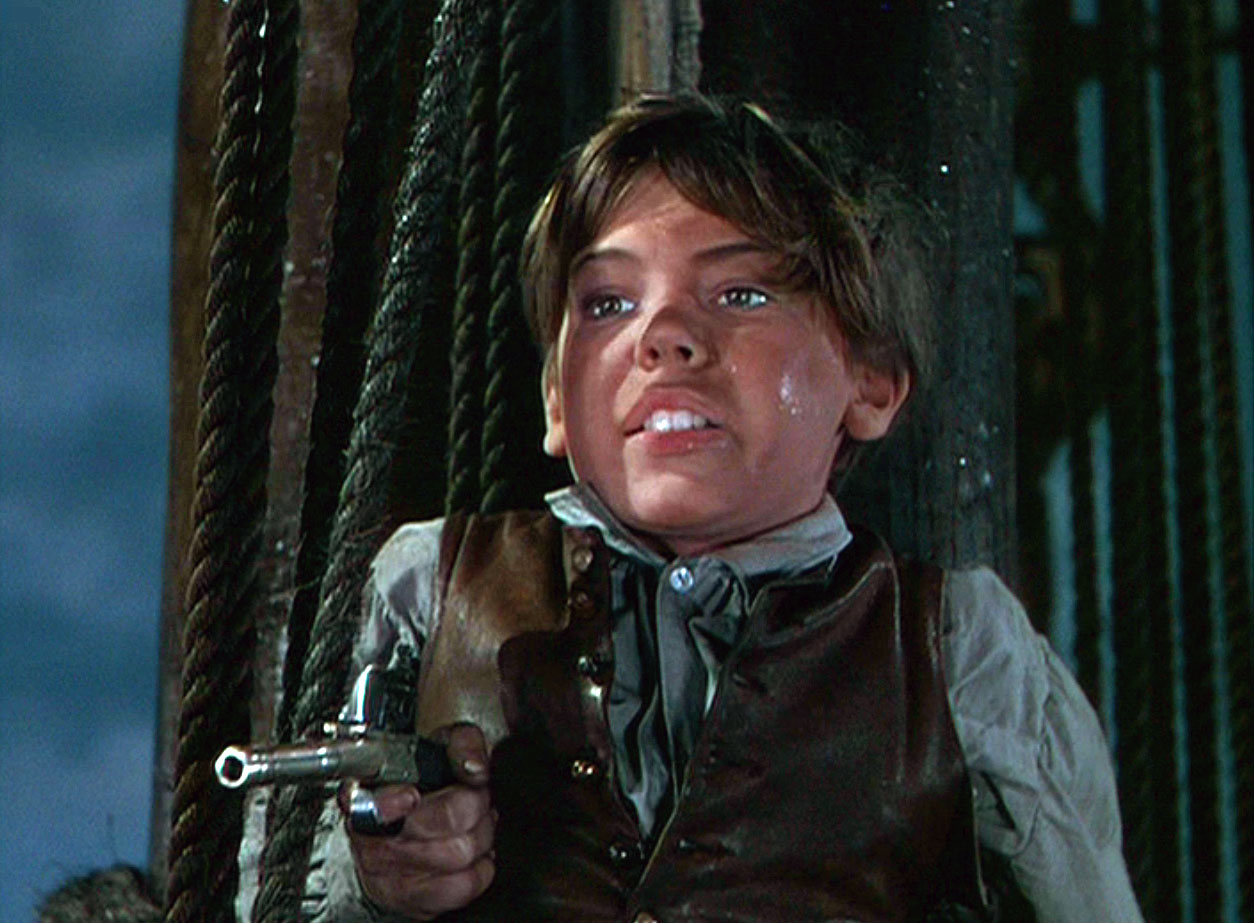
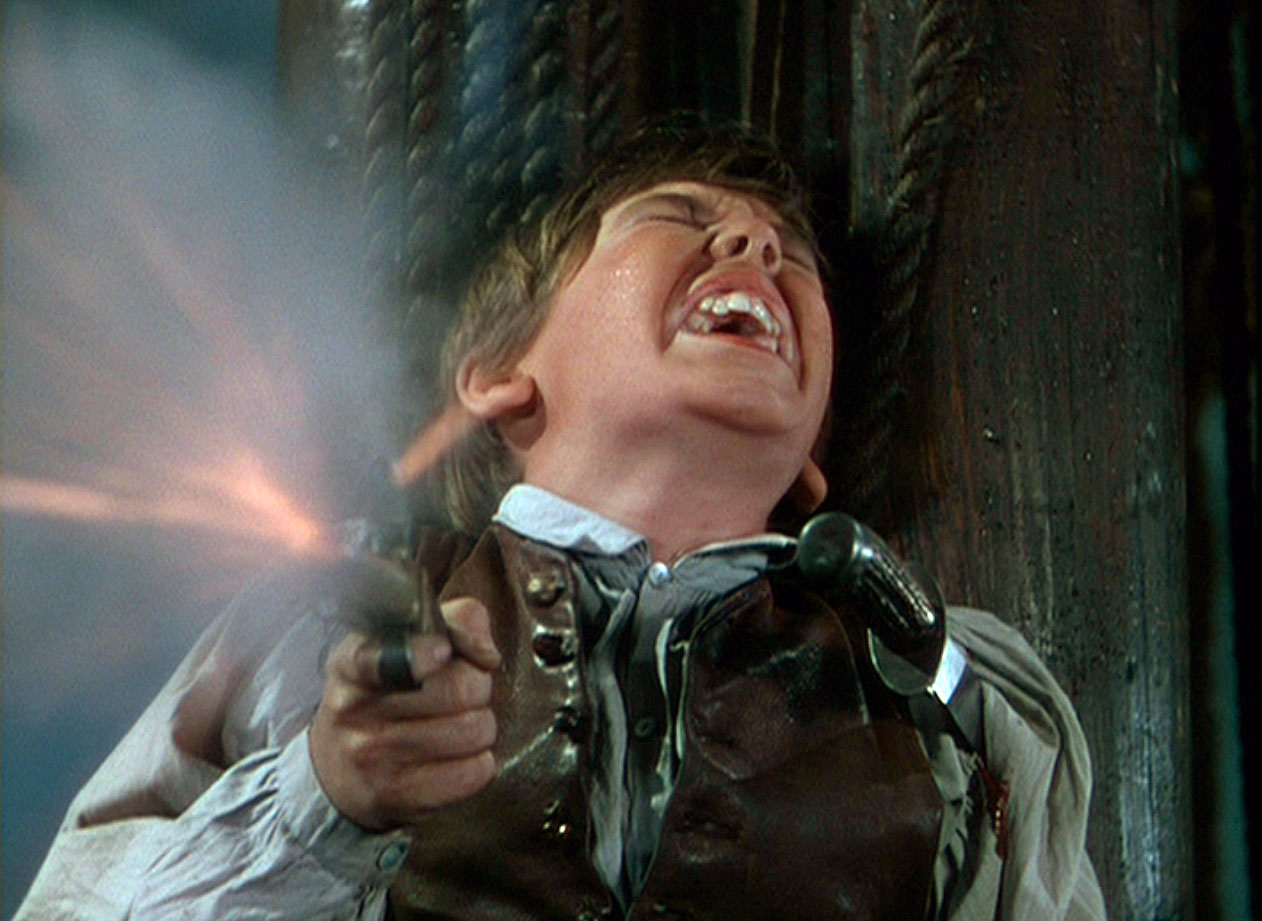
In particular I remember such scenes as the one where young Jim Hawkins (Bobby Driscoll) sneaks back aboard the ship, which the pirates have captured, and reclaims it for the good guys. In that scene Jim has to fight a drunk pirate, Israel Hands (Geoffrey Keen), who is slowly chasing Jim around the ship. Jim climbs the rigging, followed by the Hands. Soon Hands has Jim cornered. Jim pulls out his little pistol . . .

Hands throws his knife at Jim and pegs him in the arm. Jim reacts by shooting Hands who then falls to his death.

As a young boy I often had fantasies about being in dire straits and having to take serious actions in order to survive, even using a gun (sometimes wishing it involved a gun!). I think this is a typical boy’s fantasy (but I’m not offering any excuses). And to be stabbed in the arm by a thrown knife, now that’s really cool. especially if that knife goes through your arm and sticks into a ship’s mast. How much more adventurous and dangerous can you get and still live to tell the tale! If only I had had that kind of life; I know then I wouldn’t be working in a cube farm at some software company, that’s for sure. Avast!

Sadly, Bobby Driscoll’s life did not end well. From IMDB:

Charming as a child actor, he made his mark in films like Song of the South (1946) and Treasure Island (1950). Unfortunately, as he got older and acting offers became fewer, he got involved with hard drugs, which ultimately ruined his health and reduced him to poverty. Years of drug abuse severely weakened his heart, and he died of a heart attack alone in a vacant building in New York. Driscoll’s body was discovered in an abandoned Greenwich Village tenement by two children playing there on March 30, 1968. When found dead, his identity was unknown and he was buried as a “John Doe” in pauper’s grave. A year later, fingerprints finally revealed his identity.

I find that very tragic. I wish someone had come along side him and helped him. But, then again, maybe someone did. Drug addiction is a beast.

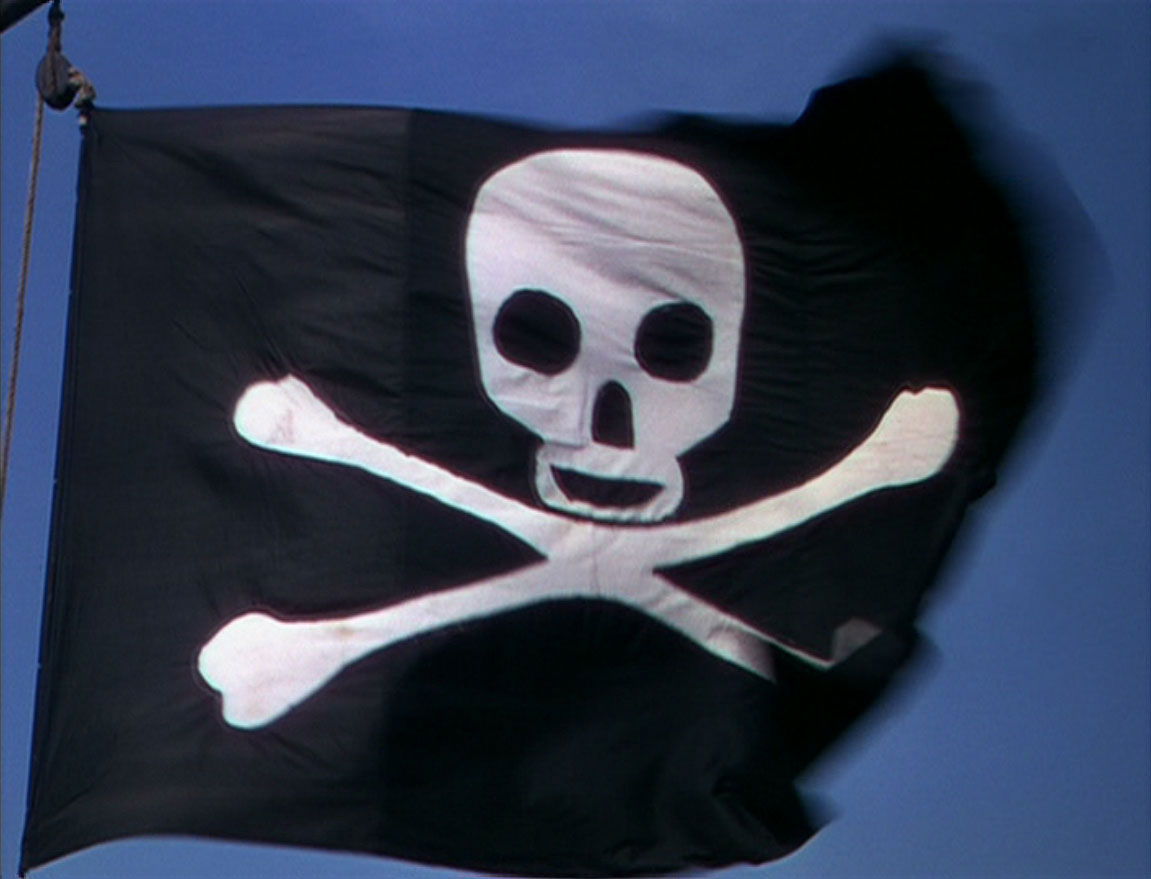
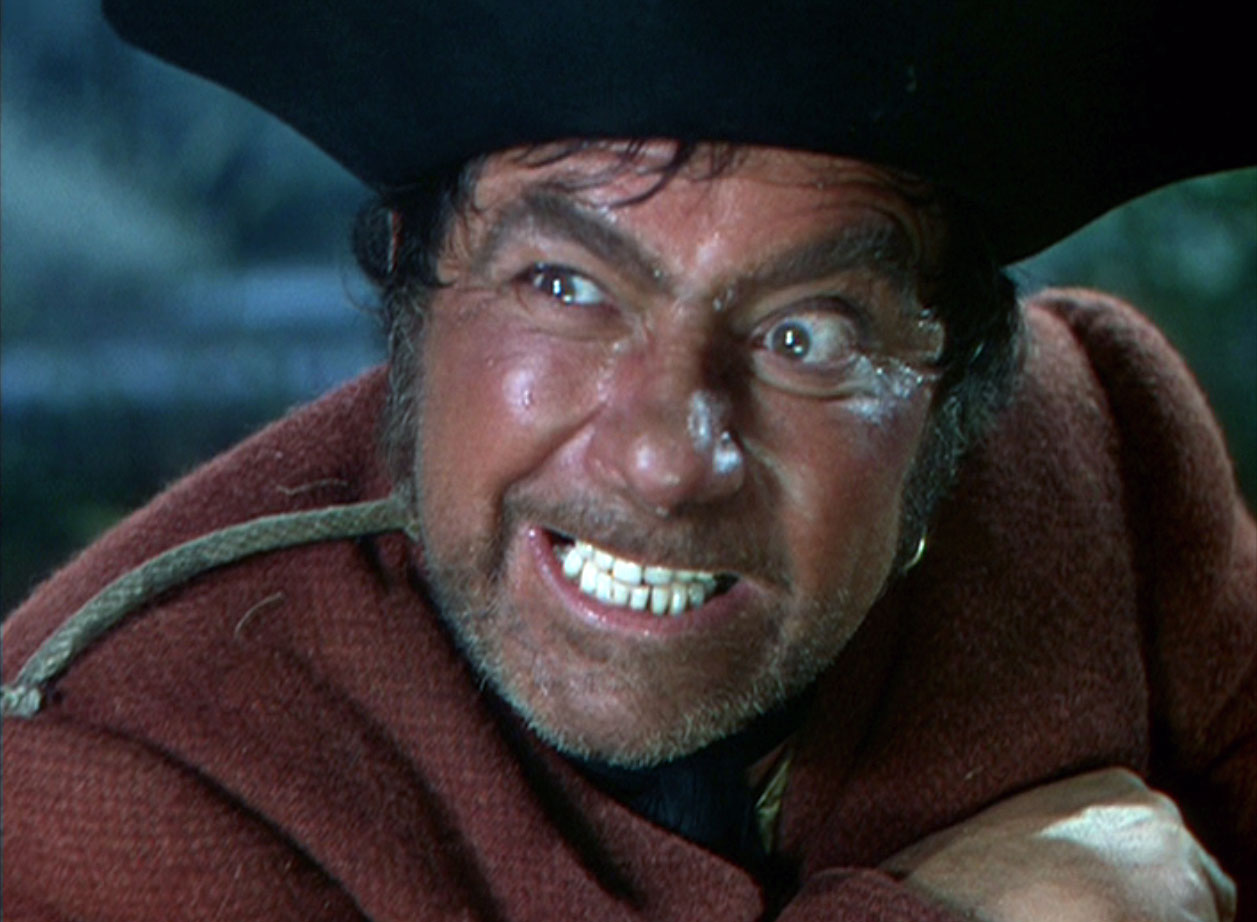
As a boy I could certainly identify with Jim Hawkins in many ways. And I certainly envied him going on his great adventure to find pirate gold. But the real impression the film made on me, and on most I’m sure, was in the character of Long John Silver played brilliantly by Robert Newton. When one thinks of how a pirate should talk (aaarrrggghh!) one is thinking, in fact, of Robert Newton’s John Silver. He created the modern concept what we would call the “classic pirate” archetype. He is the reason behind the reasons why we have Talk Like a Pirate Day and videos that teach us to talk like a pirate.

And who could ever forget that face!

But L.J. Silver was more than that for me. As a boy I new he was a bad guy. But I also knew that he liked Jim as though Jim was the son Silver never had. That was confusing for me. Here was a bad guy that I could legitimately like, not because evil is fascinating, but because he was both bad and good. The idea of moral ambiguity was planted in my soul by Robert Louis Stevenson by way of Robert Newton.

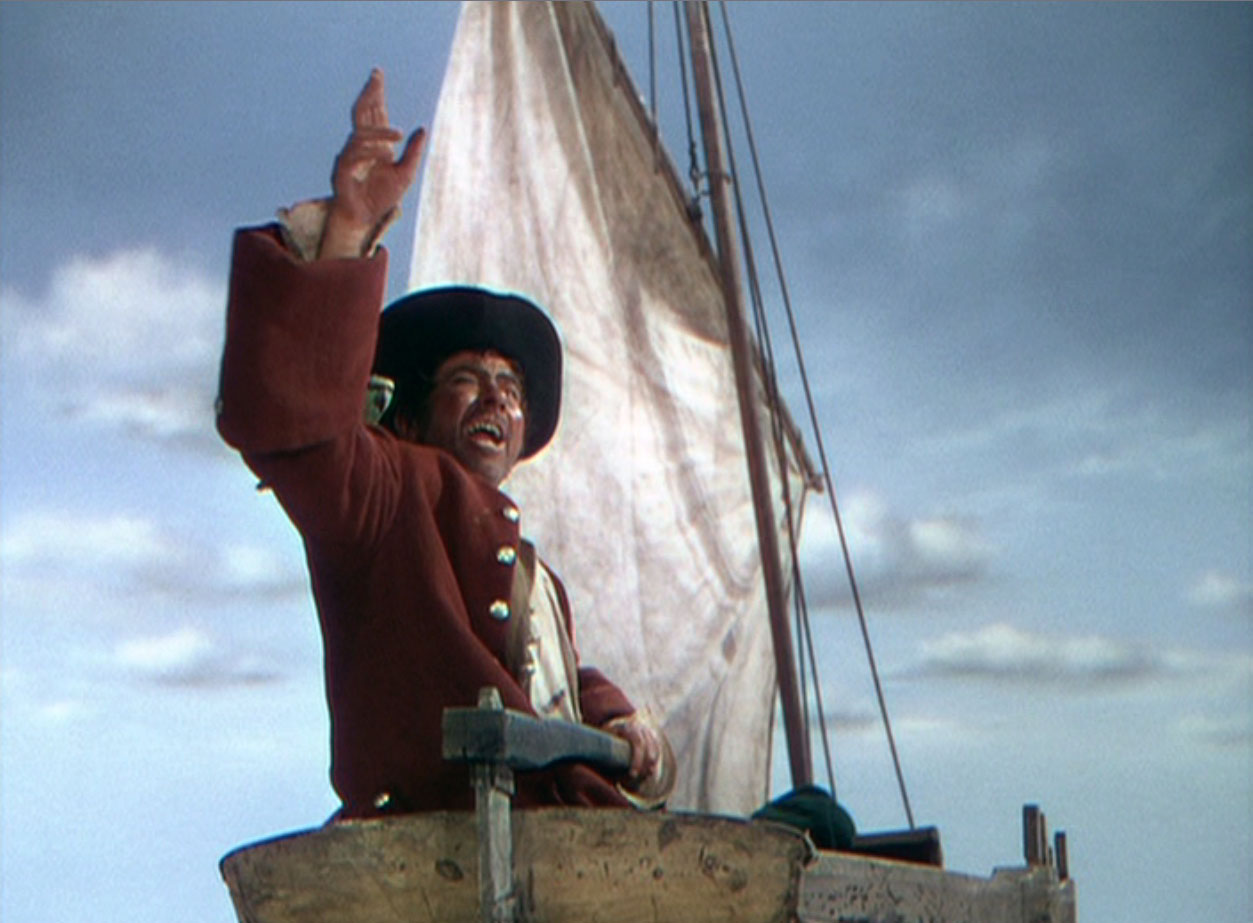
The concept that one could hope for the best for one’s enemies also played itself out in the film. When Silver is trying to escape at the end of the film, Jim helps him. And then Jim and Dr. Livesey (Denis O’Dea) watch as Silver sails away. Dr. Livesey says he almost hopes Silver “makes it.” Silver even waves back – no hard feelings for him either.

And there he is, L.J. Silver sailing away, saving himself from the arm of the law, and here am I wishing he gets away. As a young boy what was I to think? I can tell you it got my head to thinking and wondering, and wishing I could be both good Jim Hawkins and a pirate of the seven seas.


switching gears slightly . . .

BETTER DROWNED THAN DUFFERS IF NOT DUFFERS WONT DROWN

So, the other night I finished reading to my daughter a wonderful book called Swallows and Amazons. Lily loved it, but I have to say I became not a little obsessed with the book. I couldn’t wait to read her the next chapter each night. I would find myself thinking about the book during the day. In short the story is about some kids who, while on Summer vacation near a lake, sail a little sailboat, Swallow, to a little island and camp there for a few days. They meet a couple of other kids who have a boat called Amazon. The kids then have some great adventures and forge life-long friendships. It’s a book I recommend for adults as much for kids.

Apparently there was a film version in 1974, but it sounds like it wasn’t too good.

Anyway, like I said at the beginning, I suppose I could have titled this post “I want a sailboat real bad.”

>I “love” that dog wherever he is

>“For some reason I’ve just remembered how I lost the script of Rublyov (when I had no rough draft). I left it in a taxi at the corner of Gorky Street (opposite the National). The taxi drove off. I was so miserable I went and got drunk. An hour later I came out of the National and went towards the All-Union Theatre Society. Two hours after that, as I came down again to the corner where I had lost the manuscript, a taxi stopped (breaking the law) and the driver handed me my manuscript through the window. It was miraculous.”

6 April 1973


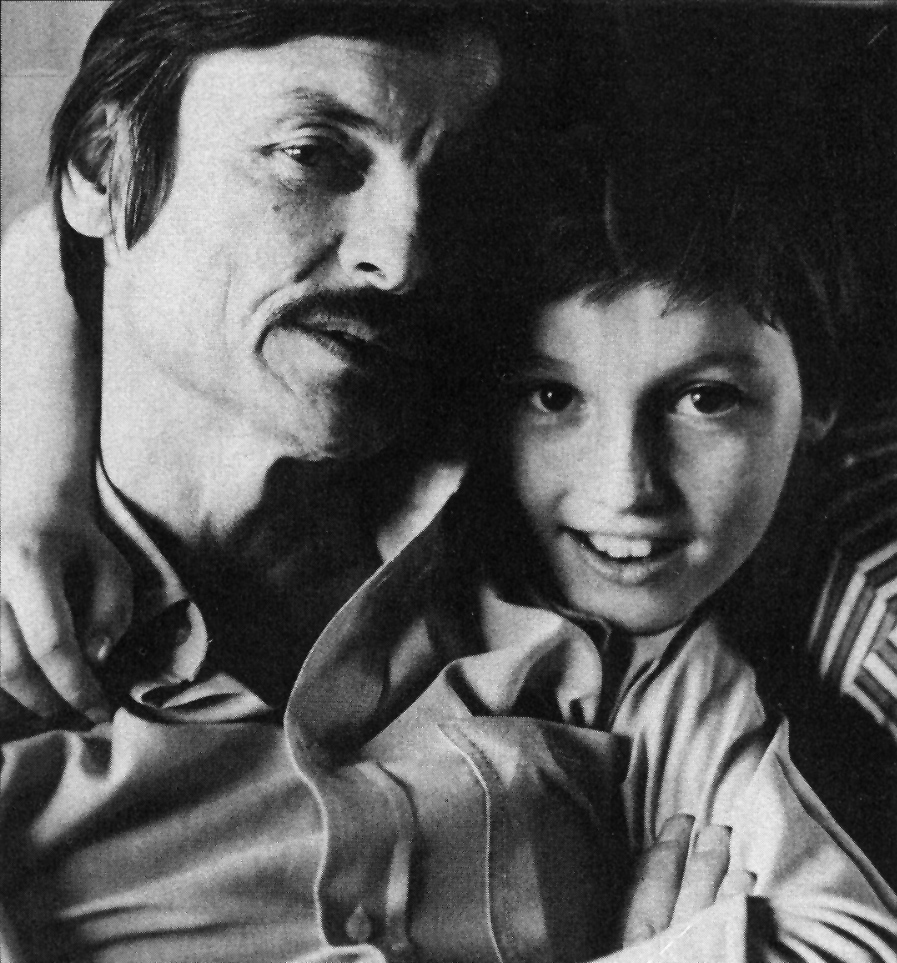
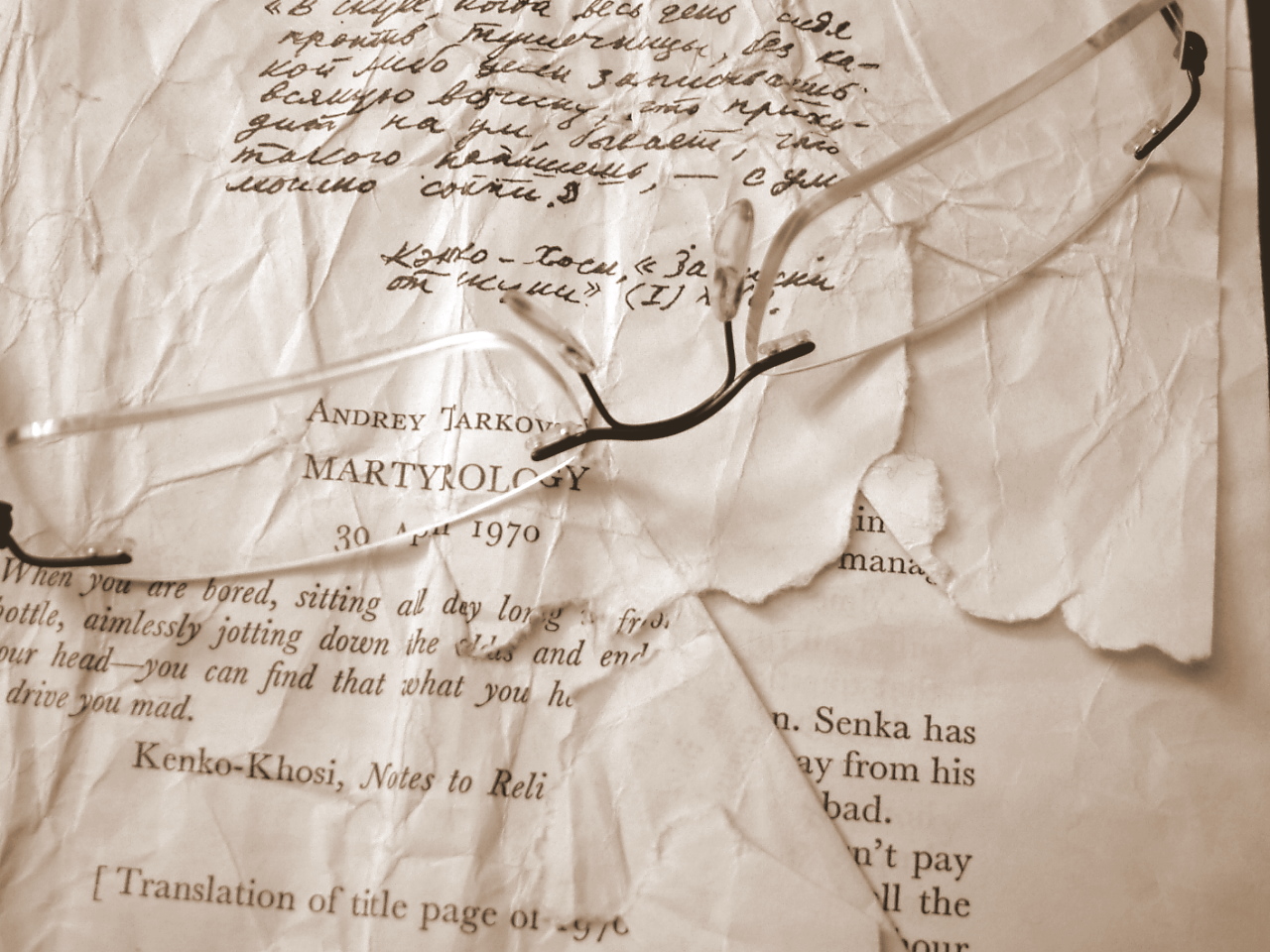
I’m looking over at a copy of Tarkovsky’s diaries (Martyrology), or what’s left of it. Years ago I purchased a used hardbound version of the book. Reading it was a kind of revelation for me. Although Tarkovsky complains mostly throughout the book, something I related to being a frustrated artist myself, I found the book to be a delight. Like any collection of journal entries the book is frustratingly incomplete regarding the kinds of information one might want to know, like insight into the directing or editing processes of specific films, etc. But one gets something better. [If one wants to know the process of making a work of art then one needs to make a work of art, and then do it again, and then again. The knowledge comes with doing because making art is like a spiritual practice in that sense.] What Tarkovsky gave us in his diaries is a view into his humanity. He was a remarkable man, but just a man like me. That kind of perspective is infinitely more valuable than “what were you thinking when you made that shot?”


father and son

So the book. Well (and this was a few years ago), I had not read the book in quite a while so I decided to pull it off the shelf, dust it off, and put it on the coffee table to remind myself to pick it up when I came home from class. I was gone for only about a hour, came back and the book was not on the coffee table any longer. Hhhmmmm. Then I saw it. Across the room was the book, but now missing its cover. Remember, it was a hardbound book. After I began to investigate and put 2 and 2 together, I realized that the dog, a Labrador of course, had ripped off the cover and completely consumed it – later to end up in the yard (I’ll save you the description). Boy was I mad. And yet, how fitting. In a small way I was subjected to a “Tarkovsky moment” that is, a moment where all is not lost, but the path one is on has just taken a turn for the worse and one has to look inside to find the deeper value of the moment.
Now the book, coverless and a little tattered, lies on the bookshelf, the dog really belonged to some friends after all and is now somewhere I don’t know, and I’m thinking of pulling that book off the shelf and putting it on the coffee table to remind myself to pick it up again. And this time we have a Pug, so it’ll be alright. Then again, that little dog does get a sneaky gleam in his eye from time to time.