>Attitudes & Platitudes

>

Mankind has invested more than four million years of evolution in the attempt to avoid physical exertion. Now a group of backward-thinking atavists mounted on foot-powered pairs of Hula-Hoops would have us pumping our legs, gritting our teeth, and searing our lungs as though we were being chased across the Pleistocene savanna by saber-toothed tigers. Think of the hopes, the dreams, the effort, the brilliance, the pure force of will that, over the eons, has gone into the creation of the Cadillac Coupe de Ville. Bicycle riders would have us throw all this on the ash heap of history. 

~P.J. O’Rourke
Image info here.

Consider these two stories:

  1. Driver gets 90 days in jail for hit-and-run involving bicyclist
  2. Rich Vail Fund Manager Hits Cyclist And Runs, Gets Off Because Charges Might “Jeopardize His Job”
Both of these stories have something in common: In both cases the DA refused to press charges. In one story, however, bicycle activists (read: people who think cyclists should not be unfairly discriminated against) helped get the case to court and the hit and run driver got 90 days.
I have written about bike safety before, and about attitudes of both cyclists and motorists. I am curious about traffic in general and why it is the way it is, and why people are the way they are. (Read Tom Vanderbilt’s great book Traffic.) Why is it that our society, not that different from others, has such deep seated prejudices against bicyclists? I know all the arguments about cyclists running red lights, but that is still no excuse to hit one with your car and then drive away like nothing serous happened. And many of these kinds of cases (there are quite a lot) involve very responsible, law abiding cyclists on their way to their professional jobs [which allow them, like every one else, to pay for the roads that cars wear out at a far greater rate than any number of bicycles could ever do. This is not hyperbole. If you don’t believe it, or have not thought about who really pays for the roads, then read this.]
The problem with prejudices is that we all have them even if we don’t see it. There are many people who would be incensed if called racist, but still hold racist views because they just don’t see their views as racist. Sometimes the best solution is just to let someone speak their mind. That way the prejudice is out on the table for all to see. Maybe we just need more people to say out loud their thoughts about cyclists so we can ask, “really?” As a piece of evidence in this line of reasoning (poor as it is), here is some anti-cycling prejudice from a (sadly ironic) video clip that’s been all over the Interwebs:
Those cyclists deserve what they get, right? Roads (read: the world) is made for cars and, apparently for Rob Ford, cars are for getting you to the all-you-can-eat endless-platter-special at the Hog and Heifer.* Maybe Mr. Ford should just keep his opinions to himself from now on. So much for that theory
But general contempt for others around oneself, or at least around one’s speeding car, comes in many forms. Most of the time contempt does not display itself as outright hostility, but masquerades as benign indifference. We know that many states now have hands free laws that forbid drivers from holding cell phones to their ears while driving. I think that law is somewhat debatable, but there is no doubt that we are all far more distracted while driving than we either realize or admit. Some drivers, however, take it to a new level, like this driver who (it’s fair to say) does not care about anyone else around him, including you or your children:
According to the Bush Doctrine it would be completely appropriate to physically run his car off the road into the ditch before he hurt anyone. He is “driving” a lethal weapon after all.
I wish these were isolated cases, but I fear they are not. Every day I still see people driving with their cell phone to their ear, even though it is against the law in this state. I also see cyclists riding without lights at night, riding the wrong way on bike lanes and roads, running stop signs and lights, and generally navigating their bikes like they learned to ride when they where thirteen and never advanced beyond their adolescent brain.
Which makes me think we live in a society that, for the the most part, views bicycles as toys; either toys for kids, or toys for adults. If a bike is not being used as a toy then it must be for someone who cannot afford a car, which means they are poor, which means they deserve double contempt – cycling while poor – right? Well, societies don’t change overnight. I don’t see a new world anytime soon. As soon as we figure out why nice, kind, ordinary, god fearing, family loving individuals turn into maniacal, cursing, foaming at the mouth tyrants as soon as they get behind the wheel of their car we just might figure out why there is so much contempt between drivers and cyclists.

I end with this quote, a kind of bookend to O’Rourke’s at the top:

It is curious that with the advent of the automobile and the airplane, the bicycle is still with us. Perhaps people like the world they can see from a bike, or the air they breathe when they’re out on a bike. Or they like the bicycle’s simplicity and the precision with which it is made. Or because they like the feeling of being able to hurtle through air one minute, and saunter through a park the next, without leaving behind clouds of choking exhaust, without leaving behind so much as a footstep. 

~Gurdon S. Leete

* I don’t intend this to be a “fat joke”, though Mr. Ford is rather rotund, for I am somewhat doughy myself and in my weaker moments, of which there are many, I  have dreams of binging at the Hog and Heifer.

>Two fun videos from Rivendell Bicycle Works

>

Shouldn’t we all be making fun videos with bicycles?

>Pour un Maillot Jaune

>Back in high school I took two years of French. The first year was taught by a youngish French woman who was a little crazy, did not speak English well, and was wonderful. She still remains one of my favorite teachers. Yet, I cannot, for the life of me, remember her name; Madame something. Part way through the year she came in to class bubbling with excitement. She had just received her U.S. citizenship. I thought that was cool. As any good high school teacher will do, she would bring movies to class from time to time. French movies of course, so we could hear the language spoken properly by people other than her, and to appreciate French culture. Once she brought in Pour un Maillot Jaune, which is a documentary about the 1965 Tour de France. At the time I knew nothing of bicycle racing, so it was all strange to me. But I loved it. If you have become a fan of the Tour de France in the age of Lance, or earlier like me in the age of LeMond, then seeing something of what the tour was like in 1965 is an eye opener.

This is a great film that was innovative in its day as well. Notice the use of color to evoke various emotions. It’s also great to compare the image of cycling we have today with that of years ago.

>Vive le tour (1962)

>

Following today’s top bicycle racers leaves one with the impression that it is a sport of the superhuman. This is true of following them in the press, but I assume also on your bike, though I have never tried. The best cyclists seem almost machine-like. But underneath it all is the very human struggle of athletic competition. Strip away all the hype and gloss and one might find something like this wonderful 1962 documentary directed by Louis Malle, Vive le tour.
Notice at 8:31 in Part 1 you hear in English one of the reporters saying, “Doping or not doping, that is the question.”
At 1:43 in Part 2 the film addresses doping. The excuse the riders gave? They had eaten some “bad fish.” Sound familiar?

Descending in the fog looked dreadful. 

It is interesting that the take on doping is about riders wanting to block the pain so they don’t stop rather than about riding faster. The film almost takes a sympathetic stance, as though doping only lets us know just how tough this race truly is.

>On Cycling Clothing for the Non-Fashion Plate: Part 3 of 3

>

See related posts here: Part One and Part Two.

When it’s wet
Dealing with the wet stuff can be a hassle. I live in Oregon. It rains here a lot. Oregonians don’t tan, they rust. But I love the rain and it doesn’t usually get in the way of my riding. I have commuted in driving drizzle and torrential downpours. I have ridden on slippery roads and through foot and a half deep water at flooded intersections. I have tried various configurations of rain gear. The first thing to remember is that it is okay to get wet. If you have ever bathed (which I hear some cyclists do) then you know you will not melt when water hits your skin. The key is not about staying dry as much as not getting too cold. Soaked cotton clothing is miserable and a pathway to hypothermia. Don’t wear cotton anything if it is going to rain. When it rains, and I’m biking, I plan on being wet. I know I will either get wet from the rain or from my own sweat inside my rain jacket. This is a reality for all cyclists and keeps many people from riding. But folks, sweat is okay, even for Thurston Howell:

MR HOWELL 
Ah, looks like water, a'wonder where 
it came from?
 
MRS HOWELL 
Thurston I know what it is! I use to 
see it on our gardener! It's perspiration!
 
MR HOWELL
 It IS!? What can I put it in? I've 
got to send it to dad, he'd be 
fascinated!*

When commuting to work I just bring dry clothes. I hang up my wet clothes so they will dry before I ride home. Usually my shoes do not dry out though, so I wear wool socks in winter and sometimes bring an extra pair for the ride home. I have never used overbooties, but I might try someday.

One does not need a rain jacket to ride in the rain. A good fleece or wool jacket or heavy shirt may be fine. Synthetic fabrics dry fast. Wool often  blocks the wind better. Both keep you warm even when wet. But do not wear any cotton underneath. The same goes for pants. I don’t wear rain pants. I have a pair of synthetic fabric cycling specific pants that have an extra layer of wind-blocking material on the front. If it gets really cold I can wear an extra pair of long underwear under the pants. Even if I get wet I still stay warm. They dry fast too.

If you are carrying dry clothing in you bike bag make sure they are sealed from the rain. Most bags, whether panniers, shoulder bags, or backpacks are never fully waterproof. I always put my clothes into a plastic bag before putting them in my bike bag. Typically I just use one of those plastic grocery bags but you can get light weight waterproof bags of specific volume and dimensions from outdoor retailers; these are known as dry bags. I also hang up my wet cycling clothing at work so they can dry out before I use them to ride home.

In short, you will get wet if you ride in the rain. Wear clothes that will keep you warm even if wet. Bring dry clothes to change into. Keep your dry clothes dry.

Priorities
Finally, I would prioritize clothing (and any other gear) for cycling buying into the following list: Safety first, reliability and comfort second, fashion third. A forth might be ethically sourced, eco-friendly, and corporate responsibility, which may essentially rule out Lycra (read this).

The first two priorities often go together. Uncomfortable or annoying clothing is often unsafe too. Your clothing should be such that you don’t have to think about it while you ride. It should just do its job without fuss. But if you have a choice between brighter and darker fabrics you might want to pick the brighter so you are most visible to motorists. However, and I speak as a non-fashion plate, there is no need whatsoever to wear horrendously ugly, disgustingly neon, or fashionably egregious clothing merely because it makes you more visible. Have some respect for yourself and for others.

Also, remember that simple things, like zipping up a jacket, become more challenging while riding a bike. There is nothing more frustrating than having to stop riding in order to adjust your clothing because the design of the garment requires two hands to manage the adjustment. (Okay, there are probably a few things more frustrating, but you understand.) Buttons can be a challenge, but many zippers are difficult too, especially around the neck. Test out your clothing for ease of use when you try it on. Imagine you are riding in the rain, in a bike lane with traffic immediately on your left, and you want to zip up your coat’s collar. Can you do it with one hand, easily? Or does the zipper and fabric get bunched up and difficult to zip without using two hands?

A final word on priorities: With any activity ask yourself what are you really trying to accomplish. One doesn’t need the most expensive grill if the goal is not keeping up with the Jones’ but to cook the perfect steak. One doesn’t need to buy the latest, coolest cycling gear if the goal is to get to work safely, with minimal hassle, and then back home again. And yet, style is important. Use stuff that you like to use, not merely because it works but also because you just like it. Get clothing that looks good, but also works. Ride a bike that does what it is supposed to do for sure, but ride one you like for other reasons too. But don’t ever put yourself in a position where you find your new spirit-self hovering above your lifeless body thinking that your stylish bike without reflectors, lights, and adequate brakes, your dark clothing without any reflective capabilities, and your lack of helmet, may have added up to one of the darkest and most miserable days for your loved ones still waiting for you to return.

and then…
There is a lot of worship of cycling these days. It’s so hip, so cool, so perfect in many people’s minds. And I agree with all that. But bicycle commuting is also about getting from one place to the next safely, efficiently, and with minimal hassle. Good cycling clothing can make a big difference. If you realize that your choices for cycling clothing range far beyond the neon and Lycra of the old school bike shop then you know you have a surprising number of choices to find what works for you. As they say, the world is your oyster, though I have no idea why they say that.

* Gilligan’s Island, Season One, Episode #3, “Voodoo Something to Me”. If you do not know what Gilligan’s Island is, then consider that you now have homework to do.

>On Cycling Clothing for the Non-Fashion Plate: Part 2 of 3

>

This is part two of a three part series of posts on bicycling clothing for the suburban commuter (non-fashion plate style). Part One is here, which includes the prologue and Rule One.

Rule Two
Rule One (see related previous post) brings me to another “rule,” which is: Bicycling specific gear is not always necessary or the best choice. In our gear crazed world we often feel the need to have very specific kinds of stuff for each activity. However, in each situation we have to ask if we are getting the best value from that philosophy.

Here’s an example of what I am talking about with shoes: We need tennis shoes, running shoes, trail running shoes, walking shoes, gym shoes, etc. etc. When we were kids we just had something generically called “tennis shoes” and an older generation than me generically called “sneakers.” We didn’t need any other kind of shoes, unless our parents made us wear uncomfortable dress shoes for church. Given that brief diatribe, I will say that I currently do use an old pair of cycling specific shoes because I use clipless pedals (which is a whole other issue) and I like them, but I really don’t have to. And there is a problem with these shoes, I have to bring regular shoes with me to change in to for work. Plus they are not as comfortable as regular shoes. Their advantage is merely that they have a cleat attached to the sole to click into the pedals, which for me but is not the best method for many cyclists. Consider these opinions on cycling shoes and pedals from Rivendell Bicycle Works (there are other great opinions on bike stuff there too). Though I like my clipless pedals, maybe because of many years downhill skiing and using ski bindings, and I like that “click,” I do miss my old clip pedals with the handyman-style double straps, and my ancient Vittoria leather shoes (though they were impossible to walk in and therefore terrible for commuting). And sometimes I just want a flat pedal to use with my tennis shoes or sandals. Maybe I will go back someday. The point is this: Cycling specific shoes are not inherently necessary for riding a bike, though the cycling industry would have you believe they are. Use them if you like them, don’t if you don’t, or don’t care for the expense. I use the example of bike shoes merely to show how one can be lead down an apparently necessary path like a cow with a ring in its nose. I have been led many times down that path.

Bike specific jerseys are probably the least necessary item a cyclist can buy, and often the most obnoxious looking. Any shirt, long sleeve or short, will do. Something that breathes well, blocks the wind a little, and wicks away moisture (if you are going to sweat much) is good. For my early morning rides when it’s cold and sometimes a little wet I wear a long sleeve synthetic shirt from either Patagonia or REI (brand doesn’t matter), and over the top I wear a wool long sleeve shirt from Filson. This Filson is a high quality wool that does a great job against both wind and wetness. Plus it breaths well. If it is even colder I wear a Patagonia micro puff insulated vest over the shirts. I also wear a thin wool hat under my helmet on cold mornings. This is just some plain wool beanie type hat that is not cycling specific. I wear the synthetic fabric shirts because I like the feel of them and they work well, but I might change to a soft wool in the future. I wear the wool shirt because its just the best shirt I have for what it does, and it looks great. If it is really raining I wear a coated nylon rain jacket over a synthetic shirt. Remember, if you wear coated nylon you will sweat. And know this, if it is raining then the so-called waterproof/breathable fabrics don’t breathe anyway and you will still get sweaty. 
If you like to wear gloves when you ride, which I do, you can really wear any kind of glove. Gloves can help with grip, especially when one’s palms get sweaty or it is raining. Gloves can also keep one’s hands warm on cold days. Cycling specific gloves have the advantages of padding in the palm. However, padding isn’t really needed if one’s handlebars and seat height are in good agreement for commuting, or less aggressive cycling. If you are not racing then consider raising your bars a bit. That should put less pressure on your hands and therefore less need for padding. If you prefer the superman position then get padded gloves. I have several gloves I choose from. I do have a typical pair of cycling gloves with the cut off fingers and padded palms. But, for my morning commute, I have a pair of soft leather full-finger gloves with Thinsulate interiors that I have just started trying out. These are not cycling specific, but they seem to work great. I added Nikwax to the leather to make them a bit more waterproof. I also have an old pair of alpine ski gloves for even colder weather.
NOTE: Let me say again, as I did in Post One on this topic, that my commute is around seven miles each way. That distance is just short enough to be easy to do, and just long enough to make it verge on being a longish commute. I prefer to ride a bike that is less like an upright urban commuter and more like a road bike suitable to going greater distances
Rule Three
Which brings me to a third rule: Bicycling specific gear is sometimes the best choice. I like bike shorts with good padding. If the weather is not too cold I like typical bike gloves with padding in the palms. Mostly I prefer these items for longer rides. For shorter rides clothing has more to do with the weather and not whether one is riding a bike. For longer rides I like a bike jersey that doesn’t flap in the wind too much and has pockets, for shorter rides anything works. I prefer a genuine bike helmet rather than not. What one needs to decide, usually through experience and experimentation, is what works for you, what gear fits the need, and sometimes you should just buy that expensive cycling specific item. When I discovered bike shorts it was a true godsend. But then I was starting to go on longer rides in the country at the time.

Before buying cycling specific gear do some research. Ask what others are using and why. Look online for reviews and opinions. Then try something and see if you are getting what you need. There is a lot of very expensive cycling gear on the market, much of it is excellent, but much of it can be substituted with cheaper alternatives. A three hundred dollar rain jacket may work well, but a fifty dollar jacket might work just as well. Beware of the lure of well marketed products. Use what works best for you.

NOTE: I am not a retrogrouch. I do not believe that everything that is old is better than everything that is new. I am not so sold on wool clothing that I refuse the new synthetics. I prefer synthetic long underwear. Mid-layer and outerwear can be wool, but they can be synthetic too. Just know this, synthetic fabric is only superior IF it is superior, not because it represents the claimed advancements of new technology. Also, wool has qualities that are hard to quantify or qualify but are there because wool is a natural fabric. Sometimes old is just fine. Sometimes it is better. I have a pair of ancient Shimano mountain bike shoes that I have used for commuting for more than fifteen years. They just will not wear out. They still work great, probably as well as a newer shoe, so I keep using them. Someday I will replace them with a slightly wider pair of shoes, but only for comfort reasons.

This is Part Two of Three. More to come.

>On Cycling Clothing for the Non-Fashion Plate: Part 1 of 3

>

Prologue: My current perspectives on bicycling clothing were born from the fiery crucible of commuting in a bike-friendly city, mostly on bike paths and bike lanes, and in mostly temperate weather. In other words, the following thoughts do not consider issues of riding extremely long distances, or riding in snow, or riding in jungle conditions, or fighting with dragons. Nor am I a gear or clothing tester, or care to be one. Rather, I write only from my own experience as a humble (and sometimes humiliated) bike commuter, who has a very limited budget, and with the mostly suburban commuter in mind. Writing is also my method of exploring my own thoughts and experiences.

I am a suburban cyclist for the most part. I have read a few blogs and books on cycling and commuting, and much of the time they do not make the distinction as clearly as they should. Suburban commuting is different than urban commuting. In the magical land of suburbia the streets tend to be longish and straightish. Stop lights are minimal (sometimes). Speed limits are often 40+ mph for cars, and drivers own the place. In good cities there are usually bike lanes for the higher mph streets. Distances are also longer, which is the biggest factor in how one commutes. Urban cyclists go shorter distances and deal more directly with traffic. In Urbania commutes are typically around 2 to 3 miles (or less) one way. The classic Dutch bike configuration works well for the urbanist who is content to take their time, likes the visibility of sitting upright, and likes to wear tweed jackets and fedoras. But my commute is seven miles in one direction. It’s not so long that I couldn’t ride the thing on just about any bike, but a Dutch style bike is a little too relaxed for my tastes. Plus I want to get to work as quickly as possible, and I want to use my ride as my workout so I don’t also have to get into the gym. Thus my choice of clothing tends towards more cycling appropriate clothing more or less, then I change into work appropriate clothing once I arrive.

I have always been a gear nut and cycling offers plenty of opportunity for accumulating gear. However, the more I commute the more my opinions on cycling gear change from the mere “new is better” or “more is better” or “Ooo that looks shiny!” perspective that has characterized my life. Gear is fun, but it should have a functional purpose too. Plus there is no getting away from gear, regardless of whether you are obsessed with anything new and shiny or will only use gear that reflects a simpler time, like before the internal combustion engine or getting some food began with grabbing one’s spear. You need gear and you will have it. Gear can also be expensive and you don’t want to waste your money. Owning something merely because it makes you happy to have something new may be reason enough, but it is not what I am writing about here. I want both happiness and functionality. Also, life is a process and my ideas are in flux. My goal here is not to list out what (or what not) to use, but to highlight my process and some “rules” that make sense to me.These are preliminary thoughts. The following is in no way a final word on anything.

Rule One
The first rule to follow, if there really are any rules at all, is to use whatever works. If you follow that rule then you probably don’t really need any other rules.* When it comes to cycling form follows function, and good function tends to lead to good form (but not always). Bicycle manufacturers and bicycle gear manufacturers are mostly like other companies; they are prone to follow fashion and the latest trends. They will sometimes discontinue a great item in favor of a not-as-great item because the new sells better than the old. But for the most part cycling companies recognize the value of functionality and create quality, well designed gear. Usually the most functional is also the most beautiful. On the other hand, the rule of using whatever works means you are not tied to cycling specific gear. This requires one to pay attention; notice what gear you actually use and how it functions. Ask around and see what others are using. Move on gear that isn’t working for you. Try new things, and stick with what works, unless something else works better and you want a change. And keep this in mind: A correlative to this rule is that what is most expensive is not necessarily what works best.

An advantage of Rule One is that you can be a gear nut and not go bankrupt. You can explore your obsession with gear (cyclists, like skiers, are inherently gear nuts) without having to fill up your garage with stuff you later find you really don’t need. You can try shiny new stuff and pre-used old stuff. You can search out the latest hi-tech or the ancient and classic. You can also settle on certain items and use them for a long time without feeling the pressure to change. Seeking out what works is a great way to stay in tune with your needs without overdoing it.

This is Part One of Three. More to come.

* This rule works well for many activities, including back-country skiing, mountaineering, and anything where the functional capabilities of one’s gear is important to the success of the activity, including one’s safety and comfort.

>Bill Dellinger Invitational 2010

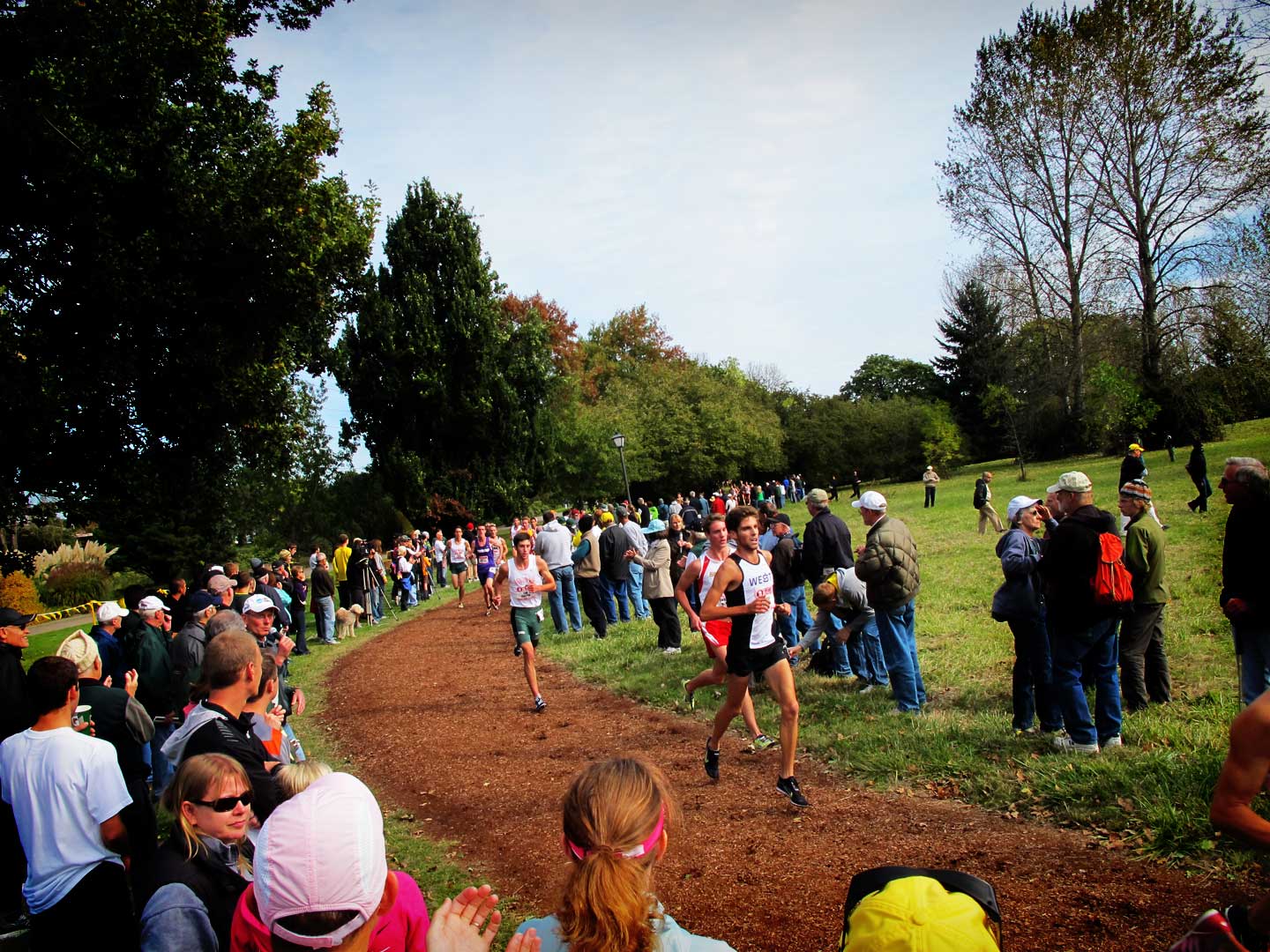
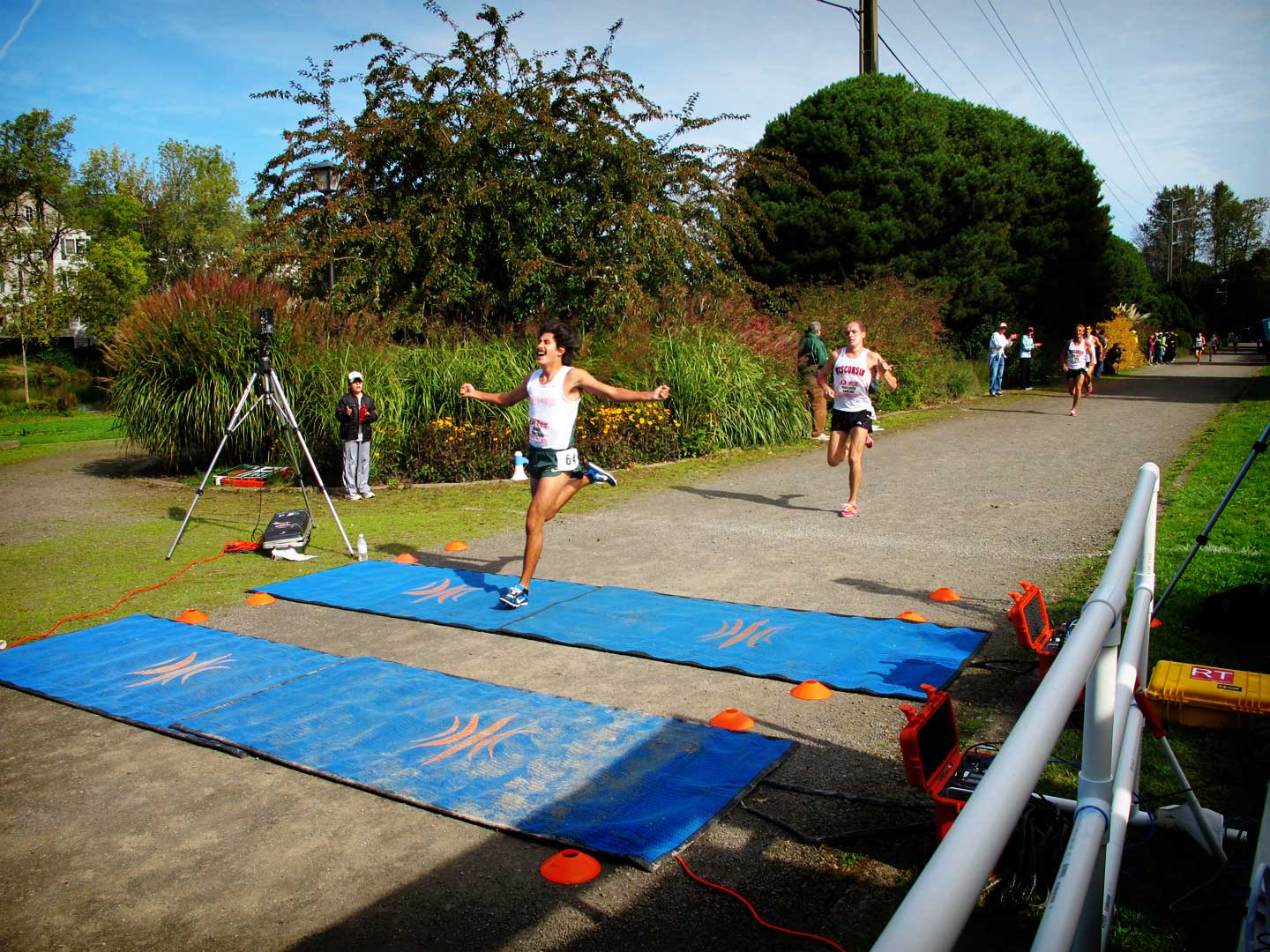
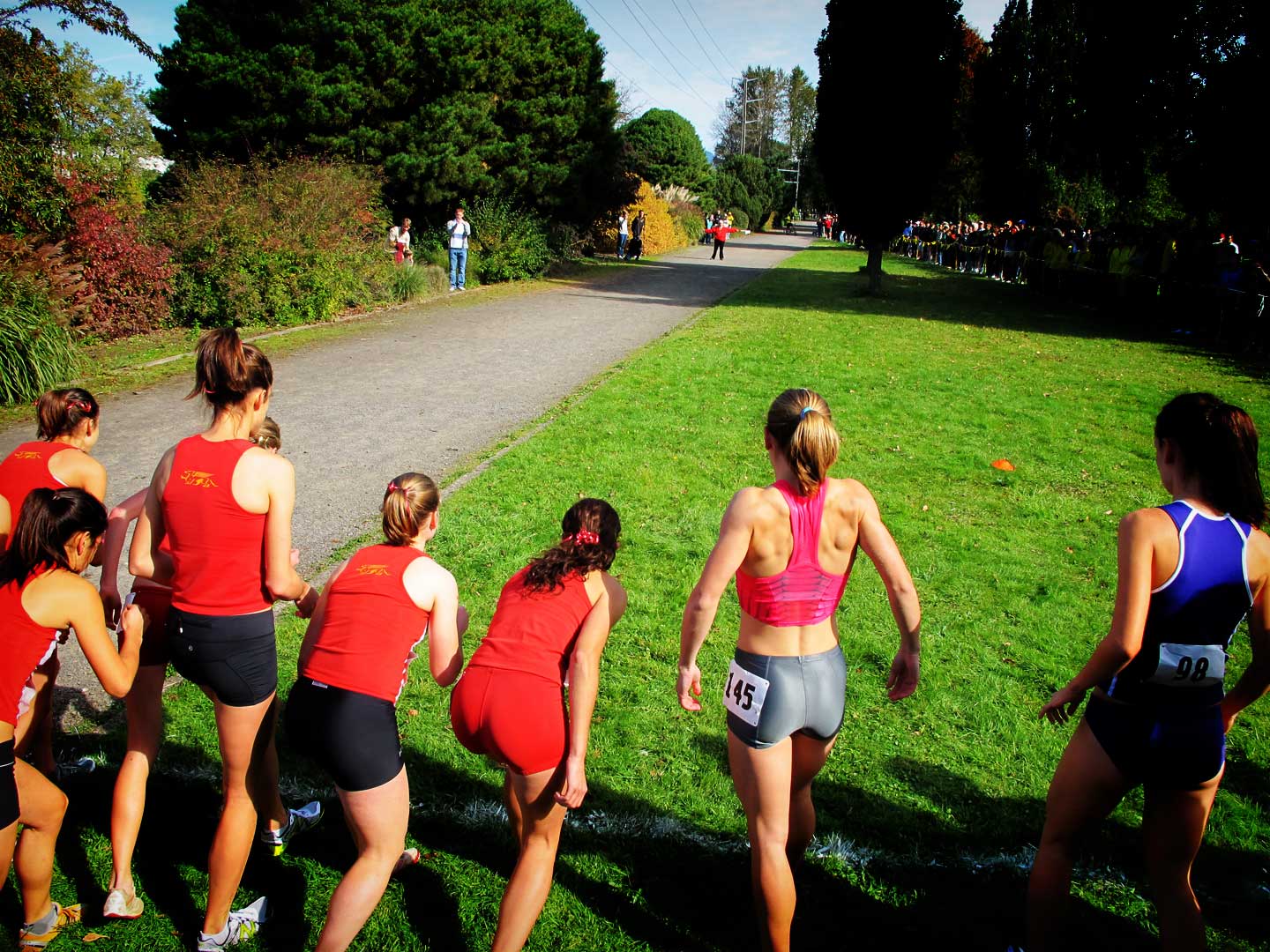
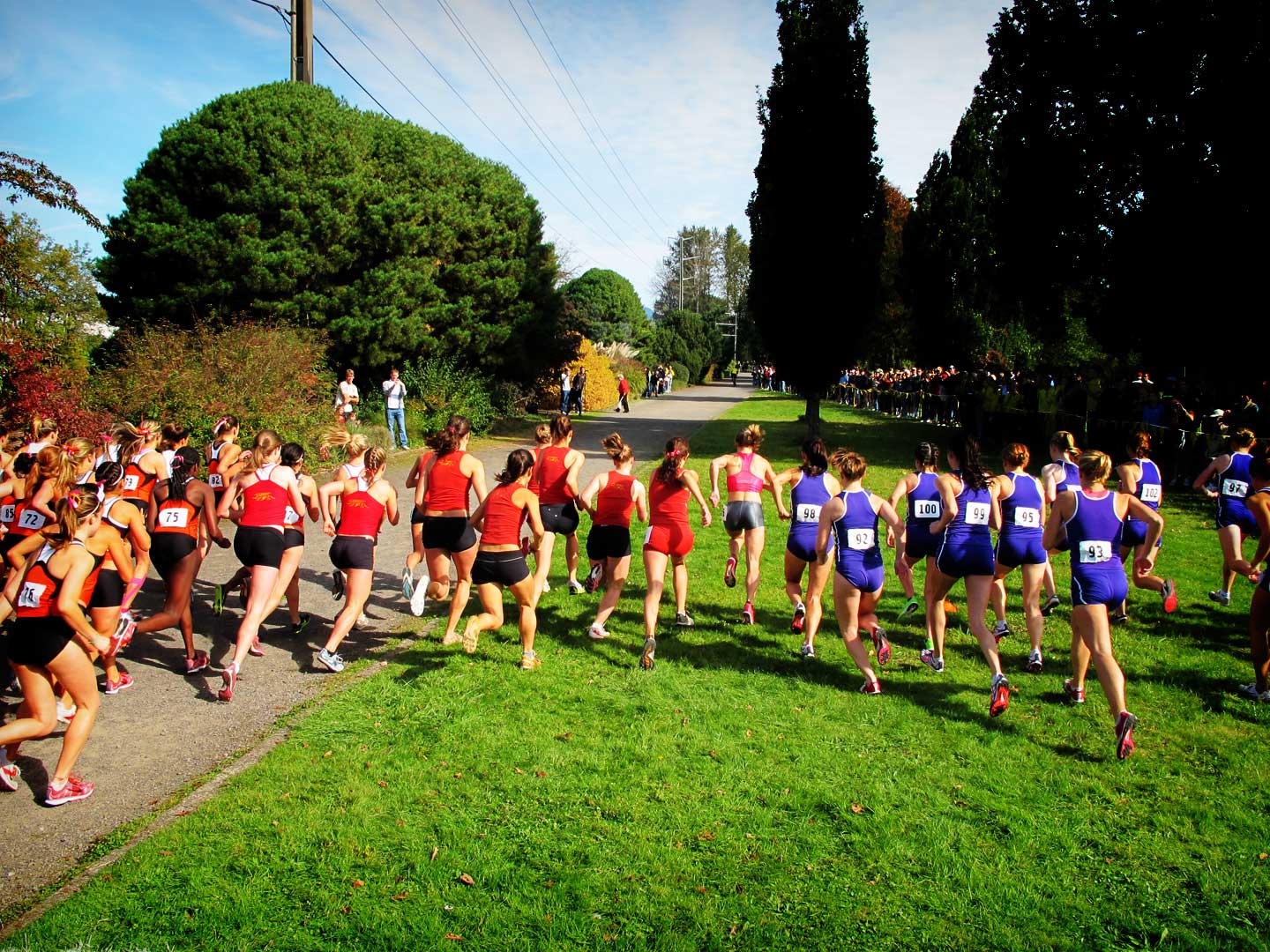
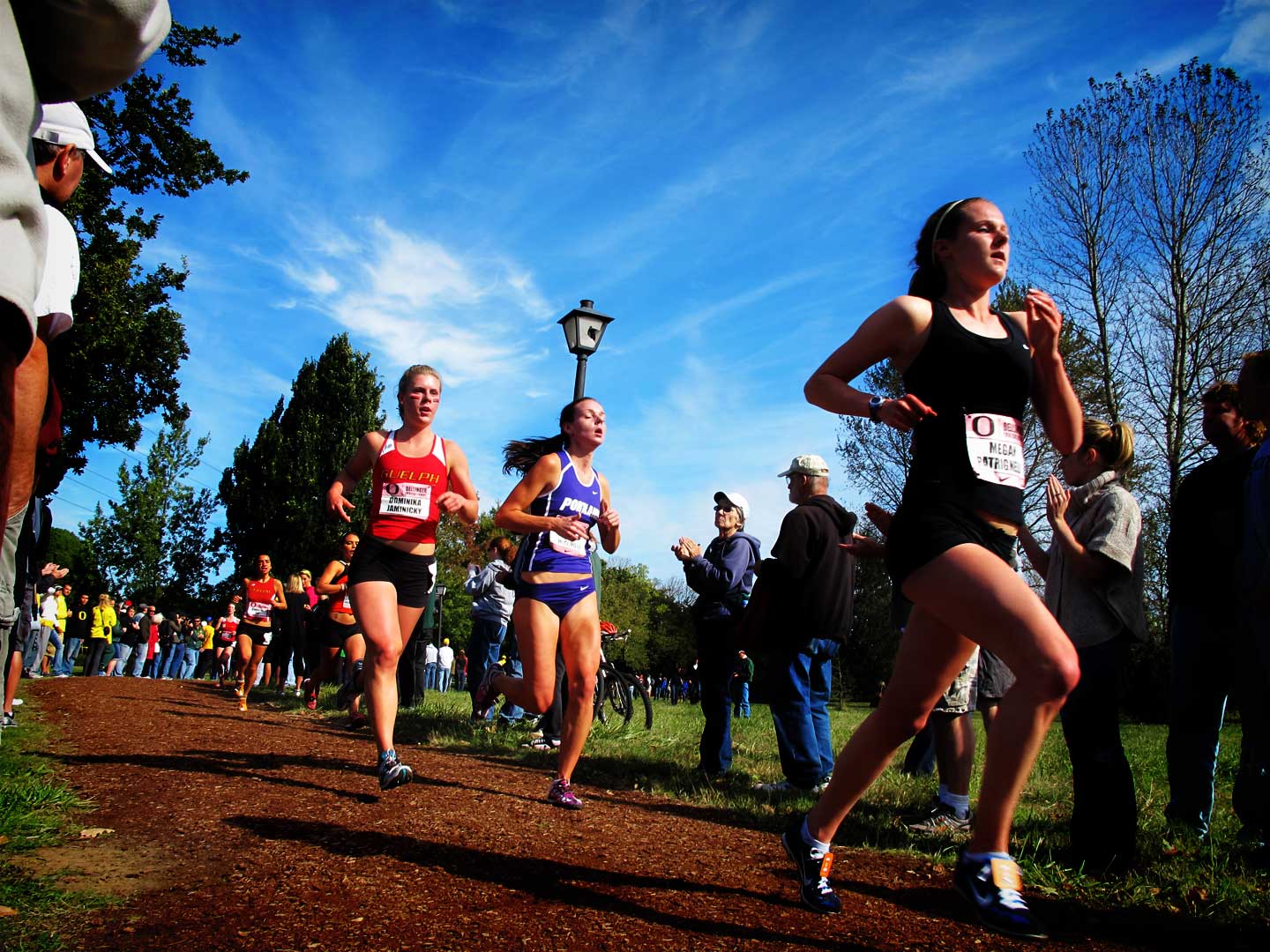
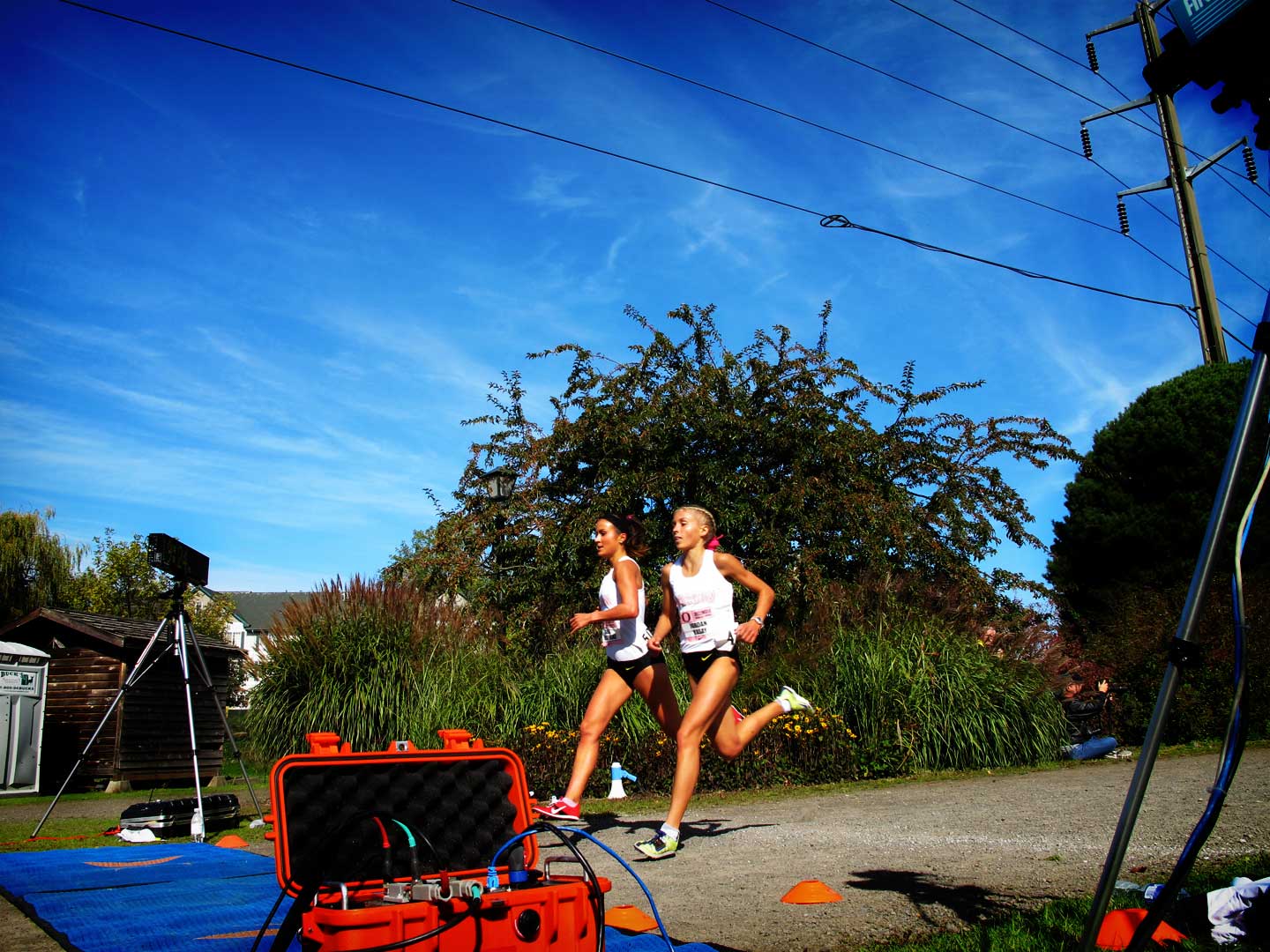
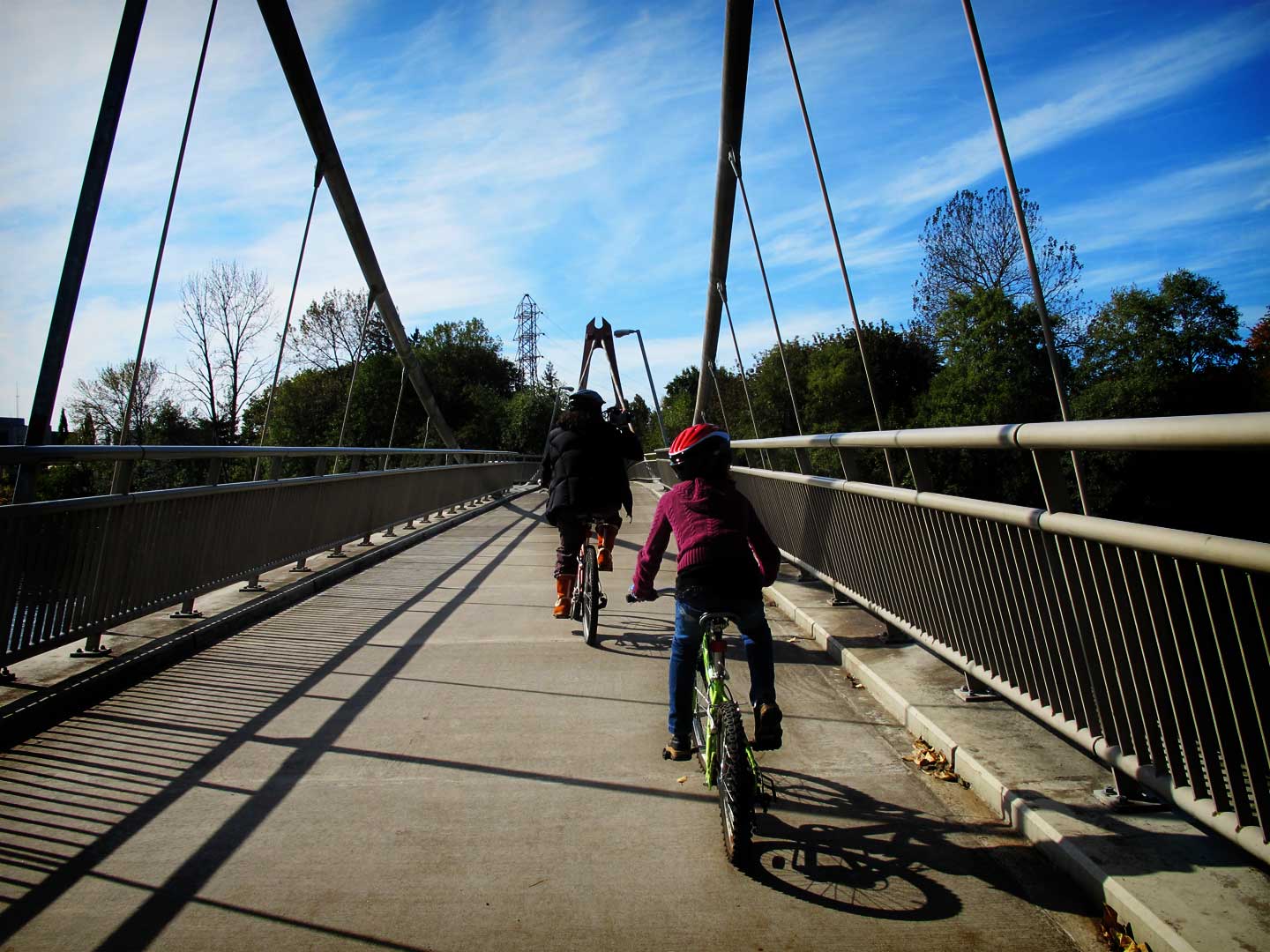
>On Saturday our little family jumped on our bikes and rode over to the Bill Dellinger Invitational cross country meet at Alton Baker park. The day was bright and sunny, but chilly. We had a great time, a good ride, and just plain fun. Lily has been doing some cross country running through Track City. Today she was able to get up close to some top athletes.

The ride to the meet. I am towing 
the trailer with the two little ones.
The men on the course.
Men first and second place finishers.
Univ or Oregon of course.

Men third place.
Again, UofO.

The little man Atticus Roux.
The women seconds before the starting gun.

The women take off.

The women on the course.
Women first and second place finishers.
Univ of Oregon or course.
The ride home.

>Bicycling in traffic is a dance you lead

>

I love this video; it is very simple and elegant, yet full of wisdom.
A note on cycling infrastructure and principle:
What you see here are great examples of vehicular cycling. I am becoming more and more a fan of this kind of cycling. However, while I believe that all cyclists should know how to ride in such a manner, I do not believe cities should uncritically cater to vehicular cyclists by using it as an excuse to spend as little money of cycling infrastructure as they can get away with. There are many levels of cycling ability, and many different needs for cycling. Vehicular cycling is a type of cycling that children should be taught and adults should continually practice or re-learn. Yet, cycling infrastructure should be deployed based on the real needs of all cyclists (up to a point) and a comprehensive understanding the implications of design for all cyclists. What is important to realize is that there is no single formula for creating an ideal cycling environment. I would not generally take my kids on a ride in the manner of the cyclists in the video, though I ride this way myself when appropriate. For example, if there is not a clearly designated bike path I will take the lane. If there is a bike lane then I will take the lane, but only if the car speeds are high and to do so engenders good will with motorists. My goal is to ride safely, with confidence, knowing I am traffic along with the cars, and I try to strike a safe balance (key word safe). This sometimes means riding with the auto traffic and sometimes using the bike lane. But I refuse to use sidewalks, or get out of the way of cars merely because they honk their horns and demonstrate an attitude that says, “Hey, get out of my way. I’m a car.” Then again, I refuse to “teach” motorists a lesson merely out of principle when I know my wife and kids are waiting for me to arrive home safe. The goal is to ride safe and the method is to be wise.
Ride safe.

>Another excellent reason to have a good bike pump…

>