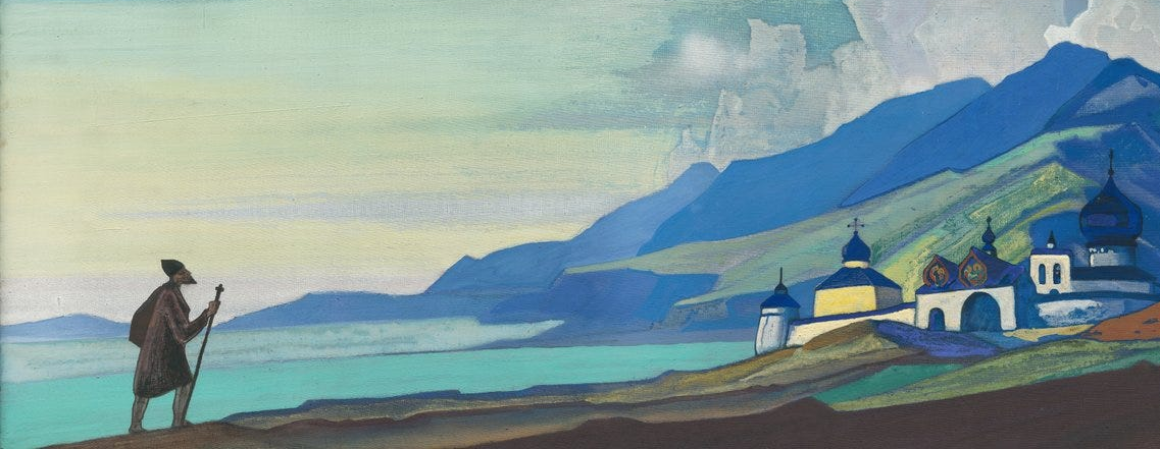
>dabbling in sci-fi’s golden age

>

“The earth is blue. How wonderful. It is amazing.”

~ Yuri Gagarin to Ground Control, 1961

Lately I’ve been going back to some classic science fiction writing. I started Asimov’s Foundation, Heinlein’s Have Space Suit–Will Travel, and Bradbury’s R is for Rocket.

Here is Isaac Asimov remembering
the Golden Age of Science Fiction:

I am convinced if there had to be a golden age of science fiction it had to be exactly when it was, in the couple decades prior to actual space travel. Technology had developed, because of WWII and the Cold War, to such a degree that many of the far fetched fantasies of earlier years now seemed almost plausible. And yet no object had yet been put into orbit or sent to another planet, and certainly no human had entered space. With this situation of having technology’s promise so close and yet so far it is no wonder the imaginations of so many were fueled in that direction. Once Gagarin orbited Earth the golden age had little time left. That had a lot more to do with the appearance and disappearance of sci-fi’s gold age than an emphasis on the rise of pulp magazines, etc.

And as a special bonus…

You know you’ve arrived as an author when you can get paid doing prune commercials.
>an agreable kind of horror: the sublime

>A couple year’s ago I wrote a post looking at contemplative cinema’s relationship to the infinite. That post has received over 700 visits since published. The idea of the sublime in film has always intrigued me, and many of my favorite films and film moments include the sublime. In particular I love the German concept of sublime as expressed in the paintings of Caspar David Friedrich.

Here is a wonderful little discussion of one of Friedrich’s paintings by the crew at smarthistory:

There is probably no characteristic of art that draws me in more than the sublime. It has the key elements of both Modernity and Romanticism. I wrote specifically about that here, and in that post you will find one of my most favorite poems – a selection from Wordsworth’s The Prelude – to me a great example of confronting and expressing the sublime.

The sublime is also one of the characteristics that draw me to the mountains. I am convinced that people who cannot fathom why someone would want to risk their life (even a little so) in pursuit of climbing a mountain are also those who have little time for the sublime in art. According to Wikipedia: ‘Joseph Addison embarked on the Grand Tour [of Europe] in 1699 and commented in Remarks on Several Parts of Italy etc. that “The Alps fill the mind with an agreeable kind of horror”.’ And that about sums it up in a nutshell.

>the un-silence of silence

>There are many significant musical works of the 20th century. Perhaps none more important than John Cage’s 4’33” Here is a wonderful performance of the seminal work:

And if you are wondering why the heck did Cage write such a piece, here he explains:

I do not know what I think of Cage’s philosophy. Much of my favorite art is 20th century abstract work, so I like Cage’s too. But I don’t know if I think it is music, or if is just sound that I like. I also don’t entirely agree with him that his sounds are merely sounds with no meaning or internal connection. To me his work seems both inner and outer, but maybe not is the same way we are used to more conventional art. Regardless, it speaks to his genius that compositions many decades old can still be considered avant garde.

>Fleet Foxes, Black Cab Seesions, and Daniel Johnston

>So I missed the local concert a couple of days ago of Fleet Foxes. But once upon a time they rode around in a black British cab and recorded this:

And just for giggles, if you like British black cab music, check out these other sessions (in fact, you must):

Finally, the incomparable Daniel Johnston:

In case you hadn’t guessed already, there’s a whole lot more of those black cab sessions on line.

>another meme

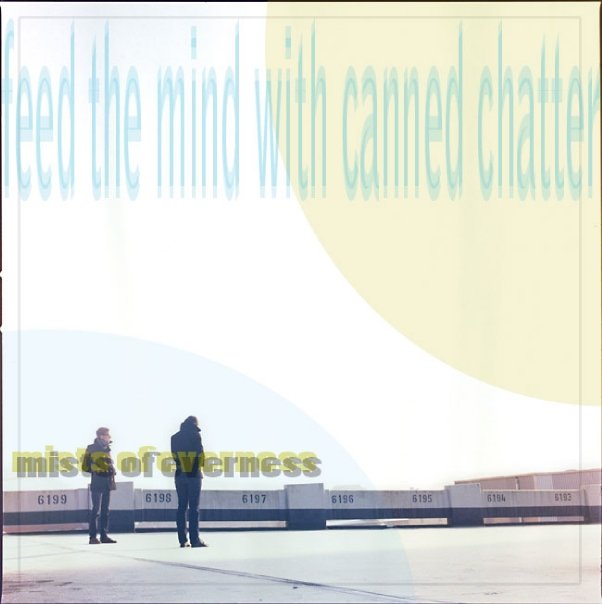
>Anything to do with creating fake band album covers piques my interest. There is a meme going around facebook lately that has the instructions listed below. Here is my cover:

1 – Go to Wikipedia. Hit “random… Read More”
or click http://en.wikipedia.org/wiki/Special:Random
The first random Wikipedia article you get is the name of your band.

2 – Go to Quotations Page and select “random quotations”
or click http://www.quotationspage.com/random.php3
The last four or five words of the very last quote on the page is the title of your first album.

3 – Go to Flickr and click on “explore the last seven days”
or click http://www.flickr.com/explore/interesting/7days
Third picture, no matter what it is, will be your album cover.

4 – Use Photoshop or similar to put it all together.

5 – Post it to FB with this text in the “caption” or “comment” and TAG the friends you want to join in.

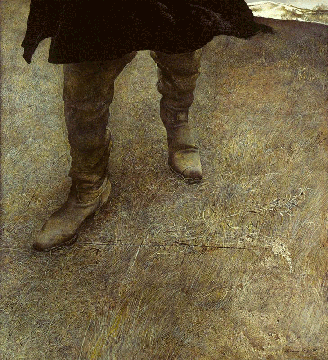
Godspeed Mr. Wyeth

Andrew Newell Wyeth (July 12, 1917 – January 16, 2009)


Trodden Weed, 1951 tempera on panel.


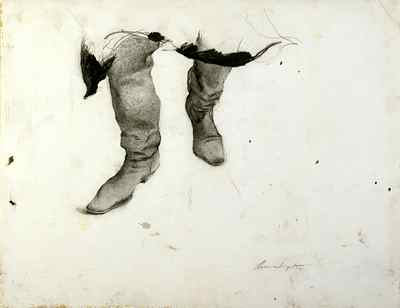
Drawing for Trodden Weed

Chinatown and the Rule of Thirds

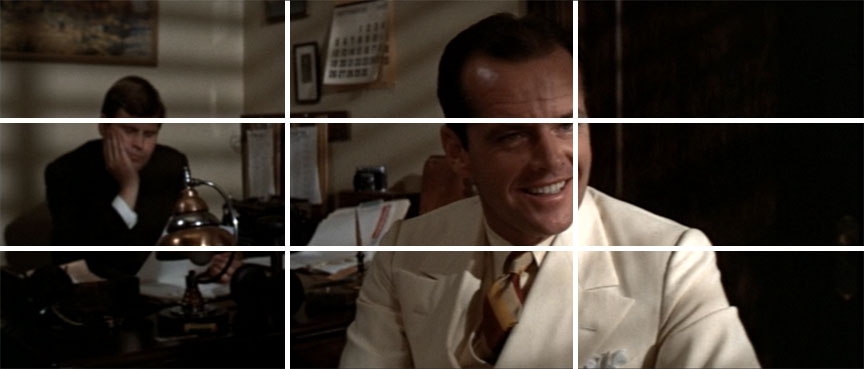
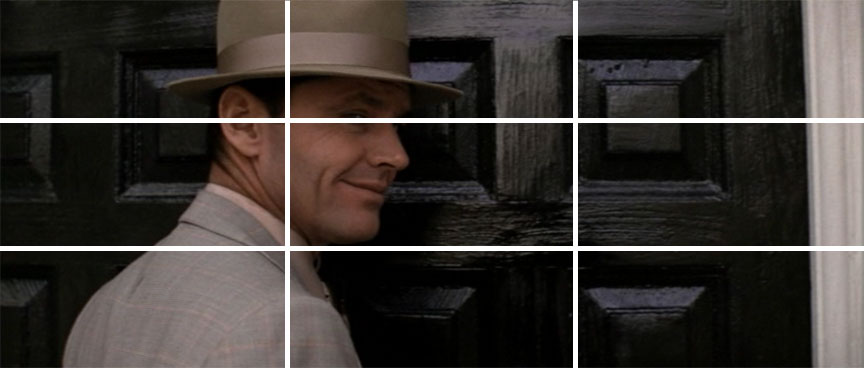
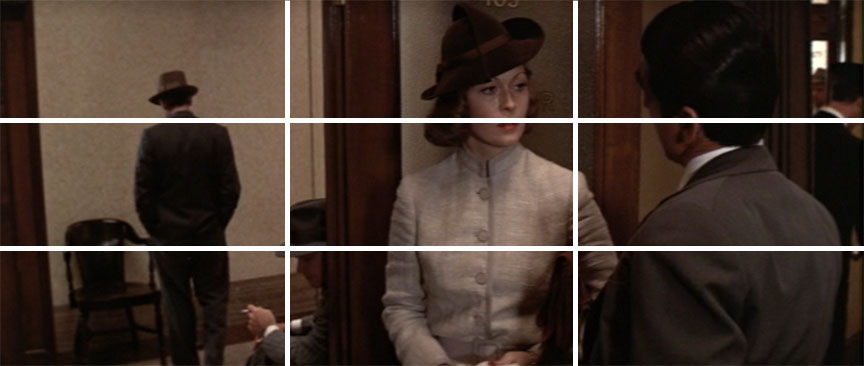
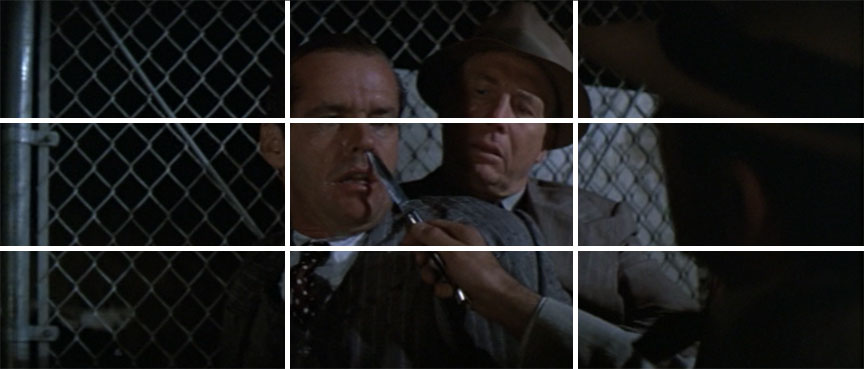
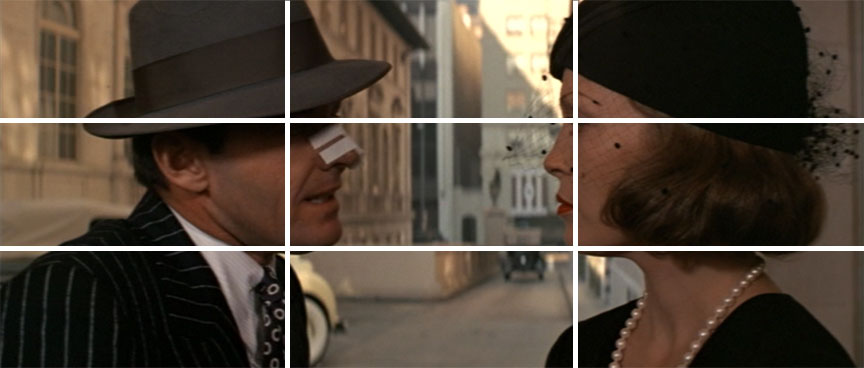
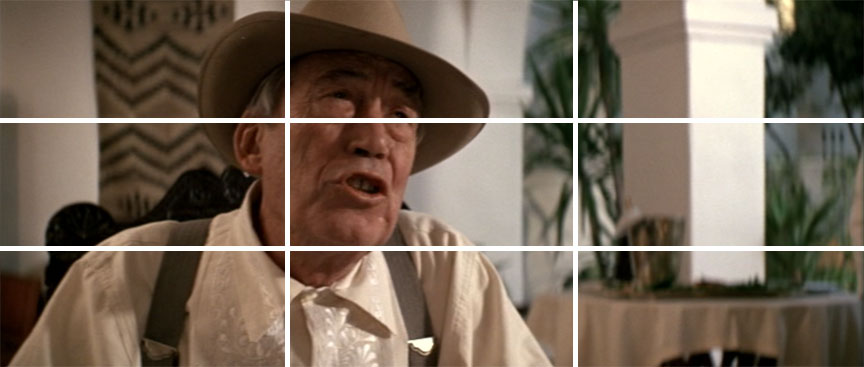
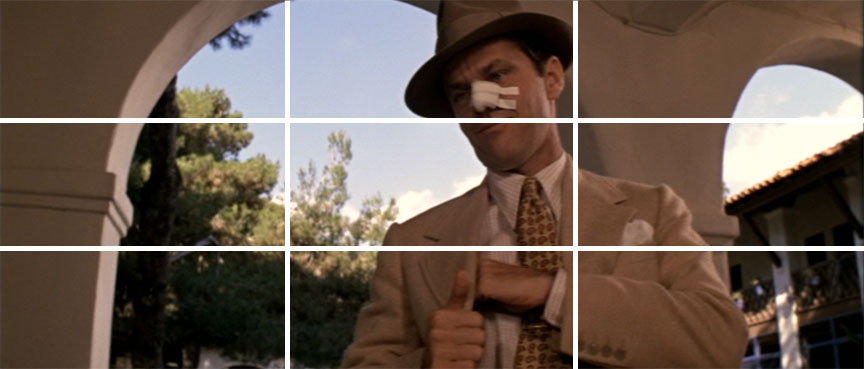
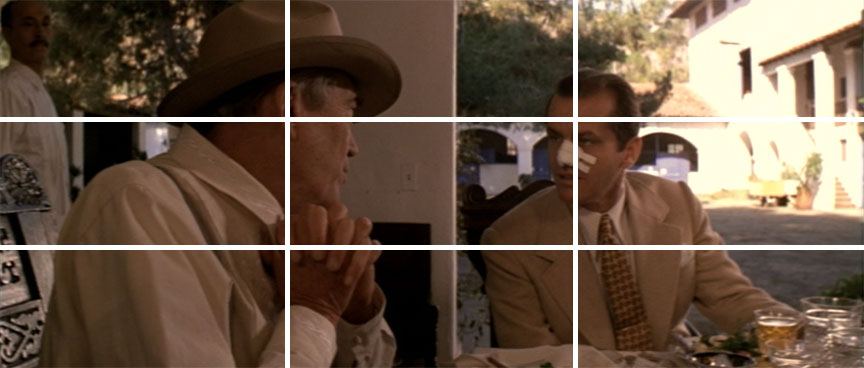
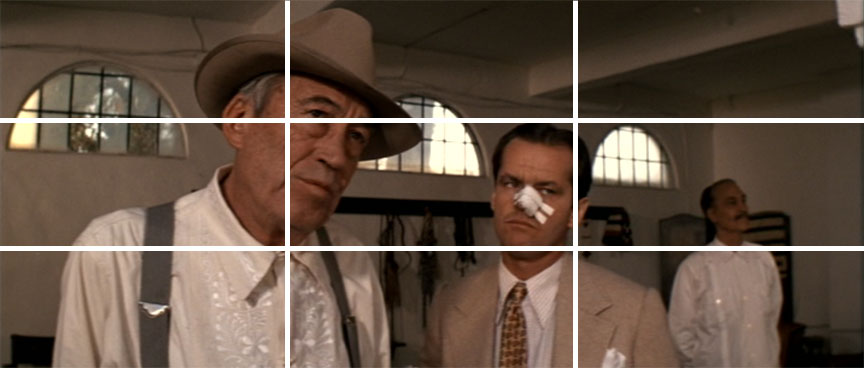
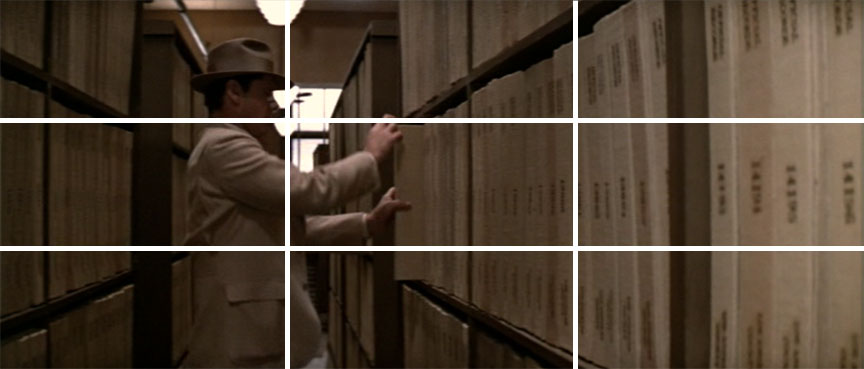
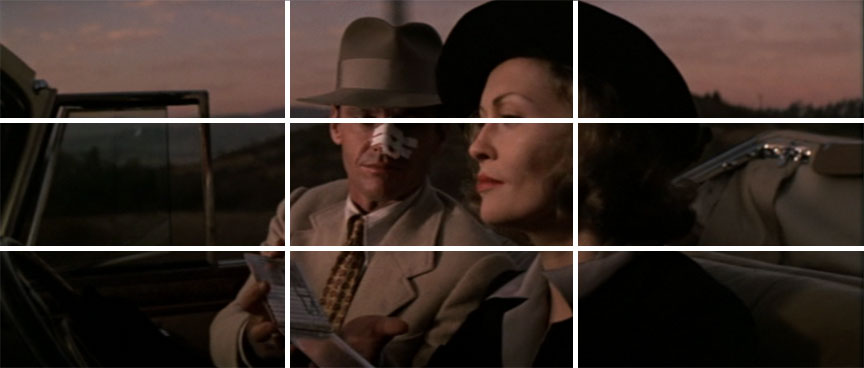
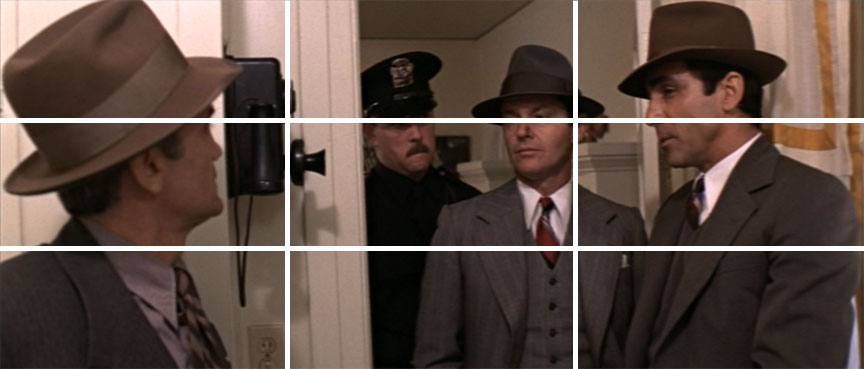
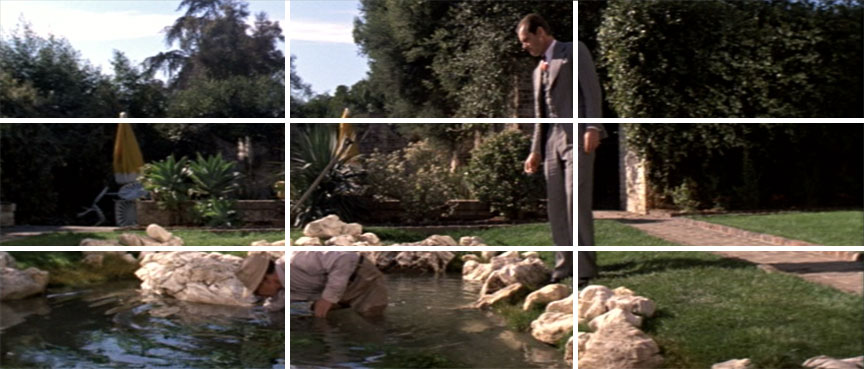
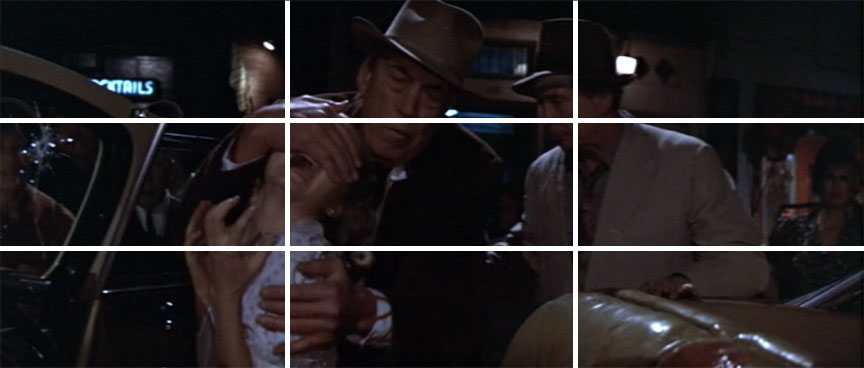
Many films are beautifully shot. Few, though, are as consistently well composed as Chinatown (1974)*. Shot in Panavision (anamorphic) format with a 2.35:1 aspect ratio the somewhat extreme rectangular image would seem to offer significant challenges to effective image composition. As I was pondering this challenge I was struck by how much I loved the images in Chinatown, which I just watched again the other day. That’s when I went back to basics and considered that even with widescreen images there are still fundamentals of composition at play. In this case I figured I would grab a few images from the film and apply the Rule of Thirds to each image.

The Rule of Thirds is simply as follows:

Divide the image into thirds, both horizontally and vertically, then put the focus of the image either one third across (from either side) or one third up or down the screen. Those lines, and the points at which they intersect, are the strongest invisible forces in an image.

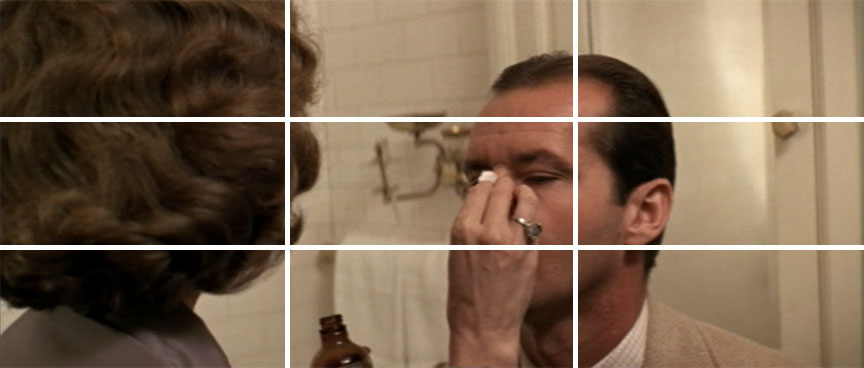
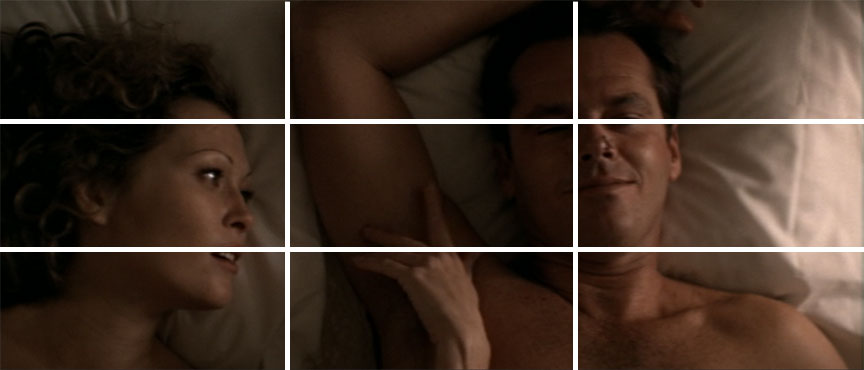
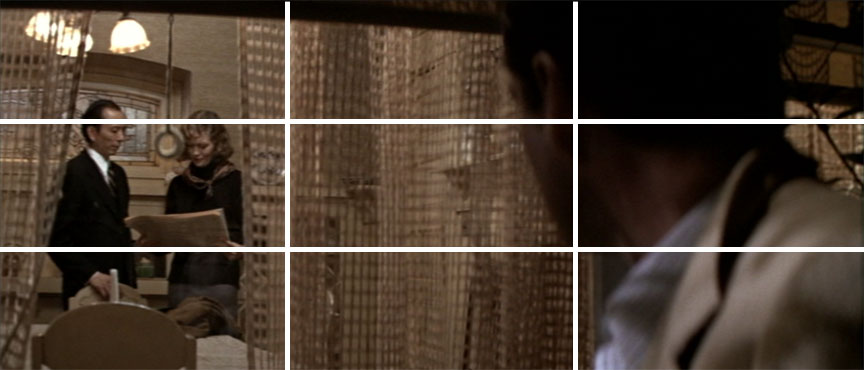
In Chinatown the images are constructed around those lines and intersecting points. By doing this the aspect ratio becomes a relatively mute point as the human brain automatically takes in the whole image, mentally divides the image into thirds, and finds pleasure as key visual elements are constructed around those thirds. Of course, deviation from the power of the thirds creates visual tension, which is an additional tool in the filmmaker’s toolbox.

Chinatown was shot by John A. Alonzo. Here are the images from film (I, of course, added the white lines):

This is a simple process of analysis. More involving would be to examine how the rule applies to changing composition withing shots as they are re-framed or the actors move about. One thing I noticed was that all the extreme close-ups put the object of focus directly in the center of the middle square. Placing visual elements along the “third lines” was reserved for medium shots and long shots. Finally, the rule of thirds does not guarantee that an image will be good, or work well for a particular scene. However, fundamentals are fundamentals. Without them one will not only have difficulty maintaining a consistent quality, but one cannot truly “break the rules.” The irony is that fundamentals are what allow filmmakers to innovate and stay fresh.
* This is my opinion, of course, but there is a quality in the film’s imagery that is truly wonderful and yet difficult to pin down.

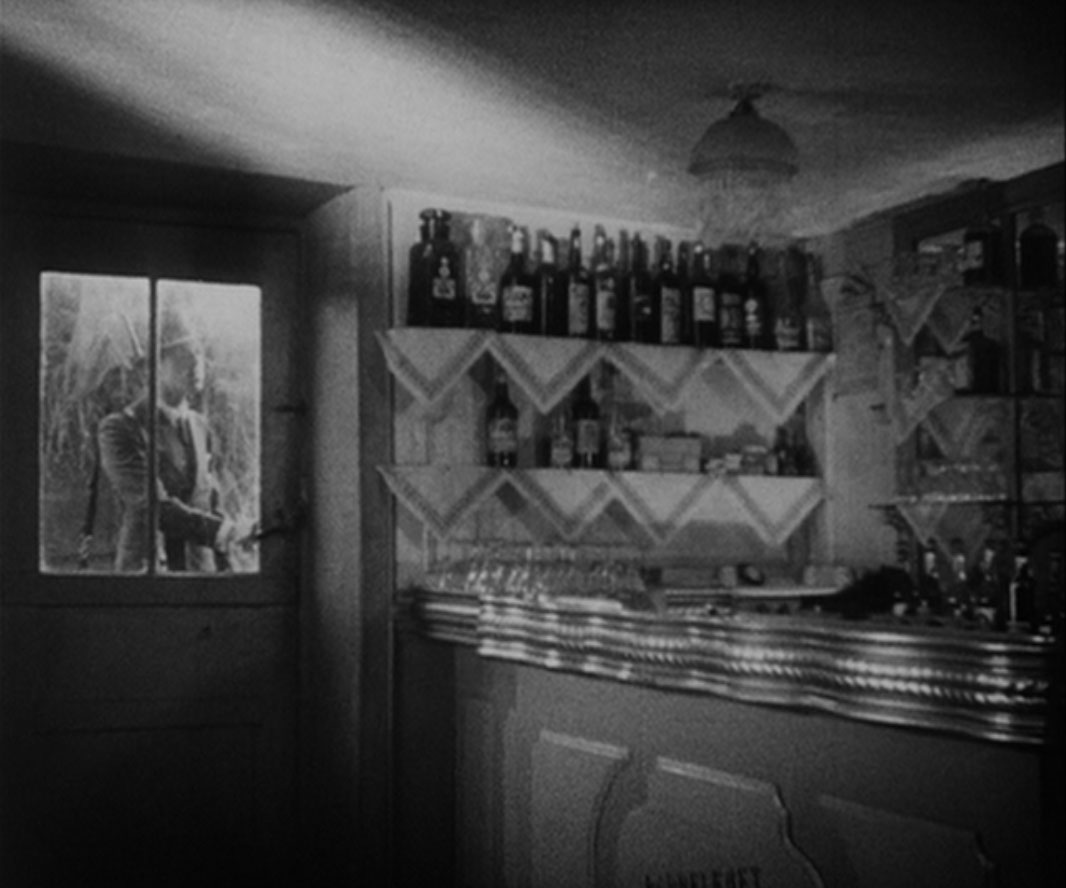
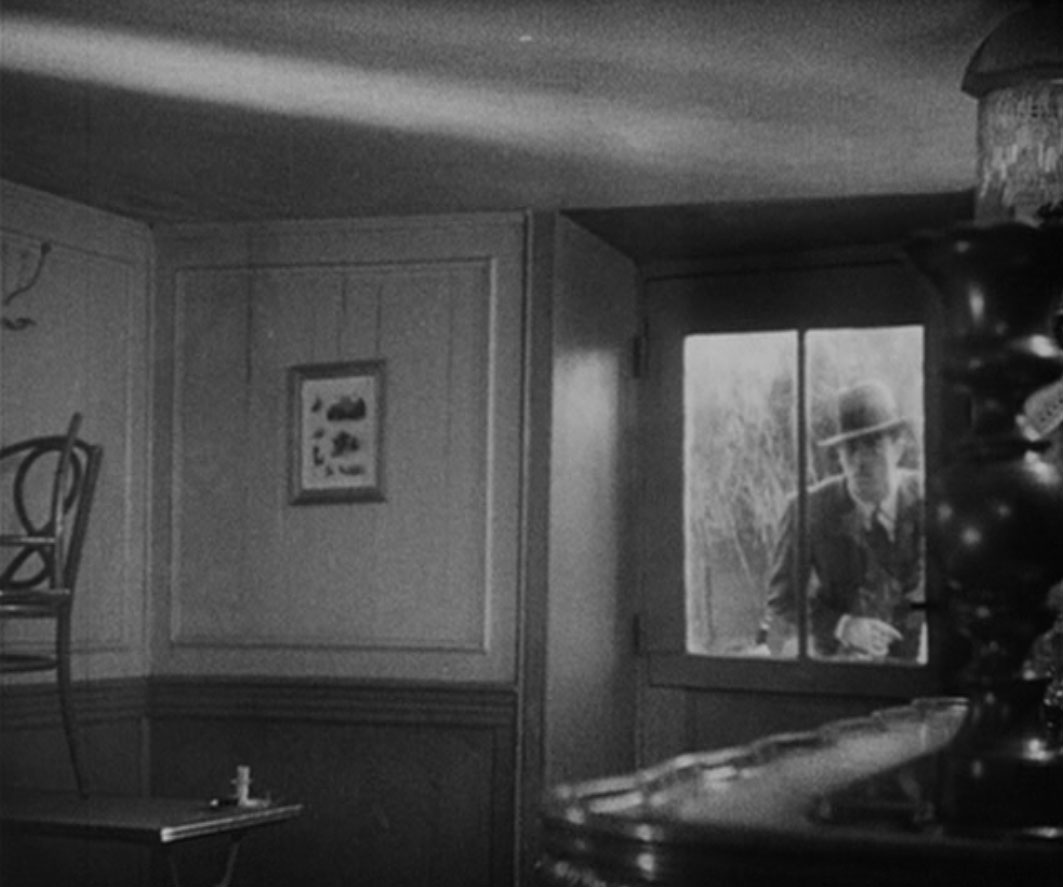
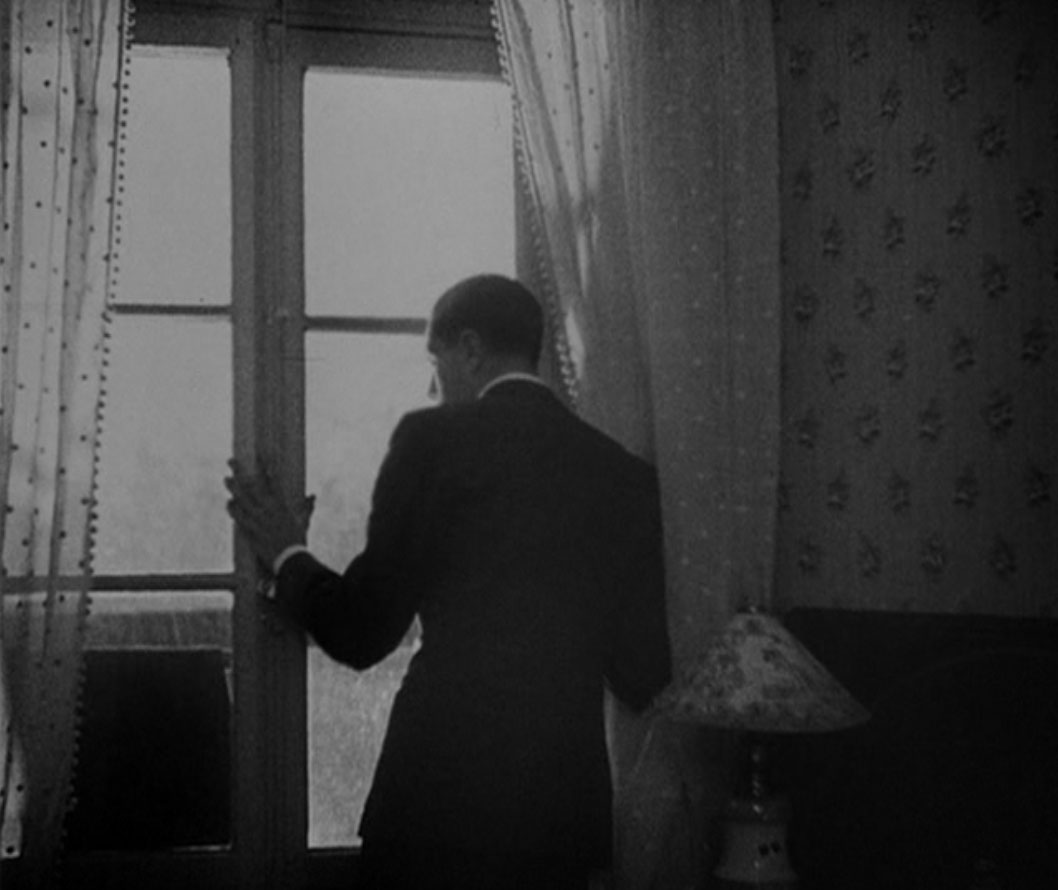
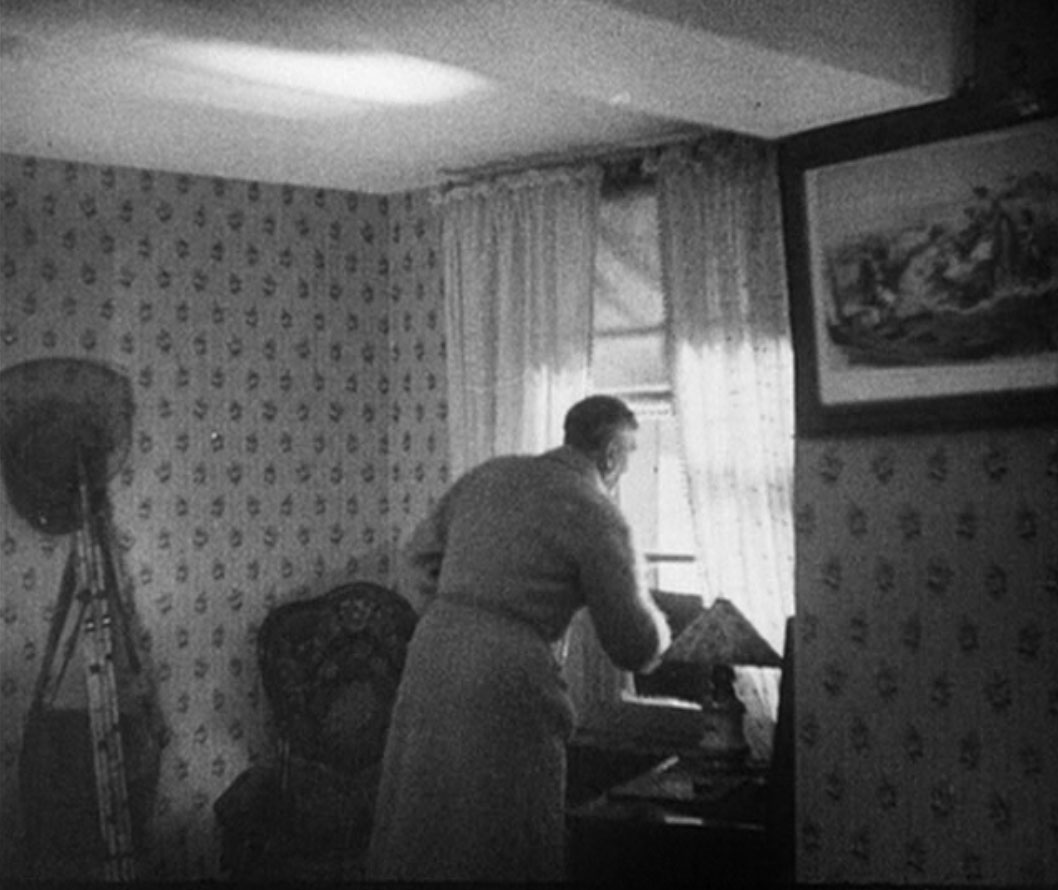
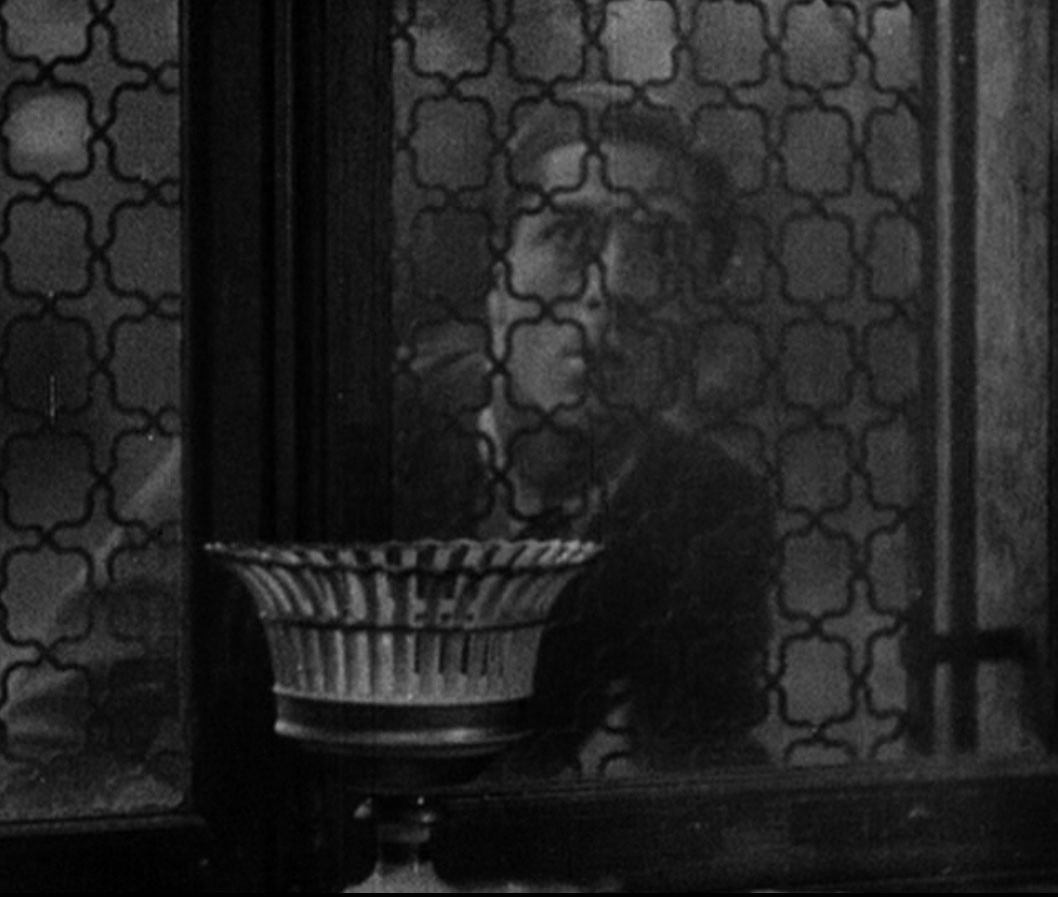
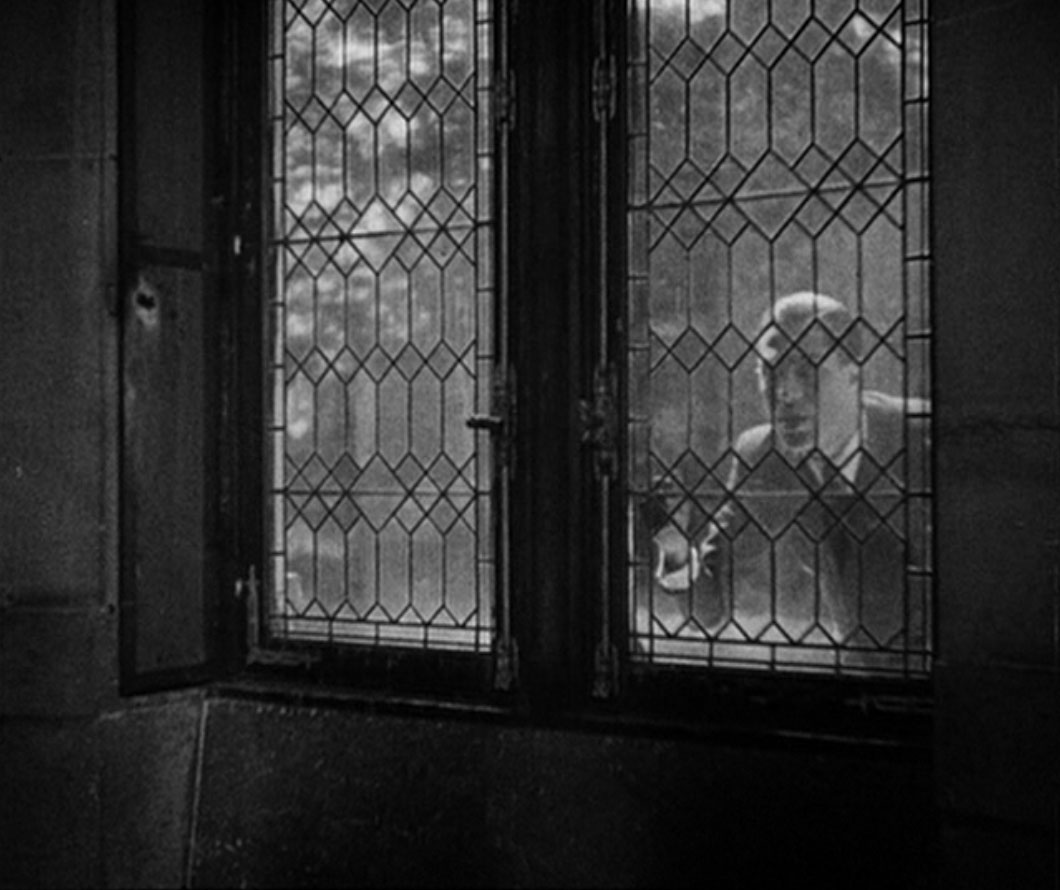
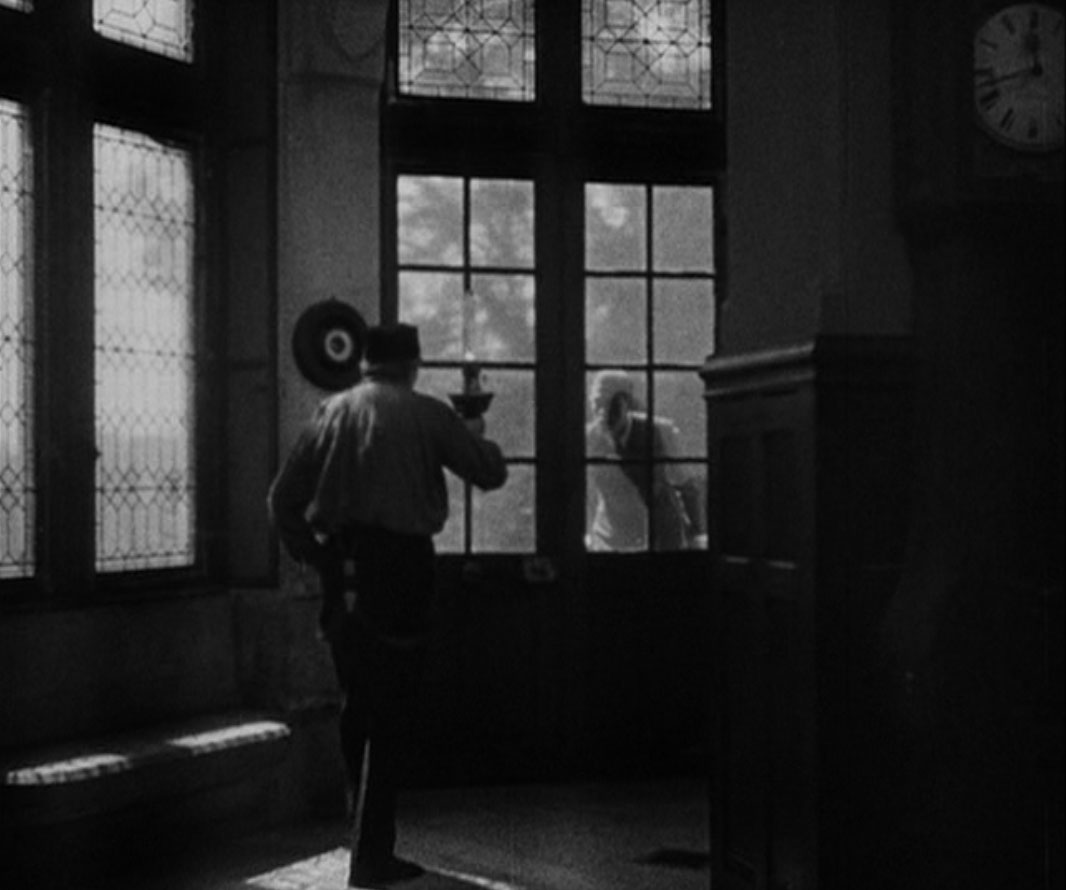
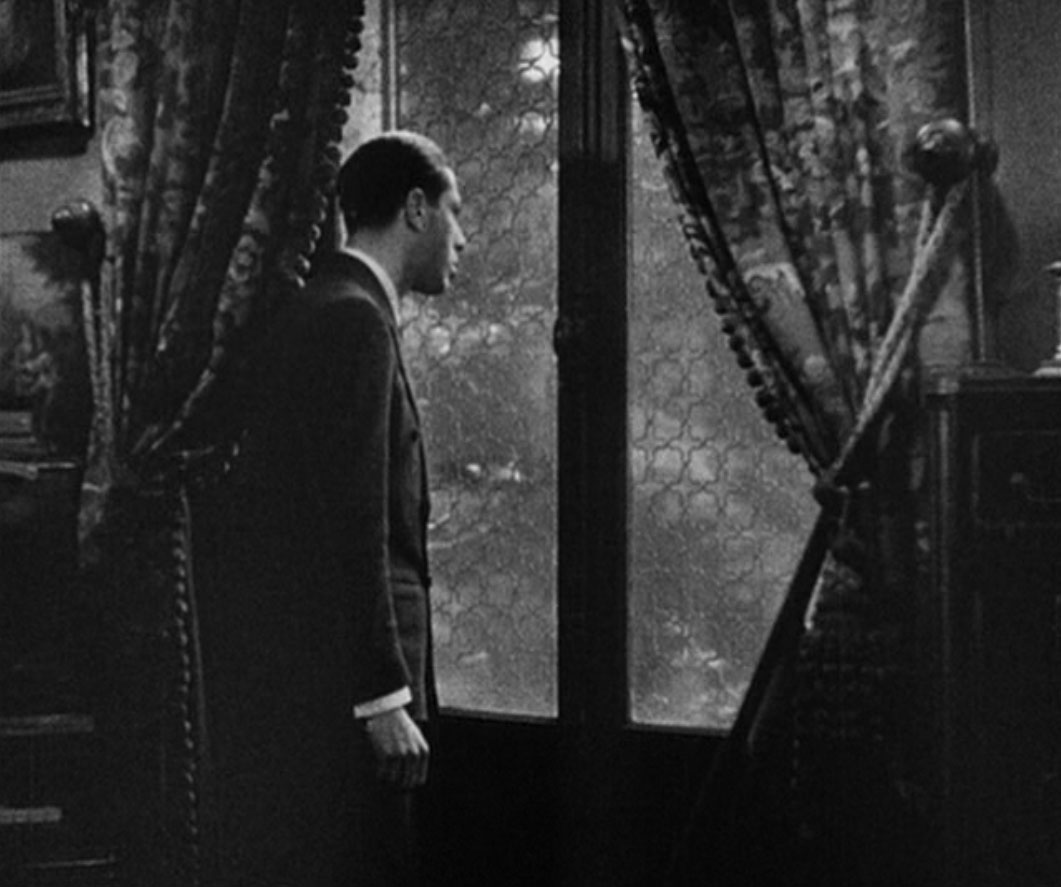
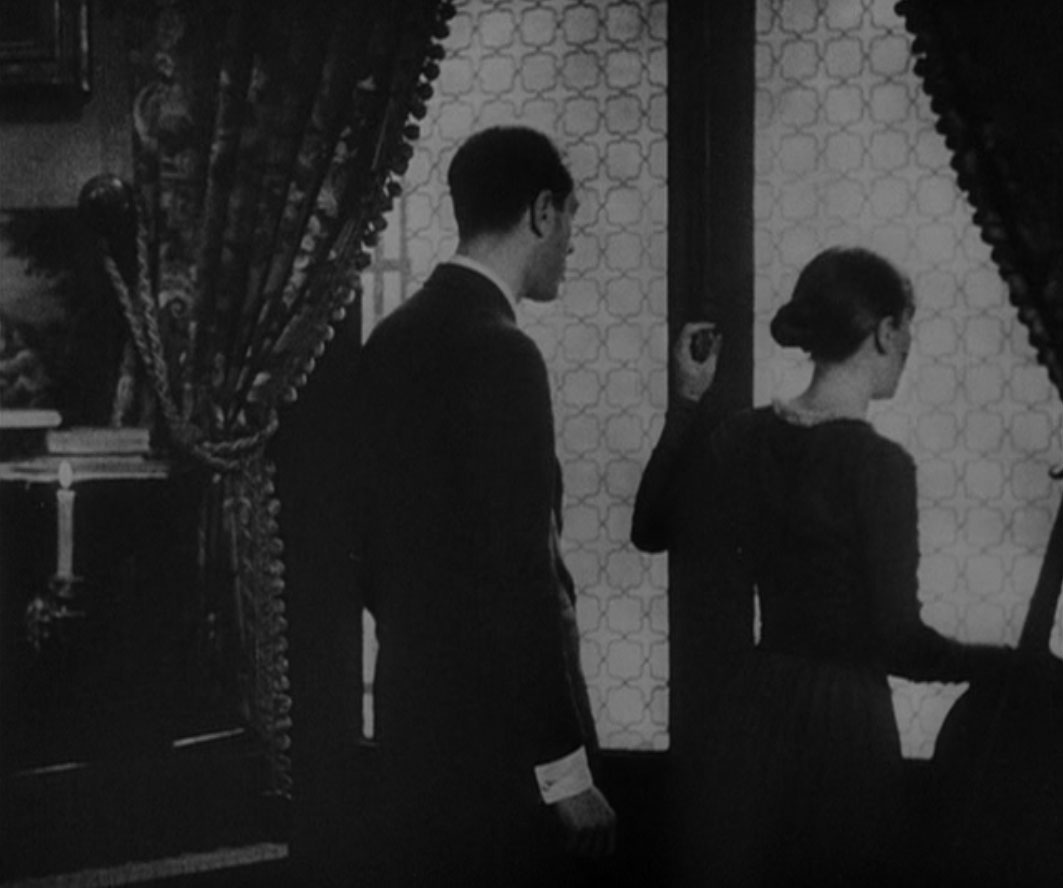
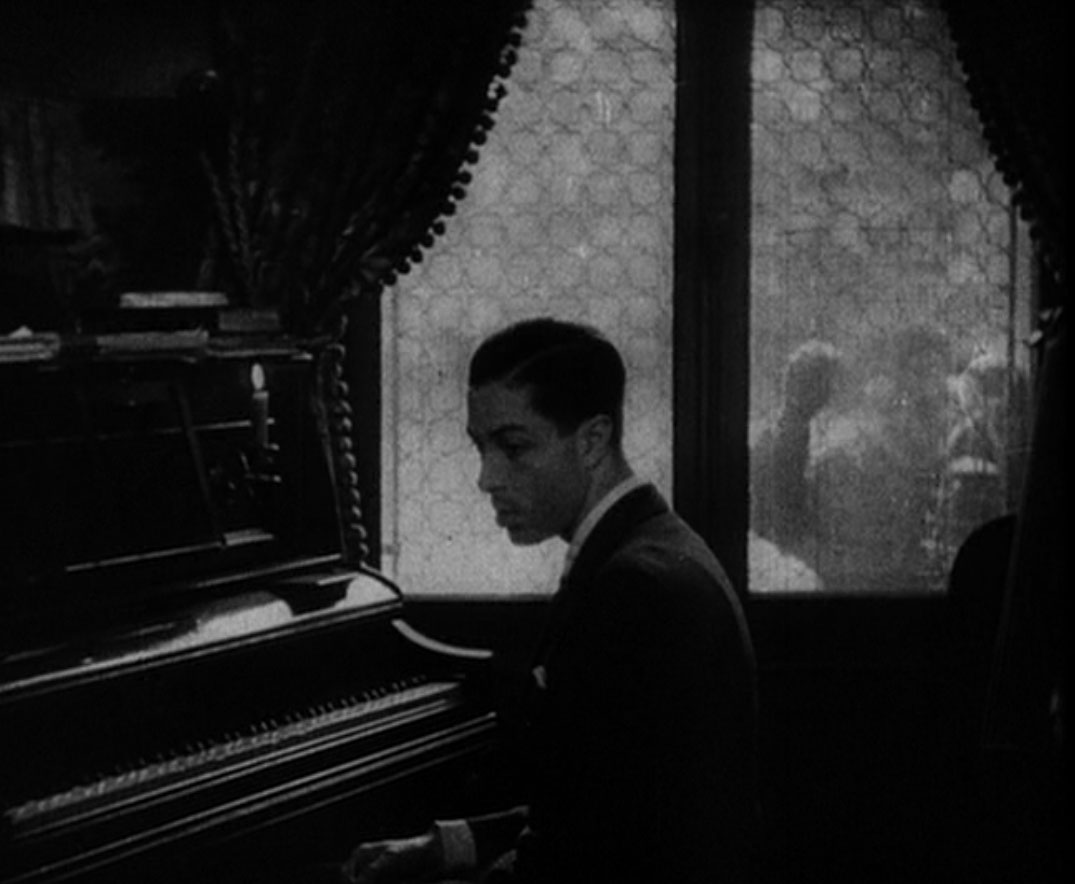
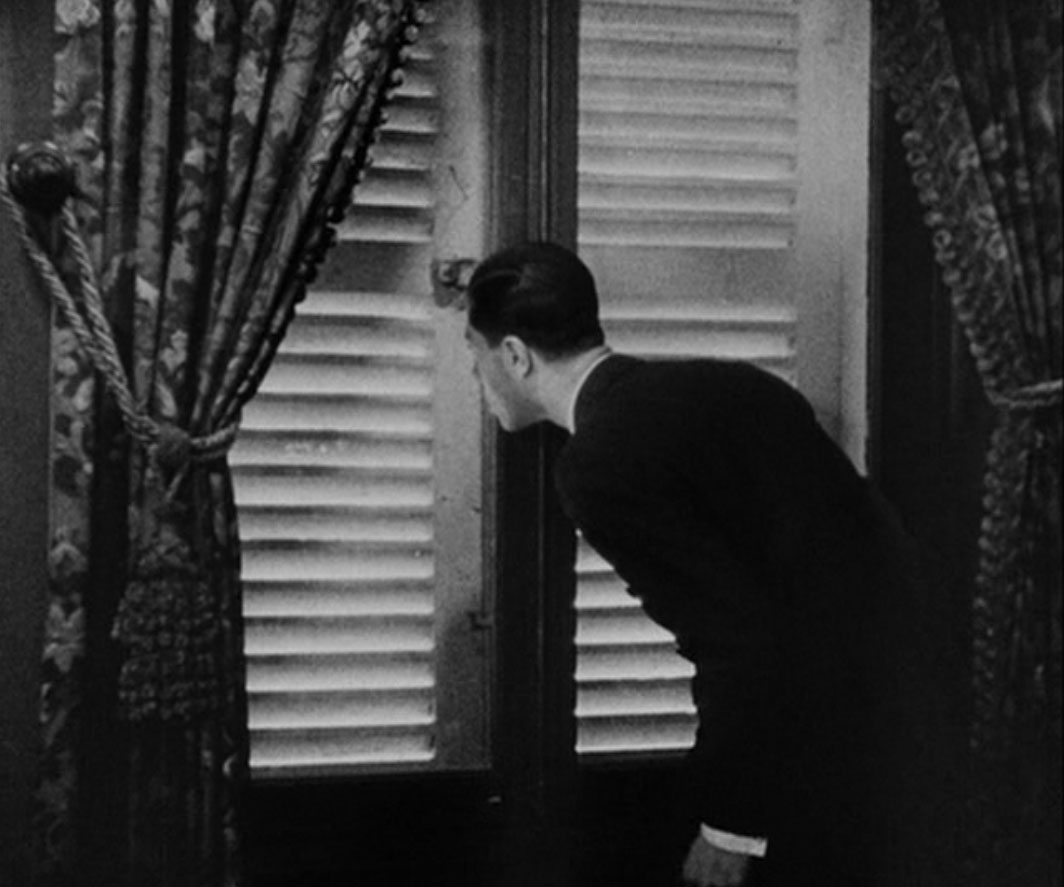
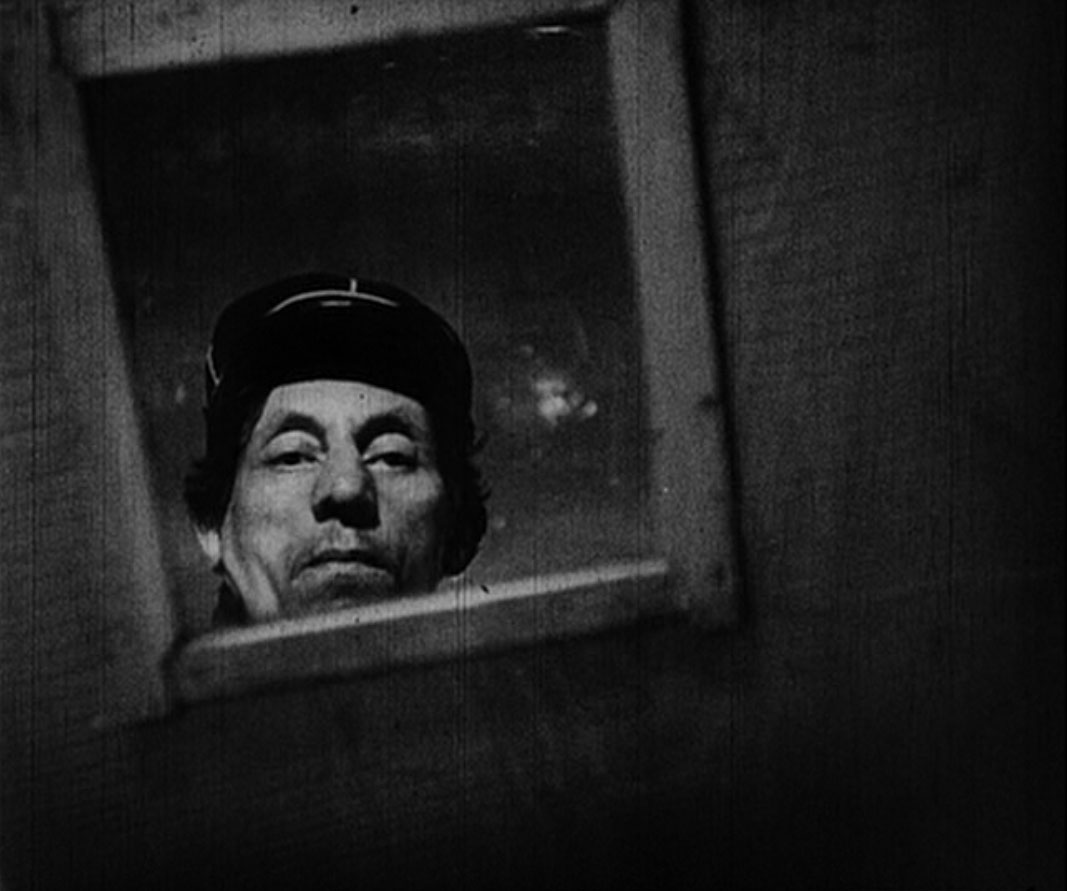
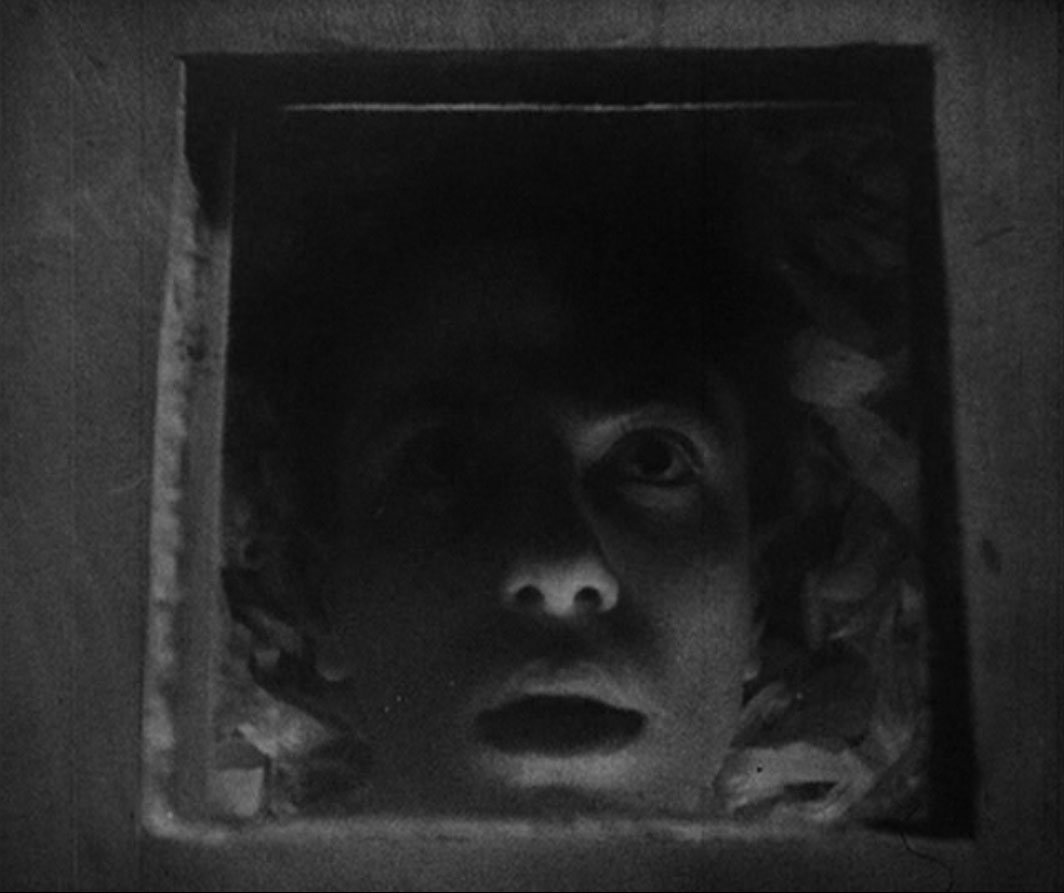
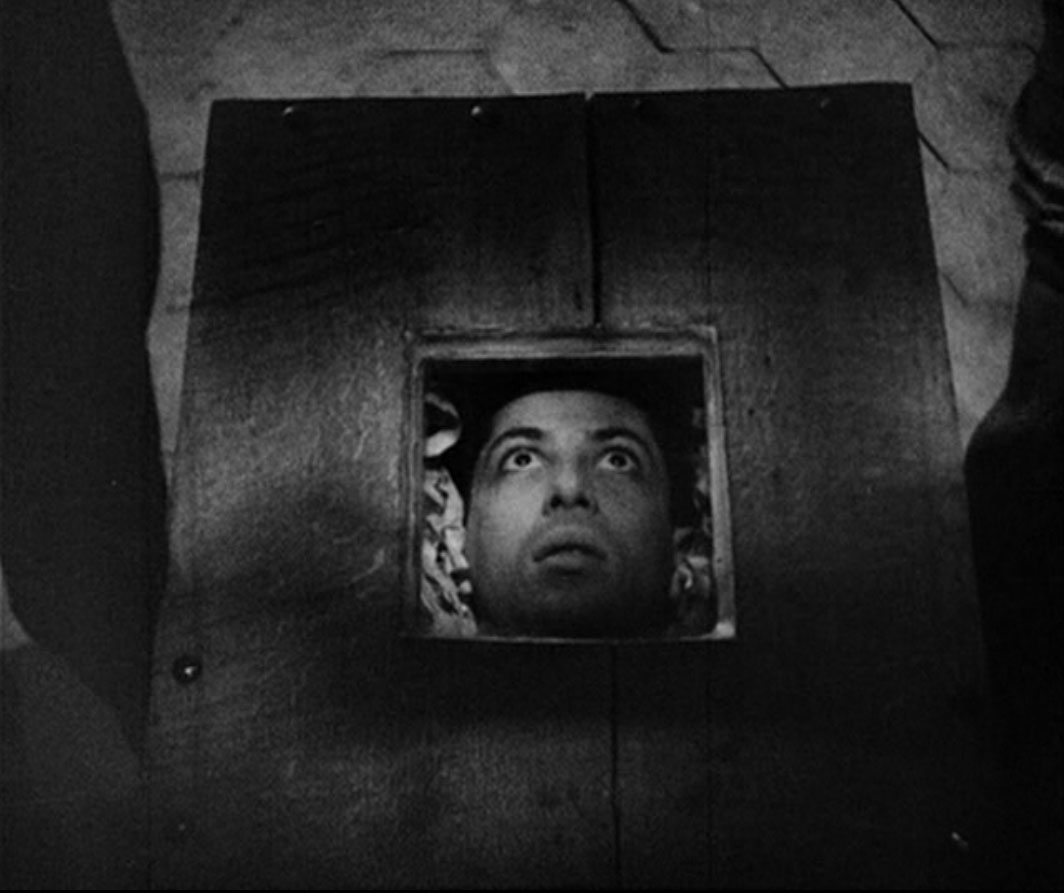
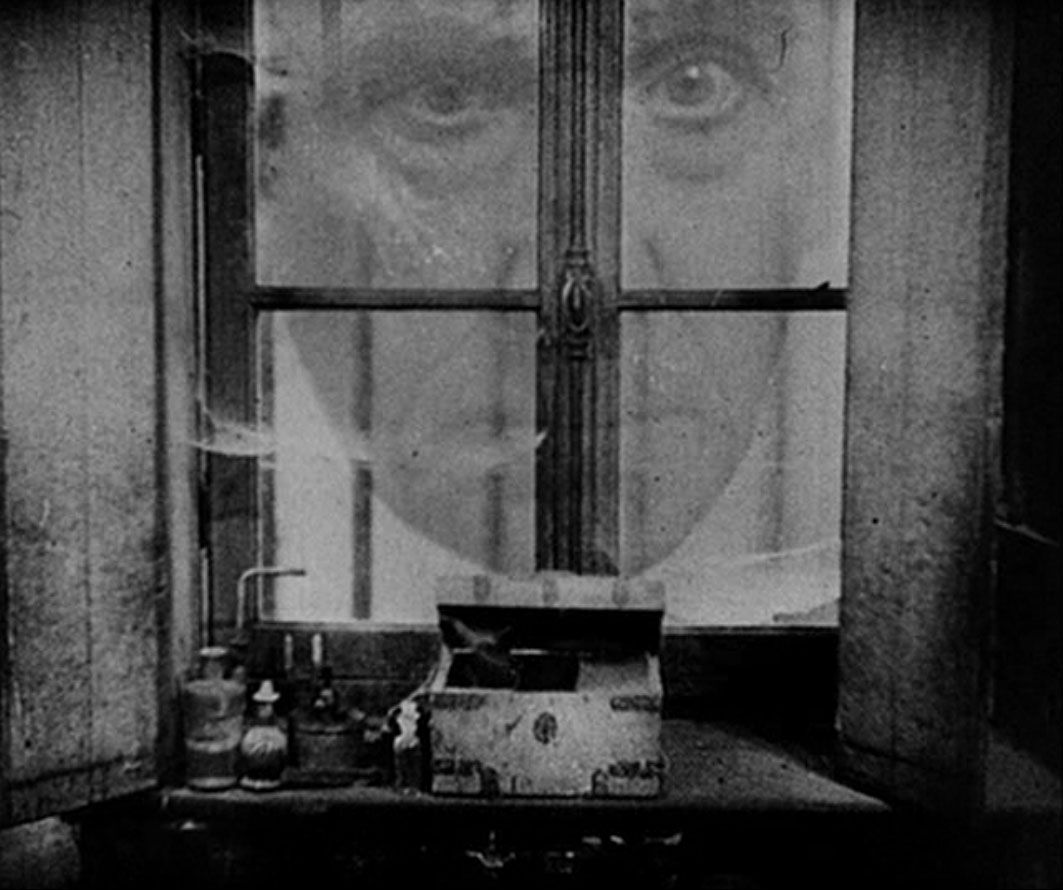
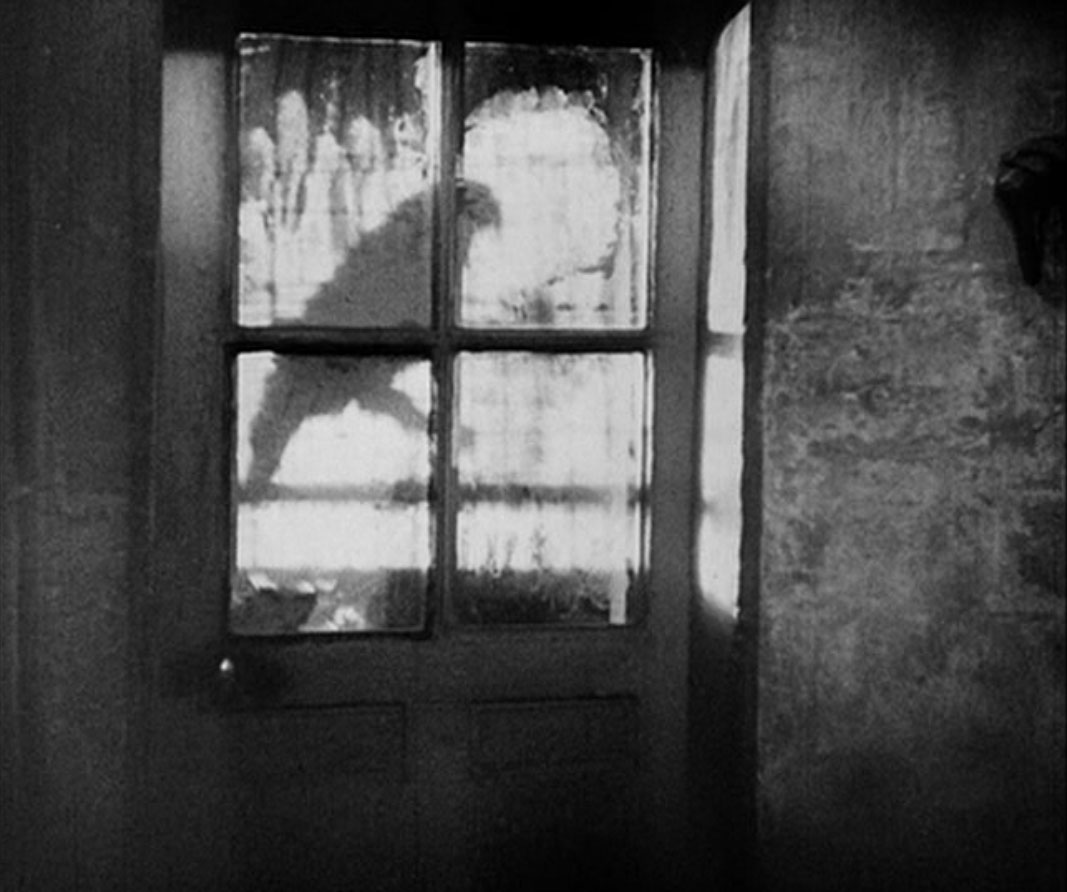
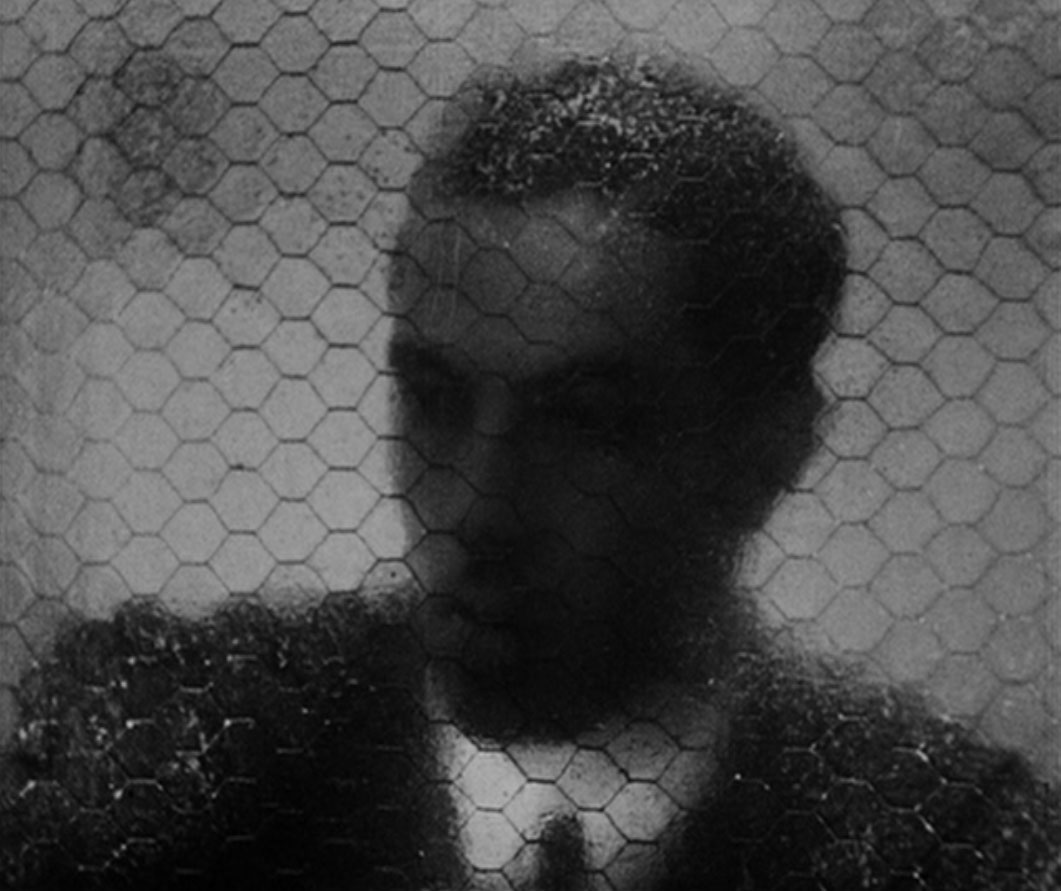
In a Glass Darkly: Images of windows in Dreyer’s Vampyr

>some videos by bill viola

>below are works by video artist Bill Viola

Migration, 1976

http://video.google.com/googleplayer.swf?docid=-4498864086957786589&hl=en
The Reflecting Pool, 1977-79

http://video.google.com/googleplayer.swf?docid=5465661880359138467&hl=en
Anthem, 1983

Thoughts: The moving image is one of the most powerful and most malleable of mediums for artistic expression. The tragedy (and the triumph) of mainstream cinema is its slavish acceptance of little else outside a set of limited conventions. Videos, like the ones above, remind us of other possibilities.
>Rauschenberg dies, his art lives

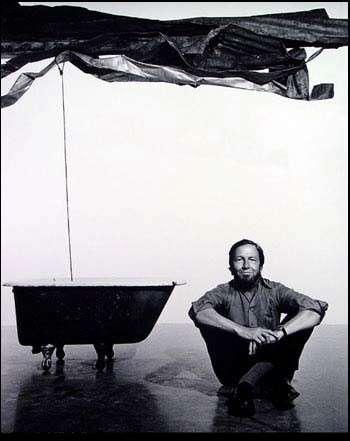
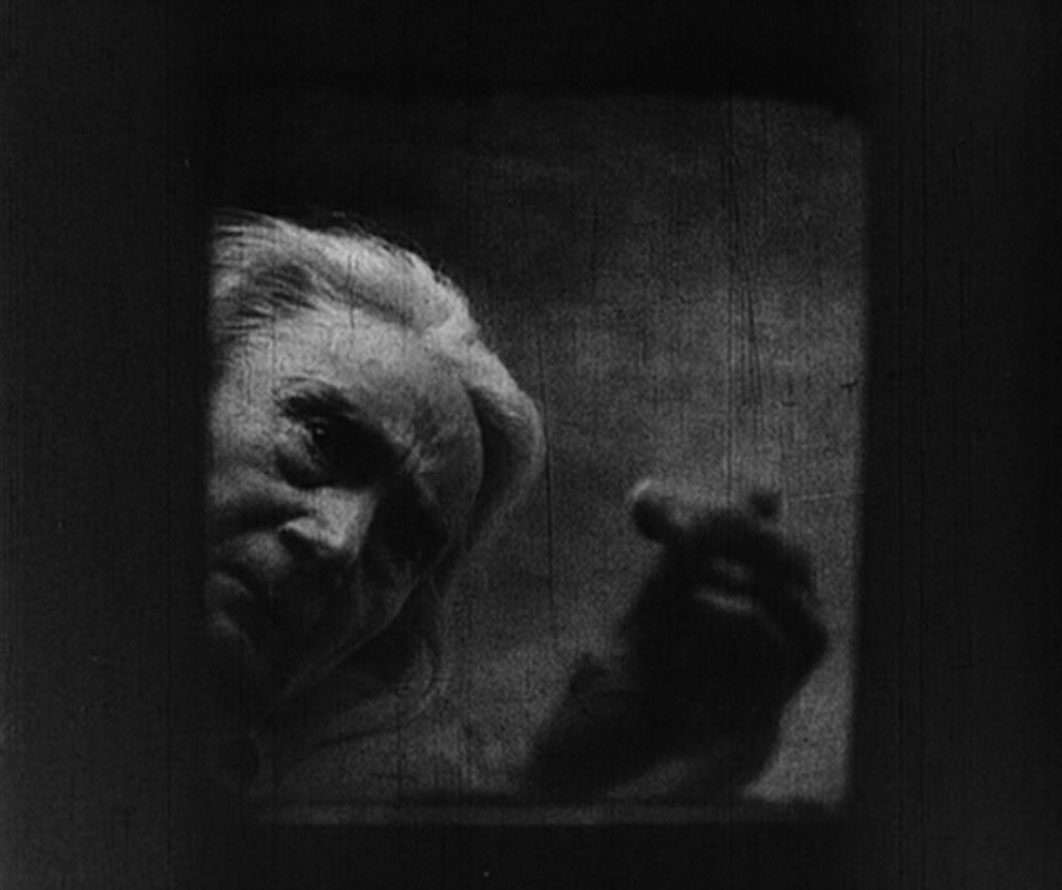
>I just saw that Robert Rauschenberg died on May 12th. He was one of the giants of 20th Century American art. He was also one of my “art” heroes.

Rauschenberg reminisces about his seminal “combine” artwork Monogram (1955):

Rauschenberg discusses his famous artwork, Erased de Kooning Drawing (1953), that consisted of erasing an artwork of another famous artist:

Excerpt from Rauschenberg’s 1967 film Linoleum:

Rest in peace.