The Stars Are Beautiful

The Stars Are Beautiful (1974) 19 min 16mm, by Stan Brakhage (1933-2003):

Part 1

Part 2

More on Brakhage at Senses of Cinema.

I find this kind of non-narrative experimental filmmaking wonderful. When I studied film in college my interests gravitated to this kind of art. Maybe it was because I was also studying art history and had a fondness for modern art. Maybe also because I love poetry. I think any work of art is a kind of test of what we bring to it. That test is not only of us, but of the artist and his/her work of art. A kind of dialogue ensues if we pursue it. Brakhage worked with a language, at least on its surface, that is foreign to most people. One could say it is abstract, I prefer poetic. However, I think there is a universal resonance within his best films that makes them work at a deeper level than is possible with more common forms of film language. I also had the privilege of attending a two evening presentation and discussion with Brakhage where he talked of his processes, inspirations, showed a number of his films, and introduced us to other filmmakers. It was revelatory.

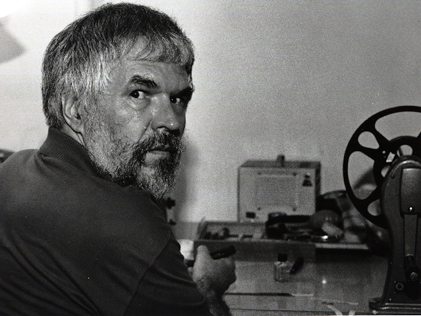
Stan Brakhage

Peter Greenaway is wrong

Peter Greenaway lecture: “New Possibilities: Cinema is Dead, Long Live Cinema”


Is Peter Greenaway correct in both his assessment and prescription for cinema? No. His call for a new cinema is like saying we need a new kind of painting, one that does away with brushes, with the canvass and its tyrannically limiting edges, with paint, with the subject, with even the typical displaying of paintings. We did that, remember? It didn’t work that well; what we generally got was academic, “meaningful” meaninglessness. I understand each of the four cinematic tyrannies Greenaway decries (people have been decrying them for decades), but I think Greenaway is wrong, not in his observations per se, but in his approach. Greenaway’s approach is very much within a Cartesian/Enlightenment Project vein. He is mired in the analytical, in particulars, in a world without ultimate, normative positions. In fact, one can easily say his entire talk, though fascinating and entertaining, is a kind of extended opinion piece delivered with pomposity and dry humor, but no more.

This is not to say that his ideas are not insightful or helpful. They are, and he certainly is a filmmaker who is exploring cinema and its possibilities more than some filmmakers today. However, the real need, the real requirement regarding cinema (and any artform), is not to begin with an examination of the particulars and the technologies of the form, or even the history or the form, but with the question: What is Man? This is the great lost question of our age. Instead, what we get with Greenaway, as evidenced in his various examples of his own work, are ever more complicated, lengthy, and virtually un-watchable mashups of techno-cinema musings (no matter how philosophical they may appear) providing ever more information, ever more detail, ever more cinema-of-attractions juxtapositionings, but less and less essential humanity. In short, Peter Greenaway’s message is ontologically and teleologically dead; an empty and vain promise. Greenaway’s position is, before he even begins, one of hopelessness–and he revels in being the ring master.

Still, and from an entirely different direction, I will proclaim: Long live cinema!

Andrei Tarkovsky on Art and on Cinema

The Politics of Gender in French Cinema

French professor Geneviève Sellier (Université de Caen–senior member, Institut Universitaire de France) gave a lecture “The Politics of Gender in French Cinema” at New York University’s La Maison Française on April 14th, 2010. Sellier is the author of Masculine Singular: French New Wave Cinema (Duke University Press, 2008; translated by NYU Professor Kristin Ross).

Here is the audio of that lecture:

http://www.google.com/reader/ui/3523697345-audio-player.swf

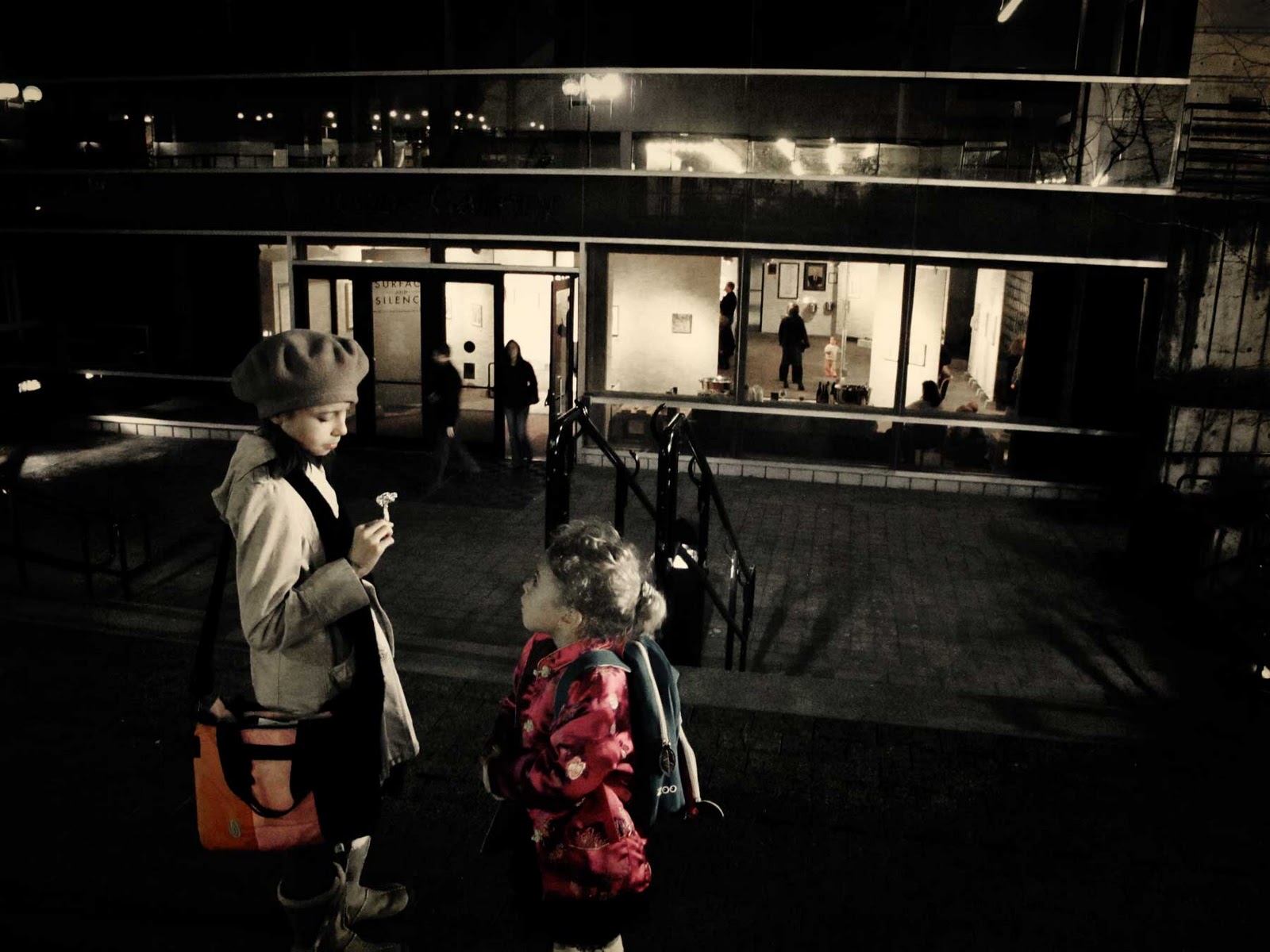
>art show

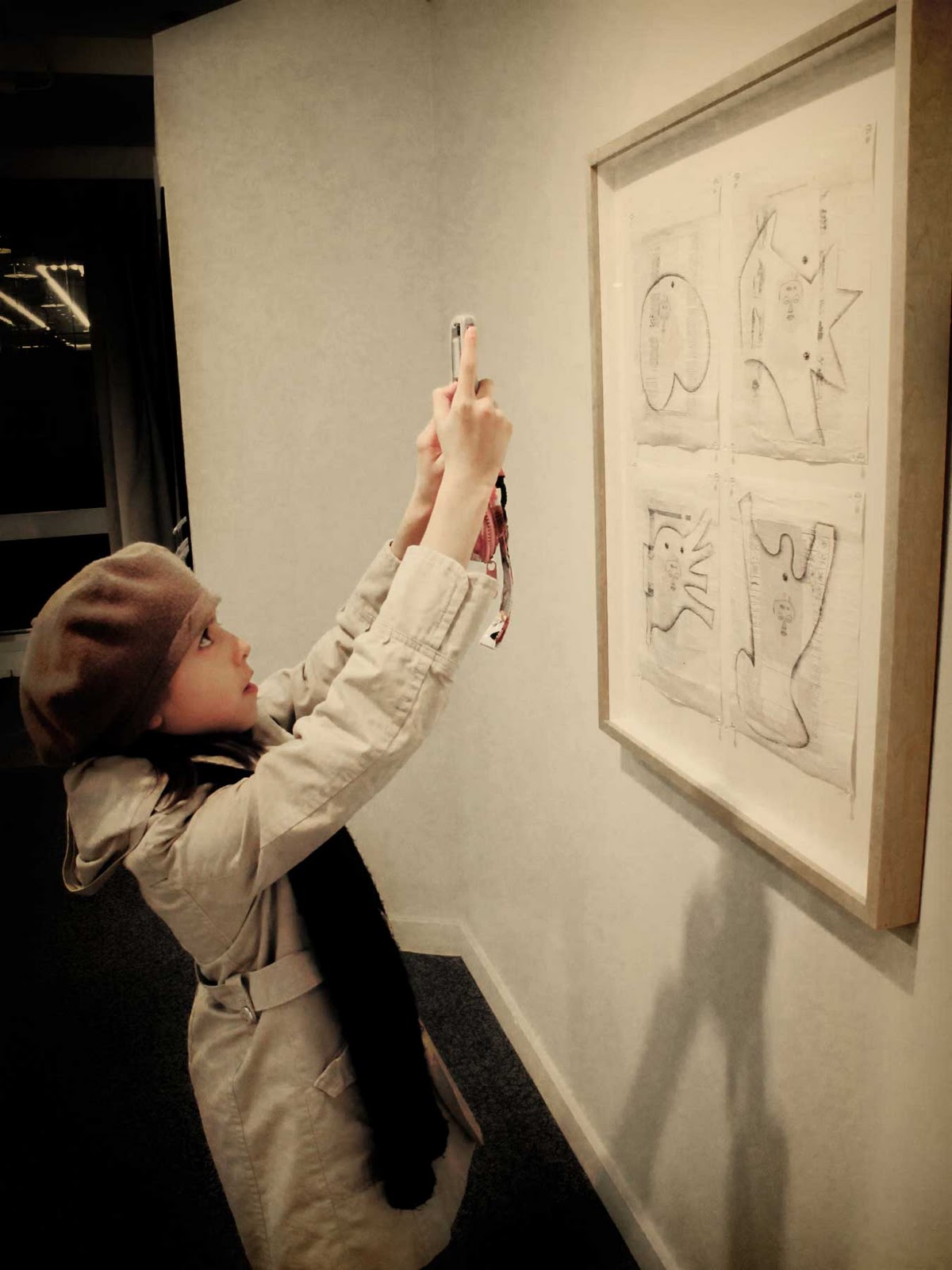
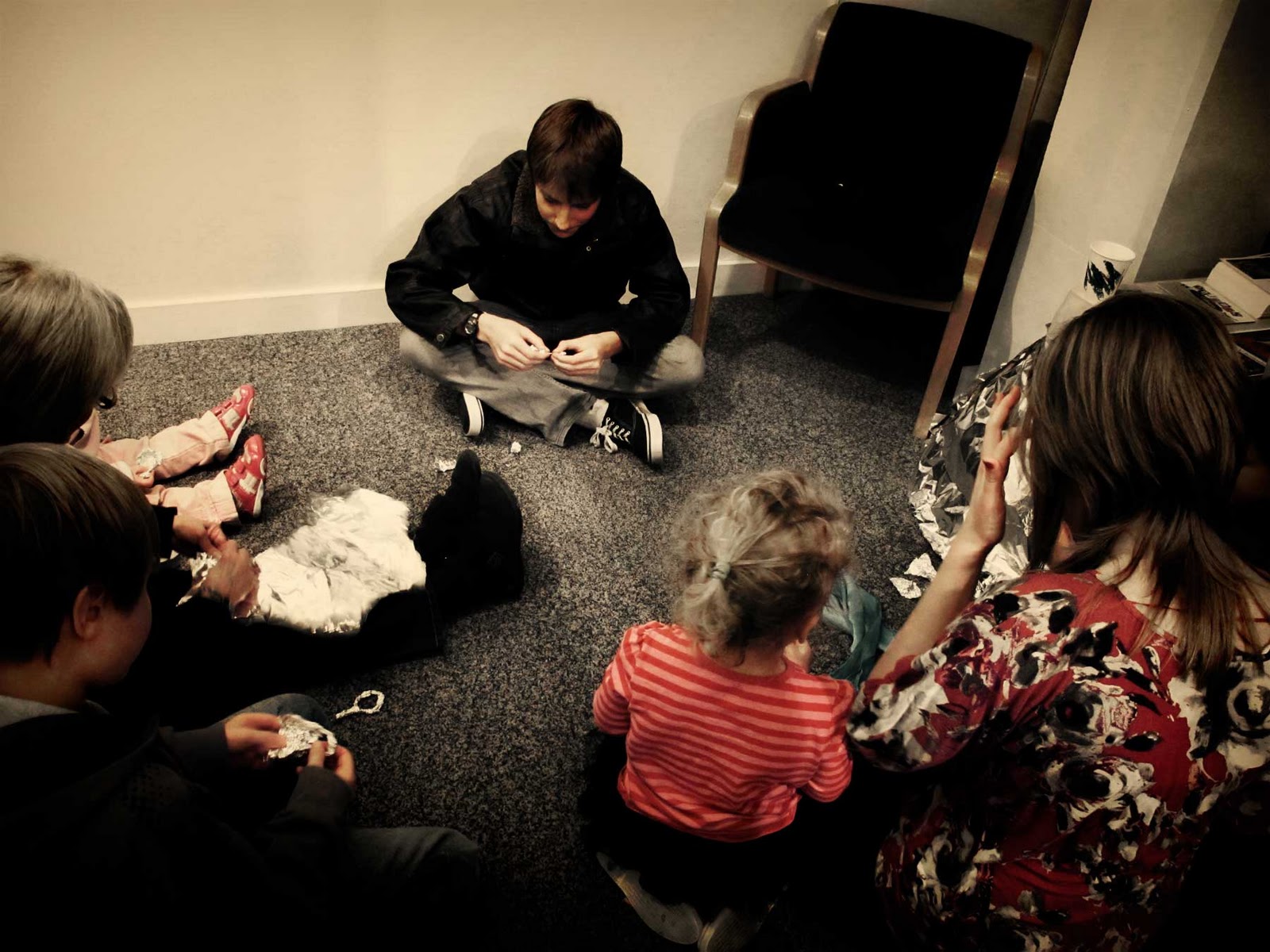
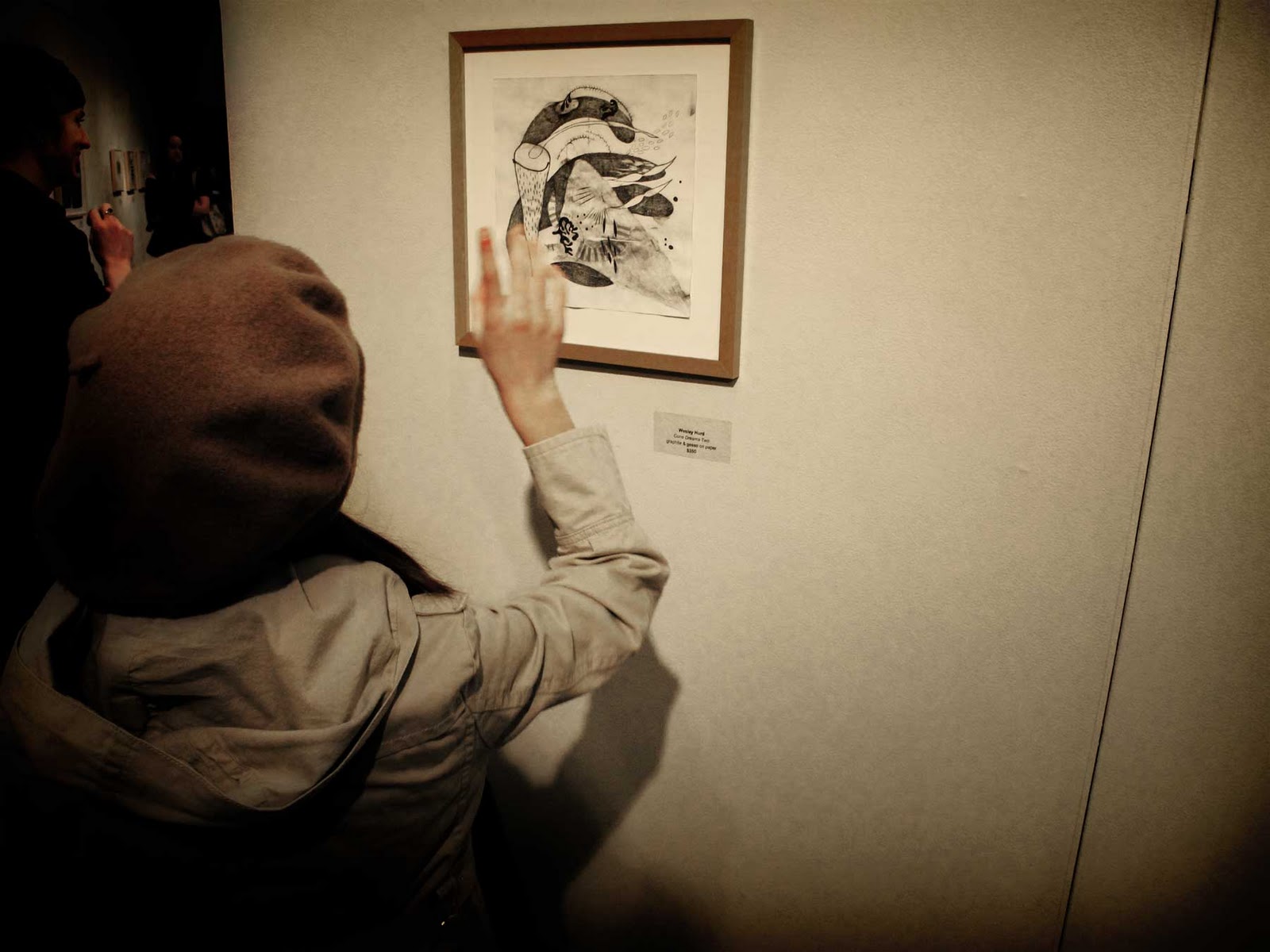
>Last night I took my girls to an art gallery opening for our friend Wes Hurd and his long time friend and fellow artist Rafael Perea de la Cabada. The show is called “Surface and Silence.” Here are a few pictures from our visit:

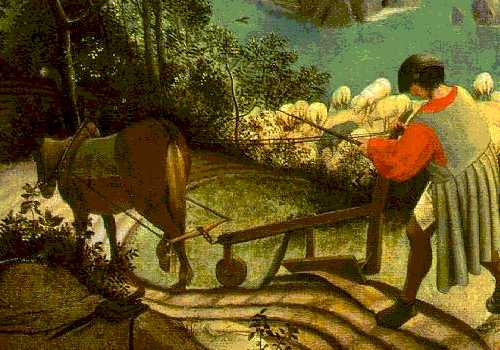
Ploughed and harrowed: Watching films as a preparation for death.

I have been examining my inclinations lately regarding the kind of cinema I am drawn too. The fact that I do that, and say that I do that, marks me as a questionable character. Nonetheless, I am one of those types who cannot stop noticing my own thoughts, wonder about their provenance, and question their meaning. Naturally, if that is the right word, I prefer films that work along similar lines as my mind. In other words, I prefer films that give my mind time to think and reflect as I watch. I like slow films that carefully, and with nuance, build image upon image, and rely on subtleties and levels of meaning. I find action films the most boring of all films. This is strange because cinema is the art of movement. It is also strange because I love some action films quite a lot (e.g. Die Hard, 1988).

Though I came to film as did many of my generation, through Disney and television, through comedy and western, I took an educational turn down the path of art history, of philosophy, of the humanities, and so went the course of my mind. In college I was introduced to foreign films and they became a kind of revelation for me. I discovered I was sensitive to film as an artform as much as a way to tell stories and entertain. Sometimes viewing films became difficult for me as each scene, each pan of the camera, each edit evoked a multitude of thoughts. I would be simultaneously transfixed and distracted by a film. I would frequently not finish films, then, when I did, I would sometimes be overcome for days. Needless to say, this kind of film viewing is not typical, though I know it is not uncommon either. I will admit that it may be a kind of limitation, but it is who I am. It is also personally annoying at times. I find that I seek that “overcoming” kind of experience, even to have my life changed forever, and yet I fear it too. One does not wish the existential crisis to come, but one cherishes those that have come. One does not want one’s mind to be taken over, as it were, but one needs to be shaken. So I struggle between the desire to be profoundly redone by a work of art and the desire to remain safely as I am.

I have wondered why I seek out art for this purpose. I know art can be a distraction or a light pleasure. But I have often disdained art used for those purposes, though I know this attitude is incorrect, for art can function in many ways and for many purposes. Recently I realized how I have though about art; I cannot say it better than Russian filmmaker Andrei Tarkovsky:

The allotted function of art is not, as is often assumed, to put across ideas, to propagate thoughts, to serve as an example. The aim of art is to prepare a person for death, to plough and harrow his soul, rendering it capable of turning to good. (Sculpting in Time, p. 43)

To prepare a person for death, that is what I have sought; to be prepared for death. I am not morbid in this sentiment. I do not seek death. But I have been on a mission of sorts since my youth to seek the final implications of belief. I long for films (and any art) to take me there, or push me there. A film does not need to be heavy handed, nor does it need to be dark. It can be full of light and life, but it does, at least, need to reach into one’s soul, as it were, and open it up to a kind of receptivity. I long for that harrowing and rendering. that is why, in the face of so many competent and popular films, my reactions are so often a shrug of the shoulders.

It is not that I cannot be amused, but I cannot help but think that amusement means “without the muses.” To be amused to to stop thinking, to be diverted from the the realities and implications of existence. Life, as we know it in this whirling electronic age, has become a world of diversions. We all need diversions at times, but diversions are not only not hard to come by, they are thrust upon us with such repetition and force that it takes an active and committed individual to ward them off. I believe such a commitment comes from the orientation of one’s soul toward (or away from) the infinite—to borrow a word from Kierkegaard. To turn away from diversions into a powerful work of art, and then to let that work of art do its function, and to be receptive to that function, is a kind of antidote (though not a complete cure) to a life of amusements. It is not the only way, but it is one way.

There is, however, a caveat somewhere in all this. That is, one must be able to trust the artist, the filmmaker, if one is to be thus undone. I cannot, I should not, allow any artist to plough and harrow my soul unless I know that artist’s character. This may require one to push back against that first viewing, that sacred viewing that no one wants disturbed, and to take a cautious approach. This is why the choice to view one film over another, or to take a chance on a film, ought to be based first on who is the filmmaker and not the actor. It is the filmmaker who is accountable. It is the filmmaker who must be trusted. I like a great many films for various reasons, but this need to trust the filmmaker brings me back time and again to the likes of Bresson, Dreyer, Rohmer, Tarkovsky, and Renoir, and why I appreciate, but with caution, the likes of Bergman, Allen, Antonioni, and Tarr. I’m sure anyone reading this can come up with their own list of filmmakers.

Does anyone else think this way?
>SX-70 (1972)

>

One of the greatest inventions of the 20th century in a promotional film by two of the most important designers.
Directed by
Charles Eames
Ray Eames
Writing credits
Charles Eames
Ray Eames
Produced by
Charles Eames
Ray Eames
Original Music by
Elmer Bernstein

>Bluegrass time capsule

>This is a clip from a film on American bluegrass culture – its music, its dance, and the people who created it. I love being able to find gems like this.

Here is the blurb about this piece:

Way back in 1964, New York filmmaker, David Hoffman was headed down with his new 16mm hand help camera (weight 49 lbs!) to spend three weeks driving the backcountry around Madison County, North Carolina, in the center of Appalachia, with the 82 year old founder of the pioneer Asheville Mountain Music and Dance Festival, Bascom Lamar Lunsford. The resulting film, “Bluegrass Roots” lets you hear and experience the hard scrabbling, dirt road real people sounds that dominated the back country of the southern mountains 40 years ago. It presents a string of the most extraordinary singers, players and dancers the BlueGrass Mountains had to offer. Many later became famous. Some were never heard from again. Most of the songs are classics, including Lunsford’s own tune, “Mountain Dew.” This scene was filmed at Bascom’s home with a local dance group came to dance in Bascom’s living room.

When this film aired on Public Television in 1965, TV Guide gave it a full-page positive review, because Americans had never seen a documentary on the roots of Bluegrass and Country music. Today, the dirt roads and the moonshine counties are largely modernized, and Bluegrass Roots, stands as a record of a uniquely talented group of people at a time just before the coming of television, changed them.

More can be found at the film’s official web site.

The spiritual disciplines of a married woman

Typically one does not go to Godard seeking a spiritual film. Not that his films are devoid of spiritual concerns (his 1985 film Je vous salue, Marie deals directly with spiritual concerns) but Tarkovsky or Bresson or Kieslowski are more typical choices for spiritual cinema. On the other hand, through a different lens as it were, Godard is a very spiritual director, particularly when it comes to his critiques of modern society. On the surface he catalogs – in his own dry humor – the many phenomena of our strange and extravagant late-industrial culture with all of its gaudy materialism, its objects, and its fetishes. And yet are not his characters often living out their new modern spirituality in a sea of things, words, actions, violence, sex, love, books, images, ideas, advertising, and every other signifier of something other? That something other may, in fact, be faith. The question, then, is what is this modern faith?

Godard’s cinema has always been a cinema de jour. His emerges from the endless world of the now. In this age where “God is dead” the drive within each of us for meaning, and finding that meaning in relation to something outside of ourselves, has not gone away. If we find no God we will make one, and as is always the case, we fashion our gods according to our own needs and desires, and in our own image. We then adopt forms of spiritual disciplines that serve our image of God and the imagined requirements of our new spirituality.

What is a spiritual discipline? There are numerous definitions but, in short, a spiritual discipline is a habit or regular pattern of specific actions repeatedly observed in order to bring one into closer relation to God and to what God desires for one to know. It is something one does as an act of devotion and a means of advancement or growth.

How do we see this playing itself out in Godard’s films? In À bout de souffle (1960), a paean to the Hollywood gangster film, Michel exhibits a kind of ritualistic and constant homage to the film gangster archetype, Humphrey Bogart. He goes through the motions, adopts character traits, tropes, stylistic postures, and language to inhabit the ideal of his film hero. His focus and devotion are fundamentally religious, and his actions play out like spiritual disciplines – immature and humorous at times, but spiritual disciplines nonetheless. What Godard gives us in his unique way is a portrait of the spiritual status of French youth in 1960. In a world where traditional religious options fade they are replaced by a new religion, that of the cinema. In the end Michel dies as a martyr to his faith.

In Une femme mariée: Suite de fragments d’un film tourné en 1964 (1964) Godard presents another kind of spirituality, that of the sexual body in a consumeristic world. Although sexuality is one of the oldest “religions” in human history Godard examines it within a thoroughly modern context. Charlotte, who is married to one man and in love with another, is juggling her relationships while gauging herself against the constant inputs she receives (accepts, seeks) from advertising – in particular, advertisements about female beauty and, especially, those pertaining to the ideal bust. Her life becomes a constant calculation of actions – maybe motions is a better word – to present herself both to the world and to herself. She becomes both priestess and offering at the altar of modern woman.

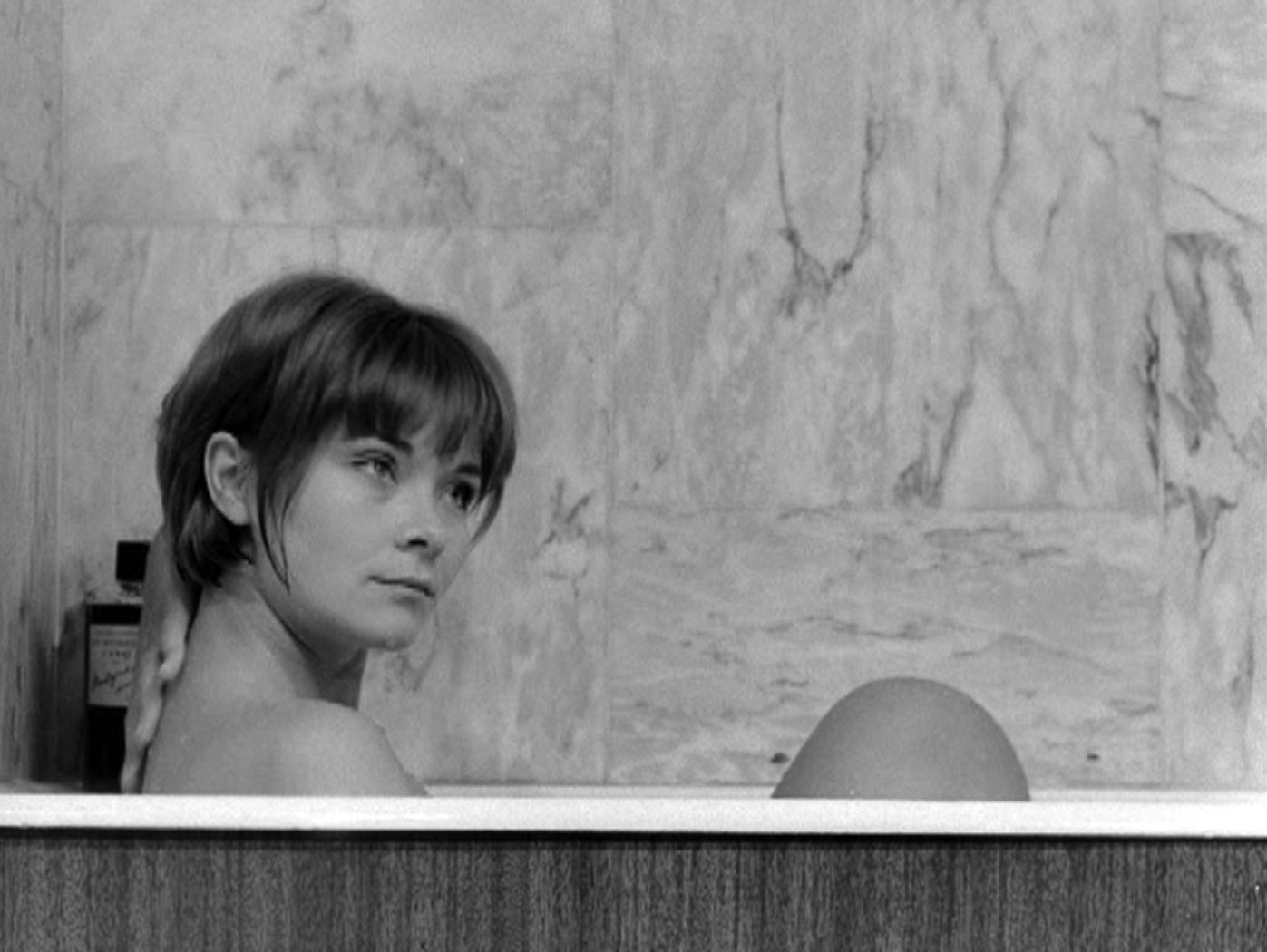
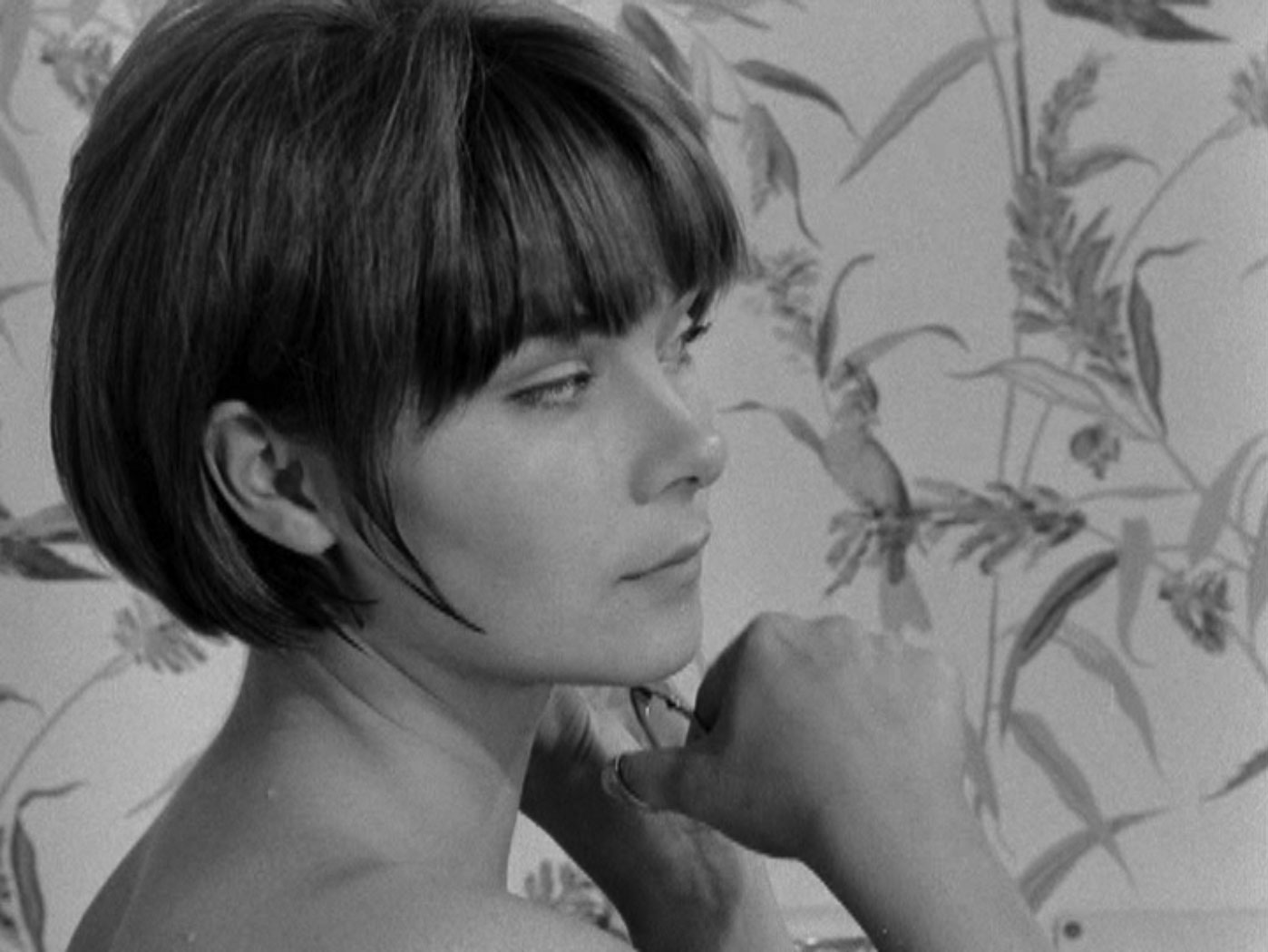
One scene in the film highlights Charlotte’s commitments. Here she is finishing her bath.

une-femme-mariee-1

She meditates (on what we do not know) with perhaps an intelligent expression, perhaps vacuous. She exits the bath. The camera followers her legs. She dries off.

une-femme-mariee-2

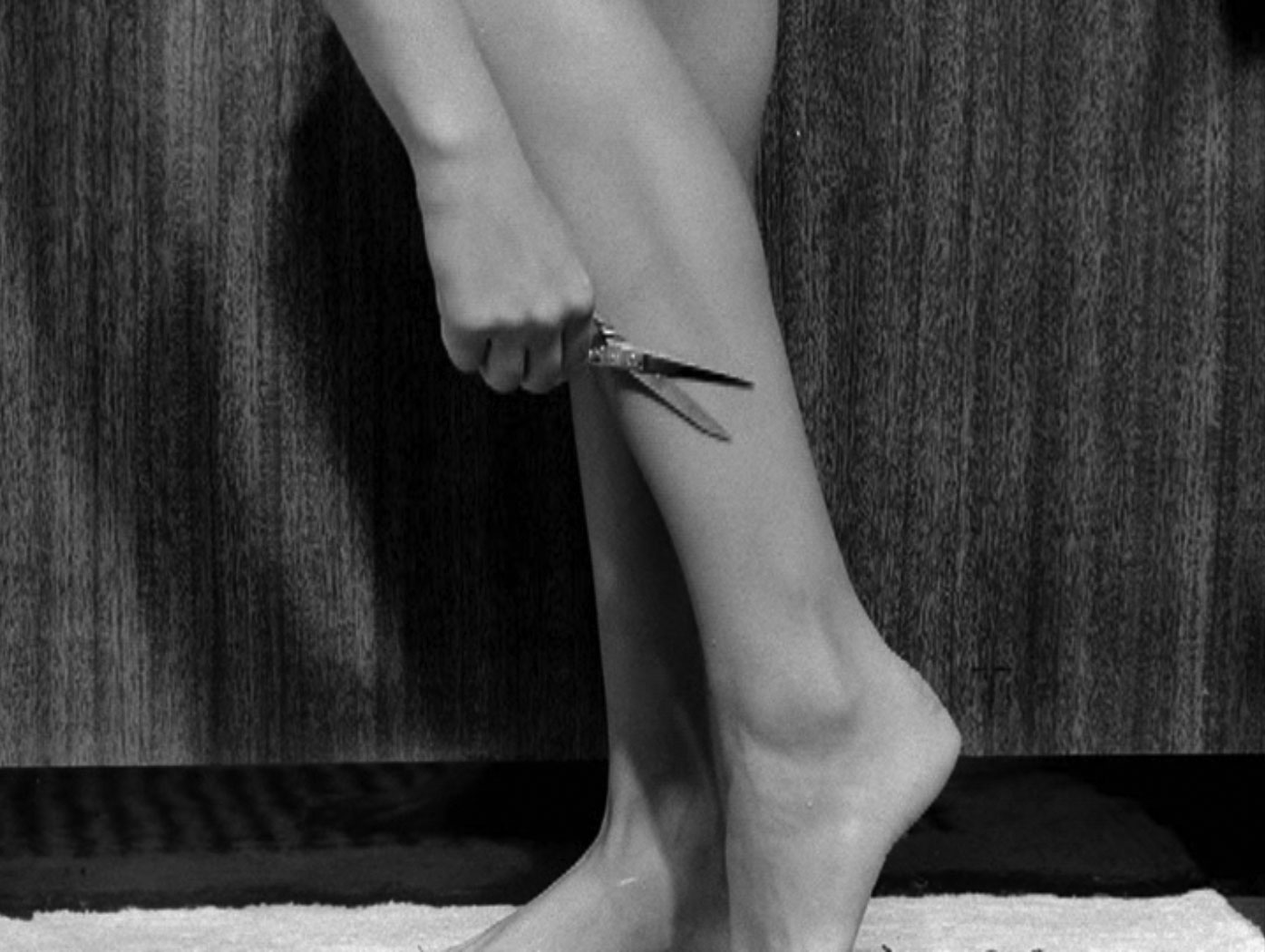
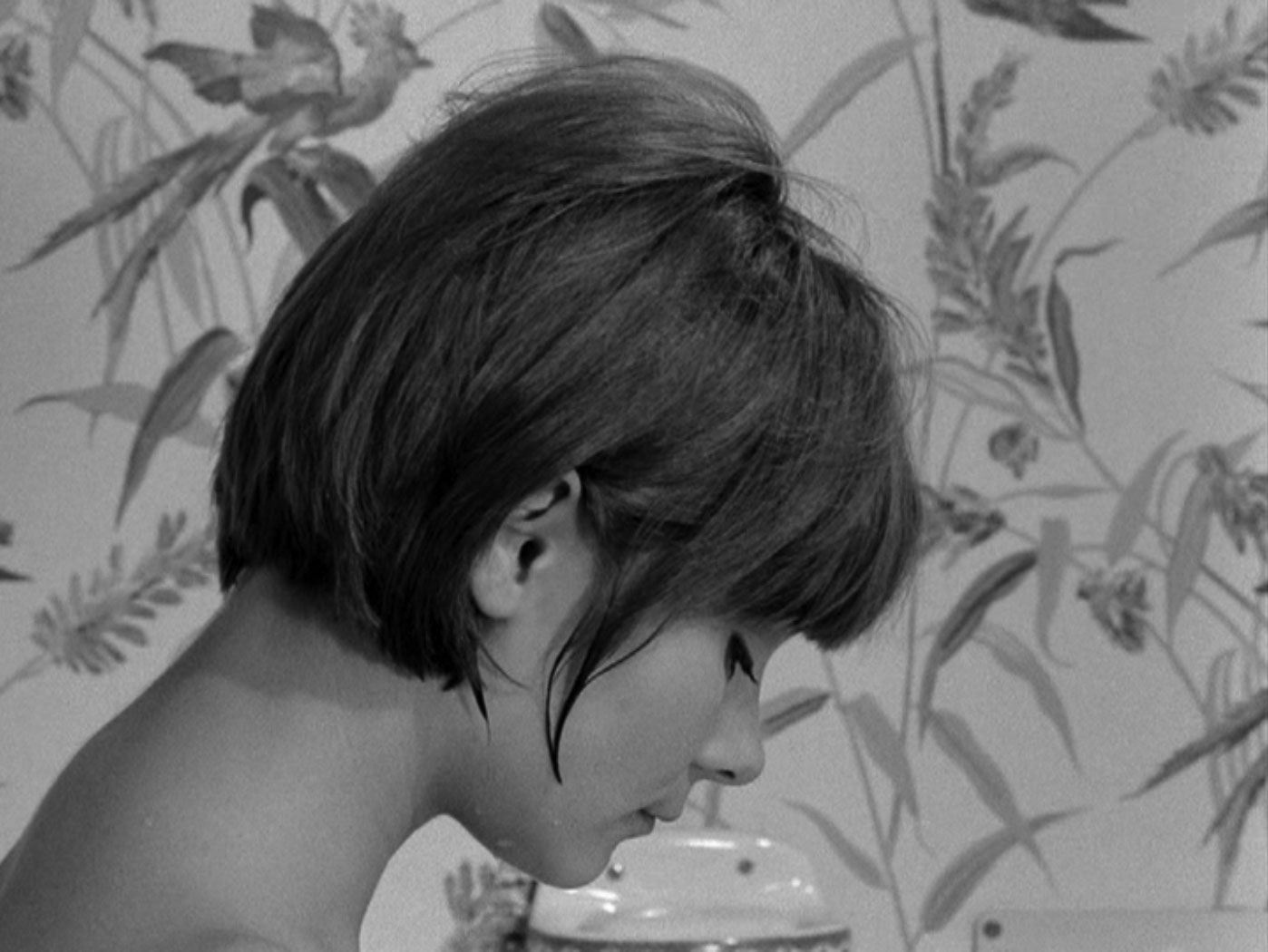
She then used scissors to trim her leg hair.

une-femme-mariee-3

Then trims her already carefully coiffed locks.

une-femme-mariee-4

She then trims her pubic hair.

une-femme-mariee-5

The camera does not follow the scissors, but we hear them and assume she is not trimming her bellybutton hair.

European films of the 1960s gained a reputation in the U.S. for being risqué. Though tame by today’s standards, to have a woman trim her pubic hair, even if only suggested, would have called attention to itself, and Godard makes sure the camera holds long enough for us to notice. Within the context of the film this shot makes a great deal of sense. Her bathing and grooming, and the calling attention to the details of her actions present to us the actions of her spirituality, her disciplines. This is not a world without a god, rather it is a world of many gods (her husband worships airplanes and is a pilot) and her god is a combination of love, sex, her body, her image as woman, etc. In this quiet moment we are voyeurs to her prayer, to her communion.

More than Godard’s other films of this era Une femme mariée is a highly formalized, stylish, and unusually crafted visual fugue of body parts, actions and gestures, and environments. At times we are drawn toward comparisons with Dreyer’s La Passion de Jeanne d’Arc (1928) for its uncompromising formalism and spiritual quest of its protagonist, and to Resnais’ Hiroshima Mon Amour (1959) also for its formalism, sexuality and the spiritual struggle of its characters in light of nuclear weapons. Godard takes the next step to characterize the spiritual quest of the modern woman (we should included men as well, though that is sometimes debatable with Godard) as neither traditionally religious/Christian or driven by existential terror, rather the new spirituality is a commodity based religion of self-image mediated through the world of late industrial production and consumerism. What makes this work, and elevates the film, is that Godard’s characters do not suffer the anguish of extreme religious piety or existential nihilism, rather they fully inhabit their world as accepting individuals who embrace the proscriptions of their circumstances – like peasants in medieval Europe, like good 20th century bourgeoisie.

In this way Godard stands as one of the more significant artists of the late modern/post-modern period. Later he would take these themes to greater and more political heights with such films as 2 ou 3 choses que je sais d’elle (1967) and Weekend (1967). Godard, though thoroughly materialistic, may also be a more spiritual director than most – a consideration we do not consider enough.

"I Am Your Waiter Tonight, and My Name Is Demetri"

…a poem by Robert Hass. Is this not an example of what a poem should be? If I could write a poem half this good only once in my life I would be pleased.