Andrey Tarkovsky, the brilliant Russian filmmaker, kept a diary: Time Within Time: The Diaries, 1970-1986. It is filled with ideas, random thoughts, complaints about the Soviet film industry and his health, future film plans, descriptions of his family, reviews of books he’s read, and the regular inability to get the support he needed to make and distribute his films. He also talks about his process as a filmmaker and traces his spiritual journey to God.
Recently, I’ve been rereading his diaries and a passage jumped out at me.
Lord! I feel You drawing near. I can feel Your hand upon the back of my head. Because I want to see Your world as You made it, and Your people as You would have them be. I love You, Lord, and want nothing else from You. I accept all that is Yours, and only the weight of my malice and my sins, the darkness of my base soul, prevent me from being Your worthy slave, O Lord! Help me, Lord, and forgive me! (February 10, 1979)
Wow.
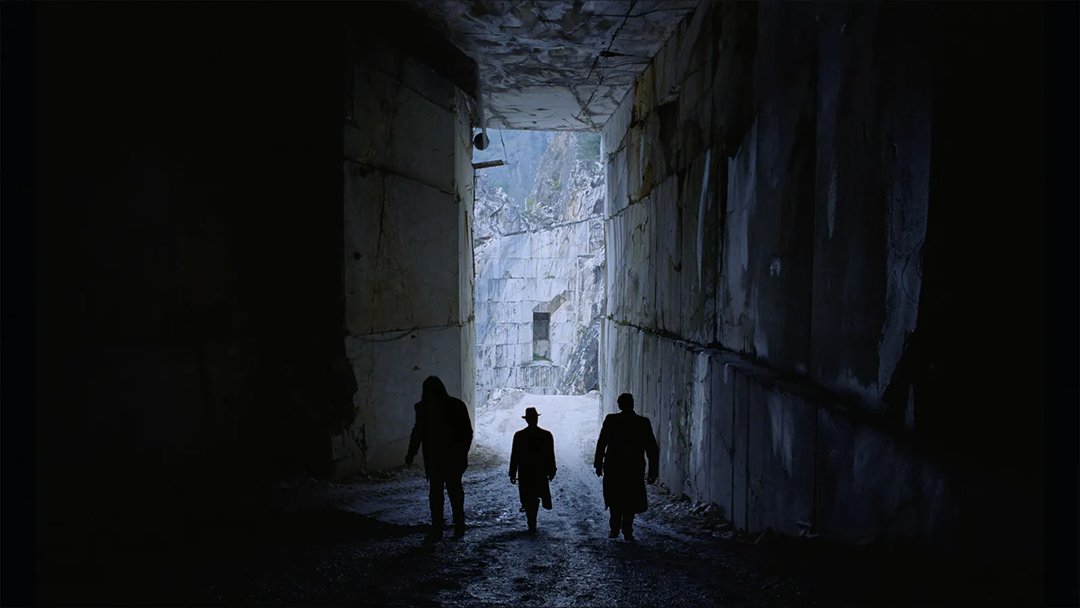
This was written about three months before his film STALKER was released in May of 1979. The film had already had a famously tumultuous production and now Tarkovsky was facing issues with the authorities about the film’s final edit and whether it would actually ever see the light of day.
Fortunately, the film was released and the world was given one of cinema’s greatest artworks.
“Because I want to see Your world as You made it.” When Jesus took Peter, James, and John up the mountain and was transfigured before them, they saw something of that world. “His face shone like the sun, and his garments became white as light.” (Matthew 17:2) What an experience that must have been. Art, at its best, gives us hints at the transcendent, calling us to something greater within us, to what we were created to be.
Tarkovsky’s films have never ceased to impact me. Each viewing offers new depths of meaning. Each film is utterly unique. His best films are like no other films. STALKER is one of my favorite films and at times it feels like a religious icon offering a kind of window into another realm, a higher realm of spirituality and beauty while simultaneously harrowing my soul and preparing it for death. This is, to me, the essence of a truly “faith based” film.
I have been reading The Brothers Karamazov by Fyodor Dostoevsky. I do not believe I was ready to read it before, though I tried several times. But now I am truly amazed. Every page has depth, riches, and profound psychological and spiritual characters studies. And the descriptions of life in 19th century Russia are utterly fascinating.
Perhaps I am ready to read this masterwork because I have been diving into Eastern Orthodox Christian spirituality. My mind and heart have been coming alive as I’ve explored the Divine Liturgy, monasticism, prayer, and the lives of the eastern saints. Naturally, this has led me to the Slavic (especially east Slavic) countries and their lived experience.
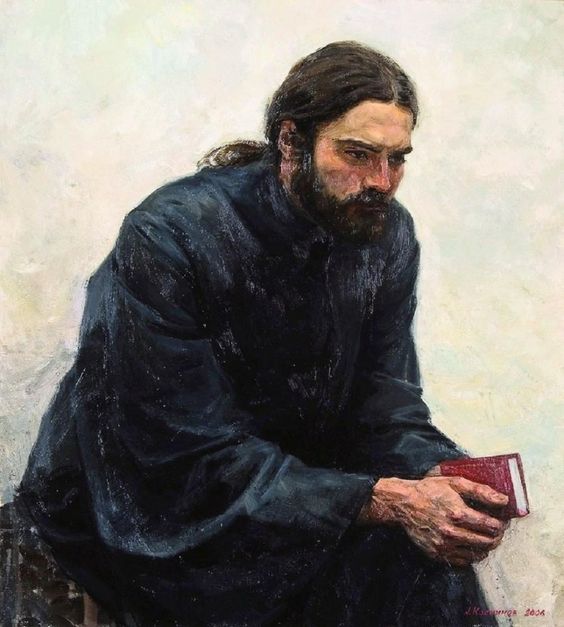
A Monk (Aleksandr Kosnichyov, 2006)
And then this passage caught my attention. It is showing the mind of Alyosha, a novice in the local Russian Orthodox monastery and the hero of the story:
Oh, how well he understood that for the humble soul of the simple Russian, worn out by toil and grief, and, above all, by everlasting injustice and everlasting sin, his own and the world’s, there is no stronger need and consolation than to find some holy thing or person, to fall down before him and venerate him: “Though with us there is sin, unrighteousness, and temptation, still, all the same, there is on earth, in such and such a place, somewhere, someone holy and exalted; he has the truth; he knows the truth; so the truth does not die on earth, and therefore someday it will come to us and will reign over all the earth, as has been promised.” — from The Brothers Karamazov
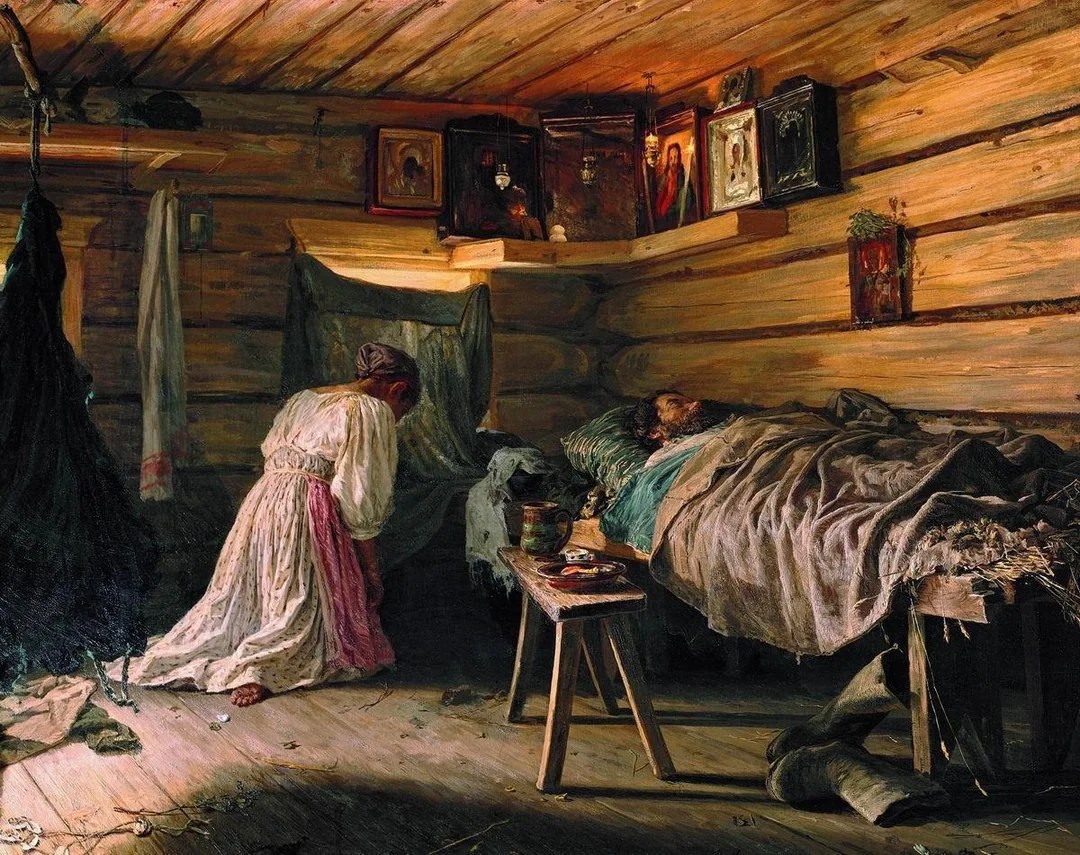
The Sick Husband (Vassily Maximov,1881)
I think of how desperate we all are to know that somehow the promises of God are true, that they will be fulfilled someday, and that He can be trusted. I look at myself and see a wretched sinner and I think the world cannot count on me to be holy enough or faithful enough such that truth will not die on earth. But if I am not attentive I might think of myself as different than that simple Russian and start to believe that, perhaps, I don’t need the saints. But I know in my heart the world needs holy people, saints, living and dead, that can be counted on. And as I see them I see too that the promises of God are true and good.
[published on the Feast of the Holy Cross]
Procession of the Cross in Kursk Province by Ilya Repin (1880–1883; Tretyakov Gallery, Moscow)
From the movie THE BRUTALIST (2024, dir. Brady Corbet)
The 2024 film, THE BRUTALIST, brought into focus a kind of 20th century modernist architecture that has polarized people from day one and continues to do so up to today. That style of architecture is known, rightly or wrongly, as brutalism. The film’s main character László Tóth (Adrien Brody), is loosely based on several modernist architects, one of which is Marcel Breuer, a Hungarian-American modernist architect and furniture designer. One of Breuer’s more famous works is Saint John’s Abbey Church (discussed below).
It is not uncommon for people to point to modernist architecture as visual examples in massive concrete of all that has gone wrong with society as a whole. Many Catholics have lamented the loss of traditional style churches for modernist designs and brutalist churches get the most derision. Personally, I love brutalist architecture. I don’t consider myself a modernist, though I’m also not a traditionalist. I love old churches. I love Gothic cathedrals. But I also love at least some of the brutalist churches.
But there is always an important question when it comes to any kind of church architecture: Is the design properly suited to the purpose of the space? The old Gothic churches certainly are suited for Eucharistic worship and prayer, but many modern churches are not well suited and some are very poor indeed.
Are modernist buildings good places to pray? to celebrate the Eucharist?
Saint John’s Abbey Church, architect: Marcel Breuer, source and overview
I may be somewhat of an anomaly. On the one hand I am an advocate of Traditional Catholicism, including Traditional Catholic architecture designed to serve Traditional Catholic worship which, it must be said, is actual and proper worship. On the other hand I love much of modern architecture. I love many buildings that many others do not like. I grew up in a modernist house, I studied modern art and architecture in college, and I have been a fan of early twentieth century and mid-century modern art and design. With this in mind, I found this lecture about one of the more famous (infamous?) modernist churches to be quite fascinating, not only for its informative content, but also because the lecturer gives a highly (almost ecstatically) positive perspective on exactly the kind of church design many would deride without hesitation.
Saint John’s Abbey Church, architect: Marcel Breuer, source and more images
This lecture below is by monk, educator, and artist David Paul Lange, OSB. Whether you agree with his assessments or not, this is an excellent overview of modernist principles in architecture, especially at the mid-twentieth century point, and why it made sense to people at that time to build a church according to those principles. It is also an excellent “unpacking” of the design, and the ideas behind the design, of a particular church, the Saint John’s Abbey Church:
I find Brother David Paul Lange’s speaking style to be a bit too breathless for my tastes, but he is a great evangelist for the modernist perspective in architecture, and for this church. But I have some questions:
Is his understanding correct about both modernist architecture and his interpretation of this church? I think absolutely.
Is this church a good representation of modernist architecture? I say, yes.
Is this church worthy of praise? As an example of modernist thinking, yes. As an example of excellent construction, yes. As a place for worship, you tell me, but I think no, at least not within a proper understanding of ideal Catholic worship.
Therefore, does this church represent a different ideal of worship than traditional Catholic worship? I think definitely so. But you tell me.
Notice a few things:
He speaks of praying more than worshiping. This makes sense given this church is for a monastic community which is focused a great deal on prayer, but it is also significant. The focus is more about the nature and needs of praying than offering a sacrifice to God. Praying in a church is a good and normal thing. However, prayer is a part of worship, but not the only part. Many spaces can be prayerful. Only specific kinds of spaces serve the needs of worship.
He speaks a lot of his own feelings. In a sense this entire talk is an explanation of his personal experiences of this church, and his feelings during and about those experiences. There’s nothing wrong with that up to a point, but as a Catholic would it not be better to also foreground the Body of Christ as a corporate entity a bit more? In that sense he would then speak more of the nature of man in general and his relationship with God. And then tie it back to this church and how it functions. The 20th century “turn” in the Catholic Church was arguably away from Eucharistic sacrifice and towards communal meal as the primary meaning of the Mass. I believe this radically changed Catholic’s focus towards their feelings and personal experience rather than the duty of giving Christ His due and seeking union with God.
This is more about a “modernist space” than a church (hence the title of the lecture), even though it is a church where the Eucharist is celebrated. He points out the way the outside comes into the church interior, reminding those inside of the connection with nature, what time of day it is, what weather is outside, etc. In this sense I gather the space functions a bit like stepping into a forest and praying. I like this in up to a point, but when I think of celebrating Mass I wonder about the idea of Heaven on earth and the traditional way churches close off the outside world and creating a space that is more heavenly than earthly.
He speaks of the honest use of materials, and how older churches seem dishonest somehow, using paint to create false impressions and faux marble, etc. This is a particularly important part of the lecture. I too love the modernist focus on materials. I also don’t believe such focus is necessarily bad for church design, but a church interior should be (traditionally speaking) a kind of three-dimensional icon of Heaven. Rough, earthy materials that evoke nature have their place, but they should serve a heavenly image, no? Here’s something I might explore in another post, but consider this: Is not a statue of St. Michael (for example) fake because it is not actually St. Michael? Same for the Holy Mother, etc? Would not any church that aspires to create a sense of the heavenly liturgy within its walls be a dishonest use of materials? Maybe. But perhaps that’s a “dishonest” use of the word dishonest.
The bell tower, he argues, with its horizontal lines, points to (or mirrors) the horizontal earth rather than to God. He claims it reminds him that God is everywhere and in all things, and perhaps that’s a good reminder, but this is a curious claim and raises the question, in my mind at least, what is the purpose of a church? To call us to the earth or to call us to Heaven? Do we not minister to each other (horizontally) because we have first sought out and worshiped God—a vertical action? If we do not begin with the vertical does not our horizontal orientation eventually become skewed?
He also mentions that the population of monks used to be 350, but now are only 150. They don’t need such a big church anymore. Only by way of correlation, but still interesting (and troubling): They commit themselves to modernist ideas, they build a modernist church to symbolically represent that modernist spirit, and not long after they lose 60% of their members. Apparently modernism doesn’t need monks. Perhaps modernism doesn’t really need man either. This is too big of a topic for a mere blog post.
At the end of the lecture, just before questions, he jokingly apologizes for going a bit long and keeping the Downton Abbey fans from their show — a show whose popularity arose from a longing for an earlier time, represented, in part, not by modernist architecture, but very traditional architecture, and clothing, and customs, etc. Will future generations swoon over the modernist mid-twentieth century in the same way? Perhaps Mad Men did some of that (but what a dark show), and perhaps The Brutalist does so as well.
The first question at the end, by another monk (I believe), is exactly my question, and worth the time for watching this lecture. I have never been in this church, so I have no way of saying what my thoughts would be, but I also wonder if such a place is naturally conducive to prayer, or liturgy at all for that matter. And I truly get the experience from having studied art and swooning over art that others think is stupid or meaningless. And I also find the questioner’s reference to the new cathedral in Los Angeles being obvious a place of prayer puzzling, since it also has been roundly derided for its modernist and non-Catholic design. The answer to his question included: “Do people get modernism? I think the answer is no, by and large,” and “Until I explain this…” In other words, modernist art and architecture requires explanation in order to appreciate it. This is one of the attractions and weaknesses of modern art. I have experienced exactly that feeling of “getting it” after studying it. And yet, I think this may be why modernist architecture is not a good choice for Catholic churches. He also says we are not actually living in a “modernist” society. In terms of art and architecture this may be true specifically in light of design principles–modernism, from an art historical perspective occurred at a time in history which is now past. However, the spirit of modernism as a philosophical and theological undergirding of society and the Church is still very pervasive. How modernism in ideas and modernism in design interrelate is a fascinating topic too big for this post.
In the end I find the Abbey Church a beautiful and amazing space I would love to visit. However, I do believe it is probably best suited as a performance space than as a church. I would not advocate a church being built along these lines. Rather, I think we should be informed more by the needs of the Traditional Latin Mass (or the Divine Liturgy of the East) with its focus on God rather than man, uniformity with the Church through history, and creative use of new and old materials that look to the past for inspiration and the future for permanence and authentic timelessness — which can only be done by beginning with a true understand of both God and man.
Finally, I wonder if much of the problems with using modernist design principles and materials for Catholic churches could be solved if the liturgy was the Traditional Latin Mass. In other words, imagine if Vatican II never happened, and the Novus Ordo Mass never promulgated, could churches have been designed in somewhat contemporary and modernist fashion and still fulfill the needs of the TLM? Can architects build “honest” churches and still be Catholic? I think so. But also keep in mind that the St. John’s Abbey church construction began on May 19, 1958, and lasted until August 24, 1961 — well before the council even began, and long before the Novus Ordo Mass was promulgated.
WHAT DO YOU THINK? LET ME KNOW IN THE COMMENTS!
Also, if you want to know a bit more about the architect Marcel Breuer:
If you want to know a bit more about the building of the church:
I’m diving into Science Fiction. And I’m loving it.
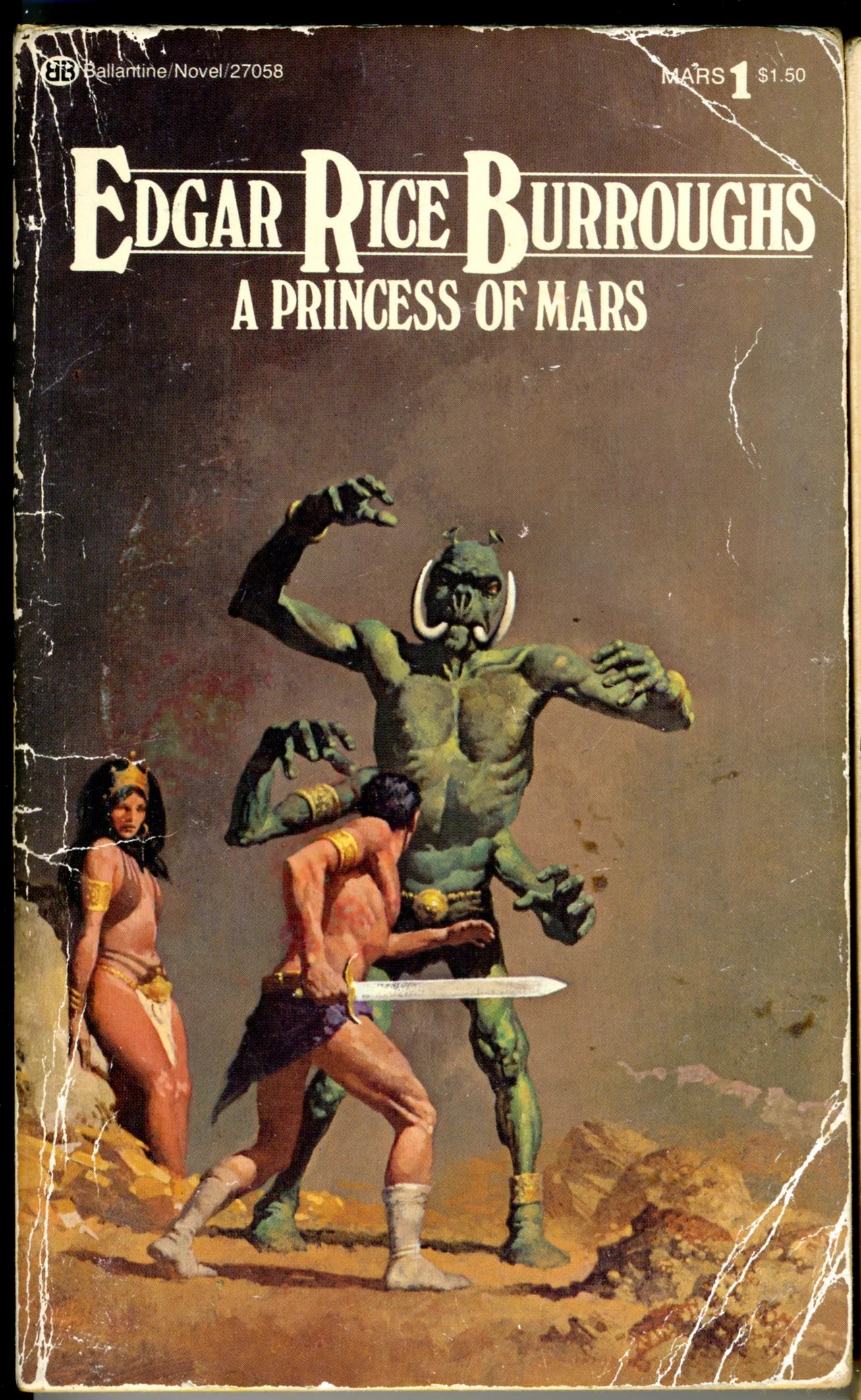
When I was a kid I liked sci-fi literature quite a lot. I didn’t read a ton of science fiction books, perhaps because I’m a slow reader and I also liked to read other kinds of books. But I remember reading Ray Bradbury’s short stories and loving them. I also had an original hardbound copy of Burroughs At the Earth’s Core, which I absolutely loved and eventually lost. I also read and loved Burroughs’ Tarzan and several of his John Carter of Mars series. I also loved sci-fi films and television (STAR WARS IV was life changing for me as an eleven year old). And I vaguely remember reading Herbert’s Dune and Asimov’s Foundation (remembering almost nothing btw) in college and loving those too. But time went by and my sensibilities began feel the weight of needing to read the classics of Western Civ. I can’t say how many times I started The Brothers Karamazov but it’s the same number as the number of time I didn’t finish it.
It’s been a long time since have read cover-to-cover a work of fiction let alone science fiction. Long gone have been the days when I let my imagination run over the covers of classic sci-fi books purchased at the supermarket or the used book store. These covers activated my young imagination and probably libido.
For nearly three decades now most of my reading has been non-fiction. I’ve really struggled to read fiction. But recently I decided two things: 1) I’m going to read fiction in the morning rather than when I get into bed and fall asleep five minutes later, and 2) I’m going to read science fiction rather than from the “western canon” of so-called great literature. Why science fiction specifically I can’t say, but it seems like the right choice. Maybe I’m more willing to give into my inner nerd and admit I love a lot of what sci-fi has to offer my imagination.
For as long as I can remember I’ve religiously spent between one and two hours every morning reading. I’m a man of routine. My coffee and my books and a quiet house before everyone wakes up are sacred to me. But I’ve lived for so long believing I should be reading “serious” stuff and not frivolous trivialities. Oh well, that’s changed.
In a sense I feel like I’m trying to catching up. I’m looking at Hugo and Nebula awards lists, recommendations from others, and my own knowledge of sci-fi (and some guilt about books I should have read by now). My list of must-reads is growing, and it’s kinda exciting.
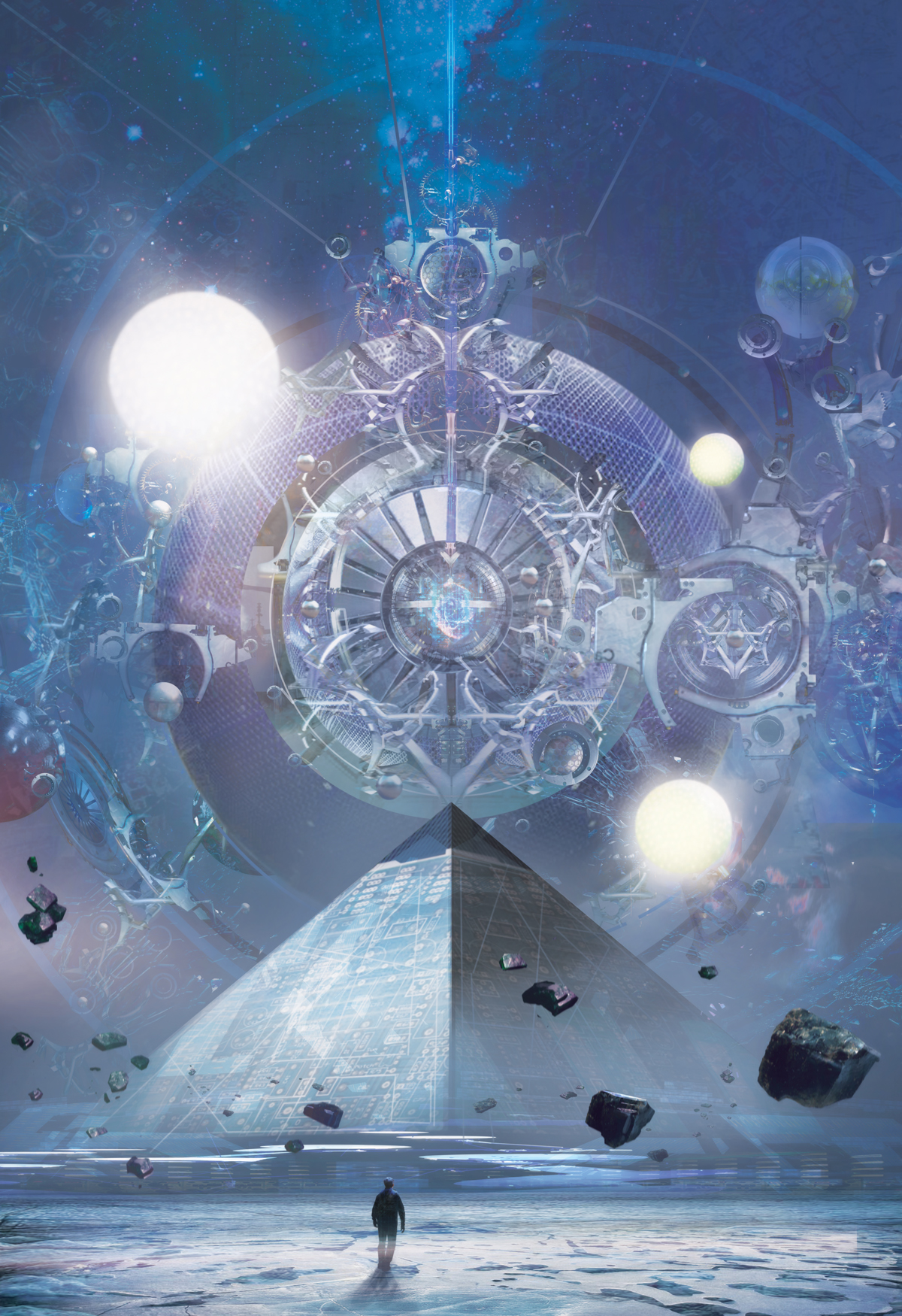
I just finished N.K. Jemisin’s The Fifth Season (decent read, more fantasy than sci-fi), Liu Cixin’s The Three-Body Problem (kinda amazing, need to read the next two), and H.G. Wells The War of the Worlds (so wonderfully victorian in tone and style). I’m also re-reading Asimov’s Foundation (book one and loving it), pecking away at Bradbury’s Fahrenheit 451 (classic and interesting) and Orwell’s Nineteen Eighty-Four (a much better read than I expected, but I shouldn’t be surprised). I’ve also got a ton of books ready and waiting to be read next (I’m getting a lot of recommendations from online reviewers and “top” lists). I welcome any suggestions too.
In short, I’m loving reading these books. Switching to reading fiction in the morning is fun and I’m actually getting through these books. This surprises me – I can actually finish a book!
Finally, I have to say I love the cover art of quite a lot of sci-fi books. There must be something about the genre that inspires artists more than most other genres, for the art is often staggeringly good.
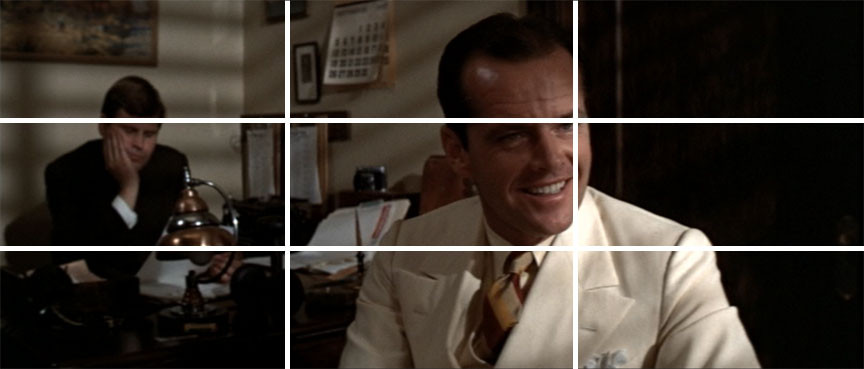
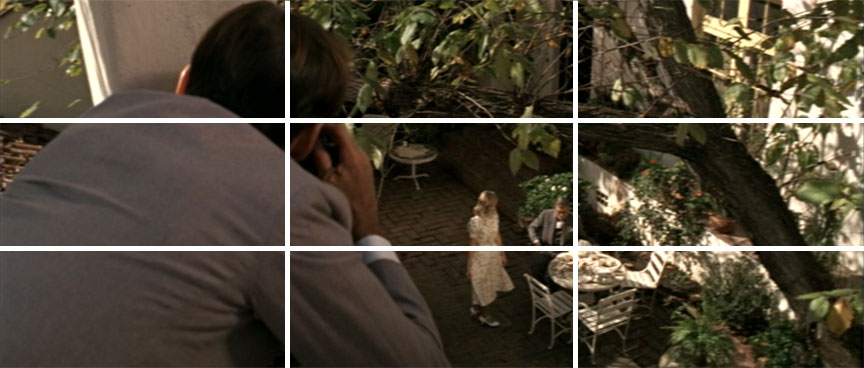
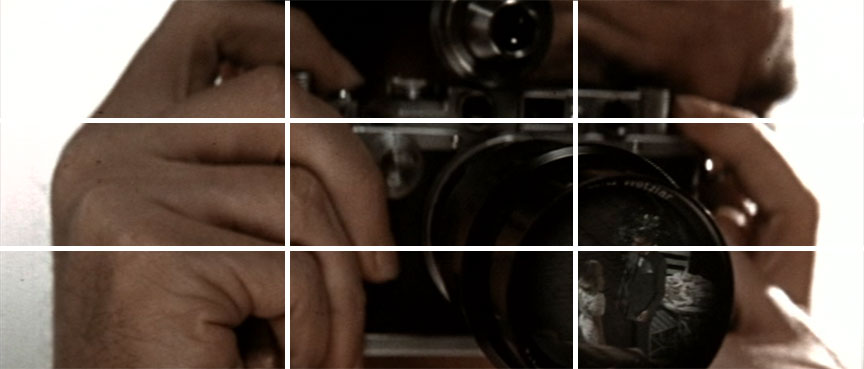
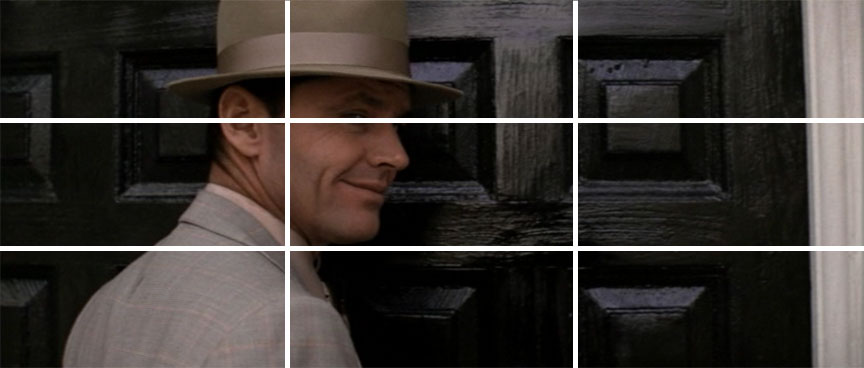
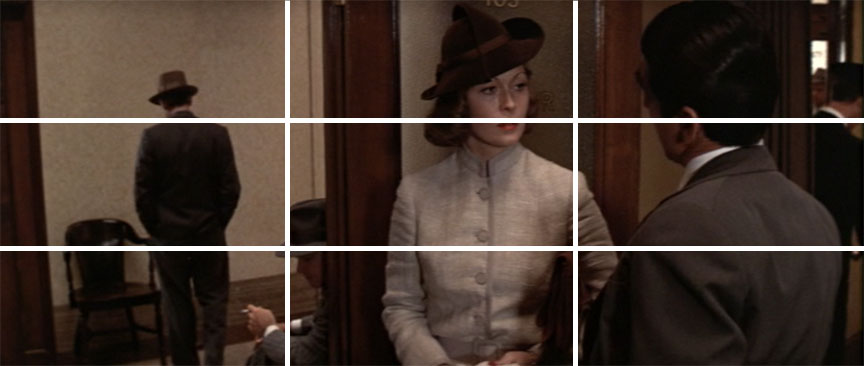
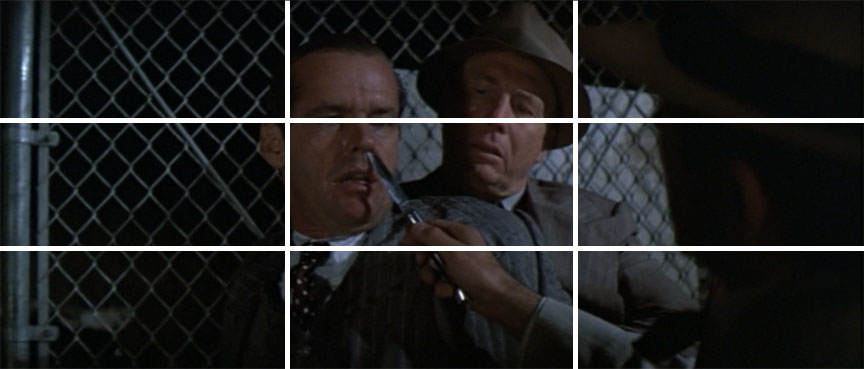
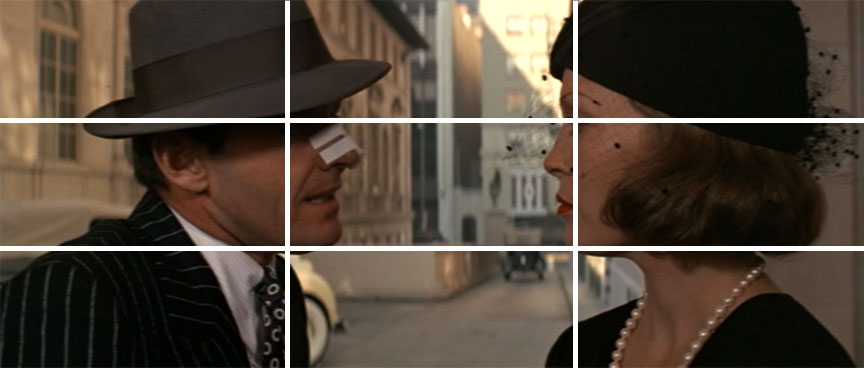
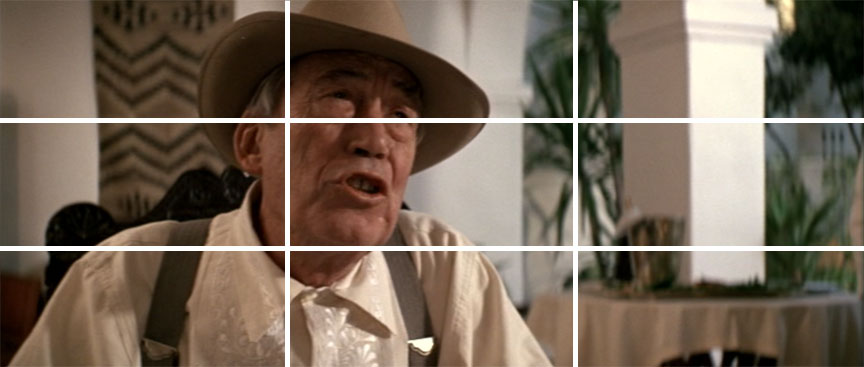
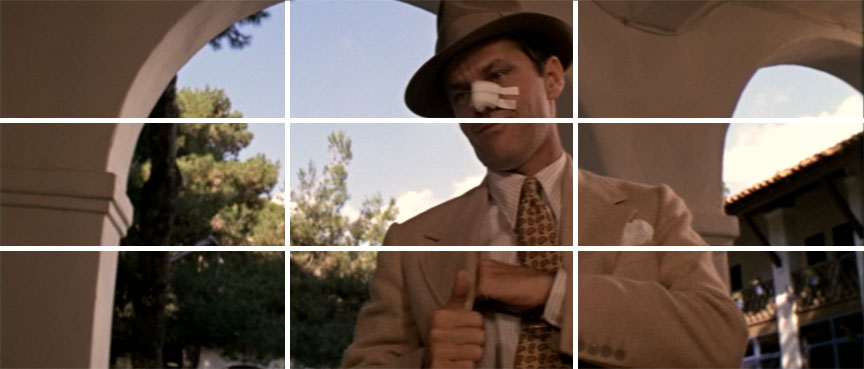
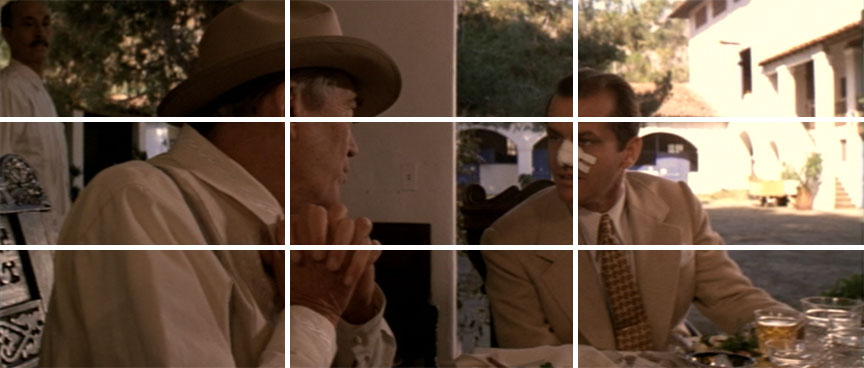
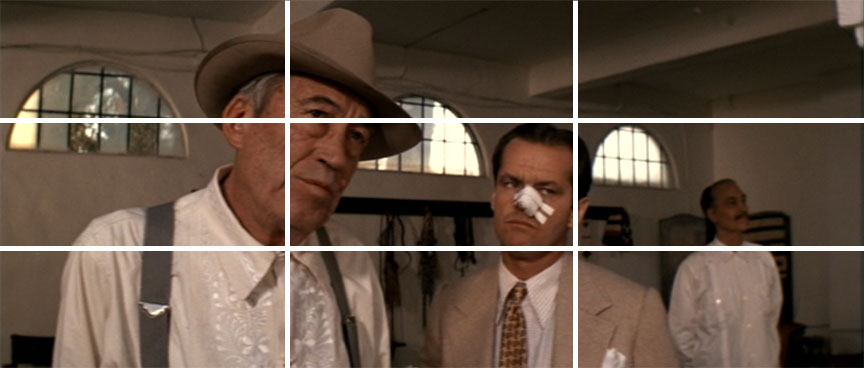
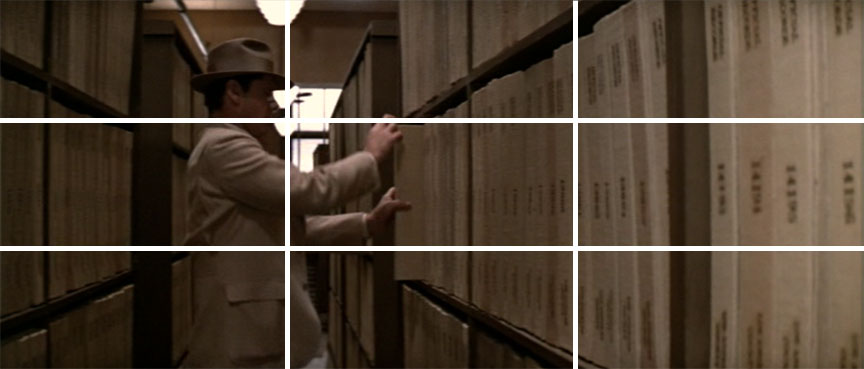
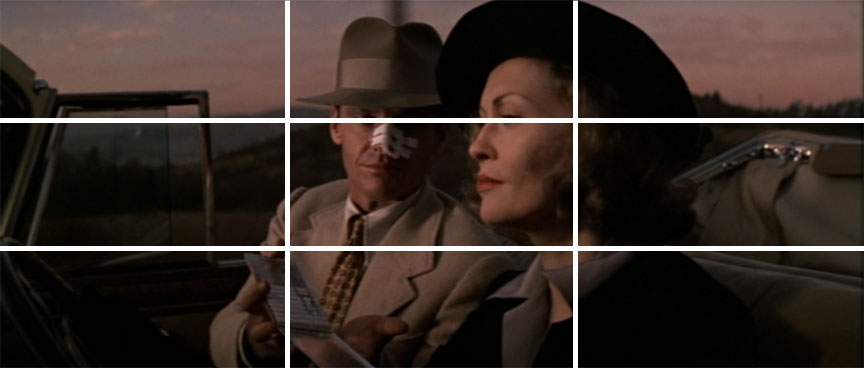
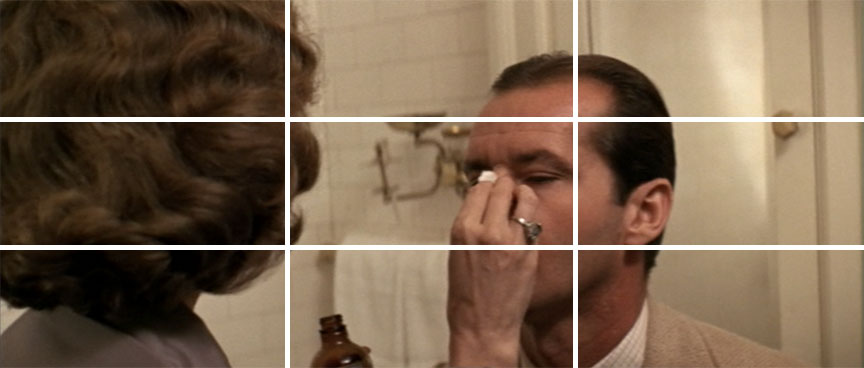
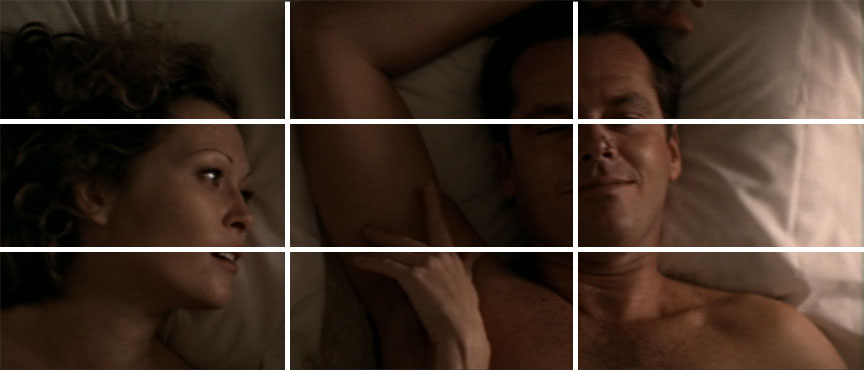
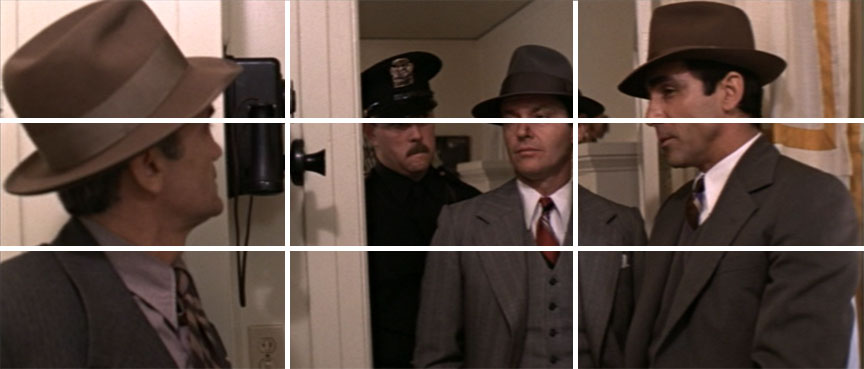
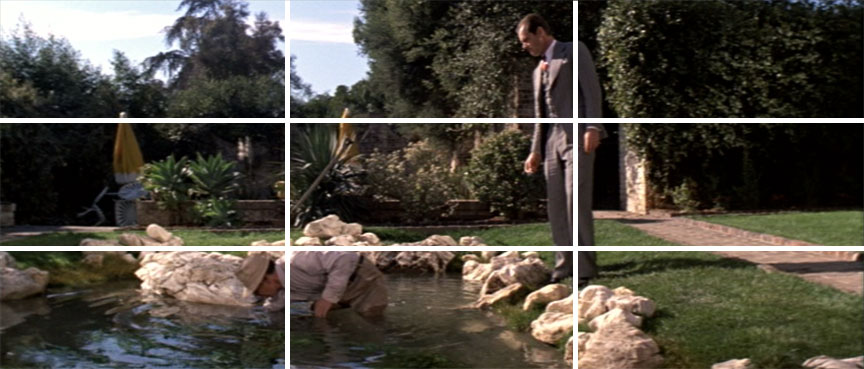
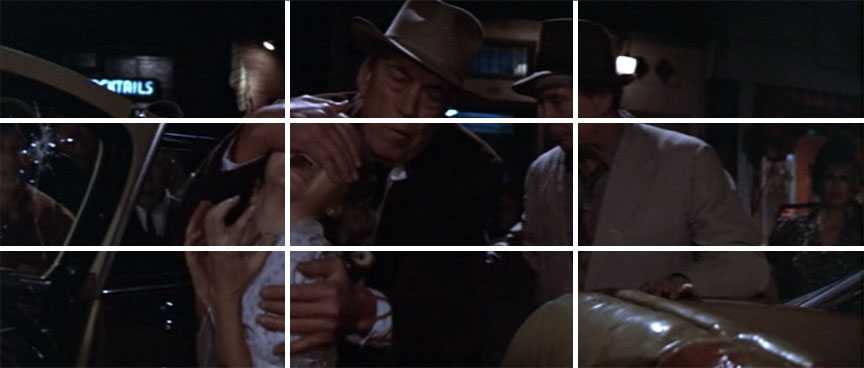
Many films are beautifully shot. Few, though, are as consistently well composed as Chinatown (1974)*. Shot in Panavision (anamorphic) format with a 2.35:1 aspect ratio the somewhat extreme rectangular image would seem to offer significant challenges to effective image composition. As I was pondering this challenge I was struck by how much I loved the images in Chinatown, which I just watched again the other day. That’s when I went back to basics and considered that even with widescreen images there are still fundamentals of composition at play. In this case I figured I would grab a few images (one from each major scene) from the film and apply the Rule of Thirds to each image.
The Rule of Thirds is simply as follows:
Divide the image into thirds, both horizontally and vertically, then put the focus of the image either one third across (from either side) or one third up or down the screen. Those lines, and the points at which they intersect, are the strongest invisible forces in an image.
In Chinatown the images are constructed around those lines and intersecting points. By doing this the aspect ratio becomes a relatively mute point as the human brain automatically takes in the whole image, mentally divides the image into thirds, and finds pleasure as key visual elements are constructed around those thirds. Of course, deviation from the power of the thirds creates visual tension, which is an additional tool in the filmmaker’s toolbox.
Chinatown was shot by John A. Alonzo. He was nominated for an Oscar for best cinematography. Here are the images from the film (I, of course, added the white lines):
Two more psychedelic classics from animator Ryan Larkin. As I watch these pieces I can’t help but think how wonderful it is that Larkin turned his amazing artistic talents to the hard work of animation. I wish more artists would do so.
Walking (1968)
Street Musique (1975)
These films bring back many vague but good memories of the aesthetics of my youth, that is, I seem to remember the cool, funky, colorful, and exploratory art of the late sixties and early seventies that these films exemplify. I miss that period, but I also am glad we have moved on. I am also reminded that Larkin did these films by hand: each frame is an actual drawing or painting on paper or canvas—no computers, no cgi, just one photograph taken for every 1/24 of a second of finished film.


























 pilgrimakimbo