>just another week in pepper spray history

>I’m getting a kick out of watching the “other” news of the RNC, that is, the protests outside the convention that are not really being covered much by the mainstream news. But first, here’s a recruitment video made by the RNC Welcoming Committee (an anarchist/anti-authoritarian organizing body) prior to the convention:

http://video.google.com/googleplayer.swf?docid=1982101605603600567&hl=en&fs=true

I love it. Fun, goofy, and it indicates a major aspect of the protests, that is, they’re thrilling to do. In other words, being a protester, though driven by apparently deeper meanings, is also something people do because it’s an exciting form of entertainment – like playing sports, but more important. I have to say that after watching the following videos I would much rather be with the protesters than inside the convention, though I am not so anarchist in my philosophy, or so anti-authoritarian in my reactions – though I am a little of both.

This video also highlights the reality that contemporary political/social movements are leveraging new media forms with aplomb. Modern protests are far more organized and prepared than they used to be, but so is the response.

[Side Note: So far eight members of the RNC Welcoming Committee have been arrested and charged as terrorists. Plus the I-Witness Video Collective has been evicted from their offices after police raided their building on what look to be trumped up charges. That group was responsible for videotaping much of the 2004 RNC protests and those videos led to most of the cases against the arrested protesters to be dropped. Apparently case after case the videos showed the police officers had lied. That may be why the police don’t want cameras taping them this time around.]

Now that it’s been a couple of days since the initial protests outside the RNC a number of videos have been appearing online. The first three below are video/photo collages that offer some overview of what is going on. There is some overlapping content between the three videos. At a minimum these collages offer some interesting psychological and sociological data to consider.

Finally, here is one of the most interesting, entertaining, and low quality (read verité) videos from the protests. I love the personal commentary.

Of course, one has to ask if any of these protests, violent or peaceful, have any objective value beyond the personal sense of making a statement. It is important to make statements, to carry signs and rant, to march and, hopefully, get on the news, but what is actually accomplished? The RNC continued on as though no one is protesting, as though the protests are so insignificant and inconsequential as to not even warrant a sideways glance. I also believe some of the same protests were deserved at the DNC, but I don’t remember if there were any.

I am reminded of two quotes by Mahatma Gandhi:

“It is better to be violent, if there is violence in our hearts, than to put on the cloak of nonviolence to cover impotence.”

“Victory attained by violence is tantamount to a defeat, for it is momentary.”

These quotes underline the balancing acts in both effective protesting and in cracking down on protesters. Both sides have to live with the consequences of their actions, and ask the question “what really was accomplished.” I cannot help but think the actions and the style of the police will only lay the foundation for more of the same, and then bigger and more substantial protests. In the end the police, and those who back them, will likely lose the battle. In the mean time I fear many citizens will be hurt.

>Profile: Noam Chomsky

>I have mentioned Noam Chomsky before on this site. Here’s a profile of the man:

http://video.google.com/googleplayer.swf?docid=676452061991429040&hl=en&fs=true

There is no need to say that Chomsky is a controversial figure in the world of ideas. One thing for sure, his ongoing critique of power is as relevant today as it was when he began; all the more so this heightened political season. I want change, and will vote for change in one way or another, but I am also interested in knowing exactly what it is I will be voting for: What kind of power, who will have it, how will it be used, and to what ends? These are questions I think about all the time.

>those troubling red letters

>There is an interesting religious movement going on in the U.S. today. Maybe “religious” is too strong of a word. Better might be “not-so-religious” movement. Some are calling it Red-Letter Christianity. Simply, it is a reaction to the hijacking of Christianity by right-wing politics and culture. More complex and profound is its focus on the teachings of Jesus as its foundation, which may sound like a strange differentiation among groups calling themselves Christian. This movement stands in sharp contrast to the often less-than-Biblical Christianity of many high-profile Christian leaders today.* Many non-Christians like to point the finger at Christianity and call out how bad it is. My gut response is to say, “you don’t even know the half of it.” I say this as a committed Christian who desperately seeks to follow Jesus in who I am and all that I do.

The focus on “red letters” comes from the fact that in many older bibles the words of Jesus are printed in red ink. Those who are part of this movement are calling themselves Red-Letter Christians.**

We live in a post-Christian world, sociologically and culturally speaking. In recent years (read decades) Christianity has been tagged as anything from intolerant to irrelevant. Many feel that Christians are merely self-righteous demagogues who say they love others as they condemn them. Unfortunately, this is often the case (but it is not always the case, as the Red-Letter Christians are trying to emphasize). The following video, rather pointedly, gets at part of the problem, at least, that Red-Letter Christians are confronting:

One of the problems, of course, is the problematic “need” to be morally superior in place of the more difficult task of truly loving others as oneself. This is a human condition, a result of what we are at our core. So it is part of my condition. Jesus’ harshest words were for the self-righteous religious leaders of his day. Lest we forget, these were the properly behaved and “family values” people of his day. Jesus’ softest words were for those whom the religious leaders condemned. If Jesus is our example then we should try and act as he acted. Somehow many Christian leaders, who have studied those same red letters, do not see the irony staring back at them.

But there is another problem with mainstream evangelical Christianity in America, that is its slavish and embedded relationship to American right-wing politics. Religion and politics have always gone together in this country, but the past twenty years have seen a radical increase in the way evangelical Christianity and the political right have forged a power-focussed agenda. This very interesting report below takes a look at that relationship and some alternatives that are bulbing around the fringes of mainstream Christianity:


In that video there was mention of Shane Claiborne. His book The Irresistible Revolution: Living as an Ordinary Radical is a very interesting and challenging read, especially if you’ve grown up in a conservative Christian environment. I enjoyed it very much and it has contributed to my current views.
So then, what is Red Letter Christinaity? Here and here (in an interview from 2004) Tony Campolo, sociologist and Christian apologist, explains what Red-Letter Christianity is all about.

Why does this interest me? I have a long history with Christianity. I have wrestled with its truths and its sub-cultures. More than ever I believe in those truths, and more than ever I have issues with its sub-cultures. Red-letter Christianity is not the complete answer (I am wary of any “brand” of Christianity that includes an additional label), but it does call attention to the way Christianity has always tended to deviate from its core truths.

Humans want to be God and call the shots, but Christians know they can’t be God, so they tend to invent a version of God they can believe in, say He’s on their side, say He wants them to establish His kingdom, and say that kingdom looks like an American BBQ with nice people wearing flag pins and hating liberals. (I joke, but it really is worse than that.) But I also find in myself a tendency to excuse a life of selfishness and pragmatic expediency by pushing forward a kind of self-righteousness. In other words, I don’t follow the teachings of Jesus very well and I’m rather good at pointing out how others are failing. Yet, deep in my heart, I want to be challenged and reminded of what is truly important – to love my neighbor as myself, to care for the poor and the suffering, and to not let politics or social norms get in the way.

Of course we are in a political season (in some ways we always are) and we have troops overseas killing and getting killed (which always raises deep issues of faith and morality). There is no wonder that religion is playing a big part in the various debates going on around these topics. In part two of the video above Avi Lewis interviews Tony Campolo about religion and politics, and interviews a military chaplain about the tension between war and the Christian commandment to turn the other cheek:

I cannot unequivocally endorse Red-Letter Christianity, if only because I still need to take a closer look, but I love it just the same. At a minimum it offers a kind of antidote to the radical/worldly tendencies of popular evangelicalism. I say this because, at heart, I am an evangelical and I want to live out those troubling red letters.

Critics*** say that to only focus on the red letters is to miss the totality of the Bible. But this sounds to me like a false criticism, and I suspect it comes from a heart of self-justifications. If the teachings of Jesus say to feed the poor, turn the other cheek, be humble, and love one’s enemies, do we find the rest of the Bible contradicting Jesus? That would seem to be the position of the critics, but I suspect they don’t believe they mean it that way. What the critics of Red-Letter Christianity appear to be doing is trying to shift the argument away from the real implications of Jesus’ teaching because they want to hold on to a position that wants to claim Jesus didn’t mean exactly what he said, that he was speaking metaphorically. The truth is the Gospel (the good news of God become man, etc. etc.) is the most inconvenient of truths. My observations and personal experience tells me that established Christianity (the so-called visible church) often doesn’t really like that truth. Fortunately, the spirit of God works on the heart, and through the hearts of the meek, of the humble, of the kindhearted, of those who thirst, of those who weep. I pray I am such a person.

*Some of the reaction comes from taking a hard look at the way Christianity has been used and abused by those less loving than Jesus yet claiming a high level of personal righteousness. A recent example might be Dr. James Dobson’s criticizing Obama, saying Obama has a “fruitcake interpretation” of the Constitution. I don’t know what Obama’s interpretation of the Constitution is, and I am not endorsing Obama here, but I do know that Dobson is very publicly being unloving towards Obama and his supporters. It is as though Dobson, while claiming a position of righteousness, has written off Obama as the “enemy” and therefore as someone to condemn rather than love. Dobson could have said he disagreed with how Obama was interpreting the Constitution and then given some clear reasons why. Calling anyone’s interpretation of the Constitution “fruitcake” is demeaning. Is this the proper behavior of a Christian leader? Dobson could also have declared that he is neither a Constitutional lawyer or Constitutional scholar and then phrase his comments accordingly. And then Dobson should go feed the hungry, visit the sick, help the needy, and stop being so concerned about playing to his constituency. Of course, I could go do the same, which I do not do as I should. So, when I point the finger, it points back at me as well.

**I am not writing this to promote Red-Letter Christianity so much as to begin the process of examining what it is the red letter Christians have to say. I am curious and seeking.

***I am referring to Christian critics, that is, those who would claim their take on Christianity is fundamentally more correct than that of the red letter Christians. Their focus is on right doctrine, which is very important, but often forget what it says in 1 Corinthians 13:13, “But now faith, hope, love, abide these three; but the greatest of these is love.”
>other candidates, other voices

>So who are you voting for? My vote is still in “wait and see” mode, though I much prefer change over status quo. In that sense I would be for Obama (some change) over McCain (more of the same). But these two are not our only choices. Here is a list of who’s running for president. It is interesting and disconcerting that there are so many candidates, so many hopeful and, dare I say, brazen individuals who would seek the highest office in the land and yet their voices are almost completely silenced by corporate media. Most U.S. citizens only know of McCain and Obama, and some additionally know of Nader. What of the others? Below are videos of just three of those “other” candidates.

Gloria LaRiva: Party for Socialism and Liberation

Bob Barr: Libertarian Party

Kat Swift: Green Party

It is easy to dismiss any presidential candidate who does not stand a significant chance to win. There are many who will vote for Obama because he appears to represent something very different than the current administration and because he has a chance to win. In all likelihood, though, Obama will not bring about the kind of change this country truly needs, but he will likely be a superior president than Bush.

There is still a big problem in U.S. politics, for what we have in our nation’s capitol is more like a single party with two factions than any substantial differences. That party, whether it’s the Democrat faction or the Republican faction, is still pro big business, pro lobbyists, pro U.S. imperialism (rough and tough, or kinder gentler), and pro power politics. We are told to love our country, but should not the command to love one’s neighbor ultimately triumph over love of country?

The truth is, the revolution that started this country, and has continued in one form or another (abolition, suffrage, labor rights, civil right, etc.), is a threat to the current status quo. How much of that revolution are we willing to give up as long as we are promised personal peace and prosperity? How long will we continue to describe our form of government as a democracy but desire that someone else do the heavy lifting? Are we willing to both seek and accept real change? Personally I find this a real challenge, and I don’t have any clear answers. Which begs the question: Who (and what) are you voting for?

[I’m not really asking for your answer here, I’m just posing the the question as a thought experiment.]

>The challenge of July 4th

>

Make sure you’ve got on your flag pin.

When I think about celebrating this Fourth of July, I find myself wondering about where we are and what has got us here. What most fascinates me, and what I am most amazed by, are the stories of people like you and me who have fought for freedom. I don’t necessarily mean soldiers, but ordinary people who became extraordinary because of circumstances. I mean those who stood up against slavery, stood up for women’s right to vote, stood up for workers’ rights, stood up for civil rights, stood up for you and me.

One of the finest works of historical investigation and writing is Howard Zinn’s remarkable A People’s History of the United States. Throughout that book there are challenges on every page, challenges that remind us what freedom really means and what it takes for people to be free, and just how much freedom is truly a deep, deep longing.

Recently there have been public readings of that book. Here are some excerpts:

Brain Jones reads Frederick Douglass

Lili Taylor reads Susan B. Anthony

Steve Earl reads Joe Hill

This country has always been an experiment. Our freedoms are probably more tenuous than we tend to believe. We have freedoms because they were fought for, because they are still being fought for. Those freedoms will, I’m sure, need to be fought for again. I believe the Fourth of July should be more than a commemoration of 1776. I want to remember how so many ordinary people all along the way have struggled to achieve this country’s ideals. And how many still do. Every Fourth reminds us of how we too are part of this on-going experiment. It is a challenge to each of us to do the work of freedom. I do not want to forget that.

May you have a great Fourth of July!

>Chomsky on the U.S. elections, oil politics, and the current state of resistence

>Inside USA, an English language program on Al Jazeera recently did an interview with Noam Chomsky. I have never watched or read anything from Al Jazeera, that I know of. I did not realize they had an English version, but I guess that makes sense.

From the website, Inside USA says this about its mission:

Inside USA’s mission is to strip away the spin, and highlight some of the real issues in America – poverty, violence, race, health, and immigration.

We will be speaking to people on the ground – not television pundits, but real people with stories to tell – a full spectrum assault of American voices -young, old, white, black, immigrant, rich, and poor.

Here is the interview with Noam Chomsky:

Part one:

Part two:

I have always found Chomsky fascinating. His work on East Timor and Latin America is groundbreaking. So is his work on US politics. Maybe his biggest contribution is his relentless focus on power, that is, political, social, imperial, military power, and its role in shaping how the world functions. This focus puts him somewhere else than simply “left” in terms of politics. The great irony is that although he most likely should be labeled as a radical his views are very close to what most ordinary people think, even if they think they must disagree with Chomsky.

La Chinoise & The Weather Underground

The other day I inadvertently created one of the best double features that I’ve ever seen: First, the fictional narrative La Chinoise (1967) and then, second, the documentary The Weather Underground (2002), based on the revolutionary group of that name.

Silhouetted hands in La Chinoise.

What makes this double features so powerful? We live in an age where violence against human beings in the name of some cause (religious jihad, war on terror, patriotism, personal peace and prosperity, etc.) is accepted by many generally reasonable people. The U.S. government and TV pundits are currently debating whether torture is okay, or whether certain kinds of torture can be called something else to get around legal requirements. Some argue that extreme force, including the killing of innocent people (collateral damage) in order to send a message (to those who would dare to use violence as a means of sending a message), is an acceptable response to terrorist acts – in other words, matching fatal violence with increased levels of the same.

But does violence work? I suppose it depends on what are one’s goals. In general, though I would argue, violence does not incite peace.

La Chinoise plays out the philosophical debates underlying these issues within a somewhat humorous and heavily symbolic world that might be called godardian. La Chinoise is a fictional tale of what underlies potential violent action, and of political idealism amongst the educated children of the bourgeois. La Chinoise is also considered to have presaged (and possibly encouraged) the student protests in Paris that occurred exactly one year after the film’s release.

The Weather Underground, on the other hand, exposes the reality of those actions and their implications by showing what actually played out in the U.S. In other words La Chinoise says “suppose” and The Weather Underground says “regard.”

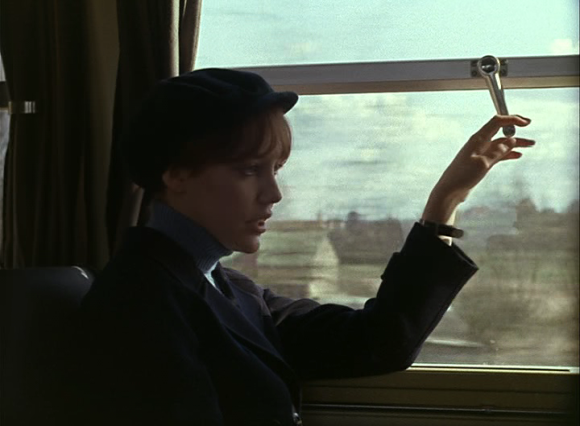
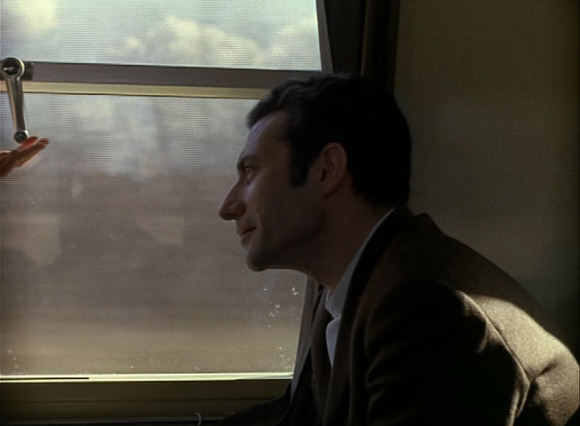
La Chinoise is a kind of remarkable film. I say kind of remarkable because it is also enigmatic and therefore its remarkableness is still very much open to interpretation and evaluation (but isn’t most Godard?). One asks is Godard serious or making fun? Is the film a polemic or a comedy? Is it meaningful or ultimately empty? I can’t say. Many others have done a far better job than I at exegeting the film. But I can say there is one scene I believe is the centerpiece of the film, at least philosophically. That scene is the discussion on the train between Veronique and Blandine Jeanson (playing himself).

Veronique argues for violence.

In that scene they talk about the value and implications of using terrorism in the service of a cause. Veronique, and the revolutionary cell of which she is a part, is planning on using a bomb to kill some students and teachers at the university in order to jump-start a revolution. She argues that the bomb will convince others of the seriousness of their cause. Jeanson argues that violence will not produce the results she is looking for. In fact, killing others will only cause everyone to turn against her and her political group.

Jeanson argues for non-violence.

From my perspective Veronique seems very naive. However, many people felt similarly in the 1960s and early 1970s. I suppose some still do. What would drive a person to such conclusions as Veronique? The Weather Underground explores just such a question.

Haskell Wexler films the Underground.

The activist group The Weather Underground began as the Weathermen, a radical outgrowth of Students for a Democratic Society. The film The Weather Underground is a history of that group and the times in which it functioned. It is one of the best documentaries I have seen.

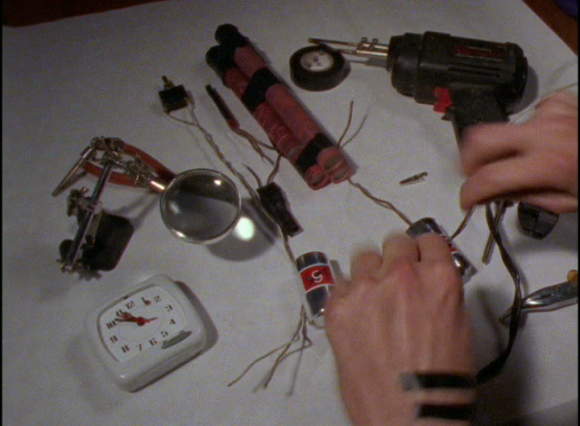
Bomb making.

What drove the Weathermen was a desire to change the world. Frustration in the slowness of change, and even the continued deterioration of certain concerns (such as the escalating war against the Vietnamese), gradually led the group down the path toward violent action.

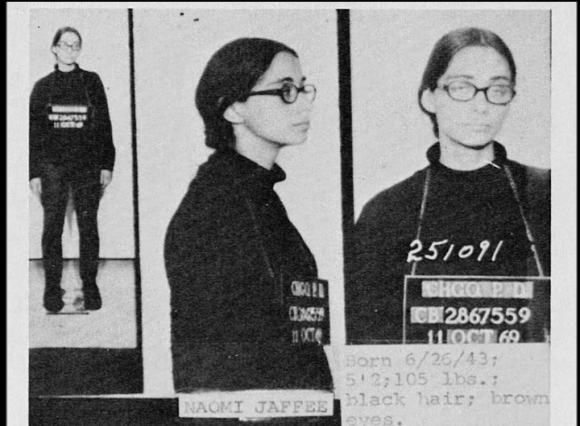
A revolutionary gets nabbed.

Much of the film includes interviews with former members of the group. It is fascinating to hear them describe what choices they made, why they made those choices, and what they think of them now. There is a lot of regret for some of the former members. In a sense the film pulls back the romantic veneer of the 1960s anti-war movement and shows a more realistic complexity. What we get is something that makes La Chinoise appear to be both more profound and more like a cartoon of itself.

>a foreign policy

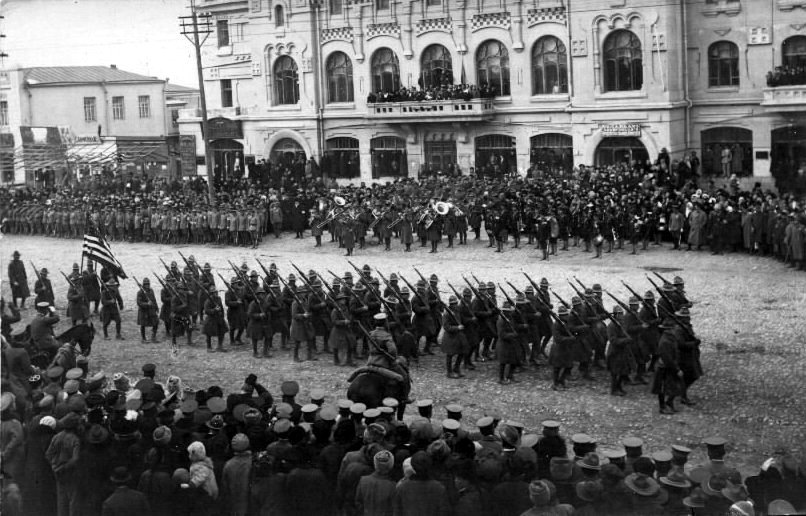
>What makes this image so interesting?

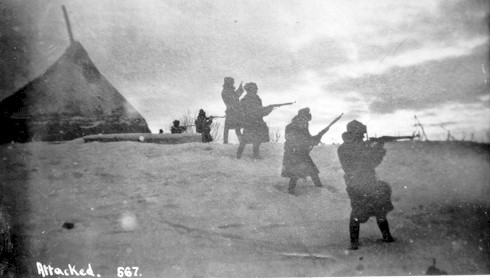
Those are U.S. soldiers marching on Russian soil in order to fight the Bolsheviks after the Russian Revolution of 1917. Yes, the United States, along with several other countries, invaded the fledgling Soviet Union to put an end to their civil war and destroy the chances of Lenin and his comrades from establishing the first communist country. They failed.

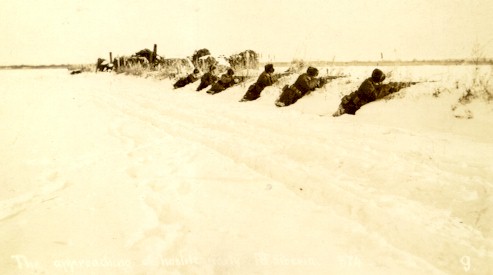
Below are a couple of additional pics of U.S. soldiers suffering the harsh winter in northern Russia as they take the fight to the communists. One wonders if the extreme paranoia of the Soviet leadership towards the U.S. government didn’t stem, in part, from this failed attempt to turn the Bolshevik tide at its most critical time. Regardless, it is a fascinating time in history that I knew nothing about.

Here is some movie footage of the event:

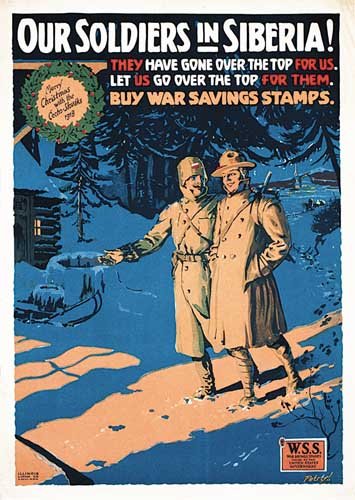
There were even ads for government stamps to fund the affair.

I have to add that, although I have no particular feelings of fondness for Lenin and his buddies (to put it mildly), I am often non-plussed by U.S. foreign policy. These are the kinds of actions about which the U.S. public forgets quickly (if they know about it at all), but many others in the world do not forget so quickly. To me that truly is a “foreign” policy.

Go to Track Meet, shake Obama’s hand

Friday night we got three free tickets to go to a track meet. We love track meets. If you live anywhere else in the U.S. then you might not know how a local, low-key track meet can still be an exciting event that even produces world-class results and brings out over 5,000 fans. It helps that the location is the famous Hayward Field – site of the upcoming U.S. Olympic Trials.


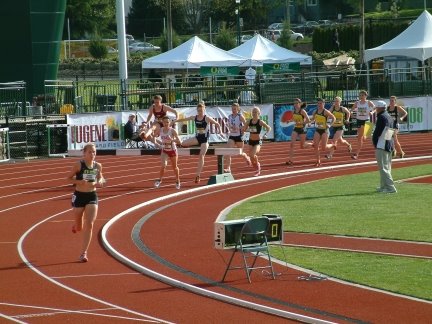
That’s Carrie Vickers leading the Women’s 3,000 meters steeplechase, which she won in a meet record of 9:51.08. It takes a time of 10:00.00 to qualify for the “A” field for the Olympic trials.


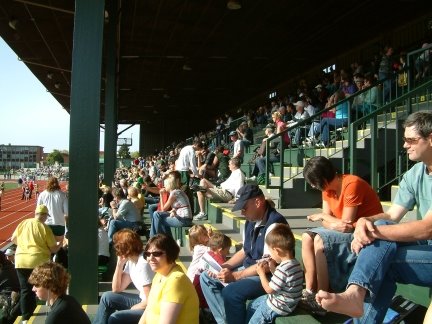
The East grandstands – where I’ve sat through many track meets, including three previous Olympic Trials (1972, 1976, 1980 – yes that dates me), and watched the marvelous Steve Prefontaine, amongst other greats.


That my friend Jayson with the steadycam asking me to call him to see if I’m available to help him. I wasn’t. Family and friends took precedence, but Jayson did a great job on his own anyway.


Lily juggled the binoculars and the stopwatch before we met up with friends. Then she mostly ran around and played.


Wilder didn’t really know what was going on, but she liked clapping for the runners and eating all her snacks.

So then . . .

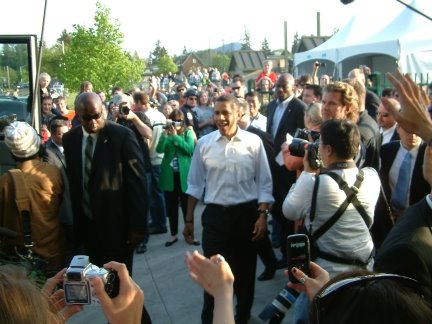
About mid-way through the track meet several big buses and a string of police motorcycles passed by on the street behind us. We immediately knew it was Barack Obama (he was to speak at the UofO later that day). After a few minutes Obama came out onto the opposite end of the track from us. As any political candidate would do, he shook hands, congratulated some athletes, held babies, and waved to the crowd. Then he began to leave, which took a while.

My wife asked if I would go back to the car and get the stroller. Wilder was getting tired. I carried Wilder in the kiddie backpack and Lily asked to come along. When we turned the corner of the grandstands there were the buses. Lily said maybe we could see Obama. So we hurriedly walked down and stood in the crowd next to the bus. Here’s the picture: People crowding around, police and secret service everywhere, I’m holding Lily in one arm as high as I can get her, my camera is in my other hand, Wilder is in the backpack. We stood there for 15-20 minutes, with my arm going numb and Wilder beginning to fuss. But then Obama came by.

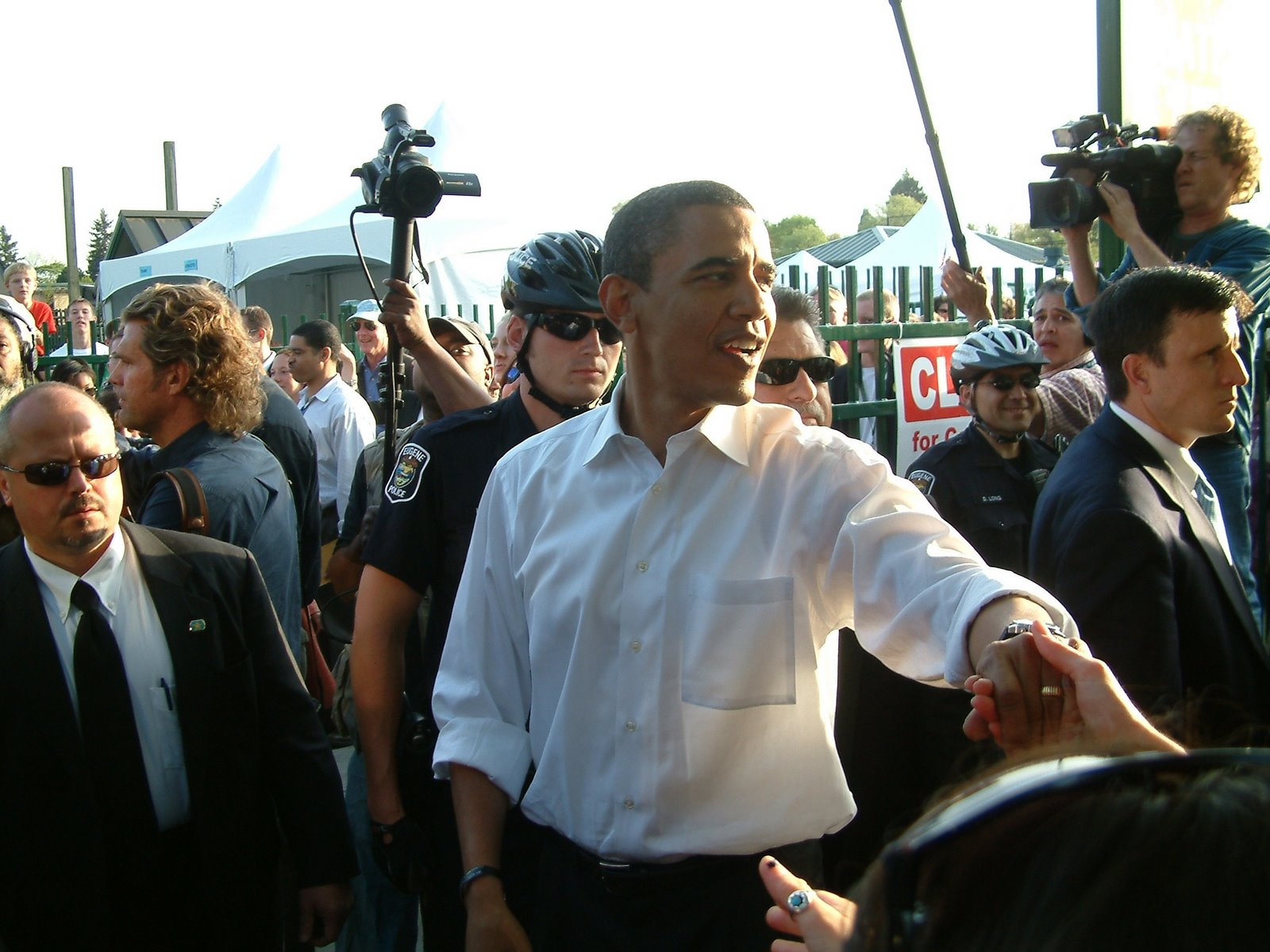
He shook my hand, he shook Lily’s hand, and then he looked at Wilder and then said something like “Who is that beautiful baby?” or “That’s the cutest baby!” We can’t remember exactly what he said because we were in a bit of a daze.


Obama looking relaxed.


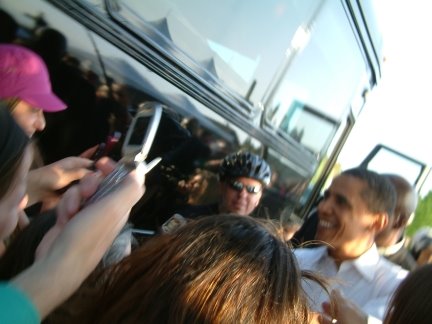
Action shot. That’s what I call an off balance, out of focus, blurry shot.


My final shot turned out okay. Card full.

Overall a fun experience and a great memory

I am rather cynical about politics, but I will say this: There is something different about Obama than Clinton or McCain. He seems to be more easy going, less divisive, more hopeful, and somewhat visionary, at least in his tone. He seems to speak beyond, or above, the normal talking points of the left/right political split. I don’t know if he really has the ability to affect positive change, I don’t know if he can actually get anything done, and I don’t have many delusions about what politics and politicking really means. But I will say on the surface he exudes a kind of character decidedly different than his opponents. Quite possibly that is the kind of character this country needs in its leader right now.

One other thing: Seeing a person up close and shaking their hand creates an interesting perspective. I only had a few seconds to see Obama up close, but I was close enough to look into his eyes and get a very brief sense of the man. He exudes confidence without arogance, and strength without desperation. Sure, every politician wants power, but some seem to be desperate about it and others seem to seem to know it will come when it’s time. I can’t see into his heart, but Obama appears to have a good one. I hope he is not merely a great actor. That would be a tragedy for us and for him. And I have to say, what we don’t need is another actor in the White House.

We missed his speech, but here’s an amateur clip of some of the event:

and another:

In the presidential campaign it appears Obama is the rock star. But I have to say the best part of the day was being with my family and friends on a beautiful day at the track meet.

Young Mr. Lincoln

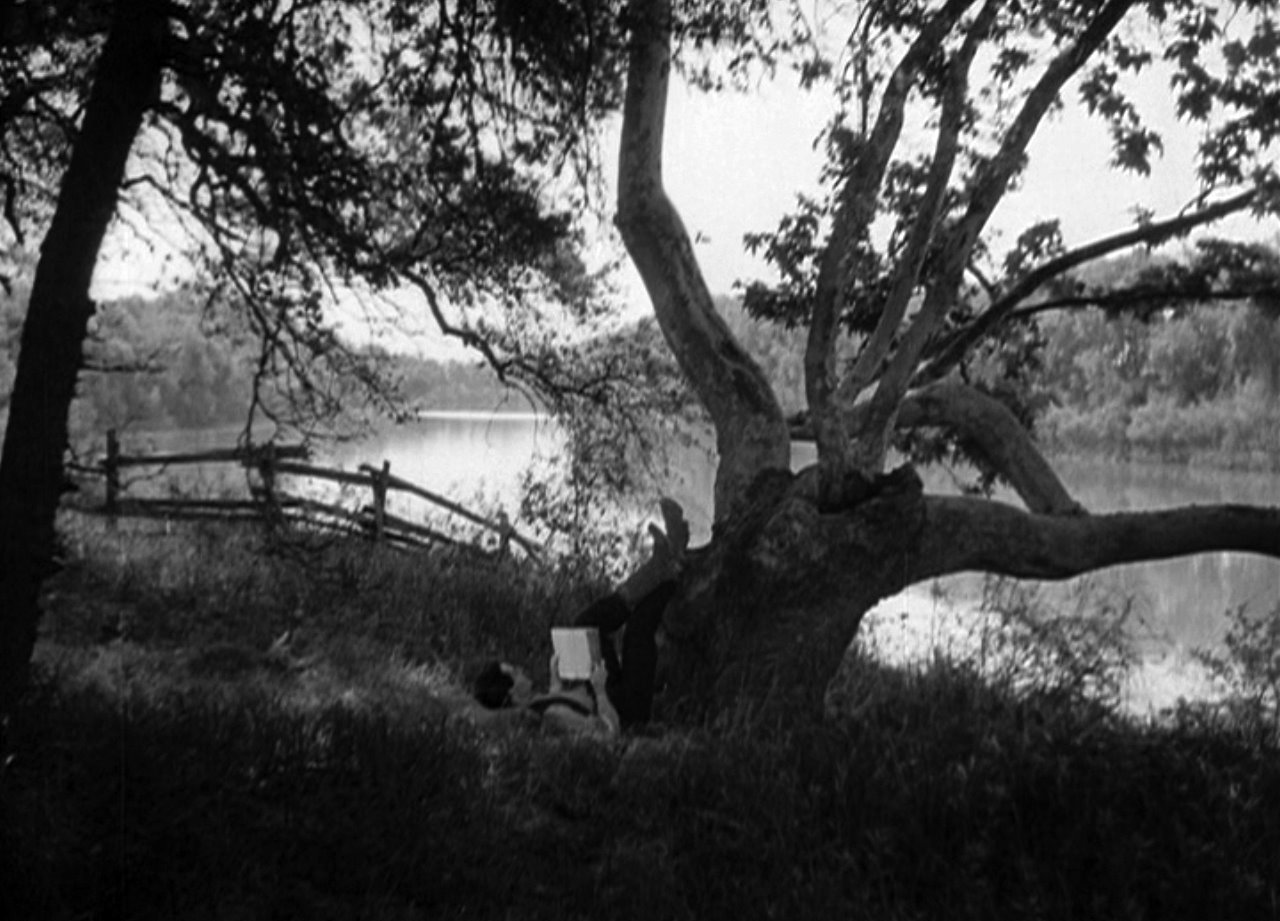
The other night I introduced my daughter to John Ford and Henry Fonda by way of Young Mr. Lincoln (1939). She was excited because Abraham Lincoln is one of her heroes (mine too). The image above, which comes early in the film, caught her interest. Lily loves books and she said the image was where she wants to be: Under a big tree along a river bank on a warm day in a cool breeze reading a book. I couldn’t agree more.

I am convinced that much less attention would be given Young Mr. Lincoln if it were not for that seminal article by the editors of Cahiers du cinéma. Regardless, the film has loads of qualities that would draw anyone into its orbit.

What is so wonderful about Young Mr. Lincoln is how perfectly mythical it all is. Lincoln was a truly unique individual in American history. His life did, in fact, take on the character of myth at times. However, many have added additional myths to his story, as though just the plain truth is not enough. This film is no exception. And yet, Young Mr. Lincoln gives us what we want, at least it gives me what I want: A good myth told well.

I love the idea that the fate of this nation, and by implication, the whole world, hinges on which way a stick will fall.

But isn’t that how life really is so many times? The great sweep of human events is mostly out of the hands of any particular person, but frequently (and curiously) it is the individual who makes the difference. And sometimes it is the flip of a coin, or the missed train, or the letter delivered too late, or the accident, or the small good deed that makes all the difference in the world. I like that kind of story. I like the twin ideas that the individual can make a difference and that sometimes it is the littlest things that cause the greatest effect. I think this is a very American preference, though not entirely unique to America.

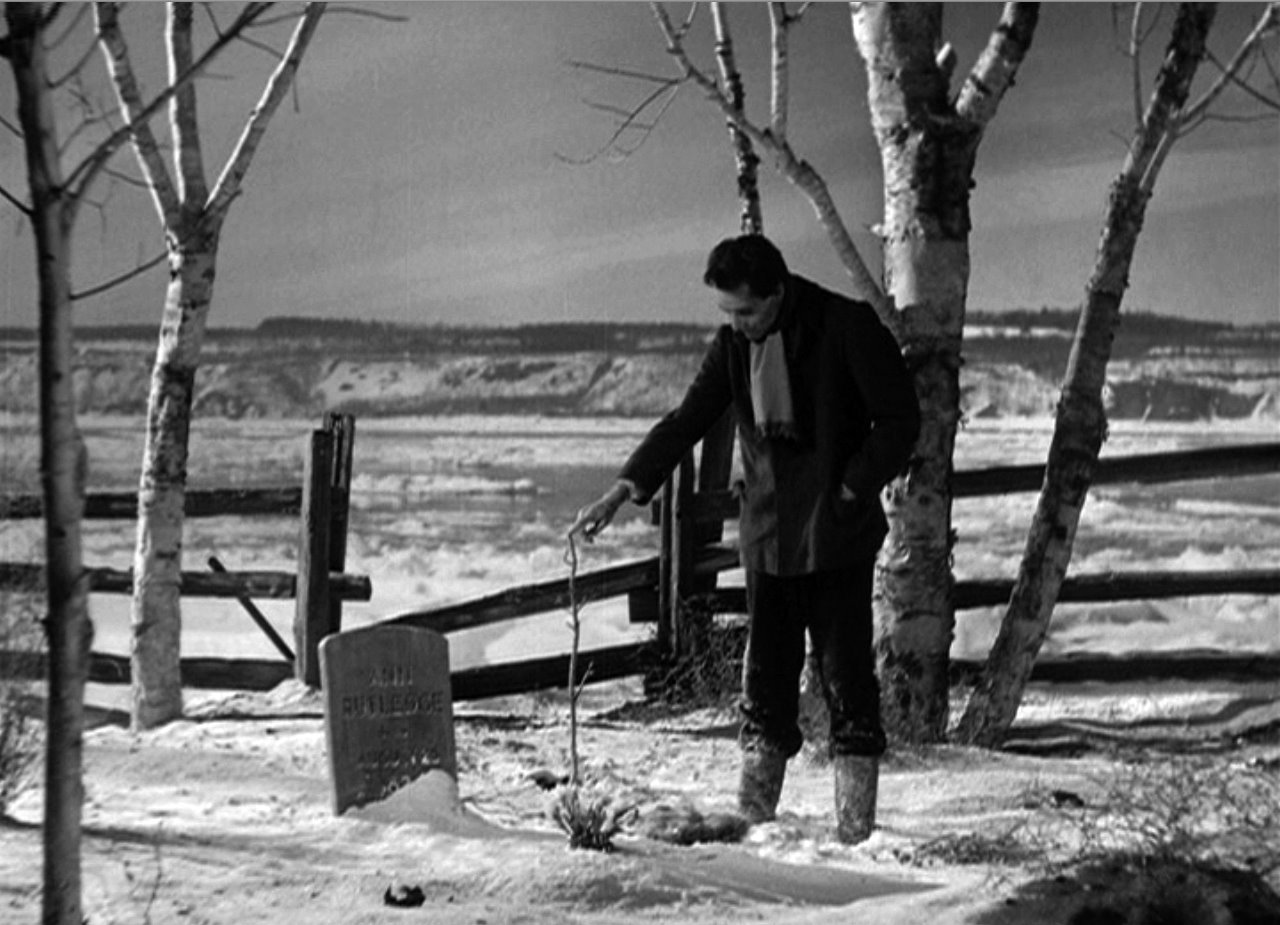
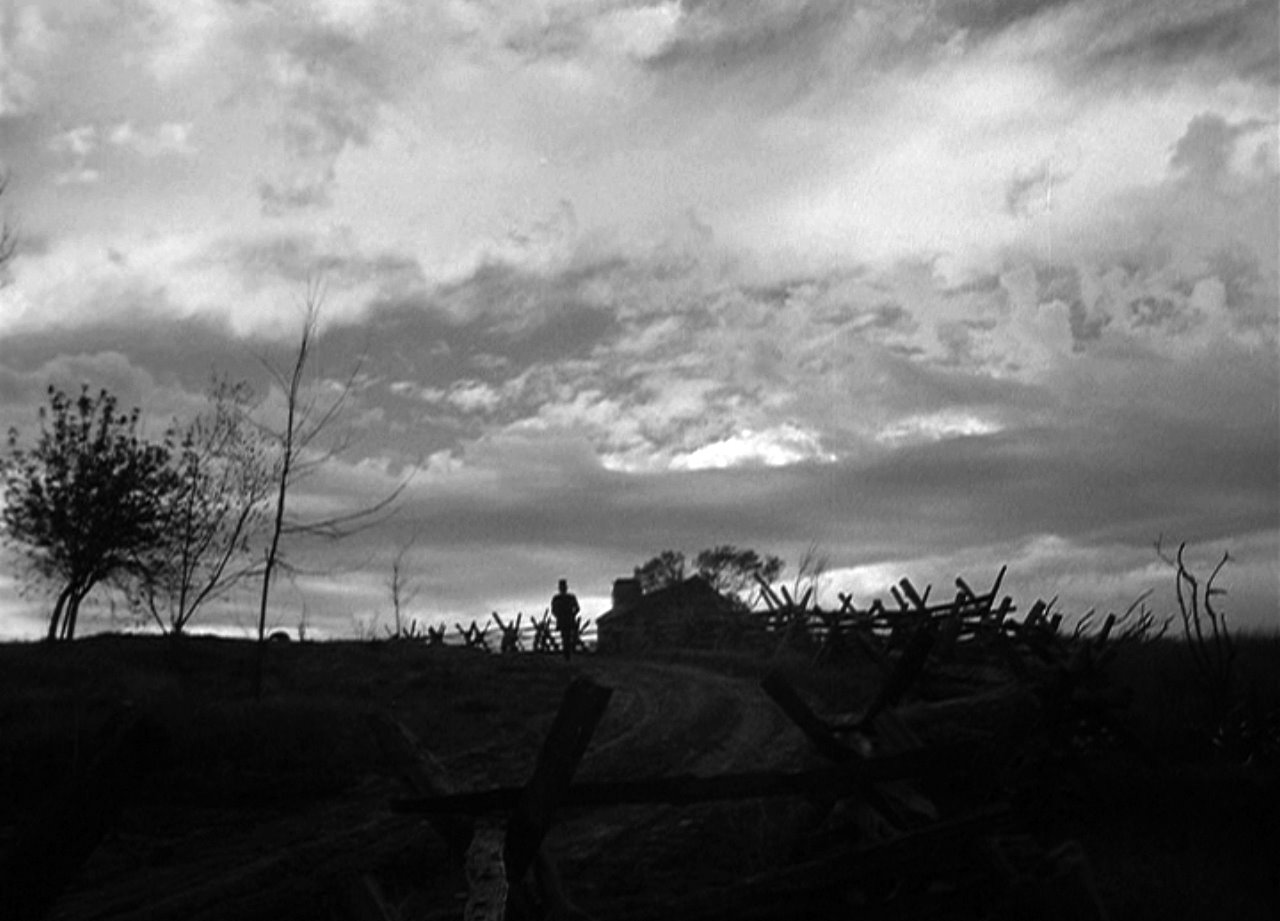
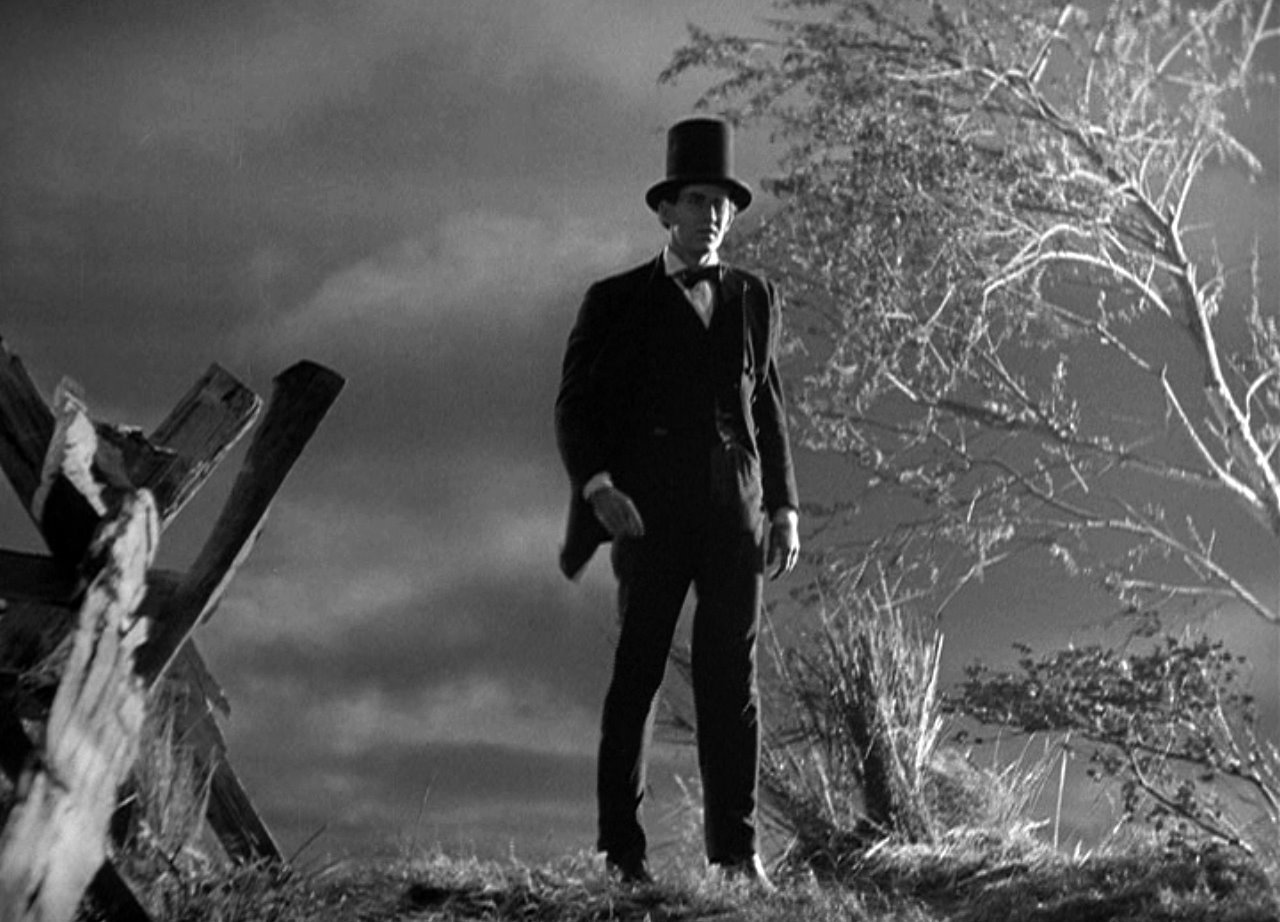
And who could forget the last few images of Young Mr. Lincoln? Two stand out for me.

Lincoln walks alone up the hill. His tall figure, with its oddly tall stovetop hat, stands in silhouette against a beautiful cloudy sky. This image portends his future journey into America’s uncertain future, and all that that will mean.

Then Lincoln crests the hill. Lightening flashes. He pauses and looks ahead, maybe to the top of the next hill. He then walks out of the frame. Heavy rain begins to fall. This portends his future as well, but this time the future becomes more specifically defined. His future will be stormy. But he still faces it and walks into it without fear. He is the local hero still yet to become the great hero. He is the young Mr. Lincoln.

* * * * * * * * * *

The beginning of the film includes a portion of the following poem by Rosemary Benét about Lincoln’s mother (Nancy Hanks Lincoln) who died when he was a boy. After we finished the film Lily wanted to go back and read the poem. Then she just had to copy it out by hand. I love that about Lily.

If Nancy Hanks
Came back as a ghost,
Seeking news
Of what she loved most,
She’d ask first
“Where’s my son?
What’s happened to Abe?
What’s he done?”

“Poor little Abe,
Left all alone
Except for Tom,
Who’s a rolling stone;
He was only nine
The year I died.
I remember still
How hard he cried.”

“Scraping along
In a little shack,
With hardly a shirt
To cover his back,
And a prairie wind
To blow him down,
Or pinching times
If he went to town.”

“You wouldn’t know
About my son?
Did he grow tall?
Did he have fun?
Did he learn to read?
Did he get to town?
Do you know his name?
Did he get on?”