>breath of God

>

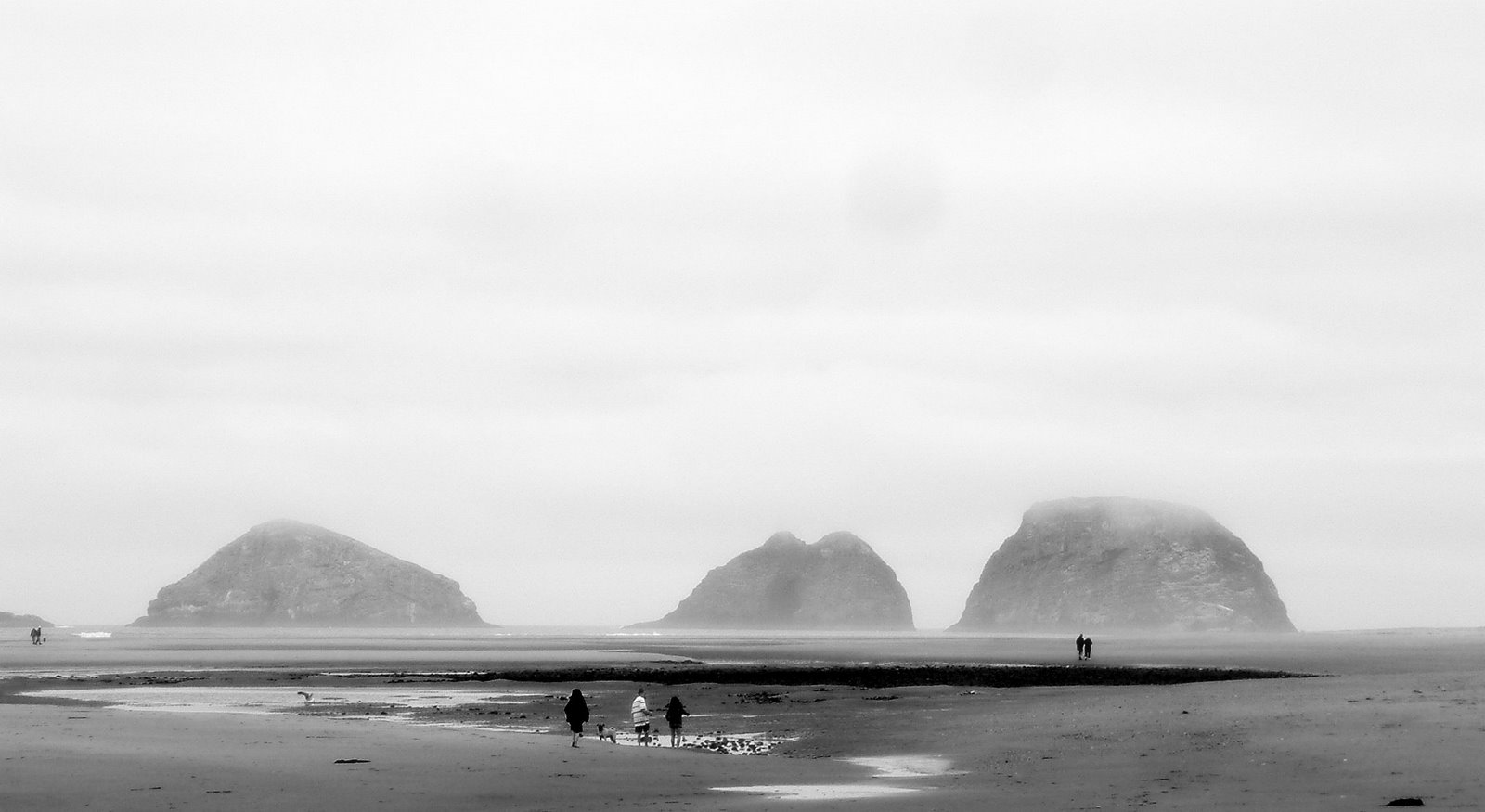
Out on the thin, vast plain of sand
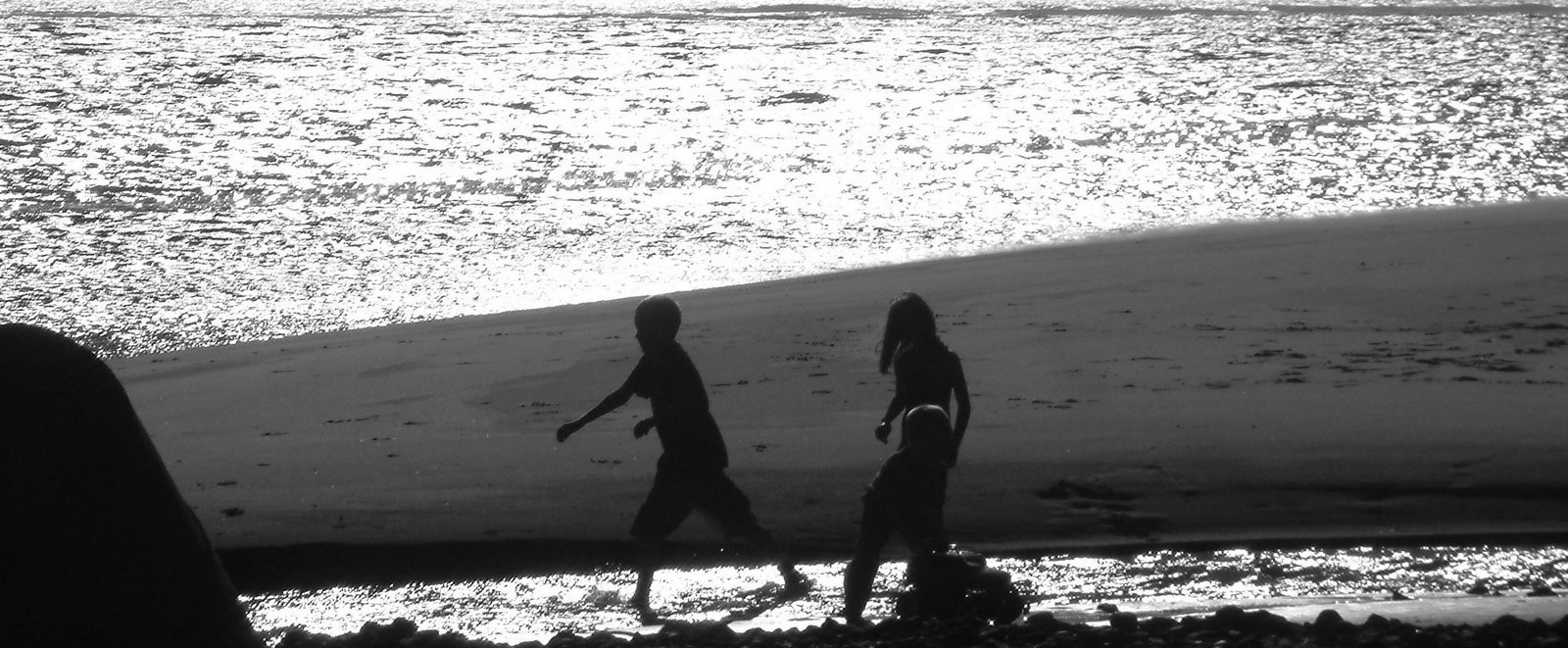
bodies, hurled with glee, run.

Listing I see:
Fish, trapped in pools, wait for the tide.
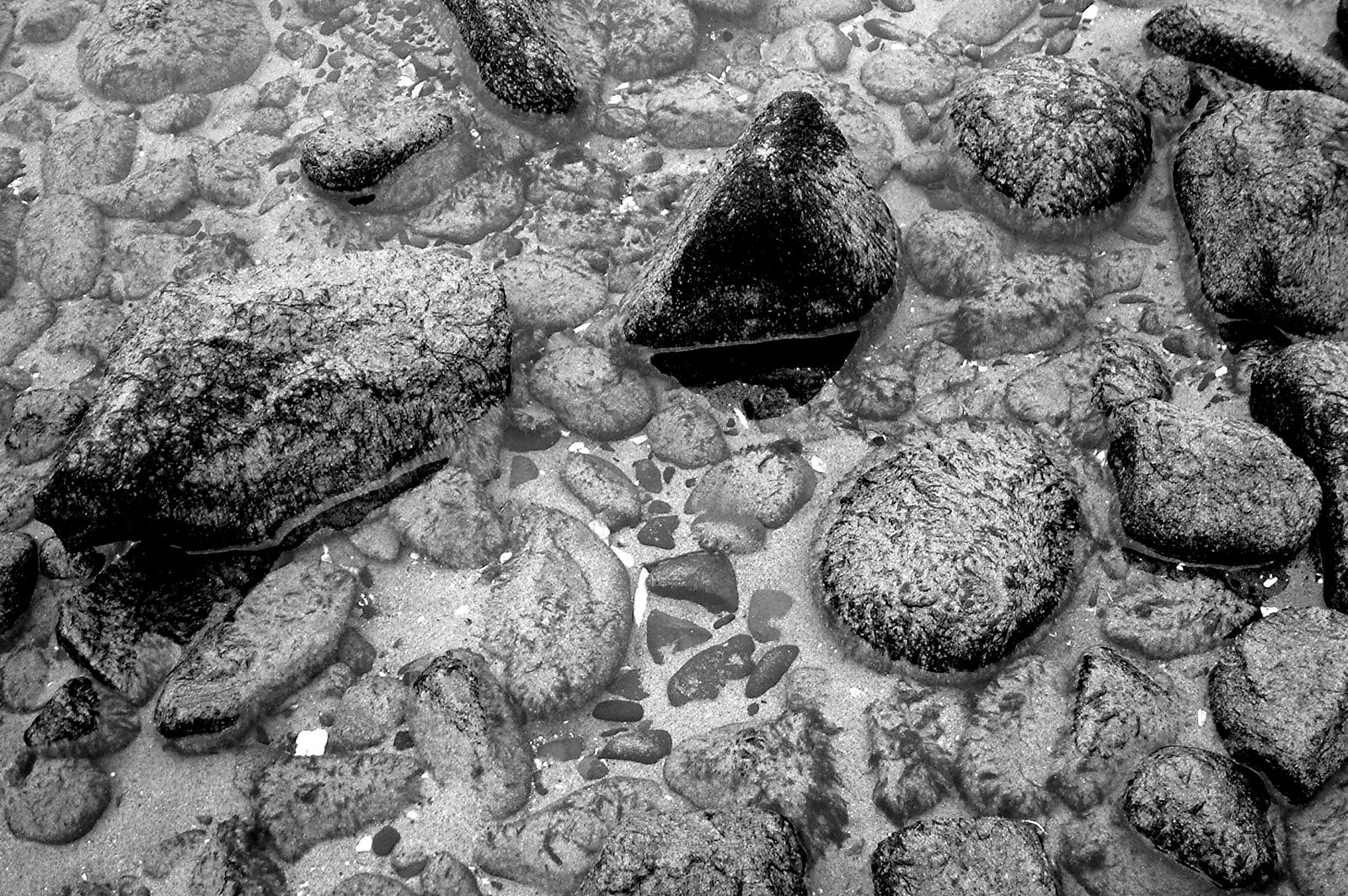
Rocks, dotting the bar, lay dark and unhurried.
The creek, cutting the sand, ripples downward.
Gulls, huddled under gray skies, exist.

And crashing comes energy, pent up
for miles of open seas, to lay finally
like a soft kiss on the shore,
like a mysterious voice
that says come, go, come, go.

What are these things, these ordinary wonders?
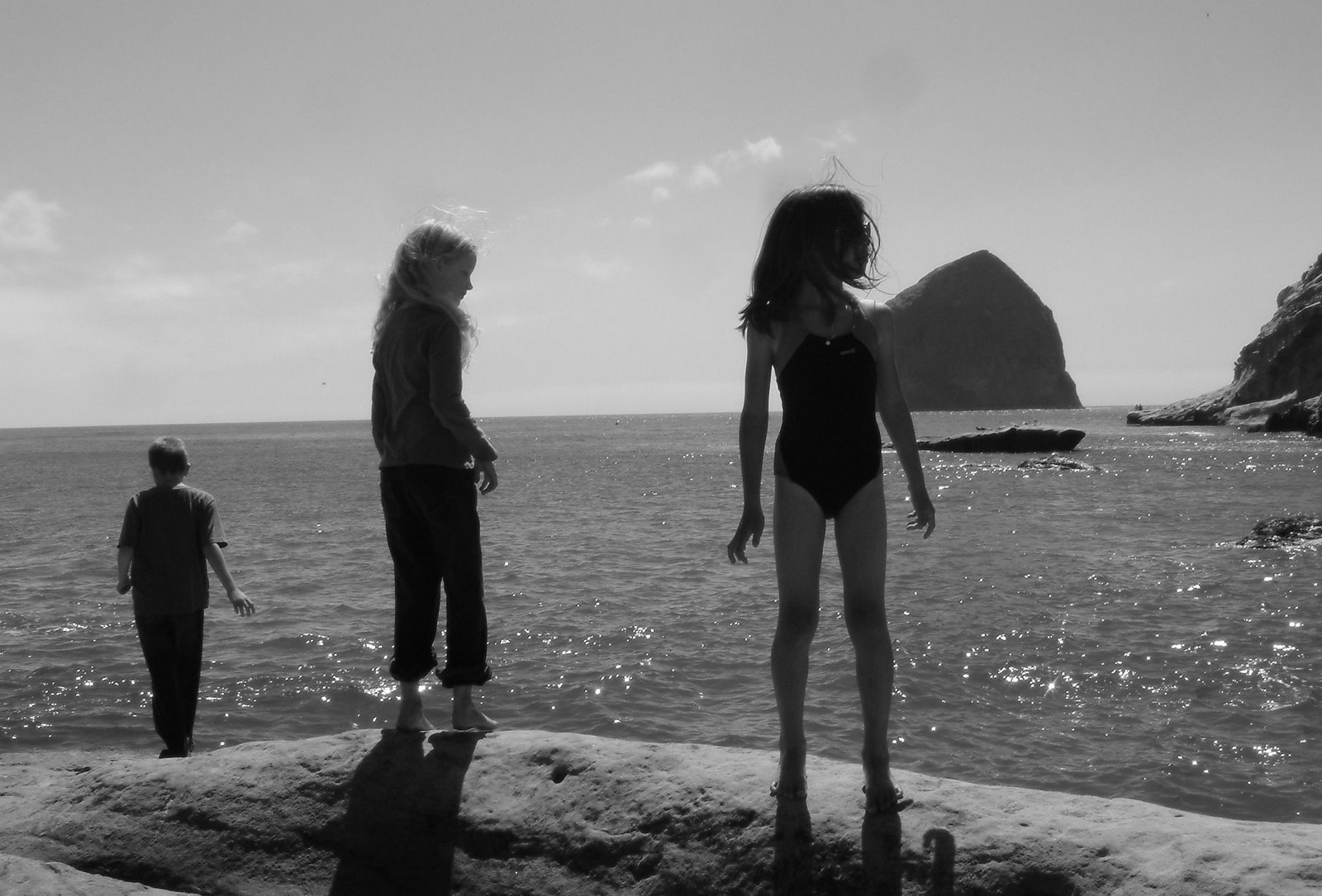
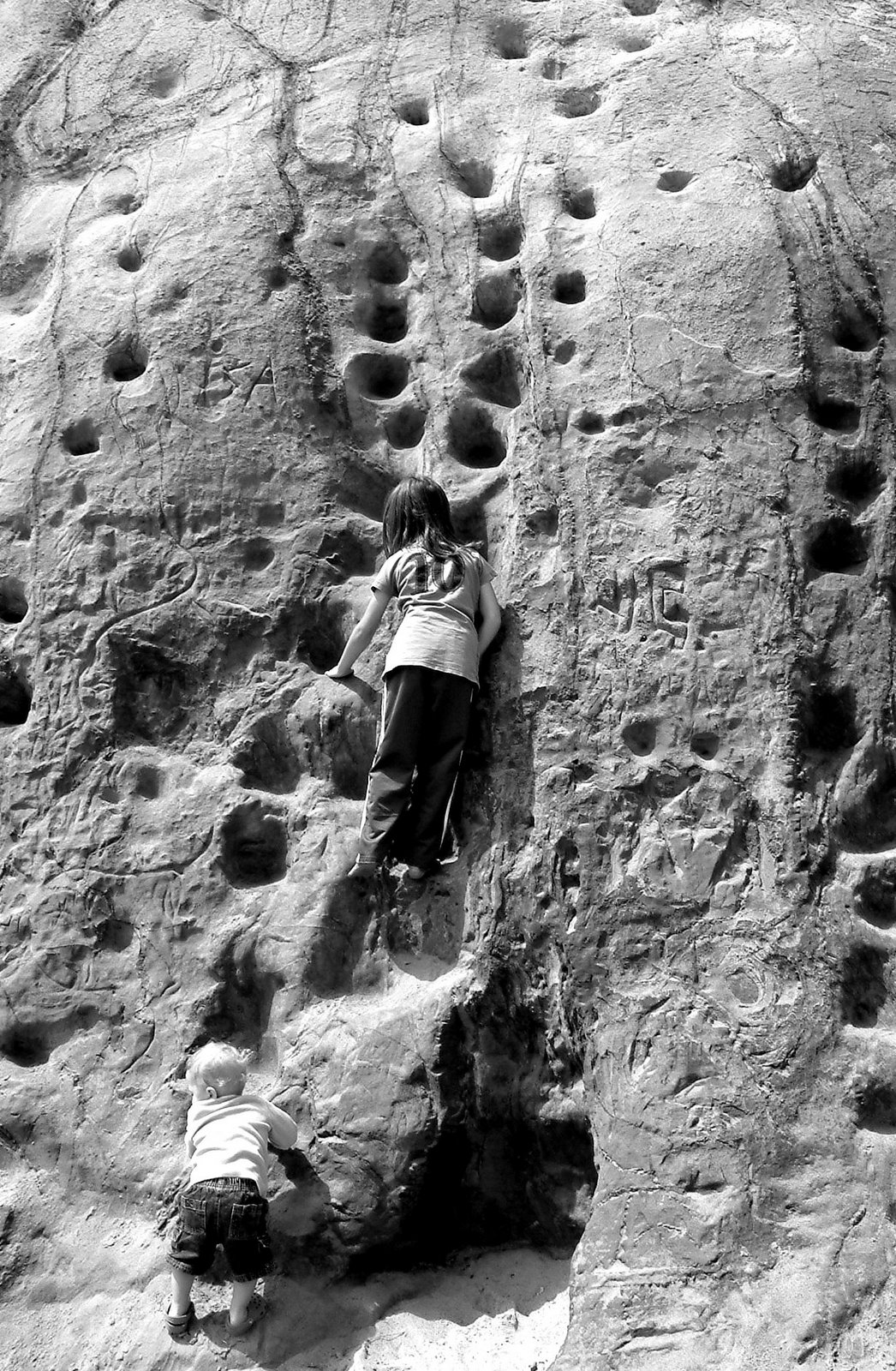
(The kids are still running, skipping, skimming.)
Are we not in communion,
in the very language itself,
of a great wind, a voice,
a pillar of fire?
Are we not, then, inside
the breath of God?

*photos taken on the Oregon coast July 20&21, 2008. Poem written July 21&22.

>a couple of music videos from Hem

>Red Wing

Not California

know more here

>crashing

>

Character cannot be developed in ease and quiet. Only through experience of trial and suffering can the soul be strengthened, vision cleared, ambition inspired, and success achieved.

~ Helen Keller

We can discover this meaning in life in three different ways: (1) by doing a deed; (2) by experiencing a value; and (3) by suffering.

~ Victor Frankl

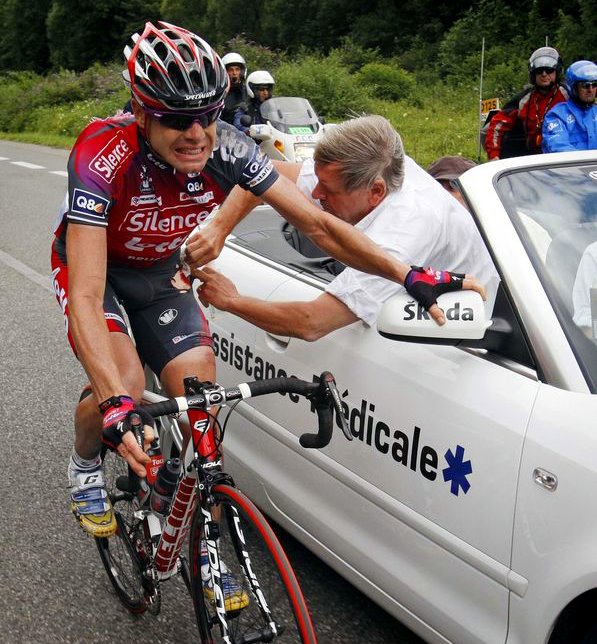
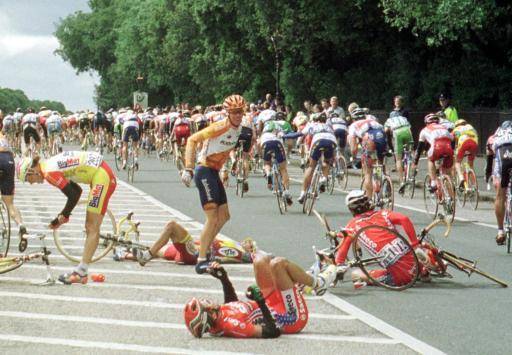
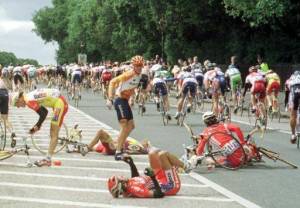
I have been riding bikes for years and have had a few crashes. Fortunately nothing serious. I am also a fan of bike racing, and especially the Tour de France, were serious crashes are all too common. Recently I was watching this year’s Tour and saw the rider Cadel Evens being treated by the race doctor for a bad tumble. Evans was scraped up on his leg, his hip, his elbow, and his back. His jersey was shredded and his shorts were ripped open. He was bleeding from multiple locations. He was also showing some concern for his left collar bone, which he has broken five different times from bike crashes. But the race didn’t stop and Evans was treated while still on the bike. (photo at left)

This got me thinking about how biking is something like life. We don’t think we will crash. Crashing is for other guys. Another word for crashing is suffering.

When bike racers start a race they do not anticipate crashing. They can’t. They must stay focused on the task at hand, that is, racing. They go forth with high hopes, knowing that they might crash, even get seriously hurt, but they don’t believe they will. The only protection they have between them and the pavement is a thin layer of Lycra.

In life we start each day with hope. We hope the day will go well, we hope the day will fulfill us and make us happy. And we tend to believe our hopes. But at any minute we can crash, literally or figuratively. Crashes can be financial or relational. They can be physical ailments or injuries. They can be the loss of a family member or friend, or the loss of a job.
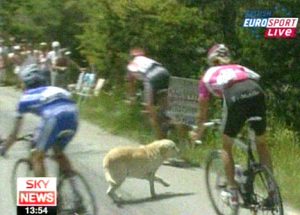
Often the cause of the crash is our own fault: We don’t take care of things we need to take care of, we don’t prepare well enough, we make choices out of selfishness or ignorance. But often the cause of the crash is something out of our control, something that comes at us and hits us, as it were, broadside.
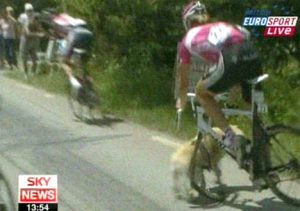
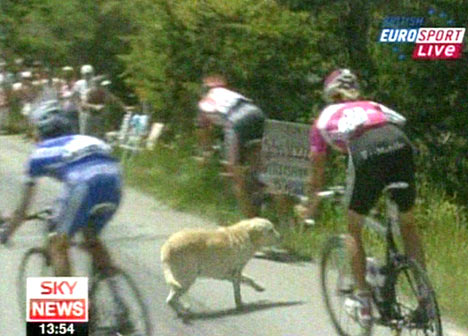
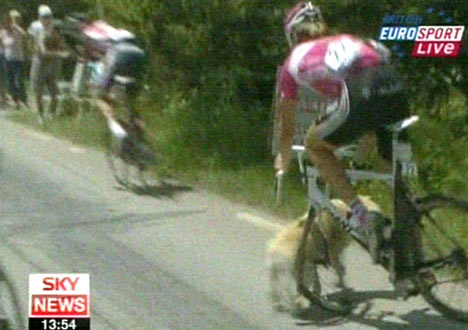
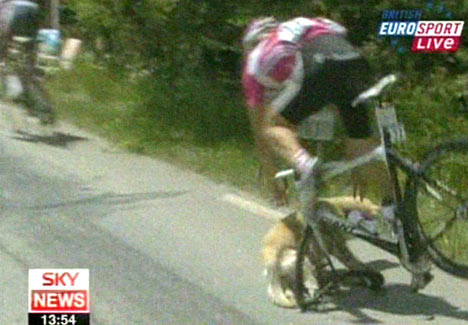
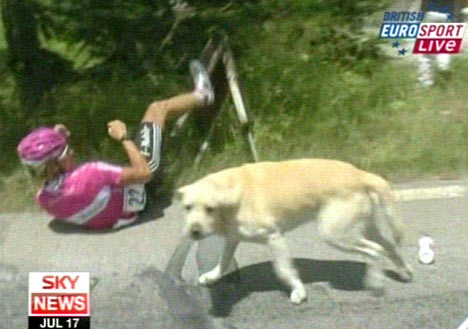
Or, if you are riding in the Tour de France, it might be a dog that walks in front of your bike, as it happened in the 2007 Tour.
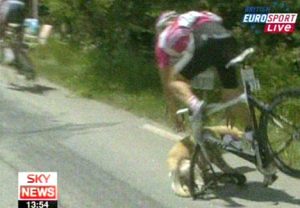
Life does not stop coming at us. Time does not stand still. We eat and then we get hungry again. We pay bills and then we pay them again. And most days are like the days before. When we do crash, life still keeps moving. Often the only protection we have against crashing is the thinnest of layers: Some insurance, a credit card, the help of a friend, luck.

We know all this, but we still get up each day and dive in to life. I guess it is just human nature to keep moving forward and and think maybe tomorrow will be better.
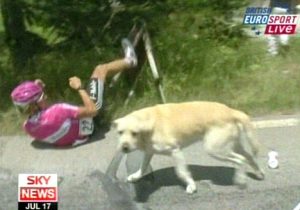
As I watch this year’s Tour I know those guys have a choice to ride or not ride. But as I look at my life, which includes responsibilities to myself and and my family, I know I don’t have the option to live or not live. I must live and hope that each day will bring forth life. I’ve got to show up, as do we all. So I keep moving, living as though it won’t be me that crashes today, and knowing that crashing is a part of life too. In fact, it is often through accepting the truth of our reality that we have any hope for joy.

When I think of my girls growing up and living life to its fullest, I also know they will have crashes. My job is not fundamentally about keeping them from crashing, but to give them the right perspective on life so they can deal with their crashes, although I also do not want them to crash.

It is strange how something so trivial as a bike race can spark thoughts on one of the deeper issues of life.
>Pepe & Bjorn

>

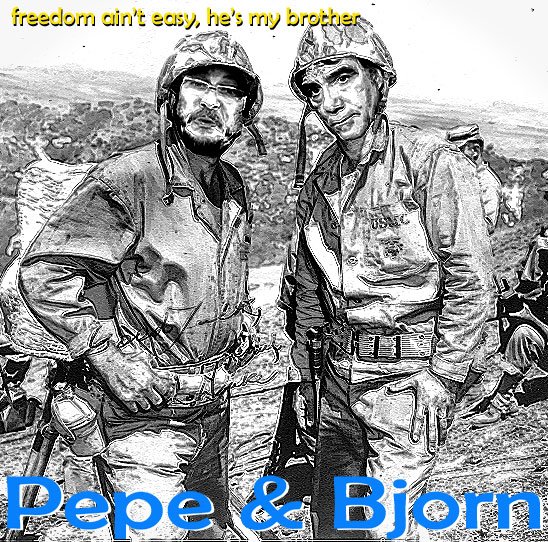
Well now . . . it’s about time you heard of that magical musical duo, Pepe & Bjorn. Not that there’s much to know.


You are wondering, I know. Do not wonder. Just accept.

It’s really all about Photoshop …and nonsense.

But… if Pepe & Bjorn ever come you way, you’ll know what to do.

>…they’ll be dancin’ in the streets (and elsewhere)

>Did you ever have a goofy idea that turned into something really grand? One reason I love the Internet is how it gets people jazzed about producing and posting things that would otherwise have been just another “wouldn’t it be cool” idea discussed over beers.

Example: This guy made this video:

If you want to watch it in Hi-Res, go here and choose the “watch in high quality” link under the video.

I should add this was sent to me by my friend Brian. Thanks Brian!

>i met the walrus

>If you were 14 years old, had a tape recorder, and was able to sneak into John Lennon’s hotel room to ask him some questions, what would you ask?

If you still had that tape recording 38 years later, what would you do with it?

>morning ride

>

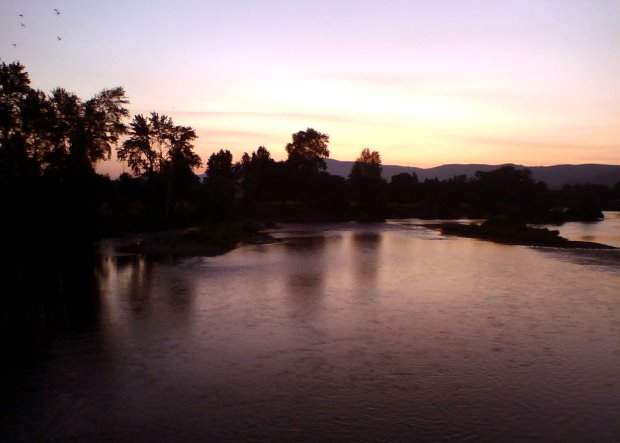
After a week off from riding my bike to work I am back in the saddle. The route I take includes a bridge that crosses a river. Yesterday I pulled out my phone and took a picture. The air was cool at 5:45 AM. Birds were swirling and diving around me. The sky was beautiful, and the river, as always, was sublime.

>Those were the days: LeMond, Hinault, Fignon, and my introduction to the great race.

>So the Tour de France is on! Yes!

I love the Tour, it’s one of the greatest sporting events anywhere. It is a crazy festival of sport and speculation. The Tour has been racked by doping the last few years, which is unfortunate. I suppose doping has been a part of processional cycling for decades, but nothing like it’s been that last ten years.

I became a fan of the Tour, however, in the 1980s when Greg LeMond was the great American hopeful and doping was a minor issue. LeMond, the first American to even win a tour de France, eventually won three Tours.

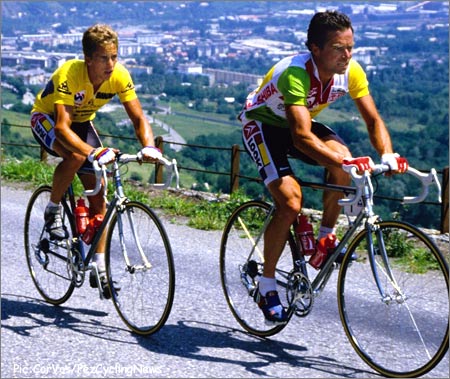
The 1986 Tour de France was LeMond’s first win. Here LeMond races with his teammate Bernard Hinault (five-time winner of the Tour and one of my cycling heroes) up the infamous Alpe d’Huez:

Hinault had set an almost suicidal pace and only Lemond could stay with him. They crossed the line together hand-in-hand. LeMond let Hinault cross the line slightly ahead of him, so Hinault was credited with the stage win. But there was a lot of tension between LeMond and Hinault, which played itself out in the French newspapers. Hinault had apparently said he would help LeMond win that year, but then he raced like he was going to win himself. LeMond whined. I always appreciated how great a cyclist LeMond was, but I thought he carried too much of a victim complex around with him. Regardless, I was hooked. Cycling was the bomb.

Then LeMond was in a hunting accident. He was shot by a shotgun fired by his brother-in-law. He almost didn’t make it and his recovery took a long time. He still has pellets in his body. He came back and won Tour again in 1989, and again in 1990. To me that’s nearly as remarkable as Armstrong’s victories after fighting cancer.

That 1989 Tour had the closest finish in Tour history. Laurent Fignon, the great French cyclist, was ahead of Lemond by only 50 seconds going into the last day of the Tour. That day the race organizers decided it would be an individual time trial rather than the typical group finish. Here is that finish:

LeMond won the Tour by only 8 seconds! That’s after 22 days of racing. Never again has the Tour finished with a time trial.

>other candidates, other voices

>So who are you voting for? My vote is still in “wait and see” mode, though I much prefer change over status quo. In that sense I would be for Obama (some change) over McCain (more of the same). But these two are not our only choices. Here is a list of who’s running for president. It is interesting and disconcerting that there are so many candidates, so many hopeful and, dare I say, brazen individuals who would seek the highest office in the land and yet their voices are almost completely silenced by corporate media. Most U.S. citizens only know of McCain and Obama, and some additionally know of Nader. What of the others? Below are videos of just three of those “other” candidates.

Gloria LaRiva: Party for Socialism and Liberation

Bob Barr: Libertarian Party

Kat Swift: Green Party

It is easy to dismiss any presidential candidate who does not stand a significant chance to win. There are many who will vote for Obama because he appears to represent something very different than the current administration and because he has a chance to win. In all likelihood, though, Obama will not bring about the kind of change this country truly needs, but he will likely be a superior president than Bush.

There is still a big problem in U.S. politics, for what we have in our nation’s capitol is more like a single party with two factions than any substantial differences. That party, whether it’s the Democrat faction or the Republican faction, is still pro big business, pro lobbyists, pro U.S. imperialism (rough and tough, or kinder gentler), and pro power politics. We are told to love our country, but should not the command to love one’s neighbor ultimately triumph over love of country?

The truth is, the revolution that started this country, and has continued in one form or another (abolition, suffrage, labor rights, civil right, etc.), is a threat to the current status quo. How much of that revolution are we willing to give up as long as we are promised personal peace and prosperity? How long will we continue to describe our form of government as a democracy but desire that someone else do the heavy lifting? Are we willing to both seek and accept real change? Personally I find this a real challenge, and I don’t have any clear answers. Which begs the question: Who (and what) are you voting for?

[I’m not really asking for your answer here, I’m just posing the the question as a thought experiment.]

>A Recomendation: The Take

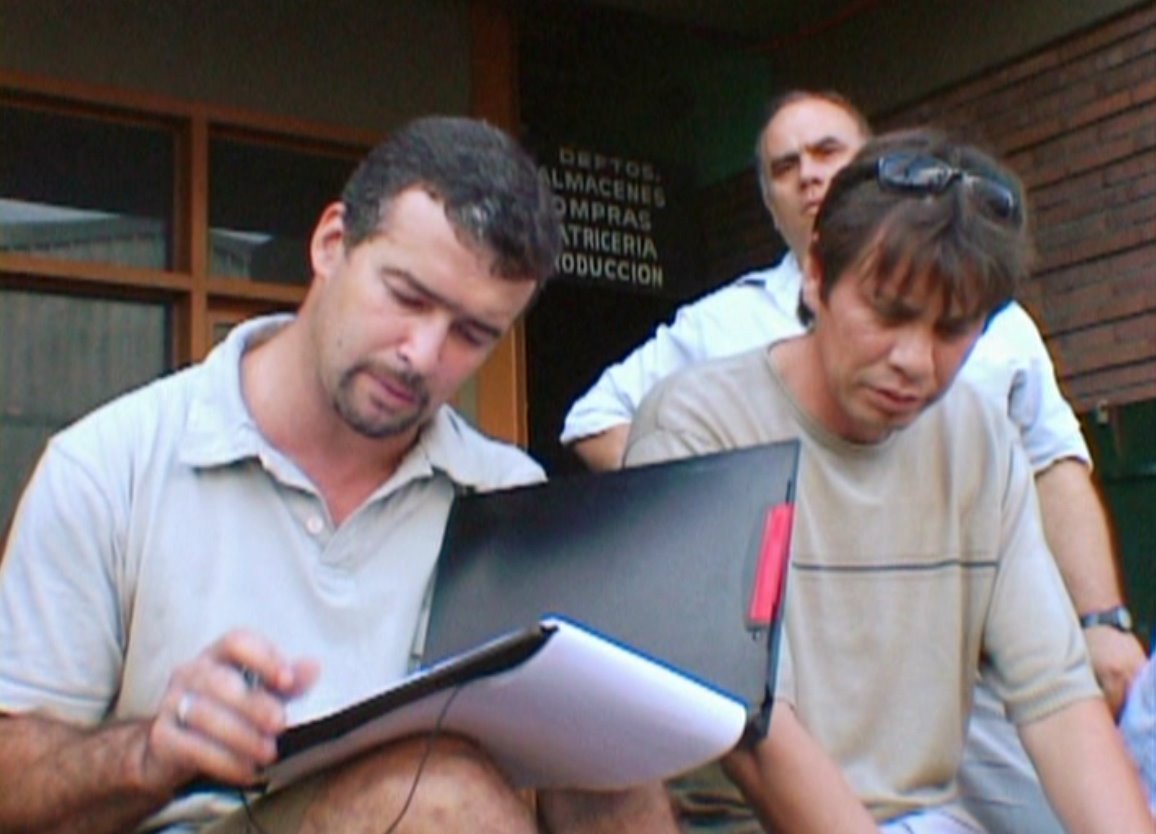
>There are violent revolutions and there are more peaceful ones. Some revolutions are based on ideals and theories and Utopian visions. Others grow out of simple needs for decent jobs and human dignity. The later is the story of the documentary film The Take (2004).

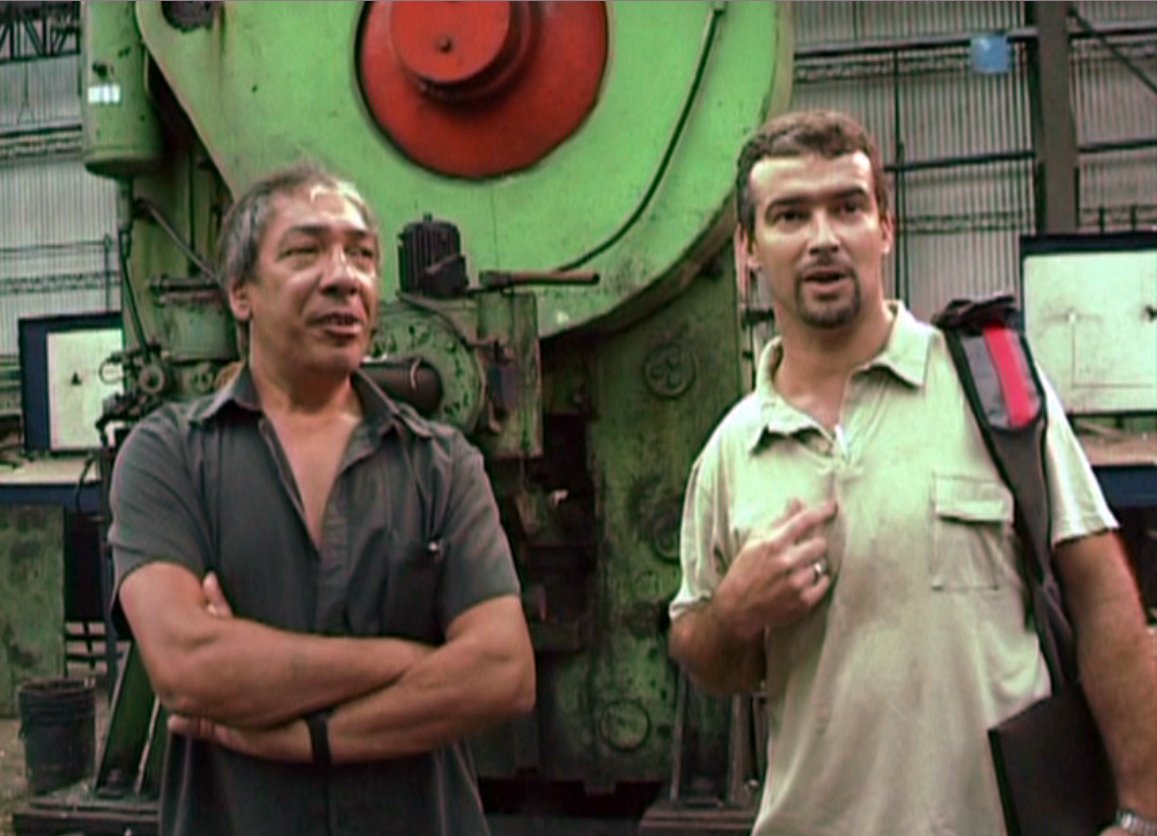
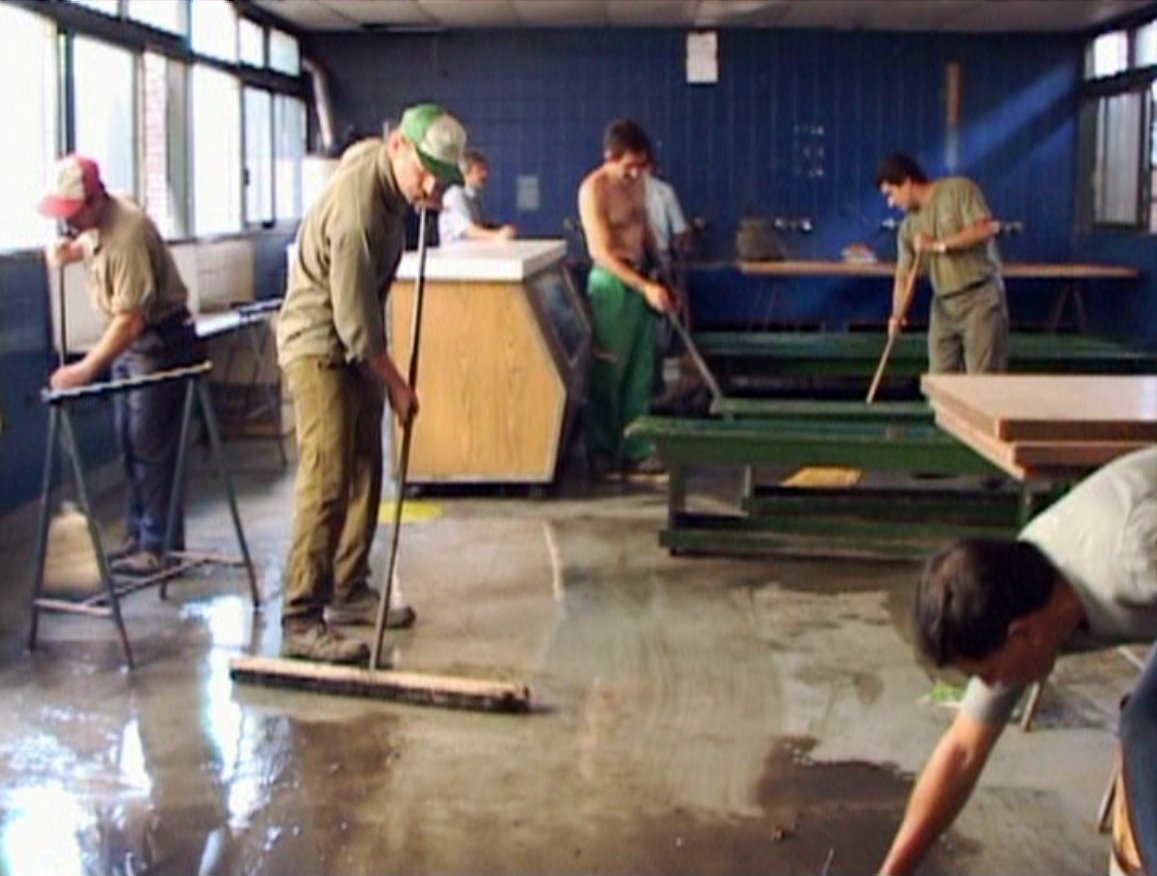
Created by Avi Lewis and Naomi Klein, The Take chronicles the struggles of out-of-work laborers in Argentina trying to take over abandoned factories and run them for themselves. Driven by basic necessity rather than ideology, these workers desire the simple ability to have a job and provide for the basic needs of their families in the wake of devastating economic policies by the county’s capitalist leaders.

What is truly wonderful about this film is it ability to tell a powerful story, set it within a complicated historical context, and do so while showing the very human realities of the struggle. In other words, it’s not really about revolution, or jobs, or capitalism versus a kind of collectivism. It is a story about people.

And yet, even though it is a story about people, it is also a story about a revolution. Argentina once had a thriving economy. But then new strategies were introduced by a government set on getting themselves rich as whatever cost. The country went into a downward spiral. Factories closed, unemployment skyrocketed, and the World Bank and IMF offered the kind of help one gets only from enemies who claim to be friends. The problem with bad macro-economics is the inevitably tragic micro-economic fallout. Simply, it’s the burden placed on the families who can no longer afford to feed themselves, go to the doctor, or pay rent.

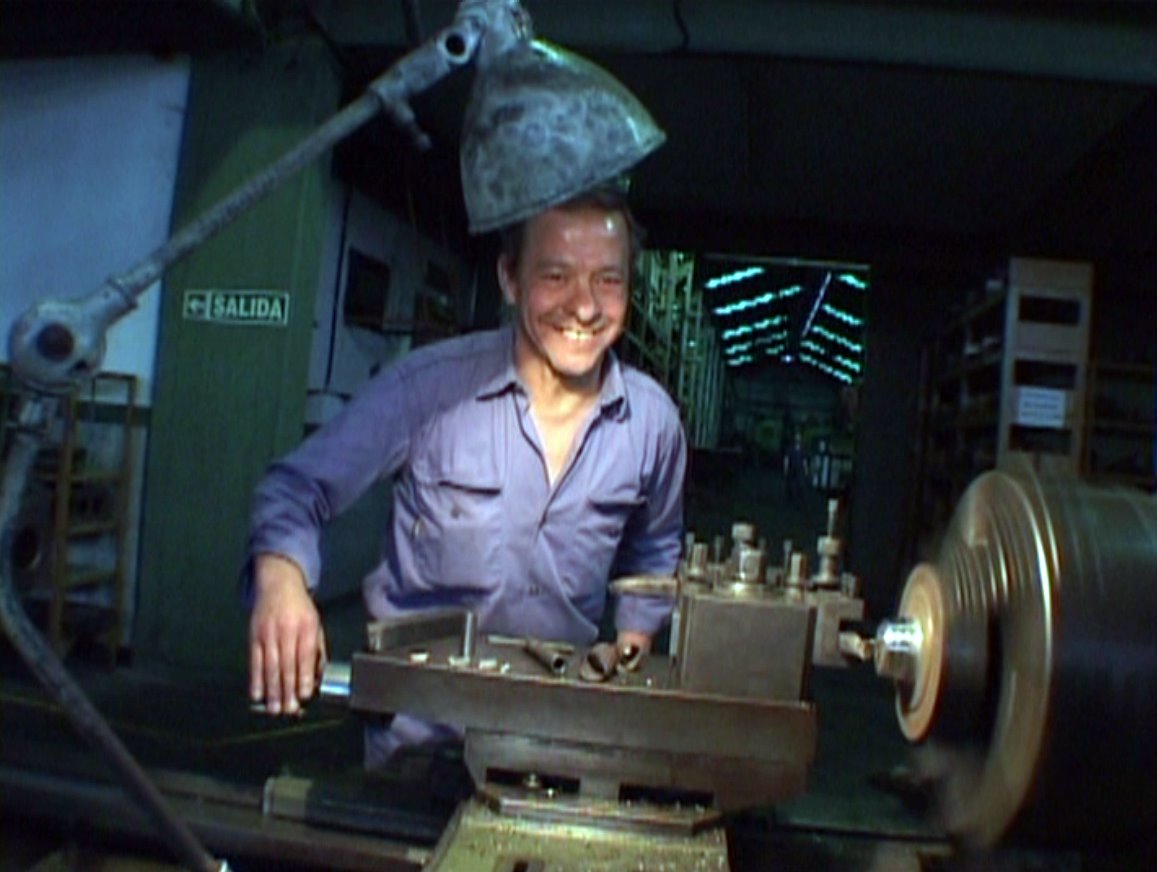
But in Argentina something new began happening. The workers went back to the shuttered factories in which they formerly labored and re-opened them. These workers took over the means of production, produced products, sold them, paid their bills, gave themselves paychecks, and ran the factories collectively. The former owners, who legally were still the owners, were kept out, often by court orders based on Argentine laws, and mostly by the sheer tenacity of the workers who put their hearts and bodies on the line.

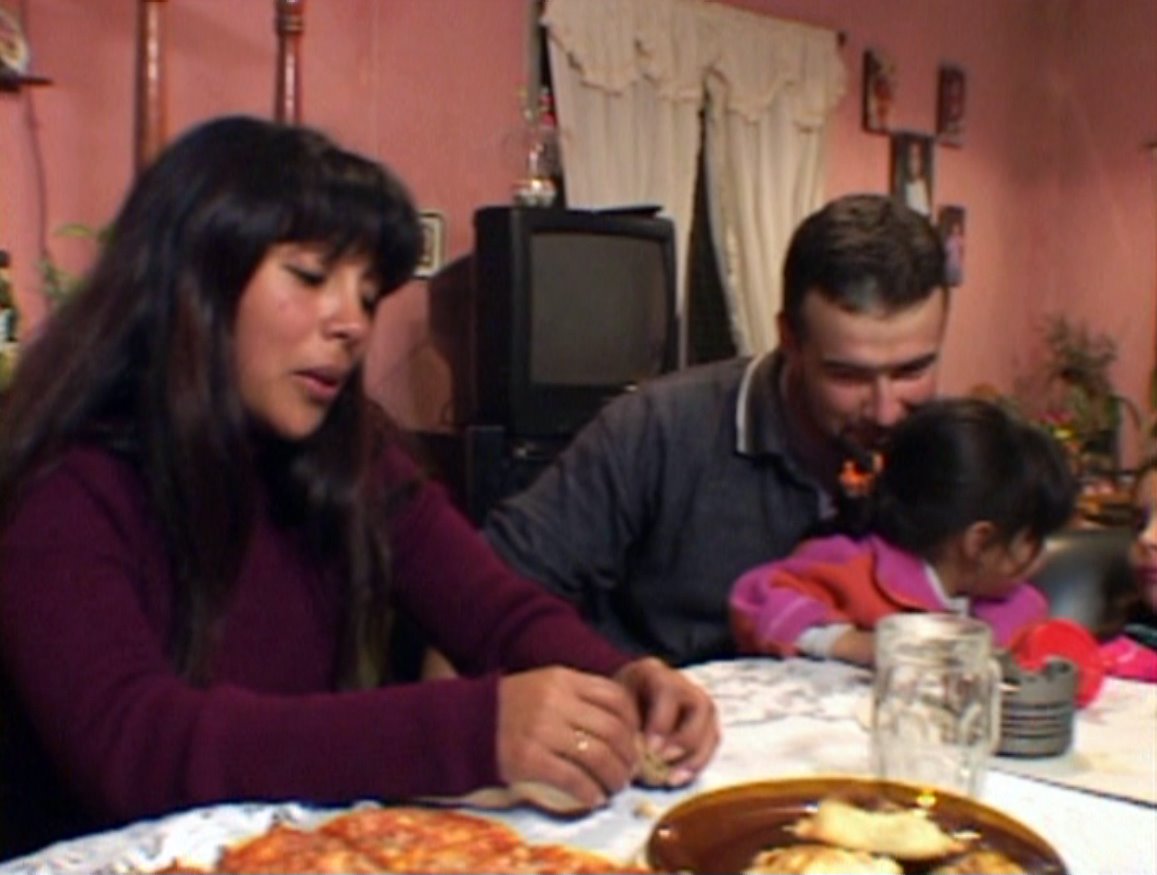
If there is anything truly remarkable about this story it is the way ordinary people, people with wives and husbands, with kids, with dreams and desires, walk the thin line between despair and possibilities. These are people like me, like you, who want decent jobs, who love their families, love their friends and their communities, who are not seeking power and glory, but only want a chance to live as they should.

Where the film ends is not where the story ends. Some challenges are overcome, but others still loom. The workers get mostly what they seek, but their future is uncertain. The government took a turn towards the left and is therefore more amenable to the workers, but, like all governments, it is still a mixed bag. If anything, The Take is a realistic look at the human struggle for life and liberty, for work and pay, for present needs and future dreams. It is, in short, a story of humanity.