
>http://video.google.com/googleplayer.swf?docid=-3666549326759968489&hl=en&fs=true
In this debate I side with the pacifists, although I might prefer the term “active non-violence” rather than pacifism – though they are two sides of the same coin.
>http://video.google.com/googleplayer.swf?docid=-3666549326759968489&hl=en&fs=true
In this debate I side with the pacifists, although I might prefer the term “active non-violence” rather than pacifism – though they are two sides of the same coin.

I have been thinking a great deal about non-violence, pacifism, the example of Jesus (and many of the things he said), and the idea/reality of the Kingdom of God. I am haunted by the idea that I should be living a life entirely committed to such things. That I should be living peacefully, non-violently, lovingly, and mercifully. I am to love my neighbor. I am to love my enemy. I am to lay down my life for others. I am to seek God’s kingdom and live in light of what that kingdom stands for.
So what do I do with the fact that I live in a flag-waving, war loving, gun toting, patriotic nation that is supposedly built on biblical principles and calls professional soldiers heroes but underfunds education and healthcare, while maintaining the world’s most powerful and advanced military industrial complex? Should my money go to such a system? I don’t know. I want to be wise and not foolish. Ironically, I started out more or less conservative in my youth and am now becoming more and more “radical” in my middle age. I say radical because I want to avoid strictly politicized terms. I am not specifically liberal or conservative. I think the truth hovers above such dichotomies. The call of Jesus is far more radical than any political system can accommodate.

Christianity in the U.S. is rather varied, but one faction gets a lot of attention – the conservative evangelical fundamentalists. They are outspoken, politically to the right, and flag waving – sometimes with really big flags. They are also typically in support of the current war on terror and the wars against the Iraqi and Afghan peoples. They also, generally, support torture when used to ensure the uninterrupted continuation their own quiet suburban neighborhoods (read “keep America safe”). But they are not the only Christians who support war and soldiering. The U.S. is a war loving culture and most Christians support, yea even glorify, war and soldiers. Frequently the Bible is brought in to support the this position.
One of the scriptural foundations for supporting the U.S. military and its mythologies is a biblical passage in which some soldiers come to that famous Palestinian, John the Baptist and ask what they should do and John doesn’t say “leave the army.” Many Christians would say that John is merely counseling these soldiers to be good, moral soldiers while they do their soldiering because being a soldier is still a fine, even noble profession. That is an interpretation that fits nicely with our own mythological understanding of the soldier as the duty bound exemplar of personal sacrifice for the sake of a higher good.
But John is, in fact, not saying be a good soldier, or even a righteous soldier. He is calling for repentance and fundamental righteousness – not a righteousness filtered and conformed to the needs of a profession. What John tells these soldiers fundamentally contradicts what their particular soldiering is all about. If they do as he says they will face a contradiction that will force them to chose Christ or soldiering. But that contradiction does not emerge from a conflict of piety versus profession, rather it emerges from a convicted heart in the midst of a fallen world.
The Bible passage is from the Gospel of Luke, chapter 3:12-14 in the New American Standard translation:
And some tax collectors also came to be baptized, and they said to him, “Teacher, what shall we do?” And he said to them, “Collect no more than what you have been ordered to.” Some soldiers were questioning him, saying, “And what about us, what shall we do?” And he said to them, “Do not take money from anyone by force, or accuse anyone falsely, and be content with your wages.”
The scene is of John the Baptist preaching and baptizing seekers and converts coming to him at the Jordan river. He is calling for their repentance and with that in view the tax collectors and the soldiers ask the above questions. Keep that in mind, John has just called for repentance and it’s the tax collectors and soldiers that are the ones who, as distinctly identified groups in the text, are mentioned. Why?
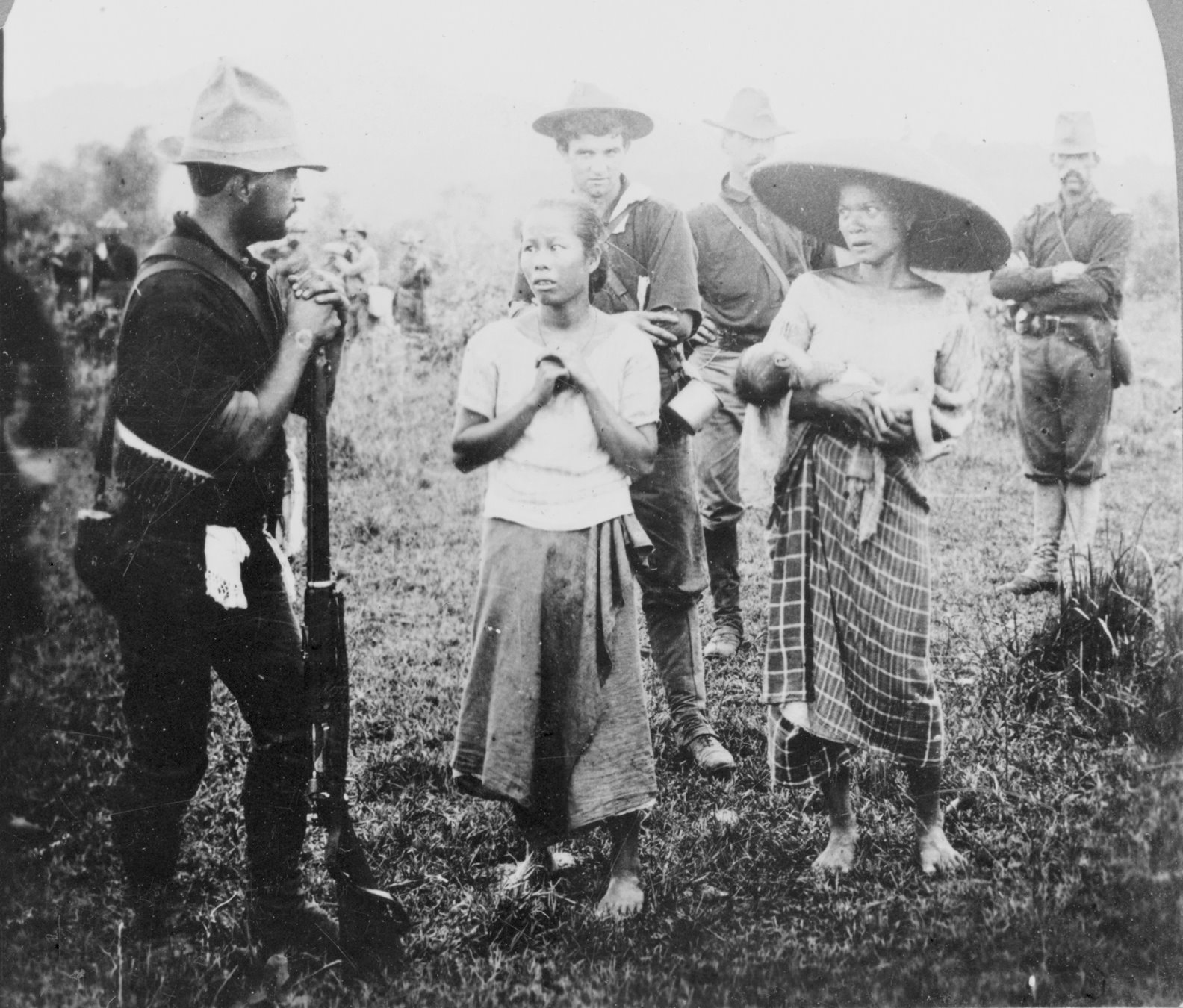
The tax collectors and the soldiers worked for the imperial/colonial power. They worked for Rome. The tax collectors took the taxes on behalf of Caesar, which is one of the reasons to have an empire in the first place, and the soldiers were the brutal military presence required for empire. The tax collectors were required to collect whatever Rome demanded and then made their living by demanding more. It was a perk of the job and many tax collectors could get quite wealthy. If they did not demand more than what was required they would live very meager existences. Soldiers, who were officially paid a very meager yearly salary (some say $45 per annum, which was extremely low even in those days) made their fortunes by claiming the spoils of war. Typically the spoils were given to the commander who then evenly distributed them to his troops. In both cases tax collectors and Roman soldiers made their living by taking more than what they were either ordered to take or by dividing up what was taken by force. This was the accepted system that both provided their living and supported the domination of the region and its people. This system was endemic to the very nature of Roman imperialism.
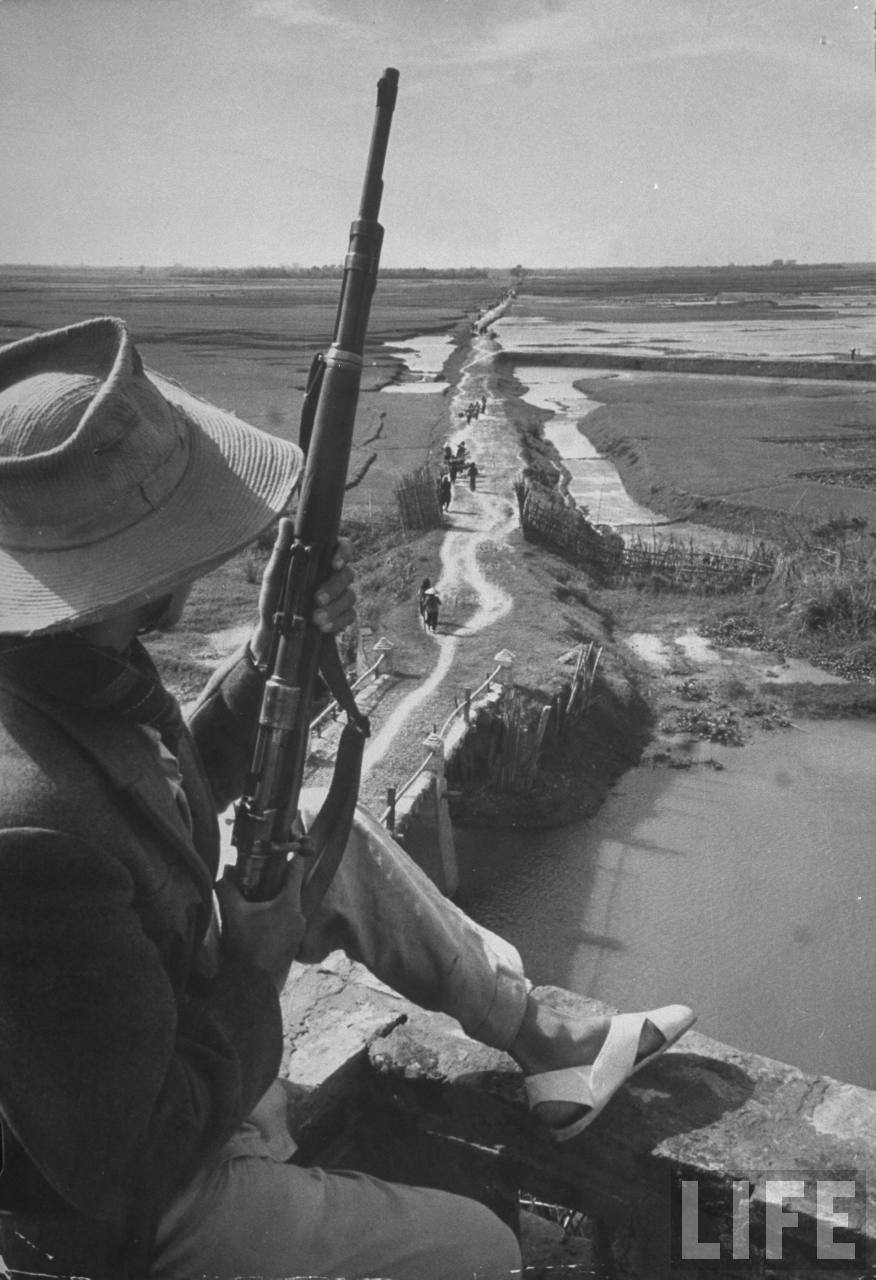
We know that Rome was a mean ruler of its empire. Judging by our recent history (as well as from the British Empire, the French in Algeria & Indochina, the U.S. in Latin America, but especially now in Iraq) we can surmise the tax collectors and soldiers of Rome were critical elements in keeping the colonized subdued and oppressed enough so as to cut to the quick any attempts at insurrection. Life was hard under Roman rule and the tax collector and soldiers made sure it would stay that way, but in order for tax collecting and soldiering to be viable professions then tax collectors and soldiers would have to take more than they were required to take and to do so by force.
I believe there were at least three reasons why tax collectors and soldiers were called out as distinct groups in the passage above. 1) To Luke’s readers the repentance of these groups would have been particularly significant. 2) The members of these groups would have been particularly convicted by John’s message of repentance. 3) John’s specific messages to these two groups calls them to live righteously which, by implication, challenges the very existence of their professions and the empire which they serve.
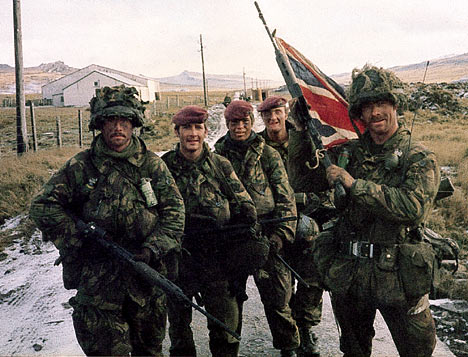
John does not directly say all tax collecting or all soldiering is wrong (at least at first glance and with our modern assumptions). But he also does not say anything in support of either. Rather than say to quit their jobs he merely says don’t do those things in your job you rationalize but know are immoral. Of course that’s like telling a politician not to lie. At some point a crisis will emerge and one will have to decide to choose the status quo or what is right. A politician who refuses to lie will eventually be crucified on the altar of politics.
Tax collecting and soldiering for Rome had at their very roots in rationalizations of immorality. John was not interested in followers who made surface choices only to regret them later. He wanted heart changes that would then have more visible and social evidences as a natural consequence of the heart change. He focused on the heart of his listeners because he knew the rest would follow. He did not have to say don’t collude with Rome or don’t work for the empire. All he had to say was repent and be committed to righteousness.
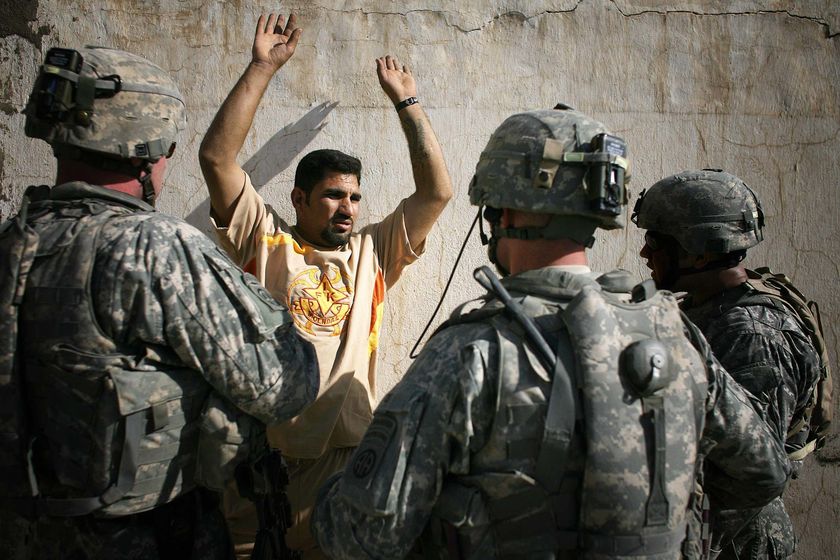
One could then draw a conclusion: To be either a tax collector or a soldier in support of an empire is ultimately a choice for unrighteousness. If this is what John is saying then we can also draw the conclusion that the ministry and message of John was both spiritual (of the inner person) and political (of the social relations we create and inhabit). For the Christian this has great significance. The implication is that there are many things we will have to give up if we are to truly repent – truly repent as the most existential of all radical, life changing, loving choices we make – precisely because we find there are no other possible choices. We may have to give up our professions, our security, our apparent good standing in society, and much of what we cling to. But there is no formula for sorting it out. If we follow John’s command then we begin with repentance. What this leaves us with is the difficult fact that there are no easy answers, or maybe it’s better to say there are no easy choices – something John’s tax collectors and soldiers were just finding out.
As a final note I must say that I have not sorted all this out for myself either. I have not gone so far as to stop paying taxes or to stand in protest outside the federal building. I also still love a good war movie, I am still amazed at the courage of many soldiers, and I still get emotional when I hear the Star Spangled Banner. But I don’t like saying the pledge of allegiance very much or saluting the flag. I find being a U.S. citizen to be rife with contradictions. But I find the same thing within myself as well.
>
Recently I watched a documentary three times in rather short succession; first by myself, then with my wife, then again with my daughter. (And then I loaned it out to someone, but I can’t remember who.) Each time it has challenged me, at moments moved me to tears, brought about conviction, made me laugh, and truly encouraged me. The film is
Lord, Save Us from Your Followers by Dan Merchant (Writer/Director/Producer) and Jeff Martin (Executive Producer).A large part of the film is an overview of how Christians are viewed in popular culture. This overview includes interviews and television clips of many people, including Bill Maher, John Stewart, Bill O’Reilly, and many others. Many of these clips are priceless and spot on. Dan Merchant also walked the streets in his bumper-sticker suit interviewing people.

Although the suit is a bit of a stunt, it did help people open up their thoughts.

Many ordinary people said, in short, that they like and admire Jesus, but they don’t like Christians very much. Funny thing, I am a Christian and I generally feel the same way. Tony Campolo had some of the best moments in the film. He is a devoted Christian who wonderfully discussed this contradiction we call Christianity. He states how all too often the “church” is an exemplar of hypocrisy while still being the “vessel” that has carried the gospel and preserved the Bible.
But what got me the most are the four end segments that focus on the ways some Christians have set aside all the garbage of the “Christian right” and looked instead to Jesus as their example.
Helping rebuild after hurricane Katrina:
Seeking forgiveness for the way Christians
have treated (and still treat) gays and lesbians:
Bringing help to starving communities, and
especially children, in Africa by bringing food,
medicine, and planting crops:
Comforting and helping the homeless:
Each of these segments brought tears to my eyes and deeply convicted me for my selfishness and self-absorption. They also challenged me to consider the kind of community, Christian or otherwise, I want to live in and how I might help make it happen.
I will recommend this film for anyone, but in particular for Christians. My suggestion is to watch it with a group and then discuss its implications afterwards. I don’t typically plug films on my blog, but I have to say this little, low budget film is worth seeing.
>What is it with these “cute” messages when a web site is down or unavailable?


Is the cuteness supposed to make me less frustrated? The monster has escaped? The ice cream cone says it can chill?
I’m sure there is some well documented psychological studies behind this kind of thing, but I am not placated. I am not!
>On Saturday I took my daughter rock climbing at the local rock columns. These columns have been a kind of mecca of sorts, located somewhat near the downtown of our city. Four blocks away is a good rock gym with artificial holds, but there is nothing like real rock. My daughter made it about two thirds of the way to the top and then had to fight against fear to get back down.
Today we went again and this time she made it to the top! The fear was still there, but she did really well and eventually overcame her fear. I think she will become a good rock climber. She started climbing a couple of years ago, first at the rock gym and then once at the columns last year.

Practicing trusting the rope.

Made it to the top!
I am so proud of her.
>Years ago I was a nominal member of the local mountain rescue group. I never had the chance to actually go on a rescue, but I did do some training with them. A couple of times we practiced rescue techniques for lowering an incapacitated climber down a sheer cliff. The technique is a lot more complicated than one might think, and the rescuers have to keep themselves safe too while doing the rescue. With that in my background I find the following rescue video clips interesting.
The notes on the video say the climber was drunk, though he says we wasn’t in the video. I don’t know if the climber was being truthful, but I would say it is probably a good decision to choose not to drink and climb. As with any rescue the process is slow and laborious, so it takes a while to get through these two clips, but I find it fascinating, especially since it’s basically raw video.
For how scary and obviously painful this was for the fallen climber, I also find it comical. He reminds me of so many individuals I knew in college. What’s interesting to note is that no matter how idiotic a climber may have been, the rescue people come to help and take it seriously. The rescuer who jumars up the rope to the stranded climber is putting his life at risk because he does not know how secure the rope is the stranded climber and his buddies are using. But he has to trust that rope and hope it is secure enough to hold both the climber’s and his own weight.
>I grew up going to church. I still attend a church, but it is not the same kind I grew up with. I see a lot of that happening with Christians; growing up in one kind of church and/or denomination and switching to another as adults.
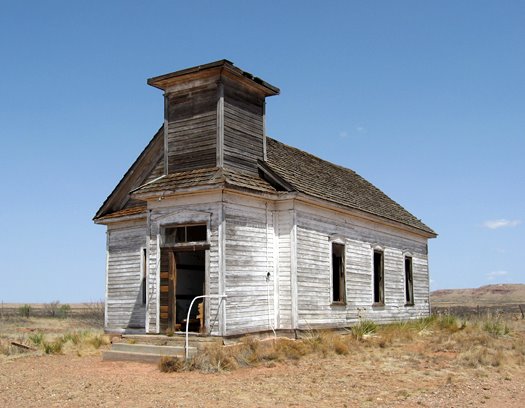
I’m sure there are as many reasons as there are individuals who make the switch. And there are are some big trends that have been well documented, such as Protestants converting to the Roman Catholic or Eastern Orthodox churches, and vice versa. For me, I can only account for my own experience.
I grew up in a Baptist church, a church that my family, including grandparents, had been long time members. That church experience has had a long term and profound affect on my life, including my theological propensities. As a kid I was very interested in sorting out many theological and Christian questions. I wanted to know who God was, how I was supposed to live, what it meant to be a Christian in this world, what values should be at the top on my list, and so on. I am still sorting out those things. The fact that I am still “in process” as it were would not bode well in the church of my youth, though that church as it is today may have changed.
There were a number of beliefs and actions that Baptist church emphasized, including the importance of being a member of the church, the importance of being baptized, the importance of bringing one’s Bible to church, and the importance of attending church. Other things included the importance of one’s “walk” with God, one’s personal relationship with Jesus, consistently having a “quiet time,” developing a life of prayer, reading the Bible for oneself on a regular basis, and evangelizing others. Underlying all these things were fundamental beliefs in the presence of a personal God, the lordship of Jesus, the inerrancy of the Bible, and the need for salvation of each individual, and so on.

There was also the culture which contained, maintained, and pushed certain ideas that, if directly challenged, would have produced some backpedalling and heavy qualifications but, nonetheless, were corporately held. Such as the demonization of Catholicism, and the strong sense that we’re still fighting the Reformation, and maybe most of all, and almost entirely unrecognized, the blending of apologetics & hermeneutics with the Enlightenment project (the belief in the power of human rationality apart from God to establish reliable, universally recognized scientific and moral knowledge).
My perspectives have changed on those beliefs and actions. Some I still hold to firmly, others I do not. More importantly to my personal journey of faith, I would say the definitions have shifted. For an example, most Christians believe reading the Bible is important. It is common for Baptists to feel the weighty expectation of bringing one’s own Bible to church on Sunday. But what does this really mean? As part of the Protestant tradition the Bible, read by the individual in the vernacular on a regular basis, is of the highest importance. What I found, however, was the tendency of those church members (including myself) to read their Bible frequently, but to understand it to say those things they have already been taught. In other words, the apparent act of reading had everything to do with merely reaffirming held doctrine rather than letting the text say what it means. To let the text say what it says is hard enough without the pressure and example of a subculture encouraging one to read, essentially, closed-mindedly. This is one of the biggest and most serious problems in Christianity as far as I’m concerned. Later, toward the end of my college years, I began to understand what it really meant to read the Bible with a mindset that would allow for my held beliefs to be substantially challenged, and it blew my mind, not to say rearranged my life as well – and I’m still not that good at it.

The reasons for my change is a long and involved story, but in short I can say that I was a person with many questions, in the midst of a crisis of religion (but not of faith oddly enough), I valued rationality as well as process, and then I found myself almost accidentally in a community that was committed to the radical pursuit of truth. I say radical because I have come to believe commitment to truth no matter where it may lead is fundamentally discouraged in Christendom and its numerous permutations. I must emphasize the critical thinking nature of this community because my shift was not so much about interpersonal relationships. Where I was coming from was loaded with good people and good relationships. I was not running from failed relationships or because I did not like the people with whom I was fellowshiping. My need to get away had everything to do with getting my head on straight and re-examining my theological assumptions and my worldview.
This community where I ended was called McKenzie Study Center and it is still around in some fashion. It was not unlike the famous L’Abri Fellowship. What that place taught me, or I should say the staff taught me, was a different philosophy of ministry, and that made all the difference. Because of my own experience I tend to think of my philosophies of ministry in terms of the “old way” and the “new way”, but the “old way” is still the primary approach in most churches I am sure. The old way has several characteristics that I dislike. These include: 1) the belief that all theological questions have already been answered, 2) apparent theological conundrums are mysteries and therefore touchpoints of our faith, 3) the role of the preacher is to proclaim the truth with passion, emotion, and rhetorical skills such that the listener is “moved” closer to God and truth, 4) a church service is not a place for questions or dialog – the preacher preaches and you listen, 5) struggling to understand and digest church doctrine is a sign of immaturity in the faith, 6) church is about an experience – created and carefully controlled by professionals, 7) the arts have a place in Christian life and culture as long as they are “in service” to God (if you have acting skills you can perform skits in the youth group, or music skills you can lead worship, etc.), 8) pastors are not to be “in process” about either their faith or their understanding of the the Bible, 9) in fact, the goal is that each of us get beyond being “in process” as quickly as possible because being a mature Christian is to have no more doubts or questions, and 10) going to church, reading the Bible every day, and praying a lot with conviction is critical for the life of any Christian.

I have just said a mouthful, and I know many Christians would take issue with some of these points. But my experience, and the experience of many others, confirms these things to be true. If a pastor or ardent churchgoer tells you otherwise they are confused or lying. There are many other aspects of our Christian culture, both present and past, that are un-Biblical and abhorrent. The wonderful irony, and what gives me much hope for myself and others, is that many, many people who regularly attend church and are immersed in the Christian subculture are people dedicated to knowing God, loving others, and working out their faith everyday in fear and trembling. And the church I currently attend is far from perfect, though it suits many of my preferences better than my old church. It’s not really about church anyway, it’s what underlies the reasons we get together and what it is we are trying to encourage.
I also must conclude by saying that not only is my journey far from over, and my seeking far from completed, but that my present “clarity” about Christianity is just as much run through with my own sinfulness as it ever was. I have come to believe that just about the dumbest thing Christians could ever do is hold themselves up as a model of righteousness or even of right living. What I hope for Christianity is that it would move out of the swamp and into a place where 1) we know that theology is an ongoing process and many questions must still be answered, 2) that “believing anyway” even though something doesn’t make sense is not a touchstone of faith but an issue to resolve, 3) that pastors must be committed to truth more than their charisma, 4) that church should be a place where questions are welcome and pastors will even stop their sermon to recognize a raised hand, 5) that the struggling to understand doctrine may be both a sign of maturity as well as confusing doctrine, 6) that church is a place for all of us to contribute in creative and different ways, that authenticity is far more valuable than professionalism, and that worship is not singing songs in church, 7) that the arts need no justification, 8) that pastors must be “in process” both personally and theologically, and that process should be made known and not hidden, 9) that our goal is not to get beyond being “in process” but that our process is the working out of our faith, including our doctrines, and 10) that our lives as Christians are first and foremost the work of God in us, all the rest is just extra.
If I had an eleventh point it would be that there are no formulas, including the list above, to making Christianity, or one’s journey in faith, better. There is only life and faith and God and us.
Peace.
>I was going to post this on May Day, but didn’t. This is an interesting interview with Evo Morales, president of Bolivia. He is the country’s first fully indigenous head of state in the 470 years since the Spanish Conquest.
>We all have our fantasies. Mine include such things as climbing Everest, racing the Baja 1000, and going for a speed record at Bonneville Salt Flats. None of these things will I ever achieve, but I still love the dream.
In that light here are three clips of speed record attempts at Bonneville Salt Flats:
450 MPH run
http://videos.streetfire.net/flash/SPlayer.swf
197 MPH on a motorcycle
…and for all of you who ride around on those 50cc scooters that only have a top speed of maybe 30 MPH, how about taking that little engine up to 140+ MPH?
>Written in 1870 by Julia Ward Howe.
Arise, then, women of this day!
Arise, all women who have hearts,
Whether our baptism be of water or of tears!
Say firmly:
“We will not have great questions decided by irrelevant agencies,
Our husbands will not come to us, reeking with carnage, for caresses and applause.
Our sons shall not be taken from us to unlearn
All that we have been able to teach them of charity, mercy and patience.
We, the women of one country, will be too tender of those of another country
To allow our sons to be trained to injure theirs.”
From the bosom of the devastated Earth a voice goes up with our own.
It says: “Disarm! Disarm! The sword of murder is not the balance of justice.”
Blood does not wipe out dishonor, nor violence indicate possession.
As men have often forsaken the plough and the anvil at the summons of war,
Let women now leave all that may be left of home for a great and earnest day of counsel.
Let them meet first, as women, to bewail and commemorate the dead.
Let them solemnly take counsel with each other as to the means
Whereby the great human family can live in peace,
Each bearing after his own time the sacred impress, not of Caesar,
But of God.
In the name of womanhood and humanity, I earnestly ask
That a general congress of women without limit of nationality
May be appointed and held at someplace deemed most convenient
And at the earliest period consistent with its objects,
To promote the alliance of the different nationalities,
The amicable settlement of international questions,
The great and general interests of peace.
 pilgrimakimbo